

Cosimo Rosselli, attrib., The Execution of Savonarola, circa 1498. It may reveal something about the tensions of Florentine history that the most vivid painting of the city’s political heart is so violent. (color insert 15.5)
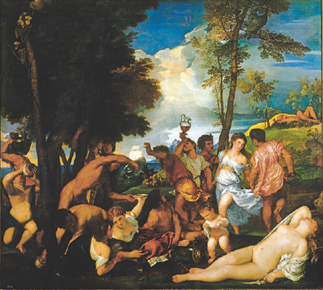
Titian, The Bacchanal of the Andrians, circa 1523–5. The swaying and gyrating figures in Titian’s drunken idyll owe some of their grandeur to Michelangelo’s Bathers. (color insert 15.6)

Raphael, The Entombment, 1507. The energy and gravity of the Battles of Anghiari and Cascina profoundly shaped Raphael’s narrative painting. (color insert 15.7)
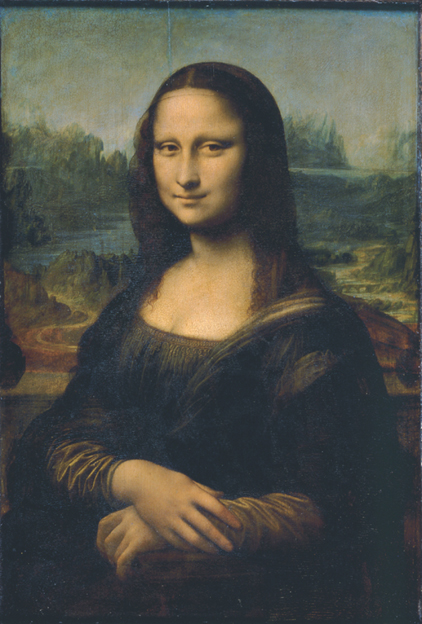
Leonardo da Vinci, The Mona Lisa. The fame of Leonardo’s portrait spread in Florence within months of his beginning it in 1503. (color insert 15.8)
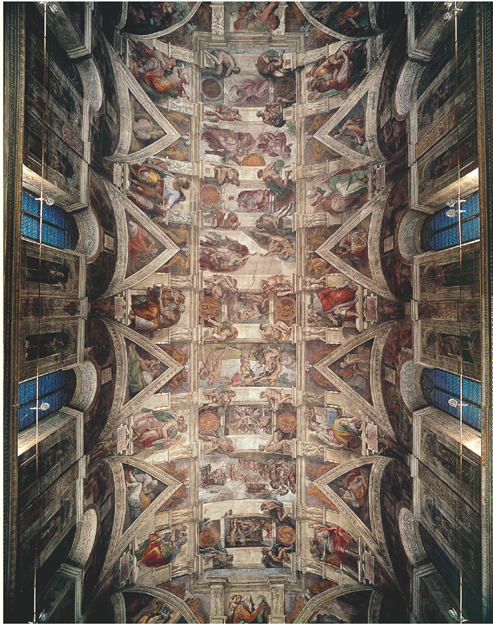
Michelangelo, Sistine Chapel Ceiling, 1508–12. The daring that Michelangelo showed in his cartoon for the Battle of Cascina reached its apotheosis in the Sistine Chapel. (color insert 15.9)
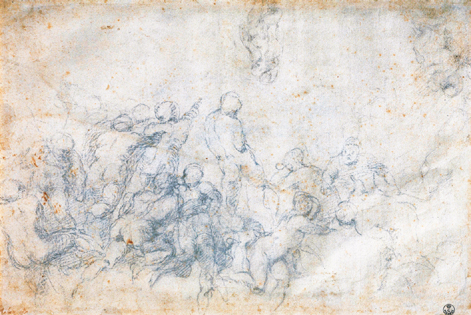
Michelangelo, compositional drawing for The Battle of Cascina, 1504–5. This tiny, delicate drawing is far more sensual than copies of Michelangelo’s lost work by other artists. (color insert 15.10)

Leonardo da Vinci, Heads of Two Soldiers, 1504–5. The old warrior’s ashen skin as he opens his mouth in a scream is shaded by death and doubt. (color insert 15.11)

Michelangelo, Adam and Eve, circa 1504. Michelangelo drew this passionate red chalk response to a fresco of the naked Adam and Eve by Masaccio while he planned his nudes for The Battle of Cascina. (color insert 15.12)

Leonardo da Vinci, Proportion Studies and Horsemen, horsemen drawn 1503–4. Men are at one with their horses, almost like centaurs, in Leonardo’s sketches for The Battle of Anghiari. (color insert 15.13)

Leonardo da Vinci, Studies of Expression in Horses, Lions, and Humans, 1503–4. The passion and rage of The Battle of Anghiari astonished observers and can be seen in these sketches. (color insert 15.140)

Leonardo da Vinci, Galloping Cavalry and Footsoldiers, 1503–4. The upper horse pulses with energy, while that below is a caricature of speed and power. (color insert 15.15)

Leonardo da Vinci, Horse Study, 1503–4. Leonardo tries to draw the frenzied motions of a rearing horse, inventing Futurism and cinema several centuries early. (color insert 15.16)
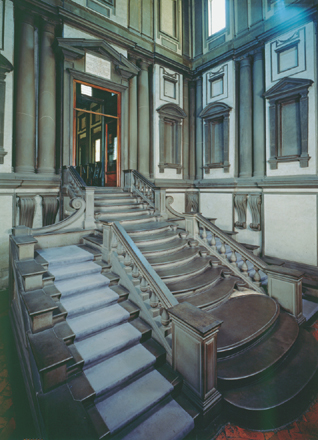
Michelangelo, vestibule of the Laurentian Library, Florence, 1523–33, staircase 1555–8. The menacing claustrophobia of Michelangelo’s library suggests how forbidding his military architecture must have been. (color insert 15.17)
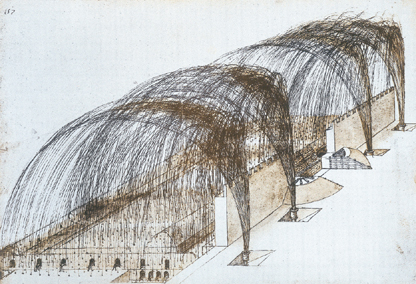
Leonardo da Vinci, Mortars Bombarding a Fortification, circa 1504. This eerily beautiful tracery of fire was probably drawn as a practical suggestion in the Florentine Republic’s war with Pisa. (color insert 15.18)

Michelangelo, Doni Tondo, circa 1504–7. This is Michelangelo’s best-preserved painting and reveals the brightness of his palette. (color insert 15.19)
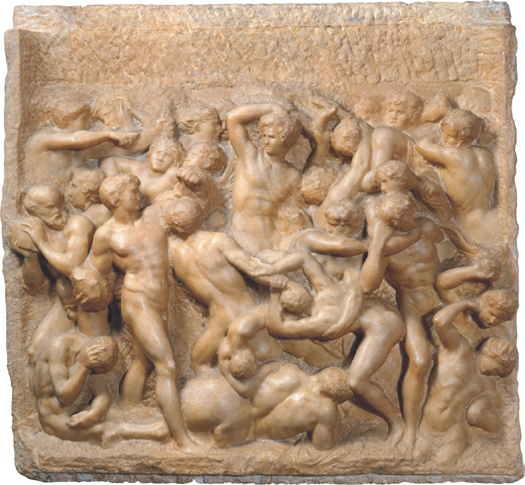
Michelangelo’s teenaged masterpiece was inspired by the poet Polziano, who also influenced Botticelli. (color insert 15.20)

Michelangelo, David, 1501–4. Leonardo revealed his hostility to Michelangelo when, at a meeting to discuss the young artist’s bold new statue, he called for its loins to be decently covered. (color insert 15.21)

Michelangelo, Bacchus, 1496–7. The drunken god stood in a garden in Rome in the sixteenth century. (color insert 15.22)
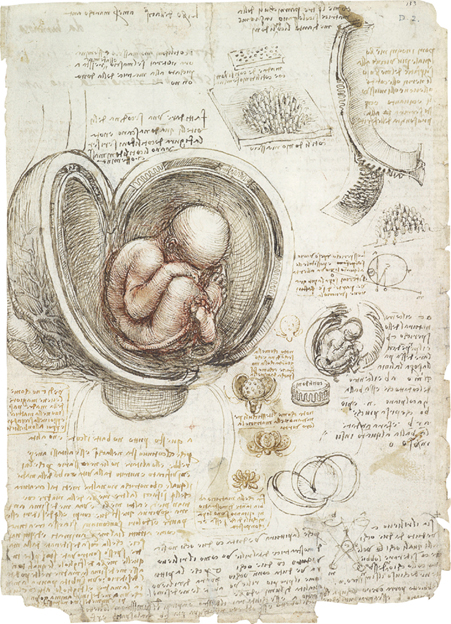
Leonardo da Vinci, Foetus in the Womb, circa 1510. The marvel of humanity is displayed by Leonardo like a nut in its shell. (color insert 15.23)

Leonardo da Vinci, Muscles and Veins of the Arm and Chest, and Head of an Old Man, circa 1509–10. Leonardo tells in his notes of how he observed the peaceful death of an old man in the Florentine hospital where he undertook dissections. (color insert 15.24)
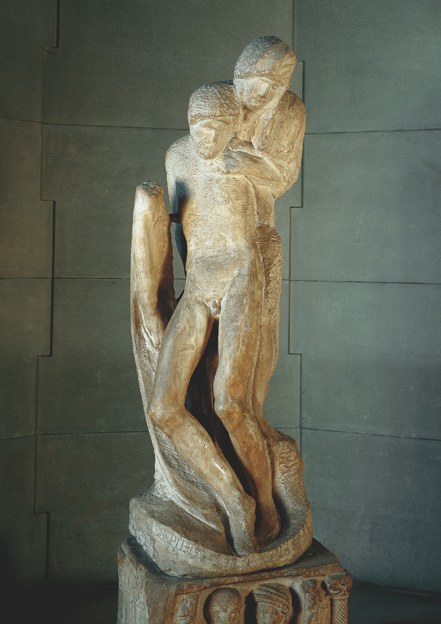
Michelangelo, Rondanini Pieta, 1550s–64. If Leonardo left his works unfinished, Michelangelo turned this habit to profoundly expressive ends. His last sculpture is a hesitant, incomplete masterpiece of anguished self-expression: a barely coherent dying prayer. (color insert 15.25)