
CHAPTER 9
Where to Find Light?
Message from October 9, 2006
Why do human beings spend so much time in front of their televisions, computer screens, or video game consoles? Simply because they need light in order to live, and even a dim artificial light turns out to be preferable to total darkness or solitude of the heart.
Human beings need light the way plants need the sun and water to survive. Light is a form of energy that feeds and revitalizes all of your being. It allows you to recharge your batteries and especially to reconnect with who you really are. This light, or prana as the Hindus call it, is the source of every living thing. It is the electricity freely flowing through your inner circuits: your synapses, your meridians, your chakras, feeding and regenerating both your physical and energetic bodies.
It is impossible for any living being to live without light. This is why you spend your life finding a way to get this light, make it yours, and store it in all your cells. Just like sunflowers at the end of the summer, you ceaselessly sway from left to right, back to front, constantly looking for the tiniest ray of sun shining from the sky. It is so simple, though, to find the light inside of you: you simply have to connect to your own inner sun, the light of divine love alive in all your being.
So many people have forgotten that they are themselves light. They don’t know how to rekindle their inner fire, and they find themselves having to compensate for it through resources outside of themselves. Are you one of those people looking for a particle of light in the eyes of every person you meet, to quench your thirst, as if you’d been lost in the desert? Just like the child who catches a glimpse of pride in his parents’ eyes, do you spend your life trying to find that spark of approval and love from those near you to ease your lonely soul?
By trying to nourish yourself through the recognition and admiration of your peers or by waiting for a moment of attention from them every time you accomplish something, you remain primarily turned outward. You have encoded the fact that anything spectacular you do will be rewarded by the luminous gaze of the other, just like a brief ray of sun that will momentarily brighten your inner sky. What you have accomplished no longer needs to be good or beneficial to your fellow human beings; each and every glance is filled with energy, and it briefly suffices to sustain your inner thirst.
In reality, let’s ask ourselves: what if all those games of power, war, and control taking place everywhere on the planet were nothing more than the reflection of this massive need for every individual to get energy from others? Whether this energy is positive or negative matters little, as long as you are satiated, even for a brief moment. So goes your world. You think you are no more than light “vacuums,” always looking for more energy, ready to drain it from those around you, with or without their consent.
Even worse, if you don’t manage to get the attention of your peers, any other luminous source will do. Like moths attracted to a flame, you gather around those luminous screens of all sizes that diffuse pale reflections night and day, keeping you in the illusion of being in communion with the light of others.
You must admit that those who have learned to synthesize light and lock it into a tube are clever: they have understood that an artificial ray of sun is preferable to life in darkness. If you can’t illuminate your entire being, if your eyes manage to grab even a few weak rays of light, this will give the brain the momentary illusion of being fulfilled.
This isn’t about denying the importance of those powerful technological tools that have in many ways contributed to humanity’s progress. But as in all things, it is excess that causes harm. How many of your children are now obsessed by machines that keep them in a parallel universe outside of time and reality? Who among you can spend a day without checking your e-mail? How many of you come back from work and settle in front of the television for the rest of the evening?
Why satisfy yourself with a mere illusion when you can taste the real light, the light that illuminates and transforms the entire being?
Since time immemorial, all civilizations have taught human beings how to gain access to this unlimited inner light. Whether through meditation, prayer, yoga, or martial arts, it is easy to find the inner peace that allows light to flow inside of you, for this light is very much here and present. You know it, and you have always known it. The sacred fire vibrates in all of your being, and you occasionally access it through a brief moment of amorous, sexual, or mystic ecstasy. Imagine that you could recreate at will this magical moment of fusion with your divine self through some very simple breathing exercises. Isn’t that what the yogis have practiced for millennia? Nowadays, meditation is more and more in fashion; bringing calm to your agitated mind can only be beneficial on all levels. But what about the rest of the body? It is through breathing and harmonious movements that light can circulate and spread into all of your being.
Tai chi, as well as other practices aimed at amplifying the life energy that supplies your body, turns out to be an excellent illumination technique. But you could also practice walking, dancing, or swimming. What matters is the motivation, the purpose for which you move. Is it only to keep yourself in shape, or do you truly apply yourself to reconnecting with your flamboyant essence?
Would you like to find the light and make it yours at any given moment? Do you want to enjoy perfect health and to live many happy years at peace with yourself? It is possible for you to achieve this by unifying with all the different aspects of yourself. Recenter on your own inner sun, at the height of the solar plexus, and breathe deeply while visualizing the luminous energy increasing and intensifying until it encompasses you fully.
“You are the light of the world.” Does this sound familiar? If you take the time to reconnect to your inner light and increase your energetic vitality, you will no longer be light “vacuums” but rather torch bearers. Be the ones who transmit the divine flame rather than the ones who hoard it. You just have to remember who you are.
You are light.
You are energy.
You are love.
Love, indeed, remains the best tool of integration of your inner light. The more you love and accept yourself as you are, the more your inner light will grow and shine everywhere within and around you.
Say “yes” to the wonderful being that you are. Breathe deeply and see your vital energy grow and vitalize your body and your mind. Let your inner sun warm up and illuminate your entire being. Connect to the sky, to the Earth, and to everything that lives. From now on, you become one with the universal energy. Your light not only revitalizes and regenerates all your living cells, it emanates well beyond your body, shining like a thousand suns and being transmitted to the entire planet.
You are an enlightened being. You have always been so. Nothing will take you away from the light that you come from and that pours out of you here and now, and for eternity, in the sacred fire of universal love.
—Bianca Gaia
Living in Light
Wouldn’t it be amazing if, at every moment of every day, we lived in light, and we took the time to meditate and center ourselves at every moment in order to acquire the universal energy that maintains us in perfect balance in all the dimensions of ourselves? Of course, that would be ideal. In reality, we are regularly confronted with complex situations that unsettle us. Daily we are surrounded by people who invade our light cocoon, trying to bring us down or to squeeze us like lemons.
In a perfect world, we would only have to go back inside ourselves and feel that it is just an illusion for everything to return to its optimum state. However, we are at times tired, unsettled, or worried. Because our soul aspires to make us recognize the divine and wonderful being that we are, it will attract events and opportunities to reveal our unlimited inner potential to us. All these problems, conflicts, and dramas we encounter are indeed the challenges sent by the most luminous part of ourselves to encourage the emergence of all the energetic power that inhabits us.
Our soul, our sixth sense, the part of our brain that only wants to be developed acknowledges the presence of the energy of light trapped inside us, and it will do everything to allow it to come out into the light of day; hence all the apparently problematic situations that happen when we least expect them.
Thierry, one of my clients, was very disappointed because his girlfriend and most of his friends had forgotten his birthday. Sure, it had snowed a lot that day and a few days previously, and snowstorms tend to affect the mood of the population in general because they limit movement. Thierry therefore thought that he was wrong to be saddened for so little and was thinking that his ego had expectations that he needed my help to get rid of.
During our consultation, I invited him to examine the days that had preceded his birthday: what state of mind was he in? Was he looking forward to this beautiful moment to arrive? Was he really expecting, “demanding,” a special celebration? “On the contrary,” he answered, “I was very absorbed with my job. I spent the week on the road trying to catch up on delivery delays caused by the snowstorms. I didn’t have a minute to myself. I worked over sixty hours straight, and when I got back home, I went directly to bed.”
The law of attraction means that in life, people have a natural tendency to treat us not the way we treat them but rather the way we treat ourselves. Thierry’s problem, therefore, wasn’t his expectations of the events to come but rather the fact that he had forgotten himself and neglected his own essential needs. His soul then helped bring him back to his senses by making him aware of his negligence in the only way available to it: other people’s attitudes.
The best way to live a fulfilled life and to live in harmony with those around us is taking good care of yourself so that others will do the same with you. Once again, this is not being selfish, but rather it is keeping a balance between outer reality (responsibilities, work, and survival) and inner needs (fulfillment, quality of life, and replenishment).
Stealing Other People’s Light
It is only when we neglect our own essential needs that it becomes necessary to go get energy outside ourselves to compensate for the inner void. This is what we call a survival reaction: desperately needing energy to survive, the personality will try to grab it by any means available, even if it means stealing it from others.
There are various ways of taking energy from our fellow human beings. We are not always aware of it, but the way that we react to mishaps in our lives is dictated by this intense need to get the maximum energy to keep ourselves afloat internally. Our primary reactions—anger, sadness, denial, and guilt—reveal our recurrent stratagems of choice when it comes to recharging our energetic batteries in our daily lives and our relations with those around us.
The following exercise allows you to become aware of your various unconscious mechanisms. Without judging yourself or trying to overrationalize each of the following affirmations, consider the way you spontaneously react to everyday situations. This test will allow you to identify what your true values are, which behaviors you generally adopt in your life, and the methods you use to get energy from others.
Exercise: Test Your Egogram
For each of the following affirmations, check “Somewhat True” each time you recognize yourself or mostly agree with what is described. Otherwise, check “Somewhat False.” Answer spontaneously, without taking time to think it over. When you can’t decide, simply jump to the next affirmation. It doesn’t matter if some lines are left blank.
|
AFFIRMATION |
Somewhat |
Somewhat |
|
|
1. It is easy for me to express my point of view and bring forth my opinions. |
|
||
|
2. Faced with a problem, I don’t hesitate to admit my limitations and ask for help if I need it. |
|
||
|
3. In my family, we were not allowed to show our emotions; we had to be reserved and polite. |
|
||
|
4. With my friends, lending a helping hand doesn’t bother me. I readily volunteer to help out. |
|
||
|
5. I am not afraid to tell people what I think. Sincerity is crucial in human relationships. |
|
||
|
6. I very much enjoy physical activity (walking, tennis, swimming, gardening, etc.). It gives me a lot of energy. |
|
||
|
7. I am rather submissive and obedient. |
|
||
|
8. I am generally on time for meetings, and in turn I avoid keeping people waiting. |
|
||
|
9. I readily lend people my things without worrying about whether they will be returned to me or not. |
|
||
|
10. I feel at ease, tranquil, and comfortable in my skin. |
|
||
|
11. I have a tendency to get angry and to be impatient more often that I would like. |
|
||
|
12. Giving orders scares me, and I do not like to take on responsibilities. |
|
||
|
13. I like a job that is done well, done precisely, and is completed on time. |
|
||
|
14. When a work colleague asks me for information, I do not hesitate to provide it, even if we are in competition. |
|
||
|
15. I feel free in my life choices and in the decisions that I make. |
|
||
|
16. In a group, I like to take the lead and direct operations. |
|
||
|
17. When I share something, I readily accept the smaller part. |
|
||
|
18. I suffer easily from the criticisms others make about my behavior. |
|
||
|
19. I enjoy contact with people and have a tendency to favor the social element of my professional activities, even if I don’t always know where this will lead. |
|
||
|
20. I like a job done well; this is why I apply myself to respect the procedures and deadlines that need to be followed. |
|
||
|
21. I drive fast whenever I can because I enjoy speed. |
|
||
|
22. I think I lack confidence in myself and often doubt my abilities. |
|
||
|
23. My parents brought me up strictly and with respect for principles. |
|
||
|
24. I am very comfortable with everyone, even strangers. |
|
||
|
25. I always make decisions quickly, even on important matters or in difficult situations, because I do not like things to drag out. |
|
||
|
26. I find it hard to put an end to some relationships, even if I know they are not good for me. |
|
||
|
27. I have been accused of being a bit of a moralist and of preaching. |
|
||
|
28. I readily lend a hand to my coworkers and collaborators, even if I don’t have much spare time. |
|
||
|
29. Unlike many children my age, my parents encouraged me to think for myself. |
|
||
|
30. I am often told that I have quite a temper; it is true that I do not let people step all over me. |
|
||
|
31. I try to give my children the affection that I didn’t get. |
|
||
|
32. I like methodical work; I can be picky in making sure the instructions are respected. |
|
||
|
33. I am a good negotiator, and I have been called on many times to resolve difficult problems between people efficiently. |
|
||
|
34. I manage to cooperate well with my boss, without necessarily being in agreement with him on many points. |
|
||
|
35. I am often impatient with people who don’t understand me well right away. |
|
||
|
36. I have a tendency to find that others are better than me. |
|
||
|
37. I am more logical than intuitive, which facilitates the detailed analysis of problems to draw out useful solutions. |
|
||
|
38. I want to help young people blossom and be happy. |
|
||
|
39. Whatever people say, children need us much longer than it seems, and you need to be ready. |
|
||
|
40. When I feel someone is trying to put pressure on me, I see red. |
|
||
|
41. I keep thankless or difficult tasks to myself so as not to burden others. |
|
||
|
42. I enjoy explaining things and helping people understand and discover new things. |
|
||
|
43. I love my partner and my children very much; family has a very important place in my life. |
|
||
|
44. In everything, you need to know how to maintain the right balance. |
|
||
|
45. When I am criticized, I respond straight away. |
|
||
|
46. To please my boss and finish what she asks me to do, I have at times canceled a dinner or worked on a weekend, even if she had not asked me to. |
|
||
|
47. When I need to make a decision in a tricky situation, I try to get the proper information and accumulate indisputable facts. |
|
||
|
48. I think it is important to be esteemed by the people around us, and I work at it more efficiently than the average person. |
|
||
|
49. I like to meet people, but I also need quiet and solitude. I am not afraid to live on my own. |
|
||
|
50. I love competition, and I usually manage to do better than others. |
|
||
|
51. I am very tolerant of other people’s mistakes. After all, nobody is perfect. |
|
||
|
52. Those around me find me a bit cold and distant at times. |
|
||
|
53. I am rather generous. I like to give presents, but I often spend too much. |
|
||
|
54. I balance my time between work and hobbies quite well; both interest me. |
|
||
|
55. To manage people is to make everyone give the maximum of their potential. |
|
||
|
56. I prefer to ask trusted people for their advice before making any decisions. |
|
||
|
57. I never get angry, and my mood is constant even if I am annoyed by the situation. |
|
||
|
58. It is normal to sacrifice ourselves for the happiness of our children. |
|
||
|
59. I have a happy family life: I have built and I continue building positive relationships with my partner and my children. |
|
||
|
60. It is true that I can be jealous in my romantic relationships and in friendships. |
|
||
|
61. I still remember clearly the shame I experienced in childhood, in my family, or at school. |
|
||
|
62. During my life I have often changed my opinion on essential issues, after reading and seeking information on the subject. |
|
||
|
63. I like having contact with foreigners and feel at ease with people who are different from me. |
|
||
|
64. Life changes and evolves constantly; I need to adjust to it rather than trying to change others. |
|
||
|
65. I don’t really believe in recipes and methods; I prefer to experiment for myself. |
|
||
|
66. Too often I continue to follow certain principles even though I increasingly doubt their relevance, but this is how I was brought up, and there is nothing I can do about it. |
|
||
|
67. I am used to foreseeing and planning my professional work and my private life; this allows me to be more relaxed and tranquil. |
|
||
|
68. One needs to learn to devote oneself to the right causes; this is what gives life a meaning. |
|
||
|
69. In education, it is crucial to have trusting relationships with one’s children. |
|
||
|
70. I sometimes honk, gesture, or flash my lights at drivers who do not respect the rules of the road. |
|
||
|
71. I easily get the feeling that I do not have any luck. |
|
||
|
72. Faced with a difficult decision, I will go with what my reason tells me, because I am a reasonable person. |
|
||
|
73. It is not possible to live a tranquil and carefree life while more than a quarter of the world’s population suffers from hunger. |
|
||
|
74. I regularly make blunders like forgetting an appointment or arriving late. |
|
||
|
75. It is true that I have difficulty delegating because I don’t always trust the way others do things. |
|
||
|
76. I don’t like conflict, and in order to avoid it, when I have a problem with someone, I prefer to give in. |
|
||
|
77. I like to be told very clearly what is expected of me and what I need to do. Thus I am efficient in my work because I don’t like to take much initiative. |
|
||
|
78. The war on poverty and hunger worldwide is the biggest challenge of our time. |
|
||
|
79. I do not fear silence when I’m talking to someone or in a group; on the contrary, this aids us in reflection and communication. |
|
||
|
80. I admit that I don’t always trust the capacity of others, and I have a tendency to check what they have done. |
|
||
|
81. I don’t like it when people sulk because I sometimes think they are angry with me or that I am the cause. |
|
||
|
82. I love precise things, rules, and procedures, and it is true that at times I get lost in procedures and lose sight of my objectives. |
|
||
|
83. I like to thank people and show them my gratitude. |
|
||
|
84. I prefer for people to form their own opinions rather than giving them advice; it is better for them to learn through their own experiences. |
|
||
|
85. I sometimes raise my voice, and it is true that I have a tendency to blow up easily. |
|
||
|
86. My attic is full of old stuff and old clothes; I find it hard to throw away things I no longer use. |
|
||
|
87. It is true that I find it hard to show interest in people, even when I appreciate them. I don’t have a very demonstrative personality, and I rarely give compliments. |
|
||
|
88. I have a tendency to be too good; when I am asked for a favor, I can’t say no. |
|
||
|
89. I try to look on the bright side of life; I always end up fine and am able to draw some profitable lessons. |
|
||
|
90. I find that people who are too kind are often boring or uninteresting. |
|
||
|
91. I don’t like to get criticism because it hurts me. I find it difficult to detach from it and not let it affect me personally. |
|
||
|
92. I like to take risks, and conflicts don’t scare me; I enjoy having an adrenaline rush from time to time. |
|
||
|
93. I have a tendency to take things in hand and to master all situations well. |
|
||
|
94. I have learned to define my priorities and to take them into account in the decisions I make; this way I am less spread out. |
|
||
|
95. I like competition, especially when I am winning. |
|
||
|
96. When I think about my life, I see that I have often changed ideas and perspectives on fundamental issues. |
|
||
|
97. Outside of my area of expertise, I feel neither the right nor the ability to judge, and I trust the specialists. |
|
||
|
98. I can pretty much predict what is going to happen when I start an action; I always have a few possible solutions in mind. |
|
||
|
99. At times I am pessimistic or depressed when things are not going well. |
|
||
|
100. My material environment is at least as important as moral and spiritual values; we need some balance in life. |
|
Once you have completed the test, add up the number of “Somewhat True” answers according to these categories:
Number of  : _____________
Number of  : _____________
Number of  : _____________
Number of  : _____________
Number of  : _____________
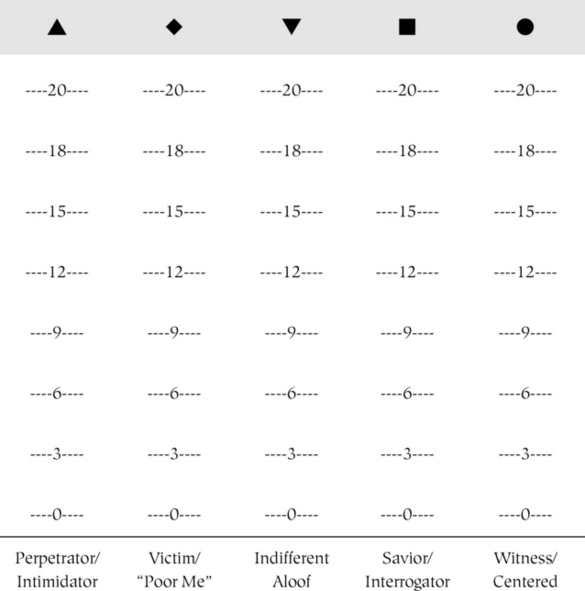
After taking the test and adding up your answers, transfer the total of each life position to the corresponding columns in the following table. You simply need to fill each column up to the level corresponding to the results obtained, according to the points you accumulated for each type of personality.
Portrait of the Five Defense Mechanisms
What are your favorite ways to acquire energy?
Results
Generally speaking, if your number of “somewhat true” answers varies between nine and twelve in each column, you are a rather balanced person. You know how to adjust and react differently according to the situations you are exposed to. You allow yourself to get the energy available around you in the way that most benefits your balance in the moment without getting caught up in a specific typology.
If, on the other hand, the total of one or several columns stands out considerably from the others, if the number of responses seems much higher or much lower in some categories, it is a sign of some imbalance at the level of your personality.
The different affirmations you read during the test reflect your primary reactions, those that characterize you when your survival instinct is threatened. The typology with the highest score represents your most common way of stealing or draining energy from others. This is what is called a defense mechanism or control drama, as identified by author James Redfield in his book The Celestine Prophecy. The lowest total corresponds to the repressed part of your personality, the one you may not allow yourself to freely express.
To better understand each of these instinctive mechanisms, it is important to let go of any notion of judgment or moralizing criticism. You must remember that it is impossible for any human being to survive without vital energy, and that it is not always easy in a conflicting situation to recenter yourself in order to get back to your inner balance without soliciting those around you.
In an ideal world, meditation would be taught to children from an early age, and three deep breaths would be enough for anyone to reconnect to the feeling of inner peace. In reality, most modern societies live in an endless power struggle to obtain the energy of others—willingly or forcibly.
When a technique to obtain energy works well, it then becomes easy to repeat the process and for it to become a means to an end. A particular typology then overtakes the others, shaping the personality and character of an individual until this structurally repetitive and limited pattern becomes predominant, thus smothering the person’s real inner light. Below is an overview of the five favored ways used by humans to revitalize their energetic bodies.
The Five Ways to Acquire Energy
From The Celestine Prophecy’s “Control Dramas”
1. By Frontal Confrontation

The Perpetrator or Intimidator
Motivation: anger
Imposes, controls, threatens, attacks
The energy leaps forward from the top of the body, and jumps toward others like a predator on prey.
1. By Frontal Confrontation: The Perpetrator
The first way of acquiring energy from others is by forcing them to give it to us by imposing ourselves on them. We may do this by being charming, by manipulating, or by convincing the other person that we deserve his support. Such charisma is typical of politicians and people in positions of power.
It is the constructive aspect that Redfield calls the Intimidator: he or she uses his power of persuasion to maintain control over situations, events, and people around him. He affirms himself and knows how to get ahead, has the courage to make decisions, and generally gets everyone to follow him. He makes a good army general: he knows how to take advantage of any situation to get to the top and obtain the most prestigious medals.
On the negative side, this type of person will have a tendency to disregard other people’s opinions. He tends to put his own ideas first. He won’t hesitate, if need be, to use his physical strength in order to impose his will. This is why he can easily be called a perpetrator in popular psychology. He is the mean one, the bad guy in every action movie and children’s tale, the one without whom the adventure couldn’t happen.
His way of functioning is, “It is me who decides, and if it doesn’t work out as I intended, I will impose, control, threaten, aggress, and if need be, punch.”
According to his vision of things, he is right, and you are wrong. The Perpetrator’s message is that he is superior, and that others are therefore inferior to him. As Eric Berne, creator of transactional analysis, would say, his life position is, “I’m OK; you’re not OK.”
What characterizes the Perpetrator is anger. On the vibratory level, his way of getting energy is by extracting it from others, willingly or by force, the way we squeeze a lemon. In his energetic fields, he gets power from his grounding to jump forward out of his body and pounce on others like a predator on prey. His strategy is to dominate others in order to obtain his energy.
What we need to understand is that deep down, the Perpetrator is shaking with fear that his weaknesses or vulnerabilities might be uncovered. He is suspicious of others, and this is what makes him angry: he is afraid to be betrayed. By maintaining and imposing his control, he then believes he is mastering the situation and keeping the upper hand.
One part of the Perpetrator imagines that the best way to silence his fear is to impose it on others by generating fear in them. The problem is that it remains present inside him anyway. On top of that, the energy he is draining from others is never quite enough to totally reassure him. And even if he excels at getting respect and getting other people’s attention, he remains constantly unhappy and unsatisfied.
If your higher score is in the column of the Perpetrator, there is a good chance that you were brought up in a family where you had to fight to survive. One of your parents was probably controlling and dominating, and you understood that the best way to gain respect was to ensure that you mastered any situation you were confronted with.
This also explains why people who suffer from violence during childhood have a tendency to recreate the same pattern with their own children. Because it is the only role model they had, it remains the only way they know to acquire energy, attention, and respect from others.
In the following chapter, we will talk about some practical solutions to undo this alienating typology, but for now, it is better to consider the space that other defense mechanisms have in your life. Could there be one in particular that you haven’t experimented very well with until now?
2. From the Left
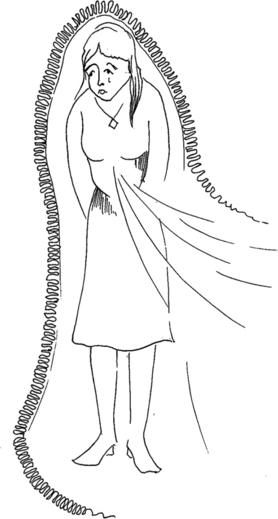
The Victim: “Poor Me”
Motivation: sadness
Complains, despairs, begs, implores
Weakness of the solar plexus, caving in with self pity; energy leaks downward on the left side.
2. From the Left: The Victim
The second way of acquiring energy from others consists of appealing to their natural empathy. As the left is said to be the side of the heart, a simple way to rob the energy of others is to do so through feelings; in other words, to induce compassion or sympathy in others.
On the positive side, it is easy for a very sensitive person to generate these emotions in others, allowing him or her to open up and express what he feels. Generosity, humanity, and sentimentality are characteristics of these people, and they are often idealists, aspiring to make a more beautiful or more serene world in the surroundings of their lives. They do not always find ways to materialize their dreams, which often leads to them feel powerless.
This is when they tend to feel sorry for themselves, seeing problems rather than solutions, negative aspects rather than positive ones, weaknesses rather than strengths. Because they always need to express their emotions, even the most negative ones, Redfield names them Plaintives: to get energy from others they will complain, despair, beg for attention, and implore others for help.
It seems that people who are sensitive and apparently vulnerable usually have greater abilities to attract protectors—people who need to feel useful and worthwhile through the help they provide. However, it is true that at times we all need a hand, but some individuals have developed a particular talent at exploiting others by becoming dependent on their generosity, strengths, and the resources extended to them.
They are complacent in their role as victim. They need others because on their own they cannot manage to take control over their lives. They feel that their past wounds or failures are too heavy to bear and that they are simply subjected to what happens to them without being able to change anything about it. The Victim is easy to spot; no matter what reassurance or help we try to give them, their response always starts with the same words, “Yes, but …”: “Yes, but, you know, for me it’s different, it’s much more serious, it never works, it always gets worse.”
Deep down, the Victim does not want to be helped in finding solutions. She just wants to complain, and she is constantly burdened by sadness. Feeling destitute and devalued, she lacks self-confidence and would like someone to make up for her own weakness. She would like to be supported, consoled, “pepped up”—in brief, to have others sacrifice themselves for her the way she believes she is sacrificing herself for others.
The Victim’s life position, according to transactional analysis, is, “I am not OK; you are OK.” In other words, “Since you have extra energy, and I don’t have enough to keep myself afloat, I beg you to give me yours.”
The Victim draws to her the energy of any person who gives her attention. She inspires pity and hangs on to others as to a life ring while draining others of the vital energy she pretends to need to get her balance back.
In reality, because her solar plexus, seat of the emotions, is constantly made more bitter and weakened, a leak remains at this level that doesn’t permit energy to be stored efficiently. To the contrary, self-pity and withdrawal maintain the global vitality of the person at a minimum, and her energetic field gets deflated and wasted and flees downward, to the left of the body.
If the typology of the Victim is the one for which you have obtained the highest score, it means that a part of you regularly feels overwhelmed by events or burdened by the weight of a heavy or painful past. Your self-esteem is often low, and you consider others to be better, stronger, or happier than you.
You find it hard to understand that you create your life and that it is possible to change things on the condition that you believe sufficiently in yourself. You probably felt abandoned in your youth, and your inner child constantly needs to be reassured and secured rather than going forward and exploring his inner unlimited potential to create.
In the following chapter we will explain the benefits of a change of attitude rather than trying to solve the external problems that afflict your existence. However, in the following pages, you can meditate on the positive aspects of the other defense mechanisms that perhaps could allow you to let some other parts of you emerge: parts that know you have everything you need within you to manifest the most fulfilled of lives.
3. From the Right
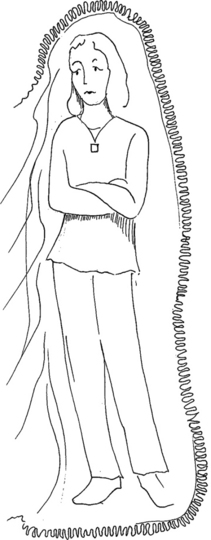
The Savior or Interrogator
Motivation: bargaining and guilt
Makes herself indispensable, can’t say “no,” forgets to take care of herself
The energy leans to the right side and slightly downward because of a tendency to take others on her shoulders.
3. From the Right: The Savior
This way to obtain energy from others is much more subtle because in appearance the Savior is the one who gives his energy to others. He is the person who is always helpful, attentive, resourceful, and available to help others or give advice.
In a group, she is an excellent right hand, the one we can always count on, who never lets us down, assumes responsibility diligently, and ensures that everyone is well. In fairy tales he is the hero, the charming prince who rescues the beautiful princess in distress. This is why, almost unanimously, he is appreciated by those around him.
But one might wonder what his real motivations are for devoting himself in that way. In fairy tales, the one who intervenes as a hero usually obtains all the honor: he is given the hand of the princess, inherits from her a kingdom, and becomes a king acclaimed by all. Could it be that the Savior, deep down, perhaps needs to feel that he is appreciated, recognized, even acclaimed, if not by jubilant crowds then by those close to her?
His life position would ideally be, “I’m OK; you’re OK,” or, in reality, if we extrapolate a little, “I’m OK, and thanks to me, you will be OK.” All in all, he adopts a pretty condescending attitude motivated by bargaining. He has others believe that they won’t make it unless they give all their trust and energy. By acting as a protector, mediator, counselor, or therapist, he makes sure that his peers cannot do without him, nor act without first consulting him.
Put simply, the Savior has a tendency to drain people of their own self-confidence in order to get a leg up on them. He drains others’ energy by destabilizing them and questioning their ability to find their own solutions. This is why Redfield calls him the Interrogator: he spends his time questioning others, interrogating them on what is wrong in their lives, and grilling them to always find out more about them. Under the pretense of being concerned about those close to his heart, he does all he can to become indispensable in their eyes.
However, in the long run this becomes a dangerous game. Always ready to do a favor and feeling that he never does enough, he gives of himself without keeping track, forgets himself, feels it more and more difficult to say “no” at the risk of being eaten away by guilt, and eventually empties himself of his vital energy.
The Savior is therefore the one who is always turned toward others, with his hands extended and open to give. Her energetic body is slightly bent toward the front, slightly to the right and downward, because he has a tendency to bear others on his shoulders.
Nevertheless, although he obtains his energy through the value he draws from his relationships with others, he doesn’t manage to truly accept the love and tenderness of those close to him. He always gives more than he receives.
If the Savior profile was dominant in your results in the previous test, you know from experience that the major problems of this type of personality are that when you yourself need to be “saved” or at least comforted, it seems like there is never anyone able, or even available, to reciprocate.
Once again, it’s the law of attraction that applies: others won’t feel obliged to help you just because you have been there for them when they needed it. They will treat you the way you treat yourself: if you put yourself last in your life, the same will apply in your relationships with others.
Of course, the solution remains to maintain a good balance between giving and receiving. However, this defense mechanism often goes back to childhood, when you understood that you needed to prove your true value in the eyes of those you loved. Either someone around you found themselves distraught and you felt you had to make up for their vulnerability, or you felt, at some point, devalued, humiliated, or denigrated, and you haven’t managed to overcome your need for approval since.
Your challenge is to learn to create a bit of distance and to be less preoccupied by what others think of you, the way the Indifferents are so apt at doing: by using another method of acquiring energy, but without having to work so hard.
4. From Behind

The Indifferent or Aloof
Motivation: state of shock, denial
Feels paralyzed, escapes reality, stays out of reach
Mental energy leaks toward the head, pushing all the subtle energy outside the body backward and slightly to the right.
4. From Behind: The Indifferent
We have talked about the Perpetrator, the Victim, and the Savior, the eternal triangle found in any good action movie. Who, then, is the fourth musketeer that we have yet to discover? It is impossible to imagine a children’s tale without the classic Narrator, the indefinable character, a total stranger to the story who simply relates it without taking part in it. Isn’t this the typical attitude of the Indifferent?
The Indifferent is the one who always remains at a distance, lost in thought, unaffected by what surrounds him or her. Her biggest strength is her ability to pull back in the mental sphere: she is generally very smart, enjoying great abilities for analysis and reasoning. With a strong critical mind she can quickly evaluate the situation she is in, not wasting time in hypothetical considerations and sticking to the facts. She is looking for perfection, to surpass the self, and for ultimate efficiency.
On the other hand, this way of being also allows her to play devil’s advocate. In a group she is able to discover problems before anyone else and draw attention to the procedures to be followed. She doesn’t hesitate to bring others back in line if they lose focus or get carried away by their emotions. Very attached to structure, she is excellent at dealing with time, deadlines, and anything that is factual.
On the negative side, such a person is never satisfied. Meticulous to a fault, she is always splitting hairs, preferring to juggle with ideas and concepts rather than to look for practical solutions. The Indifferent tends to demotivate her surroundings by constantly discussing and questioning everything. Constantly looking for the impossible, she drains the Energy of everyone around her without ever being satisfied.
Her life position, as described by Eric Berne, could be summed up as, “I’m not OK, but neither are you.” She can appear intolerant, skeptical, defeatist, or even disdainful toward emotional people, to the point of retracting into her own bubble when people express their feelings and emotions too openly.
In any situation, whether joyous or troubling, she will at some point feel the need to create some distance. She systematically cuts herself off from her emotions, her feelings, and even her pain to remain within analysis, objectivity, and observable facts, even if it paralyzes her inside; therefore she is, generally speaking, in denial. To remain in her mental universe, the Indifferent will tend to disconnect from what is happening around her. Because her spirit leaves her body, it then becomes difficult for anyone to join her or to drain her: her energy field remains out of reach, projected upwards, backward, to the right of the body. In fact, she is like a bar of soap in the bathtub: the more one tries to get hold of her, the more she slips, dodges, and escapes.
Her favorite way of obtaining energy consists of appearing partly inaccessible. This way, she forces others to come to her and to put everything in action to try to get her attention while she casually keeps her distance.
If you have a high score in this sphere of experimentation, there is a good chance that you have been subjected to some major trauma in your childhood or that you may have felt strongly repressed in your need for autonomy or independence. It is as if your personality remains in a state of shock, imprisoned in a shell.
Hence there is much insecurity when it comes to taking initiative, expressing bold opinions, or investing yourself in intimate relationships. You don’t dare spread your wings for fear of having them clipped. You continually refer to outside norms, conventions, and objective reasoning rather than considering the call of your heart, your intuition, and your feelings.
Because you constantly doubt yourself, you don’t have the courage to search for ways to improve the situation or to change your attitude; the notion of change itself scares you too much. More than anything, it is important to understand that you are not exempt from emotions. On the contrary, it is your hypersensitivity that pushes you to protect yourself excessively.
By going back inside and asking yourself what you feel on the emotional level, bit by bit and day by day you will be able to reconnect with the wonderful being that you truly are.
If you are uneasy with the idea of letting others into your personal bubble, you can always turn toward you soul family. Their subtle luminous presence will feel less invasive to you, while allowing you to open yourself to energy that is both beneficial and reassuring on all levels.
5. Through Your Ruling Chakra
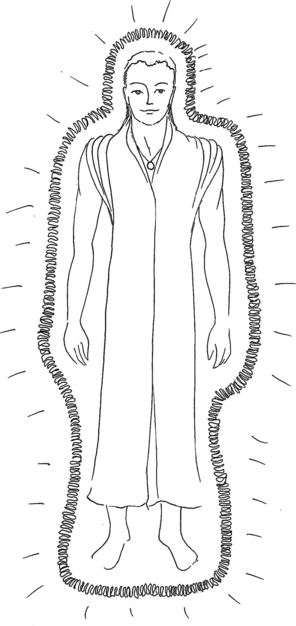
The Witness or Centered
Motivation: acceptance, detachment
Remains centered, allows himself to let go, lives in the now
The energy is stable, luminous, and balanced because the individual is open and radiating, connected to the ground as well as the heavens.
5. Through Your Ruling Chakra: The Witness or Centered
No matter what your usual primary reactions are and which domination mechanisms characterize you, there is a simple, easy, and joyous way to obtain energy without having to drain it from others: you can connect to your soul family through your ruling chakra.
As discussed in Chapter 3, the ruling chakra is our privileged connection to our guardian angels, guides, and the light beings that accompany us. At any moment, no matter what the situation, they will be happy to give us energy, revitalize our energetic bodies, and rebalance all of our being, for they are themselves perpetually unified with the celestial source: eternal, infinite, and unlimited.
Among humans, power struggles push you to drain your peers in order to increase your own vital energy level. The members of your soul family, on the other hand, are always ready and available to recharge your batteries without ever asking for anything in return. Quite the contrary, they hope that you will appeal to them because well before your birth they committed to supporting you whenever you feel weakened on an energetic level.
In fact, the very mission of your soul family is to heighten your vibratory level so that you have at your disposal the maximum energetic potential finally to recognize yourself and remember who you really are. They are part of you, and you are part of them. By connecting to them you plug directly into the divine universal energy you originate from.
Your light cocoon then returns to its original ovoid shape: stable, luminous, and balanced, favoring your openness to others, thus allowing you to radiate like a thousand suns to be fully in harmony with heaven and earth and connected to all that lives.
There is no danger of weakening or undermine anyone: the light beings are made of incomparable energy that regenerates itself and is entirely renewable at any moment. Hence there is the possibility of being revitalized on demand at every second by simply taking three deep breaths while visualizing your ruling chakra opening to receive all the energy you need to reharmonize yourself.
It is important to point out that in daily life, not all circumstances affect us. Some people come into our lives without necessarily exploiting or draining our energies every time we are in their presence. We are therefore regularly able to recenter ourselves without any help or effort, to get caught up in unexpected events, or to go through tumultuous times while remaining calm and poised. This is why many people end up with a high score in the Witness or Centered column.
These people manage to remain centered by living day to day in the present moment. In their eyes, “everything is OK here and now.” They apply themselves to seeing only the good side of things, accepting what they cannot change and letting go, meaning trusting and believing that everything happens for a good reason and that time heals all. They take for granted that life wishes them well and that God is on their side, no matter how things appear to be. Just like Tibetan monks, they look for detachment and aim for transcendence beyond the illusions of this world.
Living Here and Now
However, we all know it is illusory to believe that we can remain permanently detached without getting involved personally in anything at all. We might aim for balance, but from that to a continual state of grace there is a gap. Furthermore, if you visualize a scale in perfect balance, what do you see? The two trays are perfectly level, forming a line parallel to the ground that extends in length without any fluctuation or difference: put simply, it is a flat line. Who truly wants their life always to be flat, stable, straight, and without flavor, just to be a witness to events without ever taking part in them?
It isn’t necessary to detach from everything and to be in constant meditation in order to live in harmony. You can go with the flow, and if need be, courageously face the waves of chaos that hit us at times, knowing that even when a tempest is brewing on the surface, in the depths of the ocean, as in the depths of our selves, everything remains unchanged, calm, and serene, unperturbed by what is happening on the surface.
The same applies to your soul. No matter what has happened in this or any previous life—family burdens, wounds from your past, mistakes, or failures—this divine spark remains intact, integral, and filled with purity. Just as one could not condemn a child victim of incest, your past experiences have no damning or karmic value against you unless you give them alienating importance.
Again, at any time you can choose to unburden yourself from the weight of the past, to drop your backpack, and to set the meter back to zero simply by repositioning yourself here and now in the present moment and making some new choices for the future.
This is the best way to preserve and maintain the energy within you: become aware that nothing and no one can harm your divine essence, nor rob you of it, weaken it, or take it over. People will try to grab your energy, but in no way can they ever manage to diminish or extinguish your inner light.
Your childhood experiences may have largely contributed to forging your character, to crystallizing in you the defense mechanisms most likely to allow you to be recognized and accepted by others, but in no way do they define who you are deep within.
Even if a part of you believes that it must suffer the assaults of people who are lacking in light and that if need be it must fight back by instinctively draining the energy of others, you now know that another choice is available to you: to benefit from a serene and luminous energy that is totally accessible and has no limits.
Your soul family is always beside you, and you can connect to it in order to enjoy once again absolute plenitude in all spheres of your being.
Exercise: Choosing to Let Go
Here’s a simple exercise that you can do at will any time a problematic situation appears in your life. It was inspired in me by my yoga teacher, Lucie Geoffroy, whom I thank from the bottom of my heart for her openness and her ever-warm simplicity.
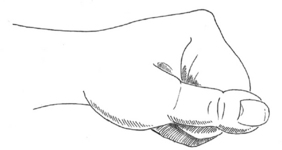
With your arm extended out in front of you, the back of your hand facing the sky, imagine that you hold a precious diamond in your palm. You will keep your fist tightly clenched, of course, your fingers holding onto the jewel so as not to let it slip.
If someone asked you to let go, what would you do? Would you open your hand at the risk of letting the diamond drop?
What goes on in your head if you tell yourself that you have to let go of the most precious thing that you have? Do you believe that letting go means dropping, renouncing, capitulating, throwing in the towel, losing face, or abandoning the game? If this is the case, it is no wonder you refuse to submit to it.
Truly letting go instead implies seeing things differently, opening up to new avenues you had not thought of on your own.
In this particular case, it isn’t necessary to keep your hand facing downward to open it. You can turn it upward, your palm facing the sky, and open your fingers, thus creating space for the new opportunities that present themselves to you.
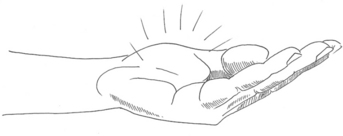
Letting go is simply dropping control, trusting life, and opening up to receiving the countless benefits that rain on you.
Next time you feel that you need to let go, do this symbolic little gesture: free yourself from your worries by offering them to God, extend your hands out in front of you, open and ready to welcome divine jewels in the form of providential blessings and perfect solutions.