
Chapter 9
In This Chapter
● England gets a parliament
● Wales and Scotland: Fighting for, gaining, and losing independence
● Edward II gets sacked - by his queen and her lover
● Cutting the apron strings and cutting loose: Edward III launches the Hundred Years War
● The Wars of the Roses: The uncivil civil war
This chapter marks the beginning of the High Middle Ages in Britain, a time when knights were bold, all those magnificent gothic cathedrals went up, and people built castles that began to look the way they do in fairy tales. During this period, the Kings of England conquered Wales and very nearly conquered Scotland (Braveheart country). The High Middle Ages also saw battles in France and in England: the Hundred Years War, which didn’t really last 100 years, and the Wars of the Roses, which had absolutely nothing to do with botany.
Now, it’s very easy to look at this period and try to spot “your” nation - be it England, Scotland, Ireland, or Wales - asserting itself. Years later, Shakespeare, for example, saw this as the time when England gradually sorted itself out so that, by the time Henry Tudor killed Richard III at Bosworth, it was ready to be a great nation under the Tudors - which, of course, just happens to be when Shakespeare was living. Nowadays, the Welsh take pride in how Llewellyn and Owain Glyn Dwr (that’s Owen Glendower to everyone else) resisted the wicked English, and the Scots learn about Bannockburn (the battle that routed the English and sent them packing) and watch endless repeats of Baywatch (Surely Braveheart? - Editor).
Although simplistic, these interpretations aren’t entirely wrong. By the end of this period you can talk about England being more “English” than it had ever been, and that includes the King. And the Scots, Welsh, and Irish all issued documents declaring that they were (or ought to be) nations free from foreign (that is, English) rule.
Basic Background Info
Let’s get a grip on the line-up before play begins.
England - the French connection
England had been ruled by French kings since William the Conqueror won at Hastings in 1066 (see Chapter 7 to find out what that was all about). Henry II had made England part of a huge French-based empire (for more on this you need Chapter 8) but his son King John had lost most of it. His other son, Henry III, was only a baby when he came to the throne, and wasn’t a very promising youth.
The Kings of England had to pay homage to the Kings of France for the French lands they still held in Aquitaine and also still had to promise to be their loyal subjects. And these not-very-English kings often brought other French nobles over to England, usually Gascons from Aquitaine, to act as advisers and enforcers - a move that didn’t go down well with the “English” nobles who were already here.
Who was ruling what?
In the meantime, things had progressed in Scotland, Wales, and Ireland:
Scotland: Scotland was separate from England and had even ruled part of northern England for a time. Unfortunately, the Scots King William “the Lion” took the wrong side in a family rebellion against English King Henry II (more details in Chapter 8), so the Scots had to give up their lands in the north of England and accept the Kings of England as their overlords.
Wales: Although Henry II had declared himself overlord of Wales (see Chapter 8), the Welsh made it so hot for Henry II’s men that Henry’s men went and invaded Ireland to give themselves a break. The Anglo-Norman Marcher Lords (lords from the Welsh borders) ruled the south and west, but the Welsh ruled the north, and they wanted the Marchers out. So Prince Llewellyn the Great’s grandson, Llewellyn (it saved on name tags) began to gear up for war. Watch this space.
Ireland: Richard de Clare (“Strongbow”) and his Anglo-Norman chums invaded Ireland back in 1170 (see Chapter 8) and had stuck around.
They stayed mostly around Dublin and along the west coast. The rest of Ireland was too wet and boggy for them, and you couldn’t get a decent cup of tea for love nor money, so the Anglo-Normans built a big protective wall called the Pale round their bits of Ireland and they sat tight behind that. (They controlled Ireland from behind the Pale for the next six hundred years.)
Simon Says "Make a Parliament, Henry!"
Meet Simon de Montfort. He’s French, he’s the Earl of Leicester, and he’s important. He came over to England to claim his earldom, and King Henry III took an instant liking to him. The English barons were less impressed. “Hello”, they thought. “Here’s another of Henry Ill’s poncy French favourites” before forcing Henry to send Simon de Montfort into exile. Henry allowed Simon to come back, but when he returned, Simon didn’t want to be the King’s favourite any more. He started making friends among the barons. He listened to all their grumbles about Henry’s favourites and his alarming habit of losing battles. About this time, Henry began to demand a lot of money so that he could make his younger son King of Sicily. The barons reckoned that, if Henry wanted money, he was going to have to give something in return. Simon became their spokesman.
What the Barons wanted - demanded, even - was a parliament. They laid their demands out in a document called the Provisions of Oxford (no, it’s not a marmalade shop!). The Provisions stated that Henry would have to agree to summon a parliament consisting of the following:
● The Church: Everyone needed the Church behind them.
● The Nobles: Well, naturally.
● The Commons: That’s people who weren’t royal or lords or churchmen but were just plain folks. You and me.
That last bit was Simon’s idea. He suggested that each town and each shire or county should send two representatives to represent the ordinary people.
Henry had to go along with the Provisions of Oxford, but he didn’t like it. He got the Pope to declare the Provisions invalid (the Pope had done that with Magna Carta too as you can see in Chapter 8), and as soon as he could, Henry III tore up the Provisions of Oxford. That meant war! At the Battle of Lewes Simon de Montfort captured Henry and his son Prince Edward. Sounds good for Simon, but unless you’re planning to take the throne yourself, which Simon wasn’t, capturing your King is tricky. You can’t keep him locked up, but if you let him go, what will he do? Simon was saved from making a decision, however, because Prince Edward escaped, gathered an army, and counter-attacked. Seconds out, Round Two: the Battle of Evesham. Simon de Montfort was beaten. And killed.
I'm the King of the Castles: Edward I
After all the excitement of dealing with Simon de Montfort, Henry III was a nervous wreck and went into retirement. Henry’s son Prince Edward took over as King. When Henry finally died (he had one of the longest reigns in British history, and no-one’s ever heard of him), Edward became King Edward I. (He used the number to distinguish himself from all those Saxon King Edwards). Edward I didn’t close parliament down, but he stopped it from trying to run the whole kingdom. Edward had other enemies in his sights: The Welsh.
War for Wales
While Henry III was battling it out with Simon de Montfort (refer to the earlier section “Simon Says ‘Make a Parliament, Henry!’”, Prince Llewellyn of Wales was playing his favourite game, “Let’s Kick the King of England”:
● When Henry III invaded Wales he was so useless that Llewellyn ran rings round him, and even the Marcher Lords thought they’d be better off on their own.
● Then Llewellyn went off and joined in with Simon de Montfort’s rebellion, just so he could see the look on Henry III’s face.
● Then Llewellyn went home and attacked the Marchers, so that, by the time Edward I came to the throne, the only bits of Wales Llewellyn didn’t control weren’t worth controlling.
Llewellyn’s relationship with Edward I wasn’t any less fractious than his relation with Edward’s father had been. When Edward I told Llewellyn to come to Westminster for his coronation and to pay him homage, Llewellyn told Edward to go boil his head. Five times! You didn’t do that to Edward I. Edward got together a vast army and headed for Wales. The Welsh fought back. Edward built huge castles to keep them down; The Welsh captured the castles. Edward sent more troops; Llewellyn beat them. Then the troops beat Llewellyn. The Welsh started raiding and ambushing, Llewellyn was killed by an English soldier who probably didn’t know who he was, and that was it.
The revolt petered out, and the Statute of Ruddlan was created. This statute said that English law now applied in Wales. Edward gave the Welsh a “Prince of Wales” who, he promised, could speak no English. Ho ho. This prince was Edward’s infant son who couldn’t speak anything except gurgle. No-one was fooled: Edward I was in charge, and he had all those castles to prove it.
Hammering Scots
It would be nice and neat to say that next it was Scotland’s turn to fall under English rule, but the truth is, Edward wasn’t actually planning to invade Scotland. The Scots simply ran out of monarchs. King Alexander Ill’s children had all died, and Alexander’s horse fell over a cliff (with King Alexander on it). The only person left was Alexander’s little granddaughter who lived in Norway. Poor thing: She died on the ship en route to England to marry Edward I’s son. The Scots call her “The Maid of Norway”, which is nice, but it didn’t hide the fact that they now had a major problem. Who was to rule them?
Job vacant: King of Scotland. Edward said he would settle Scotland’s monarch problem. He sifted through 13 applicants and boiled it down to two: Robert the Bruce, one of those Anglo-Norman lords whose families had been settling down in Scotland, and John de Balliol, an English nobleman. And the winner was . . . John de Balliol. Edward was hoping that Balliol would be under his thumb so that Edward would end up controlling Scotland on the cheap. Unfortunately for Edward, Balliol wouldn’t play ball. When Edward planned a war with France and told Balliol to help, Balliol not only refused, he signed a treaty with the French. Then the Scots started raiding northern England.
Order, order!
Don't get too excited about these medieval parliaments. To start with, they're not actually the oldest parliaments in the world - that honour goes to the Isle of Man parliament, Tynwald, which dates back to Viking times (head to Chapter 6 for that era in British history). For the most part, in the early parliaments, barons just met to discuss important decisions, usually legal disputes - parliament can still act as a court to this day.
You didn't have to call the Commons to a parliament, and they often didn't. But Simon de Montfort recognised that having the Commons on your side could be a very good idea, especially if you were going to war with the King. Edward I found the same when he needed money for his wars. But the Commons tended to want to talk about other things as well as money, so gradually parliament began to become more important.
What's in a name?
The Scots call him Robert the Bruce but he would have called himself by the French form of his name, Robert le Bruce. Bruce was of pure-blooded French stock. He was descended from Robert de Breaux, one of the Norman barons who came over to England with William the Conqueror in 1066 (there's more about that in Chapter 7). We'll call him Robert the Bruce, since that's the name by which he's known to history, but don't forget he was every inch a French nobleman by upbringing - and he never forgot it.
“Right”, said Edward fiercely, “so that’s how it is, is it?” Edward got his army together and marched north. He took every Scottish castle he came to, and in the end he took Balliol, too. Balliol had to take off his crown and all his royal bits and bobs and hand them over to Edward. It was the Tower of London for Balliol; it looked like another kingdom for Edward I.
William Wallace’s big day out
But just when it looked as if Edward had won in Scotland, a low-ranking Scottish nobleman called William Wallace (who looked nothing like Mel Gibson and certainly wouldn’t have painted his face blue) gathered the Scots together, murdered some English officials, and ambushed the English at Stirling Bridge. It was a famous victory but it spelled disaster for the victors. Edward I stormed back, defeated Wallace in open battle the next year, captured him, had him hanged, drawn and quartered, and took over Scotland himself. He also removed the sacred coronation Stone of Destiny and sent it down to London to sit under his own coronation throne in Westminster Abbey. No wonder they called him “Hammer of the Scots”.
Robert the Bruce declares himself Robert I of Scotland
Edward went home and left two guardians to govern Scotland while he was away. One was a Scottish nobleman called John Comyn; the other was Robert the Bruce, the runner-up to John de Balliol in the Who’s Going to be King of Scotland stakes. As soon as Edward’s back was turned, Bruce struck. Literally. He stabbed Comyn and declared himself King Robert I of Scotland. And he dared King Edward I of England to do his worst. Edward took the challenge, marched north (again!) - and died. That changed everything.
The Battle of Bannockburn ...
Edward I’s son, Edward II (see? Nice and easy for you) could not have been more different from his father. Edward II couldn’t lead an army for toffee. When he finally got round to invading Scotland in 1314, he walked straight into the trap Robert the Bruce had laid for him at Bannockburn. It was total victory for the Scots. Edward II only just escaped being captured himself. Robert the Bruce was King and Scotland was free.
. . . Is not quite the end of the story
It’s easy to think of Bannockburn as a sort of Scottish Yorktown. The English go home, the credits roll, “The End”. Only it wasn’t the end. Now that the Scots were clearly a strong, independent nation, they started acting like one - they invaded Ireland. Robert the Bruce’s brother Edward declared himself King of Ireland. The Scots tried to claim the invasion was all in the cause of Celtic solidarity, but the Irish weren’t fooled - and neither were the Anglo-Norman barons who actually ruled Ireland (see Chapter 8 for more about them). The Scots destroyed the Irish people’s already sparse crops, which plunged them into famine, and marched on Dublin. The people of Dublin set the town ablaze rather than hand it over to the Scots and in 1318 the Anglo-Normans defeated Edward the Bruce in battle, cut off his head and sent it to Edward II of England.
Then things started collapsing in Scotland itself. The new King, Robert the Bruce’s son David II, was no fighter. The English invaded Scotland and David II fled to France. Then the English invaded France and David got himself captured. He made a deal with the English: They let him go and in return he agreed to hand Scotland over to them when he died. It was if Bannockburn had never been fought.
An initial glimpse of the Stewarts
While David II was away in France, one of the leading Scottish noble families acted as stewards of the kingdom, which is why they came to be called Stewarts (and later Stuarts). Sadly, these early Stewart kings were a fairly sorry lot:
● Robert III (1390-1406): Took over after David II was captured but never really controlled the country.
● James I (1406-37): Murdered by his own nobles.
● James II (1437-60): Invaded England but killed by an exploding (Scottish) cannon.
● James III (1460-88): Killed in battle against his own nobles.
You Say You Want a (Palace) Revolution: Edward II
Piers Gaveston was a favourite of Edward II of England (some even suggest that he and Edward II were lovers). Gaveston was another of those cocky characters stepping off the boat from Aquitaine and looking down their noses at the locals; the nobles couldn’t stand him. So began a series of palace revolutions, with everyone tussling for power:
● 1308: Nobles force Gaveston into exile, and Edward brings Gaveston back.
● 1311: Nobles force Gaveston into exile again, and Edward brings him back again.
● 1312: Nobles seize hold of Gaveston, try him for treason, and cut his head off. (As a nobleman Gaveston was supposed to have immunity. From then on any nobleman who got captured could be killed, and most of them were).
● 1315: After the English lose to the Scots at Bannockburn, Thomas of Lancaster decides enough is enough and takes over the government.
● 1318: Edward Il’s new favourites arrive - Hugh Despenser and his father, Hugh Despenser.
● 1321: Thomas of Lancaster forces Edward to send the Despensers into exile.
● By 1321: Edward would like to know just who is King around here?
Edward was angry. He gathered up everyone who was loyal to the Crown (even if they didn’t think much of who was wearing it) and challenged Thomas of Lancaster to a battle at Boroughbridge in Yorkshire. And for once Edward won. He cut Thomas’s head off. End of the problems? Not on your life. Edward’s wife Queen Isabella then got involved.
A woman scorned
One person Edward hadn’t considered in all of this was his queen, Isabella. In fact, he never did consider her much - that was the problem. Isabella was young and pretty and French, and trapped in a nightmare marriage. She felt humiliated by Edward spending so much time with his favourites, and when Edward sent her to Paris on business she saw a chance to do something about it. In Paris, Isabella met an ambitious young English noble called Roger Mortimer, started an affair with him, and hatched a plot. Isabella and Mortimer crossed back to England at the head of a French army. They got rid of Edward II (according to legend, they murdered him by putting a red hot poker up his - but there’s no evidence one way or the other, so you can use your imaginations) and replaced him with young Edward, the Prince of Wales. But since the young Edward - King Edward III as he now was - was only a boy, Isabella and her lover, Roger Mortimer had the real power.
Declarations of Independence
In 1320, six years after Bannockburn, King Robert I decided to try to strengthen his newly independent kingdom. He got some Scottish churchmen at Arbroath Abbey to draw up the Declaration of Arbroath addressed to the Pope, asking him to recognise Scotland as an independent nation. It was quite a document. "As long as but a hundred of us remain alive," it said, "never will we on any conditions be brought under English rule". Then it added that the Scots were fighting for freedom, "which no honest man gives up but with life itself". The Irish and the Welsh came up with similar documents. This wasn't just anti-English feeling. These people were beginning to think of themselves as nations. Mind you, that didn't stop the English controlling them.
Careful! Some day your prince may come
With Isabella and Mortimer running everything, the barons soon began to feel that they’d just exchanged Edward II for a His ‘n’ Hers version of Gaveston or the Despensers. The young King, who was growing up fast, wasn’t too happy with the arrangement either. After a year, he decided he had had enough of taking orders from his mother and her lover. He gathered some men together, and they made their way through a secret passageway into Mortimer and Isabella’s chamber in Nottingham Castle and arrested them. Mortimer was hanged (English politics was beginning to look decidedly dangerous) and Isabella retired from politics. And Edward III had only just started.
Conquering France: The Hundred Years War and Edward III
Edward III decided conquering France would be fun. He had a perfectly good claim to be King of France. His mother, Queen Isabella, was the next in line, but because the rules said a woman couldn’t inherit the throne, Edward came next. Instead, the throne had gone to Edward’s first-cousin-once-removed, King Philip VI. So Edward III told the Bishop of Lincoln to go over to France and tell King Philip most politely to kindly get off the French throne and hand over to Edward. It’s difficult to know whose face would have made the better picture - the bishop’s, when Edward told him what he had to do, or King Philip’s, when he heard the message!
Everyone thought Edward was crazy. France was the big country in western Europe. It had more people, more knights, and more wealth than any of its neighbours - certainly more than the English. French ships controlled the Channel, and there didn’t seem much the English could do about it. All in all, the best thing for Edward to do about being cheated of the French throne seemed to be to go to anger management classes and forget all about being passed over. But, as Edward would have put it, where’s the fun in that?
People came to call what ensued the Hundred Years’ War. They weren’t keeping count, they just meant that the fighting seemed to go on for ever.
Some battles
By all the laws of averages and physics, the English ought to have lost every battle - the French had many more men, and they were fighting on home ground. But the English had a special weapon - the longbow - that the French never seemed to take into account properly however many times they encountered it.
The longbow is a very simple weapon, but absolutely deadly. In the hands of a skilled bowman - and English bowmen were very skilled - it was highly accurate and could pierce armour almost as easily as a bullet. Edward III knew just how much he owed to the longbow, and when people started skipping Sunday archery practice to play football he issued a law banning the game. (“Football” in those days consisted of a sort of all-out war between rival villages, with everything allowed except weapons. Maybe Edward was worried about losing half his supply of archers before he even went to war).
Here’s what the longbow could do:
● Battle of Sluys 1340: English archers (yes, archers) destroy the French fleet. So many French are killed, people say the fish could learn French. (In speech bubbles?)
● Battle of Crecy 1346: Crushing English victory - 10,000 French slaughtered by English archers.
● Siege of Calais 1347: Edward captures the main French port close to England. According to tradition, six Burghers (leading citizens) of Calais tried to save the town from being sacked by offering Edward their lives instead. Edward was inclined to take them up on their offer until his Queen, Philippa of Hainault, persuaded him to spare them. It’s the subject of Rodin’s famous sculpture The Burghers of Calais.
● Battle of Poitiers 1356: Edward’s son, the Black Prince, doesn’t just decimate the cream of the French army (those archers again) - he captures the French King Jean II. England had won - or so it looked.
The Black Prince
Edward Ill's son, the Black Prince, is one of those heroes of history who don't bear too close an inspection. His nickname comes from his black armour, though no-one seems to have called him the Black Prince in his lifetime. There's no doubt that the Black Prince was a fearsome fighter. When the prince was in a tight spot in one battle and people were urging King Edward to go and help him, the King is supposed to have shaken his head and said, "No, let him win his spurs". The Black Prince became England's first duke, fought a war in Spain and won that one too. He even married for love. But then things get less glamorous.
Edward Ill left his son in charge of his lands in Aquitaine, but before long the people of Aquitaine were appealing to the King of France against the high taxes the Prince was making them pay. The French King tried to confiscate the Prince's lands, which triggered the war off again. The Prince was sick with dysentery by this time, but he was so angry with the French that he got off his sick bed to supervise the destruction of the city of Limoges and the massacre of some 3,000 of its people. Not such a nice guy.
The French just didn’t give in: Edward found he couldn’t get into Rheims, where all French kings are crowned, because the city wouldn’t surrender, and the French kept up an exhausting guerrilla war against Edward’s men (they were too canny to risk another open battle). In the end, Edward and the French signed a peace treaty, which said:
● Edward would give up his claim to the French throne and to Henry Il’s old lands of Anjou and Normandy
● In return, Edward got to keep Calais and a much bigger Aquitaine.
If it seems like Edward gave in rather easily, bear in mind that while all this was going on, the Black Death was ravaging Europe. Any sort of peace looked very attractive. All that was left of Edward’s French adventure were some French fleurs-de-lis on his coat of arms to show that he ought to be King of France really.
Conquering France again
Just when the French thought they were safe, a new English King came to the throne: Henry V. Henry became King at a very dangerous time in England. His father Henry IV had seized the throne quite illegally, and there had been a major rebellion against him (see the following section “Lancaster vs. York: The Wars of the Roses - a User’s Guide” for details). Now there was a plot to kill Henry V. A war in France seemed just the thing to take people’s minds off thoughts of rebellion.
Heading back to France
Henry looked at all the old documents about Edward III’s claim (have a look back at the earlier section “Conquering France: The Hundred Years War and Edward III”) and in 1415 he set off for France. Things started badly for Henry:
● Henry took the city of Harfleur (that’s the “Once more unto the breach” battle), but it took up precious time, and his men were dying like flies from dysentery.
● Henry had to give up any thoughts of marching on Paris. The best he could do was march through northern France to Calais, thumbing his nose at the French King with a sort of “Yah! You can’t stop me!” as he went. Only, the French could stop him. Or so they thought.
● A massive French army was shadowing Henry’s men and on 25
October 1415, it barred Henry’s way near the village of Azincourt. Or, as the English called it, Agincourt.
Battle at Agincourt
Forget the films and the plays and all the fine words - Agincourt was slaughter from start to finish. The French charged across a muddy field, and the English archers just mowed them down. The chroniclers talk of mounds of dead, and for once, we don’t think they were exaggerating. Then Henry gave his most ruthless order of the day: “Kill the prisoners!” His army was so small, he could not hope to control large numbers of prisoners. Only a few of the very top people were spared (you could get a hefty ransom for them). Then Henry came home in triumph.
It really was a triumph. This time the peace treaty said that Henry’s little son, also called Henry, was to be the heir to both the English and the French thrones. Then Henry V died - of dysentery, like so many of his men.
Calamity Joan
But Henry V hadn’t quite won. The King of France’s son, known as the Dauphin (because his personal badge was a dolphin, and dauphin is French for dolphin) was pretty sore about the peace treaty because it meant he would never be King. So a sort of resistance movement grew against the English. This movement didn’t seem to be getting anywhere until a young girl called Joan turned up one day and said she was hearing voices in her head telling her that God wanted her to drive the English out of France. No-one quite believed her, but things were so desperate, the Dauphin felt ready to try anything. So he kitted Joan out in armour, and to everyone’s surprise, she went down to the city of Orleans, where there was a big siege going on, and drove the English away. The French victory at Orleans put heart into the French, and they began to fight back much more fiercely. Joan was captured and tried as a witch and burnt, but these events didn’t save the English. The Dauphin was crowned King of France in Rheims Cathedral, and when the last English towns in Normandy fell, the English had to give in. After all that fighting and all that blood, all they had left was Calais.
Lancaster vs. York: The Wars of the Roses - a User’s Guide
Richard II was the little son of the Black Prince (see the earlier section “Some battles”, as well as Figure 9-1 for the family tree), and he became King when he was still only a baby, so the kingdom was run by his uncle, John of Gaunt. When John of Gaunt went off to do some campaigning in Spain, everything fell to pieces. (For more of the adventures of John of Gaunt - like the Poll Tax that which sparked off the Peasants’ Revolt - head to Chapter 10.)
Richard II is one of the last kings we ought to think of as more French than English, and his nobles, who by now were much more English than French, didn’t like some of Richard’s French ideas, especially his idea that he ought to be able to rule as he liked, answering to nobody. Soon serious trouble was brewing between Richard and his nobles. The nobles forced Richard to execute his chancellor, and Richard started to arrest and execute the nobles. John of Gaunt came back from Spain and managed to calm things down a bit, but he was a sick man and died soon afterwards. Things were not looking good.
Basically, each side thought the other was trying to get rid of all it held most dear. Richard thought the nobles were trying to take away his very power as King; the nobles thought Richard was trying to destroy the nobles of England as a class. Then Richard banished two leading nobles, the Duke of Norfolk and John of Gaunt’s son, Henry Bolingbroke, Duke of Lancaster, and confiscated all Bolingbroke’s estates. Now the nobles were really alarmed. Bolingbroke was the most powerful noble in England; if Richard could do this to Bolingbroke, he could do it to any of them. So when Richard went off to deal with a rebellion in Ireland, Henry Bolingbroke slipped back across the Channel. He said he only wanted his lands back. But what he actually seized was the throne.
Richard came racing back, but he was too late. Henry Bolingbroke, now King Henry IV, was firmly in place, and he had Richard put in chains. Within months, Richard was dead - almost certainly murdered. It was a tragedy in many ways. But for the English the tragedy was just beginning.
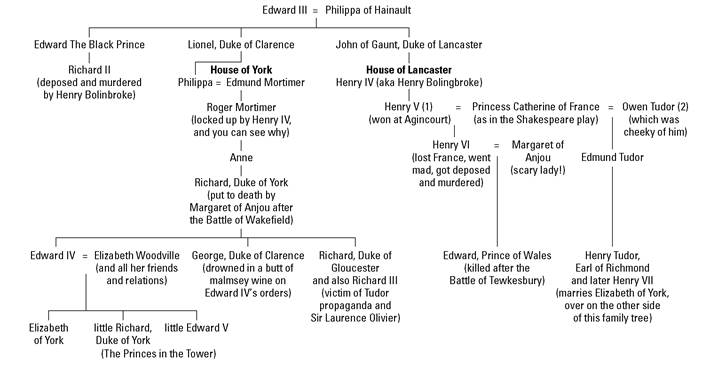
Figure 9-1: The York and Lancaster family tree
Joan of Arc
No-one comes out very well from the story of Joan of Arc except Joan herself. As far as we know, she was simply a peasant girl who had an incredible capacity to inspire people. The French Dauphin became King Charles VII thanks to her, but he never showed her much gratitude. The French nobles were jealous of her and resented being shown up by a peasant. They also didn't like it that she told them off for swearing. The English, of course, were convinced Joan was a witch - only evil powers could explain how she was able to beat them.
Nowadays the French like to accuse the English of having burnt Joan of Arc, but in fact French soldiers captured her, and a French court, with a French bishop on the bench, condemned her to death. The French were fighting each other as well as the English, and the French Duke of Burgundy had made an alliance with the English. The Duke of Burgundy's men caught Joan and handed her over to the Church which didn't like Joan breaking its monopoly on hearing sacred voices. In the end, Joan was a victim of grubby politics, and as French politicians all like to latch onto her for their own causes - even the proNazi wartime government at Vichy - that's more or less how she has remained.
House of Lancaster: Henrys IV, V, and VI
Did Henry Bolingbroke actually have any right to the throne? He was Edward III’s grandson, but so were plenty of others, and many of them had a better claim. But frankly, so what? Henry was on the throne now and everyone else would have to learn to like it. But Henry had set a very worrying precedent: If he could seize the throne just because he didn’t like the current King, what was to stop anyone else from doing the same? And sure, enough, they tried.
The Percys: Henry Percy, Earl of Northumberland, and his dashing son Harry “Hotspur” were fresh from crushing the Scots, so they were formidable foes to Henry IV. They got help from the Welsh prince Owain Glyn Dwr and even from the French, but Henry IV moved too quickly for them: He and his son Prince Henry defeated the Percys and killed them both in battle.
Owain Glyn Dwr: Owain came very close to turning the English out of Wales. It took a full-scale military campaign, as well as lots of bribery, for Henry to re-establish English control. No-one knows what happened to Owain.
Henry IV had to spend all his reign fighting battles just to stay on the throne, and Henry V spent his short reign, as explained in the earlier section “Conquering France again”, fighting to get the throne of France. Which should have meant that all was secure and well for the infant Henry VI when he came to the throne.
Unfortunately, Henry VI couldn’t have been less like his warlike predecessors: He was deeply religious and rather timid. He married a formidable Frenchwoman, Margaret of Anjou, which made him even more timid. The infighting at court got even worse, with everyone blaming each other for the disasters in France and accusations of treason and even witchcraft going backwards and forwards; and then something quite unexpected happened. The King went mad.
Not running-through-the-fields-like-George III-mad, but Henry VI certainly seems to have lost his reason. Had no idea who he was or who anyone else was, or what he’d come in here for or anything.
House of York: Edwards IV and V and Richard III
When Henry VI went mad, a Regency seemed like the obvious solution, but there was another little point to consider. If you could get rid of Edward II and Richard II because you didn’t think they ruled very well, what should you do with a King who couldn’t rule at all? That was when the heir to the throne, the Duke of York, began to take an interest. His thinking: a) Why shouldn’t someone else take over from Henry VI? and b) Why shouldn’t that someone else be me?
The Duke of York started looking carefully at his family tree (and so can you, in Figure 9-1). If he had read it correctly, didn’t he actually have a better claim to be King than Henry VI had? Edward III had claimed the French throne when there was a perfectly good French King on it; why shouldn’t the Duke of York claim the English throne when there was a patently incapable English King on it?
Guns 'n' Roses
The wars were a tragedy for England. The fighting was bitter and very bloody. One of the battles, at Towton in 1461, was one of the bloodiest ever fought on British soil. No-one at the time called what transpired the Wars of the Roses - that’s a much later piece of romance based on the badges each side wore (red rose for the Lancastrians, and white rose for the Yorkists). There was nothing romantic - or rosy - about them at all. These were brutal wars, fought with all the latest weaponry, including cannon. As with all civil wars, there was a lot of changing sides, which makes it hard to get a clear picture of what was going on. Here’s an outline.
Round 1:1455-60 War!
The Duke of York won the Battle of St Albans against King Henry VI. In theory he fought the battle to show how loyal he was to Henry and liberate him from his “evil advisers” but Henry didn’t believe it and neither should you. It took five years, but in 1460 the Duke finally came clean and claimed the throne for himself. It didn’t do him much good. Henry VI’s wife, Queen Margaret, got an army together and cut the Duke off at Wakefield. Then she cut his head off too. Advantage: Lancaster.
Round 2: 1461 Revenge!
The new Duke of York (son of the old one) beat Queen Margaret’s men at Towton and forced Henry VI and his family to flee to Scotland. The Duke was crowned King Edward IV. Advantage: York.
Round 3: 1462-70 Yorkists split and people change sides!
Yorkist Earl of Warwick arranged for Edward IV to marry a French princess, but Edward married an Englishwoman called Elizabeth Woodville behind Warwick’s back. Elizabeth brought lots of friends and relations to court. Warwick, knowing when he’s not wanted, slipped away to have a quiet word with Margaret and join the Lancastrians. Then Edward IV’s brother George, Duke of Clarence, changed sides, too. The Lancastrians landed in England, seized London, and declared Henry VI the true King. Edward IV had to run for his life. Warwick became known as “the Kingmaker”. Advantage: Lancaster.
Round 4: 1471 Edward's revenge!
Edward IV got the Duke of Burgundy on his side and came back to England in force. He defeated (and killed) Warwick at Barnet, and then he beat Queen Margaret and the Prince of Wales (and killed him) at Tewkesbury. Edward retook London and sent Henry VI to the Tower, where he, er, died. (Just in time, George Duke of Clarence changed sides again and re-joined Edward). Game, set, and match to York.
Edward IV reigned for twelve years, from 1471-83, and he was able to bring a bit of stability to the country. He carried on giving land and titles to his wife’s family, the Woodvilles. He had Clarence arrested for plotting against him (very wise), but his other brother, Richard Duke of Gloucester, did him very good service fighting the Scots. When Edward IV fell seriously ill and had to hand over to his young son, Edward V, Richard made sure he, and not the Woodville family, was the boy’s protector.
When Edward IV finally died, Richard put the young King and his younger brother in the Tower of London for safe-keeping - and they were never heard from again. Then Richard staged a coup (boy kings had caused England nothing but trouble) and declared himself King Richard III. (You can find out more about these events in Chapter 11.)
Round 5: 1485 The Lancastrians come back!
Distant-relative-by-marriage-to-the-House-of-Lancaster Henry Tudor, Earl of Richmond, landed at Milford Haven (he was Welsh) and claimed the throne. Richard III dashed off to fight Henry, but Henry beat him (and killed him) at the Battle of Bosworth. Henry Tudor became King Henry VII. Game, set, and championship to Lancaster.