
Chapter 21
In This Chapter
● Winning ugly: The 2000 presidential election
● Going to war with terrorism
● Dealing with Saddam
● Watching a city drown
● Coping with an economy gone haywire
● Picking a new kind of president
As the twenty-first century began, the United States found itself the Big Kahuna on an increasingly shrinking planet. Technological innovations seemed to occur at a geometric pace, and they jumped national boundary lines. That helped create an even more tightly knit international economy. Environmental and political problems also crossed borders, all of which added up to the fact that the world’s troubles were inescapably America’s, and vice versa.
This chapter covers the election of two presidents, the fighting of two wars, dealing with the most horrific terrorist attack in modern history, and confronting the worst economic crisis since the Great Depression. At this rate, it’s going to be a very busy century.
That Was a Close One! Bush and Gore, 2000
One was the son of a former president, the other the son of a former U.S. senator. By the time the 2000 presidential election campaign was over, George W. Bush and Al Gore had staged a race that was a son of a gun.
Gore, the offspring of former Tennessee Sen. Al Gore Sr. and a former senator himself, had served dutifully, if a bit distantly, for eight years as vice president to Bill Clinton and was the obvious choice to succeed Clinton as the Democratic Party’s standard-bearer.
Bush, the governor of Texas and the son of the 41st president, George H.W. Bush, was a former oil man and major league baseball executive. The younger Bush parlayed his familiar name and financial backing from much of the Republican establishment to win the GOP nomination, after beating back a challenge from Arizona Sen. John McCain.
The campaign was a roller-coaster affair. Gore tried to run on the positive aspects of the Clinton administration while taking pains not to be too closely associated with Clinton himself, who was viewed as damaged political goods because of the Lewinsky scandal and his subsequent impeachment.
Bush dubbed himself a “compassionate conservative,” and focused on the need for a “new morality” in the White House. He also criticized the Clinton administration’s military intervention in the Balkans and Somalia, contending that the U.S. military shouldn’t be used for “nation building” elsewhere. By the time Election Day arrived, polls showed the two were neck and neck.
Hanging chads and butterfly ballots
It all came down to Florida. Outside the Sunshine State, Gore had captured (or would capture) 266 of the 270 electoral votes needed to win the White House. Bush had 246. It appeared at first that Gore had won Florida’s 25 electoral votes, giving him the presidency. But as the night of Nov. 7 turned into the morning of Nov. 8, it looked like Bush had won. Television networks that had originally projected Gore as the winner reversed themselves and declared Bush the winner. Around 2 a.m., Gore called Bush to concede. Around 4 a.m., he called back to withdraw his concession.
And the confusion was just getting warmed up. Over the next 35 days, both sides engaged in a titanic legal struggle over whether recounts should occur and, if so, which votes should be recounted. Ballots where voters had failed to completely punch out the little cardboard squares — and therefore left hanging chads — were challenged.
So were butterfly ballots that had candidates’ names on one page and the punch holes on another, leading to voter confusion. A post-election study of ballots in Palm Beach County found that more than 8,000 voters had punched holes for Gore and one of two minor party candidates.
The whole mess eventually went to the U.S. Supreme Court. On Dec. 12, the court voted 5-4 to reverse a decision by the Florida Supreme Court that would have continued the recounts. The next day, Gore conceded.
Count 'em all — and be a good loser
"An election is not over until all the votes are counted. If the U.S. Supreme Court does not come down on the side of this most revered principle of democracy, then this presidential election will be forever tainted."
— U.S. Sen. Barbara Boxer, D-CA, two days before the court's decision.
"There's an important responsibility for the loser to lose with grace."
— U.S. Sen. Mitch McConnell, R-KY, on the same day.
Post-election scrutinizing
Gore’s concession ended an election filled with ironies and what-ifs. Gore had won the popular vote by about 500,000 votes out of about 100 million cast. It was only the fourth time in U.S. history that the popular vote winner had not won the White House (1824, 1876, and 1888 were the others). If Gore had only won his own home state of Tennessee or Clinton’s home state of Arkansas, he would have won. If Green Party candidate Ralph Nader had not been on the Florida ballot, most of his 97,000 votes might have gone to Gore.
Post-election studies by several major newspapers found that if the recount had been limited to only the counties in which Gore had sought recounts, Bush still would have won. But if all the disputed ballots throughout the state had been recounted, Gore would have won.
As something of a consolation prize, Gore won the 2007 Nobel Peace Prize for his work in bringing attention to the role of humans in global warming. A film that he narrated on the same topic also won an Academy Award for best documentary. Bush, meanwhile, got the job his dad had held eight years before — and some of the same headaches.
Bush came into office with slightly more than half of the voters preferring someone else, and with polls showing more than half the country thought the Supreme Court’s decision was politically motivated. That’s hardly anyone’s idea of a good way to start an administration.
But Americans don’t hold a grudge for long. By April 2001, polls were showing that while only 50 percent thought Bush had won “fair and square,” 59 percent said they supported him, and 62 percent approved of the way he was handling the job. (Of course it didn’t hurt that Bush had started his tenure by proposing a $1.6 trillion tax cut package.) The new president also unveiled an ambitious energy program that called for relaxing environmental protections in favor of aggressively expanding fossil fuel development.
Barry Bonds
His dad was an all-star and his godfather a Hall-of-Famer, so maybe Barry Lamar Bonds was destined to play baseball. Born in 1964, Bonds was the son of gifted outfielder Bobby Bonds and godson of the legendary Willie Mays. After graduating from Arizona State University in 1986, Bonds made his major league debut with the Pittsburgh Pirates. He quickly established himself as a slick-fielding outfielder, a speedster on the bases, and a fair home-run hitter. He got better.
Over the next 21 years, mostly with the San Francisco Giants, Bonds won seven Most Valuable Player awards (four more than any other player ever) and eight Gold Gloves for fielding excellence, and made 14 All-Star teams.
In 2001, Bonds broke the single-season homer record with 73. And on Aug. 7, 2007, he broke the career home-run record with his 756th. He finished the season with 762 homers.
But for all his achievements, Bonds was not well liked outside San Francisco. Part of the reason was his image as being arrogant and aloof. He was also the target of allegations that he had cheated by using performance-enhancing substances. In November 2007, Bonds was indicted by a federal grand jury for perjury and obstruction of justice in connection with a probe into his alleged use of steroids. He was scheduled to go to trial in Spring 2009. And in the 2008 baseball season, no major league team had a job for the all-time home-run king.
But less than nine months into his administration, Bush faced a crisis that would put most domestic programs on the back burner, define his presidency, and change the way many Americans thought about their own security.
A Nation Stunned
At 8:46 (EDT) on the morning of Sept. 11, 2001, a hijacked commercial jet crashed into the North Tower of the World Trade Center in New York City. Seventeen minutes later, a second hijacked passenger jet flew into the center’s South Tower (see Figure 21-1). Both towers soon collapsed, pulling down or heavily damaging surrounding buildings.
At 9:37, a third jet plowed into the Pentagon in Washington, D.C., followed 26 minutes later by the crash of a fourth flight into a field about 70 miles southeast of Pittsburgh, Pennsylvania. It appeared passengers aboard the fourth plane, having learned of the fate of the other three through cellphone calls, confronted the hijackers before the plane could reach its intended target, which was believed to have been the Capitol in Washington, D.C.
The United States had suffered the worst attack on its soil in its history, and the country plunged into a war against terrorism.
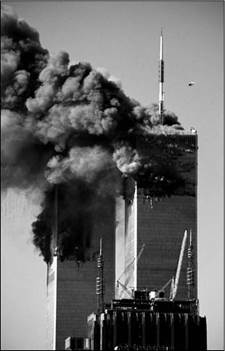
Figure 21-1: Devastation at the World Trade Center.
al-Qaida and Osama bin Laden
The attacks, carried out by 19 members of a fundamentalist Islamist group called al-Qaida (“the base”), killed a total of about 3,000 people, including some 400 New York City police and firefighters who responded to the disaster at the World Trade Center.
Americans — and much of the rest of the world — were shocked. Millions had watched horrified as television cameras that had been focusing on the North Tower after the first attack captured the second plane hitting the South Tower. The subsequent collapse of the towers was also carried live. National, state, and local officials scrambled to prepare for more attacks.
Air travel was shut down. Stock markets in the United States and around the world were badly shaken and posted severe losses.
On Sept. 17, Bush formally identified al-Qaida leader Osama bin Laden as the mastermind behind the attacks. A wealthy member of a prominent Saudi Arabian family, bin-Laden had operated out of Afghanistan since the mid-1990s, under the protection of a group called the Taliban. The Taliban (which means “student”) followed an extreme version of Islamic law, and had seized control in Afghanistan in 1998.
Taking on the Taliban
Speaking to a joint session of Congress on Sept. 20, Bush demanded the Taliban hand over bin Laden and other al-Qaida leaders and dismantle terrorist training camps within Afghanistan. “They will hand over the terrorists, or share their fate,” Bush warned.
On Oct. 7, after Taliban leaders had rejected Bush’s demands, U.S. and British aircraft unleashed a massive bombing attack on major Afghan cities. By mid-November, the Afghan capital of Kabul had fallen. By mid-December, air attacks coupled with ground forces that included troops from the United States, allied countries, and anti-Taliban Afghan militia had toppled the Taliban regime.
While out of power, however, the Taliban was not out of business. After a year of licking their wounds, Taliban forces gradually began an insurgency that showed no signs of abating through the end of 2008, despite the continued presence of more than 30,000 U.S. troops as well as thousands more from other countries.
American casualties were higher through the first 10 months of 2008 than in any other year in what was turning into the country’s longest war. Moreover, through November 2008, neither bin Laden nor Taliban leader Mullah Mohammed Omar had been captured or confirmed as killed.
The insurgents’ efforts were aided by an ineffectual and corruption-riddled Afghan government, and fueled by funds from control of Afghanistan’s vast opium production. The enemy also took advantage of safe havens in mountainous areas along the Afghanistan-Pakistan border by scampering into Pakistan, where it was politically difficult for U.S. and allied troops to follow.
“The war ahead,” understated Gen. David Petraeus, commander of U.S. forces in the area in late 2008, “will be difficult.”
Fighting terrorism on the home front
The Bush Administration never formally declared war on Afghanistan (which allowed it to claim it didn’t have to treat those captured as prisoners of war). But it did declare war on terrorism, and Bush proclaimed the war would continue and be fought on every front “until every terrorist group of global reach has been found, stopped, and defeated.”
A month after the Sept. 11 attacks, Bush pushed for a proposal called the Uniting and Strengthening America by Providing Appropriate Tools Required to Intercept and Obstruct Terrorism Act — or the USA Patriot Act.
Terror with a stamp on it
If the events of Sept. 11 weren't enough to stamp the word "terrorism" firmly in the minds of Americans, some letters postmarked Sept. 18 from Trenton, New Jersey, finished the job.
The letters, to NBC News and the New York Post in New York City, contained a note bearing the date "9-11-01," and a 15-word message: "This is next/Take penacillin (sic) now/Death to America/Death to Israel/Allah is Great." They also contained spores of anthrax, a nasty bacterial disease. Although they were never found, it's assumed similar letters were received at ABC News and CBS News in New York and the National Enquirer in Boca Raton, Florida, because people at those organizations were also exposed to anthrax. A few weeks later, anthrax-bearing letters addressed to U.S. senators Tom Daschle of South Dakota and Patrick Leahy of Vermont were found.
By the end of November, 22 people who either worked at the targeted sites or worked for the postal service had contracted the disease. Five of them died. The incidents made Americans nervous about something as mundane as opening the mail. Government officials issued dozens of warnings while emergency personnel drilled in response techniques to bioterrorism and chemical attacks.
Although there were varied and highly speculative media and law enforcement theories as to the perpetrators and possible links to al-Qaida, no arrests were made. In late July 2008, Bruce E. Ivins, a longtime researcher at the federal biodefense lab at Ft. Detrick, Maryland, committed suicide. Within a week, federal prosecutors announced Ivins was the man behind the attacks and had acted alone. Some of Ivins' colleagues, however, doubted he had done it, and no convincing motive was established. The attacks remain ample fodder for conspiracy theorists everywhere.
The far-reaching “temporary” act (most of which was made permanent by Congress in 2006) greatly expanded the authority of the FBI and other law enforcement agencies to conduct searches, look at medical and other personal records, such as what materials an individual took out from public libraries, and spy on those suspected of potential terrorist acts without court approval. It allowed foreigners to be held for up to seven days without charges or deportation proceedings.
The act was approved 357-66 in the House of Representatives. In the Senate, the vote was 98-1, with only Sen. Russell Feingold, D-WI, opposed.
In July 2002, Bush secretly authorized the National Security Agency to listen in on phone calls American citizens made to other countries and to monitor e-mails. The order wasn’t made public until 2005 and Congress didn’t sanction the actions until 2008. In November, he signed a bill creating the Department of Homeland Security, consolidating dozens of government agencies, from the Secret Service to the Coast Guard, into one super-agency.
Imprisoning “non-POWs" at Guantanamo Bay
Because there had been no declaration of war against Afghanistan, captured al-Qaida and Taliban fighters were not treated as prisoners of war (POWs). Instead, they were taken to a prison erected on the U.S. Naval base at Guantanamo Bay on the island of Cuba. Administration officials contended that because the prison wasn’t on U.S. soil, the prisoners had no rights and could be held indefinitely without trial or even formal charges being filed.
In 2004, international observers reported some of the detainees at Guantanamo had been subjected to what the U.S. Central Intelligence Agency (CIA) referred to as “enhanced interrogation techniques,” which the observers characterized as “tantamount to torture.” It was also revealed that the CIA had abducted suspected terrorists and held them in secret prisons in Europe.
Defending controversial tactics
Civil libertarians complained that such actions were counter to American ideals and violated basic human rights. But administration officials, notably Vice President Dick Cheney, defended the practices as justifiable and necessary to fight terrorism. They also pointed out that no terrorist attacks had occurred on U.S. soil since Sept. 11, while several terrorist plots had been sniffed out and stopped. In 2008, Congress approved a bill to ban some of the interrogation methods used, but Bush vetoed it.
“The day will come when most Americans have no living memory of the events of Sept. 11,” Bush said in 2008 at a ceremony commemorating the seventh anniversary of the attack. “They will learn that this generation of Americans met its duty. We did not tire, we did not falter, and we did not fail.”
We also got into another war.
That Damn Saddam
With his approval ratings as high as 90 percent in some polls after the 9/11 attacks and U.S. retaliation in Afghanistan, Bush made the war on terror the centerpiece of his administration’s efforts. And with the overthrow of the Taliban accomplished, the administration turned its attention to an old nemesis: Iraqi dictator Saddam Hussein.
The United States, under the first President Bush, had decided in 1991 not to prolong the Gulf War by seeking Saddam’s ouster. But it did persuade the United Nations to impose economic sanctions against Iraq, as well as monitor the country’s clandestine development of nuclear, biological, and chemical weapons, known collectively as weapons of mass destruction (WMD).
In 1998, after Iraqi officials had consistently interfered with UN inspectors, President Clinton ordered the bombing of several Iraqi military installations. Iraq countered by banning the UN inspectors. Moreover, the impact of economic sanctions had waned as some countries quietly resumed trading goods for Iraqi oil.
Toughening the stance against Iraq
In 2002, the second President Bush began demanding that the UN toughen its dealings with Iraq. Bush argued the Iraqis had, or were close to having, weapons of mass destruction. Further, he said, they were harboring members of the al-Qaida terrorist group that had engineered the Sept. 11 attacks. On Oct. 10 and 11, Congress approved a resolution authorizing the use of military force against Iraq. The vote was 297-133 in the House and 77-23 in the Senate.
On Feb. 5, 2003, U.S. Secretary of State Colin Powell went before the UN Security Council to restate American claims about WMDs, displaying aerial photographs of purported chemical weapons sites and mobile nerve gas labs. “Ladies and gentlemen, these are sophisticated facilities,” Powell said. “For example, they can produce anthrax and botulinum toxin — in fact, they can produce enough dry biological agent to kill thousands upon thousands of people.” Powell was countered by UN inspectors who said they were again making progress with Iraq and had found no evidence of WMDs.
On March 17, 2003 — despite the objections of U.S. allies such as France and Germany, but with the backing of most of Congress — an undeterred Bush issued an ultimatum that gave Saddam 48 hours to resign and get out of Iraq.
When he didn’t, U.S. and British forces on March 20 launched air attacks on Iraqi targets, including a bunker in which Saddam was thought to be meeting with aides.
The U.S. invasion
Within days, U.S. forces invaded from neighboring Kuwait. By April 9, the Iraqi capital of Baghdad had fallen. Saddam’s sons were killed and Saddam went into hiding. He was captured in December, and turned over to Iraqi authorities. On Dec. 30, 2006, he was executed.
On May 1, Bush landed on a U.S. aircraft carrier off the coast of San Diego and declared an end to major combat. “Because of you, the target has fallen, and Iraq is free,” Bush told the crew. “The war on terror is not over, yet it is not endless. We do not know the day of final victory, but we have seen the turning of the tide.”
Iraq by the numbers
Following are some facts and figures concerning the Iraq War, as of November 2008:
● Cost of deploying one U.S. soldier for one year: $390,000.
● Percentage of U.S. casualties under the age of 25: 54 percent.
● Percentage of U.S. military deaths after President Bush declared major combat was over: 97 percent.
● Number of female military personnel killed: 98.
● Number of journalists killed: 135.
● Total cost to U.S. taxpayers: $630 billion.
Turning the tide the Wrong Way?
But if the tide had turned, it seemed to have turned the wrong way. The United States lacked a comprehensive post-war plan for rebuilding the country. Looting and riots dismantled much of Iraq’s infrastructure and damaged public buildings. U.S. occupation leaders barred members of Saddam’s Baath Party from serving in the provisional government and largely disbanded the Iraqi army. That resulted in a dearth of experienced political leaders and military officers to help with the country’s reconstruction.
In the aftermath, guerrilla warfare caused far more casualties than the brief war had, and fighting between militias of the rival Islamic Sunni and Shiite sects threatened to plunge the country into civil war.
Worse for Bush, an intensive search failed to turn up any weapons of mass destruction, and it became clear that Saddam had almost no connection with al-Qaida. By mid-November 2008, more than 4,000 U.S. military personnel had died in Iraq, and the war was costing an estimated $10 billion a month.
Losing popularity at home
At home, the war had quickly lost popularity after its initial successes had given way to a protracted fight. In 2004, Bush won reelection over U.S. Sen. John Kerry of Massachusetts by the narrowest margin of any incumbent president since Woodrow Wilson in 1916. In 2006, public dissatisfaction with the progress of the wars in Afghanistan and Iraq helped Democrats wrest control of both houses of Congress for the first time since 1994.
In January 2007, with no light visible at the end of the dark Iraqi tunnel, Bush announced he was sending in 21,500 more U.S. troops in an effort to quell the almost ceaseless violence in the country. In what was called “the Surge” strategy, he also announced renewed U.S. efforts to rebuild Iraq’s infrastructure and economy.
By mid-2008, violence levels in Iraq had dropped: Although U.S. military deaths reached 907 in 2007, the highest of any year, they dropped to 284 in the first 10 months of 2008. While administration officials claimed the drop was proof the Surge was working, critics contended it was due to the Shiite militia having largely defeated the Sunni, and to insurgent forces adopting a strategy of waiting until U.S. forces began withdrawing. Whatever the reason, U.S. and Iraqi leaders stepped up talks about a timetable for the withdrawal of U.S. troops, and Iraqi leaders made plans for 2009 elections.
Meanwhile, in the rest of the World . . .
As the wars in Afghanistan and Iraq dragged on, America was waging wars of words with other countries. In 2002, Bush had labeled Iran and North Korea, along with Iraq, as parts of an “Axis of Evil.”
The primary beef with North Korea was the country’s defiant insistence in developing its nuclear weapons program. After several years of public posturing and private negotiating, North Korea formally agreed in June 2008 to halt its program in return for the easing of economic sanctions against it.
Iran was a tougher nut. Administration officials insisted Iran was aiding the insurgency in neighboring Iraq by arming the insurgents and developing a nuclear weapons program that further threatened the already unstable region. Although evidence as to the exact status of the Iranian nuclear program was conflicting, the administration viewed Iran as a real threat to the region’s stability.
“The notion that the United States is getting ready to attack Iran is ridiculous,” Bush said in February 2005. “And having said that, all options are on the table.”
Winds and Losses
While the war on terrorism dominated Bush’s presidency, he did attempt to make changes on domestic issues as well. Within a few days of taking office, Bush proposed an ambitious education reform program, called the No Child Left Behind Act. Approved by Congress, the plan boosted federal education funding; increased standards expected of schools, including annual reading and math skills testing; and gave parents more flexibility in choosing schools. The program was variously praised for making schools more accountable and criticized for forcing educators to take cookie-cutter approaches to teaching.
In late 2003, Bush pushed a plan through Congress to reform Medicare, the federal health insurance program for the elderly. The plan gave senior citizens more choices when picking a private insurance plan through which they received medical services, as well as in obtaining prescription drugs.
Bush had far less success in trying to reform Social Security and U.S. immigration policies. Bush proposed to replace the government-run pension program with a system of private savings accounts. But the plan died in the face of criticism that it would put too much of a burden on individuals and be too expensive in the transition.
Bush also supported a bipartisan plan that would allow an estimated 12 million illegal immigrants to remain in the country on a temporary basis and to apply for citizenship after returning to their own countries and paying a fine. The plan was crushed by the weight of opposition from those who thought it was too draconian and those who thought it was too soft.
But Bush’s greatest domestic problems resulted from a natural disaster that took place in the South and an economic disaster that took place all over the world.
Big blow in the Big Easy
On Aug. 23, 2005, a hurricane formed over the Bahamas and headed toward the southeastern United States. Called Katrina, it crossed Florida, picked up strength over the Gulf of Mexico, and made landfall in southeast Louisiana on Aug. 29.
While Katrina’s 125-mile-per-hour winds — sending beds flying out of hotel windows — and 10 inches of rain were bad enough, a storm surge of more than 28 feet devastated the Mississippi coastal cities of Gulfport and Biloxi. But the greatest damage was reserved for the region’s largest city — New Orleans.
Nicknamed “the Big Easy,” most of New Orleans is below sea level. Under Katrina’s onslaught, levees supposed to protect the city gave way in more than 50 places, and 80 percent of the city was flooded. While most of New Orleans’ 1.2 million residents were evacuated (many to the city of Houston, Texas), thousands either refused to leave or could not (see Figure 21-2).
The disaster claimed more than 1,800 lives and destroyed 200,000 homes. Damage estimates ranged as high as $125 billion, making it the most expensive hurricane in U.S. history. It wasn’t until Oct. 11 that the last of the floodwaters were pumped out.
A heck of a what?
"Brownie, you're doing a heck of a job."
— President Bush to Michael D. Brown, head of the Federal Emergency Management Agency and the man in charge of federal disaster relief after Katrina, Sept. 2, 2005.
A week later, Brown, a political appointee whose previous job had been directing the judging of horse shows, was sent back to Washington and subsequently resigned.
By then, a hurricane of criticism had whipped up over the federal government’s response to the disaster. The criticism ranged from condemning the government’s slow response in some areas with regard to the evacuation process to providing adequate temporary housing after the storm. There were also charges that the slow response was due in part to the fact that many of New Orleans’ residents were poor African Americans. Bush’s approval ratings sank to the lowest of his presidency — at least to this point.
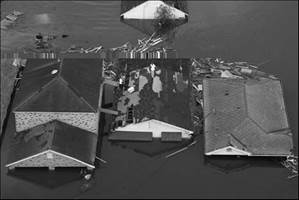
Figure 21-2: The aftermath of Hurricane Katrina
Ike hits Texas
In September 2008, New Orleans was again evacuated when threatened by Hurricane Gustav. This time, the preparations and responses were better and the levees held. But on the heels of Gustav came Ike.
The hurricane hit the Gulf Coast of Texas on Sept. 13, dragging up a massive storm surge that drowned much of the city of Galveston. The storm killed 82 in the United States, with as many as 200 people missing, and did an estimated $27 billion worth of property damage.
Once again, the federal government was criticized for its post-storm performance. Texas officials complained that the Federal Emergency Management Agency (FEMA) had been slow to provide housing for those left homeless by the hurricane and to provide funds for cleaning up the mess. “The response from Washington has been pretty underwhelming,” Texas Gov. Rick Perry said in mid-November, two months after the storm. “This is really irritating.”
But Washington had an even bigger storm to deal with, an economic storm that enveloped the nation and most of the world.
Ouch!: The Global Economy Stubs Its Toe
Here’s what happened to the U.S. — and global — economy in the first decade of the twenty-first century: People in California bought homes they couldn’t afford, and Iceland went broke.
Of course that’s way too simple, and there really isn’t a linear, cause-effect explanation. It’s really a lot of causes-effects linked together. Think of it as sort of a spider’s web of events and results.
Credit default swaps
One of the biggest contributors to the mess was something called credit default swaps.
Under federal law, banks and other lending institutions have to keep lots of capital in reserve to protect investors if any of the big loans the lenders make go bad. To free up those reserves so they could be used to turn a profit elsewhere, the lending industry came up with a sort of insurance policy, called a credit default swap. It involved having a third party assume the risk of a loan going bad in return for regular payments from the firm that had actually made the loan.
The federal government didn’t regulate the deals, so no one had a good handle on how widespread they were, nor which companies and which economic sectors were most at risk. By the middle of the decade, the arrangements had morphed into trillions of dollars of swaps.
Nancy Pelosi
On Nov. 11, 1996, Nancy Pelosi became a grandmother for the sixth time. But it wasn't the most historic thing to happen to her that month. That would have to have been the Democrats gaining control of the House of Representatives at the Nov. 7 election. That made Pelosi the first of her kind when the new Congress convened on Jan. 3, 2007: a woman Speaker of the House, second in line to the U.S. presidency.
Pelosi was born into a political family in 1940. Her dad, Thomas D'Alesandro Jr., served five terms in Congress before building a powerful Democratic machine in Maryland as mayor of Baltimore for 12 years. Her brother Thomas was also a Baltimore mayor. In 1963, she married a man named Paul Pelosi. Paul and Nancy settled in San Francisco, where Nancy was active in Democratic politics and raised five children. When the youngest reached her last year of high school, Pelosi successfully ran for Congress in a special election in 1987.
In Congress, Pelosi proved to be an effective fundraiser and climbed the ranks, becoming minority whip in 2001 and minority leader in 2002. As speaker, she burnished her reputation as both a champion of liberal causes and a hard-nosed politician.
When, for example, GOP critics tweaked her for earmarking — dropping language into bills that directed taxpayer money to projects in her district — Pelosi was ready: "There are earmarks that are very worthy," she said. "All of mine, as a matter of fact."
Buying up houses
At the same time, interest rates were dropping, and Americans began buying homes like crazy. The greater the demand, the higher real estate prices went. The higher prices went, the fewer people there were who could qualify for mortgage loans, at least under traditional methods of measuring qualifications — such as whether the borrower had enough income to make the payments.
So lenders and mortgage brokers got creative. They pushed no-down-payment loans, loans that started out with low interest rates and then ballooned after a few years, and loans where the borrower paid only interest for the first few years. If there came a time when the borrowers couldn’t meet the mortgage payments, heck, they could just refinance or sell the house for more than they paid for it and walk away with a profit. The risky mortgages boomed from about $160 billion in 2001 to more than $600 billion four years later.
There was even a bonus for people who could afford their mortgage payments, in that they could borrow on the equity in their homes and buy a new car or pay for Junior’s college. And flipping — buying a house, fixing it up, and reselling it for hefty profits — became a hip way to get rich quick.
Meanwhile, all those new mortgages were being pooled and sold by the lenders, in the form of investment bonds, to commercial banks, mutual funds, pension funds, and investors all over the world. And the bonds were “insured” by credit default swaps issued by many of Wall Street’s largest financial institutions.
Defaults and foreclosures
Things were fine until the housing market cooled off. Sales of homes sagged from a record 7.5 million in 2005 to an estimated 4.9 million in 2008, a 35 percent drop. Millions of Americans found the gimmicky mortgages had caught up with them. They couldn’t make their payments, and they owed more than they could sell their houses for. So they defaulted.
Did they ever. Between July and September 2008 alone, foreclosure notices were sent to 766,000 U.S. homes. A quarter of those were in California, where housing prices had climbed the fastest and came down the same way. Median housing prices across the nation dropped about 10 percent in 2008 compared to 2007 — and more than 30 percent in much of California.
Mortgage-based bonds went in the tank, and big lenders faced making good on hundreds of billions of dollars in credit default swaps. Some couldn’t, and declared bankruptcy or were bought up by other firms.
Banks, businesses, and bailouts
As the financial institutions foundered, credit markets dried up in other parts of the economy, from car loans to credit card limits. In turn, consumer spending shrunk, which caused businesses to cut back, often resulting in layoffs. The nation’s unemployment rate grew from 5 percent in January 2008 to 6.5 percent in October, a 30 percent rise.
And because the U.S. market was a dominant force in the world economy, other countries felt our pain. In Iceland, for example, the government was forced to nationalize the country’s three major banks. The banks didn’t hold a bunch of credit default swaps, but they relied heavily on foreign investment. When the world’s credit markets became tight, the Icelandic banks ran short on funds to meet their obligations.
Meanwhile, back in America, the federal government was trying to slow a flood of bad news. The U.S. Treasury Department seized the mortgage finance firms known as Freddie Mac and Fannie Mae, the government bailed out the nation’s largest insurance company, and the nation’s largest savings and loan firm went belly up.
On September 24, with his approval ratings wallowing below 30 percent, Bush warned a national television audience “the entire economy is in danger.” The speech was part of an effort to sell Congress on a plan to bail out the teetering financial industry with $700 billion in taxpayer money. “Without immediate action by Congress, America could slip into a financial panic,” Bush said, “and a distressing scenario could unfold.”
The scenario did unfold five days later, when a defiant House of Representatives rejected the Bush proposal. The U.S. stock market reacted with the biggest one-day point drop in its history. Two days later, the House reversed itself and approved a version of the bailout plan that the Senate had revised. The plan gave Treasury Secretary Henry Paulson wide latitude to use the money to shore up financial and mortgage institutions.
But to work, it would take time, and the bad economic news just kept coming. Toward the end of November, the stock market had sunk to its lowest level in more than a decade, dragging down pension plans and individual retirement accounts with it.
By that time, however, George W. Bush was in the last weeks of his presidency. The problem was going to be someone else’s.
The Great Presidential Race of 2008
A U.S. presidential race with no incumbent chief executive or vice president running hadn’t occurred since 1928, so when a wide-open field presented itself in the 2008 contest, it attracted a wide range of candidates.
Battling within the parties
On the Republican side were former New York City Mayor Rudy Giuliani, former Massachusetts Gov. Mitt Romney, former Arkansas Gov. Mike Huckabee, former Tennessee Sen. Fred Thompson, Rep. Ron Paul of Texas, and Sen. John McCain of Arizona. The Democratic side included New Mexico Gov. Bill Richardson and a quartet of current and former U.S. senators: Joe Biden of Delaware, John Edwards of North Carolina, Barack Obama of Illinois, and the former first lady, Hillary Clinton, of New York.
In an effort to enhance their voters’ clout in selecting the parties’ nominees, a host of states raced to move their primaries to the front of the pack. As a result, six states held caucuses or primary elections before the end of January, and 30 more by mid-February. The earlier primaries meant an earlier start to serious campaigning, which began in the spring of 2006. By the spring of 2008, Democratic presidential wannabes had participated in 26 debates or forums, Republicans in 21.
In early March, McCain sewed up the GOP nomination. It capped a startling comeback for the Arizona senator, whose campaign had been broken and almost done with just a few months before.
The Democratic race was a different story. Senators Obama and Clinton outdistanced the rest of the field by mid-February. That guaranteed the 2008 general election would be the first of its kind, with either the first woman presidential nominee by a major U.S. political party or the first African American.
But if they outdistanced the rest of the field, they couldn’t outdistance each other, trading primary victories in key states throughout the spring. Finally, Obama clinched the nomination in early June.
Obama selected Sen. Biden of Delaware, a well-known political veteran, as his vice presidential running mate. But McCain surprised everyone by picking Sarah Palin, the obscure first-term governor of Alaska. At various times, Palin both energized the McCain campaign and acted as a distraction.
Obama versus McCain: A plethora of differences
The two top-of-the-ticket candidates offered Americans one of the most disparate choices in U.S. history. At 47, Obama would be the fourth-youngest president ever. At 72, McCain would be the oldest. McCain was a Naval veteran of 22 years (5 1/2 as a prisoner during the Vietnam War) and a fourth-term senator. Obama had not served in the military and was a first-term senator. Obama was the son of a white American woman and a black Kenyan man. McCain had an ancestor who had served on the staff of George Washington. Obama liked to deliver electrifying speeches before huge crowds. McCain preferred chatting with small groups in informal settings.
The two also had widely differing views on nearly every issue: the war in Iraq, healthcare, taxes, energy, the environment. Obama fought charges that he was a socialist in progressive’s clothing. McCain fought charges that he represented four more years of ideas and policies identical to those of the highly unpopular Bush.
Obama's historic victory
Obama held a narrow lead through most of the summer. But as Election Day grew closer, the country’s staggering economy came to dominate the campaign, and voters decided Obama was better equipped to deal with it.
It was a convincing victory. Obama won the popular vote in every section of the country but the South. He carried states no Democratic candidate had carried in 30 or 40 years. Obama’s campaign leaned heavily on twenty-first-century technology and techniques, from sending Election Day voting reminders to cellphones to using Web sites to raise money and organize grassroots efforts. Obama also galvanized young voters and minorities to vote in record numbers.
“If there is anyone out there who still doubts that America is a place where all things are possible, who still wonders if the dream of our founders is alive in our time, who still questions the power of our democracy, tonight is your answer,” Obama said in his Election Night victory speech in Chicago’s Grant Park.
In 1858, the buying and selling of human beings was legal in America. In 1958, segregation and discrimination based on race was widespread. In 2008, an African American was elected 44th president of the United States.
The country had come a long way.