
And Japan quibbles for words on
What kinds of whales they can kill?
A once-great Buddhist nation
dribbles methyl mercury
like gonorrhea
in the sea.
—Gary Snyder, “Mother Earth: Her Whales”
This passage from Gary Snyder’s 1974 poem captures the popular view of Buddhism as an environmental religion. It suggests that the Japanese once lived in harmony with nature because of the Dharma, until modernity and all that it entailed brought this equilibrium to an end.1 Now, rather than living in harmony with the environment, the Japanese exploit it ruthlessly. Indeed, a recent United Nations survey confirms this about Japan. It found that of the fourteen leading industrial nations Japan has the least “environmental concern and awareness,” and that “rather than seeking harmony” the Japanese “placed far greater value on satisfactions derived from control and mastery over nature,” even more than Germany or the United States.2 But, even if Snyder was right about modern Japan’s attitude toward nature,3 was he right about the past of this “once-great Buddhist nation”? Did Buddhists in Japan once upon a time treat nature with the awe and respect that Snyder implies? This book answers these questions with an emphatic no. Inspired by the Dharma’s prosperity theology, Buddhists were protocapitalists who exploited the natural world relentlessly as they pushed into the frontier.
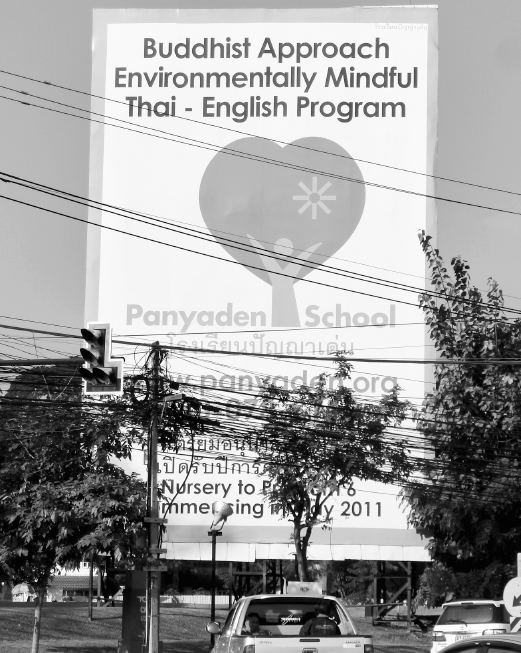
Figure 20. Eco-Buddhist school in Thailand (Chiang Mai, 2010).
Photo by author.
Nevertheless, Snyder’s poem is fundamentally correct in one respect: religion does matter. That the Japanese were Buddhist needs to be taken seriously in order to understand their history, and inserting religion centrally into history has been a fundamental aim of this work. As the secularization thesis becomes less and less defensible, the study of religion needs to be taken more and more seriously. Without understanding the Dharma—its teachings, rituals, and practices—one cannot understand the history of Asia or Buddhism’s specific role in the continent’s environmental history. As evidenced by the case of Buddhism in Asian history, if we truly want to write a global environmental history, we need to adjust our approach to Asian religions.
We also need to shift our spatial and temporal parameters so as to integrate Asia and its long history more fully into the history of humanity’s engagement with the natural world. Focusing on the Dharma allows us to think beyond the restrictive and artificial boundaries that the modern nation-state has imposed on the historical imagination. As we have seen, Buddhism was an ideology that drove Buddhists to extend the Dharma all over Asia. Through such processes as agricultural expansion, urbanization, and commodity exchanges, they transformed the natural world as part and parcel of the Dharma’s institutionalization. These processes exceeded individual polities and unified premodern Asia as they came to undergird the “deep structures in the architecture” of the Buddhist ecumene, as was the case with European empires and their expansion into the commodity frontier in the early modern period.4
When I compare premodern Buddhists’ treatment of nature to that of more recent European empires, my aim is to provide a temporal framework that allows us to think more clearly about Buddhist and Asian history but also about the environmental history of the entire planet. The destruction, exploitation, and transformation of the natural world on a colossal scale is not the sole preserve of northern European men fueled by Protestantism, capitalism, or empire building. Rather, Asian men and women, fueled by Buddhism and its prosperity theology and empire building, did much the same thing, and they did so long before the rise of modern Europe.
Indeed, in thinking about Buddhist environmental history we would do well to recall Michael Williams’s magisterial work on the global history of deforestation. Williams notes that everything that came with the market economy set in motion humanity’s willingness to exploit nature:
Undoubtedly the classical age (particularly the Roman age) was the beginning of the modern world, but whether it was the beginning of a rational capitalism—as suggested by Max Weber—or merely a sort of protocapitalism, is argued fiercely. There is evidence that nature was not being revered but being commodified, traded, and sold; and that its possession was seen as a means to wealth and capital accumulation, as witnessed in the discussion by Varro, Columella, and others on the profitability of farming. The development of private property (particularly by the latifundists); the dealing in land; the exploitation of slaves; the making of profits from trade, industry, and war; financial speculation; and the investment of surplus were all other examples of a new attitude. Avarice and an active willingness to exploit the material world and other humans for profit became common. Thus, “all the things in this world which men employ have been created and provided for the sake of men,” said Cicero, and the forests were only as good as they were useful.5
Although I do not disagree with Williams, I do want to bring attention to this passage’s Eurocentrism. He fails to recognize that these same processes also occurred in Asia. Indeed, as this book has shown, all the elements Williams lists as characterizing the European classical age—the development of private property; the dealing in land; the exploitation of slaves; the making of profits from trade, industry, and war; financial speculation; the investment of surplus; and an active willingness to exploit the material world and other humans for profit—also occurred in Buddhist Asia. For that reason, the environmental history of Buddhist Asia cannot be kept separate from the environmental history of the rest of the world.
With The Buddha’s Footprint, I want to bring about the simple recognition that Buddhism—like Christianity, Islam, or European colonialism—is an important world-historical force. If, after finishing this book, future historians of Asia, the world, and the environment—as well as Buddhologists of all stripes—are persuaded to engage more centrally with the Dharma as a driving force in Asian and environmental history, this book will have been a success. Indeed, the possible topics that still need to be explored are many. We need more localized and detailed studies of Buddhist engagement with the environment,6 of the Buddhist role in the history of disease and demography,7 of Buddhism’s perspective on and treatment of animals,8 and of the Buddhist exchange and how Buddhists responded to both historical climate change and natural disasters.9
To make it as easy as possible for others to understand what I have set out to do, let me summarize my argument in the ubiquitous format of 140 characters, since a tweet may be as serviceable a summation as any: “Elverskog overturns eco-Buddhism narrative by showing how Buddhists across Asia transformed the environment by commodification, agro-expansion, and urbanization.” Condensing my book in tweet form, however, may only serve to confirm my “Grinchitude,” proving the gentleman from Berkeley right: that no matter what scholarly “interventions” and historical reinterpretations this work hopes to achieve, it essentially dismantles the positive image of the Dharma.
I want to insist, however, that it does the opposite. The material presented in this book shows—when juxtaposed with modern Buddhist environmental thought and activism—that both the Dharma and, more importantly, Buddhists have radically changed in the last one hundred years. The “architecture” of the tradition that earlier drove Buddhists out into the commodity frontier has been replaced with a new architecture that is deeply concerned with the environment. This transformation has had real world impact. Consider the case of the South Korean nun Jiyul Sunim, whose activism has transformed the discourse about environmental protection in Korea by challenging the notion of “economic development at all costs” that has driven much of Asia’s modern history.10 Buddhism has changed, and it is having a positive environmental impact in the world today.
As a result, this radical transformation may offer us a ray of hope. As anyone who has been following climate research knows, our future does not look good.11 In fact, as I was finishing this book, two major reports about our environmental future appeared: the latest report from the Intergovernmental Panel on Climate Change and The Living Planet Index. Both confirm that we are careening toward catastrophe.12 The fundamental question facing all of us is thus whether we will actually heed these warnings and change our way of life. Many, of course, believe that we will do nothing. The environmental historian Brett Walker, for example, has put it this way:
No, I do not think that industrialized nations will adopt economic systems that adequately measure the social and environmental costs of capitalism. No, I do not think that Earth’s carrying capacity can be doubled, let alone tripled, even with better forms of scientific agriculture. Who would want to live there anyway? No, I do not think that we will reverse global warming, nor do I think that we will find new, cleaner technologies that will allow industrialized nations to continue their wild consumer habits. No, I do not think that large carnivores such as tigers can be saved; neither can wolves…. This is a grim future, but I do think that, as we experience our environmental collapse, we will witness moments of sublime beauty, which gives me some consolation.
For me, the W. Eugene Smith photograph of mercury-poisoned Uemura Tomoko and her mother bathing together in a small bathtub is absolutely sublime. Also sublime are cedars poking through the ruins of the Kodaki mine at Ashio, where macaques cradle newborns. But also sublime is a mother orca cradling her deformed calf as they are crushed together against Japan’s shores. These moments of selfless compassion and transcendent beauty give me hope: even as the environment collapses under the feet of Homo sapiens industrialis, it will expose moments of profound beauty.13
For Walker, all we can hope for in the age of the Anthropocene is an aesthetic of sublime suffering.
To a degree, Walker’s attitude might seem Buddhist. The First Noble Truth tells us that all life is suffering, and, in the Buddhist view of things, the extinction of humanity would solve the existential problem of suffering. Yet the Buddha also taught that everything changes. And thus the history of Buddhism might give us a glimmer of hope since the Dharma has itself changed. It is no longer a tradition premised on the creative destruction of the commodity frontier. Rather, if anything, Buddhists are now at the forefront of environmental awareness and action. The recent environmental history of Buddhism shows us that traditions and people—and thus the world they live in—can in fact radically change.