
6
The end goal of reform? To increase the wealth of society, to strengthen the nation [国民富强]. Is it possible to really know? But one thing we do know: we cannot ever stop the reform process.
Government official, National Development and Reform Commission1
The supposed success of China’s developmental model in propelling economic growth was seemingly confirmed in 2008 as China’s banking and financial sector was structurally insulated from the financial contagion emanating from the USA. The crisis had two main effects. First, it presented an immediate economic challenge for China’s banking system, as the precipitous fall in global demand called for economic stimulus in which the banks, given their extant position within China’s political economy, would inevitably play a central role. The second impact was at the ideational level. The crisis had a major impact on how Chinese policymakers and financial elites perceived the financial deregulatory paradigm that had underpinned the Anglo-American financial world prior to the crisis. The rapid and seemingly effective response to China’s immediate economic challenges dovetailed with these shifting attitudes to reinforce a sense of vindication for China’s financially repressed and gradualist trajectory of financial and economic reform. Yet this was short lived; the discursive challenge in China to the Anglo-American financial paradigm masked the deeper underlying reality of crisis capitalism that is now reconstituting itself in China.
In this chapter I trace how the Chinese leadership has sought to manage the macroeconomic fallout of the previous periods of unbalanced and unsustainable growth without endangering the CCP’s political authority. Rather than seeking to insulate the real economy and public finances from the private financial sector, the Chinese crisis response brought financial institutions ever closer to the heart of the Chinese political economy. Financial markets had never been regarded by Chinese policymakers as self-regulating, and thus the central locus of capacity to manage uncertainty and thus not only maintain economic growth as well as financial stability continued to revolve around the CCP itself, and not a nascent regime of technocratic liberal regulation. The response was thus to maintain the duality of the financial system as both economic infrastructure (the governance of uncertainty) and as political tool (the power of uncertainty). China’s leaders were clearly not omnipotent in their macroeconomic stewardship following the crisis. But as I argue in this chapter, the economic continuity and stability that has been achieved resulted not only through more-or-less effective macroeconomic policy, but also and just as importantly by virtue of the deeper socio-political centrality of the CCP’s role and position at the heart of the financial system.
China’s macroeconomic and financial response to the crisis from 2008 to 2012 was thus a product of the use of economic growth to avoid a number of social and political dilemmas whose origins could be traced to ‘pre-Modern’ China, but which had crystallized most tangibly and viscerally in 1989. After having managed the immediate fallout of that existential political crisis by doubling down on economic growth, and developing the formula of a socialist market economy that would permit the market-oriented economic transformation of society and also institutionalize and entrench the political role of the CCP in socio-economically anchoring that market economy, the CCP had managed to achieve the feat of rapid economic growth without the emergence of any serious threat to its political authority. Chinese capitalism was stable under the authority of the CCP, but it was capitalism nonetheless, containing deeply ingrained logics of accumulation and unbalanced growth that were difficult to disrupt.
This response therefore served to deepen and intensify the country’s unsustainable macroeconomic trajectory. The rise of shadow banking and an increasingly inefficient overreliance on debt to support growth through the crisis reflected the unsustainability of the existing developmental trajectory and the inevitable yet unintended consequences of relying upon economic growth as a means of ameliorating deeper social and political fissures. The path dependency embodied in these trends and dynamics was rooted in the continuing salience of the CCP as the manager of financial uncertainty. Within a market economy, volatility and stability are founded upon the mutual expectations of creditors and debtors, and the CCP had never been willing to relinquish the capacity to set those expectations to ‘the market’ itself. Yet continuity in the relationship between political authority and financial capital does not necessarily equate to stasis either in the institutional structure of the financial system or in the relationship between the financial system and the real economy. The central policymaking challenge long before the crisis had already been of how to shift towards a more consumer-oriented economic growth model without necessarily producing a dramatic movement towards greater private and individual control over financial capital itself. The ultimate objective – of directing capital towards the essential economic bases for shoring up CCP authority – therefore remained the same, but demanded a retooling of the means through which to achieve it.
Contradictions of the crisis [危机(会)]
The onset of the 2008 financial crisis represented both opportunity and challenge to the Chinese leadership. The Chinese word for ‘crisis’ [weiji 危机] comprises two characters meaning ‘peril’ [危] and ‘opportunity’ [机]. The events of 2008 represented both an opportunity for China to increasingly assert itself and its model of political economy more forcefully, yet simultaneously its own developmental trajectory up to that date had become deeply embroiled in a deeply flawed global economic system. It would thus prompt a re-evaluation of China’s own path of development and the economic structure that had underlain it, as well as a reconsideration of the desirability of moving along a market-oriented reform trajectory. However, as the crisis was beginning to unfold and spread in the American financial system, the immediate priority was to take necessary steps to ensure that any fallout could be ameliorated through China’s own financial system. The CCP viewed the financial system as it always had – as a tool that could be utilized and even manipulated in order to achieve other economic, social, and political goals. In the throes of the crisis, this meant securing support for the real economy. The reasoning was that whereas in the USA the crisis had originated in the financial system and then spread to the real economy, the reverse would be more likely in China: that any major crisis would first emerge in the real economy and then spread to the financial system. The stabilization of output and employment – by any means – was therefore considered the first line of defence against a deeper banking crisis.
China’s economic leadership first started to map out a response to the crisis in June 2008, well before most other countries, and despite the distractions of the impending fanfare of the 2008 Summer Olympics in Beijing. The 25 July Politburo meeting established the earliest policy line that would guide the economic leadership through the depths of the crisis: to maintain relatively smooth and fast-paced economic growth whilst guarding against the acceleration of inflation. In preparation for the package itself, a number of steps were taken through the autumn of 2008.2 The first concerted move was at the Executive Meeting of the State Council on 17 October, where Wen Jianbao resolved to adopt ‘flexible and cautionary macroeconomic policies’ that would expand domestic demand, improve living conditions, and stimulate overall economic development. Interest rates were steadily lowered throughout the fourth quarter of 2008. This prepared the ground for the announcement and implementation of the fiscal and monetary stimulus package on 9 November, with the formal fiscal policy switching from ‘prudent’ to ‘proactive’ and the formal monetary policy stance shifting from ‘moderately tight’ to ‘moderately easy’ (Naughton 2009).
The stimulus package could be disaggregated into three primary substantive components. The first was a significant scaling up in scope of the existing investment plan. The second was a funding mechanism for streamlining channels for the flow of investment capital, largely concentrated within the banking sector. The third component was industrial policy, comprising both immediate responses to the specific conditions of the economic crisis, as well as plans for pursuing long-held and longer-term objectives. Although the dimensions of the stimulus package as formulated by a State Council meeting on 5 November 2008 were widely published, they were highly ambiguous and represented little more than satisfying the rhetorical need for a rapid and concerted response that was intended to assure both public and investor confidence, and to forestall any further precipitous drop in domestic demand and overseas sentiment. Yet, as Naughton (2009, 3) has observed and Table 6.1 illustrates, the ensuing ‘reservations about the announced Chinese plan were correct, but ultimately irrelevant, because the real action was occurring behind the scenes’. The extent to which the initially announced figures diverged from the reality of capital flows through the fiscal and credit system is apparent.
At the same time as the State Council meeting, a meeting of the CCP Politburo was convened, from which was issued Central Document No. 18 of 2008 [中发 [2008] 18号文件]. Like all secret central Party documents, this was distributed through Party channels and remained unpublished, but in contrast to the vast majority of such documents whose existence remains unknown to all those outside the authorized dissemination channels, this document was abstracted and leaked by individuals in two separate capacities.3 Of the ten measures listed to ‘expand domestic demand and ensure stable rapid growth’, the final directive to ‘strengthen the support given by bank credit to economic growth’ was universally interpreted as sanctioning the overarching use of the banking system to achieve a range of other objectives, including the foregoing nine (Liu Zebang 2008).4 The urgency with which the crisis situation and response was received throughout the bureaucracy was palpable. For instance, the National Development and Reform Commission (NDRC) held an ‘emergency’ [紧急] meeting on 10 November to allocate the RMB 100 billion of increased investment earmarked for the fourth quarter. In the directive issued following the meeting, it was therefore emphasized that ‘throughout all regions and departments, the priority amongst all other priorities is to urgently implement the center’s increased investment and other measures in order to boost domestic demand’. In so doing, agencies and departments must ‘make every second count’ (NDRC 2008).
Table 6.1. Stimulus package investment plan
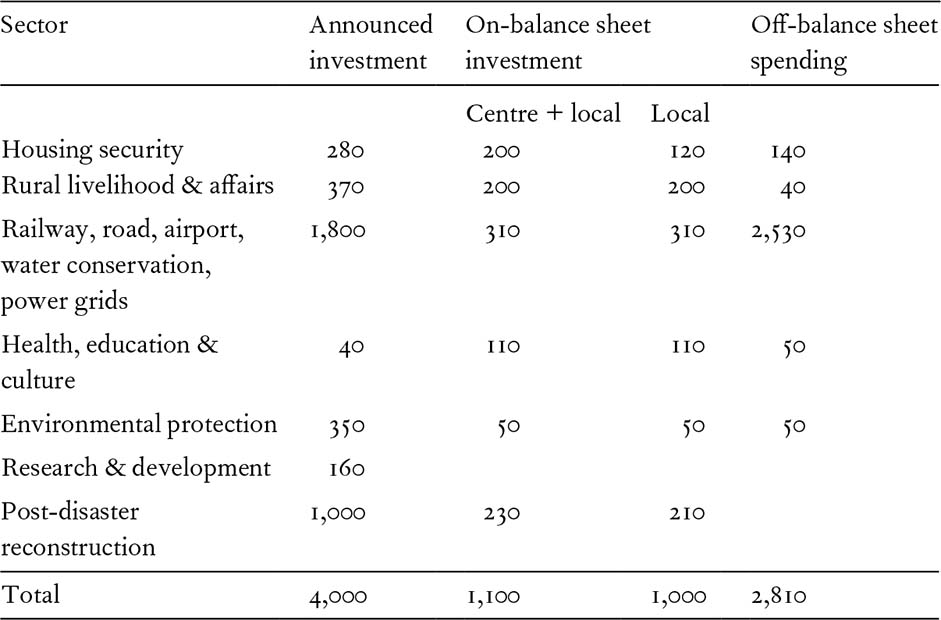
Source: National Development and Reform Commission (NDRC); Interview 14 April 2014, Beijing – Chinese Academy of Social Sciences.
One of the primary mechanisms through which this took place was through local government financing vehicles (LGFVs). Their advent was originally a direct initiative of Chen Yuan upon taking the helm of the CDB in the late 1990s (Sanderson and Forsythe 2012). He informed local officials that ‘CDB will provide more loans provided that you provide sound, resilient governance and introduce financial criteria into your system’. The rationale for such action was that
commercial enterprises can go to commercial banks for loans, but local infrastructure projects, such as highways and urban utilizes, cannot get loans from commercial banks – because these loans are long-term by necessity, and there are no qualified borrowers. … The mechanism worked well. In a few years, we built a nationwide system. Every province followed the model and could borrow a large amount of money from CDB. (Chen Yuan, quoted in Kuhn 2010, 272)
However, following the crisis LGFVs would take on a different hue – as useful but deeply flawed mechanisms for channelling capital as rapidly as possible to local industry. The explicit freedom with which the central leadership was willing to permit local authorities to ‘capture’ the banks – which were in no position to resist the CCP’s prioritization of infrastructure investment – is testament to the Party’s concern with an immediate slump in external demand catalysing a more precipitous and self-fulfilling plunge in domestic sentiment. The CBRC and PBOC (2009) sanctioned the unleashing of local government developmental fervour in January 2009 with Document No. 92:
Encourage local governments to attract and to incentivize banking and financial institutions to increase their lending to the investment projects set up by the central government. This can be done by a variety of ways including increasing local fiscal subsidies to interest payments, improving rewarding mechanism for loans and establishing government investment and financing platforms compliant with regulations.
Accordingly, the first local government bonds were issued in March 2009 closely on the heels of the stimulus package. The MOF opened the sales to all investors, issuing RMB 200 billion in three-year bonds. Simultaneously, five government agencies jointly issued a directive on promoting the ‘healthy development of credit sales’,5 which advocated credit sales as an important and instrumental mechanisms for boosting post-crisis domestic demand and supporting overall real economic growth, and served as the starting gun for SOCBs to turn on the credit spigots to both SOEs and LGFVs. More important regulatory support came from the MOF, which despite existing regulations on the use of local government revenue and the budget law that prohibits local government borrowing, issued a regulation that allowed local government to finance investment projects using all sources of funds, including budgetary revenue, land revenue, and funds borrowed by local financing vehicles.
The story of the investment spending under the aegis of post-crisis stimulus and its consequences is well known. As Nicholas Lardy (2012) has argued persuasively, it was successful in its fundamental purpose, that of averting a precipitous collapse in employment whilst also ensuring that any risks being generated as a result remained under the purview and control of the central authorities – in other words, by concentrating them in the banking system. It reflected once again the duality of the Chinese financial system – the extent to which the banking system is expected to play a role in dealing with a myriad of policy challenges arising in China’s developmental trajectory in addition to the intermediation of credit, all of which must be made compatible with the preservation of ultimate CCP control over financial capital itself. The critical issue was not of how China’s leaders averted economic crisis, but of how they then would respond to the reaccumulation of risk and uncertainty within the financial system over the following several years.
Frames: stability with progress
The crisis catalysed a renewed debate about the appropriate direction and way forward for Chinese financial reform and the development of economy and society at large. Intersecting and often conflicting considerations were prominent: the failure of the Anglo-American financial model boosted confidence in China’s distinctive approach towards gradual and cautious reform, and retention of political authority over the financial system. But at the same time the flaws in the Chinese trajectory of economic development were clearly apparent, and the role of the financial system in supporting and amplifying the imbalances and tensions in this trajectory were undeniable. The outcome was a muddling through that, whilst at times confused and ineffective, was by no means directionless. Whilst the political objectives of the CCP underlying financial governance would not shift, the role of the financial system in achieving these objectives would slowly start to evolve over the next years, as the national leadership sought to navigate a delicate transition to a new phase of economic growth and development. The trials and tribulations of fragile financial markets and the continuing problems of overcapacity and inefficiency in the state-owned industrial sector demanded progress, but this could only take place without endangering the bottom line of financial governance – macroeconomic stability. The guiding policy line to result was ‘making progress while maintaining stability’ (Huang et al. 2016, 49).
The events of 2008–09 reinvigorated the New Left debate of the early 1990s when the fundamental characteristics of the socialist market economy were being debated amongst prominent intellectuals. New leftists such as Wang Hui, Wang Shaoguang, and Cui Zhiyuan seized on the chance to forcefully critique the view that China needed to accelerate market-oriented reforms, and that Western ‘liberal’ financial systems could serve as ideal-types or models for Chinese policymakers (Wang Shaoguang 2011). Yet the New Leftists, Wang Hui particularly amongst them, historically had been deeply critical of how China’s embrace of capitalist modernity had reflected many of the worst aspects of neoliberalism and indigenous Chinese bureaucratic authoritarianism. It is accordingly not possible to understand the crisis response through a simple dichotomy of state versus market, since rejecting a greater role for the market did not necessarily entail a corresponding greater role for the state. Wang Shaoguang (2011), writing in the New Leftist journal Utopia, argued that just as government should not be seen as the enemy of society, the state was not the enemy of the market. Rather, what was necessary was a socially embedded and ideologically progressive response that could harness both state and market mechanisms for the public interest. Needless to say, for as long as the CCP retained a monopoly on the definition of the public interest, this response would have to be channelled through the ideological and bureaucratic structures of the CCP and embodied within its ongoing political dominance over economy and society.
Relinquishing such a monopoly was precisely what Xi Jinping, recently elevated to the PSC and waiting to take the reins of power, had no intention of doing. Reflecting in 2008 on thirty years of reform and opening, Xi (2008) unsurprisingly placed the Party’s leadership at the core of the historic changes to have unfolded in Chinese society over that period. More importantly, he emphasized the importance of the CCP’s effectiveness as a ruling Party – as opposed to a revolutionary one – being rooted in both the Party’s ability to meet the economic needs of society, but also that confidence and trust in the Party to do so were paramount in this endeavour.6 In Xi’s eyes, the healthy development of the socialist market economy could take place only if the CCP possessed enough authority and power such that no uncertainty existed as to the direction of development. His commitment to such a view would only intensify and deepen over the next several years of the increasingly ‘lame duck’ post-crisis position of Hu Jintao and Wen Jiabao, as the hangover of the stimulus began to reverberate around the economy. His response upon taking over CCP leadership would be to embrace and deepen the two seemingly contradictory trends that had been the hallmark of financial development since the early 1990s: accelerate the marketization of the financial system and redouble efforts to ensure that the dynamics of such markets were in line with CCP priorities.
In turn, Wen Jiabao’s 2010 Government Work Report (Wen 2010) provided a clear indication of the conclusions reached by the unified central Party leadership from the experiences of the 2008–09 crisis:
In the course of the past year … we came to the following conclusions: We must continue to make use of the tools of both market mechanisms and macroeconomic control, that is, at the same time as we keep our reforms oriented towards a market economy, let market forces play their basic role in allocating resources, and stimulate the market’s vitality, we must make best use of the socialist system’s advantages, which enable us to make decisions efficiently, organize effectively, and concentrate resources to accomplish large undertakings.
The use of both ‘market mechanisms’ [市场机制] and ‘macroeconomic control’ [宏观调控] in this context and their juxtaposition is a reflection of the fundamental continuity that had remained in place for almost two decades after the first articulation of the socialist market economy in 1993.
This continuity was present across the highest levels of economic policymaking and leadership. In May 2009 the China’s Future Direction Editorial Group (2009) published a book entitled China’s Future Direction: Uniting High-Level Policymaking and National Strategic Arrangements. The volume makes clear that there were few illusions within the CCP leadership as to the nature and severity of the economic challenges facing China at the outset of the crisis. This mirrored a relatively clear consensus amongst prominent Chinese economists that China’s structural economic challenges and constraints were mounting, despite disagreement about the appropriate response. The central leadership was more than aware of these challenges, but they were biding their time and working within these constraints, and one of the key constraints was perceived to be political fragmentation and ineffectiveness. Without a stronger Party, no comprehensive financial or economic reform could possibly be effective.
Institutional inertia: the shadows deepen
The macroeconomic consequences of the stimulus package did not take long to begin to manifest in the financial system. The Central Economic Work conference in December 2009 brought about the first high-level discussion of monetary and fiscal consequences of the stimulus package. This led to a decision to enact monetary tightening as needed, despite the success of the stimulus itself. By early 2010, financial institutions that had rapidly expanded credit under direction from central and local authorities started to receive mixed signals (Hsu et al. 2014; Shen 2016; Tsai 2015). The PBOC was tightening monetary policy in earnest, raising capital adequacy ratios, and imposing credit restrictions on banks, yet there remained significant political pressure – both formal and informal – to continue supporting long-term infrastructure investments (see Figure 6.1). This familiar tension between competing policy priorities – financial stability and economic growth – drove financial institutions to seek opportunities for regulatory arbitrage (Huang et al. 2016), resulting in the rapid development of a variety of novel financial products as banks sought to move liabilities off-balance sheet, and non-financial institutions such as trust companies stepped in to extend credit to those borrowers now cut off from access to bank loans. The emergence of China’s shadow banking system was thus at its core a story of the financially repressed banking system being pushed to its limits, and struggling to overcome financing and efficiency gaps on both the lending and borrowing sides to SMEs and low-income households (Feyziogğlu 2009; Hsiao et al. 2015). The majority of capital for these securitized and non-securitized products came to be sourced from wealth management products (WMPs), issued directly by banks themselves, trust companies, or through ‘bank–trust cooperation’, and marketed to ordinary retail investors as alternatives to low-yielding bank deposits.7
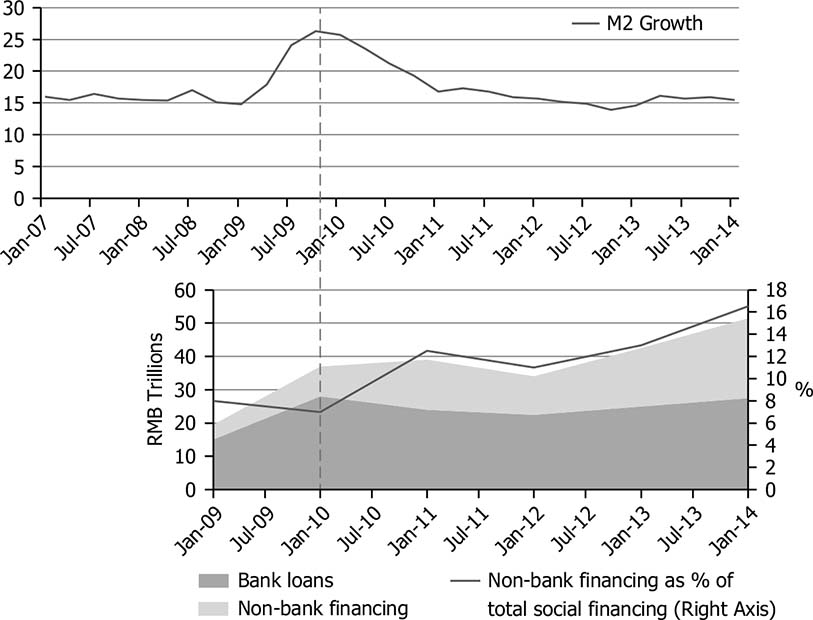
Figure 6.1: 2010 and the emergence of shadow banking
Source: CEIC
One motivation for tolerating the growth of shadow banking was to capitalize upon WMPs and shadow banking as both a back door mechanism for introducing market forces into the financial system and as a necessary means of supporting post-crisis economic growth. Historically, the desire for interest rate marketization on the part of the PBOC and CBRC had a strong financial inclusion argument, since doing so would give incentive for greater lending to SMEs, boosting productive employment and increasing financial efficiency (Xie et al. 2001). This gave rise to a policy discourse prioritizing financial inclusion and impact upon the real economy as an important guiding principle for governing WMPs and shadow banking more broadly. The PBOC deputy governor Hu Xiaolian pointed out in 2014 that the shadow banking system had become an alternative channel to finance those restricted from normal bank loans, and that ‘regulatory policy should strengthen financial services for the weak areas in the society, such as small firms’ (Ruan 2016). This reflected the PBOC’s emphasis in its 2013 Financial Stability Report on the benefits of shadow banking, which stated that ‘as an integral part of the financial market in a broad sense, shadow banking plays a positive role in facilitating social investment and financing’ (PBOC 2013, 199).8 Similar arguments were made by prominent scholars in central government think tanks, including the State Council Development Research Center (Ba 2010), and leading financial regulators (Yan and Li 2014; Sheng and Soon 2016). Scholars from CASS argued that policy measures should be guided by the overarching principle of ensuring that the financial sector serves the real economy, and that policymakers should accordingly promote the healthy growth and development of the shadow banking sector (CASS 2013; Zhang et al 2014).9 This influential group of financial policymakers and scholars explicitly linked shadow banking regulation with the prerogatives of economic development, thus laying the basis for a perspective on the risks and rewards of shadow banking that diverged from the negative views prevalent within the global regulatory discourse.
The PBOC and the CBRC cautiously welcomed the growth of WMPs as a diversification of the investment channels available to depositors and retail investors,10 and the increasing pressure on banks to adopt more market-oriented lending practices played a role in catalysing the acceleration of interest rate marketization in 2012 and 2013 (PBOC 2013). WMPs, however, only provided partial relief to financially repressed economic sectors. Despite the general positive view of shadow banking as a benefit to the real economy, there was limited evidence that WMPs were genuinely either alleviating the credit drought of SMEs or spurring on the growth of consumer finance markets.11 An estimated 57 per cent of funds from WMPs are channelled to the bond market, with an additional 17 per cent invested in trusts and other non-standardized debt assets, according to research conducted at the Bank of International Settlements (Ehlers et al. 2018). SMEs are of insufficient scale to access capital from bond markets and trusts. And whilst retail investors were a key driver of WMP growth, retail borrowers were not beneficiaries of such funds (Wang et al. 2016; Collier 2017).
The deepest connection between WMPs and the real economy was in their assistance in maintaining growth rates in the aftermath of the credit tightening, by continuing to channel capital to LGFVs and large firms. In this sense it predominantly fulfilled a credit replacement rather than credit enhancement function, but one which was nonetheless necessary in striking a compromise between countervailing economic and political objectives. The former involves credit that otherwise would have been extended in any case through conventional bank loans, but which has been channelled into off balance sheet financing vehicles. This form of non-bank credit intermediation (NBCI) overlaps significantly but is not coterminous with WMPs and LGFVs, which gives rise to considerable confusion in the discourse on how to conceptualize and regulate Chinese NBCI. The latter credit-enhancing function of NBCI involves credit that would otherwise not be made available, and includes WMPs and other financial products – including the vast majority of fintech (financial technology or digital financial services) – thus serving as useful sources of alternative financing for underserviced enterprises and individuals.12 That this credit intermediation took place within the shadow banking system rather than through formal banking channels was an inevitable consequence of the PBOC’s monetary tightening as the full implications of the 2009 credit expansion became apparent. Between 2011 and 2016, even as the growth in money supply and of bank loans moderated (see Figure 6.1), the WMP market continued to expand relatively rapidly (Figure 6.2).
In this manner, the growth of WMPs served the PBOC’s goal of incrementally advancing financial reform without threatening the politically sensitive position of the SOCBs. But shadow banking and WMPs in particular did not benefit the real economy so unambiguously as to justify more concerted efforts to promote it as a force for financial and broader economic reform. Although there was incentive for using the shadow banking system to further promote deeper marketization of the banking sector, doing so at a time of deep uncertainty over headline growth and key employment sectors posed a significant threat to financial stability and therefore broader Party control. The growth of the WMP market as an opaque and increasingly interconnected web of financial relations between banks and NBFIs presented a number of challenges to regulatory control over systemic risk in the financial system. At the time these risks were perceived as manageable. In 2012, the PBOC governor Zhou Xiaochuan observed that even though China had its own shadow banking system, it was much smaller in terms of size and risk than those of advanced economies (China Daily 2012). This assessment was backed up by thorough CASS reports in 2013 and 2014 that recognized China’s shadow banking sector contains risks derived from maturity and liquidity mismatch and imperfect credit risk transfer, but argued that the risk of triggering a systemic crisis is very small (CASS 2013; Zhang et al. 2014). This is because of the distinction between shadow banking in the wider (NBCI) and in the narrower (those posing systemic risk) sense (Yan and Li 2014). The large majority of China’s shadow banking institutions and instruments fall into the first category, and thus were not considered to require tighter regulatory control and oversight.
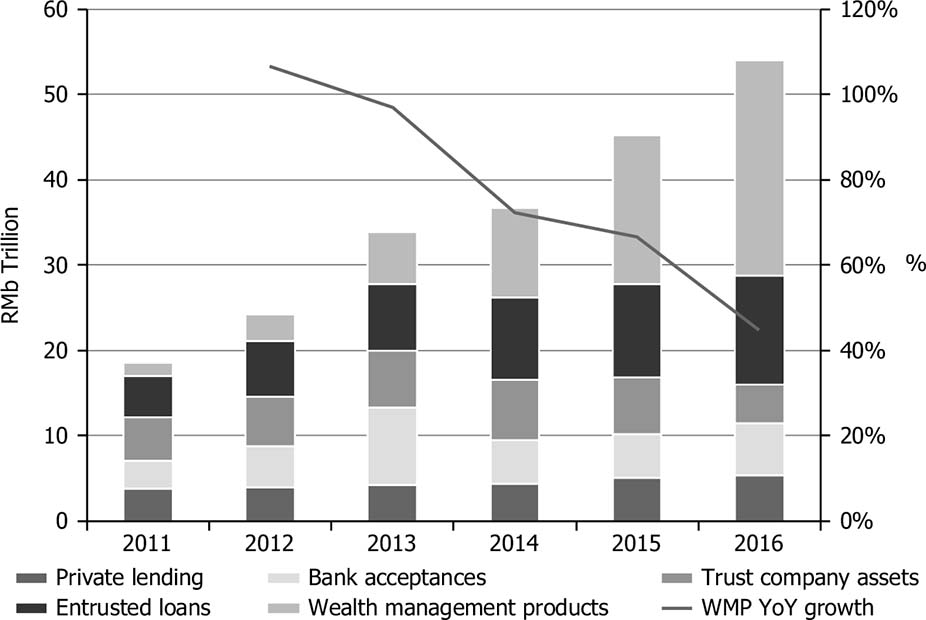
Figure 6.2: Growth of select NBCI product categories, 2011–16
Source: Xi and Xia (2017)
These policy positions were reflected in the first stage of the regulatory response to shadow banking, which emphasized transparency, disclosure, and monitoring, rather than an attempt to eliminate outright banks’ shadow finance operations (Mao 2013). It fell to the CBRC, with responsibility for regulating both banks and trust companies, to address the challenge of tracking the more opaque and convoluted financial products and to attempt to gain a handle on rapidly burgeoning WMP issuance. On 6 July 2009 the CBRC had begun to implement regulation (CBRC 2009) aimed at increasing the visibility and clarity of the risk factors inherent within the rapidly blooming bank–trust cooperative arrangements (Hu and Zheng 2016). More restrictive measures came in January 2011, when the CBRC clarified the risk attribution of bank–trust arrangements, and required them to return such activities to bank balance sheets by the end of 2011 or implement capital-provisioning at 10.5 per cent for such products (CBRC 2011). These regulatory interventions made significant but limited inroads into addressing the transparency problem of the off balance sheet activities of the banks, and also slowed the growth rate of WMPs, contributing to a commensurate decline in overall shadow financing growth (Liang 2016).
The systemic risk challenge posed by WMPs resulted largely from a fragmented regulatory system that was susceptible to regulatory arbitrage, a characteristic that had motivated the initial emergence of WMPs. The PBOC and CBRC accordingly struggled to first monitor and then apportion regulatory responsibility for cross-sectoral NBCI that transcended the traditional boundaries between the securities, insurance, and banking sectors. The CBRC had initially maintained in 2012 that NBCI-related financial activity, such as that of trust companies, finance companies, and the off balance sheet transactions of banks, did not in fact constitute shadow banking (Gao and Wang 2014). This was not a shirking of regulatory responsibility; the agency had already been issuing related regulatory notices for three years. And so in late 2012 at the Eighteenth CCP Congress, CBRC chairman Shang Fulin highlighted that regardless of their status as shadow banking or not, products such as WMPs and trust products were not unregulated but rather within the supervisory perimeter of his agency.13
Nevertheless, a fuller regulatory response was required, which came in the form of the late 2013 issuance by the State Council of Document 107 (PRC State Council 2014b), the key foundation text for both clarifying the nature of shadow banking and outlining an effective regulatory framework for monitoring it (Guo and Xia 2014). Document 107 contained the first comprehensive definition of shadow banking. It paved the way for a clearer delineation of regulatory responsibilities over a rapidly changing financial ecosystem, adopting the principle that ‘everyone is responsible for their own children’, and applying the 1 + 3 (一行 三会) regulatory oversight structure (comprising the PBOC and the three commissions) to the development of shadow financial products by financial and non-financial institutions. Rather than offering a reform blueprint for how to harness ‘shadow banking’ as a positive force for change in the financial system, Document 107 and the regulatory measures surrounding it provided space for WMPs to grow, whilst seeking to articulate a regulatory framework for monitoring the systemic risks accumulating within the system.14
Document 107 and the overall policy response to shadow banking was therefore one of cautious tolerance. It recognized both sides of the shadow banking debate, accepting that the emergence of shadow banking was a necessary result of financial development and innovation, and that it functioned as a financing channel that complemented the traditional banking system, but also that its opacity presented regulatory challenges for adequate monitoring and supervision of systemic risk. For as long as the cost benefit calculation of taking more comprehensive steps to either seize the opportunity for broader market-oriented financial reform or to eliminate outright the shadow WMP market and enforce its wholesale return to bank balance sheets remained ambiguous, the policy agenda was stuck in limbo. Neither the scale nor structure of Chinese WMPs presented a risk sufficiently acute to warrant fully fledged intervention and a deeper overhaul of the financial governance structure to minimize opportunities for regulatory arbitrage.
The consequences of this stasis were the seemingly inescapable entrenchment of China’s pre-crisis macroeconomic trajectory, as efforts to maintain headline growth and promote the internationalization of the RMB overshadowed incremental progress in increasing domestic consumption. Prior to assuming office in 2003, Wen Jiabao had articulated a vision of economic growth that would be stimulated through domestic rather than foreign demand, and for demand to be sourced from consumers rather than the state. He had argued that
The long-term strategic direction for China’s economic growth has to be rooted in the expansion of domestic demand. Pushing economic development based chiefly on domestic demand requires good handling of ‘five combines’ – we have to combine the expansion of domestic demand with (1) strategic readjustment of the economic structure (2) deepening of economic system reform (3) increasing employment (4) improvement of the people’s standard of living, and (5) sustainable development. (Nathan and Gilley 2002, 174–5)
That this overall goal as outlined by Wen did not eventuate is clear from the macroeconomic picture presented above. The paralysis of the leadership in advancing deeper reform resulted partially from the relatively weak position of Hu Jintao and Wen Jiabao within the upper echelons of the CCP leadership and partially from the overarching consensus that preserving stability in the aftermath of the crisis was the foremost macroeconomic and political priority.
The mounting problems posed by the growth of shadow banking again raised a key issue around which financial reform had revolved since 1993: under what conditions was market-oriented financial reform possible without jeopardizing economic and political stability? Anglo-American finance was considered to represent the apogee of a liberal and deregulated model of financial development, and yet it had just suffered the most devastating financial crisis since the 1920s. In the immediate aftermath of the US subprime meltdown, the scepticism with which financial innovation [金融创新] and complex financial products generally had always been held in China deepened, as the flawed theoretical linkage between financial sophistication and the productive economy was increasingly exposed. As one financialization pessimist explained,
The financial system can very easily become far too complicated. Risk management and investment decisions must be based upon common sense and a real understanding of the broader implications of those decisions. This applies to everything. Rather than trying to devise more complicated models that allow for the expansion of the realm of financial products further and further, you need to rely on simpler and more reliable means of understanding risk. It is a major problem for society when all of the best engineers are financial engineers.15
Such views were reflected within financial policymaking, with leaders such as CBRC chairman Liu Mingkang (2008b) observing how the seeds of crisis had been sown over a generation of American asset securitization and financial innovation, with disastrous consequences for the banking system and the real economy at large. The 2012 national financial work conference affirmed that in order to avoid the potential for ‘financialization’ to become a destructive force in the Chinese economy, financial policy would ensure that more capital was dedicated to the country’s real economy.16 Yet such negative views of financial innovation were largely of the Anglo-American vision of deregulated financial markets and the blurring of the lines between equity, credit, and securities markets that occurred. There remained considerable scope for financial innovation in China to develop in a distinct direction, one in which the burgeoning tech and e-commerce sectors, underpinned by big-data analytics and unfolding within the CCP’s familiar experimentalist approach to reform and governance, would point a way towards financial liberalization that would endanger neither political authority or macroeconomic stability.
Inclusive innovation: the rise of fintech
At the same time as WMP issuance was expanding in the shadow of the banks, a different form of NBCI was emerging in the guise of digital financial services (DFS). The graduation of Chinese NBCI into the digital realm marked a critical juncture in the policy priorities towards the shadow financial system, which until that point had remained closely tied to an increasingly unsustainable economic growth trajectory. The necessity of a vibrant and growth-facilitating financial system that serves a changing real economy is broadly recognized amongst economic policymakers and has steadily increased since the 2013 CCP third plenum. For this reason, the nascent policy discourse on fintech emphasizes its positive role within China’s new economy by furthering financial inclusion and assisting with deeper structural economic rebalancing. This positive role in fostering economic growth is complemented by an increased capacity to control financial risks and enhance political control, the other core priority that has long eluded policymakers interested in deepening financial reform. The contrast with the stasis of policy and reform towards the shadow banking system illustrates how in this latest stage of financial reform and development the underlying developmental priorities of the CCP have not changed, but the role of the financial system in achieving these priorities has.
Fintech and growth in the ‘new economy’
The growth of China’s DFS sector has been both rapid and sizeable. Although CreditEase, China’s first online P2P lending platform, was established in 2006, the industry began to develop exponentially in 2013.17 Financial innovation linked to e-commerce has utilized new technology infrastructure and big data analytics to grant dramatically improved and faster access to financial services for consumers and SMEs within a system that has traditionally channelled bank credit to large and low-risk SOEs and large private enterprises (Xiang et al. 2017). DFS providers have responded to fundamental changes in the Chinese supply chain production, distribution and consumption, and savings patterns, whilst addressing the genuine needs of the real sector (Sheng and Soon 2016, xxi). In this way they have exploited the gap between logistics and e-commerce businesses and payments systems to enter into various financial services, including funds transfer, wealth management, and lending and investment. The numbers are substantial and belie the fact that as recently as 2013 the market for almost all DFS in China was virtually non-existent. Although online lending is equivalent to less than 5 per cent of domestic bank loans (01Caijing 2017), China rapidly emerged as the largest fintech market worldwide, with a 2015 lending volume of USD 100 billion that dwarfs that of the United States (USD 34 billion) and the United Kingdom (USD 4 billion) (CGFS and FSB 2017). China’s largest fintech firm Ant Financial alone has granted loans to more than four million businesses with a total amount of RMB 700 billion in direct lending (Cheng 2017). These trends are highly likely to continue, with China attracting almost 50 per cent of the world’s fintech venture capital investment in 2016 (MGI 2017).
The promotion of fintech as a viable avenue for market-oriented financial reform is closely tied to a broader array of efforts to address China’s current macroeconomic conditions, which can be described by what is known at the Bank for International Settlements (BIS) as the ‘Risky Trinity’: rising leverage ratios, declining productivity, and shrinking policy flexibility (BIS 2016). For financial policymakers, fintech is one important element of such progress towards confronting these challenges, by reorienting the credit system towards a more efficient system of risk pricing in financial transactions. It shares many of the same characteristics as other forms of NBCI that undercut the existing banking system by permitting interest rates and capital allocation to be more freely determined by market forces and thus representing an important driving force for financial reform.18 The crucial difference between fintech and previous NBCI lies in the fact that whilst WMPs alleviated the plight of investors seeking higher returns in a financially repressed environment, fintech offers promise of both generating higher returns for retail investors as well as generating a more efficient and inclusive borrowing environment for the SMEs at the heart of the ‘new economy’.
In this context, DFS is seen in China as contributing to three related economic policy goals: deepening China’s financial reforms, improvement of the market environment, and the transformation of the overall development model (Xie et al. 2014; Xiang et al. 2017). This is echoed in much of the Western literature, which perceives the rise of fintech as heralding the long-awaited largescale liberalization of China’s financial sector (Huang et al. 2016; Xie et al. 2016a). The close connection of fintech to a broader shift in China’s economic growth model has therefore prompted the Chinese state – in contrast to other fintech markets around the world – to take a highly active role in promoting financial inclusion via digital financial innovation (MGI 2017). Premier Li Keqiang encapsulated the sentiment in stating at the opening of Tencent’s WeBank that the growth of online banks ‘will lower costs for a deliver practical benefits to small clients, while forcing traditional financial institutions to accelerate reforms’ (PwC 2015). The growth of DFS represents from this perspective both a source of digital innovation that will spill over into other sectors and a supply-side structural reform in itself. This reflects the changing effects of financial repression from a growth-enhancing ‘Stiglitz effect’ through the 1990s to a growth-detracting ‘McKinnon effect’ in the 2000s (Huang and Wang 2011; 2017).19
This financial liberalization narrative of the emergence of fintech dovetails with that of financial inclusion [普惠金融]. The Eighteenth Central Committee meeting in November 2013 established an ‘inclusive financial system’ as a key priority for financial reform. Agencies such as the CBRC had as early as 2006 called for greater financial innovation to promote financial inclusion and household consumption (CBRC 2006).20 In March 2014, more explicit connections between digital finance and financial inclusion had been drawn by Li Keqiang, one of the most vocal supporters of DFS as well as of financial inclusion, stating that authorities should ‘promote the healthy development of digital finance […] To allow finance to become a liquid pool, better irrigating small and micro-enterprises, the “three rurals”, and other trees of the real economy’ (Li 2014). 21 A major push in this strategy to develop new growth drivers whilst preserving financial stability came in the 2015 Internet Plus Plan that seeks to integrate the mobile Internet, cloud computing, big data, and the Internet of Things with modern manufacturing, to encourage the healthy development of e-commerce, industrial networks, and internet banking (PRC State Council 2015). This policy initiative places financial sector reform front and centre, aiming to enhance China’s state capacities and market efficiencies in e-commerce by promoting the contribution of DFS.22 Following on the heels of the Internet Plus plan, on 31 December 2015 the State Council issued its Plan for Advancing Inclusive Financial Development, 2016–2020 [Inclusive Finance Plan], which laid out the basis for developing financial inclusion as a key pillar of national development and financial reform (PRC State Council 2016). The Inclusive Finance Plan stressed the central role of big-data analytics, cloud computing, and the integration of offline and online commerce in enabling fintech firms to overcome these historical difficulties through both intra-industry and industry–government cooperation (PRC State Council 2016).
In this broader policy context, the online lending industry was initially subject to a hands-off regulatory approach of ‘letting the bullets fly’ [让子弹飞] (Sohu 2016), reflecting the goal as stated by the PBOC’s deputy governor Pan Gongsheng, who said that the goal of regulation is to ‘leave certain space for the development of internet finance while drawing the bottom line clearly’ (ECNS 2015). This was followed by a comprehensive regulatory framework coordinated by the PBOC and CBRC in conjunction with eight other central agencies (PBOC 2015b; CBRC 2016) that attempted to ensure that online financing channels are structured so as to allocate capital to genuine SMEs and individual entrepreneurs, rather than opening up another shadow banking avenue through which large-scale borrowers can skirt regulatory controls (Caixin 2016). Early empirical research indicated that despite the risks of fraud and embryonic governance in the sector, online lending was generating meaningful opportunities for individuals to access consumer credit, as well as for SMEs to finance short-term financing gaps in their business operations (Shen 2016). There was accordingly growing recognition that large and increasingly influential ‘upstart’ lenders entering into financial territory that Chinese banks traditionally ignored constituted a potential future driver of economic growth through empowering consumers and small businesses and breaking away from the long-standing dependence on big infrastructure projects funded by state-owned banks (Shen 2016; Yan and Li 2014).23
Both the initial laissez-faire attitude towards and later regulation of the online lending industry indicate significant political will for harnessing digital financial inclusion as a force for economic growth (Gruin and Knaack 2019), framed squarely within this policy discourse of ‘inclusive financial liberalization’. The belief that DFS and P2P lending genuinely addresses a financing gap for SMEs and fosters greater financial inclusion as a whole is reinforced by the rise of the Chinese consumer as both a key driver of China’s economic growth model over the next decades, as well as the ‘financial empowerment’ of the individual in an increasingly materialistic society (Xie et al. 2014; Huang et al. 2016).24 From this perspective, the economic policy incentives for promoting online financial inclusion and innovation as a means of capitalizing upon the Chinese consumer class as an economic force were relatively clear (Li and Yi Tin 2016). Such economic rationales for fintech development are supplemented with visions of a deeper transformation of Chinese socio-economic life deeply and irresistibly for the better – as Ant Financial’s Chief Strategy Officer and respected academic economist Chen Long (2016, 231) describes it, ‘from Fintech to Finlife’. In this process, ‘real life demand is the mother of innovation … the reason why China’s fintech developed so fast is that its development is tightly knitted to and supports consumption growth. As a result, technology, finance, and real-life need form a virtuous circle’. The policy support given to DFS as a means for furthering this objective by expanding access to financial services to SMEs and consumers has been matched by widespread societal support for fintech, thereby generating enthusiasm for a future imaginary of liberalized financial markets and access to financial services for individuals and entrepreneurs unadulterated by the strictures of state authority over financial institutions and their lending activities (Wang 2017).25 This underscores the receptivity of this rapidly burgeoning consumer class to the reshaping of lifestyles and consumption patterns around the growth of e-commerce, fintech, and the big data-driven business practices that underpin them. It further embeds the rise of fintech within a socially legitimated policy discourse of economic development and modernization.
As the sector began to gradually mature, the broader infrastructural foundation of Chinese DFS began to take clearer shape. The core source of financial value in Chinese online lending is the collection of information on consumer and business economic behaviour, predominantly oriented thus far around e-commerce (Tang et al. 2014). Yet an early challenge lay in developing usable credit scores, given the underdeveloped state of Chinese consumer finance and the historical exclusion of SMEs from formal credit channels (CFI 2016). In early 2015 eight private technology firms were granted permission through a PBOC pilot programme to commence preparatory work on establishing formal credit databases and scoring methodologies. Sesame Credit, developed by Ant Financial’s subsidiary Zhima Credit, is the largest and most well known of these, and its superficial resemblance to Black Mirror-type visions of social dataveillance have led it to be mistaken in popular media accounts as the basis for the broader social credit system (SCS) (Botsman 2017). This is not entirely accurate, although as detailed below there are substantive links between the PBOC’s pilot programme and the broader work of constructing a social credit system. Nevertheless, through Alibaba’s extensive reach into all aspects of consumer’s online behaviours, Sesame Credit has access to data on online purchases, utility bill payments, social network behaviour, mobile phone history, and previous micro-finance history (Caixin 2017), whilst other tech giants, Baidu, Tencent, and Jingdong, are seeking to develop equally comprehensive credit scoring databases (Millward 2016; Caixin 2017).
Online lending and the emergence of digital credit scoring is facilitating shifts in China’s model of growth and development, enabling the expansion of new digital economies and markets, whilst also accelerating a rupture with the financial repression that has long-characterized the role of finance and particularly the banking system in China’s economic reform and development. MYbank, Ant Financial’s online-only private bank, provides a ‘310’ loan service (three-minute application, one-second approval and grant, and zero manual intervention) that is specifically geared towards micro- and small entrepreneurs that have grown up within the Alibaba e-commerce ecosystem (Cheng 2017). The use of big-data analytics in credit risk assessment has led to JD Finance serving over 100,000 SMEs with supply chain finance solutions that amount to a total of RMB 250 billion, concentrating not on a traditional loan model but on using big-data analytics to offer loan packages with characteristics tailored to individual enterprises, such as flexible amortization rates (Dong 2017). The real economic impact of DFS has been felt in a variety of sectors and regions, with early empirical studies evidencing a correlation between the penetration of DFS and economic activity in the new economy sectors prioritized by the central government (Shen et al. 2016).26 As a means of capitalizing upon the Chinese consumer class as an economic force central to China’s broader structural economic rebalancing (Barton, Chen, and Jin 2013), the economic incentives for promoting online financial inclusion and innovation are clear to Chinese policymakers, and are increasingly forming the basis for economic development plans (Li and Yi Tin 2016, 175).
Governing fintech: consolidation and control
The rise of DFS as a foundation for inclusive financial liberalization thus marks a subtle but significant shift in the financial underpinnings of Chinese reform and economic development. Who controls this process of financialization,27 and how do they use technology to do so? Accelerating China’s financial inclusion in this way begins to shift the locus of financial authority from the traditional network of commercial banks to those overseeing and exploiting the infrastructure of digital finance: the databases and data-processing techniques at the heart of algorithmic credit scoring. As Mader (2015) observed with reference to the implications of the broader financial inclusion movement, ‘digital financial inclusion, if fulfilled, would immensely empower whoever controls the new monetary infrastructures’. Digital financial inclusion involves a potentially rapid diffusion of previously centralized control over personal data, data that is useful not just for making financial decisions, but which can also be used to influence wider social attitudes and interests. The newest stage of financial reform thus continues to present numerous risks, not just to financial stability, but to the deeper resilience of Communist Party authority over an increasingly diversified economy and market-oriented social structure. Put simply, the financial system has long functioned as the bedrock of the CCP’s gradualist and experimentalist mode of economic reform, a function that is threatened by ‘liberalization’ and the attendant increasing power of new actors wielding influence over market dynamics and the capital allocation process. The answer to this conundrum for the CCP has been to develop mechanisms for control and oversight over all actors involved in the emerging fintech ecosystem. Financial governance in the digital realm has begun to evolve into a structure that is increasingly rationalized and effective in its operations, but one that also deepens the capacity for the CCP to exercise authority and control over the financial system. This marks a distinct shift from the immediate post-crisis period, when the supposedly technocratic regulatory agencies established in the 2000s were largely sidelined in favour of the ‘comprehensive agencies’ such as the NDRC that responded first and foremost to policy signals emanating directly from the central CCP authorities (Pearson 2010, 2).
One of the key policy objectives of the 2015 Guiding Proposal was to achieve industry consolidation within the rapidly burgeoning online lending industry, and both broaden and deepen the financial services offered by large companies.28 Whilst regulatory arbitrage beyond the banks in a financially repressed and conservative regulatory environment had been one of the initial catalysts for the emergence of digital finance, industry consolidation was now seen as both reducing financial risk and increasing monitoring capacity.29 This consolidation also took on greater political significance, as the large tech firms could be regulated in a more balanced manner, and are both amenable to and dependent on close coordination with the government in order to preserve their political support and market position (Feng 2017).30 In addition to such organizational ties, the CCP is assuming a role as a direct investor in tech firms through the development of special management shares, in which the Party takes a minor financial stake in exchange for board representation and input into firm strategy and operations (Li 2017). At a time of steady consolidation of CCP power under Xi Jinping, it is clear to firms that in order to pursue business strategies that involve market-oriented financial and the opening up of new modes of capital allocation, deepening Party–firm cooperation is not only a necessary survival strategy, but also constitutes a key source of competitive advantage.
Industry–government coordination in digital credit scoring took more tangible form in March 2016, when the National Internet Finance Association (NIFA) was established in Shanghai, with CreditEase as executive director, and Li Dongrong, former PBOC deputy governor, serving as president. Firmly under the administrative purview of the PBOC, the NIFA represents one element of the government’s efforts to exercise control over the evolution of the country’s digital credit scoring infrastructure. One of its early projects was to establish the new digital Credit Information Sharing Platform [全国信用信息共享平台] (CISP), launched in September 2016 in conjunction with the PBOC. With seventeen NIFA members including Ant Financial, JD Finance, and Lufax present from its inception, this platform brought Chinese credit scoring genuinely into the algorithmic era (Yang 2016). The platform offered the promise of solving one of the biggest problems of online lending platforms operating in the absence of traditional in-depth credit assessment procedures. Information asymmetry and completeness, as well as data sharing across multiple platforms, have proven significant hurdles in the way of an accurate and reliable credit scoring mechanism. It operates by way of a generalized information dissemination system, so that customer and competitive information remains protected. The synergy between the interests of the sector and the government are apparent in Li Dongrong’s statement at the CISP’s launch:
the credit information recorded through the platform can not only improve the internet finance industry credit system, but also complement with the existing data in the national financial credit information database and other industry credit databases, further consolidating the social credit system’s information foundation. (NIFA 2016)
The NIFA’s pursuit of this objective through the CISP has been bolstered by wider national policy support. The PBOC and NDRC (2017) have sought to propagate successful local social credit systems by identifying twelve ‘demonstration cities’, of which Yiwu, China’s leading trade hub for manufactured goods, was earmarked for special recognition on account of its integration of social credit with finance, foreign trade, and market supervision (Xinhua 2018a).31 The NIFA has paid special attention to the Yiwu plans, seeking ways to integrate the CISP with both national and local government efforts to compile usable credit databases, including by developing integrated cloud storage for financial information managed by an SOE under the control of the CBRC (STCN 2018).
These patterns of industry–government control, coordination, and cooperation are part of what Creemers (2018, 1) refers aptly to as an ‘evolving practice of control’. The largest lending platforms have been central to this push for regulation and the direction of its development. Key members of the NIFA have spoken of the close working relationship between regulators and industry players (CNTV 2016). The essence of the compact reached between the new heavyweight DFS providers and the government is clear: from the industry’s perspective, their efforts to break existing banking monopolies grant them access to the front lines of the Chinese consumer revolution, as long as they fully meet central government expectations for the sharing, analysis, and utilization of underlying data.32 Just as with the establishment of its wider e-commerce empire, Ant Financial has been closely aligned with the priorities of regulators in the development of its financial business (Elliott and Qiao 2015). Ant Financial is now prepared to open its systems and data to the central bank and other authorities for real-time monitoring and supervision (ECNS 2015).33 There remains little doubt that regulatory authorities are in control of the overall agenda.34
The government in turn has a clear interest in exercising control over such firms as Ant Financial, as one source with knowledge of Ant’s mounting pressure and scrutiny from regulatory authorities states: ‘as a non-bank, non-state-owned institution in China, it’s not allowed to independently grow too big to manage’ (Zhang and Ruwitch 2018). Party committees do not merely exist at the country’s largest tech firms, but have been effective in monitoring their alignment with government priorities and policies.35 This renders less surprising the 2017 decision by the PBOC not to renew the eight pilot licences to develop consumer credit scores owing to the potential conflict between the commercial interests of the institutions and those of the PBOC in establishing reliable and comprehensive individual scores across platforms (Hornby 2017). Rather, the eight firms involved have in conjunction with NIFA formed a further third-party credit scoring organization, Baihang Credit Scoring, which is China’s first unified private platform that provides personal credit information services and is intended to supplement the existing state-run personal credit database (Xinhua 2018b). Recast in this light, the decision underscores how financial inclusion is not only about developing new domains from which to extract economic value, but also – and potentially more importantly – about ensuring that the potentials offered through digital credit scoring techniques remain under CCP control and management.
Conclusion
The post-crisis period laid bare the contradictions and tensions of the role played by the financial system in China’s economic development. The CCP’s swift action to ameliorate the effects of the crisis on unemployment and output deepened what were already unsustainable trends within the financial system, yet maintaining macroeconomic stability remained the leadership’s paramount goal. As in previous instances of confronting political-economic uncertainty, the banking system provided an array of mechanisms through which the government could maintain macroeconomic growth and stability, and manage the financial risk entailed by rapid credit expansion, whilst also ensuring that economic growth trends remained under the Party’s control. Pursuing such a balancing act resulted in the emergence of a large network of shadow loans and wealth management products, as banks sought to transfer financial assets off balance sheets whilst pursuing regulatory arbitrage in an increasingly competitive environment. This same regulatory arbitrage in the context of the explosive growth of digital technology and e-commerce firms in turn catalysed the rise of digital financial services and big data-driven lending practices as an alternative to the traditional state-owned banking system. The growth of the DFS sector has been both promoted as a means of accelerating China’s broader economic restructuring towards a domestic consumption-led economy, whilst at the same time potentially transferring political power to private financial actors, thus giving rise to new governance challenges for the Party leadership.
The political economy of the growth of Chinese fintech highlights enduring features of the CCP’s relationship to financial capital. The traditional banking system remains the beating heart of the financial system, responsible in large portion for realizing the CCP’s goals of growth and stability under the aegis of Party dominance. There are signs nevertheless that the duality of purpose defining this system since 1989 is being replicated gradually in the relationship between the CCP and key actors at the heart of the new digital economy. Fintech represents potential for increasing efficiency of capital allocation, but the attendant financial ‘liberalization’ continues to be underpinned by CCP authority and control, both at sectoral and macroeconomic levels. The CCP is seeking to transform the threat of losing control over the online financial landscape into an opportunity to establish the new infrastructural foundations of governance over an authoritarian capitalist society.
Notes
1Interview, 7 September 2012, Beijing – National Development and Reform Commission.
2The PBOC started to loosen credit restrictions on commercial banks in early August, directing them to focus their lending as much as possible on the SME sector. Credit quotas were raised by 5 per cent for the SOCBs and the national JSCBs, whilst regional and local JSCBs were permitted to increase lending amounts by 10 per cent. On 18 September, the State-owned Assets Supervision and Administrative Commission announced that it would support central SOEs to increase their holdings of listed firms or to embark on share buybacks. Central Huijin Investment Company immediately bought approximately RMB 1.2 billion of shares in ICBC, BOC, and CCB. On 25 September the PBOC reduced the RRR for all deposit-taking banks and financial institutions by one percentage point, except for the big five SOCBs. This was followed by a further 0.5 per cent reduction in the RRR for all banks on 15 October.
3Interview, 27 April 2012, Beijing – Chinese Academy of Social Sciences.
4Interview, 27 April 2012, Beijing – Chinese Academic of Social Sciences.
5These were the MOF, the Ministry of Commerce, the PBOC, the CBRC, and the China Insurance Regulatory Commission.
6This transition from a ‘revolutionary’ to a ‘ruling’ or ‘governing’ party is one that is astutely perceived by Timothy Heath (2014) in his analysis of the evolution of the CCP’s national strategic direction.
7For an up-to-date description of commercial bank cooperation with different NBFIs, see the 2017 PBOC Financial Stability Report (2017).
8In slightly more colourful language, the PBOC (2013, 204) also observed that ‘the whole financial market gets a shot in the arm from shadow banking’.
9For a recent comprehensive analysis of transferability and contagion risks within the shadow banking system that supports these conclusions, see Wang and Hu (2016).
10This had the further advantage of alleviating pressure from overheating property markets.
11The empirical evidence on the benefits that shadow banking brings to economic growth is mixed, with numerous Chinese academic studies support both positive and negative views of shadow banking as a driver of real economic growth (Chao and Ee 2017).
12For a related discussion of how this distinction relates to the triple-tiered framework for assessing systemic risk, see a Fung Global Institute report by Sheng et al. (2015).
13Stating that ‘WMPs generally do not involve the generation of additional leverage or the securitisation of loan assets, and because banks manage the activity, they are subject to CBRC regulation’ (Green 2014).
14Document 107 was never released publicly or as a formal legal document, but as a normative administrative document [行政规范性文件] of the general office of the State Council, addressed directly towards local governments, regulatory agencies, and financial institutions themselves.
15Interview, 28 November 2012, Beijing – China Investment Corporation.
16Interview, 29 November 2012, Beijing – Development Research Center of the State Council.
17Having even been described as ‘Year One of China’s Internet Finance Era’ (China IRN 2013). In July 2013, Jack Ma summarized succinctly yet controversially his challenge to the banks: ‘if the banks don’t change, we will change the banks’ (Ma 2013).
18Whilst at the end of 2016 the Shanghai interbank rate was 3 per cent and the Wenzhou informal curb rate was 15 per cent, the average P2P investment rate hovered around 10 per cent (Huang and Wang 2017).
19Stiglitz (1993) reasons that at early stages of economic development, underdeveloped financial markets are often not capable of efficient financial capital allocation, and financial repression in the form of state intervention can promote confidence and enhance conversion of savings into effective investment. At a more advanced level of financial development, in line with McKinnon (1973) the effect of financial repression on economic growth becomes negative by virtue of less effective capital allocation and the emergence of moral hazard.
20The CBRC department responsible for internet finance is now called the financial inclusion department [普惠金融部].
21Referring to the three issues of peasantry, rural areas, and agriculture.
22Lin Nianxiu, vice-chairman of the NDRC, provided the most definitive statement of connection between inclusive finance and the Internet Plus plan (Lin 2016).
23Interview 11 September 2016, Beijing – CreditEase.
24McKinsey estimates that by 2022 more than 75 per cent of China’s urban consumers will earn RMB 60,000 to 229,000 (US 9000 to 34,000) a year (annual household disposable income, in real (2010) terms) (Barton et al. 2013).
25The close connection between internet finance and financial inclusion strategies was made clear by Bai (2016), stating that ‘Inclusive finance and internet finance have a lot in common, being open, inclusive, and equal. Internet finance reaches the bottom of the financial sector, and heightens financial inclusion, while financial inclusion serves as policy guidance for internet-based finance’. Bai Chengyu is division director of the Poverty Alleviation of China International Center for Economic and Technical Exchanges (CICETE), and also the director of CICETE/UNDP Poverty Alleviation Program Management Office.
26Interview 13 September 2017, Beijing – Institute for Digital Finance.
27Some of the broader implications of this process will be taken up in the concluding chapter. On financialization, see Zwan (2014) generally, and examining the intersection of social media and financialization in the Chinese case, Wang (2017).
28Interview 23 September 2016, Beijing – Chinese Academy of Social Sciences.
29Interview 27 September 2016, Beijing – Pandai; Interview 3 October 2016, Beijing – Chinese Academy of Social Sciences.
30Interview 4 October 2016, Beijing – Ant Financial. As JD.com vice president (and Party Secretary) Long Baozheng (Liang 2017) put it: Under the guidance of the Party, JD.com is a major beneficiary of the deepened reform and constant improvement of business environment … We will assist the structural supply-side reform and rejuvenate the real economy by opening up our platforms and capabilities, and shoulder more corporate social responsibilities.
31Yiwu municipality formed a ‘multidimensional credit database’ comprising over 180 million records covering over 370,000 enterprises and organizations and 2.2 million natural persons (NIFA 2018).
32Interview 4 October 2016, Beijing – Ant Financial; Interview 15 September 2017, Beijing – Yirendai.
33Likewise WeChat, the source of significant credit data for Tencent and already the world’s most heavily monitored messaging app, shares users’ private data with the government in compliance with ‘applicable laws or regulations’ (Huang 2017).
34Interview 29 September 2016, Beijing – Chinese Academy of Social Sciences; Interview 4 October 2016, Beijing – Ant Financial.
35Interview 14 September 2018, Beijing – Ant Financial.