
EPILOGUE
Captain Stephen Decatur must have smiled as he sailed the Barbary Coast in 1815. This time he did not sneak in under cover of night, bravely risking his life to destroy a captured American ship. This time he was not leading outnumbered Americans into a battle. And this time he would not leave without getting what he came for.
Perhaps Decatur’s smile saddened as he sailed through the waters where his brother had been slain, but the sharpest pangs of grief had dulled in the eleven years since James’s death. During the first few years after the Treaty of Tripoli, America had enjoyed the partial peace purchased by the blood of brave men like James Decatur, and now Stephen had the honor of making the peace complete.
William Eaton’s instinct that not going for absolute victory was a mistake had been proven correct. During the War of 1812, at the urging of the British, the Barbary pirates had begun taking Americans prisoner again. After the Treaty of Ghent had ended the second war with Great Britain in 1815, the United States Congress authorized an American military presence to return to the Maghreb. The dey of Algiers had declared war on the United States, and Decatur was commissioned to put an end to the Barbary threat once and for all.
His fleet included his flagship, the USS Guerriere, and nine other warships; it was the largest naval force the United States had ever sent to sea. Once in Mediterranean waters, Decatur made short work of dispatching the Algerian leader’s navy. He first captured the old enemy ship theMeshuda. Two days later, the fleet intercepted the Estedio and made it his prize. Both battles were concluded in less than half an hour each. Decatur took nearly five hundred prisoners.
When Decatur reached Algiers harbor on June 28, with the captured sailors and the pride of the Algerian navy under his command, the dey realized that he had made a grave mistake in provoking the Americans into another fight. Backed by his impressive naval force, Decatur obtained a peace treaty within forty-eight hours. This time the treaty called for no payment of tribute. Instead, the terms called for the immediate release of all remaining American hostages (at that point, only ten), $10,000 paid in restitution for merchandise stolen from American ships, full shipping rights guaranteed to all American ships, and no further demands for any future tributes.
Setting out from Algiers, Decatur sailed to Tunis. There he also reached a peace agreement with similar terms and once again insisted that the Barbary state pay reparations. In return for two American ships the Tunisians had captured, they paid Decatur a tribute of $60,000.
Finally, Decatur moved on to Tripoli, the Barbary city where his greatest adventures—and greatest loss—had occurred. Here he demanded that Bashaw Yusuf pay the Americans $30,000 in compensation for Tripolitan interference with American ships during the War of 1812. Decatur insisted upon the release of prisoners from other nations, besides just the United States. He even secured the freedom of British sailors, despite the fact that their nation had so recently been at war with his own. It was a bold, unprecedented move that was celebrated across Europe. America’s newfound prestige was not blinded by its own power; might and mercy could work in harmony.
On learning of the outcome of Decatur’s mission, the American minister to the Court of St. James’s, John Quincy Adams, who now occupied the same post his father had a generation earlier, wrote to Decatur. “I most ardently pray that the example, which you have given, of rescuing our country from the disgrace of a tributary treaty, may become our irrevocable law for all future times.”1 Along the Barbary Coast, the centuries-old practice of building economies around kidnappings, theft, and terror was at last brought to a close. The war that had begun on Jefferson’s watch was at last resolved on Madison’s.
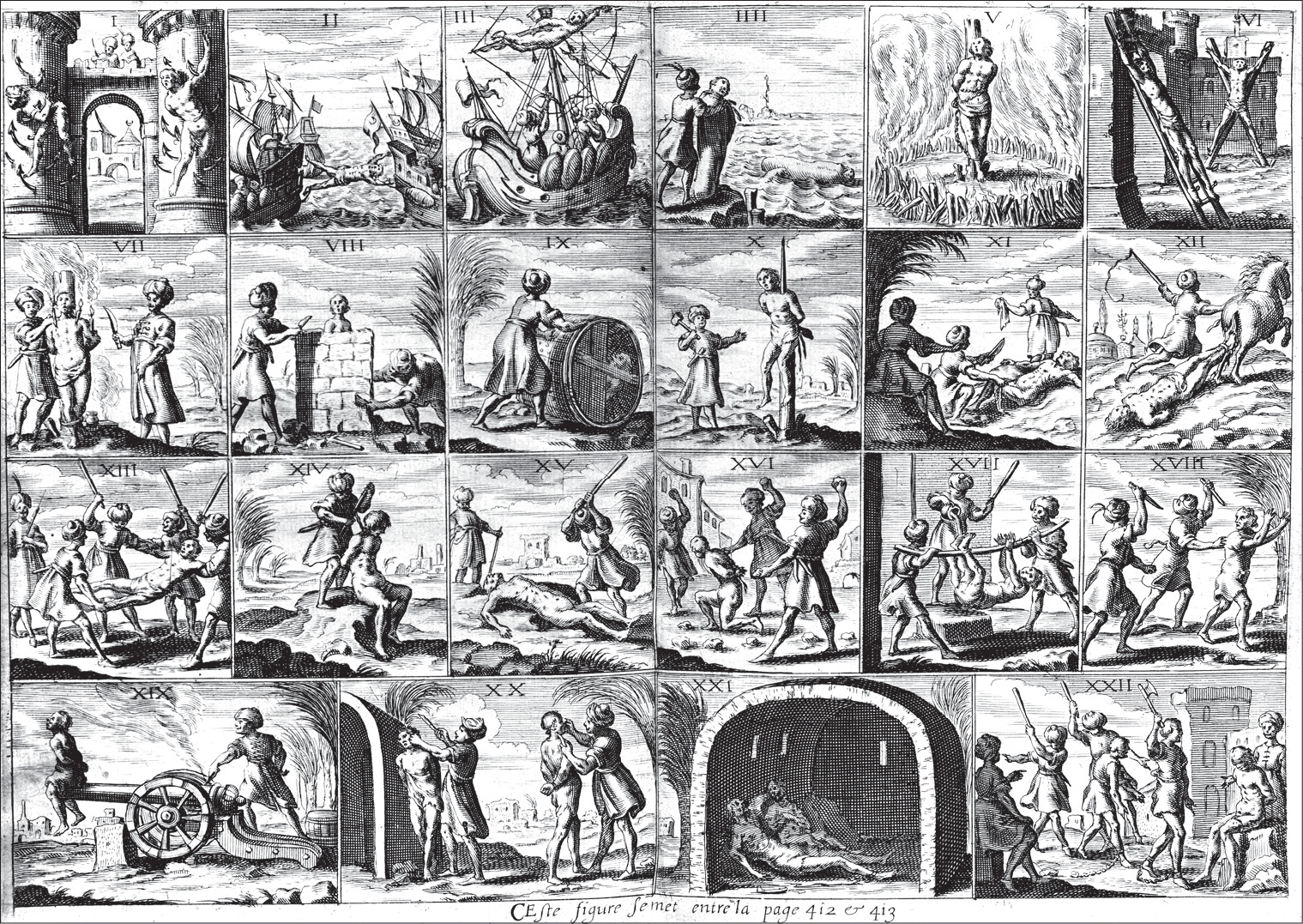
Originally printed in Histoire de Barbarie et de Ses Corsairs by Father Pierre Dan (1636), this etching depicts twenty-two different forms of torture by which Barbary masters punished their Christian slaves.
HULTON ARCHIVE/GETTY IMAGES

As president, Thomas Jefferson (1743–1826) dared to do what his two predecessors had not: rather than pay for peace and free passage for his ships, he confronted the Barbary powers with military force and, ultimately, earned the world’s respect for doing so.
CHARLES SAINT-MÉMIN, COURTESY LIBRARY OF CONGRESS PRINTS AND PHOTOGRAPHS DIVISION
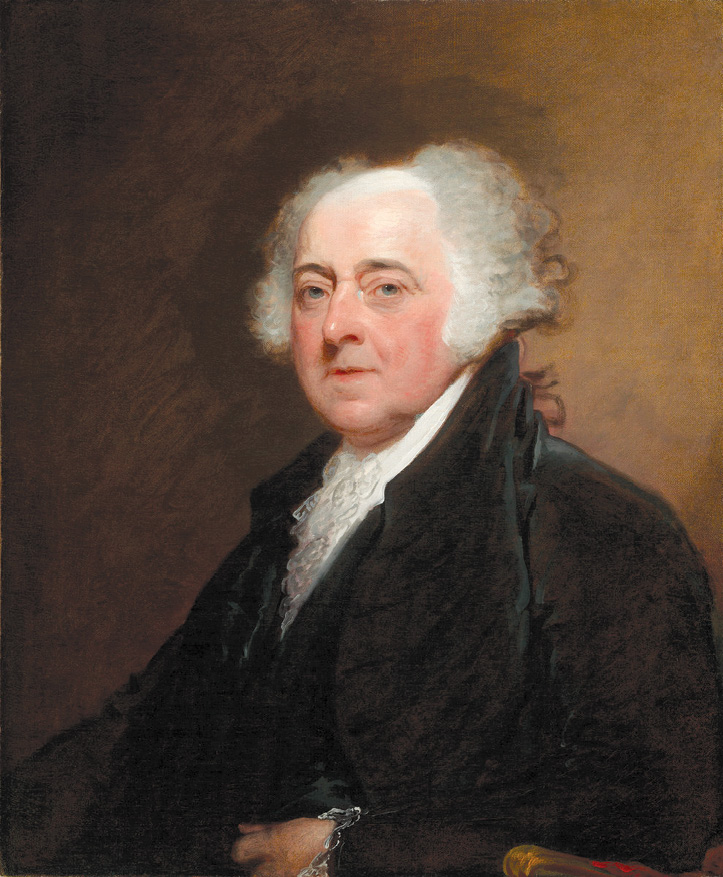
John Adams (1735–1826) and Jefferson were among the first Americans to meet with the Barbary diplomats immediately after the American Revolution, when the friends served as the U.S. ministers to Great Britain and France. Despite face-to-face encounters, the two ambassadors were never quite able to persuade Sidi Haji Abdrahaman and the other Barbary state representatives to stop attacking American ships.
GILBERT STUART, COURTESY NATIONAL GALLERY OF ART

In 1785, James Leander Cathcart (1767–1843) was enslaved by Tunisian pirates and spent more than eleven years imprisoned in Tunis. The language skills and cultural knowledge he acquired in captivity would later prove valuable in his work as a U.S. consul in the Barbary region.
FROM THE CAPTIVES BY JAMES LEANDER CATHCART (LA PORTE: HERALD PRINT, 1899), COURTESY NEW YORK PUBLIC LIBRARY
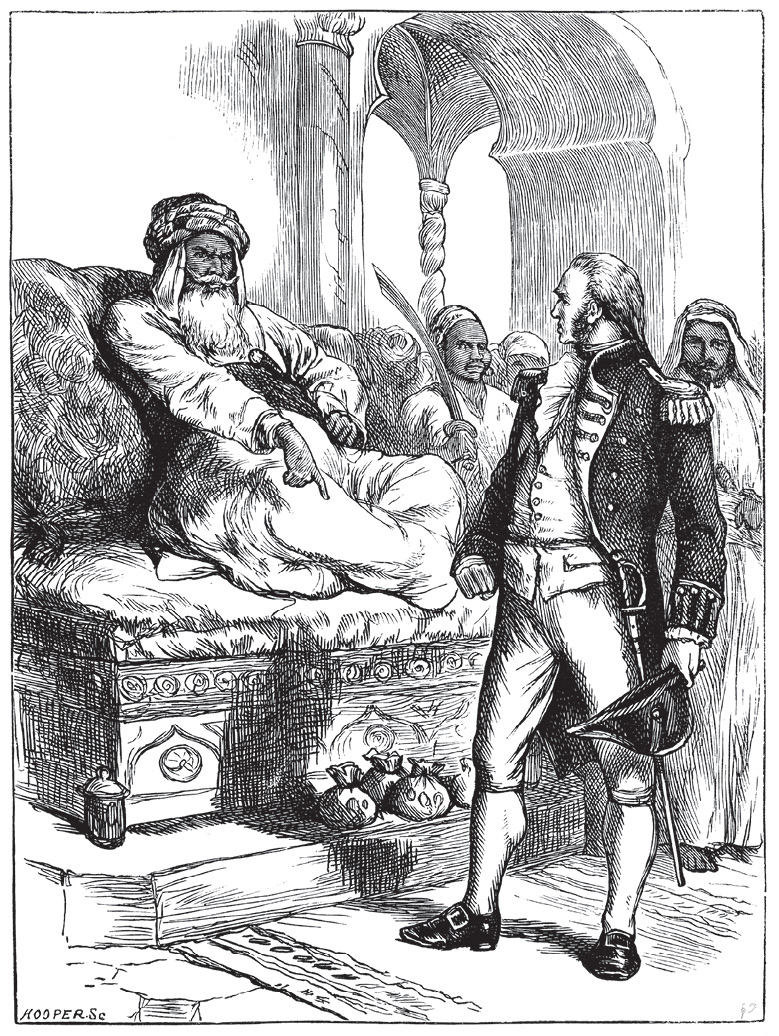
Captain William Bainbridge (1774–1833), though deeply humiliated, had little choice but to agree to the dey of Algiers’s demand that, in September 1800, he lower the American flag and take aboard the USS George Washington animals, goods, officials, and slaves in order to ferry them to Constantinople.
HOOPER, UNIVERSAL HISTORY ARCHIVE/UIG VIA GETTY IMAGES

As a young lieutenant, Stephen Decatur (1779–1820) was part of the first U.S. Navy fleet to cross into the Mediterranean in 1801. His exploits—most famously the nighttime raid on the captured Philadelphia—made him a captain. He would serve honorably in the War of 1812, and, in 1815, prove a hero again in the Second Barbary War.
REMBRANDT PEALE; PHOTOGRAPHY © NEW-YORK HISTORICAL SOCIETY
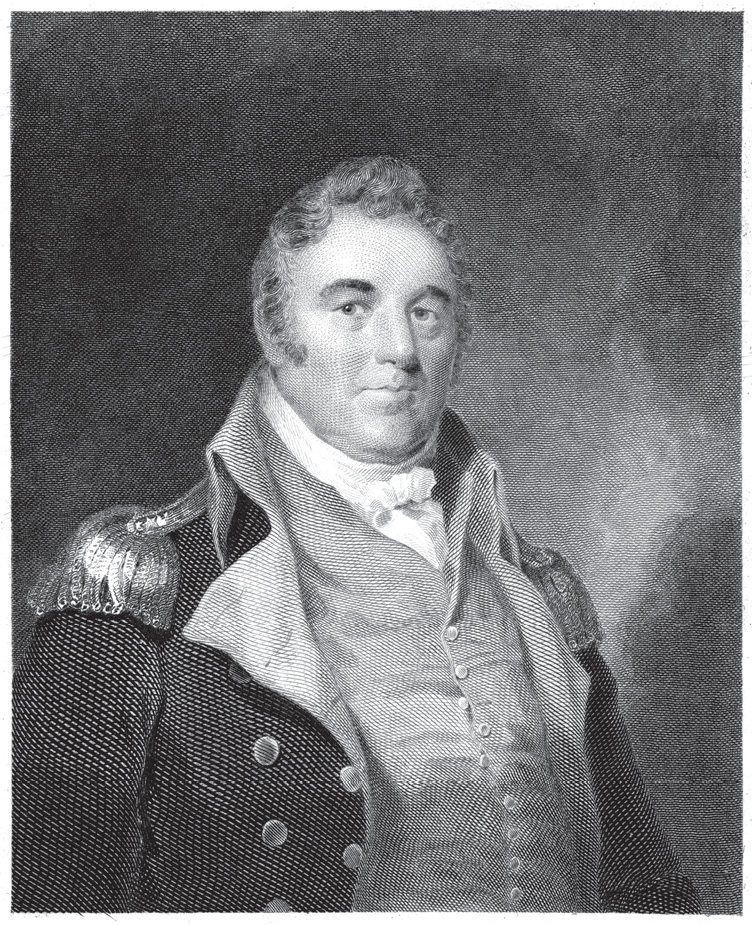
Commodore Richard Dale (1756–1826) led the first fleet of four U.S. Navy ships to the Mediterranean. A respected leader, he found his options were limited by the terms of engagement specified in his official orders.
R. W. DOBSON, COURTESY NAVY ART COLLECTION, NAVAL HISTORY AND HERITAGE COMMAND

Lieutenant Andrew Sterett (1778–1807) was an early hero of the Barbary Wars, giving the United States its first naval victory in the region.
CHARLES SAINT-MÉMIN, COURTESY NAVY ART COLLECTION, NAVAL HISTORY AND HERITAGE COMMAND

An artist’s rendering of Lieutenant Andrew Sterett’s leaving the USS Enterprise to board the Tripoli, after the fourteen-gun enemy ship surrendered on August 1, 1801.
RODOLFO CLAUDU, COURTESY OF U.S. NAVAL ACADEMY MUSEUM
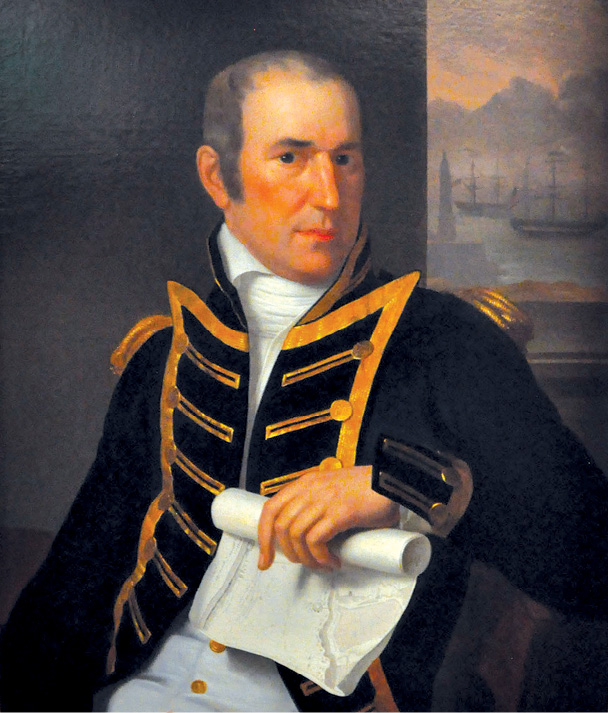
The transfer of command of U.S. Navy forces in the Mediterranean to Captain Edward Preble (1761–1807) marked a turning point in the First Barbary War. Though his tenure expired before a peace treaty was signed, he was responsible for increasing the American presence and launching effective offensive maneuvers in the region.
REMBRANDT PEALE, COURTESY U.S. NAVAL ACADEMY MUSEUM
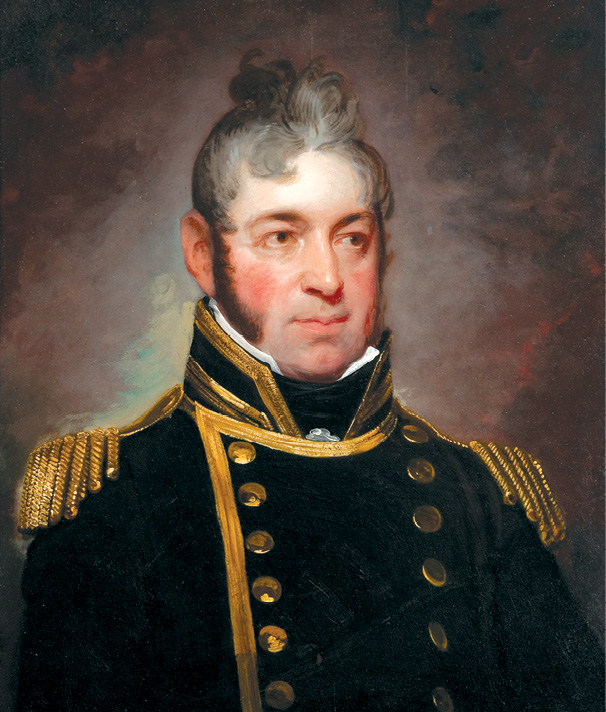
The long naval career of Captain William Bainbridge was marked by great victories as well as more than one humiliating defeat. One of the U.S. Navy’s most memorable setbacks occurred when the USS Philadelphia, with Bainbridge as its captain, ran aground in Tripoli Harbor, in 1803. Bainbridge surrendered his ship, and he and the crew were held captive for nineteen months.
GILBERT STUART, COURTESY USS CONSTITUTION MUSEUM; PHOTOGRAPH BY DAVID BOHL
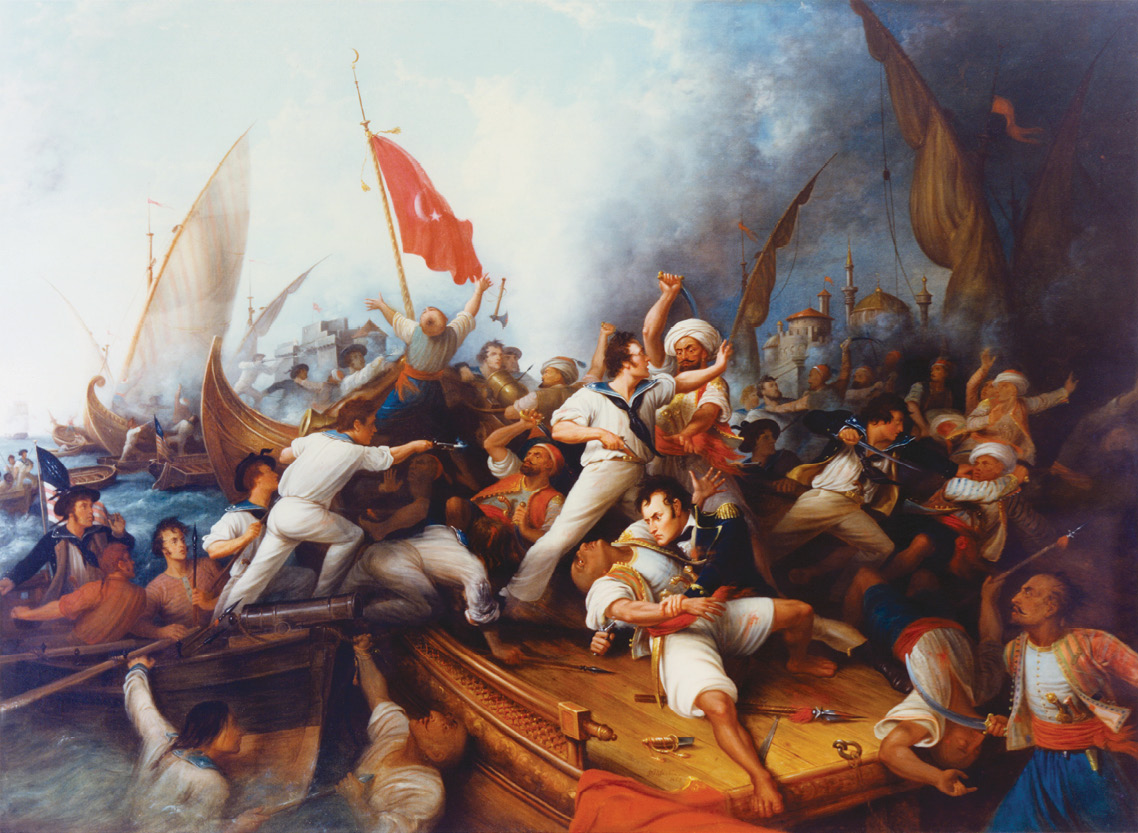
In this dramatic rendering from the later nineteenth century, the artist conveys the fearlessness of Stephen Decatur, by then a legendary American warrior.
DENNIS MALONE CARTER, COURTESY NAVY ART COLLECTION, NAVAL HISTORY AND HERITAGE COMMAND
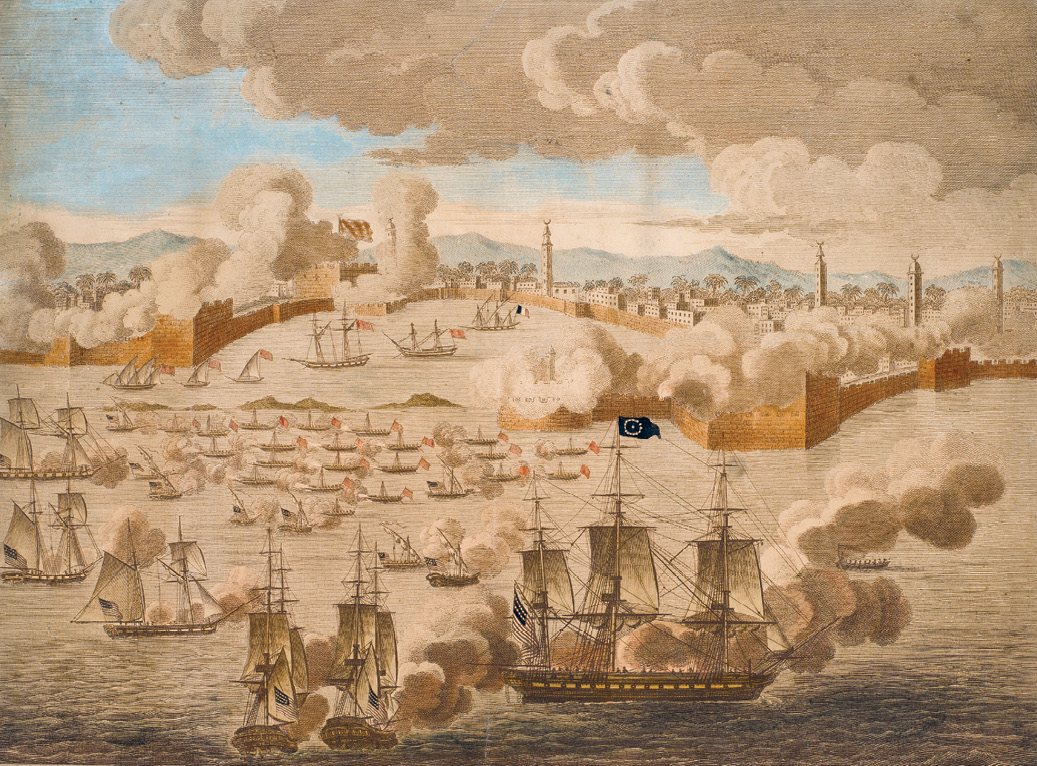
The battle at Tripoli Harbor, on August 3, 1804, with the American frigate USS Constitution, captained by Edward Preble, and his squadron preparing to bombard the Tripolitan gunboats arrayed at the mouth of the harbor.
JOHN B. GUERRAZZI; PHOTOGRAPHY © NEW-YORK HISTORICAL SOCIETY
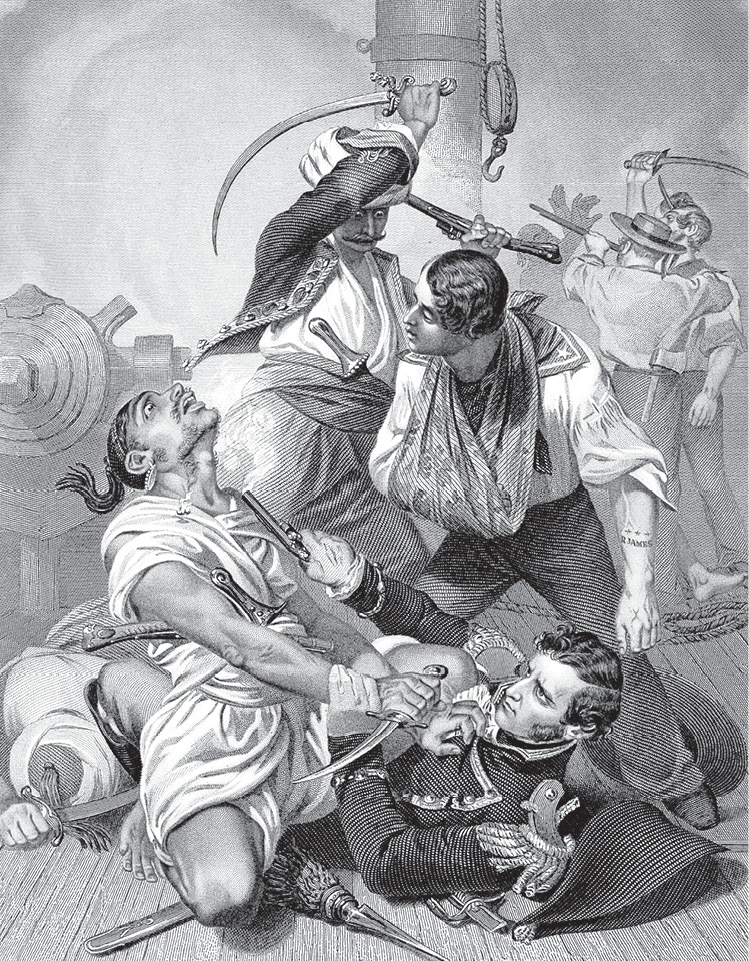
An artist’s depiction of Stephen Decatur’s fighting for his life—and attempting to avenge his brother James’s death—after boarding a Tripolitan gunboat on the day James died.
COURTESY THE MARINERS’ MUSEUM, NEWPORT NEWS, VIRGINIA
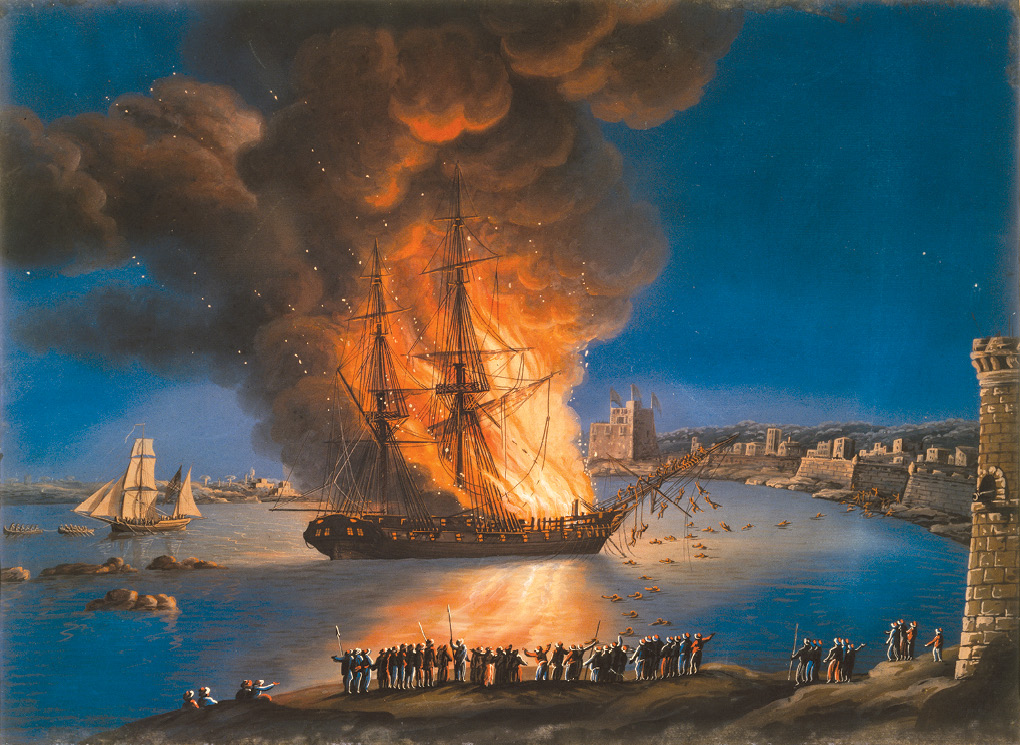
The USS Philadelphia was saved from becoming a pirate ship when, after its shocking loss to the Tripolitans, a brilliant and daring band of sailors, led by Stephen Decatur, set it afire in Tripoli Harbor.
NICOLINO CALYO, COURTESY THE MARINERS’ MUSEUM, NEWPORT NEWS, VIRGINIA

The Tripolitan merchant vessel Mastico was captured during the war with Tripoli. Converted into a warship and renamed USS Intrepid, it played an essential role on February 16, 1804, in the daring and dramatic raid to destroy the captured U.S. frigate Philadelphia. Later that year, on September 3, it embarked on one last perilous mission.
PHOTOGRAPHY © NEW-YORK HISTORICAL SOCIETY
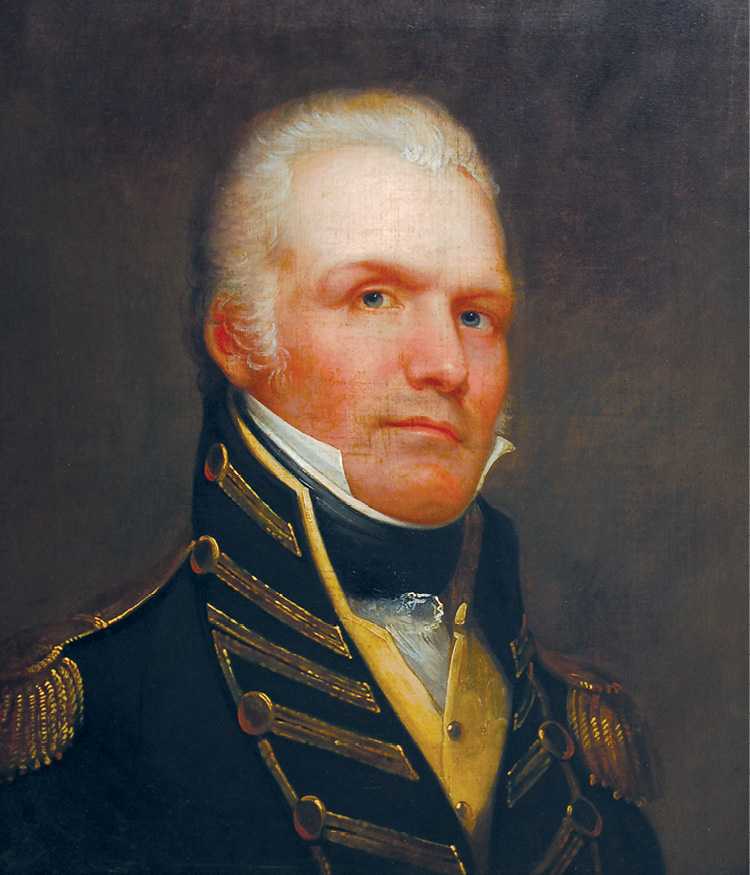
A soldier, a diplomat, and, finally, an intrepid general, William Eaton (1764–1811) led one of the most remarkable military assaults in American military history, marching six hundred miles through desert terrain in an effort to restore Bashaw Hamet to his rightful throne in Tripoli.
REMBRANDT PEALE, COLLECTION OF THE MARYLAND STATE ARCHIVES

Hailed as the “Hero of Derne,” Presley O’Bannon (1776–1850) led a contingent of seven American Marines and other foot soldiers on a charge of the city’s defenses. Despite being greatly outnumbered, the victorious Marines raised the American flag for the first time on foreign soil. In honor of his brave leadership and heroism, O’Bannon was presented with a scimitar, a sword modeled after the Mameluke style, which is still part of the dress uniform of the United States Marine Corps.
COURTESY U.S. NAVAL ACADEMY MUSEUM
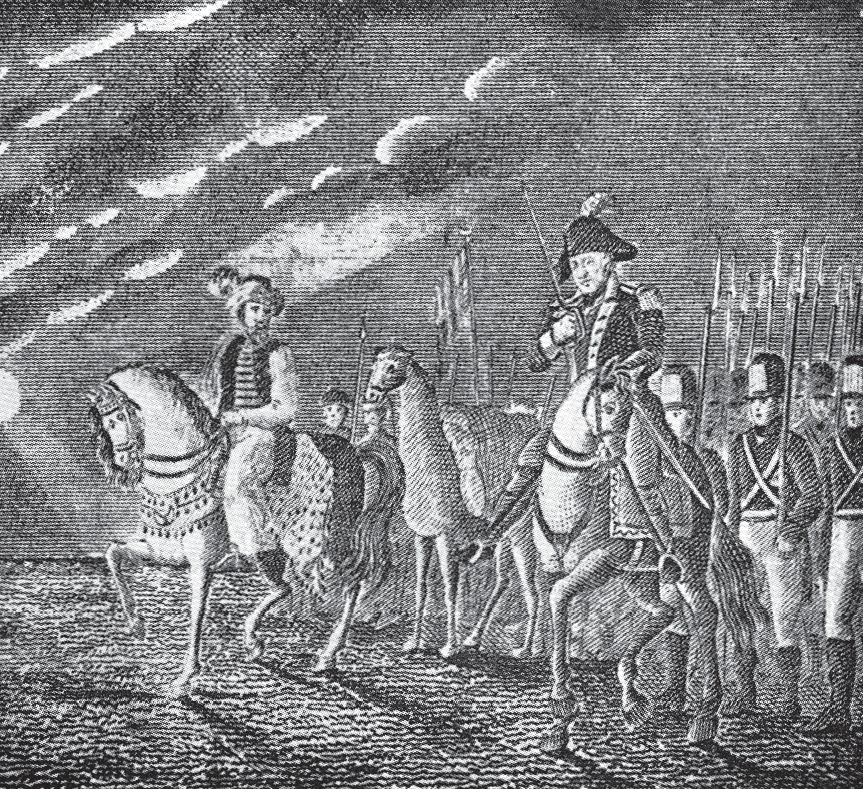
In this early-nineteenth-century woodcut, General Eaton and Hamet Qaramanli are pictured at the head of their diverse collection of warriors en route to the defining Battle of Derne. They took the city against great odds in under three hours.
PHOTOGRAPHY © NEW-YORK HISTORICAL SOCIETY
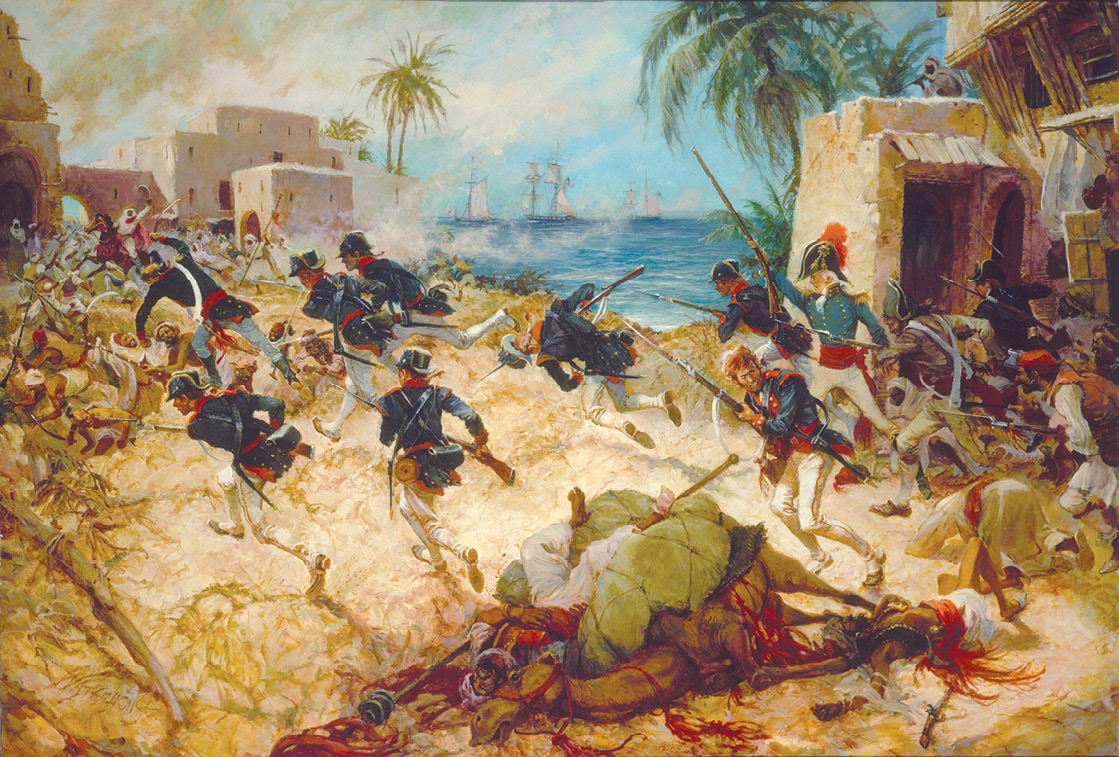
In this twentieth-century rendering, the U.S. Marines assault Derne on April 27, 1805. The events were also immortalized in the opening stanza of the Marines’ Hymn: “From the Halls of Montezuma/To the Shores of Tripoli;/We fight our country’s battles/In the air, on land, and sea.”
CHARLES WATERHOUSE, ART COLLECTION, NATIONAL MUSEUM OF THE MARINE CORPS, TRIANGLE, VIRGINIA
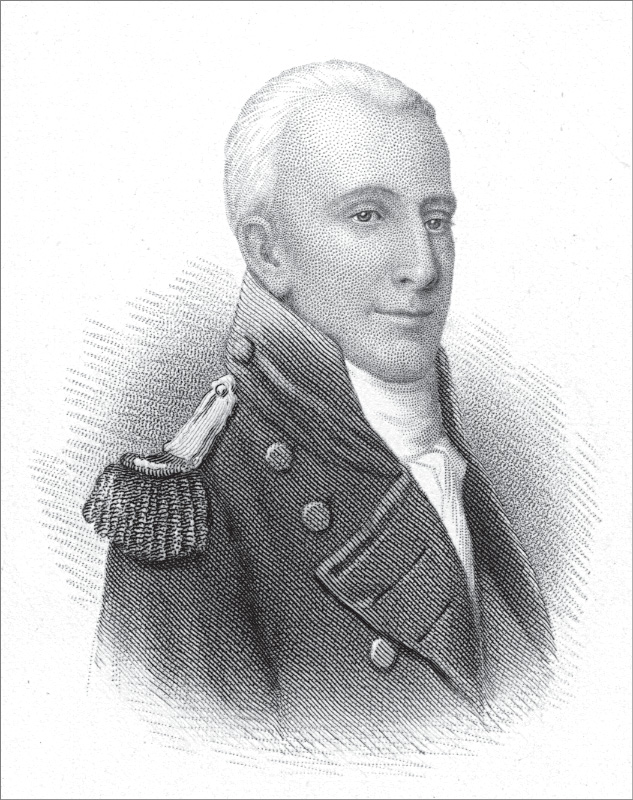
Tobias Lear (1762–1816) served as personal secretary to President George Washington until his death. In 1803, Jefferson appointed him consul general to the Barbary States, where Lear pursued a negotiated end to the Tripoli War, undercutting Eaton’s hard-won victory in Derne.
S. HOLLYER, COURTESY CLEMENTS LIBRARY, UNIVERSITY OF MICHIGAN

As Jefferson’s confidant and secretary of state, James Madison (1751–1836) played a key role in conducting the First Barbary War. As the fourth president of the United States, he would order the U.S. Navy to the Mediterranean once again after the War of 1812. The U.S. Navy finally ended the hostage taking and tribute payments by the Barbary States in 1815.
JOHN VANDERLYN, COURTESY WHITE HOUSE HISTORICAL ASSOCIATION

Decatur’s imposing squadron in a show of force in Algiers Harbor brought a close to the Barbary Wars, in June 1815.
G. MUNGER AND S. S. JOCELIN; PHOTOGRAPHY © NEW-YORK HISTORICAL SOCIETY