
CHAPTER ONE

It is attested that he is a native of the city of Guadalajara in the kingdom of New Galicia, the legitimate son of the marriage between Don Antonio de Gamboa and Doña Maria de la Puente y Aramburu, Old Christians of recognized nobility and clean of all bad blood.
—GAMBOA, RELACIÓN DE MÉRITOS, 1757
 FRANCISCO XAVIER DE GAMBOA WAS BORN ON DECEMBER 17, 1717, IN Guadalajara, the capital of the kingdom of New Galicia in the viceroyalty of New Spain. He came from an honorable family of Basque descent. Gamboa’s father, Antonio de Gamboa, was a merchant. He and his wife, Maria de la Puente y Aramburu, had eight children, of which Francisco Xavier was the eldest son. The small city of Guadalajara was prospering in Gamboa’s childhood. It was founded in 1531 by Nuño Beltrán de Gúzman, the brutal conquistador of New Galicia, and reestablished in the fertile Atemajac Valley in 1542. At the time of Gamboa’s birth, the region around the city produced a cornucopia of agricultural products, from old-world livestock, wheat, and pomegranates to new-world corn, beans, squash, and medicinal plants. They were cultivated by indigenous villagers, mestizo ranchers, and Spanish estate owners. In the nearby town of Tequila, people were already distilling a potent spirit from the juice of the agave cactus. Guadalajara, with about six thousand inhabitants in the early eighteenth century, served as the commercial entrepôt for northwestern New Spain. Its merchants, including presumably Gamboa’s father, ferried agricultural products and merchandise north to mining camps like Zacatecas and shipped silver back to the capital.1
Guadalajara’s economic importance was enhanced by its administrative functions. It was the home of an audiencia, a high court of royal justice, founded in 1548.2 Spain, or more accurately, Castile, established its sovereignty in the New World by extending jurisdiction. This required high courts to deliver the services of royal justice to the new American vassals of the king. In the words of historian J. H. Parry in his study of the Audiencia of Guadalajara:
Spain carried over from the age of feudalism into the age of sovereignty the notion of jurisdiction as the essential function of authority. Though he legislated continually, the king was still regarded primarily as a judge, the chief of judges. His authority was most directly and characteristically represented by the high courts of justice and in the government of his dominions the school-trained lawyer was his most useful servant.3
The establishment of an audiencia in the frontier area of Nueva Galicia in the 1540s was intended to bring order after the ravages of Beltrán de Guzmán and the subsequent Mixtón Rebellion of 1541, when Native warriors attacked and drove out Spanish settlers. The Spanish crown also wanted to crack down on the encomenderos, those privileged colonists who had received encomiendas, or grants allowing them to extract tribute in the form of labor and goods from Native villages. An audiencia was the means for the crown to assert its authority in the turbulent region.
By the eighteenth century, the high court in Guadalajara administered civil and criminal justice over a vast territory, from New Mexico in the north to the present-day state of Jalisco in the south. Within its district lay Zacatecas, the first great silver-mining center in New Spain. The four magistrates of the audiencia were kept busy hearing and reviewing cases, administering various crown offices, and advising the governor of New Galicia, the titular president of the audiencia. The presence of this high court attracted commerce to Guadalajara, as people with business before the court hired notaries and lawyers, sought lodging, bought food and drink, and frequented places of entertainment. The presence of an episcopal court handling canon law matters brought in more people. Although still small in population, Guadalajara was thriving in Gamboa’s childhood, the most important agricultural, commercial, and administrative hub in western New Spain.
Antonio de Gamboa’s trading business was prospering in the early eighteenth century. He might have profited from connections with Basque wholesalers in Mexico City who needed the silver from Zacatecas to purchase imported manufactured goods. He apparently built up a moderate fortune. But then in the mid-1720s tragedy struck. Gamboa’s father died suddenly, of unknown causes. The family was left nearly destitute after careless or dishonest executors mismanaged the estate.4 Gamboa recalled later that “at the age of eight, when I began my education, I studied in the streets while going door-to-door to collect charity for my family.”5 The ordeal marked him for life. From a very early age, Gamboa felt a strong sense of responsibility “to relieve my household, mother, and siblings” of the suffering caused by the premature death of his father.6 Rebuilding his family’s modest fortune became an enduring preoccupation.
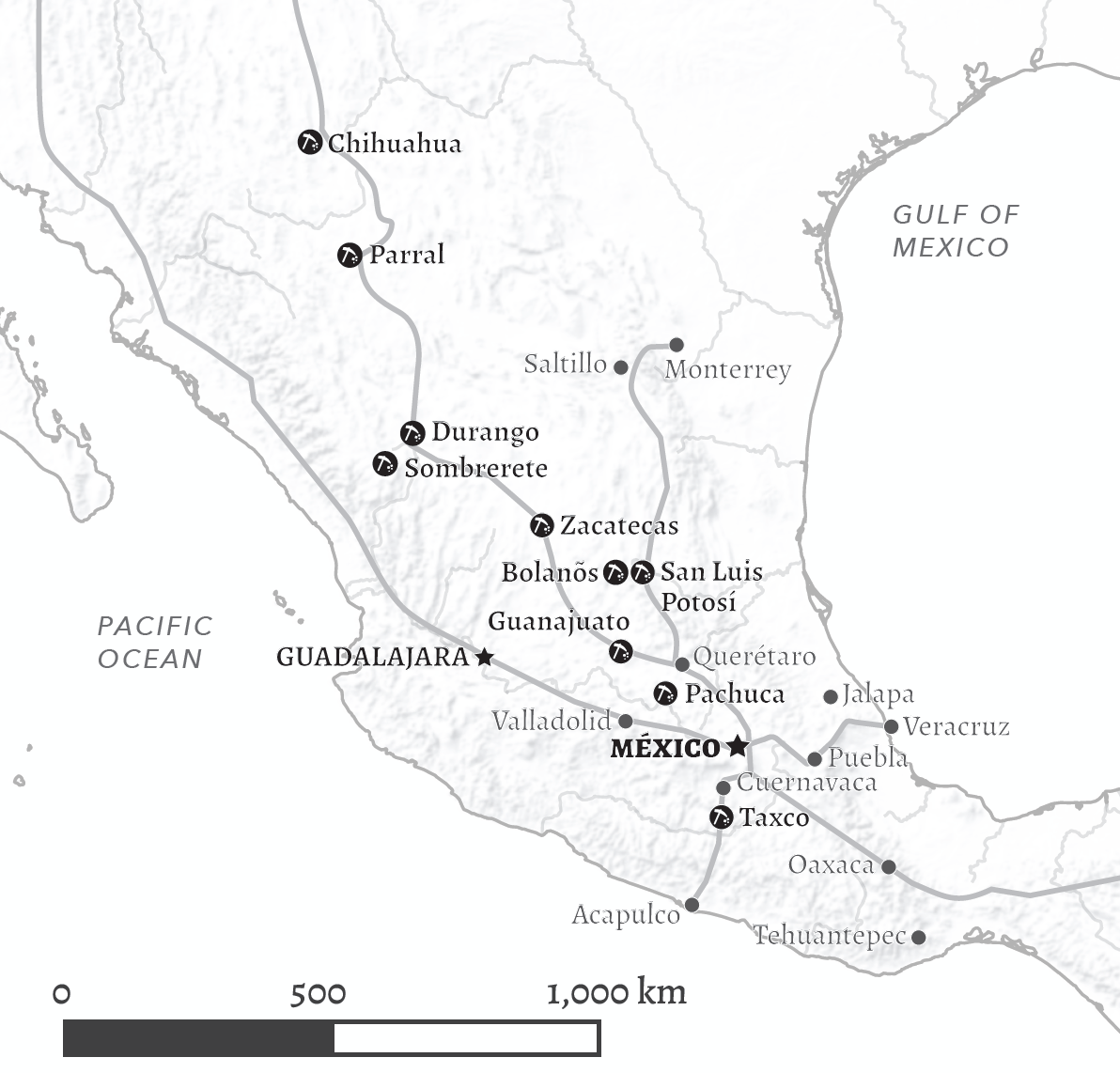
Map 1.New Spain in the eighteenth century: its main cities, mining districts, and roads. Map by Joshua Korenblat.
A Jesuit Education in New Spain
Like most young boys of Spanish descent, Gamboa received his first lessons from a parish priest. But one day, perhaps while reading a book in the shade of the arcades around Guadalajara’s main square, Gamboa attracted the attention of a young Spanish oidor on the audiencia, José Mesía de la Cerda y Vargas.7 Learning of his family’s struggles, Mesía de la Cerda offered to pay for Gamboa’s education at the local Jesuit college of San Juan Bautista. The Jesuits, the richest and most influential order of the Catholic Church, founded the Colegio de San Juan Bautista in 1696. It was supported by a number of Jesuit-owned agricultural estates around Guadalajara, most notably the hacienda of Toluquilla, which supplied the city with flour.8 Like all Jesuit schools, its curriculum was based on the Ratio Studiorum, the pedagogical plan adopted by the order in the 1590s. Young boys first concentrated on language and literature, with the goal of mastering Latin grammar and rhetoric. They read excerpts of Roman writers such as Livy, Seneca, Virgil, and Cicero. They learned to speak fluently and think on their feet.9 After this primary stage, called humanities, students moved on to philosophy, which included more advanced subjects like logic, metaphysics, theology, history, and mathematics. After graduating from philosophy, students would be ready to enter university to study theology, law, or medicine.
One subject that left a deep imprint on Gamboa was mathematics, which had always been an important part of Jesuit education. In Madrid, the Colegio Imperial, the most prestigious Jesuit college in the Spanish world, was particularly renowned for its mathematicians. In the seventeenth century, Hugh Sempill (ca. 1590–1654) and José de Zaragoza (1627–1679) both taught there and wrote textbooks used in Jesuit schools throughout the Catholic world.10 By tradition, the chair of mathematics at the Colegio Imperial served as the official cosmographer of the Indies, essentially the chief scientific advisor to the Council of the Indies.11 Zaragoza held the position in the mid-seventeenth century. This Jesuit priest began his career in Valencia, where he taught the future scholar Tomás Vicente Tosca (1651–1723), who in turn mentored Gregorio Mayans i Síscar, one of the leading intellectuals in mid-eighteenth-century Spain.12 Gamboa’s teachers at San Juan might have used Tosca’s nine-volume Compendio mathematico, published between 1707 and 1715, which covered the full range of applied mathematics, from trigonometry to architecture. Otero suggested that the study of mathematics, in particular geometry, was fundamental in the development of Gamboa’s rigorous approach to legal analysis and argumentation.13
Gamboa also gained from the Jesuits a grounding in what was called at the time natural philosophy, encompassing the life and physical sciences. Jesuit priests had always been active in scientific work, assisted by their global network of colleges and missions. They had educated many scientific revolutionaries, like Galileo Galilei and René Descartes, and carried out their own scientific research. For instance, Athanasius Kircher (1602–1680), who taught for decades at the Jesuit college in Rome, peered into his microscope, collected fossils, and pondered the cause of volcanoes. Eusebio Kino (1644–1711) brought with him to northern New Spain a telescope to observe the stars at night while he preached to the nomadic peoples of the region during the day. Wherever they went, Jesuits observed nature closely, not just out of curiosity but for potential profit. In Peru they noticed that Natives used the bark of the cinchona tree to treat fevers. In the early seventeenth century the samples the Jesuits sent back to Rome, which contained quinine, proved effective against malaria. The Jesuits controlled the trade in this medicine, widely known as Jesuit’s bark.14
The Jesuits, as the most educated and worldly of the regular orders, had to protect themselves from conservative churchmen quick to pounce on any challenge to theological, philosophical, or cosmological orthodoxies.15 Jesuits learned to take indirect approaches when discussing potentially radical ideas. One “nudge-nudge-wink-wink” method was to present something like Newtonian physics to their students as an unproven theory that they should learn to rebut with scholastic reasoning. In the case of Descartes, in 1706 the general congregation of the order decided their schools could teach his science but not his philosophy, even though this unlikely kept Cartesian rationalism under wraps.16 It is easy now to mock such methods, but they worked to spread challenging ideas in an intensely Catholic society. Just because it was difficult to publish radical books in the Spanish world did not mean that radical ideas were not thoroughly discussed and debated, even in Catholic schools.17
In 1733, at the age of fifteen, Gamboa completed his studies in philosophy. He later boasted in his official résumé—which was hardly the place to be modest—that he was the best student of his class. From the Jesuits, he gained a deep knowledge of classical history and literature as well as an understanding of mathematics and science. His ability to memorize vast passages of texts and think on his feet allowed him to excel in the academic acts popular at the time, in which students demonstrated their knowledge by parrying questions in public from their masters. Gamboa mentioned that he was tested in two comprehensive examinations in his final semester at San Juan Bautista, covering all of the subjects of philosophy. This qualified him for a bachelor of arts degree, which only the University of Mexico could confer in New Spain. He was granted this degree on January 8, 1734, at the age of sixteen. He was now ready for the study of law.
The Royal College of San Ildefonso
In the early 1730s Mesía de la Cerda, Gamboa’s patron, ran into trouble in Guadalajara. In 1731 the crown rebuked him and his friend Fernando de Urrutia, a supernumerary magistrate on the audiencia, for excessive gambling. While games of chance were ubiquitous in New Spain, they were considered dangerous for audiencia magistrates. If they fell into debt, their impartiality, the highest virtue of a royal judge, could easily be compromised. A host of legal provisions tried to keep audiencia judges isolated from the temptations of local society. Even their children needed royal approval before marrying someone from a local family. In practice, however, the crown recognized the difficulties in enforcing such rules, especially on young single men from Spain in remote corners of the empire. In the case of Mesía de la Cerda, he not only gambled with Fernando de Urrutía but also courted Fernando’s sister, Maria. The crown allowed him to marry María but, at the same time, perhaps to prevent further scandal in the city’s gambling dens, moved him out of Guadalajara. In November 1733 he joined the Sala de Crimen, the criminal law chamber of the Real Audiencia of Mexico, as an alcalde del crimen. He brought with him to Mexico City his young protégé, Gamboa.18
Gamboa entered the Real Colegio de San Ildefonso, the most prestigious Jesuit school in New Spain.19 San Ildefonso was the American equivalent of a colegio mayor, one of the richly endowed colleges of old Spanish universities where the aristocracy sent their sons. These students, known as colegiales, used the connections they made in the colegios mayores to dominate the top positions in Spanish government and the church. Students without noble pedigrees attended less prestigious universities and typically rented rooms in private homes rather than resided in colegios mayores. They were known as manteístas, for the long cloaks, or manteos, they traditionally wore. In the eighteenth century, thanks to the Bourbon desire to reinvigorate the government, the crown promoted manteístas over colegiales. Many of the top ministers of Charles III, notably Pedro Rodríguez de Campomanes, José Moñino, and José de Gálvez, came from this middle segment of society, prosperous enough to attend university but without the aristocratic ties to enter a colegio mayor in Salamanca or Alcalá de Henares. Gamboa shared with the Spanish manteístas a relatively humble origin but his membership in the Jesuit college of San Ildefonso gave him a bit of the elite sheen of Spanish colegiales. In New Spain, graduates of San Ildefonso felt entitled to occupy high offices of government and church.20
Gamboa arrived at the college at an auspicious moment. Flush with cash from the growing novohispano economy, the Jesuits had embarked on an ambitious rebuilding program.21 Cristóbal Escobar y Llamas, the rector from 1727 to 1742, headed the effort. College chronicler Felix Osores described Escobar as “the most notable protector and promoter of the letters in the cited Seminary, whose grandiose and magnificent building he raised from the foundations, adorning Mexico with it, and providing an example of the magnificence corresponding to the dignity of an empire of knowledge.”22 Construction on the massive three-story building—with exterior walls of red tezontle stone trimmed by carved limestone, three interior patios, an ornate chapel, assembly halls, classrooms, dormitories, refectories, and one of the most extensive libraries in Mexico—continued throughout Gamboa’s years in the college. At a cost of over 400,000 pesos, the expansion of San Ildefonso was one of the largest construction projects in Mexico City of the early eighteenth century.23 Escobar also expanded the college’s academic program. He endowed new prizes in theology and law as well as securing for San Ildefonso chairs for the study of the Four Books of Sentences by Peter Lombard, a medieval classic of theology, and the works of Francisco Suárez, the great sixteenth-century Spanish Jesuit, theologian, and jurist.24
Life for the students at San Ildefonso, known as alonsíacos, can be gleaned from the pages of a little handbook, El discreto estudiante: Reglas de buena crianza, para la educación de los colegiales del Colegio Real de San Ildefonso, printed in Mexico City in 1722.25 The typical day began with mass at dawn. In chapel, boys were admonished to “keep your body composed, the eyes modest and serious, walking slowly, remembering to show courtesy to the persons you pass.”26 They should not gawk at the chapel’s adornments and decorations “because that is silliness, and you will be judged as a man who has never seen such a thing before.”27 After mass and a light breakfast, students filed out to their morning classes. At the noonday meals, they were expected to keep their elbows off the table and use only their right hand to cut meat, so as not to be mistaken for gluttons. During meals, students took turns giving academic talks, presenting arguments drawn from their reading and facing tricky questions from their teachers. Classes resumed in the afternoon. After a light supper, students would pray the rosary between 7:30 and 8:00 p.m., before turning in for the night. El discreto estudiante cautioned students never to brag or gossip or use silly nicknames. They were to keep their hair short and nails clipped. Once a year they practiced the Spiritual Exercises of Ignatius de Loyola, a rigorous program of prayer and meditation devised by the founder of the Jesuit order. The whole regimen at San Ildefonso was designed to produce disciplined and devout students. For Gamboa, however, a university student in residence at the college, life was not quite as regimented as for the younger boys studying humanities and philosophy.
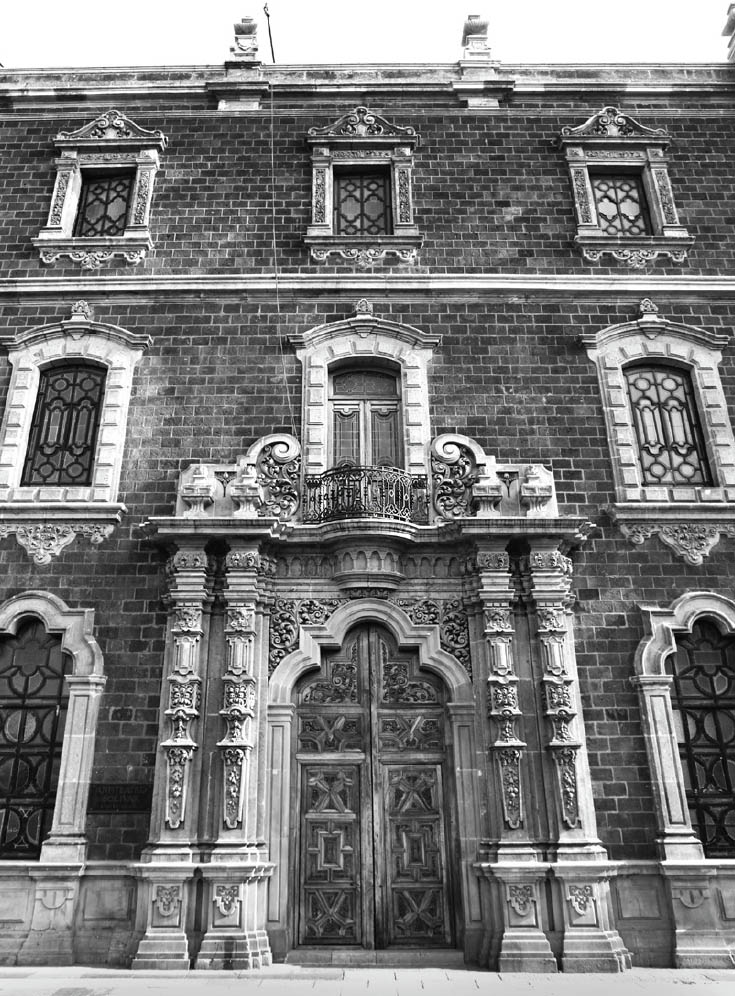
Figure 1.The ornate principal entrance of the Real Colegio de San Ildefonso, constructed during Gamboa’s residence in the 1730s. Photograph by Sandra Guerrero.
Gamboa was residing in San Ildefonso when the worst epidemic of the eighteenth century hit Mexico City. Natives called the plague matlazahuatl; today we believe it was likely an outbreak of typhus. The Valley of Mexico had suffered drought since 1734, leading to shortages of corn, wheat, and beef, which prepared the ground for the high death toll.28 The epidemic struck in the late summer of 1736. By January 1737 matlazahuatl had spread to the whole city but was especially virulent in the poorer indigenous neighborhoods. The Real Colegio de San Ildefonso was largely spared. The Jesuits, who operated four hospitals in Mexico City, spent 3,500 pesos to set up additional facilities to care for the sick.29 The death toll reportedly reached an extraordinary thirty thousand, meaning that a third of the population of the city could have perished.30 Bodies were buried with little ceremony in churches or burned in mounds at the paupers’ cemetery of San Lázaro. Priests swung censers in the streets to mask the stench of rotting flesh.
To contain the epidemic, the authorities took extraordinary measures. First, they banned the sale of pulque, the fermented juice of the agave plant, under the belief that its consumption weakened Native bodies and made them more prone to infection. Second, they sought the intercession of the most holy religious figures of Mexico City. Processions were organized in honor of Our Lady of Loreto, Our Lady of Remedios, and the Christ of Ixmiquilpan, praying for their help to end the crisis.31 Finally, city authorities appealed to the most holy of local saints, the Virgin of Guadalupe. The cloak of Juan Diego imprinted miraculously with her image was brought from her shrine in Tepeyac. Sure enough, a few days later, rain began to fall, the drought abated, and the plague subsided. In May 1737, in thanksgiving, the archbishop of Mexico, Juan Antonio de Vizarrón y Eguiarreta, declared Guadalupe the patroness of the city.32 In 1746, the bishops and cathedral chapters of New Spain united to proclaim the Virgin of Guadalupe the universal patroness of the viceroyalty. And in 1754, the pope confirmed her as the patroness of New Spain. She remains the most popular icon of religious devotion in Mexico today.33
The apotheosis of Guadalupe coincided with an upsurge in local patriotism. It began as a reaction to an insult thrown America’s way in 1735 by the Spanish humanist, Manuel Martí, known as the dean of Alicante. He claimed the Indies had never produced a writer of merit. This comment outraged Spanish American intellectuals, among them Juan José Eguiara y Eguren, a faculty member of San Ildefonso and a professor and later rector of the university.34 Eguiara began work immediately on an ambitious project, the Bibliotheca Mexicana, meant to profile the most noteworthy Spanish American authors. He only managed to finish the first volume, which covered authors up to the letter C, but he did leave manuscripts of later volumes. The fact that he wrote it in showy Latin instead of Spanish surely limited his audience. But the Biblioteca Mexicana did help shape the ideas that later flourished with Mexican nationalism. For instance, Eguiara claimed, as did Carlos de Sigüenza y Góngora fifty years earlier, that creoles, Americans of Spanish descent, could look back with pride to the glorious Aztec past. He presented creoles as the rightful heirs of Mesoamerican civilization. They did not need Europe to validate their work. This potent myth obscured the rather inconvenient truth that it was the ancestors of the creoles who had destroyed the Aztec Empire in the first place.
Within the community of San Ildefonso, Gamboa, a poor boy from Guadalajara, met the sons of the elite and the future leaders of New Spain. He befriended José Miguel Calixto de Berrio y Zaldívar, the scion of one of the wealthiest landowning families in New Spain, who later assumed the showy titles of Marqués de Jaral de Berrio and Conde de San Mateo Valparaiso.35 They became life-long friends and compadres, with Gamboa later acting as the executor of Berrio’s huge and complicated estate. Gamboa also met many of his future legal colleagues within the walls of the Real Colegio de San Ildefonso. He studied under Agustín Bechi y Monterde, a Veracruz-born priest, canon law professor, and audiencia advocate.36 Manuel Ignacio Beye de Cisneros, another canon law professor and rector of the university in the late 1750s and early 1760s, was a classmate in the 1730s.37 With these men, along with his future audiencia colleague Baltasar Ladrón de Guevara, who studied at San Ildefonso in the 1740s, Gamboa helped to establish in the early 1760s Mexico City’s Colegio de Abogados, a mutual aid society for the legal profession.38 Two of New Spain’s most noted men of science in the eighteenth century, José Antonio de Alzate, a polymath secular priest, and Antonio de León y Gama, an astronomer and mathematician, also attended San Ildefonso. Gamboa knew them both.
Another notable alonsíaco of Gamboa’s generation was José Rafael Campoy, praised by Osores as “the wisest of the wise in the eighteenth century.”39 Born in 1723, he entered San Ildefonso in 1735 as a philosophy student. But he had difficulty coping with the school’s strict regime, especially the discipline meted out by his primary master, Father Miguel Quijano. In 1737 Campoy ran away and found work with a widow outside of the city. Her harsh treatment, however, was even worse than Quijano’s. Fortunately, Escobar, the rector, learned of the boy’s whereabouts and brought him back to San Ildefonso. Later ordained a Jesuit priest himself, Campoy taught the next generation of young scholars at San Ildefonso, which included the poet Diego José Abad, the theologian Francisco Xavier Alegre, and the historian Francisco Xavier Clavijero.40 Clavijero, from exile in Italy after the suppression of the Jesuit order in 1767, wrote a history of Mexico that picked up the patriotic message from Eguiara, linking New Spain to the glories of the pre-Columbian past. This was the social and intellectual milieu Gamboa enjoyed in his years as a law student.
Studying Law at the University of Mexico
From San Ildefonso it was a short walk through the teeming Plaza Mayor to the Royal and Pontifical University of Mexico. Students passed by the massive viceregal palace, rebuilt after the damage sustained during the popular riot of 1692.41 It housed, besides the office and residence of the viceroy, the two chambers of the Real Audiencia of Mexico, a jail, the Mexico City mint, apartments, and even a popular tavern. The university, founded in 1553 on the model of the University of Salamanca, had five faculties: arts, theology, civil law, canon law, and medicine. It was run as a joint venture, as its name implied, between the crown and the church, but had jurisdictional independence.42 Its permanent faculty members were all clergymen. Theology and the two laws were the most popular fields of study.43
The study of law in eighteenth-century Mexico was still based on the sixth-century Roman legal texts discovered in an Italian library in the eleventh century. These writings made up the Corpus Juris Civilis, an immense compendium of Roman law and jurisprudence assembled under Justinian, the last native Latin-speaking emperor of Rome. Justinian hoped his legal collection would help to revitalize imperial control in the West; instead, the Corpus Juris Civilis, after its medieval recovery, established the foundation for the legal order of Europe.44 It provided a transnational common law of unimpeachable pedigree. The Corpus Juris Civilis consisted of four parts: the Digest, itself divided into fifty volumes and containing the writings of the principal Roman jurists; the Code, divided into twelve books and containing historic legislation; the Novels, a compendium of legislation passed during the reign of Justinian; and the Institutes, a summary of the other books and used primarily as a teaching text.45 The Spanish world also had its own unique legal code derived from Roman law, Las Siete Partidas, written in the thirteenth century under the auspices of Alfonso X of Castile.46 Even in the late eighteenth century, few lawyers in New Spain would not have had access to Las Siete Partidas, usually the 1555 edition by the humanist jurist Gregorio López.47
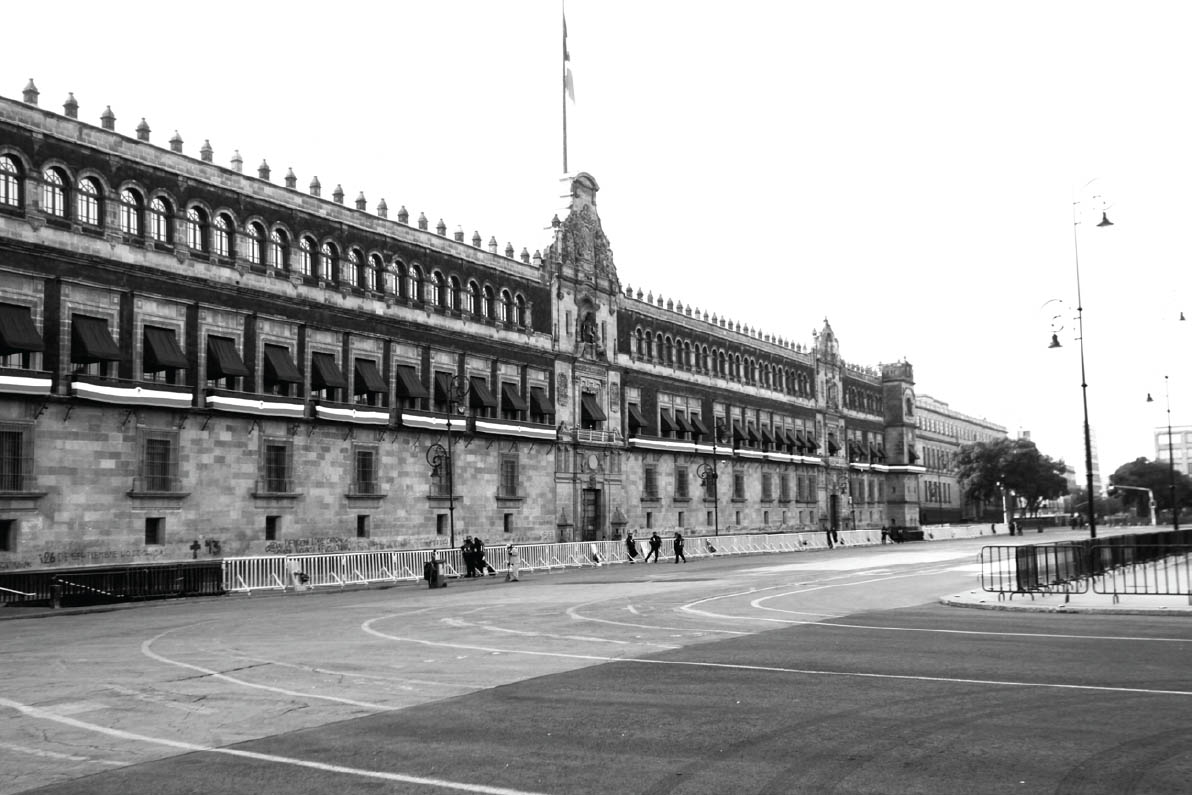
Figure 2.The National Palace, once the home of the viceroy, the audiencia, the mint, a jail, and even a raucous tavern. Photograph by Sandra Guerrero.
Why would future lawyers in eighteenth-century Mexico City need to study Roman law? It was not as if the legislation of Justinian or the opinions of Roman jurists like Ulpian still applied as valid law. But what Roman law supplied, in the words of legal historian Peter Stein, was “a conceptual framework, a set of principles of interpretation that constituted a kind of universal grammar of law, to which recourse could be made whenever it was needed.”48 Students applied this grammar of law to concrete legal problems discussed in the classrooms and assembly halls.49 In time, with the vocabulary and principles derived from Roman law and elaborated by generations of European jurists, students would learn how to think like lawyers, with the discernment to see differences where others just saw similarities and similarities where others saw differences and the skill to craft persuasive verbal and written arguments.50 In addition, Roman legal categories, namely the laws of family, inheritance, property, torts, unjust enrichment, contracts, and remedies, still defined much of civil law in the eighteenth century.51
The Corpus Juris Civilis was considered almost a sacred text, akin to the Bible, which reflected the transcendent norms of divine and natural law. And just as Catholics relied on theologians to make sense of Holy Scripture, lawyers in the Spanish world needed jurists to guide them on how to use the timeless principles of Roman law to resolve everyday legal problems. The most esteemed of the early glossators and commentators was Bartolus of Saxoferrato (1313–1357).52 According to a common refrain at the time, Nemo bonus iurista nisi bartolista—you could not be a good jurist without being a follower of Bartolus. Over the centuries, following the examples of Bartolus and his student Baldus of Ubaldis, European jurists produced a massive literature, covering all areas of law, to explain how Roman principles could be applied to everyday cases. The most skilled of these juridical authors acquired auctoritas: their opinions gained authoritative status in legal disputes.53 This was the ius commune, the common body of norms derived from Roman law that filled in the gaps of state legislation, whether municipal, national, or imperial. Lawyers cited juridical opinions in their briefs just as lawyers in the English common law system would cite the binding decisions of high courts. In the civil law world, judicial decisions themselves never became an important source of law. Since adjudication remained casuistic, the resolution of one dispute did not necessarily bear on the outcome of others. In addition, unlike in the English world, courts did not issue the reasons for their decisions; it was believed that transparency was dangerous for judicial authority as it would reveal the inner politics of decision-making.
The canon law of the Catholic Church also evolved from Roman antecedents.54 After the fall of the empire in the West, the church continued to pass legislation and adjudicate disputes according to Roman procedures. Medieval jurists organized the church’s laws in a series of compilations, beginning with Gratian’s Decretum in the twelfth century. Italian jurists of the Middle Ages, like Giovanni D’Andrea (Joannes Andreas) and Nicolò de Tudeschi, known as Panormitanus, wrote on canon law in the same manner as Bartolus did on civil law. The Council of Trent in the late sixteenth century endorsed an omnibus of canon law known as the Corpus Juris Canonici, the canon law equivalent of the Corpus Juris Civilis. It included Gratian’s Decretum, the Decretals of Pope Gregory IX, and the Clementines of Pope Clementine V. Students at the University of Mexico in the 1730s continued to pore over the Decretals and Clementines. Even law students planning careers in private practice or the civil administration studied canon law, another reflection of the Christian foundation of the juridical order.
Increasingly in the eighteenth century, critics in Spain asked why students had to spend so much time studying ancient legal texts at the apparent expense of the legislation of their own king. After all, in Spain, there was no question that domestic laws, whether royal or municipal, took priority over the ius commune; both the Ordenamiento de Alcalá in 1348 and the Leyes de Toro in 1505 spelled that out clearly. This was reaffirmed again in 1713 by the first Bourbon king Philip V.55 In 1738, José Berní Catalá, a young reformist jurist from Valencia, wrote in his guidebook for novice lawyers, El abogado instruido en la practica civil de España, that “lawyers in Spain who are only guided by the Authors and who fill their bookshelves with their works proceed in error, for they do not pay sufficient attention to the Royal Laws.”56 In 1741, the Council of Castile reminded “the endowed chairs and professors in both laws to take care in reading with the Roman law the laws of the Kingdom that correspond to the subjects under consideration.”57 The Bourbon crown worried that universities produced lawyers with scant knowledge of the actual laws that governed the kingdom and with undue reverence for a foreign body of law. Roman law should be studied by historians, not lawyers.58
This reformist criticism of the ius commune, however, exaggerated the problem. Just because the curriculum was structured around the ancient texts of civil and canon law did not mean that professors, many practicing lawyers themselves, would not teach their students Spanish legislation, such as the laws contained in the Recopilación de las leyes de Indias.59 The casuistic orientation meant that students studied concrete cases in classes, drawn from local experience, which they would attempt to resolve by employing the full repertoire of legal sources. This inevitably introduced them to royal and municipal laws, local customs, and the writings of jurists who focused on Spanish legislation rather than the ius commune. Law students like Gamboa residing at San Ildefonso also participated in weekly seminars specifically dedicated to the discussion of practical jurisprudence hosted by the college.60
For instance, there is little doubt that Gamboa and his classmates would have read closely Solórzano’s Política Indiana, considered since its publication in the mid-seventeenth century the outstanding guide to the Spanish American juridical order. Solórzano, born in 1575, spent over a decade as an audiencia magistrate in Lima before returning to Spain in 1627.61 He wrote the Política Indiana after he retired in 1644, attempting to sum up all his experience and knowledge about the legal order of the Spanish Indies. Its six books cover Spain’s title to its New World empire; Native labor; the encomienda; the real patronato, the crown’s powers over the church in America; the powers and duties of secular government, from municipal officials to the viceroy; and financial and economic matters, including mining and commerce. Política Indiana was probably intended as a companion to the Recopilación de las leyes de Indias, which Solórzano edited in the 1630s.62
Política Indiana not only analyzed government in Spanish America but also exemplified its juridical culture. Solórzano made it clear that the king’s primary duty, an obligation from God, was the deliverance of justice to his subjects. In discussing the big questions of law and justice, Solórzano demonstrated both the casuistic approach to legal analysis and the pluralism of law. He canvassed a dizzying variety of material, the whole literature of the ius commune, royal laws (of which he likely had the best knowledge in Spain, thanks to his editing of the Recopilación de las leyes de Indias), and local customs. Solórzano stressed throughout Política Indiana the necessity of respecting the social and geographic diversity of America. Only people with practical experience in America could fully grasp how to govern it while preserving justice. Although a firm Spanish imperialist, in the sense that he did not question the validity of Spain’s title to the New World, he believed people born in America had a natural right to occupy high offices of civil and ecclesiastical government.63 Solórzano’s Política Indiana remained an unassailable authority into the eighteenth century. In 1733, just before Gamboa entered law school, the Spanish jurist Alonso Varela de Ureta commented, “it was easier to ignore the disposition of the law than the authority of that work.”64
In his official résumé, Gamboa boasted that his professors recognized him as “the best student of his time” at San Ildefonso and the University of Mexico. He won scholarships after his third and fourth years, which might have helped relieve Mesía de la Cerda of some of the financial cost of supporting Gamboa. He performed admirably in the major academic acts, as he had as a schoolboy in Guadalajara. Gamboa ended his formal education participating in two prestigious ceremonies. In the December 1739 celebration of the Immaculate Conception, the rector of the university chose Gamboa to give the traditional Latin prayer in honor of the Blessed Mother. This was one of the most solemn religious feasts in New Spain and would have brought together the religious and civil elite of Mexico City.65 Around the same time, he and the top theology student of San Ildefonso, Cayetano Torres Tuñón, were chosen by Escobar to perform actos mayores to inaugurate the college’s new chapel and general assembly hall. Ironically, Gamboa, the law student, performed at the opening for the chapel, and Torres, the theology student, opened the assembly hall.66 Gamboa graduated with degrees in both civil and canon law and then completed the required bar admission course in procedure and practical jurisprudence organized by San Ildefonso. On November 28, 1740, he took his oath before the Real Audiencia of Mexico, qualified to represent clients in the high court of the viceroyalty. It was time to make good on his pledge to rebuild his family’s lost fortune.
The Legacy of Mesía de la Cerda
José Mesía de la Cerda, Gamboa’s first mentor, did not do much to distinguish himself on the bench. After his promotion to the Real Audiencia of Mexico in 1734, he remained stuck in the Sala de Crimen for the next three decades. He never received promotion to the more senior Sala de lo Civil. Perhaps the reprimand for excessive gambling tarnished him for the rest of his career. The viceroy of New Spain from 1746 to 1755, Juan Francisco de Güemes y Horcasitas, the first Conde de Revillagigedo, thought him arrogant and suspected he profited illicitly from his post.67 The Jesuits of San Ildefonso, however, did honor Mesía de la Cerda. In a 1748 poetry contest hosted by the college to commemorate the ascension to the throne of Ferdinand VI, he was praised for the “extraordinary love with which he favored and protected this college.”68 But his most memorable accomplishment might simply have been rescuing the precocious Gamboa from poverty in Guadalajara and making sure he received an education. Thanks to the Spanish judge, Gamboa studied with the Jesuits, received a solid grounding in the Latin classics of literature, history, and philosophy, acquired a sound knowledge of geometry and mathematics, and a gained familiarity with some of the new ideas about the natural world emerging from the Scientific Revolution. Gamboa then followed his mentor’s footsteps by studying law. Thanks to the unheralded Mesía de la Cerda, Gamboa, an orphan from Guadalajara, got the start he needed to become one of Mexico City’s top lawyers in the 1740s and 1750s.