
7
Keep Calm and Carry On
World War II was a time of ‘scientific digestion’ in archaeology (Goodwin 1948), with primary research curtailed almost everywhere (Warren 1942; Lantier 1945; Goodwin 1948). Publications were greatly reduced in number, and many journals decreased in size, frequency, or both. The need for economy of paper saw Man, the monthly journal of the RAI, become bi-monthly from January 1941, reducing its annual page count by a third, from ~210 to ~140. This was accompanied by a ~50% reduction in the number of original articles, letters and reviews, presumably the result of wartime preoccupations. In occupied France, where, as Lantier (1945) defiantly noted, excavations continued in spite of the need for permits, publication was further limited by censorship and restrictions on the freedom of the scientific press. While Gallia, a new review journal aimed at rapid dissemination was launched in 1943, wartime volumes of BSPF saw a ~50–60% reduction in page count and a similar reduction in the number of articles.
Political and economic restrictions to movement compounded these effects, but not for everyone. Henri Breuil was fortunate enough to be in Brive when Paris fell,1 and was able to leave the zone libre in 1941 to take up a visiting professorship at Lisbon University in neutral Portugal. While there he classified the Palaeolithic materials from the Western Beaches and Lower Tagus according to his European framework (Breuil and Zbyszewski 1942). Resolved not to return to his job, as all French civil servants had been ordered (Brodrick 1963), he instead travelled on to Spain and Morocco, where he worked with Neuville and Ruhlmann (1941) on the raised beaches of Casablanca, helping to establish the four classic levels defined by Depéret, and identifying a series of ten archaeological industries that mirrored those seen in Europe, albiet with an earlier appearance of Leval-lois (Neuville and Ruhlmann 1941; Breuil 1945; Vignard 1945, Figure 7.1). In 1942, he accepted an offer from Jan Smuts to spend the rest of the war in exile in South Africa (instigated by Riet Lowe), where he busied himself studying the raised beaches and flu-vial gravels, finding the archaeological series they contained to complement those he had identified in Europe and North Africa (Breuil 1943a, 1943b, 1944a, 1945).

Figure 7.1 Correlation between the Climatic and Palaeolithic Sequence of North Africa and Europe, heavily influenced by Breuil’s wartime visit (redrawn after Vignard 1945).
For most, however, it was a period of reflection and soul-searching, a time when the accumulated wealth of published facts and theories could be collated, reassessed and revised, as this chapter describes.
Cracks in the Foundations
As hostilities continued, Warren (1941) pondered over the question of whether archaeology could be considered a science at all when events in the past could not be verified or proven, only inferred; even “flint implements, the primary building blocks of prehistory, are not facts, but inferences” (Warren 1941, 90). Some of these blocks were secure, but other parts of the flint-faced structure were much weaker, little more than a hollow facade. Warren thought that many scholars tended to avoid the ‘drudgery’ of the evidence, and were slow to discard old ideas which, although easily shown to be erroneous, were firmly embedded in the disciplinary consciousness.
Goodwin (1946b, 91) was of a similar mind, declaring that prehistory was not and never could be a science. It might be able to employ certain methods borrowed from the natural sciences, but the material on which it depended would never reveal ‘truths’. Humans were sentient–they were inventive and had free will–and stone tools could never provide index fossils for dating in anything but the broadest sense. Prehistory was a process of approximation. Garrod (1946) reached similar conclusions, declaring that stone tools were “imagined and made by man and variable at his free will; to ignore this element of incalculability is to force prehistory into a strait-jacket” (Garrod 1946, 9).
V. Gordon Childe’s (1944a) continued peregrinations led him in a different direction. To his mind, prehistory was forced to deal in generalisations rather than individual people or events, and as such it operated in much the same way as a science. There was a three-fold basis to classification: functional, chronological and cultural. Childe saw the introduction of culture theory as an attempt to overcome the obvious historical inadequacies of the linear models, showcasing Breuil’s 1926 essay in Man as a landmark in its application to the earliest periods. In its wake, however, Childe felt that the vast storehouses of palaeoliths needed to be re-examined and re-classified using new methods. He was particularly suspicious of the flake cultures, which seemed like a forced division. For Childe, “explanation in prehistory has been largely in the mythographic stage. It likes to postulate and multiply inadequately documented entities whose scarcely credible migrations ‘explained’ observed changes in culture and similarities in flint-work” (Childe 1944a, 18). This was not to deny that migration and diffusion were not valid explanations, but a plea that the movement of people and ideas should only be inferred from very specific types of evidence, not from base similarities that could easily be the result of technological convergence. Archaeologists should ask not where a culture came from, but what it did, adopting a more Soviet economic view (Trigger 1989). Typology and technology were important, but they should be the means to answering more interesting questions about human societies. By 1951 Childe had adopted an explicitly functional view of archaeological cultures, in which every trait was seen as functionally related to all the others (Childe 1951), similar to the view of culture as a system advocated by Walter Taylor in the United States (see Trigger 1968). Artefacts were products of culture, governed by social norms about style and technique, but it was important to understand how they related to the wider cultural system; even utilitarian objects like tools carried more than just technological and historical information (Trigger 1968).
Doubts and questions filled Malan’s (1942) presidential address to Section E (Anthropology) of the South African AAS, which although described as “hardly constructive” by Goodwin, did identify several issues: gaps in knowledge, a lack of trained prehistorians, few well-paid jobs, poor funding and facilities, and the need for better public education (Goodwin 1948). This led to the establishment of the South African Archaeological Society in 1945, which published the essentially popular SAA Bulletin and a series of annual handbooks. The second of these handbooks, Goodwin’s Loom of Prehistory, provided a complete history of Stone Age research in South Africa, a region-by-region commentary of critical sites and sequences and a comprehensive annotated bibliography. Here Goodwin (1946a) emphasised the need to build local and regional sequences from the ground upwards. The political boundaries he had previously used for convenience needed to be replaced with a system of zones that reflected past environmental and ecological conditions. The warp and weft of Goodwin’s prehistoric loom were to be found in local climates, local resources, local needs and local cultural variation, which together produced a broad tapestry interweaving elements of time, culture, landscape and humanity.
Poor communication unfortunately continued to snag the fabric of archaeological research, not just the slow pace of dissemination caused by the war, but the frustrating lack of adequate terminology (Goodwin 1946b).2 Goodwin argued that the extension of European names to the rest of the world was still seen as largely inappropriate, while their use to describe periods, cultures, techniques and types was confusing to most students of archaeology, as was the fact that two industries carrying the same name might be different in age and content. The introduction of new cultures, or substitution of new names for old was also a hindrance, one which caused more distress among students and rendered a historical approach, the best way for newcomers to learn the subject, unsatisfactory (1946b, 97). The recent adoption of Abbevillian in place of Chellean was one such retrograde step: neither site captured the South African handaxe cultures better than the other, but after 60 years in common use at least the Chellean had the advantage of being understood by everyone. He found the emerging ideas of pebble cultures equally appalling, as their defining characteristic was not age, technique or type but simply the use of a particular raw material source. These were not merely semantic pleasantries, they mattered.
T.T. Paterson (1945) had been equally dismayed by the lack of standard definitions for such basic terms as industry or culture, tradition or complex, which were often used interchangeably and which might be based on techniques, types or both. Yet his own attempt to provide more rigour and clarity was hampered by an idiosyncratic typology, his insistence on using parochial East Anglian designations, and definitions of industry, tradition, complex and so on that were so meandering that Goodwin, let alone his students, might have struggled to comprehend their precise meaning or differences. By the time the paper was published, though (due to the war it was delayed for five years after its original submission), Paterson seems to have been past caring. He had grown tired of working with dead things (E. Paterson 1996) and in 1947, two years after returning from active service in the British Armed Forces, he tied up his remaining archaeological obligations (e.g. Paterson and Tebbutt 1947), resigned his post at the Museum of Archaeology and Ethnology at Cambridge and pursued a new and highly distinguished career in business management and administration at Glasgow and Strathclyde Universities (E. Paterson 1996).
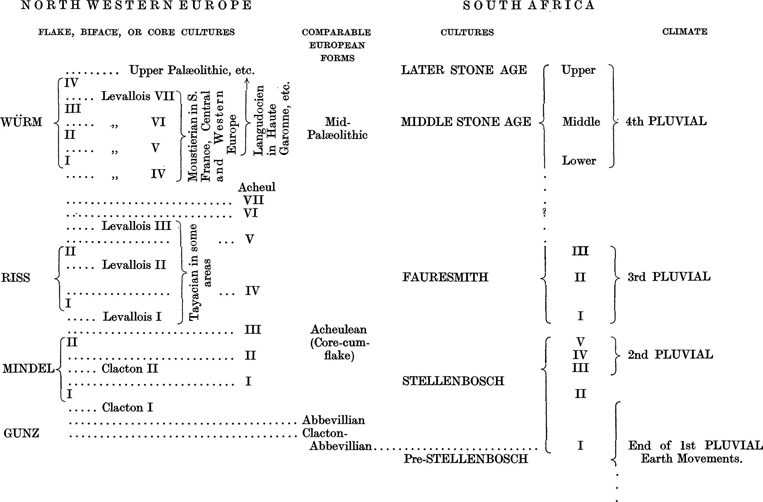
Figure 7.2 Riet Lowe’s (1945) Correlation of European and South African cultures, drawn up with feedback from Henri Breuil.
As Breuil’s main sponsor in South Africa, Riet Lowe must have spent many months discussing the Palaeolithic with the unchallengeable doyen of Palaeolithic Europe, and he certainly developed a clearer understanding of the Abbe’s industrial groupings than were to be easily gleaned from the latter’s writings. In contrast to Europe, where the Abbevillian-Acheulean and Clacton-Levalloisian were considered separate lineages that had at times overlapped and influenced each other (e.g. Levalloisian V and VI with Acheulean VI and VII) but which had no ancestral relationship, Riet Lowe concluded that in South Africa the Clacton-Levallois element was a developing technical process that went “hand in glove” with the “Great Handaxe Culture” from the beginning (Riet Lowe 1945, 54). Cores were used to produce flakes that were used to produce handaxes and cleavers, and there was a clear evolution from the ‘formless’ cores of Stellenbosch I, through pseudo-, proto- and full-blown ‘Old European’ (tortoise core) Levallois in the later phases of Stellenbosch through to the refined Levallois of the late Fauresmith (Riet Lowe 1945, 1951, Figure 7.3). The Levalloisian lineage was just the waste product of the Great Handaxe Culture, and its evolution could be traced over a much greater length of time than covered by the development of its European counterpart. He described this blend as a ‘core-cum-flake’ culture, in the sense that handaxes from the classical areas of north-west Europe were usually regarded as core-tools rather than flake tools, and felt that the ‘great differences’ between Europe and South Africa demanded an explanation.
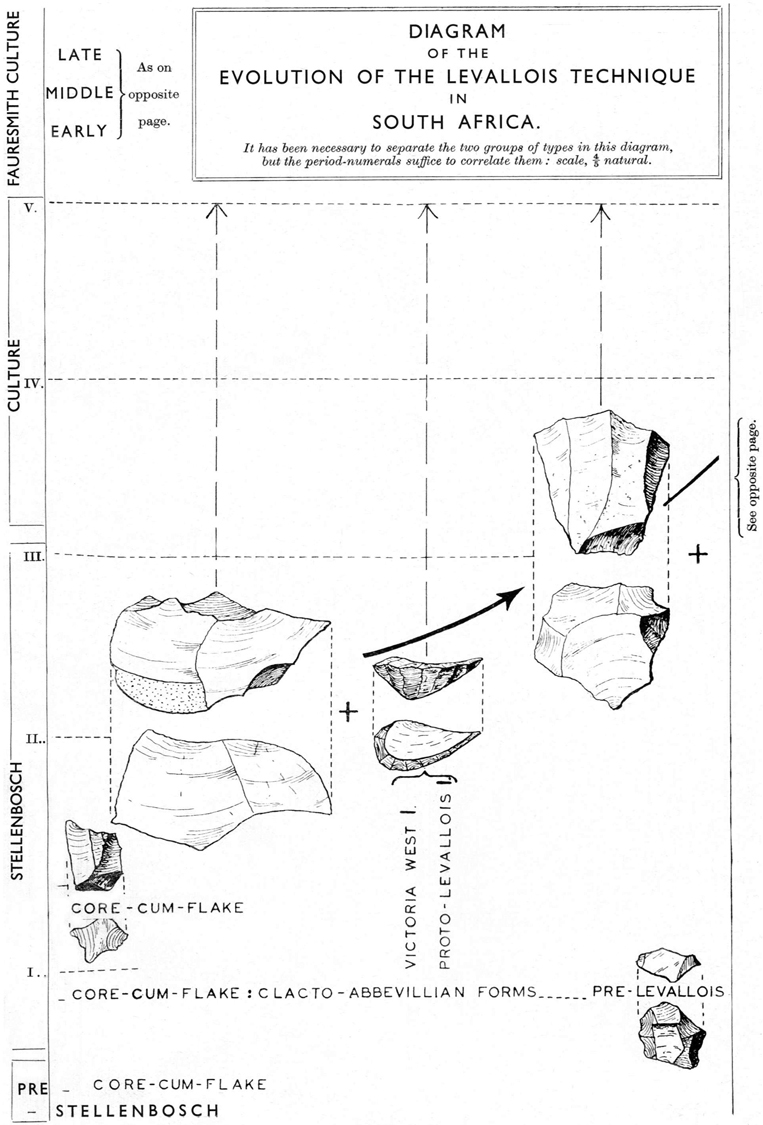
Figure 7.3 The evolution of Levallois in South Africa showing the early Stellenbosch (after Riet Lowe 1945).
The most obvious explanation in ‘some’ of his colleagues minds, Riet Lowe (1946) noted, was that the independent cultural groups found in Europe had already merged into a ‘core-cum-flake’ culture before they reached South Africa. This interpretation depended on accurate chronological correlations, determining which African pluvial correlated with which European glaciation, a question that was far from settled (e.g. Zeuner 1948), although as Riet Lowe pointed out, the emergence of core-cum-flake cultures in the first pluvial was earlier than the pre-Rissian origin of European Levallois by anybody’s reckoning. European Levallois also had no ancestral stage comparable with the pre- and proto-Levallois stages of South Africa. Lowe was equally dismissive of the idea that the handaxe cultures emerged in Africa and the flake cultures in Asia, which required the two to merge into core-cum-flake cultures at the start of the Stellenbosch in Africa, but to reach Europe independently and at different times as separate, if mutually influencing, lineages. There was simply no precedent for the Levalloisian I of Europe in Asia, but there was in Africa. It was equally tenable that the core-cum-flake industry split once it reached Europe, one specialising in flake-production methods the other in reducing blocks of stone into handaxes, which then continued as two separate traditions before eventually reuniting. The fact that Morocco and Portugal showed the same core-cum-flake industries as South Africa was also of great significance for understanding the dispersal of human groups, but Riet Lowe urged prehistorians to pay more attention to the local raw materials, and how its size and form influenced technology and typology. There was a pressing need for a Pan-African Congress on Prehistory to resolve the many issues surrounding terminology.
In Egypt, Gertrude Caton-Thompson’s (1946a) review of the evidence reached similar conclusions. At the Kharga Oasis, a continuous development of Levallois could be traced from Acheulean times, earlier than its appearance in Europe by a “substantial margin of geological time” (ibid., 117). There was certainly no evidence that Levallois had been introduced from Asia or Europe, rather the African cultural sequence appeared to be ‘self-sufficient’. Caton-Thompson wondered whether the passage route through the Levant corridor had been closed. She held equally heretical views on cultural classification (1946b), regarding terms like pebble tool, core tool, flake and blade tool as techno-typological devices over which archaeologists should be masters, not slaves. The Clactonian, for example, was possibly just an accompaniment to the handaxe cultures, those instances where it was found in isolation simply reflecting the fact that immediate needs and conditions did not require handaxes. The cultural view needed sharpening with more developed ecological and behavioural perspectives on the past. Culture contact was an overused explanation for culture change, particularly at the isolated ends of the Earth. South Africa and Europe were both beginning to look more and more like insular cul-de-sacs (Riet Lowe 1944; Caton-Thompson 1946a).
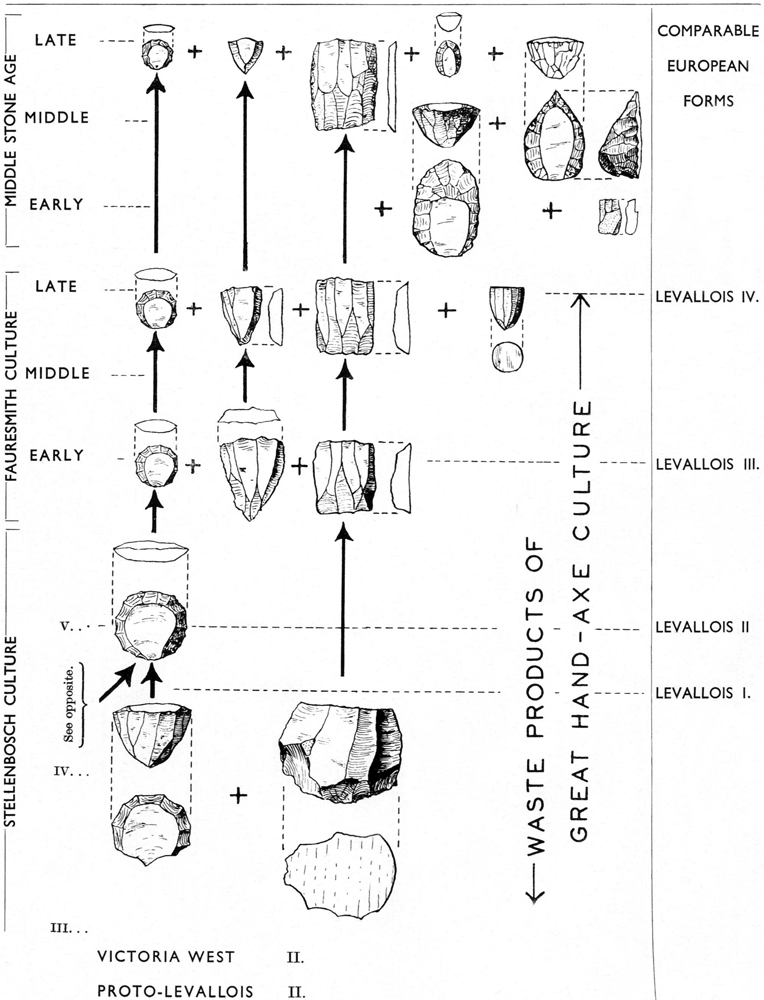
Figure 7.4 The evolution of Levallois in South Africa showing the later Stellenbosch, Fauresmith and MSA (after Riet Lowe 1945).
Louis Leakey had long thought that the division between the (wrongly) so-called flake cultures and core (handaxe) cultures was false (Leakey 1947, 20, 1934b). The Chellean and Acheulean had frequently used large flakes to make handaxes and other flake tools. As there were only a limited number of ways to strike a large flake it was inevitable that handaxe makers should have known and used one or more of these methods, particularly but not exclusively in areas like South Africa where hominins often “had first to obtain large flakes” from local rock outcrops and boulders, “before they could start making a handaxe or a cleaver” (ibid.). Likewise, all the flake industries made some use of core tools. For Leakey, the biggest threat to prehistory was the type of “loose thinking and false logic” that had led many to confuse technique with culture. The fact that the regrettably named Clacton technique was found virtually anywhere and anytime the anvil method of flaking was used, did not, however, mean there was no such thing as the Clactonian culture of north-west Europe. The same was true of Levallois technique and the Levalloisian culture.
The First Pan-African Congress, January 1947
Louis and Mary Leakey shared Riet Lowe’s desire for a Pan-African Congress on Prehistory and, with financial support from the Kenyan government, were able to organise the inaugural meeting in Nairobi for the period 12–30 January 1947. It was attended by 61 delegates from 26 countries (Figure 7.5) and was seen to be so prestigious that South African prime minister Jan Smuts arranged for the delegates from his own and surrounding countries to be flown to Kenya in a military plane (Tobias 1978; Shepherd 2003). With Breuil elected as the new body’s president, Riet Lowe and Camille Arambourg as vice presidents and Louis Leakey as organising general-secretary, it was perhaps inevitable that the meeting would be dominated by arguments about terminology and interpretation (Fagg 1947; Anon 1947).
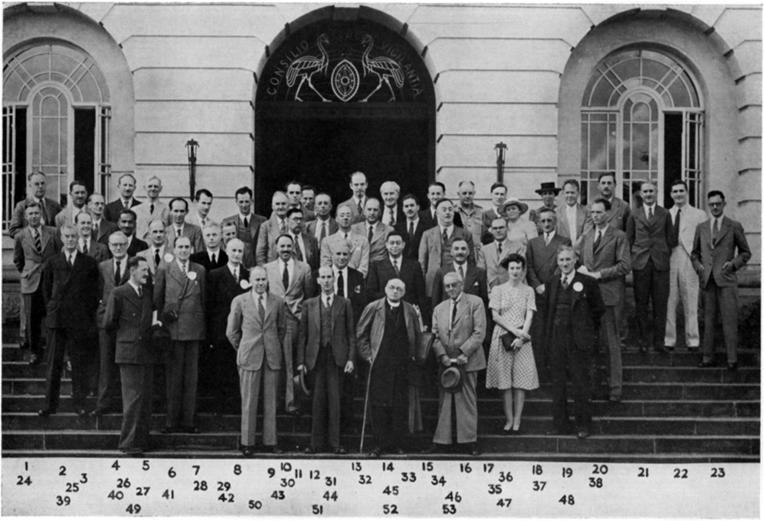
Figure 7.5 The First Pan-African Congress on Prehistory, Nairobi, 12–30 January 1947. Organised by Louis Leakey, with most of the people discussed in this and the previous chapter in attendance. Key: 1) Prof. W. Le Gros Clark (GB); 2) Prof. A.J.D. Meiring (SA); 3) Dr L.H. Wells (S.Af); 4) Prof. F.E. Zeuner (GB); 5) Prof. M.R. Drennan (S.Af); 6) Dr K.P. Oakley (GB); 7) W. Phillips (USA); 8) G. Bond (S. Rhodesia); 9) Rev. N Jones (S. Rhodesia); 10) Prof. T. Monod (French W. Af); 11) Dr D.G. MacInnes (Kenya); 12) J. Janmart (Portuguese W. Af); 13) J. Waechter (Palestine); 14) Dr E. Ganz (Kenya); 15) R. Mauny (French W.Af); 16) Brig. J.R. Jameson (Kenya); 17, J.D. Clark (N. Rh); 18, Mrs E. Burney (Anglo-Egyptian Sudan); 19, G. Andrew (E-A Sudan); 20) A.J. Arkell (A-E Sudan); 21) Dr D.R. Grantham (Tanganyika Territory); 22) B.E. Fagg (Nigeria and Royal Inst Anth); 23) Prof. L.C. King (S.Af); 24) A. Huddlestone (Kenya); 25) Dr H.B. Cooke (S.Af); 26) Dr P. Deraniyagala (Ceylon); 27) Dr A. Ruhlmann (French Morocco); 28) Dr M. Degerbol (Denmark); 29) Mrs E. Goodall (S.Rh); 30) Dr Almiro do Vale (Portuguese E. Af); 31) F. Mouta (Portuguese W. Af); 32) L. Barradas (Portuguese E. Af); 33) M. Bettencourt Dias (Portuguese E. Af); 34) A.J.H. Goodwin (S.Af); 35) B.D. Malan (S.Af); 36) Miss R. Moss (GB); 37) Dr A. Galloway (Uganda); 38) E.G. Sherwood (Uganda); 39) Dr S.H. Haughton (S.Af); 40) E.J. Wayland; 41) Dr E. Nilsson (Sweden); 42) Prof. C. Arambourg (France); 43) Dr F. Corin (Belgian Congo); 44) Dr F. Cabu (Belgian Congo); 45) Prof. S.A. Huzayyin (Egypt); 46) Prof. Mustafa Amer Bey (Egypt); 47) Mrs M.D. Leakey (Kenya); 48) Dr L.S.B. Leakey (Kenya); 49) Prof. C. Van Riet Lowe (S.Af); 50) Prof. R.A. Dart (S.Af); 51) Prof. A.L. Du Toit (S.Af); 52) Abbé Henri Breuil (France); 53) Dr R. Broom (S. Af).
As their opening gambit, Riet Lowe and the South African delegation offered to abandon the use of Stellenbosch if an alternative could be found that captured the gradual development of handaxes from (what used to be called) Lower Chellean to Upper Acheulean. The use of the term Acheulean to describe all African handaxe industries was rejected because it was considered too ambiguous when applied across regions. The Abbevillio-Acheulean was also rejected, according to Fagg (1947) on the grounds of ‘cacophony’, which I take to mean a loud hubbub of dissent from those present rather than the term’s unpleasant sound. At one point the committee voted in favour of the Great Handaxe Culture, but this decision was quickly reversed on the grounds that it was impractical (ibid.).
It was eventually agreed to adopt ‘Chelles-Acheul’ for the African handaxe group and ‘pre-Chelles-Acheul’ for its antecedents, with appropriate subdivisions and regional qualifiers (East African, South African, etc.) but only after the French delegates (i.e. Breuil) withdrew their objections to the use of Chelles in place of Abbevillian. Unique local derivatives, such as the Fauresmith, remained largely unaffected, although a heated discussion on the Tumbian, defined in 1925 by Oswald Menghin on material collected around 1900 by Jacques (from the site of Tumba in the Congo), led to it being incorporated into the Sangoan. Riet Lowe (1946) and Breuil (1944b) believed the Tumbian was a mix of material of various ages that had been born on a museum table, but Leakey (1947; Leakey and Owen 1945) and O’Brien (1947) maintained that it was a valid entity and that the mixture of picks, tranchet axes and humpbacked tools served to distinguish it from the Late Acheulean.
Despite the reservations many nursed about the cogency of the African climatic sequence (see Chapter 6: Leakey’s Luck), it was also agreed to adopt the East African evidence as the framework for the whole of Africa excepting the North African littoral. They thus recognised five principle pluvials, which roughly equated to the major European glacials, from oldest to youngest: Kanjeran (I and II), Kamasian (I and II), Gamblian (I and II), Makalian and Nakuran (see Table 6.8). For Riet Lowe (1946), the fewer terms prehistorians invented the better, although this did not stop Leakey (1951) from introducing the term Kanjeran (early Riss) to replace Kamasian II, not only renaming it but also giving it separate pluvial status.
The Congress further resolved to discontinue the problematic use of Clacton/ian and Levallois/ian to describe techniques, block-on-block technique and faceted platform technique being proposed in their place. From now on, the original terms should be reserved to describe cultures, where these were known to exist in a ‘pure’ form, as in East Africa (Fagg 1947; Leakey 1947; O’Brien 1947). Others, though, raised doubts as to whether the so-called Clactonian block-on-block technique had ever been used at the type-site. Experiments by Baden-Powell (1949) found that a hand-held hammerstone struck against a core edge held at an acute angle produced Clacton-type flakes more easily and more accurately than block-on-block technique, in which the act of swinging of the core marred the knapper’s view of the anvil. It was also becoming more obvious that handaxe manufacture could be divided into a series of stages, producing preparatory ‘primary’ flakes with much cortex, ‘secondary’ shaping flakes and ‘tertiary’ finishing flakes (e.g. Leakey 1936; Paterson and Fagg 1940; Lacaille 1954). When hard stone hammers were employed in the preparatory stages, the resultant flakes were practically indistinguishable from Clactonian examples (cf. Lacaille 1954, based on Coutier’s reproductions).
The South African delegation carried with them an offer from Jan Smuts to host the second Pan-African Congress in South Africa in 1951, but political events and the General’s death in 1950 conspired to prevent this from happening. With the election of D.F. Malan’s National Party in 1948, riding high on an apartheid agenda, Palaeolithic archaeology in South Africa lost its political patronage and became increasingly isolated (Shepherd 2003). It was the start of a decades-long fallow period in South African prehistory that witnessed the waning of its global influence, the deaths of Riet Lowe (d. 1956) and Goodwin (d. 1959), the closure of the Archaeological Survey (1962), and the refocussing of archaeology towards a different national narrative constructed around colonial history (Shepherd 2003). The second Congress was eventually held in Algiers, although no South African delegates were present (Deacon 1990).
Core, Culture and Complex
The compromise reached by African and European archaeologists was based on the premise that similarities in Chelles-Acheul industries across the globe reflected a common origin. They were all parts of the ‘same culture complex’, one that had probably emerged in Africa and spread to Europe and Asia in an already evolved state, where the “different climes and circumstances” in which the makers found themselves led to regional divergence from the African source (Riet Lowe 1946, 8). Regional sequences should thus be studied individually, and links to the African ‘main stem’ made only when the need arose. While African terms might turn out to be most appropriate for the earliest industries (i.e. Oldowan), the original European terms for the handaxe complex were still appropriate because they had priority and were well understood (Riet Lowe 1946), although regional differences demanded the use of qualifying prefixes. The touchstone for these industries, in fact the sole unifying similarity, was the handaxe, in all its forms.
In East Asia, a region that had no representatives at the Nairobi Congress, a very different culture-complex was emerging. Breuil (1932b, 1938) had already noted that the lithic industries of East Asia could not be directly correlated with anything found in Europe, although he suggested that they came closest to the Mousterian. Work in the Soan Valley of north-west India identified three main cultures: a non-handaxe industry with choppers assigned to the Soanian, a large flake culture designated the pre-Soanian and the ‘Abbevillian-Acheulean’ (Terra and Paterson 1938; Terra et al. 1938). Paterson’s fieldwork in England, Burma and north-west India had led him to assign these to three ‘families of traditions’, the Clactonian family, the Acheulean family and the Soanian family (Paterson 1945). The last was found only in north-west India, Burma and China. Cross-mutations and regionalisation had produced a diversity of industries and culturally significant variation in handaxe shapes, but Paterson could find no antecedents for the Mousterian in Europe. This must, he suggested, have been derived from ‘Asian stock’, appearing fully formed during the third interglacial in the hands of invading Neanderthals, who replaced the Swanscombe-type makers of the Acheulean. By the time Paterson’s delayed paper appeared, however, Hallam Movius (1907–1987) of Harvard University had drawn international attention to a larger and more widespread group of (putatively) Middle-Upper Pleistocene non-handaxe industries–the Anyathian of Burma (Terra et al. 1938; Terra and Movius 1943), the Soanian of north-west India (Terra and Paterson 1938), the Patjitanian of Java (Koenigswald 1936, 1937), the Choukoutien Culture of China (Pei 1939; Teilhard de Chardin 1941), plus the Tampanian of Malaya–that he famously interpreted as evidence for a separate chopper/chopping-tool complex in Eastern Asia that had existed parallel to the Chelles-Acheul culture group in Europe, India and Africa (Movius 1944, 1948, Figure 7.6).


Figure 7.6 (after stern Asia Hallam Movius’s tentative correlations of Pleistocene stratigraphy, Palaeolithic cultures and early humans in southern and eastern Asia (after Movius 1948).
The industries Movius included in his Asian Chopper/Chopping-Tool Complex (AC-TC) were united by the variable presence of chopping tools, hand-adzes and proto-handaxes (Figures 7.8 and 7.9), as well as various flake tools, although what really defined it was the absence of true handaxes and classic Levallois technique (Movius 1948, 376, 408). As Movius noted, in most parts of the Old World, excepting the extreme north-western edge of Europe, handaxes and Levallois were mutually related and, furthermore, were frequently found alongside choppers and chopping tools made on pebbles. The latter were the ‘basic cultural substratum’ from which more complex lithic technologies such as handaxes developed, and were often the sole characteristic of the earliest industries on a region, as at Olduvai, where Leakey (1936) had described the gradual evolution of Chellean forms from Oldowan pebble tools (see Chapter 6). The human societies who produced the AC-TC, had not made these technological leaps, however, and had continued to use and develop the more ancient and primitive technology based around single-edged chopping tools. In cases where handaxes did eventually appear, as in the Patjitanian of Java, they were crude and flaked in the same manner as choppers and hand-adzes, not at all like the true handaxes of the Chelles-Acheul. Movius considered these to reflect independent development rather than outside influence, although saw admixture with the Acheulean where the two great complexes overlapped as the most likely explanation for the Levalloisian influences seen in the late Soanian of north-west India. For Movius, the almost inescapable conclusion, with all its unintended racist undertones (Dennell 2014), was that during Lower Palaeolithic times southern and eastern Asia had been “a region of cultural retardation” (Movius 1948, 411).

Figure 7.8 The key tool types of the Asian Chopping-Tool Complex (after Movius 1948).
Figure 7.9 Industries of the Asian Chopping-Tool Complex. Top left: Anyanthian of Burma (Myanmar); top right: Late Soan of India (note ‘Levallois influences’); bottom left: Choukoutien industry of China; bottom right: the Patjitanian of Java (after Movius 1948).
It was not, however, one monotonous whole. Movius detected four regional variants (western, northern, central and southern) marked by contrasts in form and raw materials for which he outlined local evolutionary sequences. In all cases handaxes had never developed or were very late innovations. Movius thus followed Teilhard de Chardin (1941, 86) in regarding Middle Pleistocene East Asia as an “isolated and self-sufficient area, closed to any major human migratory wave” from the west. Cultural connections ran chiefly north to south and archaic human types had persisted long after the extinction of their physical equivalents elsewhere. It was unlikely that this vast area could have “played a vital and dynamic role in early human evolution” (Movius 1948, 411).

Figure 7.7 The Movius Line. Distribution of Lower Palaeolithic handaxe and chopping-tool cultures during the late Middle Pleistocene (after Movius 1948).
An adequate dating framework was critical to Movius’s new complex, and he went to great lengths to establish the contemporaneity of industries within the AC-TC and their relationship with global climatic fluctuations. Without this firm chronological framework, he acknowledged, the data would “completely lack all semblance of objectivity [and] simply consist of a series of isolated abstractions to be classified and compared at will by the pseudo-archaeologist” (Movius 1948, 330).
Confidence in Movius’s chronology was not shared by all, however, with palaeo-anthropologist Le Gros Clark (1946b) noting that in parts of the region the geological record of climate change was ‘hardly legible’ and that geologists were unlikely to agree on its interpretation. Until a firmer climatic framework was in place, anthropologists and archaeologists would be wise to wait before offering an interpretation, he suggested, and was himself unconvinced that the distinctions were sufficient to support the idea of two independent cultural complexes produced by different races of humans, noting the presence of bifaces in Java and the overlap of Soan and Acheul industries in India. McCown (1950) was more impressed with the dating but noted that the age of the north-west Indian deposits, a critical tie point because it was the only region that could be directly correlated with the Himalayan (and therefore, indirectly, the European) glacial sequence, was largely based on the pre-war work of Terra and colleagues (Terra et al. 1938; Terra and Paterson 1938), which had never been subject to independent verification and revision like the European scheme. The absence of any Early Pleistocene occupation in Asia particularly worried McCown. Had the region really lagged some 250,000 years behind Africa and Europe? Interpretatively, McCown thought it was an attractive model, which provided a “rational and unifying concept that gave meaning to the diversity of artifacts… in that immense region” (McCown 1950, 261), but warned against letting a stimulating hypothesis harden into doctrine. There were still too many unknowns.
Untroubled by such doubts, Oakley (1949) wasted no time in drawing cultural links between the AC-TC and the Clactonian culture of Europe, suggesting that the latter might represent an early dispersal of the Soan-Choukoutien type industries during the second glacial. Oakley (1949, 46–48) proposed that humans had reached Asia from Africa when they were “barely beyond the dawn of tool making”, and although they had subsequently “developed along lines which foreshadowed the Mousterian”, they had “slender connections” with the handaxe cultures of the West. Eastern and Central Europe also lacked handaxes, and it was here that Oakley believed the Clactonian to have evolved into the Mousterian. The Clactonian and its parent chopper-tool industries were thus relicts of the most primitive knapping tradition. Where the two cultures met in Western Europe, the Levalloisian culture occurred, the origin and nature of which Oakley considered an unresolved problem worthy of greater attention. The technique was certainly seen in Africa from the Early Acheulean onwards, producing cores that Oakley likened to modified discoidal handaxes.
Warren (1951) had arrived at a similar if more cautious conclusion, arguing that although made on nodules and not pebbles, the core-tools found in the Clactonian–the choppers, the pointed nodule-tools or proto-bouchers, the axe-edged tools, discoids and polyhedric forms–were made to the same plan as the earlier pebble-tools of Asia and Africa. He was adamant that they were real tools, not merely discarded nuclei:
the pointed (proto-boucher) group comprises a systematic repetition of a well-defined type, and I am fully persuaded would never be questioned as a true biface3 if found in anything other than a Clacton association. Although primitive, it is admirable as a practical and serviceable tool to grasp in the hand and use effectively. As with the chopper and axe-edged varieties I cannot think that anyone who had the wit to do the flaking could be so stupid as to keep the flakes and throw the ‘core’ away.
(Warren 1951, 8, cf. 1958)
From this point on, the Lower Palaeolithic world would be forever divided into two great and largely independent cultural provinces: the Handaxe Cultural Complex of Western Europe, Africa, the Near East and most of India, and the Asian Chopper Chopping-Tool Complex of Eastern and Southern Asia, Northern India, and Europe east and north of the Rhine. The Movius Line, as it would come to be known, had arrived.
Interpreting Geographical Variation
Movius (1944, 1948) offered little in the way of interpretation for the AC-TC, beyond the idea of cultural retardation, today seen as a rather unpalatable suggestion and one that deflects from Movius’s deeper theoretical concerns. Movius did not doubt that the dimensions and knapping properties of local raw materials had influenced the character of the tools in each industry, quartz at Choukoutien versus fossilised wood in Burma, for example, but they did not explain the absence of handaxes. The fundamental difficulty was the fragmentary and incomplete record, which contained only those objects which had survived destruction, mostly stone (Movius 1949). Furthermore, while few archaeologists would dispute that environment and geography had played a “dominant role in conditioning” the behaviour and cultures of human groups, the influence becoming more profound the further one went back in time, Lower Palaeolithic specialists had paid too little attention to these factors when classifying and ordering their assemblages, beyond their use in dating or as scenery (Movius 1949, 1443–1444). In so doing, Movius thought that they had denied themselves the “very key to the solution of [the] fundamental problem: the reconstruction and interpretation, insofar as possible, of human activities in the past” (Movius 1949, 1444). Movius (1949, 1445) thus saw prehistory as “ethnology projected backward in time until it is forced into intimate contact with the natural sciences”, but this should not be mistaken for meaning material culture was governed by the same taxonomic laws as the natural sciences, that is, biological evolution. Material culture was undoubtedly an integral part of human adaptation to the Pleistocene world, but the rate of change and degree of interplay was far from constant, and its characteristic forms were not the result of random beneficial mutations. Tools were the “material manifestations of human thinking” (ibid.). Their form was driven by the application of common sense and reason and by the sharing of knowledge and experience through social tradition. They were “documents of human experience” and for that reason should always be considered “ social rather than as natural phenomena” (ibid., italics in original).
Movius was also skeptical about the continued use of artefacts as zone fossils or for correlation purposes, noting that the temporal ranges of most forms were simply unknown and that geologists were beginning to lose trust in archaeological evidence as a dating aid. In Europe, the division between the handaxe tradition and the Levallois tradition was becoming increasingly blurred, and the ease with which the industry from Baker’s Hole could be reassigned and the deposits redated after the discovery of handaxes (Burchell 1936a; Oakley and King 1945; Breuil 1947) hardly inspired confidence. In future, he suggested, archaeologists should proceed from the interpretations of the geologists and not reinterpret the geology for themselves based on archaeological preconceptions. The contribution of archaeology to the geological column was virtually zero, and archaeological interpretation depended on secure regional sequences, firm dating and environmental context, which existed in very few parts of the world. Without them, Movius warned, prehistory could easily turn into metaphysics, filling the gaps with speculative interpretations that could not be tested by experience or observation, exactly as Childe had predicted (Movius 1949; citing Childe 1944b).
In research undertaken either side of the war, Charles McBurney (1914–1979) also advocated a geographical approach, using the distribution of industries as a way of understanding the role that both natural and social factors had played in “stimulating and moulding cultural traditions”, specifically the supposed absence of handaxes east of the Rhine (McBurney 1950, 163). Having been trained at Cambridge, McBurney’s approach was influenced by several of his tutors, combining the global culture histories of Burkitt and Garrod with the ecological archaeology of J.G.D. (Grahame) Clark (1907–1995).
Clark had started his research career with a traditional culture historical study of the British Mesolithic (Clark 1932), but soon began to develop a more ecological and economic approach to prehistory and was one of the driving forces (along with Harry Godwin) behind the transformational Fenland Research Project of the 1930s, which took an interdisciplinary approach to the geographical development and human settlement of the fenlands of East Anglia (Rowley-Conwy 1999). These wetland environments provided excellent pollen records and preserved other organic materials, including wooden tools and nets. The rich and varied evidence available to him, of a cultural, economic and ecological nature, allowed Clark to explore multiple facets of culture and its interrelationship to the natural world. Clark’s (1939, 1940) approach was also more thematic and interrogative, something quite different to the geographical and chronological structure adopted by everybody from Lubbock to Childe (e.g. 1925). Clark (1939, 1952) explored issues such as daily subsistence, trade and communication, and employed flow charts to link aspects of culture to food supply, habitat and biome. In Prehistoric Europe: The Economic Basis (1952), Clark provided a new model for understanding the past in terms of artefacts, ecology and economy–the utilisation of the environment–and how this had impacted on human culture at different points in time. It established a new genre in archaeology (Rowley-Conwy 1999).
Working in later periods of prehistory, Clark had several major advantages over McBurney. The Lower Palaeolithic record was vastly impoverished compared to the Mesolithic or the Bronze Age. There were as yet no pollen or other environmental records from relevant regions extending much beyond the Holocene (the first would soon appear, e.g. Pike and Godwin 1952). Dating issues also continued to plague the earlier periods, which would not benefit from the radiocarbon revolution of the 1950s (Libby et al. 1949; Zeuner 1950; Movius 1950a; McBurney 1952).4 In Central Europe, McBurney could marshal only ten contextually secure Lower Palaeolithic assemblages–Markkleeberg, Hundisberg, Wangen, Grosse Quentedt, Vahrholz, Schneeheide, Köchstedt, Oberwersgen, Makau and a series of related pits near Hannover–of which only the first three had produced large collections (Figure 7.10). Ober-maier (1916) had used even fewer when drawing his continental-scale conclusions.
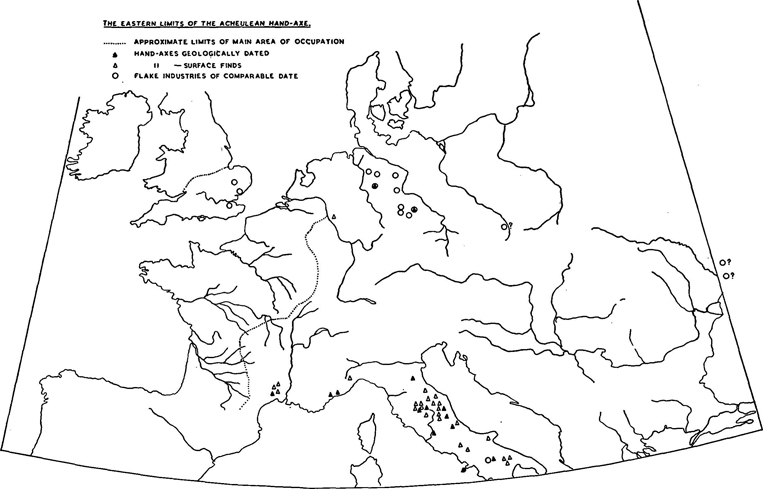
Figure 7.10 McBurney’s map of Europe showing eastern extent of handaxe cultures (after McBurney 1950).
Geographically, the German sites were concentrated in a roughly triangular area between the rivers Elbe and Weser, a region characterised by broken hilly topography outside the limits of the last two glacial maxima (locally the Weichsel and Warthe) but inside those of the first two (locally Elster and Saale). Taking a statistical rather than impressionistic approach where possible, McBurney found that handaxes were extremely rare in Germany, except at two of the Hannover Pits (Hannover-Döhren and Rethen), which together had yielded 30 complete and broken examples over a period of 25 years. The remainder showed a strong degree of homogeneity, being dominated by large unretouched flakes (95%) and, contrary to earlier suggestions, containing very little evidence for Levallois. In a study of 300–400 (sic) artefacts from Markkleeberg, a site frequently used as the type-locality for the region, McBurney identified only two small triangular handaxes, two flat cores with facetted platforms and a crude attempt at a tortoise core. Together these made up less than 1.25% of the Markkleeberg sample, but in the German sample as a whole ‘moderately’ typical Levallois cores were found at the rate of only one or two per thousand artefacts. The flakes from Markkleeberg also showed few Levalloisian characteristics. Only 1% showed evidence of a facetted platform, and the average number of preparatory scars on the dorsal surface (3.5) was less than half that seen at Baker’s Hole (7.4). These figures were all far too low to allow the German sites to be linked to the Levalloisian or Acheulean.
The uncertain age of the sites and disputes over the antiquity of Levallois left McBurney with two interpretative options. If a short chronology (e.g. Vaufrey 1928; Patte 1941) was adopted and the assemblages assigned to the earliest part of the last glacial, then the German flake culture could best be interpreted as a crude Mousterian with a few handaxes, but this would leave Central Europe without a Lower Palaeolithic. Under a longer chronology (e.g. Breuil), however, the assemblages would belong to the penultimate glacial/interglacial cycle, or even earlier, making them contemporary with the Upper and/or Middle Acheulean of Western Europe. In this case, the assemblages were best described as a form of evolved Clactonian, with the rare handaxes evidence of brief incursions by Acheulean groups from the west. He cautioned against placing too much emphasis on the handaxes when classifying an industry: what were a handful of German examples compared to the 20,000 from a single locality on the Somme? They were certainly not a routine part of the local industrial traditions.
McBurney (1950, 171–172) concluded that Central Europe had been home to a non-Levallois, non-handaxe ‘eastern cultural tradition’ related to the English Clactonian. The majority of handaxe assemblages occurred in a single unified territory covering southern Britain, France, Spain, Portugal and Italy. In south-eastern England (and elsewhere), these populations occasionally overlapped or replaced one another in response to ecological opportunities (ibid., 183). The distribution of Levallois followed a similar pattern. Taking a broad geographical purview, McBurney noted that these two cultural provinces occupied different environmental zones, with different vegetation and climates. The Acheulean seemed to be an adaptation to the maritime plains and forested riverine environments of western Europe, whereas the flake cultures were adapted to the broken upland topography and continental climates of the east. The two traditions used toolkits tailored to meet local geographical conditions and for different activities, although in the absence of Middle Pleistocene pollen sequences or other environmental proxies, McBurney was silent on precisely how these conditions might have differed (other than in raw materials) or what aspects of life in genial north-west Europe encouraged the use of handaxes. He knew that modern hunter-gatherers had been observed to use different toolkits in different places or during different seasons, and that these populations might cover an annual range of hundreds of miles, but his intention was not to suggest that the two provinces were seasonal or regional variants made by the same group of people. The geographical distribution suggested they were “explicit cultural traditions symptomatic of a particular mode of existence” (McBurney 1950, 183). A cultural and functional explanation.
Grahmann (1955) agreed that there was very limited evidence for the western handaxe culture in Germany; in the archaeologically rich area around Leipzig, only 14 bifaces had been reported. He also agreed the flake-tool culture was much older than the Mousterian age given it by Breuil, Obermaier and Commont, and had no idea why the reckless excavator Otto Hauser (1928), who had dug at La Micoque, would assign it to the Micoquian. He was adamant, however, that at Markkleeberg an advanced, laminar-type Levallois industry was present and that geologically it dated to the second glaciation (Saalian/Mindel), much earlier than similar Levallois III industries in western Europe (Riss). In maintaining this position he stood opposed to McBurney (1950) and Andree (1939); the last of whom had rejected the use of the French classifications entirely and redefined the material from Markkleeberg, Hundisberg and Wangen as belonging to a unique ‘thick point tradition’. Grahmann considered the German Lower Palaeolithic to contain a mixture of late Clactonian and precocious Levalloisian, one evolving from the other independently of the Levalloisian in western Europe, where it appeared during the Middle Acheulean via a similar process but from a different direction (Table 7.1).
|
Table 7.1 Rudolf Grahmann’s cultural history for western and central Europe, based on his personal studies of the area around Leipzig (after Grahmann 1955). |
|
|
Further east, in Poland, Hungary and Czechoslovakia (Slovakia and the Czech Republic) there was no evidence of Lower Palaeolithic occupation before the final Acheulean/Micoquian industries found at the last interglacial site at Ciemna Cave, Prodnik Valley, Slovenia (Benet-Tygel 1944). It was possible that earlier flake industries had been overlooked, but there were also no handaxes, not even surface finds, suggesting that the environmental challenges associated with these regions were not solved by humans until relatively late. The same was true of south-east Europe (Caucasus, Crimea, Balkans), where the earliest industries were classified as Tayacian (Childe 1942a, 1942b; Movius 1953) and the few handaxes that were present argued away into the Mousterian (McBurney 1950). The Russian Plains likewise saw no human presence until the Mousterian. Indeed, on Movius’s map of Old World culture complexes, everything east of Germany and north of 35–45° latitude was a vast glaciated area, where humans had either been entirely absent even during interglacials or where the evidence of their presence had been destroyed by later glacial advances. Claims for a chopper industry in Japan similar to the Patjitanian, soon filled one of Movius’ lacunae (Maringer 1956).
Howell’s (1959) synthesis of the Levantine Palaeolithic equally relied on detailed climatic and environmental reconstructions, but for the traditional purpose of constructing a workable regional framework, rather than to offer an ecological interpretation for the patterns revealed. Somewhat paradoxically for a highly probable route from Africa, the Levant seemed to have been occupied predominantly during the Upper Pleistocene. Middle Pleistocene handaxes were scarce and mostly found on the littoral margins, the earliest rich assemblages were from Tabun G, which was assigned to the Tayacian or Tabunian (Garrod and Bate 1937; Howell 1959). The handaxes from Tabun F and E as well as those from Ouum-Qatafa E (Judean Desert) were typologically Final Acheulean or Micoquian implying a last interglacial date (Howell 1959). When Rust (1950) finally published the results of his work at Yabrud, he described seven Lower Palaeolithic strata (25–19), containing three discrete artefact facies: a flake facies characterised by discoidal cores and abundant side-scrapers (the Yabrudian, layers 25, 22–20), a handaxe facies (Middle-Upper Acheulean, layer 23) and a flake-biface facies (Acheulio-Yabrudian, layers 19 and 24). The earliest was suggested to be the same age as Tabun E. There was also very limited evidence of Chellean or Acheulean occupation in Turkey, little more than a dozen handaxes, all surface finds (Kansu 1947).
Geographical variation in Lower Palaeolithic industries was far more complicated than dreamt of in Breuil’s prehistoric world.
Breuil Undone: The Advent of François Bordes
Another shift of focus was taking place in France, led by Henri Louis François Bordes (1919–1981). Bordes had studied at the Universities of Bordeaux and Toulouse, where he obtained degrees in biology (1941) and geology (1942). In 1945, after two spells in the French military and a period in the Resistance, he was appointed as a trainee researcher at the CNRS in Paris, working in Raymond Vaufrey’s laboratory of palethnologie. In 1951, Bordes obtained his doctorate from the Sorbonne with a thesis on the Quaternary silts of the Seine Basin (Raynal 1981) and five years later was appointed lecturer and director of l’Institut du Préhistoire at the University of Bordeaux (professor: 1962). He quickly built a strong research team and for the next 25 years, a period sometimes referred to as ‘the Borde-sian era’ (Sackett 1991), he dominated French Palaeolithic archaeology.
Bordes’s aim was to improve understanding of the Palaeolithic by enhancing the quantity and quality of the data, which he achieved in two ways (Sackett 2014b). The first was in the field at sites such as Pech de L’Aze and Combe Grenal, where he paid much greater attention to stratigraphical details, separating archaeological assemblages not on the basis of major depositional units but by finer dissection of the layers into discrete occupational horizons (Bordes and Bourgon 1950; Bordes 1952, 1955, 1972; Sackett 2014b). All lithic materials were recorded and retained, along with samples of the fauna and associated palynological and sedimentological data. This resulted in a ten-fold increase in the number of lithic assemblages at some sites and gave much finer control over the resolution of the data, allowing for a closer reading of industrial sequences in relation to the environment (Sackett 2014b).
Bordes’s second major development took place in the laboratory, where he introduced a new statistical approach to lithic artefact assemblages that focussed not on the presence or absence of a few fossiles directeurs, but on the relative frequency of all tool types and the different methods of flaking found in an assemblage (Bordes 1948, 1950a, 1951, 1953a). To achieve this, he developed a standardised type list with formal definitions of each tool–culminating in his famous Typologie (1961a) with its 63 categories of flake tool and 23 types of handaxe–which he used to statistically classify industries using a few basic indices, histograms and cumulative frequency graphs (e.g. Bordes 1950a, 1953b, 1953c, 1954, 1961a: Table 7.2 and Figure 7.11). The ‘système Bordes’, as it came to be known, enabled both qualitative and quantitative approaches to be employed simultaneously and allowed assemblages to be compared more objectively, based on the statistical frequency of formally defined artefact types and not a set of impressionistic and poorly defined stages.
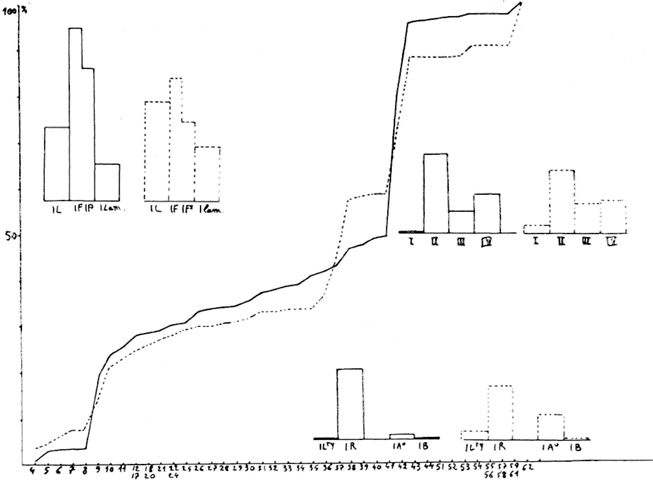
Figure 7.11 Quantifying the Palaeolithic. An example of one of Bordes’s early Cumulative Frequency Graphs with histograms of indices and artefact groups. This diagram shows the essential* (and essentially similar bar the backed knives) counts for the Typical Mousterian from Bed J at Moustier (solid line) and the Levalloisian VII industry from d’Houppeville (dashed line). The four artefact groups consisted of I) Levallois Group 1–4, II) Mousterian Group 5–29, III) Upper Palaeolithic Group 30–37, IV) Denticulate 43.
|
Table 7.2 Bordes’s typology and key indices. |
|||
|
Flake Tools |
|||
|
|
|||
|
1 |
Éclat Levallois typique |
54 |
Encoche en bout |
|
2 |
Éclat Levallois atypique |
55 |
Hachoir |
|
3 |
Pointe Levallois |
56 |
Rabot (push-plane) |
|
4 |
Pointe Levallois retouchÉe57Pointe |
57 |
Pointe pÉdonculÉe |
|
5 |
Pointe pseudo-Levallois |
58 |
Outil pÉdonculÉe |
|
6 |
Pointe Moustérienne |
57 |
Chopper |
|
7 |
Pointe Moustérienne allongée |
60 |
Chopper inverse |
|
8 |
Limace (a slug-like tool) |
61 |
Chopping tool |
|
9 |
Racloir (side scraper) simple droit |
62 |
Divers |
|
10 |
Racloir simple convexe |
63 |
Pièce foliacée biface |
|
11 |
Racloir simple concave |
||
|
12 |
Racloir double droit |
||
|
13 |
Racloir double droit/convexe |
Bifaces |
|
|
14 |
Racloir double droit/concave |
||
|
15 |
Racloir double biconvexe |
1 |
LancÉole |
|
16 |
Racloir double biconcave |
2 |
Ficron |
|
17 |
Racloir double convexe/concave |
3 |
Micoquian |
|
18 |
Racloir convergent droit |
4 |
Biface triangulaire |
|
19 |
Racloir convergent convexe |
5 |
Biface triangulaire alongÉe |
|
20 |
Racloir convergent concave |
6 |
Cordiforme |
|
21 |
Racloir déjeté (offset) |
7 |
Cordiforme alongée |
|
22 |
Racloir transversal droit |
8 |
Subcordiforme |
|
23 |
Racloir transversal convexe |
9 |
Ovalaire |
|
24 |
Racloir transversal concave |
10 |
Amygdaloide |
|
25 |
Racloir sur surface plane |
11 |
Discoide |
|
26 |
Racloir à retouche abrupte |
12 |
Limande |
|
27 |
Racloir à dos aminci |
13 |
Hachereau bifacial |
|
28 |
Racloir à retouch biface |
14 |
Hachereau sur éclats |
|
29 |
Racloir à retouch alterne |
15 |
Lagéniforme (bottle-shaped) |
|
30 |
Grattoir (end scraper) typique |
16 |
Lozengique |
|
31 |
Grattoir atypique |
17 |
Naviform |
|
32 |
Burin typique |
18 |
Nucléiforme |
|
33 |
Burin atypique |
19 |
Divers |
|
34 |
Percoir (borer) typique |
20 |
Partial |
|
35 |
Percoir atypique |
21 |
Abbevillian |
|
36 |
Couteau à dos (backed knife) typique |
||
|
37 |
Couteau à dos atypique |
||
|
38 |
Couteau à dos naturel |
||
|
39 |
Raclette |
||
|
40 |
Éclat ou lame tranquée |
||
|
41 |
Tranchet moustérien |
||
|
42 |
Encoche (notch) |
||
|
43 |
Denticulé |
||
|
44 |
Bec burinant alterne |
||
|
45 |
Retouche sur plane face |
||
|
46 |
Retouch abrupte (épaisse) |
||
|
47 |
Retouch alterne (épaisse) |
||
|
48 |
Retouch abrupte (mince) |
||
|
49 |
Retouch alterne (mince) |
||
|
50 |
Retouch biface |
||
|
51 |
Pointe de Tayac |
||
|
52 |
Triangle à encoche |
||
|
53 |
Pseudo microburin |
||
|
54 |
Encoche en bout |
||
Bordes (1950b) did not totally reject the use of zone fossils, as Vayson (1922) and Movius (1949) had done, but thought they were rare and should be viewed as part of the whole ensemble of artefacts. He drew an analogy to a race of 5,000m, where it was only after a certain number of laps that the most gifted runners began to stand out from the pack. He was also doubtful whether the artefact sequence seen on one continent could be automatically applied to another, and whether similarities necessarily meant that they were made by the same or related humans. Like Goodwin and others in Africa, Bordes appealed for a more provincial approach, building in collaboration with geologists and palaeontologists secure local sequences that could form the basis of correlation. Bordes thought zone fossils would be essential in defining these provinces and was clear that in cases where the geology and artefacts disagreed, he would bet on the artefacts. It was true that humans could be unpredictable, inventive and reactionary but Bordes argued these had played minimal roles in shaping the general appearance of an industry. In the Lower and Middle Palaeolithic, industries differed mostly in the proportion of types and were strictly determined by tradition and the needs of the ‘tribe’ (tribus), a word that revealed in no uncertain terms Bordes’s opinion on the meaning of variation.
While Bordes’s primary interests lay in the Middle Palaeolithic, where he famously identified six different expressions or ‘facies’ of a variable Mousterian Complex (Bordes 1951, 1953d, 1961b, Table 7.4), his interpretations and methods were equally applicable to the Lower Palaeolithic. Bordes placed considerable emphasis on the cognitive implication of Levallois technology (Bordes 1950a, 1968, 1970). He had no doubt that all Lower Palaeolithic humans had a perfectly clear mental image of the object they wanted to make before they started, which in the case of Levallois required an understanding of both the target form and the successive stages required to realise it (Bordes 1968, 137). The preparation of the core was just a preliminary stage–a flake of a particular form was the target of the method (Bordes 1970, 199–200).
|
Table 7.3 Bordes’s Mousterian Variants. |
|
|
Bordes’s Variant |
Assemblage Characteristics |
|
|
|
|
Mousterian of Acheulean Tradition (MTA) |
Defined by the presence of handaxes, a cultural link to the Acheulean, as well as scrapers, denticulates and backed knives. Subdivided into:MTA A - chronologically earlier, high frequencies of handaxesMTAB - chronologically later, lower frequencies of handaxes, higher frequencies of backed knives |
|
Typical Mousterian |
No predominant type, sharply reduced frequencies of handaxes and backed knives |
|
Denticulate Mousterian |
Dominance of denticulated and notched tools, no handaxes or backed knives. Low frequencies of scrapers, burins and borers. |
|
Charentian Mousterian |
Defined by high frequencies of scrapers, and low frequencies of handaxes and backed knives. Subdivided into:Quina variant - Levallois technique is rare or absent, Quina scrapers are commonFerrassie variant – Levallois technology common |
|
Table 7.4 The Palaeolithic classification of Commont versus Breuil versus Bordes. |
|||
|
Chronology |
Bordes |
Breuil |
Commont |
|
|
|||
|
Würm I and |
Final Acheulean |
Acheulean VII |
Upper Acheulean |
|
Riss-Würm |
Acheulean VI |
||
|
Upper Riss |
Upper Acheulean |
Acheulean V |
|
|
Lower and Middle Riss |
Middle Acheulean |
Acheulean IV |
Acheulean |
|
Mindel-Riss |
Lower Acheulean |
Acheulean I |
Chellean |
|
Acheulean n |
|||
|
Acheulean I |
|||
Bordes rejected Breuil’s thesis that Levallois constituted a separate lineage (Bordes 1951, 1953a). Other than the Levallois Typological Index, which was high in open-air sites and low in caves, there was little difference between Breuil’s Mousterian and later Levallosian (Bordes 1953a). It seemed to Bordes that in the open air, where flint was readily accessible, humans had created many flakes of all types but retouched few, while in caves, where Bordes thought humans might have been more-or-less sedentary for months, more flakes were retouched and that retouch was more intensive. At the later end of the timescale, then, Levalloisian and Mousterian were just indoor and outdoor facies of the same cultural tradition, variation based on landscape context and its effect on human needs and resource management.
The same was true in the Earlier Palaeolithic. Bordes doubted whether Breuil’s Rissian-aged Levalloisian I and II, with their large Levallois flakes but no handaxes, were valid separate entities, and noted that the first evidence of Levallois was in association with handaxes and handaxe manufacture at Cagny-La-Garenne (Somme) and Tillet (Seine-et-Marne), both of which were much older. Breuil’s Levalloisian III and IV, furthermore, were in the deposits from which Commont reported Upper Acheulean handaxes, while handaxes formed part of Levalloisian V-VII. For Bordes there never was a true Levalloisian, it was just a variably expressed part of the Acheulean, a facies. Bordes suggested raw materials, site function and ‘routines’ could explain much of the variation over time (Bordes 1950c). Flint from the Chalk was large and relatively flat, which naturally lent itself to Levallois, but in other areas the nodules were small, globular and irregular, which did not. Site function might also explain the paucity of Levallois and handaxes from certain facies, in caves for example. Non-Levallois facies in regions where large nodules were available were more likely to relate to routine, the cultural habits of the human tribe who made them. So if an Acheulean tribe that did not use Levallois arrived in an area with large nodules they would probably just carry on making the tools to which they were accustomed. Conversely, if a Levallois-using group moved into an area of small flint, they would probably just select the largest and try to preserve their familiar technology and tool types.
Breuil’s model of separately evolving parallel lineages made no stratigraphical, chronological or typological sense to Bordes, so he carefully dismantled it (1950c, 1957). It required rivers such as the Somme to have risen to the same level on two separate occasions, and the proposed climatic correlations were not borne out by the data; nowhere in the Somme was a warm fauna to be found above one of Breuil’s solifluction deposits in a fresh state, for example. Solifluction was just a convenient device, brought into service whenever it was needed to fulfil the expected pattern. The same was true in the Thames, where the revised Levalloisian V attribution of the Baker’s Hole industry from the 50m terrace required a different set of special conditions to those previously needed to explain the occurrence of Levalloisian I and II at this level (Oakley and King 1945; Breuil 1947), and where King and Oakley’s (1936) faithful application of the Breuil framework had created ‘great physio-graphic difficulties’ in the Middle Thames (Hare 1947).5 Typologically the main differences between the Lower and Middle Palaeolithic still revolved around the presence/absence of handaxes, while technologically it was the presence/absence of Levallois debitage and facetted butts, although Bordes did not see the last as an invariable feature of Levallois. Instead, Bordes defined Levallois on the basis of flakes made with a predetermined shape by special preparation of the core, which may or may not include a facetted butt. It was a nonsense to equate Levallois with facetted butts alone (Bordes 1950a).
In place of parallel industries, Bordes erected an évolution buissonnante (literally ‘bushy evolution’), “a complex of highly polymorphic complexes” that took on a variety of “alternate expressions at one and the same time in any given region” (Sackett 2014b). At any point in time these facies reflected three imperatives: the need for the tool in question, the available raw material and the traditional techniques and routines of the group, the last being tyrannical enough to allow variation at the level of local co-existing tribes to be recognised across time and space (see Figure 7.12). In other words, Palaeolithic people were creatures of habit, and spent a lifetime faithfully recreating the techniques and forms imprinted on them from childhood, even if they moved to another location and encountered new raw materials; they would, however, adapt to new circumstances and new needs over time. Bordes emphasised that his graphical representation was not intended to represent the true evolution of the Earlier Palaeolithic but to represent the spirit of the model.
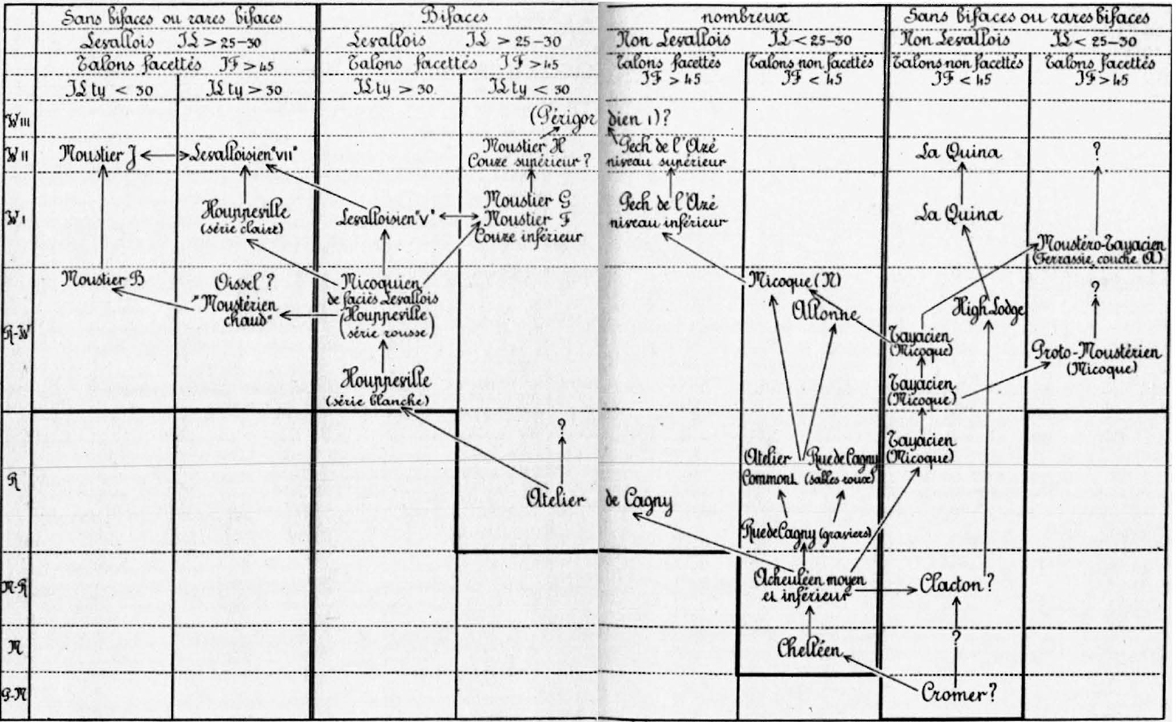
Figure 7.12 phyla, culture growing
Bordes’s évolution buissannte (after Bordes 1950a). Note that time flows in the opposite direction to Breuil’s evolutionary up like a bush rather down like roots.
Bordes’s (1957) reading of the Somme returned to a position much closer to Commont’s, the original observations from which Breuil had also begun (but not finished) his journey. Bordes again found no evidence of a segregated Levallois culture dating to the Riss or earlier. It was simply a component of the Acheulean, first found in the pre-Riss Acheulean at Cagnyla-Garenne, after which some Acheulean groups used the technique, and others did not. Furthermore, handaxes of the same age but from different sites were not always the same shape. In the red sands at Rue de Cagny the handaxes were predominantly ovate, but in the lateral equivalent at Atelier Commont the majority were of the lanceolate type. It seemed to Bordes that “apart from Levallois technique being used or not, there are several different Acheulean cultures” (Bordes 1957, 5). This was based largely on intuition and major differences in technology and tool form, rather than comprehensive analyses of frequency distributions but it nonetheless became received wisdom, especially in France (cf. Villa 1983, 172).
Through such methods, Bordes (1971) identified several distinct regional variants of the Acheulean. The Northern Acheulean of the Somme and Seine was dominated by regular, standardised handaxes and bifacial cleavers. The Meridional Acheulean of south-western France (and Spain at Torralba and Ambrona) on the other hand was characterised by irregular poorly made handaxes, and flake cleavers. Conversely, it also contained a few ‘progressive’ Upper Palaeolithic types such as burins, end-scrapers and backed knives. Other more ‘classic’ regional variants could be found in the Garonne and Provence (Bordes 1971), while the Languedoc-Roussillon province contained another variant, which Lumley (1975) termed the Tautavelian, after the site of Arago, near Tautavel.
In other words, separate tribes of Acheulean humans had co-existed, their identity written in the dominant shape of their handaxes, whether they had used Levallois or not. Breuil’s Acheulean I–VII and Levalloisian I–VII were not stages on two orderly evolving lineages, but intermingled branches with both temporal and spatial variation. Industries without handaxes, which belonged to the Clactonian branch of the model, also showed several facies, High Lodge and the Tayacian for example (Germaine 1954). This was all very similar to Bordes’s thinking on the Mousterian, where he interpreted the six main variants in the Dordogne as the products of contemporaneous Neanderthal tribes, who moved around the same landscapes but left unique cultural signatures by virtue of their different, socially shared ideas and routines.
Breuil (Breuil and Kelley 1954), of course, did not agree. He rejected Bordes’s interpretation of Cagny, regarding the so-called‘proto-Levallois’ at the site as nothing more than cannibalised handaxes and the facetted butts as belonging to handaxe thinning flakes or having been necessitated by poor raw materials. To reconcile the apparent presence of Acheulean III–VI in the Somme at the same time as Acheulean VI–VII was being made at Swans-combe, which he had previously explained as being an unsurprising phenomenon related to ‘migration and precession’ (Breuil 1947), Breuil simply reclassified the handaxes from the skull layer; they were now Acheulean III–IV, the same as Commont’s workshop. Since Reginald Smith first described them as Chellean in 1913, the handaxes from the Middle Gravels at Swanscombe had been re-assigned to the Early Acheulean (I–II), Acheulean VI–VII and now Acheulean III–IV. Only the absence of Levallois (Acheulean V) prevented it from taking the clean sweep. The casual, even arbitrary, fashion in which these changes were implemented could hardly have inspired confidence in an archaeological community already wracked with self-doubt.
When Bordes and Breuil spent a “very pleasant trip in the Somme” together, the younger researcher found it instructive, but wryly recorded that neither of them changed their “respective opinions very much” (Bordes 1957, 5). Bordes would discontinue the use of Abbevillian and would admit only lower, middle, upper and final stages within the Acheulean, all of which showed marked local and regional variation. Culture history had been both simplified and made more complex (Table 7.4).
Errors, Damned Errors and Statistics
The système Bordes certainly provided a more objective means by which archaeologists could compare assemblages, and operationally divorced the classification of an assemblage’s content with its cultural affiliations, which in the type fossils approach were more or less the same process (Sackett 2014b). Yet his methods were still heavily reliant on typology. Bordes’s subjectively determined what tool types and techniques were significant, assigned each object to the relevant category, and plotted the results. To facilitate proper comparison, though, still required everybody to adopt the same criteria and apply them in the exact same manner.
This problem was avoided by Alimen and Vignal (1952), who attempted to metrically define handaxe shape, using measurements of length, width, thickness, the position of maximum width relative to length and the curvature of the margins. From these measurements, shape was calculated by dividing twice the radius of curvature by the length (2R/L). In an analysis of 44 handaxes from Commont’s Workshop (six others were rejected as being too irregular), which were assumed to be an in situ single assemblage belonging to Acheulean VI, they found wide variation in form, ranging from triangular through limande to oval, conforming to Breuil’s vague description of this stage. Plotting the shape frequency distribution (Figure 7.13), however, they found that these types formed part of a continuous bell curve and did not form discrete modes. Dividing this curve into archaeological types simply created artificial categories. They also found that the position of maximum width was important in determining shape, being low in pointed forms and higher in ovate types, and noted strong linear correlations between indices for width:length (R = 0.9) and width:thickness (R = 0.78).
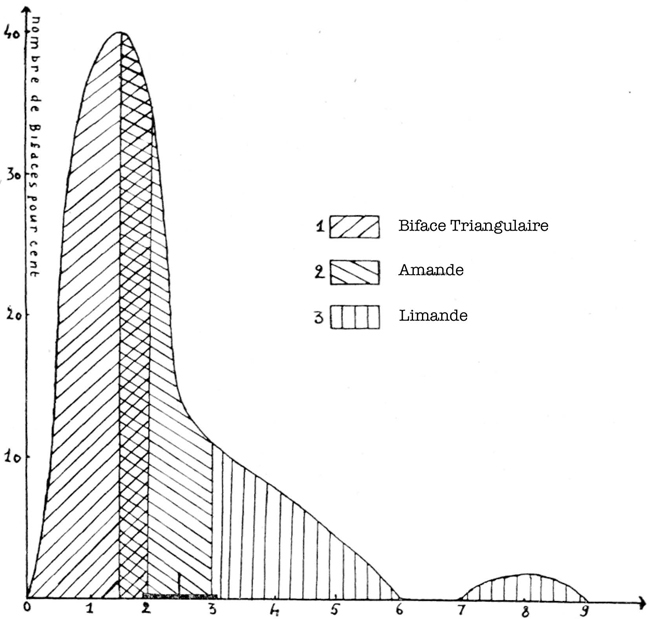
Figure 7.13 Statistically significant handaxe types? Graph showing frequencies of 2R/L for 44 handaxes from the Atelier Commont. Mean: 2.50. Mode 1.5 (after Alimen and Vignal 1952).
Interpreting their results, Alimen and Vignal concluded that there was a preconceived type that all members of a group had aspired to create. There had been no desire to produce three different types, and the variation seen at Commont’s Workshop resulted from random fluctuations around the target, caused by error and/or ‘freedom of expression’: Acheulean humans had been remarkably uninventive. The strong correlations between length, width and thickness could be explained in functional terms, reflecting the form of the human hand and an understanding of the mechanical properties of flint, that it would break if thinned too intensively. This uniformity suggested to Alimen and Vignal that formal tutoring must have been involved, a knapping school with Acheulean apprentices learning the correct forms from older master craftsmen. They hoped that further research would determine whether other subdivisions of the Acheulean were statistically distinct.
Bordes (1953e) applauded their use of statistical methods but could not agree with any of Alimen and Vignal’s conclusions. He thought that length and thickness were poor attributes to measure, being strongly related to the size and shape of the original nodules, and argued that it should come as no surprise that maximum width tended to be located in the lower half of handaxes, since it was standard practice to orientate them with the widest part at the bottom (unless they were cleavers). None of this prevented Bordes (e.g. 1961) from using a remarkably similar set of measurement and indices to divide Middle Palaeolithic bifaces into four variant types.
Furthermore, none of the attributes reflected technology, such as the use of hard or soft hammer, and none of them properly measured shape. Bordes also deplored the cognitive implications. If there was no desire to make different types, then Acheulean hominins were stripped of any intelligence and turned into badly programmed robots who automatically, unthinkingly and inconsistently tried to turn out the same tools. One could always ‘statistically prove’ homogeneity given a well-chosen attribute, but those attributes must relate meaningfully to the questions being asked. Paraphrasing Benjamin Disraeli’s famous (and probably misattributed) quote, Bordes (1953e, 78) cautioned that in prehistory there were ‘errors, damned errors and statistical errors’.
While hoping that the application of mathematics in archaeology would help firm up some current ‘impressions’, Louis Pradel (1953, 1954, 1965) provided more general warnings that there could be no mathematical certainties in prehistory, critically observing that even when robust statistics were used, there was often still little agreement on the value of the characteristics being measured. André Cheynier (1957) went further, describing the use of statistics as a growing problem, which had spawned unintelligible papers with uninterpretable graphs and typological classes that varied according to the author. Statistics did not raise lithic studies to a science, but were just a synthesising tool, a way of expressing percentages of previously defined categories. They should not be allowed to take priority over typology, stratigraphy, geology, palaeontology, scientific dating or the study of other social practices. Both authors undoubtedly had the ascendant François Bordes firmly in mind.
McBurney appears to have had some sympathy with all sides (West and McBurney 1954). He was an advocate of statistical approaches and suggested that after 20 years of trial Breuil’s scheme had been shown to be unreliable. The whole question of typological development in handaxes had, he felt, “relapsed into extreme uncertainty” (West and McBurney 1954, 145) and like Bordes thought only an early, middle and late phase could be recognised, with high levels of variation within them. Yet while there was clearly a need to define variation as objectively as possible, McBurney regarded Bordes’s typological classes as “unduly arbitrary in their assumptions of the intentions of the original artificer” (West and McBurney 1954, 145) and difficult to apply in practice due to the high frequency of intermediate forms. More objective ways of measuring handaxe shape variation were required. Two of McBurney’s students would soon supply them (Chapter 8).
A Definitive Sequence for Olduvai Gorge (for Now)
Employing no statistics whatsoever, Leakey (1951) provided a definitive sequence of cultural evolution for Olduvai Gorge, using subdivisions of the four main stratigraphical units at the site (Beds I-IV) and his latest pluvial framework to trace the development of the Lower Palaeolithic from the Oldowan through 11 stages of the Chelles-Acheul culture (Leakey 1951, Table 7.5).
|
Table 7.5 Leakey’s 11–fold handaxe evolution at Olduvai Gorge (compiled from data in Leakey 1951). |
||||
|
Climate |
Stratigraphy |
Culture |
Chelles–Acheul Stage |
Characteristics |
|
|
||||
|
Third Pluvial (Kanjeran) |
Top of Bed IV |
Acheulean |
11 |
Small, crude and asymmetrical handaxes. Degenerate. |
|
Upper Part of Bed IV |
Acheulean |
10 |
Majority of handaxes made on quartzite flakes. Highly abundant. |
|
|
Acheulean |
9 |
High levels of variation in size and shape. U-shaped cleavers. More similar to Stage 7. |
||
|
Acheulean |
8 |
Smaller handaxes, including twisted ovates. Cleavers v-shaped rather than u-shaped. Fewer ’survival elements’ from earlier stages. |
||
|
Base of Bed IV |
Acheulean |
7 |
Mastery of soft-hammer percussion. Cleavers relatively common. Handaxes large and well-made. |
|
|
Interpluvial |
Bed III |
Acheulean |
6 |
More developed soft-hammer percussion, Appearance of cleavers. More ’evolved’. |
|
Second Pluvial (Kamasian) |
At junction of Beds II and III |
Transitional |
5 |
Appearance of soft-hammer percussion. More symmetrical with biconvex sections. |
|
3m below junction of Beds II and III |
Transitional |
4 |
Appearance of handaxes with a trimmed edge all round. |
|
|
6m above Stage 3 |
Chellean |
3 |
Large thick handaxes with markedly flat lower face, development of rostro-carinate types of Stage II. Triangular and ovate shapes. |
|
|
3–5m above base of Bed II |
Chellean |
2 |
Large handaxes with thick butts and flattening on lower face. Shape highly variable. |
|
|
Top Bed I/Bottom Bed II |
Chellean |
1 |
Simple handaxes. |
|
|
Bed I |
Oldowan |
Core tools and flakes. |
||
It showed, in Leakey’s opinion, a slow, gradual and local evolution from simple pebble tools to the most ‘beautifully made’ small handaxes and cleavers of Late Acheulean type. Stage 8 was an anomaly, a rapid advancement that seemed to interrupt the more gradual development seen between Stage 7 and Stage 9. Leakey wondered if this represented a sudden innovation that was subsequently lost, or it might reveal the influx of a ‘tribe’ of more advanced handaxe makers from elsewhere.
Olduvai did not supply a complete representative sequence, even within East Africa. At Olorgesailie, deposits equivalent to Bed IV yielded several minor substages of the Chelles-Acheul 7–11 somewhat different to those seen at Olduvai (Leakey 1951). Olduvai also contained no evidence of Levallois, which Leakey (1953) emphatically maintained was a true culture, found across North Africa and extending as far south as Tanganyika. In Kenya it was contemporaneous with the final Acheulean, and existed in ‘pure’ form at Mugurak, where it was sandwiched between two Sangoan industries (Leakey and Owen 1945). There were also other local variants, such as Kombewa technique (Owen 1938, 1940) whereby a large flake was used as a core, with one or more smaller flakes taken from its ventral surface (Figure 7.14). There was no preparation of the flaking surface but the platforms were carefully prepared, resulting in flakes with two ventral surfaces and a facetted butt. These were suggested to date to the younger Gamblian pluvial.

Figure 7.14 The Kombewa Technique (after Owen 1938). Scale = 5cm.
Translating the old South African sequence into the terminology agreed at the Pan-African conference, Riet Lowe (1951) emphasised the presence of pseudo-Levallois in Chelles-Acheul I and proto-Levallois (Victoria West) in Stages II–III. Proper tortoise-cores and facetted platforms appeared only in Stages IV–V, and later Levalloisian was only seen in the Fauresmith. Stage IV of the Chelles-Acheul was also marked by the development of an ‘astonishing’ level of flaking skill, which allowed flakes of enormous size (“as large as a leg of veal”) to be struck (Riet Lowe 1951, 95). This phenomenon was found across South Africa, Uganda and Tanganyika (e.g. Riet Lowe 1952).
Whether the poorly defined Fauresmith was a hybrid culture splicing the local Acheu-lean tradition with late Levalloisian elements from the north, a local development from the Late Acheulean of the Vaal, or an introduction from elsewhere in South Africa (Goodwin and Riet Lowe 1929; Riet Lowe 1951; Dreyer 1953; Clark 1952) was just one of several remaining issues. Dreyer (1953) emphasised the presence of fluted flakes and cores, but at the few sites where the Fauresmith and late Chelles-Acheul were found in a stratigraphical sequence (Riverview Estates and Fort Brown on the Great Fish River) Riet Lowe (1954) saw few typological differences. The validity of many Kafuan sites was also brought under increasing scrutiny, and despite new examples (Arambourg 1950; Riet Lowe 1953), Bishop (1959) would convincingly demonstrate that it did not exist, being composed of entirely natural rock fragments.
The status of Jones’s non-handaxe Hope Fountain culture was also uncertain. At Broken Hill, Zimbabwe, which contained in situ evidence of Acheulean, Sangoan and Hope Fountain, Bond (1948) argued that Hope Fountain had no stratigraphical value and was the result of using intractable ironstone as a raw material. No such restrictions had affected the makers of the Acheulean, who used 15 different rock types including lava, quartz, quartzite, fossilised wood, chalcedony, silicified sandstones, schist and ironstone. Many were found within 1km of the site, but the karoo silcrete had been transported up to 40km, and an andes-itic agglomerate, which was poor quality but visually attractive, was carried at least 15km upstream where it was used to make beautiful handaxes. Whichever material was used, the resulting handaxes were always made to the same pattern, with the influence of rock type on handaxe typology being minimal (see also Leakey 1951). With such short transport distances, it was unlikely that archaeologists could ever hope to establish long-distance migration routes.
The industrial status and stratigraphical validity of Hope Fountain was still being discussed at the end of the 1950s, but by then interpretations had taken a distinctly more ecological turn. Director of the Livingstone Museum (Zambia) and Cambridge graduate J. Desmond Clark (1959) wondered whether two separate traditions could have really coexisted side by side and not influenced one another, unless they were biologically segregated, the products of different human types, in which case it was unlikely that two species of human could have occupied the same niche at the same time. It was more logical to regard the lithic variants as activity facies or aberrant forms of the Acheulean that developed in particular ecological habitats, for example in dense forests. At intact camp sites like Broken Hill, he reasoned, the lithic debris reflected short periods of occupation and might well reflect only immediate needs: “sometimes the tools of the butcher’s shop” (i.e. handaxes, which Clark regarded as multipurpose cutting, scraping and chopping knives perfect for flesh) “were just not required” (ibid., 222).
Having established the basic Olduvai sequence to his satisfaction, Leakey turned his attention to the excavation of living floors, having become acutely aware of their potential for behavioural interpretation. Here he was inspired by his Acheulean Stage 10 assemblage from the HK site, where 459 handaxes and cleavers were found in situ on a thin knapping horizon. The sheer number alone suggested to Leakey that as tools became blunt, they were replaced, not resharpened.
Science and Pre-Sapiens
Oakley (King and Oakley 1936) had been instrumental in promoting Breuil’s cultural framework in Britain, where it had seemingly enjoyed more popularity than in France (Sackett 1991). By the time he delivered the third Henry Stopes Memorial Lecture on July 4 1952, a model of multidisciplinary research under the deceptively simple title of Swanscombe Man, he had developed serious doubts about its validity outside (or even inside) the Somme Valley. He now preferred the safer ground of early, middle and Late Acheulean to the vague precision of Breuil’s numerical sub-stages (Oakley 1952). Oakley also questioned the practice of dividing artefacts from the same deposit into Acheulean, Clactonian and Levalloisian, when it had become abundantly clear from workshop sites that all three could occur together as part of any normal handaxe industry, the last being present at least since the time of Cagny-La-Garenne on the 30m terrace of the Somme and the 100ft Terrace of the Lower Thames (Tester 1952). These all cast doubt on the classic association of Levallois with the Middle Palaeolithic and the Neanderthal lineage, which had prevailed in various guises since the nineteenth century. In Oakley’s mind there was no longer any justification to regard these industries as different cultures, and nothing to suggest they were the products of different species. Although uncited, Oakley’s opinions clearly echoed those of Bordes.
Geologists were also beginning to abandon archaeological schemes. In the Thames Valley, Wooldridge (1958) advocated a physio-graphical approach, ignoring the demands of the typologists and regarding terraces as parts of the landscapes they once formed, correlating them explicitly on the basis of distribution and altitude. He found all the deposits in the London Basin to form a natural, progressive sequence of downcutting complicated by glacial processes, getting older as one ascended the staircase of Taplow, Lynch Hill, Boyn Hill, Black Park and Winter Hill Terraces.
The identity of the makers of the Acheulean was still not known with any certainty, but it was widely believed that they had been early Homo sapiens or pre-sapiens, a presumption built largely on the anatomically modern skeletons found in putatively Middle Pleistocene contexts at sites such as Galley Hill, Bury St Edmunds and Ipswich. Using another new scientific dating technique, Oakley was able to finally bury these claims.
Since returning to his post at the British Museum (NH) following war service in the Geological Survey, Oakley had been refining the use of the fluorine, uranium and nitrogen content of faunal remains as relative dating tools. These techniques worked on the principle that once buried a bone or tooth will react chemically with ground water, resulting in an increase in fluorine and uranium through external uptake and a decrease in nitrogen through decay of the bones’ organic protein, collagen. Bones from the same context theoretically have the same burial history and the levels of the three elements they contain should be very similar; intrusions of different ages or from different locations should therefore be detectable by their different signals.
Oakley’s most famous success with these techniques was a series of tests beginning in 1948 that finally exposed Piltdown as a hoax (Oakley and Hoskins 1950; Weiner et al. 1953); it had by then in any case become out of step with what was known of human evolution elsewhere (e.g. Le Gros Clark 1946a; Broom and Schepers 1946; Weidenreich 1947). The key question now for European palaeoanthropology was whether Neanderthals had evolved into Homo sapiens in situ, or whether Upper Palaeolithic Homo sapiens had evolved from older pre-sapiens forms, perhaps on another continent.
Oakley’s fluorine analysis (Oakley and Montagu 1949; Oakley 1952; Baden-Powell and Oakley 1953) showed that, apart from Swanscombe, all the British examples of Middle Pleistocene Homo sapiens were all much later intrusions, their fluorine content much lower than that of extinct fauna with which they were supposed to have co-existed (Table 7.6). Vallois (1954) accepted only Swanscombe and Fontechevade as true Middle Pleistocene pre-sapiens, ancient skulls that could not be distinguished morphologically from later modern humans, but noted that science was quite ignorant of their facial form. What Middle Pleistocene human faces that were known–Weimar-Ehringsdorf and Steinheim in Germany, Saccopastore in Italy and Montmauran, France–all showed Neanderthal affinities, but none were associated with handaxe-based technology. There were similarities between Swanscombe and Steinheim that suggested the same type of human was involved (Morant in Hinton et al. 1938), but when anatomist Humphrey Humphreys (195 2) made the uncritical link between Neanderthals and flake cultures and Homo sapiens and handaxes, the editor of Antiquity, O.G.S. Crawford, felt obliged to front the paper with a parenthesis noting that this was very much still in question.
|
Table 7.6 Results of Oakley’s fluorine-dating of human remains found in deposits containing flint handaxes (after Oakley 1952). |
|||
|
Specimen |
% Fluorine |
Minimum Recorded % Fluorine in Local Fossils Contemporary with Deposit |
Maximum Recorded % Fluorine in Local Holocene Bones |
|
|
|||
|
Moulin Quignon jaw |
0.2 |
0.9 |
0.1 |
|
Bury St. Edmunds skull |
0.2 |
1.6 |
0.2 |
|
Galley Hill skeleton |
0.4 |
1.5 |
0.3 |
|
Dartford skull |
0.1 |
0.9 |
0.3 |
|
Baker’s Hole skull |
0.3 |
0.9 |
0.3 |
|
Swanscombe skull |
2 |
1.5 |
0.3 |
New discoveries did not immediately clarify the situation. When a third piece of the Swanscombe skull was discovered in 1956, it was not the longed-for frontal or facial bones but the right parietal. It did not alter the opinion that the Swanscombe skull represented a primitive form of Homo sapiens who had made the Acheulean industry in the Middle Gravels. At Ternifine (Algeria) two Pithecanthropus-type jaws were found with a primitive Chelles-Acheul industry consisting of keeled handaxes, cleavers and large ‘Clactonian’ flakes, and associated with the butchered remains of elephant, horse and hippopotamus: it was assigned by Arambourg (1955) to a new species, Atlanthropus mauritanicus. In 1953, Saldanha Bay in South Africa produced a sapiens-like skull similar to Broken Hill (Kabwe) from deposits that also yielded a very late (Fauresmith) handaxe industry (Oakley 1956a), while the only species at Sterkfontein who by the same logic must have made Oldowan or very primitive Chelles-Acheul was Australopithecus africanus. This association was never made by the finders (Robinson and Mason 1957), although at the third Pan-African Congress in Livingstone, C.K. Brain had claimed australopith authorship for the core and flake assemblage from the Makapan Limeworks, leading several delegates to ask whether this made the australopiths ‘human’ under Oakley’s ‘toolmaker’ criterion (Oakley 1956a), rather than a sub-human ape-man. Oakley (1956a) warned against jumping to rash conclusions, preferring to reserve judgement until such a time that an australopithecine fossil was found in association with stone tools at an in situ workshop or camp site, and not just in some flu-vial jumble where the association could be entirely coincidental.
By the time of the fourth Pan-African Congress in 1959, the Leakeys had found just that. In Bed I at Olduvai Gorge, Mary Leakey excavated the skull of a new species of robust hominin, Zinjanthropus boisei, in association with an Oldowan industry and ‘processed’ animal bones (Leakey 1959). That the animal bones were smashed but the hominin skull intact suggested that Zinj had been one of the diners, not one of the meals. The fossil was more Homo -like than the gracile australopithicines and robust paranthropines of South Africa, and, as a toolmaker, the Leakey’s thought it ranked with ‘man’, on the path to Homo.
The physical and cultural relationships of the Acheulean peoples might have been increasingly opaque, but thanks to developments in sister subjects their behaviour and adaptations were coming into clearer focus. Experimental archaeologists had shown that handaxes were excellent butchery knives, but poor digging tools. Most handaxes showed no evidence of resharpening; when edges became dulled the tool was simply replaced. Highly proficient knappers such as Léon Coutier could make a handaxe in under five minutes, and at most sites humans were surrounded by suitable stone. Oakley (1952) mused that the thousands of tools from Swanscombe might therefore have been made by only a modest number of people: ten humans making two to three handaxes a week would produce more than a million in 30 generations (1,000 years).
To better model the Acheulean group, Oakley turned to North American cultural anthropology, particularly the ecological approach of Julian Steward. Oakley speculated that among Acheulean populations the family group would have been the main foraging unit, but that a number of family units would have come together for some activities, such as hunting large animals, forming a local band. Among indigenous Australians the band size varied between 30 and 100, with an average of 35, each occupying a well-defined territory to the exclusion of others. The size of the territory varied according to the distribution and abundance of resources and the mobility and subsistence practices of the band but was generally 150–500 square-miles in area. In fluvial basins the length of the human territory greatly exceeded its width. Using the population densities of Arctic American hunters, Grahame Clark had estimated that Britain in Upper Palaeolithic times and under a sub-glacial climate would have had a human population of between 250 and 2,000 individuals. During interglacials, different conditions would have operated, but Oakley concluded that it was unlikely that the Lower Palaeolithic population of Britain ever comprised more than a dozen bands of 35 or so people. Lower Palaeolithic Europeans existed at precariously low levels, but so long as there was a land connection between Britain and Europe it was unlikely that they would have been genetically (or culturally) isolated.
Oakley the scientist was reluctant to make too many assumptions, however. Handaxes were so similar across time and space that there was surely a shared idea behind them, he thought, one transmitted across generations and continents. This implied that there were no fundamental differences, in terms of intellectual capacity, between Acheulean humans in South Africa and those in Northern Europe. But to assume, based on a few imperishable items, that they were part of the same culture was not justifiable. All archaeologists knew of Lower Palaeolithic organic culture came from a forgotten spear fragment from Clacton, another recently discovered example from Lehringen in Germany6 (Jacob-Friesen 1949; Movius 1950b) and some disputed bone tools from Choukoutien. These were soon joined by some underwhelming ‘digging sticks’ from Kalambo Falls, Zambia (Clark 1958b). If archaeologists had the full range of Acheulean perishable equipment, they might be surprised by the cultural differences, chastised Oakley, and when they tried to “humanise Palaeolithic archaeology by speaking of Acheulean people”, they should bear this in mind (Oakley 1952, 297).
Quaternary Vegetation Histories
A distribution map of handaxes in Britain and Northern France suggested to Oakley (1952) that Acheulean humans lived mainly in open country, with movement largely confined to river valleys and shorelines. To fill out this picture, he was able to draw on the new palynological work of Harry Godwin and his team at Cambridge, which provided a vegetation history for the Clacton Channel deposits (Pike and Godwin 1952) and confirmed his earlier view (Oakley and Leakey 1937) that Swanscombe and Clacton were part of the same inter-glacial. Combined with the mammalian and molluscan evidence, these new studies helped create a much richer landscape for Palaeolithic humans to inhabit, while also providing much finer chronological and environmental controls, which allowed archaeological industries to be tied to particular phases of an interglacial and their characteristic ecology. The vegetation history at Clacton-on-Sea showed that by the end of the period of Clactonian occupation, mixed oak forests had given way to coniferous woodland and grassland. From this evidence, Oakley suggested that the Clactonian was an adaptation to more densely forested conditions, whereas Acheulean groups were more focussed on life on the open grassland. Judging from the sheer quantity of meat bones found at Acheulean ‘camp-sites’7, such as Olorgesailie in Kenya or Torralba in Spain, Acheulean humans had been skilled hunters capable of taking large and fast-moving prey, which they butchered using handaxes. But as shown by the magnificent giant forms, some handaxes were more than merely functional.
It seemed to Oakley (1956b, 1956c) unlikely that Lower Palaeolithic or ESA humans had cooked their food, as evidence of fire use appeared only in final Acheulean and regionally equivalent contexts (Fauresmith, Micoquian, Tayacian) at sites such as Montagu Cave and Kalambo Falls (Zambia), the Cave of Hearths (South Africa), Grotte de Oumm Qatafa (Syria), Fontechevade (France) and Ehringsdorf (Germany). It was true that most Lower Palaeolithic sites were in open-air fluvial or lacustrine situations where fires might not be expected to survive, but even the ‘camp-sites’ at Olduvai and Olorgesailie and the butchery locales at Ternifine (Algeria) had yielded no direct evidence for the use of fire, not even burnt stones, which might be expected to better resist taphonomic destruction than charcoal and burnt bone. Charcoal fragments and crazed flints from the Acheulean middle gravels at Swanscombe and Stoke Newington did, at least, show fire had been present, although Clacton produced none. If this, and the fire-hardened spear reported from Torralba in 1932 and seen by Breuil, were not natural, then it was likely, suggested Oakley, that Acheulean humans in Europe had used fire. There was also evidence of early fire use at Choukoutien. If then, the reason for the apparent absence of fire was simply taphonomic, the evidence rarely survived outside caves, then why had humans not used caves beforehand? (Oakley 1956b, 1956c). Oakley (1956b) wondered if the earliest fire-users had merely harnessed natural fires, and only mastered its production much later, a discovery that co-incidentally allowed them to compete with carnivores for cave residences, the fire serving as a source of light and protection rather than warmth.
As the number of Pleistocene pollen records grew (e.g. Hollingworth et al. 1950; Walker and Sparks 1952; West 1954, 1956, 1957; Duigan 1955; Stevens 1959) palynologists were able to patch the fragments together to form complete vegetational and (by inference) climatic successions that spanned entire interglacials. In some cases, this completely overturned the conclusions drawn from other proxies. The pollen from Hoxne, for example, contained evidence of only one temperate period, represented by the lake deposits at the base of the sequence, which, according to West and McBurney’s stratigraphy, sloped upwards to form the Palaeolithic loams at the margins (Figure 7.15). Moir’s mistake was to separate the marginal deposits from the deep lake deposits. The in situ archaeology was in the marginal expression of the lake deposits of Bed E, according to West, representing a single lake-side occupation that sloped into the water. The material from higher up the section was not a second period of occupation, but material from below that had been reworked into later glacial and peri-glacial deposits. This placed the arrival of Acheulean humans at Hoxne in the ‘non-arboreal pollen phase’, which marked a period of late temperate deforestation, an interpretation apparently supported by the pollen from clay adhering to a handaxe discovered in Bed E. So, the Acheulean arrived as conditions became more open, just as suggested by Oakley, although it was thought unlikely that a major climatic event had caused the deforestation: it was more likely to have been caused by a major forest fire, natural wildfire or perhaps one accidentally started by humans.

Figure 7.15 X Marks the Spot. Clement Reid’s and Reid Moir’s observations compared to West’s reinterpretation showing how different understandings of basic straigraphy can radically alter the understanding of the human occupation of a site and a region (based on sections in West 1954). In West’s reading, humans were present at the margins of the waterbody during the warm lacustrine phase, in Reid Moir’s they were only present after the temperate phase, when cold conditions had returned.
In each interglacial, the vegetational succession had shown the same gradual shift from non-arboreal to arboreal vegetation and then back again, reflecting a transition from open sub-arctic tundra or steppe to coniferous and then deciduous woodland. Beyond these similarities, precise features of the climatic and vegetational sequences of different interglacials allowed the Last Interglacial (Ipswichian, Riss-Würm, Saale-Weichsel) and penultimate interglacial (Hoxnian, Mindel-Riss, Elster-Saale) to be differentiated from one another. As the evidence from across Europe grew (Brouwer 1948; Faegri and Iversen 1950; Woldstedt 1951; Vlerk 1955; Zagwijn 1957), it appeared increasingly probable that each of the inter-glacials as well as the late-glacial and postglacial periods, could, with local variations, be traced across northern Europe (Stevens 1959). The application of radiocarbon at the later end of this scale allowed the validity of these pollen sequences to be confirmed by independent absolute dating techniques. Pollen could thus be used for both environmental reconstruction and as a relative dating method. By identifying different interglacials, palynology also made it possible to differentiate more clearly between the various glacial deposits, leading to the conclusion that the boulder clays across East Anglia were the product of a single major glaciation, the Anglian (Mindel, Elsterian), which provided a very useful stratigraphical and chronological marker for sites in the region (Mitchell et al. 1973).
The advent of radiocarbon dating did not have such a positive impact, particularly for the Milankovitch Cycles. Initial radiocarbon assays on North American Late Glacial deposits seemed to confirm the solar predictions: the Wisconsin Glacial deposits were shown to be from at least two different events, with the Last Glacial Maximum in North America occurring 18,000 years ago (Flint and Rubin 1955). This was 7,000 years younger than predicted by Milankovitch, but it was within tolerable limits given the probable time lag between changes in the earth’s radiation budget and the consequent reaction of the icesheets: Milankovitch had estimated that this lag would be in the order of 5,000 years (Imbrie and Imbrie 1986, 121). However, these were soon followed by ages of ~25,000 years for interglacial peat deposits from the northern and Midwest USA, eastern Canada and Europe, which did not support Milankovitch (ibid.). Pushing the use of radiocarbon beyond its reasonable limits, North American geologists found evidence for three glacial maxima at roughly 20,000 year intervals, at 18,000, 40,000 and 60,000. These could not be explained by the Milankovitch model, and by 1955 the astronomical theory had once again been largely rejected by geologists (Imbrie and Imbrie 1986, 119).
Ironically, this coincided with the start of Cesare Emiliani’s work on the isotopic composition of oxygen in fossil foraminifera from deep-sea cores, from which he could calculate changes in the temperature of the oceans over time. It provided a long, globally relevant climatic history and more-or-less confirmed the predictions of the Milankovitch curve (Emiliani 1955; Imbrie and Imbrie 1986). Unfortunately it would be several decades before correlations between the marine oxygen isotope record and terrestrial deposits would gain wide acceptance (see Chapter 9). Until then, pollen would provide the main stratigraphical framework for Europe (e.g. Mitchell et al. 1973; Woillard 1978; Zagwijn 1985).
Time Runs Dry for Pluvials
As the investigations at Olduvai moved into a new phase, away from establishing the overall sequence and to the fine-grained excavation of ‘camp-sites’, the pluvial framework in which Leakey had placed so much confidence finally collapsed. Reviewing its historical and empirical development, Flint (1959) concluded that while there was reasonably strong evidence for the most recent Gamblian and post-Gamblian pluvials, most of the other pluvials in the East African framework, which the first Pan-African Congress had agreed to adopt as a continental standard, were based on very flimsy evidence indeed. The fauna contained few secure climactic indicators, and the geological evidence for Leakey’s Kanjeran and Kama-sian pluvials could not be sustained. There was evidence for wetter pre-Gamblian phases at Olorgesailie, but these were part of a more complex cycle which showed 17 fluctuations in lake level. The claims for drier interpluvials were equally flimsy. At Olduvai, Leakey and his team had assumed that the dry periods were indicated by red sediments, but Flint realised that these sediments were red not because they were formed in hot dry conditions, but because they consisted of eroded and reworked red soils originally formed during wet rather than dry conditions. In other places interpluvials had been inferred from seasonal laminations, the formation of evaporites and fish beds, but Flint could not see how the evidence fitted together. In Uganda the red sediments of Horizon M (Wayland 1934) were supposedly related to the drying of the lake under arid conditions, but Flint’s own observations found no indications of climate, just a pebble lag formed by eluviation, the downward removal of fine-grained material by water action. Even for those climatic episodes that could be accepted, Flint saw no reason to assume that the same conditions prevailed in the rest of East Africa, let alone the whole continent. It was little more than received wisdom.
Unlike O’Brien (1939), who had long ago called for the pluvial-interpluvial framework to be abandoned entirely, Flint saw some value but thought that it should form part of a wider geological stratigraphical scheme, depositional units that could be compared across the region (e.g. Laetoli Beds) and refined/correlated using faunal zones and cultural materials. In Flint’s opinion, climatically based frameworks were best avoided.
So, as Louis Leakey revelled in the celebrity of Zinjanthropus at the fourth Pan-African Congress in Leopoldville (Congo), his chronological framework for dating the new fossil was looking decidedly unsafe (Inskeep 1959). With its demise, the dating and correlation of the African Lower and Middle Palaeolithic, both within and without the continent, was once again up in the air. Pollen analysis might eventually provide an alternative framework but studies in Africa were few (Leroi-Gourhan 1957). Fortunately for Leakey, something new was just around the corner.
Notes
· 1 It was while he was staying in Brive that Breuil was taken to see the cave art at Lascaux, just ten days after its accidental discovery by a local teenager and his dog.
· 2 The extent of Goodwin’s frustration can perhaps be gauged by the fact he wrote a letter to the RAI, published in Man (Goodwin 1947), complaining about the variously inconsistent and grammatically incorrect spellings of archaeological entities.
· 3The use of the term ‘true biface’ is unfortunate, but is more likely to refer to the method of working than to a handaxe. Warren’s preferred name for the definitive Acheulean implement was boucher, as it carried no unwanted functional or technological implications, and elsewhere in the paper he retracted his earlier suggestion that the more pointed Clactonian core-tools were a ‘barbarous’ attempt to imitate the ‘Acheulian boucher’. Warren wanted to distance the Clactonian from the handaxe-cultures, not bring them together.
· 4 Baldly, radiocarbon dating uses the ratio of the radioactive isotope of carbon (Carbon 14) to the stable isotope Carbon 12 to measure the degree of atomic decay since an organism’s death and from this to calculate its age. It would eventually overturn many cherished artefact-based-chronologies, but its range only extended back to 20–30,000 years before present and it was therefore irrelevant to anything older than the late Upper Palaeolithic.
· 5 Hare also gave the Iver/Lower Boyn Hill stage of theThames its modern name–the Lynch Hill Terrace. As an intermediate terrace between the Boyn Hill (100m) and Taplow (50m), it posed archaeo-logical problems for the Breuil model because it meant that Levallois was now on the ‘wrong’ place and the handaxes no longer fell in the right order without an elaborate sequence of erosion, aggradation and reworking.
· 6 The Lehringen spear is a 2.4m long javelin made of yew and showing evidence of a fire hardened tip. It was recovered from within the ribs of a straight-tusked elephant skeleton, preserved in last interglacial lacustrine marls. Jacob-Friesen assigned it to the Late Acheulean, although there were no diagnostic tools, only flakes. He clearly saw the implications of the spear for understanding human hunting practices, suggesting that to kill such a large animal, Palaeolithic hunters would have sought out isolated animals that were feeding or sleeping alone in the forest, which they would approach with stealth until close enough to drive the spear through the animal’s organs.
· 7 Leakey and others had begun to use this interpretatively loaded term to describe dense in situ (or at least primary context) accumulations of archaeological materials formerly known as workshops or living-floors. The term appeared slowly, imperceptibly creeping into usage without much fanfare or definition.
