
Investigators flooded the area around the school and sealed it off. It was quickly determined that the shot had come from a wooded area across the street. A careful, systematic search found tangible evidence: shoe prints in the dirt at the spot where the shooter was thought to have stood. Also at the scene, lying backside up among the leaves, was what appeared to be a playing card bearing a handwritten message: “For you Mr. Police, call me God, do not release to the press.” Once the card was turned over, it was evident that it was a Death tarot card. On the face side, handwritten above the death-head emblem, were the words “Call me God.” The block print messages were simply written, like something you might see scrawled on the wall of a public restroom stall.
The discovery of this physical evidence was not shared with us in the intelligence section. In fact, most of the thousand-plus police officers working on this case were kept in the dark about it. Only those at the scene and a select group of the task force leadership were aware of the discovery, which made total sense: law enforcement needed time to consider what it meant.
Several things were now clear, though. This tiny bit of communication told us that we were dealing with an organized, well-planned act of terrorism. The killers were responding to the governor’s direct challenge from the day before, conveyed to them by the press. This proved that they were listening, and probably enjoying their anonymous fame. The “call me God” message indicated that the snipers—if there was indeed more than one, which seemed to be the case—now had a god complex; they felt like they were in complete control.
Maybe there would be ways to use this to our advantage, but first we had to quell the growing panic. If news of the evidence got out before we were prepared to deal with it, we would have a public state of emergency on our hands. Not that we weren’t already close to that. With the shooting of Iran Brown, schools were canceled in Northern Virginia, and Maryland canceled fall sports programs across the state, including football. The fear was palpable.
That afternoon we were advised that, as of the following morning, our intelligence operation would be based in the joint operations center—the JOC—across from Montgomery County Police headquarters. Finally we would be in the same building, and on the same floor, with the rest of the investigative team. This would dramatically increase our ability to stay current on the case, plus it would help us share new information and tips with the investigators in a more timely manner. This investigation was growing bigger and more complex with every hour. From a communications and information perspective, we were behind the curve and struggling to keep up. Getting everybody together in the same building was going to be a big help.
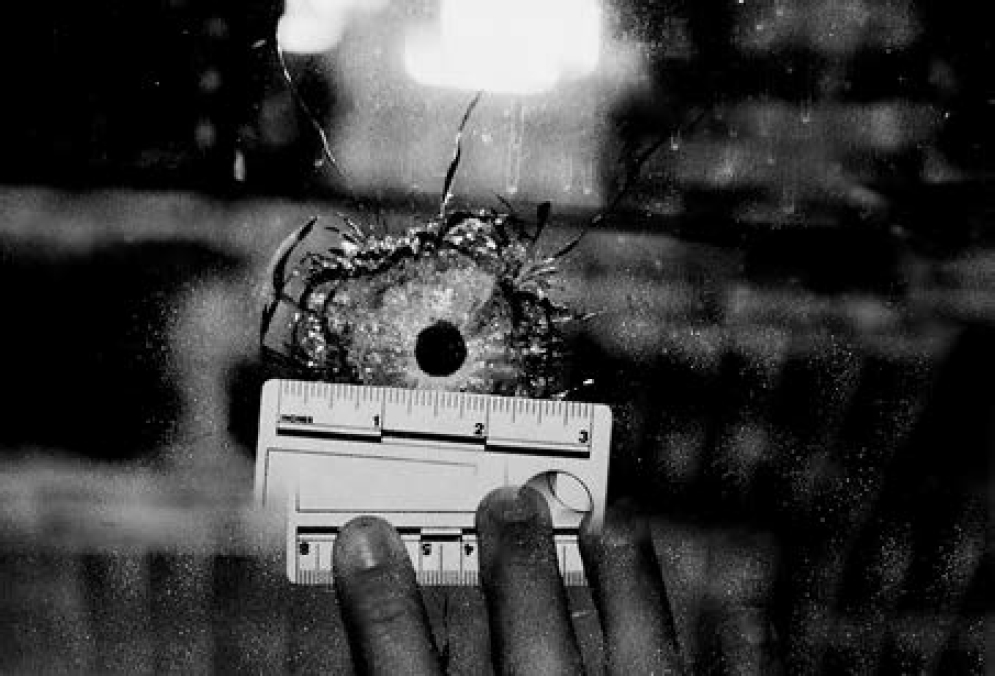
The first shot fired in the Beltway sniper case. On October 2, 2002, a bullet pierced the glass of a Michaels craft store window in Aspen Hill, Maryland. The bullet was intended for the cashier but missed its mark. It was initially thought to be a random act of vandalism.
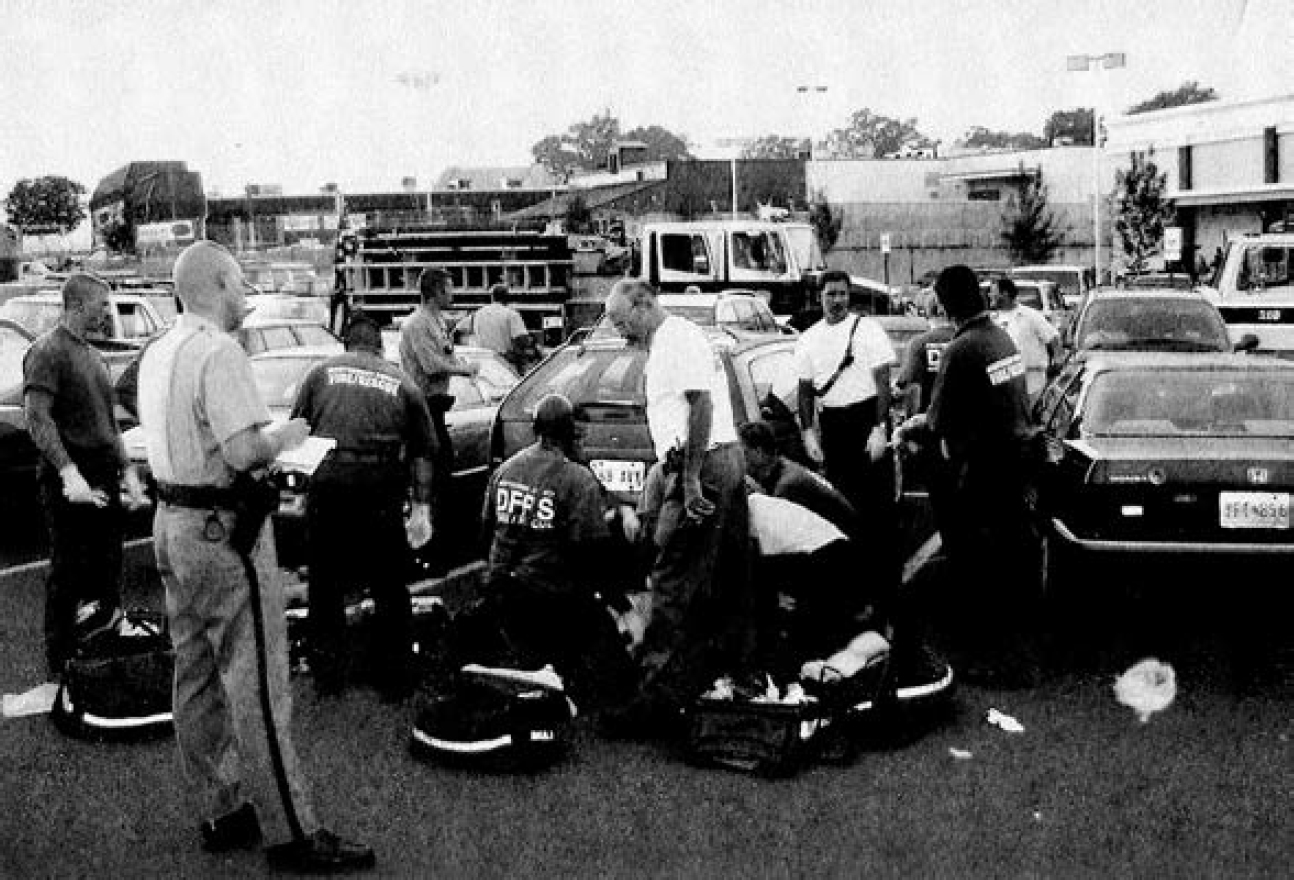
October 2, early evening. Montgomery County police respond to the homicide of James Martin, who was gunned down while loading groceries into his car in front of a Shoppers Food Warehouse on Georgia Avenue in Wheaton, Maryland.
Unless otherwise noted, all photos from the collection of the National Law Enforcement Museum
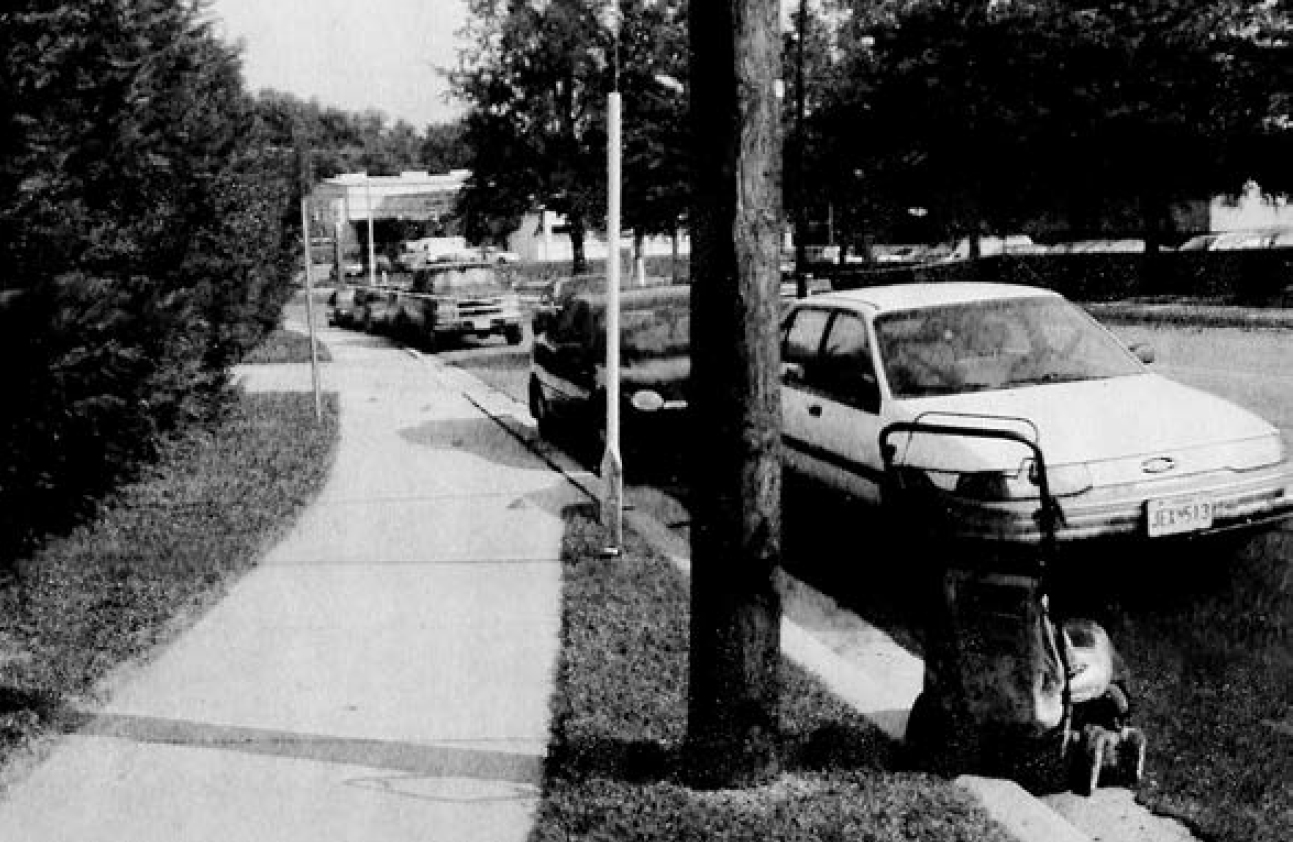
October 3, 7:41 a.m. James Buchanan is shot while mowing grass in front of a car dealership in Rockville, Maryland.
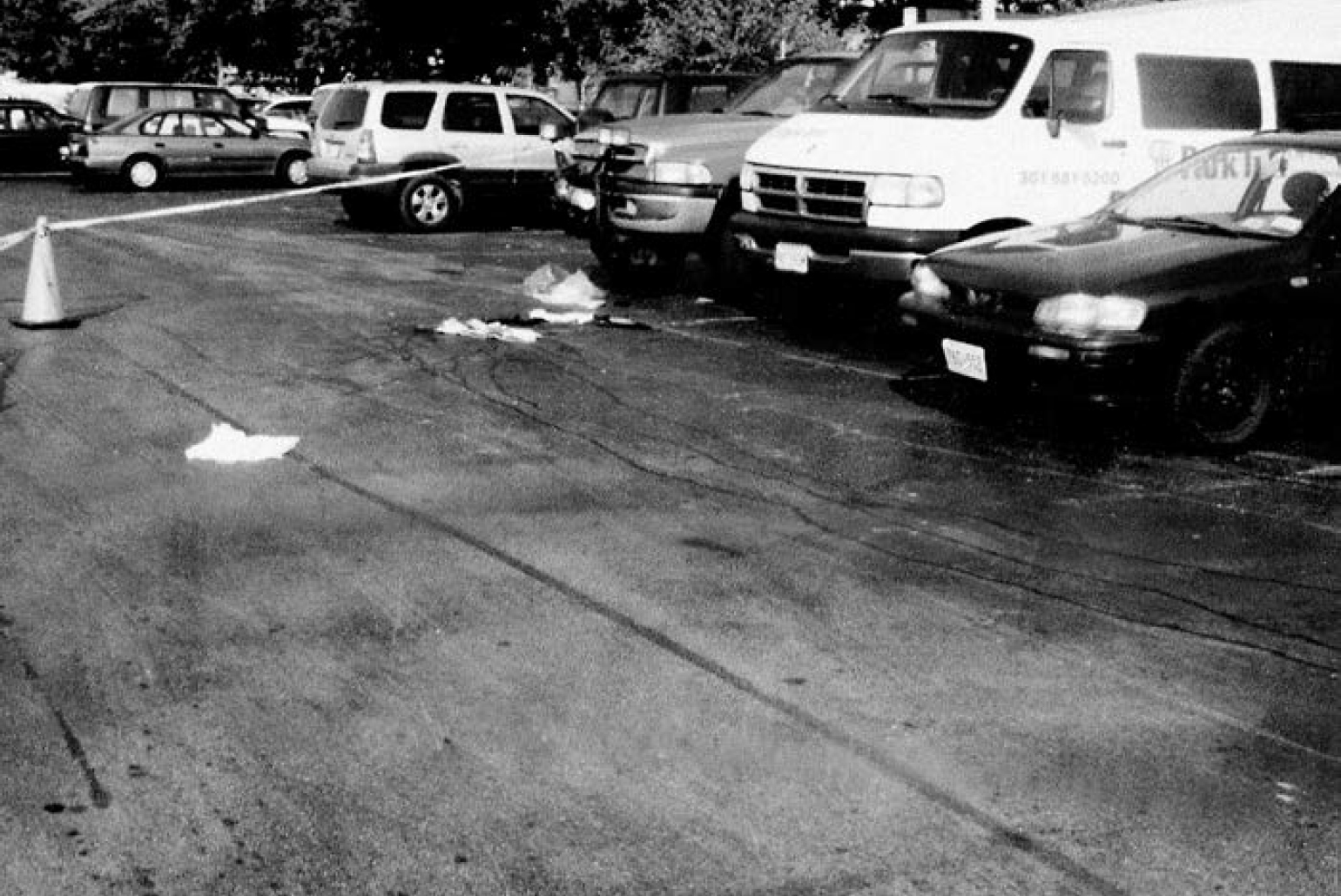
After being struck by the bullet that cost him his life, Buchanan staggered back onto the lot, where he collapsed. A fellow employee found him a few feet from the mower. Initially it was thought his injuries were from a freak accident involving the lawn mower.
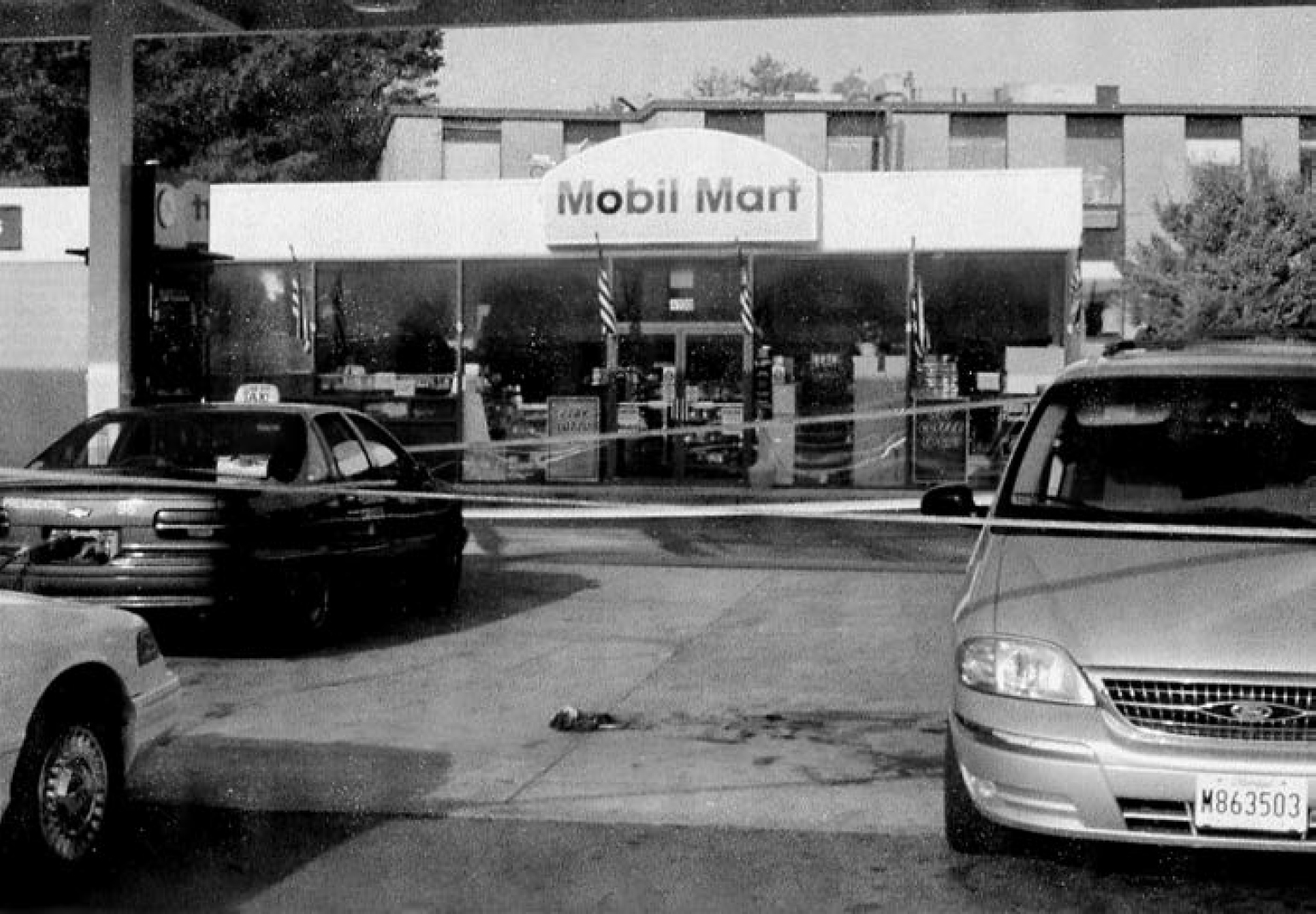
October 3, 8:12 a.m. Premkumar Walekar was shot while he pumped gas into his taxi at a Mobil gas station in Aspen Hill, only a few minutes’ drive from where Buchanan had been shot.
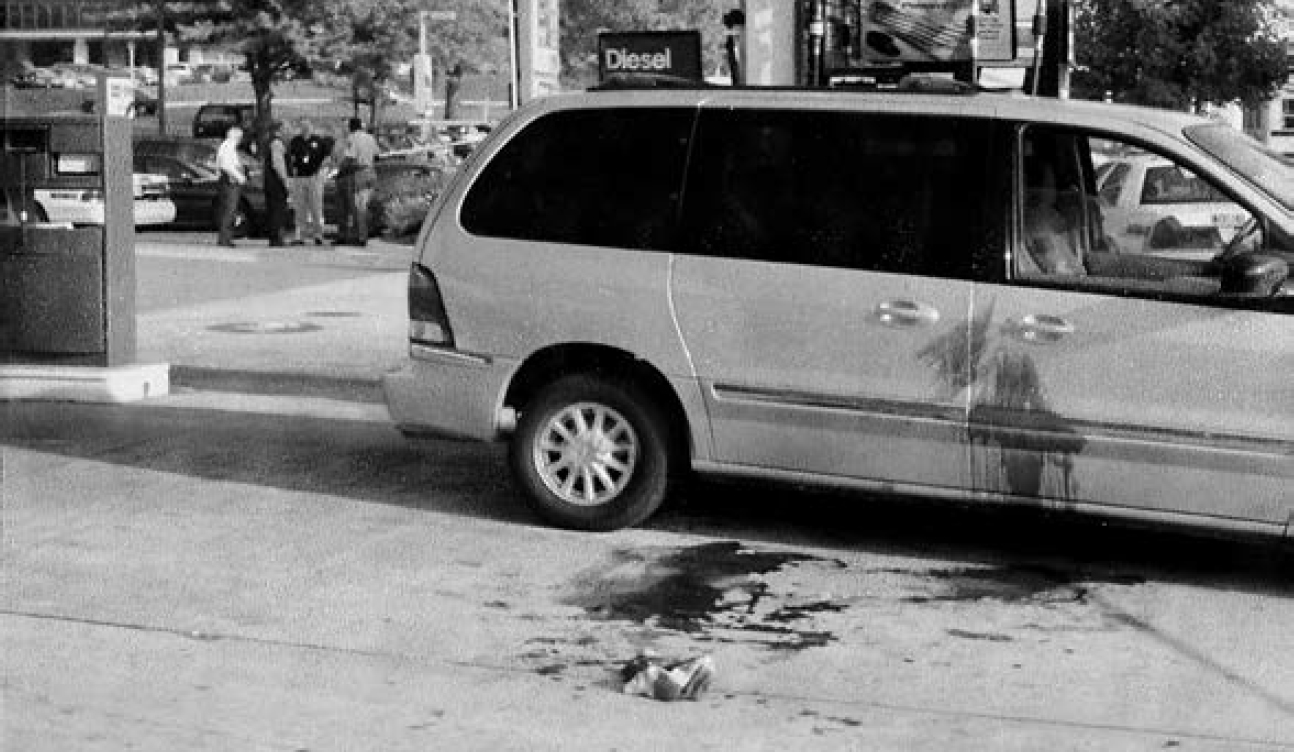
This crime scene photo demonstrates the blood splatter caused by the high-speed bullet that struck Walekar. He was killed because he was in the wrong place at the wrong time and was a target of opportunity.
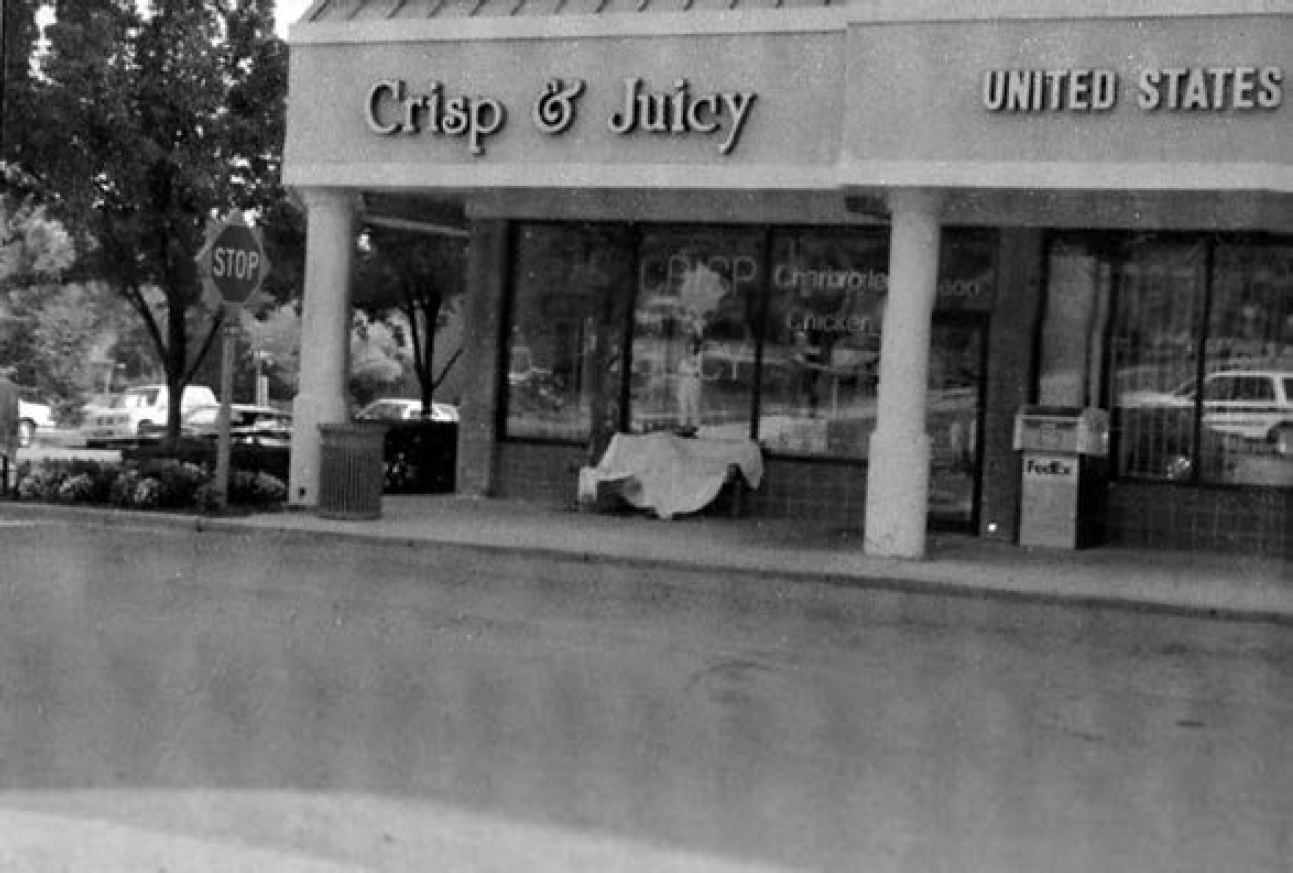
Crime scene photo of the Crisp & Juicy restaurant in Silver Spring, Maryland, where Sarah Ramos was shot at 8:37 a.m. while she sat on a bench waiting for a bus. All three murders were committed in a very short period and within a few miles of each other.
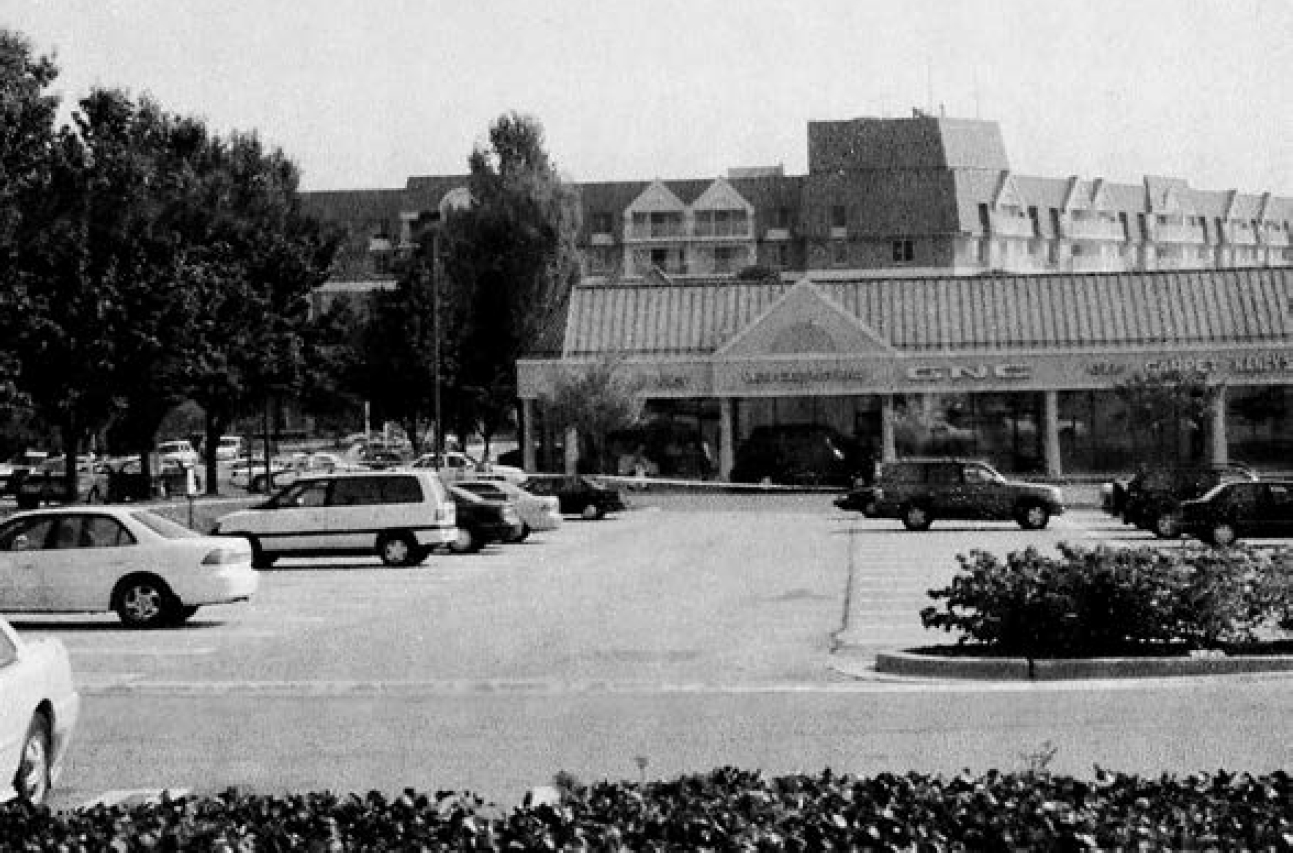
Ramos’s shooting was initially reported as a suicide, but Montgomery County police quickly realized she was shot with a high-speed bullet fired from a distance. This photo shows the approximate location from where the bullet was thought to have been fired. Witnesses reported seeing a white box truck or van leaving the area immediately after the shooting.
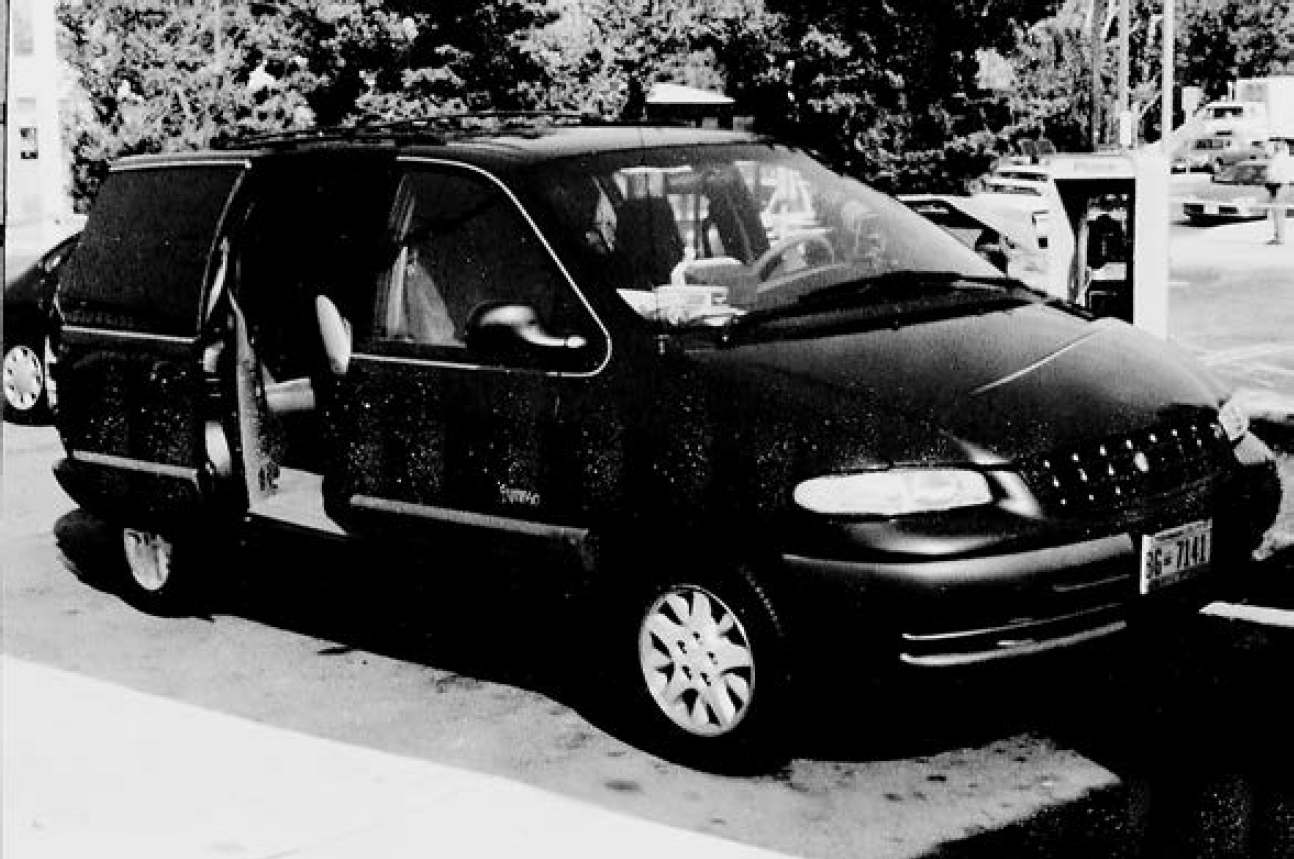
Crime scene photo of Lori Ann Lewis-Rivera’s van. She was shot at 9:58 a.m. as she vacuumed her minivan at a Shell gas station less than two miles from the Crisp & Juicy restaurant. She was killed while Montgomery County police were working the other crime scenes amid heavy police presence in the area.
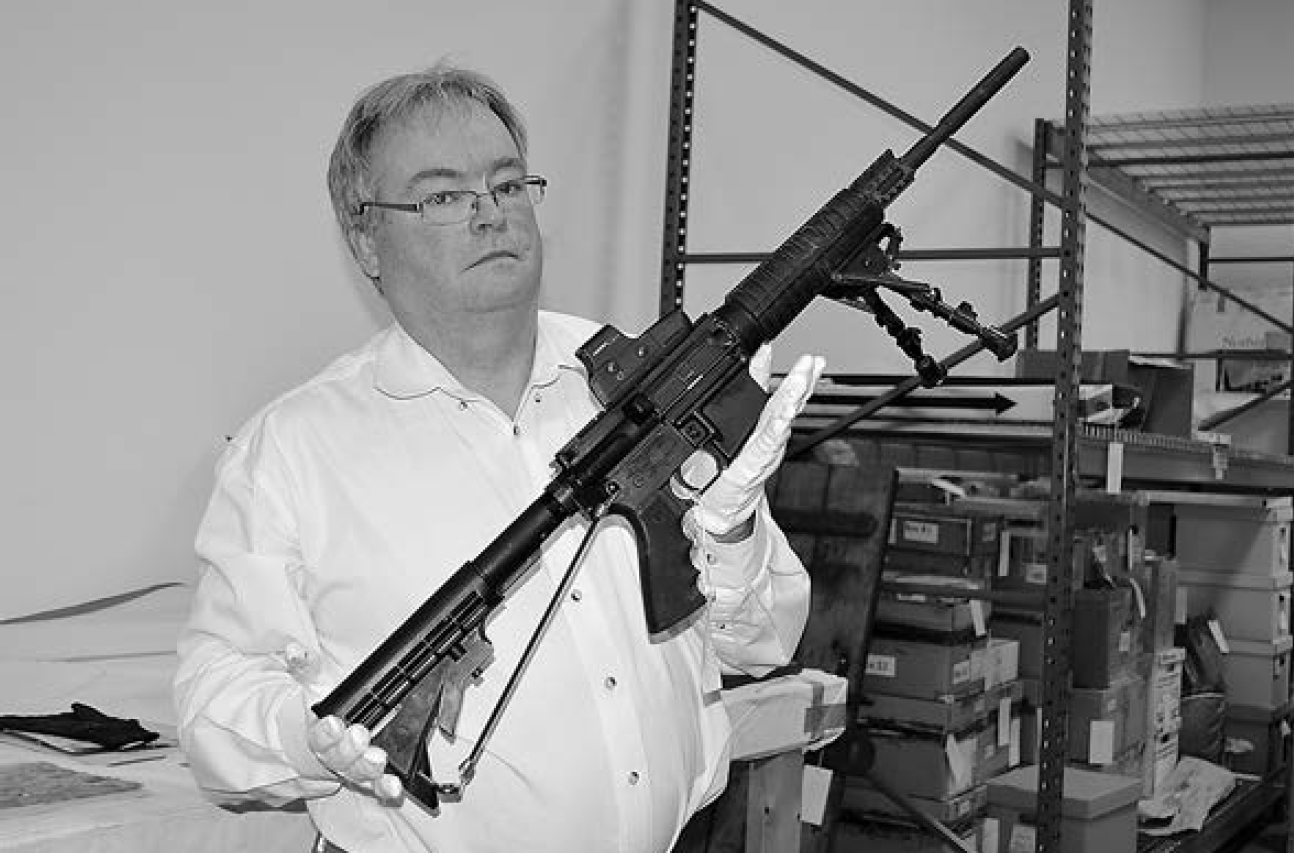
By the afternoon of October 4, the second day, forensics has determined the victims had been shot with a .223-caliber rifle, most likely a Bushmaster. The author is holding the Bushmaster sniper rifle, now in possession of the National Law Enforcement Museum.
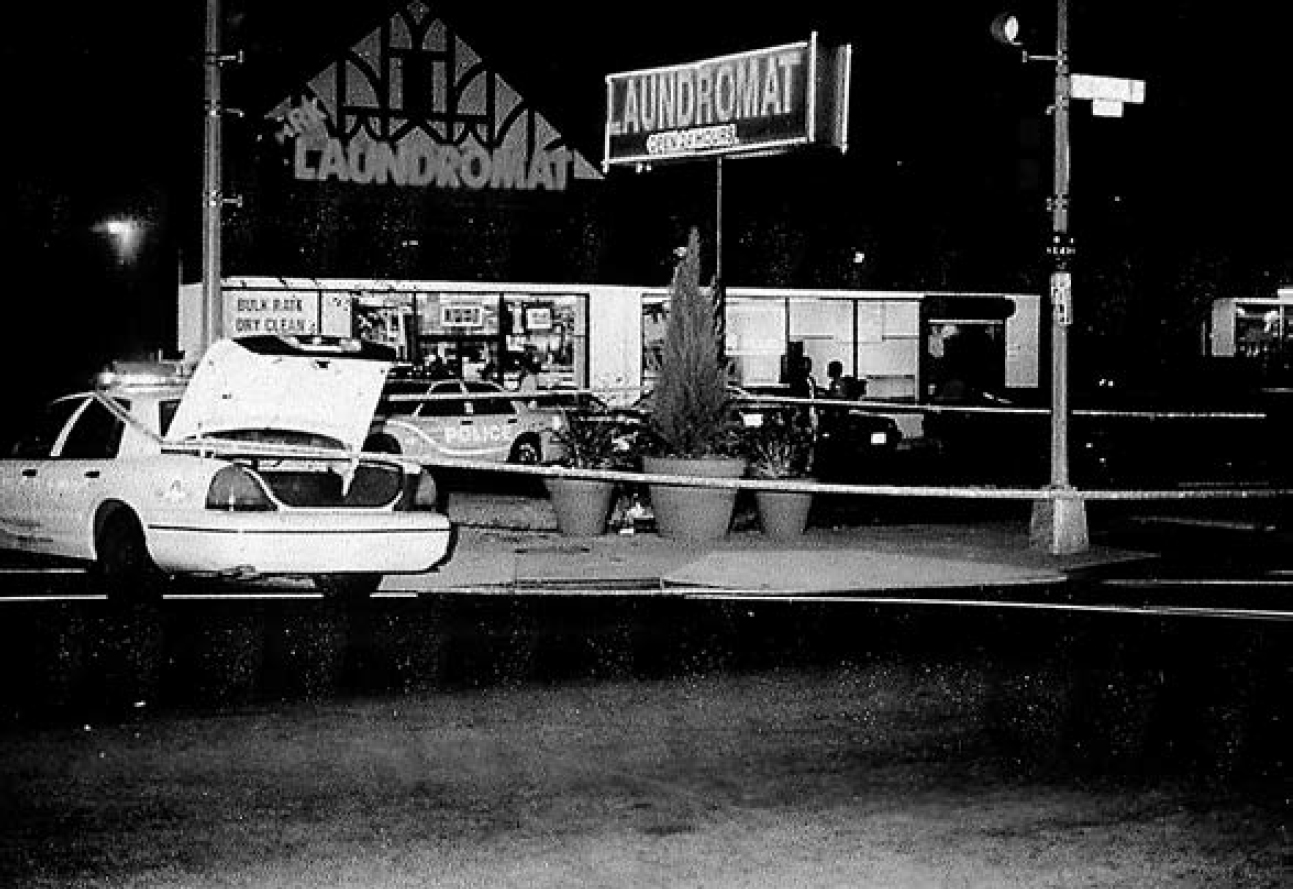
Crime scene photo of the corner in the District of Columbia, just across the Maryland state line, where Pascal Charlot was shot and killed as he walked down the street at 9:30 p.m. on October 3.
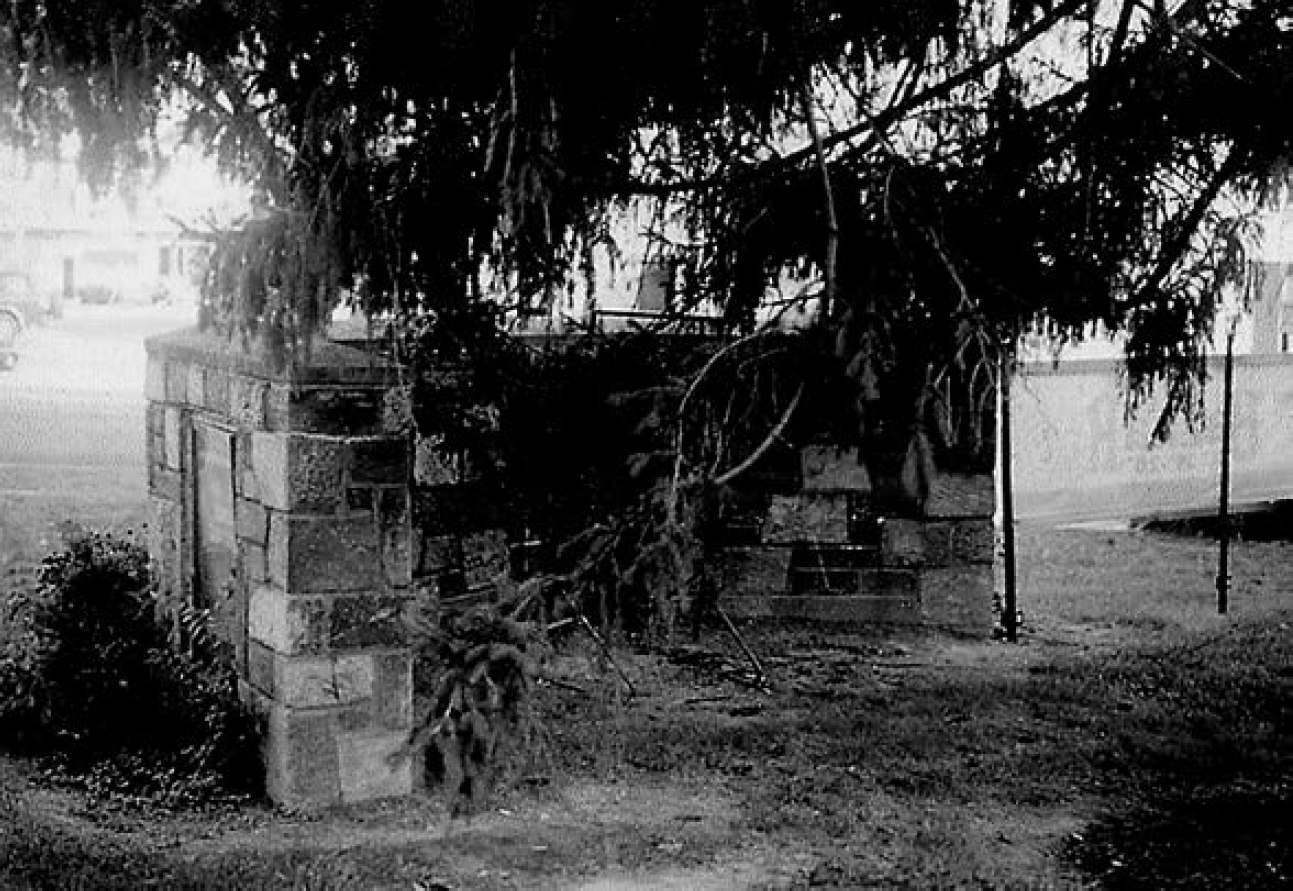
Crime scene photo of the sniper nest from where the bullet that killed Charlot was fired. It was located across the street from where he fell.
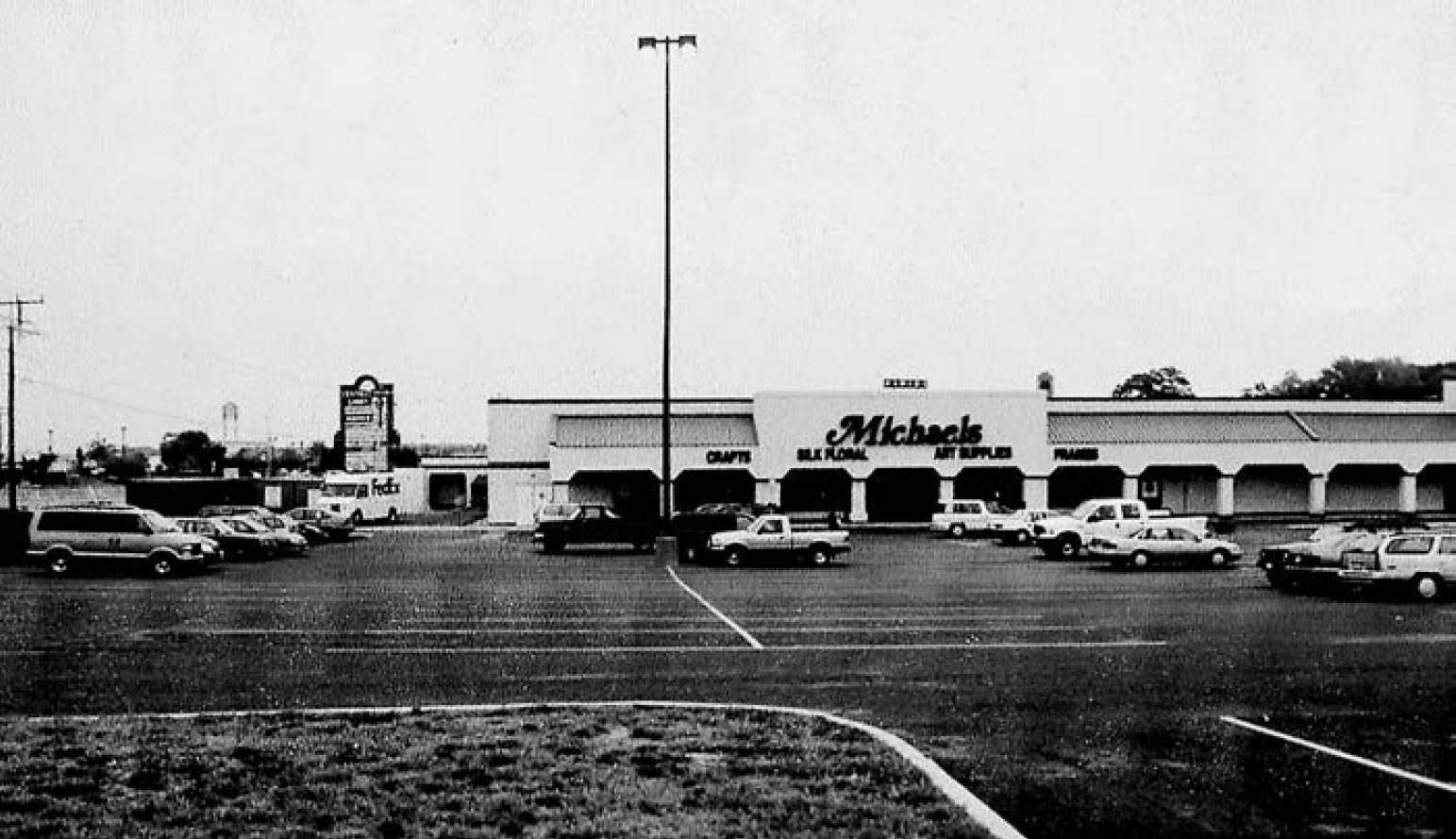
Crime scene photo of the parking lot of the Michaels craft store in the Spotsylvania Mall in Fredericksburg, Virginia, thirty-five miles south of Washington, D.C., where Caroline Seawell was shot in the back at 2:30 p.m., October 4.
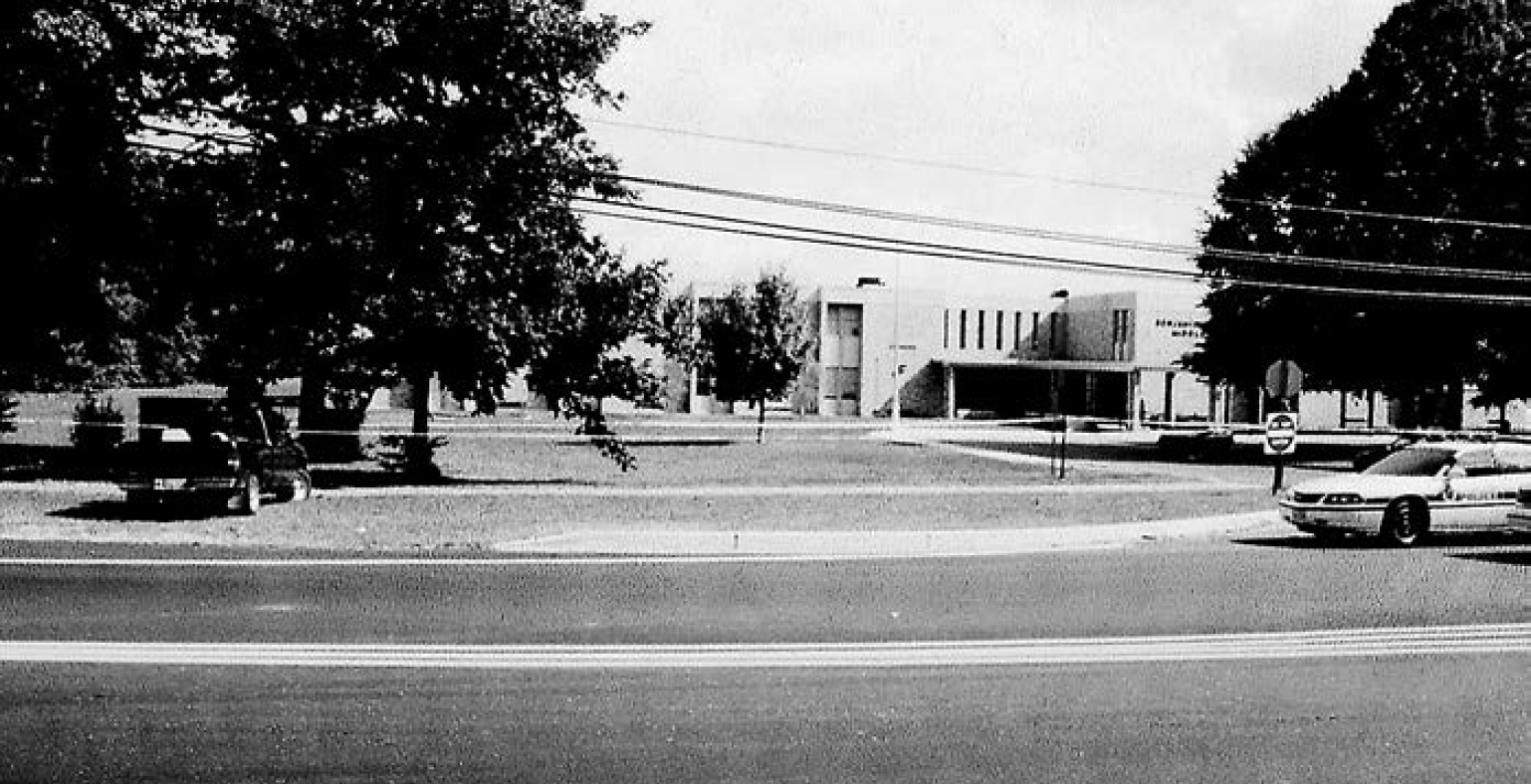
Crime scene photo of the front of the Benjamin Tasker Middle School, Bowie, Prince Georges County, Maryland, where Iran Brown was shot on October 7 at 8:08 a.m. as he got out of his mother’s car. The shot came from a wooded area across the street from the school entrance.
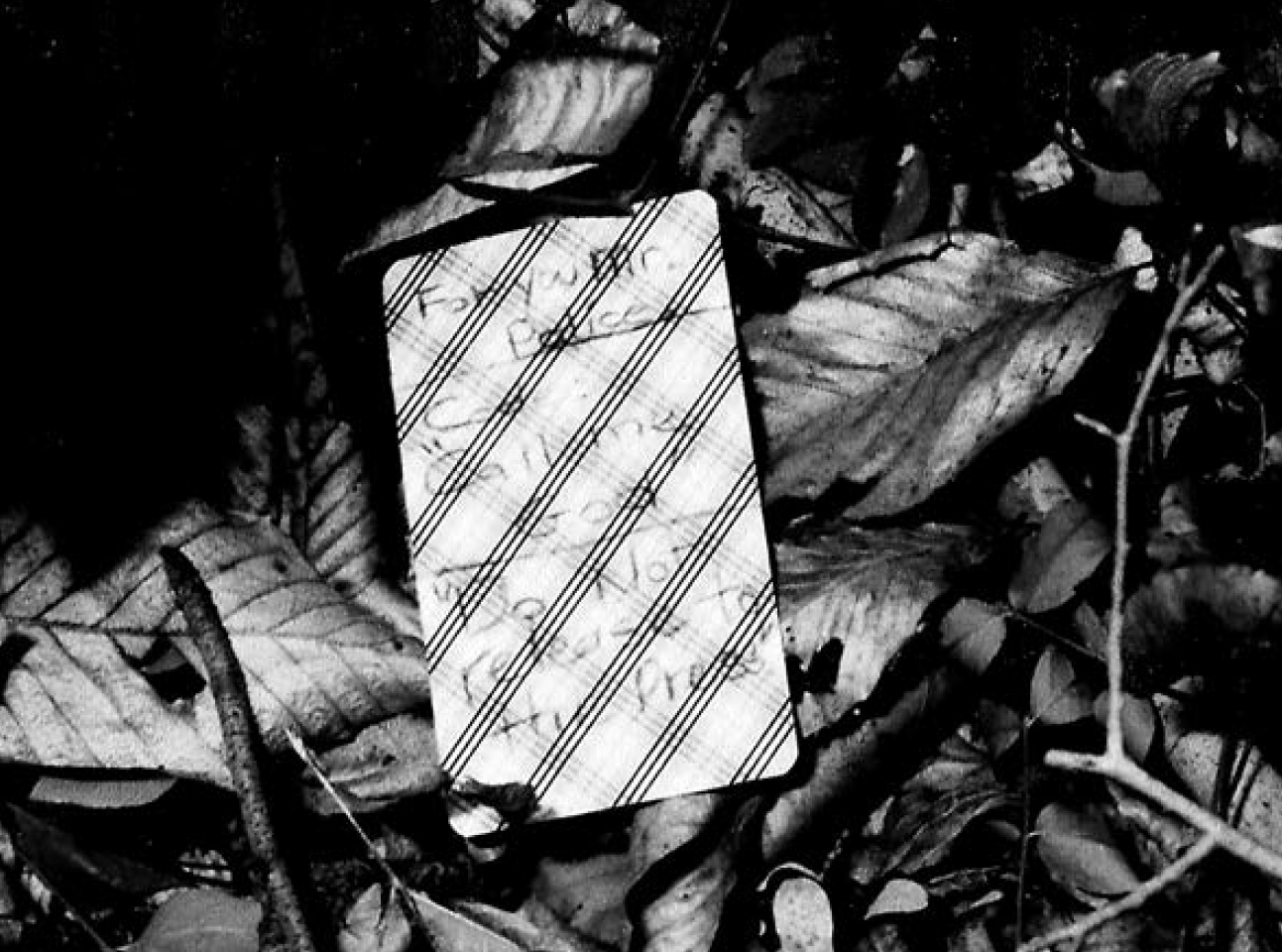
Crime scene photo of the first communication from the snipers in the form of a death-head tarot card found in the woods where the shot that struck Iran Brown came from.
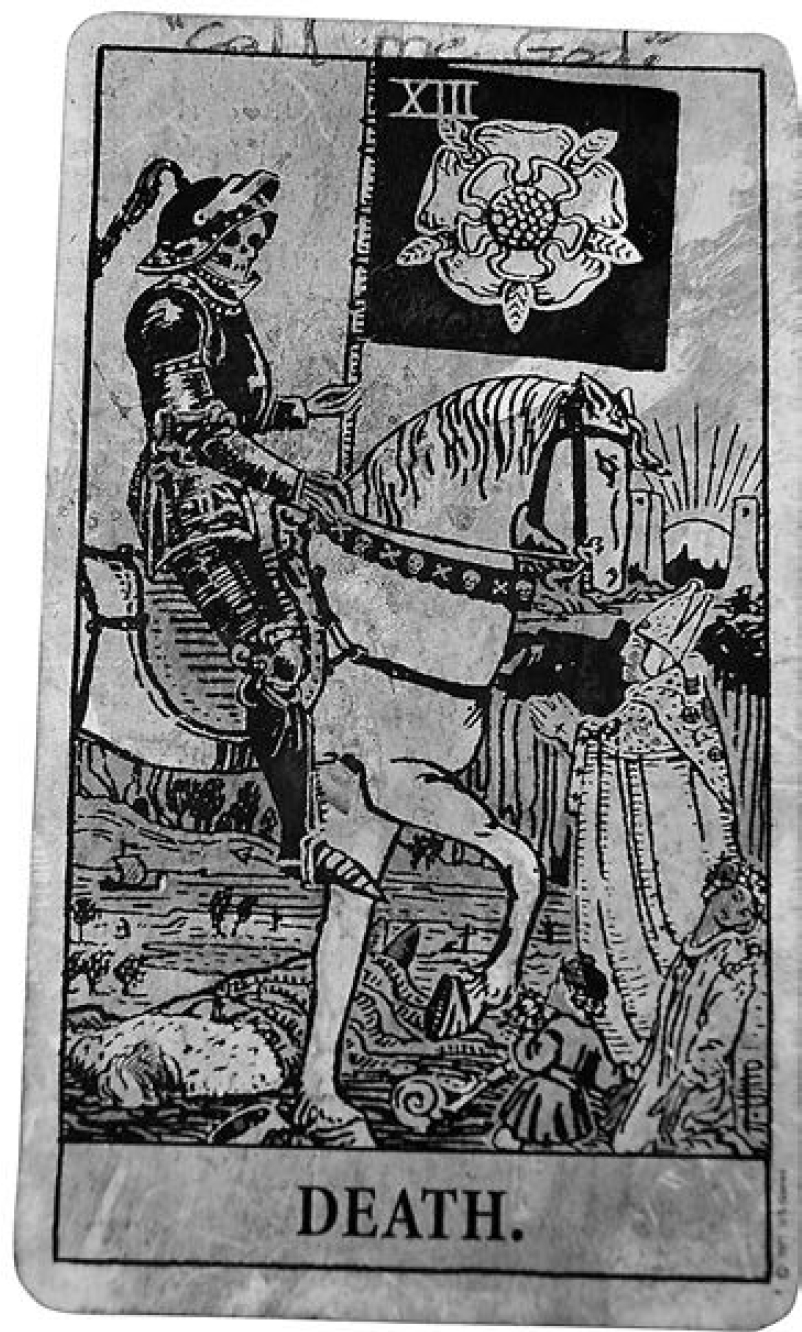
Flip side of the death-head tarot card. The snipers wrote “Call me God” in the top margin.
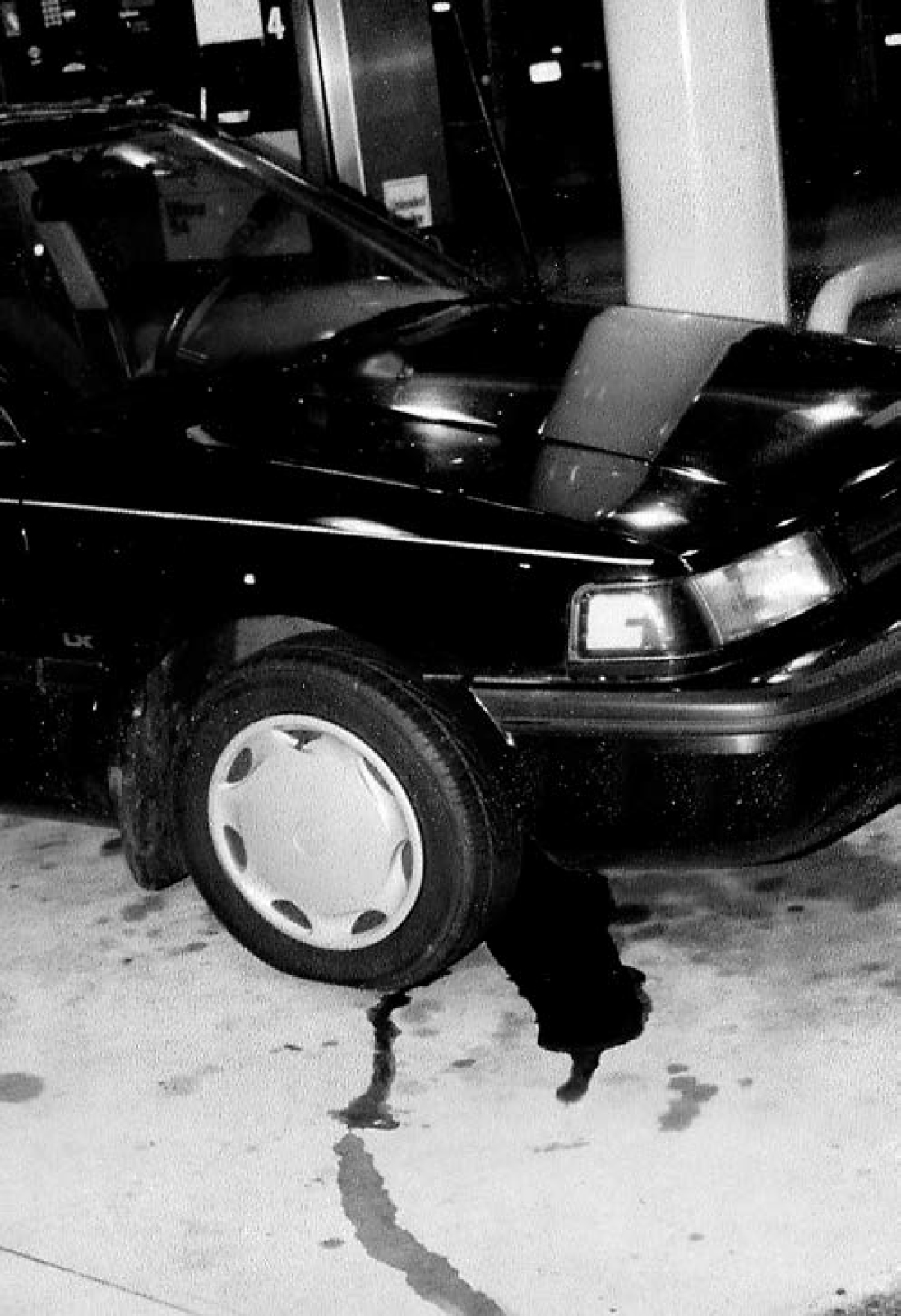
Crime scene photo from October 9, when at 8:18 p.m. Dean Myers was shot as he pumped gas into his car at a Sunoco station in Manassas, Virginia, just off Interstate 95.
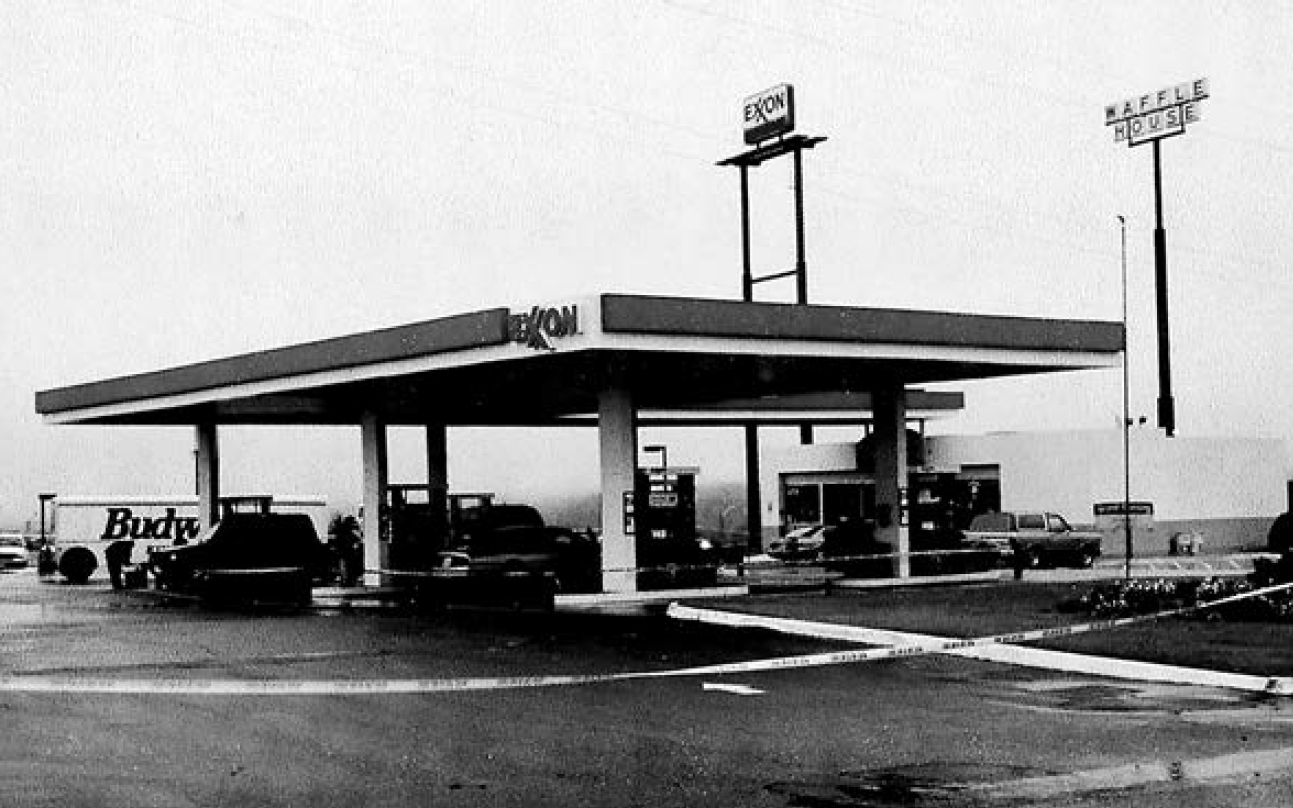
Crime scene photo from October 11 of an Exxon station just off I-95 in Fredericksburg, Virginia. At 9:30 a.m. Kenneth Bridges was gunned down as he put gas into his car. The shot was heard by a Virginia state trooper who was working an accident on the interstate just a few hundred yards from the Exxon station.
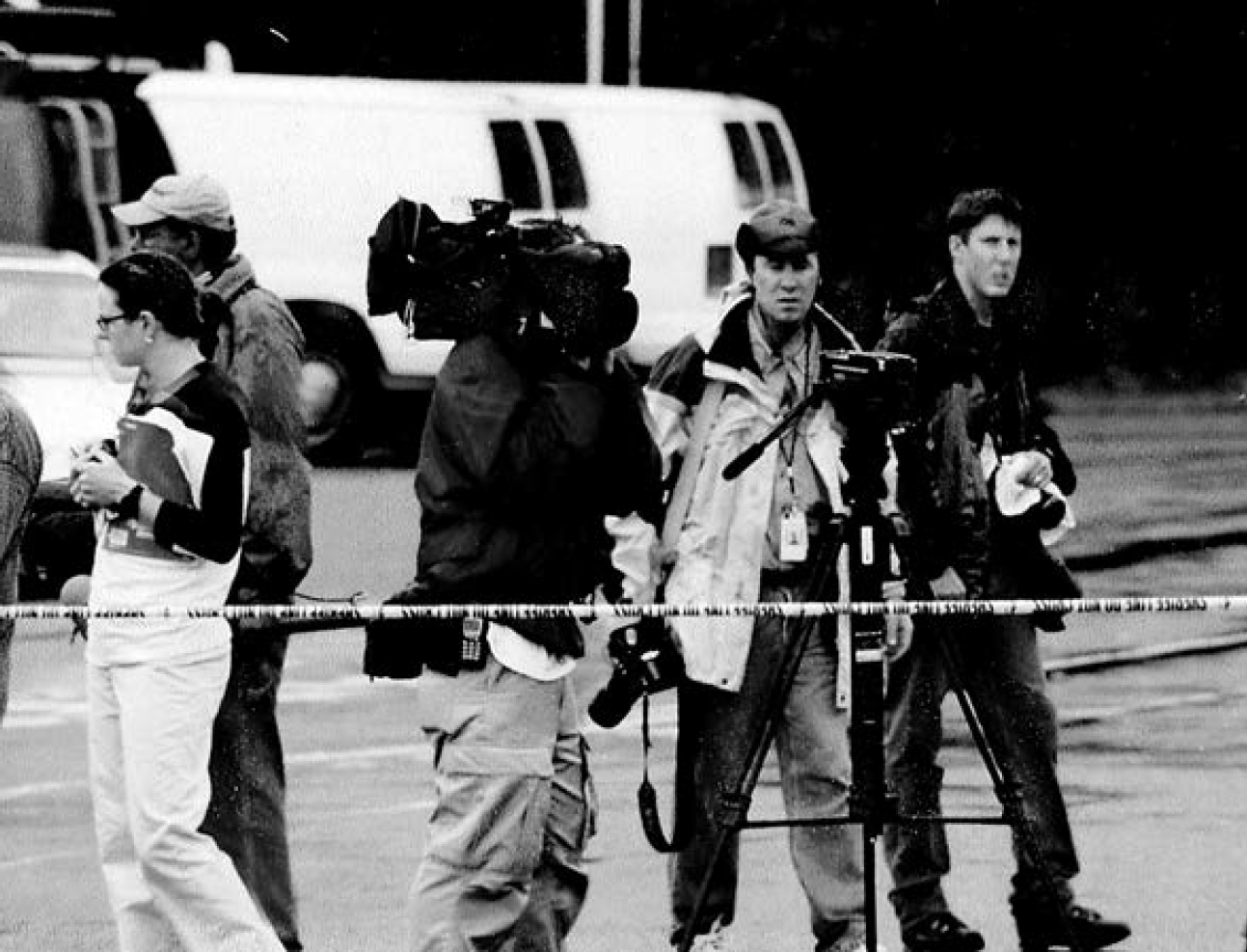
Crime scene photo of the press gathering at the scene where Bridges was shot. By this time there was a press frenzy surrounding the investigation.
By midafternoon, a clearly shaken Chief Moose took to the podium in front of Montgomery County headquarters for a press conference. Televised live by every cable news channel and major TV network in the country, as well as news agencies from around the world, Chief Moose sought to accomplish two goals: one, to calm an increasingly nervous and upset public; and two, to try to draw out the murderers and encourage direct contact with them. Looking haggard from exhaustion, the chief stared right into the cameras and spoke directly to the snipers.
“Shooting a kid: I guess it’s getting really personal now.”
The FBI’s Gary Bald, special agent in charge of the bureau’s Baltimore field office, also addressed the press. Special Agent Bald was now the lead federal agent in charge of federal resources assigned to the investigation. He and Chief Moose fielded multiple questions from the assembled press corps. Bald was asked if the FBI had taken over the case, and were they now in charge. Was this a terrorist attack? Was this a new way for the terrorists responsible for September 11 to attack the United States of America? What was the FBI going to do about this?
To his credit, Bald was able to address all these issues. He made sure to indicate that the primary responsibility for this investigation still rested with the Montgomery County Police Department and the local agencies in both Virginia and the District of Columbia. He stressed that the SNIPMUR task force was a joint venture, and the cooperation between local, city, state, and federal agencies was unprecedented and would lead to the ultimate apprehension of those responsible for these killings and shootings. With live press conferences happening at least twice a day, this case was virtually being investigated in front of a captivated TV audience.
That evening, we began moving the intelligence section to the JOC. Our operation stopped just long enough to get our people over to the new location. The night shift reported to the JOC, and the lead-producing machine, along with the background check function, did not stop. We were housed with the field investigative team in a large open office space called the bullpen, which covered the entire third floor of the building.
The room looked like a construction project gone bad. The drop ceiling had just a few of the panels still in place. Miles of telephone cables and computer cables had been run above the ceiling’s metal grid system. Desks were grouped together in clumps of four to six, and cables hung loosely from the ceiling, providing multiple telephone lines and power to the desktop computers. None of the furniture matched. It had all been dragged in from some federal warehouse somewhere. Chairs behind the desks were a variety of fold-up chairs and a few desk chairs with wheels that had seen better days. I remember looking at Cornwell and saying “Hey, now we’re right at home. Just like any state police barrack around the state—all old and nothing matches, but it’s serviceable.”
“Yeah,” he said, with a tired smile. “You can sit on one of these old office chairs and get poked in the ass and rip your pants on a spring sticking up out of the seat. Just like home.”
We had divided the room into work areas for the various functions that were being performed. Our section, occupying a large corner of the room, was our think tank. Beside us was a call center where tips and other information came in. Another large area was dedicated to the field investigators, who came and went like worker bees in a hive. There was also an area dedicated to assigning the leads to field investigators. People working that area were also responsible for receiving and reviewing the filed reports that resulted from the agents conducting interviews and surveillances. All of this meant that everyone in the room was now privy to twists and turns in the investigation as they happened, as opposed to hearing about them a day later—or not at all. We were now fast-tracked into becoming the cohesive team that we needed to be if we were going to pursue these killers to the ends of the earth.
The command center included several break-out conference rooms equipped with maps, charts, workflow charts, and pictures of the victims and crime scenes. Another section was dedicated to the FBI profilers and the public relations people, who not only orchestrated the press conferences but also answered the avalanche of media questions and requests for updates and interviews. Captain Forsyth and the lead investigative team from Montgomery County occupied offices that lined one of the walls. Space was utilized as is, with little or no modifications other than the running of the miles of cables that were required to make this a functional joint operations center.
A separate room, walled off in glass, contained the growing number of computer servers that had been brought in for the investigation—along with a large number of tech staff to keep the systems up and running. Our servers containing Case Explorer and its revisions were also linked to this data center. And in order to keep us humans functioning, a hallway became a makeshift cafeteria. With more than a thousand officers and investigators working 24/7, there was a constant need for food (catered), snacks, fruit, coffee (gallons), and water.
The acquiring of the space and the building out and outfitting of the joint operations center had been accomplished in just over forty-eight hours. Given the daunting logistics of an operation of this magnitude, it was amazing that a center could be readied and put into operation in such a short time. The mismatched furniture, the cables, the computers, and the work stations appeared nearly overnight, as if by magic—thanks not to Santa’s elves but to Uncle Sam’s.
Security also mattered, and the center’s security became the responsibility of the U.S. Marshals Service and Federal Protective Service. It’s a job they took very seriously—our security was nearly as tight as it is around a sitting president. Everyone assigned to work in the JOC had a picture badge that included his or her name, the name of the investigation and the joint operations center, and the name of the person’s home agency. The badge had to be worn at all times while in the center; entrance was denied without it. In a small corridor where the elevator opened, credentials were immediately checked. No one, especially the press, could leave the elevator unless he or she had been issued a badge.
With all the cops and all the guns present 24/7, our physical security was the easy part. Not so simple was operational security—keeping a lid on info that we didn’t want the public to know for investigative reasons. This was the real security problem, and it was never resolved fully. With so many conversations going on in this command center, we seasoned investigators were constantly worried that something said here would somehow leak beyond our fortified walls, and sink the ship.