
The camera is not a free agent as brush or pencil,
but relentlessly records things as they are. So the
artist must bring to her aid strong contrasts of light
and shade, artistic grouping and rhythmic lines.
To use a camera as a means of artistic expression,
a certain quality of spirit must be brought to aid
light and air. — Bayard Wootten, 1926
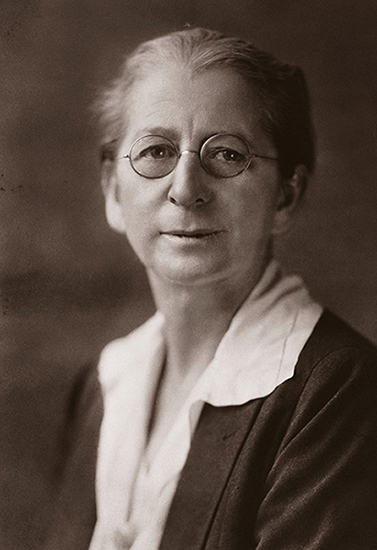
Bayard Wootten (1875–1959)
For Bayard Wootten
and all those who went before her lens.

Cumi Woody
Foreword
You are fortunate. Why? Because along with the good news of the second printing of Light and Air came the even better news that the printing plates used for the book’s first printing no longer exist. You may be thinking, “So this is ‘even better’ news?” Yes, it is. This misfortune presented the wonderful opportunity to bring twenty-first-century digital imaging technology to the representation of Bayard Wootten’s traditionally made negatives and photographs. Now we could capture even more of the richness found in her large 5 × 7- and 8 × 10-inch negatives. Today’s digital cameras with high resolution image sensors, coupled with raster graphics software, have replaced the darkroom methods used nearly two decades ago. What a wonderful difference eighteen years of photographic advancements have made!
How may you enjoy these developments? Compared to traditional techniques, digital imaging technology reproduces images with improvements that are both subtle and dramatic. Spend time looking at enhanced details. Enjoy expanded tonal ranges between shadows and highlights. Appreciate skies with clouds where before they could not be reproduced. The joy is in the seeing, and all these nuances of light and air result from painstaking work by Jay Mangum, digitization support technician in the University of North Carolina Libraries’ Digital Production Center. You may also explore more Wootten photographs than appear in this book. Significant portions of UNC’s Bayard Morgan Wootten Photographic Collection are digitized and viewable online through UNC Libraries’ collection finding aid (http://finding-aids.lib.unc.edu/P0011/), including all of her images in this book.
Stephen J. Fletcher
I saw my first Bayard Wootten photograph in 1972, not long after beginning work in the North Carolina Collection, a department of the library at the University of North Carolina at Chapel Hill. The collection is steeped in historical resources, and my explorations eventually led to an out-of-the-way cabinet of old pictures. Among the files were two large, brown envelopes labeled “Tobacco” and “Cotton.” Inside were photographs of farm families, both black and white, planting and harvesting the crops. Acquired by the North Carolina Collection years earlier, the prints had attracted little notice from researchers.
These prints, however, aroused more than my passing interest. The summers I had worked on tobacco farms while growing up in nearby Chatham County were fresh in my memory. The photographs recalled a rural life that I knew, a world that had quietly slipped away with little notice.
I was not a connoisseur of fine photography, but even my layman’s eye could discern a bit of artistic class in many of the compositions. An observer could absorb these photographs with little effort, the eye surveying a print and coming to rest upon subjects undisturbed by extraneous elements or stiff and awkward poses. The prints had a symmetry, a character, and a simplicity that were pleasing. They looked natural yet finely tuned, as if part of a well-crafted story. What was the origin of these photographs, and who was the photographer named Bayard Wootten who had signed each one in a distinctive block-like handwriting?
My first surprise was learning that Bayard Wootten was a woman. I never doubted that women could make great photographs, but these images dated from the Great Depression of the 1930s, a time when most women worked at home. Wootten was also from North Carolina and largely self-taught as a photographer. One thing was certain—the more of her work I saw, the more I wanted to see.
Biographical information on Wootten in the North Carolina Collection consisted primarily of newspaper and journal articles from the 1930s through the 1950s. A small collection of prints and six books that she illustrated between 1934 and 1941 comprised the record of her camera work. Scholarly accounts of Wootten’s early life did not exist, and no publication examined her contribution within the broad context of American photography in the twentieth century. In the ensuing years, however, I learned much more about Bayard Wootten and her legacy of old photographs still tucked away in closets, storerooms, and attics.
She was born in 1875 in New Bern, North Carolina. Her mother was artistically talented, and her father tried the photographic profession for several years before giving it up. He died when she was five.
Bayard’s artistic skills developed under the tutelage of her mother. She attended a women’s school at Greensboro in the early 1890s and then accepted a teaching position at a school for the deaf in Arkansas. Two years later she took a similar position in Georgia. She married there in 1897 and had two sons. The marriage failed, however, and in 1901 Wootten returned to North Carolina. At first she pursued drawing and painting as a cottage industry, but around 1904 the possibility of photographic orders replacing labor-intensive artwork steered her to the camera. Economic self-reliance was a necessity for Wootten, and it became a natural companion to her innate spirit of independence.
Although attracted to the medium by financial need, Wootten’s passion for things artistic lingered just below the surface. The pictorial movement in photography was in its heyday during the first decade of the twentieth century, and Wootten’s career timing could not have been better. She found pictorialism, with its emphasis on artistic content even at the expense of technical quality, a comfortable fit. She identified with the style throughout her half-century career, despite its steady decline in popularity after 1910.
Wootten experienced firsthand the gender discrimination within a profession overwhelmingly dominated by men. She went to a regional photographers’ convention in 1907 and had attended at least one national convention by 1912. Wootten found immediate kinship with the women photographers who in 1909 formed the Women’s Federation of the Photographers’ Association of America. Professional meetings and publications such as the Bulletin of Photography became forums for exchanging ideas with female colleagues and learning about their work. Wootten’s membership in the Federation also fortified her sense of self as a woman photographer.
Her first studio was in a small frame building beside the family home in New Bern, but over the course of her career Wootten operated branches at several other locations in North Carolina. She briefly had a studio in New York City, but the experiment proved to be a costly mistake.
Significant recognition materialized for Wootten after she moved to Chapel Hill in 1928. During this period she actively pursued subjects that complemented her pictorial style to great advantage. Her work includes beautiful gardens and spectacular landscapes, but Wootten’s most notable accomplishment was the creation of a photographic record of black and white Americans in the lower reaches of society—people whom other photographers often ignored.
During the first two decades of the twentieth century the efforts of Bayard Wootten and other activist women photographers helped establish a larger foothold for women in the photographic profession. Thereafter, she settled into the niche of commercial photography, an arrangement that provided a livelihood while allowing her to pursue the medium as a form of artistic expression. She excelled at landscapes and portraits. Large billowing clouds or the gentle light of early morning and late afternoon turned her eye. On rare occasions she would backlight a subject and often used a soft focus and matte or textured photographic papers. Her longtime assistant, T. C. Moore, acknowledged Wootten’s great talent at composition but also remembered that she was sometimes “at sea” in the darkroom.
Opportunities as a book illustrator unfolded for Wootten in the early 1930s and continued for a decade. She made some of her most popular photographs in the mountains of western North Carolina and the low country of South Carolina, but she also worked in other states, including Alabama and Tennessee. Wootten received frequent invitations to exhibit her work, and she assembled popular slide presentations based upon her architectural and landscape photography. Chapel Hill was the photographer’s home from 1928 until her retirement in 1954. Five years later she died in New Bern at the age of eighty-four.
In 1976, on behalf of the North Carolina Collection, I made inquiries about Wootten’s negatives to T. C. Moore, her successor in the Chapel Hill studio and an employee with the firm since 1921. The studio had an estimated 94,000 negatives, but this collection included only a small portion of Wootten’s best work. Moore did have over 200 11 × 14-inch exhibition prints by Wootten, many with the photographer’s autograph. He was noncommittal about parting with the materials, but in 1980 the North Carolina Collection acquired all of the negatives and prints from a subsequent owner.
The library’s Bayard Wootten Collection increased in size again when Mary Moulton Barden of New Bern, the daughter of George C. Moulton, Wootten’s half brother and business partner, donated a collection of the photographer’s glass slides. The New Bern Public Library contributed some of her glass negatives, and in 1984 the Institute of Government at the University transferred sixty-three exhibition prints by Wootten, many of which had the photographer’s autograph and original titles.
Crucial additions to the collection arrived in 1986, 1995, and 1996. Wootten’s niece Celia Eudy and her husband Joseph Eudy of Kinston donated prints and almost 3,000 negatives that Wootten had removed from the studio files when she retired. The negatives, made primarily between the 1920s and the 1940s, include her best work. Over the course of almost two decades the North Carolina Collection, through the generosity of Wootten’s family, friends, and admirers, reassembled the bulk of her existing photographs.
A small number of Wootten’s original prints and her studio camera went on exhibit at the University of North Carolina Library in the mid-1980s. The first major exhibition of her photography in forty years, however, occurred out of state. Coy Ludwig, director of the Tyler Art Gallery at the State University of New York at Oswego, bought a Wootten print of a potter from an antique shop in Syracuse. Curious to learn more about the photographer, he eventually located the Wootten Collection in Chapel Hill. From October 14 to November 13, 1988, the Tyler Gallery mounted an exhibit of more than sixty Wootten photographs reprinted from her original negatives. The exhibition attracted more than a thousand visitors.
When on the road pursuing her “camera studies,” Wootten made little effort to record whom she photographed, where, or when. Identifying many of her images often involves research and guesswork. For some, identification remains elusive. The value of historical photographs, however, is not dependent on documentary facts alone. Wootten often photographed what others overlooked, and a knowledge of provenance along with the passage of time makes even the imperfect camera record significant. Wootten’s best images tell a story or stand on their own as works of photographic art. Often they do both.
Wootten enjoyed success as a pictorial photographer at a time when realistic and straight photography increasingly dominated the medium. She sought out obscure people and places in North Carolina and surrounding states, creating an insightful photographic record. These images are Wootten’s abiding legacy. It is my good fortune to administer this collection for the University of North Carolina Library. Even more gratifying, however, is the knowledge that these photographs have come together for preservation in one place. Wootten’s artistic skills, her success as an early woman photographer, and a career spanning half a century have secured her place as a dominant figure in the photographic history of North Carolina.
Acknowledgments
I have received help from many quarters in bringing together the facts and photographs represented by this volume. The enormous holdings of the North Carolina Collection, Manuscripts Department, and University Archives at the University of North Carolina Library at Chapel Hill were invaluable. H. G. Jones and William S. Powell, former curators of the North Carolina Collection, provided editorial advice in the early stages of the project. I also gratefully acknowledge funding from the University Research Council of the University of North Carolina at Chapel Hill and from the Bayard Wootten Fund of the North Caroliniana Society Inc.
Bayard Wootten’s family made available private collections and shared personal reminiscences of the photographer that filled an enormous research void. Without their help and encouragement any serious study of Wootten would have been impossible. These individuals — Mary Moulton Barden of New Bern, North Carolina; Celia and Joseph Eudy of Kinston, North Carolina; and Clare Crawford-Mason and Victor Crawford of Washington, D.C. — have studiously preserved photographs, manuscripts, and clippings. Special appreciation is also due Mary Louise Wootten Garrard of Hampstead, North Carolina, and Molli Wootten Larson of Coronado, California.
Helen Dugan Allen of Chapel Hill made her own research materials on Wootten available and shared her personal recollections of the photographer. Similarly, Samuel M. Boone, also from Chapel Hill, provided information on Wootten and her contemporary, fellow photographer Frances Benjamin Johnston, both of whom he knew personally. Useful insights were also contributed by several former employees of the Wootten-Moulton Studio, all of North Carolina: Margaret Howland Fowler of Morehead City, an employee for over two decades; Rudolph Faircloth of Wilmington, an employee in the 1930s and later a photographer for the Associated Press; and Marion Seiler of Chapel Hill, who worked at the studio during the 1940s. Ora Brock Burgin of Weaverville supplied information on her father Nace Brock, Wootten’s mentor, as did Juanita Brown of Asheville, a former employee in Brock’s studio.
I received research assistance from Jeannine Anderson of the Art Department of Berea College; John Hawk of the University of Oregon Library; Thomas L. Johnson of the University of South Carolina Library; Victor T. Jones Jr. of the New Bern–Craven County Public Library; Stephen E. Massengill of the North Carolina Division of Archives and History in Raleigh; Emilie Mills of the University of North Carolina at Greensboro Library; Peter Palmquist of Arcata, California; Christian A. Peterson of the Minneapolis Institute of Arts; Robin Salmon of Brookgreen Gardens in Murrells Inlet, South Carolina; and Maurice York of the East Carolina University Library at Greenville, North Carolina. David Featherstone of San Francisco and Phil Jacobs of Paris, Kentucky, provided helpful information on photographer Doris Ulmann.
I am especially indebted to Genevieve Chandler Peterkin of Murrells Inlet, South Carolina, the daughter of Federal Writers’ Project field-worker Genevieve Willcox Chandler. In 1993 Peterkin identified by name many of the African Americans, including former slaves, that her mother interviewed and Bayard Wootten photographed in the rice-growing region of the lower Waccamaw River during the 1930s. She also made it possible for me to visit Sandy Island in the Waccamaw, meet some of its African American residents, and sense its remarkable history.
Others who helped in various ways include Billy Arthur, J. Todd Bailey, Lloyd Bailey, Andrew R. Cahan, Katharine W. Califf, Gladys Hall Coates, Budd Gambee, Michael Hill, William Lanier Hunt, Charles Joyner, R. Kincaid Mills, Sarah Pope, and Stephanie Slagel. I owe special thanks to Frederick N. Stipe of Chapel Hill for his skill and care in printing most of the photographs that appear in this volume. Jonathan Williams of Highlands, North Carolina — poet, writer, photographer, publisher, and founder of the Jargon Society —graciously allowed the use of his poem “The Ancient of Days.” My wife Alice and son Steve always gave an extra measure of encouragement and assistance when it was needed most.
Chapel Hill, North Carolina
December 1997