
PREFACE
On my very first morning in Novorossiisk in 1999 I was taken to the huge Malaia zemlia memorial complex on the shore of the Black Sea, where I heard the story of the 1943 landings. Over the years I gradually became familiar with other monuments around the town as my visits evolved from purely professional to social. My desire to understand the language and culture of the country prompted me to become a (very) mature student, enrolling for an undergraduate degree in Russian Studies at the School of Slavonic and East European Studies, University College London. Developing a growing interest in Russian monumental remembrance, I started to explore the sociological aspects of commemorative rituals with the help of my Russian colleagues who had, over the years, become close friends.
My epiphany moment came after a few glasses together at a vineyard in Myskhako, a small village just outside Novorossiisk known for its robust red wine. We were touring the modest wine-making premises when I found myself in an old wine cellar that had, apparently, been used by Colonel Leonid Brezhnev during the war – not for the purposes of storing wine, but as his military headquarters. Until that moment I had been confident that I understood the Malaia zemlia campaign enough to appreciate the significance of the many monuments in the town, but this discovery nine years after my first visit was totally unexpected. After all, Brezhnev was one of the few Soviet politicians familiar to people in the West, so why didn’t I know about Brezhnev’s involvement with the war here, despite my known interest in the town’s past? And if I hadn’t been told, perhaps there was a deeper reason why he remained a hidden secret in the history of this hero city. Here, tucked away under the former Soviet collective vineyard on the outskirts of Novorossiisk, I discovered a ready-made research project for the postgraduate programme I was following, which stimulated my academic interest so much that it has been impossible to put aside.
Over the last nine years my journey of intellectual curiosity has evolved from how society remembers the war to the political history of why war memory is so prevalent in Novorossiisk, resulting in a quest to explore the impact of their local history on the population today.
This book was researched during several trips to Novorossiisk between 2010 and 2016, supported by an AHRC award and a field research grant from BASEES. Early visits confirmed that this was going to develop into a multidisciplinary project, with historical, cultural, geopolitical and sociological dimensions. From archival work on war correspondence and war memoirs, my research moved on to a sustained overview of the press in Novorossiisk from 1943 to the present. I have been moved when attending many rituals of commemoration from year to year, and have become familiar with battle sites and monuments, museums and libraries, large and small. Perhaps the most interesting aspect of my research for this book has been the weeks spent in schools over the years and the privilege of conducting extended personal interviews with well over a hundred inhabitants of Novorossiisk, very many of whom I have come to know well.
Throughout this academic journey I have been aided by a wonderful and ever-expanding network of generous friends, who have housed and fed me, guided me to outlying places, rescued me from libraries, introduced me to key people and provided premises for meetings and interviews. They even brought valuable resource materials to England, crammed into suitcases already full of Russian chocolates (for stamina) and caviar (for inspiration). I am delighted to acknowledge the friendship of Anna Danilova, Irina Nikitina, El’vina Settarova, Sergei Krasnolobov and Irina Rashkovetskaia (and their families), without whose unstinting help this work would not have come to fruition. I would like to thank my supervisors at SSEES over the years for their support and sound advice: Kristin Roth-Ey, Polly Jones and Sarah Young; and all those who have kindly read and commented constructively on my work, especially my editor Tom Stottor. Finally I am deeply grateful to my family for their encouragement and for living this project with me for longer than we all care to remember.
NOTES ON THE TEXT
Compared with most major hero cities, Novorossiisk remains a provincial town in character with a current population of just over 240,000 citizens.1 I have chosen throughout the book to call Novorossiisk a town rather than a city, as its official title may suggest. The Russian word is the same in both cases (gorod), but Novorossiisk still does not possess the characteristics nor the population of a large, impersonal city. Society is relatively closed, based around communities in various areas of the town and several outlying villages.
All translations from the Russian are mine, unless quoted from other sources in English. Transliteration is according to the Slavonic and East European Review system, based on a modified Library of Congress convention. The only exceptions are the pseudonyms of interview subjects, where I have tried to render names more accessible for the Anglophone reader.
Short sections of Part II and an earlier version of Chapter 10 have previously been published and are reproduced here with permission.2
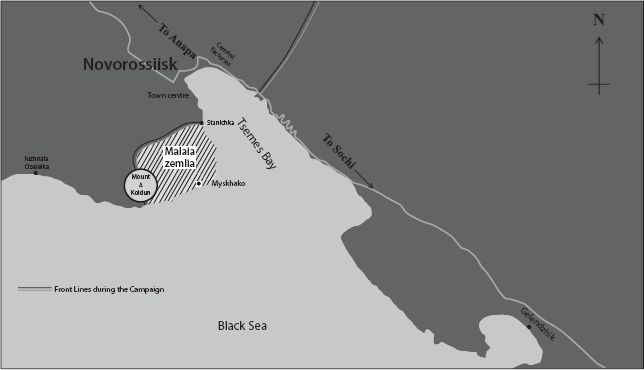
Map 1 The Novorossiisk area of the Krasnodar Region
Возложите на море венки.
Есть такой человечий обычай –
в память воинов, в море погибших,
возлагают на море венки.
Возложите на море венки
под свирель, барабан и сирены.
Из жасмина, из роз, из сирени
возложите на море венки.
Возложите на Время венки,
в этом вечном огне мы сгорели.
Из жасмина, из белой сирени
на огонь возложите венки.1
In the wintry early hours of 4 February 1943 a modest fleet of small craft escorted by two motor torpedo boats approached the shore of Tsemes Bay under cover of darkness and a thick smoke-screen. Before daybreak 630 Red Army marine infantry troops led by Major Tsezar’ Kunikov had landed on the beach at Stanichka just outside the occupied Soviet Black Sea port of Novorossiisk.2
The Soviet Union had officially entered World War II, which it called the Great Patriotic War, in June 1941, suffering a series of humiliating losses for much of the first year as German forces pushed eastwards into the country. The strategic port of Novorossiisk, with a prewar population of 109,000,3 was occupied by German and Romanian troops striking towards the oil-fields of the northern Caucasus in September 1942. However, it was not until the invaders had been defeated at Stalingrad early in 1943 that a turning point was reached and the battle to re-take Novorossiisk could begin in earnest. The main Soviet attack was directed at a spot further west along the coast, at Iuzhnaia Ozereika. However, this operation failed under heavy enemy fire and, ironically, it was the minor, diversionary landings at Stanichka which were successful. For seven months a defensive Soviet campaign by the North Caucasian 18th Army was fought against superior enemy forces from the small beach-head in the area behind Stanichka and the village of Myskhako that became known as Malaia zemlia (the ‘Small Land’). Novorossiisk was finally liberated on 16 September 1943 following a brief concerted attack by Soviet land, sea and air forces.
The heroes of this localised campaign are still remembered today through an amalgam of memoirs, monuments and ritual. This commemoration is rendered particularly paradoxical by the discrepancy between the relative insignificance of the campaign at the time and the importance attributed to it retrospectively, largely because a certain Colonel Leonid Il’ich Brezhnev visited Malaia zemlia occasionally as leader of the 18th Army’s political section. In 1964, 21 years after the Malaia zemlia campaign, Brezhnev became general secretary of the Communist Party of the Soviet Union and the de facto leader of the country. Once Brezhnev was in power, Novorossiisk became increasingly prominent on the political map of the country. It appears to have been honoured as a Hero City of the Soviet Union in 1973 largely due to Brezhnev’s political influence and the town found further dubious fame in 1978 after the publication of his slim volume of war memoirs, Malaia zemlia. The longstanding and complex cultural heritage of remembrance which has been constructed around the war myth that eventually built up is the subject of this book.
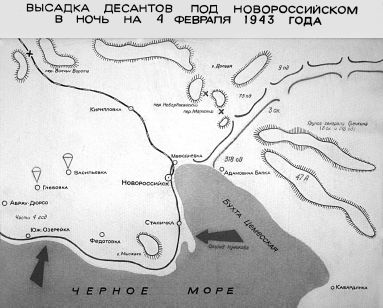
Map 2 The Novorossiisk Landings, 4 February 1943. Reproduced with the permission of Novorossiiskii istoricheskii muzei-zapovednik
The relevance of the war myth in Novorossiisk is not only confined to one provincial town in southern Russia, however. This book has far wider political and social connotations, linking individual citizens with evolving state policy in the Soviet Union and modern Russia since the war. Through the prism of this minor hero city I reveal the complexity of myth and memory, bringing new evidence to bear on a myth that most Russians consider dead, along with Brezhnev and the Soviet Union.
There is a substantial difference between the understanding of Malaia zemlia nationally and locally and a continuing inconsistency between the self-projected image of the hero city and the perception of Novorossiisk held by Russians elsewhere in the country. Rather than consigning this Soviet myth to the past, I trace the complex trajectory of its associated memoirs, monuments and memorial practices into the present and beyond, as I explore the meaning of the myth of Malaia zemlia for today’s Novorossiisk. War memory in the states of the former Soviet Union is increasingly relevant for today’s political agenda and is therefore becoming an important area for scholarly study.4 This work is particularly timely, coming just as the Great Patriotic War in Russia is on the cusp of transition from living memory to history.
I examine how a local war myth was constructed and propagated in an authoritarian national context, largely thanks to the overriding influence of Brezhnev and his regime. The war myth of Malaia zemlia is unique, in view of the strategic insignificance of the campaign in comparison with other major and prolonged actions within the Soviet Union, such as the Battles of Stalingrad and Moscow, or the sieges of Leningrad and Sevastopol’. Despite this, Malaia zemlia became an overpowering mythical construct to the extent that it was for decades politically impossible to establish the historical facts behind the popular narrative. Previous Western historians and Soviet dissident scholars have dismissed Brezhnev’s promotion of Malaia zemlia with more than a hint of ridicule, regarding the myth as at best an exercise in over-inflated self-promotion and at worst a fabricated work of fiction, as do many older citizens of other parts of Russia.5 In contrast, this book focuses on how Malaia zemlia is regarded by Novorossiisk residents of all ages, for whom the myth is based on living memory and remains an integral part of the town’s identity. The more positive attitude of the local community to the myth is just as valid as the dismissive top-down perspective, adding much-needed texture to existing oversimplified views about the national myth of the Great Patriotic War.
Much has been written of the wartime history of major hero cities of the Soviet Union.6 Provincial Novorossiisk, though, was an afterthought in the honours list, and, as such, stands out through its overt political links to Brezhnev during his 18 years as leader of the Soviet Union. And those links survive even today. Which other town in modern Russia would erect a statue to Brezhnev in the twenty-first century – a complete mystery to puzzled Russians elsewhere in the country – and then keep it hidden from Western visitors? This book therefore offers an alternative perspective on Brezhnev through his close connection with Novorossiisk. It furthers the existing political science of the Brezhnev era by addressing his regime’s war cult from a local perspective to give a more balanced picture of the mechanism and dynamics of myth making, showing how ideology interacted with and affected the ordinary, provincial citizen.
It is also an analysis of the personal influence of Brezhnev, the ultimate representative of the communist ideology of the collective, on the town where he saw war service. Just as there is a tension between the understanding of Western and dissident historians on the one hand, and the residents of Novorossiisk on the other, as to the significance of Malaia zemlia, there is also a polarity in the judgment of Brezhnev himself.
I challenge the latent assumption in the West of a monolithic Soviet state, showing that the dynamics of the myth-making process are not clear-cut, but more complicated and interesting than previously assumed. Brezhnev’s memoirs, written from the point of view of the country’s leader, were not the only account of the Malaia zemlia campaign. Local war memoirs published before and after Brezhnev’s seminal work offer an intriguing insight into state influence on the form and content of memoir literature in the Soviet period. This is a genre rarely deemed significant enough for in-depth study, and yet, in this case, it offers an important complementary view of the war in the Soviet Union through its focus on the ordinary front-line soldier or sailor in action.
Even in a top-down remembrance environment, there was still scope for local groups and individuals to make an impact on commemorative ceremonies in the Soviet era. The close involvement of residents in decisions regarding the monumental landscape continues to this day, sometimes challenging the authorities and forcing changes of direction. And myth making is by no means just a phenomenon of the past. The interaction of the local war myth with the war cult which has emerged under President Vladimir Putin in the twenty-first century reveals how commemorative rituals continue to take on distinctly local forms, even if sometimes reflecting modes of remembrance found elsewhere in the world.
Brezhnev is not the only leader to have used war memory as a political tool. The war cults of two different eras have helped to shape the local war myth in Novorossiisk. By contextualising the current war cult in terms of the Soviet past, I make a necessary contribution to the wider political science of both the Brezhnev and the Putin regimes. The official view of the past in the Putinist present is key to the propagation of memory to a younger generation increasingly distanced from the war years. Understanding how Russians perceive and teach their history gives a valuable insight into political propaganda in action. I expose the complex dynamics of intergenerational transmission of the war myth, demonstrating the different ways in which the young people of today’s Novorossiisk are introduced to the myth of Malaia zemlia from their very first days at school. I have found that a style of ‘genetic’ propagation is endemic in both Novorossiisk and even nationally, while the phenomenon of ‘reverse propagation’ from younger citizens to their parents and grandparents helps to cement the myth as part of the town’s cultural heritage.
This analysis of the key modes of intergenerational transmission links the mechanism of myth making today with the maintenance and further development of a unique local identity to which most, if not all, residents of Novorossiisk subscribe. There comes a point, however, where a simplistic generalisation is not sufficient to convey the complexity of the war myth. Military personnel were not the only people killed in the war, but the fate of civilians is barely recognised in the local narrative. I demonstrate a polarity between the centralised celebration of the Soviet troops and the apparent collective amnesia on the outskirts relating to civilians, especially Jewish residents. Furthermore, I show that today’s society is divided over its respect for fallen German soldiers and also displays an ambivalent attitude to the role of Cossacks in remembrance. Here, the case of Novorossiisk has much to bring to memorial situations elsewhere in the world, especially in once-occupied territories, where it is important to recognise the often silent voices sometimes smothered by an overwhelming public narrative. It is in the exceptions to the myth and the people still working on the periphery of official memory that the individual impact and intricacy of the myth of Malaia zemlia is to be found.
Sources and Methodology
The material I present in the following chapters was researched during several trips to Novorossiisk between 2010 and 2016, taking in archival and library work on war correspondence and memoirs, weeks of observation in schools, visits to monuments and battle sites and attendance at many rituals of commemoration from year to year.
I also conducted a close study of the local press in Novorossiisk dating from the war years to today. It is particularly challenging to interpret reports in Soviet newspapers, which were subject to the political control of the Communist Party. Newspapers may offer valuable evidence of the official state line at the time of publication, but it is difficult to measure the influence of newspaper propaganda on the ordinary Soviet citizen, whose attitude to key events was subject to ideological pressure and shaped by the pervading war cult. How was anybody to believe what was recorded in the press; and how can its impact on the individual citizen then be gauged today? Contemporaneous newspaper articles provide a testimony of past circumstances, subject to ideological manipulation by the state, past or present. It is not necessary for those today to believe what has been written in the past, merely to understand that it is this material that shaped the attitude of the people at that time. It may therefore be interpreted as a social construct of its time, the tangible product of propaganda in the Soviet Union and even modern Russia.
It is at the intersection of private memories and the collective, of the official and the unofficial, that I have uncovered a finely balanced equilibrium in the memorial relationship between the state, the local community and the individual. Much needed texture to my understanding of the impact of the local war myth was added by a series of extended personal interviews. These dynamic oral interviews complement the static information derived from the dry bones of dusty newspapers and long-standing monuments in shaping my understanding of individual remembrance and identity formation. Personal interviews help the researcher to get close to the individual within the collective and to establish areas of commonality or difference. They were largely intended as a valuable insight into current opinion and attitudes to remembrance of World War II on the personal level to inform the second half of this work. However, they produced much more than anticipated, revealing also historical perspectives on wartime Novorossiisk and Brezhnev’s relationship with the town in the 1970s.
Interviews were conducted with two types of person: the ordinary Novorossiisk citizen and the specialist. In all, I spent time with 124 residents of Novorossiisk ranging in age from 18 to 93, and email exchanges over several years were conducted with ten respondents. Subjects had a wide range of backgrounds, including teachers and lecturers, students in higher education, military personnel, historians, librarians, architects, seamen, town councillors, journalists, divers, lawyers, shopkeepers, business people, housewives and pensioners. No jobseekers of working age or persons under the age of 18 were interviewed. My sample included slightly more females than males, largely because fewer men of working age were available for interview during working hours. This also reflects both natural demographics and the premature death of men who saw wartime service. Of the 124 interviewees, 55 were male and 69 were female, a ratio of 4:5, with males comprising 44 per cent of the total sample compared with 56 per cent for females. Details of the socio-economic class and approximate age distribution of these subjects are to be found in Appendix II, although it was sometimes necessary to make an informed estimate of the subject’s age. In addition to these local interviews, I interviewed briefly and on an ad hoc basis 35 subjects from places in Russia far removed from Novorossiisk in order to compare their understanding of Malaia zemlia with the attitude in Novorossiisk.
Although most interviewees seemed genuinely enthusiastic to talk to me, I was equally concerned to protect them and guarantee their anonymity. For this reason, pseudonyms are used throughout the book, except in the case of public figures and those experts who agreed to waive the right to anonymity. Some agreed to their name being mentioned if they were speaking in an official capacity, but asked that they remain anonymous in connection with any personal opinion expressed during the interview, a request which points to some possible tension between official and private opinion. Results were analysed with respect to gender, age cohort and occasionally to background.
I obtained access to a wide range of interviewees of various ages and ethnicities through the good offices of the Bekar School through which I invited parents and grandparents of pupils to a series of private meetings. A further large tranche of interviewees was introduced by key trusted colleagues. Access to expert interviewees and significant post-holders in the town was gained thanks to my professional network. Finally, many elderly interviewees were accessed thanks to the Veterans’ Council in Myskhako. All interviewees were offered the chance to have a friend alongside them, which was usually not accepted, although in the case of older, potentially vulnerable volunteers, I insisted that a friend or relation was present.
In all interviews it is essential to build up a personal but professional relationship with the respondent. This is easier said than done when the subject is interviewed by a stranger, a foreigner to boot, from a different cultural and linguistic background. It is more comfortable to disclose potentially sensitive thoughts when in familiar surroundings, so all respondents were interviewed either at work, in their own home, at the Veterans’ Council or in a public place of their choice. Those connected to the Bekar School were interviewed in an empty classroom there and one elderly lady chose the museum foyer for our meeting, perhaps subconsciously locating her memories of the past in a place where she felt they belonged.
Unlike the study of newspapers or monuments, live interviews demand attention to interpersonal dynamics. The ice was broken in many ways. English tea and light refreshments were offered to all those attending my classroom in the Bekar School, and I was invariably offered hospitality in the homes or offices of interviewees, which helped the conversation to flow more naturally. In a search for a common frame of reference, I often mentioned my family, especially my father who fought in the war on the same side as the Soviet Union, if in a different sphere of action. Photographs of where I lived helped bridge any geographical distance between us, although many subjects expressed surprise that somebody from as far away as England could be interested in the local history of a provincial Russian town. Many subjects referred positively to the fact that my results, obtained from an outsider’s perspective, may render them more objective.
All interviews were conducted in Russian. However, such enormous cultural and linguistic barriers are not to be taken lightly and it is possible that I may have missed certain nuances in accounts. Would a Russian interviewer have been quicker to grasp these inferences? Were some subjects trying to put a positive spin on remembrance out of nationalistic pride? Elderly Marta initially accused me of being a spy, indicative not of a wartime alliance between our two countries, but rather of a Cold War hostility, only to agree after two hours of conversation that I was, after all, ‘one of ours’. Similar suspicion was shown by one expert who only agreed to talk to me ‘on the record’ for brief periods of time. The rest of our conversation was not to be quoted, she ruled, displaying a tendency to restrict information and a lack of transparency common in the Soviet Union. Old habits die hard. It is evident, therefore, that care has to be taken with the interpretation of oral interviews. Cases where much reflection has been necessary are detailed in the text.
Discussions lasted from 30 minutes to three hours. Subjects were interviewed for an average of an hour: some very extensive, in-depth meetings with experts were balanced by a few shorter interviews with less forthcoming subjects. In practice I found that women were more than happy to talk to a female interviewer without any self-consciousness, whilst four men, who were rather hesitant about the experience at first, soon overcame their initial lack of confidence. ‘We’ll give it a try’, offered Lev tentatively as we embarked on what turned out to be quite a lengthy conversation. More positively, several helpful subjects, both men and women, returned to me days after our initial meeting with further information and materials that they thought would be relevant. My gradual integration into this parochial community improved as I was able to seek out and interview again many respondents over the years and build up a meaningful and trusting relationship with them.
No juveniles were interviewed for ethical reasons and precautions were taken to protect older subjects from potentially distressing memories. It was always stressed at the beginning of the interview that respondents were able to stop if they found the conversation difficult. In only one case did I terminate the interview prematurely when Diana, a relatively young lecturer, became distressed at the thought that young people today may fail to respect the memory of the war dead: she felt that this would be an indication of disrespect to her grandfather’s generation.
In all cases I was interested in the respondent’s own subjective discourse on remembrance. A few open-ended questions were used as the basis for extended discussions and to allow for the free flow of conversation. In general, subjects had the flexibility to speak in their own words and the time to develop their thoughts. My emphasis was on listening and observing the respondent, guiding the conversation a little if it lacked momentum. There was little real silence on the part of the respondents, although there was some pause for thought. I made no assumptions at the start of each interview and asked for explanations, even if I was already aware of the issues. In this way I was able to uncover new information, although it is important to bear in mind the fact that interviewees told me what they wanted me to hear and, possibly, what they thought I wanted to hear. In contrast, in the case of experts, questions were tailored in order to obtain more specific information.
After initial introductions and courtesies, discussions were mainly about remembrance of the war. In view of the consistency of attitude of many respondents and their use of vocabulary employed with respect to World War II, it was possible to judge how substantially citizens have assimilated the values of the current war cult as disseminated by President Putin and through media hype. The various ‘frames of remembrance’ acting around each individual are analysed in detail in the final part of this work,7 and some salient observations from my interviewees are outlined in Appendix I. It was interesting also to identify examples of the ‘post-memory’ theorised by Marianne Hirsch, and Alison Landberg’s ‘prosthetic memory’ on the part of younger generations who did not experience the war.8 These are discussed in more detail in Chapters 7 and 13 respectively.
I was surprised to find that some of my interviewees remembered Brezhnev’s visit to Novorossiisk in 1974. And it was a privilege to speak to a few veterans who had actually been alive during the war – and old enough at the time to recount some of their unsolicited memories to me. The results of these interviews are also examined in Chapters 7 and 13. It is this type of evidence, though, which needs to be considered carefully, rather than being taken simply at face value.9 Discussions with subjects who were living in Novorossiisk in the 1970s produced testimony which may not reflect accurately what actually happened in the past by virtue not only of the influence of propaganda at the time, but also the prevailing mnemonic environment around the war and Brezhnev himself. The not inconsiderable problems, both psychological and physical, associated with retrospective demands on memory are numerous and largely beyond the scope of this work.10 Suffice it to say that, in addition to the external pressure of the state propaganda machine, malleable individual memories of the past are also potentially subject to distortion by forgetfulness, blocking, bias or even misattribution. It is therefore impossible to accept without interrogation statements made today as either factual evidence or representative of attitudes pertaining in the past. I have attempted in relevant cases to ascertain if there is any evidence for such so-called memories, if they can be corroborated and if the accounts are consistent over time. Even today, citizens of Novorossiisk have their attitude to remembrance largely informed by the mass media, although most views expressed in research interviews I conducted may be accepted in the main as reflections of current opinion on the war myth.
It is important to recognise the emotional and moral impulses behind recalls of memory. When recounting their narratives, interviewees travel in their minds between past and present. It is their experience of the past which has built up their present identity, and rationalising their personal history within the overall history of the twentieth century often results in a positive representation of circumstances and events that may at the time have been particularly difficult.11 Many older subjects tended to employ Soviet terms when describing ceremonies of remembrance, indicating how deeply they had absorbed the war myth and the social norms of the Brezhnev-era war cult in their personal memory construction. Shaped by the memorial environment then and now, their attitude to remembrance depended on the main tenets of the war myth – a victorious ending to the war and the need to thank those who died for their sacrifice.
But how does an interviewer know if something is omitted from the narrative, if something remains unspoken? Why are some details perhaps left out and others emphasised? Is it deliberate, or an unconscious strategy to protect an individual from shameful or traumatic memories? These questions have always dogged oral historians.12 Although the emphasis of my research was on the current attitude of respondents rather than the testimony of war veterans, I was heartened by the relative openness with which older subjects spoke of issues such as rape or primitive living conditions without any evident taboo, although I will never know the full, raw story of these people’s wartime experiences. It was the younger respondents, I found, who displayed more sensitivity to such delicate matters. It took a build-up of trust with my interviewees over the years before just a handful of them, all middle-aged respondents, began to mention some of the current issues circulating almost beneath the radar in Novorossiisk. These relatively hidden areas, spoken about quietly, if at all, serve to complicate with various shades of grey what seems superficially to be a black and white war myth.
Structure
Subsequent parts analyse the evolution of the myth of Malaia zemlia broadly chronologically, with each part also exploring a specific aspect of remembrance.
Part I examines the mechanism of construction of the war myth by war correspondence and memoir literature from 1943 to 1985. Following a consideration of Brezhnev’s memoirs in Part I, Part II analyses the political place of Brezhnev in the myth and the difference between national and local attitudes to the general secretary and his links with the Malaia zemlia campaign. Moving to the current war cult, an analysis of recent visits by Presidents Putin and Medvedev to Novorossiisk demonstrates how the local myth is currently positioned politically.
Part III analyses the cultural dynamics of the propagation of the myth through monuments and ritual, notably the traditional ‘Beskozyrka’ ceremony, unique to Novorossiisk. Part IV brings us up to date by addressing the mechanism and agency of the intergenerational propagation of the myth today through an in-depth analysis of the overlapping roles played by the family, the school and local society in Novorossiisk.
From the domestic kitchen table in Myskhako to the town centre of Novorossiisk, from outlying communal graves to the huge Malaia zemlia memorial complex, from Heroes’ Square in Novorossiisk to Moscow’s Red Square, we will follow a complex route, linking individuals, families, civic society and the state. The lens pans from the local to the national and back again as I trace the myth of Malaia zemlia across more than 70 years within the meta-narrative of the national myth of the Great Patriotic War.