
2
The Soviet civilian nuclear industry has its roots in two grand projects of the twentieth century: the state electrification plan that Lenin championed beginning in 1920 and the nuclear weapons program that Stalin launched in 1943.1 As the nuclear energy industry grew, the bureaucracy that ran the electrification effort and the one that ran the nuclear weapons program would both undergo frequent changes, and precise responsibilities would shift repeatedly between them. By tracing in more detail how the organizational structures that controlled nuclear energy evolved, we can understand more clearly the difficult position nuclear power held, poised as it was between the nuclear weapons complex and the conventional power industry.
As is true of any large technological system, nuclear power's organizational context had a profound effect on how it grew. Once in place, any bureaucracy becomes a technology in and of itself: it steers and controls decision-making processes.2 In addition, the process of rationalization or bureaucratization can itself be understood as a mode of control.3 As Max Weber has argued, “The bureaucratic form routinizes the process of administration exactly as the machine routinizes production.” 4 Because administrative structures do not always develop at the same pace as the technologies they are supposed to govern, those structures often represent the Achilles heel of otherwise mature technological systems.5 As I have mentioned, responsibility for Soviet nuclear power was split between two entities: the electrification bureaucracy, which would become the Ministry of Energy and Electrification, or Minenergo; and the nuclear weapons bureaucracy, which would become the Ministry of Medium Machine Building, or Sredmash. These competing bureaucracies created a volatile organizational environment and triggered ongoing tussles over authority and accountability; in addition, institutional inertia would sometimes affect the pace of the industry's progress. The shifting relationship between Sredmash and Minenergo also affected how Soviet scientists and planners understood risks, capabilities, and requirements. Not only did this relationship have an impact on purely technical decisions, but it also significantly shaped decision makers’ views about what was important, desirable, and safe, or, by contrast, what was risky, unacceptable, or simply irrelevant.6 Consequently, examining the two ministries and their interactions helps illuminate why the Soviet nuclear industry developed the way it did.7 The previous chapter outlined the political and economic context within which the management structures that controlled the Soviet nuclear power industry functioned. This chapter focuses on the historical development of the management structures themselves.
During the 1920s and 1930s, state leaders around the world sought tools of governance that would help raise efficiency and profitability. Regardless of political affiliation, many looked to the Soviet Union as a leader in setting up and operating an expert bureaucracy explicitly founded in scientific rationality.8 As the nuclear power industry continued to coalesce in the late 1940s and early 1950s, the organizations that ran it endorsed ideals of scientific management, just as the Soviet Union's leadership did. Exactly how to administer nuclear power plants was a question that scientists, economists, and politicians actively debated for a long time; ultimately, the country's technical elite drove continuous and determined attempts to find the most rational form of managerial organization.9
When Soviet leaders began to organize the nascent nuclear power industry in the late 1940s, they envisioned the cooperation of more than 400 engineering and scientific research institutes, construction bureaus, and other organizations.10 From the perspective of a centralized planning authority, the key to organizing the civilian nuclear sector was to craft an effective bureaucracy to deal with uncertainty, crisis, and the allocation of responsibility.11 Interestingly, as I showed in chapter 1, this rigorous bureaucratization would go hand in hand with a need to improvise in response to the adversities of a planned, centrally administered economy. Those who advocated nuclear power during this period followed a dual strategy: on the one hand, they promoted the creation of new administrative management structures (a nuclear infrastructure), and on the other, they relied on individual nuclear experts who had been molded during the early years of the military nuclear program. In doing so, they both demonstrated their belief that bureaucratization would guarantee the most rational form of organization and assured the success of this new bureaucracy by appointing to key positions individuals who not only possessed technical expertise but also came with substantial managerial experience and firmly established personal networks.12
Given that the organization that would become Sredmash was already running the Soviet Union's military nuclear program, it is not surprising that the civilian nuclear industry inherited features from the nuclear arms race. The early civilian program preserved organizational traditions established in the weapons program: a heightened sense of responsibility, a clear system for executing decisions, the diligent selection and training of cadres, and a system of information exchange under conditions of secrecy.
At the same time, the demands of industrial production—practicality, reliability, and economies of scale—affected the civilian nuclear industry. As in other branches of Soviet industry, nuclear managers strove to standardize materials, equipment, construction processes, and work practices. The idea of implementing standardized reactors would even prompt the mass production of turbines, pumps, and pipes before these parts could prove their worth in actual nuclear power plants.13 However, the ideal of a completely standardized reactor or its standardized production would never become a reality—in the Soviet Union or elsewhere.14
Because reactors and the rest of the nuclear plant were kept under different ministries’ jurisdictions, the attempts by one ministry to standardize while the other tried continuously to change and improve created an ambiguous process that almost by definition could not reach stabilization. Furthermore, Sredmash and Minenergo competed over how to best manage expertise, share experience, and transfer knowledge.15 Although the official division of nuclear energy responsibilities between Minenergo and Sredmash did not occur until 1966, the two bureaucracies’ priorities diverged much earlier.
Dual Origins
In 1920, in the belief that only a reliable electricity supply would facilitate the growth of industry and the progress of the Soviet economy, about 200 scientists and engineers planned and implemented what became known as the State Plan for the Electrification of Russia, or the GOELRO plan.16 These experts were all bourgeois specialists—that is, scientists and engineers trained in pre-Soviet times.17 Their plan anticipated the construction of thirty massive new power plants and a substantial network of transmission lines over ten to fifteen years. The young Soviet government, a regime that “believed in the promise of machines to liberate,” approved the plan in December 1920.18 Elevated to mythical status, GOELRO would remain a driving force within the power engineering community and an important part of Soviet ideology and popular imagination.19 The plan relied on ideas of scientific management that had reached the Russian electrical engineering community even before the October Revolution of 1917. These ideas may well have convinced the commission's bourgeois specialists that the new government was “removing the restraints of tsarism and supporting their modernizing mission.” 20
With his famous slogan “Communism equals Soviet power plus the electrification of the entire country,” Lenin explicitly linked technological progress with social transformation.21 He saw the GOELRO plan as supporting the communist state's overall effort to industrialize, modernize, and “civilize” Russia's vast rural areas. As a result of the electrification plan, the total output of Soviet power plants more than tripled by 1932.22
Meanwhile, Russian scientists had started research on radioactive materials in the early 1910s. When the State Radium Institute in what was then Petrograd opened in 1922, that research gained momentum. In Moscow, the physicist Sergei Vavilov founded the Physics Institute of the Soviet Academy of Sciences (FIAN) in 1934. A year after the discovery of fission in 1938, the Academy created a Commission on Isotopes under the leadership of geochemist Vladimir Vernadskii. In 1940, the Academy's Presidium established a Special Committee for the Problem of Uranium, which conducted and coordinated research in the area of isotope separation and nuclear fission, and started systematic exploration of uranium deposits.23 During World War II, most nuclear scientists abandoned their research and joined the war effort.24
The nuclear weapons program started very modestly in 1943, when Georgii Flerov, a nuclear physicist, noticed that U.S. publications on anything nuclear had virtually disappeared from the open scholarly press. Flerov alerted the authorities, and after intelligence confirmed Flerov's suspicion, Stalin created a research institute, Laboratory No. 2, that was to become the top-secret heart of the Soviet nuclear weapons project.25
Nominally under the Soviet Academy of Sciences, the institute opened in 1943 as a scientific base for physicist Igor V. Kurchatov, the mastermind behind the Soviet nuclear weapons project. Laboratory No. 2 had one task: to produce a Soviet atomic bomb. After the United States tested an atomic bomb on July 16, 1945, Stalin significantly increased funding for Kurchatov's group. Following the bombing of Hiroshima, the Soviet State Defense Committee (GKO) launched a fully funded crash program, thereby laying the ground work for a nuclear arms race that would soon escalate.26
Shrouded in secrecy, the Soviet state set up organizations and facilities to support an army of scientists and engineers who developed and mastered fission and fusion devices soon after their American counterparts. In 1945, Stalin appointed Lavrentii Beria chair of a Special Committee on the Atomic Bomb. This committee consisted of specialists from science and industry, as well as representatives from party, state, and the secret police, but no military men.27
That changed in the spring of 1946, at the beginning of the first postwar five-year plan, when Stalin named General Boris L. Vannikov, previously director of the secret Ministry of Agricultural Machine Building (the cover name for the munitions industry), as the administrative director of the Soviet nuclear program. From then on, the First Chief Administration (Pervoe Glavnoe Upravlenie or PGU) carried out all research related to nuclear energy, both military and civilian. The PGU was accountable personally to Beria and received direct support from the highest executive authority, the Council of Ministers.28
On December 25, 1946, in Kurchatov's Laboratory No. 2 in Moscow, physicists set in motion a controlled nuclear chain reaction in F-1, the Soviet Union's first experimental nuclear reactor. “Annushka,” the first Soviet reactor to produce weapons-grade plutonium, started up in June 1948 at Cheliabinsk-40. On August 29, 1949, the Soviets tested their first plutonium bomb. On July 1, 1953, in the midst of the power struggle following Stalin's death, the Council of Ministers elevated the PGU to the Ministry of Medium Machine Building (Sredmash) and put it in charge of supervising all work connected to atomic energy.29 A month later, on August 12, 1953, the first Soviet hydrogen bomb detonated—less than a year after the first American H-bomb test.
The gigantic national effort to create nuclear weapons came to be known as the atomic project (atomnyi proekt).30 The nuclear weapons program required tremendous sacrifices from the individuals who worked within it. The atomic project's leadership style was brutal, but employees experienced extraordinary solidarity and displayed a willingness to take significant risks. These characteristics shaped an entire generation of scientists, engineers, and administrators by forming their professional ethos, determining their overall priorities, and even fashioning their personal attitudes.31
The civilian nuclear program developed immediately following, and partly parallel to, the nuclear weapons program.32 Even before the first successful nuclear detonation, however, Kurchatov had turned his ambitions to peaceful applications of nuclear energy. As I have mentioned, once he had delivered the first Soviet fission and fusion bombs, he became a tireless advocate of nuclear power plants, using his access to the highest political councils and his substantial clout to influence national policies on nuclear energy.33
As early as 1946, Kurchatov ordered tests to check whether graphite-water reactors could be used to generate electric power as well as to produce plutonium.34 A 5 MW graphite-water reactor began operation on June 27, 1954, at Obninsk, near Moscow, the first nuclear reactor to deliver electricity to a national grid.
Its small size notwithstanding, Obninsk became known as the world's first nuclear power plant and the first genuinely peaceful application of nuclear energy.35 However, it actually served military purposes, and the reactor's acronym—“AM,” allegedly for atom mirnyi or “peaceful atom”—originally referred to naval applications (“naval atom” or atom morskoi).36 The double meaning made sense given that researchers were accelerating their work on nuclear naval propulsion at the time, and the Obninsk reactor served as a test stand for reactor designs suitable for submarine deployment. Only when project leaders determined that they could not reduce the graphite-water design sufficiently in weight and size to deploy it on naval vessels, especially submarines, did the Obninsk reactor morph into the poster child for the peaceful atom.37
In the years following Obninsk's start-up, it became clear that a nuclear power plant not only posed a series of unique challenges—for instance, the safety of reactor operations and the secure handling of nuclear fuel—but also occupied a precarious position at the boundary of electricity generation and nuclear weapons. A nuclear power plant, then, required the active cooperation of ministries and other entities that were not used to collaborating. It comes as no surprise that in the Soviet Union (as in the rest of the world), governing the growing nuclear power sector posed unprecedented organizational challenges.
A Tale of Two Ministries
Minenergo: Power for the People's Economy
The Ministry of Energy and Electrification (Minenergo) began in 1939 as the “People's Commissariat of Power Plants and Electrical Industry,” one of six new organizations that replaced the “People's Commissariat of Machine Building.” 38 Over the next twenty-three years, this agency underwent no fewer than seven reorganizations in which power plants were separated from and rejoined with the electrical industry in various configurations, only to emerge in 1962 with a set of responsibilities very similar to those it had in its 1939 incarnation. The ministry that ultimately resulted from these continuous reforms was in charge of the country's power plants—their construction and operation, as well as the infrastructure for transmitting electricity.39
Glavatomenergo: Preparing the Power Industry for Nuclear Energy
In 1956, in anticipation of an increased demand for new nuclear power plants, Minenergo formed a suborganization to address the specific needs of those plants, including the training of future nuclear power plant personnel. This “Chief Administration for the Construction of Atomic Power Plants,” Glavatomenergo, became the major nuclear engineering organization in the civilian power engineering sector. Konstantin Lavrenenko, an engineer who was prominently involved in the management of the postwar electric power industry, became the new organization's first director.40
Glavatomenergo's first assignment was to take over from regional construction enterprises the financing, assembly, and overall supervision for the Beloiarsk and Novo-Voronezh nuclear plants, which were both intended as experimental stations and were both still at very early stages of construction at the time.41 One year later, in 1957, Glavatomenergo's plans already comprised four “industrial-scale” nuclear power plants, including the Beloiarsk and Novo-Voronezh plants.42 The highly optimistic dates of completion for these plants were 1960 and 1961, respectively.43
Petr Neporozhnii was appointed head of Minenergo in 1962 (figure 2.1).44 Initially indifferent to nuclear energy, he became a dedicated advocate for nuclear power plants, as I discussed in chapter 1. He also promoted a conveyer-belt-like system to maximize the speed and efficiency of constructing new plants.45
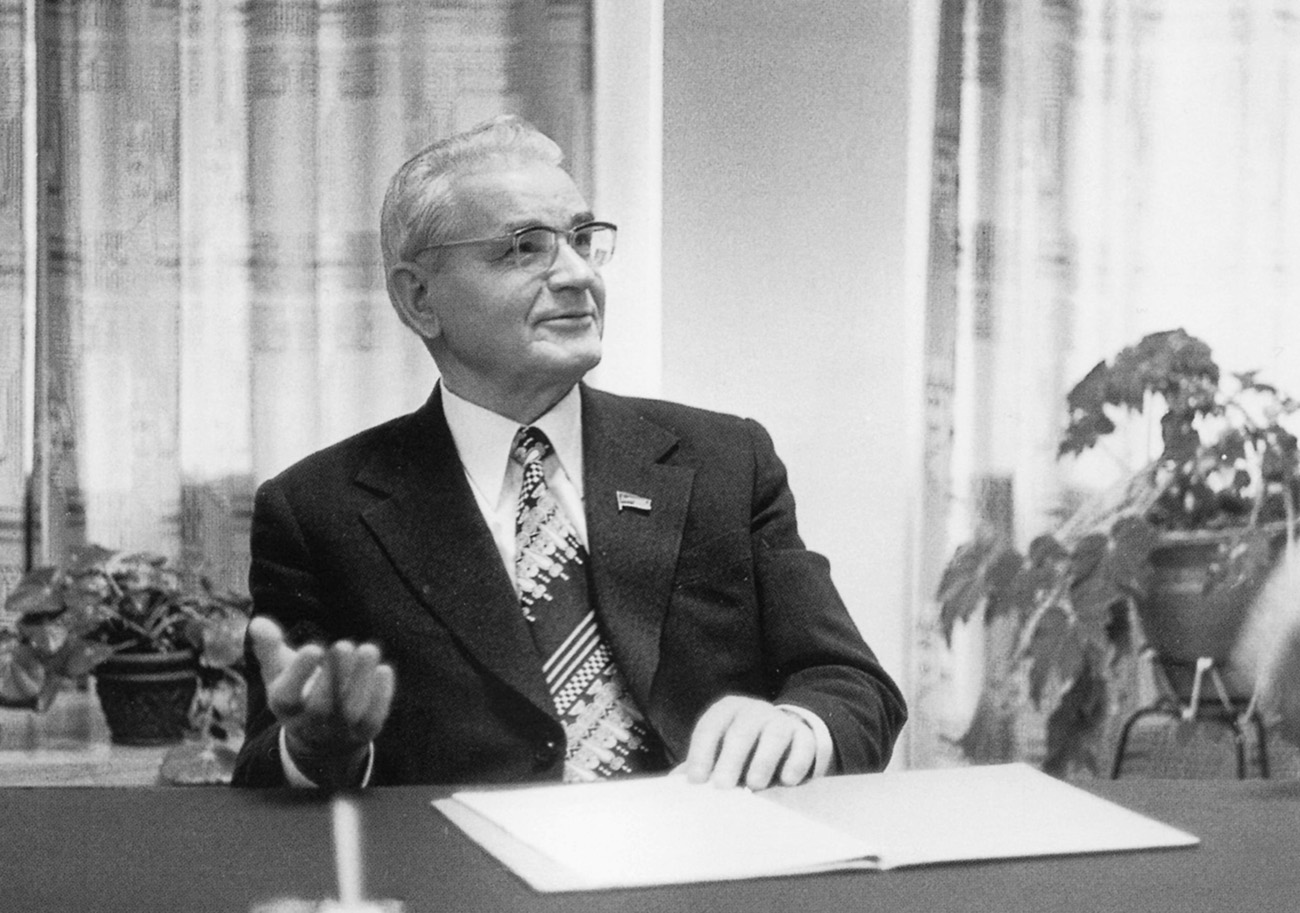
Figure 2.1 The minister of Energy and Electrification (Minenergo), Petr S. Neporozhnii, who managed the Soviet Union's conventional power industry from the early 1960s on, also became responsible for constructing and operating nuclear power plants beginning in 1966. Initially skeptical of nuclear power, he eventually became an avid promoter. The image shows Neporozhnii in the 1970s.
Source: Courtesy of the publishing house “Master,” Moscow. Originally published in A. I. Vol'skii and A. B. Chubais, eds., Elektroenergetika, series Stroiteli Rossii: XX vek (Moscow: “Master,” 2003), 96. Reprinted with permission.
Neporozhnii was born in 1910 near Kiev, in a rural family. In 1933, he graduated from the Leningrad Institute of Maritime Transportation Engineering (Leningradskii institut inzhenerov vodnogo transporta) as a hydropower engineer. After serving in the Soviet Navy from 1933 to 1935, he became involved in managing the construction of large hydropower plants. From 1940 to 1954, he was chief engineer and director of a planning institute in Tashkent (Uzbekistan), and chief engineer for hydropower plants near Leningrad and in Ukraine. In 1954, he started his political career in Ukraine as deputy chairman of the Ukrainian Council of Ministers, and he later became chairman of the Ukrainian State Committee for Construction (Gosstroi). After a few years he moved from the regional to the central level: from 1959 to 1962, he was first deputy minister of the All-Union Ministry of the Construction of Power Plants. He would serve twenty-three years as minister of Minenergo and retired in 1985, at age seventy-five. His ministry oversaw and coordinated every type of conventional power plant designed, built, and operated in the territory of the Soviet Union, the entire Soviet electricity grid, as well as the centralized heat supply for industry and households.46
For the first four years of Neporozhnii's tenure, Minenergo considered the contribution of nuclear plants to the country's energy supply negligible. Even the plans for 1966–1970 forecast that nuclear power would contribute less than 1.5 percent of overall electricity production.47 Such low expectations would change only in 1966, when Minenergo took on more comprehensive responsibilities for the construction and operation of nuclear power plants.
The efficient construction, operation, and management of both conventional and nuclear power plants increased Minenergo's political clout and gave its minister unusual leeway in developing and pursuing his own agenda. And yet, even though Neporozhnii's ministry enjoyed the patronage of influential authorities, the nuclear power industry was not as protected as the nuclear weapons community, and Neporozhnii could not provide his employees with privileges comparable to those enjoyed by technical specialists in the other ministry responsible for nuclear power plants, the Ministry of Medium Machine Building, or Sredmash.48
Sredmash: The Secret Nuclear Ministry
Before 1986, very little was known in the Soviet Union or the West about the inner workings of Sredmash, the ministry formed in 1953 around the Soviet nuclear weapons program. Secrecy effectively shielded the work, staff, and organizations of this ministry, even vis-à-vis its collaborators. After this top-secret Soviet ministry ceased to exist in 1986, scholarly works, as well as autobiographical accounts, began to shed light on its origins and operations.49
Sredmash's first four years were turbulent. In July 1953, two of the principal managers of the atomic weapons project, Viacheslav Malyshev and Boris Vannikov, became Sredmash's first minister and first deputy minister, respectively. Vannikov's career had been truly astounding: a former people's commissioner for armament, he had repeatedly fallen out of Stalin's favor and was in prison when he received his appointment, in 1941, as deputy chairman of the People's Commissariat of Defense, a position he held until 1942. The reasons for his arrests remain obscure, but according to Grabovskii's plausible (although anecdotal) account, Vannikov had been arrested for publicly disagreeing with Stalin.50
Just a year and a half after becoming Sredmash's first minister, on February 28, 1955, Malyshev was promoted to chairman of Gostekhnika, the Council of Ministers’ revived committee for new technologies. Avraamii Zaveniagin, once a close collaborator of Beria's, succeeded Malyshev at Sredmash. Zaveniagin had proved himself an exceptional industrial manager at the steel town of Magnitogorsk, and as deputy chairman of the Council of Ministers gave Sredmash direct access to the highest level of government.51 But Zaveniagin died the following year and Vannikov temporarily replaced him.52 In April 1957, Mikhail Pervukhin became minister. An experienced manager and top-level functionary (at the time of his appointment, he was deputy chairman of the Council of Ministers), Pervukhin also brought significant technical and economic expertise to the job. But his involvement with the “antiparty group” cost him his ministerial position after only a few months.53
The way was now clear for Efim Slavskii. Born in 1898 into a rural Ukrainian family, Slavskii joined the party when he was twenty, served in the Red Army for ten years (1918–1928), and after completing his studies at the Moscow Mining Academy, worked in the nonferrous metals industry. In 1940, he became director of the Dnepropetrovsk Aluminum Factory, and later director of the Urals Aluminum Factory. His political career started in 1945, when he became deputy people's commissar, and later deputy minister of nonferrous metals. In April 1946, he joined the atomic project as deputy director of the First Chief Administration (PGU). From 1947 to 1949, he was director of “Kombinat No. 817,” the secret reprocessing facility at Cheliabinsk-40, before rising to deputy, and then first deputy director of the PGU.54
At Sredmash's inception in 1953, Slavskii became deputy minister. He directed its Glavatom subdivision from 1956 until 1957, when he became minister of the whole agency, an office he held for almost thirty years. He masterfully used the political authority his ministry inherited from the atomic bomb project to secure scarce resources and to strengthen his ministry's standing.55 As a member of the Council of Ministers, Slavskii had access to the highest levels of decision making, and he exercised significant control over the planning and budgeting processes affecting his ministry's activities. Under his aegis, Sredmash retained its centralized, closed character and became a largely autonomous organization.56
Glavatom: Administering Peaceful Uses of Atomic Energy
Over time, several different suborganizations took on specific tasks in the administration of nuclear power plants. The aforementioned Glavatom, the Chief Administration—later the State Committee—for the Use of Atomic Energy, was one of them. Sredmash created this agency in the spring of 1956 to deal exclusively with peaceful applications of atomic energy, and—in contrast to the rest of Sredmash—to engage in international cooperation.57 It was the only declassified part of Sredmash.58 In the parlance of the time, peaceful applications encompassed a wide variety of fields and disciplines, including mechanical engineering, transportation, the food industry, biology, medicine, and power engineering.59 Glavatom's second director was Vasilii Emelyianov, who was well known in the West as a member of the program committee for the first United Nations Conference on Peaceful Uses of Atomic Energy in 1955, the head of the Soviet delegation to that conference, and, from 1957 to 1959, a Soviet delegate to the International Atomic Energy Agency (IAEA).60
On August 26, 1960, Khrushchev's government attempted to detach from Sredmash the management of reactors operated exclusively for civilian uses by elevating Glavatom from a Chief Administration under the ministry's control into a State Committee under the Council of Ministers.61 Emelyianov remained chairman of this Committee for the Use of Atomic Energy until February 1962, when Andranik Petrosyiants (previously Sredmash's deputy minister) assumed office. Petrosyiants would remain in this position until Sredmash ceased to exist in 1986; he represented the ministry in all international contacts and became a key public figure in international nuclear cooperation, especially in the Council for Mutual Economic Assistance (CMEA).62
The new State Committee had an enormous apparatus: it comprised nine administrations and nine sections.63 When it began reporting directly to the Council of Ministers, its members gained immediate access to decision makers but discovered that these decision makers also controlled the committee's activities more directly.64
The Institute of Atomic Energy: Scientific Leadership for All Things Nuclear
In 1949, Kurchatov's Laboratory No. 2 became the Laboratory for Measuring Instruments of the Soviet Academy of Sciences (LIPAN SSSR) and, in 1956, the Institute of Atomic Energy (IAE), a name change that indicated its new, broader set of responsibilities.65 From its founding until his death in 1960, Kurchatov served as director, and the institute has been known since his death as the Kurchatov Institute.66
According to David Holloway's well-documented portrayal, Kurchatov's personality and the shock he experienced on the detonation of the first Soviet hydrogen bomb were driving forces in the transition to the civilian use of nuclear energy and crucial for the declassification (or, more precisely, the lack of classification in the first place) of fusion research.67 The personal clout Kurchatov gained from the nuclear weapons program allowed him liberties unheard of in the Stalinist and post-Stalinist Soviet Union. Although a committed communist, he was able to create and maintain an atmosphere in his institute that provided a refuge for science and scientists largely shielded from the practical consequences of political ideology.68 On January 15, 1960, in his last public speech at the meeting of the Supreme Soviet, the Soviet Union's highest legislative body, Kurchatov said: “I am happy that I was born in Russia and dedicated my abilities to the atomic science of the great country of the Soviets.” 69
Dividing Responsibilities for Nuclear Power Plants
Both Sredmash and Minenergo would later establish additional suborganizations to administer aspects of the nuclear power program. Meanwhile, at the ministry level, the tensions between them continued. In the late 1950s and early 1960s, Sredmash operated reactors that produced weapons-grade nuclear materials and, starting in the late 1950s, outfitted nuclear-powered submarines and icebreakers. Minenergo, on the other hand, operated hydropower and fossil fuel plants, provided municipal heating, and continued to expand the country's electricity grid, while trying to establish a unified system to coordinate it all.70 As I have mentioned, Sredmash and Minenergo disagreed over professional expertise, competed for political patronage, and questioned each other's trustworthiness in nuclear matters. Both ministries were extraordinarily powerful. Slavskii headed an industrial empire protected by skillfully deployed rhetoric of military heroism and well-maintained connections to top-level decision makers. Minenergo was a giant empire in its own right, with a long institutional tradition and high-level political patronage. Neither Slavskii nor Neporozhnii needed nuclear power to legitimize their importance, and yet, starting in the early 1960s, both ministers decided to promote nuclear power over the skepticism of planners.71
One question Soviet nuclear policymakers struggled with was whether nuclear power plants should be managed on a par with conventional power plants.72 Were they novel, essentially different, and uniquely risky technologies, or were they just another technology used to turn water into steam?73 In August 1966, the Council of Ministers implicitly answered that question when it transferred responsibilities for nuclear power plants, both operating and under construction, from Sredmash to Minenergo.74 The move seemed all too logical: Sredmash was busy with military assignments and ultimately had little interest in handling the day-to-day business of operating, maintaining, and repairing civilian reactors. Minenergo, by contrast, was eager to integrate such powerful modern facilities into its existing fleet of power plants.
The Council made Minenergo responsible for planning, management, construction, assembly, and operation of nuclear power plants, while Sredmash would continue to conduct scientific research, design and develop reactors, and provide documentation containing technical specifications and component drawings for specialized equipment to the respective factories. Sredmash would also keep supplying fuel assemblies for the reactors.75 The State Planning Commission (Gosplan) would serve as the coordinating agency.76
With the transfer of the nuclear power plants, Minenergo took control of a number of engineering colleges, planning and construction institutes, and experimental facilities.77 It also took responsibility for recruiting the nuclear industry's workforce, and Minenergo's leadership set up specialized training centers for operating personnel.78 As part of a conscious strategy to preserve expertise and tacit knowledge, the ministry “imported” countless individuals from Sredmash to serve in key positions. Minenergo clearly intended to bring their personal experience, as well as their home institution's institutional expertise and professional culture, to the new organizations it was establishing, but as we will see in chapter 3, the two ministries’ organizational cultures would not always blend well.
Soiuzatomenergo: Reviving Minenergo's Nuclear Competencies
One of Minenergo's deputy ministers took on responsibility specifically for nuclear plants.79 The ministry's Chief Administration Glavatomenergo was reinstated, and Artem Grigoriants, former chief engineer at Obninsk and veteran of Sredmash's State Committee for the Use of Atomic Energy, became its director.80 At the time of the transfer, the Beloiarsk and Novo-Voronezh nuclear power reactors were operating; several more were under construction and in the planning stage.81
Over the years following the transfer, Minenergo would create additional organizations to support the increasing number of nuclear power plants. The Council of Ministers decreed on May 23, 1978, that Glavatomenergo would cease to exist and the newly created All-Union Industrial Association for Nuclear Power (Soiuzatomenergo) would become the sole specialized industrial-economic nuclear energy organization within Minenergo. The proto-organization for today's “Rosenergoatom,” Soiuzatomenergo encompassed nuclear power plants as well as scientific research institutes and specialized support organizations.82 It was responsible for realizing a cohesive scientific-technical nuclear power policy, and for the timely start-up and safe operation of nuclear power plants.83 Atomenergonaladka, an industrial enterprise responsible for the maintenance of nuclear power plants, and Atomenergoremont, in charge of repairing nuclear power plant equipment, supported Soiuzatomenergo's work.84 In 1979, Minenergo would set up the All-Union Research Institute for the Operation of Nuclear Power Plants (VNIIAES) to provide research support to Soiuzatomenergo.
Meanwhile, Sredmash was still operating military nuclear reactors and nuclear power reactor prototypes. That ministry too tried to ensure adequate training of the reactor operators, as well as mechanisms to ensure the reliability of difficult transitions in nuclear reactors. One of these mechanisms was the deployment of so-called start-up commissions (puskovye komissii), which consisted of representatives of the design institutes, the engineering bureaus, and the organizations in charge of the reactor's future operation as well as specialists from other plants and senior colleagues. The commission supervised the start-up of every new reactor, a particularly difficult phase, and turned it over to the operators only once it reached a stable level of operation.85 Other mechanisms to ease transitions included a quality control service (the so-called avtorskii nadzor) provided by the designer as well as a system of operational inspections.86
Despite having delegated the reactors’ routine, efficient, and safe operation to Minenergo, Sredmash remained in charge of the “hearts” of the nuclear power plants, the reactors themselves. Its research and engineering institutes continued to design the reactors, produce and deliver the fuel elements, and provide general advice and technical supervision for the plants.87 Sredmash also kept the authority to decide whether a particular nuclear power plant or research institute would be transferred to Minenergo in the first place.
Even after Minenergo took over many responsibilities connected with nuclear power in 1966, idiosyncrasies in the organizational framework governing the industry remained. For example, consider the story of the Leningrad nuclear power plant. Back in the late 1950s, Minenergo had planned this plant and its experts had picked the site for what was to become a powerful generating station for the nearby metropolis. Apparently, Kurchatov himself had proposed installing a pressurized water reactor based on pioneering prototypes then being completed in Southern Russia, at the Novo-Voronezh nuclear site.88
In March 1958, Minenergo was managing the construction of the Leningrad plant, but problems with the delivery of equipment for the pressurized water reactor type continued.89 By December of the same year, a report from Minenergo to the Central Committee mentioned, for the first time, another reactor design. Accordingly, the Scientific Research Institute No. 8 (NII-8, the future NIKIET) was conducting work “on the design of an improved reactor of the type AMB”—an abbreviation used for the graphite-water design under construction at the Beloiarsk site.90 This “improved design” would be approved for the “Leningrad nuclear power plant” a decade later, in 1967,91 at which point the site changed and Sredmash took over construction work.92 From then on, the Leningrad nuclear power plant remained under Sredmash's control.93 In addition to Leningrad, Sredmash would also retain control of the breeder reactor at Shevchenko (which went operational in 1973), and the Lithuanian nuclear power reactors (the first of which started operation in 1982).94
Sredmash's Glavatomenergo (GU-16): Controlling Nuclear Design
Like Minenergo's, Sredmash's internal structure continued to evolve. In 1967, Sredmash put nuclear power engineering under its newly established Chief Administration 16 (GU-16), also known as Glavatomenergo (which confusingly shares a name with Minenergo's nuclear administration).95 The leading scientific-technical institutes, construction bureaus, and experimental centers dealing with nuclear power, as well as new nuclear power plants, reported directly to GU-16.96 The specialists there not only administered the construction of nuclear reactors; they were also in charge of scientific and technical support. While relying on the expertise of specialists from chief scientific research institutes and design and construction organizations, the experts in GU-16 were in charge of making all final technical decisions.97 The GU-16 was thus a crucial link in the chain from design to implementation in the Soviet nuclear power industry.
Kurchatov's Legacy at the Institute of Atomic Energy
In 1975, the Institute of Atomic Energy strengthened its ties with the Soviet Academy of Sciences (of which the institute remained a part) when Anatolii Aleksandrov, Kurchatov's successor as the institute's director, became president of the Academy. Aleksandrov was a unique figure in the Soviet nuclear industry. He first stepped into the spotlight when he temporarily took over Petr Kapitsa's position as the director of the Institute of Physical Problems in 1946. Kapitsa, who Stalin had appointed to the Special Committee on August 20, 1945, overtly refused to cooperate with Beria on the atomic bomb project and wrote to Stalin complaining about Beria's management style. He lost his position, but not his freedom.98
After Kapitsa was reinstated in 1955, Aleksandrov became Kurchatov's deputy at the Institute of Atomic Energy. He was personally involved in the development and design of pressurized water reactors and very publicly presented the implementation of such reactors for propulsion in nuclear icebreakers.99 Aleksandrov also advocated for other designs, including graphite-water reactors developed in cooperation with Nikolai Dollezhal's institute, which had built the country's plutonium-producing reactors (see chapter 4). Despite the fact that large parts of his publication record remain classified, Aleksandrov became the poster scientist for advertising the enormous progress achieved in the field of nuclear power engineering.100
The Interdepartmental Technical Council (MVTS): Making Nuclear Policy
Only insiders know about Aleksandrov's role as chairman of the Interdepartmental Technical Council on Nuclear Power Plants (MVTS), the single most influential nuclear policymaking agency, established by government decree in September 1971.101 This council coordinated all scientific and technical policies and activities relating to the growth of the nuclear power industry and ensured that these policies were actually realized during the design, construction, and operational phases. The council's decisions were binding for all ministries and their enterprises. Council members included the top representatives of all leading ministries, experts from Gosplan's Department for Energy and Electrification, and members of the Academy of Sciences, along with representatives of scientific research institutes, design bureaus, various industrial organizations, and other specialists in nuclear power and closely related fields of science, technology, and production (figure 2.2).102 Despite this broad definition of the country's nuclear elite, one minister was conspicuously absent from the council for its first five years: although his ministry had built and operated most nuclear power plants since 1966, Petr Neporozhnii of Minenergo became a member of this influential board only on May 28, 1976.103
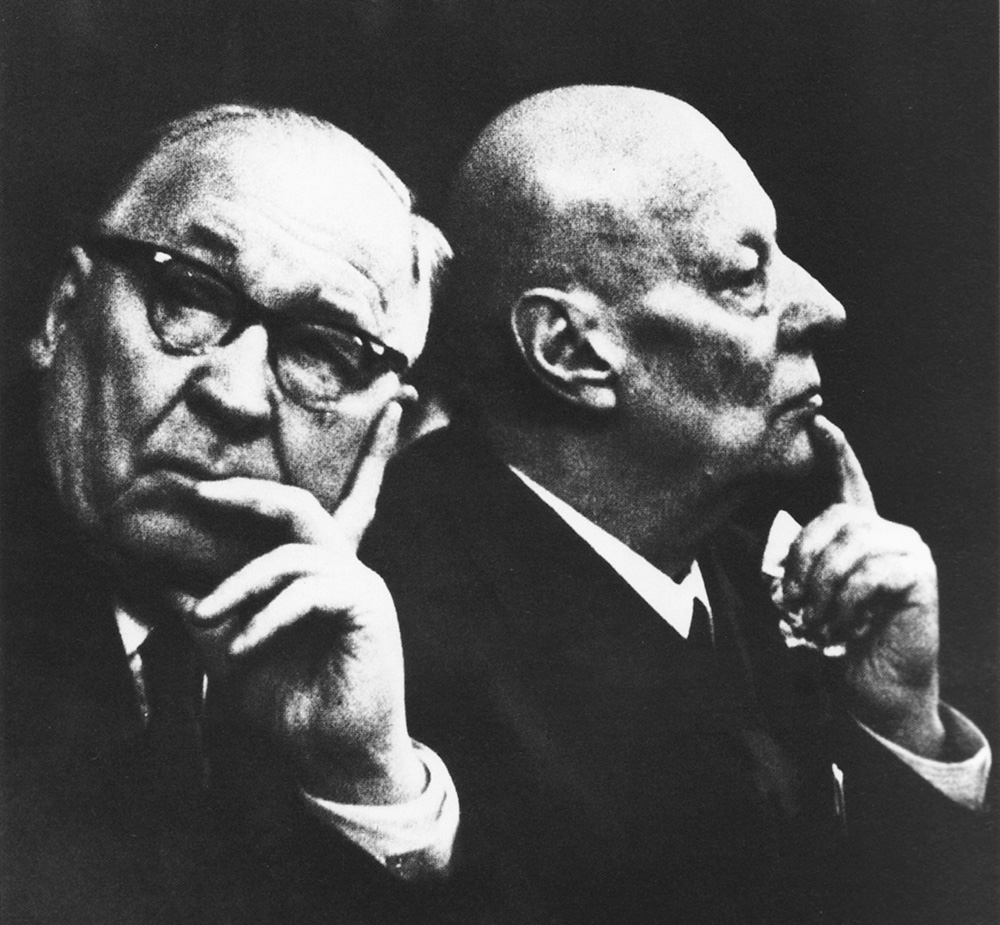
Figure 2.2 Nuclear decision makers: The minister of Medium Machine Building (Sredmash), Efim P. Slavskii (left), and the president of the Soviet Academy of Sciences and director of the Kurchatov Institute of Atomic Energy, Anatolii P. Aleksandrov, were the two most powerful men in the Soviet nuclear industry. Their approval effectively decided where new nuclear power plants would be built, what reactor design would be chosen, and which engineering bureau would be awarded a contract.
Source: Courtesy of Petr A. Aleksandrov and the publishing house “Master,” Moscow. Originally published in A. I. Vol'skii and A. B. Chubais, eds., Elektroenergetika, series Stroiteli Rossii: XX vek (Moscow: “Master,” 2003), 108. Reprinted with permission.
The Interdepartmental Technical Council met three or four times a year, for several days at a time. Unfortunately, only the overall meeting topics, not the content of the detailed technical discussions, have been published.104 The day-to-day functioning of this huge apparatus was facilitated by Sredmash's Scientific-Technical Council (NTS), an internal, strictly classified council responsible for technical nuclear policies—among them nuclear safety. The Scientific-Technical Council prepared, and preapproved, all nuclear policies before they reached interdepartmental agencies, or executive and legislative organs.105 For example, the Scientific-Technical Council approved a set of safety regulations (OPB-73) on January 11, 1972,106 before the Interdepartmental Technical Council endorsed them on February 19, 1973, after three months of deliberation. Another example of this procedure was the modernization of pressurized water reactors (VVERs). After extensive discussions in Sredmash's Scientific-Technical Council about whether steel containments for VVER reactors would increase their safety, the Interdepartmental Technical Council decided on January 19, 1976, to adopt the containment as a standard feature of all future VVERs.107 The Interdepartmental Technical Council therefore relied on Sredmash's internal Scientific-Technical Council not only for scientific expertise and technical recommendations, but also for established organizational routines.
Governing Nuclear Power at the All-Union Level
While Sredmash and Minenergo refined their internal structures, changes were also underway in the larger, Union-level entities that governed the two ministries. Often miniscule pockets of nuclear expertise in the central bureaucracies—the Council of Ministers, the Party's Central Committee, Gosplan, and others—rarely seem to have worked together to ensure a coordinated nuclear energy policy. Rather, they seem to have existed mainly to give their respective bosses justification for participating in nuclear policymaking. In the following section, I discuss only those bodies that directly and meaningfully contributed to the choice of nuclear reactor designs: as critics, enablers, or supervisors.108
The Central Committee's Sector for Nuclear Energy
In 1969, Vladimir Maryin, an experienced power engineer who participated in the construction of the Novo-Voronezh nuclear power plant, joined the Central Committee's Department of Heavy Industry and Energy as an expert advisor (instruktor) on nuclear energy. According to Grigorii Medvedev, who during the late 1970s worked for Soiuzatomenergo, Maryin was a hands-on, pragmatic administrator who provided direct and personal assistance to managers at nuclear construction sites, sometimes bypassing Minenergo's languid process. In the early 1980s, the Central Committee finally created a Sector for Nuclear Energy in its Department of Heavy Industry and Energy and added staff support to Maryin's one-man enterprise.109 One of the new staff members was Gennadii Shasharin, a power engineer–turned–nuclear expert, who would later become Minenergo's deputy minister for nuclear power plants. Another was Georgii Kopchinskii, a nuclear engineer who was director of the Smolensk nuclear power plant before accepting an administrative position in Moscow.110 Working for this sector, at least for a limited amount of time, was not necessarily a logical career step for enthusiastic nuclear power engineers, but the Central Committee gave the sector's staff significant authority in supervising the nuclear industry, including the otherwise “untouchable” reactor designers and engineers. As we will see in chapter 5, this led to some conflict over the RBMK reactor, even prior to Chernobyl. Most importantly, the industry-minded staff of the Central Committee's sector challenged the designers’ implied assumption that civilian operators would be just as capable as operators of military reactors at working around a reactor's erratic performance.111
Gosplan's Department of Energy and Electrification
The Department of Energy and Electrification within Gosplan long predates the nuclear industry, but once the government started allocating funds to nuclear power plants, the department took on responsibility for those plants.112 Aleksei Pavlenko, the former minister for power plants, ran the department from 1959 until his retirement in 1974. He was in charge of site selection, orchestrated the site-development process, and took part in the consideration and confirmation of designs and cost estimates. His department drew up one-year and five-year plans, analyzed the experience gained from already-operating nuclear plants, developed long-term perspectives for nuclear power development, and oversaw the execution of all these plans. Pavlenko's department also monitored factories handling production orders for the nuclear industry, including on-site visits by specialists.113
Nuclear Oversight Authorities
Attempts to secure and regulate the safety of industrial work under Soviet rule go back to the mining industry of the early 1920s. Soviet nuclear regulation originated in the “State Service for Radiation Safety Control” established in 1946 at Laboratory No. 2 (Gosudarstvennaia sluzhba kontrolia radiatsionnoi bezopasnosti). From 1958 to 1970, Sredmash, with assistance from the Ministry of Health and Laboratory V at Obninsk, performed nuclear safety oversight for all nuclear facilities. Glavatomenergo, meanwhile, drafted their first version of nuclear safety rules in 1957, long before nuclear power plants officially came under Minenergo's authority, and modeled them on the safety rules already in force for conventional power plants.114 In 1966, the year Minenergo took responsibility for nuclear power plants, the ministry set up an organization called “State Technical and Mining Oversight Committee for the Power Industry” (Gosgorenergotekhnadzor).115 This new inspectorate operated in addition to the already-existing “State Technical and Mining Inspectorate” (Gosgortekhnadzor), an organization responsible for the safety of mining operations and industrial safety, and had to ensure the safety of industrial work specifically at power plant construction sites.
The first documents spelling out nuclear safety regulations as such were written in 1963 and 1964 and approved in 1968.116 On October 22, 1970, the Council of Ministers divided nuclear safety oversight over the construction and operation of nuclear power plants and research reactors among the Ministry of Health, Sredmash, and Gosgortekhnadzor. Gosgortekhnadzor subsequently oversaw the safety of the construction and operation of nuclear plants, while Sredmash was to guarantee the supervision of nuclear safety. In March 1971, the Soviet Academy of Sciences raised the issue of nuclear power plant safety in a communication with Gosplan and specifically suggested harmonizing domestic safety regulations with international practice.117 That same year, Gosgortekhnadzor, the Ministry of Health, Sredmash, and Minenergo developed and temporarily adopted a set of rules and regulations on nuclear power plant safety, and a few years later, in 1974, a declassified version of the document (Obshchie polozheniia obespecheniia bezopasnosti pri proektirovanii, stroitel'stve i ekspluatatsii AES, OPB-73) would become the first legally binding nuclear safety legislation.118
In 1972, Sredmash created a specialized State Oversight Committee for Nuclear Safety (Gosatomnadzor) that replaced the nuclear safety supervision at nuclear power plants that the institute of the scientific director provided. (At the time, the Institute of Physics and Power Engineering supervised the Beloiarsk plant, and the Kurchatov Institute of Atomic Energy supervised the Novo-Voronezh plant.)119 However, this new agency remained under the control of Sredmash, whose leadership questioned the necessity of strict nuclear safety rules.120 A new nuclear safety division within Gosgortekhnadzor and within the Ministry of Health complemented Gosatomnadzor's work.121
It was not until 1983 that the Soviet government created the independent State Oversight Committee for the Safe Conduct of Work in the Nuclear Power Industry (Gosatomenergonadzor), which replaced the earlier oversight agency under Sredmash.122 Evgenii Kulov, previously deputy minister of Sredmash, became Gosatomenergonadzor's first chairman, a role equivalent in rank to a minister.123 Gosatomenergonadzor supervised three areas: nuclear power plant safety, design work, and the production of equipment for nuclear power plants.124 The nuclear fuel cycle and other, non-civilian nuclear applications remained under Sredmash's exclusive control.125
It is worth emphasizing that this agency handled oversight, control, and inspection—not regulation. The difference was more than merely semantic because it reflected the fact that the Soviet committee and its Western cousins took on different tasks. It was only in 1992 that the now Russian agency became a regulatory agency, which, in addition to having safety oversight, also developed normative documents and issued licenses.126
One possible explanation for the extraordinarily slowness with which the Soviet Union established an independent supervisory agency for its nuclear industry may be that the state owned all assets. That prevented the separation of operating and regulating accountability that the United States, for example, imposed by giving license provider and licensee equal but separate responsibilities for nuclear safety. In the Soviet Union, by contrast, different tiers and levels in a hierarchical management system traditionally had different safety responsibilities.127 The authors of Soviet nuclear safety regulations faced the enduring problem that the state was in charge of all nuclear safety functions. When leaders eventually subsumed the management of all nuclear power plants under one roof, this problem not only remained, it in fact intensified. In 1982, partly as a reaction to the Three Mile Island accident in the United States, Soviet officials revised the original nuclear safety regulations (OPB-73) and approved an updated version, OPB-82.128
As this short chronology of organizational design in the Soviet nuclear sector has shown, the bureaucracies in charge of managing the Soviet nuclear industry and their changing degrees of autonomy significantly shaped decisions that were supposedly purely technical. The emerging map of responsibilities in the nuclear sector determined how decision makers assessed the role of nuclear power for the country's energy mix, the industry's growth potential, and the technical designs best suited to achieving these goals.
The Transfer Revisited
Authorities intended for the 1966 transfer of responsibilities for nuclear power plants from Sredmash to Minenergo to create a rational, effective framework for managing the civilian nuclear sector, but the complicated division of labor that ensued did not provide a definitive answer to the question of how best to manage nuclear power plants. As we have seen, the state planners’ intention of creating an organizational framework that would rationally balance nuclear energy's military heritage with the conventional power industry's requirements ran up against considerable obstacles. Struggles over organizing a workable division of labor between Sredmash and Minenergo involved the implicit (and after Chernobyl explicit) question about which values—secrecy and military discipline on the one hand, or plan-oriented efficiency on the other—should govern the construction, operation, and regulation of nuclear power plants. This interministerial rivalry not only threatened to jeopardize indispensable cooperation between the two sectors; it in fact prevented the proactive design of an organization to manage the civilian nuclear industry and instead forced planners to incrementally expand existing infrastructures. This ultimately obscured professional accountability, while reinforcing existing institutional boundaries.129
In entrusting Minenergo with operating nuclear power plants, Soviet authorities assumed that nuclear specialists had learned to contain the risks of controlled nuclear fission, that the available reactor designs and already-working reactors demonstrated this accomplishment, that appropriate organizational structures were in place, and that reliable technical professionals would guarantee the safe operation of nuclear power plants. The transfer of nuclear power plants to Minenergo thus signified that the Soviet Union had mastered nuclear technology and normalized nuclear fission. Those in charge deemed that civilian engineers whose work ethic no longer reflected the institutional culture of the nuclear weapons program, but instead that of industry and production, were fit to operate nuclear power reactors.
Ostensibly, Sredmash tried to meet the unique requirements of nuclear power plants, particularly those with novel reactor designs, after the transfer.130 The division of responsibilities, however, implied a hierarchy of expertise in which the Sredmash leadership considered Minenergo's nuclear capabilities inferior to their own. This attitude, in turn, deepened existing rivalries and blurred responsibilities. More fundamentally, it led to asymmetries in the degree of agency, level of experience, and access to and distribution of knowledge.
With the benefit of hindsight, nuclear specialists sometimes call the transfer of nuclear power plants from Sredmash to Minenergo a big mistake, invoking Minenergo's supposed lack of military discipline and qualified specialists. Some nuclear experts claim that Minenergo was not ready organizationally for its new responsibilities at the time of the transfer.131 Such critics emphasize that the positive attributes of a semimilitary organization were lost, while new civilian forms were developing very slowly.132 Some even claim that the Chernobyl disaster was a direct result of immature managerial reorganizations and that comparable violations of operating instructions would not have happened under a stricter management. But hindsight is not always perfect, and this judgment is in fact too categorical. The maturity, reliability, and “safety culture” of any given organization, or system of interconnected organizations, only becomes fully evident after an accident. As the leading Soviet nuclear safety authority, Viktor Sidorenko, cautioned, the judgment that Minenergo was “not ready” organizationally
can be easily challenged by recollecting events that happened during the development of the military atomic project (suffice it to remember the Kyshtym accident, where a nuclear waste storage facility exploded), as well as by recalling the accidents at the Leningrad [nuclear power plant], which was under the control of [Sredmash] (not with the same catastrophic consequences as at Chernobyl's unit 4, but clearly a “harbinger” of the Chernobyl accident that did not receive due attention).133
And yet at the same time, Sidorenko insists that the military-style organization of nuclear power plant management under Sredmash did compensate for and balance out a general lack of “safety culture” in the Soviet Union.134 According to him, Sredmash's paramilitary management style was characterized by a keen sense of personal accountability, efficient decision-making processes, careful recruitment practices, and the possibility of exchanging information even under conditions of intense secrecy.135 Perhaps this was because “we were personally accountable; we answered with our ‘skin’ for operational safety,” as Boris Dubovskii, a late veteran of the Soviet nuclear weapons program, recalled. Such accountability, efficiency, and care were critical because, as one of my interviewees put it, “You can't put a soldier with an automatic rifle behind each power plant operator.” 136
In contrast to Sredmash, Minenergo was an unambiguously civilian agency that confidently dismissed secrecy and elitism in favor of competent pragmatism and economic rationality.137 Power engineers, not always trained nuclear experts, were responsible for Minenergo's nuclear power plant management, and one thing these managers lacked was Sredmash's extensive system of research support. Minenergo's priority was to push an ambitious construction schedule of new plants, and over time, the specifics of nuclear technologies became diluted as leaders increasingly subordinated them to the demands of generating competitively priced electricity for the national grid.
Although authorities tried to preserve the knowledge of Sredmash's semimilitary organization and provided the new nuclear power workforce with training at the best institutions in the country, the transfer entailed unanticipated changes in work routines and priorities.138 As I detail in chapter 3, only after Chernobyl did nuclear experts reconsider the significance of on-the-job training, which had been Sredmash's dominant practice. The normalization of nuclear technology, these experts recognized, had not clarified the accountability of the organizations involved.
Conclusion: Organizational Changes and Institutional Cultures
The institutional framework for managing the nuclear power industry in the Soviet Union emerged only gradually, over several decades, despite continuing efforts to develop the best organizational form.139 Rapid expansion and struggles for control among the ministries involved characterized the industry's development. The ongoing reorganizations and reassignments of tasks—which ultimately also assigned or denied expertise, responsibility, and accountability—reflected these struggles. Organizational shifts were attempts at reflecting the new technology's requirements, which only gradually revealed themselves as the numbers of nuclear power plants grew. These organizational changes were also devices to establish social, political, and legal order. The resulting bureaucracies provided clear hierarchies, a division of labor and power, and a system of accountability.140 The positions Sredmash and Minenergo held in the Soviet state's bureaucracy determined what they perceived as the greatest risk (the risk of technical failure or the risk of economic loss) and how these differing risk perceptions affected not only attitudes, but the division of tasks and responsibilities. The ongoing reorganization of the civilian nuclear sector, the debates over the special (or not-so-special) status of nuclear power plants, and the consequent intervention of bureaucratic organizations contradict prevailing assumptions about how a centralized, planned economy worked.
As we saw in the previous chapter, the constant reforms affecting the Soviet economy in general also affected Minenergo, and, to a lesser extent, Sredmash, but the fact that their respective leaders stayed in power for such long periods of time balanced out some of these instabilities. Both Slavskii and Neporozhnii had worked their way up the social ladder through engineering careers and service in party organizations.141 The fact that their ministries were cornerstones of Soviet foreign policy and the economy, respectively, protected them from ongoing, and often drastic, economic reforms.142 Only the combination of Chernobyl with the imminent collapse of Soviet institutions during perestroika provided the final blows to Minenergo's obsession with growth and to Sredmash's aspirations to secrecy-clad autarchy within the state.
Finally, the goal of standardization motivated the transfer of nuclear reactor technology from Sredmash's secret, semimilitary organization to Minenergo's highly visible civilian organization.143 In their efforts to improve the economic efficiency of nuclear power plants vis-à-vis other power plants, Soviet leaders and industry managers viewed standardization as the most promising strategy, both technically and managerially. They aimed to bring the price of nuclear power down by scaling up to reach greater power capacities, by reducing the complexity of auxiliary systems and fuel construction, and by using nuclear fuel more intensely.144 But in a young industry that essentially consisted of prototypes, these planners struggled with determining which technology was mature enough for standardization and ultimately mass implementation.
Not only did the Soviet nuclear power industry have a dual origin, it also performed until 1966 a dual and somewhat paradoxical function: as part of a highly secret industry shielded from the outside world and as valuable propaganda for Soviet science and technology.145 The 1966 transfer of tasks and responsibilities, of artifacts and cadres both made nuclear power routine and established the norm that this was how nuclear plants should be managed. What made this normalization possible was the nuclear industry's emerging organizational infrastructure. This infrastructure helped bridge the major boundary between civilian and military nuclear applications. At the same time, the new organizational infrastructure justified a specific division of tasks and responsibilities, reaffirmed distinct institutional cultures, and reinforced discrete professional identities. Responsibilities in this emerging nuclear bureaucracy determined how scientists and engineers, political decision makers, economic planners, and the rank-and-file nuclear workforce thought about nuclear energy's relevance. In other words, the organizations that managed the emerging nuclear industry not only reflected the specific character of a centralized state bureaucracy or the goals of a planned economy. They also actively defined technical features of the reactors ultimately chosen for mass implementation and delineated tasks for the country's nuclear workforce: their required level of expertise, their understanding of risk, and their commitment to safety.