
1
The Centers for Disease Control (CDC), headquartered in Atlanta, is a national treasure. Staffed by a cadre of highly trained, dedicated professionals, the CDC protects the nation against dangerous health threats by detecting new germs as they spread around the globe, uncovering the most effective ways to combat disease, and disseminating new knowledge to physicians, policy makers and communities. The CDC sits alongside other crown jewels of America’s medical system, including top private and nonprofit hospitals across the nation, such as Sloan Kettering. It is no wonder that the dominant impression is that the quality of American medical care is the best in the world—“a utopia of high-tech treatments, cutting-edge research, and expeditious and effective interventions.”1
The best American medicine is indeed excellent, and the nation is unambiguously a world leader in some areas. Yet much of the care that patients receive is not particularly effective for their clinical conditions. Moreover, the United States spends dramatically more per capita on medical care than do other advanced democracies and does not consistently outperform peers on quality measures or health outcomes.2
For reasons that remain unclear, health care cost growth has moderated since 2002. Some experts suggest that possible explanations include “the rise in high-deductible insurance plans, state-level efforts to control Medicaid costs, and a general slowdown in the diffusion of new technology, particularly in the Medicare population.”3 Yet health care costs are projected to grow at GDP plus 1.2 percent over the next twenty years, a rate high enough to cause serious pain for taxpayers and workers.4
As figure 1.1 shows, in 2013 per capita spending on medical care in the United States (including out of pocket costs, insurance payments, and taxes to pay for health programs like Medicare) was $8,617—nearly double the Organisation for Economic Co-operation and Development (OECD) average. The United States is wealthier than other nations, so it would be expected to spend more on medical care. Yet the United States also spends substantially more than peer nations, even though we have fewer physicians (and fewer physician consultations) relative to the population than other nations.5 This higher level of spending does not appear to produce consistently better results on health indicators such as life expectancy. To be sure, the United States has higher obesity and poverty rates than many European countries. But multivariate analysis that controls for income, environmental quality, and lifestyle across developed nations finds little connection between spending and health outcomes.6 Some experts believe that the U.S. medical system is distinctively inefficient.7 As economists Henry J. Aaron and Paul B. Ginsburg write, “Whatever the reason, it is hard to avoid the conclusion that the United States is buying less health than other nations do with its high outlays.”8
It is critical to distinguish between the total benefits of greater health spending over time and the benefits of extra health spending at the margin. Over time, new technologies are developed, and some of them are associated with substantial improvements in health outcomes. For example, the mortality rate from cardiovascular disease has declined by more than 50 percent since 1950, at least partly because of the development of better ways to treat heart disease.9 At any given moment, however, the knowledge about how to treat different conditions is fairly similar across developed countries. The key issues are “how much the technology is used and how much is paid for it. By comparison with other countries, the United States uses technology in lower value settings and pays more for the same care.”10 This pattern likely stems from a combination of factors, including the absence of overall budgetary limits and supply-side constraints on medical capital equipment.11 In sum, all advanced democracies struggle with the cost and efficiency of health care delivery. However, the United States faces special challenges. Our financing and delivery systems are an unusually complex, decentralized, highly commercialized admixture of public and private plans that lack both the discipline of efficient markets and the authority of government control.
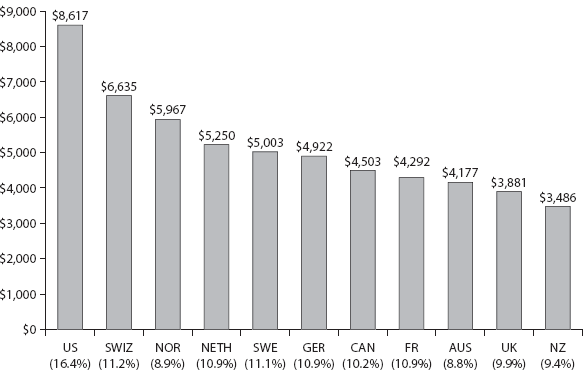
FIGURE 1.1. Health spending per capita (in US$) and as a percentage of GDP, 2013. Source: OECD Health expenditure and financing data (http://stats.oecd.org/Index.aspx?DataSetCode=SHA).
Most experts agree that a substantial portion of the U.S. medical outlay is spent inefficiently, leading to little improvement in quality or outcomes. The Institute of Medicine estimates that as much as one-third of overall U.S. medical spending is wasted annually.12 The United States spends $2.5 trillion annually in health care, so this corresponds to over $750 billion in waste each year—more than the budget for the Department of Defense.13
As health economist David Cutler argues, waste is marbled throughout the health delivery system, making it hard to cut out.14 It comes in many forms, including excessive administrative costs, inflated prices, fraud, and—of especial concern in our analysis—overtreatment.15 Overtreatment includes “care that is rooted in outmoded habits, that is driven by providers’ preferences rather than those of informed patients, that ignores scientific findings, or that is motivated by something other than provision of optimal care for a patient.”16 According to some estimates, overtreatment added between $158 billion and $226 billion in wasteful spending in 2011.17 No area of medicine is immune. Overtreatment exposes patients to treatments that offer little or no health benefits as well as potential harms. Sometimes entire classes of care are inappropriate, but overtreatment also arises when a given treatment is used more intensively than clinical conditions warrant. An example is using back surgery as a first-line therapy for patients with simple cases of back pain/discomfort who would benefit from much less invasive procedures, such as drugs or physical therapy.18
Consider this puzzling situation. According to a CDC study, every year about 60 percent of American women who have had a total hysterectomy and lack a cervix receive a Pap test for cervical cancer. While there are some posthysterectomy women who need to continue screening (such as those whose surgery was done to remove cancer), the number is small. As one obstetrician stated, “It’s tough to get cervical cancer without a cervix.”19 According to the CDC, “the net benefits of screening some women, particularly women who have undergone hysterectomy … might be outweighed by the net harm (e.g., false-positive tests leading to needless patient anxiety and invasive procedures).”20 The U.S. Preventive Services Task Force, the American Congress of Obstetricians and Gynecologists, and American Cancer Society all recommend against Pap tests for posthysterectomy women over the age of 30.21 Yet despite the scientific consensus against routine screening for cervical cancer posthysterectomy, the proportion of women over 30 years of age who have had a hysterectomy and recently have been screened declined only 15 percentage points between 2002 and 2010 (figure 1.2).
Screening posthysterectomy women for cervical cancer points to a larger problem. Harvard Medical School researchers analyzed Medicare claims data, looking at 26 tests and procedures that empirical research has shown not to be beneficial for patients. They found that at least one in four—25 percent of—Medicare recipients received one or more of those services in 2009. The 26 services “are just a small sample of the hundreds of services that are known to provide little or no medical value to patients.”22 “We suspect this is just the tip of the iceberg,” said study author J. Michael McWilliams.23
Millions of Americans receive antibiotics, MRIs, blood tests, diagnostic screenings, and surgeries they don’t need.24 Atul Gawande, a general surgeon who has been at the vanguard of the EBM movement, reports that he took a look at eight new patients who entered his clinic one afternoon. All had medical records complete enough to permit him to review their histories. Gawande found that seven of the eight had received unnecessary care. Two had expensive diagnostic tests of no value. A third patient had undergone a questionable surgery for a lump (which the surgery failed to remove).

FIGURE 1.2. Percentage of women who had a recent Papanicolaou (Pap) test (within 3 years), by hysterectomy status and age group. Behavioral Risk Factor Surveillance System, United States, 2000–2010. Note: Even years only. All trends are statistically significant using linear test of trend [p<0.05]. Percentages are weighted to the noninstitutionalized, U.S. civilian population. †2002 American Cancer Society, 2003 American College of Obstetricians and Gynecologists, and 2003 U.S. Preventive Services task Force Pap test guidelines published. Source: Center for Disease Control and Prevention, 2013, “Cervical Cancer Screening among Women by Hysterectomy Status and among Women Aged > 65 Years—United States, 2000-2010,” Morbidity and Mortality Weekly Report 61 (51) (January 4): 1043–47, https://www.cdc.gov/mmwr/preview/mmwrhtml/mm6151a3.htm, accessed March 15, 2017.
Four patients “had undergone inappropriate arthroscopic knee surgery for chronic joint damage.”25 These results occurred at one of the most prestigious and sophisticated medical institutions in the world. All these unnecessary treatments not only increase costs, but they can also imperil health by exposing patients to a higher risk of side effects and medical errors.26 “What’s remarkable is how much we do with so little evidence to support what we do, especially when it comes to the patient right in front of us,” said Harlan Krumholz, a cardiologist at Yale University.27 As David Epstein wrote in an Atlantic magazine article, “When Evidence Says No, but Doctors Say Yes”:
For all the truly wondrous developments of modern medicine—imaging technologies that enable precision surgery, routine organ transplants, care that transforms premature infants into perfectly healthy kids, and remarkable chemotherapy treatments, to name a few—it is distressingly ordinary for patients to get treatments that research has shown are ineffective or even dangerous. Sometimes doctors simply haven’t kept up with the science. Other times doctors know the state of play perfectly well but continue to deliver these treatments because it’s profitable—or even because they’re popular and patients demand them. Some procedures are implemented based on studies that did not prove whether they really worked in the first place. Others were initially supported by evidence but then were contradicted by better evidence, and yet these procedures have remained the standards of care for years, or decades.28
We live in an age of Big Government. There is no shortage of federal rules that govern the health care sector, and agencies like the Food and Drug Administration are among the most powerful and best known regulatory agencies in the world.29 Americans could be excused if they believe (without thinking much about it) that existing regulatory frameworks ensure that new treatments enter into clinical practice only after research has shown that they work as well as or better than alternatives, and that very expensive treatments must work at least as well as much cheaper alternatives. But this belief is mistaken.
To be sure, drugs and devices must be certified as safe and effective by the FDA before they can be marketed in the United States.30 There are three main reasons why the FDA approval process often fails to generate the information needed to promote evidence-based medicine, curb wasteful spending, and ensure the best outcomes for patients. The first reason is that the assessment of comparative effectiveness is typically not required for FDA marketing approval.31 Despite calls from medical reformers for greater attention to comparative effectiveness and the benefits of a new therapy over alternatives,
the FDA has stuck with the older (and industry preferred) model of placebo studies as the gold standard by which to measure the efficacy of new products, a decision that some have argued has escalated drug costs by facilitating the introduction of expensive ‘me too’ drugs which offer only marginal efficacy gains, if any, over existing off-patent therapies.32
Clinical trials of new drugs typically compare them to alternative medications only when the manufacturer seeks to make a marketing claim that a product is superior to other treatments, “or when giving trial participants a placebo would be unethical.”33 Furthermore, the FDA’s evaluations of products are often designed only to see if they are more effective than placebo on a short-term surrogate endpoint, such as a blood test, which may or may not be a good proxy for long-term clinical outcomes.34 Physicians commonly prescribe FDA-approved drugs for “off-label” uses—that is, for uses (and types of patients) in which the drugs have not been tested in clinical trials. Most physicians are not being irresponsible in these practices; the evidence base simply does not exist for many of these uses, especially for the off-label use of drugs.35
A second reason why FDA review fails to generate the information needed to determine what treatments work best for what patients is that the evidentiary standards for evaluating medical devices are typically lower than for prescription drugs and biologics. Many medical devices enter the market through an expedited pathway, in which manufacturers need only demonstrate (usually without evidence from randomized controlled trials) that a new device is “substantially equivalent” to a device already being sold. As mentioned, some point out that the 21st Century Cures Act, intended to expedite the approval of new drugs and devices, could affect the quality of evidence used by the FDA to evaluate new products and new uses for existing ones.36 In sum, federal regulation of medical products has been crafted to protect safety by keeping dangerous drugs and devices off the market, not to ensure that patients get the treatments that work best for their conditions.
The third gap in the FDA review process, less well known than the other two reasons but perhaps more important, is that many medical procedures undergo no rigorous evaluation at all. While the FDA does review devices used in medical procedures, it generally does not regulate the efficacy of the procedures themselves. This means that a doctor who invents a new kind of surgery can generally begin performing it without extensive evidence that it works better than less invasive alternative treatments. As Ashton and Wray observe, “Paradoxically, surgical innovations, generally costlier and riskier than pharmaceutical agents, can enter clinical practice with a much weaker evidential base than drugs and devices.”37
The weaknesses of the FDA are compounded by the federal government’s incapacity to promote efficiency in programs like Medicare and Medicaid. While all advanced nations are struggling to eliminate waste in health care, the United States is somewhat of an outlier when it comes to the use of evidence to shape coverage and reimbursement decisions. Australia, France, Germany, and the United Kingdom, for example, all have CER entities with greater authority than PCORI. These organizations differ in their roles and responsibilities, but all focus “their priorities, design, generation, and implementation of CER evidence on the explicit objective of informing health care policy decisions on the use of and payment for clinical services.”38 In comparison, CER entities in the United States have been given fewer tools to influence how health care resources are allocated.39
In contrast to the agencies that administer public health insurance programs in other advanced nations, the Center for Medicare and Medicaid Services lacks the ability “to actively review the vast majority of new technologies that are adopted into clinical practice and to restrict coverage for those that lack sufficient evidence of effectiveness.”40 Since its enactment in 1965, Medicare has focused primarily on clinical effectiveness, and covered any treatment that it deems “reasonable and necessary.” It has not sought to constrain or limit patient choice about treatment options.41 Medicare delegates most coverage decisions to regional contractors, who generally defer to the clinical judgment of physicians. Even when national coverage policies are developed (which applies to only a small fraction of medical services), the lack of high-quality outcomes data means that “the vast majority of new technologies and services bypass any meaningful review.”42 Medicare has not been a regular sponsor of clinical trials to address gaps in the medical evidence base, although on some occasions Medicare has sought to link the coverage of a new service to providers who participate in a prospective data collection activity by a process known as “coverage with evidence development.” While Medicare has sometimes limited payments for a service to the rate paid for the “least costly alternative,”43 Medicare reimbursement levels in the vast majority of cases are linked to the “underlying cost of providing services.”44 Administrations of both parties have sought to rationalize Medicare’s coverage policies to give greater weight to the costs and benefits of services, but reforms have been elusive. In the early 1990s, the George H. W. Bush administration proposed a Medicare coverage rule that would have included a limited cost-effectiveness analysis requirement for certain technologies.45 However, the proposal was opposed by the medical device industry, physician associations, and hospitals.46 Members of Congress and disease-advocacy groups argued that cost-effectiveness analysis would lead to rationing, and the proposed rule was buried before the 1992 elections.47
Some state Medicaid agencies do use comparative effectiveness data to inform their drug formulary decisions. The innovator in this area has been Oregon. In 2003, under former governor and emergency room physician John Kitzhaber, M.D., Oregon created the Drug Effectiveness Review Project (DERP), an independent, university-based collaborative to evaluate clinical evidence on the relative safety and efficacy of different drugs in the same class.48 More than a dozen state Medicaid programs are now involved with DERP,49 which conducts systematic literature reviews; it does not fund major new clinical trials. While Medicaid is a major state budget item, the fact that the federal government has historically paid most of the program’s total expenses has attenuated the incentive of states to identify and eliminate less effective treatments, since states would have recouped only a portion of the savings.50
Taken together, these governance failures contribute to a variety of problems:
• Although estimates vary, some experts believe that less than half of all medical care is based on adequate evidence about its effectiveness.51
• When there are two treatments available for the same condition—such as surgery versus medication—doctors often do not know which one works best. Consequently, “decisions about what treatments to use often depend on anecdotal evidence, conjecture, and the experience and judgment of the individual physicians involved.”52
• Many common surgical procedures, such as spinal fusion for back surgery, rest on little evidence.53 There have been cases where thousands of patients have undergone extremely risky operations (e.g., high-dose chemotherapy with bone marrow transplants for breast cancer) that were later determined to be ineffective when properly evaluated.54
• The Dartmouth Atlas of Health Care has identified large regional variations in utilization and spending in the Medicare program that cannot be fully explained by differences in population structure or patient illness, and that are not consistently related to health outcomes.55 For example, regional variations in hip and knee replacement for Medicare patients were four times higher in some regions compared with others in 2005–6.56 A recent study found that utilization changes significantly when Medicare patients move from one area to another (that is, from a high utilization area to a low one, or vice versa), and that 50 to 60 percent of the variation in utilization is due to place-specific factors, such as the practice styles and beliefs of local physicians.57
• It can take decades for medical research findings to enter clinical practice.58 A Rand study reported Americans only receive 55 percent of the recommended preventive, acute, and long-term health care.59 For example, although the benefits of Beta blockers in acute myocardial infarction (heart attack) was established in the 1980s, Beta blockers remained widely underused, and there was still wide variation in their use as recently as 2005.60 The failure to deliver recommended care is due not only to slow diffusion, but also to consumer resistance to many preventive interventions, a lack of medically valuable treatments that are remunerative, and the fact that many practices are not set up to do these things efficiently.
The tripartite problem of missing evidence, overutilization, and unexplained regional variation in the Medicare program has generated a massive volume of health economics and health services research.61 The problem is so widespread that the mainstream media has taken notice. There have been many articles in the New York Times and Washington Post about the overuse of everything from cardiac stenting and Mohs surgery to CT scans, ear tubes, elective induction of labor, and antibiotics.62 A number of important books about the problem have also appeared in recent years. Their titles tell the story: Overdiagnosed: Making People Sick in the Pursuit of Health;63 Hope or Hype: The Obsession with Medical Advances and the High Cost of False Promises;64 Overtreated: Why Too Much Medicine Is Making Us Sicker and Poorer;65 Overdosed America: The Broken Promise of American Medicine;66 Flatlined: Resuscitating American Medicine;67 and Taming the Beloved Beast: How Medical Technology Costs Are Destroying Our Health Care System.68 These books are riveting, but they are not screeds. Their detailed, highly informative analyses help explain why American medicine costs so much—and delivers so little.
The essence of the problem described in these books can be captured in a graph created by health economists Amitabh Chandra, Anupam B. Jena, and Jonathan S. Skinner.69 Figure 1.3 shows a “production possibility frontier” in health care. The graph maps the relationship between factor inputs, which includes all the labor and capital used to produce medical care (e.g., physicians, nurses, hospital beds, medicines, x-ray machines, etc.) and health outcomes (survival/quality of life). A well-functioning health care system would be operating at a point somewhere on the curve (not inside it). That is, given its factor inputs, the health system would obtain the best possible outcomes for the overall health of the population. The goal of research on the comparative effectiveness of different treatment options is to help society reach a point on the curve (such as point B or C) by giving patients and providers the sound evidence they need to choose the treatment with the best health outcome for each clinical indication.70 Unfortunately, the U.S. health care system is represented by point A, inside the production possibility frontier, due to wasteful costs, lack of effective care, or overtreatment. That is, the United States is operating below potential. The nation could be doing much better, given the factor inputs we are allocating to the health care system, if patients received the most effective treatments for their conditions, as suggested by the examples in Chandra, Jena, and Skinner. Additional studies, such as Perlroth, Goldman, and Garber, suggest “CER could save up to $3 billion annually by establishing that for prostate cancer patients, prostatectomy ($7,300 cost) yields results as good as brachytherapy or radiation seeds ($19,000) and radiation therapy ($46,900).”71

FIGURE 1.3. Cost-effectiveness and comparative efficiency in a health care production function. Source: Copyrighted and published by the American Economic Association as figure 1 in Amitabh Chandra, Anupam B. Jena, and Jonathan S. Skinner, 2011, “The Pragmatist’s Guide to Comparative Effectiveness Research,” Journal of Economic Perspectives 25 (2): 27–46. The published article is archived and available online at https://www.aeaweb.org/journals/jep.
There are three reasons why everyone should be concerned about a situation in which the nation finds itself far inside its “production possibility frontier.” First, given what we spend, millions of people—spouses, parents, and children—are less healthy than they could be if medicine were more evidence based. Second, the foregone health benefits—the losses in quality of life or survival—are not inevitable. Incentives to generate and use scientific information, if missing, can be supplied. Norms supporting the practice of EBM, if weak, can be strengthened. Insurance rules that encourage overtreatment can be changed. Finally, the current situation should spark outrage because it reflects in part efforts by powerful economic interests to gain profits through deceptive practices, as noted by Ashton and Wray:
We know how to generate high-quality evidence about the benefits and harms of clinical interventions. But evidence can make winners and losers of parties [such as pharmaceutical companies] that have a stake in the decisions that will flow from the evidence. Consequently, though this flies in the face of scientific objectivity, medical ethics, and the high ideals of methods and ethics of human subjects research, parties will try to manipulate the design and conduct of research so that the process yields answers favorable to their interests.72
Medical evidence is generated in part to satisfy FDA review, but the data-generation system requires government monitoring and enforcement to maintain its credibility and effectiveness. Consider the rosiglitazone story. Rosiglitazone is an antidiabetes drug marketed under the name Avandia and sold by the British drug maker GlaxoSmithKline (GSK). After years of civil and criminal investigations that featured allegations of efforts to intimidate scientists, GSK agreed to pay a $3 billion fine in part for failing to report certain safety data to the FDA, including certain postmarketing studies, as well as studies conducted to address policy makers’ concerns about the drug’s cardiovascular safety risks.73
But it isn’t only big drug companies that can fail to protect patient welfare. Doctors and medical administrators themselves bear responsibility. In his book Unaccountable, Johns Hopkins hospital surgeon Marty Makary provides detailed stories about how patients who are candidates for minimally invasive procedures are sometimes not told of their options and receive extensive surgeries, increasing their exposure to medical error.74
A common concern about CER is that some patients may benefit more from a treatment than others. A study that focused on the benefits for the “average patient” could miss substantial benefits for a particular subgroup of patients, such as racial or ethnic minorities. This is an important concern. While knowing the average effect of a treatment is clearly “better than the status quo of having no … knowledge about the effectiveness of a treatment,”75 it is true that clinical studies focusing on average effects do not always generate the information needed to identify the best treatments for patients.76 People vary in many ways, including their genomics, and metabolic systems, and these differences are sometimes relevant for clinical decision making. But there are viable solutions to this concern, including performing a large enough study to permit subgroup analysis so that we learn what strategies truly work best for whom and under what circumstances. Also, the results of CER studies do not have to be used to deny coverage; they can be used to inform patient and physician decisions or (if cost-effectiveness is a concern) to design payment systems that preserve freedom of choice but encourage patients and doctors to use high-value, evidence-based options.77 A related concern is that CER threatens “personalized medicine.” However, as Alan Garber and Sean Tunis note, a key “obstacle to the adoption of personalized approaches, such as genomic testing … is the lack of adequately designed studies assessing their clinical utility. Often there is little consensus about the best way to design and implement such studies…. These are precisely the kinds of issues that CER is designed to address.”78 In sum, the best answer to therapeutic uncertainty about the effectiveness of a treatment is not to fall back on medical guesswork, but more and better science to generate the information needed by physicians and patients.
Why would doctors perform tests and procedures in the absence of solid evidence about their benefits for patients? Why would some Medicare patients receive painkillers and physical therapy for back pain while other patients who are suffering from identical symptoms receive back surgery? How much of the overtreatment and regional variation problems in the United States can be explained by fee-for-service payment? By fear of malpractice suits? By supply-induced patient demand? By physician preferences or the practice norms of particular localities?
These are important questions to which health services researchers have devoted considerable attention, but resolving them is not this book’s central objective. As political scientists, our major focus is not on the reasons why the U.S. health care sector is characterized by bad science, inconsistency, and waste. Rather, our primary focus is on why the massive inefficiencies of the U.S. medical sector (especially in the Medicare program) have failed to stimulate a more effective political and policy response.
A Political Puzzle
The raw power of the medical products industry clearly helps explain the pressure to maintain the status quo. There are big industry profits at stake in the current regulatory and financial environment of U.S. health care— and the industry obviously wishes to protect them. Yet if a significant fraction of Medicare dollars is being wasted on useless (or low-value services) and millions of Americans are harmed because of lack of good evidence on common treatments and the slow uptake of research findings, a serious institutional breakdown is occurring. The U.S. political system is not known for its speed, but its performance is not always this dismal. In many policy sectors, government performs quite well.79 Further, there are many examples of public policy responding to expert recognition of societal problems, leading to reforms that opened up sectors once dominated by powerful interests. For example, when a consensus emerged among economists that inefficient regulation of the transportation sector was imposing huge costs on consumers, the trucking and airline industries were deregulated, despite howls of protest from the airlines and Teamsters.80 When experts pointed out that America’s schoolchildren were falling behind international peers, the federal government required states to put in place standardized tests and accountability mechanisms.81 While some of these reforms have been more effective and sustainable than others,82 all were predicated on expert identification of a major social problem and the opportunity for socially beneficial change in the face of powerful organized interests seeking to maintain existing arrangements. In sum, the U.S. system does have a capacity to address problems, at least at times. Why has the U.S. medical sector been far more resistant to reforms to improve the quality of care and the efficiency of resource allocation decisions?
The puzzle only deepens when one recognizes that other advanced nations have created robust agencies or programs to conduct health technology assessment and synthesize the evidence base to inform coverage and reimbursement decisions.83 For example, England created the National Institute for Clinical Excellence (later renamed the National Institute for Health and Care Excellence, NICE) in 1999 to provide national guidance on health technologies and procedures to ensure that treatment decisions would be based on the best available clinical evidence. France created the National Health Authority (Haute Autorité de Santé, HAS) in 2004 “as an independent agency to advise the Ministry of Health and public health insurers about the clinical value of services, goods, and procedures. It also audits and accredits health care professionals and firms.”84 And Germany established the Institute for Quality and Efficiency in Health Care in 2004 to evaluate the quality, effectiveness, and efficiency of health services. Other nations like Australia and Canada have also built up bureaucratic capacity in this area.
To be sure, there is no evidence that health technology assessment in the U.K. (or other European nations) has constrained health care spending growth, although it has likely increased the average cost-effectiveness of covered treatments.85 This should not be too surprising, however, since the main function of these efforts is to rationalize care, improve quality, and promote value for money, not to cut costs.86 Well-done evidence synthesis and technology assessment moves a nation’s health care system out to the production possibility frontier (figure 1.3). Many factors affect the growth of health care spending in any given nation, including the willingness to impose system-wide controls on prices and wages. Better generation and use of evidence may not lower the growth rate by itself, although politicians may embrace evidence generation and technology assessment in the hope they will. Indeed, despite the creation of NICE, overall health spending increased significantly in the U.K. between 2002 and 2010. NICE took advantage of a much more accommodating fiscal climate by allocating the funds to new technologies, which it would presumably be less able to do in a more constraining budget environment. As Corinna Sorenson writes,
In the case of NICE, its guidance has most likely been cost-increasing, in the order of £1.65 billion per year in additional NHS investment. This is not surprising since most interventions that are deemed cost-effective are more expensive than their comparator interventions. The French HAS also claims that any adoption of cost-effectiveness analysis would not be used to save money (by reducing services), but attain more efficient use of resources.87
But there are complications. Disentangling the cost impact of health technology assessment in Europe is rather difficult since the counterfactual (what would have happened if guidance had not been issued?) is unknown.88 It is clearly misleading to estimate the cost impact of assessment simply on the basis of the number or scope of coverage denials, since firms may price their goods in anticipation of the reviews. There is anecdotal evidence that NICE may encourage companies to lower their prices and offer deeper discounts in the hopes of securing NICE approval by getting a better QALY (quality-adjusted life year)/£ result.89 For example, NICE originally did not recommend the cancer drug ibrutinib for routine NHS use. However, following a reduction in price, NICE approved the therapy as cost-effective.90 The effect could also be to promote the introduction of new, more expensive treatments into the system, which could lead to higher (but perhaps cost-effective) spending.91
As we discuss later, the creation of the Patient-Centered Outcomes Research Institute under the Affordable Care Act brought the United States a bit closer to the international norm on public support for CER, but major differences remain between the United States and other nations. The failure to create a clear linkage between PCORI’s research and Medicare, coupled with the fragmentation of U.S. health care delivery and financing, left formidable barriers to the routine integration of evidence into clinical decisions and policy outcomes.
The lack of an effective and politically sustainable response to the medical evidence problem—and this is a sad indictment of the U.S. political system— would be somewhat less surprising if the medical evidence problem harmed “only” politically marginalized groups, such as the poor.92 But all Americans, including wealthy patients covered by generous insurance plans, suffer if doctors don’t follow best practices or if evidence does not exist about, for example, the best way to treat prostate cancer or back pain. The pathologies of the U.S. medical system thus cannot be attributed to distributional bias in an otherwise high-performance system; these inefficiencies and performance breakdowns are widespread and systemic.
To explain this puzzle, we develop an extended argument about how interactions among physicians, politicians, and the public have created the present equilibrium. Before we flesh out this argument, however, it is instructive to look at how the system responds to the emergence of evidence that a common procedure does not work as advertised, which is the subject of the next chapter.