
CHAPTER 7
In January 1959, the Jamaican police reported there were only 1,640 Rastafari members on the island.1 The previous year had seen “the last raid and dismantling” of the Pinnacle community.2 Many of the remaining residents dispersed from the community returned to St. Thomas and Clarendon while others settled in Tredegar Park and Central Village, St. Catherine, nearer to Pinnacle. For the police, the disbandment of the community was a sign that they had diminished the Rastafari movement. In January 1959, however, the year after the last police raid and dismantling of Pinnacle, Edna E. Fisher and Rev. Claudius V. Henry launched their African Reform Church of God in Christ (ARC) and located it in St. Andrew, a parish that was normally seen as part of the island’s capital of Kingston. It was clear to the Jamaican officials that the ARC, like the Howellite’s organization, revered Ethiopia and promoted the implementation of the ideology of Black nationalism in Jamaica. It was also apparent that the ARC had replaced the Howellites as the most popular Rastafari organization. As noted by Judge Herbert Duffus at the trial of the ARC’s leaders, who were charged with treason-felony in 1960, “a man called Leonard Howell” had “assumed exactly the same role as Henry now assumes: a self-appointed prophet to lead the people of Jamaica back to Africa.”3 Howell was tried for sedition in 1934 and sentenced to two years at hard labor.
The Rastafari movement might have become numerically smaller, but the police also reported that in 1959 it had spread to ten of the island’s fourteen parishes. It was also being approached by both major and minor political parties hoping to gain the trust and support of Rastafari members.4 Leaders in these parties realized that the movement was still influential. Approximately 300 women and men from around the island, for example, some of whom were not affiliated to any Rastafari organization, had attended the first Universal Rastafari Convention in 1958, held at the Coptic Theocratic Temple in Kingston.5 However, central to the discussion here is that women were determined to rebuild Rastafari despite persecution from the wider Jamaican society. Paulette Sweeney, who joined the Rastafari in 1960, noted that she was raised by parents “who is well known,” but people would often say that “she take herself and turn dutty [dirty] Rasta.”6 This vilification manifested in more serious ways that affected other women in the movement. One of them was Edna Fisher.
On February 26, 1970, Fisher left Green Bottom in Sandy Bay, Clarendon, and went to Rocky Point, a fishing village hub, to order her choice of catch to sell at her fish shop in Kingston on the weekend. By midday, it was eighty-two degrees Fahrenheit and showers on the eastern ridges and adjacent areas of the island had affected the day.7 Nonetheless, Fisher was determined to get the catch of the day to supply her customers, many of them higglers or small retailers who sold at the fish markets in Kingston and St. Andrew. After securing her fish, she usually organized for Kingston, but decided to return home after reaching Free Town, three miles from Sandy Bay. While waiting for transportation to take her back to Sandy Bay, she saw a public passenger bus and quickly hailed it to stop for her. The bus stopped, but little did Fisher know that this would be the end of her eventful life. She was stabbed multiple times by a couple of men and unceremoniously dumped at the side of the road.
Fisher was one of the two Rastafari leaders, the other being Henry, who had established the ARC in Jamaica based on advocating Black nationalism and the repatriation of Black people who wanted to go to Africa. Fisher was also one of the fifteen members of the ARC who were subsequently charged with the first and still the only treason-felony crime against the Jamaican government since the enactment of the Treason Felony Law of 1869. The trial occurred on October 11–29, 1960.8 Under Jamaican law, treason-felony was defined as planning to depose the state using violence or compelling policy changes using violence against state officials, for which the sentence could be imprisonment for life. For over thirty years, most of the Jamaica Colonial Office files on the ARC were kept confidential or classified, but over the course of 1987–93, the public gradually received access to these files. This access sparked a variety of discussions among scholars as well as the public, discussions that made Henry the face of the ARC and the treason-felony trial in 1960. In fact, these events were deemed “the Henry-fiasco” or the “Henry Rebellion.”9
Consequently, up to this point Fisher’s role in building the ARC had never been put under a microscope. It was the norm to exclude women from the press coverage and studies of the early Rastafari movement. The women who participated in the 1934 sedition trial had a similar experience. Most of their testimonies were excluded from the press coverage of the trial. Although Fisher was marginalized in the scholarship and media reports on the ARC, she helped to transform the political and social development of Rastafari and Jamaica through her organization and direction of the ARC to spread Black nationalism. Fisher’s ARC was reported by the colonial government as having the largest and most politically significant following formed after the final disbandment of the Howellites’ Pinnacle community in 1958. The ARC was viewed by the government and many within the wider society as representing the reconstruction of the Howellites’ struggle to establish Black nationalism in Jamaica after the fall of Pinnacle. As such, the Howellite and ARC organizations were the only ones ever charged for crimes against the government. Furthermore, it would be the controversy generated by the ARC that would mostly create the government’s investment in studying Rastafari in 1960 and exploring its demands for repatriation to Africa in 1961. In many ways, Fisher was one of the two creators of a church that was to play a pivotal role in the colonial and early postcolonial attempts to both appease and suppress the Rastafari movement.
FISHER AND THE ESTABLISHMENT OF THE ARC
While Henry’s relationship with the ARC has received much attention from scholars, this has not been the case with Fisher, even though she was recognized by the authorities as playing a central role in the genesis and development of the ARC. In his analysis of the press coverage of Henry’s testimony at the treason-felony trial in 1960, Anthony Bogues, for example, noted “that a significant moment in the evolution of his beliefs came when he met Edna Fisher.”10 But Bogues only wrote briefly on Fisher in his study, Black Heretics, Black Prophets: Radical Political Intellectuals. Women have been traditionally marginalized in studies on the politics of the radical Black liberation struggle of the early Rastafari movement. Even though press reports were saturated with the government’s focus on Henry as the leader of the ARC, the organization mainly originated from “a prayer circle” that was formed by Fisher.11 Born in 1911 in Martha Brae village, a rural riverside community situated in the parish of Trelawny in northwestern Jamaica, Fisher was relocated to Kingston to live with an aunt following the death of her parents while she was still a child. She was subsequently enrolled into St. George’s Primary School, a Jesuit girl’s infant and primary school, located at 80 Duke Street, Kingston, which she attended up to the “second standards,” around eighth grade.12 The Jesuit missionaries had noted the resistance of Jamaican parents and children to their proselytism, citing “African inheritances” as tending to “form a considerable barrier to the practice and spread of Christianity.”13 It is not known if Fisher continued any formal education after leaving St. George’s, but she could read and write very well, and was very good at accounting. As late as 2018, St. George’s was still ranked among the “sought-after” primary schools in the Kingston and St. Andrew corporate area due to high performance in “Literacy and Numeracy.”14
Fisher married in 1942, but the marriage was short-lived. Afterward, she earned a living from a fish vending business and was “regarded as strictly honest” and “very hard-working.” She had “no children” or any “previous conviction,” the police reported.15 She made enough money to buy land at 78 Rosalie Avenue, located in the Waltham Park area of St. Andrew, in 1951. She also built a house on this land, where she started hosting the meetings of a prayer circle composed of thirty-five women. Many of these women were fellow members of the EWF, a pro-Ethiopian organization brought to Jamaica by the Rastafari movement, most notably Paul Earlington, who joined the movement in the 1930s and was considered the principal organizer of Local 17, the first EWF chapter in Jamaica, established in 1939. The EWF was also maintained on the island by women including a Miss Green, Iris Davis, and Carmen Clarke.16 Green was reported as the fourth president of Local 17, but her “appointment was a compromise between rivals,” and internal divisions continued and eventually led her to “remove herself together with the Chapter of the Local.”17 Davis and Clarke joined its replacement, Local 31, established in 1942, and both women “often filled the position of secretary and wrote letters” for the Local. It is possible that these three women were also members of Fisher’s prayer circle.
In addition to the EWF, Fisher had been a member of the Universal Negro Improvement Association and African Communities League (UNIA) before forming the ARC with Henry. The UNIA, established by Marcus Garvey and Amy Ashwood Garvey in Kingston in 1914, added to Fisher’s network of Black nationalists, a network built through her Rastafari, EWF, and UNIA connections, as well as her fish vending business.18 Fisher built her fish vending business in Kingston but regularly visited coastal areas in Clarendon and Manchester “to purchase fish,” about thirty miles and fifty miles from Kingston, respectively. She knew people through a network of fish purchasers and suppliers that included “a depot at Beeston Street and Text Lane” in Kingston.19 But, in 1958, Fisher would join forces with Henry to expand her prayer circle into the ARC after they met at the Palisadoes Airport in Kingston, established in 1948 and renamed the Norman Manley International Airport in 1972. Henry began preaching in Manchester, where he was born in 1903, in the town of Colleyville. Newspaper reports and subsequent scholarship have described him in detail, notably as someone prone to “visionary experiences,” who began to “question the authority” of the state church, the Anglican church, from a young age.20 He migrated to the United States in 1945, initially took up painting for a living, and later became interested in biblical studies, acquiring a preacher’s license in 1950. Ordained a Baptist minister in Cleveland, Ohio, in 1953, he returned to Jamaica in December 1957.21 Besentie Thompson, who became an ARC member in the early 1960s, stated that Henry’s wife “cautioned him about returning” to Jamaica, “telling him how much they suffered there for them to return,” and even gave him an “ultimatum” to “divorce him,” but he left telling her that he had to “obey” God’s calling.22
Fisher had heard about Henry’s trip to Ethiopia, which he had embarked upon less than a month after he returned to Jamaica from the United States. After returning to Jamaica on December 9, 1957, he visited Ethiopia in January 1958, and again in September 1959.23 Since Henry had visited Ethiopia and formed his own Ethiopia Coptic Church in the early part of January 1958, Fisher thought that his supporters could expand her prayer circle and that they could benefit from his knowledge of Ethiopia.24 Rastafari members strongly embraced the connection to Ethiopia. Thus, Henry was expected to provide much insight on the leadership and principles of Emperor Selassie and Empress Menen in guiding Black people. Furthermore, Henry, like Howell, was one of the few persons who had made a convincing claim of visiting Ethiopia. Henry’s knowledge of the emperor and empress was not the only important aspect of Fisher’s interest in him. Fisher also decided to pursue Henry to build her own organization, which would advance Black nationalism in Jamaica.
GENDER DYNAMICS OF THE ARC
While the ARC appeared to be a male-dominated organization, Fisher saw her role as equal to, although different from, that of Henry. Henry was the religious leader and spiritual guide, and Fisher was the administrative and commercial head. As Johnathan Reid, who also joined the ARC in the 1960s, asserted, “she was a very shrewd business woman. Accountability was among her endearing characteristics.” She was the one who “started the bakery at 78 Rosalie Avenue in Kingston,” and the Howellite’s ESS, one should note, had established a bakery in Kingston. Reid also stated that he “was afraid of her because she was so strict.”25 Furthermore, she was one of the two persons responsible for the formation of the ARC. At the same time, gender disparity in the ARC was part of the chauvinistic belief that men should oversee and provide direction for the organization. A common feature of the Black liberation struggle of the twentieth century was that the men believed “that male supremacy” was needed to fight “white supremacy.”26 On the contrary, women, even the “young girls [who] were members of the church,” Fisher asserted, constantly challenged such beliefs. They believed that discipline was essential to the effective functioning of the ARC and reflected this in various forms, such as upholding the Rastafari’s ideology, which focused on biblical understandings and Black nationalism. Women would even wear uniforms, as men did, to show discipline and commitment to the ARC. Fisher herself pointed out that both women and men “dressed alike.”27
Like the Howellites, Fisher believed that the ARC was of the same high status as her former organization, the UNIA. Howell tried to meet with Garvey, the UNIA’s founder, for an “interview” in 1932, but “Garvey did not consider him of any importance to give him audience.”28 Fisher stated, however, that she felt great pride the day that “two flags were hoisted at Rosalie Avenue,” one “red, black and green,” the flag of the UNIA, and the other one “red, gold, and green,” the flag “used in Ethiopia.”29 Douglas McKay, a member of the ARC from the 1960s, noted that “coming out of the Garvey movement,” Fisher “was already grounded in her black philosophy.”30 Garveyite women created their own images of the Black woman, which did not conform to Victorian ideas, or much of “the vision of womanhood upheld by Garvey himself.”31 Adina Spencer, for example, became a feminist and socialist who wrote for Plain Talk, a UNIA newspaper, under the pseudonym of “Woman of the Masses.”32 The rank and file members of the UNIA’s paramilitary unit, the Universal African Motor Corps, was not only composed of women, they had also volunteered hoping for “military training.”33
Fisher’s role in the ARC was also shaped by her experiences in the Coptic Church, of which she was a former associate.34 This church was established in Jamaica by Joseph Nathaniel Hibbert, a Rastafari founder, who spent some twenty years outside of Jamaica and returned on October 12, 1931. While a member of the Coptic Church, Fisher understood that women and men were created equally and this was one of the main reasons she formed her own prayer circle and, eventually, her own church. Religion was just one of the platforms that early Rastafari women used to diversify the movement by challenging its patriarchal tendencies. In fact, Fisher’s exhibition of her agency through religion could be compared to that of former Howellite Lennox, who was instrumental in interpreting and diversifying Rastafari doctrine based on gender issues. The Jamaican government knew that Fisher and other women contributed to the development and sustenance of the ARC, but the treason-felony trial later indicated that the government conformed to the narrative that these women were second-class members of the organization and pawns of Rastafari men. The government’s approach had been to focus on the suppression of the men, as it had done with the sedition trial of Howell and Hinds, and subsequent arrests of predominantly men in the 1930s and 1940s. This approach also led to press reports that emphasized the role of men in the ARC, even though Fisher and other women were critical to its organization and promotion of Black nationalism to replace British rule.
THE GOVERNMENT AND THE RISE OF THE ARC
The ARC developed during one of the most critical moments in Jamaica’s political history. The island was on the verge of independence from Britain, which had colonized it since 1655 and intensified the system of African enslavement, started by the former Spanish colonizers. Jamaica was a leading member of the West Indies Federation, formed in 1958, a diplomatic and economic union of British colonies, which was expected to facilitate the pursuit of self-rule by its member territories. Jamaica was also facing Cold War pressure from both Britain and the United States over the possible spread of communism to the island after the 1959 Cuban Revolution. This problem was compounded by the Rastafari movement. The creole nationalist politicians feared further growth of the Rastafari movement, which also promoted religious notions that countered those of the established churches in Jamaica. Many politicians considered the Rastafari religion as outlandish; however, they were more concerned about the movement’s Black nationalist message and the fact that poor Jamaicans were in search of deliverance from colonial poverty.
Jamaicans’ attachment to Africa, the Promised Land of Rastafari, had a much longer history than their associations with political parties, including the powerful JLP and the People’s National Party (PNP), the two dominant parties formed in the late 1930s and early 1940s. Ethiopianism and its liberation theology helped to position Rastafari to become a powerful political force in Jamaica, one that could steer the island toward Black nationalism to accomplish its independence from Britain and western capitalism and, ultimately, facilitate the physical repatriation of those persons interested in returning to their ancestral homeland of Africa. As the ARC had assumed the position of the Pinnacle community and the Howellites’ ESS, it became the new target of the government. Both the British and Jamaican governments believed that the ARC was preparing for a violent coup, one that would create a government they expected to execute their Black nationalist plans, including creating a political relationship with Ethiopia.
In March of 1959, three months after the ARC was established, there were approximately 200 followers of the church, but by June, this number had increased to an estimated 300–400 followers and included both Rastafari and non-Rastafari individuals.35 The promotion of repatriation, it was noted, played an important role in this increase and was spread through the pamphlets the ARC started issuing in March 1959. As the ARC rose, so did the government’s concern about its development. However, the government would suppress the ARC through a strategy it had previously used on Howell and other Rastafari leaders. It decided to put Fisher and Henry, as well as other key members of the ARC under police surveillance. Police surveillance remained one of the government’s main strategies used to control the Rastafari movement. In 1956, for example, Hugh Foot, Jamaica’s governor, wrote to the Colonial Office, London, stating that he would “ask the local Standing Intelligence Committee to see that a special eye is kept on Rastafari activities.” He also stated that “there are pockets of Rastafaris in the slums of Kingston and Montego Bay which seem to be centres of various forms of crime and vice.”36 A number of the Jamaican officials believed most Rastafari members were involved in criminal activities. In April 1960, Kenneth Blackburne, the successor of Foot and the island’s first Black governor, asserted that Rastafari followers, in general, were “violently anti-white,” and were mainly “angry young men.”37 Amidst the government’s fear of violence from Rastafari members, there was the ARC’s castigation of the Jamaican and British governments for keeping Black people in colonial poverty. Furthermore, in March 1959, the ARC had issued a “Certificate of Membership” for “The Lepers Government,” that is, a government representing poor Black people. “Manley and Busta,” it asserted, were “just two more slave masters leading us no where.”38
Bustamante, or Busta, founder of the JLP, and Norman Manley, a founder and leader of the PNP, headed the two political parties that dominated local politics in Jamaica at the time. Bustamante opposed and tried to suppress the Rastafari movement, as previously discussed in chapter 6. Manley, a Fabian or democratic socialist, believed that the “British constitution” was “the best in the world,” as it could provide “the only good system of government.”39 In 1960, Blackburne also reported that members of Manley’s cabinet described the Rastafari movement as one of those “ugly forces” intent on doing harm to “the substantial progress toward racial unity that had been made,” an “attempt to put the clock back.”40 Regardless, approximately 1,200 people had attended the ARC’s Emancipation Jubilee Celebration on August 1, 1959, showing that the church had assumed the status of Pinnacle in terms of having a great deal of support among the people. Similar to their relocation to Pinnacle in 1940, a number of them left their homes and even “sold their houses in the country so as to have money to take with them to Africa.”41 But a subsequent public meeting held on October 5, 1959, ended in disarray after the promise of repatriation on that day was not fulfilled by the ARC. Even the police, the government reported, were “called to restore order.”42 This event, the authorities believed, not only showed that the ARC had a large following, it also made the organization appear suspicious. Subsequently, the police began gathering more intelligence on the ARC by using informants.
Much of the intelligence the police gathered suggested that the government was concerned about the spread of communism by leaders of the ARC. Similar anxieties were expressed about Pinnacle in the 1940s, as suggested in the Gleaner report on the community as a “socialist colony” and conflating socialism and communism.43 Moreover, the investigation of the ARC, led by the police, was conducted within the climate of Cold War politics, which had made both Britain and the United States fearful of the spread of communism in the Caribbean, as the July 1959 Cuban Revolution, led by Fidel Castro, was in operation, and Cuba was one of Jamaica’s closest neighbors. At a meeting of the United Rases Organ (URO), held at 20 Crook Street, Jones Town, St. Andrew, on March 26, 1960, George Alphonso Williams, chairman of the URO, was reported as stating that “they also needed arms, but ‘the Reverend’ (Claudius Henry) was in touch with Fidel CASTRO and although the Police would be watching him on his return he would find some means of contacting CASTRO.”44 The records do not show whether Fisher attended this meeting. However, there is evidence to suggest that Fisher made an attempt to contact Castro. At the same time, it was important for the authorities to control media reports that could potentially undermine the stability and popularity of the government. Consequently, Blackburne, in April 1960, advised that the “position so far as relates to foreign intervention is completely unreal and press reports overseas greatly exaggerate that aspect.”45
Of greater concern to the Manley government, Blackburne asserted, were the reports indicating that the JLP and minor leftist parties, namely the People’s Freedom Movement (PFM), had been trying to influence Rastafari members to vote against the PNP. Intelligence from the police “indicating that any trouble between the Rastafarians and the P.N.P. may involve also the opposition J.L.P” was seen as a more credible concern than infiltration by Cuba.46 It was also “rumored,” as anthropologist Sylvia Wynter observed in 1960, “that the Rastas turned against the Manley Government because they were encouraged to believe that if they helped, by votes and violence against the P.N.P.’s opponents, they would be assisted in their return to Africa.”47 The police report on the meeting in Jones Town, held on March 26, 1960, also stated that it was attended by Richard Hart, a PFM leader who was regarded as the most prominent Marxist of Jamaica since the 1930s.48 In addition, Joseph O’Sullivan, an Irish-Canadian and PFM associate, was reported to have told ARC leaders he would teach them about Marxism, but the Manley government declared him a persona non grata, and he left the island on June 30, 1960, for Cuba.49 Ivy Harris, another leading member of the PFM, was also reported to have met with leaders and followers of the ARC in St. Andrew and Clarendon, respectively.50
Despite Blackburne’s argument that the Rastafari support of the JLP and leftist parties was a problem that required the government’s focus, the threat of a coup by the ARC trumped that concern. At 5:30 a.m. on April 6, 1960, St. Andrew’s Halfway Tree police raided Fisher’s premises at 78 Rosalie Avenue with warrants authorized to prevent possible violence by the ARC.51 Deputy Superintendent Wilfred McIntosh, who oversaw the raid, noted that Fisher’s bedroom was the first that was searched because he knew of her involvement in the ARC and knew that she owned the house and the rest of the property. As he entered Fisher’s room and read the warrants, Fisher, who “was in her night dress,” exclaimed, “me want fe put on mi clothes.”52 McIntosh then began the search, as Fisher and Henry observed. Various contrabands were found inside Fisher’s room as well as an unsealed enveloped in another room. Consequently, Fisher and Henry were both arrested, along with thirteen members of the church, on charges of treason-felony.
FISHER V. THE CROWN
On October 21, 1960, the tenth day of the treason-felony trial, Fisher testified against the Crown in the Halfway Tree Circuit Court. She pleaded not guilty. She denied having any knowledge of or involvement in treasonous or other criminal activities. Whether or not Fisher planned a coup with her associates to overthrow the government, both her testimony and the Crown prosecution’s arguments have shown that she was instrumental in establishing and operating the ARC, an organization that assumed the work of the Howellites in building Black nationalism in Jamaica, mostly among its peasant majority. Fisher was prosecuted by Huntley Munroe and I. L. Robotham, Crown councils, and was represented by Stanley Fyfe and, later, Peter Evans, who also represented Hazel Collins, another woman in the ARC. After her arrest, Fisher spent approximately three months in jail before her case was tried before Judge Duffus and deliberated by seven jurors. She would go on the witness stand around midmorning on October 21, but her testimony lasted until the close of the proceedings at 4:00 p.m.
The prosecution began Fisher’s trial by questioning her connection to the 78 Rosalie Avenue address, where they had found evidence of treason-felony. Fisher stated that “she purchased the land in 1951,” and “that she resided at 78 Rosalie Avenue,” where she owned a house. This house, she stated, was subsequently used to hold the meetings of her women’s prayer circle, until a church, the ARC, was built next to it. In building the church, “part of the money came from Henry” and “some from her and some from the people who were interested in the church.” She further stated that “a stranger who worked at the Gleaner” company on North Street, Kingston, “gave some hardwood posts” to the church, and “free labour was used in the construction of the church.”53 Supporting Fisher’s connection to the property, Henry later revealed during his testimony that Fisher granted him “permission to build a Church,” and her prayer circle’s “35 members and himself helped to build” it. Nonetheless, he was the one, he asserted, who had “paid for the materials and [the] followers gave free help.”54
Fisher was never seen by the government as the principal leader of the ARC, but it was important for the prosecution to show that she was actively involved in the planning of the coup of which they claimed Henry was the chief instigator. Police surveillance confirmed this claim, leading Judge Duffus to assert that “beyond any doubt,” from his perspective, “the chief instigator and promoter was Claudius Henry.”55 He also likened Henry to Howell. Henry himself noted to his followers that he learned from Howell, including the mistakes made by Howell in not ensuring he kept copies of the purchase of Pinnacle. Henry told his followers that if he “never had his credentials, we’d have nothing here as well.”56
At the treason-felony trial, the prosecution’s questions were also designed to elicit responses that would implicate Henry as the leader of the coup and implicate Fisher as his conspirator. However, in describing her association to Henry, Fisher stated that she was introduced to him and then later he was brought by a friend to her prayer meeting. Henry, she stated, “was interested in His Imperial Majesty the Emperor of Ethiopia,” and had “studied him in the Bible.” She and her “people shared his views” and “attitude to God,” as well as the view “that black people should return to Africa.”57 With mutual interest in Emperor Selassie and Black nationalism, she and Henry proceeded to build the ARC, and before long, the members increased from the thirty-five women who had composed her original prayer circle.58 Membership quickly grew “to an average Sabbath attendance of over 200 people,” and they “came from all parts of the country.” Henry’s message about repatriation, Fisher also pointed out, had helped to facilitate the increase in membership. As she stated, “This news went around and brought the people more,” especially because “he went to Africa twice.” At the same time, she elucidated her stance on Henry and the ARC, noting that she was very much interested in the movement and its doctrine, in addition to having “a very high regard for Rev. Henry.”59
There would have been strong doubt about Fisher’s involvement in the ARC and the suspected coup if the police had not raided her premises at 78 Rosalie Avenue. But the prosecution could not be convinced otherwise after what the police found at her home. The police reported that during the raid, they “seized machetes, knives and other weapons, batons, uniforms, ammunition, detonators, dynamite, ganja.” They found “letters sent to Henry by his son in New York,” Reynold Henry, “and letters addressed by Henry and some of his followers to Dr. Fidel Castro.”60 However, most of the evidence came from “Room A,” Fisher’s bedroom.61 Deputy Superintendent McIntosh started the search in her bedroom, where he stated that he discovered “in the left side of a wardrobe in the room . . . a parcel with seven sticks of dynamite and a coil of fine wire, and a dagger.” A total of “five cartons, four sealed and the other unsealed, including electric detonators were found behind the wardrobe.” There was also “a brown paper parcel containing 11 sticks of dynamite,” along with a crocus bag lying on the floor in which he found “a carton containing 10 packs of Du Pont-made detonators and five packets with five pins each.”62 Even more detrimental to Fisher’s plea of innocence was the police’s discovery of an unsealed enveloped containing a letter addressed to Castro that was signed by twelve persons, including “Edna E. Fisher, Brig.”63 Henry did not sign this letter, which was retained by the court.
The letter bearing Fisher’s name and title as “Edna E. Fisher, Brig.” indicated to the court that she played a prominent role in the ARC’s plans to use violence against the Jamaican government. Nonetheless, she asserted that the members of the ARC made no plans to launch violence against the state and denied any knowledge of the materials that the police found in her room. Anyone, she argued, could have hidden them there, as there were several women who had access to the room, including Collins and Myrtle Jones. The room, Fisher pointed out, was cleaned “sometimes by Hazel Collins or Myrtle Jones or any of the other girls that may come along.”64 But how would Fisher explain the letter to Castro, of which she was a signee? She was aware that this letter was incriminating but tried to explain that she signed the letter while being unaware of its contents or that Castro would be the recipient. At the same time, she indicated that she was one of the persons in charge of the ARC when she declared that “Myrtle Jones did not do the typing,” as the typing of their letters and publications was done by “another young lady whose name she did not remember.”65 Fisher’s interactions with other men, including Calvert Beckford, also indicated her role in managing the ARC.
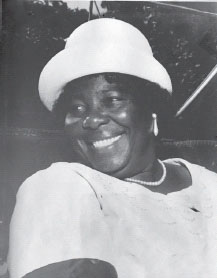
FIGURE 5.
Edna E. Fisher, Sandy Bay, Clarendon, Jamaica, ca. 1967.
Courtesy of Besentie Thompson, International Peacemakers Association.
Henry, Fisher noted, had appointed men to leadership positions, namely Beckford, whom she interacted with. In one instance, she stated that she saw men with “knives” in their “waists” and they told her that Beckford gave them permission to carry them, but when she confronted Beckford, he provided a biblical excuse: “he that hath no sword, let him sell his garment and buy one,” Luke 22:36.66 Determined to have something done to stop Beckford’s influence over other church members, Fisher decided to approach Henry to address the issue, since he was the one who brought Beckford into the church, and Henry gave her his assurances that he would deal with Beckford. But the prosecution could not call Beckford to the witness stand. Reynold, Albert Gabbidon, Eldred Morgan, and William Jetter were tried for treason and the murder of Gerald Scott, whose body was found “in a single grave” along with the bodies of Beckford and R. MacDonald, identified as “all Rastafarian cultists.”67 Reynold, Gabbidon, Morgan, and Jetter were found guilty on September 30, 1960, and sentenced to be hanged.
By the end of the trial involving Fisher, Judge Duffus and the jurors were convinced that she colluded with Henry to overthrow the government. Fisher had indicated that she was instrumental in the formation and operation of the ARC, but she also highlighted the importance of the leadership of Henry, whom she deemed a prophet. She was aware that Rastafari men were mainly viewed as the perpetrators of the movement by the government and the wider society. Could it be that Fisher’s testimony was created by her and Henry to protect her freedom? At the end of the trial, she was sentenced to three years and Henry received ten years. Subsequently, Fisher and Henry married in 1967, a year after Henry’s early release from the St. Catherine District Prison on good behavior. Fisher, released three years before Henry, reestablished a community of ARC members at Kemps Hill, Clarendon, where Henry later joined her (fig. 5).
FISHER’S LEGACY
Fisher was sentenced to three years at hard labor on conviction of treason-felony in 1960, but shortly after she was released from prison in 1963, she moved to Kemps Hill, where she began laying the foundations for a new initiative, a church Henry later called the New Creation International Peacemakers Association, which replaced the ARC. It was established at Kemps Hill and later relocated to a compound known as Bethel, located in Green Bottom, Sandy Bay (fig. 6). Similar to Pinnacle, the Peacemakers Association was both “a religious and entrepreneurial centre with a blockmaking factory, a bakery, a farm and several homes.”68 But Fisher’s role in establishing the Peacemakers Association, as it was in the ARC, was obscured by the attention that the wider society invested in Henry’s activities. Following his release from prison in 1966, he and Fisher married and together relocated the new church to Sandy Bay. “Henry claimed some 4,000 followers, of whom 1,000 were active members” by 1967–68.69 However, Fisher was the one who had resurrected the church at Kemps Hill, and many of the young people there never met Henry until several years after the community had restarted. Thompson, a member of the ARC from the early 1960s, for example, recalled that she herself “never knew Reverend Henry until he was released from prison in 1966.”70
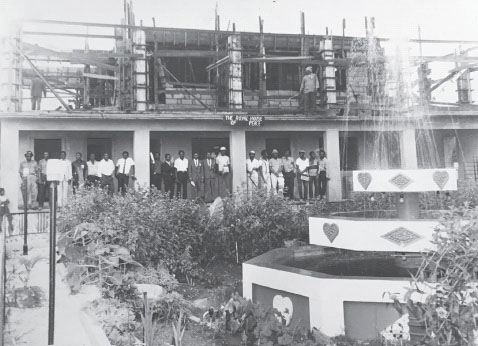
FIGURE 6.
Bethel under construction, new compound of the International Peacemakers Association, Sandy Bay, Clarendon, Jamaica, ca. 1968.
Courtesy of Besentie Thompson, International Peacemakers Association.
In his memoirs, Walter Rodney, the popular Marxist historian who was banned from Jamaica by the government in 1968, noted that while “at Kemp’s [sic] Hill, in the middle of a most depressed area which is the Prime Minister’s (Hugh Shearer) constituency, Rev. Henry has gathered together a number of black brothers and sisters, and they have turned themselves into an independent black economic community.”71 But Rodney did not know that Fisher was the one who had organized the community and that Henry went there after his release from prison. Rodney recalled seeing a “fish shop” that was “operated” by them “from the outset and later they set up a bakery.”72 Both the fish shop and bakery were established by Fisher. She also established a school, Croft’s School, to provide the children with an African education. This school was renamed the Ethiopian Peacemakers School after the move to Sandy Bay (fig. 7). Reid, who was one of the teenagers, recounted that Fisher told him and his siblings that they “can’t be going to school that far, receiving Babylon teaching and every day is a fight,” and that she would “build a school,” which she did “in about six months.”73 Bent, Howell’s wife, also operated a school at their Pinnacle community.
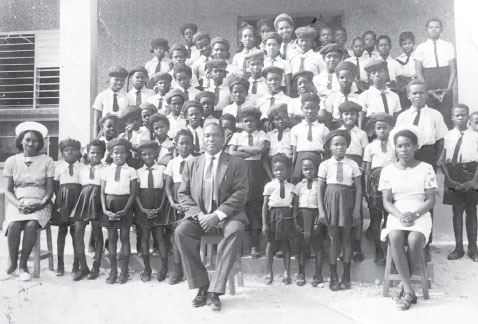
FIGURE 7.
Headmaster (seated front center), teachers (seated front right and left), and students of the Ethiopian Peacemakers School, Sandy Bay, Clarendon, Jamaica, April 1968.
Courtesy of Besentie Thompson, International Peacemakers Association.
The members of the Peacemakers Association considered Fisher as “the Mother, Protector, Guardian” of the community, and noted that Henry “played a miniscule role in the beginning,” after being released from prison.74 This was highly similar to the way the Howellites felt about Bent. Even afterward, Fisher “was the chief organizer.” She “organized all the external and internal bonds of the movement,” having also kept it “alive” while Henry “was imprisoned.”75 In 1970, she was gruesomely killed. Many members believed that her death started the decline of the organization (fig. 8). The Howellites also saw Bent’s untimely death as a great loss to the community and believed she was murdered. Reid asserted, “I’m not a fool. I was here when Sister Edna died. It was widely stated and agreed that it was Miss Edna who was primarily responsible for the upkeep of Rev. and his organization, therefore, removing Sister Edna out of the way would sink the ship.”76 Account books of the Peacemakers Association show several financial irregularities following Fisher’s death: asset depreciations, thefts, and numerous unexplained dismissals of personnel. Burnett Hall, a member of the Peacemakers Association from the time it was known as the ARC, noted that after Fisher’s death, “administratively speaking, there was a downturn,” and Henry “became too trustworthy and these brethren began stealing and undermining each other with the hope of achieving power. There was a power struggle and the vacuum of Sister Edna’s death was being filled with undesirables.”77
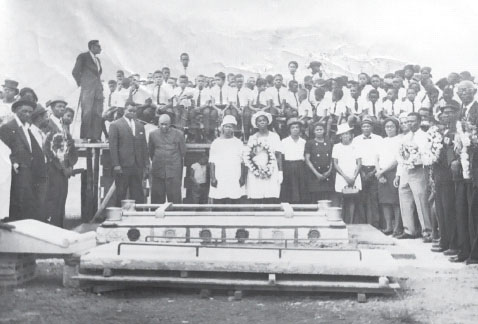
FIGURE 8.
Edna E. Fisher’s funeral, Sandy Bay, Clarendon, Jamaica, February 1970.
Courtesy of Besentie Thompson, International Peacemakers Association.
Overall, Fisher helped to create and operate the ARC and Peacemakers Association, organizations that impacted the political and social landscape of Rastafari and Jamaica in several respects, including the growth of the Black nationalist ideology and social status of Rastafari that the Howellites had started. The ARC bolstered the government’s narrative that Rastafari was violent and racist, thereby inhibiting the movement’s growth for a short period. But it attracted a large number of people to its meetings, and the protests that followed the arrests of Fisher, Henry, and other key members of the ARC intensified the government’s fears of a possible invasion by the Rastafari movement. The protesters “spread out in the area near St. Andrew’s Parish Church, the cemetery and church wall, as well as the Junior Centre,” holding placards stating, “GIVE UP OUR LEADER OR ELSE PREPARE TO TAKE 20,000 OF US IN YOUR LOCK-UPS,” in addition to insisting “FREEDOM, I WANT FREEDOM, SEND US BACK TO OUR MOTHER AFRICA OR ELSE DEATH.”78 Among statements reported in the press was that “unlawful marches in other parts of the island by sympathisers of the defendants” included “intimidation of prosecution witness which had taken place by sympathisers of the defendants.”79 In addition, the “demonstrators threw large missiles at members of the Jamaica Constabulary” and had to be “dispersed by baton charges and tear gas.”80 As a result of the violence and intimidation, other Rastafari leaders distanced themselves from the ARC, including the members of the URO. It was out of this context that some of these Rastafari leaders, namely a Mr. Dabney, representing the URO, approached the then University College of the West Indies—renamed the University of the West Indies in 1962—to conduct research on the movement to facilitate better understanding by the wider Jamaican society.81 Out of this appeal came the famous 1960 study, The Ras Tafari Movement in Kingston, Jamaica.82
Contrary to popular belief, the ARC did not object to the wearing locks or the use of cannabis. Thompson related that Henry “had nothing against ganja, but it was not permitted to smoke on the premises . . . as the government of the day would use any finding of ganja as a pretext to harass and even jail him. To prevent the worst from happening, he requested the smokers to do it outside.”83 This was to avoid the police arrests that had crippled other communities, namely Pinnacle. However, concerned that the ARC’s treason-felony trials had damaged the reputation of Rastafari, in April 1961, Filmore Alvaranga and Douglas Mack, representing the Rases of Eastern and Central Kingston, wrote to the British prime minister, Harold Macmillan, stating that “although we knew none of the Henrys, neither did they know the Rases, [and] they were not Rastafarians, yet we got the Blame, although they received the Punishments.”84 Mortimer Planno, a rising star of the Rastafari movement in the 1960s, later alluded to Henry and his associates as the “infiltrator” in a lecture he delivered at York University, Canada, in 1973.85 Nonetheless, the ARC encouraged the Jamaican government and wider society to study the movement, a development that would help to facilitate acceptance by a wider cross-section of Jamaicans and spark the interest of persons even beyond Jamaica.
The ARC and its successor, the Peacemakers Association, not only showed the strength of Rastafari’s Black nationalism that stimulated academic interest in the movement; it highlighted the involvement and importance of women as both members and leaders in the movement. Writing from Kemps Hill in April 1969, the year before Fisher’s death, Henry tried to allay the fears of Black nationalism that had put Fisher and himself in prison in 1960. He issued a press release stating that “our Black Power for Peace movement, is not Subversive.”86 The appeal for understanding came soon after the Rodney protests in October 1968. Rodney was employed by the University of the West Indies when he was banned from Jamaica on suspicion of planning a Marxist Black nationalist revolution. Among the groups with which he had frequent contact was the Peacemakers Association, starting from its resurrection at Kemps Hill under Fisher, who continued to manage the organization after Henry returned from prison. Moreover, the events surrounding Fisher and the ARC impacted Rastafari women of the 1960s through 1980s, women such as Yvette Clarke, also known as Sister Nanny. Speaking in 1988, Clarke stated that “the Rastawoman has gone through I think from that time a process of really just coming forward.”87 Women such as Fisher, who were at the forefront of the early movement, paved the way for future Rastafari women to assert their equality with Rastafari men.