
Notes
Introduction
1.Farrukhī Sīstānī, Divān, ed. Muḥammad Dabīr Siyāqī, 2nd edn (Tehran, 1970). Interestingly, the quote from Sīstānī bears a great resemblance to Chaucer's (d. 1400) lines in ‘The monk's tale’. See The Canterbury Tales (London, 1951; repr. 2003), pp. 208–9:
The story of Alexander is so famous
That it is known to everyone at least
In part, unless he be an ignoramus.
He conquered the wide world from west to east
By force of arms, and as his fame increased
Men gladly sued to have him for their friend.
He brought to naught the pride of man and beast
Wherever he came, as far as the world's end.
2.Franz Rosenthal, The Classical Heritage in Islam, trans. Emile and Jenny Marmorstein (London/New York, 1975; repr. 1994), p. 255.
3.For more information regarding this Persian poet see Dh. Ṣafā, Tārīkh-i Adabīyāt dar Irān, 12th edn (Tehran, 1371/1992), vol. I, pp. 531–46; F. de Blois, Persian Literature: A Bio-Bibliographical Survey, V/1: Poetry to ca. AD 1100 (London, 1992), pp. 108–12.
4.See M. Kayvānī, ‘Iskandar dar adab-i fārsī’, Dānishnāma-yi zabān va adab-i fārsī, ed. Ismā‘īl Sa‘ādat (Tehran, 1384/2005), vol. I, p. 404.
5.For a translation from Greek to Middle Persian and then to Arabic see Dimitri Gutas, Greek Wisdom Literature in Arabic Translation: A Study of the Graeco-Arabic Gnomologia (New Haven, 1975); Gutas, ‘Paul the Persian on the classification of the parts of Aristotle's philosophy: a milestone between Alexandria and Baġdād’, Der Islam lx (1983), pp. 231–67; Gutas, Greek Thought, Arabic Culture: The Graeco-Arabic Translation Movement in Baghdad and Early ‘Abbāsid Society (2nd–4th/8th–10th centuries) (London/New York, 1998), especially pp. 25–7; Gutas, ‘The “Alexandria to Baghdad” complex of narratives: a contribution to the study of philosophical and medical historiography among the Arabs’, Documenti e Studi sulla Tradizione Filosofica Medievale x (1999), pp. 155–93. For translations from Middle Persian into Arabic see Antonio Panaino, ‘L'influsso greco nella letteratura e nella cultura medio-persiana’, Autori classici in lingue del Medio e Vicino Oriente (Rome, 2001), pp. 29–45; F. de Blois, ‘Tardjama: translations from Middle Persian (Pahlavī)’, EI2 x, 231b–2b; Shaul Shaked, ‘From Iran to Islam: notes on some themes in transmission’, Jerusalem Studies in Arabic and Islam iv (1984), pp. 31–67.
6.See Charles-Henri de Fouchécour, ‘Alexandre le macédonien iranisé: l'exemple du récit par Nézami (XIIe siècle) de la visite d'Alexandre à la grotte de Key Khosrow’, in Laurence Harf-Lancner, Claire Kappler and François Suard (eds), Alexandre le Grand dans les littératures occidentales et proche-orientales (Actes du Colloque de Paris, 27–29 novembre 1999) (Paris, 1999), pp. 227–41.
7.Īraj Afshār (ed.), Iskandarnāma (Tehran, 1343/1964; repr. Tehran, 1387/2008).
8.On its dating, see Muḥammad Taqī Bahār, Sabk-shināsī ya tarīkh-i taṭavvur-i naṣr-i fārsī (Tehran, 1942), vol. II, pp. 128–51.
9.Nöldeke's theory, based on a philological examination of the Syriac translation of the Pseudo-Callisthenes, launched the hypothesis that the Syriac Romance must have been translated from a lost Middle Persian version, which in turn depended on a Greek recension of the text. See Nöldeke, Beiträge zur Geschichte des Alexanderromans (Wien, 1890), pp. 11–17.
10.See Minoo S. Southgate (trans.), Iskandarnamah: A Persian Medieval Alexander-Romance (New York, 1978), which is a translation of the Persian text edited by Afshār (published in 1964 under the title Iskandarnāma). See Introduction note 7.
11.See also M.S. Southgate, ‘Portrait of Alexander the Great in Persian Alexander Romances of the Islamic era’, Journal of the American Oriental Society xcvii (1977), pp. 278–84.
12.Abū Ṭāhir Ṭarsūsī, Dārābnāma, ed. Dh. Ṣafā, 2nd edn (Tehran, 2536 Shāhanshāhī/1977), vol. I, pp. 13–19.
13.Dh. Ṣafā, Ḥamāsa-sarāyī dar Irān (Tehran, 1363/1984), pp. 89–90.
14.See Khaleghi-Motlagh, ‘Jā-yi Rustam, Arash, Isfandīyār, Gushtāsp, Jāmāsp va Iskandar dar Khudāynāma’, Nāma-yi Irān-i Bāstān ix/1–2 (2009–10), pp. 19–24; Khaleghi-Motlagh, ‘Az Khudāynāma tā Shāhnāma’, Nāme-yi Irān-i Bāstān vii/1–2 (2007–8), pp. 29–30.
15.William L. Hanaway, ‘Persian popular romances before the Safavid period’ (PhD thesis, Columbia University, 1970; published 1972).
16.W. L. Hanaway, ‘Anahita and Alexander’, Journal of the American Oriental Society cii (1982), pp. 285–95.
17.Ṭarsūsī, Alexandre le Grand en Iran: Le Dārāb Nāmeh d'Abū Ṭāhir Ṭarsūsī, trans. and annotated Marina Gaillard (Paris, 2005), p. 14.
18.Ḥasan Ṣafav?, etc., Iskandar va adabīyāt-e Irān va shakhsīyat-e madhhabī-ye Iskandar (Tehran, 1364/1985).
19.Majd al-Dīn Kayvānī, ‘Iskandar dar adabīyāt-e Irān’ and ‘Iskandar-nāmahā’, Dānishnāma-ye zabān va adabīyāt-e fārsī, ed. Ismā‘īl Sa‘ādat (Tehran, 1384/2005), vol. I, pp. 402–10.
20.Bertels, Roman ob Aleksandre (Moscow/Leningrad, 1948).
21.F. Doufikar-Aerts, Alexander Magnus Arabicus: A Survey of the Alexander Tradition through Seven Centuries: From Pseudo-Callisthenes to Ṣūrī (Louvain, 2010).
22.Doufikar-Aerts, Alexander Magnus Arabicus, p. 80.
23.Khaleghi-Motlagh, ‘Jāy-i Rustam, Arash, Isfandīyār, Gushtāsp, Jāmāsp va Iskandar dar Khudāynāma’, pp. 19–24.
24.Khaleghi-Motlagh, ‘Az Khudāynāma tā Shāhnāma’, pp. 29–30.
Chapter 1 Greek and Syriac Versions of the Alexander Romance and their Development in the East
1.Farrukhī, Dīvān, ed. M. Dabīr-Sīyāqī (Tehran, 1335/1957; 2nd edn 1349/1970), p. 66. I thank Dr Lewisohn for the English translation of this verse.
2.For the Greek and Latin historical sources on Alexander see E. Baynham, ‘The ancient evidence for Alexander the Great’, in J. Roisman (ed.), Brill's Companion to Alexander the Great (Leiden, 2003), pp. 3–29. See also A. B. Bosworth (1994), ‘Alexander the Great, part 1: the events of the reign’, in D. M. Lewis et al. (eds), The Cambridge Ancient History (Cambridge, 1994), pp. 791–845.
3.R. Merkelbach, Die Quellen des griechischen Alexanderromans (Munich, 1954; 2nd edn 1977), pp. 88–92; R. Stoneman (trans.), The Greek Alexander Romance (London/New York, 1991), p. 8.
4.For a study of the production of this Romance see Merkelbach, Die Quellen des griechischen Alexanderromans; G. Cary, The Medieval Alexander (Cambridge, 1956; repr. 1967), p. 9; R. Stoneman, ‘Primary sources from the classical and early medieval periods’, in Z. David Zuwiyya (ed.), A Companion to Alexander Literature in the Middle Ages (Leiden/Boston, 2011), pp. 1–9; Stoneman, Alexander the Great: A Life in Legend (New Haven, 2008), pp. 2–3; Stoneman, Il Romanzo di Alessandro, trans. T. Gargiulo (Milan, 2007); Stoneman, The Greek Alexander Romance, pp. 1–23.
5.See R. Stoneman, ‘The author of the Alexander Romance’, in M. Paschalis, S. Panayotakis and G. Schmeling (eds), Readers and Writers in the Ancient Novel (Groningen, 2009), pp. 142–54.
6.Stoneman, ‘Primary sources’, pp. 3–9; Stoneman, The Greek Alexander Romance, pp. 8, 28–32.
7.In the Bibliothèque Nationale in Paris (Parisinus graecus 1711).
8.W. Kroll, Historia Alexandri Magni (Berlin, 1926).
9.It was edited and translated into English by A. Wolohojian, The Romance of Alexander the Great by Pseudo-Callisthenes (New York, 1969).
10.See Appendix I in Stoneman, A Life in Legend, p. 232.
11.Julius Valerius, Res gestae Alexandri Macedonis translatae ex Aesopo Graeco, ed. M. Rossellini, 2nd edn (Munich, 2004). See also Stoneman, A Life in Legend, pp. 230, 236; Stoneman, ‘The Latin Alexander’, in H. Hofmann (ed.), Latin Fiction (London, 1999), pp. 167–8.
12.It was edited (with full details of all the manuscripts) by L. Bergson, Der griechische Alexanderroman rezension Beta (Stockholm, 1965). See also Stoneman, ‘Primary sources’, p. 7; Stoneman, A Life in Legend (Appendix I), pp. 230–1.
13.Epsilon's edition: J. Trumpf, Vita Alexandri regis Macedonum (Stuttgart, 1974).
14.Lambda's edition: H. Van Thiel, Die Rezension Lambda des Pseudo-Kallisthenes (Bonn, 1959).
15.For editions see Stoneman, A Life in Legend, p. 232; for description and editions see Stoneman, ‘Primary sources’, p. 9.
16.For an edition and German translation see H. Van Thiel, Leben und Täten Alexanders von Makedonien: Der griechische Alexanderroman nach der Handschrift L (Darmstadt, 1983); for an English translation see Stoneman, The Greek Alexander Romance.
17.See Stoneman, ‘Primary sources’, pp. 17–19; Stoneman, A Life in Legend, p. 237; Stoneman, ‘The medieval Alexander’, in H. Hofmann (ed.), Latin Fiction: The Latin Novel in Context (London, 1999), pp. 238–40.
18.See Chapter 5 on the Iqbālnāma (Book of Fortune).
19.Amīr Khusraw Dihlavī, Khamsa, ed. A. Aḥmad Ashrafī (Tehran, 1362/1983), pp. 533–9.
20.The variations are added as supplements to Stoneman's English edition of the Romance; see Stoneman, The Greek Alexander Romance, pp. 161–88.
21.The Apocalypse of Pseudo-Methodius was translated into Greek from Syriac. The motif of Alexander enclosing Gog and Magog entered into Western versions of the Alexander Romance through this text. See F. J. Martínez, Eastern Christian Apocalyptic in the Early Muslim Period: Pseudo-Methodius and Pseudo-Athanasius (Ann Arbor, 1996), pp. 18–19; G. J. Reinink, ‘Alexander the Great in seventh-century Syriac “apocalyptic” texts’, Byzantinorossica ii (2003), pp. 150–78; Stoneman, ‘Alexander the Great and the end of time: the Syriac contribution to the development of the Alexander Romance’, paper given at Mardin Artuklu University, April 2012.
22.This originally independent treatise is a fifth-century Christian rewriting of a Cynic diatribe written before the second century AD. See Stoneman, A Life in Legend, pp. 97–102, for editions and a translation see p. 232.
23.K. van Bladel, ‘The Syriac sources of the early Arabic narratives of Alexander’, in H. Prabha Ray and D. T. Potts (eds), Memory as History: The Legacy of Alexander in South Asia (New Delhi, 2007), pp. 54–75.
24.See J. P. Monferrer-Sala, ‘Alexander the Great in the Syriac literary tradition’, in Z. David Zuwiyya (ed.), A Companion to Alexander Literature in the Middle Ages (Leiden/Boston, 2011), p. 42.
25.S. Gero, ‘The legend of Alexander the Great in the Christian Orient’, Bulletin of the John Rylands University Library of Manchester lxxv (1993), pp. 1, 5.
26.E. A. Wallis Budge, The History of Alexander the Great, Being the Syriac Version (New York/London, 1889; repr. New Jersey, 2003).
27.A summary of the Syriac Pseudo-Callisthenes with a reordering of its structure can be found in J. P. Monferrer-Sala, ‘Alexander the Great in the Syriac literary tradition’, pp. 60–3.
28.This part of the Syriac Pseudo-Callisthenes bears a great resemblance to the parallel stories of Alexander in the Shāhnāma of Firdawsī.
29.Other episodes only found in Syriac versions, as Stoneman points out, are ‘Aristotle's advice to Alexander about the building of Alexandria; Nectanebo's and Olympias's discussion of Philip's disaffection from his wife (I.14); the metaphor of the golden eggs (I.23); and the symbolic gifts of the mustard seeds (I.36 and 39). The commissioning of a painting of Alexander by the ambassadors from Darius is properly motivated only in this version, where it is shown to Darius's daughter. But there is a large lacuna at II.6–14, presumably the result of a defective Greek original’ (Stoneman, A Life in Legend, Appendix I, p. 233).
30.For an English translation see W. Budge, The History of Alexander, pp. 144–58. In this book I will refer to this work as the Christian Legend.
31.K. Czeglédy, ‘The Syriac legend concerning Alexander the Great’, Acta Orientalia vii (1957), pp. 245, 249.
32.Reinink underlines the political setting of the Legend, which clearly displays pro-Byzantine propaganda. See G. J. Reinink, ‘Die Entstehung der syrischen Alexanderlegende als politisch-religiöse Propagandaschrift für Herakleios’ Kirchenpolitik’, in C. Laga, J. A. Munitiz and L. van Rompay (eds), After Chalcedon: Studies in Theology and Church History, Offered to Professor Albert van Roey for His Seventieth Birthday (Louvain, 1985), pp. 263–81.
33.See E. Donzel and A. Schmidt, Gog and Magog in Early Syriac and Islamic Sources: Sallam's Quest for Alexander's Wall (Leiden, 2010), p. 17.
34.Budge, The History of Alexander, pp. lxxix–lxxxiii, 163–200. In this book I will refer to this work as the Alexander Poem.
35.The authorship of Jacob of Serūgh (d. 521), to whom the text is ascribed by the majority of the Syriac manuscripts, is definitely out of the question. See Reinink, Das Alexanderlied: Die drei Rezensionen (Louvain, 1983), vol. II, pp. 1–15.
36.Reinink, ‘Alexander the Great in seventh-century Syriac “apocalyptic” texts’, pp. 165–8; Reinink, Das Alexanderlied, vol. II, p. 12.
37.See van Bladel, ‘The early Syriac sources’, p. 58; Donzel and Schmidt, Gog and Magog, p. 22.
38.S. P. Brock, ‘The laments of the philosophers over Alexander in Syriac’, Journal of Semitic Studies xv (1970), pp. 205–18; see also J. P. Monferrer-Sala, ‘Alexandri magni de anima dictum fictitum apud philosophos enuntiavit’, Hikma 5 (2006), pp. 155–69. For editions and translations see Monferrer-Sala, ‘Alexander the Great in the Syriac literary tradition’, p. 50.
39.Yaʻqūbī, Tārīkh al-Yaʿqūbī (Beirut, 1960), vol. I, pp. 143–4.
40.See Brock, ‘The laments’, pp. 211–14.
41.Masʻūdī, Murūj al-dhahab, ed. Ch. Pellat (Beirut, 1966–79), vol. II, pp. 11–13.
42.Firdawsī, Shāhnāma, ed. Khaleghi-Motlagh and M. Omīdsālār, 3rd ed. (Tehran, 1389/2010), vol. VI, pp. 125–8.
43.Th. Nöldeke, ‘Die von Guidi herausgegebene syrische Chronik übersetzt und commentiert’, Sitzungsberichte der kaiserlichen Akademie der Wissenschaften, Phil.-Hist. Classe 128 (1893), pp. 1–48.
44.It is also occasionally referred to as the Anonymous Nestorian Chronicle, see S. P. Brock, ‘Syriac historical writing: a survey of the main sources’, Journal of the Iraqi Academy (Syriac Corporation) xxv/302 (1979–80), p. 5; Pierre Nautin, ‘L'auteur de la ‘Chronique Anonyme de Guidi’: Élie de Merw’, Revue de l'Histoire des Religions cxcix/3 (1982), pp. 303–14.
45.The influence of Yazdīn in the Sasanian court is discussed in James Howard-Johnson, Witnesses to a World Crisis: Historians and Histories of the Middle East in the Seventh Century (Oxford, 2010), pp. 130–3. We will discuss the importance of the influence of the Nestorians in the Sasanian court in the development of the Alexander Romance through this study.
46.The building of Merv is attributed to Alexander in the Syriac Romance and also in the Legend; see Budge, The History of Alexander, pp. 116, 142, 160.
47.This Latin translation of the Syriac Khuzistān Chronicle is available online at http://booksnow1.scholarsportal.info/ebooks/oca7/52/chronicaminorapa00guid/chronicaminorapa00guid.pdf.
48.Ignacio Guidi, ‘Chronicon anonymum’, Chronica Minora (Paris, 1903), vol. I, 15–39 (Syriac text); vol. II, 15–32 (Latin trans.), pp. 28–9.
49.Guidi, Chronica Minora, p. 22.
50.Ṭabarī, The History of al-Ṭabarī: An Annotated Translation, Vol. IV: The Ancient Kingdoms, trans. Moshe Perlmann, notes by Shaul Shaked (New York, 1987), p. 94.
51.For instance, see Ṣafā, Ḥamāsa-sarāyī dar Irān, pp. 198–200; R. N. Frye, ‘Two Iranian notes’, Papers in Honour of Professor Mary Boyce (Leiden, 1985), vol. I, pp. 185–8.
52.On the passages of Pahlavi sources where Alexander appears see the Appendix in Touraj Daryaee, ‘Imitatio Alexandri and its impact on Late Arsacid, Early Sasanian and Middle Persian literature’, Electrum xii (2007), pp. 93–5. See also M. R. Shayegan, Arsacids and Sasanians: Political Ideology in Post-Hellenic and Late Antique Persia (Cambridge, 2011), pp. 295–7; Yuriko Yamanaka, ‘From evil destroyer to Islamic hero: the transformation of Alexander the Great's image in Iran’, Annals of Japan Association for Middle East Studies viii (1993), pp. 55–87.
53.This fact is also pointed out by C. Ciancaglini in her article ‘The Syriac version of the Alexander Romance’, Le Muséon, Revue d'Études Orientales cxiv/1–2 (2001), pp. 136–7.
54.See K. van Bladel, The Arabic Hermes: From Pagan Sage to Prophet of Science (Oxford, 2009), pp. 30–9; Gutas, Greek Thought, Arabic Culture, pp. 25–7.
55.Th. Nöldeke, Beiträge zur Geschichte des Alexanderromans, pp. 11–18.
56.Frye, ‘Two Iranian notes’, pp. 185–8.
57.Ciancaglini, ‘The Syriac version of the Alexander Romance’, p. 140. See also the original Italian chapter: ‘Gli antecedenti del Romanzo di Alessandro’, in R. B. Finazzi and A. Valvo (eds), La diffusione dell'eredità classica nell'età tardoantica e medieval: Atti del Seminario internazionale tenuto a Roma–Napoli (Alexandria, 1998), pp. 55–93.
58.Van Bladel, ‘The Syriac sources’, pp. 61–4.
59.Ibid., p. 62.
60.Monferrer-Sala, ‘Alexander the Great in the Syriac literary tradition’, p. 47.
61.Doufikar-Aerts, Alexander Magnus Arabicus, p. 13.
62.On the Arabic Pseudo-Callisthenes tradition see Chapter 1 of Doufikar-Aerts, Alexander Magnus Arabicus, pp. 13–91, where she examines different historical and geographical Arabic sources, besides the Arabic popular romances that deal with the Alexander Romance. She determines the main motifs, sources and the transmission of the Pseudo-Callisthenes tradition in Arabic literature.
63.Doufikar-Aerts, Alexander Magnus Arabicus, p. 14.
64.For a detailed study of the Syriac manuscripts see J. P. Monferrer-Sala, ‘Alexander the Great in the Syriac literary tradition’, pp. 45–8.
Chapter 2 Alexander the Great and the Legacy of Sasanian Historiography
1.Ḥāfiz, Dīvān, ed. S. Ṣ. Sajjādī and ‘A. Bahrāmīyān (Tehran, 1379/2000), p. 384. See also Ḥāfiz, Dīvān, ed. Parvīz Nātil Khānlarī (Tehran, 1359/1980), ghazal 264:7.
2.Dīnawarī, Akhbār al-ṭivāl, ed. ‘A. ‘Āmir (Cairo, 1960).
3.Ṭabarī, Tārīkh al-rusul va al-mulūk, ed. Dodge (Leiden, 1879–81). English passages are quoted from Ṭabarī, The History of al-Ṭabarī (Tārīkh al-rusul wa'l-mulūk), Vol. IV: The Ancient Kingdoms, ed. E. Yarshater, trans. and annotated Moshe Perlmann and Shaul Shaked (New York, 1987).
4.M. T. Dānishpazhūh (ed.), Nihāya al-’erab fī tārīkh al-furs wa al-‘arab (Tehran, 1374).
5.See Grignaschi, ‘La Nihāyatu-l-’arab fī akhbāri-l-Furs wa-l-‘arab’, Bulletin d'études orientales xxii (1969), pp. 15–67; Grignaschi, ‘La Nihāyatu-l-’arab fī akhbāri-l-Furs wa-l-‘arab et les Siyaru mulūki-l-‘ağam du Ps. Ibn-al-Muqaffa‘’, Bulletin d'études orientales xxvi (1973), pp. 83–184. However, Yarshater states that it was probably written in the eleventh century. See Yarshater, ‘Iranian national history’, in E. Yarshater (ed.), Cambridge History of Iran (Cambridge, 1983), vol. III/1, p. 363.
6.Thaʻālibī Nīshābūrī, Tārīkh ghurar al-sayr, ed. H. Zotenberg (Paris, 1900; repr. Tehran, 1342/1963).
7.Abū Rayḥān Bīrūnī, Āthār al-bāqīya ‘an al-qurūn al-khālīya, ed. E. Sachau (Leipzig, 1923).
8.Ḥamza Iṣfahānī, Tārīkh sinī mulūk al-arḍ wa-l-anbīyā (Beirut, 1961).
9.This work has been lost, but a summary of it is preserved by Abū ’l-Ḥasan al-Shayzārī (c.1022). See Ibn al-Faqīh al-Hamadānī, Mukhtaṣar Kitāb al-Buldān, Bibliotheca Geographorum Arabicorum, Vol. V: Compendium Libri Kitab al-boldan, ed. M. J. de Goeje (Leiden, 1885; repr. 1967).
10.For instance, while Ṭabarī dedicated a whole chapter to the identification and meaning of Dhū'l-Qarnayn in his Tafsīr (Commentary on the Qur'ān), in his Tārīkh (Annals) he did not even mention this name. This indicates that in his Tārīkh he was working with sources older than the compilation of the Qur'ān.
11.Yarshater, ‘Iranian national history’, pp. 359–477. See also his entry ‘Iran: iii. Traditional history’, EIr xiii/3, pp. 299–307.
12.J. Khaleghi-Motlagh, ‘Az Shāhnāma tā Khudāynāma’, Nāme-yi Irān-i Bāstān, The International Journal of Ancient Iranian Studies vii/1–2 (2007–8), pp. 3–119. See also Khaleghi-Motlagh, ‘Jāy-i Rustam, Ārash, Isfandīyār, Gushtāsp, Jāmāsp va Iskandar dar Khudāynāma’, Nāme-yi Irān-i Bāstān ix/1–2 (2009–10), pp. 3–24.
13.See Yarshater, ‘Iranian national history’, p. 359.
14.See M. Boyce, ‘Middle Persian literature’, Iranistik II: Handbuch der Orientalistik 1. IV. 2.1 (Leiden, 1968), pp. 57–9; A. Tafaḍḍulī, Tārīkh-i adabīyāt-i Irān pīsh az Islam, ed. Zh. Āmūzgār (Tehran, 1376/1997), pp. 269–74.
15.Touraj Daryaee, Sasanian Persia, the Rise and Fall of an Empire (London/New York, 2009), p. xvii.
16.Sh. Shahbazi, ‘On the Xwadāy-Nāmag’, Iranica Varia: Papers in Honor of Professor Ehsan Yarshater (Leiden, 1990), pp. 218–23.
17.Agathias (c.530–82) was a Greek poet and historian of the Roman emperor Justinian I. For a detailed and comprehensive treatment of Agathias's life see Averil Cameron, Agathias (Oxford, 1970), pp. 1–11.
18.See Averil Cameron, ‘Agathias on the Sasanians’, Dumbarton Oaks Papers xxiii–xxiv (1969–70), p. 128.
19.See Khaleghi-Motlagh, ‘Az Shāhnāma tā Khudāynāma’, pp. 3–71; Vladimir Minorsky, ‘The older preface to the Shāhnāma’, Studi Orientalistici in onore di G. Levi della Vida (Rome, 1956), vol. II, pp. 159–79.
20.Eight Arabic recensions of the text are referred to by Ḥamza al-Iṣfahānī alone, including the two earliest translations of the Khudāynāmag, the first by Ibn al-Muqaffaʻ, the second by Muḥammad b. Jahm al-Barmakī, probably a client of the Barmakids. On the Arabic translation of Khudāynāmag see W. Barthold, ‘Zur Geschichte des persischen Epos’, Zeitschrift der Deutschen Morgenländischen Gesellschaft xcviii (1944), pp. 144ff.; Christensen, L'Iran sous les Sassanides (Copenhagen, 1944; repr. Osnabrück, 1971), pp. 59ff. Bīrūnī and Balʻamī name other translations: see Christensen, L'Iran sous les Sassanides, p. 61. See also Khaleghi-Motlagh, ‘Az Shāhnāma tā Khudāynāma’, pp. 34–7.
21.See Ḥamza Iṣfahānī, Tārīkh sinī mulūk al-arḍ wa-l-anbīyā, pp. 15, 19, 43.
22.See Yarshater, ‘Iranian national history’, pp. 359–66.
23.Barthold, ‘Zur Geschichte des persischen Epos’, pp. 121–57; Christensen, L'Iran sous les Sassanides, pp. 59ff.; Nöldeke, Das iranische Nationalepos (Berlin/Leipzig, 1920); Shahbazi, ‘On the Xwadāy-Nāmag’, pp. 218–23; Yarshater, ‘Iranian national history’; Boyce, ‘Middle Persian literature’, pp. 31–66; Tafaḍḍulī, Tārīkh-i adabīyāt-i Irān pīsh az Islām, pp. 269–74; M. Macuch, ‘Pahlavi literature’, in Ronald E. Emmerick and M. Macuch (eds), The Literature of Pre-Islamic Iran: Companion Volume I to A History of Persian Literature (London/New York, 2009), pp. 172–7.
24.See Boyce, ‘Middle Persian literature’, pp. 31–66; E. Yarshater, ‘Iranian national history’, pp. 359–66; Macuch, ‘Pahlavi literature’, pp. 172–6.
25.See Shahbazi, ‘Historiography: ii. Pre-Islamic period’, EIr xii/3, pp. 325–30. See also Yarshater, ‘Iran: iii. Traditional history’ in EIr xiii/3, pp. 299–307.
26.Yarshater, ‘Chirā dar Shāhnāma az pādishāhān-i mād va hakhāmanishī dhikrī nīst?’, Shāhnāma-Shināsī (Tehran, 1357/1978), vol. I, pp. 268–301.
27.Yarshater, ‘Were the Sasanians heirs to the Achaemenids?’ in Academia Nazionale dei Lincei: Problemi attuali de scienza e cultura: Atti congegno internazionale sul themo La Persia nel medioevo (Rome, 1971), pp. 517–31.
28.Shahbazi, ‘Early Sasanians’ claim to Achaemenid heritage’, Nāma-yi Irān-i Bāstān, The International Journal of Ancient Iranian Studies i/1 (2001), p. 69.
29.Touraj Daryaee, ‘National history or Keyanid history? The nature of Sasanid Zoroastrian historiography’, Iranian Studies xxviii/3–4 (1995), pp. 129–41; Daryaee, ‘The construction of the past in Late Antique Persia’, Historia: Zeitschrift für Alte Geschichte lv/4 (2006), pp. 493–503, especially pp. 500–1.
30.Daryaee, ‘Memory and history: the construction of the past in Late Antique Persia’, Nāme-ye Irān-e Bāstān, The International Journal of Ancient Iranian Studies i/2 (2001–2), pp. 12–13.
31.Daryaee, ‘National history or Keyanid history?’, pp. 129–41.
32.Boyce, ‘Some remarks on the transmission of the Kayanian heroic cycle’, in R. N. Frye et al. (eds), Serta Cantabrigiensia (Wiesbaden, 1954), pp. 45–52; Boyce, ‘The Parthian Gōsān and Iranian minstrel tradition’, Journal of the Royal Asiatic Society lxxxix/1–2 (1957), pp. 10–45.
33.Tafaḍḍulī, Tārīkh-i adabīyāt-i Irān pīsh az Islām, p. 271.
34.Christensen discerns two traditions: a religious one and a national one. See A. Christensen, Les Kayanides (Copenhagen, 1931), pp. 35ff.; Christensen, Les Gestes des Rois dans les traditions de l'Iran antique (Paris, 1936), pp. 33ff. See also Yarshater, ‘Iranian national history’, pp. 395ff.
35.Macuch, ‘Pahlavi Literature’, p. 176.
36.P. Pourshariati, ‘The Parthians and the production of the canonical Shāhnāmas: of Pahlavī, Pahlavānī and the Pahlav’, in Henning Börm and Josef Wiesehöfer (eds), Commutatio et Contentio: Studies in the Late Roman, Sasanian, and Early Islamic Near East in Memory of Zeev Rubin (Düsseldorf, 2010), pp. 347–92.
37.On these two Shāhnāmas and their compilation see Chapter 3.
38.Pourshariati, ‘The Parthians and the production of the canonical Shāhnāmas’, p. 347.
39.The Parthian coins were stamped in the Greek language, and the epithet philhellene remained in use until the end of the Parthian period. See D. Sellwood, ‘Parthian coins’, in E. Yarshater (ed.), Cambridge History of Iran (Cambridge, 1983), vol. III/1, pp. 279–98; Sellwood, Introduction to the Coinage of Parthia, 2nd edn (London, 1980).
40.Huyse, ‘Parthian inscriptions’, in R. E. Emmerick and M. Macuch (eds), The Literature of Pre-Islamic Iran (London/New York, 2009), p. 86.
41.Quoted from Shayegan, Arsacids and Sasanians, pp. 294–5.
42.For more information on this manuscript see Jamasp-Asa and Nawabi, Ms. MU29. Stories of Kersāsp, Tahmurasp & Jamshed, Gelshah & Other Texts, Pahlavi Codices and Iranian Researches 26 (Shiraz, 1976) cited in Touraj Daryaee, ‘Alexander and the Arsacids in the manuscript MU29’, Dabir, Digital Archive of Brief Notes & Iran Review i/1 (2015), p. 8, n. 7.
43.Daryaee, ‘Alexander and the Arsacids in the manuscript MU29’, pp. 8–10.
44.On the Pahlavi texts where Alexander appears see Shayegan, Arsacids and Sasanians, pp. 295–8; Daryaee, ‘Imitatio Alexandri and its impact on Late Arsacid, Early Sasanian and Middle Persian literature’, Electrum xii (2007), pp. 93–5.
45.See Boyce, ‘Parthian writings and literature’, Cambridge History of Iran, ed. E. Yarshater (London/New York, 1983), vol. III/2, pp. 1154–5.
46.See Boyce, ‘The Parthian Gōsān and Iranian minstrel tradition’.
47.Regarding these discrepancies see Khaleghi-Motlagh, ‘Jāy-i Rustam … va Iskandar dar Khudāynāma’, pp. 19–24.
48.See Macuch, ‘Pahlavi literature’, pp. 175–7.
49.See Gutas, Greek Thought, Arabic Culture, pp. 25–7, 54–5; C. E. Bosworth, ‘The Persian impact on Arabic literature’, in A. F. L. Beeston et al. (eds), Arabic Literature to the End of the Umayyad Period (Cambridge, 1983), pp. 483–96.
50.See Gutas, Greek Thought, Arabic Culture, pp. 54–7.
51.According to Boyce, this word might refer to the Middle Persian word ahr, which means ‘strong’. Mario Grignaschi has discussed this issue. See M. Grignaschi, ‘La Nihāyatu-l-’arab fī akhbāri-l-Furs wa-l-‘arab et les Siyaru mulūki-l-‘agˇam du Ps. Ibn-al-Muqaffa‘’, p. 100.
52.Dīnawarī, Akhbār al-ṭiwāl, pp. 28ff.
53.For a discussion concerning all of these accounts see El-Sayed M. Gad, ‘Al-Ṭabari's tales of Alexander: history and romance’, in R. Stoneman, K. Erickson and I. Netton (eds), The Alexander Romance in Persia and the East (Groningen, 2012), pp. 219–31; Southgate, Iskandarnamah: A Persian Medieval Alexander-Romance, Appendix III, pp. 193–4.
54.Ṭabarī, Tārīkh, vol. II, p. 692. According to Firdawsī, Alexander's mother was named Nāhīd. See Firdawsī, Shāhnāma, vol. V, p. 521.
55.Ṭabarī, Tārīkh, vol. II, pp. 692ff.
56.See Khaleghi-Motlagh, Yāddāsht-hā-yi Shāhnāma (Tehran, 1389/2010), vol. II, p. 353.
57.Nihāya, p. 99. The herb is also called ‘iskandar’ in the Shāhnāma of Firdawsī and the Ghurar of Tha‘ālibī.
58.Firdawsī, Shāhnāma, vol. V, p. 523.
59.Stoneman, A Life in Legend, p. 25.
60.Grignaschi, ‘La Nihāyatu-l-’arab fī akhbāri-l-Furs wa-l-‘arab et les Siyaru mulūki-l-‘agˇam du Ps. Ibn-al-Muqaffa‘’, pp. 100–1.
61.Arthur George Warner and Edmond Warner (trans.), Shahnama of Firdausi (London, 1912), vol. VI, p. 19.
62.Dihkhudā, Lughatnāma [Encyclopaedic Dictionary], ed. M. Mu‘īn and J. Shahīdī (Tehran, 1993–4), vol. VIII, p. 12157.
63.Bīrūnī, The Chronology of Ancient Nations, trans. C. Edward Sachau (London, 1879), pp. 44, 48.
64.According to Khaleghi-Motlagh, King Bahman Ardaxshīr represents both Artaxerxes I and Cyrus the Great. See Khaleghi-Motlagh, ‘Bahman’, EIr iii/5, pp. 489–90.
65.When Gushtāsp, Isfandīyār's father, went to Rūm, he married Caesar's daughter, Katāyūn, and from this union Isfandīyār was born. See Firdawsī, Shāhnāma, vol. V, pp. 12–24.
66.God's adversary in the Zoroastrian religion; see J. Duchesne-Guillemin, ‘Ahriman’, EIr i/6–7, pp. 670–3.
67.Sh. Shahbazi, ‘Haft sīn’, EIr xi/5, p. 525.
68.On these Greek festivals see M. Detienne, The Gardens of Adonis: Spices in Greek Mythology, trans. Janet Lloyd (London, 1977), pp. 80, 93.
69.D. Davis, Panthea's Children: Hellenistic Novels and Medieval Persian Romances (New York, 2002), p. 76, n. 59.
70.See Muhammad A. Dandamaev and Vladimir G. Lukonin, The Culture and Social Institutions of Ancient Iran, trans. Philip L. Kohl (Cambridge, 1989), p. 296.
71.Davis, Panthea's Children, p. 77.
72.In the Shāhnāma, there is no reference to the goddess. However, her role in relation to Alexander is obvious in a popular romance known as the Dārābnāma of Ṭarṭūsī. Regarding the goddess Ānāhītā and Alexander the Great in the Dārābnāma see W. Hanaway, ‘Anahita and Alexander’, Journal of the American Oriental Society cii/2 (1982), pp. 285–95.
73.Ṭabarī, Tārīkh, vol. II, p. 666.
74.See Touraj Daryaee, ‘Imitatio Alexandri and its impact on Late Arsacid, Early Sasanian and Middle Persian literature’, Electrum (Krakow, 2007), vol. XII, pp. 89–97, especially pp. 92–3. The effect of Imitatio Alexandri on the Middle Persian literature is also studied in Shayegan, Arsacids and Sasanians, pp. 295–8.
75.Ṭabarī, Tārīkh, vol. II, pp. 692ff.
76.Firdawsī, Shāhnāma, vol. V, p. 532.
77.See Budge, The History of Alexander, p. 31.
78.Firdawsī, Shāhnāma, vol. V, p. 521.
79.Ibid., p. 533.
80.Ṭabarī, Tārīkh, vol. II, p. 694ff.; Tha‘ālibī, Ghurar, pp. 403ff., Nihāya, pp. 116ff. Bal‘amī, in his History (vol. I, pp. 485ff.), and Niẓāmī Ganjavī, in his Sharafnāma, also dedicate a whole passage to the exchange of symbolic gifts. Instead of ‘mustard seeds’, Niẓāmī and Bal‘amī have sepandān (wild rue).
81.Budge, The History of Alexander, vol. I, chapters XXXVI–XLI.
82.Nihāya, pp. 116ff.
83.Ṭabarī, The History of al-Ṭabarī, vol. IV, pp. 89–90.
84.See Budge, The History of Alexander, vol. I, chapters XXXVI–XLI, pp. 46–54.
85.Ṭabarī, The History of al-Ṭabarī, vol. IV, p. 89.
86.Ibid., pp. 90–3.
87.This will be discussed further in the next chapter, where the Shāhnāma provides more proofs of the authenticity and antiquity of its source.
88.See Francis Joseph Steingass, A Comprehensive Persian–English Dictionary (London, 1963), p. 403.
89.W. J. van Bekkum (ed. and trans.), A Hebrew Alexander Romance according to MS London, Jews’ College no. 145, Orientalia Lovaniensia analecta 47 (Leuven, 1992), pp. 16–33; W. J. van Bekkum, A Hebrew Alexander Romance according to MS Héb. 671.5 Paris, Bibliothèque nationale, Hebrew Language and Literature Series 1 (Groningen, 1994).
90.W. J. van Bekkum, ‘Medieval Hebrew versions of the Alexander Romance’, in A. Welkenhuysen, H. Braet, W. Verbeke (eds), Medieval Antiquity (Leuven, 1995), p. 296.
91.W. J. van Bekkum, A Hebrew Alexander Romance according to MS Héb. 671.5 Paris, Bibliothèque nationale, p. 32 (fol. 249a, line 6).
92.Ibn al-Faqīh, Bibliotheca Geographorum Arabicorum, vol. V, p. 219.
93.Indeed, it is not incorrect to say that the battle took place in al-Jazīra, which is Arbela. This indicates that Ṭabarī's source contained more reliable historical information than any other Arabic account. In concordance with Ṭabarī, Bal‘amī (and Niẓāmī) also mentioned the land of Jazīra (Mūṣul), ‘which is near the banks of the Tigris’, as is the first battlefield. See Bal‘amī, Tārīkh-i Bal‘amī, Tarjoma-yi Tārīkh-i Ṭabarī, ed. M. T. Bahār and M. P. Gunābādī, 2nd edn (Tehran, 1353/1974), vol. II, p. 696.
94.Firdawsī, Shāhnāma, vol. V, p. 541.
95.In total, four battles take place: the first by the Euphrates over eight days; the second in a vast camp over three days; the third near Isṭakhr (Persepolis), where Dārā is defeated and flees to Kirmān; and the fourth where Dārā is murdered by his own guards. See Firdawsī, Shāhnāma, vol. V, pp. 540–54.
96.Firdawsī, Shāhnāma, vol. VI, p. 392.
97.Budge, The History of Alexander, pp. 79–80.
98.Firdawsī, Shāhnāma, vol. V, p. 554.
99.Ṭabarī, The History of al-Ṭabarī, IV, p. 91.
100.Nihāya, p. 121; Firdawsī, Shāhnāma, vol. V, p. 554.
101.Dīnawarī, Akhbār al-ṭiwāl, p. 32; Ṭabarī, Tārīkh, vol. II, p. 696; Tha‘ālibī, Ghurar, p. 408.
102.The names in the Greek Pseudo-Callisthenes are Besso and Ariobarzanes, satraps of Darius (II, 20). In the Syriac Pseudo-Callisthenes, their names are Bagiz and Anabdeh (II, XII). No other source names the murderers.
103.He adds that it is ironic that a murderer should bear such a name. See Khaleghi-Motlagh, Yāddāsht-hā-yi Shāhnāma (Tehran, 1389/2010), vol. II, p. 364.
104.Bīrūnī, Chronology, p. 44.
105.Ṭabarī, The History, vol. IV, pp. 91–2.
106.Nihāya, p. 123.
107.According to Arrian, Darius was already dead when Alexander found him. Alexander did not find Darius alive, as the Romance describes.
108.Bīrūnī, Chronology, p. 44.
109.Stoneman, The Greek Alexander Romance, p. 109.
110.Firdawsī, Shāhnāma, vol. V, pp. 555–6. Bīrūnī affirmed that Alexander called Dārā ‘brother’. See Chapter 4 of Chronology, p. 44.
111.However, this scene can be an alleged feature of Greek tragedy; for similar examples see David Konstan, Pity Transformed (London, 2001), especially Chapter 3: ‘Pity and power’, p. 91, n. 36.
112.Alexander did indeed marry a woman called Roxana, but nearly three years after the death of Darius (in the spring 327 BC), and she was not the daughter of Darius, but of a Bactrian chieftain named Oxyartes.
113.Ṭabarī, The History, vol. IV, p. 91.
114.Firdawsī, Shāhnāma, vol. V, p. 559. Tha‘ālibī also makes a brief mention of preserving the Zoroastrian texts and faith. See Tha‘ālibī, Ghurar, p. 411. On the interpretation of this passage in the Shāhnāma see Shayegan, Arsacids and Sasanians, pp. 299–303.
115.This is developed by Niẓāmī in the Sharafnāma, the first part of his Iskandarnāma. See Chapter 4.
116.Ṭabarī, The History, vol. IV, p. 93.
117.See Shayegan, Arsacids and Sasanians, pp. 295–8; and the appendix in Daryaee, ‘Imitatio Alexandri’, pp. 93–5.
118.Quoted in S. M. Afnan, Philosophical Terminology in Arabic and Persian (Leiden, 1964), pp. 77–8.
119.Quoted in D. Pingree, The Thousands of Abū Ma‘shar (London, 1968), pp. 9–10.
120.Ḥamza Iṣfahānī, Tārīkh sinī mulūk al-arḍ wa-l-anbīyā, p. 24.
121.Daryaee, ‘Imitatio Alexandri’, p. 90.
122.Ṭabarī, The History, vol. IV, p. 92.
123.On the Middle Persian version of this tale see T. Daryaee, ‘Šegafty va Barjestegī-ye Sīstān, Matn-e be zabān-e pahlavī’, Iranshenāsī viii/3 (1996), pp. 534–42. The Shāhnāma of Firdawsī provides the epic narrative of this division of the world. See Firdawsī, Shāhnāma, vol. I, pp. 270–80.
124.See Firdawsī, Shāhnāma, vol. V, pp. 562–5.
125.Tafaḍḍulī, Tārīkh adabīyāt-i Irān pīsh az Islām, pp. 238–9.
126.For instance, Ṭabarī provides Khusraw I Anūshirvān's speech (Tārīkh, vol. I, pp. 896–7); Dīnawarī reports the speech of Hurmuz, Khusraw I's son (Akhbār al-ṭiwāl, p. 77) and the Nihāya contains Ardaxshīr's speech (Nihāya, pp. 193–6).
127.Dīnawarī, Akhbār al-ṭiwāl, pp. 34–9.
128.Ṭabarī, Tārīkh, vol. II, pp. 696ff.
129.Nihāya, pp. 117ff.
130.Budge, The History of Alexander, p. 142.
131.Dīnawarī, Akhbār al-ṭiwāl, pp. 39–40.
132.See Shayegan, Arsacids and Sasanians, pp. 295–7; Daryaee, ‘Imitatio Alexandri’, pp. 90, 93–5.
133.See Shahbazi, ‘Arsacids: vi. Arsacid chronology in traditional history’, EIr ii/5 (New York, 1987), p. 542. See also M. Morony, ‘Mulūk al-ṭawā‘if: i. In pre-Islamic Persia’, EI2 vii, pp. 551–2.
134.Firdawsī, Shāhnāma, vol. VI, pp. 116–18.
135.Budge, The History of Alexander, pp. 142–3.
136.Guidi, ‘Chronicon anonymum’, Chronica Minora (Paris, 1903), vol. I, pp. 15–39 (Syriac text); vol. II, pp. 15–32 (Latin trans.), pp. 28–9.
137.Yarshater, ‘Iranian national history’, p. 377.
138.This summary of Alexander's deeds is also found in the Shāhnāma of Firdawsī, the best representation of the Khudāynāmag tradition. See Chapter 3.
139.Khaleghi-Motlagh, ‘Az Shāhnāma tā Khudaynāmag’, pp. 29–30; Khaleghi-Motlagh, ‘Jāy-i Rustam … va Iskandar dar Khudāynāmag’, pp. 19–20.
140.Tafaḍḍulī, Tārīkh-i adabīyāt-i Irān pīsh az Islām, pp. 270–1; Boyce, ‘Middle Persian literature’, p. 59.
141.Yarshater points out that the fame of the Alexander legend was due to the relations between the Iranians and Greeks living in Greek cities in Asia Minor during the Parthian period. See Yarshater, ‘Chirā az pādishāhān-i mād va hakhāmanishī dar Shāhnāma dhikrī nīst’, p. 194. See also Shayegan, Arsacids and Sasanians, p. 306.
142.Agathias, The Histories, trans. J. D. Frendo (Berlin, 1975), II, p. 31. See also Daryaee, Sasanian Persia, p. 30.
143.Ḥafiẓ's verses, cited in the epigraph of this chapter, explain this subject very well: Alexander's story was a means for remembering what happened to Darius III. It was regarded as a part of Persian history.
144.Stoneman, A Life in Legend, p. 31; Daryaee, ‘Imitatio Alexandri’, p. 89.
145.Budge, The History of Alexander, p. lx.
146.See C. Ciancaglini, ‘The Syriac version of the Alexander Romance’, Le Muséon, Revue d'Études Orientales cxiv/1–2 (2001), p. 139.
147.Stoneman, A Life in Legend, p. 32; Daryaee, ‘Imitatio Alexandri’, p. 90.
148.It is possible that the Syriac version was prepared for the Nestorians and a non-Zoroastrian audience, and that the Middle Persian translation was a courtly version that was used in Persian historiography in order to create a continuous history of the Persian Empire.
149.See Doufikar-Aerts, Alexander Magnus Arabicus, pp. 77–9.
150.Nihāya, p. 110; See also Doufikar-Aerts, Alexander Magnus Arabicus, p. 30.
151.This anonymous work, written in the eleventh century, but subsequently altered with later additions, provides some popular tales about the ancient epic from the Sīstān cycle. See M. T. Bahār (ed.), Tārīkh-i Sīstān (Tehran, 1314/1935; 2nd edn 1352/1973), pp. j–ṭ (introduction).
152.The word in Latin is actually arx.
153.Tārīkh-i Sīstān, p. 11.
Chapter 3 Alexander the Great in the Shāhnāma of Firdawsī
1.Ṣā'ib Tabrīzī, Dīvān, ed. Muḥammad Qahrimān (Tehran, 1370/1991), vol. VI, pp. 3011–12. This verse was translated by Dr Leonard Lewisohn.
2.On the historical value of the Shāhnāma see J. S. Meisami, ‘The past in service of the present: two views of history in medieval Persia’, Poetics Today xiv/2 (1993), pp. 252–72.
3.J. S. Meisami, ‘History as literature’, in Ch. Melville (ed.), A History of Persian Literature, Vol. X: Persian Historiography (London/New York, 2012), pp. 8–10.
4.See Yarshater, ‘Iranian national history’, in E. Yarshater (ed.), Cambridge History of Iran (Cambridge, 1983), vol. III/1, p. 361.
5.Other works on Alexander's legend that antedate the Shāhnāma normally contain a summary and a brief mention of motifs from the Pseudo-Callisthenes tradition, as discussed in Chapter 2.
6.Firdawsī, Shāhnāma, vol. V, pp. 518–65 and vol. VI, pp. 3–129.
7.D. Davis, ‘The aesthetics of the historical sections of the Shahnama’, in Ch. Melville (ed.), Shahnama Studies (Cambridge, 2006), vol. I, p. 115.
8.See M. Qazwīnī, ‘Muqaddama-yi qadīm-i Shāhnāma’, Bīst Maqāla ii (1313/1934), pp. 20ff.; V. Minorsky, ‘The older preface to the Shāhnāma’, Studi Orientalistici in Onore di Giorgio Levi Della Vida (Roma, 1956), vol. II, pp. 159–79; Th. Nöldeke, ‘Ein Beitrag zur Schahname-Forschung’, Hizāra-yi Firdawsī, 2nd edn (Tehran, 1362/1983), pp. 58–63; A. Khaṭībī, ‘Yikī nāma būd az gah-i bāstān: justārī dar shinākht-i manba‘-i Shāhnāma-yi Firdawsī’, Nāma-yi Farhangistān iii/5 (1381/2002), pp. 54–73.
9.See Khaleghi-Motlagh, ‘Dar pīrāmūn-i manābi‘-i Firdawsī’, Irānshināsī iii (1377/1998), pp. 512–13.
10.See J. Khaleghi-Motlagh, ‘Az Shāhnāma tā Khudāynāma’, Nāme-yi Irān-i Bāstān, The International Journal of Ancient Iranian Studies vii/1–2 (2007–8), pp. 3–119.
11.Olga M. Davidson, Poet and Hero in the Persian Book of Kings (London, 1994); Davis, ‘The problem of Ferdowsi's sources’, Journal of the American Oriental Society cxvi (1996), pp. 48–57.
12.F. de Blois, Persian Literature, A Bio-Bibliographical Survey: Poetry of the Pre-Mongol Period (London/New York, 2004), vol. V, p. 110. De Blois also affirms: ‘the Shahname as it was written by Firdausi, was not oral poetry, but book-literature. However, almost as soon as it was written down, it most certainly did turn into oral poetry on the tongues of the rhapsodists, who developed and elaborated the epic orally and have continued to do so to the present. The tremendous degree of disagreement already between the oldest manuscripts of the poem cannot be explained purely in terms of the carelessness and unscrupulousness of generations of scribes. It is quite clear that from a very early date the scribal and oral textual traditions have constantly influenced one another. But this is an oral tradition which does not (as is assumed to have been the case with the Homeric poems) culminate and end with a book. In Iran the book is the point of departure.’ See De Blois, Persian Literature: A Bio-Bibliographical Survey. Vol. V, Part 1: Poetry to ca. AD 1100 (London, 1992), p. 58.
13.Curiously, this motif is not in the Greek Alexander Romance. However, the tribute of golden eggs is mentioned in one scene (Pseudo-Callisthenes, I, 23). See Stoneman, The Greek Alexander Romance, p. 54: ‘One hundred golden eggs … each weighing 20 pounds of solid gold’. According to Herodotus (V. 17–20), Xerxes's ambassadors demand that Amintas, the Macedonian king, pay tribute to the Persians. Plutarch (Alex. 5, 1) affirms that the Persian king demands tribute, considering himself the king of all lands by divine right.
14.Aristotle is mentioned three times in the Shāhnāma: the first time at Alexander's ascent to the throne, as his counsellor; the second time almost at the end of the story, when Alexander sends him a letter telling him that he wants to kill the Persian nobles; and the third and last time, where Aristotle is one of the philosophers who speaks at Alexander's tomb.
15.There is a similar scene in the Greek Alexander Romance (Pseudo-Callisthenes, I, 23). However, Philip is still alive in this scene in the Greek Pseudo-Callisthenes. For an English translation see Stoneman, The Greek Alexander Romance, pp. 54–5.
16.Stoneman's commentary on the Alexander Romance (II, 15, 5–6) gives several parallels: see Richard Stoneman, Il Romanzo di Alessandro, trans. Tristano Gargiulo (Milan, 2012), vol. II, p. 399.
17.Exactly the same scene features in the Greek Alexander Romance (Pseudo-Callisthenes, II, 14).
18.The letters are an important component of the Alexander Romance, and have been since its origins. There are some papyri containing the correspondence between Alexander and Darius, which demonstrates the antiquity of these letters as a component of the Alexander Romance. See Papyrus Italian Society 1285, Florence, edited by Dino Pieraccioni in 1951, and the Papyrus Hamburg 129, studied in Merkelbach, Die Quellen des griechischen Alexanderromans (Munich, 1954), pp. 193ff.
19.There is also a similar letter to Porus in the Pseudo-Callisthenes (II, 19).
20.According to Khaleghi-Motlagh, ‘Janūsyār must be the term gyān-abespār in Pahlavi, which means guard. The fact that Darius is killed by his own guard is an irony.’ See Khaleghi-Motlagh, Yāddāsht-hā-yi Shāhnāma [Notes on the Shāhnāma], vol. II, p. 364.
21.In the Greek Alexander Romance, the two assassins are Darius's satraps, Bessus and Ariobarzanes (Pseudo-Callisthenes, II, 20).
22.On the moralistic content of Alexander and Darius's dialogue in this passage of the Shāhnāma see Charles-Henri de Fouchécour, Moralia: Les notions morales dans la littérature persane du 3/9 au 7/13 siècle (Paris, 1986), pp. 57–79.
23.There is a similar passage in the Greek Alexander Romance (Pseudo-Callisthenes, II, 20), without the Persian elements. Shayegan studied this scene of the Shāhnāma in parallel with the Pahlavi texts. See Shayegan, Arsacids and Sasanians, pp. 299–300.
24.On the content of this letter and its comparison with Pahlavi texts see Shayegan, Arsacids and Sasanians, pp. 300–3. There is a similar letter from Alexander to the Persians in the Greek Alexander Romance (Pseudo-Callisthenes, II, 21).
25.There is a similar passage in the Greek Alexander Romance (Pseudo-Callisthenes, II, 21).
26.In the Greek Alexander Romance, Alexander writes letters to Darius's mother, wife and daughter (Pseudo-Callisthenes, II, 22).
27.In the Greek Alexander Romance, Alexander writes a letter to his mother and asks her to send back the jewellery, garments and robes of Darius's mother and wife to Roxane as bridal gifts on his behalf (Pseudo-Callisthenes, II, 22). See also Stoneman, The Greek Alexander Romance, p. 114.
28.According to Firdawsī, this tale came from a Pahlavi source (Shāhnāma, vol. VI, p. 11). In this chapter we will see that this story was likely to be an independent tale integrated into the Persian Alexander romances through a pre-Islamic Persian source.
29.There is a similar passage in the Greek version (Pseudo-Callisthenes, III, 2).
30.A similar passage in the Greek version (Pseudo-Callisthenes, III, 3) reads: ‘Alexander had all the bronze statues he possessed and all the armour he had taken as booty from the soldiers heated up thoroughly until they were red-hot, and then set up in front of the army like a wall.’ Stoneman, The Greek Alexander Romance, p. 129.
31.There is a similar passage in the Greek version (Pseudo-Callisthenes, III, 4).
32.This passage may be an imitation of Alexander's journey to Jerusalem as told by sub-recension γ.
33.In the Greek version she is the Queen of Meroe (Pseudo-Callisthenes, III, 18).
34.Pseudo-Callisthenes, III, 18–23.
35.There is a similar passage in the Greek version (Pseudo-Callisthenes, III, 5–6).
36.In the Greek version, this is a letter to Aristotle about the wonders of India (Pseudo-Callisthenes, III, 7–16) added as Supplement I in Stoneman's English translation (The Greek Alexander Romance, pp. 181–5). On the mirabilia genre see Chapter 5.
37.This passage is based on the Syriac Alexander Romance (Budge, The History of Alexander the Great, vol. III, p. 99). The Syriac version describes these creatures as ‘the people whose feet are twisted’.
38.This passage is also based on the Syriac version (Budge, The History of Alexander, pp. 107–8). In the Syriac version there are two oxen instead of five.
39.There is a similar passage in Alexander's journey to the land of the Amazons in the Greek Pseudo-Callisthenes (III, 25–6).
40.This passage is in the β-recension, sub-recension γ, and manuscript L, but absent from the α-recension (see Chapter 1). This passage is also found in the Syriac Poem edited by Budge (The History of Alexander, pp. 163–76).
41.This passage is based on the Syriac sources. See Budge, The History of Alexander, pp. 176–200.
42.This passage may be based on a scene in the Greek version (Pseudo-Callisthenes, III, 28) in which Alexander goes to the palace of Cyrus, and on the top of a high mountain he sees a circular temple ringed by a hundred columns of sapphire. See Stoneman, The Greek Alexander Romance, pp. 147–8.
43.In the Greek version there is a similar passage (Pseudo-Callisthenes, III, 17).
44.This is based on the Syriac version (Budge, The History of Alexander, vol. III, pp. 109ff., VI).
45.The older Indian Sindhu, the name for the region around the lower course of the Indus River. On Alexander's campaigns in this region see Pierre H. L. Eggermont, Alexander's Campaigns in Sind and Baluchistan and the Siege of the Brahmin Town of Harmatelia (Leuven, 1975).
46.There is a similar passage in the Greek version (Pseudo-Callisthenes, III, 30) in a letter to Olympias. See Stoneman, The Greek Alexander Romance, pp. 148–9.
47.In the Greek version, Alexander writes a similar letter to his mother (Pseudo-Callisthenes, III, 33). This part of the Shāhnāma contains some elements from Alexander's will (Pseudo-Callisthenes, III, 32), such as the destiny of Roxane's child and how the funeral is to be organised.
48.In the Greek version it is Ptolemy who suggests consulting an oracle of the Babylonian Zeus. The oracle says that Alexander should be buried in Memphis, Egypt (Pseudo-Callisthenes, III, 34).
49.This part was originally an independent source in Syriac; see Chapter 1 of this book and also S. P. Brock, ‘The laments of philosophers over Alexander in Syriac’, Journal of Semitic Studies xv (1970), p. 207. There is a similar passage in Niẓāmī's Iqbālnāma; see Chapter 5.
50.The Greek Alexander Romance also finishes with a similar passage (Pseudo-Callisthenes, III, 35) in which, ‘Alexander lived thirty-two years. He was king for ten years. He made war for twelve years. He overcame twenty-two barbarian nations and fourteen Greek peoples. He founded twelve cities.’ See Stoneman, The Greek Alexander Romance, p. 158.
51.Some of the common related legends that are also told by Niẓāmī in his Iskandarnāma will be discussed in depth and detail in Chapters 4 and 5 in order to avoid repeating them, such as the stories of the Water of Life and the Valley of Diamonds, for example.
52.Some scholars have devoted studies to the similarity between the two figures. See Ismaelpūr, Barrisī taṭbīqī shakhsīyat-i Āshīl va Isfandīyār (Teheran, 1388/2009); Omīdsālār, ‘Isfandīyār va Ashīl’, Irānshināsī iv (1377/1998), pp. 734–44; Amīrqāsimī, ‘Ashīl va Isfandiyār du hamzād-i usṭūriī’, Adabiyāt va zabān-hā lxxxvi/7 (1368/1989), pp. 433–48.
53.Firdawsī, Shāhnāma, vol. V, pp. 12–24: Isfandīyār's father Gushtāsp is angry at his father, so he goes to Rūm, where he marries the Caesar's daughter, Katāyūn, who falls in love with him through a dream.
54.Firdawsī, Shāhnāma, vol. VI, p. 98.
55.Firdawsī, Shāhnāma, vol. V, p. 533.
56.These parts were discussed in the previous chapter.
57.Firdawsī, Shāhnāma, vol. V, p. 522:

58.Ibid.,

59.Firdawsī, Shāhnāma, vol. VI, p. 28:

60.Ibid., p. 69:

61.Ibid.,

62.Ibid., p. 123:

63.As Qamar Āryān points out, ‘as a native of Ṭūs, Firdawsī must have been in touch with the Christian community, which in his time had a quarter of its own, called kūy-i tarsāyān (“the Christian town”) in the city. Nevertheless, the Christian references in the Shāhnāma generally echoed statements and sentiments that the poet found in his sources.’ See Qamar Āryān, ‘Christianity: vi. In Persian literature’, EIr v/5, pp. 339–42.
64.See N. Sims-Williams, ‘Christian literature in Middle Iranian languages’, in Ronald E. Emmerick and Maria Macuch (eds), The Literature of Pre-Islamic Iran (London/New York, 2009), pp. 266–70.
65.Tafaḍḍulī, Tārīkh-i adabīyāt-i Irān pīsh az Islām, pp. 270–1; Boyce, ‘Middle Persian literature’, Iranistik ii, p. 59.
66.Firdawsī, Shāhnāma, vol. VI, p. 11. The story begins with this verse:
 (Thus the Pahlavi narrator told …).
67.On the characteristics of this Arabic romance see Zuwiyya, Islamic Legends Concerning Alexander the Great (New York, 2001), pp. 24–7; Doufikar-Aerts, Alexander Magnus Arabicus, pp. 35–45.
68.Zuwiyya, Islamic Legends Concerning Alexander the Great, p. 25. I would like to thank Dr Zuwiyya for letting me have a copy of ‘Umāra's manuscript, Codex London B.M. Add. 5928, ff. 2–81. Although I use the Arabic manuscript to compare ‘Umāra's text with the Shāhnāma, the English translation of ‘Umāra's tale is based on Zuwiyya's translation, which is included as Appendix I in his Islamic Legends Concerning Alexander the Great, pp. 163–6.
69.Mas‘ūdī, Murūj al-dhahab wa ma‘ādin al-jawhar [Meadows of Gold and Mines of Gems], ed. Ch. Pellat (Beirut, 1966), vol. I, pp. 14–23.
70.Tha'ālibī, Ghurar Akhbār Mulūk al-Fars [Histoire des Rois des Perses], ed. and French trans. H. Zotenberg (Paris, 1900), pp. 424–31.
71.According to the edition of Dastur Darab Pashutan (Bombay, 1896–; repr. Tehran 1369/1990). Kārnāma-yi Ardashīr-i Bābakān, ed. Muḥammad Javād Mashkūr (Tehran, 1369/1990). The references in this chapter belong to this edition.
72.Kārnāma, p. 98.
73.The Kidarities, a dynasty that ruled a residual north Indian kingdom, perhaps in Swat, until AD 477. See E. V. Zeimal, ‘The Kidarite Kingdom and Central Asia’, in B. A. Litvinsky (ed.), History of Civilizations in Central Asia (Paris, 1996), vol. III, pp. 119–33.
74.His name appears as Kidaro on Greco-Bactrian script on Kushano-Sasanian type gold coins. See A. D. H. Bivar, ‘Hephthalites’, EIr xii/2, pp. 198–201.
75.See Frantz Grenet, ‘Regional interaction in Central Asia and north-west India in the Kidarite and Hephthalite periods’, in N. Sims-Williams (ed.), Indo-Iranian Languages and Peoples, Proceedings of the British Academy 116 (London, 2002), pp. 203–5.
76.Kārnāma, p. 102.
77.Firdawsī, Shāhnāma, vol. VI, pp. 204–5.
78.Nöldeke, Beiträge zur Geschichte des Alexanderromans, p. 47.
79.On this character see Beverly Berg, ‘Dandamis: an early Christian portrait of Indian asceticism’, Classica et Mediaevalia xxxi (1970), pp. 269–305.
80.This tale will be studied later in this chapter.
81.Doufikar-Aerts, Alexander Magnus Arabicus, p. 22, n. 34.
82.Firdawsī, Shāhnāma, vol. VI, p. 11. However, the phrase at the beginning of this story in the Shāhnāma (‘Thus the Pahlavi narrator said’) recalls the manner in which some Buddhist sutras (‘It is heard thus by me’) and Sogdian texts (‘It is heard thus’) begin. See Y. Yoshida, ‘Buddhist literature in Sogdian’, in Ronald E. Emmerick and M. Macuch (eds), The Literature of Pre-Islamic Iran: Companion Volume I to A History of Persian Literature (London/New York, 2009), p. 312.
83.H. Ziai, ‘Dreams and dream interpretation: ii. In the Persian tradition’, EIr vii/5, pp. 549–51. See also A. Sh. Shahbazi, Ferdowsi: A Critical Biography (Costa Mesa, 1991), p. 81n.20.
84.Khaleghi-Motlagh doubted the authenticity of the dreams episode, but as it was included in almost all of the Shāhnāma manuscripts, he finally included it in his edition. See Khaleghi-Motlagh, ‘Az Shāhnāma tā Khudāynāma’, p. 60. However, a comparison of the dreams mentioned in the Shāhnāma with ‘Umāra's version demonstrates that the dreams episode was an original part of this story.
85.Khaleghi-Motlagh reads this word as Kapī (in Pahlavi kabig), which means ‘monkey’, while in the Moscow edition it is read as kasī (‘someone’). See Khaleghi-Motlagh, Yaddāshthā-yi Shāhnāma [Notes on the Shāhnāma] (Tehran, 1389/2010), vol. III, p. 5.
86.The dreams are numbered in order to be able to compare them more easily with ‘Umāra's version. This part of the story is translated in full in the French translation of the Shāhnāma by Jules Mohl (Paris, 1877), vol. V/1, pp. 88–97.
87.It is not clear what the fourth religion referred to is. There is no direct mention of it, but it is probably Christianity. Mohl translated ‘that benevolent man’ into ‘Arab’, supposing that the fourth religion was Islam, but there is no reference to Islam nor is an Islamic phrase used here.
88.Zuwiyya, Islamic Legends Concerning Alexander the Great, Appendix I, pp. 163–4.
89.In this regard see ‘A. Parīsh-rūy, Barābar-nahād-i Shāhnāma-yi Firdawsī wa Ghurar al-sayr Tha'ālibī (Tehran, 1390/2011), pp. 643–5.
90.Firdawsī, Shāhnāma, vol. VI, p. 26.
91.See Khaleghi-Motlagh, Yaddāsht-hā-yi Shāhnāma [Notes on the Shāhnāma], vol. III, p. 8.
92.Firdawsī, Shāhnāma, vol. VI, pp. 30–1.
93.In the Shāhnāma there is constant reproach of Alexander's greed; for instance, see Firdawsī, Shāhnāma, vol. VI, pp. 30, 78, 95, 101. In the Greek Alexander Romance there are various passages in which Alexander is reproached for his avaricious behaviour too; for example, see Pseudo-Callisthenes, III, 6.
94.Firdawsī, Shāhnāma, vol. VI, p. 30.
95.Ibid., p. 35. See the English translation of Dick Davis (The Book of Kings, p. 482).
96.See M. Murtaḍavī, Maktab-i Ḥāfiz, Muqaddama bar Ḥāfiz-shināsī (Tabriz, 1383/2004), pp. 207–25.
97.Niẓāmī, Sharafnāma, ed. V. Dastgirdī, re-ed. S. Ḥamīdīyān, 3rd edn (Tehran, 1378), pp. 335–6.
98.Firdawsī, Shāhnāma, vol. VI, p. 31.
99.Alexander's encounter with the Brahmans will be discussed later in the present chapter.
100.Ibid., p. 32. There is similar advice in Tha'ālibī's Ghurar: Alexander asks the physician: ‘What is the best method to preserve someone's health?’ The physician replies: ‘Eating, drinking and engaging in sexual relations with moderation.’
101.Firdawsī, Shāhnāma, vol. VI, pp. 32–3.
102.Ibid., p. 33.
103.It is worth noting a similar argument that Palladius (d. 341) puts into the speech of Dandamis, as follows: ‘You indulge your greed. Your greed makes you ill.’ See Stoneman, ‘Who are the Brahmans? Indian lore and Cynic doctrine in Palladius’ De Brahmanibus and its models’, Classical Quarterly xliv/2 (1994), p. 507. For the edition of Palladius's On the Life of the Brahmans see J. Duncan M. Derrett, ‘The history of Palladius on the races of India and the Brahmans’, Classica et mediaevalia: revue danoise de philologie et d'histoire xxi (1960), pp. 64–135, especially pp. 100–35. See also Stoneman, A Life in Legend, pp. 97–8.
104.Zuwiyya, ‘The riddles of kings and philosophers in ‘Umāra ibn Zayd's Qiṣṣat al-Iskandar’, in R. G. Khoury, J. P. Monferrer-Sala and M. J. Viguera Molins (eds), Legendaria Medievalia (Cordoba, 2011), p. 293.
105.Khaleghi-Motlagh, Yāddāshthā-yi Shāhnāma, vol. III, p. 10.
106.Firdawsī, Shāhnāma, vol. VI, p. 33.
107.Zuwiyya, Islamic Legends Concerning Alexander the Great, p. 166.
108.Ibid.
109.Zuwiyya, ‘The riddles of kings and philosophers in ‘Umāra ibn Zayd's Qiṣṣat al-Iskandar’, p. 294.
110.Khaleghi-Motlagh, ‘Az Shāhnāma tā Khodāynāma, Jastārī darbāri-yi Ma'khaz-i Mustaghīm va ghayr-i mustaghīm-i Shāhnāma’, Nāma-yi Irān-i Bāstān vii/1–2 (2007–8), p. 60.
111.See Omidsalar, ‘Could al-Thaʻalibi have used the Shāhnāma as a source?’, Der Islam lxxv/2 (1998), pp. 338–46.
112.See Stoneman, A Life in Legend, pp. 73–7.
113.This theme is also studied by Olga M. Davidson, ‘The burden of mortality: Alexander and the dead in Persian epic and beyond’, in David Konstan and Kurt A. Raaflaub (eds), Epic and History (Oxford, 2010), pp. 212–22.
114.Budge, The History of Alexander the Great, p. 99.
115.An imaginary evil anthropoid creature characterised by flexible legs (pā) resembling leather straps, which he uses as tentacles to grip and enslave human beings, who then have to carry him on their shoulders or back and labour for him until they die of fatigue. See H. A‘lam, ‘Davāl-pā(y)’, EIr vii/2, pp. 128–9.
116.Firdawsī, Shāhnāma, vol. II, p. 46.
117.Budge, The History of Alexander, pp. 107–8.
118.Firdawsī, Shāhnāma, vol. V, pp. 42–7, 232–6.
119.See Daniel Ogden, ‘Sekandar, dragon-slayer’, in Richard Stoneman, Kyle Erickson and Ian Netton (eds), The Alexander Romance in Persia and the East (Groningen, 2012), pp. 277–94.
120.See ibid., pp. 279–83. Ogden claims that ‘the motif of the killing of the dragon by feeding it burning or combustible material may well be best considered a folktale motif’; see ibid., p. 290.
121.Ibid., pp. 288–90.
122.See M. Rastigār Fasāyī, Azhdahā dar asāṭīr-i Irān (Tehran, 1379/2000), pp. 259–62. See also Christensen, Les Kayanides (Copenhagen, 1931), trans. F. N. Tumboowalla (Mumbai, 1993), p. 23.
123.Zaehner, The Dawn and Twilight of Zoroastrianism (London, 1961), p. 162.
124.Boyce, A History of Zoroastrianism: The Early Period (Leiden, 1975; repr. 1996), vol. I, pp. 90–1. The custom of killing khrafstras is also mentioned by Plutarch (De Iside et Osiride 46; De Invidia et Odio 3.537B).
125.This is expressed in the Vidēvdād (14.5; 18.73), one of the divisions (nask) of the Avesta, the holy book of Zoroastrianism. The Vidēvdād is a priestly code concerning purity laws and demons; see M. Shākī, ‘Dād nask’, EIr vi/5, p. 549.
126.Firdawsī, Shāhnāma, vol. VI, p. 80:

127.Stoneman identified this term as a part of Alexander's letter to Aristotle about India. See Stoneman, A Life in Legend, p. 74.
128.See Stoneman, The Greek Alexander Romance, pp. 183–4.
129.See Khaleghi-Motlagh, ‘Farāmarznāma’, Irānnāma i/1 (1361/1982), p. 43, n. 23.
130.Khaleghi-Motlagh, ‘Aždahā: ii. In Persian literature’, EIr iii, pp. 199–202.
131.According to the Syriac Alexander Romance, Alexander slays the dragon with quicklime, bitumen, lead and sulphur. Daniel Ogden points out the similarity of the Syriac version to the story of Daniel slaying a dragon with balls of bitumen, dough and hair, and the killing of the snake-king Sapor (Shāpūr?) through the use of camel hides stuffed with straw and charcoal. See Ogden, ‘Sekandar, dragon-slayer’, pp. 281–2.
132.Babr-i Bayān might mean ‘Tiger of the Indian city of Bayāna’ (suggested by Khaleghi-Motlagh, ‘Babr-e Bayān’, EIr iii/3, pp. 324–5). On the other possible meanings of this word see M. Omidsalar, ‘Babr-i Bayān’, Irānnāma iii (1362/1983), pp. 447–58. For an edition of this story see Khaleghi-Motlagh, ‘Babr-i Bayān’, Irannāma vi/1 (1988), pp. 200–27 and Irannāma vi/2 (1988), pp. 382–416.
133.‘It may be significant that in Greek mythology, the lion which Hercules strangled (because its skin was invulnerable), and whose skin he thereafter wore (like Rustam's babr-i Bayān) on his shoulders, is called the Nemean lion after the place (Nemea) the lion had infested.’ Cited from Khaleghi-Motlagh, ‘Babr-e Bayān’, p. 325.
134.Khaleghi-Motlagh, ‘Farāmarznāma’, pp. 22–45.
135.Ogden, ‘Sekandar, dragon-slayer’, p. 290.
136.Asadī Ṭūsī in the Garshāspnāma describes some creatures called sagsārān (‘dog-headed’), with two enormous ears as big as those of an elephant. He also calls them pīl-gūshān (‘elephant-eared’). See Asadī Ṭūsī, Garshāspnāma, ed. Ḥ. Yaghmāyī, 2nd edn (Tehran, 1354/1975), pp. 174–5. In the anonymous prose Iskandarnāma, Alexander fights against creatures called pīl-gūshān (Iskandarnāma-yi manthūr, ed. I. Afshār (Tehran, 1343/1964), pp. 701–4.) These creatures also appear in the Kūshnāma. See Irānshāh Ibn abī al-Khayr, Kūshnāma, ed. Jalāl Matīnī (Tehran, 1377/1998).
137.Aḥmad Ṭūsī, ‘Ajāyib al-makhlūqāt wa gharāyib al-mawjūdāt, ed. M. Sutūda (Tehran, 1345/1966), p. 169) and Qazwīnī (‘Ajāyib al-makhlūqāt wa gharāyib al-mawjūdāt, ed. N. Sabūḥī (Tehran, 1340/1961), p. 458) indeed speak of creatures with enormous ears which they use as a bed.
138.See A. Asghar Seyed-Gohrab, F. Doufikar-Aerts and S. McGlinn, Gog and Magog: The Clans of Chaos in World Literature (Rozenberg, 2007), p. 58; E. Van Donzel and A. Schmidt, Gog and Magog in Early Eastern Christian and Islamic Sources, Sallam's Quest for Alexander's Wall (Leiden, 2002), p. 231.
139.Firdawsī, Shāhnāma, vol. VI, pp. 97–8:

140.See M. Boyce, ‘Apocalyptic: i. In Zoroastrianism’, EIr ii/2, pp. 154–6.
141.For editions and content of this work see M. Boyce, ‘Ayādgār ī Jāmāspīg’, EIr iii/2, pp. 126–7.
142.See Jalāl Matīnī, ‘Kūsh yā gūsh?’, Irānnāma xxi (1366/1987), p. 7; Khaleghi-Motlagh, Yāddāsht-hā-yi Shāhnāma, vol. III, p. 28.
143.Firdawsī, Shāhnāma, vol. VI, p. 115:

144.Stoneman, The Greek Alexander Romance, p. 182.
145.Firdawsī, Shāhnāma, vol. VI, p.79:

146.Ibid., p. 115.
147.See R. Stoneman, ‘Naked philosophers: the Brahmans in the Alexander historians and the Alexander romance’, Journal of Hellenic Studies cxv (1995), pp. 99–114.
148.See Appendix II in Van Thiel, Leben und Taten Alexanders von Makedonien (Darmstadt, 1983), pp. 242–5. For an English translation see Stoneman, The Greek Alexander Romance, pp. 131–3.
149.See Stoneman, ‘Who are the Brahmans?’, pp. 500–10. On Palladius (d. 341), the Bishop of Helenopolis and his work On the Life of the Brahmans see Stoneman, A Life in Legend, pp. 97–8; J. Duncan M. Derrett, ‘The history of Palladius on the races of India and the Brahmans’, pp. 64–135.
150.Firdawsī, Shāhnāma, vol. VI, p. 75.
151.These are terms that can be found in Pahlavi writings, for example in the Dēnkart. See R. C. Zaehner, Zurvan: A Zoroastrian Dilemma (New York, 1972), pp. 173–4.
152.Firdawsī, Shāhnāma, vol. VI, p. 77; see also the English translation of Dick Davis (The Book of Kings, p. 504).
153.De Fouchécour, Moralia, p. 79.
154.Firdawsī, Shāhnāma, vol. VI, p. 95.
155.Firdawsī uses the name of the angel as Sirāfīl due to the rhyme of the poem.
156.Firdawsī, Shāhnāma, vol. II, pp. 95–7. See also Dick Davis's comparison of these two scenes in the Greek and Persian versions: Pantheas’ Children, Hellenistic Novels and Medieval Persian Romances (New York, 2002), pp. 81–2. Kay Kāvūs's flight is probably modelled on Alexander's, but its meaning is quite different; see Firuza Melville, ‘Kingly flight: Nimrūd, Kay Kāvūs, Alexander, or why the angel has the fish?’, Persica xxiii (2009–10), p. 129; Melville, ‘A flying king’, The Alexander Romance in Persia and the East, pp. 40–59.
157.Stoneman, The Greek Alexander Romance, p. 123.
158.The name of this angel is probably to be traced to the Hebrew Serāfīm, as is indicated by the variants Sarāfīl and Sarāfīn. See A. J. Wensinck, ‘Isrāfīl’, EI2 iv, p. 211.
159.Firdawsī, Shāhnāma, vol. VI, p. 95.
160.Ibid.
161.Ibid., pp. 100–1. The English translation is by Davis, The Book of Kings, pp. 516–17.
162.See Pseudo-Callisthenes, III, 28. For an English translation of this passage see Stoneman, The Greek Alexander Romance, p. 147.
163.See Stoneman, A Life in Legend, p. 187.
164.See Pseudo-Callisthenes, III, 17. For an English translation of this passage see Stoneman, The Greek Alexander Romance, pp. 133–5.
165.Firdawsī, Shāhnāma, VI, pp. 102–5. For an English translation see Davis, The Book of Kings, pp. 517–18.
166.Firdawsī, Shāhnāma, VI, pp. 122–3.
167.Tafaḍḍulī, Tārīkh-i adabīyāt-i Irān pīsh az Islām, pp. 270–1; Boyce, ‘Middle Persian literature’, p. 59.
168.According to N. Sims-Williams, the Middle Iranian Christian literature may be regarded as a branch of Syriac literature. See Sims-Williams, ‘Christian literature in Middle Iranian languages’, in Ronald E. Emmerick and Maria Macuch (eds), The Literature of Pre-Islamic Iran: Companion Volume I to A History of Persian Literature (London/New York, 2009), p. 266.
169.In the episode of the search for the Water of Life, Firdawsī mentions his source as dihqān (‘the noble landowner’) and Pahlavān. In general, when Firdawsī identifies his source as dihqān, he is referring to the prose Shāhnāma of Abū Manṣūr.
170.J. S. Meisami, ‘The past in service of the present: two views of history in medieval Persia’, Poetics Today xiv/2 (1993), p. 254.
Chapter 4 Alexander in the Iskandarnāma of Niẓāmī Ganjavī (1141–1209)
1.Firdawsī, Shāhnāma, vol. VIII, p. 458.
2.De Blois has doubted the traditional chronology of the poems of Niẓāmī's Khamsa. Through his comparison of the manuscripts, and his identification of the dedicatees and other textual data, he suggested 590/1194 as the date of completion for the Iskandarnāma. See François de Blois, Persian Literature: A Bio-Bibliographical Survey, Begun by the Late C. A. Storey, Vol. 2: Poetry ca. AD 1100 to 1225 (London, 1994), pp. 438–46; de Blois, Vol. 3 (London, 1997), pp. 585–91. However, in the preface to the Sharafnāma (pp. 78–9), Niẓāmī declares that he has already completed four mathnawīs. This would indicate that the Iskandarnāma was the fifth and last of his epic poems, composed after 593/1197, the date of completion of Haft Paykar. At the end of the Iqbālnāma, Niẓāmī mentions his age as 60 (p. 290). Taking the year 1141 as his birth, the completion of the Iqbālnāma would be c.1200.
3.They are the Makhzan al-Asrār, Khusraw o Shīrīn, Laylī o Majnūn, Iskandarnāma, and Haft Paykar
4.F. de Blois, ‘Nizami’, Persian Literature: A Bio-Bibliographical Survey (1994), pp. 438–95; see also Ṣafā, Tārīkh-i adabīyāt dar Irān, 13th edn (Tehran, 1373/1994), vol. II, pp. 808–9.
5.This work is edited by J. Mirsaidov (Moscow, 1977).
6.For more detail on this work see J. C. Bürgel, ‘Jāmī's epic poem on Alexander the Great: an introduction’, Oriente Moderno xv/76 (1996), pp. 415–38; Ch.-H. de Fouchécour, ‘Djāmi, conseiller des princes, ou Le Livre de la Sagesse Alexandrine’, Kārnāma v (1999), pp. 11–32.
7.This descriptive section is necessary, since there is almost no detailed research on Niẓāmī's Alexander Romance and no critical English translation of the Iskandarnāma. However, Chelkowski includes a summary of the Iskandarnāma in his Niẓāmī's Iskandarnāmeh: Colloquio sul poeta Persiano Niẓāmī e la leggenda Iranica di Alessandro Magno (Roma, 25–26 marzo 1975) (Roma, 1977), pp. 11–53.
8.On the subject of Niẓāmī's patron of the Iskandarnāma, confusion has been created among scholars by the various dates given for the completion of the poem, as well as by the various people to whom the work or parts of it are dedicated in the available manuscripts. Those whose names have come down to us associated with the manuscripts are: Nuṣrat al-Dīn Jahān Pahlawān from among the rulers of Azerbaijan, ‘Izz al-Dīn Mas‘ūd from among the rulers of Mawṣil, and Nuṣrat al-Dīn Abū Bakr Pīshkīn (1195–1210) of the Ildeñizids from among the rulers in the Caucasus. On the problems connected with the dedication of the two parts of the Iskandarnāma, see Minorsky, ‘Caucasica II’, Bulletin of the School of Oriental and African Studies xiii/4 (1951), pp. 872–3. See also V. Dastgirdī, Ganjīna-ye Ganjayī, ed. S. Ḥamīdīyān (Tehran, 1376/1997), p. 71; Rypka, ‘Poets and prose writers of the late Saljuq and Mongol periods’, in J. A. Boyle (ed.), Cambridge History of Iran, V: The Saljuq and Mongol Periods (Cambridge, 1968), pp. 582–3.
9.The most well-known work of this tradition is the famous Kalīla u Dimna, whose Middle Persian translation of the Sanskrit original (the Panchatantra) was commissioned by the Sasanid Khusraw I Anūshirvān the Just. Its translation on the order of Anūshirvān, a type of ideal ruler, established its importance at the outset. Niẓāmī gave it a prominent role in Khusraw's education in his work Khusraw u Shīrīn. On the importance of Sasanian sources in the genre of advice literature during the Islamic period see C. E. Bosworth, ‘Mirrors for princes’, in J. S. Meisami and P. Starkey (eds), Encyclopaedia of Arabic Literature (New York, 1998), vol. II, p. 527; J. S. Meisami, ‘Genres of court literature’, in J. T. P. de Brujin (ed.), General Introduction to Persian Literature (New York, 2009), pp. 254–60; on the medieval Perso-Islamic mirrors for princes in general see A. K. S. Lambton, ‘Quis Custodiet Custodes? Some reflections on the Persian theory of government (part 1)’, Studia Islamica v (1955), pp. 125–48; Lambton, ‘Quis Custodiet Custodes? Some reflections on the Persian theory of government (part 2)’, Studia Islamica vi (1956), pp. 125–46; Lambton, ‘Justice in the medieval Persian theory of kingship’, Studia Islamica xvii (1962), pp. 91–119; Lambton, ‘Islamic mirrors for princes’, Atti del convegno internazionale sul tema, La Persia nel medioevo (Rome, 1970), pp. 419–42; Lambton, State and Government in Medieval Islam: An Introduction to the Study of Islamic Political Theory: The Jurists (New York, 1981); Lambton, ‘Changing concepts of justice and injustice from the fifth/eleventh century to the eighth/fourteenth century in Persia: the Saljuq Empire and the Ilkhanate’, Studia Islamica lxviii (1988), pp. 27–60.
10.It is during the early ‘Abbāsid period that the genre of advice literature crystallised around Arabic translations of prose works of Sasanian origin, such as the advice of Ardashīr, Anūshirvān and Buzurgmihr, and the letter of Tansar, for example; see C. E. Bosworth, ‘Mirrors for princes’, vol. II, p. 527.
11.Meisami believes that Niẓāmī's concern with ideal kingship culminates in his Iskandarnāma. See J. S. Meisami, ‘Genres of court literature’, in J. T. P. de Brujin (ed.), General Introduction to Persian Literature (New York, 2009), p. 254. See also C. H. de Fouchécour, Moralia (Paris, 1986), especially pp. 79–80. On the ideas of kingship in Niẓāmī's romances see J. S. Meisami, Medieval Persian Court Poetry (Princeton, 2014), pp. 192–236.
12.On Saljūq mirrors for princes, see the introduction in Abū Ḥāmid Ghazālī, Ghazali's Book of Counsel for Kings (Nasihat al-muluk), trans. F. R. C. Bagley (London, 1964), pp. xiii–xvi; Lambton, ‘Islamic mirrors for princes’, Quaderno dell'Accademia Nazionale dei Lincei clx (1971), pp. 424–38; Lambton, State and Government in Medieval Islam, pp. 106–29. Although most of Niẓāmī's works are dedicated to local rulers of Transcaucasia and northern Iraq, he had a connection to the Saljūqs insofar as he dedicated the first of his romantic epics, Khusraw u Shīrīn, to the Atabeg of Azerbaijan, Muḥammad Jahān-Pahlawān b. Eldigüz.
13.‘Unṣur al-Ma‘ālī Kaykāvūs Ibn Iskandar Ibn Qābūs ibn Vūshmgīr, Qābūsnāma, ed. Gh. Yūsifī, 2nd edn (Tehran, 1352/1973).
14.The influence of Niẓām al-Mulk on our poet of Ganja is such that he chose his pen name ‘Niẓāmī’ in honour of the Saljūq vazīr. Michael Barry, ‘Niẓāmī: mirror of the unseen world’, Lecture given at The Kamran Djam Annual Lectures, Centre for Iranian Studies, University of London, 2 February 2015.
15.Niẓām al-Mulk, Siyar al-Mulūk or Sīyasatnāma, ed. Hubert Darke, 3rd edn (Tehran, 2535 Shāhanshāhī/1976).
16.Abū Ḥamid Ghazālī, Naṣīḥat al-mulūk, ed. J. Humā'ī (Tehran, 1351/1972); Ghazālī, Ghazali's Book of Counsel for Kings. The influence of this work is much more relevant to the second part of the Iskandarnāma (i.e. the Iqbālnāma).
17.Ẓahīrī Samarqandī, Sindbādnāma, ed. A. Qawīm (Tehran, 1333/1954). The influence of this work will be studied in the next chapter, which focuses on the second part of the Iskandarnāma, the Iqbālnāma.
18.Kaykāvūs Ibn Iskandar, Qābausnāma, pp. 130, 140, 148–9, 238; Niẓām al-Mulk, Siyar al-Mulūk, pp. 41–2, 81; al-Ghazālī, Naṣīḥat al-mulūk, pp. 85, 87, 93, 128, 153, 159, 166, 188–9, 226, 336–8; Ẓahīrī Samarqandī, Sindbādnāma, p. 29.
19.I owe the beautiful poetic translation of Niẓāmī's verses quoted in this chapter to Dr Leonard Lewisohn, to whom I am very grateful. Given the fact that there is no previous intelligible English translation of the Iskandarnāma – Wilberforce Clarke's translation being so convoluted as to be almost incomprehensible – these translated selections represent a valuable contribution to Niẓāmī studies.
20.H. Wilberforce Clarke, The Sikandar Nāma e Bará (London, 1881).
21.Niẓāmī, Iskandarnāma, trans. K. Lipskerov (Baku, 1953).
22.Niẓāmī, Iskandarnāma, trans. Y. E. Bertels and A. K. Arends (Baku, 1983).
23.Niẓāmī, Das Alexanderbuch, trans. J. Christoph Bürgel (Zurich, 1991).
24.This is the same metre Firdawsī used in the Shāhnāma. It is usually used for epics. See Khaleghi-Motlagh, ‘Pīrāmūn-i vazn-i Shāhnāma’, Irānshināsī v (1369/1990), p. 48; Sa'īd Nafīsī, ‘Vazn-i Shāhnāma-yi Firdawsī’, Dānishnāma ii (1326/1947), pp. 133–48.
25.See Rypka, ‘Poets and prose writers of the late Saljuq and Mongol periods’, pp. 582–3. Ṣafā dedicated almost two pages on the date of the Iskandarnāma's compilation. However, he does not clarify his opinion. See Ṣafā, Tārīkh-i adabīyāt dar Irān, vol. II, pp. 805–6. See also note 1 in this chapter.
26.In India it is known as the Iskandarnāma-yi barri (The Adventures of Alexander by Land) because most of the adventures take place on land, while the Iqbālnāma is known as the Iskandarnāma-yi baḥrī (The Adventures of Alexander by Sea) due to the fact that the adventures occur at sea.
27.Niẓāmī, Sharafnāma, p. 50. He calls the book Sharafnāma-yi Khusrowān.
28.On the distinction between wilful and lawful kingship, see Lambton, ‘Islamic mirrors for princes’, pp. 426–36.
29.Ibid., p. 49.
30.On the role of al-Khiḍr/al-Khaḍir/al-Khaḍīr in early Near Eastern mythology, see A. J. Wensinck, ‘al-Khaḍir’, EI2 iv, pp. 902–5. On the significance of Khiḍr in Niẓāmī's poetry, see P. Franke, ‘Drinking from the Water of Life: Nizāmī, Khizr and the symbolism of poetical inspiration in later Persianate literature’, in J.-C. Bürgel and Christine van Ruymbeke (eds), A Key to the Treasure of the Hakīm: Artistic and Humanistic Aspects of Niẓāmī's Khamsa (Leiden, 2011), pp. 77–125.
31.Niẓāmī, Sharafnāma, pp. 51, 52, 53.
32.Three of Niẓāmī's epics (Khusraw u Shīrīn, Haft Paykar and the Iskandarnāma) share themes with the Shāhnāma of Firdawsī, and in composing the Haft Paykar and Khusraw u Shīrīn Niẓāmī shared similar historical concerns with Firdawsī. In Khusraw u Shīrīn he thus claimed that he would relate the part of Khusraw's life that was untreated by Firdawsī (Khusraw u Shīrīn, 11:46–9, p. 137); in the Haft Paykar he likewise declared that he would say what his predecessor had left unsaid (Haft Paykar, 4:18–32).
33.Ṣafā, Ḥamāsa-sarāyī dar Irān, p. 333; Ṣafā, Tārīkh-i adabīyāt dar Irān, vol. II, p. 807.
34.Niẓāmī, Sharafnāma, p. 50.
35.He advanced the same reason for his composition of the tale of Sasanian King Bahrām V in the Haft Paykar (4:18–32).
36.Niẓāmī, Sharafnāma, p. 50.
37.Ibid., p. 49.
38.Ibid., p. 54.
39.The poet refers to the fact that as Aristotle reportedly acted as his counsellor and minister, Alexander is considered a philosopher too.
40.Niẓāmī, Sharafnāma, p. 54, VIII, 42–4.
41.Ibid., p. 55, VIII, 45–50.
42.The ideas of the king as the Perfect Man and the ruler as the regent of God, and the concept of man as a microcosm (with the king embodying the highest level of mankind), are reflected in Fārābī's ideal of the philosopher-king. See Lambton, State and Government, pp. 69–82, 288–306, 316–25. See also Bürgel, ‘Krieg und Frieden im Alexanderepos Nizamis’, in M. Bridges and J. Ch. Bürgel (eds), The Problematics of Power: Eastern and Western Representations of Alexander the Great (Bern, 1996), pp. 91–107.
43.Abū Naṣr al-Fārābī is known as Alfarabius or Avennasar in medieval Latin texts. His ideas on ideal kingship are reflected in Aphorisms of the Statesman [Fuṣūl al-madanī], ed. D. M. Dunlop (Cambridge, 1961); On Political Government [al-Siyāsa al-madaniyya] (Hyderabad, 1346/1927); On the Perfect State [Mabādī’ ārā’ ahl al-madīnat al-fāḍilah], trans. Richard Walter (Chicago, 1985).
44.On the political usage of Alexander in the Islamic world, see Paul Weinfield, ‘The Islamic Alexander: a religious and political theme in Arabic and Persian literature’ (PhD thesis, Columbia University, 2008).
45.The scattered chronicles are each likened to pearls strewn about (‘each idle pearl’), which are then gathered and strung together by the poet on the necklace of his poem.
46.Niẓāmī, Sharafnāma, p. 68, X, 10–16.
47.Ibid., p. 69, X, 17–18.
48.Ibid., X, 19.
49.Ibid., X, 20–1.
50.This point is mentioned by Bertels in his work Niẓāmī: The Great Poet of Azerbaijan. Unfortunately, I have not been able to find the original version of this book. However, I made use of its Persian translation: Bertels, Niẓāmī: shā‘ir-e buzurg-e Adharbāyjān, trans. Ḥ. Muḥammadzāda Ṣadīq (Tehran, 1357/1978), p. 132.
51.The ancient sources mistakenly identified the pass at Darband with the Dar'yal Pass in the central Caucasus. See Erich Kettenhofen, ‘Darband’, EIr vii/1, pp. 13–19.
52.See A. R. Anderson, ‘Alexander at the Caspian Gates’, Transactions of the American Philological Association v (1928), pp. 130–63; Anderson, Alexander's Gate, Gog and Magog and the Enclosed Nations (Cambridge, 1932).
53.Darband, through which Alexander passed, was in the vicinity of Ray. The confusion arises because there are several cities with the same name. See the discussion below in this chapter and the references cited, especially Stoneman, A Life in Legend, pp. 77–8.
54.The Darband fortress was certainly the most prominent Sasanian defensive construction in the Caucasus. See M. I. Artamonov, Istoriya Khazar [History of the Khazars] (Leningrad, 1962), p. 122.
55.This point will be discussed later on.
56.Niẓāmī did the same with another female character in the Haft Paykar: he changed the name of the female harpist who appears in the Shāhnāma from Āzāda (Noble) to Fitna (Mischief). Not only did he change her name, but he also reversed the roles of the male and female participants in the drama, making the female its heroine. For more information on this episode in the Haft Paykar and its parallel in the Shāhnāma of Firdawsī, see Meisami, Medieval Persian Court Poetry, pp. 213–19.
57.F. de Blois, ‘Eskandar-Nāma of Neẓāmī’, EIr viii/6, p. 614.
58.Niẓāmī, Sharafnāma, p. 69.
59.Ibid.
60.Ibid., p. 74. For an extended discussion of the place of truthfulness versus falsity in Islamic poetry, see Vicente Cantarino, Arabic Poetics in the Golden Age (Leiden, 1975), Chapter 3 (‘Poetry: lie or truth’), pp. 27–40.
61.Niẓāmī, Sharafnāma, pp. 74–5.
62.Ibid., p. 70.
63.Literally, he says: ‘Kay Khusraw's throne’.
64.See A. Qamber, ‘The mirror symbol in the teachings and writings of some Sufi masters’, Temenos i (1990), pp. 163–79; Michael Ferber, ‘Mirror’, A Dictionary of Literary Symbols (Cambridge, 1999), pp. 124–5.
65.Plato, Alcibiades, 133c, cited by R. Stoneman, ‘Alexander's mirror’, in Temenos Academy Review xix (2016), pp. 46–65. In this paper, Stoneman analyses various types of Alexandrian ‘mirrors’ and provides an impressive interpretation of each tale ascribed to Alexander concerning mirrors in the Alexander Romance, and their Greek and Byzantine parallels.
66.Stoneman, ‘Alexander's mirror’, p. 57.
67.See the introduction to Herbert Hoffman and Patricia F. Davidson, Greek Gold: Jewellery from the Age of Alexander (Von Zabern, 1965). There are also interesting remarks on the jewellery of the Hellenistic period in Reynold A. Higgins, Greek and Roman Jewellery, 2nd edn (San Francisco, 1980), p. 153; D. Williams (ed.), The Art of the Greek Goldsmith (London, 1998).
68.See Hoffman and Davidson, Greek Gold.
69.S. Perlman, ‘The coins of Philip II and Alexander the Great and their Pan-Hellenic propaganda’, The Numismatic Chronicle and Journal of the Royal Numismatic Society, 7th Series v (1965), p. 57.
70.On this issue see Martin Price, The Coinage in the Name of Alexander the Great and Philip Arrhidaeus (London, 1991); H. A. Troxell, Studies in the Macedonian Coinage of Alexander the Great (New York, 1997).
71.Al-Bīrūnī, Athār al-Bāqīya, trans. A. Dānishsirīsht (Tehran, 1363/1984), pp. 45–6. See also the English translation of this text by C. E. Sachau, The Chronology of Ancient Nations (London, 1879), pp. 32–3.
72.Al-Bīrūnī, Chronology, p. 32.
73.R. Stoneman, personal communication.
74.See David J. A. Ross, Alexander Historiatus: A Guide to Medieval Illustrated Alexander Literature (Frankfurt am Main, 1988), p. 50, n. 85; p. 87, n. 120.
75.W. Jac. Van Bekkum, ‘Alexander the Great in medieval Hebrew literature’, Journal of the Warburg and Courtauld Institutes xlix (1986), p. 219.
76.Josephus, Ant. Xi, pp. 314ff. See also A. Kleczar, ‘The kingship of Alexander the Great in the Jewish versions of the Alexander narrative’, in Richard Stoneman, Kyle Erickson and Ian Netton (eds), The Alexander Romance in Persia and the East (Groningen, 2012), pp. 342–3.
77.In the Sharafnāma (p. 51), as mentioned above, Niẓāmī's muse, the Prophet Khiḍr admonished him:
Do not repeat what the ancient sage [Firdawsī] said,
For it is wrong to pierce a single pearl twice.
Except when a passage is reached where thought
Demands you repeat what's before been said.
78.Bal‘amī, Tārīkh-i Bal‘amī. The episode on Alexander is in the second volume (pp. 692–720).
79.Bal‘amī is best known for his Persian translation of Ṭabarī's history, which was done for Manṣūr b. Nūḥ. Because he adds supplementary material, some of which is not found elsewhere, the work is called Tārīkh-i Bal‘amī. According to the Mujmal al-tawārīkh, Bal‘amī began his translation in 352/963 (see Mujmal al-tawārīkh, ed. M. T. Bahār (Tehran), p. 180). It is therefore the oldest New Persian prose work, after the preface (all that has been preserved) of the prose Shāhnāma of Abū Manṣūr. See Khaleghi-Motlagh, ‘Amīrak Bal‘amī’, EIr i/9, pp. 971–2.
80.On Alexander's birth myths in the Greek tradition see the first chapter in Daniel Ogden's Alexander the Great: Myth, Genesis and Sexuality (Exeter, 2011), where he analyses their content and chronology. On the Egyptian and Persian origins of Alexander in the Romance tradition see Stoneman, A Life in Legend, pp. 6–26.
81.The name also appears as Fīlqūs, Fīlfūs or Fīlifūs in the manuscripts of the Sharafnāma.
82.Niẓāmī, Sharafnāma, p. 80, XV, 2–5.
83.Bal‘amī, Tārīkh-i Bal‘amī, vol. II, pp. 692–3.
84.Bīrūnī, Athār al-bāqīyya, pp. 48–9.
85.Mas‘ūdī, Murūj, vol. I, p. 124.
86.Avishur, Isaac, Moshe David Herr and Carl Stephen Ehrlich, ‘Edom’, in Michael Berenbaum and Fred Skolnik (eds), Encyclopaedia Judaica, 2nd edn (Detroit, 2007), vol. VI, p. 158. The name Edom means ‘red’ in Hebrew, and was given to Esau, the elder son of Isaac (Genesis 25:30). The Torah, Tanakh and New Testament thus describe the Edomites as descendants of Esau. The identification of Edom with Rome was very widespread, and the overwhelming majority of homilies about Edom speak explicitly of Rome. Thus it was stated that Rome was founded by the children of Esau, and Rome was identified as one of the cities of the chiefs of Esau listed at the end of Genesis 36. At a still later period the term became a synonym for Christian Rome.
87.See K. Aḥmadnezhād, Taḥlīl-i athār-i Niẓāmī Ganjavī (Tehran, 1375/1996), p. 64.
88.Niẓāmī, Sharafnāma, p. 81, XV, 15.
89.Niẓāmī uses the term ‘Hūshyārān-i Rūm’ (lit. wise Anatolian/Roman? sages) here, but given the context it seems more likely that his reference is to Greek or Byzantine historians who wrote about Alexander.
90.Niẓāmī, Sharafnāma, p. 81, XV, 16–20.
91.Ibid., pp. 81–2, XV, 25–30.
92.See A. Tafaḍḍolī, ‘Dehqān’, EIr vii/2, pp. 223–4 and vii/3, pp. 225–6.
93.Niẓāmī, Sharafnāma, p. 82, XV, 31–3.
94.Ibid., XV, 34–47.
95.Regarding the influence of astrology in Niẓāmī's works see Meisami, Medieval Persian Court Poetry, p. 233, n. 63. There is useful information on the usage of science in general in Niẓāmī's work in Christine van Ruymbeke, Science and Poetry in Medieval Persia: The Botany of Nizami's Khamsa (Cambridge, 2007), pp. 13–14. However, the best example of Niẓāmī's astrological knowledge is found in his Haft Paykar (The Seven Princesses), on which, see Julie Scott Meisami (trans.), The Haft Paykar: A Medieval Persian Romance (Oxford, 1995), pp. xxxi–xxxvii.
96.Here Niẓāmī uses the term ‘tarāzū-yi anjam’ (balance of stars), which, curiously, is the translation of the Greek word α´στρολάβος (star-taker).
97.Niẓāmī, Sharafnāma, p. 83, XV, 48–56.
98.Indeed, the name of this month in the Persian calendar is derived from the constellation of Leo, which is amurdād in Persian and Asad (lion) in Arabic. See M. Akramī, Gāh-shumārī-yi irānī (Tehran, 1380/2001), p. 29.
99.Stoneman, The Greek Alexander Romance, pp. 43–4.
100.There is a discussion of Alexander's horoscope according to the Pseudo-Callisthenes in R. Stoneman, Il Romanzo Di Alessandro, trans. T. Gargiulo (Milan, 2007), vol. I. pp. 478–9.
101.Niẓāmī, Sharafnāma, p. 83, XV.
102.See David Pingree, ‘Mashā‘allāh: some Sassanian and Syriac sources’, Essays on Islamic Philosophy and Science, ed. George F. Hourani (Albany, 1975), pp. 5–14, especially p. 6; Pingree, ‘Historical horoscopes’, Journal of the American Oriental Society lxxxii/4 (1962), pp. 487–502. On the Zoroastrian parts of Bundahishn see W. B. Henning, ‘An astronomical chapter of the Bundahishn’, The Journal of the Royal Asiatic Society lxxiv/3–4 (1942), pp. 229–48; D. N. MacKenzie, ‘Zoroastrian astrology in the Bundahišn’, Bulletin School of Oriental and African Studies xxvii (1964), pp. 511–29.
103.In the casting of a horoscope it was necessary to evaluate the significance of each sign within the system of 12 constellations (i.e. the 12 Zodiacal ‘houses of the signs’). Niẓāmī's horoscope for Alexander resembles this method. He interprets the significance of each sign in relation to each specific house, as for instance where he claims that the sun being in Aries implied the putting of wisdom into practice.
104.The Latin translation was made by Hugo de Santalla under the title Libellus de navitatibus 14 distinctus capitulis (Oxford, Bodl. Savile 15, 72 fols). See L. Thorndike, ‘The Latin translations of astrological works by Messahala’, Osiris xii (1956), pp. 49–72; E. S. Kennedy and D. Pingree, The Astrological History of Māshā'allāh (Cambridge, 1971).
105.See S. Ḥ. Naṣr, The Islamic Intellectual Tradition in Persia, ed. Mehdi Amin Razavi (London: Curzon 1996), p. 184.
106.Niẓāmī, Sharafnāma, p. 86, XVI, 15, 23.
107.Neither of these names – Nicomachus and Lysimachus – appears in the Syriac Pseudo-Callisthenes. It is not clear on which source Niẓāmī based his information. As far as this book is concerned, there is no Arabic source where this information appears either!
108.This probably refers to Sīmiyā’ (from the Greek σημεīα), one of the branches of occult science in the Islamic tradition concerned with ‘the science of the secret powers of letters’. See D. B. MacDonald [T. Fahd], ‘Sīmiyā’’, EI2 ix, pp. 612–13.
109.The use of occult sciences associated with Alexander the Great is normally found in works attributed to Aristotle, not Aristotle's father; for example, in the Secret of Secrets, Aristotle sent four magical stones to Alexander, one of which would always rout the enemy. There are also stones that prevent any army withstanding Alexander. It is also worth mentioning the Lapidary of Aristotle, another work devoted to the marvellous properties of stones and tales of Alexander the Great. Regarding Aristotle and Alexander in these two works and the use of occult science see Lynn Thorndike, ‘The Latin pseudo-Aristotle and medieval occult science’, Journal of English and Germanic Philology xxi/2 (1922), pp. 229–58.
110.Niẓāmī, Sharafnāma, p. 88, XVI, 49–52.
111.In Islamic texts and contexts, ḥanīf refers to one who follows the original and true monotheistic religion, and the term is used especially of Abraham. See W. Montgomery, ‘Ḥanīf’, EI2 iii, pp. 165–6.
112.Two extant papyri contain the correspondence of Darius and Alexander: the first (Pap. Sociedad Italiana 1285) is in Florence and belongs to the second century AD, edited by Dino Pieraccioni in 1951. The second (Pap. Hamburg 129) belongs to the first century BC. In the introduction to his translation of the Pseudo-Callisthenes (Pseudo-Calístenes: vida y hazañas de Alejandro de Macedonia (Madrid, 1988), pp. 15–16, 19–20), C. Garcia Gual analysed the origins of the letters and quoted C. Erwin Rohde, Der griechische Roman und sein Vorläufer, 4th edn (Darmstadt, 1960) and R. Merkelbach, Die Quellen des griechischen Alexanderromans (Munich, 1954), pp. 193ff.), among many others. It is believed that the letters probably belong to an ‘epistolary novel’ about Alexander. See also R. Stoneman's introduction (The Greek Alexander Romance, pp. 10–11).
113.On the correspondence between Darius and Alexander in the Shāhnāma and the Pseudo-Callisthenes see Chapter 2.
114.Niẓāmī, Sharafnāma, p. 185:
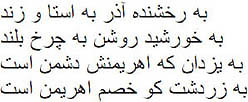
115.Ibid., p. 188:

116.In Persian epic, although Isfandīyār was immortal (rūyīn-tan, which means ‘iron-body’), Rustam managed to kill him by consulting the fabulous mythological bird, the Sīmurgh, who knew that Isfandīyār had a weak point: his eyes. Alexander wisely uses this comparison to warn Darius of the consequences of the war.
117.I. Lewis, ‘Berberā’, EI2 i, pp. 1172–3.
118.Niẓāmī, Sharafnāma, p. 93.
119.Ibid. There is a similar passage in the Iqbālnāma (p. 40) and in the Haft Paykar (6:35–40).
120.See Simon Swain, Themistius, Julian and Greek Political Theory under Rome: Texts, Translations and Studies of Four Key Works (Cambridge, 2013), pp. 110–23, and the translation of the text at pp. 180ff. See also Emily Cottrell, ‘An early mirror for princes and manual for secretaries: The Epistolary Novel of Aristotle and Alexander’, Alexander the Great in the East (Wroclaw, forthcoming); M. Maróth, The Correspondence between Aristotle and Alexander the Great: An Anonymous Greek Novel in Letters in Arabic Translation (Piliscsaba, 2006).
121.It is preserved in Miskawayh's al-Ḥikmah al-Khālidah. See Daniel Gimaret, Le livre de Bilawhar et Būḍāsf selon la version arabe ismaélienne (Paris, 1971), pp. 38–41.
122.Niẓām al-Mulk, Siyar al-mulūk, pp. 138–40; English translation, pp. 95–6.
123.Ghazālī, Naṣīḥat al-mulūk, p. 112; English translation, p. 63.
124.Niẓāmī, Sharafnāma, p. 96, XVIII, 31–3.
125.Bal‘amī, Tārīkh-i Bal‘amī, vol. II, p. 694.
126.Niẓāmī, Sharafnāma, p. 96, XVIII, 34 and 38.
127.Niẓāmī, Sharafnāma, p. 119.
128.Niẓāmī, Sharafnāma, XIX.
129.It was mentioned above that Aristotle's father gave a magical alphabetical ring to Alexander to foretell the outcome of a battle. This is curious because the idea of Alexander using magic to defeat the enemy seems to have aroused some scepticism among medieval readers; one can mention Geoffrey of Waterford (d. c.1300) in particular, who translated the Secret of Secrets into French. Thorndike notes: ‘He wonders why Alexander had to win his battles by hard fighting when Aristotle is supposed to inform him in his book of a stone which will always rout the enemy’ (‘The Latin pseudo-Aristotle’, p. 257).
130.Niẓāmī, Sharafnāma, XX, p. 131. Curiously, in the Greek Romance (Pseudo-Callisthenes, I, 35), there is a similar sentence regarding the Tyrians: ‘To this day the miseries of Tyre is a proverbial expression’ (Stoneman, The Greek Alexander Romance, p. 70.
131.Niẓāmī, Sharafnāma, XXI, p. 135.
132.Ibid., XXI, p. 136.
133.The Shāhnāma of Firdawsī does not mention the foundation of Alexandria.
134.Niẓāmī, Sharafnāma, XXI, pp. 136–7.
135.The episode of the battle against the Tyrians in the Pseudo-Callisthenes (I, 35) comes after Alexander hastened towards Egypt (I, 34), and his first battle against Darius. The episode of the battle against the people of Zang also appears between these two episodes in the Sharafnāma.
136.The Rasā’il is one of the earliest works of Arabic literature and was translated or edited by Sālim Abū l-‘Alā’, secretary to the tenth Umayyad caliph, Hishām ibn ‘Abd al-Mālik (r. 724–43). It consists of approximately 16 letters and treatises. See Simon Swain, Themistius, Julian and Greek Political Theory under Rome, pp. 110–23, and his translation of the text at pp. 180ff.; M. Grignaschi, ‘Les Rasā'l d'Arisṭūṭālīsa ilā-l-Iskandar de Sālim Abū-l-‘Alā’ et l'activité culturelle à l'époque omeyyade’, Bulletin d'études orientales xix (1965–6), p. 31. It looks as if the epistolary novel came to be in Arabic through a version in Syriac. See Brock, ‘The laments of the philosophers over Alexander in Syriac’, pp. 215–18; Van Bladel, ‘Syriac sources of the early Arabic narratives of Alexander’.
137.Niẓāmī, Sharafnāma, XXI, p. 137.
138.Ibid., XXI, p. 139.
139.Niẓāmī, Sharafnāma, XXII, p. 142.
140.Budge, The Syriac Pseudo-Callisthenes, pp. 46–52.
141.Niẓāmī, Sharafnāma, XXIV, pp. 160–1.
142.Bal‘amī also translates the word as ‘chawgān’ in order for Alexander to play polo (Bal‘amī, Tārīkh-i Bal‘amī, vol. II, p. 695).
143.See García Gual, Pseudo-Calístenes, p. 94, n. 67.
144.Budge, The Syriac Pseudo-Callisthenes, p. 47.
145.Ibid., p. 50.
146.For a detailed discussion of this passage in Ṭabarī's Tārīkh see Gad, ‘Al-Ṭabarī's tales of Alexander’, p. 221.
147.Bal‘amī, Tārīkh-i Bal‘amī, vol. II, pp. 695–6.
148.Nihāyat al-‘arab fī tārīkh al-fars wa al-‘arab, ed. M. T. Dāneshpazhūh (Tehran, 1374/1995), pp. 116ff. Here the author also adds a golden coffin and a pearl to the symbolic gifts.
149.Niẓāmī, Sharafnāma, XXII, p. 143.
150.Ibid., XXII, p. 144.
151.Ibid., XXII, p. 144.
152.Ibid., XXIV, p. 162.
153.Ibid., XXV, p. 163.
154.Niẓāmī uses the word afranja (the Arabised form of Afrang, which in Persian means ‘Europe’). According to Yāqūt Ḥamavī (Mu‘jam al-Buldān), one of the Afrang cities was Rhodes, which lay in front of Alexandria. See Mu‘īn, ‘Afrang’, Farhang-i Fārsī, 10th edn (Tehran, 1375/1996), vol. I, p. 314.
155.Niẓāmī, Sharafnāma, XXV, p. 164.
156.Ibid., XXVI, pp. 170–1.
157.Bal‘amī, Tārīkh-i Bal‘amī, vol. II, p. 696.
158.Nāma-yi Tansar, ed. M. Mīnavī, 2nd edn (Tehran, 1354/1975), p. 86.
159.This Persian word is derived from the Greek νόμος (law, reason, order, tradition).
160.Niẓāmī, Sharafnāma, XXVI, pp. 172–3.
161.Firdawsī, Shāhnāma, vol. V, pp. 541ff.
162.According to Canard, Jazīra ‘is the name used by Arab geographers to denote the northern part of the territory situated between the Tigris and the Euphrates’. See ‘al-Djazīra’, EI2 ii, pp. 523–4.
163.Mawṣil (or al-Mawṣil) – modern-day Mosul – is a city in northern Mesopotamia (Iraq), some 400 km north of Baghdad. The original city stands ‘on the west bank of the Tigris River and opposite to ancient Ninevah’. See E. Honigmann [C. E. Bosworth], ‘al-Mawṣil’, EI2 vi, pp. 899–901.
164.R. Stoneman, personal communication.
165.Firdawsī, Shāhnāma, vol. V, p. 541.
166.Bal‘amī, Tārīkh-i Bal‘amī, vol. II, p. 696.
167.Niẓāmī, Sharafnāma, XXVIII, p. 197.
168.Pseudo-Callisthenes, I, 41–2; Firdawsī, Shāhnāma, vol. V, pp. 541, 547.
169.Niẓāmī, Sharafnāma, XXIX, p. 202.
170.Ibid., XXIX, p. 204.
171.Ibid., XXIX, p. 204.
172.Ibid., XXIX, p. 206.
173.Ibid.
174.For a detailed analysis of this passage in the Arabic histories and the Shāhnāma see Chapters 2 and 3 of this book.
175.Stoneman, The Greek Alexander Romance, p. 109, II, 20.
176.Niẓāmī, Sharafnāma, XXXI, p. 228.
177.Ibid., XXIX, p. 219.
178.Bal‘amī also reports these three wishes (Tārīkh-i Bal‘amī, vol. II, p. 696). See also Stoneman, A Life in Legend, p. 43; J. S. Meisami, Persian Historiography to the End of the Twelfth Century (Edinburgh, 1999), p. 79.
179.In this regard see the important discussion of C. Ciancaglini, ‘Alessandro e l'incendio di Persepoli nelle tradizioni greca e irancia’, in A. Valvo (ed.), La diffusione dell'eredità classica nell'età tardoantica e medievale: Forme e metodi di trasmissione (Alexandria, 1997), pp. 59–81; K. van Bladel, The Arabic Hermes, pp. 33–6; Shayegan, Arsacids and Sasanians, pp. 301–2.
180.Niẓāmī, Sharafnāma, XXXII, pp. 238–9.
181.Regarding Pahlavi texts in which Alexander is mentioned, see the appendix to Touraj Daryaee, ‘Imitatio Alexandri and its impact on Late Arsacid, Early Sasanian and Middle Persian literature’, Electrum xii (2007), pp. 93–5; Shayegan, Arsacids and Sasanians, pp. 295–7.
182.See T. Daryaee, ‘Imitatio Alexandri’, pp. 90–3, where he analyses the content of passages of Middle Persian texts in which Alexander appears. In addition, see Stoneman, ‘Alexander the destroyer’, in his A Life in Legend, pp. 41–4.
183.M. Boyce, Zoroastrians: Their Religious Beliefs and Practices (London, 1979), p. 78.
184.Niẓāmī, Sharafnāma, XXXII, pp. 239–40.
185.Ibid., XXXII, p. 241.
186.Ibid., XXXII, p. 240.
187.For English translations of fragments of Middle Persian texts mentioning Alexander, see T. Daryaee, ‘Imitatio Alexandri’, pp. 93–5.
188.For example, in Bal‘amī's Tārīkh, which coincides with Niẓāmī in the majority of its content, there is no mention of this custom.
189.Niẓāmī, Sharafnāma, XXXII, p. 241.
190.Ibid.
191.On the identification of Balīnās with Apollonius of Tyana see M. Plessner, ‘Balīnūs’, EI2 i, pp. 994–5. His role at Alexander's side will be studied in this and the next chapter. Piemontese believes that Balīnās is Eupalinus of Megara, an ancient Greek engineer who built the Tunnel of Eupalinus on Samos in the sixth century BC. See Amīr Khusraw of Delhi, Lo specchio Alessandrino, trans. Angelo M. Piemontese (Catanzaro, 1999).
192.Niẓāmī, Sharafnāma, XXXII, pp. 243–4.
193.On the role of Apollonius of Tyana in the Iskandarnāma see Manteghi, ‘The king and the wizard’, in Richard Stoneman (ed.), The Alexander Romance: History and Literature, Ancient Narratives Supplements (Groningen, forthcoming).
194.Niẓāmī, Sharafnāma, XXXIII, pp. 245–56.
195.Ibid., XXXIV, p. 258.
196.Niẓāmī, Sharafnāma, p. 263.
197.Niẓāmī, Sharafnāma, XXXVI, p. 271. The direction of his travel was evidently south, but Niẓāmī says west because, according to the Islamic tradition, Alexander reached both extremes of the world: East and West.
198.Niẓāmī, Sharafnāma, pp. 272–3.
199.A. J. Wensinck, ‘Hadjdj’, EI2 iii, pp. 31–3.
200.See Stoneman, A Life in Legend, pp. 31, 159.
201.Dīnavarī, Akhbār al-ṭiwāl, ed. ‘Abd al-Mun'im Amīr and Jamāl al-Dīn al-Shiyal (Cairo, 1960), pp. 33–4.
202.Emel Esin, Mecca the Blessed, Madinah the Radiant (New York, 1963), pp. 18–22.
203.See W. Montgomery Watt, ‘Ḥanīf’, EI2 iii, pp. 165–6.
204.Actually, according to the Greek Romance (Pseudo-Callisthenes, II, 9), ‘Alexander was keen to conquer Greater Armenia’ and so subdued it.
205.Niẓāmī, Sharafnāma, XXXVI, pp. 273–4.
206.Ibid., XXXVI, p. 275.
207.Stephen H. Rapp Jr, The Sasanian World through Georgian Eyes: Caucasia and the Iranian Commonwealth in Late Antique Georgian Literature (Farnham, 2014), p. 269.
208.M. F. Brosset, Histoire de la Géorgie (St Petersburg, 1849), vol. I, p. 140.
209.On the Sasanians and Xuasrovanis see Stephen H. Rapp Jr, The Sasanian World through Georgian Eyes, p. 269.
210.V. Minorsky [C. E. Bosworth], ‘al-Kurdj’, EI2 v, pp. 487–98.
211.Van Donzel and Schmidt, Gog and Magog, p. 215.
212.In the Greek Romance (Pseudo-Callisthenes, III, 18–23) she is renowned as the Queen of Meroe.
213.Firdawsī, Shāhnāma, vol. VI, pp. 51–74. In the Shāhnāma she is known as the Queen of al-Andalus. See also Claude-Claire Kappler, ‘Alexandre dans le Shāh Nāma de Firdousi: De la conquête du monde à la dé couverte de soi’, in M. Bridges and J. Ch. Bürgel (eds), The Problematics of Power: Eastern and Western Representations of Alexander the Great (Bern, 1996), pp. 165–90.
214.On Khāqānī's life and works see Anna Livia Beelaert, ‘Kāqānī Šervānī’, EIr xv/5, pp. 521–9.
215.Khāqānī Shirvānī, Dīvān, ed. Sajjādī, pp. 80, 177, 403.
216.See F. de Blois, ‘Eskandar-Nāma of Neẓāmī’, EIr viii/6, p. 614.
217.Niẓāmī, Sharafnāma, XXXVII, pp. 277–8, 279–80.
218.Ibid., XXXVII, p. 281.
219.According to S. Ḥamīdīyān (editor of the Iskandarnāma), it was customary for kings (or queens in this instance) to hold amber in their hands for its fragrance. See Niẓāmī, Sharafnāma, XXXVIII, p. 282, n. 5.
220.Ibid., XXXVII, p. 285:

221.Ibid., XXXVII, p. 287:
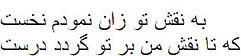
222.This motif of the Sophianic Feminine in Niẓāmī's romances has been extensively treated by Michael Barry. See Farīd-od-Dīn ‘Attār: The Canticle of the Birds Illustrated through Persian and Eastern Art, trans. A. Darbandi and Dick Davis, with commentary by Michael Barry (Paris, 2014), pp. 139–54, where Barry connects the motif of the theophany of the Lady Beloved throughout Niẓāmī's various mathnawīs to that found in ‘Aṭṭār's Manṭiq al-ṭayr.
223.See Erich Kettenhofen, ‘Darband’, EIr vii/1, pp. 13–19; D. M. Dunlop, ‘Bāb al-Abwāb’, EI2 i, pp. 835–6.
224.Niẓāmī, Sharafnāma, XLI, p. 316.
225.Ibid., XLI, p. 317.
226.Ibid., XLI, pp. 321–2.
227.Ibid., XLI, p. 323.
228.Ibid.
229.D. M. Dunlop, ‘Bāb al-Abwāb’, EI2 i, pp. 835–6.
230.See A. R. Anderson, ‘Alexander at the Caspian Gates’, Transactions of the American Philological Association lix (1928), pp. 130–63; Anderson, Alexander's Gate, Gog and Magog and the Inclosed Nations (Cambridge, 1932). For a long discussion of the symbolism and history underlying Alexander's attack on the castle of Darband and his related adventures (and for a translation of the Sharafnāma's text concerning these), see Michael Barry, Figurative Art in Medieval Islam and the Riddle of Bihzād of Herāt (Paris, 2004), pp. 291–300.
231.See R. N. Frye, ‘The Sasanian system of walls for defense’, in M. Rosen-Ayalon (ed.), Studies in Memory of Gaston Wiet (Jerusalem, 1977), pp. 11–12.
232.Mujmal, ed. Bahār, p. 76.
233.See the study of Van Donzel and Schmidt, Gog and Magog, p. 216. On Alexander's barrier in the Syriac tradition, see pp. 17–30.
234.Niẓāmī, Iqbālnāma, ed. V. Dastgirdī, re-ed. S. Ḥamīdiyān (Tehran, 1376/1997), pp. 220–32.
235.On the confusion arising from the ancient sources’ mistaken identification of the pass at Darband with the Dar'yal Pass in the central Caucasus see Erich Kettenhofen, ‘Darband’, EIr vii/1, pp. 13–19.
236.See Stoneman, A Life in Legend, p. 77.
237.R. Stoneman, personal communication.
238.Particularly important is Suetonius's remark in his biography of Nero (19.1) where the emperor prepares for war against the Albanians, which gives a clear indication that he identified the Caspian Gates with the Darband Pass. See D. C. Braund, ‘The Caucasian frontier: myth, exploration and the dynamics of imperialism’, in P. Freeman and D. Kennedy (eds), The Defence of the Roman and Byzantine East (Oxford: 1986), pp. 31–49; W. F. Standish, ‘The Caspian Gates’, Greece & Rome xvii (1970), pp. 12–24.
239.See R. Stoneman, ‘Romantic ethnography: Central Asia and India in the Alexander Romance’, Ancient World xxv (1994), pp. 93–107.
240.In the Shāhnāma of Firdawsī, Kay Khusraw pursues Afrāsīyāb from Ray and Khurāsān, and reaches Caucasia passing over the Caspian Sea. In the Sharafnāma, Alexander starts his journey from Caucasia and then reaches Khurāsān and Ray.
241.Niẓāmī, Sharafnāma, XLIV, pp. 342–50.
242.Ibid., XLVII, p. 366.
243.The founder of Manicheism in the third century AD. See Werner Sundermann, ‘Mani’, EIr, Online edition. Available at http://www.iranicaonline.org/articles/mani-founder-manicheism.
244.These tales (such as the competition between the Chinese and Roman painters, and the painting of Mānī, for example) have been the subject of much learned research and many publications. The best of these studies, which covers all these motifs and their interpretation along with their Greek and Byzantine parallels is Stoneman, ‘Alexander's mirror’, pp. 53–8. On the comparison of Ghazālī, Niẓāmī, Rūmī and other versions of the tale, see A. Kitābī, ‘Qiṣṣa-yi mirī kardan-i rūmīyān va chīnīyān dar ‘ilm-i naqqāshī va ṣūratgarī’, Āyīna-yi Mīrāth xxxvi/7 (1386/2007), pp. 258–71.
245.For a good study of the mystical themes of both these tales in the Sharafnāma, see Michael Barry's ‘Nizāmī on painters in the Book of Alexander’ in his Figurative Art in Medieval Islam, pp. 263–8.
246.Abū Ḥāmid Muḥammad Ghazālī, Iḥyā ‘ulūm al-Dīn, Vol. III: Rub‘ mahlakāt, trans. M. Muḥammad Khwarazmī, 3rd edn (Tehran, 1368/1989), p. 46.
247.The tale is also told by Rūmī (Mathnavī, ed. and trans. R. A. Nicholson (Tehran, 1356/1977), Book I, couplets 3459–99). However, in his version the roles of the Byzantine and the Chinese are reversed and Alexander is left out of the tale, replaced by an anonymous sultan.
248.Barry, Figurative Art in Medieval Islam, p. 262.
249.This point will be studied in the next chapter.
250.See Niẓāmī, ‘Laylī va Majnūn,’ in Kulliyāt-i Ḥakīm Niẓāmī Ganjavī, in Vaḥīd Dastgirdī (Tehran, 1378/1999), p. 314.
251.Niẓāmī, Sharafnāma, LV, p. 419.
252.Ibid., LV, p. 420.
253.Niẓāmī's description of Russians and their customs is one of the first of its type found in Persian literature, which gives it great historical significance.
254.Niẓāmī, Sharafnāma, LVI, p. 433:

255.Ibid., LVI, p. 434:

256.
257.Ibid., LVIII, p. 439:

258.Ibid., LXIII, pp. 455–6.
259.Ibid., LXIII, pp. 457–8.
260.Firdawsī does not use the word ‘Russians’, but he gives a similar description of the people Alexander visits in Hārūm, who are fair-haired and red-faced (Shāhnāma, vol. VI, p. 91): 
261.On the geographical/historical works in Arabic that describe the northern lands, especially the land of Rūs, see C. Stone and P. Lunde, Ibn Faḍlān and the Land of Darkness: Arab Travellers in the Far North (London, 2012), vol. III.
262.This work is of great historical, geographical and ethnographic interest, and shows that Ibn Faḍlān offered a mass of extremely important information on the peoples – including the Rūs and the Khazars – whom he had been able to see himself or of whom he had heard accounts during his journey. On Ibn Faḍlān and his journey to Volga see M. Canard, ‘Ibn Faḍlān’, EI2 iii, p. 759.
263.R. N. Frye (trans.), Ibn Fadlan's Journey to Russia: A Tenth-Century Traveler from Baghdad to the Volga River (Princeton, 2005), pp. 54–7.
264.Niẓāmī, Sharafnāma, LXIV and LXVII.
265.Niẓāmī, Sharafnāma, pp. 486–98. For a study of the erotic content of this passage, see Khaleghi-Motlagh, ‘Tan kāma-sarāyī dar adab-i fārsī’, Majāla-yi Īrānshināsī viii/1 (1375/1996), pp. 20–2.
266.Niẓāmī describes the inhabitants’ opinion of these fur pelts as follows: ‘Do not regard with contempt these shrivelled skins, for they are the top currency of this land. This patched leather is in our opinion far more valuable than the softest human hair, for many of those [slaves] with the most beautiful hair found here can be bought with this arid and hairless leather’ (Sharafnāma, LXVI, p. 480).
267.On the unclean nations see Andrew Colin Gow, ‘The unclean nations, Gog and Magog, and the ten tribes’, The Red Jews: Antisemitism in the Apocalyptic Age, 1200–1600 (Leiden, 1995), pp. 23–6, and Appendix B, especially pp. 319ff.
268.See A. Seyed-Gohrab, F. Doufikar-Aerts and A. McGlinn (eds), Gog and Magog: The Clans of Chaos in World Literature (Amsterdam, 2007), pp. 69–79.
269.Van Donzel and Schmidt, Gog and Magog, p. 10.
270.Ibid., p. 11.
271.Ibid., p. 13.
272.On this work see J. P. Monferrer-Sala, ‘Alexander the Great in the Syriac literary tradition’, A Companion to Alexander Literature in the Middle Ages, ed. Z. David Zuwiyya (Leiden, 2011), pp. 54–5.
273.P. B. Golden, ‘The conversion of the Khazars to Judaism’, in P. B. Golden, H. Ben-Shammai and A. Róna-Tas (eds), The World of the Khazars (Leiden, 2007), p. 139.
274.See Dan D. Y. Shapira, ‘Iranian sources on the Khazars’, in P. B. Golden, H. Ben-Shammai and A. Róna-Tas (eds), The World of the Khazars (Leiden, 2007), pp. 298–305.
275.Ibn Isfandīyār, Tārīkh-i Ṭabaristān, ed. ‘A. Iqbāl (Tehran, 1320/1941), vol. I, p. 266.
276.Khāqānī, Dīvān, pp. 135, 139, 145, 476. See also V. Minorsky, ‘Khāqānī and Andronicus Comenus’, Bulletin of the School of Oriental and African Studies ix (1943–6), pp. 550–78.
277.See Ḥudūd al-‘ālam min al-mashriq ilā al-maghrib.
278.For example, see Bertels, Shā‘ir-i buzurg-i Āzarbāyjān, p. 142; K. Aḥmad-Nizhād, Taḥlīl-i āthār-i Niẓāmī Ganjavī, 2nd edn (Tehran, 1375/1996), pp. 123–4.
279.For an English translation of this tale, see Michael Barry's ‘Alexander wends his way into the Land of Darkness’ in his Figurative Art in Medieval Islam, pp. 321–6; and on its mystical meaning, see pp. 321–30.
280.Niẓāmī, Sharafnāma, LXVIII, p. 500.
281.See M. Casari, ‘The king explorer’, in Richard Stoneman, Kyle Erickson and Ian Netton (eds), The Alexander Romance in Persia and the East (Groningen, 2012), p. 179.
282.Italian scholars have dedicated various works to discussing this subject; among them, see in particular: M. Casari, ‘Nizami's cosmographic vision and Alexander in search of the Fountain of Life’, in Johann-Christoph Bürgel and Christine van Ruymbeke (eds), A Key to the Treasure of Hakim, Artistic and Humanistic Aspects of Nizāmī Ganjavī's Khamsa (Leiden, 2011), pp. 95–105.
283.As elaborated by Barry, Figurative Art in Medieval Islam, pp. 327ff.
284.Among the sources that include the same etymology for the name of Bulgaria, we can mention Ibn Khalaf Tabrīzī's Burhān-i Qāṭi‘. According to this source, Bulgaria is near the Land of Darkness and was founded in Alexander's time. According to Ghīyāth al-Dīn's Ghīyāth al-lughāṭ, the name Bulgār derives from the fact that the country is full of caves (ghār means cave in Persian). Both works are cited by Dihkhudā, ‘Bulghār’, Lughatnāma, vol. III, p. 4305.
285.Niẓāmī, Sharafnāma, LXVIII, p. 501.
286.H. Schwarzbaum, Biblical and Extra-Biblical Legends in Islamic Folk Literature (Walldorf-Hessen, 1982), p. 167.
287.R. Stoneman, personal communication.
288.A. J. Wensinck, ‘al-Khaḍir’, EI2 iv, p. 904.
289.A poem by Percy Bysshe Shelley (d. 1822) compares Khiḍr and Ahasuerus, as does Shahrastānī's Majlis-i maktūb (eleventh century). See: L. Lewisohn, ‘From the Moses of reason to the Khidr of the resurrection’, in O. Alí-de-Unzaga (ed.), Fortresses of the Intellect, Ismaili and Other Islamic Studies in Honour of Farhad Daftary (London, 2011), pp. 423–7.
290.Niẓāmī, Sharafnāma, p. 511:

291.Ibid., LXIX, p. 508.
292.According to classical Greek tradition, it is Aristotle who gives magical stones to Alexander. See Thorndike, ‘The Latin pseudo-Aristotle and medieval occult science’, p. 235.
293.The valley of diamonds appears in Firdawsī's Shāhnāma (VI, pp. 95–6). The tale of the Valley of the Diamonds will be related in the context of the Iqbālnāma in Chapter 5.
294.The following sources may be cited here: Stoneman, A Life in Legend, pp. 150–62; Casari, ‘Nizami's cosmographic vision’, pp. 95–105; P. Franke, ‘Drinking from the Water of Life’, pp. 77–125.
295.See A. Szalc, ‘In search of Water of Life: the Alexander romance and Indian mythology’, in R. Stoneman, K. Erickson and I. Netton (eds), The Alexander Romance in Persia and the East (Groningen, 2012), pp. 327–38.
296.See the discussion on the myth of Gilgamesh in Stoneman, A Life in Legend, pp. 152–3. Jalāl Sattārī compares the myth of Gilgamesh with the Alexander legend in his book Usṭūra-yi Gīlgamish va afsāna-yi Iskandar (Tehran, 1384/2005).
297.Ethé has shown that the episode in the Iskandarnāma is full of terms that could be understood as allusions to Sufi concepts; cited by Franke, ‘Drinking from the Water of Life’, p. 115.
298.See Casari's ‘The king explorer’ and ‘Nizami's cosmographic vision’.
299.See Friedländer, Die Chadhirlegende und der Alexanderroman (Leipzig, 1913), p. 330.
300.Brannon M. Wheeler, Moses in the Quran and Islamic Exegesis (London/New York, 2002), pp. 17–18. Wheeler makes a very detailed study of the motif of ‘the lost fish’ (pp. 11–19), and a brief summary of his conclusions is presented here.
301.See Wheeler, Moses in the Quran and Islamic Exegesis, p. 8.
302.This is mentioned by Aṣghar Mahdavī in a letter to Iraj Afshār, who included it in the prose edition of the Iskandarnāma (Tehran, 1387/2008), p. 632.
303.This reference seems to indicate that it originated from a linguistic fault by Bible translators in the Middle Ages. The Torah (Exodus 34:29–35) reports that when Moses came down from Mount Sinai with the Ten Commandments, the skin of his face was radiant. When the Bible was translated into Latin, the translators attributed ‘horns of light’ to Moses because the spelling of the Hebrew verb karan (to shine) is identical to that of keren (horn). See Wheeler, Moses in the Quran and Islamic Exegesis, pp. 31–2.
304.Wheeler, Moses in the Quran and Islamic Exegesis, p. 117.
305.It is normally assumed that Niẓāmī's Iskandarnāma was highly Islamised; this point partially contradicts and subverts that assumption.
306.K. Schippmann, ‘Azerbaijan: iii. Pre-Islamic history’, EIr iii/2, p. 224.
307.Frederik Coene, The Caucasus: An Introduction (London/New York, 2010), p. 199.
308.Coene, The Caucasus, p. 69.
309.To cite one such example out of many, in the Iqbālnāma, Niẓāmī uses the word ‘Uqyānūs’ and affirms that it is a Greek word. From this statement, S. Ḥamīdīyān, the text's editor, concludes that it is possible that Niẓāmī knew Greek. See Niẓāmī, Iqbālnāma, p. 171, n. 4.
310.Niẓāmī, Sharafnāma, XXXII, p. 241.
311.See Lambton, State and Government, p. 55; Lambton, ‘Islamic mirrors for princes’, pp. 426–36.
312.Niẓāmī, Sharafnāma, p. 79.

Chapter 5 Alexander in the Iqbālnāma of Niẓāmī Ganjavī
1.Ṣā'ib Tabrīzī, Dīvān, vol. II, p. 664.
2.This title recalls Plutarch's The Fortune of Alexander (Moralia: De Alexandri Magni Fortuna aut Virtute). Is this a coincidence? We will briefly discuss this in the conclusion to the chapter.
3.See Peter Chelkowski, ‘Niẓāmī Gandjawī’, EI2 viii, p. 79.
4.See J. Scott Meisami's chapter ‘Romance as mirror’ in Medieval Persian Court Poetry, pp. 191–234.
5.The idea of the king as the ‘Perfect Man’ or ‘Universal Man’ (al-insān al-kāmil) is discussed in many different Islamic works. For a survey of some of these doctrines, see S. Ḥ. Naṣr, An Introduction to Islamic Cosmological Doctrines (Cambridge, 1964), pp. 66–70.
6.The contents of these tales can be divided into two categories: stories in which Alexander is the protagonist, and independent stories in which Alexander does not play any role or plays only an insignificant one. Christoph Bürgel examines some of the key stories in the Iqbālnāma (e.g. the tale of Archimedes and his Chinese Slave-girl, Mary the Copt, the Seventy Sages Who Deny the Doctrines of Hermes and Perish, Plato Composes Songs to Put Aristotle to Shame, etc.). For a study of some of these tales, see ‘Occult sciences in the Iskandarnameh of Nizami’, pp. 129–39. See also Bürgel, ‘Die Geheimwissenschaften im Iskandarnāme Nizami’, in Bert G. Fragner et al. (eds), Proceedings of the Second European Conference of Iranian Studies, held in Bamberg, 30th September to 4th October 1991, by the Societas Iranologica Europaea (Rome, 1995), pp. 103–12; Carlo Saccone, ‘The wasteland and Alexander, the righteous king, in Niẓāmī's Iqbālnāma’, in J. Christoph Bürgel and Christine van Ruymbeke (eds), A Key to the Treasure of the Hakīm (Leiden, 2011), pp. 165–79. Among the many interesting studies on these stories in Persian we may mention the following: ‘A. Zarrīnkūb, ‘Falsafa-yi yūnān dar bazm-i Iskandar: Naẓarī bi Iskandarnāma-yi Niẓāmī’, Irānshināsī xi (1370/1991), pp. 482–98; K. Aḥmad-Nizhād, Taḥlil-i āthār-i Niẓāmī Ganjavī (Tehran, 1375/1996), pp. 142–218.
7.Regarding Niẓāmī's use of Alexander in his search for a perfect society see Zarrīnkūb, ‘Niẓāmī, a life-long quest for a Utopia’, Colloquio sul poeta Persiano Niẓāmī e la leggenda Iranica di Alessandro Magno (Roma, 25–26 marzo 1975) (Roma, 1977), 5–10.
8.On the various works of this genre in Arabic see T. Lewicki, ‘al-Ḳazwīnī’, EI2 iv, pp. 865–7; C. E. Bosworth, ‘‘Ajā'eb al-Maklūqāt: i. Arabic works’, EIr i/7, pp. 696–8. On the Persian works of this genre see Ī. Afshār, ‘‘Ajā'eb al-Maklūqāt: ii. Persian works’, EIr i/7, pp. 698–9. See also the introduction of A. Ṭūsī, in M. Sutūda (ed.), ‘Ajāyib al-makhlūqāt va gharāyib al-mawjūdāt (Tehran, 1345/1966), pp. xv–xvii; P. M. Berlekamp, Wonder, Image and Cosmos in Medieval Islam (New Haven, 2011). On the different traditions of this genre see ‘‘Ajāyib literature’, in J. Scott Meisami and P. Starkey (eds), Encyclopaedia of Arabic Literature (London/New York, 1998), vol. I, pp. 65–6.
9.Vettius Valens was a Hellenic astrologer. For his works and their importance, see O. Neugebauer and H. B. Van Hoesen, Greek Horoscopes (Philadelphia, 1987), pp. 176–85.
10.On Porphyry (233–c.304), the renowned Neoplatonic philosopher, disciple, biographer and editor of Plotinus, see ‘Furfūrīyus’, in M. Saeed Sheikh (ed.), A Dictionary of Muslim Philosophy, 2nd edn (Lahore, 1981), p. 80.
11.In fact, the reason the Iqbālnāma is also known as the Khiradnāma is the existence of these three ‘Books of Wisdom’ within the book.
12.On the historical information about this patron see, C. E. Bosworth, ‘The political and dynastic history of the Iranian World (AD 1000–1217)’, in J. A. Boyle (ed.), The Cambridge History of Iran, V: The Saljuq and Mongol Periods (Cambridge, 1968), pp. 170–1. See also Ḥ. Vaḥīd Dastgirdī, Ganjīna-yi Ganjayī, ed. S. Ḥamīdīyān (Tehran, 1376/1997), p. 71.
13.On the Greek utopian tradition in relation to the Alexander Romance see Stoneman, A Life in Legend, pp. 97–100.
14.For more information on this genre in Arabic and the influence of Greek literature upon it see Franz Rosenthal, The Classical Heritage in Islam, trans. Emile and Jenny Marmorstein (London/New York, 1975; repr. 1994); Dimitri Gutas, Greek Wisdom Literature in Arabic Translation (New Haven, 1975), pp. 436–51; Gutas, ‘Classical Arabic wisdom literature: nature and scope’, Journal of the American Oriental Society ci (1981), pp. 49–86. For examples of these texts, see Doufikar-Aerts, Alexander Magnus Arabicus, pp. 93–4; H. J. Gleixner, Das Alexanderbild der Byzantiner (Munich, 1961), p. 20.
15.On Pahlavi wisdom literature see M. Macuch, ‘Pahlavi literature’, in R. E. Emmerick and M. Macuch (eds), The Literature of Pre-Islamic Iran (New York, 2009), pp. 160–72. For examples of this genre in Persian literature see C. H. de Fouchécour, Moralia: Les notions morales dans la littérature persane des 3e/9e au 7e/13e siècles (Paris, 1986).
16.On Greek influence on the Persian wisdom literature see C. van Ruymbeke, ‘Hellenistic influences in classical Persian literature’, in J. T. P. de Bruijn (ed.), General Introduction to Persian Literature (New York, 2009), p. 358.
17.De Fouchécour, Moralia, p. 316.
18.See J. Scott Meisami, ‘Genre of court literature’, in J. T. P. de Bruijn (ed.), General Introduction to Persian Literature (New York, 2009), pp. 255–60. Regarding the Greek wisdom literature in the Iqbālnāma of Niẓāmī see J. C. Bürgel, The Feather of Simurgh: The ‘Licit Magic’ of the Arts in Medieval Islam (New York/London, 1988), pp. 36–7; Niẓāmī, Das Alexanderbuch: Iskandarname, trans. J. C. Bürgel (Zürich, 1991). The mirror for princes genre is discussed in Chapter 4.
19.Yuḥanna Ibn al-Bitrīq, Sirr al-asrār, al-uṣūl al-Yūnāniyya li naẓariyyat al-siyāsiyya fī'l-Islām, ed. A. Badawī (Cairo, 1954).
20.Ḥunayn Ibn Isḥāq's original work (Kitāb nawādir al-falāsifa) has not been preserved. However, it is known through a version attributed to Muḥammad ibn ‘Alī al-Anṣārī. The ‘Ādāb al-falāsifa’ was edited by A. Badawī (Kuwait, 1985).
21.Christy Bandak (ed.), Libro de los buenos proverbios: estudio y edición crítica de las versiones castellana y árabe (Zaragoza, 2007).
22.Al-Mubashshir Ibn Fātiq, Los bocados de oro (Mukhtār al-ḥikām wa maḥāsin al-kalam), ed. ‘Abd al-Raḥmān Badawī (Madrid, 1958). On the relation of this work with the Alexander Romance see Emily Cottrell, ‘Al-Mubaššir ibn Fātik and the α Version of the Alexander Romance’, in Richard Stoneman, Kyle Erickson and Ian Netton (eds), The Alexander Romance in Persia and the East (Groningen, 2012), pp. 233–53.
23.On the role Alexander played in wisdom literature there are important annotations in Richard Stoneman, ‘The legacy of Alexander in ancient philosophy’, in J. Roisman (ed.), Brill's Companion to Alexander the Great (Leiden, 2003), pp. 325–46.
24.Doufikar-Aerts, Alexander Magnus Arabicus, pp. 96–128.
25.These motifs are in the Shāhnāma of Firdawsī and the Iskandarnāma of Niẓāmī (such as Alexander's letter of consolation to his mother, the philosophers’ funeral sentences around Alexander's tomb, his relationship with his philosophers, etc.).
26.Doufikar-Aerts, Alexander Magnus Arabicus, p. 130.
27.Niẓāmī, Iqbālnāma, p. 36.
28.Ibid., p. 37.
29.Ibid., pp. 37–8.
30.Ibid., p. 38:
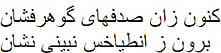
31.Ibid.
32.See Tiziano Dorandi, ‘Chronology’, in K. Algra et al. (eds), The Cambridge History of Hellenistic Philosophy (Cambridge, 1999), pp. 49ff.
33.H. Corbin, Histoire de la philosophie islamique I: des origines jusqu'à la mort d'Averroës (1198) (Paris, 1964), pp. 284–304. For Neoplatonic ideas in the Arabic world, see Peter Adamson, The Arabic Plotinus: A Philosophical Study of the ‘Theology of Aristotle’ (London, 2002).
34.Plutarch, Alex., 14.
35.See M. Buora, ‘L'incontro tra Alessandro et Diogene: Tradizioni e significato’, Atti dell'Istituto l'eneto de Scienze: Lettere ed Arti 132 (1973–4), p. 247; S. Doloff, ‘Let me talk with this philosopher: the Alexander paradigm in King Lear’, The Huntington Library Quarterly liv (1991), pp. 253–5; D. Pinski, Aleksander un Dyogenes (Vilne, 1930); Luis E. Navia, Classical Cynicism: A Critical Study (Greenwood, 1996), pp. 98–100.
36.Cited from J. D. Burnley, Chaucer Studies II: Chaucer's Language and the Philosophers’ Tradition (New York, 1979), p. 71.
37.For instance, Niẓāmī describes Socrates ‘asleep, enjoying the sunshine’ (mashqūl-e khāb, barāsūda az tābish-e āftāb), which recalls the famous sentence of Diogenes (Arr. Anab. 7.2; Diog. Ep. 33), telling Alexander ‘Please get out from between me and the sun!’
38.Niẓāmī, Iqbālnāma, p. 97.
39.Ibid., p. 98.
40.On the Pythagorean ascetic tradition and sexual abstinence in the pagan and Hellenistic periods see R. Damian Finn, Asceticism in the Graeco-Roman World (Cambridge, 2009), pp. 27–55.
41.See Nasr, The Islamic Intellectual Tradition in Persia, p. 184.
42.In Philostratus's Life of Apollonius of Tyana, Pythagoras was the model by which the author established the life of his protagonist. See Ewen L. Bowie, ‘Apollonius of Tyana: tradition and reality’, Aufsteig und Niedergang der Römischen Welt, Teil II: Principat, xvi/2 (1978), pp. 3–41. The conclusion of the previous chapter suggests that Niẓāmī might have known Philostratus's work or the source(s) of the Life of Apollonius of Tyana.
43.For examples of texts that share the Cynic view of Alexander in Antiquity see R. Stoneman, ‘The legacy of Alexander in ancient philosophy’, pp. 331–45.
44.I am grateful to Dr Richard Stoneman for drawing my attention to the fact that any matters concerning sexual asceticism must come from non-Cynic sources.
45.Niẓāmī, Iqbālnāma, p. 98.
46.Ibid., p. 103:

47.Ibid., p. 104:

48.Ibid., p. 105:

49.Ibid., p. 108:

50.Ibid., p. 120.
51.Ibid., p. 135:

52.Ibid., p. 121:
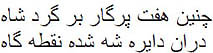
53.Ezra 7:14. The identification of Artaxerxes I or II depends on when we date Ezra; see the discussion in Stoneman, Xerxes: A Persian Life (New Haven/London, 2015), pp. 58–61.
54.Plato, Protagoras, 343 A; Plutarch, Mor., 146 Bff. See J. M. Dillon, Morality and Custom in Ancient Greece (Indiana, 2004), p. 190.
55.See ‘The seven sages of Rome’ in A. Grafton, G. Most and S. Settis (eds), The Classical Tradition (Harvard, 2010), p. 877.
56.For a good overview of the motif of the philosophers surrounding Alexander in the Persian romance tradition, see Mario Casari, ‘The wise men at Alexander's court in Persian medieval romances: an Iranian view of ancient cultural heritage’, in Carlo Cereti (ed.), Iranian Identity in the Course of History (Rome, 2010), pp. 67–80.
57.Niẓāmī, Iqbālnāma, p. 131:
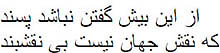
58.Ibid., p. 130.
59.Ibid., p. 135.
60.Ibid., pp. 108–20.
61.For references see R. Stoneman, ‘Naked philosophers: the Brahmans in the Alexander historians and the Alexander romance’, Journal of Hellenic Studies cxv (1995), p. 99, nn. 1, 2.
62.Niẓāmī, Iqbālnāma, p. 135:

I owe the poetic translation of Niẓāmī's verses in this chapter to Dr Leonard Lewisohn, to whom I am very grateful.
63.See Doufikar-Aerts, Alexander Magnus Arabicus, Chapter 3.
64.Ibid., p. 135.
65.Ibid., p. 188.
66.Bal‘amī also commented on this interpretation. See Bal‘amī, Tārīkh-i Bal‘amī, vol. II, p. 701.
67.Arrian (7.14.4) suggested that Alexander wore his hair long in imitation of Achilles. According to Olga Palagia, there are two silver decadrachm (medallions of Porus) on which Alexander appears with strands of hair hanging down from either side of his helmet over his chest. See Olga Palagia, ‘The impact of Alexander the Great in the art of Central Asia’, The Alexander Romance in Persia and the East, p. 372.
68.Abū Ma‘shar al-Balkhī (c.787–886), is best known for his astrological writings. See Keiji Yamamoto, ‘Abū Ma‘shar al-Balkhī’, The Biographical Encyclopaedia of Astronomers, ed. Thomas Hockey et al. (New York, 2007), p. 11.
69.Niẓāmī, Iqbālnāma, pp. 44–5.
70.Ibid., p. 45.
71.On this tradition and the background of various Dhū'l-Qarnayn legends in Islam, see Doufikar-Aerts, Alexander Magnus Arabicus, pp. 135–50; K. Aḥmad-Nizhād, Taḥlīl-i āthār-i Niẓāmī Ganjavī (Tehran, 1375/1996), pp. 153–8; Ṣafavī, Iskandar va adabīyāt-i Irān, pp. 279–310.
72.Bīrūnī, Āthār al-bāqī'a, p. 31; English translation, p. 43.
73.See Bal‘amī, Tārīkh-i Bal‘amī, vol. II, pp. 701ff.
74.Sanā'ī, Kitāb Ḥadīqat al-ḥaqīqa wa sharī‘at al-ṭarīqa, ed. Muḥammad Rawshan (Tehran, 1377/1998), pp. 351–2.
75.In her article ‘King Midas’ ears on Alexander's head’, Doufikar-Aerts explores these oral traditions reflected in the repertoires of preachers and storytellers (pp. 61–79).
76.For instance, Doufikar-Aerts quotes the Darī variant of this story, as preserved by an aged lady from Kabul, beside some Turkish variants. See ‘King Midas’ ears on Alexander's head’, pp. 70–1.
77.Niẓāmī, Iqbālnāma, p. 135:

78.Ibid., p. 136.
79.Alexander's prophethood is discussed in a similar way by Bal‘amī (Tārīkh, vol. II, p. 711).
80.There is a similar attribution to Alexander in the anonymous Mujmal al-tavārīkh (pp. 506–7).
81.Niẓāmī, Iqbālnāma, pp. 139–40.
82.Ibid., pp. 142–64.
83.Ibid., p. 166:

84.Ibid., p. 168:

85.Ibid., p. 170:

86.Ibid., p. 170:

87.Muḥammad Ibn Maḥmūd Ibn Aḥmad Ṭūsī, ‘Ajāyib al-makhlūqāt wa gharāyib al-mawjūdāt [Prodigies of Things Created and Miraculous Aspects of Things Existent], ed. M. Sutūda (Tehran, 1391/2012), introduction, p. xvi.
88.See Aḥmad Ṭūsī, ‘Ajāyib al-makhlūqāt, pp. 2–3.
89.Such as Megasthenes and Philostratus. See R. Stoneman, ‘The marvels of India’, A Life in Legend, pp. 69–72; K. Karttunen, India and the Hellenistic World (Helsinki, 1997); J. Romm, The Edges of the World in Ancient Thought (Princeton, 1992), pp. 82–120.
90.The most important work with this title in Persian is attributed to Aḥmad Ṭūsī (twelfth century) and that in Arabic to Abū Yaḥyā Zakarīyā b. Muḥammad Qazwīnī (c.1203–83).
91.On the Ajāyib al-Buldān (Wonders of the Lands) attributed to Abū al-Mu'ayyid Balkhī (tenth century), see M. T. Bahār, Sabk-shināsī, 7th edn (Tehran, 1373/1994), vol. II, pp. 18–19; Dh. Ṣafā, Tārīkh adabīyāt dar Irān, vol. I, p. 618.
92.Aḥmad Ṭūsī, Ajāyib al-makhlūqāt, introduction, p. xvi.
93.F. Doufikar-Aerts, ‘A letter in bits and pieces: “The Epistola Alexandri ad Aristotolem Arabica”. A first edition with translation based on four 16th–18th century manuscripts’, in Robert M. Kerr and Thomas Milo (eds), Writings and Writing from Another World and Another Era (Cambridge, 2010), pp. 91–115.
94.Richard Stoneman, ‘Romantic ethnography: Central Asia and India in the Alexander romance’, Ancient World xxv (1994), pp. 93–107; see also Stoneman, A Life in Legend, pp. 73–7, 238.
95.See Supplement F in Stoneman's edition of The Greek Alexander Romance.
96.Niẓāmī, Iqbālnāma, p. 168:

97.Most of the Islamic sources attributed the construction of the lighthouse of Alexandria to Alexander. For Arabic sources, see F. Doufikar-Aerts, ‘Alexander the Great and the Pharos of Alexandria in Arabic literature’, in J. Ch. Bürgel and M. Bridges (eds), The Problematics of Power (Bern, 1996), pp. 191–201. For Persian sources see Mujmal al-tavārīkh, p. 494; Ṣafavī, Iskandar va adabīyāt-i Iran, pp. 214–17. See also Amīr Khusraw Dihlavī, ‘A'īna-yi Iskandarī’, in A. Aḥmad Ashrafī (ed.), Khamsa (Tehran, 1362/1983), pp. 495–6.
98.Ṭarsūsī, Dārābnāma, vol. II, pp. 531–4.
99.See Stoneman, ‘Alexander's mirror’, p. 47.
100.Aḥmad Ṭūsī, Ajāyib al-makhlūqāt, pp. 180–3, 146.
101.The text reads ki Yūnānīsh uqyānūs khwānd. The fact that Niẓāmī uses the word uqyānūs (from the Ancient Greek Ὠκεανός, Okeanós) in this verse may indicate his knowledge of the Greek language, insofar as no other poets or authors in Persian literature had used this word before him. See the editor's note to Niẓāmī, Iqbālnāma, p. 171, n. 4.
102.Ibid., pp. 174–5.
103.Ibid., p. 176. There is a similar story in the ‘Ajāyib al-makhlūqāt of Aḥmad Ṭūsī (p. 357).
104.Stoneman, A Life in Legend, p. 124.
105.For instance, see Ibn al-Faqīh al-Hamadānī, Bibliotheca Geographorum Arabicorum, vol. V, p. 71; Mas‘ūdī, Murūj, vol. I, p. 369; Yāqūt Ḥamavī, Mu‘jam, vol. IV, p. 45; Qazwīnī, ‘Ajāyib, vol. II, p. 375. See also A. Hamori, ‘An allegory from the Arabian Nights: the city of brass’, On the Art of Medieval Arabic Literature (Princton, 1974), pp. 145–63.
106.Mujmal al-tavārīkh, pp. 501–11.
107.S. M. Burstein, ‘Alexander, Callisthenes and the sources of the Nile’, Greek, Roman and Byzantine Studies xvii (1976), pp. 135–46.
108.Mujmal al-tavārīkh, pp. 474–5.
109.Stoneman, A Life in Legend, p. 165.
110.This evidently refers to the ‘Iram of lofty pillars’ mentioned in the Qur'ān (Fajr, 89:7) built by Shaddād, a legendary king of Arabia.
111.On the comparison between Shaddād's inscription and that of Cyrus the Great see Ṣafavī, Iskandar va adabīyāt-i Irān, p. 221.
112.See Stoneman, A Life in Legend, pp. 163–4.
113.Niẓāmī, Iqbālnāma, pp. 189–91.
114.According to Fahd, it is also applied to ‘a community following an old Semitic polytheistic religion, but with a strongly Hellenised elite, one of the last outposts of Late Antique paganism’. See T. Fahd, ‘Ṣābi'a’, EI2 viii, p. 676.
115.Ibn Nadīm, al-Fihrist, trans. M. R. Tajaddud (Tehran, 1343/1964), p. 570.
116.On the possible identification of this book, see T. M. Green, The City of the Moon God: Religious Traditions of Harran (Leiden, 1992), p. 180.
117.Abū l-Qāsim Maslama b. Aḥmad al-Majrīṭī (d. 1007), known in Europe as ‘Pseudo Picatrix’ (the ‘Pseudo Hippocrates’). See J. Vernet, ‘al-Madjrīṭī’, EI2 v, pp. 1109–10.
118.See D. Pingree (ed.), Picatrix: The Latin Version of the Ghayat al-hakim (London, 1986); R. Kieckhefer, Magic in the Middle Ages (Cambridge, 1989), p. 133. For the version of prophetic skulls in the Picatrix see H. Ritter and M. Plessner, ‘Picatrix’: Das Ziel des Weisen von Pseudo-Majrīṭī (Studies of the Warburg Institute xxvii) (London, 1962), pp. 146–7.
119.See D. Ogden, Greek and Roman Necromancy (Princeton/Oxford, 2001), pp. 210–16. For Greek texts on the use of skulls in necromancy see D. Ogden, Magic, Witchcraft, and Ghosts, pp. 202–5.
120.See Stoneman, The Ancient Oracles, pp. 67–9.
121.Bīrūnī, Kitāb al-jamāhir fī ma‘rifat al-jawāhir [The Sum of Knowledge about Precious Stones], ed. F. Krenkow (Hyderabad, 1355/1936), p. 99.
122.See Stoneman, A Life in Legend, pp. 85–6.
123.Niẓāmī, Iqbālnāma, p. 192. With ‘almās’, Niẓāmī must be referring to the word adámas, from the ancient Greek ἀδάμας (unbreakable).
124.See Stoneman, A Life in Legend, p. 85.
125.Qazwīnī, Kitāb ‘ajāyib al-Makhlūqāt, ed. F. Wüstenfeld (Göttingen, 1849), vol. II, p. 375.
126.See Y. Yamanaka, ‘Alexander in the Thousand and One Nights and the Ghazālī Connection’, in Y. Yamanaka and T. Nishio (eds), The Arabian Nights and Orientalism: Perspectives from East and West (New York/London, 2006), pp. 93–115.
127.Niẓāmī, Iqbālnāma, p. 195.
128.Ibid., p. 196:
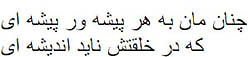
129.Ibid., p. 198.
130.This must refer to the word mentioned in the Avesta (Ābān Yasht, 54, 57; Zāmyād Yasht, 4) and to ‘Kang Dizh’ (which can be translated as the Castle of Kang), which appears in the Bundahishn (29.10) and in the Mīnū-yi Khirad (62.13–14). The castle was said to have been built by Sīyāvajsh, Kay Khusraw's father. See Firdawsī, Shāhnāma, vol. II, pp. 308–9.
131.Niẓāmī, Iqbālnāma, p. 202:

132.Abū Bakr Muḥammad Ibn Ja‘far, Tārīkh-i Bukhārā, ed. Muddaris Raḍavī, 2nd edn (Tehran, 1363/1984), pp. 62–3.
133.Niẓāmī uses ‘āb-i kabūd’, which means the Black Sea:

However, it is ambiguous because in some verses he refers to a ‘Chinese Sea’ (daryā-yi Chīn):

Thus, it is not clear whether he is referring to different seas or applying multiple names to the same one.
134.Niẓāmī, Iqbālnāma, p. 205.
135.Ibid.:

136.See Stoneman, A Life in Legend, pp. 145–6.
137.Budge, The History of Alexander, p. 97; Budge, The Life and Exploits of Alexander the Great: Being a Series of Ethiopic Texts (London, 1896), p. 147.
138.Ibn al-Faqīh al-Hamadānī and Yāqūt mention that Alexander erected an equestrian statue. Others, such as Gharnāṭī and Ṭabarī, also mention this but do not link the statue with Alexander. See G. Ferrand, ‘Le Tuḥfat al-Albāb de al-Andalusī al-Ġarnāṭī’, Journal Asiatique ccvii (1925), p. 64; Qazwīnī Kitāb ‘ajāyib al-Makhlūqāt (1849), vol. I, p. 180; Ṭabarī, Annales, p. 684.
139.Niẓāmī, Iqbālnāma, p. 217.
140.Ibid., p. 220:

141.Aḥmad Ṭūsī, ‘Ajā'ib al-makhlūqāt, p. 327.
142.Kharkhīz is a city in Khutan (Chinese Turkistan) famous for its musk and silk. See ‘Alī Akbar Dihkhudā, Lughat-nāma, vol. VI, p. 8483, s.v. ‘Kharkhīz’.
143.Niẓāmī, Iqbālnāma, p. 223.
144.This may refer to the crossing of the Gedrosian desert (Plutarch, Alex. 66.4–5). Thanks to Professor Lynette Mitchell for this comment.
145.Niẓāmī, Iqbālnāma, p. 224:

146.Ibid.:
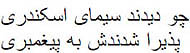
147.For the English translation see Budge, The Syriac Alexander Romance (repr. Amsterdam, 1976), pp. 144–58, 163–200.
148.Niẓāmī, Iqbālnāma, p. 226:

149.Ibid., pp. 228–31.
150.Ibid., pp. 231–2.
151.See Stoneman, ‘Tales of Utopia: Alexander, Cynics and Christian ascetics’, Paper given at ICAN IV: International Conference on the Ancient Novel: Crossroads in the Ancient Novel: Spaces, Frontiers, Intersections (Lisbon, 21–6 July 2008). See also Budge, The Life and Exploits of Alexander the Great, p. 422.
152.Maybudī, Kashf al-asrār wa ‘uddat al-abrār, ed. ‘A. A. Ḥikmat (Tehran, 1357/1978), vol. V, p. 75.
153.See Stoneman, ‘Naked philosophers’, pp. 99–114; Stoneman, ‘Who are the Brahmans?’, pp. 500–10.
154.For more discussion see Stoneman, A Life in Legend, pp. 92–102.
155.See Timothy P. Bridgeman, Hyperboreans: Myth and History in Celtic–Hellenic Contacts (London/New York, 2005).
156.Niẓāmī, Iqbālnāma, p. 236.
157.Alexander is also said to have died in a city called ‘Shahrzūr’ by Bal‘amī (Tārīkh, vol. II, p. 700) and Bīrūnī (Āthār al-bāqīyah, pp. 60–1). The Persian verses in Niẓāmī are as follows:
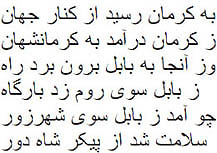
158.Niẓāmī, Iqbālnāma, p. 242:
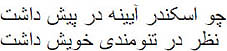
159.Ibid., p. 245:

160.Ibid., p. 246:

161.For an excellent survey (and partial translation) of the extensive literature in Arabic on ‘Sayings on Alexander's Death’ see Rosenthal, The Classical Heritage in Islam, trans. Emile and Jenny Marmorstein (London/New York, 1975; repr. 1994), pp. 120–4.
162.Niẓāmī, Iqbālnāma, p. 255:
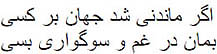
163.Ibid., p. 256:

164.Stoneman, A Life in Legend, p. 191.
165.Ibid.
166.Stoneman also suggests the possibility that Democritus, who had travelled in the East, may have introduced the motif into Greek literature. See Stoneman, A Life in Legend, p. 192.
167.See Pierre Hadot, What is Ancient Philosophy? (Cambridge, 2002), index, s.v. ‘death’, where a number of philosophical meditations from the Stoics and other Greek philosophical schools similar to these adages can be found.
168.For adages resembling the maxims on death that Alexander addressed to his mother, see Marcus Aurelius, Meditations, trans. Maxwell Staniforth (Middlesex, 1964), Books II: 14; III: 10; IV: 5–6; VI: 47, 56.
169.Niẓāmī, Iqbālnāma, p. 258:

170.Ibid., p. 259:

171.Ibid., pp. 259–60:

172.Ibid., pp. 263–8. This is also known from Ṭabarī (Tārīkh, vol. II, p. 494).
173.Niẓāmī, Iqbālnāma, p. 280 (see also n. 2):

174.On this tendency see Lambton, ‘Sufis and the state in medieval Persia’, in C. van Dijk and A. H. de Groot (eds), State and Islam (Leiden, 1995), p. 23.
175.In these works Aristotle reveals talismanic secrets and Hermetic magic rituals to his pupil Alexander. See F. E. Peters, Aristoteles Arabus: The Oriental Translations and Commentaries of the Aristotelian Corpus (Leiden, 1961), p. 58.
176.See J. Ruska, Tabula Smaragdina: Ein Beitrag Zur Geschichte Der Hermetischen Literatur (Heidelberg, 1926), pp. 68–107. In this work Apollonius (Balīnās) also appears as a contemporary of Alexander the Great.
177.See section two of this chapter.
178.See K. van Bladel, ‘Hermes and Hermetica’, in Kate Fleet, Gudrun Krämer, Denis Matringe, John Nawas, Everett Rowson (eds), Encyclopaedia of Islam, 3rd edn Brill Online.
179.See Pingree, Picatrix, pp. 45, 97, 98, 140, 146, 150.
180.R. Stoneman, ‘The origins of Quintus Curtius’ concept of Fortuna’, Paper given at the conference Curtius Rufus the Roman Historian on Alexander Narrative Technique, Rhetoric, Psychology of Characters, Wien, 4 October 2014.
181.Franz Rosenthal in The Classical Heritage of Islam, pp. 124–26, 142–44 in fact quotes passages of the sayings of Plutarch (Protarchus) that were translated into Arabic. On p. 83, he says that ‘a very few of Plutarch's works’ were translated into Arabic.
182.T. S. Schmidt, ‘Barbarians in Plutarch's political thought’, in L. de Blois, J. Bons, T. Kessels and D. M. Schenkeveld (eds), The Statesman in Plutarch's Works, Vol. I: Plutarch's Statesman and His Aftermath: Political, Philosophical, and Literary Aspects (Leiden, 2004), p. 229.
Conclusion
1.Ṣā'ib Tabrīzī, Dīvān, vol. II, p. 902.
2.Stoneman, A Life in Legend, p. 2.
3.Nöldeke, Beiträge zur Geschichte des Alexanderromans.
4.Frye, ‘Two Iranian notes’, Acta Iranica XI: Papers in Honour of Professor Mary Boyce (Leiden, 1985), pp. 186–8; Ciancaglini, ‘The Syriac version of the Alexander romance’, Le Muséon, Revue D'Études Orientales cxiv/1–2 (2001), pp. 135–40.
5.The reference here is to the historical accounts of Ṭabarī, Dīnawarī, the Nihāya, Tha'ālibī Nayshābūrī and Firdawsī.
6.See Yarshater, ‘Chirā az pādishāhān-i mād va hakhāmanishī dar Shāhnāma dhikrī nīst’, p. 194. See also Shayegan, Arsacids and Sasanians, p. 306.
7.Touraj Daryaee, ‘Alexander and the Arsacids in the manuscript MU29’, Dabir, Digital Archive of Brief Notes & Iran Review i/1 (2015), pp. 8–10.
8.Quoted from Shayegan, Arsacids and Sasanians, pp. 294–5.
9.Boyce, ‘The Parthian ‘Gōsān’ and Iranian minstrel tradition’, The Journal of the Royal Asiatic Society of Great Britain and Ireland i/2 (1957), pp. 10–45.
10.Agathias, The Histories, trans. J. D. Frendo (Berlin, 1975), II.31. See also Daryaee, Sasanian Persia, p. 30.
11.On the translations of Greek works into Middle Persian that were commissioned by Khusraw I, see Gutas, Greek Thought, Arabic Culture, p. 25.
12.Ḥāfiẓ, Dīvān, ed. Ḥasan Dhū'l-Faqār and Abū'l-Faḍl ‘Alī Muḥammadī (Tehran, 1381/2002), ghazal 3:
The holy grail of Jamshid is just
the same as Alexander's looking glass;
So look therein if you would contemplate
the affairs of the kingdom of Darius.
13.See M. Kayvānī, ‘Iskandar dar adab-i Fārsī’, p. 404.
14.Farrukhī Sīstānī, Divān, ed. Muḥammad Dabīr Siyāqī, 2nd edn (Tehran, 1970). This verse was cited as the epigraph of the introduction above.
15.See Ṣafā, Tārikh-i Adabiyāt dar Irān, vol. I, p. 20; Ibn Hishām, Sīra al-Nabavīya, ed. M. Saqā (Cairo, 1355/1936); Dh. Ṣafā, Hamāsa-sarāyī (Tehran, 1363/1984), p. 74. See also Lings, Muhammad, p. 89.
16.Nöldeke, Beiträge zur Geschichte des Alexanderromans.
17.Frye, ‘Two Iranian notes’, pp. 186–8; Ciancaglini, ‘The Syriac version of the Alexander romance’, pp. 135–40.
18.According to N. Sims-Williams, Middle Iranian Christian literature may be regarded as a branch of Syriac literature. See his ‘Christian literature in Middle Iranian languages’, in Ronald E. Emmerick and Maria Macuch (eds), The Literature of Pre-Islamic Iran: Companion Volume I to A History of Persian Literature (London/New York, 2009), p. 266.
19.Tafaḍḍulī, Tārīkh-i adabīyāt-i Irān pīsh az Islam, ed. Zh. Āmūzgār (Tehran, 1376/1997), pp. 270–1; Boyce, ‘Middle Persian literature’, Iranistik II: Handbuch der Orientalistik 1. IV. 2.1 (Leiden, 1968), p. 59.
20.Budge, The History of Alexander, p. lx.
21.See also Ciancaglini, ‘The Syriac version of the Alexander romance’, p. 139.
22.Ibid., pp. 139–40.
23.Khaleghi-Motlagh, ‘Az Shāhnāma tā Khudāynāma’, Nāma-yi Irān Bāstān (International Journal of Ancient Iranian Studies) vii/1–2 (2007–8), pp. 29–30; Khaleghi-Motlagh, ‘Jāy-i Rustam, Ārash … va Iskandar dar Khudāynāmag’, Nāma-yi Irān Bāstān ix/1–2 (2009–10), pp. 19–20.
24.K. Schippmann, ‘Azerbaijan: iii. Pre-Islamic history’, EIr iii/2, p. 224.
25.Davis, Panthea's Children, p. 1.
26.For examples see Ulrich Marzolph, ‘The creative reception of the Alexander Romance in Iran’, in Dominique Jullien (ed.), Foundational Texts of World Literaure (New York, 2012), pp. 74–9; Marjolijn van Zutphen, Farāmarz, the Sistāni Hero, Texts and Traditions of the Farāmarznāme and the Persian Epic Cycle (Leiden, 2014), pp. 512ff.
27.Renard, Islam and the Heroic Image, p. 86.
28.Marzolph, ‘The creative reception of the Alexander Romance in Iran’, p. 79.

Plate 1 Alexander the Great Mourns the Dying Darius.

Plate 2 Alexander and his Men Watch Naked Girls Swim in the Black Sea.

Plate 3 Battle of Alexander the Great with the Ethiopians.

Plate 4 Alexander the Great Admires his Portrait Commissioned by Queen Nūshāba.
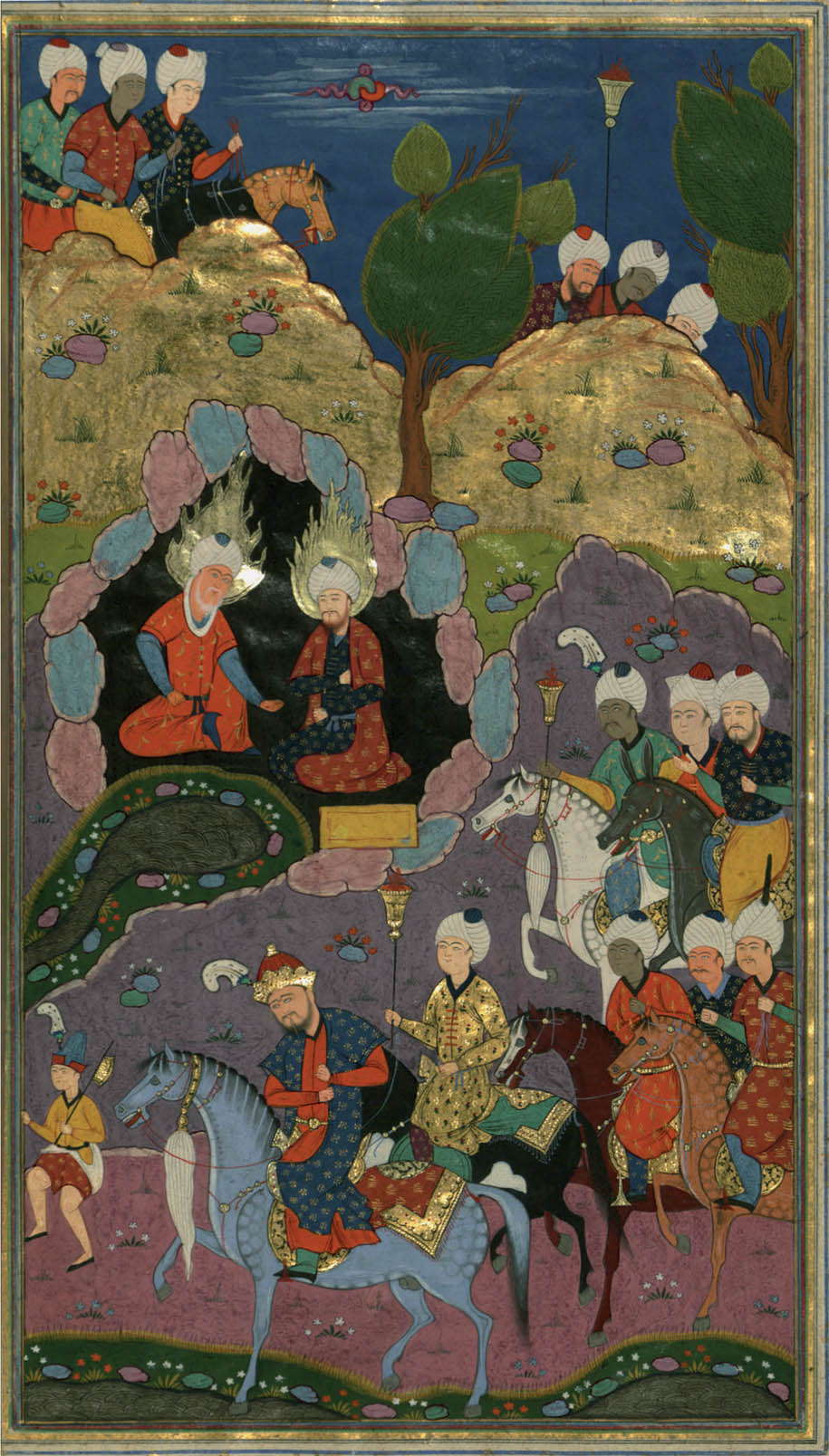
Plate 5 Alexander the Great at the Fountain of Life with the Prophets Khiḍr and Ilyās (Elias).

Plate 6 The Talking Tree.

Plate 7 Birth of Alexander the Great.

Plate 8 Invention of the Mirror in the Presence of Alexander the Great.

Plate 9 The Invention of the Mirror.

Plate 10 Kay Khusraw Crosses Lake Zarah in Pursuit of Afrāsiyāb.
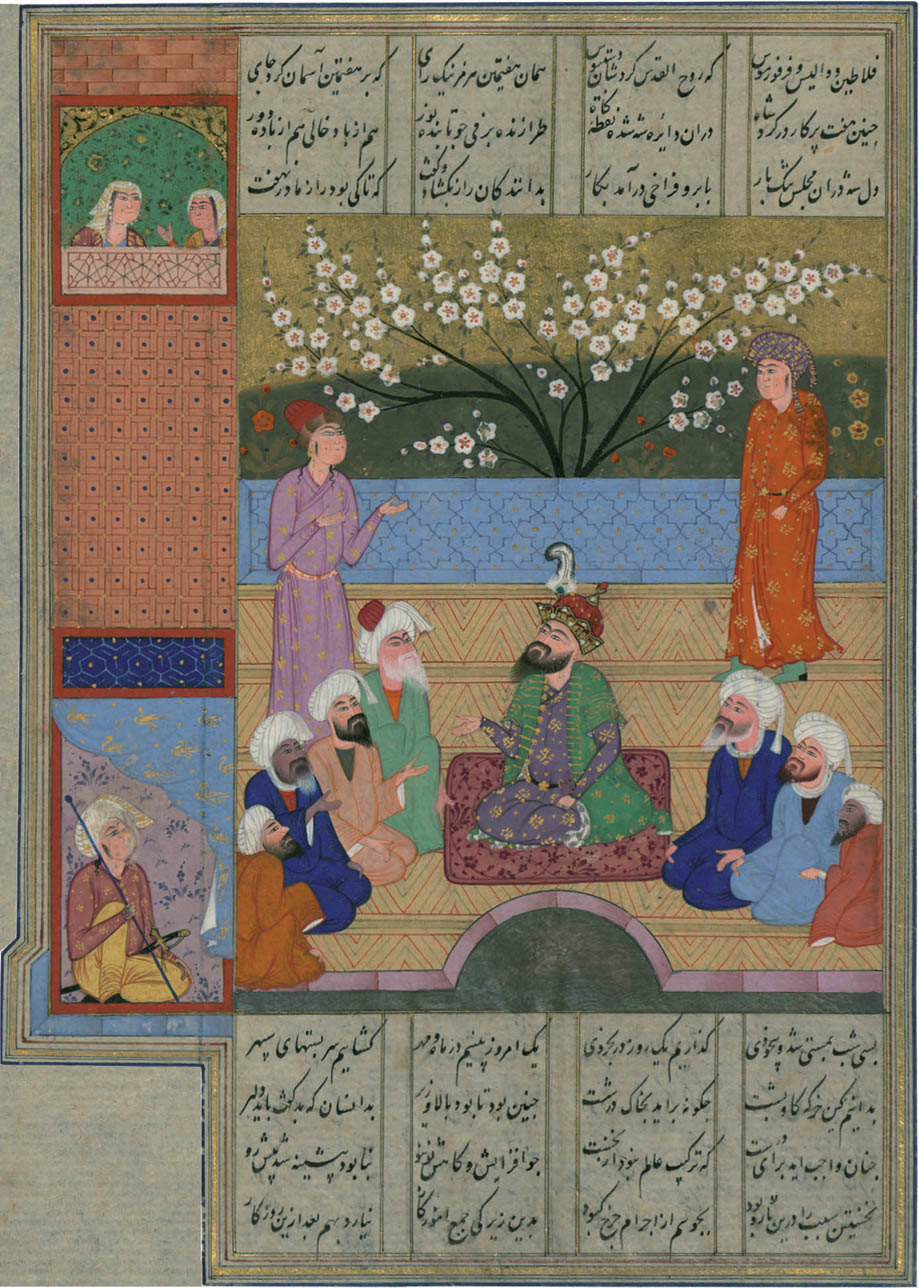
Plate 11 Alexander and the Seven Philosophers.