
Acknowledgements
Ihave written my books across two decades, and across a vast geographical range. I have also met kindnesses and warmth beyond measure across so many lands. In the twenty-first century these benevolences have come chiefly from the hands and hearts of Nizar, Tarek, Jihad, Jane, Lisa, Larry, Natalie, Jeev, Ian, Vicky and Arek.
From back in the now seemingly long-distant twentieth century I wish to thank once again Dr David Morgan for introducing me, as an undergraduate, to the Crusaders, their doughty Turkish and Kurdish opponents and to the Mongols, and Dr Michael Brett for his engaging lectures on the Fatimids and the naval warfare of the period. I also wish to thank Dr Anna Contadini for creating in me, despite my fairly philistine inclinations, an appreciation of the miniature painting of the Mamluk period, and for helping me to understand how later additions to objets d’art were as much about changing the nature or intent of the piece as being simply aesthetic enhancements. Dr Brian Williams, formerly of the School of Oriental and African Studies, also deserves my gratitude for his encouraging responses after each of my books has been published.
One final thanks from the twenty-first century goes to Dr Anna Vičánková of Charles University, Prague, for her always charming, entertaining and cultured discussions with me on the topic of military castes in general, and on Mamluks, Crusaders, Samurai, Assassins and Landsknechts in particular. Her insights into the mythologising of the Samurai, another group like the Crusaders whose culture and period has been much romanticised and misinterpreted over time, have done much to shape this current work.
Introduction: What does it all mean?
This collection of objects means something, just as the Crusades mean something. That meaning has changed significantly over time, and has often been mythologised, and myths, to paraphrase Cocteau, often become accepted as history, and subsequently affect the ideas and actions of later ages. This cascade of ideals and ‘lore’ can be recaptured for us in the current age very effectively through a review of objects from the Crusades period (if such a thing can truly be said to have existed) and from subsequent periods. Some of the objects we will look at help us understand a little more the societies from which these ventures grew. They may also explain why the Europeans, once in closer contact with the East, were compelled by the discovery of its material wealth to take to the oceans and to explore further beyond the Near East and to seek the source of the luxurious items that were carried by the Italian maritime republics to Europe from Palestinian ports. I have also used objects from beyond the general timeline of the period to aid in illustration of material that is no longer available to us, or which represent ideas which remain with us today, and which evolved in the Crusades period.
That many of the patrons of these objects were men of the sword should not surprise us: the violent backdrop of Renaissance Italy and the simple thuggery of many of its lords did not restrain the production of exquisite works of art, and a passion for it among these often brutal individuals. Perhaps the art offered some redemption for the soul.
Many of these objects we will look at have changed their nature over time, as they passed through the hands of enemies and customers, whether that be through additions as in the case of the Fatimid rock crystal pieces to which filigree metalwork was added by French artisans, or deliberately unfinished Ayyubid and Mamluk metalwork that could be imported to Venice and there completed with local dynasties’ heraldic devices. Objects also acquire new meanings over time. That a German Kaiser of the late nineteenth century should hold the tomb of a sultan in such reverence that he felt compelled to donate a sarcophagus to it would be surprising if it were not for the fact that the sultan, Saladin, had already been immortalised as the avatar of chivalry by Dante and Scott. Perhaps what we are seeing in some of these objects is a very constructive case of ‘Orientalism’. What we see very little of in the period is an interest in the culture and technology of the West from the other direction, and that may offer a clue as to why whilst the Crusades essentially failed – the Holy Land remained in the hands of the Muslims – ‘the West’ won out in the long run. Though this ‘closing down’ of the Middle East to foreign ideas may well have had more to do with the traumas that Islam experienced from the East than from the knights of the West.
History is hopefully a search for the truth, or in the case of this work for the meaning of historical objects. Ranke gave all historians the task of wie es eigentlich gewesen – to show simply how it really was. But ‘how it was’ and ‘how it is’ must always be affected by perceptions, so alongside ‘fact’ I not uncommonly deploy poetry and romantic prose in these pages to more clearly delineate how meaning was mutated by contemporaries and by later writers. I make no apology for this despite the adage that truth is like poetry, and most people really hate poetry.
I firmly believe that we are still living with the consequences of the successful establishment of a Latin kingdom in Syria and Palestine in the eleventh century. In this work I hope to identify why that is the case, and why an understanding of why what happened then relates very much to what is occurring now in the world’s central lands and beyond.
1
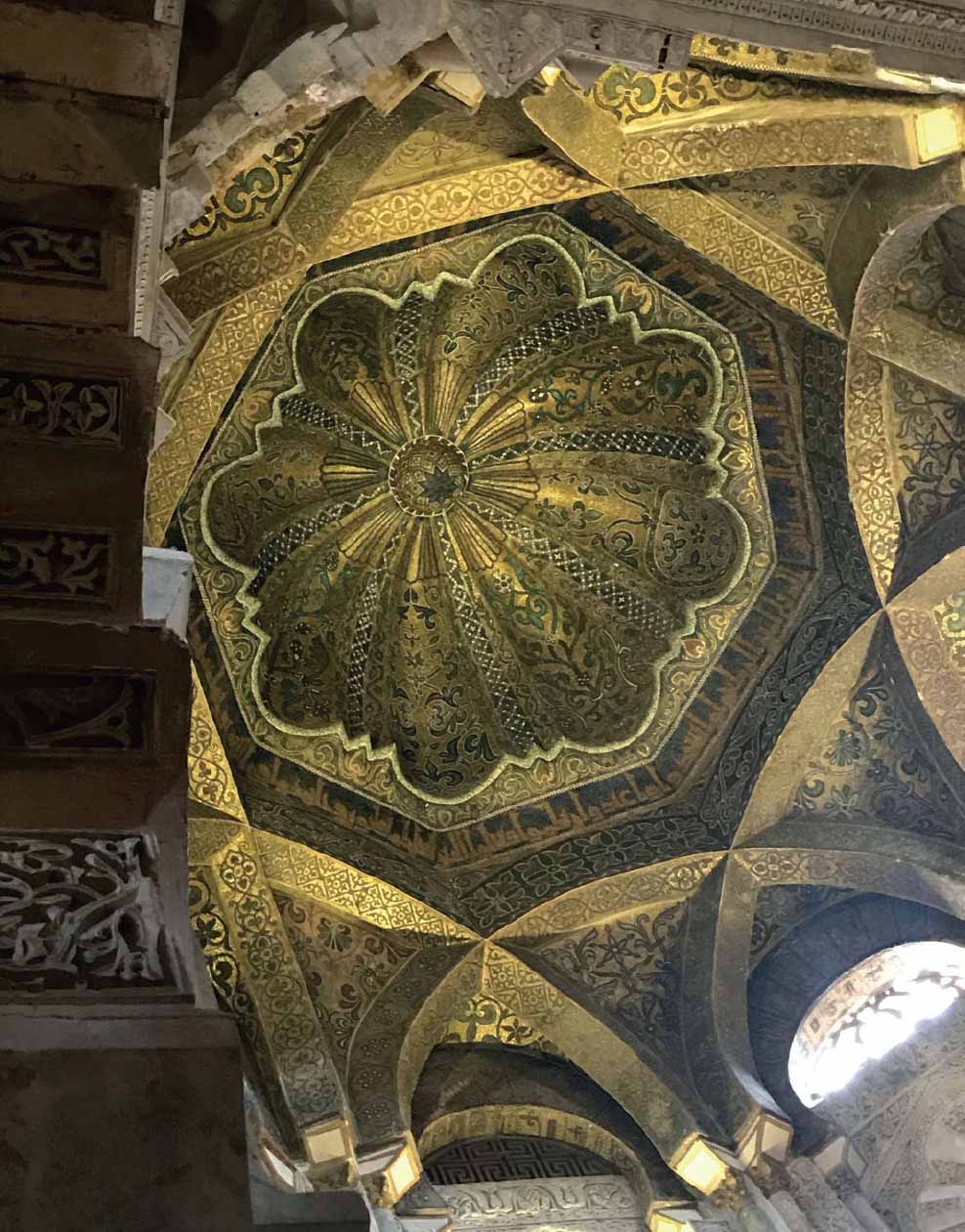
Oh beautiful Cordoba! Is there desire within you? Is the heart that burns with desire due to your distance quenched? Will your famous nights have a return?
Oh my two friends, if I worry then the cause is evident if I can be patient it is because patience is in my nature if Fate bestows disaster then our today has wine and tomorrow is another matter. …
Ibn Zaydūn, a poet of Al-Andalus.
The Islamic Caliphate of Al-Andalus in what is today southern and central Spain and Portugal had been a fact since the great Arab conquests of the eighth century. Indeed it was suggested by Edward Gibbon that had it not been for Charles Martel’s wall of infantry and his defeat of the Arab forces over some seven days at Tours in 732 that:
The Arabian fleet might have sailed without a naval combat into the mouth of the Thames. Perhaps the interpretation of the Koran would now be taught in the schools of Oxford, and her pulpits might demonstrate to a circumcised people the sanctity and truth of the revelation of Mahomet.
This seems unlikely, but in Martel’s resistance, and in the later conflict that has been given the perhaps misleading name of Reconquista led initially by knights of Navarre and Asturias, we can see the beginnings of several key elements of Crusading. The Franks, after their victory, began to believe that they were the people of God, the new Israelites, and whilst Europe remained very much hemmed in and assaulted from every side by Vikings, Magyars and by continued Muslim raids and invasions that went as far as taking the silver plate from Saint Peter’s doors and enslaving boys and girls from the townships outside Rome’s walls, there was a new confidence that grew from this and helped to create the Carolingian Empire.
Papal indulgences also began to be offered to knights to join the campaigns against Al-Andalus as early as 1063 and the notion of Spain itself being a sacred and holy land that was being polluted by non-believers developed quickly, with the Church of Santiago de Compostela and its treasured relic of the bones of Saint James becoming a focus for knights joining the endeavour.
Against this growing confidence and cohesion there was a worsening internal collapse in the state of Islamic Spain, a feature we will also see repeated during the early period of the Crusades in the Middle East. The Umayyad Dynasty fractured in 1031, leading to multiple polities or taifa. These states had neither the manpower nor the revenue to resist their Christian counterparts, and almost no inclination to seek mutual defence, and by the time that Pope Urban II made his appeal to the knights of Europe to free Jerusalem in November 1095 the Christian campaigns in Iberia were so successful that the papacy continued to grant indulgences for any knight fighting in Spain equal to those of the proposed army of pilgrims for Palestine.
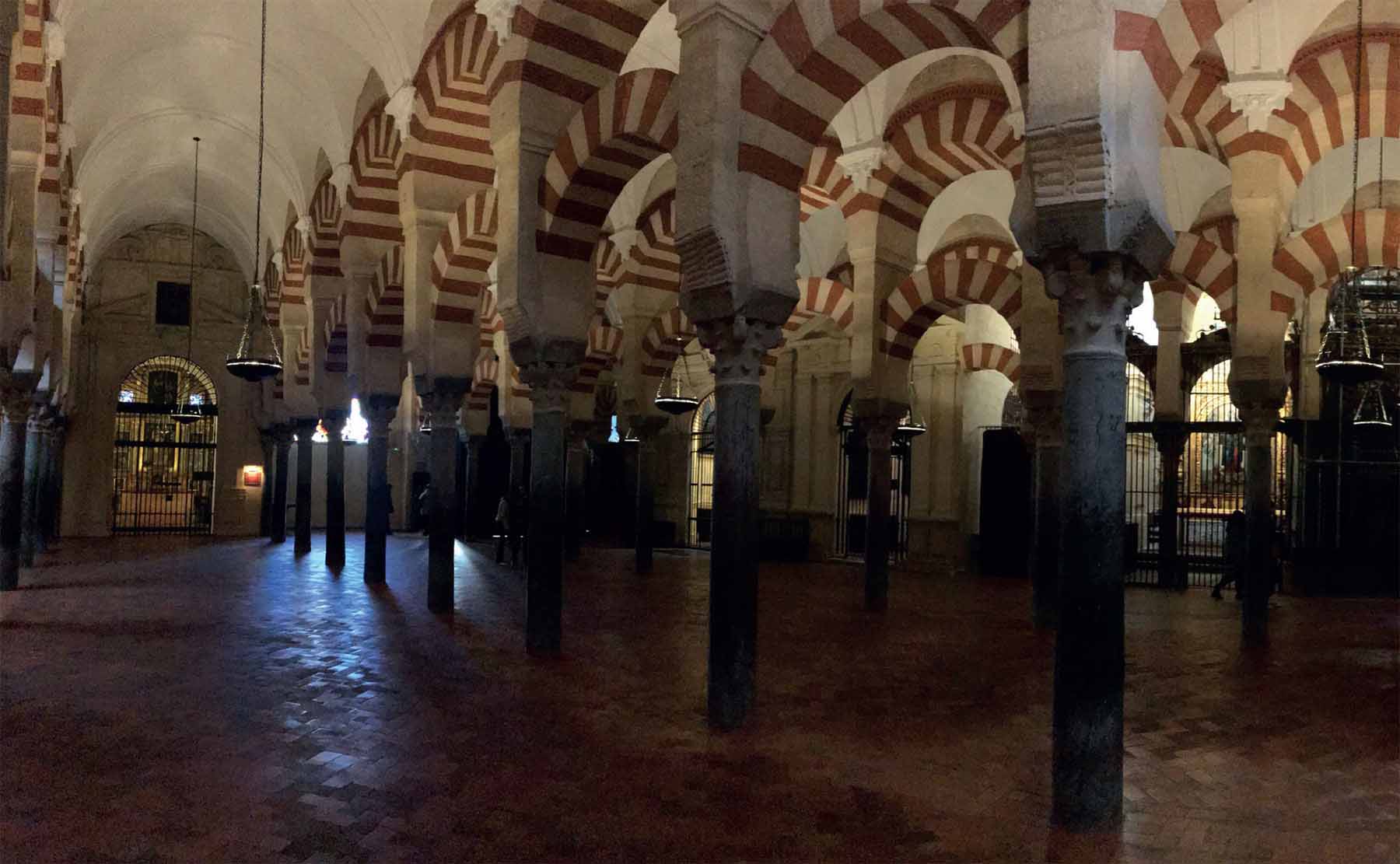
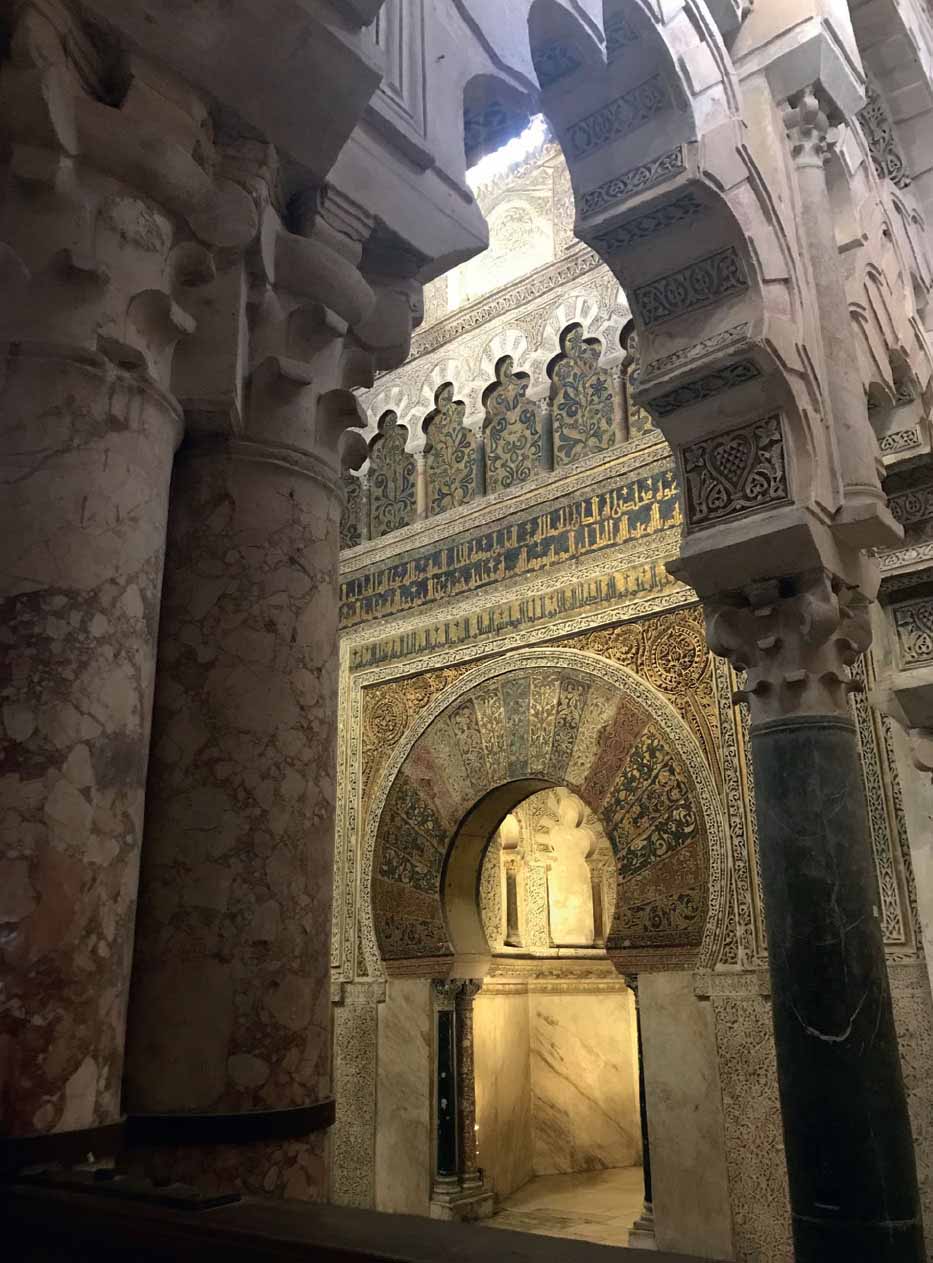
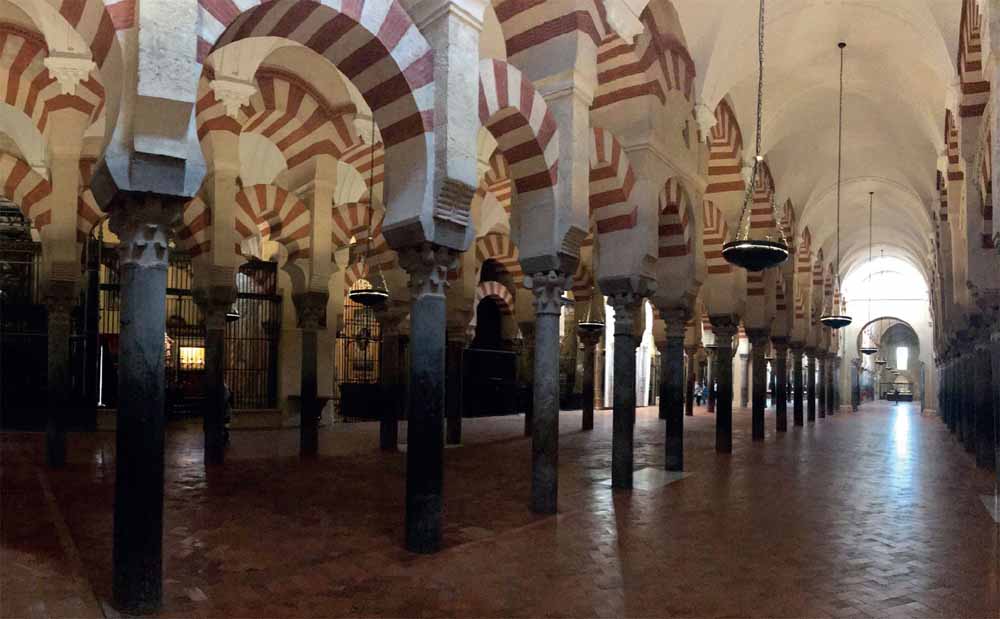
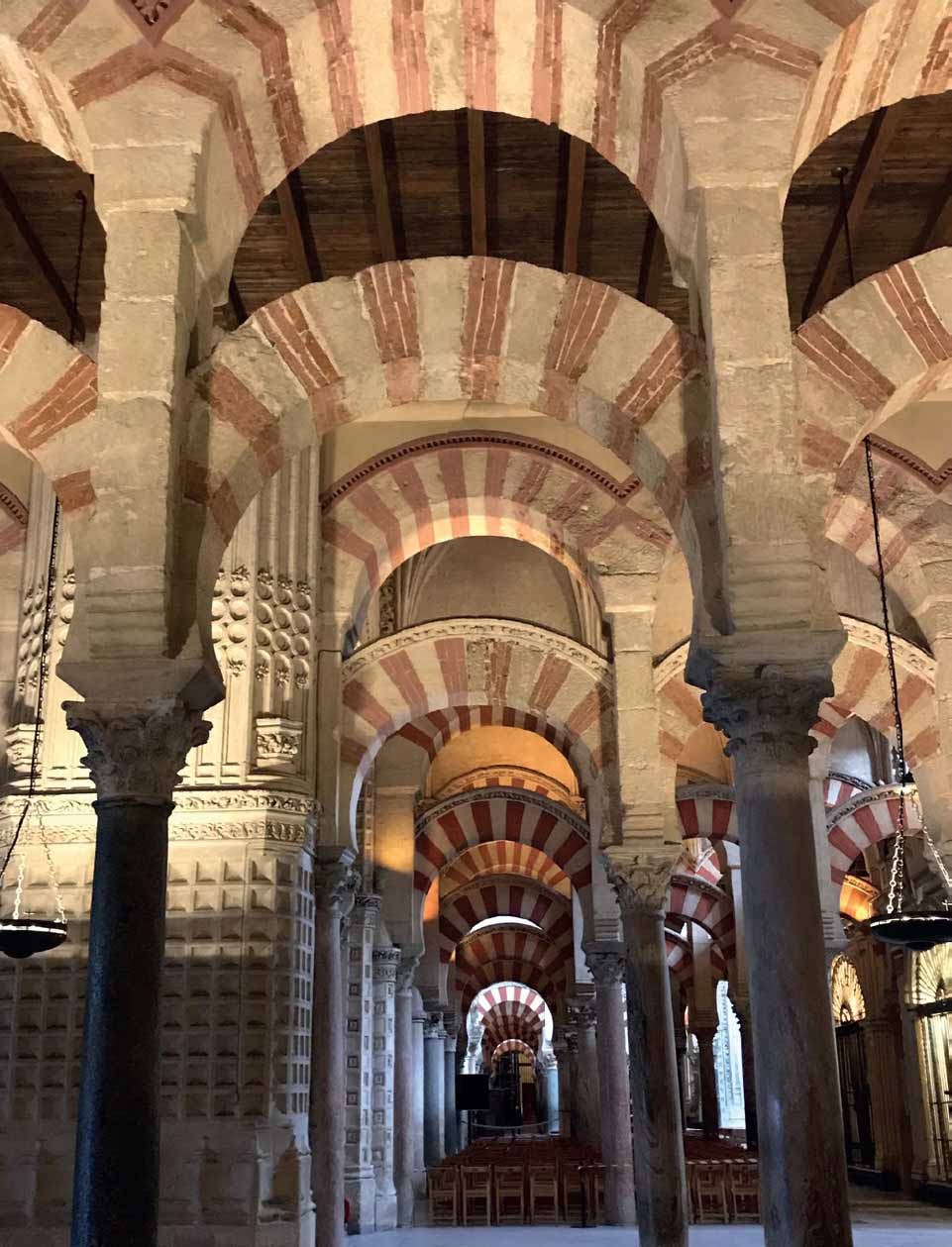
Cordoba fell in 1236 to Ferdinand III of Castile, and the Great Mosque was rapidly consecrated as the city’s cathedral with very few changes to its harmonious and astounding structure.