
25
Anything in which a man passes his time is vain except for shooting with his bow, training his horse, or dallying with his wife. These three things are right. He who abandons archery after having learnt it is ungrateful to the one who taught him.
Attributed to the Prophet Muhammad.
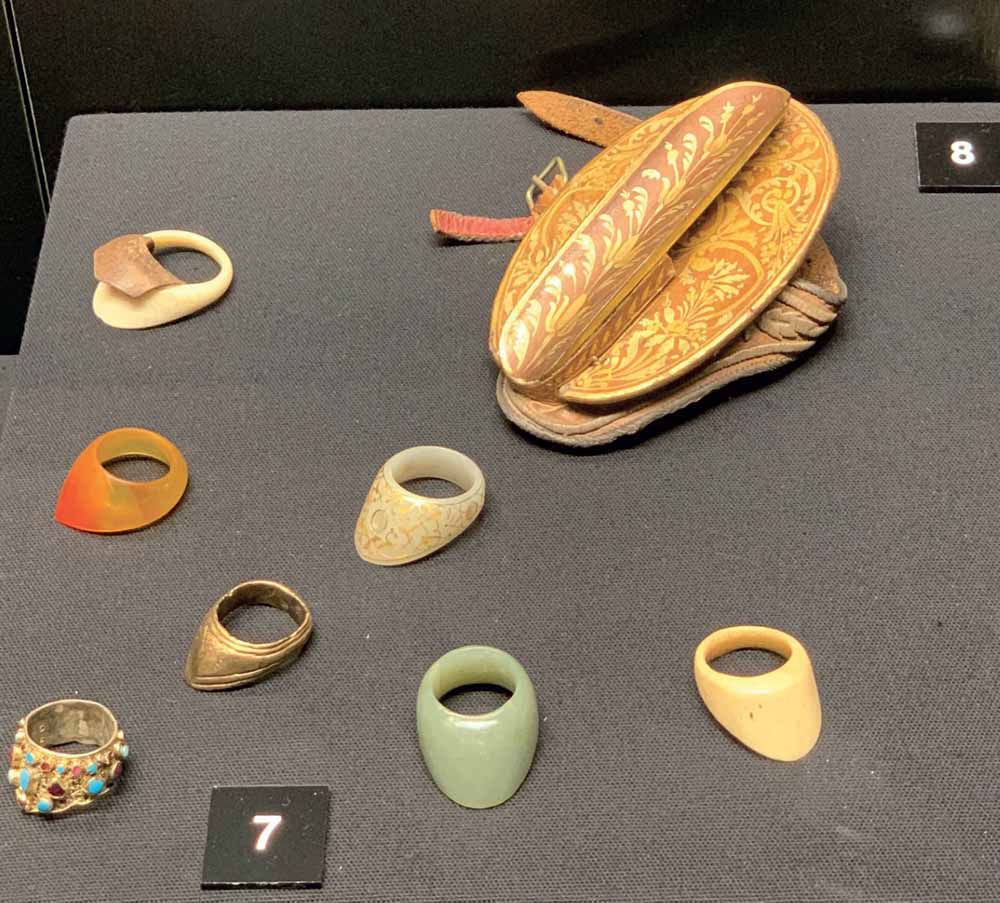
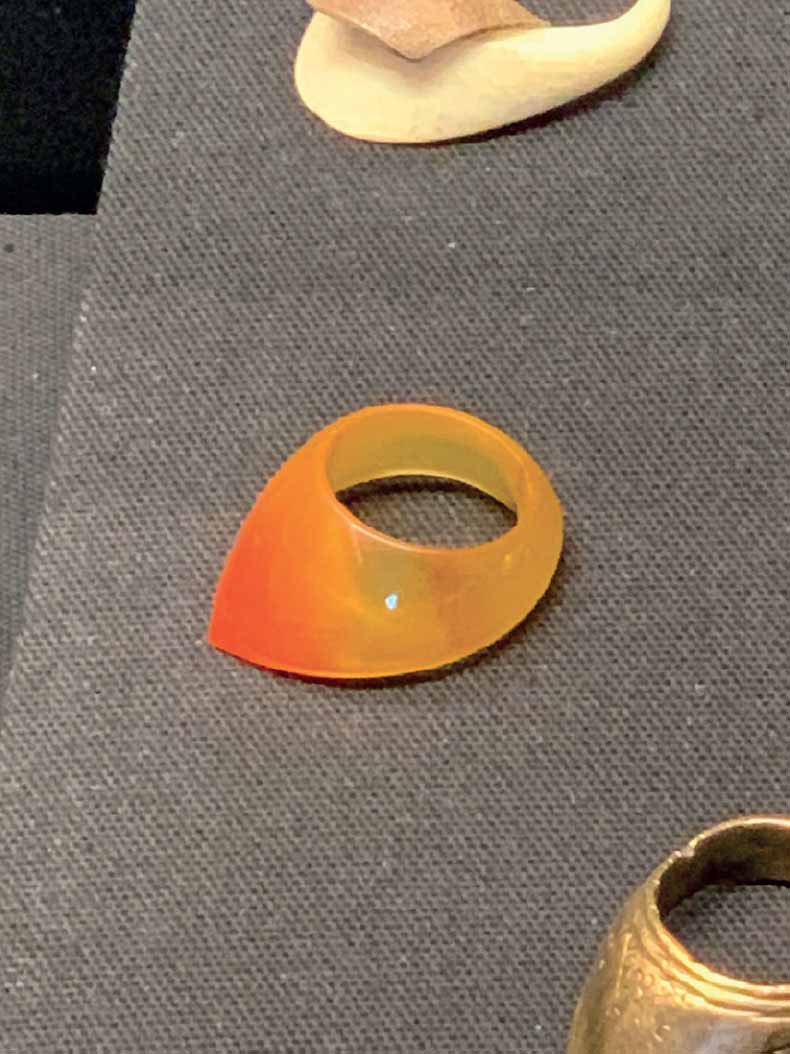
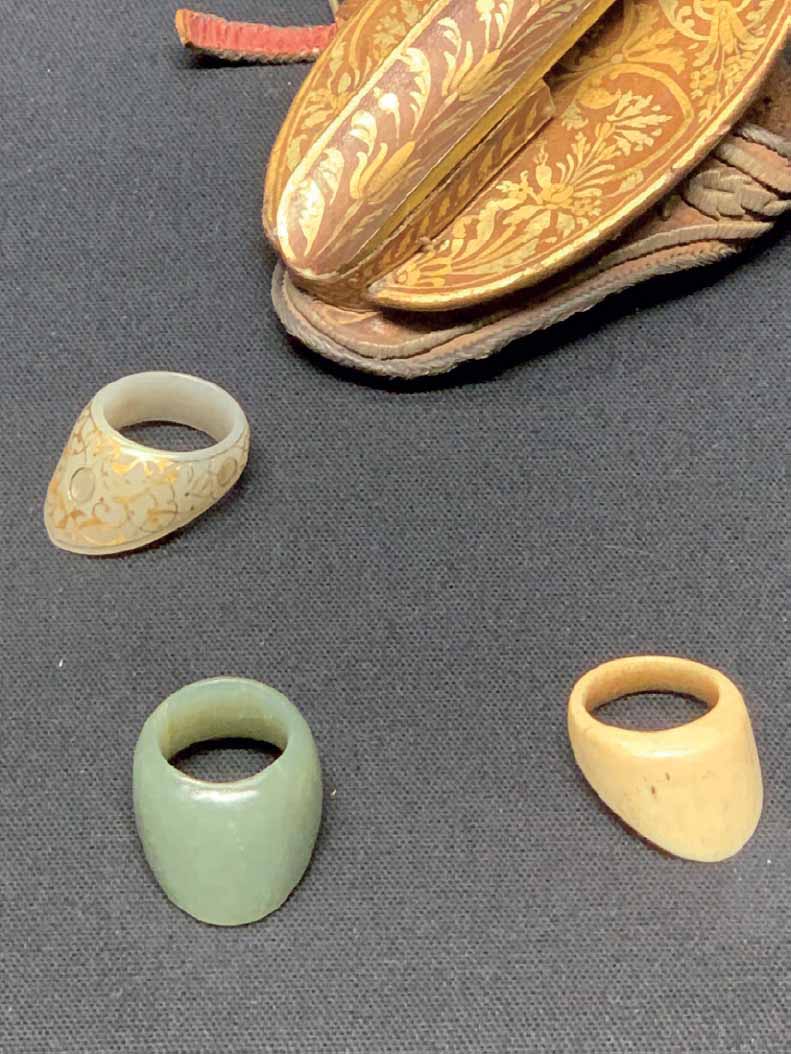
The Turkish bow was drawn to the ear rather than to the eye in order to maximise its power and the bowstring was taken up with the thumb as the pull required, some 30kg, was too much for a finger pull. Thumb rings, used to prevent the string cutting the thumb, were made of bone, stone or jade, and became increasingly elaborate. The later Ottoman sultans were never to be seen without an ornate thumb ring. With this long pull the Turkish composite bow had an effective range of about 200m but at this distance it could not kill an armoured man.
The weapon became deadly, even to troops wearing mail, at 75m, and in the summer of 1101 the troopers of Kilij Arslan used it to almost totally destroy a series of vast Crusader armies that attempted to cross Anatolia. The first contact was near a small village named Merzifun. It had taken several days of hit-and-run raids on the column and the poisoning of wells to steer the Crusaders to the killing field. The battle then developed over several days. The Crusaders were halted by a frontal archery assault and then surrounded. On the fourth day the desperate Crusaders made a final effort to break the encirclement, and at the end of a day of slaughter the senior knights fled the field. The Turks then assaulted the Christian camp and decimated the remaining infantry.
Kilij Arslan repeated his success against a second army under the command of Count William of Nevers, although the count made it easier for him due to his naïveté and tactical blunders. The Crusaders set out from Ankara and went south on a direct route for Jerusalem. This took them across the harsh dry lands of central Anatolia, which severely weakened them. The Turks had poisoned every water source and the pilgrimage now became a death march as the army struggled through the desert. Then Kilij Arslan struck. The infantry was abandoned by its knights and rapidly annihilated. The knights who had fled the battle were then duped by local guides who left them out in the desert.
Kilij Arslan completed his atonement for the failures of Nicaea and Doryaleum when he crushed a third Crusader army. This, led by William of Aquitaine, arrived at Heraclea in September 1101. This time the knights did not abandon their infantry, but this made no difference and only William and a handful of companions escaped the debacle.
Some Latin chroniclers suggest that Emperor Alexius had informed the Turks of the Crusader armies’ progress and there may be a germ of truth in this. Maintaining the balance of power between the Turks and the Crusaders was a key strategic objective if the Byzantines were to maintain a presence in Anatolia – an important source of both taxes and recruits for the army – and to reclaim their northern Syrian possessions. What is more certain is that if these vast Latin armies had reached Palestine both Aleppo and Damascus may very well have fallen to the Crusaders, and there would have been no Muslim bridgehead remaining in the Levant.