
3
I am full of fatal arrows
My merchandise is pain and death
Learn by what thou have seen of me
I am the blight of this wide world
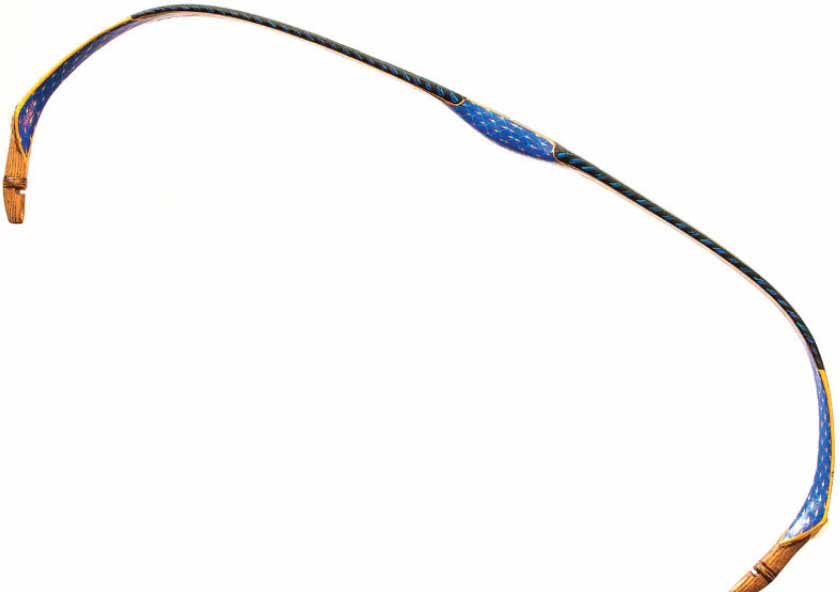
From an inscription on a Turkish Mamluk bow.
Saljuq armies were immense in size and made up almost entirely of horse archers. They were organised around a core of a well-disciplined askari or bodyguard but relied heavily on tribal warriors or Turcomen, who, whilst superb fighters, were hard to bring to heel and not uncommonly completely beyond the control of their commanders. Thus it was that as the Saljuqs pushed west to contest Syria and the Jazira with their rivals the Egyptian Fatimid Caliphate, the Byzantine Empire suffered a considerable amount of what we might today term ‘collateral damage’ to its Anatolian provinces from marauding Turcomen.
The Greek Emperor Romanus Diogenes was under political pressure in Constantinople to end the raids, and he was spoiling for a showdown with the Saljuqs. He brought his army into Anatolia in 1071 and he rushed into battle without really thinking about what he was doing. The armies met in a valley near Manzikert on 19 August or perhaps to Byzantine eyes they never met. As the Greeks advanced the Turks just fell away. Certainly there were Turkish archers riding up and down the flanks, showering the Byzantines with arrows and then fleeing, but there was no force to engage with.

The Byzantines kept coming on up the valley but still there was no real contact. Towards the end of this day of futile pursuit the emperor decided that he could not move any further from his camp and the army turned back to retrace its steps. At that moment, when the Byzantine army was stretched out along the valley, in the process of changing their formation for the return journey and whilst the van had become separated from their rearguard, the Saljuqs attacked. The heavily-armoured Mamluk horse archers of the askari poured into the Byzantine column and broke it up and lightly-armed Turcomen rode down the Byzantines’ flanks adding their arrows to the onslaught. Later Turkish manuscripts detail how a Saljuq trooper could loose three arrows from his bow within two heartbeats and these warriors commonly carried two quivers of arrows, one at their side and one across their back.


Many of the Greeks’ mercenaries fled the field immediately, as did the Byzantine nobles who were the emperor’s rearguard. The incredible impact and fury of the Turkish assault is testified to by the recollections of Michael Attaleiates, who fought with Romanus Diogenes on that day. ‘It was like an earthquake: the shouting, the sweat, the swift rushes of fear and not least the hordes of Turks riding all around us …’
Looking back from nearly a thousand years later, the Turkish tactic appears very simple and it seems incredible that Romanus fell into the trap but the feigned retreat was a complex exercise, requiring that the enemy be engaged to a degree sufficient to tempt him on. It must also be noted that medieval armies were difficult to command and control in the field. Skills acquired in the grand hunts of the Turkic peoples were applied to the near annihilation of the Byzantine army.

The capture and subsequent ransoming of Romanus was enough to end his reign and the terrified Byzantines, fearing that the Turks would follow up their victory by crossing the Bosporus, sent missives to the pope asking for a Western army to come to their aid. Manzikert, and the almost unbridled panic the defeat induced in the Byzantines, started the chain of events that sent Urban II to the pulpit in Clermont in 1095 to preach for the liberation of the Holy Land and the rescue of Byzantium, but it is evident from a review of the near-contemporary Islamic sources is that no connection was made between Manzikert and the coming of the First Crusade by the Muslims. In fact, the Saljuqs were not interested in the conquest of Constantinople. That would have to wait for another, much later, generation of Turks. The Saljuq forces turned south and began again their war with the Fatimids. By 1092 only the Syrian coastline remained in the hands of the Egyptian Caliphate.