
46
Canto l’arme pietose e ‘l capitano, che ‘l gran sepolcro liberò di Cristo.
Molto egli oprò co ‘l senno e con la mano, molto soffrí nel glorioso acquisto;
I sing of the sacred armies, and the godly knight, that the great sepulchre of Christ did free, much wrought his valour and foresight, and in that glorious war much suffered he;
Torquato Tasso, La Gerusalemme Liberata, 1575, Canto Primo, Verse I.
The fall of Edessa made for an unpleasant inauguration gift for the new pope, Eugenius III. He responded with a papal bull on 1 December 1145, and by the spring of 1146 King Louis of France made a commitment to a Crusade. The Holy Roman Emperor, Conrad III Hohenstaufen, also, if somewhat tardily, committed himself to the venture in December 1146. The Pope issued indulgences for the Crusade, though significantly these were also granted for an expedition into Slavic lands to Christendom’s east and for the knights of the Reconquista in Spain. The divergence from the original notion of Crusading being solely the defence of Jerusalem to it being participation in any church-sponsored war, would be significant later.
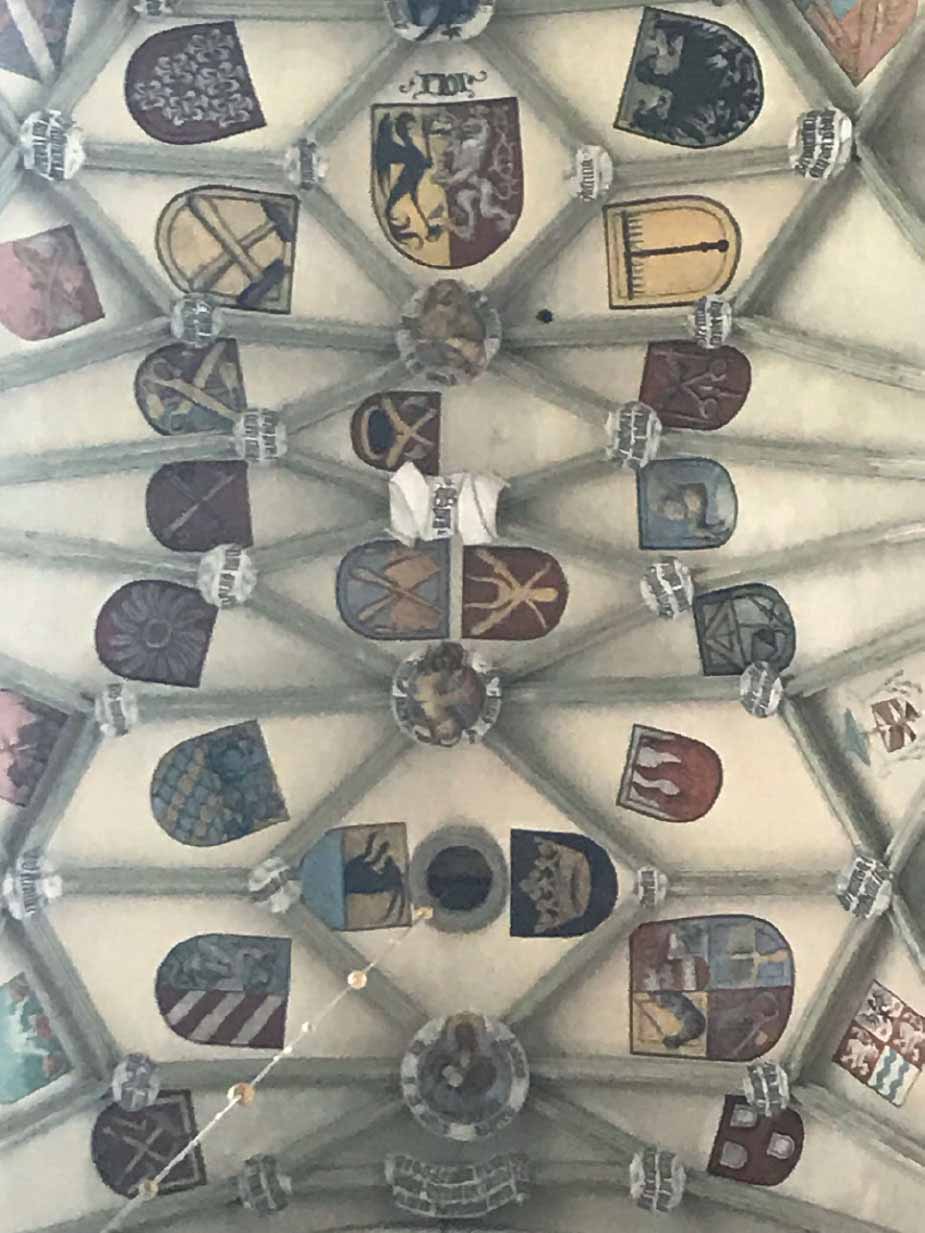
Crusading was also becoming central to the new ideas of chivalry and of the right way of life for a knight. Heraldry became central to the nobility of Crusader dynasties and to a knight’s lineage. Falsification of family trees to place ancestors at key events during the Crusades and to boost a family’s status and lineage was not uncommon and it has been suggested that Torquato Tasso, the author of La Gerusalemme Liberata, was perfectly amenable to bribery should a noble family want an ancestor to be placed at the taking of the Holy City in 1099.
The total destruction of the army of Conrad, numbered at some 20,000 men, during its march from Anatolia to Syria by Turcomen and the askari of the Arslan clan warriors, near Dorylaeum, the scene of Bohemond’s victory in 1098, was a trigger for knightly families in Germany, when they heard of the battle, and the martial prowess of the Turks, to forge genealogical tables and legends to give themselves Turkish-German origins. Heraldry began and developed rapidly during the early Crusades period, possibly as a response to increasingly full armour coverage, and the need to identify individuals on the battlefield, and in tournaments. Heraldic devices also acted as shorthand for complex family unions in the codices of knightly legitimacy.

The slaughter was so complete that it warranted only a short passage in Ibn al-Qalanasi’s chronicle:
When the news of their approach became known and their purpose was bruited abroad, the governors of the neighbouring lands and of the Islamic territories in their proximity began to make preparations for warding them off and to muster their forces for engaging in the Holy War. They repaired to their outlets and mountainous defiles which hindered them from crossing and debouching on the land of Islam, and assiduously launched raids upon their fringes. Death and slaughter commingled with the Franks until a vast number of them perished, and their suffering from lack of foodstuffs, forage and supplies, or the costliness of them if they were to be had at all, destroyed multitudes of them by hunger and disease. Fresh reports of their losses and of the destruction of their numbers were constantly arriving until the end of the year 542 [1148], with the result that men were restored to some degree of tranquillity of mind and began to gain some confidence in the failure of their enterprise, and their former distress and fear were alleviated.
The Anatolian Turks’ destruction of the Franks was so rapid that they were unable to even gather together for defence. Nightfall gave respite and Conrad fled back to Byzantine-controlled Nicaea, but he had left almost his entire army on the killing field of Dorylaeum.