
97
La grande aquila é morta!
‘The Great eagle is dead!’ A jubilant cry heard all over Venice along with the peals of church bells as the citizens of Europe heard of the death of Mehemmed II.


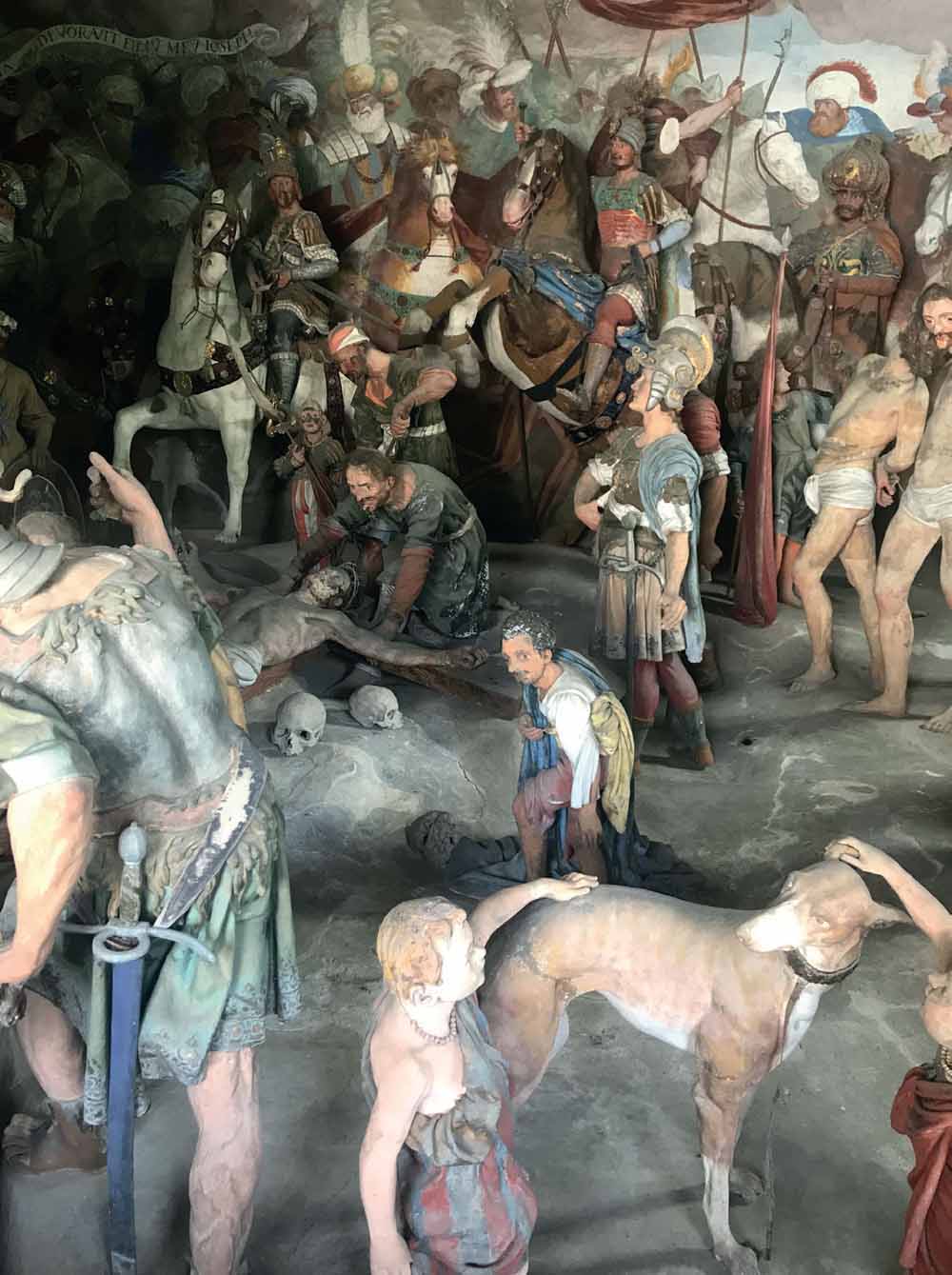
The establishment of Varallo and other pilgrimage sites across Europe was a direct result of the Turkish successes in southern Europe and the eastern Mediterranean. The Holy Land was beyond saving and even peaceful pilgrimage to Jerusalem was impossible. The Sacro Monte was begun by the Franciscan Bernardino Caimi, who had been a rector of the Palestinian Holy Places.

In some ways the fall of Constantinople was a sideshow, though it completed the process of centralisation of power in the Ottoman state under the sultan and away from the tribal elements of Anatolia. The main feature of the period was the gobbling up by the Turkish crocodile of territory and vassals and the challenge to the legitimacy of the German Emperor by the new possessors of the throne of the Byzantine Emperors, who had been, after all, the equal of the Apostles.
1448 saw the second Battle of Kosovo. Hunyadi announced it as a Crusade and demanded Serbian participation but the campaign was never papally endorsed with indulgences or preaching. The battle lasted for three days but the body count for Hunyadi’s defeated Hungarians was far lower than would be expected. This was because there were wagonbergs, fortified infantry lines with handgunners and artillery. The cavalry were pushed to the wings for flanking manoeuvres and not chivalric all-or-nothing charges. Attrition and protection of the army was the new ethos.


In 1456 Hunyadi defeated the Ottomans at the siege of Belgrade with professional troops and armed peasants. The defence of the city on the Danube was close to being a Crusade, as John of Capistrano recruited a people’s army through preaching by priests and monks across Hungary, Serbia and the Holy Roman Empire. Capistrano preached, ‘God wills it that we chase the Turks out of Europe and for whosoever follows me, I will obtain plenary indulgence for him and his family!’ His Crusaders were armed, in the main, only with slings and clubs, and there was no illusion about conquering Jerusalem or retaking Constantinople. These men fought for hearth, home and the preservation of Christendom. Both Hunyadi and Capistrano died in Belgrade of plague after their victory.
Mehemmed faced other peasant armies under the Transylvanian Vlad Dracula, Stephen the Great of Moldova, who handed out a severe beating to the Ottomans at the Battle of Vaslui, and from the tireless Skanderbeg, but still Mehemmed’s juggernaut rolled on. In 1480 he made an amphibious invasion of Otranto in Italy.
There was relief at the death of Mehemmed and the rule of Bayezid II was dominated by the danger of his fugitive brother, Cem, who was the long-term guest of the Vatican, and the Janissaries who acted very much as kingmakers and restrained the powers of the sultan. This said, during his reign Bayezid brought Moldova to vassalage, and Skanderbeg died of malaria in 1468. When the Ottomans later captured the town that housed Skanderbeg’s tomb, they opened it, not to desecrate it, but to take fragments of his bones for amulets that they hoped would bring them the same martial valour that he had always displayed.