
39
The prospects did not seem good when the Poles gathered in Lublin on the appointed day of 23 December 1568. The Lithuanian sejm assembled in Hrodna before moving to the border town of Wohyń. It only agreed to travel to Lublin after Sigismund August issued a safe-conduct, on Rudy’s insistence, on 21 December. It was necessary, since some Lithuanian sejmiks had issued their envoys with instructions forbidding them to attend a sejm outside Lithuania’s borders. Sigismund August stated that the common sejm would nevertheless be legal, pledging that no union would be finalized without the agreement of both parties, that Lithuania’s laws, privileges, and liberties would be honoured, and that the Lithuanians would be free to return home if union were not agreed.1
Rudy had no intention of renouncing the view of the union defended so tenaciously by Czarny at the Warsaw sejm. The Lithuanians arrived in Lublin on 31 December, demonstrating their sense of purpose by refusing to enter negotiations until Sigismund August confirmed the 1566 statute, which he politely refused to do, since it contained a clause banning Poles from owning land or appointment to office in the grand duchy, a point conceded at Warsaw and, if not so generously, at Bielsk. The Polish sejm formally opened on 10 January with the election of the experienced executionist Stanisław Czarnkowski as speaker, but the Poles were frustrated by the Lithuanian insistence that the two sejms should meet separately and negotiations should take place between deputations. Thus although there were occasional joint sessions, there was no truly common sejm. The early discussions did not bode well. Whereas at Warsaw the Lithuanians had accepted Mielnik as a basis for negotiation, they now stated that they no longer wished to return to any of the previous treaties of union, but wanted to start negotiations from scratch. Rudy rejected the Warsaw recess, and when Padniewski complained that the clause in the new Lithuanian statute banning Poles from owning land in Lithuania was in breach of previous agreements, he replied that ‘one body’ should not preclude the continued existence of ‘two commonwealths’, urging that a wholly new union treaty be prepared (see Figs 14 and 15).2
Having learned from the failure to reach agreement in 1564, Polish senators were inclined to moderation. Proposals drawn up by the senate on 3 February 1569 accepted separate Lithuanian offices, a common sejm only for discussion of common matters and foreign affairs, the preservation of the title of grand duke, and the redrafting of Sigismund August’s 1564 declaration on the union so that his cession of his hereditary rights would be made to the commonwealth of both nations, instead of to the corona regni Poloniae. In return, the only concession requested was the repeal of the ban on Poles holding land and office in Lithuania.3
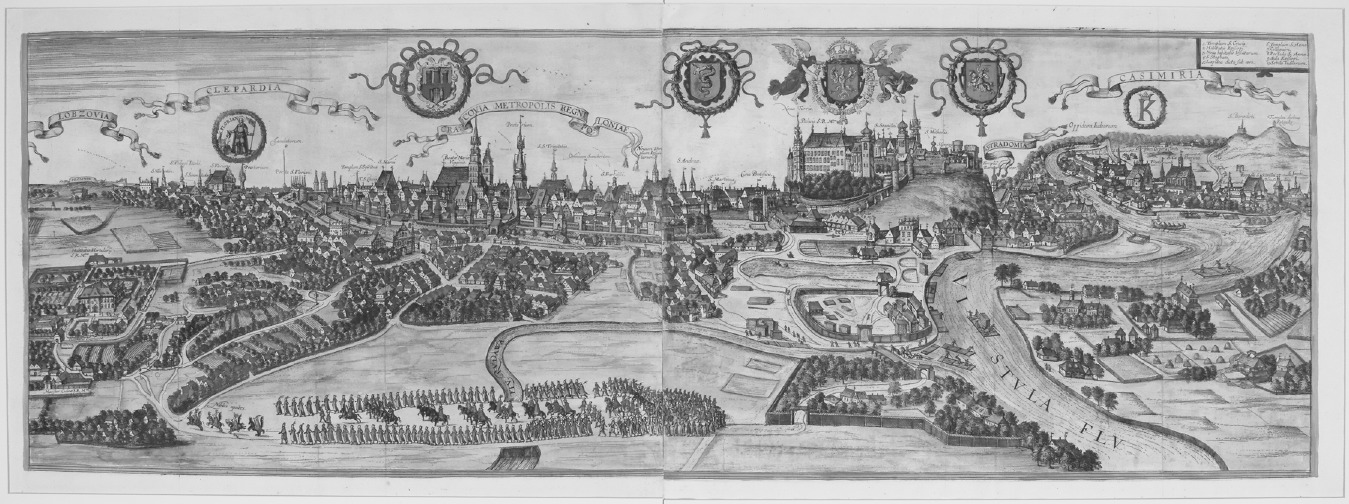
Fig 14. View of Cracow from the north-west by Abraham Hogenberg, c.1603–5. With the kind permission of the Muzeum Historii Polski.
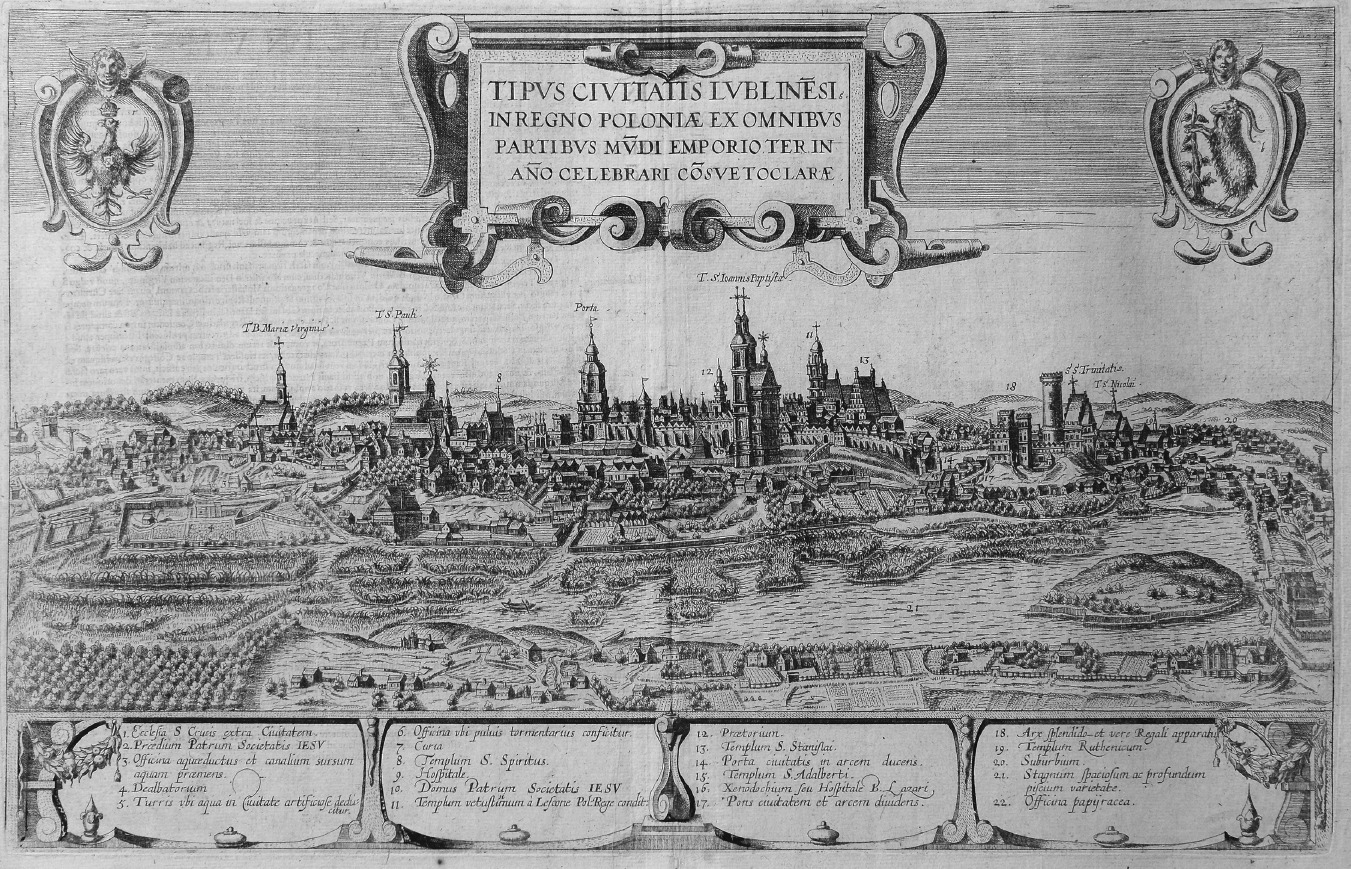
Fig 15. View of Lublin in the sixteenth century. With the kind permission of the Zamek Królewski, Warsaw.
The chamber was less accommodating. Although some were inclined to moderation, radicals, led by the Cracow envoys, argued that union had already been agreed; all that was required was for it to be executed on the basis of the old acts. The chamber’s refusal to allow any hint of a separate grand duchy destroyed chances of early agreement. The reluctant Padniewski was forced to defend this hard-line position. In an erudite speech on 12 February he gently criticized the Lithuanians for abandoning Mielnik, which they had accepted as a basis for negotiation in 1564.4 Despite his willingness to accommodate many Lithuanian demands, he conceded nothing with regard to the nature of the union. He argued that neither side could break the union without the agreement of the other party, maintaining that Jagiełło and Vytautas had incorporated Lithuania into the corona regni: ‘so that it was already not a foederatus populus, but one realm, one people, one council, under one lord’. As a sign of this unity Jagiełło had granted full rights and freedoms to the Lithuanian nobles to ensure that all were equal before the law and enjoyed equal liberty so that, being part of one body, there were no discrepancies.5 Padniewski could offer the Lithuanians little in the proposals, which began by quoting the clause in Mielnik stating that Poland and Lithuania constituted one uniform, indivisible body according to the act of incorporation. No divisions were to be allowed within this body politic. Elections were to be common, there was to be no separate coronation of the grand duke, and no separate name for the grand duchy. Separate Lithuanian offices were to be allowed, but they were to be open to Poles, who were also to be allowed to acquire land in Lithuania. Otherwise, all signs of duality were to be effaced.6
Unsurprisingly, Jan Chodkiewicz rejected the proposals on 15 February. He stated that the Lithuanians did not conceive the union as broadly as the Poles, suggesting that it should be seen as one of allies and friends. He stressed the need for equality between the two peoples, and said that the insistence on incorporation was not a sign of love or fraternity.7 The Lithuanian proposals maintained all the symbols of Lithuania’s status as a separate realm: the continuation of the title of grand duke, separate coronations, a separate seal, and separate offices to which only Lithuanians would have access. They offered rather more than a simple personal union and alliance, which is how Halecki presented them, but they retreated from the position adopted at Warsaw, and were flatly rejected.8
Thereafter negotiations became bogged down. In interminable sessions documents were read out and speaker after speaker rambled on with his own views about what they signified. Potted history lessons were proffered and contested; at one point the anonymous diarist wrote wearily that he had not recorded all the speeches of the senators ‘propter prolixitatem’.9 On 20 February Sigismund August intervened, frustrated by the lack of progress and aware that his intervention in 1564 had come too late. He met the Lithuanians in secret sessions, and when he failed to secure acceptance of the Polish terms, secretly promised the Polish envoys on Saturday 26 February that he would order a joint session of both sejms on the Monday.
No such session took place. After news of the Saturday session leaked out, Rudy and Chodkiewicz demanded that the Lithuanians be permitted to debate separately. When Sigismund August refused, ordering them to attend a joint session on Tuesday morning, Rudy, fearing that the moment that Czarny had predicted had arrived and that the king would enforce concessions, decided he had heard enough. That night, led by Rudy, most Lithuanians hurried from Lublin, leaving behind vice-chancellor Ostafi Wołłowicz and treasurer Mikołaj Naruszewicz as observers.10
The chasm between the two sides seemed unbridgeable. Rudy told Roman Sangushko that he wished to preserve the grand duchy, and did not want to see it incorporated into Poland, adding that Sigismund August had decided to give Lithuania to Poland, and was treating the Lithuanians like slaves.11 Rudy’s exasperation is understandable, but he had only himself to blame. The two sides had teetered on the brink of an agreement in 1564, but the optimism generated by Chashniki had long since evaporated. As the Radoshkoviche fiasco confirmed, Lithuania desperately needed Polish aid, and it was clear that the Poles were not willing to offer it without agreement on the union. They had a point. Between 1561 and 1570 the Polish treasury contributed over 2,000,000 złoties to sustain the Lithuanian war against Muscovy, raising 300 companies of professional soldiers. The professional army of 3,500 cavalry and 3,910 infantry sent to aid Lithuania in the autumn and winter of 1563–4 had cost in pay alone 159,365 złoties, or seventy-two per cent of the revenues from the taxes voted by the 1562–3 sejm. With a great effort the Lithuanians raised 6,500 professional soldiers of their own, but the revenues of the Lithuanian treasury between 1561 and 1566 amounted to 2,631,505 Polish złoties, or around 550,000 złoties per annum. Arrears of pay amounted to 161,648 złoties, 31/2 groszy. The Poles were aware of the problems the Lithuanians had in paying their professional troops, as many disgruntled and unpaid officers turned up in Lublin to complain and lobby for their pay.12
It was not unreasonable for the Poles to seek closer union to ensure that greater control could be exercised over the Lithuanian council, whose decision it had been to declare war. Yet Rudy decided that the Lithuanians could return to first principles and renegotiate the union from scratch, ignoring all previous agreements. It is difficult to imagine that the politically astute Czarny, for all that he shared his cousin’s aversion to union on Polish terms, would have adopted such an unrealistic strategy. Czarny had proved himself an adroit parliamentarian; Rudy, accustomed to the deferential proceedings of the Lithuanian sejm, was unprepared for the rumbustious cut-and-thrust of Polish parliamentary debate, and had no idea how to finesse the wretched hand he held. A letter from Wołłowicz to Sangushko suggests that the withdrawal was under consideration from early February, shortly after negotiations had begun, which suggests that Rudy was already short of ideas.13
The midnight flit backfired spectacularly. Sigismund August was furious. The clandestine departure, without taking formal leave of the king, was construed as disrespectful by king and sejm alike.14 Yet for all the outrage, it was not unexpected. The Lithuanians had unilaterally withdrawn from negotiations in 1564 when in a much stronger negotiating position; it had taken them five years to return to the table. Neither Sigismund August nor the Poles could wait any longer. The king was in poor health throughout the Lublin sejm, constantly taking medicine and at times confined to his quarters and unable to take part in the proceedings on account of ‘stones’.15 Time might be short, and the rapid Polish response to the Lithuanian departure suggests that strategies had been prepared for just such an eventuality.
By withdrawing, Rudy risked unilateral Polish action. For the majority in the chamber, the union had already been agreed; all that remained was for it to be executed, and execution of the union was precisely what the radicals demanded: as Stanisław Sobek, castellan of Sandomierz, put it, the king should ensure that the union existed in fact, and not just on paper.16 The hotheads claimed that in defying royal authority the Lithuanians were rebels, and deserved to be treated in contumaciam. Those that had departed should be punished, the 1566 statute should be annulled, and some called for the use of force.17
Moderate voices prevailed, however. Instead of embarking on an execution of the accessory union that might have unleashed civil war, the senators and the king targeted the Lithuanians’ weakest point. Responding to demands made from the floor of the chamber, they revived an issue placed in cold storage in the 1450s: the Polish claims to Podlasie and Volhynia. So long as the Poles had sought to persuade the Lithuanians to accept their concept of accessory union they had not been inclined to raise the matter, since Podlasie and Volhynia, like the rest of the grand duchy, were regarded as an integral part of the unitary union state. Now that the Lithuanians had again rejected an accessory union, calls for their annexation were embodied in the fifteen action points drawn up by the senate on the evening of 1 March. They declared that the Lithuanians had committed a rebellious and contumacious act, and that clauses in the 1566 statute conflicting with the acts of union should be repealed. Podlasie and Volhynia, on the basis of old privileges, belonged to the Polish crown, and all office-holders and citizens in the two provinces were to take an oath of loyalty to it. A guarantee was issued that the execution of the royal domain was not to be effected in either province. The king immediately confirmed the proposals. Stating that ‘in every commonwealth the most vital consideration is to ensure that we never adopt the most extreme of remedies’, he declared his support for the immediate annexation of Podlasie and Volhynia by the Polish crown. It was approved on 3 March after a stormy debate, in which radicals called for the incorporation of the whole grand duchy. Separate privileges of incorporation for Podlasie and Volhynia were promulgated two days later. The annexation of Volhynia also covered the palatinate of Bratslav, formed from what had been eastern Podolia in 1564–5.18
It was a shrewd strategy. As the Poles were aware, despite the common front presented by Rudy and the Lithuanian lords before their departure from Lublin, there were serious divisions below the surface. Most of the Lithuanians left with Rudy, but the withdrawal was controversial. Although Chodkiewicz had loyally supported Rudy in the sejm’s early phases, as he headed away from Lublin through Wohyń, he wrote to Sigismund August blaming Rudy for the departure. Wołłowicz, who remained in Lublin, wrote of his unease to Czarny’s son Mikołaj Krzysztof ‘Sierotka’ (the Orphan), and continued to talk to both king and sejm.19
It was now that the significance of the 1564–6 reforms became clear. The establishment of sejmiks across the grand duchy provided a new forum for political activity at the local level. The Vitsebsk petition had revealed considerable support among the ordinary nobility for closer union, while even if the Lithuanian envoys in Lublin had remained largely passive before the departure, some had been furnished with instructions which suggest that the ordinary nobility did not all support Rudy’s position. The instructions from Samogitia—where there was a sizeable and voluble population of middling and lesser nobles—and from Volhynia and Podlasie granted their envoys plenipotentiary powers, commanding them not to return until union was complete.20
The generally favourable attitude of the Volhynian and, particularly, the Podlasian szlachta towards closer union was well known. The Podlasians had long been inclined to a closer relationship. Polish law had extended its influence over the province since the 1440s, and there had been frequent requests from the local nobility that official documents be drawn up in Polish, since so few could read Ruthenian in the elaborate chancery Cyrillic in which they were written. Podlasian envoys at the 1565–6 Lithuanian sejm had urged Sigismund August to call a common sejm. When Rudy ordered the Lithuanians to leave Lublin, only two of the Podlasian envoys—both supporters of closer union—did so; the other four remained in accordance with their instructions.21
Thus the prospects for Podlasie accepting incorporation were good. The decision to incorporate Volhynia was more risky, since it raised the issue of the position of the Ruthenian annexed territories within the grand duchy. There were signs, however, that the risk might be worth taking, not least because of the attitude of the leading Volhynian princes, who enjoyed considerable prestige and authority. The wealthiest and most powerful was Kostiantyn Vasyl Ostrozky (1524/5–1608), son of the victor of Orsha. Ostrozky sought to mediate between the Lithuanians and the Poles in the early exchanges at Lublin, and his favourable attitude was noted by the Poles. He remained in Lublin after the Lithuanian departure together with another Volhynian prince, Stefan Zbarazky, palatine of Trakai. Although his ostensible reason for staying was to pursue a private case concerning his claim, through his wife Zofia Tarnowska, to the Polish city of Tarnów, his refusal to leave was significant. He kept his distance, turning down an invitation to meet the king on 3 March on the grounds of illness, and leaving Lublin the day after the promulgation of the incorporation edict, but he did not return to Lithuania, remaining in Tarnów, not far from Lublin, and staying in contact with his friend Sebastian Mielecki, castellan of Cracow. On 29 March he wrote to Sigismund August denying rumours that he was negotiating with the Lithuanians.22
On 8 March Sigismund August promulgated decrees ordering Podlasian and Volhynian envoys and office-holders to take their seats in the Polish sejm, and commanding all holders of royal land in both palatinates to swear oaths of loyalty to him and to the Polish crown: the Podlasians were to swear by 27 March; the Volhynians were given until April 3.23 The critical point had been reached. For these decrees, while directed to the nobility of both provinces, also affected many Lithuanian magnates who held royal lands there, particularly in Podlasie, including Rudy himself, his nephew Sierotka, and Wołłowicz. Sigismund August and the Poles were testing the extent of support for closer union among the ordinary nobility, and the solidarity of the council elite.
The challenge revealed that Rudy had no alternative strategy, and that his support was far from solid. That the Polish reaction took him by surprise merely demonstrates his political naïvety.24 Encouraged by the initial failure of the Podlasians and Volhynians to obey the king’s orders, he summoned leading Lithuanian politicians to Vilnius around 20 March, including Chodkiewicz, Wołłowicz, Wiktoryn Wierzbicki, bishop of Lutsk, Paweł Sapieha, palatine of Navahrudak, Havrylo Hornostai, palatine of Minsk, and Hrehory Wołłowicz, castellan of Navahrudak. Rudy hoped they would support resistance to the annexations; instead he was blamed for the Polish response to the withdrawal. Chodkiewicz, backed by Protasiewicz, who had been too ill to travel to Lublin, criticized the move, urging a more moderate approach. Rudy was defeated. It was agreed that Chodkiewicz should lead a new delegation to Lublin to reopen talks. Rudy’s strategy was abandoned; instead the delegation would accept the old treaties as a basis for discussion and revive the old policy of attempting to remove from them phrases deemed disrespectful to Lithuania. The instructions resumed the language of Mielnik, endorsing the idea of the union forming ‘one indivisible body’ but sought to preserve a separate identity for the grand duchy. They were permeated by a sense of realism. In many points they agreed with the moderate Polish proposals prepared by the senate in February. Lithuania’s separate identity was to be preserved by various means. Although the instructions accepted a common election and one coronation, the king was to swear to maintain the privileges of both realms in a document to which both the Polish and Lithuanian seals were to be attached. The only major point of difference was the insistence upon the continuation of separate Lithuanian sejms for matters other than royal elections, defence, and foreign policy. Rudy refused to sign the instructions, but he had nothing left to offer. Sierotka was to be one of the envoys, to ensure that Radziwiłł interests would be defended, but Rudy was isolated and defeated.25
The envoys, Chodkiewicz, Sierotka, and Paweł Pac, castellan of Vitsebsk, did not, however, hurry back to Lublin, thereby losing any chance of regaining the initiative. It was probably too late in any case. Although the deadlines for recognizing the annexations had passed without any mass taking of the oaths, three Podlasian deputies—Adam Kosiński and Mikołaj Bujno, both of Mazovian descent, and Kasper Irzykowicz, from a family of well-connected Lithuanian lords—swore as early as 8 March, although Irzykowicz did so reluctantly, fearful of the threat of confiscation; another, Aleksander Hincza, swore two days later. Mikołaj Kiszka, starosta of Drohiczyn, from a magnate family was another supporter of annexation, while deputations from the Podlasian towns of Bielsk and Brańsk—who had not been summonsed—appeared unexpectedly to swear on 29 March.26
The Volhynian response was more cautious. As yet all that had arrived from Volhynia were stacks of letters excusing the failure of various officials to swear the oaths, most pleading illness.27 The incorporation decree reached Volhynia on 16 March, and the initial response came in a petition drafted in Lutsk on 29 March. It expressed surprise that the annexation decree was written in Polish and sent under the crown, not the Lithuanian, seal. It stressed that Volhynia had never belonged to Poland and that the Volhynian nobility had always sworn loyalty to Sigismund August and his predecessors as grand dukes of Lithuania. While the signatories had nothing against brotherly love with the Poles, they stressed that they could not obey the king without the permission of all estates and citizens of Volhynia, and asked him to summon a sejmik ‘of this realm of Volhynia’ (тохож панства . . . земли волинской). As honest men, equal in their rights, they rejected unity with the Polish szlachta on the basis of a decree, and asked the king to act as guardian of their honour and reputation. There was a similar reaction from Bratslav nobles, who wrote to their palatine, Roman Sangushko, on 28 March expressing their concern at the decree, and asking that he bring troops to defend them, since they feared Polish attacks.28
The letter expressed a certain dislike and distrust of Poles, and it, together with the Volhynian petition, has been used to challenge the assumption of Halecki—who did not know the petition—and other Polish historians that the ordinary Ruthenian nobility supported closer union. While Halecki certainly exaggerates the extent of support for the annexation, Kiaupienė’s assertion that the Volhynian petition and the Bratslav letter prove that ‘the political nation of the grand duchy’ opposed the partition of its territory is even more of an over-statement.29 These sources demonstrate that the initial reaction to the Polish decrees in Volhynia was cautious. Yet it is by no means clear how representative the documents are. The letter from Bratslav was signed by four local officials, and the seals of several other nobles were attached to it, but it is impossible to determine the extent to which it reflected wider attitudes, and Kiaupienė’s attempt to use the petition to dismiss Halecki’s evidence that royal officials testified to a rapturous reception in Volhynia to the incorporation is unconvincing.30 It is unlikely that royal officials would have deliberately misrepresented the situation when the stakes were so high. Some were undoubtedly more enthusiastic than others, but the overall reaction was one of caution rather than outright acceptance or rejection. As for the petition, Mazur suggests that it was drawn up at ‘some kind of sejmik’, but sejmiks could only be summoned by the king, and it is likely that it was a less formal meeting, probably called by Aleksander Chortorysky, palatine of Volhynia, while the traditional formula that it was drawn up in the name of the ‘palatine, princes, lords, starostas, officials and the whole knightly estate of the palatinate of Volhynia’ is no guarantee that it was truly representative.31 In 2004, Mazur suggested that the petition showed that ‘the nobility of Volhynia or at least a significant part of it’ rejected the annexation and was closely linked to the Lithuanian opposition to union, but was later more cautious, arguing that the petition showed that ‘the Volhynian nobles, like the Volhynian princes, were playing for time, not wishing to break either with the king or with the Lithuanians’.32
This suggestion is far more convincing. The princes remained politically significant in Volhynia, and the petition was taken to Lublin by three clients of Ostrozky, whose attitude was crucial, since he controlled just under a third of the land in Volhynia.33 Initially the Volhynian princes adopted a studied neutrality. Ostrozky did not travel to Vilnius in March, but he and other princes kept in touch with the Lithuanians, and sought to coordinate their actions with the delegation from Vilnius, which returned to Lublin on 4 April, only to find the Poles standing firm.34 The Bratslav letter suggests that local nobles were reluctant to take a position until they knew the attitude of the princes. In a rapidly developing political crisis it would have been rash to commit to one side or the other until the options were clear. Although the princes remained in touch with the Lithuanians, the petition’s demand that the king call a separate sejm in which the Poles would meet with the Volhynians on the border suggests a willingness to negotiate with the Poles directly. Volhynians had sworn oaths to the grand duchy, to which they had a residual loyalty, but they had also sworn oaths to the king. They intended to make up their own minds.35
It was not just Podlasians and Volhynians who had to choose. After the Lithuanian departure the sejm, with wind in its sails and time on its hands, confronted another long-standing concern, taking decisive action to execute the 1454 incorporation of Prussia. As in previous years, a healthy number of Prussians, both senators and ordinary nobles, were in Lublin, to observe the sejm and ensure that Prussian interests were not compromised. On 16 March Sigismund August ordered them to take their seats in the sejm, although representatives of the cities were denied places, and Georg Kleefeldt, the mayor of Danzig was arrested on a charge of lèse-majesté in a long-running dispute over Sigismund August’s desire to establish a privateer fleet on the Baltic. Remarkably, it was the Prussian senators who accepted the invitation without complaint, and it was the representatives of the ordinary nobility who protested, although in the light of the attitude of the Prussian senators, there was little that they could do. Since the 1520s the creation of a common currency and the convergence of Royal Prussian interests in trade and international relations since the outbreak of the Livonian War had sapped resistance to formally joining the sejm, where matters concerning Royal Prussia were frequently discussed. Jan Kostka, the Lutheran castellan of Danzig, was a particularly eager supporter of political integration; once the Prussians took up their seats he spoke frequently in the debates on the Lithuanian union, urging the Lithuanians to follow the Prussian example.36
The Prussians joined those Podlasians who had sworn the oath in the chamber of envoys, and the pressure on the Lithuanians grew. The dispute over the incorporation of Podlasie and Volhynia was holding up progress on the wider union, and it was increasingly unclear if Sigismund August’s bold gamble would pay off. The deadlines for the swearing of oaths was extended, to 24 April for the Podlasians and to 14 May for the Volhynians, but with no significant response. Sigismund August was forced to issue a third decree to the Podlasians on 23 April, a day before the deadline expired.37 He was under pressure from the envoys, who insisted that all who failed to swear should be punished without exception, singling out Sierotka, as Wołłowicz wrote to Rudy. The king therefore applied some carefully targeted pressure. On 2 May, pour encourager les autres he deprived Vasily Tyshkevych and Hryhory Tryzna, respectively palatine and castellan of Podlasie, of their offices, appointing Mikołaj Kiszka and Adam Kosiński, both of whom had taken the oath, in their place. It was a clever move. Tyshkevych and Tryzna were opponents of closer union, both were of Lithuanian-Ruthenian descent, and neither were natives of Podlasie. They were unpopular among the local nobility, and their removal was widely applauded. Their demotion demonstrated that the king was serious.38
Having made his point, Sigismund August called fresh Lithuanian sejmiks for 10 May and extended the deadline to 22 May. Commissioners were sent to Podlasie and Volhynia to collect oaths on the spot, with considerable success. A stream of Podlasians began arriving in Lublin to take the oath, and a large number of Volhynians appeared on 23 May, a day after the deadline, having secured assurances that they would be treated as equals. The dismissals of Tyshkevych and Tryzna had had the desired effect. The first to appear were Piotr Zbarazky, son of the palatine of Trakai, Vasily Zahorovsky, and Wiktoryn Wierzbicki, bishop of Lutsk, who, despite being a Pole, made a point by replying to Sigismund August’s decree in Ruthenian.39 The mass appearance of the Volhynians on 23 May was due to the fact that Ostrozky had finally made up his mind; after due consideration, he chose union with Poland. He arrived in Lublin on 23 May together with three other princes: Aleksander Chortorysky, Kostiantyn Vyshnevetsky, and Bohush Koretsky. The next day he apologized for his late arrival, and swore loyalty to the king and the corona regni. Koretsky apologized for the convenient illnesses that had prevented so many from coming earlier and publicly accepted the Polish view that ‘the realms (państwa) of Podlasie and Volhynia’ belonged legally to Poland. Chortorysky asked that the dignity and status of the princely families be maintained, as did Vyshnevetsky, who asserted that the Ruthenian nation was equal in nobility to all others. They all swore after receiving assurances concerning the equality of the Volhynian nobles with their Polish counterparts and a promise that the execution of the royal domain would not apply to Volhynia.40
Podlasian consent to incorporation was not altogether surprising, but the Volhynian acceptance of incorporation was quite another matter. Volhynia was the most developed and most populous province in the southern Ruthenian lands. It was here, rather than in Kyiv, that Orthodox Ruthenian culture had thrived, and the princely families had done much to keep the flame burning. Ostrozky, like his father, had long been loyal to Lithuania, but he was a Ruthenian, and he regarded Rus' as his patria. Like his father, he had close links to the royal court in Cracow; like his father he spoke and corresponded in Polish. His wife, Zofia Tarnowska, was from one of the most powerful Polish magnate families; her father was Jan Tarnowski, with whom Ostrozky’s father had defended Rus' against the Tatars. Like his father, Ostrozky had spent his life poised between Poland and Lithuania. In the end Lithuania could not command enough of his loyalty. Orthodox Ruthenians had been granted equality before the law in 1434, but they had only secured full political rights in 1563 through an exercise of the royal prerogative, not an act of the Lithuanian sejm. The Catholic Lithuanian elite had been prepared to tolerate them and even extend the hand of friendship, but an invisible web of prejudice and condescension had confined all but the greatest princely families to the margins of power outside Volhynia itself. Incorporation into Poland would efface the political borders that had divided the southern Ruthenian lands since the fourteenth century. In 1569 Ostrozky kept his distance from both sides, but when forced to decide, he opted for Poland. When Ostrozky chose, the Volhynians followed en masse.41
The dam broke. As the Podlasians and Volhynians voted with their feet, Lithuanians with property in the two provinces rushed to avoid the fate of Tyshkevych and Tryzna. On 26 May Ostafi Wołłowicz, who had defended the grand duchy skilfully, tenaciously, and almost single-handedly after Rudy’s departure, capitulated. Sigismund August raised him to the palatinate of Trakai, but he was defiant to the last. In a speech to the sejm he stressed that he had remained loyal to the decisions taken by the Lithuanian council, and stated that he was swearing the oath only with regard to his properties in Podlasie and Volhynia, and not ‘on the side of the grand duchy of Lithuania’.42
Where Wołłowicz led, others followed. One by one, the great Lithuanian lords, preserved their Podlasian and Volhynian property by taking the oath. Sierotka swore on 1 June.43 Rudy refused to come to Lublin, but Sigismund August knew better than to punish him. The Lithuanian sejmiks had been summoned for 10 May, and the envoys were supposed to reach Lublin by Whitsun, although by early June only Jan Chodkiewicz and a few others had arrived. They faced a nasty shock. For the annexations were not over. On Saturday 28 May Czarnkowski, marshal of the chamber, presented evidence that ‘Kyiv and its whole realm’ had always belonged to the Polish crown; the king should therefore require the palatine of Kyiv—Kostiantyn Ostrozky—to take his seat in the senate.44 The request came not from the Poles, but from the Volhynian and Bratslav envoys, who took their seats around May 27. The idea of annexing Kyiv along with Volhynia and Podolia had appeared in a document drawn up by vice chancellor Franciszek Krasiński on 24 March, but he later scrawled in the margin the comment ‘not necessary’.45 The matter had not been raised in the chamber, although there had been an isolated request on 12 May that Ostrozky should take the oath of loyalty to the crown in his capacity as palatine of Kyiv. Having opted for Poland, however, the Volhynians, undoubtedly with Ostrozky’s encouragement, embarked on a campaign to unite all the lands of southern Ruthenia, securing support from the envoys of the Polish palatinate of Ruthenia. On 1 June Walenty Orzechowski, land judge of Przemyśl asked that the historic claims of Poland to Kyiv and Bratslav be presented, and requested that Ostrozky should take the oath as palatine of Kyiv. On 2 June the Volhynians stated that without Kyiv, Volhynia would be in a ‘miserable condition’, and raised the issue of Muscovite complaints concerning Lithuanian rule over the Kyiv metropolitanate. The most eager advocate was Havrylo Bokei, land judge of Lutsk and one of the envoys who had brought the Vitsebsk petition to Sigismund August, who demanded the annexation not just of Kyiv, but also of the Brest palatinate, which had a large Orthodox population, but which had formed part of the palatinate of Trakai until 1565.46
Some senators were reluctant to approve Kyiv’s annexation, on the prescient grounds that it would increase the burden on Poland, which would have to defend this vast and sparsely populated territory from Tatars and Muscovites. The envoys, however, supported the Volhynians, as did Sigismund August. On 6 June 1569 he issued a proclamation in Latin and Polish ‘reintegrating and restoring’ Kyiv to the corona regni. Among the signatories were Ostrozky, who took his oath as palatine of Kyiv the same day, and Sangushko, who had initially resisted the incorporation of his Bratslav palatinate along with Volhynia, but who understood that it must remain with Kyiv.47 Great care was devoted by professional lawyers to the historical claims to Kyiv in the proclamation, but they were flimsy, and several senators doubted the annexation’s legality.48 Yet the historical justifications were not the most significant considerations, despite the fact that they have exercised generations of historians. The incorporation’s success depended on the hard bargaining undertaken in June by envoys from Kyiv, Volhynia, and Bratslav over its final form. It was not until after 24 June that the incorporation privileges for Volhynia and Kyiv were ready. Although the Volhynian privilege was dated 26 May it was probably not finalized until late June. Its terms were significant, and marked a shift in Polish thinking that was to be crucial in the negotiations with the Lithuanians. Written in Polish, not Ruthenian, it stated that ‘the Volhynian lands’—defined as the palatinates of Volhynia and Bratslav—had always belonged to the Polish crown, and were now returning to it (see Map 6).
It revoked the loyalty of their citizens to the grand duchy of Lithuania and spoke of their return to Poland ‘as equals to equals’. It used the metaphor of the body politic, talking of the return of Volhynia to ‘one indifferent and indivisible body’, but there was no talk of invisceration, and the vision embodied in the privilege was not of incorporation, but of the union of two realms equal in status. Volhynia was to preserve its rights and privileges, the dignity and position of the princes were to be respected, and guarantees were given concerning the rights and liberties of the Orthodox Church. Finally, Volhynia did not adopt Polish law; instead it continued to be governed under the 1566 Lithuanian statute.49
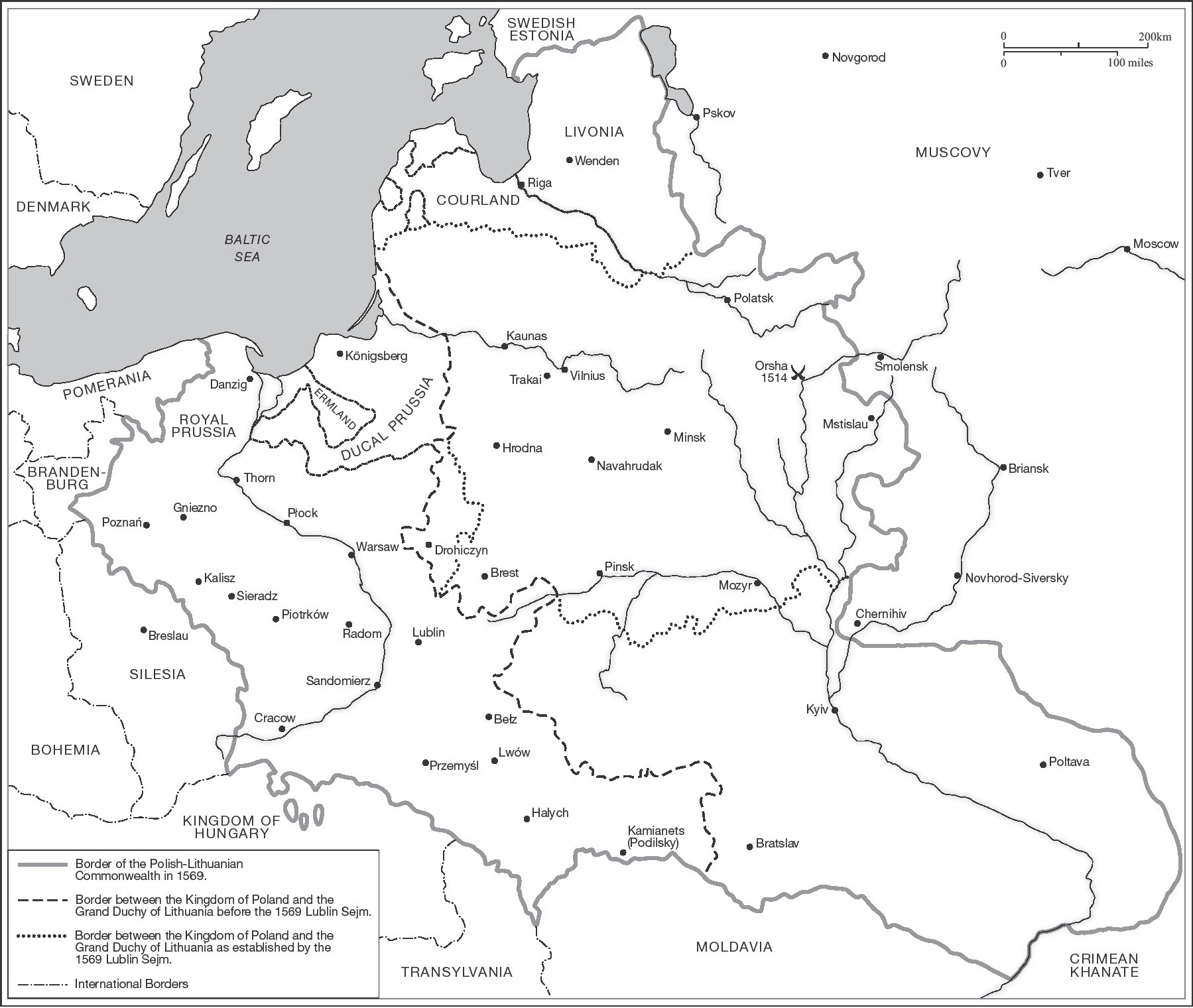
Map 6. The Commonwealth of Poland-Lithuania in 1569.
This was no accessory union. It recognized the Ruthenian territories of Volhynia and Bratslav as equal partners in a single commonwealth, but allowed them to maintain a separate legal system. With regard to Kyiv, the terms were almost identical. The privilege was backdated to 5 June, the day before Ostrozky took his oath of loyalty as palatine, and declared that the ‘land and principality of Kyiv’ was returning to the rule of the crown whose rights to it were asserted.50 This incorporation was not complete, however. Mozyr, one of the palatinate’s two principal districts, was excluded, although the Ovruch district, which had participated in the Mozyr sejmik, remained with Kyiv. The fact that Rudy was starosta of Mozyr almost certainly explains this apparently anomalous outcome although it is not clear whether it was Rudy’s influence over the local nobility or the king’s reluctance to force a showdown at a delicate moment in the negotiations with Lithuania that lay behind the decision. Mozyr was eventually attached to the Minsk palatinate, although border disputes caused problems down to 1641 and beyond.51
Thus Dembkowski’s claim that if the Lithuanians had returned to Lublin a little earlier ‘it is quite possible indeed likely that . . . they would not have lost the Ukraine’ is misguided.52 The negotiations over the final form of the incorporation took place during June, when the Lithuanians were back in Lublin, but they could do nothing to stop the process. There was no hint after Sangushko’s speech on 1 June that the Ruthenians considered remaining with the grand duchy, which had little to offer them compared with the terms agreed by the Poles. Although the Lithuanians protested long and loud after their return, and sought to reverse the incorporations, they were unsuccessful. This was not due to Polish intransigence, but to the choices made by the nobility of the southern Ruthenian lands. By late June the Volhynian envoys were lining up with the hard-line Cracovians over the terms of union with the grand duchy they had left behind.53 The Lithuanian council lords had only themselves to blame.
There was nothing that Chodkiewicz and his fellow negotiators could do but salvage as much as they could from the political wreckage. The Poles insisted on negotiating on the basis of the royal declaration of 24 March, known as the decree on the union in contumaciam, drawn up in response to the Lithuanian departure. Despite its threatening title, it was a surprisingly moderate document. It began by stating the executionist position that the many acts of union had not been fully implemented, although it immediately contradicted itself by stating that the unions made by Jagiełło and Vytautas had always been sufficiently and thoroughly established. It rehearsed the history of recent negotiations, observing that agreement had almost been reached in 1564, but that the Lithuanians had come to Lublin demanding that the old treaties be ignored and that a completely new agreement be drafted, despite accepting Mielnik in 1564 as a basis for negotiation. It quoted the formula agreed at Mielnik stating that the Polish crown and the grand duchy formed ‘one indivisible and uniform body’ that was not dual, but ‘one commonwealth (rzeczpospolita) formed from two nations who had joined and combined into one people (lud)’. Thereafter it eschewed all talk of incorporation, closely following the proposals prepared by the senate in January. There was to be one election and one coronation in Cracow, with no separate ceremony in Vilnius, and privileges were to be confirmed in one document. There was to be a common currency, and sejms were always to be common, but the document quoted the metaphor used by Sigismund August in Warsaw, that one body had different members, and it approved separate laws, a separate legal system, and separate offices. The clause in the 1566 statute banning Poles from holding land or office in the grand duchy was to be repealed.54
Negotiations began on 9 June, and were completed relatively quickly. The Lithuanians were not in a strong position, and were able to secure few of the demands in the proposal they put to the common sejm on 15 June, based on the instructions drawn up in Vilnius in March. The Poles did omit references to the Lithuanians’ escape from Lublin in the historical section at the start of the final treaty, but the Lithuanian desire to have the king’s coronation oath issued under the Lithuanian as well as the Polish seal was rejected, as was the request that the wording of Sigismund August’s bequest of his hereditary rights to the Polish corona regni in 1564 should be altered by adding ‘and the grand duchy of Lithuania’, which the Polish senate had been prepared to concede in January. Despite Chodkiewicz’s opposition, Livonia was formally confirmed as a joint possession of the new commonwealth.55 There was much debate on details of wording, but the Poles conceded little of substance. The negotiations were complete by the end of June. On 1 July the two sejms met separately to agree the union treaty; after these formalities were complete, they processed together to the Franciscan church to sing Te Deum Laudamus. Three days later, on 4 July, Sigismund August formally promulgated the union, and the new commonwealth was born (see Fig. 16). Rudy, sulking back in Lithuania, refused to confirm it, as did Paweł Sapieha and Mikołaj Pac, the castellan and bishop of Kyiv respectively, but they were Lithuanians and the Kyiv palatinate had already decided. Their opposition was of no consequence.
Despite all the trauma of 1569, in one crucial sense the Lithuanians had won. For the Lublin treaty embodied the concept of union for which they had fought
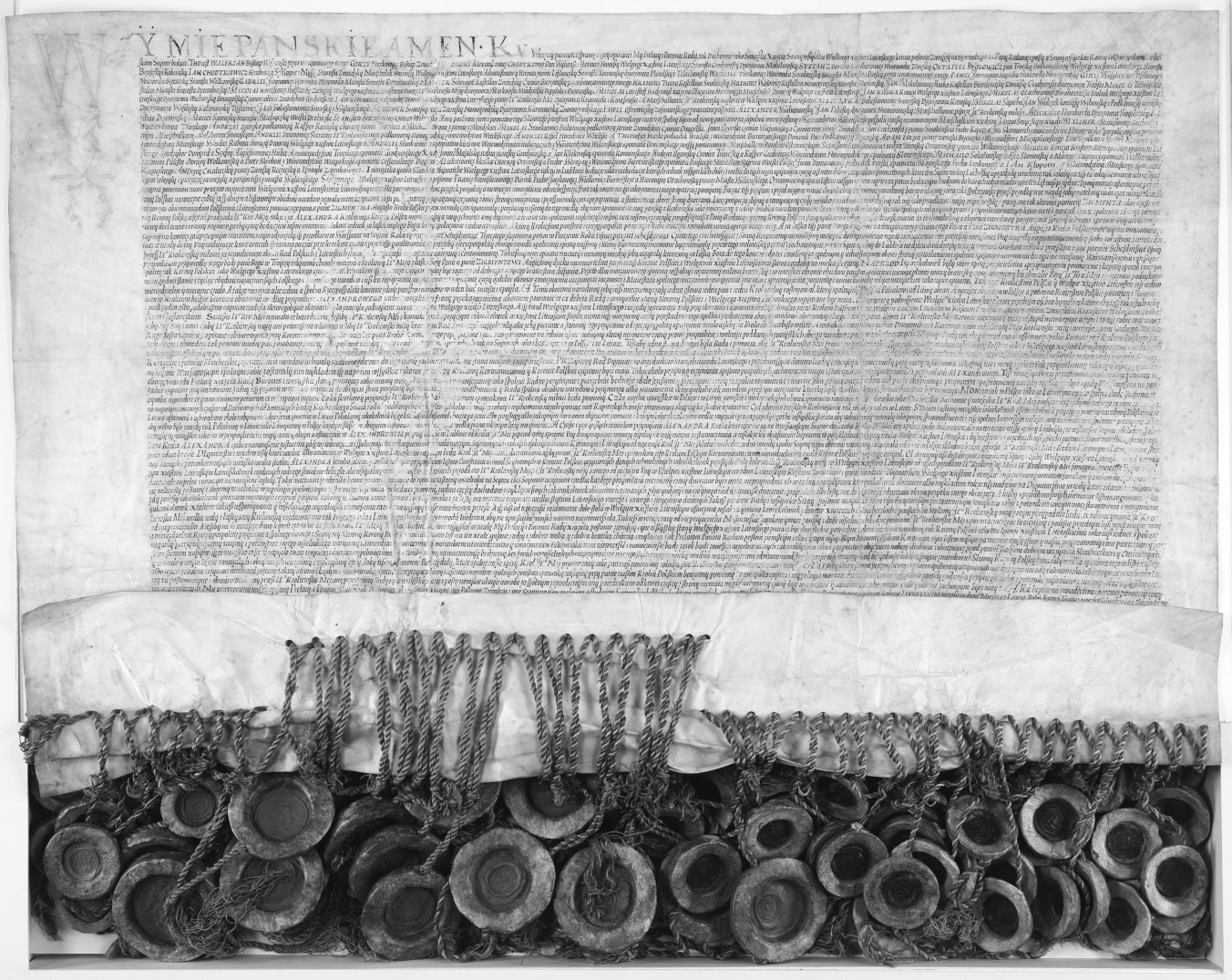
Fig. 16. The Union of Lublin (1569). The lords of the council and the envoys of the Grand Duchy of Lithuania renew their union with the Kingdom of Poland at the general sejm in Lublin, 1 July 1569. Polish, parchment, 720 mm × 450 mm. 77 seals attached. Archiwum Główne Akt Dawnych, Warsaw, Zbiór Dokumentów Pergaminowych, sygn. 5627. By kind permission of the Archiwum Główne Akt Dawnych.
since 1429. The brief historical survey with which it began omitted all mention of Jagiełło, Vytautas, and the ‘old treaties’ of union. The only old treaty mentioned was Mielnik, upon which the Lublin union was explicitly based. As in Mielnik, the language of incorporation was abandoned, and there was no iteration of inviscerating synonyms. The crucial clause describing the nature of the union was based on the formula agreed at Mielnik, but with one key difference. Where Mielnik had talked of Poland and Lithuania being united in one indivisible and uniform body that formed one people, one political community, one brotherhood, and a common council, the Lublin treaty, written in Polish, not Latin, translated the first phrase literally, but added that it ‘also formed one uniform and common republic which has already joined and united two states and two nations in one political community’.56 The use of the term ‘już’ (already) reflected the Polish view that the union already existed, and only had to be executed, but it also represented an explicit acceptance of the Lithuanian view that the union had always been one between two separate realms. It was, however, the introduction of the term rzeczpospolita, ‘republic’ or ‘commonwealth’, that was the key that unlocked the door to agreement. The Lithuanians had long defended the separate existence of their own republic, but now accepted the idea of one, common republic in return for the explicit recognition that they constituted a separate nation, and that the grand duchy constituted a separate realm or state within the unitary commonwealth. Thus they agreed to form a common political nation or political community with the Poles—a lud, which was the direct translation of the Latin populus from the Mielnik treaty—that shared a common currency, a common parliament, and a common king, elected together with the Poles. In return, the Poles recognized the separate and equal status of the grand duchy, preserved in its name, its separate offices, its separate army, and its separate legal system. This was sufficient for the Lithuanians, like the Volhynians, to consider that this constituted the union of equals—aeque principaliter—that they had long maintained was the nature of the relationship they had freely entered into with the Poles. In practice, the institution of the idea of common council and the incorporation of the Lithuanian council into the new joint Polish-Lithuanian-Prussian senate meant that it is difficult to speak of a separate Lithuanian government, as opposed to a separate Lithuanian administration, but it was sufficient recognition of the dignity of the grand duchy for the Lithuanians to accept it.
Lublin did not, however, feel like a victory. Lithuanian anger over the loss of the southern Ruthenian palatinates soured the mood considerably. It was two decades and more before the council lords abandoned attempts to reverse it. Thus while the Poles greeted the union with an outpouring of joy, the Lithuanians sang the Te Deum Laudamus with heavier hearts. It was by no means clear how the union would work in practice, or how the new commonwealth would cope with the impending death of the last Jagiellon in the male line, but the mixed feelings with which the accomplishment of the union was greeted should not disguise the momentous nature of the achievement. For all that the two realms had come together in pursuit of common interests, and for all that material and self-interest had played a large part in the deal-making that formed the union, it ultimately reached fruition on account of the idea not of a union of realms or states, but of a fraternal union of peoples, a community of the realms. The germ of this idea was present in the Horodło treaty, but it was the Lithuanians, not the Poles, who developed it in the years after 1429. It was this idea that made possible the Union of Lublin and underpinned the new union state. That was to be its greatest strength and its greatest weakness.
1 AU, no. 95, 189–92. Halecki, Dzieje, ii, 255; Ferenc, Rudy, 329–30. Dembkowski, misreading the place of its issue, misleadingly calls it the ‘Volhynian charter’: Union, 137–8.
2 Halecki, Dzieje, ii, 258–9; Ferenc, Rudy, 331–3.
3 Halecki, Dzieje, ii, 261–2.
4 Дневник Люблинского сейма 1569 года: Соединение Великаго Княжества Литовского с Королеством Польским, изд. М. Коялович (St Petersburg, 1869), 56–66 [Dnevnik].
5 Dnevnik, 58, 63.
6 ‘Script uniei, ktori podano panom Litewskim, wedlie ządosczi ich od senatu i od poslow koronnich, przez xiedza biskupa Krakowskiego spysany, a przez posli scorigowany’: Dnevnik, 68–73; Halecki, Dzieje, ii, 264–6.
7 Dnevnik, 74–8; Halecki, Dzieje, ii, 266.
8 Dnevnik, 79–88; Halecki, Dzieje, ii, 266–7.
9 Dnevnik, 52.
10 Halecki, Dzieje, ii, 272–4.
11 Ferenc, Rudy, 336–7.
12 Henryk Lulewicz, Gniewów o unię ciąg dalszy: Stosunki polsko-litewskie w latach 1569–1588 (Warsaw, 2002), 31–2; Kazimierz Pułaski, ‘Sprawa o zapłatę zaległego żołdu rotom zaciężnym za Zygmunta Augusta’, in Pułaski, Szkice i poszukiwania historyczne, serya iii (Cracow, 1906), 200–7; Jerzy Urwanowicz, Wojskowe ‘sejmiki’: Koła w wojsku Rzeczypospolitej XVI–XVII wieku (Białystok, 1996), 75.
13 Halecki, Dzieje, ii, 274; Halecki, Przyłączenie Podlasia, Wołynia i Kijowszczyzny do Korony w roku 1569 (Cracow, 1915), 10.
14 Dnevnik, 123; Halecki, Przyłączenie, 11–12.
15 Dnevnik, 502.
16 ŹDU, iii, 66.
17 Dnevnik, 122–3.
18 Dnevnik, 124–30; ŹDU, iii, 62–7; AU, no. 96, 193–6; no. 97, 196–207; VC, ii/i, 216–26; Halecki, Przyłączenie, 26–31, 57–8; Karol Mazur, ‘Szlachta wołyńska wobec unii jagiellońskiej w dobie sejmu lubelskiego 1569 r.’, PH, 95/1 (2004), 38.
19 Halecki, Dzieje, ii, 274–5.
20 Lulewicz, Gniewów ciąg dalszy, 19.
21 Dorota Michaluk, ‘Inkorporacja Podlasia do Korony Królestwa Polskiego w 1569 r.’, in Glemža and Šmigelskytė-Stukienė (eds), Liublino unija, 147; Halecki, Przyłączenie, 32.
22 Kempa, Ostrogski, 46–7; Tomasz Kempa, ‘Możnowładztwo i szlachta z Wołynia wobec unii lubelskiej (1569)’, in Glemža and Šmigelskytė-Stukienė (eds), Liublino Unija, 178; Halecki, Przyłączenie, 44–7.
23 AU, no. 98; no. 99, 207–9.
24 Ferenc, Rudy, 337.
25 Halecki, Dzieje, 294–5; Halecki, Przyłączenie, 94–110; Ferenc, Rudy, 342–3.
26 AU, nos. 116–7, 227–8; Michaluk, ‘Inkorporacja’, 151; Halecki, Przyłączenie, 47–8.
27 Halecki, 117.
28 Karol Mazur, ‘Nieznana petycja szlachty wołyńskiej do króla w dobie sejmu lubelskiego 1569 r.’, in Соціум. Альманах соціальної історіі, вип 2 (Kyiv, 2003), 41–56. The surviving copy was probably the version sent to Sangushko: Mazur, ‘Nieznana’, 43, 50; Mazur, ‘Szlachta wołyńska’, 41–2, 46–7. The letter of the Bratslav nobles was published in Zygmunt Radzimiński, Xiążę Roman Federowicz Sanguszko wobec unii lubelskiej 1569 r. (Lwów, 1911), 11.
29 Jūratė Kiaupienė, ‘Lietuvos Didžiosios Kunigaikšystės teritorinio vientisumo suardymo 1569 m.’, in Glemža and Šmigelskytė-Stukienė (eds), Liublino Unija, 110–11.
30 Kiaupienė, ‘Lietuvos Didžiosios Kunigaikšystės’, 102–13; cf. Halecki, Przyłączenie, 87–8.
31 Kempa, ‘Możnowładztwo’, 179–80.
32 Mazur, ‘Szlachta’, 42–3; Karol Mazur, W stronę integracji z Koroną. Sejmiki Wołynia i Ukrainy w latach 1569–1648 (Warsaw, 2006), 34.
33 Яковенко, Шляхта, 66; Kempa, ‘Możnowładztwo’, 181; Mazur, ‘Nieznana’, 45–6.
34 Mazur, ‘Nieznana’, 49.
35 Kempa, ‘Możnowładztwo’, 179–80.
36 Małłek, ‘Stany’, 77; Karin Friedrich, ‘Citizenship in the periphery: Royal Prussia and the union of Lublin 1569’, in Karin Friedrich and Barbara Pendzich (eds), Citizenship and Identity in aMultinational Commonwealth, 1550–1772 (Leiden, 2009), 58–9.
37 Halecki, Dzieje, ii, 304.
38 Dnevnik, 335; Halecki, Dzieje, ii, 305–7. After a decent interval the unfortunate victims were appointed palatine and castellan of Smolensk, which was under Muscovite occupation, but which at least restored them to the senate.
39 Kempa, ‘Możnowładztwo’, 181; Halecki, Dzieje, ii, 307.
40 Dnevnik, 377–85; Kempa, ‘Możnowładztwo’, 181.
41 Dnevnik, 379–82; Kempa, Ostrogski, 44–9.
42 Dnevnik, 386–7.
43 Dnevnik, 392.
44 Dnevnik, 387–8; Pelenski, ‘Incorporation’, 38.
45 Halecki, Przyłączenie, 112–13.
46 Dnevnik, 393, 401; Halecki, Przyłączenie, 174–7.
47 AU, no. 138, 308–18; VC, ii/i, 226–32.
48 Halecki, Przyłączenie, 174; Pelenski, ‘Incorporation’, 31.
49 VC, ii/i, 221–6; AU, no. 136, 300–8; Kempa, ‘Możnowładztwo’, 183; Halecki, Przyłączenie, 170–2. The version in AU bears the date 27 May, which is accepted by Halecki.
50 VC, ii/i, 226–32; AU, no. 138, 308–19.
51 Henryk Litwin, ‘Kijowszczyzna, Wołyń i Bracławszczyzna w 1569. Między unią a inkorporacją’, in С.Ф. Сокал and Андрей Янушкевіч (eds), Праблемы інтэграцыі і інкорпорацыі ў развіцці Цэнтральнай іЎсх одняй Еўропы ў перыяд раннага Новага часу (Minsk, 2009), 197–9; Henryk Litwin, Równi do równych: Kijowska reprezentacja sejmowa 1569–1648 (Warsaw, 2009), 13–15; Микола Крикун, Адміністративно-територіальний устрій правобережної України в XV–XVIII ст. Кордон воеводств у світлі джерел (Kyiv, 1993), 140–4.
52 Dembkowski, Union, 162.
53 Dnevnik, 447–8; Mazur, ‘Nieznana’, 52.
54 VC, ii/i, 232–8; AU, no. 115, 220–7.
55 Dembkowski gives the misleading impression that Lithuania after 1569 could not use its own seals: Union, 164–5. The issue in June 1569 was whether the Lithuanian seal should be attached to the oath that the king took to uphold the rights and privileges of the commonwealth at his coronation. The Poles objected to this, as it implied the existence of two commonwealths. After 1569, the Lithuanian chancery continued to use its own seals.
56 ‘Iż już Krolestwo polskie i Wielgie Księstwo litewskie jest jedno nierozdzielne i nierożne ciało, a także nierożna a jedna a spolna Rzeczpospolita, ktora się z dwu państw i narodow w jeden lud zniosła i spoiła’: AU, no. 149, 358.