
CHAPTER XI
1
THE deputation sent to see Edward on January 20, 1327, reached Kenilworth after a cold and arduous trip. It was made up of men who did not enjoy rough roads and wintry weather, bishops and judges and a parliamentarian or two. They arrived at the castle with blue noses and heads sunk deep into their hoods and they flailed their arms about them as they waited in the courtyard. Kenilworth was not then the luxurious castle it became a half century later when John of Gaunt built his great hall and the graceful quarters surrounding it. It was to Caesar’s Tower, with its massive walls, that they were escorted.
Inside the tower there was a warm fire blazing in the room selected for the audience. Orleton was there as the spokesman, a stout ecclesiastic with uneasy eyes and an insensitive jowl. Trussell stood beside him, always ready to jibe at misfortune. None of the great magnates had come, being glad to turn this shabby task over to lesser men.
A door at the end of the apartment opened and Edward entered silently. He was robed in black serge, a cloth regarded in those days as cheap and suitable only for casual use. All the assurance that sits so easily on the shoulders of royalty had left him. His eyes went from one fleshy face to another, seeking an answer. What were they here to do? To pronounce a sentence of death on him? Or to show mercy and propose terms?
He had been told something of the proceedings of Parliament a fortnight before. His bitterest enemy, Orleton (for so the defeated king had come to regard the sharp-tongued churchman, fearing him more than Mortimer), had demanded his deposition, contending that the lives of the queen and the prince would be endangered if he were left in power. The Archbishop of Canterbury, Reynolds, had agreed with this (he had been in Edward’s household when the prince was young and owed his high post to the king), but most of the members had shown disturbed faces, realizing the serious nature of the step proposed. A London mob howled about the building, crying for death or deposition, but some of the bishops had summoned up enough courage to speak for the king. One of them, Rochester, was seized by the mob when he emerged and barely escaped with his life. Accordingly, deposition had been decided upon and the measure duly passed. Then Isabella began to weep, whether in sudden repentance or to conceal her real feelings, no one knew; and the conscience of the young prince began to whisper in his ear. The result was that the prince finally refused the proffered crown unless his father’s consent to deposition were first received.
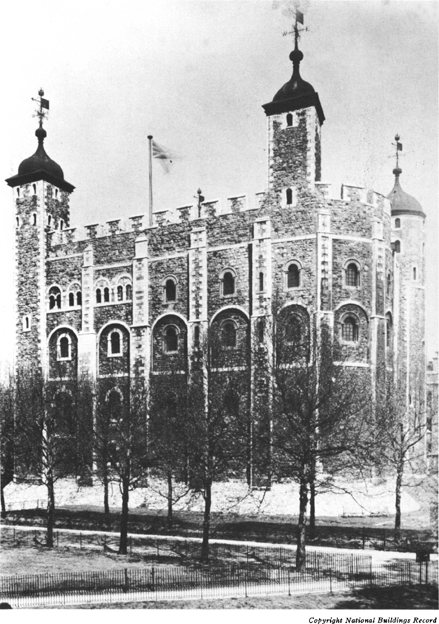
The White Tower, Tower of London
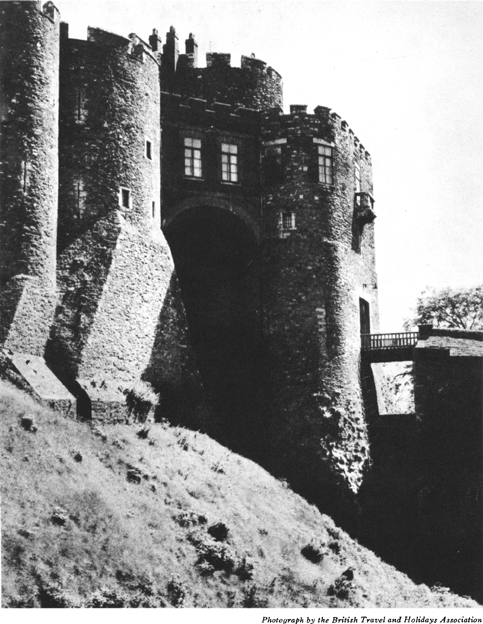
Constable Tower and Moat, Dover Castle
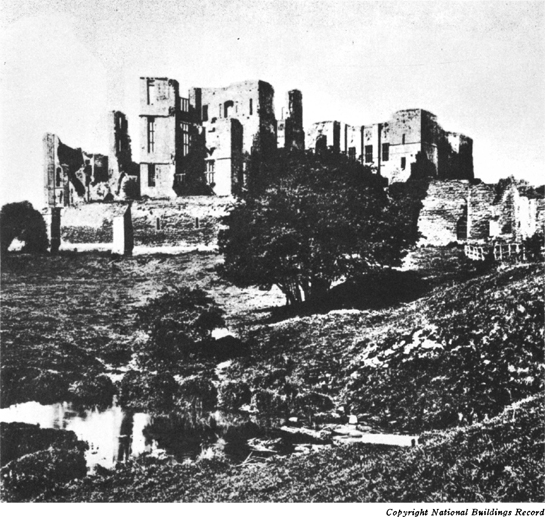
Kenilworth Castle
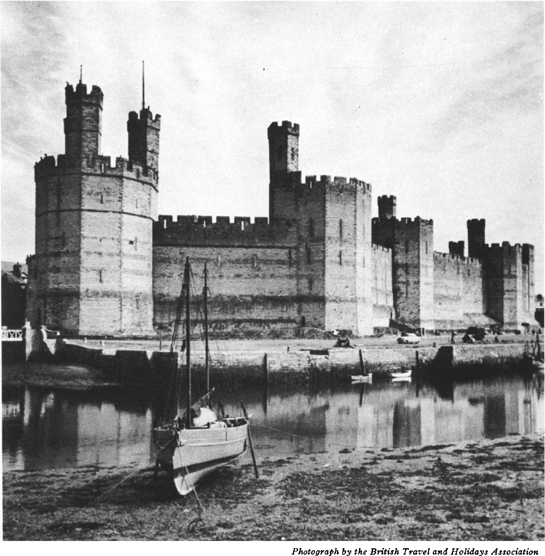
Caernarvon Castle
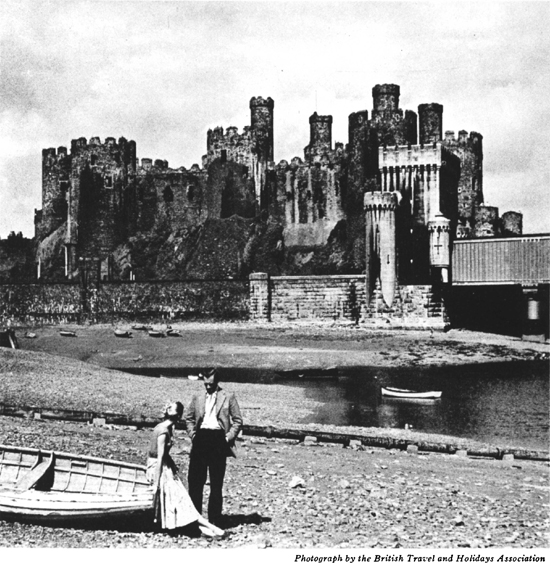
Conway Castle
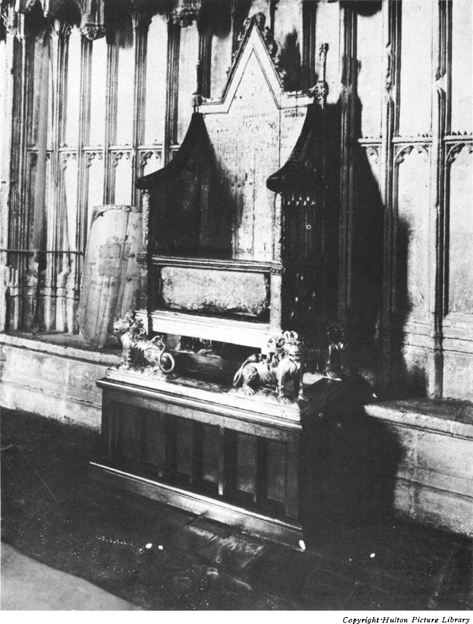
The Coronation Chair and Stone of Scone in Westminster Abbey
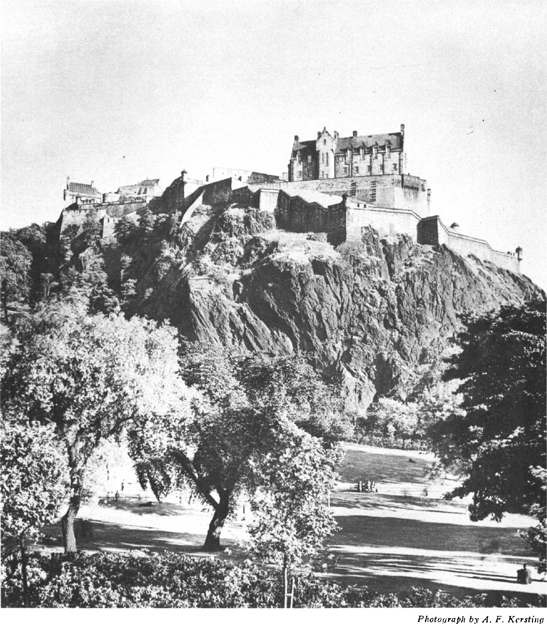
Edinburgh Castle
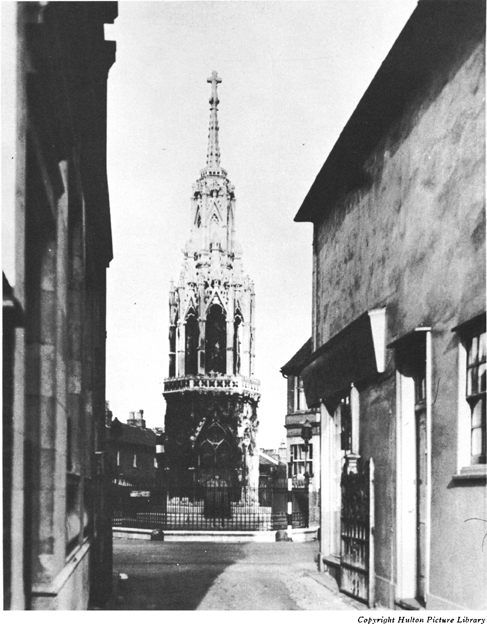
The “Eleanor Cross” at Waltham Cross, Herts
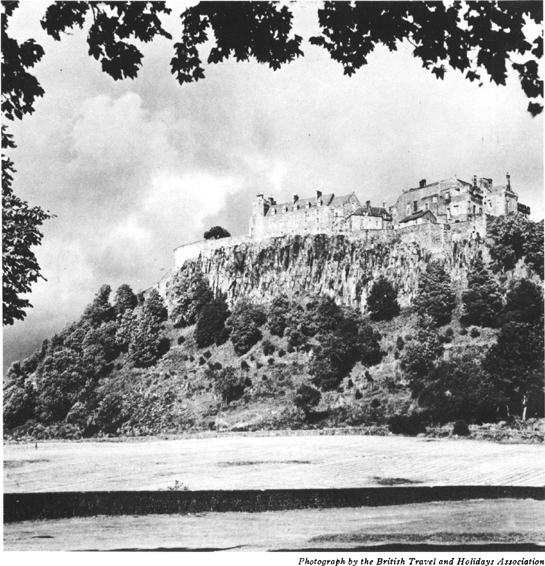
Stirling Castle, Scotland
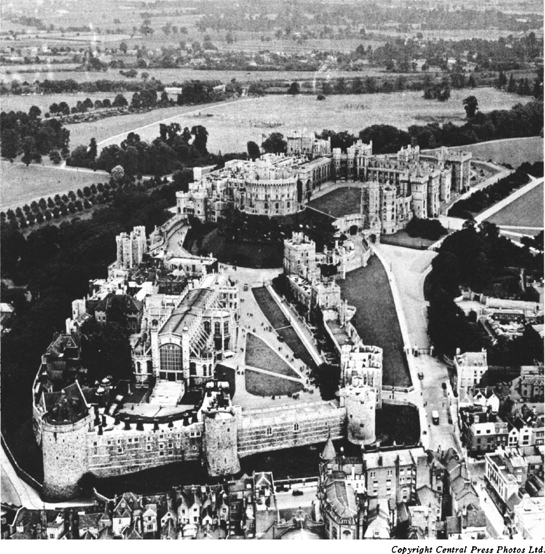
Aerial view of Windsor Castle
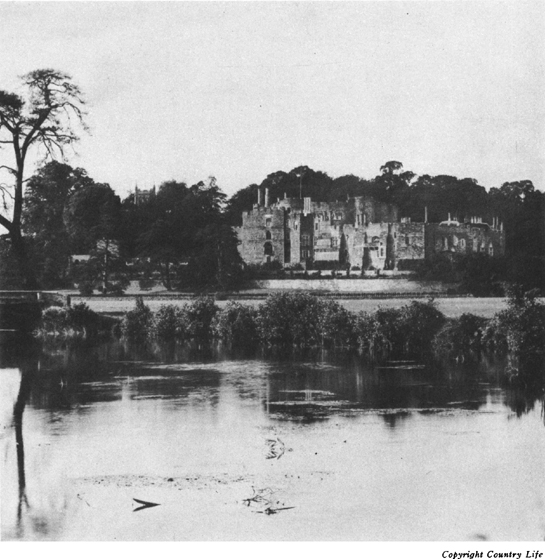
Berkeley Castle
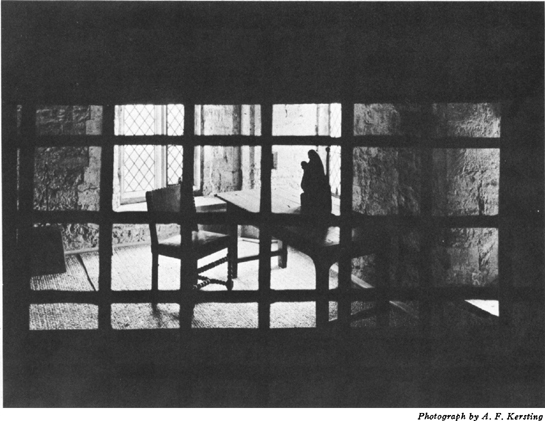
The Chamber above the entrance to the Keep of Berkeley Castle, where Edward II is said to have been put to death.
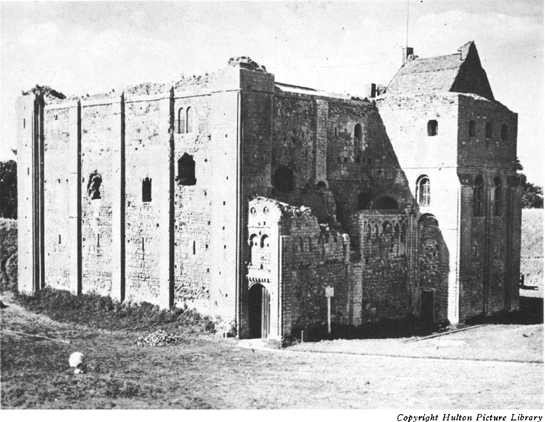
Castle Rising, Norfolk
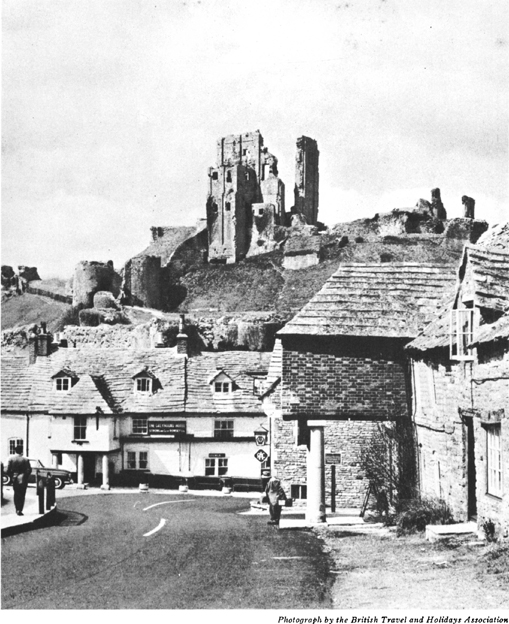
Corfe Castle, Dorset
This was the business which had brought a hostile deputation to wait on the king. The latter, knowing himself on trial, turned quickly when Orleton began to speak. He listened for a few moments while the shrill invectives of his enemy assailed his ears, then he was seen to turn pale. His knees began to tremble and then folded under him and he rolled to the floor in a faint.
When he had been raised to his feet by the Earl of Leicester and the Bishop of Winchester, he had to listen to the balance of the unsparing Orleton’s diatribe with something of the mien of a schoolboy under the lash of a master’s tongue. At the finish he wept again and then spoke in a weak voice.
“I am in your hands. You must do what seems right.”
This was what the young prince had demanded, his father’s consent. Briskly, then, Sir William Trussell stepped forward as proctor of Parliament to make the customary declaration, managing to inject into it a lack of decency and honorable feeling. Raising a forefinger in the air, he broke the bonds of fealty which bound the members. “I do make this protestation in the name of all those that will not, for the future, be in your fealty or allegiance, nor claim to hold anything of you as king”—his voice raised scornfully—“but account you as a private person, without any manner of royal dignity.”
The king, who was no longer king and no greater now than plain Sir Edward of Caernarvon, seemed to shrink inside his shoddy serge. But his humiliation was not yet complete. Sir Thomas Blount, the steward of the royal household, came forward and broke his white staff of office, which was done only on the deposition or death of a royal master.
Edward strove to accept these cruel rites in good spirit, but when he spoke, desiring to do so with dignity, he could frame only the plainest of words. “I am aware,” he said, “that for my many sins I am thus punished. Have compassion on me.” Then he looked about him with a faint smile, keeping his eyes away, no doubt, from his two chief tormentors, Orleton and Trussell. “Much as I grieve at having incurred the ill will of the people, I am glad they have chosen my oldest son to be their king.”
Thus ended his reign. It had been as inglorious as might have been expected in view of his unfitness for the role of king. His back bowed in shame under his threadbare robe, he turned and stumbled from the room, a humble knight, with not a real friend left, not an inch of land he could claim, and not a coin in his purse. His continued existence, he knew, would depend on one thing only: the will of the beautiful wife he now called the she-wolf of France.
2
When the news spread through London that Queen Isabella was leaving the Tower to ride through to Westminster, the worthy guild members donned hats and cloaks and came out to the streets to see, and did not object when their apprentices deserted counter and bench and followed on the heels of their masters. The queen was worth seeing this morning. No longer was she under the necessity of dressing simply in her role of lady in distress. She wore an ermine cloak, white and virginal and costly, and under it her tight sleeves, of the richest silk from the East, were lined with gold buttons. Her skirts had been pleated and flared until they achieved a bouffant extreme. She looked lovely; her eyes sparkled and her cheeks had a high color, and her hair showed not a single traitorous white strand. Not only did she raise her hand in greeting as she passed, she waved to her friends, the Londoners, and smiled and even laughed.
“Our fair lady is happy. She must have made a good notch,” said the merchants among themselves. Most of them still used the notched stick as a daybook.
But it was different when Isabella returned as the shades of evening were falling. Already in the streets the heralds were making their proclamation:
When Sir Edward, late king of England, of his own good will and with the common advice and assent of the prelates, earls, barons and other nobles, and all the commonality of the realm, has put himself out of government of the realm, and has granted and willed that the government of the said realm should come to Sir Edward, his oldest son and heir …
This should have been a welcome sound in her ears. It was what she had fought for. But there was no smile on her face as she made her way through the crowded streets. The Londoners were out in force and cheering for the young king. They gave her a boisterous welcome, but she did not respond. Occasionally she raised a hand in acknowledgment, but that was all.
A word they had used that morning came again into the comments of the good merchants and the trained band captains, but this time in a quite different sense. “This is out of all scotch and notch,” they said, an expression which meant they were completely at sea.
This is what had happened at Westminster: a standing Council of Regency had been appointed, made up of four bishops, four earls, and six barons, it being stipulated that one bishop, one earl, and two barons would be in constant attendance on the king. Henry of Lancaster was named head of the council, the post once held by the late Earl Thomas.
Now Isabella had wanted to be regent. She had fully expected it, and the action of Parliament had been a bitter blow to her.
Why, she asked herself as she rode back to the Tower, had she been passed over? Had not Blanche of Castile been made regent of France nearly a century before when her son Louis IX was twelve years old? Although her son had grown up to be the great king called St. Louis, Blanche had maintained her ascendancy over him to the very end. Indeed, Blanche had been so reluctant to have him marry that she had kept the young king on the same floor she occupied in the royal palace and had arranged the bride’s rooms on the floor above. Whenever she heard his step on the stairs on the way to pay his young queen a visit, she would be out of the door in a wink, with papers to be signed and other affairs of state which could not wait for a minute.
Did these clods, these assertive bishops and barons, think that she, Isabella of France, could not rule as well as Blanche of Castile? Did they not realize that she had succeeded in ousting Edward from power when they had failed, that the credit for everything which had happened belonged to her?
The stage has now been reached when some attention should be paid to the fifteen-year-old boy who had become the King of England. Edward was a true Plantagenet. He had the fair hair and blue eyes of the family and was perhaps the handsomest of them all. One description which has been handed down is that his face was like an angel’s. He would grow to be tall, although he would lack the commanding stature of his grand-sire and the massiveness of frame which had contributed so much to Richard Coeur-de-Lion’s reputation as a great fighting man.
Behind that angelic countenance a cool and clear mind was already at work. Edward would never be willingly a tool of anyone. He had allowed himself to tag behind his mother’s skirts about Flanders and had let her take full command of the invasion which had been so successful; and this raises the question as to why he was willing to aid in his father’s undoing. The answer must be that young Edward had already become convinced that the poor weak reign of his father must come to an end for the good of the country. Isabella had not read his mind aright. She undoubtedly thought that his acquiescence was the result of her influence. It never entered her mind that the boy who had agreed to the removal from power and honor of one parent might be prepared later to do the same for the other, if he perceived equally good reasons. She could not see beyond the present and the fact that he was bound to her by bonds of gratitude as well as filial affection.
Edward lacked the noble sense of kingly responsibility which had animated Edward I and which could be traced back to the first great Plantagenet, Henry II, but he was to become such a wise and resourceful monarch that it would be wrong to assume him incapable at fifteen of forming his own conclusions. He was still a rather quiet boy (in fact, he seems to have had nothing in common with his shabbily endowed father), but he was an observant one. It may be taken for granted that he was fully conscious of his mother’s relationship with Mortimer and of the evil effect this would have on the country. He must have seen that Isabella’s determination to elevate her lover to almost a full partnership with herself was certain in the end to lead to another national upheaval. His opinion of this upstart who had dared to cuckold a king could not have continued favorable for long. Mortimer’s silky dark good looks and his masterful ways might be irresistible to a neglected wife, but they did not offer any substitute for sound vision and administrative ability, in both of which the Marcher baron was lacking. Edward III, watching intently and moving slowly, would not be held for long on such leading strings as these.
Isabella decided that she would exercise the duties of a regent, even though the title and recognition had been withheld. Mortimer and Adam of Orleton had been given places on the council and she felt certain that, with their collaboration, she could make the functions of the board purely nominal. The young king, who showed a strain of shrewdness early, must have seen that the council, made up of inert bishops and land-proud barons, would be no more effective than it had been when Cousin Lancaster was head of the Ordainers. He seemed content, at any rate, to let his mother proceed with her theft of authority.
In the unofficial regency that Isabella proceeded to form, she made Mortimer her chief minister and selected Adam of Orleton as her first adviser. That snarling churchman, whose malice seemed always at the boiling point, was as necessary to her as the diabolical Nogaret had been to her father: someone to read the purpose in the royal mind and put it into words for the first time, thereafter acting as the unscrupulous sword arm in carrying it out.
Never had there been such prodigal peculation, such insatiable seizure of honors and lands as when Roger Mortimer, given almost absolute power by his royal mistress, began to gather in the fruit from the medlar trees of Westminster. Here are a few of the benefits he conferred on himself:
Knighthoods for four of his sons the day of the king’s coronation.
The return of all of his confiscated estates and those of his uncle of Chirk.
Granted the custody of Thomas Beauchamp, Earl of Warwick, for the term of his minority. (How badly gutted the estates would be when young Thomas came of age!)
Obtained the lands in Glamorgan which had belonged to the wife of the younger Despenser.
Was appointed justiciar of the diocese of Llandaff.
Granted lands worth a thousand pounds a year which had belonged to the elder Despenser, including the castle of Denbigh.
In Ireland given complete palatine rights in the liberty of Trim and in the counties of Meath and Uriel.
Had transferred to him the castle of Montgomery and the Hundred of Chirbury.
Allowed four hundred marks a year in addition to his full fees as justice in Wales.
His barony raised to the earldom of March.
Granted the manor of Church Stretton in Shropshire as a return for his services to Queen Isabella and the young king.
Granted the justiceship of Wales for life.
Two chantry priests were paid ten marks a year to say prayers for him. This was in the nature of a foundation in honor of St. Peter. He had not forgotten that it was on the feast day of St. Peter that he escaped from the Tower of London.
And so it went, lands, honors, wardships, titles, offices. Hardly a week passed that he did not see something his greed craved; and the queen, in the grip of her middle-aged passion for him, could not say him nay. Was it any wonder that soon the wave of enthusiasm with which Isabella had been received began to shrivel into suspicion and resentment? That soon a large part of the people of England would have preferred to have Edward back, with his careless rule, his stupidities and weaknesses, even his favorites?
In the meantime Isabella gave a pension of four hundred marks a year to the faithful Sir John of Hainaut and found means of rewarding the rest of her foreign troops before re-embarking them for Flanders. This was just as well, for on Trinity Sunday the queen and her son held a great court at Blackfriars. To start the proceedings the young king knighted fifteen young candidates and the queen gave a splendid dinner for the Netherland nobles. A ball was to follow, but unfortunately it was interrupted by a furious battle that broke out in town between a party of English archers and the grooms of the foreign noblemen. The party broke up before the first minstrel could tootle a note on his horn or the goliards had yet raised their voices in song.
The foreign troops went home after this. They had been in England long enough.
3
In considering the tragic event that followed, it must be borne in mind that a deposed monarch is a menace to constituted authority, a rallying point for all discontent. It was not often possible to deal as leniently with a defeated ruler as in the case of Crassus (the Fat) in Gueldres. In England, as elsewhere, a violent solution had always been found. Henry I kept his older brother Robert in prison until he died and had his eyes burned out with a red-hot iron as an extra precaution. John lost no time in disposing mysteriously of Prince Arthur. There would be other cases later.
Before the coronation of the young prince on January 29, a sermon was preached at Westminster Abbey by the Archbishop of Canterbury, the turncoat Walter Reynolds, who had been foisted on the Church by the hand he now proceeded to bite. He took as his text Vox populi vox Dei. It soon became apparent, however, that the voice of the people was not being raised as one in favor of the change. There was a growing sympathy for the deposed king throughout the land, a sentiment which could easily be fanned into a great blaze. The desire to be rid of Edward was not confined, therefore, to the queen and her paramour. All who had been actively against him, who had flocked to the standard of Isabella, felt a need to be safe from the ex-king. Remembering the hasty trial of Thomas of Lancaster and the block set up on the hill of St. Thomas, they had no inclination to allow him any chance to regain control. There were many eyes fixed on the not too secure prison provided for him at Kenilworth and many anxious ears pressed to the ground.
The deposed king remained at Kenilworth for the balance of the winter, lapped in luxury and kindly treated by Henry of Lancaster. He complained bitterly in letters to the queen of his separation from his family and received from her in return many gifts, mostly of fine articles of clothing. In one letter she said that she would like to visit him but had been forbidden by Parliament. He is said to have written some verses in Latin which when translated began:
On my devoted head
Her bitterest showers,
All from a wintry cloud,
Stern fortune pours.
The poor captive had no knowledge of Latin, and the sentiments seem quite foreign to what is known of his character. It seems certain that this was an invention of some later romancer.
While he passed the days as well as he could in Caesar’s Tower, a conspiracy for his release was reaching formidable proportions. A family named Dunhead possessed considerable property around Kenilworth. There were two brothers, one a Dominican friar, who was noted for his eloquence and was held in wide regard for his sanctity. He had stood so high in the regard of Edward that he had once been sent on a mission to the Pope at Avignon; having to do, it was whispered, with the possibility of getting a divorce from Isabella. The friar was still intensely loyal to the deposed king and had enlisted the aid of his brother and many of the neighboring gentry. Henry of Lancaster learned what was afoot and asked to be relieved of the responsibility for so difficult a guest.
The decision to send Edward to Berkeley Castle was due, therefore, to the fear of a successful coup and not, as has been stated, because the queen felt he was being pampered. Thomas of Berkeley had been confined to prison by Edward for some political offense and had been released by Isabella on her return to England. He was married to a daughter of Roger Mortimer, and his selection as Edward’s keeper can be ascribed undoubtedly to that connection. John de Maltravers, a member of a rich Dorsetshire family, was chosen as co-keeper, probably because he was married to Berkeley’s sister. A third knight named Edward de Gurney was then added for good measure. An allowance of five pounds a day was set for the care of the prisoner, which disposes of the charge often made that he was removed because of the queen’s resentment of the easy living provided for her ex-spouse. It was certain, of course, that a goodly part of the daily allowance would find its way into the pockets of Messires Berkeley, Maltravers, and Gurney.
Edward was removed from Kenilworth at night, before the plans of the Dunhead brothers had matured, and taken to Berkeley Castle with a numerous escort. The zealous brothers soon discovered where he had been taken and devoted themselves to a plan to crack open his new prison. At the same time an active conspiracy in favor of the captive developed in South Wales under the leadership of a knight named Sir Rhys ap Gruffydd. This was Mortimer’s responsibility, and the deputy he had appointed to keep peace there, William of Shalford, wrote to him about the scheme, suggesting what he called “a suitable remedy.” It is clear that the same thought had been in Mortimer’s mind, and many other minds, for some time. Edward alive would always be a menace. The Dunheads might be balked and the activities of Rhys ap Gruffydd might be suppressed, but others would arise to carry on the agitation.
It is of little avail to speculate on the part the queen played in the events which followed. It is reasonable to suppose that she was taken into Mortimer’s confidence and that she gave her consent, but no proofs of this exist. It is conceivable, of course, that her paramour thought it unwise to draw her into it in any way. The only piece of direct evidence with any bearing on the point is that after her husband’s death she summoned a woman who had embalmed the body and questioned her minutely as to what she had found. The queen’s desire to get at this much of the truth does not clear her of complicity by any means, but it does make it certain that she had not been in the full confidence of the instigators of the murder. That much of doubt she must be allowed.
As to Mortimer’s share in the plot, there can be no doubt at all. The finger points at him as the one who found “the suitable remedy.” He picked out a dependent of his named William Ogle and sent him to Berkeley to act with the others.
Before the remedy could be applied, the council had taken matters into its hands by sending a doctor of law named John Walwayn to Berkeley. He was supposed to direct everything that was done for the safekeeping and the comfort of the king. The activities of the Dunheads came to a peak at this point, and it is now believed that the release of Edward was accomplished. A letter from Walwayn has been resurrected from the records of the day which can be construed as an acknowledgment that he had escaped. If it were so, he was recaptured almost immediately. This may provide proof of another story in the records, that he was removed to Corfe Castle for safer keeping. The sentiment around Corfe was too friendly to the captive, however, and again he was taken back to Berkeley. The time for the “remedy” had come.
In many histories it is asserted that the order for the murder was contained in a line of Latin sent to the circle of keepers by Adam of Orleton. The line ran:
Edwardum occidere nolite timere, bonum est
which, translated, reads, “Edward to kill be unwilling to fear, it is good.” The meaning of this ambiguous sentence could be altered by the changing of the comma to appear after the word “unwilling.” The keepers of the king took from the first version that they were expected to act and so proceeded with the plan.
This story is not worthy of any credence. In the first place, the bishop was in Avignon at the time on a mission to the Pope, and it is absurd to believe he would put such a damning piece of evidence in writing. It is equally absurd to believe that the rascals to whom it was supposed to be sent would be able to read Latin or to understand the significance of a misplaced comma. It may be taken for granted that any order would have been conveyed by word of mouth so that no incriminating evidence would be left.
4
One day in mid-September, Thomas of Berkeley came to the cell in which the royal prisoner was confined. He had been seeing little of Edward. The trio of keepers appointed by Mortimer—Maltravers, Gurney, and Ogle—had taken things into their own hands. It seems certain that Berkeley had a genuine feeling of sympathy for his unfortunate guest. He said with regret that he must be absent for some time on affairs of his own but would return as soon as possible. Edward’s hand clung to that of the owner of the castle as though he realized that his last friend was deserting him.
Life had already become a burden to the prisoner. His clothing was shoddy and always damp. The food served him was sometimes so nauseous that he could not eat it. On at least one occasion he had been brought cold and muddy water from the moat to shave with and his protests had been disregarded.
With Berkeley away, there was no one to temper the grim routine of Edward’s days or to stand between him and the other three, particularly the man Ogle, who had made his mysterious appearance a short time before. No one seemed to know exactly why he had come, but Edward had more than a suspicion of the truth and undoubtedly shuddered whenever the man came near him.
As soon as Berkeley departed, the atmosphere of the castle changed. No longer was the lonely prisoner treated with even an outward semblance of respect. Orders were barked at him and rough hands were always ready to enforce them. As a final evidence of hostility, he was removed to a small and dark cell in a wing of the castle devoted to domestic arrangements. It was over the charnelhouse, and the odors which came up from below made it difficult for the new occupant to breathe. The one window looked out on an empty corner of the courtyard, a bleak prospect of damp wall and slimy paving stones. It must have been apparent now that his three grim custodians had one purpose only in mind.
On the night of September 21 the other inmates of the castle were aroused from their slumbers by shrieks coming from the malodorous cell in which the deposed king was confined. Horror and agony were in the sounds. It is said that the outcries of the dying man were so loud that they reached to ears in the village nearby and that people hid their heads under their bedclothing, knowing full well what this meant. Edward of Caernarvon, once Edward of England, was dying a violent death.
In the morning it was given out that he had expired during the night of natural causes. The guards and domestics were allowed to view the body, laid out on a disordered bed in the cell. None failed to notice that the features of the dead man were still contorted with violence and pain.
Many stories were circulated throughout the country as to the manner in which the murder had been committed. One circumstantial account, contained in a chronicle prepared some thirty years after the event, seemed to fit the known facts and was generally believed. It is given for what it is worth, in the absence of any official explanation.
The three assassins waited until their victim was sound asleep and then flung a table over him, which was held down by two of them to prevent him from moving. The third man then proceeded to burn out his inside organs with a red-hot bar of iron. As it was inserted through a horn, no marks of violence were made on the surface of the body.
John Thody, Abbot of Gloucester, claimed the body and took it away in his own chariot. Later there was a burial of much stateliness and pomp in the Abbey of St. Peter’s. There was gold leaf on the coffin and lions of pure gold on the hearse; but nothing could be done to remove the imprint of horror on the once handsome features of this weak and unfortunate king, nor to allay the wave of grief and anger which swept over the country.