
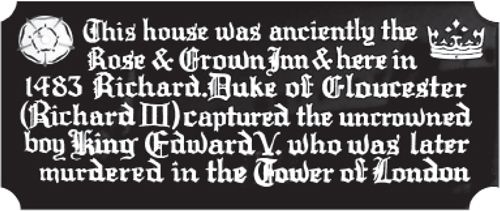
1 ‘Princes in the Tower’ mythology: a plaque on the former Rose and Crown Inn at Stony Stratford (Milton Keynes), which purports to give ‘facts’ about the fate of Edward V. In reality there is no evidence to indicate that Edward V stayed at the Rose and Crown, or that he was ‘captured’, or that he was murdered. © Iris Day.
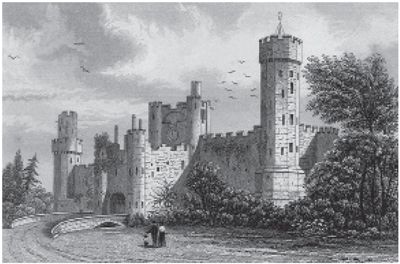
2 Warwick Castle, the birthplace of Edward of Clarence, Earl of Warwick.
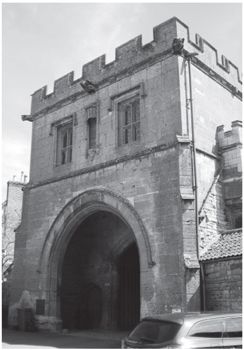
3 The gatehouse of Tewkesbury Abbey, Gloucestershire. Edward, Earl of Warwick probably stayed with his parents at Tewkesbury Abbey in the autumn of 1476.
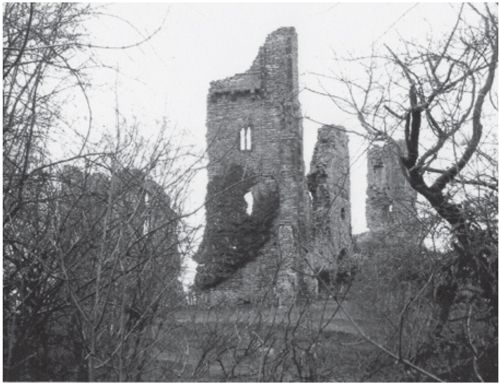
4 The ruins of Sheriff Hutton Castle, Yorkshire. Here, according to the authorised version of his history, Edward, Earl of Warwick lived with some of his cousins, including Elizabeth of York, during the reign of his uncle Richard III. © Tommaso Romero and Vanessa Roe.

5 According to one account Lambert Simnel’s father lived close to Oxford Castle – shown here as it might have looked in about 1480.
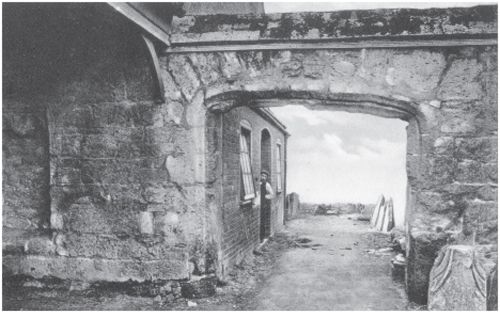
6 Lambert Simnel’s father is said to have been a tenant of the Augustinian Abbey of Osney, Oxford. These are the abbey ruins as they were in about 1900.
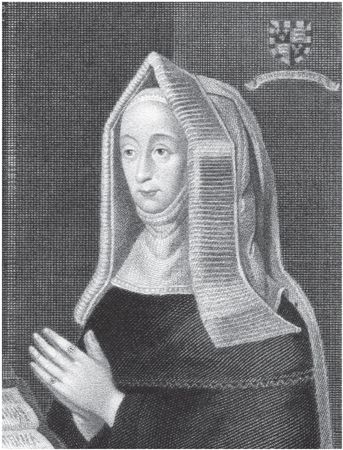
7 The Earl of Warwick’s official guardian, 1485–86: Margaret Beaufort, Countess of Richmond and Derby, the mother of Henry VII.
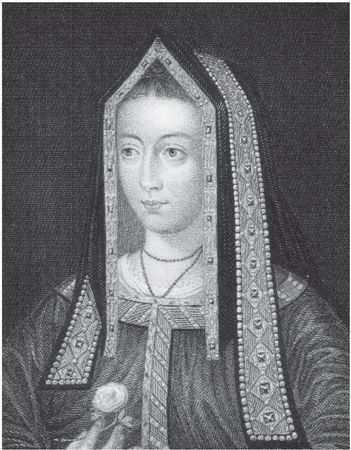
8 Elizabeth of York junior, daughter of Edward IV and Elizabeth Woodville, cousin of Edward, Earl of Warwick and consort of Henry VII.
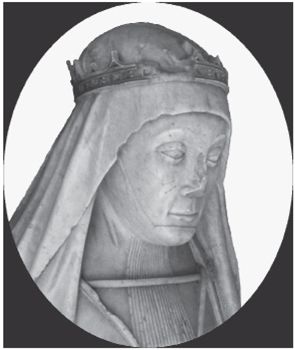
9 Elizabeth of York senior, Duchess of Suffolk, a sister of Edward IV and Richard III, the mother of John de la Pole, Earl of Lincoln, and a possible aunt of the Dublin King (effigy circa 1500, from her tomb at Wingfield Church, Suffolk).
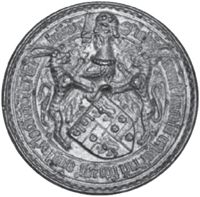
10 The seal of John de la Pole, Earl of Lincoln, nephew of Edward IV and Richard III; a possible cousin and key supporter of the Dublin King. Reproduced courtesy of Colchester and Ipswich Museums Service.
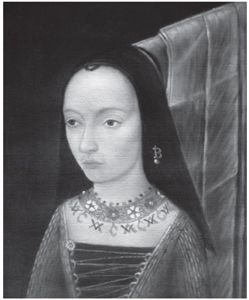
11 Margaret of York, Duchess of Burgundy (after her marriage portrait of c.1468). Margaret was a key supporter of the Dublin King.
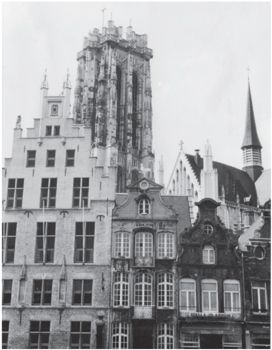
12 Mechelen, Belgium, with the tower and crossing of St Rombout (Rumbold)’s Church (a cathedral since 1559). St Rombout’s tower was under construction in 1486, when ‘Clarence’s son’ was staying in Mechelen.
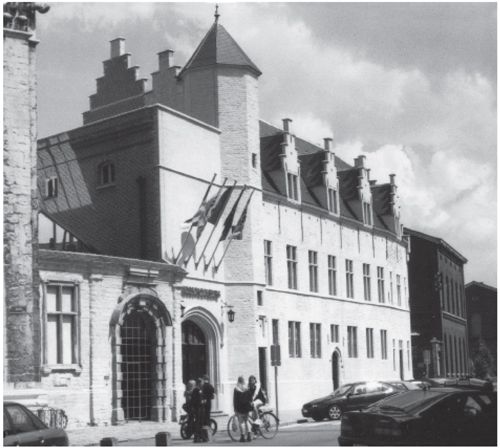
13 Margaret of York’s palace in Mechelen, where she entertained ‘Clarence’s son’ in 1486.
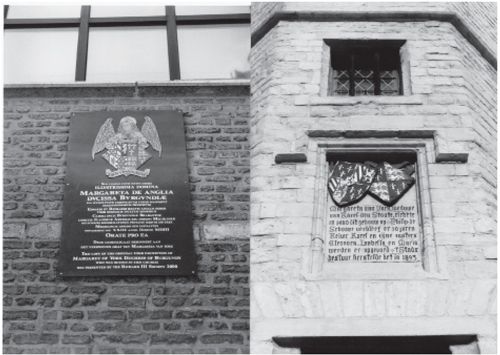
14 Monuments in Mechelen commemorating Margaret of York. Above left: a modern copy of her 1503 funeral inscription, commissioned by the author and the Richard III Society. Above right: arms and inscription over the entrance to her palace.

15 St John’s Abbey gatehouse, Colchester. Through this entrance Francis, Viscount Lovell passed in 1485, seeking sanctuary.
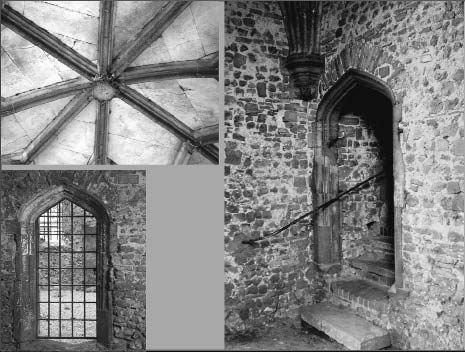
16 Surviving remains of St John’s Abbey, Colchester: archways and vaulting.

17 The arms of the Duke of Clarence’s Irish deputy, Gerald, Earl of Kildare, the effective ruler of most of Ireland. Kildare was a key supporter of the Dublin King, and possibly his guardian during his childhood.
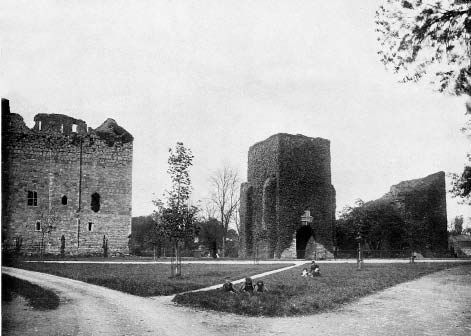
18 Ruins of Maynooth Castle, County Kildare. This was the home of the Earl of Kildare, and it may have been where the Dublin King was brought up for part of his childhood.
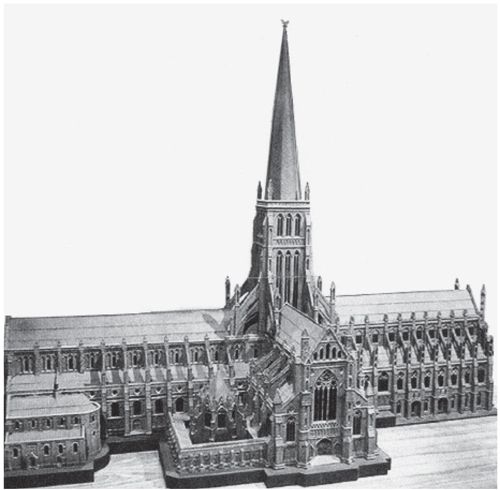
19 A model of old St Paul’s Cathedral, where Henry VII displayed the official Earl of Warwick in an attempt to undermine the claims of the Dublin King.
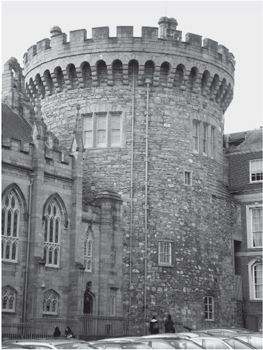
20 The surviving medieval tower of Dublin Castle. The castle was the official residence of the Dublin King during his reign in Ireland.
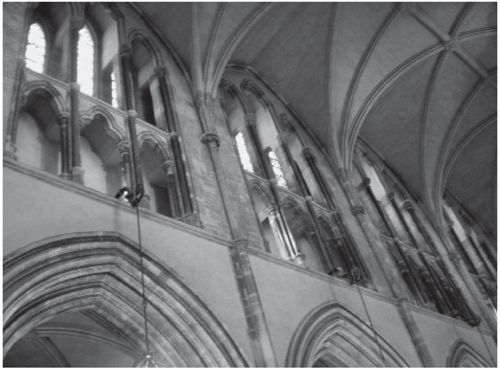
21 The surviving medieval north wall of the nave of Christ Church Cathedral, where the Dublin King was crowned.
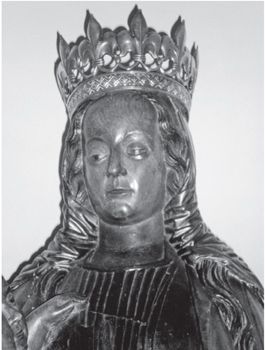
22 The Dublin King is said to have been crowned with an open gold circlet borrowed from the image of the Blessed Virgin in the Church of Sainte Marie de la Dam (Our Lady of Dame-gate) on Cork Hill. Neither the image nor the crown have survived, but this gold open crown worn by the fifteenth-century image of Our Lady of Caversham may give some idea of the appearance of the crown used at the Dublin coronation.
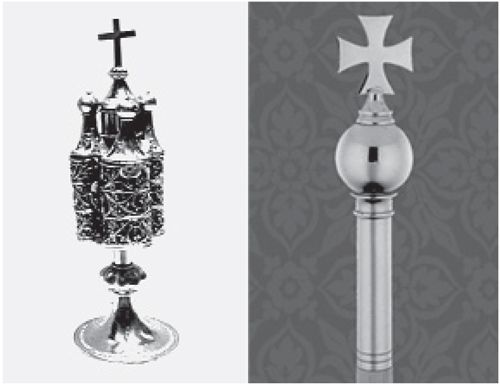
23 Examples of the kind of items which might have been used in the Dublin coronation. Left: a medieval chrismatory for containing holy oils. Right: a typical verger’s church staff.
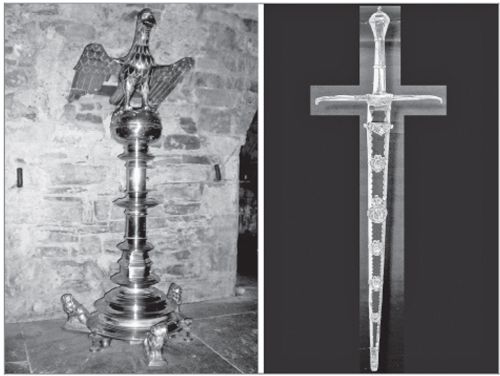
24 Left: the fifteenth-century brass eagle lectern of Christ Chuch Cathedral, which probably figured in the coronation ceremony of 1487. Right: the sword of state presented to Dublin by Henry IV in 1404. This might possibly have been used at the coronation of 1487.
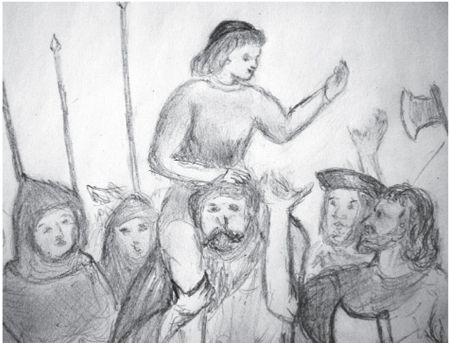
25 Copy of a nineteenth-century image of the post-coronation procession of the Dublin King. The boy is shown seated on the shoulders of William Darcy of Platten. However, this depiction is inaccurate in some respects, since the boy-king is not wearing royal robes or regalia. © Muhammad Hanif.
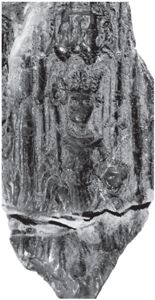
26 The only surviving contemporary image of the Dublin King, ‘Edward VI’, crowned and enthroned, and holding the orb and sceptre, from the obverse of his great seal. Reproduced courtesy of the National Library of Ireland.
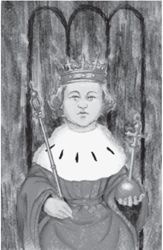
27 A modern image of the Dublin King in his coronation robes, based on the representation on his great seal. © Riikka Nikko.
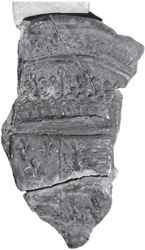
28 The royal arms of the Dublin King from the reverse of his great seal. Note the crown, which is ornamented only with fleurs-de-lis – like a French royal coronet. A fleur-de-lis also marks the start of the inscription. Reproduced courtesy of the National Library of Ireland.
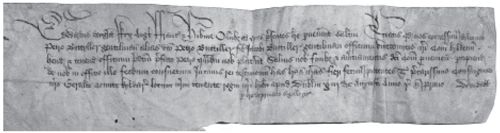
29 Letter issued in 1487, in the name of ‘King Edward VI’, appointing Peter (Piers) Butler as Sheriff of Kilkenny. This letter bears the only surviving example of an impression of the Dublin King’s great royal seal. Reproduced courtesy of the National Library of Ireland.
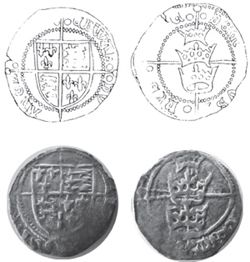
30 Drawing of an Irish ‘three crowns’ groat (silver four-pence piece), together with a photograph of such a coin from the author’s collection. The drawn coin bears the royal name and title: EDWARDUS REX, suggesting that the coin may have been issued in the name of the Dublin King. On the coin in the photograph the king’s name is now illegible, due to ‘clipping’ to extract silver.
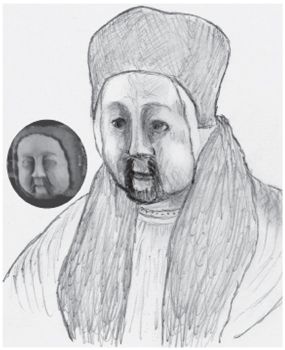
31 A reconstruction by the author of the appearance of John Morton, Bishop of Ely, and later Cardinal Archbishop of Canterbury. There are only two surviving contemporary images of Morton: his damaged tomb effigy in Canterbury Cathedral, and his face on a roof boss at Bere Regis Church, Dorset. This reconstruction is based on the (inset) photograph of the Bere Regis face.
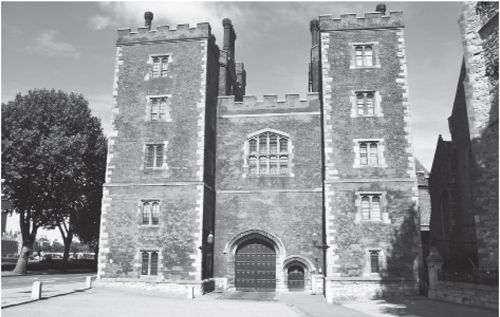
32 Morton’s Tower – a building constructed by Cardinal Archbishop Morton at the entrance to Lambeth Palace. © Deidre O’Sullivan.
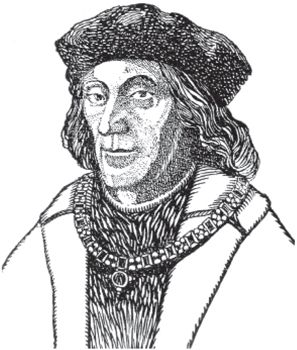
33 Henry VII.
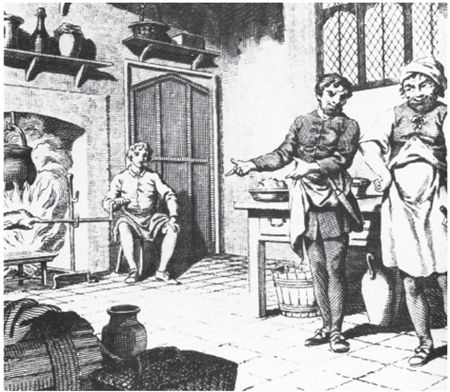
34 An eighteenth-century imaginary depiction of Lambert Simnel as a scullion in Henry VII’s kitchens. Note that he appears to be about 17 years of age.
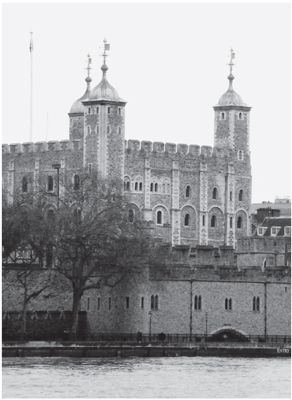
35 The official Earl of Warwick’s residence, 1486–99. A modern view of the Tower of London, seen from across the River Thames.
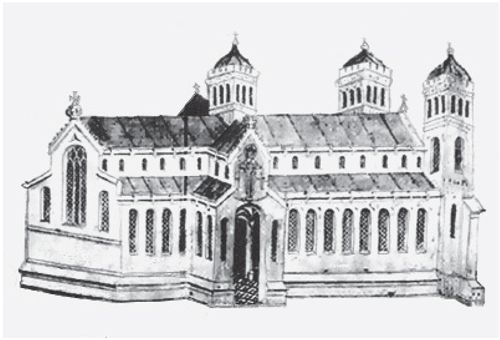
36 The former church of Bisham Priory, a house of Augustinian canons in Berkshire, redrawn from a medieval illustration. Nothing now remains of this church, where the official Earl of Warwick was interred in 1499.
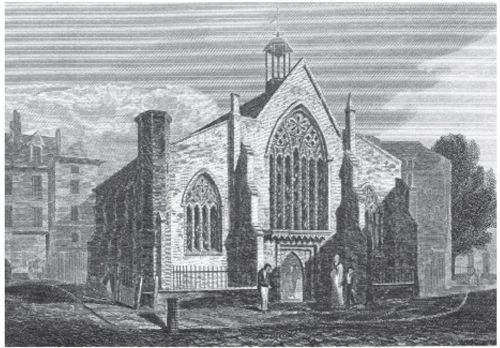
37 The burial place of Perkin Warbeck/Richard of England. An eighteenth-century engraving of the north-western end of the nave of the Austin Friars Church, Old Broad Street, London, before its restoration in the nineteenth century.
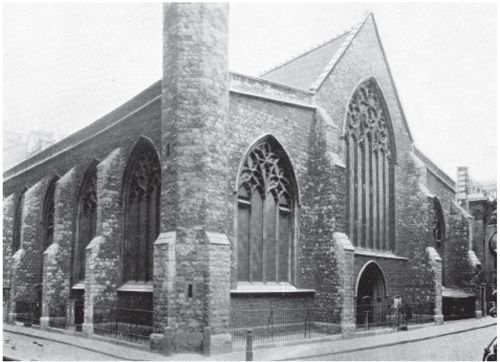
38 An early twentieth-century photograph of the restored nave of the Austin Friars Church, Old Broad Street. Unfortunately this building no longer exists. It was destroyed by German bombing in 1940.
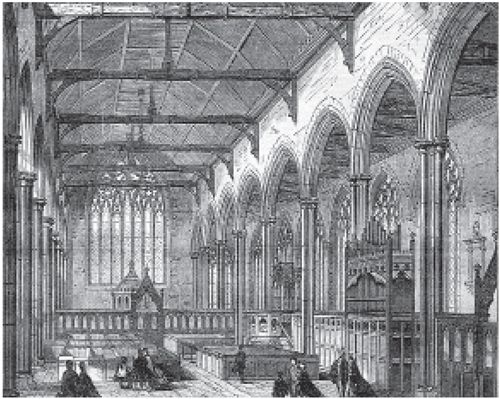
39 The nave of the Austin Friars Church, looking west, in its restored state, in 1865 (following the fire of 1862).
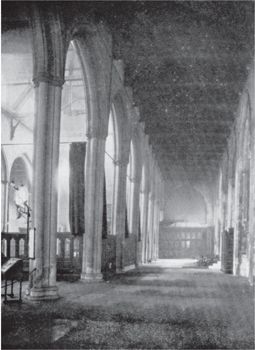
40 The nave and south aisle of the Austin Friars Church, looking east, prior to the final destruction of the building in 1940.