
1. In the Middle Ages, Christians believed that Jerusalem – the crusaders’ ultimate goal – lay at the centre of the world, reflecting the city’s immense spiritual significance. This thirteenth-century map, like all maps of this age, thus depicted the Holy City as the ‘navel of the world’.
2. In c. 1130 the sculptor Giselbert completed his masterpiece, The Last Judgement, the arch above the entrance of the Cathedral of St Lazare, Autun. No visitor could have avoided this striking reminder of the agony experienced by the Damned – in this detail, the tortured moment of judgement at the Weighing of Souls, and the death of a strangled sinner – which transforms the theoretical dangers of Sin into graphic reality.
3. Before the Council of Clermont, Pope Urban II toured southern France priming his supporters to ensure that the launch of the First Crusade met a warm welcome. Here (CENTRE LEFT) he consecrates a new altar at the hugely influential monastery of Cluny.
4. Then, as the Council of Clermont was drawing to a close on 27 November 1095, Urban preached his momentous sermon initiating the First Crusade.
Some of Europe’s most powerful princes responded to Urban’s call to arms
5. A nineteenth-century French artist imagines Adhémar of Le Puy (dressed in red robes) declaring Raymond of Toulouse as leader of the Provençal crusaders after the preaching at Clermont. Raymond, resplendent in white, gazes heavenward in contemplation of his imminent glory.
6. Godfrey of Bouillon sets out on the First Crusade. This nineteenth-century statue in Brussels
7. reflects his popularised reputation as the expedition’s ‘hero’.
8. The crusading message was also spread across western Christendom by charismatic preachers like Peter the Hermit. Peter leads a contingent of the People’s Crusade, while
9. he is granted an audience with the Byzantine Emperor Alexius Comnenus.
10. The Byzantine Emperor Alexius I Comnenus (1081–1118), here depicted in a twelfth-century Greek mosaic, was the most powerful Christian ruler on earth. Having expected the arrival of a few hundred Western mercenaries, he had to deal with the influx of some 100,000 crusaders bent on the recovery of Jerusalem. Alexius’ astute management of the Crusade’s crossing of his empire demonstrated his political acumen, but the expedition’s eventual conquest of Syria and Palestine soured relations between Byzantium and the West.
11. The immense land walls of the Greek capital, Constantinople, would have reinforced the power and wealth of Byzantium in the minds of the crusaders.
12. Upon crossing into Asia Minor and the fringes of the Islamic world, the crusaders’ first target was the ancient city of Nicaea. During its siege the Franks catapulted the heads of slain Muslims into the city to intimidate the garrison.
13 & 14. The first pitched battle between the crusaders and Muslim troops took place at Dorylaeum on 1 July 1097. The chaotic struggle, in which mounted Seljuq Turkish archers sought to adopt encirclement tactics, shocked the Franks – one terrified eyewitness later recalled how the ‘Turks began, all at once to howl and gabble and shout . . . screaming like demons’. Later medieval artists sought to convey the sheer confusion of this encounter.
15. The imposing city of Antioch, built on the side of Mount Silpius, was entirely enclosed within massive walls, sections of which were built on dizzying slopes. Between October 1097 and June 1098 the First Crusaders sought to breach these seemingly impregnable fortifications.
16 & 17. Here, two surviving sections of the wall plunge down the side of the mountain.
18. Of Antioch’s six major gateways only the Iron Gate (LEFT), built in a rocky chasm, remained open for the duration of the crusader siege.
19. High above the city, atop Mount Silpius, stood the citadel of Antioch (BELOW). Built to withstand attack both from outside the city and from within, no force could claim true dominion of Antioch without possession of this fortress.
20. Near dawn on 3 June 1098 crusaders mounted a ladder lowered by the renegade Firuz as Bohemond looked on. By this act of betrayal, Antioch fell to the Franks. This is one of a series of dramatic engravings of the crusade by the nineteenth-century French artist Gustave Doré.
21. The great battle of Antioch on 28 June 1098 was the turning point of the entire crusade. Against all the odds, the besieged Franks fought their way out of the city and overcame Kerbogha of Mosul’s massive army. Later tradition held that Adhémar of Le Puy (LEFT) carried the Holy Lance into the fray, where its ‘miraculous’ power ensured victory.
22. The fortified town of Marrat an-Numan fell to an expeditionary force of crusaders in December 1098 but, isolated on the plains of Syria, these Franks soon ran out of food, prompting some to resort to cannibalism.
23. In late January 1099 the First Crusaders overwhelmed the hill-fort of Hisn al-Akrad. Over the next two centuries the Hospitallers refortified the site, creating Krak des Chevaliers, perhaps the most impressive castle of the medieval age.
The city of Jerusalem
24. The Dome of the Rock, lying within the Temple Mount complex, is revered to this day by Christians and Muslims alike.
25. The Tower of David, Jerusalem’s citadel.
26. The city’s imposing walls.
27. St Stephen’s Gate.
28. To defeat Jerusalem’s formidable defences, the First Crusaders spent weeks building siege weapons – depicted here with some imagination by Doré. The city fell on 15 July 1099 after a brief but brutal assault.
29. After the sack of Jerusalem the crusaders came, still covered in their victims’ blood, to give thanks to God in the Holy Sepulchre – the site of Christ’s death and resurrection.
30. Having captured the Holy City, the crusaders still had to meet one final threat – the armies of Egypt gathering on the coast at Ascalon. Here, after securing victory on 12 August 1099, Godfrey of Bouillon returns in triumph to the Holy Sepulchre, bearing the captured sword and standard of the Egyptian vizier, al-Afdal.
Plates
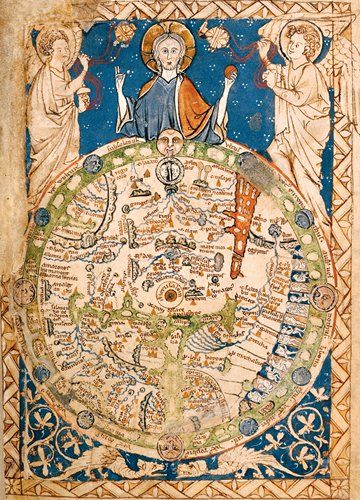
1. In the Middle Ages, Christians believed that Jerusalem – the crusaders’ ultimate goal – lay at the centre of the world, reflecting the city’s immense spiritual significance. This thirteenth-century map, like all maps of this age, thus depicted the Holy City as the ‘navel of the world’.
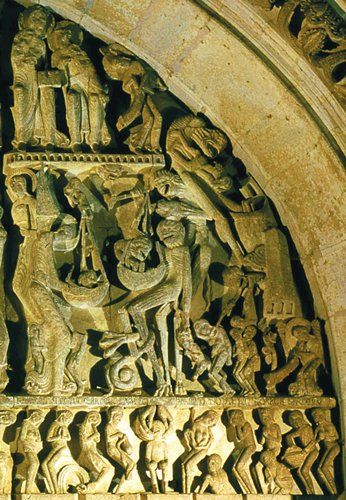
2. In c. 1130 the sculptor Giselbert completed his masterpiece, The Last Judgement, the arch above the entrance of the Cathedral of St Lazare, Autun. No visitor could have avoided this striking reminder of the agony experienced by the Damned – in this detail, the tortured moment of judgement at the Weighing of Souls, and the death of a strangled sinner – which transforms the theoretical dangers of Sin into graphic reality.
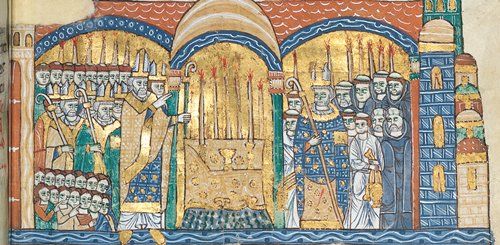
3. Before the Council of Clermont, Pope Urban II toured southern France priming his supporters to ensure that the launch of the First Crusade met a warm welcome. Here (CENTRE LEFT) he consecrates a new altar at the hugely influential monastery of Cluny.
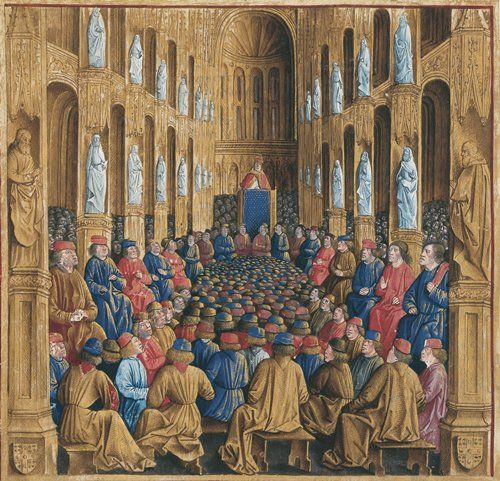
4. Then, as the Council of Clermont was drawing to a close on 27 November 1095, Urban preached his momentous sermon initiating the First Crusade.
Some of Europe’s most powerful princes responded to Urban’s call to arms
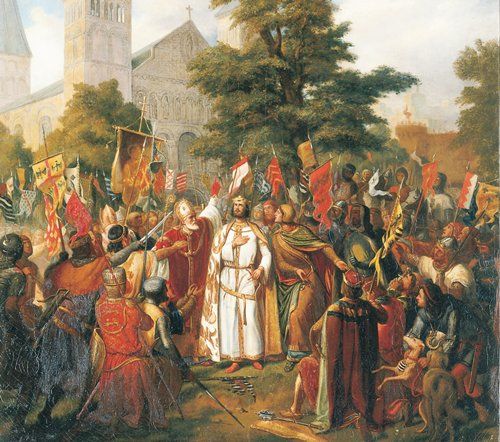
5. A nineteenth-century French artist imagines Adhémar of Le Puy (dressed in red robes) declaring Raymond of Toulouse as leader of the Provençal crusaders after the preaching at Clermont. Raymond, resplendent in white, gazes heavenward in contemplation of his imminent glory.
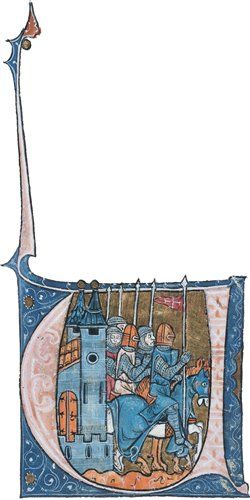
6. Godfrey of Bouillon sets out on the First Crusade. This nineteenth-century statue in Brussels
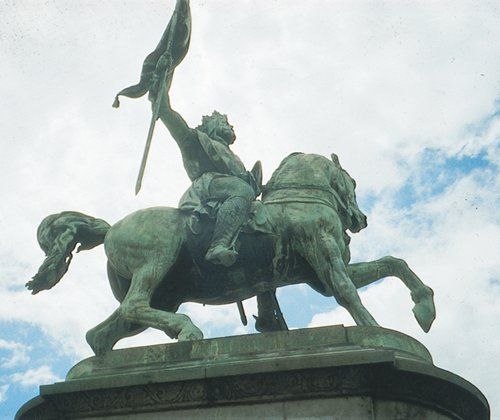
7. reflects his popularised reputation as the expedition’s ‘hero’.
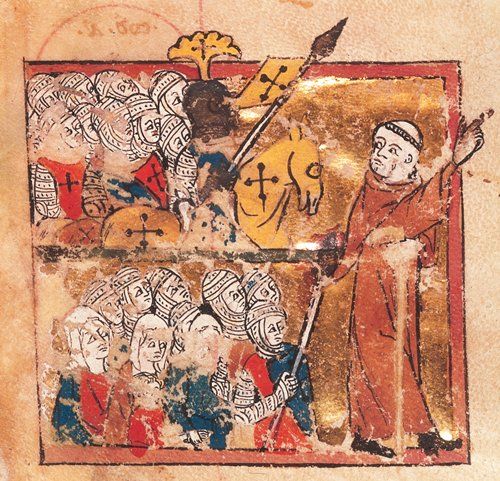
8. The crusading message was also spread across western Christendom by charismatic preachers like Peter the Hermit. Peter leads a contingent of the People’s Crusade, while
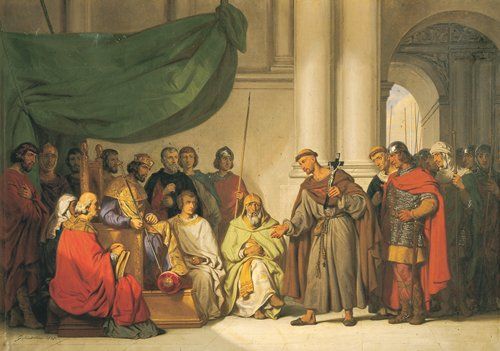
9. he is granted an audience with the Byzantine Emperor Alexius Comnenus.
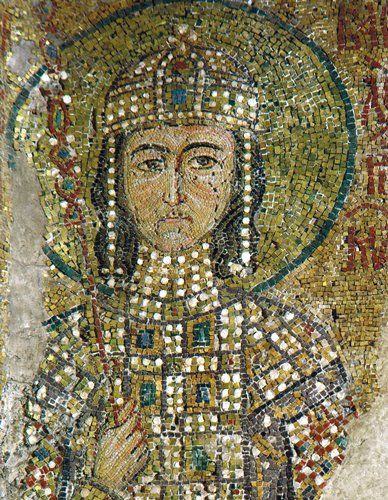
10. The Byzantine Emperor Alexius I Comnenus (1081–1118), here depicted in a twelfth-century Greek mosaic, was the most powerful Christian ruler on earth. Having expected the arrival of a few hundred Western mercenaries, he had to deal with the influx of some 100,000 crusaders bent on the recovery of Jerusalem. Alexius’ astute management of the Crusade’s crossing of his empire demonstrated his political acumen, but the expedition’s eventual conquest of Syria and Palestine soured relations between Byzantium and the West.
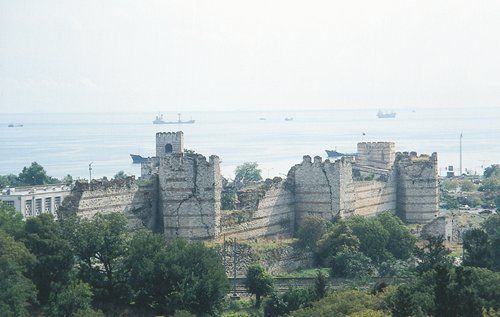
11. The immense land walls of the Greek capital, Constantinople, would have reinforced the power and wealth of Byzantium in the minds of the crusaders.
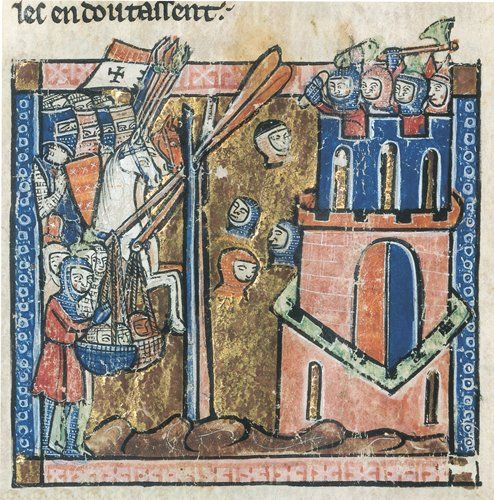
12. Upon crossing into Asia Minor and the fringes of the Islamic world, the crusaders’ first target was the ancient city of Nicaea. During its siege the Franks catapulted the heads of slain Muslims into the city to intimidate the garrison.
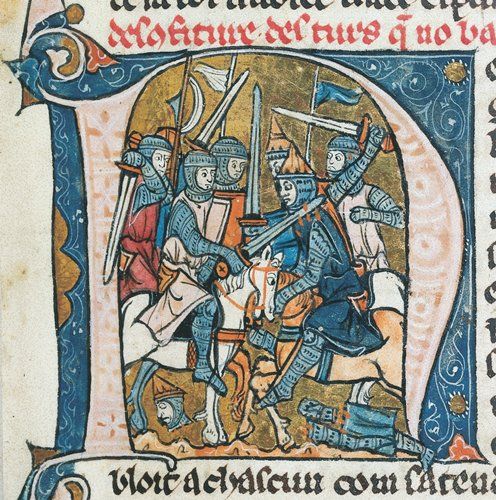
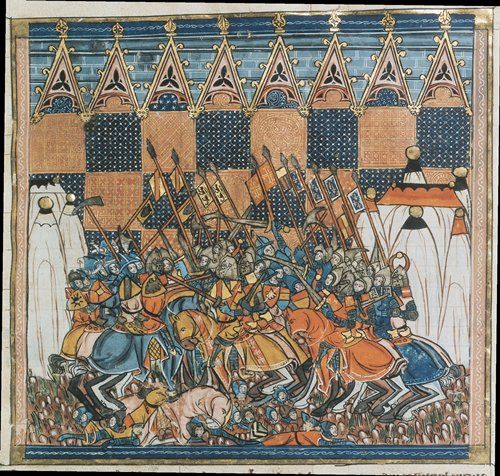
13 & 14. The first pitched battle between the crusaders and Muslim troops took place at Dorylaeum on 1 July 1097. The chaotic struggle, in which mounted Seljuq Turkish archers sought to adopt encirclement tactics, shocked the Franks – one terrified eyewitness later recalled how the ‘Turks began, all at once to howl and gabble and shout . . . screaming like demons’. Later medieval artists sought to convey the sheer confusion of this encounter.
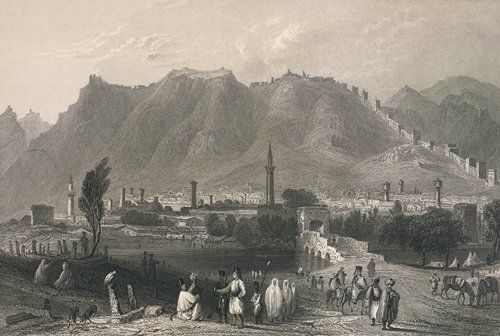
15. The imposing city of Antioch, built on the side of Mount Silpius, was entirely enclosed within massive walls, sections of which were built on dizzying slopes. Between October 1097 and June 1098 the First Crusaders sought to breach these seemingly impregnable fortifications.
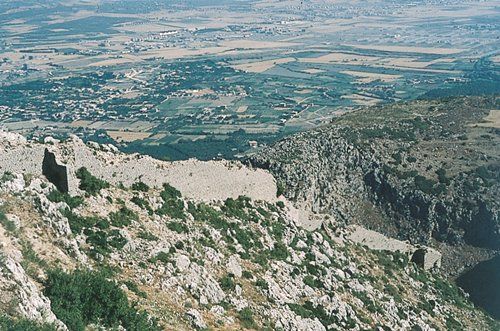
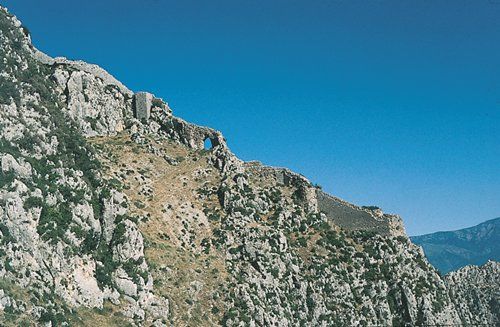
16 & 17. Here, two surviving sections of the wall plunge down the side of the mountain.
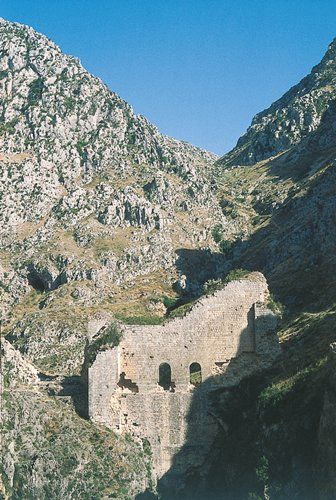
18. Of Antioch’s six major gateways only the Iron Gate (LEFT), built in a rocky chasm, remained open for the duration of the crusader siege.
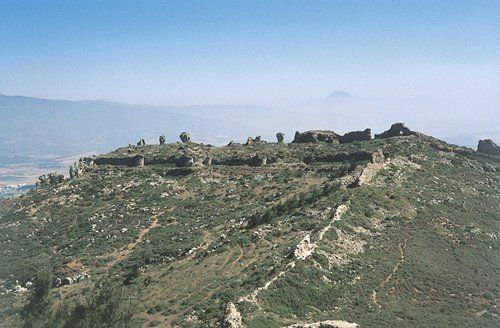
19. High above the city, atop Mount Silpius, stood the citadel of Antioch (BELOW). Built to withstand attack both from outside the city and from within, no force could claim true dominion of Antioch without possession of this fortress.
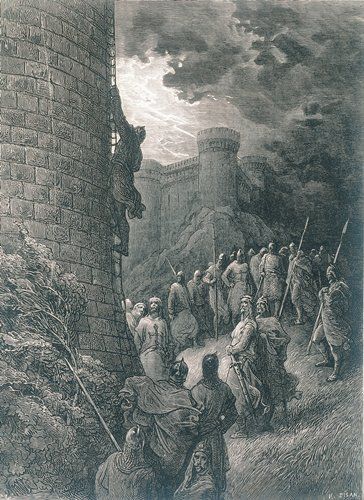
20. Near dawn on 3 June 1098 crusaders mounted a ladder lowered by the renegade Firuz as Bohemond looked on. By this act of betrayal, Antioch fell to the Franks. This is one of a series of dramatic engravings of the crusade by the nineteenth-century French artist Gustave Doré.
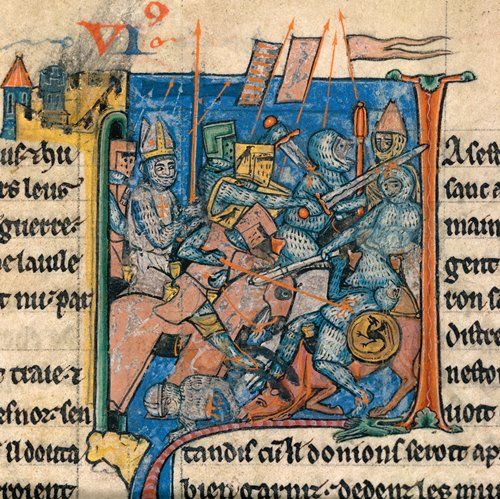
21. The great battle of Antioch on 28 June 1098 was the turning point of the entire crusade. Against all the odds, the besieged Franks fought their way out of the city and overcame Kerbogha of Mosul’s massive army. Later tradition held that Adhémar of Le Puy (LEFT) carried the Holy Lance into the fray, where its ‘miraculous’ power ensured victory.
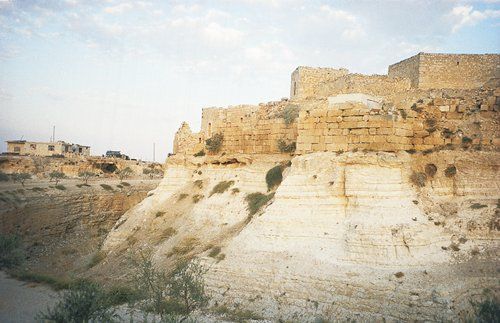
22. The fortified town of Marrat an-Numan fell to an expeditionary force of crusaders in December 1098 but, isolated on the plains of Syria, these Franks soon ran out of food, prompting some to resort to cannibalism.
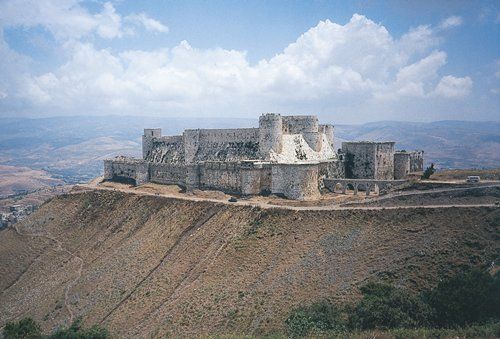
23. In late January 1099 the First Crusaders overwhelmed the hill-fort of Hisn al-Akrad. Over the next two centuries the Hospitallers refortified the site, creating Krak des Chevaliers, perhaps the most impressive castle of the medieval age.
The city of Jerusalem
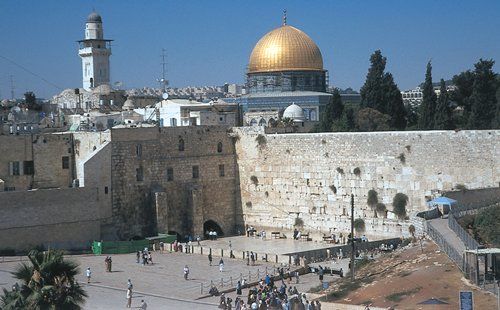
24. The Dome of the Rock, lying within the Temple Mount complex, is revered to this day by Christians and Muslims alike.
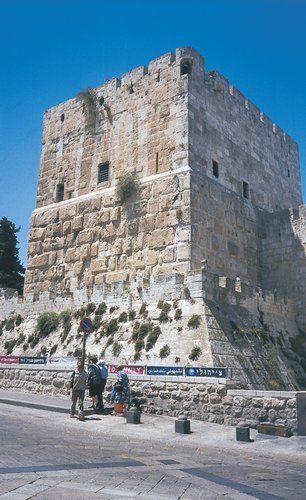
25. The Tower of David, Jerusalem’s citadel.
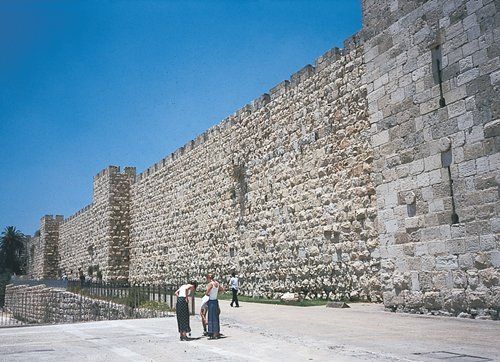
26. The city’s imposing walls.
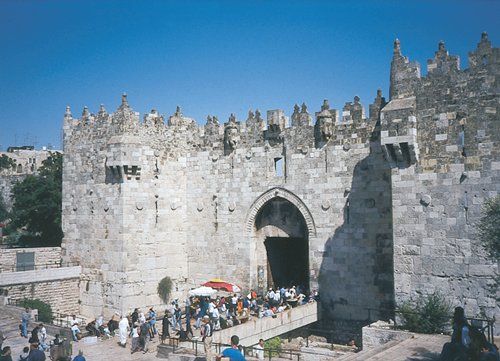
27. St Stephen’s Gate.
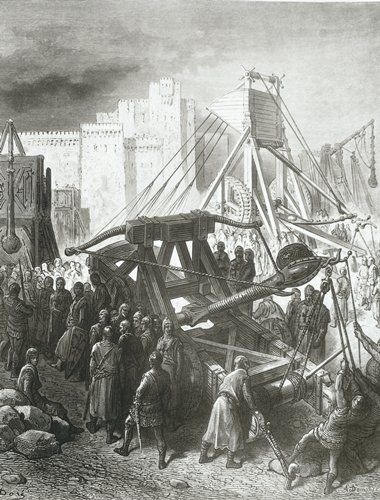
28. To defeat Jerusalem’s formidable defences, the First Crusaders spent weeks building siege weapons – depicted here with some imagination by Doré. The city fell on 15 July 1099 after a brief but brutal assault.
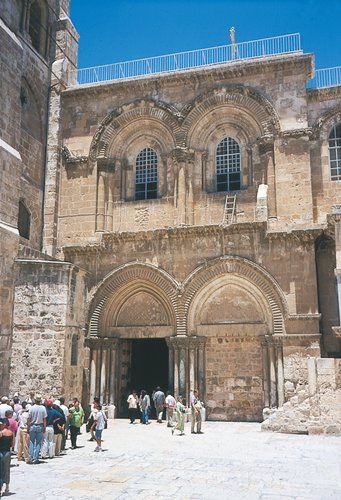
29. After the sack of Jerusalem the crusaders came, still covered in their victims’ blood, to give thanks to God in the Holy Sepulchre – the site of Christ’s death and resurrection.
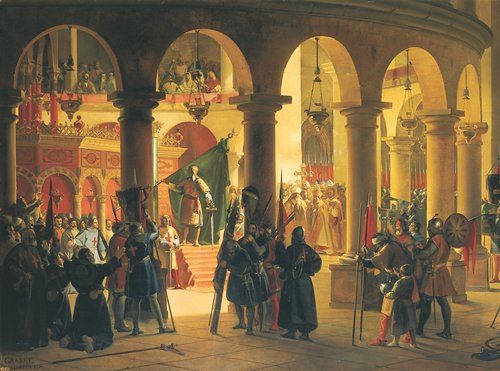
30. Having captured the Holy City, the crusaders still had to meet one final threat – the armies of Egypt gathering on the coast at Ascalon. Here, after securing victory on 12 August 1099, Godfrey of Bouillon returns in triumph to the Holy Sepulchre, bearing the captured sword and standard of the Egyptian vizier, al-Afdal.