
5
NOVEMBER 1942
THREE HOURS INTO the search, pilot Armand Monteverde was lost in the blinding whiteness that enveloped his B-17. He didn’t know his altitude above the ice, what lay ahead, or what was left or right beyond the tips of the PN9E’s outstretched wings. Maybe it was a harmless snow-filled cloud. Or maybe it was a concrete-hard glacier. Somewhere below was the downed C-53 that Monteverde and his crew were searching for, but they couldn’t see anything in the sky, much less on the ground. More to the point, the missing cargo plane was now a distant second in priority, behind their own survival.
Monteverde was twenty-seven, an unmarried first lieutenant from Anaheim, California. Built like a wrestler, short, stout, and broad-shouldered, he had sad green-gray eyes, a full lower lip, a narrow face, and a Roman nose. Instead of stereotypical pilot bravado, he had a mild manner and a gentle voice that gave him an air of quiet competence. His crewmates ribbed him for being a California boy, but they liked and trusted him. Unlike some officers, they knew that Monteverde had come up the hard way. He’d paid for flight school by working nights in a gas station, then flew for a cargo airline in Mexico before joining the Army Air Forces. A capable pilot, Monteverde had logged seven hundred hours of flight time, though only fifteen of them in the cockpit of a B-17.
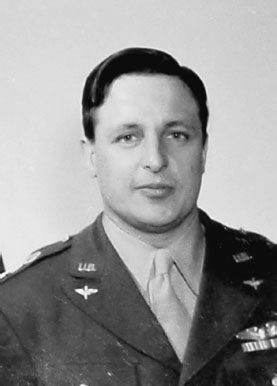
LIEUTENANT ARMAND MONTEVERDE, PILOT OF THE B-17 PN9E. (U.S. COAST GUARD PHOTOGRAPH.)
His copilot, Harry Spencer Jr., was a twenty-two-year-old second lieutenant from Dallas. Six-foot-one, blond, hazel-eyed, lean, and cowboy handsome, Spencer had a cleft chin and dimpled cheeks. He looked as though he’d been born to wear a white silk pilot’s scarf. But he was no arrogant golden boy. Spencer’s humble, even-keeled nature made him more suited to service as a ferry pilot than a fighter jock. Smart, well-read, and sensitive to the feelings of others, Spencer was an Eagle Scout who possessed a leader’s natural understanding of how to build a team. He’d had a busy year: he married his college girlfriend in April, learned to fly at Southern Methodist University, and joined the Army Air Corps in September.
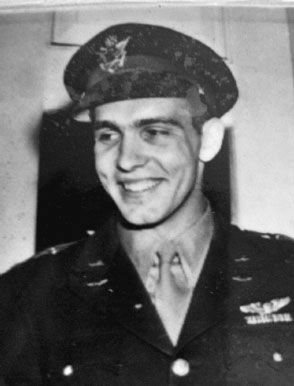
LIEUTENANT HARRY SPENCER, COPILOT OF THE B-17 PN9E. (U.S. COAST GUARD PHOTOGRAPH.)
As they sat side by side in the cockpit, Monteverde and Spencer knew that if their bomber continued on its current heading, every minute of flight time would bring them about three miles farther into the unknown. Only a fool would stay the course, and neither man was a fool. They crossed “maintain present heading” off their mental checklists.
In theory, pulling back on the control wheel and gaining altitude was a possible way out. But at the head of the Koge Bay fjord, the ice cap rises steeply to an estimated eight thousand feet above sea level. The pilots didn’t know their position above that rapid upslope, or whether they could put enough separation between their bomber and the ice before time and space ran out. But they did know that gaining that much altitude would take more time than they suspected they had. That eliminated option two, gain altitude.
They had parachutes aboard, but bailing out wasn’t a serious option; the plane wasn’t on fire or under enemy attack, and the inside of a bomber was more attractive than the outside of the ice cap. Subtly altering course to the east or west might work, but they didn’t know whether a new heading a few degrees in either direction would mean a new lease on life or a fatal error. That would be like taking another card in blackjack without knowing what cards they’d already been dealt.
Their last alternative, turning back toward the fjord and the open sea beyond, seemed the best choice in a bad situation. The primary risk would be if, unknown to the pilots, the B-17 was less than one hundred feet above the ground. A world of white is a confusing place, and instruments that gauged altitude above sea level were no help. Pilots in Greenland told stories of flying along blissfully, only to realize they had landed, belly down on the ice. Others sheepishly described preparing to touch down when in fact they remained high above the runway.
If, as Monteverde and Spencer believed, the PN9E’s clearance over the ice cap exceeded one hundred feet, they’d have enough room to dip one of the wings and turn the B-17 seaward. If the clearance was less, search planes from Bluie West One would soon be looking for whatever remained of them and their brand-new bomber.
Monteverde and Spencer felt confident that they had enough altitude to execute a turn, so they trusted their guts. Spencer thought they might have as much as one thousand feet of clearance. It was their decision to make, but if they’d polled their crew, no man would have objected to the pilots’ logic.
Among those eager to endorse any change of course was Al Tucciarone, a dark-haired twenty-eight-year-old with a proud nose and a winning smile. He’d been a laborer and truck driver back home in the Bronx, but war had transformed him into an assistant engineer on the big bomber.
A week earlier, before leaving Presque Isle, Maine, Tucciarone had sent his fiancée, Angelina, a postcard that read, “Everything is running smoothly. Do not worry. I’m feeling fine. Will see you soon.” Now, however, none of that was true: nothing was running smoothly; he was worried; he wasn’t feeling fine; and there was a distinct possibility that he wouldn’t see Angelina soon. Tucciarone knew that they were in trouble when he looked out a window and couldn’t see five feet beyond the bomber.
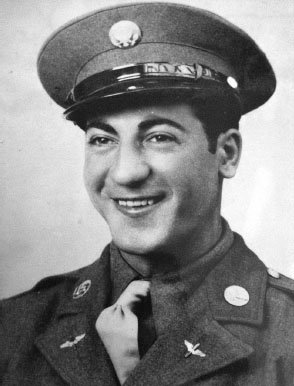
PRIVATE ALEXANDER “AL” TUCCIARONE, ASSISTANT ENGINEER ON THE PN9E. (U.S. ARMY PHOTOGRAPH.)
To be careful, Monteverde decided to bank the plane gently at first. He eased the PN9E into a shallow turn.
THE LEFT WINGTIP slapped the ice. The fifteen-ton bomber shook furiously. A terrible crunching sound exploded inside the plane. Men not strapped into their seats flew like confetti. After touching the ground, the wingtip bounced back up, leveling the plane. But the PN9E was no longer flying, and it wasn’t a fortress. It was a giant bobsled, sliding, careening, and carving a groove into the glacier. As it slowed, the bomber turned like a weathervane, its nose pointing due north into the wind.
The B-17 skidded more than two hundred yards across the ice, then came to an abrupt halt. The sudden stop catapulted flight engineer Paul Spina through a window on the roof of the radio compartment. Spina landed prone in the snow with no jacket, no shoes, no gloves, and no flight helmet. He’d taken off his jacket and boots when he lay down, and the force of being launched from the plane must have torn off his gloves and helmet. Spina was stunned, bleeding, and exposed to freezing temperatures. Both bones in his right forearm were broken close to the wrist. His hands and feet were cut, and frostbite clamped down on his toes and fingers.
Spina couldn’t see the plane or any of his crewmates through the blinding, windblown snow. Partly for warmth and partly in despair, he tried to hide his face in his frozen hands. Another crewman heard him cry out, “Somebody pull me in—I’m freezing.” He began to stand, but as he did everything went black. Spina passed out. The dark-haired private, five foot four and less than 150 pounds, would soon freeze to death unless someone helped him.
Also needing help was one of the volunteer searchers, Alfred “Clint” Best. When the plane stopped sliding, Best flew from the bombardier’s seat through the broken Plexiglas nose: the PN9E had sneezed him onto Greenland. Twenty-five years old, thickset, quiet, and introverted, a bookkeeper in civilian life, Best suffered a cut on top of his head and a bruised knee. The other volunteer searcher, Best’s friend Lloyd “Woody” Puryear, climbed out through the broken nose to pull Best back inside. He suffered cuts and bruises.
Clarence Wedel, who’d come aboard as a passenger in Goose Bay, bounced from one end of the B-17’s cabin to the other. Wedel rose from the deck with cuts on his face and a black eye that left his eyeball red and inflamed.
Al Tucciarone, the assistant engineer, and Loren “Lolly” Howarth, the radio operator, were strapped into the radio room’s bucket seats, so they fared better. A blow to the chest left Tucciarone weak, with a couple of broken ribs but not grievously injured. Howarth sustained a cut on his head. The three officers, Monteverde, Spencer, and O’Hara, emerged from the crash dazed but unhurt.
Incredibly, all nine men were alive. The plane was another story.
When the PN9E’s fuselage struck the ground, the metal buckled and twisted. The fearsome symbol of American air power broke in two, like a balsa-wood model in the hands of an angry child. The break came behind the wings, separating the front section—the nose, the cockpit, the navigator’s compartment, and the radio compartment—from the waist section and tail. During construction, a metal band had been riveted into place, almost like a zipper, attaching prefabricated sections of the plane. On impact with the ice, it unzipped. Yet even after breaking apart, both front and rear sections of the bomber had plowed the ice along the same path, as though connected by memory. When the broken B-17 stopped skidding, the nose and tail sections were separated by about a dozen feet, like a salami with a chunk sliced from the middle.
The twelve-foot metal propellers of both left-side engines were shredded. The tips of the right-side propellers curled like ribbons. The metal skin of the fuselage outside the radio compartment was torn away. The left outboard engine hung limp from its mountings. High-octane fuel spilled from the left wing and from auxiliary tanks, drenching the radio compartment and the bomb bay. The PN9E was a wreck.
Still in the cockpit, Monteverde gathered his wits. The collision between the left wingtip and the ice cap came as such a surprise that his mind refused to absorb it. He’d dipped the wing a few degrees, for a few seconds, just beginning his turn. A complete circle was 360 degrees; the PN9E had banked only about 10 degrees when everything went haywire. His immediate, irrational thought was that one of the four engines had flamed out. But Monteverde’s head cleared and he understood the truth: the wingtip had sliced into a glacier, and the PN9E was down.
Monteverde heard an ominous hissing sound around the cabin. Convinced that his wrecked plane was on fire, he unbuckled and scrambled out through a broken cockpit window. Once outside, Monteverde realized that the hissing sound was dry, sandy snow thrashing against the metal. He looked around and saw Spina, bloodied and unconscious near the silent left engines. Bill O’Hara followed Monteverde through the window. The navigator leaped into deep snow, soaking his leather boots, and joined Monteverde at Spina’s side. The two officers carried Spina inside the B-17’s torn-open tail section to treat his wounds.
Soon all nine of the PN9E’s crewmen were crammed together inside the bomber’s rear end, stunned and freezing. Outside, the snowstorm raged.
ONE CONSOLATION WAS that Monteverde’s decision to ease the plane into a shallow turn had probably saved their lives. Had he continued flying ahead, they would have struck the ice cap nose-first, with potentially explosive results. Had they parachuted out, the cold would have killed them if the jump hadn’t. If Monteverde had banked hard, pointing the left wingtip sharply downward, the PN9E might have cartwheeled tail over nose when it touched the ground, tearing apart the plane, with predictable results for the men inside.
Later, the military would declare that the crash was caused by “lack of depth perception due to blending of overcast and heavy blowing snow.” It was a formal way of saying “flying in milk.” In the military way of things, Monteverde received sixty percent of the blame, while the weather was faulted for the remaining forty percent. “The pilot is considered to be responsible for this accident,” the official investigation found, “in that he flew over the Ice Cap under an overcast contrary to instructions” during preflight briefings. It continued: “He was overzealous in attempting a hazardous operation and did not have the proper training to accomplish the mission safely.” The review board recommended that in the future, pilots like Monteverde “not be sent over this route classified as experienced with the small amount of time shown by this Officer.”
He never publicly objected to the finding, but to a large extent Monteverde was blamed for forces beyond his control. He’d been found guilty of being inexperienced, for following orders to conduct a search in bad weather, and for failing to transform himself from a ferry pilot on his first overseas mission into a grizzled Arctic search pilot familiar with the treachery of lost horizons.
For now, though, worrying about blame took a back seat to survival. Monteverde and his crew had been sent over the ice cap to find a crashed C-53. Instead, for the second time in four days, an American military plane had gone down in an undetermined location on the frozen, largely uncharted east coast of Greenland. When the top brass at Bluie West One awoke that morning, five American airmen had been in danger of freezing or starving to death. Now the number was fourteen.
MONTEVERDE AND HIS crew didn’t know it yet, but the PN9E had come to rest about seven miles north of the Koge Bay fjord, on a glacier approximately four thousand feet above sea level. On a clear day, the landscape looked from the sky like an unbroken sheet of ice. But up close, it was scarred by windblown waves of snow called sastrugi and crisscrossed by deep crevasses. Many crevasses were covered by natural bridges of accumulating snow and ice that made them impossible to see and therefore doubly dangerous. Some ice bridges were strong enough to bear a man’s weight. Some weren’t.
By luck or momentum, both parts of the broken bomber had somehow glided over a long stretch of the crevasse field. Now, at rest, the bomber’s tail sat motionless near the edge of a crevasse that split the ice to an unknown depth. If the crevasse widened, or if the PN9E’s rear end slid backward, all nine men who’d taken refuge inside would fall with it into the chasm.
A more immediate worry was the cold. They had no heat, no light, no stove. They had no sleeping bags, no heavy clothing, no Arctic survival gear. A few seconds outside would coat a man’s face with frost. In minutes, blood would rush from his extremities to his core. Exposed skin would die. In the sky, the men on a B-17 were warriors. On the ground, they were frozen sardines in a busted-open can.
They had no way to call for help: the crash had badly damaged the radio. The crew was afraid to even try it, fearing that sparks would ignite the spilled fuel they could smell all around them. Unlike the C-53 crew, the men of the PN9E couldn’t enjoy morale-boosting, potentially lifesaving contact with the outside world. Unless, that is, radioman Lolly Howarth could repair the smashed equipment, piece together a jury-rigged transmitter, or find an emergency transmitter buried in the wreckage. His crewmates weren’t counting on it. They stacked the broken radio gear at the open end of the tail section. The equipment didn’t work, so the heavy black boxes could at least act as a windbreak.
When engineer Paul Spina regained his senses in the tail section, he found his crewmates crowded around him, rubbing his frozen hands and feet. Monteverde located a first aid kit and put his Boy Scout training to use. For a half hour, he pulled and twisted on the engineer’s arm so the broken bones would line up and knit together. Spina tolerated the rough treatment without complaint or painkillers, and Monteverde admired the small man’s toughness. For a splint, Monteverde used a piece of aluminum that Spencer tore from the interior of the ruined plane. Even wrapped in parachute cloth, it felt cold against Spina’s skin, but it kept his arm straight. Then Monteverde went man to man, tending wounds with the first aid kit.
As Monteverde ministered to them, crewmen gathered supplies and counted rations. Hoping to make an insulated nest on the floor of the tail section, they arranged seat cushions, blankets, window covers, travel bags, and unfurled parachutes. They found a heavy canvas tarp, normally used to cover the plane’s nose between flights, and draped it over the open end of their quarters. They were shivering and wet, but at least the wind and snow wouldn’t roam unchecked through the PN9E’s tail. Spina marveled that the tarp was in the plane to begin with; it was supposed to have been stripped off before takeoff and left behind at the base. Without it, he thought, Greenland would have made quick work of them.
Tenuous connections to the outside world raised the crash survivors’ spirits. Woody Puryear expected to be on the B-17 for a few hours at most, to search for his missing friends in the C-53. Now he swelled with pride when he pulled a silk parachute from its pack and saw the words “Made in Lexington, Kentucky.” Puryear was a strapping, twenty-five-year-old country boy, more than six feet tall and 210 pounds. Before the war, he’d worked as a meat cutter and electric lineman in his hometown of Campbellsville, Kentucky. Lexington was the big city, some sixty miles away. But in a shattered B-17 on Greenland’s ice cap, Lexington was a link to family and friends. The parachute label made Puryear pensive. “Memories of home,” he’d say, “are best when you’re far away—when you don’t know whether you’ll ever get home again.”
The men knew they’d soon be painfully thirsty and hungry. Monteverde blamed the shock of the crash for making them all parched. But all the liquids on board were frozen. Best and Puryear had brought along a thermos filled with hot coffee, but now they opened it to find a block of brown ice. With no way to melt it, the crew ate dry snow. It kept them hydrated, but it made their throats scratchy and wouldn’t quench their thirst, no matter how much they swallowed. Spina’s hands were too frozen for him to feed himself, so the others filled his mouth with snow.
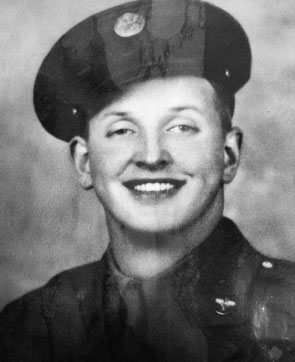
SERGEANT LLOYD “WOODY” PURYEAR, VOLUNTEER SEARCHER ABOARD THE PN9E. (COURTESY OF JEAN SPINA.)
Darkness came early in November, so the nine men settled in for the night in their rounded metal cell. When whole, the B-17 stretched seventy-four feet. The torn-open rear section was about half that, and much of the interior space was unusable. The bomber’s curved walls, with ribs made of aluminum alloy, narrowed increasingly the closer a man got to the tail. The floor consisted of catwalks normally used by the waist and tail gunners to move through the B-17’s rear, or aft, section. Now, the catwalks were the only level places on which to lie down. That meant the nine-man crew of the PN9E had to squeeze onto a platform about fifteen feet long and three feet wide, or about five square feet per man. They tumbled on each other like a litter of puppies, some pressed against the plane’s cold, hard ribs.
They wrapped themselves in blankets of cut-up parachute cloth and everything soft they could salvage. They wriggled their toes to keep them from freezing. With each breath they inhaled fumes of splattered fuel. Men wanted to smoke cigarettes, but Monteverde forbade it, fearing that they’d explode their quarters. Spina’s friends pressed themselves against him on both sides for body heat. Stretching their legs had to be done in turn. Moving through the scrum was almost impossible, so to change position they grabbed onto the metal butts of the .50-caliber machine guns and used them like subway handholds. When night fell, the pitch-black shelter rang with calls of men trying to avoid stepping on each other: “Is that all right? Am I missing you all right?”
Before they sought the relief of sleep, Monteverde made a modest announcement: “This is as new to me as it is to you. According to regulations, I am in charge. But I want any and all suggestions you might happen to think of. We will work it out together.”
AFTER A FITFUL night, they awoke the next morning, Tuesday, November 10, 1942, and rearranged their den for greater warmth and comfort. They found canvas wing covers and added them to the tarp curtain at the open end of the tail section, but the effort to make the compartment weather-tight was futile. Cold wind and fine snow shot through every crack between the tarps. Even the seams of their clothing weren’t tight enough to block the sting of wind-driven snow.
The day was too stormy to leave the plane and investigate their surroundings, but several men scrounged around the wreckage. Inside the crushed radio compartment, they stumbled upon the most valuable item of all: an emergency radio transmitter. Waterproof, weighing thirty-five pounds, and painted bright yellow, the radio came with a metal-frame box kite and a reel with eight hundred feet of antenna wire. Unlike the crew of the C-53, which didn’t have an emergency radio on board, the men aboard the PN9E wouldn’t need to rely on their plane’s dying batteries. Power for the transmitter came from a hand-cranked generator built into the housing. The radio had curved sides that allowed a seated man to hold it between his thighs while turning the power crank. The idea was that an airman whose plane ditched in the ocean would sit in a life raft and crank out rescue calls. The radio’s hourglass design spawned its affectionate nickname, the “Gibson Girl,” after the curvy women in drawings by fashion artist Charles Gibson. One problem was that a Gibson Girl spoke but didn’t listen; the radio was a transmitter but not a receiver. Still, a lost man with a Gibson Girl between his legs had a fighting chance at survival.
The wind was too strong to fly the antenna kite their first full day on the ice. But in the following days, Lolly Howarth, the radio operator, flew it whenever the storm died down. Though unsure whether the radio transmitter worked, or whether anyone received its message, Howarth sent steady streams of SOS signals at the universal maritime distress frequency of 500 kilohertz. Serious and quiet, a twenty-three-year-old aspiring actor from Wausaukee, Wisconsin, Howarth soon began worrying that the Gibson Girl wouldn’t save them, after all. He eyed the plane’s damaged radio equipment and wondered if he could fix it. The sooner, the better.
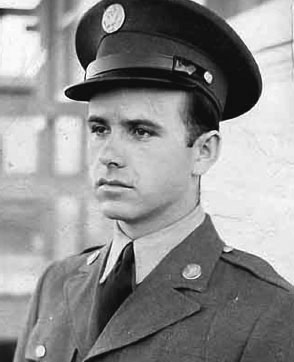
CORPORAL LOREN “LOLLY” HOWARTH, RADIO OPERATOR ABOARD THE PN9E. (U.S. COAST GUARD PHOTOGRAPH.)
An inventory revealed enough K rations—canned meats, biscuits, cereal bars, gum, and other staples—for one man to survive thirty-six days. That meant four days’ worth of meals for the nine of them. Monteverde intended to stretch the rations for ten days, knowing that even that might not be long enough.
Each box of K rations included a four-pack of cigarettes. But as much as the tobacco might have relieved hunger, Monteverde continued to ban it for fear of igniting the leaked fuel. They also found six boxes of U.S. Army Field Ration D, the military’s code name for chocolate bars. The D rations were included in three “jungle kits” given to the officers: Monteverde, Spencer, and O’Hara. One quirk was that D-ration chocolate sacrificed flavor for heat resistance, so the bars wouldn’t melt in soldiers’ packs. That was the least of the PN9E crew’s worries.
It might seem like backward military logic to give jungle supplies to men flying the Snowball Route over Greenland. But no one complained: the kits also contained long bolo knives that could chop snow and ice.
THE NEXT DAY, November 11, brought no respite from driving snow and subzero temperatures. Cold in Greenland is almost a living thing, a tormenting force that robs strapping men of strength, denies them rest, and refuses them comfort. In time, it kills like a python, squeezing life from its victims.
Again the crew hunkered down. They savored the reduced rations Monteverde distributed and ate as much dry snow as they could swallow. The big treat of the day was a few squares of chocolate. A cycle developed in which their hands and feet froze and then thawed, each time triggering a burning, aching sensation. When it happened, they’d say their extremities had “stoved up.” Navigator Bill O’Hara suffered the most from its effects, particularly in his feet.
That night, desperate for a smoke, Paul Spina ignored the spilled fuel and Monteverde’s orders. The two had developed a warm rapport during their ferrying duties, and Spina knew that Monteverde was no disciplinarian. When everyone else fell asleep, he unwrapped his bandaged hands with his mouth. Awkwardly using both frostbitten hands, Spina fished out a cigarette and matches from his pocket, stuck the cigarette between his lips, and tucked a matchbox under his chin. When he struck a flame, his crewmates startled awake. Spina calmly lit his cigarette and asked if anyone wanted a drag. The plane didn’t explode and neither did Monteverde, who had a soft spot for the affable engineer. Spina also had a bond with copilot Harry Spencer, who soon held cigarettes to his mouth and slipped him extra bits of chocolate.
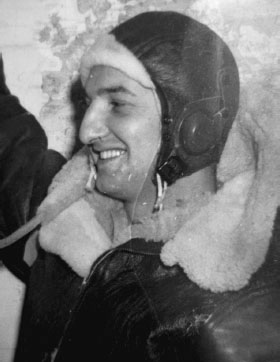
PRIVATE PAUL SPINA, ENGINEER ABOARD THE PN9E. (COURTESY OF JEAN SPINA.)
Now that they could light matches, they used small fires to melt snow in a thermos cup. Little by little they had water to drink, not eat.
During their first three days on the ice cap, as the storm blew itself out, the crew of the PN9E listened for planes overhead, fantasized about long furloughs after being rescued, and got to know one another.
THE PN9E’S FAILURE to return to Bluie West One doubled the job confronting searchers. No one knew where the B-17 had crashed, but the area near Koge Bay that had been assigned to Monteverde’s crew for the C-53 search seemed a logical place to look. Despite the storms, on November 10 seventeen planes left Bluie West One to search for the PN9E. Meanwhile, sixteen C-47s and six B-17s went out looking for McDowell’s C-53. The skies over Greenland were teeming with search planes diverted from the war. All returned that night with no sign of either missing crew.
The following day, two search flights went out for each of the downed planes, but heavy storms near Bluie West One drove them back to base. The same Arctic weather that contributed to or caused both crashes now conspired to prevent McDowell’s C-53 and Monteverde’s B-17 from being found.
ALTHOUGH THE SKIES on the west coast of Greenland were stormy, the weather on the east coast gave the men of the PN9E a break on Thursday, November 12. Dawn arrived clear and bright. The crew was weak and tired, but the blue sky gave them a lift. Radioman Lolly Howarth flew the Gibson Girl kite and looked more closely at the damaged equipment from the radio compartment.
Crew members strong enough to work crawled out of their hideout to rake several feet of windblown snow that had piled around and atop the olive-colored plane. The temperature was 30 degrees below zero, but the task kept their minds busy and their bodies active. They hoped that removing the snow would keep the B-17 visible from the sky if a search plane flew overhead. Despite all they’d been through, their spirits remained strong. They told each other that just as they’d been out searching for the C-53, someone would be out looking for them.
As his men kept busy, Monteverde ducked inside the tail section to keep Spina company. They talked awhile, and soon the pilot and the engineer realized that they needed spiritual help. They knelt together to pray.
Meanwhile, copilot Harry Spencer and navigator Bill O’Hara decided to have a look around. Despite O’Hara’s frozen feet, he wanted to tough it out. He was twenty-four, the hard-nosed son of a coal mine manager from outside Scranton, Pennsylvania. After working in the mines during his teenage years, O’Hara graduated from the University of Scranton with a degree in business administration. Awaiting him at home was a beautiful girlfriend, Joan Fennie.
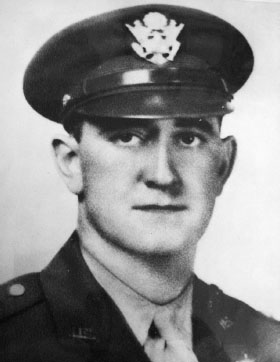
LIEUTENANT WILLIAM “BILL” O’HARA, NAVIGATOR ABOARD THE PN9E. (COURTESY OF JEAN SPINA.)
Spencer and O’Hara knew that Koge Bay was southeast of their wreck. On clear days like this one, they could see the water. Distances were difficult to calculate across the featureless expanse of ice, but they felt confident the bay was no more than ten miles away. If they could reach it on foot, they might be able to establish their position with greater precision. Maybe they could use the Gibson Girl to hail one of the Coast Guard ships patrolling nearby. The emergency radio had an automatic mode to send SOS signals and also a manual mode for custom messages. Spencer considered using a life raft from the PN9E to paddle along the coast to the weather shack at Beach Head Station.
Even if they couldn’t hike to the bay, Spencer and O’Hara intended to plot the locations of nearby crevasses, to keep everyone safe when they ventured away from the plane. They hoped that a map of ice fissures would also provide a pathway to the crash site for rescuers on foot, motorsleds, or dogsleds.
Aware that some crevasses were covered by snow or ice bridges, the two lieutenants walked slowly, testing the ground in front of them before each step. They found one crevasse and made their way around it, then found another and again took evasive action. About fifty yards from the plane, Spencer stepped on what felt like a patch of solid ice.
A moment later, he disappeared.