
1. General
The general trends in German small arms have been an increase in production of semiautomatic and fully automatic weapons and an increase in the rate of fire of machine guns. During 1944, additional close-quarter antitank weapons have been included among German small arms.
2. Pistols
a. GENERAL.
The two standard pistols now in use in the German Army are the Luger, which was used in the last war, and a more modern weapon, the Walther; neither German weapon has the shock effect of the U.S. M1911 or M1911 A1 Colt .45. The Mauser pistol is seldom encountered.
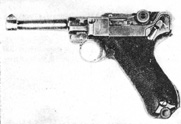
Figure 1.—Luger Pistole 08, caliber 9 mm.
b. LUGER PISTOL (Pistole 08).
(1) General description.
This is a semiautomatic, recoil-operated pistol with a toggle-joint breech action (Fig. 1).
The safety is located on the left rear side of the body. The pistol is set on "safe" when "Gesichert"is showing. There is also a longer model of this pistol, provision being made on the rear side of the grip for a stock attachment. Construction is almost identical with the standard model except that the barrel is longer, and a leaf rear sight graduated up to 800 meters is attached.
(2) Characteristics.
• Caliber: 9-mm (actually 0.347 inch).
• Length of barrel: 4 1/4 inches
• Weight: 2 pounds:
• Feed: 8-round grip magazine.
(3) Ammunition.
The Luger pistol fires the standard German 9-mm Parabellum ammunition.
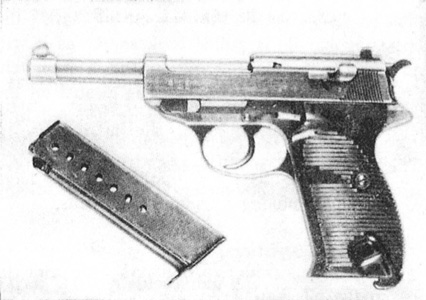
Figure 2.—Walther Pistole 38, caliber 9 mm.
c. WALTHER PISTOL (Pistole 38).
(1) General description.
The Walther weapon is a semiautomatic pistol with a grip magazine feed. It is recoil-operated, the breech mechanism sliding to the rear after each round has been fired. The pistol may be carried loaded with the hammer uncocked; the first shot may be fired by a double-action mechanism. The safety is a catch on the left-hand side of the body.
(2) Characteristics.
• Caliber: 9 mm (actually 0.347 inch).
• Length of barrel: 4 3/4 inches
• Weight, loaded: 2 pounds 5 ounces.
• Feed: 8-round grip magazine.
(3) Ammunition.
German or British 9-mm Parabellum ammunition may be used in this weapon.
d. MAUSER PISTOL.
(1) General description.
The Mauser can be used as a semiautomatic pistol or as a carbine when attached to its wooden holster, which is in the shape of a hollow stock. The safety is at the left rear above the trigger guard. The weapon is fed ammunition from a 10-round fixed magazine inserted forward of the trigger guard. Twenty-round magazines are used when the weapon is employed as a carbine.
(2) Characteristics.
• Caliber: 9 mm (actually 0.347 inch).
• Length without stock: 12 inches.
• Length with stock: 25 1/2 inches.
• Weight without stock: 2 pounds 8 ounces.
• Feed: 10- or 20-round magazine.
(3) Ammunition. Standard 9-mm ammunition is used.
3. Signal Pistols
a. LIGHT SIGNAL PISTOL (Leuchtpistole).
This is the standard German signal pistol; it is 26.7-mm caliber, has a smooth bore, and fires a series of colored signal cartridges, as well as a whistling cartridge (Pfeifpatrone) used as a gas warning signal.
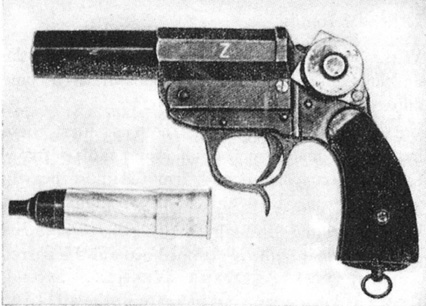
Figure 3.—Kampfpistole (grenade and signal pistol).
b. MODIFIED SIGNAL PISTOL (Kampfpistole).
The Germans have modified the Leuchtpistole by rifling the bore and providing a small sight to produce the Kampfpistole (Fig. 3). With these alterations a small, nose-fused HE grenade, a smoke grenade, and an orange smoke grenade are fired in addition to the standard signal cartridges. The pistol has a maximum range of about 100 yards, firing a 5-ounce HE round.
c. DOUBLE-BARRELED SIGNAL PISTOL.
This pistol is similar to the standard Leuchtpistole but has a double barrel and trigger mechanism. At the rear of the hammer action, and above the pistol grip, is a change lever of the type used on double-barreled shotguns. This may be set so either one or both of the barrels will fire when the trigger is squeezed. The standard signal cartridges are fired.
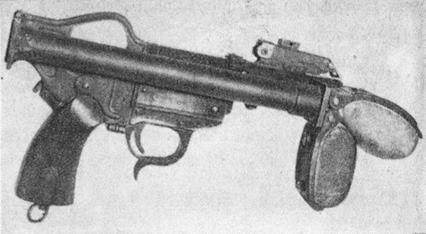
Figure 4.—Sturmpistole (modified light signal pistol).
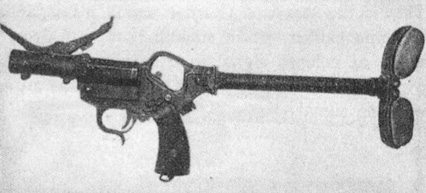
Figure 5.—Sturmpistole (modified light signal pistol).
d. GRENADE AND SIGNAL PISTOL (Sturmpistole).
This weapon consists basically of the standard Leuchtpistole to which a loose steel liner is fitted (Figs. 4 and 5). This liner is rifled and fitted with a base, which prevents firing a standard round through the liner. A combined front and rear sight is clamped around the barrel and a folding stock is attached above the pistol grip. The liner and the folding stock enable this pistol to fire a hollow-charge grenade as a close-quarter weapon against tanks (Fig. 5). With the steel liner removed this pistol will fire the standard signal cartridges fired from the Leuchtpistole.
4. Machine Pistols
a. M.P. (Maschinenpistole) 40.
(1) General description.
This blowback-operated machine pistol (Fig. 6) was developed from the M.P. 38, an earlier model designed for issue to parachute troops and still used. Distinctive features of both weapons are the folding stock and all metal and plastic construction. The safety recess at the rear of the cocking-handle stop is marked "S". To set the weapon on "safe", the operating handle is pulled back as far as it will go and then pushed upward into the safety notch. On later models, a safety stud is located on the cocking handle. The magazine is inserted in a vertical position on the underside of the receiver. The weapon has a 100-meter (109 yards) fixed rear sight and a 200-meter (219 yards) folding rear sight.
(2) Characteristics.
• Caliber: 9 mm (actually 0.347 inch).
• Length, over-all: 33 1/2 inches.
• Weight without magazine: 9 pounds.
• Feed: 32-round magazine
• Rate of fire: (cyclic): 500 rounds per minute, (practical): 180 rounds per minute
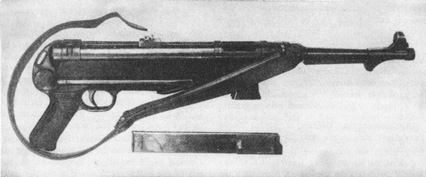
Figure 6.—M.P.40, caliber 9 mm, showing magazine.
(3) Ammunition.
This weapon uses the standard 9-mm Parabellum ammunition.
b. MODEL 43/1 MACHINE PISTOL (M.P. (Maschinenpistole) 43/1).
(1) General description.
This gas-operated machine pistol (Fig. 7) is constructed almost entirely of metal stampings and can be stripped only to a limited degree. Although provision is made for both single-shot and automatic fire, bursts of more than five rounds are not recommended, and the pistol is best used as a single-shot weapon. This weapon has not proved very successful because it is impossible to repair in the field and because of its poor firing characteristics. The stampings forming the gas cylinder and body casings are made of thin material and are very easily damaged. The weapon is fed by a curved magazine below the receiver and has an 800-meter (876 yards) leaf rear sight.
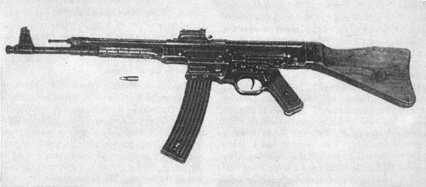
Figure 7.—M.P. 43/1, caliber 7.92 mm, showing magazine in place for firing.
(2) Characteristics.
• Caliber: 7 92 mm (0.312 inch).
• Length: 37 inches
• Weight: 11 pounds
• Feed: 35-to 38-round magazine.
• Muzzle velocity: 2,200 feet per second.
(3) Ammunition.
A special type of short rifle caliber ammunition is used in this machine pistol.
c. M.P. (Maschinenpistole) 44. This weapon is the M.P. 43/1 slightly modified to accommodate the standard rifle grenade launcher cup (Schiessbecher). The barrel is machined down at the muzzle end and the front sight block is smaller and located farther forward to allow the launcher cup to be attached. Although it is presumed that the standard rifle grenades can be fired from the M.P. 44, it is not certain that this has yet become an operational practice.
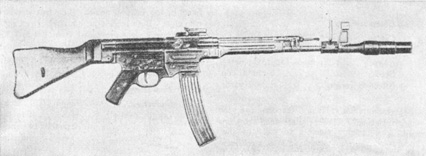
Figure 8.—M.P. 44, (modified M.P. 43), caliber 7.92 mm, with grenade launcher attached.
5. Rifles and Automatic Rifles
a. MODEL 98 RIFLE AND CARBINE (Gewehr 98 and Karabiner 98).
(1) General description.
The standard German rifles and carbines are all of the same basic bolt-operated Mauser design (Figs. 9 and 10), but may be divided into three distinct types. These are the rifle Model 98 (Gewehr 98) which is 49 inches long and has the sling fitted underneath; the long barrel carbine Model 98 b (Karabiner 98 b) which is approximately the same length as the rifle; and the short carbine Model 98k (Karabiner 98k) which is 43 1/2 inches long. Each weapon has a safety catch at the rear of the bolt similar to the safety on the U.S. rifle M1903 and a blade front sight and V rear sight graduated from 100 to 2,000 meters (109 to 2,190 yards). The Gewehr 98 fires rifle grenades from a grenade launcher cup or from a spigot launcher.
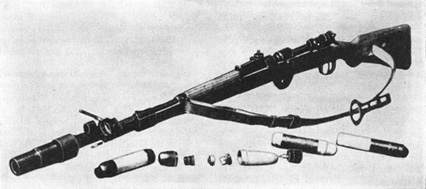
Figure 9.—Gewehr 98 with grenade launcher attached, showing rifle grenades.
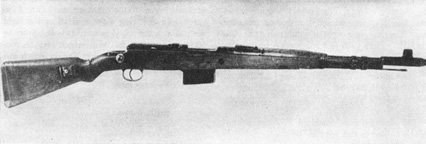
Figure 10.—Gewehr 41, caliber 7.92 mm semiautomatic rifle.
(2) Characteristics.
• Caliber: 7.92 mm (0.312 inch).
• Weight (each type): 9 pounds (approximately).
• Feed: 5-round clip
• Effective range: 800 yards.
(3) Ammunition.
These weapons fire the standard German 7.92-mm rimless small-arms ammunition.
b. MODEL 33/40 RIFLE (Gewehr 33/40).
The Germans have designed the Gewehr 33/40 as a special short rifle for parachutists or for personnel carrying concealed arms. The weapon is fitted with a folding stock, hinged on the left and retained in position by a press catch on the right side. When the rifle is not in use, the stock can be folded along the left of the piece. Apart from the folding stock the rifle is normal in design and similar to the 98 models.
c. MODEL 41 RIFLE (Gewehr 41).
(1) General description.
This is a semiautomatic rifle (Fig. 10) which is made in two models, the Gewehr 41m and Gewehr 41w, similar in operation and differing only slightly in construction. Both models are gas-operated; the gases are compressed in a gas choke at the muzzle, forcing to the rear a floating piston mounted concentrically around the barrel. The movement of the piston is communicated to the bolt head, and the rifle is recocked automatically after each round has been fired. The weapon is fed through a magazine fixed in the receiver which holds two standard rifle clips. Both models have a blade front sight and leaf rear sight graduated from 100 to 1,200 meters (109 to 1,310 yards). When fitted with a telescopic sight this rifle can be used as a sniper's weapon.
(2) Characteristics.
• Caliber: 7.92 mm (0.312 inch).
• Length, over-all: 45 inches.
• Weight: 10 pounds 14 ounces.
• Feed: Two 5-round clips.
(3) Ammunition.
This weapon fires the 7.92-mm rimless ammunition.
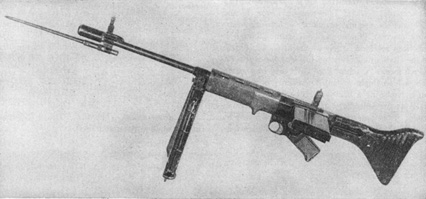
Figure 11.—Fallschirmjdgergewehr 42, caliber 7.92 mm automatic rifle.
d. MODEL 42 AUTOMATIC RIFLE (Fallschirmjdgergewehr 42).
(1) General description.
Although the German nomenclature indicates that this rifle (Fig. 11) is intended to be an automatic weapon for use by parachute troops, it also can be used as a light machine gun or a machine carbine. The weapon is designed more like a light machine gun than a rifle. It is gas-operated, fitted with a permanently attached folding bipod, and can be fired automatically or single shot. A compensator is attached to the muzzle, and provision is made for the attachment of a telescopic sight. A bayonet also is attached. The magazine is held in a horizontal position on the left of the receiver. The aperture rear sight is graduated from 100 to 1,200 meters (109 to 1,310 yards). The safety is located on the left side above the pistol grip, and the lever for selecting automatic or single-shot fire is placed above and to the rear of the trigger. A later model of this weapon, slightly heavier and more solidly constructed, has the bipod closer to the muzzle.
(2) Characteristics.
• Caliber: 7.92 mm (0.312 inch).
• Length with bayonet: 43 3/4 inches
• Weight:9 pounds
• Feed:20-round magazine
(3) Ammunition.
Standard 7.92-mm ammunition is used in this weapon.
e. MODEL 43 SEMIAUTOMATIC RIFLE (Karabiner 43).
(1) General description.
This weapon, originally known as the Gewehr 43, is a semiautomatic rifle and was developed from the Gewehr 41. The trigger and bolt mechanisms are the same as those used on the Gewehr 41, but the piston and gas cylinder are of different design. The piston group is located on top of the barrel
instead of concentrically. The rifle may be loaded by inserting either a fully loaded magazine or two cartridge clips into an empty magazine from the top. The leaf rear sight is graduated from 100 to 1,250 meters (109 to 1,365 yards).
(2) Characteristics.
• Caliber: 7.92 mm (0.312 inch).
• Length, over-all: 45 inches
• Weight:10 pounds
(3) Ammunition.
Standard 7.92-mm ammunition is used in this weapon.
6. Machine Guns
a. MODEL 34 MACHINE GUN (M.G. 34).
(1) General description.
This weapon (Figs. 12 and 13) was the original standard German dual-purpose machine gun and is still used, although it has been replaced largely by the M.G. 42. (M.G. is the German abbreviation for Maschinengewehr, which means "machine gun".) It may be used on a bipod, on single or dual AA mounts, or mounted on a tripod as a heavy machine gun. It still is used as the subsidiary armament of all German tanks. It is operated by short recoil, assisted by muzzle blast, and has a standard Solothurn-type breech mechanism. The gun has a leaf rear sight graduated from 200 to 2,000 meters (219 to 2,190 yards), an AA ring sight, and an optical sight for use with the tripod mount. It is fed either by 50-round metallic-link belts, which may be connected together, or by drums. The weapon is air-cooled by a perforated barrel jacket.
(2) Characteristics.
• Caliber: 7.92 mm (0.312 inch).
• Length, over-all: 48 inches
• Weight with bipod:26 1/2 pounds.
• Weight with tripod: 42 pounds
• Feed: Belt or drum
• Rate of fire:
(cyclic): 900 rounds per minute
(practical): As LMG 100 to 120 rounds per minute, as Hv MG 300 rounds per minute.
• Effective range: As LMG 600 to 800 yards, as Hv MG 2,000 to 2,500 yards.
(3) Ammunition.
The M.G. 34 fires 7.92-mm rimless small-arms ammunition.
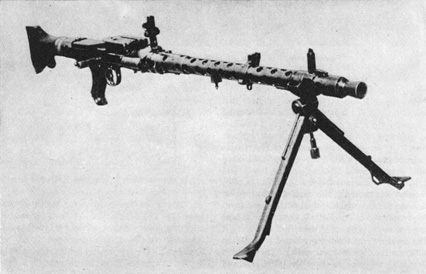
Figure 12.— M.G. 34, caliber 7.92 mm, on bipod mount as light machine gun.
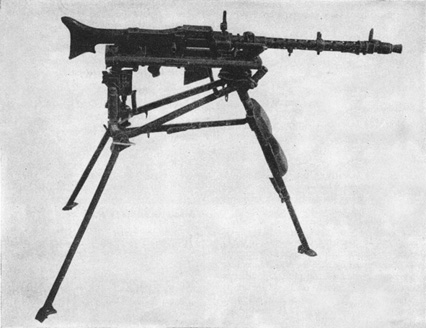
Figure 13.—M.G. 34, caliber 7.92 mm, on tripod mount as heavy machine gun.
b. MODEL 42 MACHINE GUN (M.G. 42).
(1) General description.
This is the latest type of German machine gun known and in most cases has replaced the M.G. 34 as a standard dual-purpose weapon (Fig. 14). Like the M.G. 34, it may be used on a fixed bipod, a tripod mount, or an antiaircraft mount. The square barrel casing makes this machine gun unsuitable as a tank weapon. The main features of the weapon are the extensive use of pressings in its construction, a greatly increased rate of fire, and a quick barrel change feature necessitated by the high rate of fire which causes the gun to heat rapidly. The weapon is fundamentally similar to the M.G. 34 and has the same short recoil action. It has no provision for single-shot fire, however.
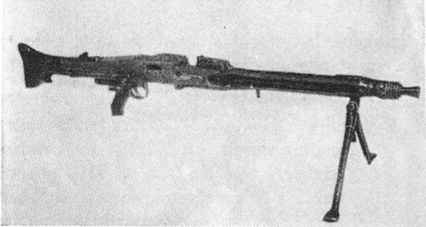
Figure 14.—M.G. 42, caliber 7.92 mm, on bipod mount.
(2) Characteristics.
• Caliber: 7.92 mm (0.312 inch).
• Length, over-all:49 inches.
• Weight: 23 3/4 pounds
• Rate of fire:
(cyclic): 1,200 to 1,400 rounds per minute.
(practical): As LMG 250 rounds per minute, as Hv MG 500 rounds per minute.
• Effective range as LMG 600 to 800 yards, as Hv MG 2,000 to 2,500 yards.
(3) Ammunition.
This machine gun fires the standard German 7.92-mm rimless ammunition.
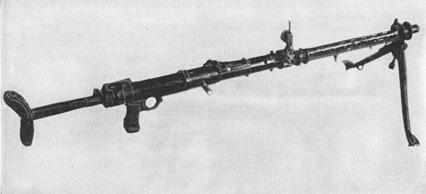
Figure 15.—M.G. 15, caliber 7.92 mm, aircraft machine gun adapted for ground use.
c. MODEL 15 MACHINE GUN (M.G. 15).
(1) General description.
Although primarily intended as an aircraft machine gun, the M.G. 15 has been adopted as a ground weapon (Fig. 15), using an adapter, which clips around the barrel for attaching the standard bipod, and a butt extension. It is a light weapon and has short recoil action, firing automatic only.
(2) Characteristics.
• Caliber: 7.92 mm (0.312 inch).
• Length, over-all:42 inches
• Weight: 15 pounds 12 ounces
• Feed: 75-round saddle magazine.
• Rate of fire:
(cyclic):1,000 rounds per minute.
(practical): 300 rounds per minute.
(3) Ammunition.
The standard 7.92-mm rimless ammunition is used in this machine gun.
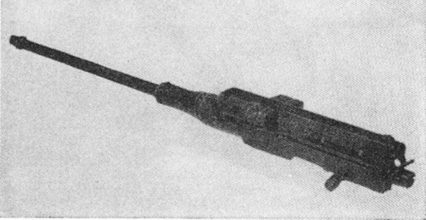
Figure 16.—M.G. 151/20, a 20-mm aircraft machine gun.
d. MODEL 151/20 MACHINE GUN (M.G. 151/20).
(1) General description.
Although primarily an aircraft machine gun (Fig. 16), it also has been found on an improvised ground mount as an antitank weapon and triple-mounted on a half-tracked vehicle. When used on the ground, the gun is hand cocked and mechanically fired, instead of utilizing the electrical cocking and firing mechanism provided for its use in aircraft. The gun is entirely recoil-operated. The 15-mm M.G. 151 is sometimes used instead of the M.G. 151/20 on the triple mount. It often is supposed that these two are the same gun fitted with interchangeable barrels; this is not the case, although the guns are very similar in construction.
(2) Characteristics.
• Caliber: 20 mm (0.787 inch).
• Length, over-all: 69 3/4 inches.
• Weight: 93 1/2 pounds.
• Feed: Disintegrating metallic-link belt.
• Rate of fire: 800 rounds per minute
• Muzzle velocity (HE),: 2,656 feet per second.
(3) Ammunition.
This gun fires HE, AP, and APHE ammunition.
7. Antitank Weapons
a. RIFLES.
The original German antitank rifles were the 7.92-mm Panzerbüchse 38, with automatic extraction mechanism, and the 7.92-mm Panzerbüchse 39, operated entirely by hand. These weapons were not very effective and are now obsolete. Next followed the 20-mm Solothurn, which was issued in two models: one single shot, and the other both single shot and automatic. The tendency during 1944 has been to adopt anti-tank grenade launchers in preference to rifles, and the only relic of these four models is the Granatbüchse, which is a Panzerbüchse 39 modified to fire rifle grenades from a rifle launcher cup.
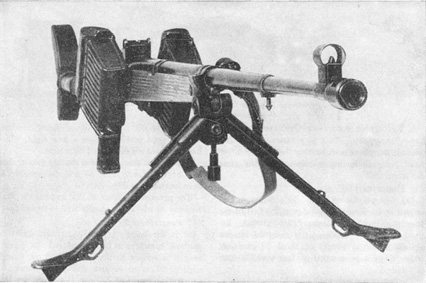
Figure 17.—Panzerbüchse 39, a 7.92-mm antitank rifle.
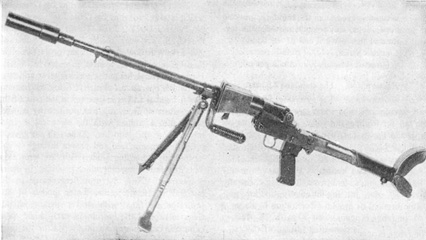
Figure 18.—Granatbüchse 39, a 7.92-mm antitank rifle modified for launching rifle grenades.
b. RECOILLESS ANTITANK GRENADE LAUNCHERS—Panzerfaust.
This is a series of antitank grenade launchers each bearing the name Panzerfaust but each having a different number after the name.
(1) Panzerfaust 30
(a) General Description.
This weapon, also known as the Faustpatrone 2, was the first of the four models of recoilless antitank grenade dischargers to be produced. It is designed for use against armor at ranges of about 30 yards, at which range a penetration of just over 200 mm is obtained.
The weapon consists of a steel launching tube, containing a percussion fired propellent charge. A hollow-charge antitank grenade is fired from the tube.
The weapon is fired from the standing, kneeling or prone positions, aim being taken over the vertical sight and the forward end of the bomb.
(b) Characteristics.
• Diameter of tube: 1 3/4 inches.
• Over-all length: 41 inches.
• Weight: 11 pounds.
(c) Ammunition.
The grenade is provided with spring steel fins which are wrapped around the tail for loading and which are released as the projectile leaves the tube and stabilize the bomb during fight.
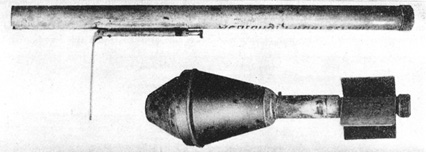
Figure 19.—Faustpatrone 2 (Panzerfaust), 44-mm recoilless antitank grenade launcher, showing launching tube and grenade.
(2) Panzerfaust Klein 30
This weapon, also known as the Faustpatrone 1 or Gretchen, is a smaller version of the Panzerfaust 30 and has a differently shaped projectile head. The system of operation is the same and the range is again about 30 yards. A penetration of 140 mm is claimed for this projectile.
(3) Panzerfaust 60
This launcher is similar in appearance to the Panzerfaust 30. A redesigned firing mechanism has been fitted and also a new sight, which has apertures for 30, 60 and 80 meters.
The tube of this weapon is slightly thicker than that of the Panzerfaust 30 and the weight has been increased to 13 1/2 lbs.
The penetration figure of 200 mm for the Panzerfaust 30 will apply equally well to this weapon.
(4) Panzerfaust 100
This is the latest of the Panzerfaust series of antitank launchers to be encountered. In appearance it is similar to the Panzerfaust 60, though slightly increased in size and performance. A penetration figure of 200 mm is claimed for this weapon, which is sighted up to 150 meters.
c. ROCKET LAUNCHER (Raketenpanzerbüchse 54).
(1) General description.
This weapon, which is also known as the Ofenrohr (Stovepipe) or Panzerschreck (Tank Terror), is similar to the U.S. 2.36-inch rocket launcher (Bazooka) and fires a hollow-charge rocket projectile. The launcher consists of a steel tube provided with fore and back sights and a cocking lever and trigger which operate an electrical firing mechanism. For firing, the rocket is inserted in the rear of the tube, where it is retained in position by a catch and makes a contact with the electrical leads at the rear of the launcher. When the trigger is pressed, a magnetized rod passes through a coil located in a housing underneath the projector. This generates a current which provides the spark necessary to ignite the propellent charge in the tail end of the projectile. Later models of this projector are fitted with steel protective shields clamped around the barrel. In each shield there is an observation window on the left of the firer. These shields eliminate the necessity for the firer to wear protective clothing. The Germans claim an effective range of 120 meters (130 yards) for this weapon.
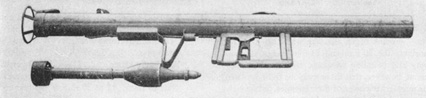
Figure 20.—Raketenpanzerbüchse 54, an 88-mm antitank rocket launcher.
(2) Characteristics.
• Caliber: 88 mm (3.5 inches).
• Length, over-all: 5 feet 4 1/2 inches.
• External diameter: 3.7 inches.
• Weight: 20 1/2 pounds.
• Maximum range: 132 yards.
(3) Ammunition.
The projectile is a 7-pound hollow-charge rocket containing a propellent in the tail tube. The rocket is equipped with a nose fuze and a circular tail fin. It measures 2 feet 1 1/4 inches in length.
d. HEAVY ROCKET LAUNCHER (Raketenwerfer 43 or Püppchen).
(1) General description.
A heavier version of the Raketenpanzerbüchse, this weapon fires hollow-charge rockets against tanks. The barrel, mounted on a two-wheeled, single-trail carriage with protective shield, has a simple hinged breechblock with striker mechanism. No traversing or elevating wheels are provided on the carriage; the gun must be held at the required elevation by a spade hand grip and manually traversed on a traversing slide. The weapon has a front sight and an adjustable rear sight mounted on the barrel. The rear sight is graduated from 180 to 700 meters (195 to 765 yards). This may mean that the weapon can be used in an antipersonnel role as a mortar at long ranges.
(2) Characteristics.
• Caliber: 88-mm (3.5 inches).
• Length, over-all: 9 feet 2 inches.
• Weight: 270 pounds (approximately).
• Width of carriage: 3 feet 3 1/2 inches.
• Height of barrel: 1 foot 6 inches.
• Elevation: -18° to +15°.
(3) Ammunition.
The projectile is an 88-mm hollow-charge rocket similar to that used with the Raketenpanzerbüchse, but with a flash cap in the center of a rimmed base fitting over the end of the stabilizing fins. The rimmed base serves as a cartridge case and remains in the breech after the projectile has been fired.
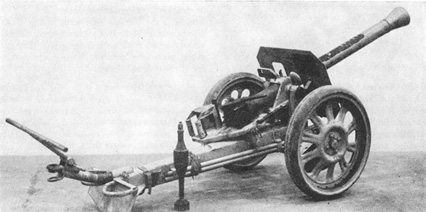
Figure 21.—Raketenwerfer 43 (Püppchen), 88-mm rocket projector.