
Maps
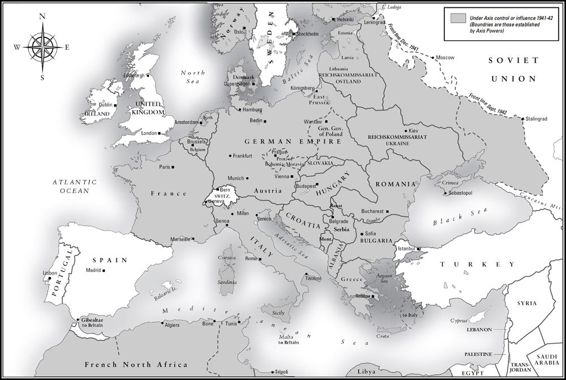
Europe under German Rule, 1941–42
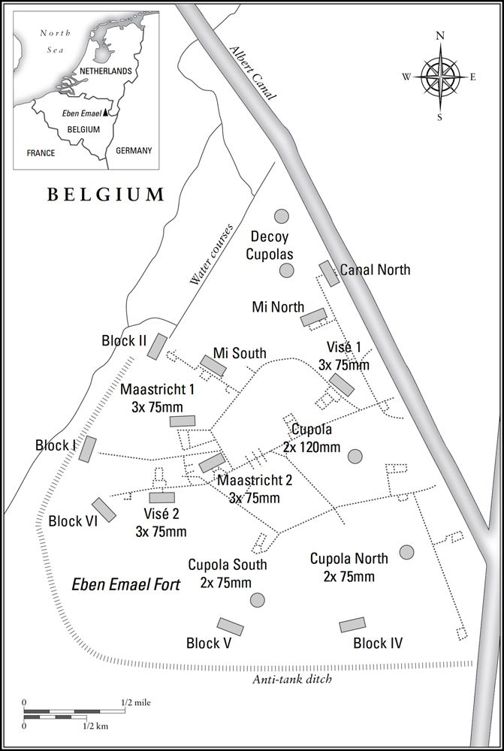
Fort Eben Emael
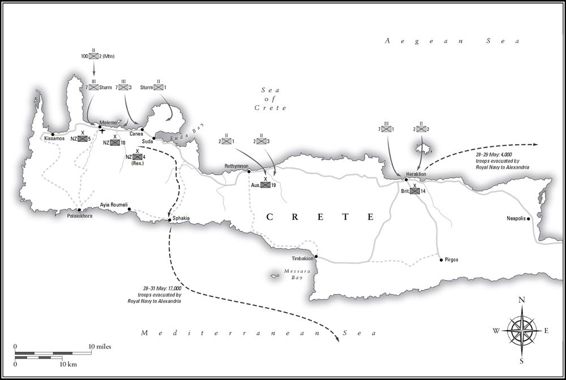
Battle for Crete
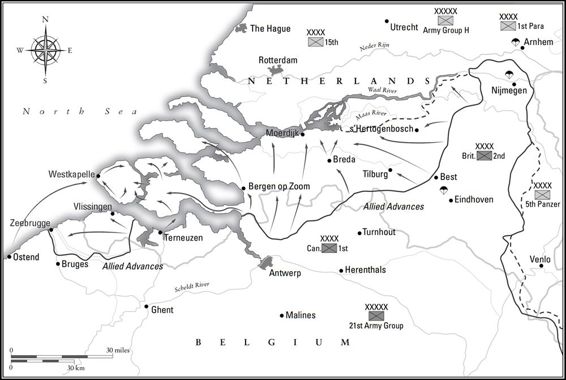
Belgium and the Netherlands, 1944–45
Why another book on another German paratrooper? Hasn’t enough already been written lauding and perhaps even mythologizing these elite troops of the Luftwaffe, the German Air Force, in the Second World War? Certainly the more we know of the individuals who made up and led the Wehrmacht, the German armed forces, and especially Hitler’s elite forces, his Fallschirmjäger or paratroopers, in the Second World War, the greater will be our comprehension of the conflict and the military organizations that managed successfully to overrun so much of Central and Eastern Europe, Scandinavia, North Africa, the Balkans, the Mediterranean and the Soviet Union so quickly. But almost as quickly as the tide of Nazi aggression inundated so much of the free world, it began to recede as it encountered stubborn resistance: first, against Winston Churchill and Great Britain’s Royal Navy and Royal Air Force; and then against Stalin and the Soviet Union’s Red Army. Britain’s prolonged stand ensured that, as in an earlier world war, the United States would have to become involved, thus ensuring the final defeat of Nazi Germany. And Hitler’s invasion of the Soviet Union meant the destruction of the Wehrmacht and, within six months of Barbarossa being launched, the beginning of the end of the Third Reich. Thus, in a very short period of time, the soldiers of Hitler’s Wehrmacht experienced the euphoria of victory and the sting of an agonizing and prolonged defeat. One of those soldiers was Rudolf Witzig.
When I started this book I was struck by how little was available in either English or German on Rudolf Witzig, a German paratrooper of great distinction. This is in stark contrast to many histories and accounts of the Fallschirmjäger and individual German paratroopers in the Second World War. Yet even well-known English-language accounts of the capture of Eben Emael, Witzig’s greatest triumph, provide only cursory information on the young lieutenant responsible not only for planning the operation that led to the capture of a multi-billion pound fortress (if built today), the last word in steel and ballistic concrete of its day, but also pioneering the tactics, techniques and procedures for the loading and combat use of gliders and shaped charges. It is as though the conquest of Eben Emael somehow had no connection with the man and the men who conquered it. Rudolf Witzig was the quintessential first-generation Fallschirmjäger. He was an elite soldier within an elite and extremely tight-knit brotherhood, and the only German parachute-engineer to win the prestigious Knight’s Cross with Oak Leaves during the Second World War. In all, Hitler awarded that decoration to only fifteen German paratroopers. And Rudolf Witzig was also one of only sixty-nine ‘Hunters from the Sky’ to win the prestigious German Cross in Gold.
Witzig also has the unique distinction of being one of very few junior officers of any army in the Second World War, Allied or Axis, to be singled out in the official histories of so many of the participating countries, including the United States, the United Kingdom, New Zealand, and Germany. He was a lieutenant at Eben Emael in May 1940, where Hitler’s paratroopers were used for the first time in conjunction with gliders and shaped charges to effect operational level results. He was a captain on Crete, where Germany’s Fallschirmjäger played the major role in the unprecedented capture of a fortified island from an opponent more numerous than the invaders. Once again Hitler’s paratroopers achieved strategic results. Witzig was a major at the time of the Allied landings in North Africa in November 1942, where he and his parachute-engineer battalion rushed to the scene, played a crucial role in preventing the British and Americans from reaching Tunis and Bizerta and achieved an early end to the campaign. He and his paratroopers thus doomed the Allies to a long and debilitating attritional campaign. It was, however, a war that proved every bit as debilitating to Witzig and the Germans as it did to the Allies. The Allied invasion of Normandy in June 1944 found Witzig commanding another airborne engineer battalion, this time in France, and engaged in a frustrating struggle against French partisans. But, as the Allies streamed ashore in Normandy and prepared to break out of the constricting bocage, Witzig’s battalion was rushed to the Baltic states in a hopeless attempt by Hitler to stem the tide of the Red Army’s onslaught into the territories of the Third Reich. For the third time in as many years, his entire battalion was wiped out. Yet a short time later he found himself commanding a parachute regiment as a lieutenant-colonel in the Netherlands in the last battles of the war. There he experienced some of the most fierce and brutal fighting of the war. Long afterwards, he remained reluctant to revisit his experiences in Holland. Thus, despite his relatively humble rank, Rudolf Witzig’s accomplishments on the battlefield brought him unparalleled recognition from his opponents.
Like his Fallschirmjäger and Wehrmacht comrades, Rudolf Witzig was very much a product of his time. He was born during the most bitter years of the First World War and saw the political and economic turmoil and upheavals of the Weimar Republic. He experienced the occupation of the Ruhr by French and Belgian troops and their shooting of a German citizen. Fortunate to have been born into a loving and economically viable family with a father, he lost that father at a young age and, like millions of other young German boys and girls at the time, was courted by the Hitler Youth and later the Wehrmacht. He volunteered to serve first in the German Army and then in the Fallschirmjäger at a time when the vast majority of young German men were being conscripted. He experienced the war from its first triumphant days, as the Wehrmacht swept across Poland, France, the Soviet Union, and North Africa, through to its last agonizing weeks, as some 200 Allied divisions converged on the shattered remnants of Hitler’s Third Reich. He had marched and fought across the breadth and depth of the war, from Poland to Crete and from North Africa to Lithuania and witnessed the decimation or complete destruction of three of his much-loved battalions. And yet he never broke faith with his oath to Hitler and Third Reich, defending tenaciously and counterattacking fiercely until the very last days of the war. But when the time came to form a new German Army, Rudolf Witzig set out to prove that he was every bit as dedicated to the new Federal Republic of Germany as he had been to the Third Reich.
At the same time, though he was an ardent paratrooper and an extremely capable commander and soldier, Rudolf Witzig was never a member of the Nazi Party; nor was he ever required to have a political officer in any of his units – a benefit of being personally decorated by the Führer of the Third Reich while still a young lieutenant. Nor is there any evidence that Witzig ever internalized the teachings of the Nazi Party, despite his upbringing as a Hitler Youth. Indeed, when provided by the German Army with some eighty Jews from Tunis to dig defensive positions for his soldiers in November 1942, he recorded that they arrived without supplies of any type, including food and blankets, and returned them to Tunis unharmed, an act that sets him apart from most of his paratrooper and Wehrmacht contemporaries. Thus, by getting to know Rudolf Witzig and his Fallschirmjäger comrades better, we gain greater insight into the political and military organizations they were a part of, and a better understanding of the reasons for Nazi Germany’s military victories and final defeat.
We are fortunate to have a treasure-trove of documents and unpublished interviews available to reconstruct Rudolf Witzig’s life. The bulk of these come from his own collection in the possession of his son, German Army Colonel Jürgen Witzig. This collection includes Rudolf Witzig’s personal photo album as well as two videotaped interviews. Where possible I have tried to let Rudolf Witzig speak in his own words, using his reports, documents or interviews. I have also conducted interviews with his wife, Hanna, and son, Jürgen, as well as with veterans who served with Witzig in the Second World War. A fifty-page interview, conducted by officers of the U.S. Army’s Center of Military History in 1988 and covering Witzig’s participation in the assault on the Belgian fort Eben Emael, provided new insights into that event. I have also made extensive use of the Headquarters United States Army Europe Historical Division’s Foreign Military Studies Branch interrogation reports, first to set the scene for each phase of the war and then to provide the German perspective on the strategic situation as well as the situation on the ground at the time. Where Rudolf Witzig’s own words were not available, and this is especially true of the fighting in Holland in the last six months of the war, I have used the words of other participants, most notably his army, corps, and division commanders. Copies of the relevant interrogation reports have been obtained from the National Archives and Records Administration in College Park, Maryland and the U.S. Army Military History Institute at Carlisle, Pennsylvania. I have also made extensive use of the Canadian Army Headquarters reports for the Second World War, published by the General Staff’s Historical Section. The reports serve as the basis for the four-volume official history of the Canadian Army in the Second World War. And I have used the official histories of the key nations involved to place Rudolf Witzig’s battles in their strategic context.
The result is the life and battle history of a single and unique German soldier who changed the course of the war several times over.