

NINE

Knowing that the end of the Sixth Battle represented only a brief pause, rather than a sustained break in the fighting, and that Cadorna would soon try to crack his new defensive line, Svetozar Boroevic prepared his tired army to do battle again. He knew it was a race against time, a contest between the Austrian and Italian forces to rest, regroup, and reequip for the next round of Isonzo fighting. The most urgent task for Boroevic was strengthening the second defensive position. By early September, the 5th Army had 40,000 construction troops, half of them unarmed Russian prisoners of war, working day and night in the Isonzo valley. They built stone reinforcements, dug deeper trenches, laid foot-high walls of sandbags, placed steel shields and barbed wire in front of entrenchments, and did all the arduous tasks that were required to make the army's positions ready for Cadorna's next attack. They worked especially hard on the Carso, where the next Italian blow was expected to fall. The construction units suffered regular losses to random Italian artillery fire, but they labored doggedly until the second defensive line was ready in the second week of September.
The other indispensable task for the 5th Army was absorbing replacements and reinforcements. The loss of Gorizia convinced the High Command of the gravity of the Italian threat, and Boroevic therefore received more new units and replacement battalions than ever before. By mid-September, the Austrian forces on the Isonzo reached an unprecedented strength of almost fourteen divisions with 165 infantry battalions. Boroevic also accepted generous artillery reinforcements from the High Command, a dozen battalions' worth-half of them medium and heavy pieces-by mid-September. The battle-worn divisions bro ken by the Sixth Battle were slowly rebuilt. A month after its destruction, Zeidler's 58th was again at full strength, but its character had changed; only one-third of the division's eighteen infantry battalions were Dalmatian, the rest being new units drawn from all over the empire. The 17th Division was reconstructed to look much like its former self, but its sister division, the 20th Honed, had suffered so badly that even a month after the Sixth Battle's end it was at half-strength and considered unfit for frontline duty. Nevertheless, Archduke Joseph's VII Corps still held the line on the north and central Carso; the plateau's southern third was garrisoned by Lieutenant General Alfred Schenk's mostly Czech battle group, one and a half divisions strong. In all, Boroevic had seven brigades-32,000 infantrymen-on the Carso to beat back the coming Italian offensive.
The Austrians had correctly surmised Cadorna's very predictable intentions. The inflexible count continued to believe that the Carso was the only route to Trieste, and that the only way to secure its capture was by direct assault. After the fall of Gorizia and the 3rd Army's capture of San Michele, the navy again approached Cadorna about a possible amphibious landing on the Istrian peninsula. The landing of a division-sized force behind Austrian lines would have turned Boroevic's vulnerable left flank; combined with a general offensive, such a joint army-navy operation might easily have enjoyed strategic success, including the capture of Trieste from the rear. Cadorna had plenty of troops to spare, but he was as uninterested as ever in any plan that was not his own and was not focused solely on the Isonzo front. He had no time for amphibious landings or any other novel ideas, no matter how promising. He was sure that this time his armies would break through the Austrian defenses on the Carso. The Austrian catastrophe in Galicia and the recent entry of Romania into the war on the Allied side only increased Cadorna's faith that the Habsburg Empire was on the brink of collapse.
Like Boroevic, he spent late August and early September preparing his weary forces for the Seventh Battle of the Isonzo. His 2nd and 3rd Armies filled their depleted infantry regiments with tens of thousands of replacements fresh from training depots, and the artillery received hundreds of thousands of shells straight from munitions factories to restock its batteries. By early September, Cadorna's legions were again ready for battle, at least on paper. The mass mobilization of peoples and economies brought about by total war meant that Italy, like all major belligerents, enjoyed the unprecedented ability to supply its armies with fresh soldiers and shells even after the worst battlefield losses. Italy's reserves of men were still prodigious, and her industrial mobilization was only just reaching full capacity. The Duke of Aosta's 3rd Army, which would bear the brunt of the upcoming battle, boasted a dozen divisions with 150 battalions, and Abelardo Pecorini's 2nd, relegated to a supporting role at Gorizia and on the upper Isonzo, possessed fourteen divisions with 155 battalions. The duke's dozen reinforced divisions on the Carso, divided among three army corps, were to attack on a front of less than seven miles, backed up by 954 guns and 584 mortars. They outnumbered the opposing Austrians nearly three-to-one in manpower and almost four-to-one in firepower. To reach Trieste-only thirteen miles from the Italian right flank-the 3rd Army had only to blast its way through the Austrians' new defensive line.
The duke's engineers prepared for the offensive during the first week of September, digging assault trenches close to the Austrian lines, but their work was difficult and slow. The weather hampered their efforts as heavy rains fell all week, flooding both armies' entrenchments with mud and rainwater. The Isonzo rose as the rains continued, disabling several Italian pontoon bridges, and slowing the supply of equipment and munitions to the 3rd Army's divisions on the Carso. The weather began to improve on September 7, permitting the Italian sappers to finish their work. Still, Cadorna was forced to delay his offensive for a few days. Unconcerned, he ordered the gunners to begin their preparatory barrage anyway, albeit gradually, while the infantry made final preparations for the attack. The 3rd Army's 1,500 guns and mortars shelled the Austrian lines, especially on the north-central Carso front between Nad logem and the village of Nova Vas, held by Archduke Joseph's VII Corps. The pace and intensity of the bombardment started to increase on September 10 as heavier Italian guns targeted Austrian supply depots and reserve positions behind the front, a sure sign of an imminent offensive. The Hungarian defenders sat in their kaventen and waited for the inevitable infantry assaults that followed every prolonged bombardment. On the evening of September 13, the barrage reached a fever pitch, relentlessly blasting positions all along the VII Corps' defensive line, with a squadron of Italian heavy bombers joining in before dark. The veterans of the 17th and 28th Divisions tried to get some sleep, knowing that the coming dawn would bring another major offensive.
As the brilliant late summer sun rose over the Carso on September 14, the 3rd Army's artillery opened the final phase of its barrage, showering the limestone with high explosives from the Vipacco River to the Adriatic. The shelling lasted nine hours, raising enormous clouds of dust and smoke and destroying Austrian communications posts, supply depots, and roads leading to the front lines. Unable to talk with forward units and blinded by the smoke, Austrian divisional and brigade commanders had little idea what was happening in the trenches. The Duke of Aosta launched his infantry assault in midafternoon, after the artillery had had time to do its deadly work. On the northern Carso, the XI Corps' regiments struck Archduke Joseph's positions between Nad logem and Opacchiasella, but gained little ground. An attack by three whole regiments of the 23rd Division on the heights of Nad logem was halted and broken by a determined counterattack from a single battalion of the 61st Regiment, a mixed unit of Magyars, Romanians, Germans, and Serbs. The 22nd Division's ad vance at Opacchiasella was shattered by concentrated Austrian artillery fire. Thefanti did somewhat better slightly to the south, where the Austrians were forced to retreat about a hundred paces to the east. Otherwise, all XI Corps gains were overturned by VII Corps counterattacks.
At the Nova Vas salient on the central Carso, a bulge in the line dominated by a 680-foot-high hill, Slovak and Czech infantry pushed back several mass attacks by the XIII Corps. The 19th Division's midafternoon advance was cut shortby machine gun and rifle fire, but the 31st Division gained some ground in the evening. Only a surprise counterstroke by the 24th Austrian Militia Brigade saved the village of Nova Vas, but at a high price. By nightfall, the VII Corps still held all its trenches on the central Carso, but its troops were growing tired. On the Carso's southern flank, the VII Corps registered the day's only significant advance for the 3rd Army. The sector's defenders, East Galicians of the 60th Brigade, were spread too thinly, just four battalions for a front of three miles. They repulsed a division-sized advance near the Adriatic coastline, but were overwhelmed by a 6 P.M. assault on Hill 144 by the reinforced 16th Division. After a vicious fight for the 470-foot-high hill, the exhausted and badly outnumbered Poles retreated 200 feet to another trench line. The capture of 144 represented the Italians' only notable progress on September 14.
Italian attacks were not confined to the Austrian front lines. In the evening, as the infantry battle subsided, long-range Italian guns shelled the Aurisina waterworks, the pumping station for the Austrian troops defending the Carso, halfway between the front line and Trieste. The barrage damaged the pumps and threatened to destroy the station entirely, a setback that would have made a sustained defense of the Carso impossible. Only rapid action by the Austrian Navy saved the waterworks; six flying boats took off immediately from Trieste Naval Air Station to find and destroy the Italian battery. They discovered and bombed the heavy guns just as the sun was setting, relieving the threat of dehydration for the hard-pressed infantry on the Carso. Ironically, the night then brought a temporary excess of water. After dark, an intense thunderstorm buffeted the lower Isonzo, adding nature's explosions to the day's shelling and tumult. The storm, combined with an unexpectedly strong gust of the bora, frayed the nerves of the tired infantrymen, both Austrian and Italian. Major General Anton Pitreich, Boroevic's chief of staff, recalled, "It was a night filled with shivers and fear, which shook the nerves of all combatants in a disproportionate manner, and which on our side as much as theirs at times prevented greater battle capacity."
The poorly rested infantry returned to combat the next morning. September 15 began with another heavy Italian barrage, this time along the entire Isonzo front, from Rombon to the Adriatic. Frightful shelling through the morning wore down the weary Austrian defenders on the Carso, where the bombardment was particularly violent. The battered 17th Division, holding the line east of Nad logem, was hit on two flanks by XI Corps assault infantry. The freshly committed 49th Division rolled up the Hungarians' northern flank, advancing several hundred feet. Its Grenadier Brigade mounted a bayonet charge, seizing the village of San Grado di Merna; the Granatieri continued to advance, taking the village church, valuably perched on a hill. The XI Corps was prevented from achieving a major breakout by the vigorous defense of the Romanian 43rd Regiment, yet its four divisions nevertheless succeeded in pushing the 17th Division off the heights of Nad logem, an advance of a third of a mile.
The less fortunate XII Corps failed to make any gains on September 15. Its 19th Division reentered the battle with a mile-wide mass charge between Opacchiasella and Nova Vas. The swollen ranks of fanti were torn apart by presighted machine gun and artillery fire long before they reached the 28th Division's trenches. Then a surprise counterattack by a single company of the 11th Jagers pushed the dazed Italian survivors back to their own lines. Similarly, the neighboring 31st Division's advance up Hill 208, just south of Nova Vas, was cut short, with heavy losses, by intense Austrian fire and a determined counterattack. An attempt by the Italian VII Corps to expand its hold on Hill 144 likewise failed; six line infantry battalions and two of Bersaglieri, supported by artillery and a dismounted cavalry regiment, could not push the Poles of the 60th Brigade away from the summit. In all, September 15 was a failure for the 3rd Army. Despite the modest gains east of Nad logem, its dozen divisions had hardly pushed the Austrians back. Vigorous attacks generously backed by heavy guns achieved little, as had happened so many times before on the Carso. Small numbers of Austrian troops again had succeeded in repulsing entire Italian divisions, and were as capable as ever of inflicting lethal counterattacks against initially promising advances. Attrition had returned to the Isonzo with a vengeance.
Regardless, Cadorna and the Duke of Aosta both wanted to press even harder the next day. Both the Italians and the Austrians were very weary and in no condition to fight another sustained brawl among the dolinas. Still, both armies sent their frontline regiments fresh men and munitions during the night and prepared for the next round at dawn. The combat on September 16 was the most intense yet during the Seventh Battle. The 3rd Army's three corps threw themselves at the Austrian defenses again, with minimal results. Only just south of the village of Nova Vas did the attackers gain any ground; the depleted 31st Division managed to wrest Hil1208 from tired battalions of Czech and Slovene militia. Everywhere else on the Carso the duke's offensive stalled bloodily. VII Corps machine guns and artillery prevented any Italian success, adding to the mounds of Italian corpses surrounding Austrian entrenchments all along the Carso. The only alteration in the Italian battle plan from the previous two days was the addition of another attack at the opposite end of the Isonzo front, thirty miles north of the Carso on Mt. Rombon.
Rombon continued to be a thorn in the side of the 2nd Army. The apparently unshakable Austrian hold on the mountain blocked any Italian conquest of the Flitsch basin; the army that occupied Rombon controlled the uppermost Isonzo. Lieutenant General Settimo Piacentini wanted another attempt to push the Austrians off the mountain, particularly before the autumn arrived, a recommendation heartily endorsed by Cadorna. Piacentini ordered the IV Corps to assault Rombon and seize the summit at any cost. The better part of an Alpini brigade, including ample artillery support, was in place by mid-September. The well trained mountain troops were eager to prove their mettle and to capture Mt. Rombon, a feat that would eclipse even the glorious conquest of Mt. Km more than a year before. The only obstacle was the Austrian regiment at the summit.
Since April, Rombon had been garrisoned by the 4th Bosnian Regiment. Two of its battalions had become well established around the 7,290-foot-high peak. (Indeed, the Bosnians had become such a fixture on Rombon that the army built a small mosque, complete with minaret, at the base of the mountain for the regiment's many Muslim soldiers.) The hard-fighting regiment had seen relatively little action over the last five months; the logistical difficulties of sustaining operations at such high altitudes meant that pitched battles were few and far between. That said, the Bosniaken were ready to fight. Five companies of the regiment occupied stone entrenchments around Kleiner Rombon, a 6,750-foot-high position lying a quarter-mile south of the summit. The lower position included a single mountain gun, as well as the regimental headquarters nearby. Three reserve companies were kept at the peak. The 4th's commander, Lieutenant Colonel Leo Kuchynka, was confident that his troops could defend Rombon against all comers. The forty-one-year-old Kuchynka, a Czech career officer, had worn the emperor's uniform since entering cadet school at age fourteen; he had fought at the front with his Vierer Bosniaken since the start of the Galician campaign in August 1914. He was an experienced leader, widely respected by his men.
Life for Rombon's isolated defenders was frequently unpleasant. Fresh food and water were regularly in short supply, the summit was frozen for most of the year, and there were the ordinary hazards of life in the front lines, and then some; occasional Italian shelling took its toll of dead and wounded, as did lightning, an especially dangerous threat near the summit-in just one month, the regiment had lost six soldiers killed by lightning strikes. Nevertheless, the morale of the Bosniaken was admirably high. The tough peasant infantrymen were first-rate soldiers with an outstanding battlefield reputation among friend and foe alike, and they knew it. A burning hatred of the Italians united the regiment, whose Croatian, Muslim, and Serbian soldiers often shared few other common sentiments. They were fierce fighters who particularly liked hand-to-hand combat, when they could wield their deadly battle club, the much-feared buzdovan. The Bosnians' morale was especially high whenever they received their twice-weekly alcohol ration. Like all Austrian infantry, they looked forward to their two cups of strong rum every week, the fighting man's privilege. The rum ration was an important boost to morale, even in elite units like the 4th Bosnians. It was particularly prized before battle; the Vierer Bosniaken even made up a little rhyme about their feelings toward their beloved rum ration:
Ako inia ruma, bite i sturma. Ako nenia rwna, nema ni sturma.
(If we have rum, we fight and attack. If there's no rum, then there's no battle.)
Once he received word that the Seventh Battle had begun, Colonel Kuchynka made sure every one of his soldiers received his cup of rum.
The Italian attempt to take Mt. Rombon, the third of the war, began precisely at 6 A.M. on September 16 with a thunderous barrage by IV Corps mountain artillery batteries located lower down the mountain and in the Flitsch valley. Large-caliber shells shattered the morning calm, blasting Austrian positions around Kleiner Rombon; as a precaution, Kuchynka had left only small guard units in the forward trenches, so the Bosnians sustained few casualties during the bombardment. Just before 8 A.M., Kuchynka ordered his supporting artillery to hit the Italian troops assembling at Cukla, 1,600 feet southwest of the Bosnians' trenches. Within minutes heavy shells exploded in the midst of the Ceva Alpini Battalion, massing to charge the Austrian lines; the battalion lost twenty-nine killed, including its major commanding and the unit's chaplain, before it even went over the top.
Undeterred by the setback, the Alpini then advanced up Rombon's steep slope. At 8:15 A.M. Bosniaken of the 3rd and 4th Companies, occupying trenches just south of Kleiner Rombon, peered through the thick morning fog and caught their first glimpse of the Italian attack, three battalions strong with the Ceva Battalion in the lead. Austrian machine guns opened up at once, followed by rifle tire, drowning out the Italian battle cry, "Avanti Savoia!" Alpini in the three forward companies started to fall, but their comrades continued their charge toward the Bosnian-held trenches. Then the lone Austrian mountain gun at Kleiner Rombon joined in, firing at point-blank range over open sights, its 75mm high-explosive shells tearing gaping holes in the Italian ranks. The brave Alpini tried vainly to push forward, but staccato fire from Schwarzlose machine guns felled the entire first wave; the second wave attempted to advance, but made no progress. The Italians were stalled well short of Kleiner Rombon, nowhere near the summit. What was left of the Alpini brigade soon was running back down the mountainside to its own positions, chased by a Bosnian counterattack as violent as it was sudden. The effort had lasted less than an hour, but Italian losses were grave. The lead battalion alone lost 500 mountain troopers; only three of Ceva's officers survived the brief encounter with the Bosnians. In all, a mere fifth of the elite attackers made it back to Cukla. The mile-high assault had been a complete fiasco. Two days later the IV Corps tried again, but this second attempt proved even less successful than the first. Colonel Kuchynka and his Bosnians still ruled Rombon.
The 2nd Army abandoned its efforts on the upper Isonzo, but the 3rd Army tried one more time on the Carso on September 17. The Duke of Aosta's attacks seemed halfhearted, however, in comparison even with his divisions' advances just three days before. The artillery continued to pound the Austrian defenses impressively, but the infantry clearly lacked ardor. After seventy-two hours of brawling, the farm were exhausted and needed a rest. As a result, the 3rd Army failed to make any impression on the Austrian defenses on September 17. The XI Corps struck the 17th Division again on the Carso's northern flank, and the XIII Corps hit the 28th Division around Nova Vas, but neither attack gained any ground. By the evening, it was evident even to Cadorna that his infantry was just too tired to keep attacking. He and the Duke of Aosta therefore agreed to a pause in the fighting, at least until the 3rd Army could be restocked with enough fresh men and munitions to resume its offensive on the Carso. With that, the Seventh Battle of the Isonzo ended after only four days.
The 3rd Army registered some minor gains during those four days. It had managed to wrest territory from the Austrians in all three Carso sectors, north, center, and south. Yet, the gains in the center and south were barely noticeable-representing only the peak of Hill 144 and a 200-foot advance around Opacchiasella-and the advance in the north penetrated only a third of a mile into the Austrian defenses. None of the territory was significant, militarily or otherwise, and its loss in no way endangered Boroevic's hold on the Carso. The cost of the fighting had been significant, however. The Italians admitted to 17,500 casualties during the four days of the Seventh Battle; the true figure was considerably greater, as always, perhaps two or even three times higher. The true number of Cadorna's dead and wounded will never be known precisely. Boroevic's casualties were by no means light: officially about 15,000, more than half the rifle strength of the Carso's defenders; the real figure was doubtless somewhat higher. The Austrian Army had again stopped a major Italian offensive in its tracks, no small feat. Courage and firepower had preserved the new defensive line against the first serious Italian threat. However, Cadorna remained completely willing to fight battles of attrition until the Austrians were forced to give way, and the defenders knew it. The outlook left scant room for optimism in the Austrian trenches on the Carso. The Italians would be coming again soon.
Indeed, the halt that Cadorna ordered late on September 17 did not even represent an official rest period for his armies. It was instead an opportunity for the 3rd Army to consolidate its modest gains, regroup its damaged divisions, and prepare for the Eighth Battle. The exhausted infantry had few opportunities to catch up on lost sleep; the foot soldiers were kept busy digging new trench lines, bringing supplies forward, and accepting thousands of replacements. Cadorna gave his riflemen no time to ponder the hopeless fate that awaited them.
The Italian side of the Carso was tilled with frenetic activity during late September as the 3rd Army geared up for the coming fight. This time, the 2nd Army would play a major supporting role. Cadorna ordered its VIII Corps, three divisions strong, to attack the Austrian lines north of the Vipacco River, below Gorizia, to assist the main effort on the northern Carso. The Duke of Aosta again tried to cram as many soldiers as possible onto the narrow plateau. The Eighth Battle's spearhead would be the XI Corps, with five and a half divisions on a front of only two and a half miles-twofanti for every foot of front. The duke's two other corps, the XIII and the VII, each boasted three divisions; he also had four divisions in reserve, one of them a fresh formation just sent from the Tyrol to participate in the battle. In all, the Italian attack force included eighteen divisions on a front of only ten miles; many regiments were still short of men because of the Seventh Battle's heavy losses, but the Duke of Aosta's paper strength of 221 infantry battalions was nevertheless very impressive. Quantitatively, the Italian force was even stronger than a month before, but qualitatively, it left something to be desired-after sixteen months of attrition, the infantry endured a permanent shortage of trained officers and sergeants, and unit leadership invariably suffered. Even so, both the duke and the count were confident that their vast numbers of men and materiel would prevail over the weakened Austrian defenses, still reeling from the pounding they absorbed during the Seventh Battle.
The Italian appraisal of Boroevic's position on the Carso was one that the Croatian general and his staff would have endorsed. The Seventh Battle certainly had reduced the new Austrian defensive lines to a depressing shambles. The 3rd Army's heavy guns had wrought havoc with the carefully constructed trenches, dugouts, and weapon pits, particularly on the Carso's northern half. What was left was an unimpressive collection of sandbags and stone walls, too weak to withstand another Italian onslaught; Boroevic's chief engineer considered the entrenchments after the Seventh Battle to be as bad as the Carso's ramshackle positions had been when the war began. Many of the Austrian casualties had been caused by rock fragments, sent flying lethally through the air by high explosives, a problem that had to be remedied before the next battle started. The 5th Army's first priority, therefore, was the rebuilding of its main defensive line. The Carso's 8,000 laborers worked around the clock to improve the infantry's entrenchments: digging deeper; adding more sandbags, steel shields, and stone reinforcements; and re-laying barbed wire and telephone lines. Some 3,400 of the workers were preparing a third defensive line, running all along the Carso two miles behind the current positions, to which the defend ers could retreat to in the event of an Italian breakthrough. By early October, the militia laborers and Russian prisoners had completed their tiring tasks, just in time for the next round of fighting, and Boroevic's defenses could again withstand everything the Italians could throw at them.
The 5th Army's staff still worried about the great numerical imbalance between the 3rd Army and their own forces on the Carso. To oppose the eighteen Italian divisions set to attack on the Carso, the Austrians had placed six and a half of their own. They were solid, battle-tested divisions-the Hungarian 17th Infantry and 20th Honved, the Ukrainian-Romanian 43rd Rifles, the Alpine German-Slovene 28th, the Czech 9th, plus the newly arrived Transylvanian 16th-but they were badly outnumbered by the Duke of Aosta's forces. Against the duke's 221 battalions, the Carso's defenders could produce only 69 (87, including all possible army-level reserves), but most of these were notably short of both men and equipment. The Italian preponderance in artillery was even more pronounced. Boroevic knew that another Italian offensive was imminent, and his pleas to the High Command for reinforcements did not go unheeded; Franz Conrad von Hotzendorf, now seriously alarmed by the prospect of an Italian breakthrough on the Carso, had sent the 5th Army what little he could spare. Unfortunately for Austria, in September 1916 that proved to be quite little indeed. Again fighting a three-front war now that Romania had invaded Transylvania, the Habsburg Empire had few regiments and batteries to spare for the Isonzo. Conrad considered the Italian threat to Trieste to be very grave, and he dispatched two more divisions to Boroevic, all he could scrape together; the 5th Army could expect no more. After the summer's Galician catastrophe, the Russian threat was clearly greater than the Italian, and the Romanian drive into Transylvania terrified Hungary's ruling classes, who demanded all available troops to turn back the invaders. The Isonzo was therefore accorded the lowest priority by the High Command, despite Conrad's undiminished Italophobia. Boroevic's tired army would have to keep the Italians at bay with the forces already at its disposal, a mission that increasingly appeared to be a hopeless task.
Boroevic's forces included a new army corps, General Karl Kritek's XVII, with two divisions to hold the Bainsizza plateau between Mt. San Gabriele and the Tolmein bridgehead. The brunt of the battle would be borne by Wenzel von Wurm's battle-hardened XVI Corps, behind Gorizia, and by Archduke Joseph's weary VII Corps on the northern Carso, supported by Alfred Schenk's corps-sized battle group on the southern Carso. Before the Italian infantry joined battle, the Austrians were forced to endure a weeklong barrage. Cadorna wasted no time, and the Italian guns opened up on September 30. Boroevic, alarmed by the shelling, believed that the Eighth Battle had arrived and dispatched his last reserves, the 44th Rifle Division, to the Carso. Yet the battle was only just beginning; there were still painful days to wait before the fanti came over the top.
The preparatory barrage increased in intensity on October 3, as sustained fire from heavy guns and mortars pounded Austrian positions throughout the day. The pace and severity of the gunnery grew fiercer on October 5. Its impact on the defenders was terrible: in the first five days of October, the Austrians lost 700 dead and 3,000 wounded on the Carso, before the battle officially began. October 6 was an ugly day, with nonstop rain all along the Isonzo and thick fog enshrouding both armies' positions; the Italian barrage slowed and weakened. Greatly relieved by the pause in the pounding, Austrian staff officers hoped that the shelling was just a feint; Archduke Eugen's headquarters in the Tyrol, however, correctly surmised that the Italian guns would remain silent only as long as the weather was bad.
Clearer skies on the morning of October 7 brought ever stronger Italian artillery preparation that continued for nearly forty-eight hours. All along the Carso front, Austrian entrenchments, machine gun posts, and supply lines lay in ruins, and the worst was still to come. Cadorna, broadly aware of the destruction his guns were causing, was, as usual, quite optimistic; amazingly, despite the weeklong barrage, he believed that his infantry would achieve surprise and overrun the wrecked Austrian defenses. He ordered his artillery to commence "annihilation fire" on the entire Carso at 6:30 A.M. on October 9, the last phase of the barrage. More than a thousand guns rained high explosives on the Austrians all morning, followed by probing infantry advances in the afternoon to test the 5th Army's defenses. The main infantry assaults would come the next morning. That evening Boroevic no longer doubted that the long-awaited Eighth Battle had begun in earnest.
The following dawn brought a brief but ferocious barrage by the massed guns and mortars of the Italian 2nd and 3rd Armies, a last softening of the Austrian positions before the infantry joined the battle. The shelling rained fire like a wall from Gorizia to the Adriatic, obscuring the battlefield with dense clouds of smoke and dust. Then the fanti, D'Annunzio's "holy infantry," fixed bayonets, climbed out of their trenches, and charged the Austrian lines. Everywhere the fighting was ferocious as the infantry emerged from the fog and smoke to overwhelm the shattered Austrian defenses. Soldiers wearing gray-green collided with their opponents, clad in uniforms of drab field gray. The exhausted defenders resisted and died hard, but by the afternoon Cadorna's foot soldiers had made impressive gains in several Carso sectors.
North of the Vipacco River, just south of Italian-held Gorizia, two reinforced divisions of the 2nd Army assaulted shell-shocked Ukrainian and Romanian battalions of the 43rd Rifle Division and pushed them back a mile, an enormous gain by Isonzo standards; within two days the Austrians had regained half their lost territory, but the Italians held on to the village of Sober and its entrench ments. Across the Vipacco the 3rd Army was likewise making impressive gains. On the northern Carso, the XI Corps, more than four reinforced divisions strong, attacked two of Archduke Joseph's entrenched divisions. The Hungarian and Slovene defenders, exhausted and at half-strength from the seven-day battering, quickly gave way. Giuseppe Venturi's 45th Division, the victors at Sabotino, took the lead and nearly seized the village of Lokvica; the XI Corps registered a gain of a half-mile, and the Austrian defenses were in disarray. The situation was even worse for the 5th Army on the central Carso. Three Italian divisions struck the exhausted 20th Honved Division around Opacchiasella and trounced the weary Hungarians. By nightfall, the 3rd Army had advanced a half-mile and seized the village of Nova Vas, capturing several hundred prisoners. The Italians had gained territory everywhere on a front of almost four miles, and at last the Austrians appeared close to the breaking point. Only on the southern edge of the plateau did the 5th Army manage to hold its ground on October 10.
Indeed, the defenders acquitted themselves very well in Schenk's sector. The Austrians manning the line in the south, facing the Adriatic, were exhausted and outnumbered; the decisive performance of the defenders that day owed everything to individual initiative. The main battle in the south was for Hill 144, where the Italians held the west slope and the Austrians the east. Two Italian divisions advanced past the summit and assaulted the shell-scarred trenches of the 102nd Regiment. The two Czech battalions, reeling from the Italian barrage, were quickly overwhelmed by thousands of charging farm; the defenders' predicament, as everywhere else on the Carso, appeared hopeless. The 3rd Battalion was nearly surrounded and its commander wanted to retreat, and even the regimental headquarters was in danger; by midafternoon the situation was bleak.
One junior officer of the 102nd refused to give in so easily. First Lieutenant Theodor Wanke, a twenty-nine-year-old professional soldier, was held in reserve with his 9th Company, near the base of Hill 144. He watched in horror as the Italian 16th Division overran his regiment's forward positions, knowing the 102nd was close to defeat. Wanke had spent eight years-his entire careerwith the 102nd, and had fought with it since the Serbian campaign in August 1914. He knew that even good regiments sometimes broke and ran under severe pressure, but he was determined that his regiment would not be one of them. Wanke ignored his battalion commander's sense of impending doom and rallied his company, ordering his Czech riflemen to charge the advancing Italian columns, an apparent suicide mission. His daring counterstroke hit the 16th Division at precisely the right moment, sending a full battalion of fanti fleeing back to the summit in panic. Knowing that victory was within his grasp, Wanke then ordered the neighboring 10th Company to join the counterattack. But the tired and scared soldiers were trying to leave the battle, not join it, and refused to accompany the young officer; Wanke then brandished his pistol and threatened to shoot any soldier who did not follow him to the summit. With that, the 10th Company joined the 9th in a general counterattack. Soon the Czech column, with Wanke in the lead, saved both battalion and regimental headquarters, pushing the 16th Division well away from the summit. Wanke kept going, and with just seventeen men behind him captured a hundred fanti. The lieutenant demonstrated, as had been done many times before on the Isonzo, the impact of small numbers of determined soldiers on the outcome of battle. By counterattacking at the correct moment, Wanke had turned back an entire Italian corps and saved the southern Carso, the road to Trieste. I
Boroevic was elated to hear of the impressive local victory in Schenk's sector, but otherwise there was no good news that evening. Inevitably the obstinate general ordered all available forces to counterattack at dawn in a desperate attempt to regain ground and block further Italian progress. October 11 began less bloodily than anticipated, however, due to the arrival of heavy fog banks on the Carso before dawn. The dense clouds prevented the armies from launching any significant attacks. Yet once the clouds lifted in the early afternoon, the 3rd Army's mighty artillery opened fire all along the Carso, as the Italians and Austrians dueled for trench lines from the Vipacco to the Adriatic.
The fighting was vicious, even though both sides were tired and depleted. The few fresh Austrian battalions were committed early in the battle. The beleaguered 17th Division managed to hold its ground only with the help of the Czech 98th Regiment, just arrived from the Eastern front. On the central Carso, where the VII Corps had lost significant ground the previous afternoon, battalions of Hungarians, Slovenes, and Alpine Germans vied for every inch of rocky territory with a half-dozen Italian divisions. By the end of the day, the determined Austrian efforts had blunted all Italian advances and regained some lost trench lines, but at a terrible cost. The fighting was just as bloody on the southern Carso, where Schenk's tired infantry again stalled the 3rd Army's drive on Trieste. In all, October 11 represented a successful effort by the 5th Army. After losing much of its main defensive line on the Carso on October 10, it had managed to prevent any further Italian gains and had wrested some lost trenches back from the Duke of Aosta. That said, the cost had been exorbitant, even by the normally dreadful standards of the Isonzo. Boroevic's divisions lost probably 24,000 soldiers on the Carso on October 11, including dead, wounded, and missing; according to Major General Pitreich, the 5th Army chief of staff, the artillery registered a loss of forty-one guns to shelling and capture, almost a whole division's worth of artillery. It was a staggering one-day loss. The 5th Army had again prevailed, but it could not hope to continue such a costly battle for more than another day or two.
Fortunately for Boroevic and his soldiers, the Duke of Aosta had lost as many men and guns as the defenders, probably even more. By the evening of October 11, the 3rd Army was utterly exhausted. The duke, acting in accordance with Cadorna's wishes, ordered his army to ready itself for another attack in the morning, after a few hours' rest. As commanded, the fanti went over the top again in the early hours of October 12, but their attacks could not hope to succeed. The offensive ardor of even two days before had evaporated, and the exhausted and depleted battalions made no gains all day, despite repeated efforts. The brave 45th Division tried in vain to make headway on the central Carso, but to no avail; by nightfall, Venturi's proud division counted a loss of 4,200 soldiers in less than seventy-two hours. Additional Italian assaults around the Nova Vas salient likewise failed to gain ground. Everywhere the tired defenders proved just strong enough to stall the weary Italian infantry. In the early evening of October 12, Cadorna called a halt to the brief Eighth Battle of the Isonzo. The fanti had done all they could, and needed a rest before Cadorna could launch another major offensive.
By the terrible standards of the Isonzo, and particularly compared to the bitter, unending siege on the Carso, the Eighth Battle was an Italian victory. Everywhere on the northern two-thirds of the plateau the Duke of Aosta had managed to advance-in the Nova Vas sector, a mile into Austrian territory. The Italians were still nowhere near Trieste, but Cadorna had shown again that attrition worked. At a likely cost of 60,000 soldiers, the Italians had cracked the Austrian defenses.'- Of course, the 3rd Army could not hope to absorb such casualties indefinitely, but doubtless the Austrians would collapse first under such conditions, and that was what mattered to Cadorna. As long as there were enoughfanti to sacrifice-"offered up in grey-green clothes," in D'Annunzio's telling phrase-the terrible arithmetic of attrition inevitably weighed in Italy's favor.
Boroevic and his staff were well aware of this appalling reality. The 5th Army had halted the Italian drive, but just barely. Attrition was grinding the multinational army to pieces, as shown in the casualty figures: the Eighth Battle cost Boroevic about 32,000 soldiers. Ominously, this steep number included as many as 8,000 Austrian troops in Italian captivity (3,500 captured around Nova Vas alone). The frightful beating delivered by Italian artillery, compounded by numerous infantry assaults, was wearing down the 5th Army to the point of collapse. One more such battle and Trieste might be lost.
To prevent this, Boroevic removed some of his battered units from the front lines. The veteran 20th Honved Division, reduced to just 3,000 men by the recent fighting, was moved from the central Carso to the army's rear to recuperate; its sister division, the 17th, was similarly replaced in the line to give the infantry time to rest. Boroevic nevertheless remained very worried about his army's prospects in the next round of fighting, which was sure to come before winter's arrival. His staff dispatched a report to the High Command just four days after the end of the Eighth Battle, detailing the army's terrible losses and what it needed to prevail in the coming battle. The October 16 report spoke of a crisis caused by heavy casualties and a shortage of replacements. It noted that normal losses were so high that each division required 2,000 replacement troops per month, not counting major battles; those, of course, consumed even more fresh soldiers. The 5th Army had lost 100,000 soldiers in eight weeks and had few replacements on hand to flesh out its depleted regiments. In addition to more men, Boroevic pleaded with the High Command for more artillery and mortars, as well as ammunition for both. In addition, steel helmets were badly needed on the rocky Carso to prevent fatal head wounds, a frequent cause of death while under Italian bombardment. Conrad was very concerned about an impending Italian breakthrough and promised Boroevic more replacements, firepower, and shells-and steel helmets, too, as soon as possible. Conrad wanted to dispatch more divisions to the Isonzo, but that required Berlin's approval. The Germans were habitually uninterested in the Italian front, which they considered a sideshow; but by late October, Paul von Hindenburg, convinced of the gravity of the Italian threat, relented and permitted Conrad to transfer a single Austrian infantry division from East Galicia to the Carso. It would arrive to fight in the Ninth Battle.
On the same day that Boroevic dispatched his gloomy report to Conrad, Cadorna ordered the 2nd and 3rd Armies to be ready to launch a major offensive in one week. He knew that the Austrians were near their breaking point, and that one more big push before winter could decide the issue. Aware of the difficulties posed by unpredictable autumn weather, Cadorna permitted the Duke of Aosta to decide exactly when the offensive should begin. The scheme of the attack was as it had been during the Eighth Battle; the 2nd and 3rd Armies were arrayed precisely as they had been three weeks before. Numbers of men and weight of shell, not surprise, mattered to Cadorna. The Italian superiority again was daunting: on the Carso, 221 Italian battalions against ninety-one Austrian (counting all available reserves), and 1,350 guns versus 543.
Boroevic accurately guessed his adversary's intention, and his timetable as well; the 5th Army command knew that the next, decisive phase of the autumn campaign could arrive as early as October 23. This foreknowledge was the result of ample evidence of an impending attack: Austrian intelligence officers observed more reconnaissance overflights and more troop trains moving to the Isonzo, and, most important, interrogated many Italian deserters who preferred surrender to a part in the imminent offensive. October 24, the day Cadorna had wanted to start the battle, was plagued by poor weather, so the artillery preparation was postponed. The thunderous barrage began the next morning, under clearer skies, with heavy artillery and mortar fire striking Austrian entrenchments all along the Carso. At midday, however, dense fog and intense rains returned, and the shelling halted. The artillery resumed its deadly task on the morning of October 26, uninterrupted by weather, as long-range guns bom barded Austrian artillery emplacements, reserve barracks, supply depots, and headquarters. The Austrian foot soldiers in forward trenches on the Carso now knew that the Ninth Battle had arrived, and that the fanti would attack on the first clear day.
The Austrian gunners tried to protect their infantry brethren by shelling Italian gun and mortar positions and ammunition dumps, but it was an impossible task. The outnumbered and outgunned Austrian artillery was incapable of silencing the Italian barrage, even for a few hours. Boroevic's infantrymen could only sit in their mud-filled entrenchments and endure the pounding. The brutal preparatory barrage wrecked Austrian forward and rear positions for the next three days; by October 28 the 5th Army had lost 2,800 soldiers to the Italian guns, including nearly 500 dead. Austrian trenches from Mt. Santo to the Adriatic had been reduced to rubble, burying many of the troops inside. The shelling continued mercilessly through October 31, supplemented by air raids, and was accompanied by infantry probing attacks in the afternoon, as before the Eighth Battle. The following dawn, November 1, the massed guns of the 2nd and 3rd Armies commenced "annihilation fire," the immediate precursor to the infantry assault. Cadorna's ninth attempt to take Trieste was under way.
North of the Vipacco, the Italian VIII Corps made a spirited effort to push the 43rd Rifle Division away from Gorizia. Seven Italian brigades-fourteen regiments-struck the Austrian 41st Regiment, a polyglot unit from the Bukovina, the empire's easternmost province. A division of 12,000 soldiers attacked on a front of a quarter-mile: ten fanti for every foot of front. Yet the Romanian, Ukrainian, and Jewish riflemen, relying on their trusted machine guns, bloodily repulsed the daylong Italian attacks, and the 2nd Army made no headway beyond Gorizia on November 1. The 3rd Army was more successful. On the northern Carso in particular, the devastating barrage inflicted such damage on Austrian defenses that several positions fell quickly to the attacking XI Corps. The spearhead, as had become the custom, was the veteran 45th Division, whose intrepid infantry charged the ruined trenches of the 28th Division north of Lokvica. The 45th, reinforced by a brigade of Bersaglieri, advanced swiftly and overran the Croatian and Czech defenders. Two more Italian divisions rolled up both of the 28th Division's flanks, pushing back the crack 44th Rifle Division as well. By midday, the 45th Division had taken several hills and annihilated the 21st Rifle Regiment, killing or capturing 1,800 Austrian soldiers, and the VII Corps was on the verge of collapse. Archduke Joseph reluctantly prepared a retreat to the second defensive position, two miles back, but first he wanted a general counterattack to restore the main line of defense if at all possible.
There were scant reserves available, however; by scraping together all his uncommitted companies, Archduke Joseph collected eight battalions by the afternoon. Boroevic had no fresh regiments to offer, so the VII Corps would have to attack alone. The counterstroke got off to a bad start, being hit hard by Italian artillery (including gas shells) while assembling for the attack. Nevertheless the Austrian infantry advanced, retaking several positions, and the fighting raged all night along the northern Carso. By dawn on November 2, the VII Corps had recaptured ten major positions lost the previous day and had netted 500 prisoners. Yet the situation remained critical; the VII Corps, weakened further by the overnight skirmishing, could not hope to withstand another major Italian blow. At noon, the 3rd Army delivered the expected second round of the offensive. Under the cover of a punishing barrage, the XI Corps infantry assaulted the Austrian entrenchments. By midafternoon the VII Corps was near complete collapse and without any fresh troops; Archduke Joseph now had no choice but to retreat to the second defensive position, the Kostanjevica line.
The retreat was a bloody melee that lasted well into the night. Austrian and Italian infantry fought doggedly for every hill and dolina, and casualties mounted on both sides. By the early hours of November 3, the Kostanjevica line was temporarily secure, but only due to the rapid intervention of the tired 17th Division, which was taken out of corps reserve to stall the continuing Italian drive. Yet, one more major Italian push could easily shatter the second defensive line, and there were no fresh reserves on the whole Isonzo front available to stop them. The situation was hardly better north of the Vipacco. There, Zeidler's 58th Division resisted all Italian efforts to advance past Gorizia, but the neighboring 43rd Rifles fared badly. An assault group of Italian infantry forded the cold, waist-deep waters of the Vertojbica River, a tributary of the Vipacco, and charged trenches held by the weary 41st Regiment. The surprised Austrian riflemen eventually reestablished their defenses, but only after bitter close combat and the embarrassing loss of twenty officers, 400 men, and 7 machine guns captured by the Italians. Under the relentless pressure of attrition, the 5th Army was beginning to lose its fighting edge.
Boroevic wanted to counterattack, as usual, but it was simply impossible; merely holding the second defensive line seemed hopeless. The 3rd Army delivered its expected follow-up offensive on the morning of November 3. The cloudy weather and the weariness of the Italian infantry dulled the attackers' spirits, but the fanti proved tough adversaries nevertheless. The main Italian blow fell just east of Fajti hrib, at Hill 464, in the center of Archduke Joseph's fighting line. Either the 17th Division would hold Hill 464, the decisive sector, or the Carso at last would be in Italian hands. The Duke of Aosta's spearhead division was, as expected, the 45th, which assaulted the Austrian trenches with three infantry regiments, backed up by generous amounts of heavy artillery and mortar fire. By midmorning the exhausted and outnumbered defenders began to give way, and a major Italian victory was at hand. Only rapid action could save the VII Corps, and there was but a single reserve battalion available on the entire Carso.
That was the 4th Battalion of the 61st Regiment, a mixed unit of Romanians, Germans, Magyars, and Serbs from the Banat in south Hungary. It was an ordinary rifle battalion, led by an apparently ordinary commander, Captain Peter Roosz. The thirty-year-old Magyar career soldier, a native of the polyglot Banat, was the son of a coach builder. Like many junior officers, Roosz had spent his entire career with his regiment, including impressive war service in the Balkans and the East, punctuated by several wounds and decorations. When the 17th Division began to falter in the Fajti hrib sector on the morning of November 3, Roosz received the order to lead his battalion in a last-ditch counterattack, a final effort to turn back the 3rd Army's drive on Trieste. With reckless daring, the captain led his battalion in a headlong rush against the advancing 45th Division, a single Austrian battalion against at least a half-dozen Italian battalions. The two armies collided among the dolinas, and savage, disorganized fighting raged with bayonets, knives, grenades, and even rocks and stones; the surprise counterstroke caught the Italians off balance, and the startled 45th Division began to retreat in disarray. After two hours of vicious hand-to-hand combat, the 45th Division, the best Cadorna could offer, had been pushed away from Fajti hrib, and the 4th Battalion of the 61st Regiment owned Hill 464. Captain Roosz, who miraculously survived his courageous charge and the melee that followed, captured eleven officers, more than 500 riflemen, and eleven machine guns from the Italians. Yet again, the actions of a single intrepid and determined junior officer had saved the Austrian hold on the Carso.3
On the evening of November 3, after the 17th Division's successful defense of the Kostanjevica line, the Austrian predicament was much improved. That night, the fresh 14th Division-which Conrad had transferred from East Galicia with Hindenburg's permission-began to arrive on the Carso. At last Boroevic had the troops he needed to guarantee the integrity of the second defensive line; now he could assure the High Command that Trieste was safe.
The Duke of Aosta's divisions had also begun to demonstrate signs of serious weariness, and were clearly incapable of sustaining another great push. Still, the 3rd Army made one final assault on the Carso before the Ninth Battle was ended. On the morning of November 4, the XI and XIII Corps tried one more drive toward Trieste. The duke's last fresh brigades attacked the Austrian lines on the central Carso, but were soon halted bloodily by accurate machine gun and artillery tire. The Austrian infantry was exhausted, so the gunners stalled the 3rd Army's push, blasting the lead Italian regiments to pieces on the rocky plateau. The fighting struggled on into the early evening, but by nightfall on November 4 the Ninth Battle was finally over.
The Duke of Aosta was able to report to Cadorna that in five days of fighting his divisions had advanced as much as two miles on a front of four and a half miles, an impressive gain compared to previous Carso battles. Yet this advance in no way undermined the Austrian hold on the Carso; the Italians were perhaps two miles closer to Trieste, but there were still fourteen miles to go, and the Austrian defenses in front of them remained formidable. In all three autumn battles, the 3rd Army had exhausted itself before achieving any decisive gains; in every battle, Cadorna was willing to sacrifice countless soldiers at first, but proved fatally cautious about committing his last reserves to achieve decisive success. This curious combination of recklessness and timidity, which proved so damaging in the Sixth Battle, undercut Italy's autumn gains on the Carso. Worse, the losses sustained by the Italians to get two miles closer to Trieste were horrifying. Officially Cadorna admitted to about 36,000 dead, wounded, and missing, but, as always, the real figure was far steeper-perhaps 70,000 casualties. The official Austrian conclusion about the Seventh, Eighth, and Ninth Battles-"the success of the Italians bore no relation to the mighty expenditure in men and materiel that it cost"-was painfully accurate. At such a rate of exchange, the 3rd Army would need a dozen more offensives and a million more men to sacrifice to reach its objective.
That said, the end of the battle brought no rejoicing either in the Austrian trenches or in Boroevic's headquarters. The 5th Army had halted a major Italian offensive yet again. Considering the forces arrayed against it, Boroevic's army had surrendered very little ground. The Carso remained firmly in Austria's grasp. But the human cost had been frightful: at least 30,000 casualties, among them 9,000 captured. In just two months the Austrian forces on the Carso had officially lost 74,000 soldiers (or 102,000, counting the sick), and that shocking figure was surely an underestimate.4 Attrition was wearing the 5th Army away; only the onset of winter saved the Austrians from further punishing blows.
As ever, the battle dragged on in a limited but painful manner for several days after it formally ended. The Austrians, in particular, launched a series of minor raids to regain lost ground, often enjoying local success. On November 14 the 58th Division attempted to retake recently lost trench lines on the east slope of Hill 171, a low peak just southeast of Gorizia. Without artillery support, a battalion of the 28th Regiment, Prague's formerly ill-starred Hausregimeiit, mounted a surprise bayonet charge against the soldiers of the defending 48th Division. The spirited Czechs quickly overwhelmed the entrenched Italians, retaking 17 l's east slope and inflicting grievous losses on the start led (anti: 580 killed and 480 captured. The lightning raid accomplished all its objectives; it meant little to the Isonzo campaign overall, but it gave a badly needed boost to flagging Austrian morale.
Austrian morale was low indeed by November, with the harsh winter coming and no prospect of victory in sight. Many of the defending divisions had been so badly mauled that they had to be removed from the line; one of them, the 20th Honed, which had fought so doggedly on the Carso for well over a year, was in such bad shape that it had to be transferred to the quieter Russian front. Their famed corps commander, Archduke Joseph, soon followed. On No vember 21 the Habsburg archduke, recently promoted to colonel-general, departed the Isonzo to assume command of a sector on the Eastern front, leaving his beloved VII Corps behind. For sixteen months Joseph and his Hungarian corps had been the core of the Carso's defense, the symbol of Habsburg resistance to Italian aggression. The unflinching Austrian stand on the rocky plateau would continue without Archduke Joseph, but his departure was nevertheless a blow to the 5th Army's fighting spirit.
Far worse was the tremendous loss that the entire Habsburg Army experienced on November 21 with the death of Emperor Franz Joseph. Although he had been ill for many months, Franz Joseph's death in the sixty-eighth year of his reign still came as a profound shock to his subjects. The eighty-six- year-old monarch had reigned for so long, and survived so many personal tragedies, that he had seemed all but immortal. His death was a particularly grave loss for the army. Franz Joseph had been not just the first soldier of the monarchy, a duty he took very seriously until the last day of his life, but also a badly needed symbol of unity; his personality and prestige gave the empire and its fighting forces a cohesion that was vital to survival during a total war, and was perhaps otherwise lacking. Franz Joseph came to the throne in 1848 with the Habsburg Empire in disarray, beset on all sides by crises and with its army fighting the Italians, and he left it two-thirds of a century later in much the same condition. Cecco Beppe-as the Italian soldiers on the Isonzo knew him-died in the middle of his empire's fourth war against the House of Savoy during his long reign. Austria and its army required a strong and persuasive monarch to see it through the Great War, but Franz Joseph's successor exhibited neither strength nor persuasiveness. The young Archduke Karl, just twenty-nine in 1916, replaced his great-uncle on the throne; he would be the last Habsburg emperor, a fact that no one knew-but many suspected-during the gloomy winter of 1916. Karl was fundamentally a weak man, controlled to a large extent by his wife, Zita, an Italian princess (a fact that led many generals to suspect-and not unfairly, as it turned out-that she harbored pro-Allied sympathies). How detrimental Karl would ultimately prove to the Habsburg war effort would not be evident for many months, but as the winter of 1916 approached, all Austrian soldiers on the Isonzo felt a sense of loss as Franz Joseph was laid to rest in the Capuchin crypt in Vienna, the ancient burial vault of the Habsburgs.
Death continued to be ever present on the Isonzo, too, as winter arrived. The huge number of unburied corpses and freshly dug graves was the first thing noticed by all newcomers to the Isonzo front, whether Italian or Austrian. Even the virtual cessation of fighting with the first snows brought little relief to the soldiers dug in from Rombon to the Adriatic. Especially in the upper reaches of the Isonzo front, avalanches again became a serious hazard, burying countless unlucky infantrymen of both armies. In just four days in December, Austrian forces in the Julian-Carnic sector (the area around Mt. Rombon) lost 637 killed and 143 wounded to the "white death"
It was this omnipresence of death that struck Sergeant Benito Mussolini when he reached the Carso on December 1. He had fought for a time on the Carinthian front in the first half of 1916, then training courses and leave had kept him away from the Isonzo for many months. His arrival on the bloody Carso thus came as a rude shock to his senses. He announced triumphantly, "By the banks of the Tiber Italy was born, by the banks of the Isonzo she was born again." When he crossed the "sacred river" to reach his regiment on the Carso, he observed the impressive batteries of massed guns and noted in his diary, "We have so many cannons! Advancing will be easy!" The reality of life on the Carso therefore depressed him profoundly.
Mussolini entered the line at Hill 144 on the southern plateau, joining the 16th Division. Life in the trenches was difficult, even disgusting. The cold and wind-swept hill, site of so much fall fighting, was littered with unburied, rotting corpses; dirt and detritus covered the battlefield. Whenever the artillery of the opposing Transylvanian 16th Division shelled Hill 144, the Bersaglieri were showered with filth thrown up by the explosions. Disease was a serious concern, too. Cholera was rampant, caused by all the dead bodies and feces in the surrounding ponds. Mussolini wisely decided against bathing in the tainted water, a decision that saved his health but hardly made trench life pleasant. Worse, he was unpopular with most of his comrades. He got on well enough with junior officers, educated men like himself; by and large they liked and respected Mussolini and treated him well, some even deferentially. His comrades, however, were not so well disposed to the former journalist. The workers and peasants who filled the ranks of Mussolini's regiment had little respect for him; many, indeed, positively hated him; they blamed him for the war.
Yet by chance Mussolini enjoyed a pleasant Christmas to finish 1916. A captain serving in a nearby unit had worked with Mussolini-under him, in factbefore the war at Popolo d'ltaliu. Upon hearing that his comrade was on Hill 144, the young captain walked to visit Mussolini and wish him a happy Christmas. He brought a surprise gift, a roasted chicken hidden under his officer's cape. Mussolini was overwhelmed by the captain's kindness; years later 11 Duce spoke of that Christmas on the Carso with tears in his eyes. Mussolini was one of the very few soldiers on the Carso to receive a pleasant surprise that cold Christmas. He received more good fortune a week later. On New Year's Eve, his company was relieved and sent to the rear for ten days' leave. Mussolini was lucky enough to spend the last hours of 1916 in the relative comfort of the rear areas, safe from the dirt and danger of the Carso. Few of his comrades or enemies on the Isonzo were so fortunate.
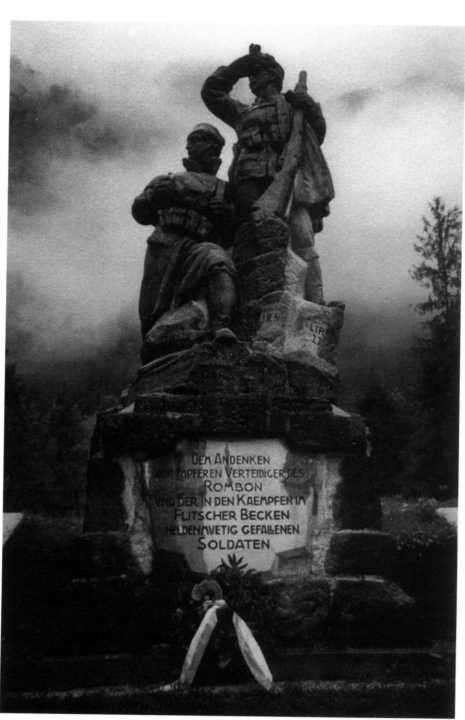
Monument "to the defenders of Rombon" at Log pod Mangartom (note Bosnian soldier on left).
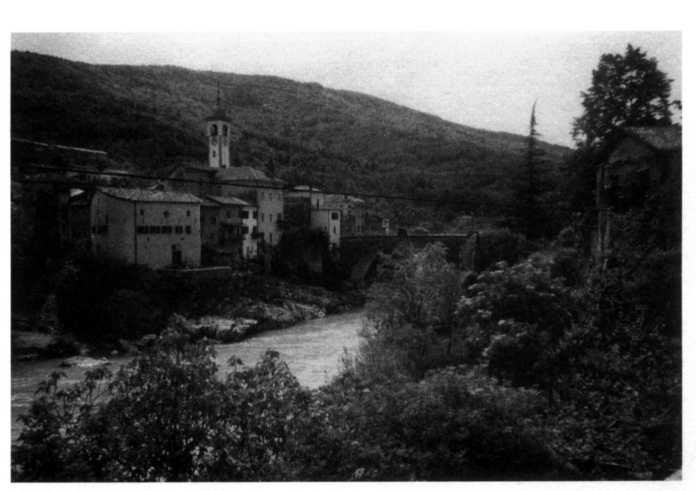
Isonzo at Kanal (Canale).
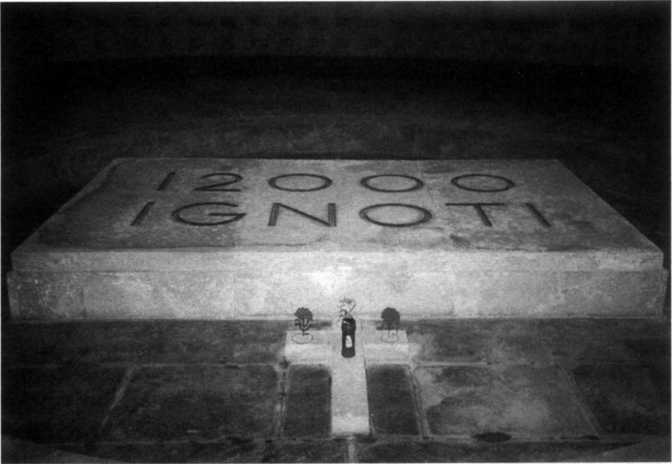
"12,000 unknown" inside the Italian ossuary at Oslavia.
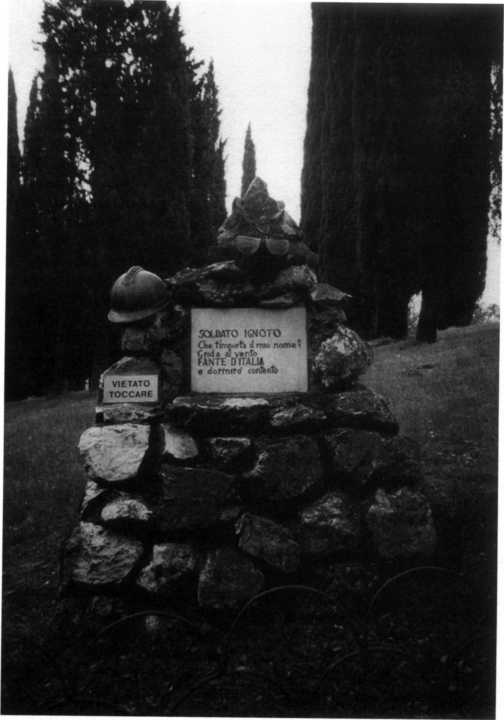
Monument to unknown Italian infantryman at Colle S. Elia (Redipuglia).
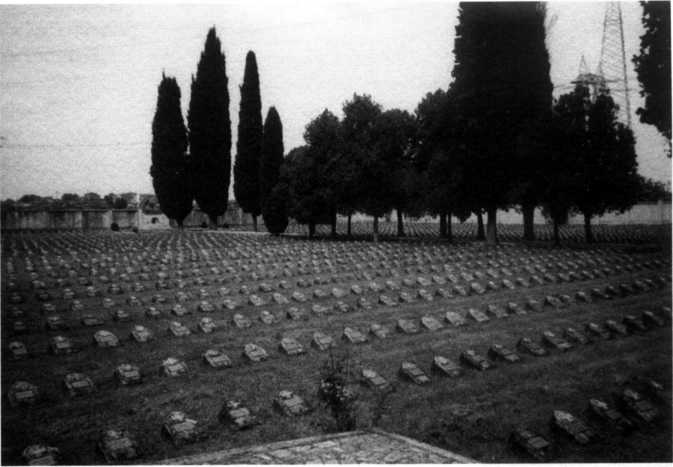
Austrian cemetery at Fogliano/Redipuglia.
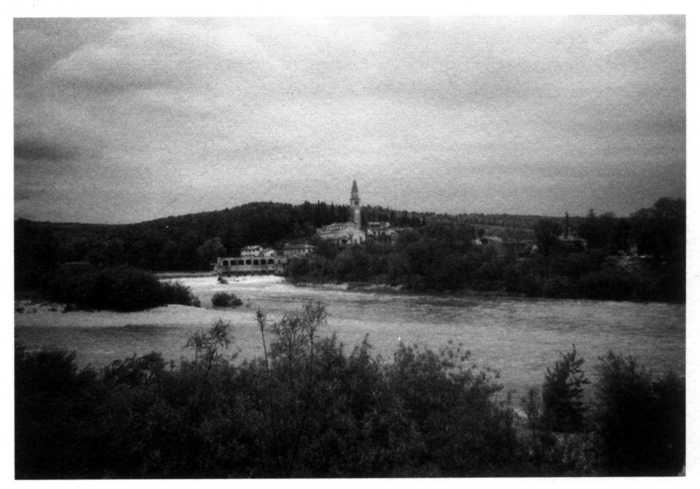
Town of Sagrado (Carso) at Isonzo's banks.
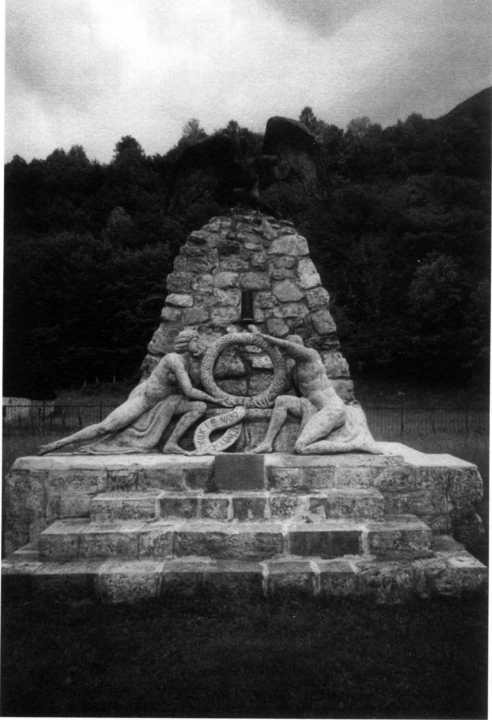
Monument to Austrian dead at Lode pri Tolminu.
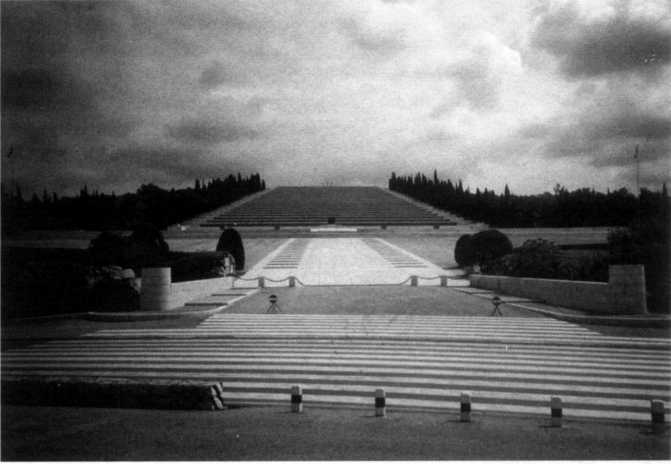
Italian ossuary at Redipuglia.
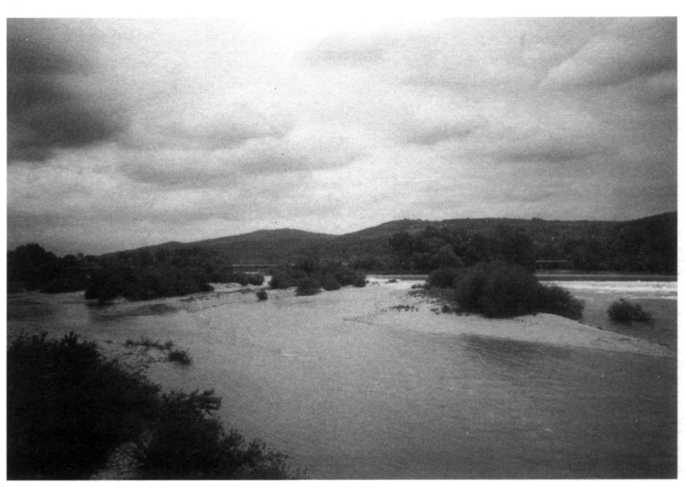
Isonzo at Sagrado/Gradisca, looking at Mt. San Michele.
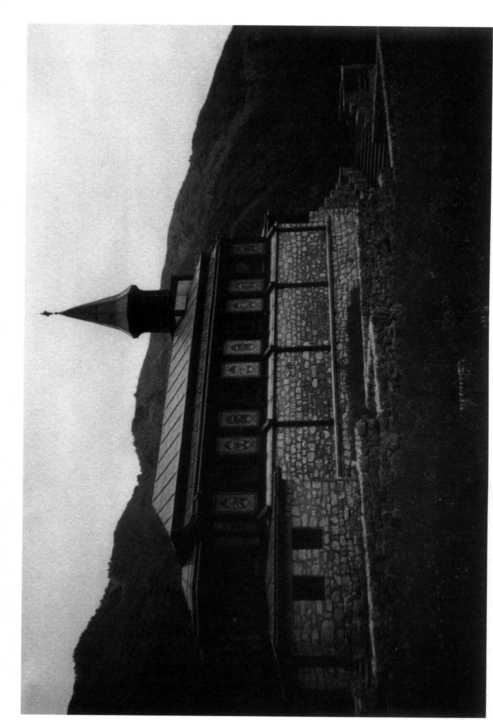

Franciscan monastery atop Mt. Santo (Sveta Gora).
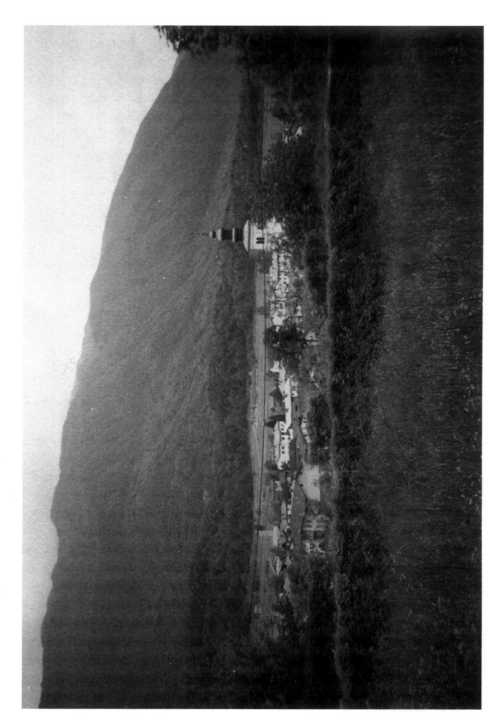
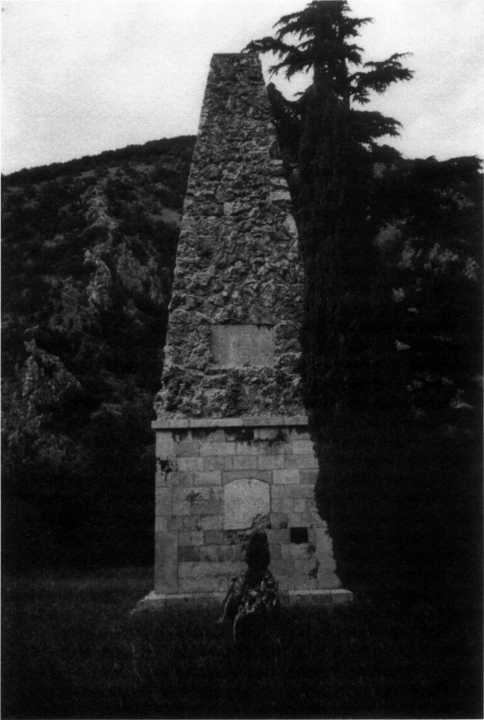
Hungarian monument at Sabotino.
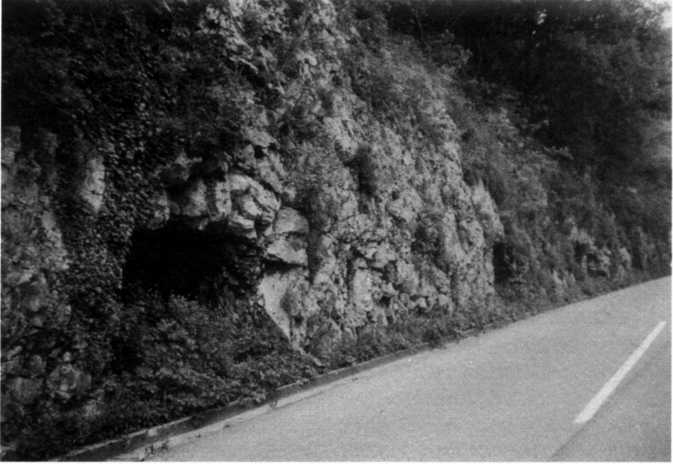
Kavernen on Hill 383, Plave (Plava).
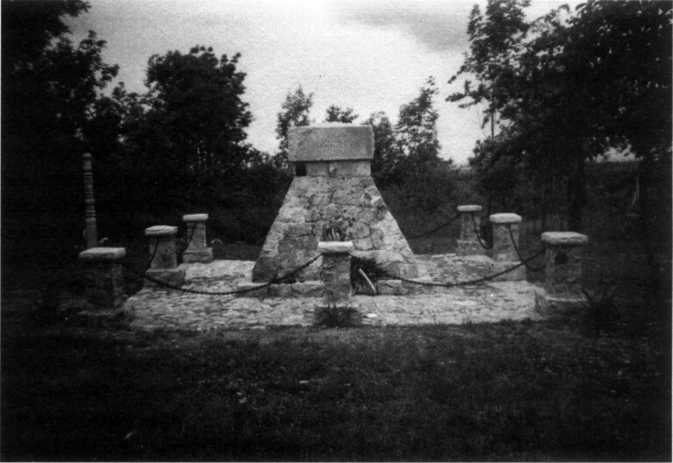
Monument to 4" Honved Regiment at Mt. San Michele.