
IF MEDIEVAL warfare is to be represented by a single image, encapsulating both its distinctiveness and the predominant role played by the military elite, that image must surely be the mounted, armoured warrior. For while the armies of the Roman Empire and early modern Europe were dominated by foot soldiers, the corresponding role in those of the middle ages was played by men on horseback. The armoured knight, mounted on a colourfully caparisoned warhorse, is an indelible symbol of medieval Western Europe: he graces the folios of countless illuminated manuscripts and springs to life in the word pictures of the chroniclers of chivalry. Admittedly, artistic and literary works should be interpreted with caution. Primarily produced for, and often by, men of gentle blood, such sources offer an idealized image of warfare which concentrates on the role of the aristocratic warrior almost to the exclusion of other, often more numerous participants. The reality of war could be very different. Disciplined and resolute infantry proved, on many occasions, to be more than a match for heavy cavalry on the battlefield. Foot soldiers assumed a particularly important role in siege warfare. Yet, to recognize the aristocratic bias of some of our sources and to give due acknowledgement to the role of infantry is not to deny that, in essence, the middle ages was an equestrian age of war. Reconstruction of the reality of medieval warfare reveals a complex and varied picture, but one in which the mounted warrior is an ubiquitous, irrepressible figure.
There were, of course, many kinds of mounted warrior. Any survey of war from the eighth century to the sixteenth should not neglect the impact on Christendom of the ferocious ‘horse peoples’ of the steppe. The Magyars in the late ninth and tenth centuries and the Mongols in the thirteenth campaigned with breathtaking discipline and brutality. Their consummate horsemanship may be compared with that of the Seljuk Turks, whom the Byzantines, themselves heavily dependent on cavalry, encountered in Asia Minor and whom Western European crusaders fought in Outremer. Equestrian warriors of equal distinction were the Ottoman Turks, who began their advance into the Balkans in the mid-fourteenth century. The medieval West was no less militarily dependent on the horse. Thechevauchée, or fast-moving raid by a mounted force, was a commonplace feature of medieval warfare. Armies might be mounted for the march, thereby achieving mobility and strategic flexibility, even if, like the Anglo-Saxons and Vikings, and the English during the Hundred Years War, the intention was to dismount to fight. On the battlefield, heavily armoured horsemen could play a decisive role, particularly if charges (and, perhaps, feigned retreats) were well-timed, delivered in disciplined, close-order fashion, and backed up by infantry or combined with archery. This remained as much the case in the fifteenth century as it had been in the eleventh.
Above and beyond strategy and tactics, it was the close association of the military aristocracy of Christendom with the warhorse that ensured that the agenda in medieval warfare would be set by the armoured man on horseback. At once an expensive symbol of wealth and status and, as St Anselm put it, the ‘faithful companion’ of the chivalric warrior, the warhorse raised the military elite above the rest of society. Acquiring suitable warhorses and the arms and armour required for mounted combat involved a substantial capital outlay. In the eleventh century the most expensive items of equipment, because their manufacture involved skilled, time-consuming work with materials which were in short supply, were the hauberk or mailshirt, composed of perhaps 25,000 rings, and costing, as James Campbell has observed, ‘something like the annual income from quite a big village’; and the sword, which would take even longer to make (a modern estimate is 200 hours). A good warhorse would have cost at least as much as a hauberk. Examination of mid-fourteenth-century horse valuation inventories suggests that an English knight at that time would think nothing of spending £25 on a high-quality warhorse. Purchase of arms and armour befitting his status, plus additional horses and equipment, could easily bring the overall cost of preparing for war to £40 or £50. To put such sums in perspective, £40 per annum in landed income was regarded by the crown as sufficient to support knighthood. It was also roughly the amount that a knight would receive in wages for a year’s service in the king’s army. Comparable data suggest that an aspiring man-at-arms in mid- to late fifteenth-century France faced a similar financial outlay.
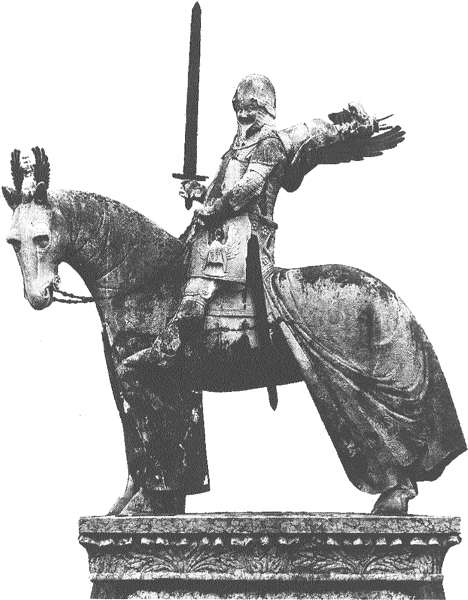
Nowhere is the association of noble equine and knightly warrior more powerfully illustrated than in the equestrian monuments of Italy, the grandest series of which commemorate the Scaligeri lords of Verona. Here, the effigy of Cangrande I della Scala (d.1329), life-size with grinning face and drawn sword, astride a caparisoned warhorse, makes an arresting statement of aristocratic authority.
The provenance of the heavily armoured, aristocratic equestrian warrior has excited much debate. It has been argued, most notably by Lynn White, that it was the arrival of the stirrup in eighth-century Western Europe that prompted the emergence of cavalry capable of ‘mounted shock combat’, with lance held tightly ‘couched’ under the right arm; and that, moreover, since warhorses, armour, weapons, and military training required landed endowment for their maintenance, it was in effect the stirrup which was responsible for the establishment of a feudal aristocracy of equestrian warriors. More recent research, by Bernard Bachrach among others, has suggested that the solid fighting platform necessary for a rider to engage in mounted shock combat depended upon a combination of stirrup, wraparound saddle with rigid cantle (back plate), and double girthing or breast-collars. With the rider thus ‘locked onto the horse’s back in a sort of cock-pit’, it was possible, experimentally from the later eleventh century, and with greater regularity in the twelfth, to level a couched lance with the assurance of the combined weight of horse and rider behind it. Furthermore, historians no longer accept that the medieval aristocratic elite was actually brought into being by advances in horse-related technology. Rather, an existing military aristocracy—great lords and the household knights whom they armed and horsed—adopted new equipment when it became available, and pursued the tactical possibilities which that equipment offered. Those possibilities could not ensure battlefield supremacy for the knightly warrior. Nor was he the only important component in field armies. But the elite distinction of mounted shock combat, associated as it was with the emergence of chivalry as an aristocratic code of martial conventions and behaviour, gave rise to an image of the nobleman as equestrian warrior which, while being firmly grounded in reality, proved irresistible to manuscript illuminators and authors of romance literature. Although presenting an idealized world, such artistic works reflected the martial mentalité of the nobleman while contributing to its further elaboration and dissemination; and they leave us in no doubt that the warhorse was at the heart of the medieval aristocrat’s lifestyle and mental world.
This was perhaps most clearly displayed on the tournament field. It is surely significant that tournaments begin to appear in the sources in the early twelfth century. Apparently connected with the emergence of the new cavalry tactics, the tourney provided a training ground for individual skills with lance and sword, and team manoeuvres by conrois of knights. They also offered opportunities for reputations in arms to be made or enhanced, although that depended upon the identification of individuals amidst the dust and confusion of a mêlée. It was probably this need for recognition on the tournament field, as well as the similar demands of the battlefield, which brought about the development of heraldry in the early twelfth century. Along with lance pennons, surcoats, and smooth shields, the caparisoned warhorse was emblazoned with heraldic devices, thereby becoming a perfect vehicle for the expression of individual identity and family honour within the military elite. A similar message was conveyed by the martial equestrian figures which, until the fourteenth century, were so commonly to be found on aristocratic seals, and by the ceremonial involvement of warhorses, decked out in heraldic caparisons, in the funerals of later medieval noblemen.
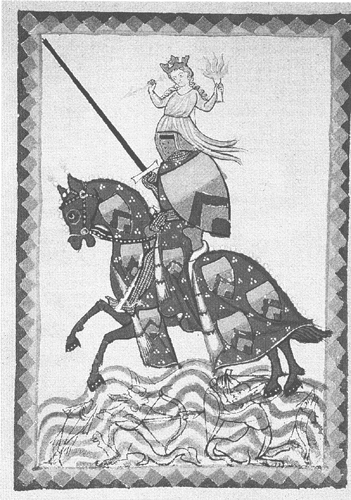
The role of the caparisoned warhorse as conveyor of aristocratic heraldic identity in battle and tournament is vividly illustrated in this depiction of Ulrich von Lichtenstein, the Styrian knight who achieved chivalric fame through his great jousting tours of 1227 and 1240.
Yet the warhorse was, if anything, more closely identified with the warrior elites of the oriental nomadic peoples who came into contact with Christendom during the middle ages. Theirs, however, was a very different kind of mounted warrior. A natural horseman, resourceful and self-sufficient, his equipment was lighter than that of his Western counterpart and his equestrian skills more refined, attuned to exploiting the potential of his nimble, hardy mount and necessary for wielding the composite bow—a powerful shortbow ‘fitted together with glue’, as Fulcher of Chartres described it—from the saddle. That could be a devastating weapon: the Magyars ‘killed few with their swords but thousands with their arrows’, noted Abbot Regino of Prüm. The Turks were also adept as lancers. Nomadic societies were, of course, wholly dependent on the horse. The lightning raids launched by their warrior elites in search of booty, slaves, and tribute were essential to the economic and social life of these peoples; in particular, they reinforced the social order over which the military elite, contemptuous of those who toiled on the land, presided. Among pagan nomads, the central role of the horse in a warrior’s life was solemnly marked at the time of his burial. The inclusion of equine remains (skull and lower legs), along with saddle and stirrups, sabre, bow, and quiver is characteristic of Magyar warrior graves in the Carpathian basin. The Cumans continued to provide horse burials for their nobility into the fourteenth century, several generations after their settlement in the Christian kingdom of Hungary. The place of the horse in the warrior cultures of the Islamic Turks appears, to the modern observer, less archaic. Expressions of feeling for horses, of appreciation for their courage and endurance, by men of letters who were also warriors, such as Usāmah ibn Munqidh (1095–1188), were the products of a more refined—and settled—civilization. That some of the ‘horse peoples’ were able to adapt to a sedentary life, to establish permanent armies supported by state revenues, and to combine their martial energies with the inspirational force of a war-making religion, were developments of great military significance, as was shown only too clearly in the defeat of the Mongols by Baybars’ Mamluks at Ain Jalut in 1260, and in the Ottoman Turks’ relentless campaigns of conquest in Europe and the Middle East in the fifteenth and sixteenth centuries.
The contrasting military cultures of Western Europe and of the oriental horse peoples rested upon very different kinds of warhorse, and also on different approaches to horse management. The warhorse of the medieval West has excited much debate, particularly with regard to size and conformation. In the absence of direct documentary evidence or a substantial quantity of skeletal remains, estimates of warhorse size have been based upon scrutiny of iconographical evidence—with all the interpretative difficulties which that entails—and of such artefacts as horse-shoes, bits, and horse armour, backed up by indirect documentary evidence (for example, records of the dimensions of horse-transport vessels) and practical field experimentation. Insofar as conclusions can be drawn from this evidence, it would seem that the ‘typical’ later medieval warhorse was of the order of 14 to 15 hands in height—not a large animal by modern standards; and that there had been some increase in average size and weight from the eleventh to the fourteenth century, in response to the demands of mounted shock combat and the burden of armour. That burden certainly grew. Equine armour is mentioned in the sources from the later twelfth century. Initially it took the form of a mail trapper. From the mid-thirteenth century, we also find horse barding made of hardened leather (cuirbouilli) or plates of metal, the latter most commonly on the head (chanfron) and chest (peytral). The overall weight of protection for horse and man reached its peak in the fourteenth century, when mail and plate armour were being combined; indeed, it has been suggested that a late fourteenth-century warhorse may have been required to carry over 100 lbs more than its counterpart of the Anglo-Norman period. As a consequence, the warhorse of the later middle ages needed to be more substantial than those which are so vigorously depicted in the Bayeux Tapestry.
Royal and aristocratic records cast much light on the breeding of warhorses and the emergence of the magnus equus in later medieval Western Europe. Prompted (as one English royal writ put it) by the ‘scarcity of great horses suitable for war’, programmes of warhorse acquisition and breeding were set in motion in later thirteenth-century England and France, continuing into the era of the Hundred Years War. High-quality horseflesh was imported from Spain, Lombardy, and the Low Countries. Distribution among the military elite was facilitated by horse fairs, such as those in Champagne and at Smithfield, and by gifts and exchanges between domestic breeders. The product of this selective breeding, the late medieval ‘great horse’ was noted for its strength and capacity for aggression (only stallions were used as warhorses in the medieval West), its stamina and mobility, and its noble bearing. We should be cautious, however, of thinking in terms of ‘armour-carrying equine juggernauts’, even in the case of the destrier, the truemagnus equus. Animals of exceptional size are mentioned in the sources, but there is simply no evidence that the typical ‘great horse’ of the later middle ages stood as high as 18 hands. Fifteen to 16 hands seems more likely, though whether we should be visualizing a heavily-built hunter, or perhaps a cob, remains open to discussion. What is clear is that only a small proportion of the warhorses ridden by men-at-arms were destriers. Indeed, in fourteenth-century England, the courser, whose mobility and stamina made it an ideal horse for chevauchées, emerged as the preferred mount of the wealthier section of the military elite, while the majority of warhorses were either rounceys (runcini) or described simply as ‘horses’ (equi; chivals). Even more revealing of the hierarchies within the military elite are the valuation data recorded in horse appraisal inventories. The dignitas and wealth of the great magnate were celebrated in the high quality of his destrier, just as the more meagre resources of the humble man-at-arms were reflected in the modest value of his rouncey. For example, records of horses lost at the battle of Cassel in 1328 include the dauphin de Viennois’ mount, valued at 600 livres tournois, while the mean value for the dauphin’s esquires was 49 l.t. That horse values on English inventories of the same period might range from £5 to £100 highlights not only the disparities of wealth within the military elite, but also that there was no such thing as a ‘typical’ warhorse.
It was said of the English knightly community on the eve of Bannockburn that ‘they glory in their warhorses and equipment’. Robert Bruce’s reputed remark would apply equally well to the military elite of much of medieval Europe. It is something of a surprise, therefore, to find a fourteenth-century Arab poet, Abou Bekr ibn Bedr, dismissing the Western warhorse as the ‘softest and worst’ of breeds. The Islamic conquests of Iberia and Sicily had, after all, brought superior oriental breeds and an advanced equestrian culture to the attention of the West. The Moors introduced to Spain the Barb, the Turkmene, and the Arabian, and made full use of the indigenous breeds, including the Andalusian. This rich mix of breeding stock had a profound effect on the development of the warhorse in Western Europe, beginning with the Franks in the eighth century. The high reputation of Spanish horses endured into the later medieval period: as Charles of Anjou so memorably remarked, ‘all the sense of Spain is in the heads of the horses’. The Normans acquired Spanish horses, through gifts or involvement in the Reconquista, and bred from them in the favourable conditions of Normandy, with results which were celebrated with such verve in the Bayeux Tapestry. Their conquest of Sicily brought them into contact with a further source of superior Barb and Arabian equines, while at the southern end of the Italian peninsula they gained access to another excellent horse-breeding region, Apulia and Calabria. At a somewhat later date, Apulian stallions were bred with larger mares in the lusher pastures of Lombardy to produce the substantial warhorses for which that region became renowned. Late medieval readers of Geoffrey Chaucer’s Squire’s Tale would have readily recognized the quality of the ‘horse of brass’, compared as it is with ‘a steede of Lumbardye’ and ‘a gentil Poilleys [Apulian] courser’.
The horses which had been bred in Western Europe to provide a robust platform for the shock tactics of heavily armoured knights seemed clumsy and unmanoeuvrable to the Turks. They were less intelligent, less sensitively trained, and less well suited to endurance in a hot climate than the Seljuks’ light-moving Turkmene and Arab horses. The latter, it has been suggested, were of a similar height, or somewhat smaller, than Western warhorses, but they were a good deal lighter: 700 to 900 lbs, as compared with 1,200 to 1,300 lbs. The nimbleness and stamina of the Turkmene and Arab horses were essential to the mobile, skirmishing warfare at which the Turks, in common with all ‘horse peoples’, excelled. The crusaders’ stock response, especially by men newly arrived in the Latin East, was to bring their weight to bear in a massed charge. This could be effective if well-timed, but it was also an inflexible tactic. All too often the Turkish light horsemen withdrew or dispersed before impact, only to re-engage with archery from a distance when the crusaders had come to a disordered halt, their horses blown and vulnerable. The Turks accepted close combat, with lance, sword, and mace, only when a decisive advantage had been gained.
The equestrian cultures of the military elites of both Christendom and its enemies had a profound influence on the organization of war and the conduct of campaigns during the middle ages. In Western Europe the mobilization of native military aristocracies, or the employment of mercenaries, tended to give rise to relatively small armies. These, as we find with the familia regis of the Anglo-Norman kings, the White Company in fourteenth-century Italy, or the brethren of the Teutonic Order in Livonia and Prussia could be highly effective, professional fighting units, capable of rapid movement and independent action. Alternatively, the military elite could provide a heavy cavalry core to a larger army, with massed infantry back-up. In the case of France, this ‘core’ might well be large: in September 1340, Philip VI may have had as many as 28,000 men-at-arms in various theatres of war. No other Western prince could call on such numbers. The only way for an English king to raise so large an army was to draw heavily on infantry. For the Falkirk campaign of 1298, Edward I’s 3,000 heavy cavalry were accompanied by over 25,700 foot soldiers. Troops recruited, perhaps forcibly, from the common population might well be poorly equipped and lacking in either discipline or experience of war; but, equally, the presence of infantry did bring some military advantages. The usefulness of foot soldiers in siege work is self-evident. Moreover, heavy cavalry and infantry—including archers—could be combined to tactical advantage on the battlefield. Indeed, it was standard practice to do so, although such cooperation did not guarantee success. We should not forget that the French began their attack at Crécy with Genoese crossbowmen, and that the English tried, in vain, to deploy their archers at Bannockburn.
For all their potential in siege or battle, the employment of foot soldiers would have serious consequences for campaign mobility: the true chevauchée could only be conducted by horsemen. One solution to this problem was to supplement the military elite with light cavalry or mounted infantry. Perhaps the most colourful light cavalry to be deployed in Western Europe were the stradiots from Dalmatia, Albania, and Greece, who were recruited by Venice to fight the Turks and introduced to the Italian peninsula after 1479. Lightly armed, with breast-plate and shield, light lance and crossbow, and mounted on swift, hardy, little horses (which were ‘all good Turkish ones’, relates Philippe de Commynes), they were ferocious fighters and became notorious for their practice of headhunting for monetary reward. Apparently less barbaric was the English hobelar, or lightly armed lancer, who emerged during the Scottish Wars of Independence, and the mounted archer, who first appears in the records in the early 1330s. The mounted archer’s hackney was relatively inexpensive, costing about £1, but it enabled the potency of the bowman’s missile weapon, used alongside dismounted men-at-arms in disciplined tactical formations, to be combined with mobility away from the battlefield. Mounting a bowman for transport was not a wholly new idea; mounted crossbowmen, and occasionally mounted archers, are to be found in the armies of the Angevin kings, for example. The innovation lay in the scale with which it was done by Edward III and his successors, with a ratio of two, three, or more mounted archers for each man-at-arms commonplace during the Hundred Years War.
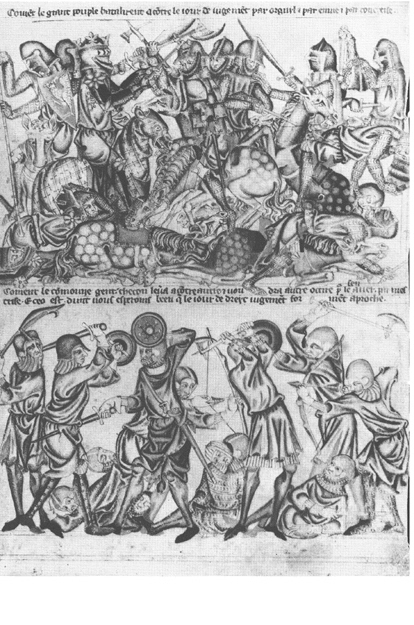
Heavy cavalry and infantry. The Day of Judgement in the Holkham Bible Picture Book (c.1325–1330) distinguishes the mounted, knightly mêlée of ‘le grant pouple’ from the foot combat of ‘le commoune gent’. The costly horses and equipment of the military elite set them apart from lightly armed infantry; but success on the battlefield would often depend upon the tactical combination of mounted men and foot soldiers.
Indigenous horse archers in the oriental mould were absent from Western Europe. The isolated images of individual horse archers in Western sources—such as the last scene in the Bayeux Tapestry, depicting the pursuit, and Matthew Paris’s illustration of the battle of Bouvines (1214)—are little more than enigmatic curiosities, while those in the mid-thirteenth-century Maciejowski Bible are firmly associated with the forces of evil (who are also equipped with round shields), apparently reflecting knowledge of Islamic armies. The celebrated English archer of the Hundred Years War dismounted before drawing his bowstring. Apart from the practical difficulties of using a long-staved bow from the saddle, few English yeomen would have possessed the horse-handling skills required to shoot at the gallop. The English bowmen employed at Törcsvár in Transylvania towards the end of Louis the Great’s reign would, therefore, have been mounted archers in the Western European sense; but it was in this part of Europe that the equestrian skills required for horse archery still flourished. Admittedly, in the aftermath of the Magyars’ defeat at the battle of the Lech in 955 and following German involvement in the foundation of the Christian kingdom, Western-style mailed cavalry formed the core of Hungarian armies. Yet the employment of steppe peoples—the Pechenegs, Szeklers, and Cumans—as auxiliary light cavalry gave Hungarian armies a distinctive, hybrid character and a tactical edge. The advantages of tactical combination of heavy cavalry and horse archers were displayed with decisive results at the battle of Dürnkrut (Marchfield) in 1278, when the Hungarian armoured cavalry and their Cuman auxiliaries played an important part in Emperor Rudolf I’s momentous victory. This hybrid military system was further developed under Louis the Great. His Italian adventures in the 1340s and 1350s were pursued with armies composed of lances’, each of which consisted of a heavily armoured man-at-arms and a group of lightly equipped horse archers. In the later fifteenth century, it was light cavalry (the original ‘hussars’) who provided the rapid reaction forces which backed-up Hungary’s southern frontier fortifications and launched raids (portyák) into Ottoman territory. So dominant was light cavalry in King Matthias Corvinus’s army that the capabilities and limitations of these troops effectively determined the way in which that army fought.
Armies wholly composed of mounted men offered strategic opportunities which were inconceivable for those reliant on infantry. The English chevauchées in France during the fourteenth century achieved an impact disproportionate to the size of the armies involved, while the Mongols’ devastating assault on eastern Europe in 1241–2, meticulously planned and executed with remarkable coordination, is surely the ultimate medieval Blitzkrieg by horsepower. Towns, castles, and river crossings could be taken by surprise by a mounted force, just as besieged garrisons could be more rapidly relieved. Yet armies so dependent on the horse tended to be less adept at siege warfare. Indeed, chevauchée-style warfare encouraged fortification. The flame of Hungarian resistance to the Mongols was maintained in a handful of stone fortresses, while the energy of many an English expedition in France was sapped by the frustrations of siege warfare. The military possibilities of mobile, mounted armies were also limited to some degree by logistical constraints. Although usually small by later standards, such armies still required large numbers of horses. Apart from his primary warhorse, a knight would need a good remount, a palfrey for riding on the march, a rouncey for his servant, and one or more sumpters for his baggage. The fifteenth-century ‘lance’, a team of men servicing the needs of a man-at-arms, would demand even more horses. Keeping this large pool of equines well-fed and healthy would have been a major preoccupation for a medieval commander; campaigning in winter could pose particularly severe problems. A plentiful supply of water was specially important, since a horse needs at least four gallons a day. So desperately short of water were the English during a chevauchée in 1355 that they gave their horses wine to drink, with results which can easily be imagined.
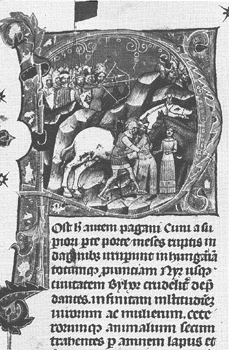
This depiction of an incident from the legend of St Ladislas in the Illuminated Chronicle (c.1360) provides a glimpse of the Hungarian armies of the reign of Louis the Great (1342–1382). Western-style knightly warriors are supported by lightly equipped mounted archers, apparently of Cumanian or Iasian origin. Note the use of composite bows.
For hardiness, no Western European warhorses could rival those of the Mongols. These stocky, gelded ponies were capable of sixty miles a day, yet unlike Western European warhorses, which required regular supplies of grain, Mongol mounts could subsist on grazing. They were even able to find grass under a layer of snow. Yet their horses were, in a sense, the Mongols’ Achilles heel. Each warrior needed a string of remounts and while huge herds of horses could easily be sustained on the grasslands of the Mongolian steppe, the available pasture to the west of the Great Hungarian Plain was insufficient to maintain the nomadic war machine. The strategy of the horse peoples was, therefore, always likely to be hampered by the constraints of pasture in Europe. River passage posed less of a problem to the Mongols; they were only temporarily held up by the mighty Danube and crossed when it froze over. Nor did their expeditions depend upon solving that other major logistical problem for medieval commanders: how to transport horses by sea.
Developing solutions to that problem had long been a central feature of warfare between Mediterranean states, but the crusading era brought with it a pressing demand for horse-transports which were suitable for long-haul voyages. By the mid-twelfth century, warhorses might be shipped in round-bottomed sailing vessels or in flat-bottomed, oared tarides. The largest of the round ships provided ample capacity (an 800-ton ship could carry 100 horses), but were deep-water vessels, requiring wharf facilities for unloading. The carrying capacity of tarides was smaller (twenty to forty mounts), but offered the invaluable advantage of allowing horses to be beach-landed through the stern. Where northern waters are concerned, it is Duke William of Normandy’s large-scale shipping of warhorses to England in 1066 which immediately springs to mind. According to the Bayeux Tapestry, the horses were carried in open-decked longships. On arrival, the ships were tilted over on the beach to allow the horses to step over the gunwales. However, in order to appreciate the problems involved in the regular transportation of large numbers of horses, we should turn our attention to the Hundred Years War. Since the English war effort hinged on the transportation of armies to the Continent, and their strategy ofchevauchées depended on mounted forces, it was necessary to ship thousands of horses every time that a major expedition was launched. An Exchequer record tells us, for example, that 8,464 horses were taken to France in 1370 in Sir Robert Knolles’s expeditionary force—an army which had a contractual strength of 2,000 men-at-arms and 2,000 mounted archers. Given that a typical horse-transport vessel, a cog, could carry thirty equines, the shipping of even a moderately sized army would involve a fleet of several hundred ships. The majority were requisitioned merchantmen, many of which had to be refitted to carry horses. Not surprisingly, it was often difficult to raise sufficient numbers of vessels. Indeed, it seems likely that such logistical constraints operated as a check on army size. But if we find the English acquiring horses upon arrival in France, as was often the case with expeditions to Gascony, that may have been prompted as much by anxiety over the effects of long-haul voyages as by shipping shortages. Quite apart from the losses sustained in bad weather, a combination of insufficient water, inappropriate diet, muscle wastage and mental stress would have left horses debilitated, vulnerable to disease, and generally unfit for immediate service.
If the warhorse separated the aristocratic warrior symbolically from his social inferiors, so too did his armour, whether hauberk or full harness of plate, and his weapons, particularly his lance and sword. But behind the symbolism lay a real military advantage; and with arms and armour, as in the conduct of war, it was the equestrian warrior who was at the centre of developments. Most advances in protective equipment and weaponry were either servicing his needs or intended as challenges to his tactical authority.
It was noted earlier that the mounted miles began to adopt the couched lance technique in the later eleventh century. At this time, as can be seen in the Bayeux Tapestry, such a warrior was equipped with a long, knee-length hauberk composed of interlinked rings, slit front and back to facilitate riding and worn over a padded undergarment. Such a mailshirt would probably have weighed about 25 lbs, which could not be regarded as excessively heavy, nor likely to restrict freedom of movement. The miles wore a conical helmet, with nasal, over a mail coif or hood. On his left arm he bore a large, kite-shaped shield, while in his right hand he carried the lance, about nine to ten feet in length and fashioned from ash or applewood. While many of the mounted milites of the Bayeux Tapestry are shown with lances, some are wielding the straight, double-edged sword, that most noble of weapons, which combined military utility with powerful symbolism. Associated with Rhineland sword makers, the crucial change in sword design had occurred in the ninth century, with the emergence of elegantly tapered blades, which shifted the centre of gravity from the point to the hilt, thereby greatly improving the handling qualities of the weapon. At Hastings, then, a high-quality knightly sword would have been light (2 to 3 lbs) and well balanced, and a formidable weapon when wielded from the elevated position of a warhorse’s back. Beyond its function as a weapon, the sword was a symbol of the military elite’s power and lordship, with a mystical quality which derived from the fusion of pagan and Christian ritual. That so many medieval swords have been found in rivers and lakes cannot be attributed to carelessness; rather it tells that the legend of Excalibur was based on living practices recalling the pre-Christian past which persisted long after the knight’s sword had become an essential part of the religious ceremonial of chivalry.
The varied available sources, including seals, illuminated manuscripts, and sculpture, suggest that the knight’s equipment changed comparatively little during the twelfth century. The most significant developments, during the second half of the century, were the appearance of mail mittens and the long surcoat (or ‘coat armour’) worn over the mail shirt, the widespread use of chausses (mail leggings), and experimentation with helmet design, which led in the early thirteenth century to the great helm, which was worn over the coif and padded arming cap. In its early form, the helm was usually cylindrical and flat-topped. It offered better protection, particularly against missile weapons, but restricted visibility and ventilation. Shield design was also undergoing some change. Having become triangular-shaped by the early thirteenth century, shields were gradually reduced in size as that century progressed.
The essentials of the transition from twelfth-century mail harness to the fully developed plate armour of the fifteenth century may be briskly summarized. Iron plate or hardened leather defences for the elbows, knees, and shins first appeared in the mid-thirteenth century, and during the following hundred and fifty years protection for arms and hands, legs and feet became steadily more complete. From the mid- to late thirteenth century, the torso of a well-equipped knight would be protected by a surcoat of cloth or leather lined with metal plates—a coat of plates, which by the mid- to late fourteenth century would be supplemented, or wholly replaced, by a solid breast-plate. Underneath, a mail haubergeon continued to be worn, while it was still usual to wear coat armour on the outside, although there was much local variation in this. In England, for example, the surcoat was replaced by the short, tight-fitting jupon. Meanwhile, in the early to mid-fourteenth century, the visored bascinet with attached mail aventail to protect the neck was replacing the round-topped great helm and coif for practical campaigning purposes. Visors came in a variety of forms. The simplest, common in Germany and Italy, consisted of a nasal which when not hooked to the brow of the bascinet would hang from the aventail at the chin. Often, indeed, men fought in bascinets without any form of visor. With the development of a fully articulated harness of plate armour, the abandonment of the now largely redundant shield, and the stripping away of the fabric which hitherto had customarily covered the metal, we have reached the ‘white’ armour of the early to mid-fifteenth century. The emergence of plate armour also prompted a change in the knight’s arme blanche. The sword with a flat blade, which provided an effective cutting edge against mail, was gradually replaced during the fourteenth century by one with a stiffer blade tapering to an acute, often reinforced point, designed for a thrusting action against plate armour.
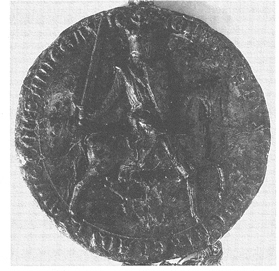
the great seal of Henry III (1216–1272) shows a typically equipped knight after the adoption of the great helm and surcoat, but before the advent of plate armour for the torso or limbs. The elegance and poise of the king’s warhorse reflects the words of Jordanus Ruffus, a mid-thirteenth-century veterinary surgeon: ‘No animal is more noble than the horse, since it is by horses that princes, magnates and knights are separated from lesser people’.
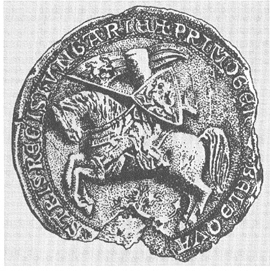
the seal of Stephen the junior king of Hungary suggests that the equipment of the western European knight and his straight-legged posture on the back of a massively-built, yet elegant, warhorse had become firmly established in the kingdom of the Magyars by the 1260s. The ethos of western chivalry was less readily adopted by the Hungarian nobility, rooted as they were in the archaic traditions of their nomadic past.
Unless provided by a lord or patron, or possibly in fulfilment of a local community’s military obligations, the equipment of an aspiring man-at-arms would be his own responsibility. Although the mass-produced plate armour of the later middle ages may have been relatively less expensive than the mail hauberks of earlier centuries, equipping for war from scratch remained a costly business. Consequently, the quality of a man’s arms and armour would have offered as clear an indication of his place in the social hierarchy of the military elite as the value of his warhorse. Much of the surviving evidence depicts the up-to-date harness of well-heeled noblemen; but, in reality, warfare in fourteenth-century Europe involved a heterogenous multitude of noble juvenes without prospects and sub-genteel free lances, many of whom would have fought in armour of uneven quality. Some, indeed, would have had second-hand, or even hired, harness, acquired from such international arms merchants as Francesco di Marco Datini. Fortunately, unlike warhorses, which were all too prone to disease or injury, armour would need to be purchased only occasionally; and to judge from will bequests and inventories, even gentry families were often in possession of substantial armories. Of all knightly equipment, a sword might have the most varied ‘life story’, passing through many hands, by purchase, bequest, gift, or seizure, its blade honed and re-hilted according to necessity and taste, perhaps coming to rest finally in a church, a grave, or a river.
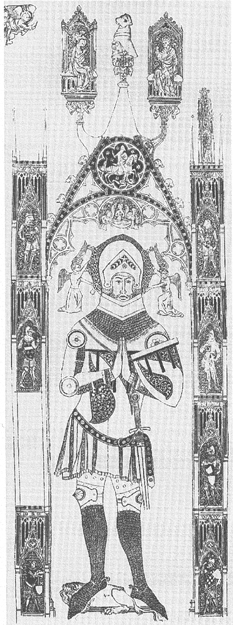
The memorial brass of Sir Hugh Hastings (d.1347) in Elsing church, Norfolk. With flanking figures representing some of Hastings’ companions in arms, this is an intriguingly varied ensemble of body armour from the mid-fourteenth century. Note the visored bascinets, the skirted jupons, a curiously shaped kettle hat (bottom right), a pole-axe (bottom left) and the mounted figure of St George above Hastings’ head.
While it may be tempting to attribute the emergence of iron plate armour to advances in technology, this would be unconvincing, since the skills required to produce such armour had existed in Western Europe since the eleventh and twelfth centuries. Rather, the transformation of the man-at-arms’ body armour during the later middle ages should be viewed as a response to the challenges of the battlefield. The defeat of heavy cavalry by armies fighting on foot was one of the most striking features of warfare during the early to mid-fourteenth century; indeed, some historians have identified an ‘infantry revolution’ in these events. This is not to deny that infantry had long shown its mettle against cavalry—as when the hedge of pikes of the Lombard communal militia successfullyresisted the assault of the imperial heavy cavalry at Legnano (1176) and Cortenuova (1237). Effective military operations in the Latin East, as for example the celebrated march from Acre to Jaffa in August-September 1191, depended upon close cooperation between heavy cavalry and foot soldiers, the latter screening the knights and their vulnerable warhorses, with crossbowmen keeping Turkish horse archers at a distance. Yet what we see at the turn of the fourteenth century is something rather different: armies built around foot soldiers, with little or no involvement for aristocratic warriors, and bound together by a solidarity founded upon common purpose and high morale. Armies of this kind triumphed repeatedly over the flower of European chivalry, with the trend being set at Courtrai (1302), Bannockburn (1314), and Mortgarten (1315). The vividly carved scenes on the Courtrai chest show the Flemish communal armies as well-equipped foot soldiers, uniformed, and fighting beneath guild banners. A wealth of pictorial evidence suggests that the urban militias of Italy were equipped to a similar standard. With the Scots and Swiss, however, we find smaller armies drawn in the main from the men of the countryside, peasant infantry fighting in the cause of independence. A front-line Scottish pikeman might have been equipped in mail haubergeon or quilted aketon, with an iron cap or kettle hat, and gauntlets, but most of those behind him in the schiltrom would have lacked body armour.
How was it that such armies were able to inflict bloody and humiliating defeats on the knightly elite? On occasion the explanation is to be found in a well-timed ambush. The rout of Charles I’s Hungarian army by the Wallachians in the defile at Posada in November 1330 is reminiscent of the battle of Mortgarten, in which the Swiss ambushed a column of Austrian heavy cavalry-men in a mountain pass, butchering them ‘like sheep in the shambles’. Even in set-piece battles, choice of ground and effective exploitation of it were usually important. That long-established ruse, the digging of ditches or pits to impede the deployment of cavalry, proved effective at Courtrai, Bannockburn, and elsewhere, while at Kephissos in 1311, the Catalan Company took up position behind a marsh. But also essential were well-ordered tactical formations, disciplined, resolute demeanour, and the use of effective weaponry. The arms which brought success were essentially a response to the heavy cavalry of the military elite. The Scots’ schiltroms were hedgehog-like formations, impenetrable thickets of pikes, and capable of offensive movement against armoured cavalry. In addition to pikes, the Flemings had the goedendag, the Swiss, the halberd: both were long-handled weapons designed for striking men-at-arms in the saddle and pulling them to the ground.
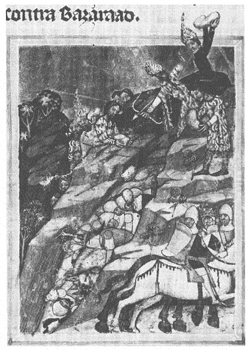
The battle of Posada, 1330. Lured into a defile in the southern Carpathians, Charles I’s Hungarian army, depicted here as consisting of mounted knights, are ambushed and heavily defeated by Wallachians wielding no more than rocks and composite bows.
Much has been written about the impact of English archery in the fourteenth century, and for some historians this forms a central feature of the ‘infantry revolution’. It is not that archery was a new feature of warfare. Nor, indeed, does the evidence suggest that Edwardian bows had staves significantly longer than those used in the past (the point being that the longer the bow, the greater its potential power). What made English archery so devastating in the fourteenth century was the sheer numbers of bowmen employed, the English crown having successfully exploited the native pool of countrymen skilled with the bow. Massed archery by men able to unleash perhaps a dozen shafts per minute would produce an arrow storm, which at ranges of up to 200 yards left men clad in mail and early plate armour, and particularly horses, vulnerable to injury, while causing confusion and loss of order in attacking formations. As plate armour became more complete, a bodkin-headed arrow was developed to pierce it. Far from being left behind by advances in armour technology, the English archer, particularly if mounted, had become a versatile fighting man who could make a living out of soldiering. His bow was inexpensive; although the best were made from imported Spanish or Italian yew, they could be bought for a shilling. The archer’s body armour was usually quite light—a brigandine or padded jerkin, with an open-fronted bascinet or kettle hat—but he was capable of participating effectively in mêlées if necessary.
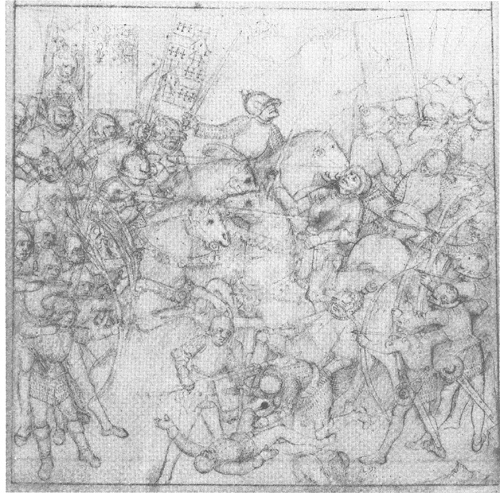
The battle of Shrewsbury, 1403: one of the lively, well-observed scenes from the ‘pictorial life’ of Richard Beauchamp, earl of Warwick (d.1439). English archers, who had proved so effective in the French wars, are here deployed by both sides, whilst the knights and esquires of Henry IV’s army, having remounted for the pursuit, employ couched lances.
For all the potency of the English longbow from the mid-fourteenth century, the crossbow had a longer-term influence on medieval warfare and may well have been the principal stimulus behind the emergence of the great helm and the development of plate armour in the thirteenth century. It had been known and widely used from the mid-eleventh century. During the thirteenth century the improved, composite crossbow spread throughout Europe; thereafter it was the most important missile weapon in many parts of Christendom. Although not a fast-shooting weapon, and perhaps more suited to siege warfare than the battlefield, it was powerful and versatile, and was also less dependent than the longbow on physical strength and lengthy training. Mail offered little protection against crossbow bolts (quarrels) and given that the steel crossbows of the fifteenth century could have a draw weight of 1,000 lbs (the string being pulled by means of a windlass), it is likely that the crossbow maintained its position as a penetrative weapon against plate armour rather more successfully than the longbow.
Despite the efforts of pikeman and archer, the emergence of potent, infantry-based armies in various parts of Europe in the fourteenth and fifteenth centuries did not dislodge the aristocratic warrior from the battlefield. In part, this was due to flexibility of tactical response. One solution was to abandon warhorses and fight on foot, thereby reducing vulnerability to missile weapons, while stiffening fighting resolve. This is what the Milanese did with success at Arbedo in 1422 when faced by a phalanx of Swiss pikemen. There had been a long tradition of such methods in England, from the shield-wall at Hastings to the battles of the Standard in 1138 and Lincoln in 1141; and after a long intermission, the tactical combination of dismounted men-at-arms and archers was revived during the reign of Edward III. Such tactics were well suited to the war in France where numerical inferiority usually necessitated a defensive posture. In the face of Flemish and English tactics, the French knightly elite responded by fighting on foot, but lacking effective supporting bowmen or pikemen, and often obliged to attack on unfavourable ground, these experiments almost invariably led to defeat, on occasion with disastrous results, as at Poitiers (1356), Nicopolis (1396), and Agincourt (1415).
For some historians, the survival of the heavily armoured, equestrian warrior in later medieval Europe can be explained by reference to the supposed social prejudice and military inflexibility of the aristocracy; but a more convincing explanation would focus on improvements in armour and equipment. The production of iron and steel plate armour with improved tensile strength and tested for resistance to crossbow bolts at close range, and with skilfully designed glancing surfaces, to resist pike, arrow and lance, enhanced the man-at-arms’ security. Although uncomfortable in hot weather, the full plate armour of the fifteenth century did not significantly affect mobility, since the weight of such armour—a complete harness might weigh 50 to 60 lbs—was more evenly distributed than a coat of mail, and would probably be less than the combination of mail and plate commonly worn in the fourteenth century. By 1450 plate defences for a man-at-arms’ horse had extended beyond the head and chest to provide as complete a protective cover as was practicable, although, given that this might weigh 60 to 70 lbs, such harness called for strong horses and a ready supply of remounts. By the mid-fifteenth century there were clear stylistic contrasts between northern Italian ‘classical’ and southern German ‘gothic’ armours, no doubt reflecting their different cultural roots, but also the different military contexts. The mounted combat of Italian condottieri was best served by smooth, rounded plates, designed to deflect sword and lance, while the greater threat of longbow and crossbow north of the Alps prompted armour with grooved, rippled surfaces. Similarly, choice from the various new forms of helmet which replaced the visored bascinet in the fifteenth century appears to have depended on expected battlefield conditions. The sallet, particularly the long-tailed, ‘sou’wester’ form, was preferred by the English, French, and Burgundians, while the barbuta (having a T-shaped face opening) and armet (a visored helmet) were favoured in Italy.
The development of full plate armour for both man and horse, combined with the use of the arrêt de cuirasse—a bracket on the breastplate to support a heavier lance, ensured that the heavy cavalryman in the fifteenth century remained a formidable warrior when intelligently employed. Most obviously this might involve using cavalry in concert with archers and pikemen; at the very least, the mobility of horsemen at the end of a battle could convert a marginal advantage into a decisive victory. Another possibility was the piecemeal commitment of squadrons in rotation, to maintain battlefield control and a steady supply of fresh troops, a tactic made famous by the condottiere, Braccio, as at San Egidio in 1416. It was this continuing tactical potency, combined with the strategic possibilities offered by horsemen, which explains why most major Continental armies of this period, including the newly established permanent armies of France, Burgundy, Milan, and Venice, were built around heavily armoured mounted warriors. More than half of the French army which began the Italian war in 1494 consisted of heavy cavalry. Even the Hungarian army of Matthias Corvinus, dominated as it was by light cavalry, had a substantial core of heavily armoured cavalrymen, who formed about 10 per cent of the 28,000 men at the Wiener Neustadt review of 1486.
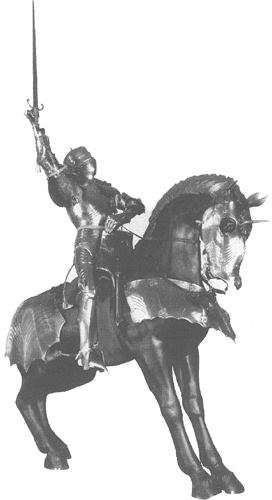
South German armour, c. 1475–1485. Protected by such plate armour, the man-at-arms and his warhorse were less vulnerable to pike thrusts and projectile weapons. But his elite military function depended on the support of his lance, which in 1470s Burgundy consisted of a page, an armed servant, and three archers, all mounted, together with a crossbowman, a hand-gunner, and a pikeman.
It was only during the sixteenth century that the balance of advantage on the battlefield swung decisively against heavy cavalry. Among the forces for change were more effective hand-held firearms and field artillery. Early cannon had occasionally been used on fourteenth-century battlefields, as in Sir John Hawkwood’s ambush of the Veronese at Castagnaro in 1387; but slow rate of fire, modest range, and immobility severely limited the effectiveness of such weapons, which seemed more suited to field fortifications thanchevauchées. Greater mobility, at least for the march, was achieved by the Hussites, who mounted their cannon on carts. For battle, however, these guns were dug-in, being incorporated into the Hussites’ distinctive wagon-forts (Wagenburgs), which were mobile field fortifications formed out of wagons and manned by handgunners, crossbowmen, and men wielding chain flails (see also Chapter 7, p. 158). The Hussites were admittedly something of a military anomaly, but by the mid-fifteenth century cannon and handguns were beginning to make their mark on battlefields across Europe. At Caravaggio in 1448, the smoke from Francesco Sforza’s Milanese handgunners was said to have obscured the battlefield. (In Italy at least, it seems that low cost and ease of use lay behind the replacement of the crossbow by the handgun.) In the same year, gunpowder weapons played a prominent part in the battle of Kosovo Polje. János Hunyadi’s Hungarian army, well equipped with firearms, inflicted heavy casualties on Murad II’s Ottoman host before, at last, being overwhelmed by weight of numbers.
It is perhaps appropriate to end this chapter with the titanic confrontation between two peoples who had originated as horse-borne nomads of the steppe and who, in their different ways, had sought to adapt to the changing technology of war. It was the Ottomans who were to be the more successful in realizing the tactical potential of hand-held guns and field artillery, for their decisive triumphs over the Egyptian Mamlukes at Marj Dabiq (1515) and Ray-daniya (1516), and the Hungarians at Mohács (1526) rested on the effective deployment of firepower, as part of a truly formidable military machine. At Mohács, the Hungarian heavy cavalry was halted by the professional corps of handgun-wielding foot soldiers, the janissaries, backed-up by field artillery: a defeat, taking little more than two hours, which was in effect the destruction of a medieval army by an early modern one. The mounted warrior of the middle ages had finally been brought down by the forces of the future.