
Sources
I have wanted to write about what happened at Ripcord since first learning of the battle in 1984 while researching Into Laos, a book about Operation Lam Son 719. I held off because of two related works in progress, one a memoir by Chuck Hawkins, the other a historical analysis of the battle by James Fairhall, Ph.D., a former infantryman in the 101st, 1970–71. Family and financial responsibilities prevented Hawkins and Fairhall from finishing their works in a timely fashion. I had few such responsibilities of my own at the time, and Hawkins, who had helped me with Into Laos, finally encouraged me to go ahead and write my own account of Ripcord in 1996. For his part, Fairhall graciously provided me access to his files; of particular value were a series of interviews he had conducted with veterans of D/2-501st.
I started doing my own interviews in early 1997, starting with members of the Ripcord Association, a veterans group that publishes a newsletter (Ripcord Report) and organizes yearly reunions. The first Ripcord Report was put together by Chip Collins in 1983; at that time, Collins had only three other Ripcord vets on his mailing list. By 1999, the organization had almost four hundred members.
Hawkins succeeded Collins as editor of Ripcord Report in 1990. Veterans of the battle previously unaware of the Ripcord Association can join by writing Fred Spaulding at 7702 White Dove Drive, Indianapolis, Indiana 46256-1750.
In addition to the assistance provided by Hawkins and Fairhall, I received an invaluable boost from Stan Sirmans, a retired navy officer and Vietnam veteran, who tied together many loose ends for me at the National Archives as I was finishing the manuscript in 1999. Because Sirmans lives near the archives and I do not, he poured over unit journals to help solve the mystery of when and how the body left behind on Ripcord during the evacuation was recovered. Sirmans also searched out friendly-fire incident reports and, most incredibly, culled through thousands upon thousands of award citations in the 101st’s general-orders files, finding and photocopying approximately five hundred that were related to Ripcord. Thanks to the various white-pages services on the Internet, those citations led me to many Ripcord heroes who were not on the Ripcord Association mailing list.
I have never encountered a Vietnam battle as dramatic, tragic, convoluted, and bewildering as Ripcord; in retrospect, I’m glad that I was forced to wait more than a decade to write about it. It was only through the books I wrote in the interim that I acquired the literary seasoning needed to even attempt to do justice to the Ripcord story.
Books
Atkinson, Rick. The Long Gray Line: The American Journey of West Point’s Class of 1966. Boston: Houghton Mifflin Company, 1989.
Del Vecchio, John M. The 13th Valley. New York: Bantam Books, 1982.
Hauser, Lt. Col. William L. America’s Army in Crisis: A Study in Civil-Military Relations. Baltimore: The John Hopkins University Press, 1973.
Palmer, Laura. Shrapnel in the Heart: Letters and Remembrances from the Vietnam Veterans Memorial. New York: Random House, 1987.
Zaffiri, Samuel. Hamburger Hill: May 11–20, 1969. Novato, Calif.: Presidio Press, 1988.
Periodicals
Chamless, John. “Vietnam Was Never in the Past.” The Dallas Morning News, March 15, 1996, 6J.
Coffey, Raymond R. “Story of GI Retreat a ‘Classic Cover-Up.’” Chicago Daily News, July 25–26, 1970, 2.
Collins, Chip. “The April Fools.” Ripcord Report, May 1986, no page numbers.
———. “From Ripcord to Recon.” Ripcord Report, June 1990, 9–15.
———. “Shag.” Ripcord Report, January 1986, no page numbers.
Harrison, Maj. Gen. Benjamin F., Ret. “The Fire Base Ripcord Siege as Seen by the Brigade Commander.” Ripcord Report, November 1994, 1, 6–7.
Hawkins, Charles F. “Hell Night at Henderson.” VFW Magazine, April 1996, 36–38.
———. “Rendezvous at Ripcord.” VFW Magazine, June–July 1996, 24–27.
———. “Ripcord: A Charlie Oscar’s View.” Ripcord Report, August 1990, 10–15.
Hirst, Don. “The Battle of Ripcord.” The Overseas Weekly-Pacific Edition, August 29, 1970, 6.
Lapham, Lewis H. “Case Study of an Army Star.” Life, September 25, 1970, 54–68.
Linden, Eugene. “Fragging and Other Withdrawal Symptoms: The Demoralization of an Army.” Saturday Review, January 8, 1972, 12–17, 55.
Mihalko, John. “Back to the Mountains.” Ripcord Report, July 1988, 5–9.
———. “Chops.” Ripcord Report, September 1987, 16–19.
———. “Eagle Beach.” Ripcord Report, January 1988, 8–13.
———. “The Ides of March.” Ripcord Report, October 1987, 8–10.
———. “Into the Maelstrom.” Ripcord Report, December 1987, 23–28.
———. “Massacre.” Ripcord Report, January 1987, 4–5.
———. “Metamorphosis.” Ripcord Report, March 1988, 11–14.
———. “Retrospective.” Ripcord Report, December 1985, no page numbers.
———. “Retrospective.” Ripcord Report, June 1986, no page numbers.
Mihalko, John, and Lt. Col. Jerry D. Rodgers. “Eagle Dustoff Remembered.” Ripcord Report, September 1988, 9–16.
Rendezvous with Destiny (quarterly magazine of the 101st Airborne Division, Vietnam), 1969–71.
Saar, John. “You Can’t Just Hand Out Orders: A Company Commander in Vietnam Confronts the New-Style Draftees.” Life, October 23, 1970, 30–37.
Self, Sp5 Charles C. “The Last Few Hours at FSB Ripcord.” Pacific Stars & Stripes, date unknown.
———. “Misplaced Bomb Saves Embattled Troopers.” Pacific Stars & Stripes, date unknown.
Warsh, David. “The Evans Nine.” Newsweek, June 29, 1970, 50.
Documents
The official history of the Battle for Firebase Ripcord, like that of all the U. S. Army’s battles in Vietnam, resides in the manila file folders stored by the ton at the National Archives branch at College Park, Maryland; one of the staff archivists, Mr. Clifford L. Snyder, was instrumental in finding the relevant documents.
“Combat Operations After Action Report, Operation TEXAS STAR, 1 April 1970–5 September 1970 (U)” (prepared by the 101st Airborne Division).
“Daily Staff Journal or Duty Officer’s Log: S2/3 Section[,] 1-327 Inf.” May and June 1970.
“Daily Staff Journal or Duty Officer’s Log: S2/3 Section[,] HQ[,] 2-502 Inf[,] 1st Bde[,] 101st Abn Div (Ambl).” July and August 1970.
“Daily Staff Journal or Duty Officer’s Log: S2/S3, 3d Bde, 101st Abn Div.” April, May, June, July, and August 1970.
“Daily Staff Journal or Duty Officer’s Log: 2/17 Cav, 101st Abn Div.” July, August, and September 1970.
“Daily Staff Journal or Duty Officer’s Log: TOC[,] 2d Bn (Ambl)[,] 506th Inf.” February, March, April, May, June, and July 1970.
“DEPARTMENT OF THE ARMY, Headquarters[,] 2d Battalion (Airmobile)[,] 506th Infantry, APO San Francisco 96383, AVDG-CC-C, 15 August 1970: Extraction from FSB RIPCORD, 23 July 1970.”
“DEPARTMENT OF THE ARMY, Headquarters, 3d Brigade, 101st Airborne Division (Airmobile), APO San Francisco 96383: Combat After Action Interview Report (U), 22 May 1970” (regarding the May 6, 1970, attack on FSB Henderson).
“HEADQUARTERS 101ST AIRBORNE DIVISION (AIRMOBILE), Office of the Chief of Staff: After Action Report, FS/OB [Fire Support/Observation Base] Ripcord (U), 1 September 1970.”
“HEADQUARTERS 101ST AIRBORNE DIVISION (AIRMOBILE), Office of the Commanding General: Senior Officer’s Debriefing Report, 15 January 1971” (prepared by Maj. Gen. John J. Hennessey).
“MACJ3-06[,] 18 July 1970[,] SUBJECT: Artillery Ammunition Expenditures (U)” (message from USARV to XXIV Corps, I Field Force Vietnam, and II Field Force Vietnam).
“Operational Report—Lessons Learned, 101st Airborne Division (Airmobile) Period Ending 30 April 1970, RCS CSFOR-65 (R2) (U).”
“Operational Report—Lessons Learned, 101st Airborne Division (Airmobile) Period Ending 31 July 1970, RCS CSFOR-65 (R2) (U).”
“Operational Report—Lessons Learned, 101st Airborne Division (Airmobile), Period Ending 31 October 1970, RCS CSFOR-65 (R2) (U).”
“Report of Inquiry Concerning Alleged Simple Assault, Possible Racial Tension in the 1st Battalion (Airmobile), 501st Infantry, T[h]ua Thien Province, RVN APO 96383[,] 26 September 1970” (prepared by the Inspector General, 101st Airborne Division).
“Unit History, March, 71” (prepared by Capt. Charles F. Hawkins, S1, 2-506th Infantry).
Untitled award recommendation files, with witness statements and proposed citations, prepared by the 101st Airborne Division for Lt. Col. Andre C. Lucas (Medal of Honor), Lt. Col. Charles J. Shay (Distinguished Flying Cross), Maj. James E. King (Silver Star and Distinguished Flying Cross), Capt. David F. Rich (Distinguished Service Cross), Sgt. John W. Kreckel (Distinguished Service Cross), Sp4 Brent R. Law (Silver Star), Pfc. Frank R. Fratellenico (Medal of Honor), and the 101st Aviation Group (Valorous Unit Award).
Untitled friendly-fire investigation files, with witness statements and disciplinary recommendations, prepared by the 101st Airborne Division regarding the cases of D/2-506th (strafed by C/2-17th Cav, April 8, 1970); D/1-506th (shelled by A/2-11th FA, May 19, 1970); D/1-327th (hit by air strike, June 7, 1970); A/2-501st (fired on by element from same unit, July 5, 1970); and A/2-501st (strafed by C/4-77th ARA, July 14, 1970).
Untitled missing-in-action investigation files, with witness statements, prepared by the 101st Airborne Division, regarding the cases of Sp4 Lewis Howard (D/2-506th; MIA, July 7, 1970) and Pfc. Ronald J. Kuntz (pseudonym) (D/1-506th; MIA, July 21, 1970).
Interviews
Most interviews were conducted by letter and phone, a handful in person. Quotes from the interviews were often edited for clarity and conciseness; everyone involved had the opportunity to review the book manuscript for accuracy before publication. The following veterans, divided by unit, participated in the interviews:
USARV and 101st Airborne Division: Gen. Paul F. Gorman (Ret.), Gen. William B. Rosson (Ret.), Lt. Gen. Sidney B. Berry (Ret.), Lt. Gen. Charles W. Dyke (Ret.), Lt. Gen. David E. Grange (Ret.), Lt. Gen. John M. Wright (Ret.), Col. Charles A. Hoenstine (Ret.), Col. Charles J. Shay (Ret.), Col. Walter H. Root (Ret.), Maj. John R. Fox (Ret.), ex-Sgt. James T. Bannon, ex-Sgt. Robert Hageman.
3d Brigade, 101st Airborne Division: Maj. Gen. Benjamin L. Harrison (Ret.), Col. William J. Bradley (Ret.), Col. Robert A. Turner (Ret.), Lt. Col. Fredrick L. Spaulding (Ret.), ex–1st Lt. William B. Case, ex-CW2 Steven M. Wandland, Sgt. Maj. Lloyd J. Rahlf (Ret.), ex-Sp4 Gary D. Jestes.
2d Battalion, 501st Infantry: Col. Otis W. Livingston (Ret.), Lt. Col. Christopher C. Straub (Ret.), Lt. Col. James M. Potter, USAR (Ret.), Maj. Victor E. Arndt (Ret.), ex-Capt. Donald R. Goates, ex-Capt. James W. Kwiecien, ex–1st Lt. Ralph L. Selvaggi, 1st Sgt. John T. Schuelke (Ret.), ex-Sgt. Raymond H. Blackman, ex-Sgt. James A. Plenderleith, ex-Sp4 Dennis W. Belt, ex-Sp4 Gary L. Fowler, ex-Sp4 Clement A. Neiderer, ex-Sp4 Richard R. Soubers.
1st Battalion, 506th Infantry: Maj. Gen. Bobby B. Porter (Ret.), ex-Capt. John H. Smith, SSgt. Steve W. DeRoque (Ret.), ex-SSgt. John W. Fraser, ex-Sgt. Terry W. Handley, ex-Sgt. Paul Mueller, ex-Sgt. Gilbert Rossetter, ex-Sgt. Elger Sneed, ex-Sgt. Michael Thomas, ex-Sgt. Robert J. Wise, ex-Sp5 Richard Daniels, ex-Sp4 Roger L. Black, ex-Sp4 John Chamless, ex-Sp4 Merle Delagrange, ex-Sp4 Richard P. Doyle, ex-Sp4 Richard E. Drury, ex-Sp4 Richard Finley, ex-Sp4 Kay C. James, ex-Sp4 Walter M. Jurinen, ex-Sp4 James G. McCoy.
2d Battalion, 506th Infantry: Col. Herbert E. Koenigsbauer (Ret.), Col. James P. Noll, USAR, Lt. Col. Leroy Fox, USAR (Ret.), Lt. Col. James R. McCall, USAR (Ret.), Lt. Col. Rembert G. Rollison (Ret.), Maj. Charles F. Hawkins, USAR (Ret.), Maj. William J. Williams (Ret.), ex-Maj. John A. Flaherty, ex-Maj. Charles R. Lieb, Capt. Benjamin F. Peters (Ret.), ex-Capt. James D. Harris, ex-Capt. Raymond A. Williams, ex-Capt. Jeffrey D. Wilcox, ex–1st Lt. Henry J. Bialosuknia, ex–1st Lt. James H. Campbell, ex–1st Lt. Stephen C. Wallace, ex–1st Lt. Gary L. Watrous, ex–1st Lt. Lee E. Widjeskog, CW3 Wayne L. Hoesing (Ret.), Cmd. Sgt. Maj. James A. Williamson (Ret.), SSgt. Michael K. Mueller, Alaska National Guard (Ret.), ex-SSgt. Paul E. Burkey, ex-SSgt. Gary A. Radford, ex-SSgt. Thomas E. Rubsam, ex-SSgt. George K. Strasburg, ex-SSgt. Raymond M. Womack, ex-Sgt. Lin L. Bashford, ex-Sgt. Frank Bort, ex-Sgt. Robert O. Granberry, ex-Sgt. Keith L. Harold, ex-Sgt. Robert L. Judd, ex-Sgt. Bruce W. McCorkle, ex-Sgt. Rodney G. Moore, ex-Sgt. Jerry D. Moyer, ex-Sgt. Jon E. Penfold, ex-Sgt. Frederick Rearick, ex-Sgt. Robert C. Smoker, ex-Sgt. Daniel C. Thompson, ex-Sgt. Thomas P. Tolson, ex-Sp4 Gerald A. Cafferty, ex-Sp4 Donald E. Colbert, ex-Sp4 Rodger D. Collins, ex-Sp4 Christopher Garrett, ex-Sp4 Martin J. Glennon, ex-Sp4 William W. Heath, ex-Sp4 Rick T. Isom, ex-Sp4 Richard G. Ives, ex-Sp4 Patrick E. McCloskey, ex-Sp4 Stephen L. Manthei, ex-Sp4 Frank W. Marshall, ex-Sp4 John Mihalko, ex-Sp4 James D. Neff, ex-Sp4 John A. Schnarr, ex-Sp4 Gary A. Steele.
Division Artillery: Col. Philip L. Michaud (Ret.), Lt. Col. Sheldon C. Wintermute (Ret.), Lt. Col. William A. Walker (Ret.), ex-Capt. Thomas M. Austin, ex-Capt. Alton J. Caldwell, ex-Sgt. Marc L. Aronson, ex-Sgt. Daniel F. Esposito, ex-Sgt. Alfred L. Martin, ex-Sgt. Frank J. Parko, ex-Sp4 George D. Murphy, ex-Sp4 Norman L. Simmons, ex-Pfc. John P. Jones.
Division Aviation: Lt. Gen. Randolph House, Col. Jerry D. Rodgers (Ret.), Lt. Col. Michael D. Anderson, USAR (Ret.), Lt. Col. Gabino J. Caballero (Ret.), Lt. Col. Michael S. Lancaster (Ret.), Lt. Col. Ronald W. Rankin (Ret.), Maj. Allen Schwartz (Ret.), ex–1st Lt. Laurence Rosen, ex-CW2 Robert A. Barrowcliff, ex-CW2 Kenneth L. Mayberry, ex-CW2 Leslie R. Rush, ex-CW2 Rich Walker, ex-SSgt. Terry A. Stanger, ex-Sp5 Thomas J. Chase, ex-Sp4 H. Charles Berger, ex-Sp4 Nicholas A. Fotias, ex-Sp4 Charles L. Holmen.
Other Units: Col. Fred H. Edwards (Ret.), Col. Steven R. Rader (Ret.); MSgt. Robert J. Lynch (Ret.), ex-Sp5 Charles C. Self, ex-Sp5 Christopher W. Jensen, ex-Sp5 Gregory L. Kiekintveld, ex-Sp4 Ted McCormick, ex-Sp4 Michael Kelley.
Family Members: Mrs. Laurence J. Law (widow of Col. Laurence J. Law, (Ret.), who died of natural causes in 1996); Mrs. Karin J. Loke (sister of Capt. Donald R. Workman, killed at Ripcord); Mrs. Agnes M. Kohr (mother of Pfc. William H. Kohr, who was killed in an auto accident in 1979); Mrs. Madeleine M. Lucas (widow of Lt. Col. Andre C. Lucas, killed at Ripcord); Cmdr. John W. Palm, USN (Ret.) (father of 1st Lt. Terry A. Palm, killed at Ripcord, and author of an invaluable and heart-wrenching document, “Return to Ripcord-805,” prepared in 1976 based on his interviews with veterans of D/2-501st).
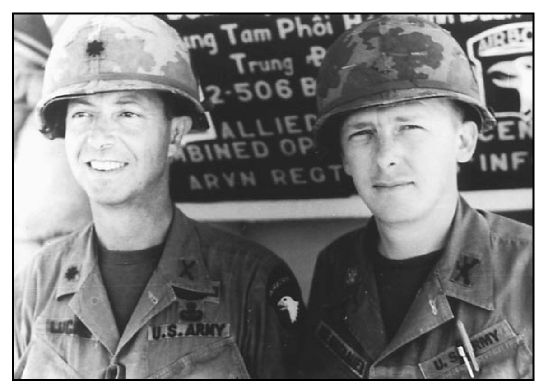
Lt. Col. Andre C. Lucas, commander of the 2-506th Infantry (left), and his operations officer, Maj. Herbert E. Koenigsbauer, at Firebase Ripcord shortly before the siege of July 1970. (Courtesy H. E. Koenigsbauer)
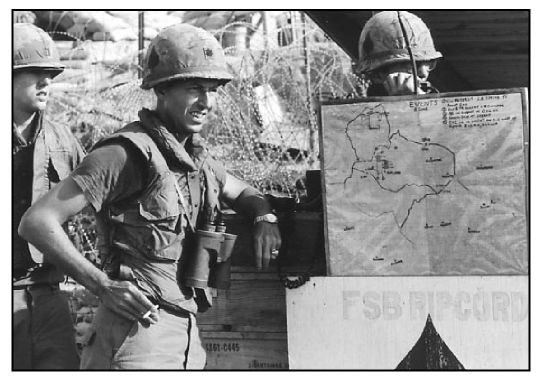
Lt. Col. Lucas with a map that describes the attack launched on Hill 1000 by the 2-506th Infantry on July 8, 1970. (Courtesy C. W. Jensen)
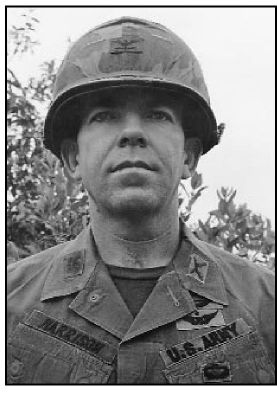
Col. Benjamin L. Harrison on June 23, 1970, the day he took command of the 3d Brigade, 101st Airborne Division. (Courtesy B. L. Harrison)
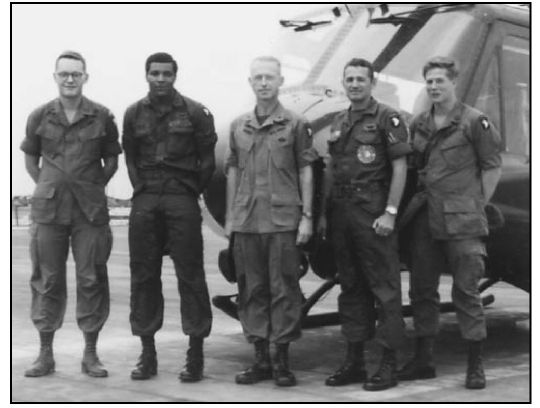
Brig. Gen. Sidney B. Berry, assistant commander of the 101st Airborne Division (center), poses with new aide, 1st Lt. Victor E. Arndt (far left, wearing glasses), and his command-ship crew, including his pilot, 1st Lt. John R. Fox (second from right, wearing pocket patch). Late summer 1970. (Courtesy S. B. Berry)
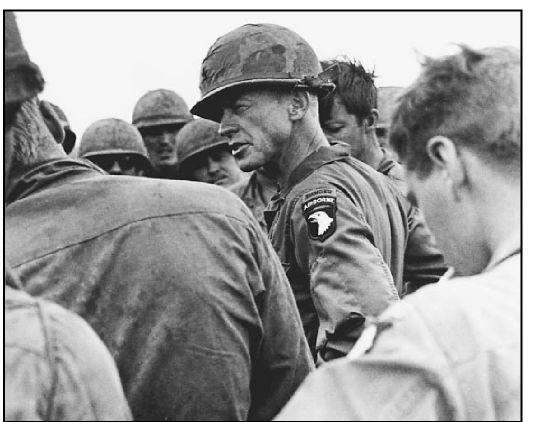
Brig. Gen. Berry talking with troops at Khe Sanh during Operation Lam Son 719. March 1971. (Courtesy S. B. Berry)
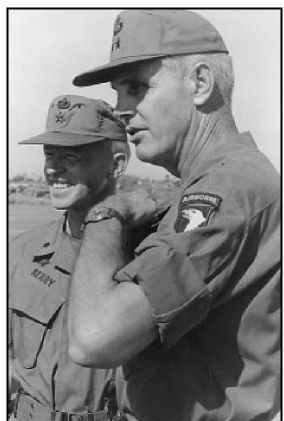
Brig. Gen. Berry with Maj. Gen. John J. Hennessey, commanding general of the 101st Airborne Division. January 1971. (Courtesy S. B. Berry)
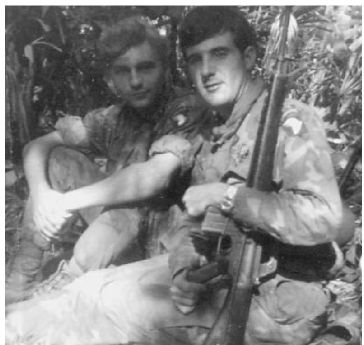
Sp4 John Mihalko and Sp4 John A. Schnarr (right, holding M16) of the reconnaissance platoon, E/2-506th Infantry. August 1970. (Courtesy J. Mihalko)
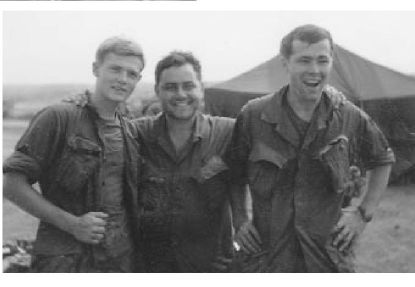
Sgt. Paul E. Burkey, Sgt. Frank Bort, and 1st Lt. James H. Campbell (left to right) of C/2-506th Infantry at Camp Evans. February 1970. (Courtesy P. E. Burkey)
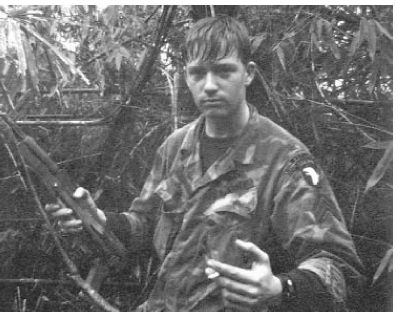
Sgt. Robert O. Granberry, a team leader with the reconnaissance platoon of E/2-506th Infantry, poses with a captured AK-50. February 1970. (Courtesy J. Mihalko)
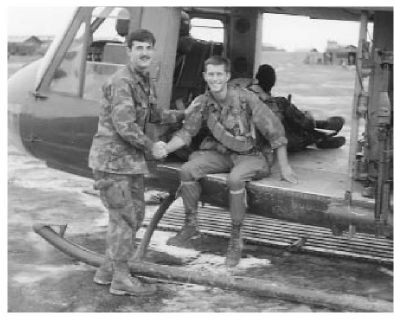
Sp4 Schnarr says good-bye to his platoon leader at the end of his tour. December 1970. (Courtesy J. A. Schnarr)
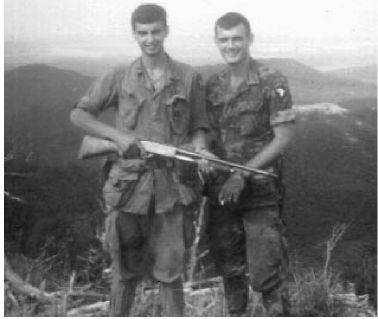
1st Lt. John A. Flaherty (left, with shotgun) and Capt. Rembert G. Rollison of D/2-506th Infantry. (Courtesy J. A. Flaherty)
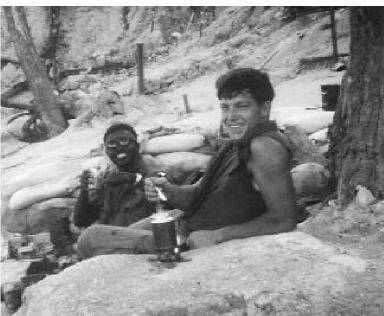
Pfc. Bruce W. McCorkle of D/2-506th Infantry (right) cooking C rations at a fighting position at Firebase Ripcord. (Courtesy B. W. McCorkle)
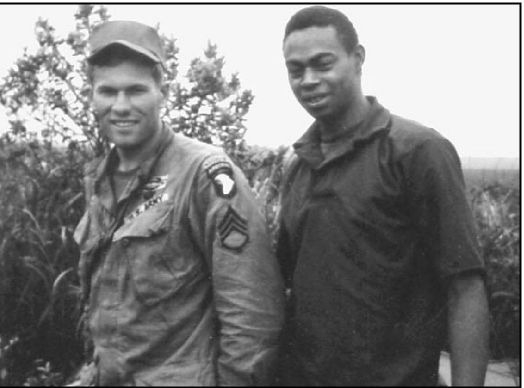
SSgt. Gary A. Radford (left) and Sp4 Lewis Howard, Jr., of D/2-506th Infantry. (Courtesy G. A. Radford)
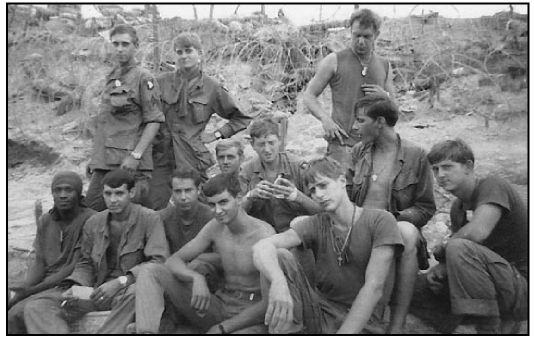
1st Lt. Flaherty (sitting fourth from left without a shirt) at Firebase Ripcord on June 28, 1970, with members of his platoon, to include SSgt. George K. Strasburg (sitting third from left), Pfc. Michael J. Grimm (sitting behind Flaherty with bandages on his fingers), and Pfc. Thomas E. Gaut (second from right, looking at Grimm). (Courtesy P. E. McCloskey)
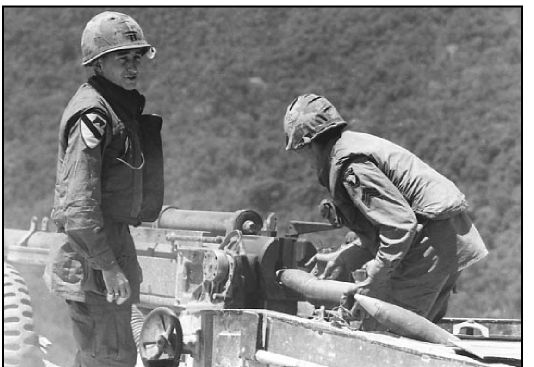
Capt. David F. Rich (left, wearing 1st Cav patch from a previous tour) was wounded seven times while commanding B/2-319th Field Artillery on Firebase Ripcord. (Courtesy C. W. Jensen)
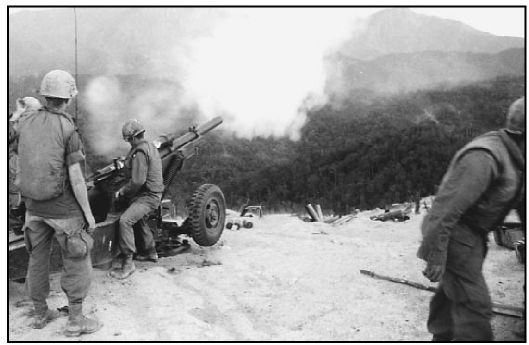
A 105mm howitzer from B/2-319th Field Artillery returns fire on the enemy during the siege of Firebase Ripcord. (Courtesy C. W. Jensen)
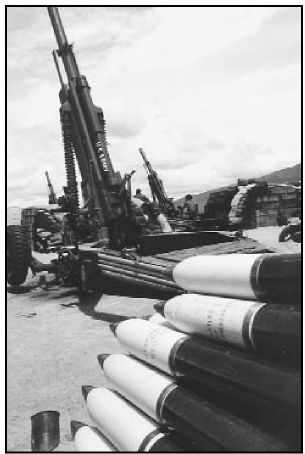
Howitzers standing ready on Firebase Ripcord. (Courtesy C. W. Jensen)
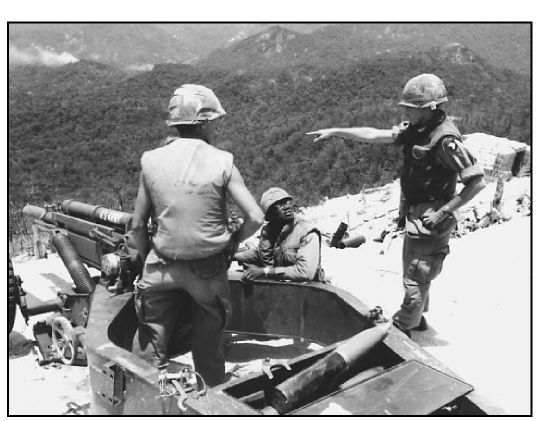
Capt. Rich (right) getting one of his 105 crews into position at Firebase Ripcord. (Courtesy C. W. Jensen)
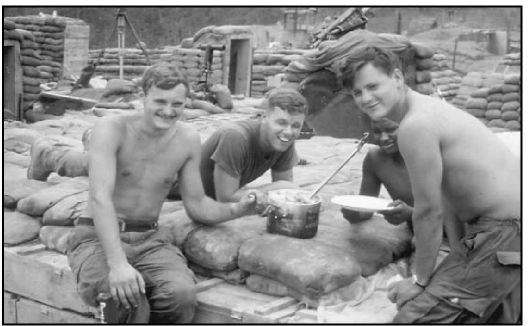
1st Lt. Fred H. Edwards (second from left, lying on sandbags) commanded the combat engineers from the 326th Engineer Battalion on Firebase Ripcord. (Courtesy F. H. Edwards)
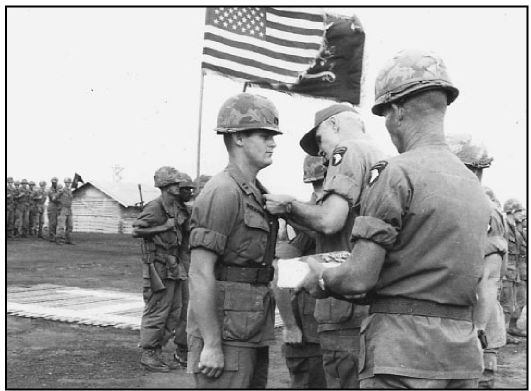
Maj. Gen. Hennessey pins a Silver Star on Capt. Philip L. Michaud of the 2-319th Field Artillery for his valor during the siege of Firebase Ripcord. (Courtesy P. L. Michaud)
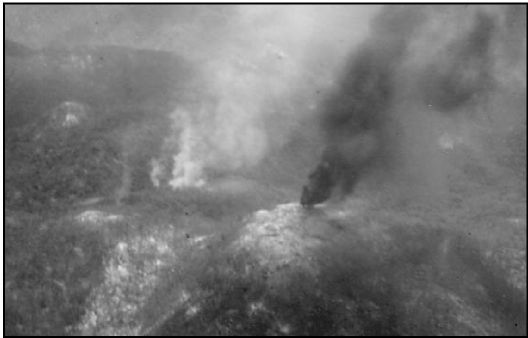
Black smoke rises from burning ammunition or fuel after an enemy mortar attack on Firebase Ripcord. (Photo by J. R. Fox/Courtesy S. B. Berry)
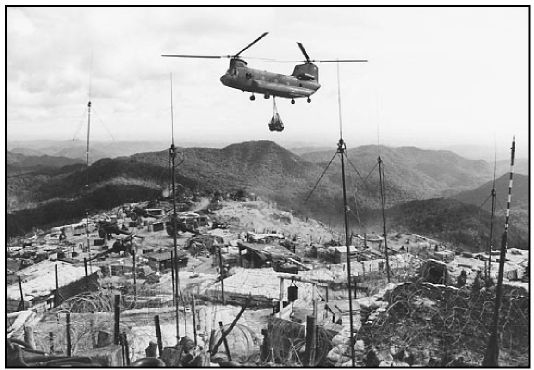
CH-47 Chinook delivering a sling load of supplies to Firebase Ripcord. (Courtesy C. W. Jensen)
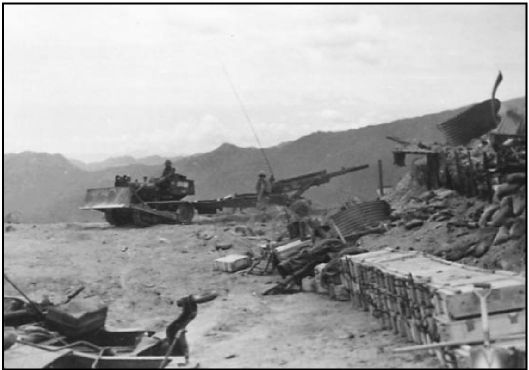
A bulldozer tows away a 105mm howitzer destroyed in the Chinook crash of July 18, 1970, on Firebase Ripcord. (Courtesy D. Cox)
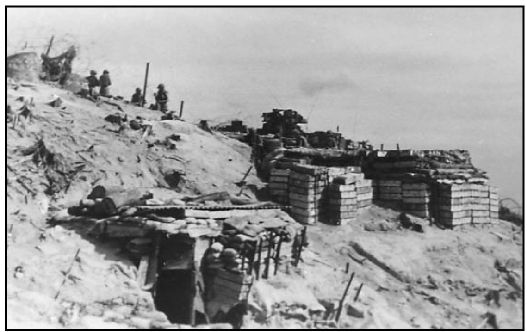
The Quad-50 (silhouetted in center of photo) at the northwest end of Firebase Ripcord. (Courtesy D. Cox)
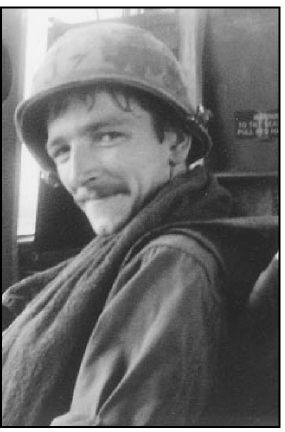
Sgt. Raymond H. Blackman shortly before his unit, D/2-501st Infantry, was committed to the defense of Firebase Ripcord. (Courtesy R. H. Blackman)
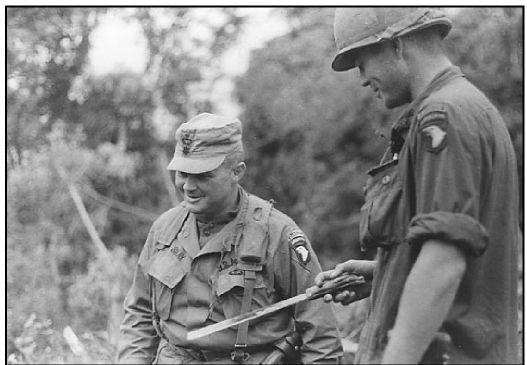
Lt. Col. Charles J. Shay (left), commander of the 2-502d Infantry, during the Firebase Barnett operation of August 1970. (Courtesy C. J. Shay)
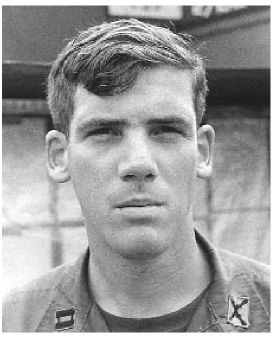
1st Lt. Lee E. Widjeskog of A/2-506th Infantry. August 1970. (Courtesy L. E. Widjeskog)
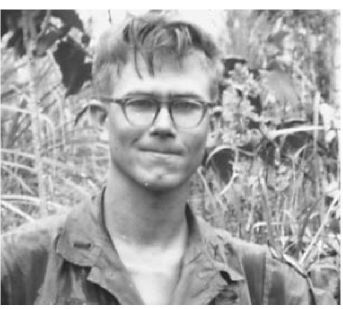
Capt. Charles F. Hawkins, commander of A/2-506th Infantry, shortly after the battle for Firebase Ripcord. (Courtesy C. F. Hawkins)
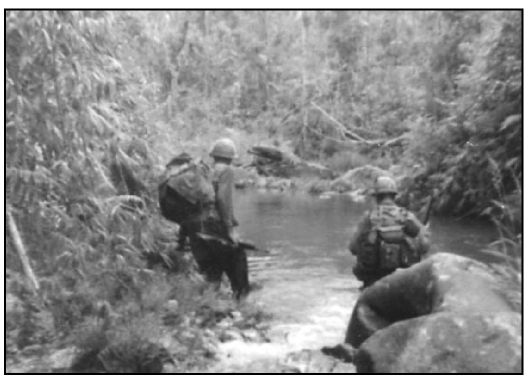
Troops from D/1-506th Infantry cross a jungle stream. Summer 1970. (Courtesy K. C. James)
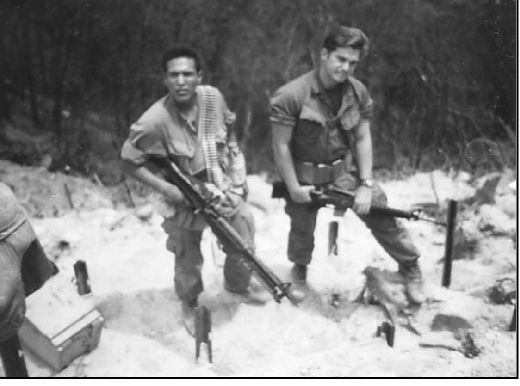
Sp4 K. C. James of D/1-506th Infantry (right) at Firebase Kathryn. June 1970. (Courtesy K. C. James)
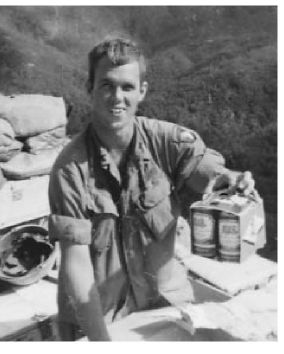
1st Lt. John H. Smith of D/1-506th Infantry at Firebase Kathryn. June 1970. (Courtesy J. H. Smith)
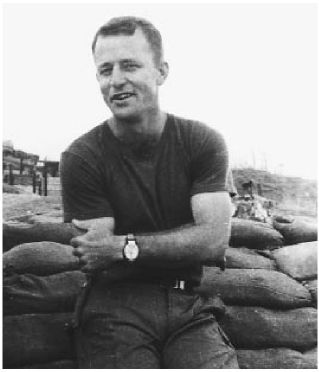
Capt. Donald R. Workman, commander of D/1-506th Infantry. (Courtesy K. J. Loke)
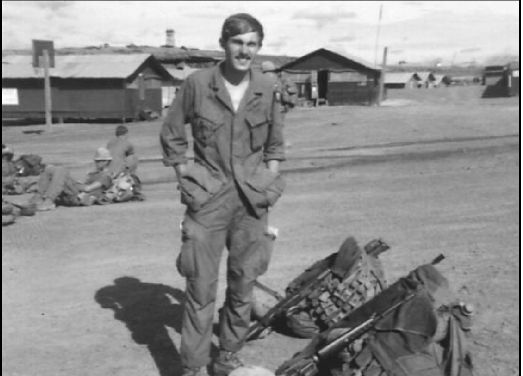
Sgt. Gilbert C. Rossetter of D/1-506th Infantry at Camp Evans before the insertion into the Ripcord area. July 1970. (Courtesy G. C. Rossetter)
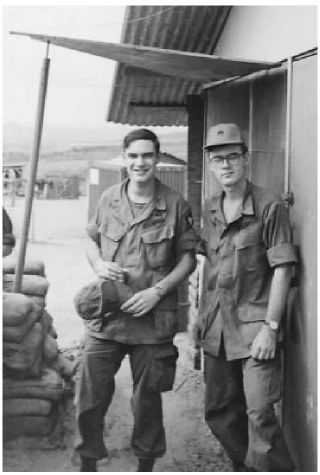
1st Lt. Randall Thompson and Sgt. Robert J. Wise (right, wearing glasses) of D/1-506th Infantry sometime after the Ripcord operation. (Courtesy R. J. Wise)
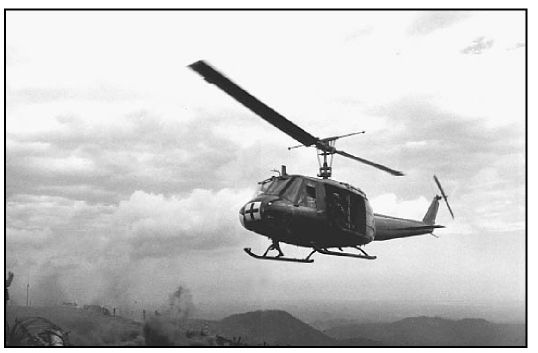
A medical evacuation Huey comes in to land during the siege of Firebase Ripcord. (Courtesy C. W. Jensen)
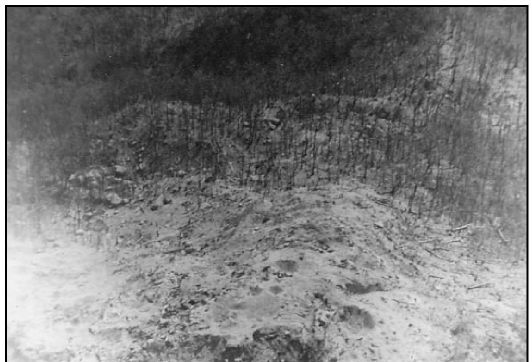
Firebase Ripcord after being evacuated and then bombed out of existence by the U.S. Air Force. (Courtesy S. B. Berry)
1 Killed in action/body not recovered (KIA/BNR)
2 Killed in action/body not recovered (KIA/BNR)
3 Died of wounds.