The CIA’s new Deputy Director for Operations, David Cohen, called me to his office in August 1995. “I want you to apply for the job of Deputy Director, Office of Technical Service in the DS&T [Directorate of Science and Technology],” Cohen directed. “We need a DO [Directorate of Operations] person there and I think you’re a good candidate.”
He might as well have suggested that I apply for NASA’s astronaut program. I had been an operations officer for almost twenty-five years, but for the past eighteen months I was assigned to the Comptroller’s office. At age fifty-one, I was out of operations, doing the type of staff and budget work that motivated me to plan for early retirement.
“I’ve never worked in the DS&T. I’m a history-political science major, an operations type. I’m an analog guy in a digital world. I don’t even change the oil in my car,” I objected.
“I know what your skills are and this is a good assignment for you.” Cohen left no doubt about the answer he wanted.
“Okay, I’ll apply, but I can’t imagine I’ll be competitive if there are other candidates.”
“There’ll be other candidates and you’ll do fine. We need a DO officer in OTS who knows senior ops people and is someone I have confidence in. You’ve been looking at the budgets in every DO division almost two years, so you know the key players and they know you. I have to make sure technical service and operations stay linked.”
The interview was over. I had worked for Cohen several years earlier and recalled his frequent admonition that once a decision was made he had no patience for further discussion. This was not the first time that he had directed me to a job I had not sought, and the others had worked out pretty well. In 1988, he sent me to a large station that had never been on my assignment wish list. That put me into position to join the ranks of the CIA’s Senior Intelligence Service. Three years later he ordered me back to Headquarters to serve as a division-level resource manager. Since I had spent the previous eighteen years in various field stations, this responsibility introduced me to a previously unknown world of billion-dollar budgets and the Agency’s senior leadership.
Six weeks following the conversation with Cohen, after separate interviews with the Executive Director, Nora Slatkin, and the Deputy Director for Science and Technology, Dr. Ruth David, both recent appointees to their positions, I became Deputy Director, OTS.1 Evidently, they agreed with Cohen that the job required a breadth of operational and management experience more than a technical degree.
“OTS is America’s ‘Q’, sort of,” said “Roy,” in welcoming me to the office and offering no apology for the reference to the gadget master of James Bond movies. Roy had spent his first ten years at OTS in the forgery shop working as a “document authenticator,” making certain that CIA-produced travel and alias-identity documents were flawless in print type, color, design, and paper texture. Now, as a senior staff officer for Robert Manners, the Director of OTS, he had drawn the task of providing the new guy with a much-needed CliffsNotes version of the office. “I say ‘sort of,’” Roy continued, “because, unlike the movies, if one of our visas doesn’t pass muster at an immigration checkpoint, or one of our concealments accidentally opens and spills its contents, we can’t reshoot the scene. If people are arrested or get killed because of our mistakes, they stay in jail for a long time or they really die.”
Roy also made it clear that America’s “Q” consisted of not one scientific genius or a handful of eccentric inventors, but a large contingent of technical officers, engineers, scientists, technicians, craftsmen, artists, and social scientists deployed throughout the world and cross-trained in operational tradecraft. OTS had a hand in every aspect of the CIA’s spy gear from design and development through testing, deployment, and maintenance.
“Now, this is what’s really important,” Roy said, beginning the comprehensive briefing with a slow, deliberate delivery that conveyed no-nonsense seriousness. “We consider ourselves part of the Directorate of Operations as much as a part of the DS&T. Whatever the DO stations and case officers need for technical support, we do everything in our power to deliver. When we go to the field to do a job, there’s no question who we work for—the chief of station.”
Roy explained that the techs did much more than build and deliver spy gear. “Usually we are right there with the case officer or the agent, at the user’s side in the operation. We train agents, install equipment, test systems, and repair stuff that breaks. We take the same risks as case officers—share the same emotion of accomplishment or otherwise. Over the course of his career, the tech becomes involved in more operations and meets more agents than many case officers.”
Roy described OTS’s five primary organizational elements, or “groups,” as these were designated. The largest was a covert communications, or “covcom,” group with a name that described its function. This group developed systems for agents and case officers to communicate covertly and securely. Secret writing, short-range radio, subminiature cameras, special film, high-frequency broadcasts, satellite communications, and microdots were all included in covcom. A second OTS group designed and deployed audio bugs, telephone taps, and visual surveillance systems. These techs were often on the road up to fifty percent of the time, traveling from country to country, as their services were required. The third group, called on for special missions that may include support to paramilitary operations, included a mixture of technical and “soft science” capabilities. This group produced tracking devices and sensors, conducted weapons training and analysis, analyzed foreign espionage equipment, performed operational psychological assessments, and built special-use batteries. Roy came from a fourth group that made disguises and “reproduced” documents. Its work in creating counterfeit travel documents could be traced directly back to a predecessor organization in the Office of Strategic Services. Rounding out OTS were the concealments and electronics fabrication laboratories, known collectively as Station III, and a field structure with regional bases in South America, Europe, and Asia.2
Roy’s briefing supplemented my prior knowledge of OTS from two recent assignments, one operational and the other administrative. For two years in the early 1990s, I served as Deputy Chief for the CIA’s nonofficial cover (NOC) program. There I worked with OTS officers who support NOC officers with documentation, covert communications, disguise, identities, and concealments to assure the NOCs were never identified with the U.S. government. The OTS provided the equipment and documents that enabled NOCs to live a “normal” life as, say, a businessman, freelance photographer, scientist, or rice merchant while engaging in their clandestine work for the Agency.
In the Comptroller’s Office, I encountered OTS from the perch of a budget weenie.3 Beginning in 1991, after the collapse of the Soviet Union, the Comptroller had the unenviable task of managing a declining CIA budget at a time when operations officers were, in reality, being pressed by demands for new, better, and faster intelligence on counterproliferation, counterterrorism, and counternarcotics. OTS, like other components of the CIA, struggled to absorb the impact of reduced budgets without any reduction in demands for spy gear.
For the next three years as OTS Deputy Director or Acting Director, I would deal firsthand with the damage that the budget cuts of the 1990s did to the CIA’s countersurveillance systems, advanced power sources, technical counterintelligence capabilities, and paramilitary-related weapons and training.4 Then, beginning in 1999, as new resources began to be available, I would have the opportunity as Director to lead OTS in creating and reconstituting capabilities for the twenty-first century.
From its formation in 1951, OTS concentrated its efforts on creating devices and capabilities to improve the CIA’s ability to identify, recruit, and securely handle clandestine agents. Whether the operational requirement needed research, development, engineering, production, training, or deployment, OTS responded. Motivated by a philosophy of limitless possibility, a few hundred technical specialists gave American intelligence its decisive technical advantage in the Cold War, a conflict that continues today in the worldwide battle against terrorists.
Collectively, the stories that form the OTS history convey a level of dedication and commitment by officers whose pride in their service to America was more important than personal wealth or individual acclaim. At their best, these experiences are models for successive generations of intelligence officers who would apply technology to agent operations. I cannot imagine a more rewarding responsibility or an honor greater than working with this remarkable cadre of technical officers, successors to the rich heritage of OSS General William Donovan and his chief technical genius, New England chemist Stanley Lovell.
The genesis of Spycraft occurred during an afternoon-long conversation with John Aalto, a retired case officer, in San Antonio in February 1999. I had been appointed Director of the CIA’s Office of Technical Service three months earlier. John had joined the CIA in 1950 and spent the next five decades in Soviet operations.
John took note of my recent appointment and with unexpected seriousness asked, “Do you have any concept of what OTS and its predecessor, the Technical Services Division, accomplished for operations?”
Before I could respond, John continued. “I tell you,” he began, “it is because of the techs and TSD that we in Soviet operations eventually won the intelligence war against the KGB in Moscow. And to my knowledge, no one has ever recorded that story, officially or unofficially.”
Over the next three hours John described a remarkable inventory of TSD devices, technologies, inventions, gadgets, and tricks that he and others used in Moscow and throughout the Iron Curtain countries during the forty-year Cold War. He recounted fascinating tales about the leadership of Dr. Sidney Gottlieb, the cleverness of the TSD engineers, the inventiveness of the field techs, and the determination shared by TDS and Soviet Division case officers to break the stranglehold of the KGB on the CIA’s operations in Moscow.
“You should do something,” John urged, “to get this story recorded before all of us who were involved are gone and the inevitable organizational changes at CIA obscure this history.”
Two years earlier I had met H. Keith Melton, a lifelong student of intelligence history and private collector of espionage devices and equipment. Keith lent the Agency hundreds of artifacts from his private collection of espionage equipment for display during the CIA’s fiftieth anniversary in 1997. Subsequently, I assisted Keith in transforming the display into a permanent Cold War exhibit in CIA’s Original Headquarters Building. On September 7, 2001, OTS celebrated its fiftieth anniversary with a gala dinner highlighted by Keith’s presentation of the international history of spy gadgets and technical espionage.
Shortly after I retired, Keith and I had dinner during one of his visits to Washington. As we shared our admiration of the creativity and courage of the engineers and technical officers whom we had come to know, Keith asked if I had considered writing an account of my tenure as OTS Director. I had not, but his question reminded me of John Aalto’s admonition four years earlier and sparked the idea of writing a public history of OTS from the accounts of retired technical officers. It would be a true espionage story that, combined with Keith’s wealth of knowledge and images of historical spy gear, could be a valuable addition to intelligence literature. Keith agreed, and Spycraft was born.
We understood the obligations from my CIA employment to submit writing about intelligence subjects to the Agency for prepublication review to preclude the inadvertent release of classified information. I anticipated no particular difficulties with such review. Before beginning the project, I met with the CIA’s Publications Review Board, outlined the concept, and received encouragement to proceed. In July 2004, the board approved a detailed outline of a proposed “popular account of OTS adventures and contributions to U.S. intelligence” along with the two sample chapters we had submitted. Relying on that approval, we contracted with Dutton, an imprint of Penguin USA, for publication, with full expectation of delivering a properly Agency-reviewed manuscript in late 2005. We submitted our 774-page manuscript under the title An Uncommon Service, to the board on September 6, 2005. Agency regulations specify manuscripts are to be reviewed within thirty days.
After six months, on March 13, 2006, the board issued us a letter stating: “except for Chapters 1-3 your manuscript is inappropriate for disclosure in the public domain.” The Agency had approved only the first thirty-four pages, all of which discussed equipment from the Office of Strategic Service (OSS) World War II inventory. The 740 “inappropriate” pages included the previously approved detailed outline and sample chapters. No specific classified material was identified. Rather, the Agency applied a previously discredited “mosaic theory” of redaction, contending that a compilation of unclassified information becomes classified when written by someone at my senior level. The board’s letter asserted that “in the aggregate the manuscript provides so much information . . . it would be of immense value to our adversaries.” There seemed to be no awareness that adversaries read English and have the same Internet access and Google tools we used in our research.
During my previous seven years with OTS, I reviewed several books and articles as part of the Agency’s prepublication review process. In preparing this manuscript, I exercised the same conscientious judgment regarding potentially classified information as I had done as a government employee. In its attempt to prevent the authors from publishing Spycraft, the March 2006 letter revealed the Agency’s apparent unwillingness to distinguish between responsible writing on intelligence subjects and unauthorized leaks of classified information.
With the assistance of attorney Mark Zaid, we filed an appeal two weeks later. Such appeals, according to Agency regulations, would be adjudicated by the CIA’s Executive Director within thirty days of receipt.
We received no response to our appeal for eight months. Mid-level officers of the bureaucracy took no action in what appeared to be an attempt to deny publication by causing an indefinite delay. Faced with the unwillingness of the Agency to conduct a review consistent with its prepublication policies, we prepared to seek relief in federal court. In the opinion of our legal counsel, the Agency’s refusal to honor its own regulations, coupled with the capricious deletions of unclassified material from the manuscript, constituted a violation of First Amendment Constitutional rights.
Before taking the legal step, we made a personal request to the CIA’s Associate Deputy Director in December 2006 for intervention. As a result, on February 8, 2007, we were advised that another review had reduced objections to approximately fifty of the manuscript’s pages. Further, the board offered to reconsider the remaining deletions if the authors could demonstrate the material was not classified. Although we believe none of the disputed material is classified, as an accommodation, we revised certain passages and deleted some terminology that the CIA considered operationally sensitive. On July 18, 2007, we received approval to publish virtually all of the original manuscript.
The best that can be said of the experience is that Agency management eventually recognized a need to reform its prepublication policy and repair the broken review process. A historical irony is that William Hood encountered a similarly recalcitrant bureaucracy in 1981 when writing Mole, an account from the 1950s of the Soviet spy Pytor Popov.5 “Every word in this manuscript is classified,” said the initial CIA review. Twenty-five years later, Mole is now recognized as an espionage classic.6
The first five sections of Spycraft recount remarkable stories of ingenuity, skill, and courage throughout the first fifty years of OTS history. Section VI presents the doctrine of clandestine tradecraft from the perspective of espionage historian H. Keith Melton and includes a chapter devoted to the revolutionary changes digital technology has brought to spy work.
We wrestled from the beginning with the difficulties of when to present necessary explanations of the operational doctrine behind the technical topics that appear in the text. The impracticality of repeating explanations each time a technical topic appeared became quickly obvious. Lengthy footnotes also seemed more likely to distract rather than enlighten the reader.
Therefore, we consolidated into Section VI the five essential elements of clandestine operations used by every intelligence service regardless of nationality or culture. These chapters, drawn from Melton’s widely acclaimed lectures, writings, and exhibits, set out the basic principles underlying technical support to operations. These principles transcend any specific service and represent knowledge common and available to intelligence professionals and civilians alike from print, electronic, and film media. The individual chapters will aid the reader in understanding the basic philosophy and principles of assessment, cover, concealments, surveillance, and covert communications as practiced by professional services. Readers have the option of diving directly into the OTS story and the development of CIA’s clandestine spy gear in Chapters 1-19 or first immersing themselves with the doctrine and terminology of espionage operations presented in Chapters 20-25.
Spycraft combines the experiences and lore of the techs based on the authors’ personal interviews and correspondence with nearly one hundred engineers, technical operations officers, and case officers. We verified specific details to the extent possible by collaboration with public material and multiple primary sources. The names of several individuals quoted by the authors throughout the book are changed as a matter of security, cover, or requested privacy. Appendix E provides a list of pseudonyms the authors assigned to these officers. Otherwise, we use true names throughout.
We did not seek access to, or use, classified files. At times, the fallibility of memory may produce less than a perfectly accurate account of events many years past. In a few instances, we purposefully obscured facts to protect operational information, or omitted sensitive details for the same reason. For example, the locations of operations, except those in Moscow, the former Soviet Union, and other denied area countries, are regionalized. Some operational terms and Agency jargon that appear in works by other authors not bound by secrecy agreements have not been used at the request of the Agency.
Why do history? Two thousand years ago Cicero observed, “To be ignorant of what occurred before you is to remain always a child. For what is the worth of life unless it is woven into the lives of our ancestors by the records of history?” A twentieth-century view, as expressed by G. K. Chesterton, is: “In not knowing the past we do not know the present. History is a high point of vantage from which alone we can see the age in which we are living.” Richard Helms, who headed CIA operations in the early days of the Cold War and served as Director of Central Intelligence from 1967 to 1973, explained that he wrote A Look Over My Shoulder because it is “important that the American people understand why secret intelligence is an essential element of our national defense.”7Our hope is that Spycraft becomes a part of that legacy.
—RW
Official Message from the CIA
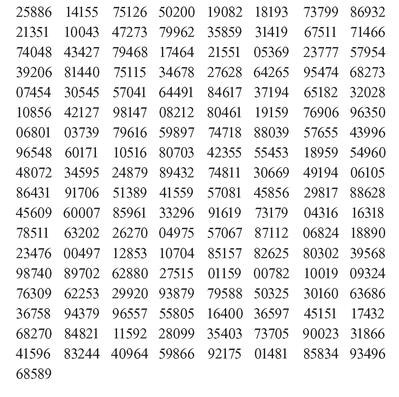
The Central Intelligence Agency requested the following message be included in Spycraft. To provide the reader a sense of the reality of covert communications, the authors have presented the message using a page from a one-time pad issued to Aleksandr Ogorodnik (TRIGON) in 1977. Chapter 8 presents the TRIGON story. Use the one-time pad on page 99 and the instructions in Appendix F to decipher this message.