
SECTION V
CHAPTER 16
You are not expected to take anything with you in the field that would reveal your identity or in any way show that you are an agent of the government . . .
—U.S. Army order to an intelligence officer posted to Latin America in 19051
On September 8, 1960, three American businessmen stepped off a plane in Havana. The passports and tourist visas they presented to Cuban officials identified them as Daniel Carswell, age forty-two, an electrical engineer from Eastchester, New York; Eustace Van Brunt, thirty-four, a mechanical engineer from Baltimore, Maryland; and Edmund Taransky, a thirty-year-old electrical engineer from New York City.2
Along with their official travel documents, the three carried credit cards, driver’s licenses, and other pieces of identification confirming their identities. However, their names and all the material that supported their identities were fictions. TSD artists skilled in document fabrication and reproduction had created all the mundane contents of their wallets—“pocket litter,” in CIA parlance.3
Eustace Van Brunt was TSD engineer Thornton “Andy” Anderson, while Edmund Taransky was really Walter “Wally” Szuminski, an audio tech. The third tourist, traveling as Daniel Carswell, was Dave Christ (pronounced “Crist”). The most senior of the three, Christ had recently become head of TSD’s audio operations. In that capacity, Christ carried in his head worldwide knowledge of the CIA’s bugging capabilities, equipment, targets, and current installations.4
Cloaked in their false identities and a cover story, the trio entered Cuba on a weeklong mission to install clandestine listening devices. The target for the operation was not Cuban, but rather, the future embassy of a critical hard-target country. This rare opportunity was the result of Cuba’s decision to embrace diplomatically America’s adversaries.
The CIA learned where the embassy would be located and reached an agreement with the owner to allow Agency techs access to plant the bugs. Not only was the chance to install listening devices in a major target a golden opportunity, the plan was virtually risk-free. The owner could authorize access to his building to anyone, even three American tourists, at any time. No one would ask questions.
With open access to the building, the Christ-led team planned to conduct a thorough preinstallation survey and then work without fear of interruption. The team’s single concern lay with the Cuban government’s growing antagonism and suspicion toward the United States. Since American tourism to the once popular Caribbean island was becoming increasingly rare, the arrival of three Yankee engineers in search of tropical fun could very well attract the attention of Castro’s immigration or counterintelligence officials.
While Cuba was still presenting a welcoming façade in the summer of 1960, unsettling changes were occurring under Castro’s new government. During the eighteen months following the revolution, Cuba’s reputation as a Caribbean playground was in rapid decline. Refugees were streaming into Florida while Havana increasingly became a city of civil unrest. Protests, which Castro aggressively countered with mass arrests, were becoming more common. Businessmen, who had supported the deposed dictator, General Fulgencio Batista, were branded as potential counter-revolutionaries and growing increasingly fearful of their new government.
Despite these troubling developments, Castro’s true political orientation was still uncertain. In power less than two years, after seizing control on New Year’s Day in 1959, he continued to deny communist leanings, although his 1960 decision to embrace the Communist Chinese at the expense of the Taiwan government should have been taken as a good indication of where he was headed.5
America still maintained diplomatic ties with Castro’s government, but relations were strained and the situation between the two countries was clearly deteriorating. A conflict surrounding sugar imports to the United States along with American condemnation of tightening government controls on Cuba’s press, trade unions, and universities angered Castro. Cuba had also resumed diplomatic relations with the Soviet Union, welcoming the new Russian Ambassador Sergei Kudryatsev. Fifteen years earlier, Kudryatsev had been declared persona non grata by the Canadian government after being linked to an extensive network of Soviet spies in that country.6 The Soviet Union now had a toehold in the Western Hemisphere, a “friend” in Castro, and a presence just ninety miles from the United States.
From the U.S. perspective, the signals Castro sent out to the world in speeches and interviews were mixed. Human rights abuses were reported by Cuban refugees in Florida and the Cuban leader’s pledges not to nationalize businesses seemed hollow. In one of his odder pronouncements, Castro banned Santa Claus along with the importation of Christmas trees in December 1959, bizarrely labeling both St. Nick and spruce trees as “imperialistic.”7
As formal rupture of relations between the two countries became more likely, the CIA began making “stay behind” arrangements for intelligence activities on the island. Stocks of technical gear and espionage equipment were cached in the countryside. Agents who could no longer safely be met in person were given alternate communications plans and covcom systems, such as secret-writing materials and maps to the cache sites.
During the summer of 1960, CIA officers had spotted suspected surveillance by Cuban security officers, prompting the office in Havana to organize a small countersurveillance team of recruited Cubans to protect its operations.8 At the same time, other elements of the CIA were already planning White House-approved covert operations against Cuba, including an armed invasion of the island by a refugee counterrevolutionary force and a possible assassination of the Cuban leader.9
The September audio operation took on urgency with the possibility that all official Americans could be ordered out of Cuba, rendering support for any technical attack virtually impossible. Already, a similar audio operation a month earlier against another target failed because of logistical problems. Adding to this growing list of concerns, September was midway through the hurricane season, and Hurricane Donna, forming in the Caribbean, threatened to disrupt travel to Cuba and upset operational timing.10 Given the circumstances, a delay of even a few days could see this opportunity slip away.
A TSD team was needed to take advantage of a rapidly closing window of opportunity, but audio techs were in short supply. It was late summer and some were on annual leave, others scattered in transit to new assignments, and ongoing operations consumed the remainder.
Wally, an experienced field tech on home leave after a tour in Asia, was redirected to the operation, and postponed a visit to his parents. Andy, an engineer who developed audio gear, saw the operation as a chance to get his feet wet by helping in a routine installation. The firsthand experience, he believed, would help him to understand and anticipate operational problems and design better equipment for the techs in the field. Dave, as head of the personnel-strapped audio unit, also stepped up to the requirement. No one had any reason to believe the three would not be home within a few days.11
After making contact with their case officer in Havana, the techs unpacked the tools and audio equipment. Everything was in order, when fate threw the team a curve. Unexpectedly the building owner got cold feet and withdrew the offer for access. It was a disappointing development, but the case officer conveying the news to the techs assured them their trip would not be in vain. The local office had received authorization from Headquarters to bug an alternative target, the New China News Agency, located in the Seguro Medico Building, a new high-rise in the heart of Havana.12
This alternate operation seemed routine enough. An apartment above the news agency offices had been rented by a CIA contact, a Cuban dance instructor named Mario, and if any problems arose, the techs had a “bug out” plan to regroup in the apartment of an American secretary also living in the building.
The next day, the techs met with the case officer in a downtown sandwich shop to await a “go signal.” When Mario showed up, drank a cup of coffee, and left without acknowledging the presence of the four Americans, the empty coffee cup signaled an all-clear for the techs to proceed to the Seguro Medico Building and survey the target. Because the local office feared an informant had penetrated its surveillance team, they would conduct the operation without countersurveillance. All agreed that since the techs would be working from the agent’s apartment, little risk existed. They could control the apartment for as long as they needed to finish the job.
Arriving at the Seguro Medico Building for the survey phase, Andy and the others noticed that no concierge was on duty. That was the first good sign. “It was a Sunday and nobody was there. We got on the elevator and went one or two stories higher and walked down the stairs to the agent’s apartment,” remembered Andy. “We cased the apartment to determine the construction materials, where load-bearing walls were, and the location of power. We figured out what equipment we’d need to drill and make repairs and how we’d divide up the work. Basically we created the ‘plan of attack’ to minimize the amount of time to do the job. Then we went back to the safe house.”13
The next day, after satisfying themselves and the local chief the operational plan was sound, the techs returned to the apartment to do the job. They would drill down through the floor and into the ceiling of the New China News Agency, opening pinholes of less than one millimeter to provide an airway for conversations to reach microphones placed snugly against the minute openings. “This wasn’t exactly a blind drill,” Andy explained, “because we knew the apartments were mirrors of each other. We were going into an area we believed they’d be talking in, like a bedroom office. You’re never sure of how the audio will work, but in those days, when we had a good pinhole, we could usually get good reception and cover a couple of adjacent rooms.”
The backbone of the equipment used for the mission was the SRT-3.14 The all-transistor transmitter was about the size of a pack of cigarettes and broadcast an unencrypted clear signal.15 A small switch receiver mounted in the SRT-3 would allow the listening post keeper to turn the device on and off remotely to elude electronic sweeps,16 and since the system would tap power from the building’s electrical line, it could run indefinitely.
However, almost from the start, the job did not go as anticipated. The unair-conditioned apartment was stifling and soon the three stripped down to their shorts and tennis shoes. The apartment’s thick concrete floors made the work slow going, even with the heavy-duty quarter-inch diamond drill bits.
For two days, the techs worked at the job, supported with food and supplies brought in by Mario and the case officer. With luck, they would finish up in three days and immediately leave the island.
On Wednesday, the operation began to go bad. First, a meter reader with the local utility company knocked on the door and was turned away without incident. Then a loud knocking summoned Dave to the apartment’s front door. Opening the door, he found himself facing down the barrel of a large handgun in the hand of an unshaven young Cuban in olive green fatigues accompanied by four other armed young men, all dressed in the same style of fatigues. The five Cubans entered the room and silenced Dave so quickly that he had no opportunity to sound a warning.
Andy and Wally were in the bathroom. Andy had removed the two fluorescent lights on the top and side of the medicine cabinet and dug out a cavity in the plaster for the power line tap, while Wally was working on the antenna. “We just about had the thing pretty well finished, just the final touch, putting the tile back and plastering in the bathroom to cover the wires running from transmitter to the AC power line buried in the wall,” said Andy. “We hadn’t drilled the pinhole through the ceiling, but had everything else done. And that’s when it all fell apart.”
Andy and Wally had continued working away in the bathroom unaware of what was taking place just a few feet down the hall. Focused on the task, they assumed that either Mario or the case officer had come by, but when Dave did not return, Wally went to investigate. He too found himself staring down a gun positioned so close to his face that he could see traces of rust on the inside of the barrel. Then, when Andy turned around, he faced yet another armed Cuban. Hustled out of the bathroom, he joined Dave and Wally against the wall of the apartment’s kitchen dining-room area.17 To the three prisoners, the armed Cubans seemed indecisive about what to do next, which only added to their fear and anxiety.
“We stood against the wall for some hours. They ripped through the place, I don’t think they knew what they were doing,” said Andy. “First thing they took was all our money, then they took all my good cigars, and put us in the bedroom on a bed with the lights on.”
Dave and Andy began communicating with each other by tracing letters on the bed. The Americans remained awake through the night as the Cubans waited to see who else might show up at the apartment. At one point, there was a gunshot from the living room. Had the Cubans caught and executed either Mario or the case officer? The techs’ fears were unfounded. One of the guards had accidentally shot himself in the hand.
The next morning the prisoners were moved to the living room and faced the first of many interrogations. All of the equipment and tools they had brought in to do the job were arranged neatly on the floor. Repeatedly questioned, the techs maintained their cover story that they were Americans on vacation and saw an opportunity to make a little extra money doing some electrical work.
They were given coffee and then photographed with the equipment. Within days, the pictures appeared in the local papers alleging that the three were American spies.
Since the operation was put together quickly, the techs had little to back up their story, except the few documents they carried and their ability to brazen it out under interrogation. None of the three had received “risk of capture briefings” provided to military or intelligence officers who undertake dangerous missions. If one of the three alias identities or cover stories fell apart or if one of them broke under questioning, all three would be exposed as criminals or spies. The consequences were grave. Castro’s government had already established a tradition of executions for political as well as social crimes.
Eventually the Cubans moved the trio from the high-rise to a military intelligence installation, only a few blocks from the U.S. Embassy. There they were fingerprinted and photographed. By early evening, the techs were separated, had their belts, shoelaces, and watches removed, and locked into different holding cells. Not much more than thirty square feet, with a shower and toilet combination at one end, each cell was packed with prisoners and triple-decker, GI-style bunk beds.
That night began the first of many interrogations. Escorted from his sweltering cell to a small, cold, air-conditioned room, Wally faced three Cubans. The one whom he would dub “Bad Teeth” took the lead. “What are you doing here? Come on, Mr. Taransky, tell us,” Bad Teeth asked in English. “Why, you work for the CIA, don’t you?”
Throughout the initial round of questioning, Wally stuck to the cover story and on the second day was driven back to the apartment and ordered to identify the equipment. Once there, he explained how certain pieces of the equipment functioned in general and managed to “accidentally” break some of the circuit boards to deny exploitation of the technology by the Cubans. The next day, he was again taken to the high-rise where he faced a horde of photographers and television cameras at a press conference. When one of the reporters asked if he was there of his own free will, Wally replied, “No, he brought me,” and pointed to Bad Teeth. “He told me I’d be shot if I didn’t cooperate.”
With the press conference ended, Wally was put in one section of the facility and Andy in another. Dave was sent to a military base called “Columbia.” In all, the three men would spend twenty-nine days undergoing middle-of-the-night questioning, being shuttled between steaming holding cells and freezing interrogation rooms. Their stories did not change.
During the twelve weeks leading up to the mid-December trial, relations between Cuba and the United States continued to worsen. The U.S. Embassy advised all American nationals to leave the country and Castro was hosted by a Russian delegation while visiting New York. After delivering a speech of more than four hours at the UN—setting a new all-time record—Castro discovered his plane had been seized as collateral against Cuban debts. The Soviets, eager to solidify their relationship with the Cuban leader, obligingly provided a plane.18
At CIA Headquarters, the arrest of the three officers caused a major flap. According to one memo circulated at the time, the situation was not hopeful. “The tourist cover used by the technicians was very light,” the memo read. “The cover [asserted by the techs] could not be expected to hold up if the Cubans conducted a thorough inquiry and intensive interrogation.”19 For example, a check of the New York City address Wally used for his cover story belonged to a woman he was dating. If questioned, she would not have known an “Edmund Taransky.”
In late October, the three were transferred to La Cabana, an ancient Havana fortress converted into a prison. Issued prison garb with a large P (for prisoner) stenciled on shirts and pants, the techs were again fingerprinted and then escorted to separate cells filled with common criminals, anti-Castro elements, and American adventurers caught in the revolution.
“At La Cabana they got serious about the interrogations. They had Dave back in the same facility where we were, but in different quarters,” said Andy. “I never saw him except sometimes during interrogations, he’d be coming out and I would be going in. They’d bring you out of a hot room, put you in a freezing cold room, and threaten to pistol-whip you. Then they’d say, ‘We’re going to shoot you.’ They had me convinced they were going to shoot me. I really thought it was going to happen. They said you have to cooperate or this is it; we know all about it. Once when the interrogator told me about our being in that sandwich shop, I thought, holy cow, we were dead before we went into the apartment.”
Sometimes the questions would vary, with the interrogators accusing them of working for the FBI.20 Bad Teeth would often claim that the other two prisoners already confessed, so not telling the truth was pointless. During one session, a young guard incessantly played with his gun, flipping the cylinder open and then pulling the trigger. “Tell him that men don’t play with guns,” Wally ordered Bad Teeth. “Only kids do.” Bad Teeth obliged and the guard looked suitably chastened.
“Our attitude was that we didn’t know what our fate would be. I was convinced I was going to be shot. I figured I’m expendable, but I’d never do anything to disgrace my children or the Marine Corps,” explained Andy, who had served in the Marines from 1944 to 1946 and again between 1950 and 1952. “I made my peace with God, but it never happened, thank God.”
The possibility of execution was, as the three learned at La Cabana, not an idle threat. Firing squads were busy day and night as Castro consolidated power by eliminating political opponents and malcontents. Reliable estimates set the number of political executions at upward of 2,000 by 1961.21 “They were shooting five, six, seven every night. Right outside our window at one or two o’clock in the morning. One of them I will never forget as long as I live,” recalled Andy. “His name was Julio and he was a doctor. He was educated in Spain and ran some kind of anti-Castro political cell. To save the people in his group, he took all the blame. He slept right above me and we became friends for a couple days. Then they shot him.”
Prisoners at La Cabana were executed along the outer wall bordering a moat, long since filled in with dirt, that surrounded the old fortress. Firing squads of six to eight guards used U.S.-made World War II M-1 Garand rifles taken from one of Batista’s armories. “Leaving and returning from our trial we got a particularly good look at the execution wall,” Andy said. “When the .30-06 caliber round hits you it takes flesh and embeds it in the wall. I looked at that wall and could see exactly where guys had been standing. They shot some the night before our trial. We crossed over the moat on a bridge adjacent to the wall and we could see the results of the day’s executions. First time I had ever seen something like that.”
In the months leading up to the December 17 trial, Cuban-American relations reached the breaking point. President Eisenhower announced a ban on all exports to Cuba, except for a few foodstuffs and medicine. On October 25, the Cuban government retaliated by nationalizing all major banks, private sugar mills, distilleries, and stores, including American multinationals such as Sears, Roebuck, General Electric, and Coca-Cola.22 Within days, U.S. Ambassador Philip Bonsal left the country.23
The techs were formally charged as “Enemies of Cuba” and the prosecutor asked for thirty-year sentences. Represented by a Cuban lawyer hired by the American Embassy, the Americans sat through a four-day trial, which consisted of a three-judge military tribunal. After the trial, U.S. Consul Hugh Kessler approached the three defendants. Trying to be upbeat he said, “You guys are great. Man, you’re famous.” Kessler would be the last American government official they would see for two years.
The verdict, never officially announced to the three in the courtroom, was guilty. They were sentenced to ten years apiece, which at the time seemed like a good deal. “The thing was, when you come back from your trial you either went to the left or the right,” Andy explained. “If you went to the right, you went into a copiea, a little chapel-like room, and you knew you were going to get shot the next morning. For most prisoners, if you went to the left, you got thirty years. In those days thirty years was considered a pretty favorable sentence. So, before we were officially told what the verdict and sentence was, I realized that by making the left turn we weren’t going to be shot.”
A parade in Havana on January 1, 1961, featured Soviet tanks along with other weaponry. Relations between the United States and Cuba were officially severed two days later, just two weeks after the trial. The three techs, with their tourist cover still holding and their true identities still concealed, remained at La Cabana. That month, they heard that Mario, the agent in whose apartment the techs had been discovered but for whom the Cubans apparently had insufficient evidence to convict, was deported and joined his wife in Florida.
On January 22, 1961, prison authorities made an announcement over the public address system; the three were among 250 prisoners to be transferred to the Isle of Pines prison. Called the Presidio Modelo (Model Prison), the facility was located on a small, lush, 850-square-mile island a few miles off Cuba’s coast and was perhaps the most dreaded of all Cuban prisons. Castro himself had been a prisoner on the Isle of Pines for two years following his 1953 attack on Moncado Garrison.24
The Isle of Pines had been the inspiration for Robert Louis Stevenson’s Treasure Island and in the early twentieth century was known for its luxury resorts and sugar cane plantations.25 However, in 1925, Cuba’s president, Gerardo Machado, endorsed the idea of building a modern prison on the island. This would not be an ordinary prison, but a state-of-the-art facility that employed the latest “scientific” theories of rehabilitation. A Cuban envoy, dispatched to the United States to study prisons, returned greatly impressed with the new prison in Joliet, Illinois.26
Loosely based on the concepts of eighteenth-century British philosopher Jeremy Bentham, Cuba’s new prison would be a panopticon, a circular structure in which cells faced inward toward a central guard tower from which the guards look outward toward prisoners in their cells. The design of the panopticon was based on the idea that the guards could see the prisoners but the prisoners could not see the guards because of the shuttered windows of the central guard tower. The theory behind the design held that prisoners would “behave” if there was the chance they were under surveillance. Once they behaved, they could be rehabilitated.27
Between 1926 and 1931, the Cuban government built four such circular structures, each connected by underground tunnels, arranged around a massive center structure, also round, that served as dining hall and something of a community center. Ninety-three cells circled each of the four buildings’ five tiers, with a sixth floor remaining largely open and filled with support beams. Each cell measured approximately six feet wide by twelve feet deep.
What made the prison unique was that, in accordance to Bentham’s concept, none of the cells had doors. Prisoners were free to roam within the building and prepare themselves to reenter society as productive citizens. “There is great care taken to fit each man into his own line of work, and there are workshops in which the prisoner may learn tailoring or boot making or any other trade his chooses, as well as classes for the backward or illiterate,” enthused the Illustrated London News in 1932, just after the prison was opened. “At the end of the day, chess, dominoes, and cards are allowed, as well as more active games—the floor space of each round-house giving ample room for exercise . . . Moving pictures and wireless programs are given in a large hall.”28
However, what the three CIA officers found on the Isle of Pines bore no resemblance to the “perfect prison” cheerfully described in the British magazine with its pictures of pristine cells. Whatever scientific notions of rehabilitation may have inspired the original design had long been abandoned and the prison itself had fallen into a state of abject disrepair.
The cells were still doorless, but the prison was packed far beyond its 4,500-inmate capacity with 6,000 men crowded into the four structures known as the “circulars.” Every level of every circular was filled with trash and vermin of every variety, from rats and lice to bedbugs and roaches. Prisoners were on their own to cope with the lack of sanitation that held the potential for disease and infection.
Each cell had a sink and a toilet, but no running water. A tap on the ground floor provided water that, as the three American soon discovered, was undrinkable. Smelling of fish, it could be used for bathing, washing clothing, and flushing the toilets, but not much else. Prisoners hauled this water to their cells in five-gallon buckets. Drinking water was trucked into the facility, and emptied into a cistern from which prisoners carried a gallon or two at a time up to their cells. Conserving water became a fact of life, and prisoners acquired new skills, such as using a single cup of the precious liquid to shave.
Since the toilets did not function properly, the prisoners designated two cells on each tier as communal bathrooms. These toilets frequently clogged, spilling sewage over their rims that eventually worked its way down to the ground floor, creating a half-inch of slimy scum across the terrazzo floor.
“Talk about stink,” said Anderson. “Once in a while they would get some ‘volunteers’ for clean-up duty. The ‘president’ of the circular’s prisoners was an ex-motorcycle cop that worked for Batista. He was a tall mulatto guy whose job was to control the prison and he would get a couple guys to bring some water up and they’d get a stick, pour water in, stir, and keep repeating until they finally emptied the thing.”
Castro’s prison held an odd mix of inmates, including many of Cuba’s prerevolutionary elite of doctors, lawyers, and businessmen along with Batista loyalists and an American soldier of fortune. These political prisoners were held in circulars different from those that housed common criminals. “Of course there was politics. All the counterrevolutionaries hated the Batista people and vice versa,” said Andy. “But they were all in there together.”
The inmates received meager rations of food and the bare necessities of life. The lucky ones received care packages supplied by relatives and friends or bought food in the prison commissary. A few who had the financial means bought food from outside restaurants that prison officials would dutifully deliver. However, for those who could not afford to supplement their prison lifestyle with outside resources, existence was often unbearable. The inadequate diet of rice and beans prompted some starving prisoners to sell their beds for additional food. Prisoners who had no paper ripped off pieces of their shirt to clean themselves after using the toilet. Those who lacked the discipline for personal hygiene lived in filth.
The three techs sent collect telegrams to Mario’s maid—who had acted as their outside contact when they were in La Cabana—asking for supplies to be sent in. “As a result, we got packages once in a while,” remembered Wally. “That’s the only way you lived in a Cuban jail. They give you almost nothing. They gave us those Batista military khakis with big P’s stenciled on the back, but if you couldn’t come up with razor blades, soap, toilet paper, spoons, dishes, and the like, you did without and they couldn’t care less.”
Eventually the CIA arranged for a private attorney to hire a woman to bring the techs packages from the States. The techs were surprised and encouraged as much by the packaging as the contents, since the type of tape and wrapping used were unmistakably the type used at the TSD warehouse near Washington, D.C. It was a clear signal they had not been forgotten.
“During the time we were in prison, the outside attorney’s assistant continued to arrange to get us occasional packages—and sometimes we’d get a big plastic bag of Mixture No. 79 [pipe tobacco],” explained Wally. “When we saw how the packages were wrapped and sealed, it didn’t take a rocket scientist adding up two and two to make four to guess who was packaging this stuff and sending it in. After I was released, a friend told me he was nosing around the warehouse and watched the guys packing supplies like underwear and Tang orange drink for shipment to tech bases around the world. But there was one older man over in the corner working all by himself. He would go over to the line, take some stuff out and put it in a box. My friend asked the guy, ‘How come you’re not over working with the rest them?’ He replied very quietly, ‘Don’t say anything, what I’m doing is for our boys in Cuba. The others don’t know that.’”
Less frequently, the techs received letters, including some from family or TSD colleagues. One letter to Dave included a picture of Mia, a TSD secretary oddly identified as Sally Wilson. In the photo, a male Agency colleague was embracing the woman. The two, who had no known personal association, were pictured walking across a stream. Although Dave thought it a strange photo, he was still happy to see familiar faces. Only after their release did the techs learn Sally Wilson was a clue signaling that the photograph contained secret writing and should be soaked in water. “If we had put the picture in water the back would have come off and secret-writing instructions would have appeared,” said Andy. “Unfortunately, we audio techs weren’t briefed on this type of communication, and didn’t pick up on the code. So the attempt to establish a covcom link into the prison using secret writing fizzled.”
Searches of cells, called requisa, were frequent. Following an attempted escape by one of the prisoners, the authorities moved all 1,400 men to the ground floor to stand naked in a semicircle, while their cells were searched. “We were there all day and if you lifted your head up, they made you lie facedown in this gunk on the floor,” said Andy. “And people were defecating, taking leaks because we were there for fourteen hours with necks bowed and that was very painful. It got dark and the center tower was lit with what looked like 3,200 bulbs, and that was the only light in the circular. They had all the guards with Czech carbines, a box magazine, and a flip-out bayonet that fit along the stock on the side. The guards, young kids, were nervous, too. All of a sudden, we heard them chamber rounds. The prisoners were tired, and many started crouching. We said we aren’t going to cower like that, we’re Americans. We were the only three standing, but if they started shooting, we’d be the first to get hit.”
Riots over food and fights were common. When one hunger strike produced better rations, a second was organized. The response to this second protest was swift. Military personnel with bayonets were brought in and a requisa included throwing the contents of cells down from the tiers to the floor below while trigger-happy guards sent shots ricocheting through the facility to intimidate and control the prisoners.29
Suicides, as the three would soon learn, were routine. Prisoners would climb over the railing on the fifth floor and jump to their death. One day, when a newspaper astrologer named Dr. Carbell, who was serving two years for predicting Castro’s downfall, started to climb over the railing, Wally and Andy pulled him back to safety. “The Cubans all stepped back because they were afraid of being linked with him. Andy and I moved fast and managed to grab him,” recalled Wally. “He was educated somewhere in Europe and spoke with a cultured accent. He was also overweight and filthy as hell.”
An American soldier of fortune, Richard Allen Pecoraro, had been swept up with anti-Castro plotters. Prison life drove Pecoraro mad; living in filth he huddled alone in his cell. Occasionally Cuban prisoners would come by and poke him with sticks, eliciting an animal growl. The techs befriended Pecoraro, a fellow American, cleaned him up, and brought him into one of their cells. They found a Cuban psychiatrist among the prison population who agreed to analyze the American through an interpreter. Eventually, they were able to get a supply of Valium shipped in from the outside for Pecararo.
The prisoners most acclimated to incarceration were the common thieves. One trick the thieves showed the political prisoners was how to smuggle contraband into the circular. Guards at the prison’s front door often slept, and trash was piled up among the high weeds surrounding the structures. With contraband hidden by friends in the weeds just beyond the walls, two prisoners would sneak out and walk around the perimeter of the circular in opposite directions to conduct countersurveillance. From inside a cell, a matchbox propelled via a slingshot-type device fashioned by the prisoners would fall at the feet of one of the men on the outside. He would then pretend to bend down to tie his shoelace and tie the newspaper or other contraband to the line to be reeled in.
To pass the time, the techs made a Monopoly board and taught fellow prisoners the game. “Wally had a bunch of Cuban friends who regularly came in to use our Monopoly set,” remembered Andy. “And one day all the pieces came flying out of the cell and there was a lot of shouting. What happened was, Ernesto, a civil engineer who built the tunnels in downtown Havana, landed where someone had about four hotels. He just exploded, refused to pay the rent, and almost destroyed the set.”
Andy fabricated a slide rule from a discarded cigar box and worked on logarithms from an old engineering text he found scattered amid the trash. Then the techs created a radio. Someone in the prison had smuggled in an earpiece and, amid the garbage-strewn jail, they had managed to scrounge up a few Russian-made transistors along with pieces of medical tubing used for intravenous feeding that could be used as additional earpieces. The tuning coil was created by wrapping copper wire around the cardboard cylinder from an empty roll of toilet paper.
A battery to power the radio remained a problem. “A battery is two dissimilar metals and electrolyte. We had copper from wiring that we ripped out of the walls and tin from galvanized pails, but we needed an electrolyte,” explained Andy. “So we sent a guy to the hospital claiming he was sick, and he came back with a bottle of copper sulfate to treat the alleged ailment. It’s a good thing the guards didn’t make him drink it.” When the crudely assembled materials were combined with the copper sulfate, the battery produced enough current to power the radio.
Another problem was the lack of a soldering iron. All the wires in the makeshift radio had to be tightly twisted together for a high-resistance contact. The antenna was another challenge. Consisting of a length of wire several hundred feet long, prisoners managed to undo a section of corrugated roof on the top tier to string the antenna along the outside.
When finally assembled, the radio could pick up broadcasts from WKWF (“overlooking the beautiful Florida Keys”) and a high-powered, 50,000-watt New Orleans station. Among the news items that the techs particularly remembered was Roger Maris hitting his sixty-first home run and John Glenn becoming the first American to orbit the earth in space. “I used to go up to the roof at night for best reception,” said Andy. “With those four tubes coming out of the radio, I heard American music for the first time in months.”
Because of the constant danger of javios—prison snitches—the radio remained a closely guarded secret. Rumors of a radio prompted a requisa, but the radio itself was never discovered. With communication to the outside world established, the prisoners started an underground prison newspaper. “One of the Cuban prisoners was a radio operator,” recalled Wally. “He was skilled at tuning the radio to find just the right sensitive spots. Once he got a station, he and an assistant, a stenographer who had been a legal secretary, worked with him. They would plug in the earphones and take down the news in shorthand from whatever station could be heard. The next morning, a copy of the handwritten ‘newspaper’ would be circulated among the prisoners.”
On April 14, 1961, the three imprisoned techs went to bed as usual only to be awakened before dawn by the sound of gunfire and tracer rounds from .50 caliber machine-gun fire lighting the building. The invasion by Cuban exiles at the Bay of Pigs had begun. Throughout the winter, rumors of a possible invasion had circulated and now it was happening. The prison burst into chaos as a B-26 from the CIA-trained anti-Castro invasion force flew overhead and, a few days later, on April 17, an invasion force landed on Cuba’s western shore at the Bay of Pigs.
Conceived during the Eisenhower administration, the invasion by 1,400 Cuban nationals was launched with the approval of President Kennedy. Originally proposed for an area known as Trinidad, in the shadow of Cuba’s Escambray Mountains, the plan called for a relatively small invasion force to spark an uprising among the Cuban population. If the revolt proved unsuccessful, the invading forces would then retreat into the mountains to wage guerilla warfare.
However, in March 1961, Kennedy called the plan too “spectacular” and changed the landing site several times before finally settling on the less than ideal Bay of Pigs, a location surrounded by swamps.30 Then, as the ships carrying the members of the Cuban 2506 Assault Brigade approached the island, President Kennedy called off the scheduled second and third waves of air strikes that would destroy the remaining planes of Cuba’s small air force.31 Spared from those strikes, Castro’s air force was able to sink the brigade’s supply ship, the Houston. With the invaders unable to establish a beachhead and without resupply or air support, failure was inevitable.
On the second day of fighting, the techs began to notice Cuban militiamen loading boxes into a utility tunnel under circulars three and four. There was no explanation for the activity until the bottom of one of the boxes broke and the prisoners could see it was dynamite. Apparently fearful that a mass escape would liberate inmates to join the invasion, Castro ordered the prison booby-trapped. In the dictator’s mind, it was better to bring down the structures, killing all 6,000 men inside, than risk a small army of prisoners marching on Havana.
By April 19, the invasion was defeated. Of the Cubans who landed, 1,189 fighters were captured and a small number escaped back to the sea. When news of the failed assault eventually reached the prison, no hope was held for a second attempt.32 Nothing more was thought of the dynamite until Thanksgiving Day in 1961 when guards began drilling holes in circulars three and four with jackhammers. Andy and Dave, assigned to work details clearing the debris, watched as crews drilled into the support columns of the two buildings.
After three weeks, with the holes completed, trucks arrived and boxes labeled Mech Explosiva (explosive fuse) were unloaded into the holes. More boxes followed, these with TNT stenciled across the side. Judging from the number of cartons, the three Americans estimated that five tons of explosives were now underneath the circulars. Ominously, as the explosives were unloaded, some prisoners received black plastic rings with their prison numbers on them; other inmates were tattooed. Reportedly, this was done to identify bodies if the prison was brought down. Apparently, Castro was still fearful of a prison revolt.
The idea of living in a mined building did not appeal to the techs. As word spread throughout the circulars that the Americans intended to do something, a Cuban prisoner named Miro soon joined them. “Miro recruited two of his buddies—one guy looked like the Michelin tire guy,” remembers Wally. “We went to one of the cells on the first floor that was being used as a toilet. Serviceo is what they call it in Spanish. You didn’t linger there very long, the smell was something awful.”
With the “Michelin tire man” blocking the view of the guards, two other Cubans worked for four days to enlarge the hole in the floor leading to a utility tunnel where the explosives were emplaced. The team then recruited the smallest prisoner they could find, a fair-skinned Cuban who went by the nickname Americano. Standing just five-foot-five and weighing no more than 120 pounds, Americano was persuaded to squeeze through the small hole for a reconnaissance mission.
Lookouts were posted as the young man slipped into the tunnel one afternoon, instructed to bring back samples of whatever he found. Inside the six-foot-high by eight-foot-wide tunnel, Americano discovered enough explosives to bring the buildings down and two detonation systems, one electrical and the other a long length of primer cord. If one failed, the other could be put into play. The young Cuban also brought out a fifteen-pound block of TNT, which the three Americans told him to return, lest the guards find it missing.
A lieutenant in the Cuban army had headed the installation team and the techs now understood the job had been done well. “He was no dummy. He knew explosives and he knew what to do,” said Wally. “They ran the lines from an outbuilding into the circulars with the primer cord encased in plastic tubing and the electrical line through separate tubing. When we understood what he’d done, we were left there scratching our heads. We’re sitting on this thing and if it goes bang, we’re dead.”
Clearly, something had to be done, but it was not a simple matter of cutting both lines. Cutting the primer cord line would likely tip off the guards who would notice the slack at the detonation station. Severing the electrical line could also alert guards if they ran a test current through the system. The trick was to disable both systems without leaving any trace of sabotage. Technically the operation was not difficult. Under normal circumstances with a TSD tool kit, disabling the bomb would have taken minutes, but the techs only had a few simple knives, sewing kits, and razor blades.
“The electrical line looked like European cable, something like zip cord, AC cord. But it was built differently, the two conductors were a little bit separated,” said Wally. “We came up with the idea to cut the plastic and then twist it. And that creates a short—and when you’ve got a short, it won’t go. You try to energize the blasting cap and it won’t fire.”
The solution the techs devised was the electrical equivalent of putting a very tight knot in a length of garden hose. However, if interrupting the electrical circuit was relatively easy, the primer cord was a much more difficult matter. The Cubans were certain to notice if tension in the cord was released, so severing the line was not an option. The trick would be to create a gap in the primer cord while maintaining tension along its entire length. For this, the techs fashioned a special gadget that comprised a spool from a sewing kit and pins. By first cutting the cord, then inserting each end into the center of the spool, they could hold both ends in place with needles and pins. This would create a gap while maintaining tension along the line.
Because none of the techs was small enough to fit through the hole and any effort to enlarge it further would attract notice of the guards, Americano was again recruited to go back into the utility tunnel for the sabotage mission. Over four nights, working in the techs’ cells in semidarkness, Americano trained for the mission. Using a sharp knife, he practiced exposing the wires and shorting out the line before slipping the insulation back over the exposed wires. Then he practiced with the makeshift thread spool and pins. Once in the tunnel, he would have only one chance to perform these acts perfectly and under time restrictions—beginning in the afternoon until just before the evening head count.
When the three Americans felt confident in his ability, Americano slipped into the hole. After a few tense hours, he reemerged and reported to Miro that the mission had been a success but, to the dismay of the techs, word about the operation spread. One prisoner ran up to the Americans thanking them for what they had done. Fortunately, the guards never discovered the sabotage plan or, if they suspected something, did not report it to their superiors. There was no requisa, the three techs were never questioned, and the sabotaged system remained in place.
“If and when they pulled the switch, we felt that would give us about twenty minutes before the guards realized what was happening,” said Wally. “Then it became a case of breaking out—how the hell are we going to get out of there? Well, some of the Cubans had bars cut and whatever. But how many guys are you going to get out through a small window? Not too many. We’d have to go out through the front door.”
Emboldened, the three Americans began thinking of weaponry they could have on hand if things came to a head between the prisoners and the guards. The first idea involved a flamethrower. Wally disassembled an old kerosene stove and spent four days grinding the brass valves using marble dust and toothpaste. Ultimately, his efforts came to naught when the stove consistently lost the pressure necessary for the flamethrower to operate.
Undeterred, one prisoner came up with the idea of making alcohol for Molotov cocktails.33 Fruit was collected—oranges, grapefruits, mangos, and watermelons—and put into glass jars with water and sugar to distill. Then the extract was run off and cooked in a pressure cooker, the vapors run through a length of plastic tubing. The distillate was passed through the homemade still two or three times.
“We got the chief chemist from Bacardi, who was in the lockup with us, and we got some of the white lightning, handed it to him, and asked his professional opinion,” said Wally. “He said, ‘Yeah, man, this is good 95 proof.’ He took the gallon of alcohol and disappeared. Three days later, we’re all standing around, leaning over the edge, smoking cigarettes and talking about this and that, and he comes over and hands me a cup. I look at it, nice appearance. I taste it, and goddamn, it’s good Courvoisier. I asked him how he got the color. ‘Shoe polish,’ he said.”
The techs also improvised hand grenades. Americano was sent back down into the utility tunnel for some blasting caps and a small quantity of TNT. Melting down the TNT in a double boiler, they poured the liquefied explosive into condensed milk cans filled with nails, glass, and anything else that would serve as shrapnel. Blasting caps were attached to the top along with a length of homemade fuse.
Fuses for the grenades were created out of match heads ground into powder and impregnated into cloth. Andy, the true engineer among the three, set up a test program. A tech stood on the fifth floor, lit a fuse, and threw it over the side. A cooperating prisoner below would pick it up without attracting the guards’ attention and report how much of the fuse was burned. Eventually, the techs determined that three inches of fuse would burn in about twenty seconds before igniting the blasting cap.
Although day-to-day life in prison did not improve significantly, these acts of defiance—building the radio, defusing the explosives, creating a small arsenal—encouraged and boosted morale among the techs and like-minded prisoners.
The TSD techs were helpless observers in the fall of 1962 when tensions between Cuba, the United States, and the Soviet Union escalated into an international nuclear crisis. An overflight of Cuba by an Agency U-2 in June indicated the Cubans were preparing for installation of surface-to-air missiles, although no missiles were seen.34 Subsequently, U.S. intelligence observed both military advisors and equipment arriving in Cuba at unprecedented rates. U-2 overhead photography continued to confirm activity during September, including evidence that Soviet short- and intermediate-range missiles were about to be introduced on the island.
President Kennedy issued a national military alert on October 19 and addressed the world on October 22, explaining that the USSR and Cuba had conspired to install missile bases with the purpose “to provide a nuclear strike capability against the Western Hemisphere.”35 The threat of an international nuclear confrontation continued until October 28 when the Soviets agreed to remove their missiles from Cuba.
The world breathed a sigh of relief that nuclear war had been avoided, and on Christmas Day 1962 word began to circulate that a prisoner exchange was in the works. On March 16, 1963, James B. Donovan visited the prison. A New York-based lawyer specializing in insurance, Donovan (no relation to OSS General William Donovan) had served in the OSS as general counsel and then as a member of the U.S. prosecution team during the Nuremberg trials of Nazi war criminals.36 In the years that followed, Donovan kept a hand in the intelligence business and at the request of the New York Bar Association, defended Soviet spy Rudolph Abel, then, several years later, negotiated Abel’s exchange for U-2 pilot Francis Gary Powers.37
By the time Donovan arrived at the prison, he had already bartered the release of the Cuban members of the 2506 Assault Brigade and was optimistic about his chances for negotiating the release of Wally, Dave, and Andy. “Donovan came down to see us and brought his son,” Andy recalled. “We understood he was someone Castro apparently trusted not to attempt to undermine the Cuban government. So the Cubans let him in and he insisted on seeing all of the Americans. I don’t know if the place was bugged where we talked, but we acted like it was and were very discreet in what we said. I got the signals from him that they were working on it and ‘Don’t worry, we’ll take care of you.’ We took his actions as meaning that something was going on. But you also heard so many rumors and gossip you didn’t take anything at face value.”
A little more than a month later, on April 21, 1963, Wally, Dave, and Andy, along with eighteen other prisoners, were told to gather up their belongings. They were transported back to La Cabana and released in exchange for four Cuban nationals held in New York on charges of sabotage conspiracy.38
Taking off from Havana for Florida’s Homestead Air Force Base, they were well into the air when a CIA medical officer told Wally that his mother had died. The news touched the deepest emotions of the techs who endured two and a half years of depravation and uncertainty. They cried together.
When the plane’s hatch opened to a media pack on Homestead’s tarmac, the American soldier of fortune, Pecoraro, was the first to step off the plane to freedom. The three techs, to avoid the cameras, lingered behind the others, and were then hustled away to a nearby safe house to see their families, receive medical attention, and undergo the obligatory debriefings.
The techs had been in captivity for 949 days, and for the entire time their cover and aliases held. In prison, they had refrained from discussing the operation or personal reminiscences about home and family lest other inmates overhear the conversation and their cover stories erode. Yet, within days of their return, someone whispered to the press that the three American tourists held in Castro’s prison were, in fact, CIA officers.
The CIA debriefings lasted for about a week. They were interviewed by psychologists, counterintelligence officers, debriefers, and subjected to polygraph examinations. Personal security became a concern after their identities were leaked to the press. During the summer of 1963, the techs waited for the phone call that would return them to duty. Wally went north to be near his father, while Andy was sent to a fishing camp in Florida owned by Agency retirees. Dave remained in the Washington area.
Eventually certified fit for duty, the three returned to new assignments in the fall of 1963. Dave Christ, against his preference, was transferred to the Office of Research and Development in the newly formed Directorate of Science and Technology. Andy and Wally continued working in TSD. Andy became head of an equipment testing and certification unit at the OTS laboratory while Wally remained in audio operations.
TSD Chief Seymour Russell told Andy that he should not expect to be treated any differently from other techs—he would be judged on the quality of his future work, not the past. Initially, even within TSD, the returnees were avoided by some of their colleagues and business was conducted around them. The only senior Agency official who formally acknowledged what the techs had endured was Executive Director Lyman Kirkpatrick, during a brief meeting with them in his office. Quietly, each received a one-grade promotion but, otherwise, for the official bureaucracy, their nearly three years spent in a Cuban prison never happened.
Christ, seeking no personal recognition, submitted a lengthy and comprehensive recommendation to CIA management in late 1964 that Andy and Wally be given “the highest possible” Agency award for the courage, imagination, and fortitude they exhibited during the ordeal.39 The recommendation was ignored and Christ retired in 1970.
When Andy announced his intention to retire from the Agency in 1979, David S. Brandwein, then director of OTS, conducted a routine review of his personnel file to determine what retirement award might be appropriate. Included in Andy’s file was a copy of Christ’s 1964 memo. The graphic description of the conditions in the prison and professionalism shown by the techs under the horrific circumstances so impressed Brandwein that he immediately brought the matter to the attention of the CIA’s senior awards panel.
At Brandwien’s urging, the panel conducted a full review and recommended that all three techs be awarded the Agency’s highest medal for bravery. DCI Stansfield Turner accepted the recommendation and personally presented David Christ, Thornton Anderson, and Walter Szuminski with the Distinguished Intelligence Cross in May 1979, sixteen years after their return home.
At the time, only seven others had received the DIC in the CIA’s thirty-year history. The citation for each of the techs read:
The DISTINGUISHED INTELLIGENCE CROSS is awarded in recognition of exceptional heroism from September 1960 to April 1963. During this period [the recipient] endured hardships and deprivations with unquestioned loyalty, great personal courage and conspicuous fortitude. [His] exemplary conduct as a professional intelligence officer was highlighted by his unswerving devotion to the Agency and by his disregard for his own personal safety in order to assist others. [The recipient’s] performance in this instance reflects the highest credit on him and the Federal service.40
While the three techs were finding ways to survive in prison, the CIA and TSD were planning to eliminate the Castro government. Both the Eisenhower and Kennedy administrations pushed the Agency to develop new capabilities for dealing with what was seen as an intolerable political problem in Cuba. Rather than test the international consequences of a military invasion, both Presidents turned to the CIA for secret and covert means to accomplish a policy objective.
The CIA’s Directorate of Plans developed two parallel paths to solving the Cuba problem. Support from the TSD was sought for both plans. Beginning in March 1960, the United States began equipping and training an indigenous “secret army” composed of Cuban exiles and former Batista supporters to invade the island. The second path, direct action against Castro himself, was aimed at incapacitating or killing the Cuban revolutionary.
TSD specialists trained the “Cuban exile army” in clandestine skills needed for a sustained guerilla war. The Cubans were taught clandestine photography and film processing, secret writing, signaling, and use of cover and alias documentation. TSD issued a numbered identity card to each of the trainees and indirectly created the exile army’s name. By selecting the number “2050” for the first card with all others following in numerical order, a TSD tech reasoned that Castro’s intelligence service would think the force was larger than it actually was.41 Then, when recruit number 2056, Jose Santiago, died a few weeks later in a training accident, the Cubans adopted the name “Brigada 2056,” or later, more formally, the “Brigada de Asalto 2056,” in honor of their fallen colleague.
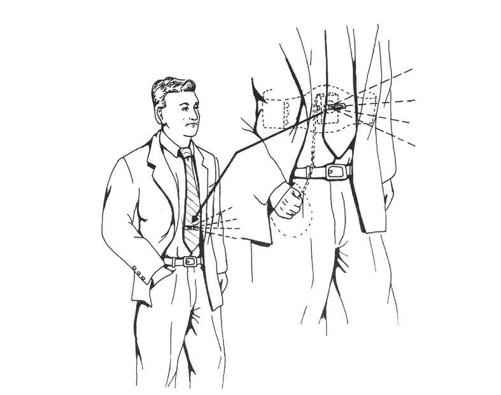
To acquire close-up, clandestine photos of people or objects during the Cold War, small Robot cameras, camouflaged by clothing, were designed to shoot through tiny openings in buttons or tie tacks, 1960s.
The only TSS-TSD-OTS officer killed in the line of duty between 1947 and 2008 was a casualty of anti-Castro operations. Four days before the Bay of Pigs invasion, TSD explosives experts were training members of the force of Cuban nationals in constructing and arming small charges for harassment and sabotage operations. As Nels “Benny” Benson, a forty-five-year-old native of Eagle Bend, Minnesota, and one of TSD’s experienced explosives officers, demonstrated how to mold a charge composed of thermite and C-4 into a form that resembled a soap dish, an errant spark ignited the materials. The resulting fire threatened to spread to adjacent explosives.42
Benson immediately picked up the flaming mixture and carried it away from the site. Critically burned, he died in a Miami hospital three weeks later. One of the nearly one hundred stars chiseled into a granite wall of the lobby of the Original CIA Headquarters Building commemorates the life and sacrifice of Benny Benson, who died doing what duty demanded.
The CIA’s other solution to the Castro problem drew TSD into the ultimately objectionable policy of sanctioned assassination. Both TSD’s chemistry branch and its explosive devices branch had the expertise to create lethal materials and delivery mechanisms. TSS had previously developed poisons as part of the U-2 program in the mid-1950s and impregnated needles for pilots to carry as an alternative to capture and torture. The so-called suicide needle was created by the devices branch of the Special Operations Division of the U.S. Army Chemical Corps at Fort Detrick Maryland, a military research organization with whom the CIA, through TSD, worked closely. The poison on the needle was saxitoxin, a naturally occurring toxin found in contaminated shellfish and one of the most lethal substances known.43
L-pills had been part of the OSS defensive inventory for issuance to agents on particularly dangerous and sensitive assignments. TSD continued to make those available for CIA operations. Little imagination was required to envision that the same or similar potions could be used offensively as well. Likewise, the guns, bullets, darts, and camouflaged explosives in the TSD inventory for covert paramilitary operations could be considered for use against a specific individual.
After the failed Bay of Pigs invasion, President Kennedy and Attorney General Robert Kennedy admonished senior CIA official Richard Bissell, the Deputy Director for Plans, for “not doing anything to get rid of Castro.”44 As a result, in November of 1961 Bissell instructed CIA officer William Harvey to direct a program called ZR/RIFLE, focused on the Cuban problem. 45 From the outset of the Kennedy administration, the CIA had been urged by the White House to create new assassination capabilities, referred to as “executive action,” the “magic button,” or even the “last resort beyond last resort and confession of weakness.”46
The CIA attempted to assassinate Castro at the time of the Bay of Pigs invasion, but it disintegrated into a Keystone Kops comedy.47 The plot involved the CIA’s Office of Security engaging a former FBI special agent turned private detective, Robert Maheu, to recruit members of organized crime to carry out the assignment. Maheu contacted a former member of the Capone crime syndicate, who hired two Mafia members judged to “have experience.”
The plotters faced numerous complications, and TSD’s chemists struggled to find the correct weapon—a lethal but slow-acting pill that would give the agent time to slip away before taking effect. The first batches of poison capsules failed to dissolve adequately in water, but the second batch worked in trials on monkeys and was issued to a Cuban “official” for the attempt.48 The official later returned the pills after getting “cold feet.” 49
From 1960 through the end of 1965,50 various schemes, some whimsical and some serious, were discussed and evaluated to eliminate Castro. Of the conceived and planned attacks on Castro that encompassed public embarrassment as well as assassination, none came close to succeeding.
The variety of plans that were considered to undermine Castro’s charismatic appeal by sabotaging his speeches was reminiscent of William Donovan’s admonition to Stanley Lovell to “raise merry hell.” These included:
Hallucinogenic Spray: One TSD scientist and bioorganic chemist proposed spraying Castro’s broadcasting studio in Havana with a chemical to induce LSD-like hallucinations. TSD eventually found out, however, that the chemical was unreliable.51
Hallucinogenic Cigars: Since the method of introducing the spray into the room was not possible, Schieder suggested impregnating Castro’s cigars with a special chemical to produce temporary disorientation during one of his long, rambling speeches, which were broadcast live to the Cuban people.52
Contaminated Shoes: A plan was evaluated to attack Castro’s famous beard when he was traveling abroad by contaminating his shoes when they were placed outside his hotel room door at night to be shined. The idea was to “dust” the inside of the shoes with thallium salts, a strong depilatory which, when absorbed into the body, would cause Castro’s beard to fall out. TSD procured the chemical and tested it successfully on animals before the DDP scrapped the plan when Castro cancelled his trip.53
Depilatory Cigars: Similar in concept to the failed shoe attack, under this scheme, Castro’s cigars were to be treated with a powerful depilatory that would cause his beard to fall out, leaving him hairless as a means of damaging his macho image. The special box of cigars was to be provided to Castro during his appearance on a television talk show hosted by David Susskind. After CIA officer David Atlee Phillips questioned how the operation could ensure that only Castro, and not others (including Susskind) would smoke the cigars, the idea was abandoned.54 Phillips made the point that assassination schemes required both effective technical substances and precise operational planning.
Poisoned Cigars: The CIA recruited a double agent to offer Castro a Cahiba cigar, his favorite brand, treated with botulin, a toxin so deadly that the target would die shortly after putting the cigar onto his mouth. CIA records indicate that the cigars were passed to the double agent in February of 1961, but he apparently decided against carrying out the plan.55
Exploding Cigars: During a Castro visit to the United Nations the CIA considered a plan to plant a box of exploding cigars at a place where he would smoke one “and blow his head off.” The plan was not carried out.56
Exploding Seashells: In early 1963 TSD was asked to construct a sea-shell with explosives, to be planted in the ocean at a spot in which Castro commonly went skin diving. After a technical and operational review, CIA discarded the idea as impractical.57
Contaminated Diving Suit: A proposal was made for a U.S. lawyer involved with official negotiations over the release of prisoners captured at the Bay of Pigs to present Castro with a contaminated diving suit. TSD bought a diving suit, dusted it inside with a fungus, which would produce Madura foot, a chronic skin disease, and contaminated the breathing apparatus with a tubercle bacillus. The plan was abandoned when the lawyer decided to present Castro with a different diving suit.58
Poisoned Pen: On November 22, 1963—the day that President Kennedy was assassinated in Dallas—a CIA officer offered a poison pen to a Cuban agent, AMLASH, in Paris for use against Castro. TSD had modified the ballpoint pen with a hypodermic needle designed to be so fine that the target (Castro) would not sense its insertion and the agent would have time to escape before effects were noticed. AMLASH was instructed to use Blackleaf-40, a commercial poison, with the device, but in the aftermath of Kennedy’s assassination, he decided against taking the pen back to Cuba.59
Suppressed Pistol and Rifle: The CIA subsequently provided AMLASH with a suppressed pistol and suppressed FAL rifle and scope, as well as highly concentrated explosives.60 AMLASH took no action, and in June of 1965, the CIA terminated contact with him.61
The DDP’s planning of assassination attacks on other foreign leaders, such as Patrice Lumumba of the Congo, also drew on TSD’s research, production, and delivery capabilities.62 The initial plan to eliminate Lumumba involved putting poison into his food or toothpaste. A syringe, surgical mask, rubber gloves, and a vial of toxin were sent to the Congo for the operation. However, the plot failed when moral objections to assassination were raised by senior officers of the Agency’s DDP, as well as the difficulty in gaining access to Lumumba’s entourage.63 Ultimately, the plot became unnecessary when opposition Congo forces killed Lumumba in January 1961.
With the exception of the AMLASH operation, assassination of foreign leaders as a policy option for the United States ended on November 22, 1963, when President Kennedy was shot in Dallas, Texas. It would be more than a decade before the Rockefeller Commission (1975) and the Church Committee (1975-1976) provided the American public insight into the CIA’s secret role in the assassination schemes that clustered in the 1959-1963 years. Obscured by the sensationalism and intrigue of the plots and technologies were the conclusions of both investigations. With respect to assassination planning, the Rockefeller and Church reports determined that CIA officers acted on accurately understood policy direction from the White House under both the Eisenhower and Kennedy administrations.64
In response to the two reports, President Ford issued Executive Order 11905 that contained the provision: “No employee of the United States Government shall engage in, or conspire to engage in, political assassination.” Subsequently, a revised 1981 Executive Order 12333 governing intelligence activities reaffirmed the prohibition: “No person employed by or acting on behalf of the United States Government shall engage in, or conspire to engage in, assassination.” The EO added that “no agency of the Intelligence Community shall participate in or request any person to undertake activities forbidden by this Order,” language that explicitly prohibited “indirect participation” in assassination.
Serious public discussion of assassination as a U.S. policy option ended with these Executive Orders but it would be rekindled after the September 11, 2001, al-Qaeda terrorist attacks. A December 2001 Newsweek poll found that 65 percent of those surveyed supported assassination of al-Qaeda leaders. The dramatic change in public opinion likely reflects the contrast between the potential danger perceived from Castro and the reality that al-Qaeda, a non-state organization, carried out attacks on American cities, airlines, and civilians. Even in that environment, however, it remains unlikely the U.S. public would support authorized covert assassination operations against the head of a recognized foreign government.