

sFH 18/1 auf PzKpfw III/IV Sd Kfz 165 “Hummel”
Germany’s first self-propelled artillery piece based on the 15 cm field howitzer was actually designed to be only an interim solution in anticipation of vehicles based on the Panther and Tiger chassis models. These were never built as the German Army felt obliged to use the Hummel model throughout the war. It was based primarily on the Pzkpfw IV, but with a number of components from PzKpfw III, therefore the designation of model III/IV. The same layout used for the Wespe was applied to the Hummel. Considering its light armour and the little protection it afforded the crews, even from the elements, and its limited access to ammunition; the Hummel was very effective and popular. In total, 880 Hummels were built during WWII.
Production period: 1943 – 1945
Main manafacturer: Rheinmetall- Borsig, Alkett
Tonnage: 23 tonnes
Crew: 6
Length: 7.17 meters
Width: 2.97 meters
Height: 2.81
Track width: 40 cm
Ground clearance: 40 cm
Motor: Maybach HL120 TRM V-12 petroleum
Engine capacity: 265HP at 2600 rpm
Fuel capacity: 600 liters
Maximum speed: 25 km/h
Maximum range: 215 km
Armament: 1× 15 cm s.F.H. 18/1, 1 × 7.92 mm MG
Ammunition quantity: 15 cm – 18 shells, 7.92 mm – 600 rounds
Armour strength:
Hull frontal: 30 mm
Hull sides: 20 mm
Hull rear, roof floor: 15 mm
Turret front: 15 mm
Turret sides: 15 mm
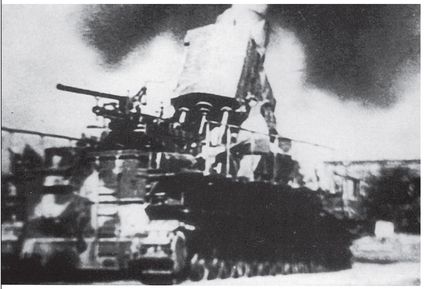
“Karl” Gerät 040
Built to give the German Army the kind of firepower which only railway borne artillery could heretofore deliver but in the field, hence motorised. Large and ungainly and barely able to move, it fired, despite all, mortar rounds which weighed close to two tons each.. Only six examples were ever manufactured, Tor, Oden, Adam, Eva, Loki and Ziu. They were used only during the siege of Sebastopol 1941 – 1942, as well as in the fighting in Warsaw. It was also described as a self-propelled howitzer.
Production period: -
Manufacturer: Rheinmetall-Borsig
Tonnage: 125 tonnes
Crew: 18
Length: 11.22 meters
Width: 3.2 meters
Height: 4.47 meters
Track width: -
Ground clearance: -
Motor: Daimler Benz V-12 Diesel
Engine capacity:
580 HP at 2000 rpm
Fuel capacity: - liter
Maximum speed: 10km/h
Maximum range: -
Armament: 1 × 60cm howitzer
Ammunition quantity:
60 cm – 2 shells
Armour strength:
Hull frontal: -
Hull sides: -
Hull rear, roof, floor: -
Turret front: -
Turret sides: -
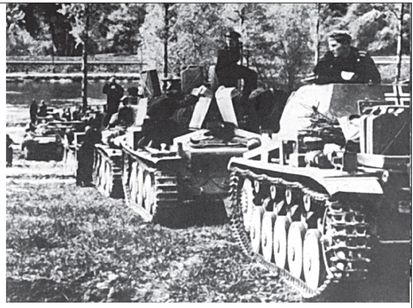
Panzer-Kamfwagen 38(t) Ausf C
Czechoslovakia’s most important tank at the time of the German invasion in 1938. The vehicle was even better than the current German equivalents. This was naturally appreciated by the Germans who continued to produce the panzer until 1942. From that point on, it was produced as the basic platform for a number of special vehicles, such as the Hetzer. In total 2,000 were built between 1938 and 1942. It was exported to Sweden as model m/41.
Production period: 1938-42
Manufacturer: Praga CKD
Tonnage: 10.5 tonnes.
Crew: 4
Length: 4.9 metres
Width: 2.06 metres
Height: 2.37 meters
Track width: 29 cm
Ground clearance: 40 cm
Motor: Praga EPA V-6 petrol
Engine capacity:
125 Hp at 2200 rpm
Maximum fuel capacity: 218 liters
Maximum speed: 42 km/h
Maximum range: 240 km
Armanent:
1 × 3.7 cm KwK(t)L/45
2 × 7.92 mm MG
Ammunition Quantity:
3.7cm – 90 shells
7.92 mm – 2500 rounds
Armour strength:
Hull frontal: 25mm
Hull sides: 10 – 15mm
Hull back, roof, floor: 10mm
Turret front: 25 mm
Turret sides: 10 – 15 mm
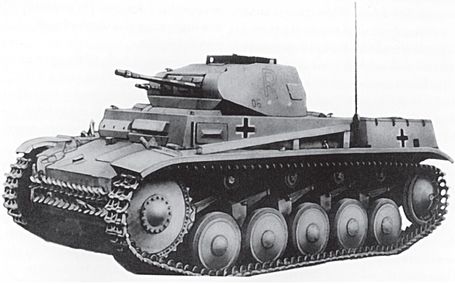
Panzer-Kamfwagen II Ausf D/E/F Sd Kfz 121
One of Germany’s most important tanks at the beginning of WWII. Designed in 1935, in 1940 the tank was regarded as being too weak for use in an ordinary tank capacity. Instead, it came to be used as a platform for different types of mobile weaponry that did not require a turret, or for reconnaissance vehicles. Poorly armoured and poorly armed, it was, at least, light and swift and easy to manufacture. Production ceased in 1944. Approximately 2,000 models, including all its variations, were built during WWII.
Production period: 1935 – 44
Manufacturer: MAN, Henschel, Famo, Daimler-Benz
Tonnage: 9.5 tonnes
Crew: 3
Length: 4.64 metres
Width: 2.30 metres
Height: 2.02 metres
Track width: 30 cm
Ground clearance: 34 cm
Motor: Maybach HL66 P 6-cylinders Petrol
Engine capacity: 180 HP at 3500rpm
Fuel capacity: 200 litres
Maximum speed: 55km/h
Maximum range: 160 km
Armament: 1 × 2 cm KwK 38 L/55 1 × 7.92 mm MG
Ammunition quantity:
2 cm – approx. 180 shells
7.92 mm – 3,525 rounds
Armour strength:
Hull frontal: 15 – 30 mm
Hull sides: 10 – 20 mm
Hull back, roof, floor: 10 – 20 mm
Turret front: 20 – 35 mm
Turret sides: 15 – 30 mm
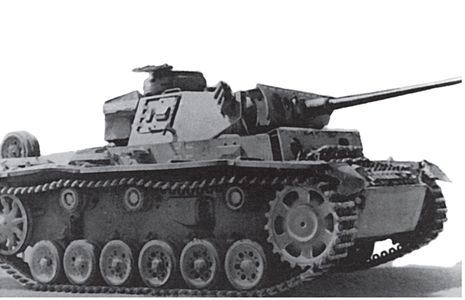
Panzer-Kamfwagen III Ausf J Sd 141/1
The most common medium-heavy tank in Germany between 1939 and 1942. Also used as the platform for the famous Sturmgeschutz III. Up until 1942, it was possible to upgrade the vehicle to specifications required for the battlefield. By 1942, it was no longer possible to continue furthering its development. All production was concentrated on the Sturmgeschutz. But those panzers which continued to function were still used though preferably not on the frontline where its relatively weak armour and armament were out of place. In total 1,549 model J’s were manufactured.
Production period: 1942 – 43
Manufacturer: Daimler-Benz, Alkett, MAN
Tonnage: 22.3 tonnes
Crew: 5
Length: 5.56 metres
Width: 2.95 metres
Height: 2.50 metres
Track width: 36 cm
Ground clearance: 38 cm
Motor: Maybach HL 108 TR V – 12 Petrol
Engine capacity: 250 HP at 3,000 rpm
Fuel capacity: 300 litres
Maximum speed: 32 km/h
Maximum range: 160 km
Armament:
1 × 5 cm Kwk L/60
2 × 7.92 mm MG
Ammunition quantity:
5 cm – approx. 99 shells
1 × 7.92 mm 2,700 rounds
Armour strength:
Hull frontal: 50 – 80 mm
Hull sides: 20 – 40 mm
Hull back, roof, floor 10 – 20 mm
Turret front: 50 – 80 mm
Turret sides: 20 – 40 mm
Panzer-Kampfwagen VI “Tiger I” Ausf. H/E Sd Kfz 181
According to many, the War’s most acclaimed and renowned panzer. It was Germany’s first assembly line heavy tank. A monster, armed with the famous 88 and for its time, (1942) it had extremely dense armour protection. Hardly upgraded during the war, it was not as indomitable a foe in 1945 as it had been in 1942, albeit still a tough nut for allied forces to crack, nonetheless. In total, approximately 1,350 were built during the war.
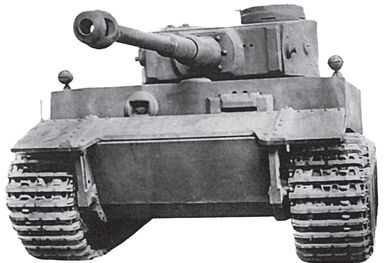
Production period: 1942 – 1944
Manufacturer: Henschel
Tonnage: 56.9 tonnes
Crew: 5
Length: 8.24 meters
Width: 3.73 meters
Height: 2.88 meters
Track width: 72 cm
Ground clearance: 47 cm
Motor: Maybach HL210 P 45 V-12
Bensin (H), Maybach HL230 P 45 V- 12 Bensin (E)
Engine capacity: 650 HP at 3000rpm
Fuel capacity: 534 liters
Maximum speed: 38 km/h
Maximum range: 90 km
Armament: 1 X 8.8 cm Kwk 36 L/56,
2 X 7.92 mm MG
Ammunition quantity: 8.8 cm – 92
shells, 7.92 mm – 3,600 rounds
Armour strength:
Hull frontal: 80 – 102 mm
Hull sides: 60 – 80 mm
Hull back, roof, floor: 15 – 25 mm
Turret front: 80 – 110 mm
Turret sides: 60 – 80 mm
Panzer-Kampfwagen V “Panther” Ausf. G Sd Kfz 171
Description: Regarded by many as the war’s best mediumheavy tank, the Russians chose to classify it as a heavy tank. Originally set into production in 1942 as a solution the Soviet T-34, it was the first German tank with effectively sloped armour. Its design was complicated and it was often taken out of action, beset with problems in its hydraulic, gear-change, and wheel mounting systems. In the hands of well-train tank personnel, it was a life-threatening weapon even to the crews manning the allies’ heaviest tanks. Fortunately, “Panthers” were never produced in sufficient number to meet the Germans’ needs. All told, 3,750 variation G tanks were produced. And the combined production total for all variations was 6,100 Panthers.
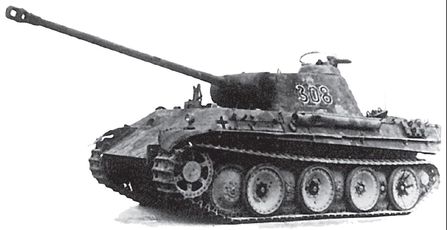
Production period: 1943 – 45
Manufacturer: MAN, MNH, Daimler- Benz
Tonnage: 45 tonnes.
Crew: 5
Length: 6.88 metres
Width: 3.40 metres
Track width: 66 cm
Clearance: 54 cm
Motor: Maybach HL 230 P 30 V-12
Engine capacity: 700 HP at 3000rpm
Fuel capacity: 730 litres
Maximum speed: 46 km/h
Maximum range: 200 km
Armament:
1 × 7.5 cm KwK 42L/70
2 × 7.92 mm MG 34
1 × 7.92 mm MG 42
Ammunition quantity:
7.5 cm 80 shells
7.92 mm – 4,200 – 4,800 rounds
Armour strength:
Hull frontal: 60 – 80 mm
Hull sides: 40 – 50 mm
Hull back, roof, floor: 16 – 40 mm
Turret front: 100 – 110 mm
Turret sides: 45 mm
Panzer-Kampfwagen IV Ausf. G/H, Sd Kfz 161/1, 161/2
Germany’s most important tank during the entire war, along with being the most produced. Blueprinted before the war, its more traditional square appearance was kept throughout the war. In terms of its weaponry and armour protection, they were upgraded constantly and while this caused the weight of the vehicle to increase, its engine performance did not and its overall manoeuvrability consequently suffered. By the end of the war, the development of most allied tanks had surpassed and outclassed the model in terms of both armaments and protection. However, there was no alternative available in sufficient number to replace the tank with the German army. In addition, the chassis was used as the basic platform for a flood of special vehicles and variations of weaponry, for example, the Brummbär and the Jagdpanzer IV, etc. Altogether, 5,400 examples of both variations were ultimately manufactured.
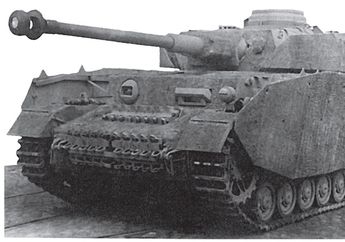
Production period: 1942 – 45
Manufacturer: Steyr, Vomag, Krupp, Praga
Tonnage: 22.3 – 25 tonnes.
Crew: 5
Length: 5.93 metres
Width: 2.88 metres
Height: 2.68 metres
Track width: 40 cm
Ground clearance: 40 cm
Motor: Maybach HL 120
TR V-12 Petrol
Engine capacity:
300 HP at 3,000 rpm
Fuel capacity: 453 litres
Maximum speed: 32 km/h
Maximum range: 250 km
Armament:1 × 7.5 cm Kwk L/48
(G,H), 2 × 7.92 mm MG
Ammunition quantity:
7.5 cm – approx. 90 shells
7.92 mm – 3,600 rounds
Armour strength:
Hull frontal: 50 – 80 mm
Hull sides: 30 – 50 mm
Hull back, roof, floor: 15 – 25 mm
Turret front: 50 – 80 mm
Turret sides: 30 – 50 mm

Panzer-Kamfwagen 735 and 736 – M13/40 and M14/41
Italy’s most vital tank and the model they produced the most examples of. Typically, the Germans seized all functioning models of the tank as well as all functioning Italian transportation, on their capitulation in 1943. The Germans gave the tank their own id-number and used them as German Police tanks in the occupied territories: As a combat threat, the vehicle was insufficiently armed and the armour plating was designed for conditions in 1938/39 – Mechanically, they were unreliable and, in addition, the Germans lacked spare parts for them for obvious reasons. The M13/40 was the 1940 model, and likewise, the M14/41, the 1941model. The 1942 version, the M15/42, had hardly any production time before Italian capitulation.
Production period: 1940 – 1943
Manufacturer: Ansaldo-Fossati
Tonnage: 14.3 tonne
Crew: 4
Length: 4.92 meter
Width: 2.23 meter
Height: 2.39 meter
Track width: 26 cm
Ground clearance: 40 cm
Motor: SPA TM40 8-cylinders Diesel
Engine capacity: 125 HP at 1800rpm
Fuel capacity: - liter
Maximum speed: 32 km/h
Maximum range: 200 km
Armament: 1 × 4.7 cm Model 37/32
Ansaldo: 3 × 8 mm
Breda MG model 38
Ammunition quantity: 4.7 cm – 108 shells, 8 mm – 3048 rounds
Armour strength:
Hull frontal: 25 – 45 mm
Hull sides: 25 mm
Hull rear, roof, floor: 15 mm
Turret, front: 25 mm
Turret sides: 25 mm

7.5 cm le Panzerjäger 38(t) Hetzer
Germany’s most produced special purpose AT (All-terrain) vehicle, or self-propelled, so-called “Armoured hunter.” Ironically enough, they were built on a chassis from Czechslovakia, and stretching this irony even further is the fact that it was the Czechs who succeeded in producing them great quantity and not the Germans,
It had a very simple and robust design, which even came to be used by the Swiss Army after the war. A low silhouette, relatively good armour protection and a reliable main gun, but above all, it was the ease of its operation that made it popular amongst the troops. In total, some 2,700 Hetzers were built between the summer of 1944 and the cessation of the war.
Production period: 1944 – 1945
Manufacturer: Praga CKD, BMM, Skoda
Tonnage: 16 tonnes
Crew: 4
Length: 4.87 meters
Width: 2.63 meters
Height: 2.17 meters
Track width: 35 cm
Ground clearance: 42 cm
Motor: Praga AC/2800 V-6 Bensin
Engine capacity: 160 HP at 2800rpm
Fuel capacity: 320 liters
Maximum speed: 42 km/h
Maximum range: 260 km
Armament:
1 × 7.5 cm PaK 39 L/48 cm
1 × 7.92 mm MG
Ammunition quantity:
7.5 cm – 42 shells
7.92 mm – 600 rounds
Armour strength:
Hull front: 60 mm
Hull sides: 25 mm
Hull rear, roof, floor: 25 mm
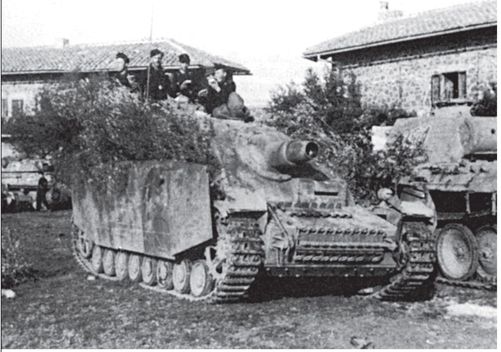
Sd Kfz 166 Brummbär
Description: The predecessor of the Sturmtiger. Modelled on the Pz Kpfw IV and was armed with a 15 cm StuH L/12. Actually highly successful as it could also be used for indirect artillery support for infantry forces. Over 300 were manufactured.
Production period: 1943 – 1945
Manufacturer: Deutsche Eisenwerke
Tonnage: 28 tonnes
Crew: 5
Length: 5.93 meters
Width: 2.88 meters
Height: 2.52 meters
Track width: 40 cm
Ground clearance: 40 cm
Motor: Maybach HL 120 TRM V-12 Bensin
Engine capacity:
300 HP at 3000 rpm
Fuel capacity: 470 liters
Maximum speed: 40 km/h
Maximum range: 180 km
Armament:
1 × 15 cm StuH L/12
1 × 7.92mm MG
Ammunition quantity:
15 cm – 38 shells
7.92mm – 600 rounds
Armour strength:
Hull frontal: 100 mm
Hull sides: 50 mm
Hull rear, roof, floor: 25 mm
Sturmstiger
A variation on the renowned Tiger. Behind its reinforced armour was installed a massive 38 cm howitzer which fired 344 kg shells. Partly due to experience gained from the battle for Stalingrad, the Germans knew that offensive warfare in an urban environment required powerful weapons to obliterate buildings constructed of concrete and stone. The Sturmstiger could solve this problem thanks to its massive armament. The only problem was that, at that point in time, the Germans didn’t need massive offensive weapons for urban warfare, quite the opposite. As a result, only eighteen were ever manufactured.
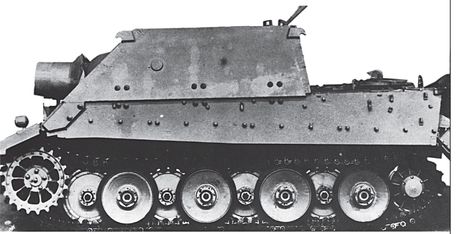
Production period: 1943 – 1944.
Manufacturer: Alkett
Tonnage: 66 tonne
Crew: 5
Length: 6.28 meters
Width: 3.57 meters
Height: 2.85 meters
Track width: 80 cm
Ground clearance: 48 cm
Motor: Maybach HL230 P 45 V – 12 Bensin
Engine capacity: 700 HP 3000 rpm
Fuel capacity: 860 liters
Maximum speed: 40 km/h
Maximum range: 120 km
Armament:
1 × 38 cm Raketenwerfer 61
1 × 7.92 mm MG 1
Ammunition Quantity:
60 cm – 14 shells
7.92 mm – 600 rounds
Armour strength:
Hull frontal: 150 mm
Hull sides: 80 mm
Hull rear, roof, floor: 40 mm
Turret front: 150 mm
Turret sides: 80 mm
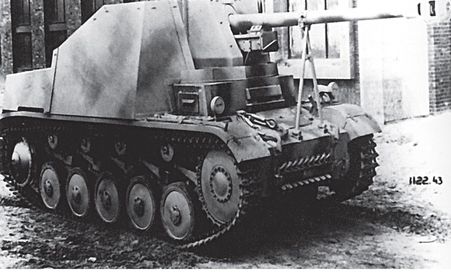
Panzer Selbstfahrlafette I fur 7.62 cm PaK 36 (r) auf Fahrgestell PzKpfw II Ausf E, Marder I, Sd Kfz 132
A variant constructed on PzKpfw II tanks. Custom built to accommodate 7.62 cm anti-tank guns captured from the Soviet army. Approximately 200 vehicles were converted in this way in 1942 and were designated as Marder I’s. Marder were a family of hybrid-vehicles created by “rebuilding” dated, unusable German, or captured, tanks – specifically, a family of has-been tanks adapted to accommodate 7.5 cm anti-tank guns.
Production period: 1942
Manufacturer: Alkett
Tonnage: 11.5 tonnes
Crew: 4
Length: 5.65 meter
Width: 2.3 meter
Height: 2.6 meter
Track width: 30 cm
Ground clearance: 29 cm
Motor: Maybach HL62 TRM V-6 Bensin
Engine capacity: 140 HP at 3000rpm
Fuel capacity: 170 liters
Maximum speed: 55km/h
Maximum range: 200 km
Armament:
1 × 7.62 cm PaK (r) L/54.5
1 × 7.92 mm MG
Ammunition quantity:
7.62 cm – 30 shells
7.92 mm – 600 shot
Armour strength:
Hull frontal: 30 mm
Hull sides: 15 mm
Hull rear, roof, floor: 15 mm
Turret front: 15 mm
Turret sides: 15 mm
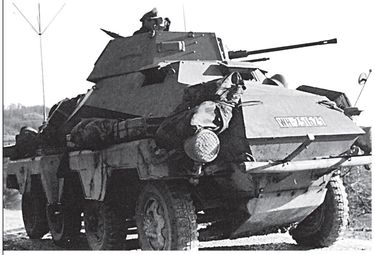
8×8 schwere Panzer Spähwagen Model GS, Sd kfz 231, 232, 233, 263
One of Germany’s most common armoured vehicles during WWII. It was built upon a lorry chassis (8×8) and was designed in 1937. It was steered by the four forward wheels and could be driven in both directions just as easily, as it had both rear and forward steering. It could even be driven on railway tracks of normal gauge. It was merely a matter of removing the rubber tyres from the wheel rims. Four different variations were produced; the 231, a standard wagon with a 20mm automatic gun in one turret; the 232, a communications vehicle with standard armament (its radio antenna in the form of a rectangular frame antenna above the entire vehicle); the 233 which was an assault gun, with a 7.5cm L/24, sans turret; and the model 263 which was an unarmed communications vehicle. All variations taken into account, 1,235 were produced.
Production period: 1937 – 1942
Manufacturer: Bussing-NAG
Tonnage: 8.8 tonnes
Length: 5.85 meter
Height: 2.34 meter
Width: 2.20 meter
Wheel base: 410 cm
Ground clearance: 27 cm
Motor: Bussing-NAG model L8V-GS V-8 Bensin
Engine capacity: 150 HP at 3000rpm
Fuel capacity: 150 liters
Maximum speed: 85 km/h
Maximum range: 160 km
Armament: 1 × 2 cm KwK 38 L/55
(231, 232), 1 × 7.5 cm KwK L/24 (233)
1 × 7.92 mm – (all models)
Ammunition quantity: 20 mm – 130
rounds (231, 232), 7.5 cm – 32
rounds (233), 7.92 mm – 1500 rounds
Armour Strength:
Hull frontal: 10 – 30 mm (all models)
Hull sides: 10 mm (all models)
Hull rear, roof and floor: 10 mm (all models)
Turret front: 15 mm (231, 232)
Turret sides: 8 mm (231, 232)
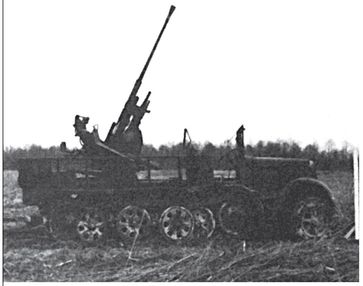
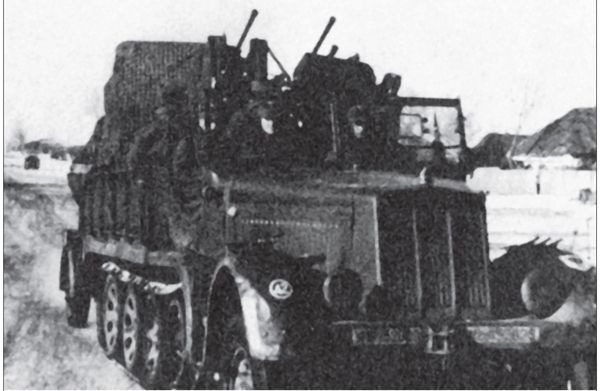
Sd Kfz 7/2 (m Zgkw 8-tonne Model KM m 8 – 11)
One of Germany’s many attempts to create a mobile anti-aircraft system to its armoured forces. from its inception The Sd Kfz 7 was an artillery half-tracked vehicle with an 8 tonne drawing power, most known for being the tow-vehicle for the much respected 88mm gun. The German Army began to use the vehicle as a platform for either the Flak-Vierling 38, four-barrelled 20mm anti-aircraft (Sd Kfz 7/1) or the 3.7 cm Flak 36 (Sd Kfz 7/2). A relatively inexpensive and effective solution to a constantly occurring problem, its biggest drawback was the lack of armoured protection for the crew – virtually none at all. In total, 12,000 vehicles came off the production line between 1937 and 1945.
Production period: 1937 – 1945
Manufacturer: Krauss-Maffei
Tonnage: 11.55 tonnes
Crew: 7
Height: 6.85 meters
Width: 2.35 meters
Height: 2.62 meters
Track width: 36 cm
Ground clearance: 41 cm
Motor: Maybach:
HL52 TU 6 cylinders petroleum
Engine capacity:
115 HP at 2,600 rpm
Fuel capacity: 205 liters
Maximum speed: 50 km per hour
Maximum range: 250 km
Armament:
1 × 20 mm Flak-Vierling 38 (7/1), 1 ×
3.7 cm Flak 36 (7/2)
Ammunition quantity:
20mm – approximately 3,200 rounds
2,7cm – approximately 1,000 rounds
Armour thickness: -
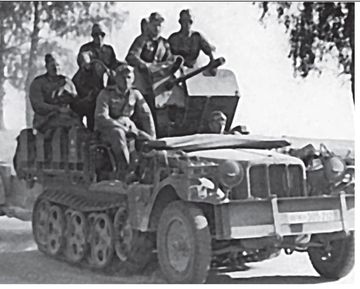
Sd Kfz 10/4 (le Zgkw 1-tonne Model D7)
Another example of one of Germany’s many attempts to produce a mobile anti-aircraft artillery for its panzer forces. From its inception the Sd Kfz 10 was a half-tracked tow-vehicle with a one-ton pulling capacity. The original model was designed in 1926 and stands as the most produced example of half-track vehicles in Germany up until 1945. Practically speaking, the vehicle was not a satisfactory tow-vehicle with only a one ton drawing capacity. On the other hand, it was excellent as mobile platform for lighter weapon systems, as for example, the 20mm Flak 30 or 38. It was also used as the base-model for a whole series of 250-half-tracked vehicles – armoured troop carriers. In total, some 25,000 models were built between 1932 and 1944.
Production period: 1932 – 1944
Manufacturer: Demag, Phänomen,
Bussing-Nag.
Tonnage: 4.9 tonnes
Crew: 6
Length: 4.75 meters
Width: 1.93 meters
Height: 1.62 meters
Track width: 24 cm
Ground clearance: 32 cm
Motor: Maybach HL 42 TRKM 6- cylinders Bensin
Net capacity: 100 HP at 3000 rpm
Fuel capacity: 115 liters
Maximum speed: 65 km/h
Maximum range: 230km
Armament:
1 × 2 cm Flak 30(10/4),
1 × 2 cm Flak 38 (10/5)
Ammunition Quantity:
2 cm shells approx. 800 rounds
Armour: -
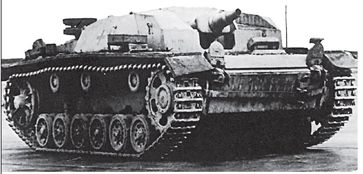
Sd Kfz 142/1 7,5 cm Sturmgeschutz III Ausf F/G
Germany’s first true assault-gun. Primarily intended as an infantry support vehicle, hence its classifications as an assault-gun, in contrast to the later Panzer-hunter which was developed to hunt down and destroy an enemy’s tanks, a task that the StuG increasingly came to be used for. The first versions saw field service as early as 1939, albeit equipped with the shorter 7.5cm gun. From 1942 onwards, the G version became the most common and was produced in greater number than the majority of turreted tanks! Traditionally, the crews of StuG’s were regarded as elite troops within armoured weapon contingents as they were manned by artillery personnel, rather than by tank troops. In total, 8,000 F/G versions were produced.
Production period: 1942 – 1945
Manufacturer: Alkett
Tonnage: 23.9 tonnes
Crew: 4
Length: 5.56 meters
Width: 2.95 meters
Height: 2.15 meters
Track width: 36 cm
Ground clearance: 38 cm
Motor: Maybach HL 120 TRM v-12 Bensin
Engine capacity: 300 HP at 3000rpm
Fuel capacity: 320 liters
Maximum speed: 40 km/h
Maximum range: 130 km
Armament: 1 X 7.5 cm KwK L/43 (F),
1 X 7.5 cm KwK L/48 (G),
1 X 7.92 mm MG
Ammunition Quantity:
7.5 cm – 54 shells,
7.92 mm 600 rounds
Armour strength:
Hull frontal: 50 – 80 mm
Hull sides: 30 – 50 mm
Hull rear, roof, floor: 15 – 25 mm
Turret front: - mm
Turret sides: - mm
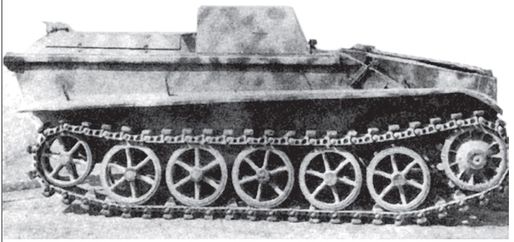
Borgward B IV Schwere Ladungsträger Sd Kfz 301 (Sprengstoffträger)
The Goliath’s big brother. In contrast to the Goliath, which was a radio steered vehicle, the B IV was a “true” motor vehicle in the sense that it was controlled by a lone driver within the vehicle and could be used repeatedly. Around 500 were built during the war. In the Battle of Berlin, in 1945, they were used as improvised tank killers or “Jagdpanzers” with specially mounted Panzerschrecktuber (particularly large gun-barrels).
Production period: 1939 – 1945
Manufacturer: Hansa-Loyd, Borgward
Tonnage: 3.66 tonnes
Crew: 1
Length: 3.65 meters
Width: 1.80 meter
Height: 1.19 meter
Track width: - cm
Ground clearance: - cm
Motor:
Borgward 6-cylinders Bensin
Engine capacity:
49 HP at 3500 rpm
Fuel capacity: - liter
Maximum speed: 38 km/h
Maximum range: 210 km
Armament:
1 X 500 kg high explosives
Hull armour strength:
Maximum 10 mm
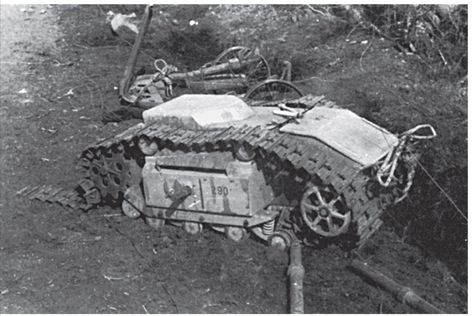
Goliath E-V Sd Kfz 302
A so called “mini-tank” which carried high explosive charges weighing 100 kgs. Steered by a radio-control operator to a given target where the charge was then detonated: A so-called “disposable” weapon – fire once and forget – extremely effective if the enemy couldn’t stop it. Not surprisingly, the armour was so weak that it could be pierced by small arms fire. Approximately 4,500 were built in total.
Production period: 1941 – 1945
Manufacturer: Zundapp
Tonnage: 0.4 tonnes
Crew: 0
Length: 1.63 meters
Width: 0.91 meter
Height: 0.62 meter
Track width: - cm
Ground clearance: - cm
Motor: Zundapp 2-cylinder Bensin
Engine capacity: 12.5HP at 4500rpm
Fuel capacity: - liter
Maximum speed: 12 km/h
Maximum range: 12 km
Armament:
100kg high explosive charge
Armour strength: 0
Leichte Schutzen-Panzerwagen
Model D 7p, Sd Kfz 250/1 – 12, 252, 253
Mittlerer Schutzen-Panzerwagen
Model HL kl 6p and H kl 6 Sd Kfz 251/1 - 23
Germany was the only warring nation during WWII which had two competing versions of half-track carriers tasked for troop transportation. Model 250 was the smaller version, 251 was the larger one. Both were produced in a large number of different versions used for specific purposes. The most common variations were the 250/1 infantry transport vehicle, the 250/3 radio carrier, the 250/4 artillery observation vehicle, the 250/7 8 cm mortar carrier. The 250’s troop transport capacity, however, was inadequate; other than the two-man crew, only four men could be carried in a 250, whereas the 251 could carry ten men (i.e. an entire squad) in addition to its two-man crew. The model-250 was, in other words, too small. In addition, both models had under-powered engines, lacked roof protection and, in general, were far too poorly protected for operations on the frontline. There was, however, no other alternative available for the German Army and, in any event, they were never produced in quantities sufficient to cover their need. All told, approximately 7,500 model-250’s of all variations were produced, and approximately 16,000 model-251’s including all variations.
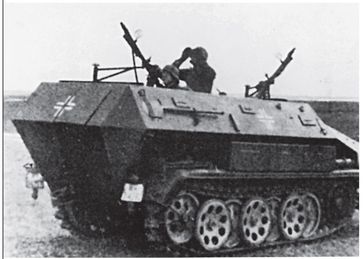
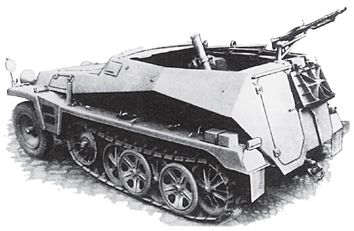
The following variations were built:
250/1 Armoured light transport carrier. Crew: 2 + 4 men.
250/2 Armoured combat command vehicle equipped with field telephone. Crew: 2 + 2 men.
250/3 Armoured radio carrier. Crew: 2 + 3 men.
250/4 Armoured firing direction carrier for artillery. Crew: 2 + 3.
250/5 Armoured light reconnaissance carrier.
Crew: 2 + 3 men.
250/6 Armoured ammunition transport carrier. Crew: 2
250/7 Armoured 8 cm mortar carrier. Crew: 2 + 3 men.
250/8 Armoured assault-gun carrier m 7.5 cm KwK 37 L/24. Crew: 2 + 3 men.
250/9 Armoured panzer reconnaissance carrier m 2 cm automatic gun Kwk 38/L55 in turret. Crew: 2 + 1 man.
250/10 Armoured light Pv-carrier m 3.7 cm PAK 35/36 L/45. Crew 2 + 2 men.
250/11 Armoured light Pv- vehicle, m 2.8 cm sPzB 41. Crew: 2 + 2 men.
250/12 Armoured firing direction carrier for range finding for artillery. Crew: 2 + 2 men.
252 Armoured light ammunition transport carrier with roof. Crew: 2 men.
253 Armoured light firing direction carrier for artillery with roof. Crew: 2 + 2 men.
Production period: 1939 – 1945
Manufacturer: Demag
Tonnage: 5.7 tonnes
Crew: 2 + 4
Length: 4.65 meters
Width: 1.95 meters
Height: 1.66 meters
Track width: 24 cm
Ground clearance: 28 cm
Motor: Maybach HL 42 TRKM V-6 Petrol
Motor capacity: 100 HP at 2000 rpm
Fuel capacity: 140 liters
Maximum speed: 65 km/h
Maximum range: 250 km
Armament:
1 – 2 × 7.92 mm MG
Ammunition quantity:
7.92 mm – 1000 – 2000 rounds
Armour strength:
Hull frontal: 10 – 15 mm
Hull sides: 8 mm
Hull rear, roof, floor: 8 mm
Turret front: 10 -15 mm (250/9)
Turret sides: 8 mm (250/9)
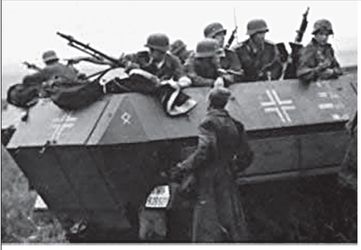
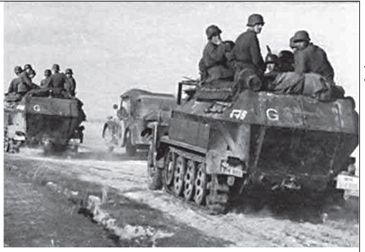
Mittlerer Schutzen-Panzerwagen, Model HL kl 6p and H kl 6 Sd Kfz 251/1-23
The following variations were built:
251/1 Armoured medium troop transport carrier. Crew: 2 + 10 men.
251/1 (Wuhrfrahmen) Armoured medium troop transport carrier with m 28/32 cm rocket launchers “Stuks zu Fuss”. Crew: 2 + 5 men.
251/2 Armoured 8 cm mortar carrier. Crew 2 + 4 men.
251/3 Armoured radio carrier. Crew 2 + 5 men.
251/4 Armoured artillery tractor. Crew 2 + 5 men.
251/5 Armoured transport carrier for pioneers(engineering troops/sappers). Crew 2 + 7 men.
251/6 Armoured command carrier for divisional, corp and Armeé commanders. Crew: 2 + 4.
251/7 Armoured transport carrier for assault engineers. Crew: 2 + 5 men.
251/8 Armoured ambulance. Crew 2 + 1.
251/9 Armoured assault-gun carrier 7.5 cm “Stummel”. Crew: 2 + 3 men.
251/10 Armoured platoon weapon support carrier 3.7 cm PAK. Crew: 2 + 3 men.
251/11 Armoured Field Telephone carrier. Crew: 2 + 3 men.
251/12 Armoured battery command carrier. Crew: 2 + 4 men.
251/13 Armoured fire direction carrier for artillery. Crew 2 + 4 men.
251/14 Armoured command carrier for artillery sound measurement. Crew: 2 + 6 men.
251/15 Armoured command carrier for observation of artillery firing. Crew 2 + 4.
251/16 Armoured flamethrower “Flamenwerfer 40”. Crew 2 + 3 men.
251/17 Armoured anti-aircraft gun carrier Flak 38 2 cm. Crew 2 + 4 men.
251/18 Armoured battle command carrier. Crew 2 + 4 men.
251/19 Armoured command carrier with telephone exchange. Crew 2 + 4 men.
251/20 Armoured carrier for search light “Uhu”. Crew 2 + 2 men.
251/21 Armoured anti-aircraft gun carrier MG 151/15 “drilling”. Crew 2 + 4 men.
251/22 Armoured Pv – carrier PAK 40 7.5 cm. Crew 2 + 2 men.
251/23 Armoured reconnaissance carrier 2 cm Kwk 38. Crew 2 + 2.
Production period: 1939 – 1945.
Manufacturer: Hanomag and Borgward
Tonnage: 8.5 tonnes
Crew: 2 + 10 (see above)
Length: 5.80 meters
Width: 2 meters
Height: 1.75 meter
Track width: 28 cm
Ground clearance: 32 cm
Motor: Maybach HL 42 TUKRM V-6 Bensin
Engine capacity: 100 HP at 3000rpm
Fuel capacity: 160 liters
Maximum speed: 53 km/h
Maximum range: 320 km
Armament:
1 – 2 × 7.92 mm MG, depending on model.
Ammunition quantity: 7.92 mm.
Between 1200 and 3600 rounds depending on model.
Armour strength:
Hull frontal: 12 mm
Hull sides: 8 mm
Hull rear, roof, floor: 8 mm
Turret front: 12 mm
Turret sides: 8 mm
4×4 leichte Panzer Spähwagen, Sd Kfz 221, 222, 223, 260, 261
One of Germany’s most common armoured cars during WWII. Built on a chassis designed for armoured cars, it had 4-wheel drive and 4×4 steering. They were manufactured between 1935 and 1944. The 221 and the 222 were reconnaissance vehicles with standard features and roles. The 223, 260 and 261 models had higher capacity radio systems and functioned more as mobile communication centres in connection with reconnaissance missions. Approximately 2,200 were built, all told.
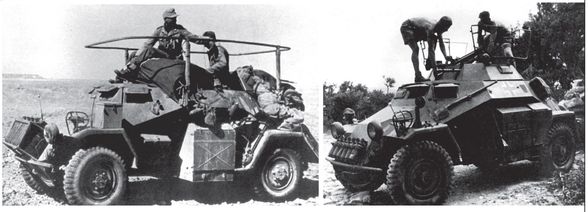
Production period: 1935 – 1944
Manufacturers: Krupp, Horch
Tonnage: 4 – 4.8 tonnes
Crew: 221, 222, 223:3, 260, 261:4
Length: 4.8 meters
Width: 1.95 meters
Height: 1.80 meters
Wheel base: 280 cm
Ground clearance: 24 cm
Motor: Horch 801 V- 8 Petrol
Engine capacity: 75 HP at 3600 rpm
Fuel capacity: 100 liters
Maximum speed: 80 km/h
Maximum range: 280 km
Armament:
221: 1 × MG 7.92 mm or 1× 2.8 cm
Panzerbuche
222: 1 × 20 mm KwK or 2.8 cm
Panzerbuche
223: 1 × 20 mm KwK
260, 261: 1 × MG 7.92 mm
Ammunition quantity:
20 mm – 250 shells (222, 223)
2.8 cm – 200 shells (221, 222)
7.92 mm – 2,500 rounds (221, 260, 261)
Armour strength:
Hull frontal: 14.5 mm (all models)
Hull sides: 8mm (all models)
Hull rear, roof, floor: 8 mm (all models)
Turret front: 14.5 mm (231, 232)
Turret sides: 14.4 mm (231, 232)
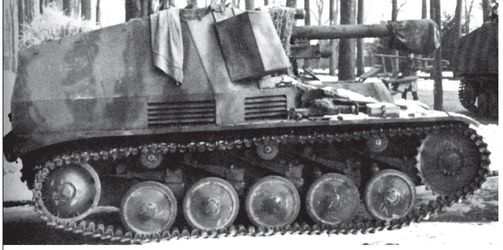
leFH 18/2 auf PzKpfw II Sd Kfz 124 ”Wespe”
Based on the PzKpfw II and Germany’s most common self-propelled artillery gun during WWII, the Wespe was hardly advanced and a very simply built vehicle. As usual, Germanys’ armaments industry make use of their overproduction of dated equipment to come up with a more solution to a given problem.This was the case with the “Wespe”. The PzKpfw II was simplified by moving the engine, making space to install the big 10.5 cm howitzer in even such a small vehicle as the Pzkpfw II. The result was an extremely popular self-propelled gun. All told, approximately 1,000 were built in different versions.
Production period: 1943 – 1944
Manufacturer: FAMO
Tonnage: 11 tonnes
Crew: 5
Length: 4.81 meters
Width: 2.28 meters
Height: 2.30 meters
Track width: 30 cm
Ground clearance: 34 cm
Motor: Maybach HL 62 TR V-6 petrol
Engine capacity: 140 HP at 2,600rpm
Fuel capacity: 200 liters
Maximum speed: 40 km/h
Maximum range: 140 km
Armament: 1 × 10.5 le. FH. 18/2, 1 × 7.92 mm MG
Ammunition quantity: 10.5 cm – 32 shells, 7.92 mm – 600 rounds
Armour strength:
Hull frontal: 30 mm
Hull sides: 15 mm
Hull rear, roof floor: 15 mm
Turret front: 15 mm
Turret sides: 15 mm
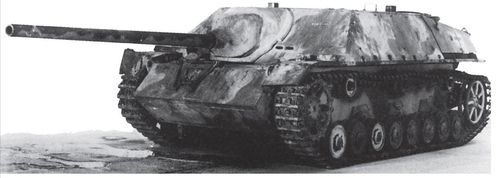
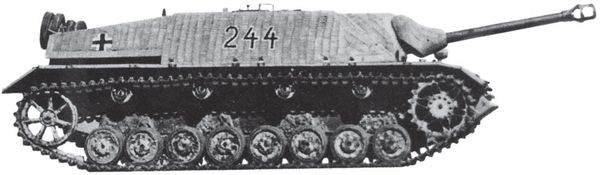
Sd Kfz 162 Jagdpanzer IV &
Initially, the design of this vehicle was completed as early as 1942. From the very first, it was called the “Sturmgeschütz neue art” reflecting its purpose of replacing the StuG III as a mobile anti-tank artillery gun. However, it wasn’t until January of 1944 that Hitler approved it and production began. To begin with, it was equipped with an L/48 gun but by the late-summer of 1944 several more L/70 guns became available so that by November 1944 only the panzer IV/70 variant was in production. There were two additional variations: the Alkett (A) and the Vomag (V) that shared in the vehicle’s production right up until May 1945. The total number produced breaks down as follows: 769 examples of the L/48, 930 of the Vomag L/70 variation, and 278 of the Alkett L/70. The vehicle was extremely effective and very popular. Note: During the 1950s and 60s West Germany built a series of mobile PV- guns which were directly reminiscent of the Jagdpanzer IV design! The lines could be clearly observed.
Production period: 1944
Manufacturer: Vomag
Tonnage: 24 tonnes
Crew: 4
Length: 4.87 meters
Width: 2.63 meters
Height: 2.17 meters
Track width: 35 cm
Ground clearance: 42 cm
Motor: Maybach HL 120 TRM V-12 petrol
Engine capacity: 265 HP at 2,600rpm
Fuel capacity: 470 liters
Maximum speed: 40 km/h
Maximum range: 210 km
Armament:
1 × 7.5 cm Pak 39 L/48cm, 1 × 7.92 mm MG
Ammunition quantity: 7.5 cm – 79 shells, 7.92 mm – 600 rounds
Armour strength:
Hull frontal: 80 mm
Hull sides: 40 mm
Hull rear, roof, floor: 40 mm
Turret front: unavailable
Turret sides: unavailable
Sd Kfz 162/1 Panzer IV/70 (V), (A)
Production period: 1944 – 1945
Manufacturers: Vomag, Alkett
Tonnage: 27 tonnes
Crew: 4
Length: 8.87 meters
Width: 2.90 meters
Height: 2.20 meters
Track width: 40 cm
Clearance: 40 cm
Motor: Maybach HL 120 TRM V-12 Petrol
Engine capacity: 265 HP at 2,600rpm
Fuel capacity: 470 liters
Maximum speed: 38 km/h
Maximum range: 200 km
Armament: 1 × 7.5 cm K.w.K 42 L/70, 1 × 7.92 mm MG
Ammunition quantity:
7.5 cm – 90 shells
7.92 mm – 1,200 rounds
Armour strength:
Hull frontal: 80 mm
Hull sides: 40 mm
Hull rear, roof, floor: 40 mm
Turret front: unavailable
Turret sides: unavailable
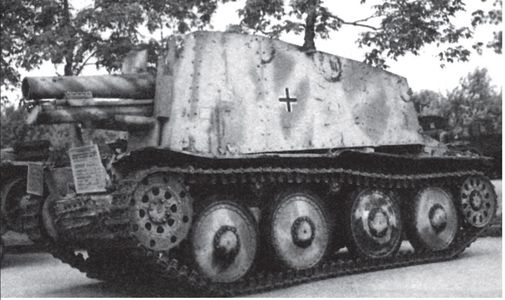
Geschutzwagen 38 s.I.G 33/1 (sf) Sd Kfz 138/1“Grille“
A principle of the so called Blitzkrieg doctrine was that the infantry must be mechanised, and also, their support weapons. For this reason, Germany sought ways to mechanise the heavy infantry guns (s.I.G 15cm). During 1940 and 1941, the PzKpfw I and II were used to mechanise the s.I.G – however, satisfactory solutions were never forthcoming. The 38(t) proved a much better solution. The vehicle was clearly more suited than its predecessors to transporting such a heavy gun. True, it was lightly armoured, but it was never intended to be used on the frontline, but rather as indirect support to the infantry. In total, 400 were manufactured in two production runs between 1942 and 1944, all based upon two different versions of the 38(t).
Production period: 1942 – 1943
Manufacturers: Praga CKD, BMM, Skoda
Tonnage: 11.5 tonnes
Crew: 5
Length: 5.6 meters
Width: 2.15 meters
Height: 2.40 meters
Track width: 29 cm
Ground clearance: 40 cm
Motor: Praga TNHPS/II V-6 petrol
Engine capacity:
150 HP at 2,600 rpm
Fuel capacity: 218 litres
Maximum speed: 42km/h
Maximum range: 185 km
Armament:
1 × 15 cm s.I.G 33/1
1 × 7.92 mm MG
Ammunition quantity:
15 cm – 15 shells
7.92 mm – 600 rounds
Armour strength:
Hull frontal: 50 mm
Hull sides: 10 mm
Hull rear, roof, floor: 10 mm
Turret front: 10 mm
Turret sides: 10 mm
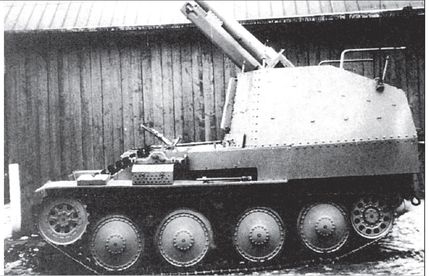
Geschützwagen 38 M s.I.G 33/1 (sf) Sd Kfz 138/2“Grille“
Production period: 1943 – 1944
Manufacturers: Praga, CKD, BMM, Skoda
Tonnage: 11.5 tonnes
Crew: 5
Length: 4.8 meters
Width: 2.15 meters
Height: 2.40 meters
Track width: 29 cm
Ground clearance: 40 cm
Motor: Praga AC/2,800 V-6 petrol
Engine capacity: 150 HP at 2,800rpm
Fuel capacity: 320 liters
Maximum speed: 42 km/h
Maximum range: 260 km
Armament:
1 × 15 cm s.I.G 33/1, 1 × 7.92mm MG
Ammunition quantity:
7.5 cm — 15 shells, 7.92 mm – 600 rounds
Armour strength:
Hull frontal: 60 mm
Hull sides: 15 mm
Hull rear, roof, floor: 15 mm
Turret front: 15 mm
Turret sides: 15 mm
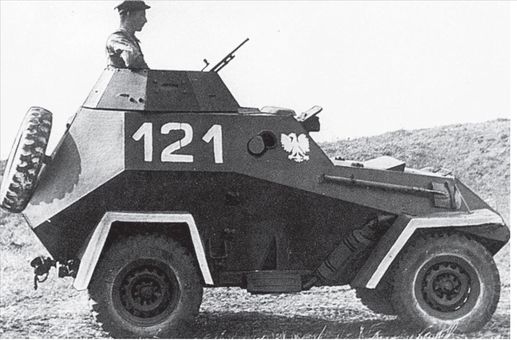
BA-64 4×4
A more modern armoured-car which was not over-armed like the BA-10, but only had a two man crew and a machine-gun: It was a notably excellent scouting car. A total of 3,600 examples were built during WWII.
Production period: 1942 – 1945
Manufacturer: GAZ
Tonnage: 2.5 tonnes
Crew: 2
Length: 3.67 meters
Width: 1.52 meters
Height: 1.88 meters
Wheel base: unavailable
Ground clearance: 25 cm
Motor: GAZ-MM Diesel
Engine capacity: 54 HP at 2,800 rpm
Fuel capacity: 100 liters
Maximum speed: 80 km/h
Maximum range: 560 km
Armament: 1 × 7.62 mm MG DT
Ammunition quantity:
7.62 mm – 1,300 rounds
Armour strength:
Hull frontal: 12 mm
Hull sides: 12 mm
Hull rear, roof, floor: 12 mm
Turret front: 12 mm
Turret sides: 12 mm
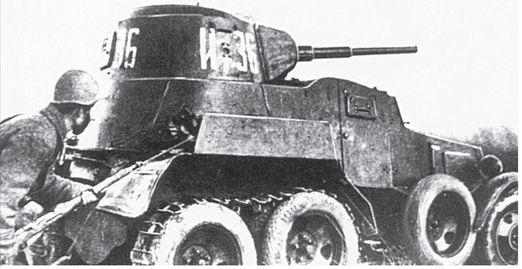
BA-10 6×4
The Soviets’ most common heavy armoured car during WWII. It bore a 45 mm gun in the turret as well as a machinegun. Strong and swift but unfortunately built only with 6×4 steering capacity which made it difficult for cross country operations. 1,400 were manufactured during the war years.
Production period: 1938 – 1942
Manufacturer: GAZ
Tonnage: 5 tonnes
Crew: 4
Length: 4.66 meters
Width: 2.07 meters
Height: 2.21 meters
Track width: unavailable
Ground clearance: 22 cm
Motor: GAZ-M1 Diesel
Engine capacity: 52 HP at 2,800 rpm
Fuel capacity: 120 liters
Maximum speed: 53 km/h
Maximum range: 250 km
Armament:
1×4.5 cm M1938,
2× 7.62 mm MG DT
Ammunition quantity:
4.5 cm – 43 shells
7.62 mm – 2,100 rounds
Armour strength:
Hull frontal: 10 mm
Hull sides: 10 mm
Hull rear, roof, floor: 10 mm
Turret front: 10 mm
Turret sides: 10 mm
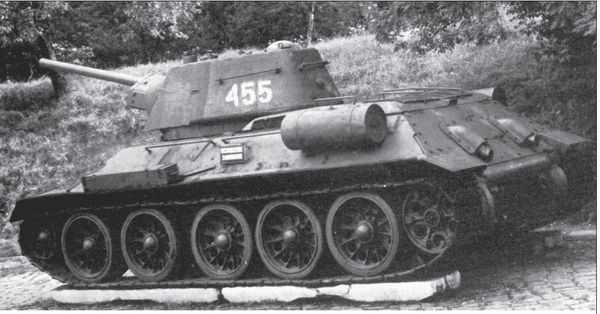
T-34/76 and T-34/85
The world’s most famous and most manufactured tank. And apparently a number are still in use today in most of the trouble spots and conflicts around the world. The ground reason for its success was, and remains, the suspension utilized to mount the caterpillar tracks; the so called “Christie suspension” which, together with its powerful engine and broad caterpillar “feet,” turned all terrain, with the exception of deep heavy mud, into common roads. It was produced in two main versions, the /76 and /85. The /85, however, eventually became the standard version in 1944. The designation “85” refers to the gun calibre. At the start of the war, the standard tank designed and produced by the Soviets had a turret with space for a crew that fell one man short – that is to say, the German tanks of comparable size had three-man turrets and the T-34/76 turrets could only accommodate two men: The T-34/85 had a three-man turret. In addition, T-34s were rarely equipped with radios in the period prior to 1943, which naturally hindered coordination and effectiveness on the battlefield. This aside, it was well armed and well protected; the T-34’s armour has also been a model for international tank design ever since 1941, and it was mechanically dependable despite the fact that overall Soviet engineering prowess generally left something to be desired. It was neither finely crafted nor finely painted but it was dependable – and popular with all who used it, including the Germans. Soviet industry managed to build approximately 35,000 T-34/76s and 31,000 T-34 /85s during WWII.
T-34/76
Production period: 1940 – 1944
Manufacturer: Kirov, STZ
Tonnage: 26.5 tonnes
Crew: 4
Length: 6.68 meters
Width: 3 meters
Height: 2.45 meters
Track width: 40 cm
Ground clearance: 40 cm
Motor: V2 Diesel
Engine capacity:
500 HP at 2,000 rpm
Fuel capacity: 460 liters
Maximum speed: 54 km/h
Maximum range: 300 km
Armament:
1×7.6 cm F-34 L/41.5
2×7.62 mm DT MG
Ammunition quantity:
7.6 cm – 77 shells
7.62 mm - 2,900 rounds
Armour strength:
Hull frontal: 52 mm
Hull sides: 52 mm
Hull rear, roof, floor: 13 mm
Turret front: 52 mm
Turret sides: 52 mm
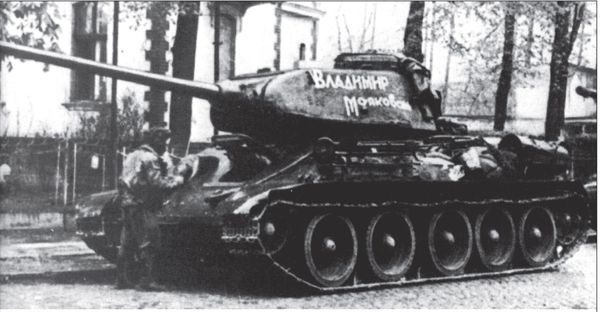
T-34/85
Production period: 1944 – 1945
Manufacturer: Kirov, STZ
Tonnage: 32 tonnes
Crew: 5
Length: 8.15 meters
Width: 3 meters
Height: 2.60 meters
Track width: 40 cm
Ground clearance: 40 cm
Motor: V2-34 Diesel
Engine capacity: 500 HP at 1,800rpm
Fuel capacity: unavailable
Maximum speed: 52 km/h
Maximum range: 230 km
Armament:1×8.5 cm ZiS S-53
2×7.62 mm DT MG
Ammunition quantity:
8.5 cm – 55 shells
7.92 mm – 1900 rounds
Armour strength:
Hull frontal: 90 mm
Hull sides: 75 mm
Hull rear, roof, floor: 20 mm
Turret frontal: 90 mm
Turret sides: 75 mm
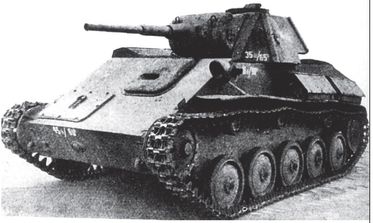
T-70
The Soviet Union’s most common light tank by 1944; the T-70 had the classical Soviet design for light tanks; a one-man turret and one person in the tank. In other words, it had a two-man crew, operating a 45 mm gun and a machinegun. It had strong armour for being a light tank but with a one-man turret, limited effectiveness in battle. Approximately 8,400 were built during WWII.
Production period: 1942 – 1943
Manufacturer: Factory no,. 43
Tonnage: 10 tonnes
Crew: 2
Length: 4.42 meters
Width: 2.47 meters
Height: 2.03 meters
Track width: 30 cm
Ground clearance: 30 cm
Motor: GAZ-202
Engine capacity: 140 HP at 3,400rpm
Fuel capacity: 300 litres
Maximum speed: 45 km/h
Maximum range: 360 km
Armament:
1×4.5 cm model 1938
1×7.62 mm DT MG
Ammunition Quantity:
4.5 cm – 70 shells
7.62 mm – 1,000 rounds
Armour strength:
Hull frontal: 60 mm
Hull sides: 45 mm
Hull rear, roof, floor: 45 mm
Turret front: 60 mm
Turret sides: 45 mm
Production period: 1942 – 1945
Manufacturer: GAZ
Tonnage: 11 tonnes
Length: 5 meters
Width: 2.74 meters
Height: 2.20 meters
Track width: 30 cm
Ground clearance: 30 cm
Motor: GAZ-203/2,800 V-6 diesel
Engine capacity:
140 HP at 3,400 rpm
Fuel capacity: 44 km/h
Maximum range: 360 km
Armament:
1× 7.62 cm ZiS-3
Ammunition quantity:
7.62 cm – 60 shells
Armour strength:
Hull frontal: 35 mm
Hull sides: 10 mm
Hull rear, roof, floor: 10 mm
Turret front: 35 mm
Turret sides: 10 mm
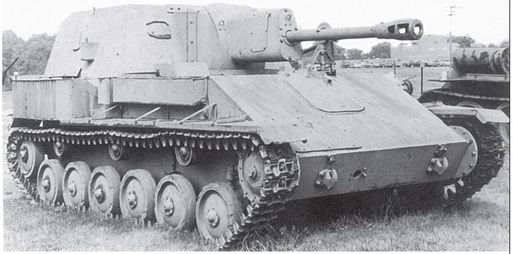
SU-76
The Soviet’s most common self-propelled artillery gun during the war, it was mounted on the chassis of the light T-70. An extra wheel was added on each side and an open turret was added for the crew. This resulted in space being created for a variation of the gun mounted on the T-34’s 7.62cm gun, namely, the ZiS-3. The ZiS 3 was a good combination of the 7.62cm field gun and the famous anti-tank gun of the same calibre, the ZiS-S-53. Overall, an extremely successful vehicle despite its weak armour, which was not a drawback of particular concern to the leadership of the Red Army. In total, 12,000 Su-76s were built during WWII.
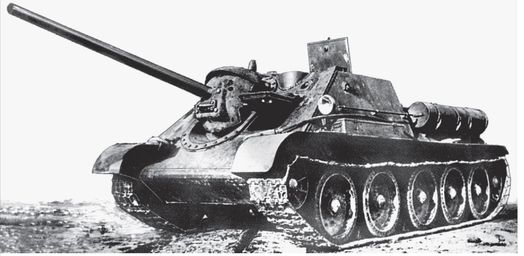
SU-85
The Soviets first attempt at an effective track-propelled anti-tank gun was built on the chassis of a T-34 with an 8.5 cm gun which was effective, but almost as quickly as the T-34 was built in 1944 with a mounted 8.5 cm gun, production of the SU-85’s was halted and manufacture of the even more effective SU-100 took over, a model which was used, among others, by Egypt in the Sinai War. In total 2,500 Su-85’s were built during WWII.
Production period: 1943 -1944
Manufacturer: STZ
Tonnage: 29 tonnes
Crew: 4
Length: 8 meters
Width: 3 meters
Height: 2.45 meters
Track width: 40 cm
Ground clearance: 40 cm
Motor: W2-34 Diesel
Engine capacity:
500 HP at 1,800 rpm
Fuel capacity: 465 litres
Maximum speed: 55 km/h
Maximum range: 300 km
Armament:
1× 8.5 cm D-5-S-85
Ammunition quantity:
8.5 cm – 48 shells
Armour strength:
Hull frontal: 65 mm
Hull sides: 45 mm
Hull rear, roof, floor: 25 mm
Turret front: 65 mm
Turret sides: 45 mm
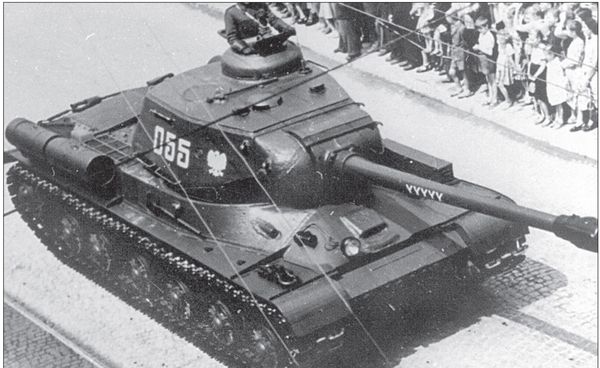
IS – 2
The Soviet Army had already experimented with heavy tanks prior to WWII – no model had been particularly satisfactory. The T-35 was a monster which could hardly move without breaking down. The SMK was even worse and the T-28 was too lightly armed. The KV-1 was also too lightly armed but, despite all else, with its excellent armour it performed well during 1941 and 1942. From 1943 onwards, a new heavy tank was required and it was only then that for the first time the Soviet leadership felt that they could afford to design and build a new heavy tank. The IS-1 was a new design but only had an 8.5 cm gun, the same gun as found on the new T-34/85, thus the IS-2 was developed. The vehicle in question was a further development on the KV’s chassis and its track-drive suspension, but with much stronger armoured protection and much heavier armament. The vehicle was larger and slower than the T-34 but had a powerful gun which used different types of ammunition and possessed a powerful blasting capacity. It was popular among crews and was used throughout the war and even as late as 1967 in the middle-east conflict. However, there it was outclassed by more modern enemy tanks. In total 3,300 IS-2s were produced between 1944 and 1945.
Production period: 1943 – 1945
Manufacturer: Chelyabinsk
Tonnage: 46 tonnes
Crew: 4
Length: 9.83 meters
Width: 3.07 meters
Height: 2.74 meters
Track width: 47 cm
Ground clearance: 50 cm
Motor: W2-IS Diesel
Engine capacity: 600 hp at 2,000 rpm
Fuel capacity: 550 litres
Maximum speed: 37 km/h
Maximum range: 240 km
Armament:
1× 12.2 cm D-25T model 1943
2× 7.62 mm DT MG
1× 12.7 mm DShK AA MG
Ammunition quantity:
12.2 cm – 28 shells
7.62 mm – 2,300 rounds
12.7 mm – 300 rounds
Armour strength:
Hull frontal: 160 mm
Hull sides: 110 mm
Hull rear, roof, floor: 20 mm
Turret front: 160 mm
Turret sides: 110 mm
Production period: 1942 – 1943
Manufacturer: STZ
Tonnage: 31 tonnes
Crew: 5
Length: 7 meter
Width: 3 meter
Height: 2.32 meter
Track width: 40 cm
Ground clearance: 40 cm
Motor: W2-34 Diesel
Engine capacity:
500 HP at 1,800 rpm
Fuel capacity: 465 litres
Maximum speed: 55 km/h
Maximum range: 300 km
Armament:
1× 12.2 Howitzer M-30
Ammunition quantity:
12.2 cm – 40 shells
Armour strength:
Hull frontal: 65 mm
Hull sides: 45 mm
Hull rear, roof, floor: 25 mm
Turret frontal: 645 mm
Turret sides: 45 mm
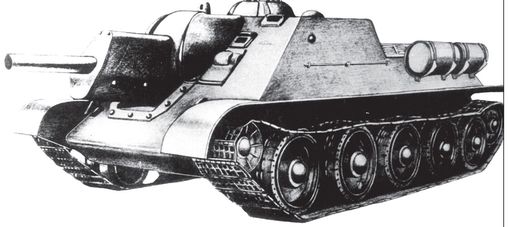
SU-122
The Soviet Union’s first track-driven howitzer. Just like the SU-85 it is based on the T-34 with the same chassis and engine. This howitzer transporter was effective in 1942 when it was developed. In 1943 came its successor, the SU-152, and production of the SU-122 was halted to accommodate production of the SU-85. Approximately 600 SU-122s were built in total.
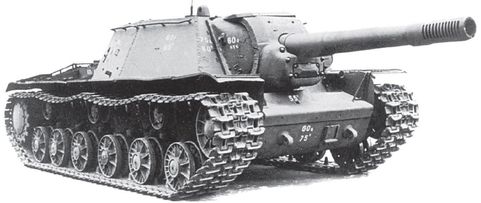
SU – 152
The most effective track-driven howitzer in the Red Army. Built on the chassis of the old KV-1, its armament was the massive ML-20S howitzer with a calibre of 15.24 cm. These shells “ploughed streets in the forest” according to eye-witnesses and proved to have a singularly destructive effect on Tiger and Panther tanks – thereby acquiring the nickname “Zveroboi” – “the cat killer.” 700 hundred of them were built before the chassis was changed to the IS vehicle in 1943, at which time the SU-152 changed its designation to the ISU-152.
Production period: 1943
Manufacturer: Chelyabinsk
Tonnage: 46 tonnes
Crew: 5
Length: 9 meters
Width: 3.25 meters
Height: 2.45 meters
Track width: 47 cm
Ground clearance: 50 cm
Motor: W2-IS Diesel
Engine capacity:
600 HP at 2,000 rpm
Fuel capacity: 550 litres
Maximum speed: 42 km/h
Maximum range: 260 km
Armament:
1× 15.24 cm ML-20S Howitzer
1× 12.7 mm MG DShK
Ammunition quantity:
15.24 cm – 20 shells
12.7 mm – 250 rounds
Armour strength:
Hull frontal: 60 mm
Hull sides: 60 mm
Hull rear, roof, floor: 25 mm
Turret front: 60 mm
Turret sides: 60 mm
Production period: 1943 – 1945
Manufacturer: Chelyabinsk
Tonnage: 45/46 tonnes
Crew: 5
Length: 9.85/9.18 meters
Width: 3.07 meters
Height: 2.48 meters
Track width: 47 cm
Ground clearance: 50 cm
Motor: W2-IS diesel
Engine capacity: 600 HP at 2,000 rpm
Fuel capacity: 550 litres
Maximum speed: 37 km/h
Maximum range: 220 km
Armament:
1× 12.2 cm D25S Howitzer (122)
1× 15.24 cm ML20 Howitzer (152)
1× 12.7 mm MG DShK (on both)
Ammunition quantity:
12.2 cm – 30 shells
15.24 cm – 20 shells
12.7 mm – 250 rounds
Armour strength:
Hull frontal: 90 mm
Hull sides: 90 mm
Hull rear, roof, floor: 25mm
Turret front: 90 mm
Turret sides: 90 mm
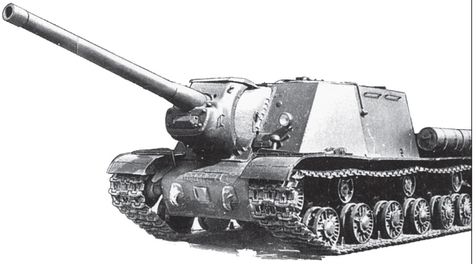
ISU – 122/152
In large part, it was the same vehicle as the SU-152 although built on an IS-2 chassis. Two different versions were manufactured, the ISU-122 or ISU-152; both were equally effective as infantry support weapons, but the 122 proved to be the more effective anti-tank weapon. Note the differing specifications below. In total, 4,000 examples of both were built between 1943 and 1945.
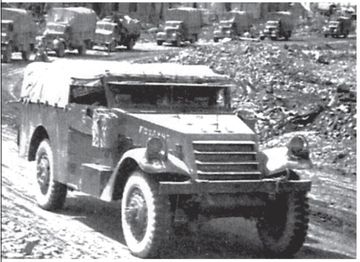
Production period:
1941 – 1944
Manufacturer: White
Motors
Tonnage: 6 tonnes
Crew: 4
Length: 5.61 meters
Width: 2.03 meters
Height: 1.98 meters
Track width: unavailable
Ground clearance: 40 cm
Motor: unavailable
Engine capacity:
97 HP – rpm unavailable
Fuel capacity: unavailable
Maximum speed:
92 km/h
Maximum range: 260 km
Armament:
1× 0.50 cal MG
2-3× 0.30 cal MG
Ammunition quantity:
0.50 cal?
0.30 cal?
Armour strength:
Hull frontal: 12 mm
Hull sides: 8 mm
Hull rear, roof, floor: 8 mm
M3A1
An armoured truck, without the properties characteristic to them, is the best way of describing the M3A1. Designed to be an armoured reconnaissance vehicle was built on the chassis of a four-wheel drive lorry. So far so good, however, it was actually too big and clumsy to be an effective reconnaissance vehicle, and too weakly armoured and armed to be used as proper armoured transport. Instead it was actively utilized in wide range of roles such as a military police or command vehicle or even as an ambulance. Despite its apparent drawbacks, the Red Army regarded it as a splendid reconnaissance vehicle and equipped their cavalry corps with them. In addition, when heavily armed with up to 4 to 5 machineguns, they were effective in fighting against enemy infantry. Approximately 3,500 were sent to the Soviet Union under the lend lease programme. The American industrial sector produced approximately 18,000 vehicles of this type during the course of the war.
Production period: 1941 – 1945
Manufacturer: White, Autocar
Tonnage: 9 to 9.3 tonnes
Crew: 3 + 10
Length: 6.32 meters
Width: 1.96 meters
Height: 2.31 meters
Track width: 30 cm
Ground clearance: 40 cm
Motor: unavailable
Engine capacity:
128 HP – rpm unavailable
Fuel capacity: unavailable
Maximum speed: 72 km/h
Maximum range: 345 km
Armament:
1× 0.50 cal MG
2× 0.30 cal MG
Ammunition quantity:
0.50 cal -?
0.30 cal -?
Armour strength:
Hull frontal: 12 mm
Hull sides: 8 mm
Hull rear, roof, floor: 8 mm
Turret fronl: unavailable
Turret sides: unavailable
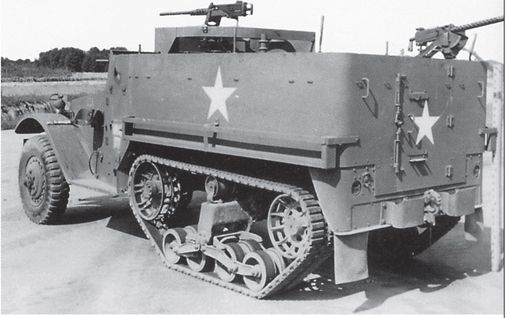
M2 – M5
The USA’s answer to the German 251: A traditionally built half-track with a front-mounted motor and combat space at the rear. Swift, robust and dependable, it was a weakly armoured but was nonetheless popular. Built in several special versions, a total of approximately 56,000 these half-tracks were produced during WWII. The Soviets received approximately 1,400 under the lend-lease programme.
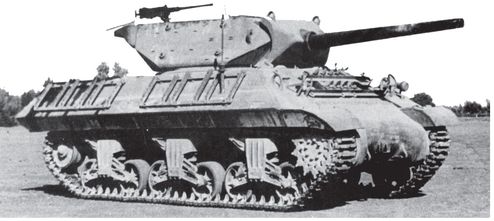
M10 Motor Gun Carriage
The USA’s first true self-propelled anti-tank gun or “tank-killer”. The vehicle was built on the chassis of the M4A2 or M4A3 but with lighter armour and a new turret which had a better gun than the original, a 3-inch M7. Overall not a particularly successful construction; though it certainly had a better gun to penetrate the front hulls of German tanks, as opposed to the M4’s 75mm, but with weaker armour, manual turret rotation, and without a machinegun in the turret to protect against infantry attack. Nonetheless, it remained in service until the M18 and M36 came on line in 1944. In total, nearly 7,000 M10s were built, of which the Soviets received 52 – almost all of which saw service with the 1st Belorussian front.
Production period: 1941 – 1944
Manufacturer: White Motors
Tonnage: 6 tonnes
Crew: 4
Length: 5.61 meters
Width: 2.03 meters
Height: 1.98 meters
Track width: unavailable
Motor: unavailable
Engine capacity: 97 HP – rpm unavailable
Fuel capacity: unavailable
Maximum speed: 92 km/h
Maximum range: 260 km
Armament: 1× 0.50 cal MG, 2 – 3×0.30 cal MG
Ammunition quantity:
0.50 cal - ?
0.30 ca - l?
Armour strength:
Hull frontal: 12 mm
Hull sides: 8 mm
Hull rear, roof, floor: 8mm
Turret front: unavailable
Turret sides: unavailable
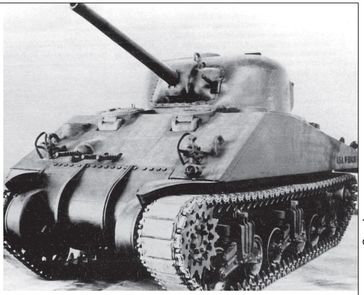
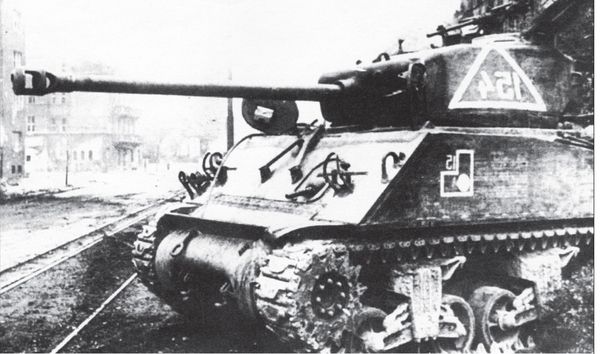
M4 – M4A2
The USA’s and the rest of the world’s most common tank during WWII. Approximately 50,000 vehicles were built during the war years. (!!!) The frontal hull was sloped but not the side hulls which didn’t add value to the vehicle’s protection. In addition, the Americans typically had a white star painted the tank’s sides, enabling the enemy to pinpoint their sights. Moreover, this vehicle caught fire so easily that it was nicknamed the “Ronson lighter” and, as cited earlier, in the beginning of the war it was too lightly armed. Nonetheless, it was a robust tank and the most produced. The Soviet’s received 4,000 M4’s through the Lend-Lease programme.
Production period: 1942 – 1945
Manufacturers: Lima Locomotive
Works, Chrysler
Tonnage: 28.5 tonnes
Crew: 5
Length: 5.89 meters
Width: 2.62 meters
Height: 2.74 meters
Track width: 43 cm
Ground clearance: 40 cm
Motor: 9-cyl Continental R975C1
Engine capacity: 350 HP at 2,400rpm
Fuel capacity: 662 litres
Maximum speed: 35 km/h
Maximum range: 190 km
Armament: 1× 7.5 cm M3, 1× 0.50 cal MG, 1× 0.30 cal MG
Ammunition quantity:
7.5 cm – 97 shells
0.50 cal – 300 rounds
0.30 cal – 4,750 rounds
Armour strength:
Hull frontal: 51 mm
Hull sides: 38 mm
Hull rear, roof, floor: 19 mm
Turret front: 85 mm
Turret sides: 25 – 50 mm
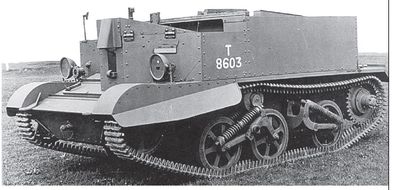
Universal Carrier
Perhaps the most British of all of the military inventions during WWII; the Bren carrier. No other country used a track driven transport vehicle of its size and to such an extent as Britain did. Over 50,000 were built between 1939 and 1945. Their areas of application were widespread and it was very popular among the troops. The Russians used them primarily as reconnaissance vehicles.
Production period: 1939 – 1945
Manufacturer: Vickers
Tonnage: 3.6 tonnes
Crew: 2 + 4
Length: 3.76
Width: 2.11 meters
Elevation: 1.60 meters
Track width: 20 cm
Ground clearance: 25 cm
Motor: unavailable
Engine capacity: 85 HP
Fuel capacity: unavailable
Maximum speed: 53 km/h
Maximum range: unavailable
Armament: 1× 7.92 MG
Ammunition quantity:
7.92 mm – 600 rounds
Armour strength:
Hull frontal: 12 mm
Hull sides: 6 mm
Hull rear, roof, floor: 6 mm
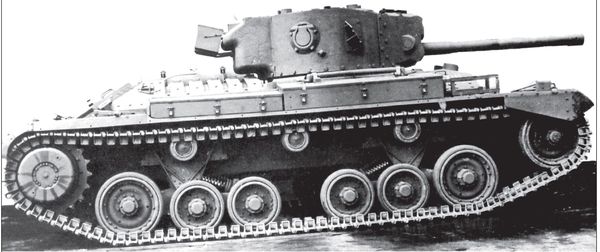
Valentine Mark III
Britain’s most common infantry support tank during WWII. The vehicle was primarily designed for close infantry support. This meant that was not equipped with the strongest of motors. Hence, it wasn’t capable of moving at high speed and, at the beginning of the war, it was weakly armed. Despite this, it proved to be a popular tank, above all with the Red Army, as it didn’t require much maintenance.
Production period: 1943 – 1945
Manufacturer: Chelyabinsk
Tonnage: 45/46 tonnes
Crew: 5
Length: 9.58/9.18 meters
Width: 3.07 meters
Height: 2.48 meters
Track width: 47 cm
Ground clearance: 50 cm
Motor: W2-IS diesel
Engine capacity:
600 HP at 2,000 rpm
Fuel capacity: 550 litres
Maximum speed: 37 km/h
Maximum range: 220 km
Armament:
1× 12.2 cm D25S Howitzer (122),
1× 15.24 cm ML20 Howitzer (152),
1× 12.7 mm MG DShK (both)
Ammunition quantity:
12.2 cm – 30 shells
15.24 cm – 20 shells
12.7 mm – 250 rounds
Armour strength:
Hull frontal: 90 mm
Hull sides: 90 mm
Hull rear, roof, floor: 25 mm
Turret front: 90 mm
Turret sides: 90 mm