
On the second day of October 1944 the Warsaw Uprising was over, but the written order to surrender didn’t reach the insurgents in Warsaw’s centre until the following day. And hence, the Polish combatants have always talked of “64” days of resistance, in contrast to the view held by many historians. On the German-Soviet front a relative calm reigned. Both sides, however, sensed that new hostilities were about to break out. Marshal Rokossovskij’s aim, before adopting a totally defensive posture, was to destroy the enemy’s positions in the area of the Narew and Wisla’s join and continue to extend his control of the line as far as possible towards Pultisk. The Germans were planning a counterattack against the 65th Army’s bridgehead and, due to the relative weakness of their combat strength, hold to a defensive posture with respect to Praga.
Two days prior to the 47th and 70th Armies’ attack, sudden events took place on both sides of the Warsaw front that would come to weaken both armies. The first occurred on October 4: The 2nd Army’s XX Army-Corps carried out a massive attack against the bridgehead at Pułtusk, with support from, among others: the 25th Panzer-Division, the3rd Panzer-Division, the 104th Panzer-Brigade, four assault-gun brigades, and “König Tigers” (PzKpfw VI B tanks) from schwere Panzer-Abteilung 505. General Batov’s 65th Army was forced to endure a couple of difficult days, but then, together with the 1st Guards Tank Corps, they soon succeeded in bringing the situation under control, and by October 12, had driven the Germans back to their original positions. Both panzer divisions from the XX Army-Corps absorbed heavy equipment losses, particularly when several Soviet heavy tanks, model IS-2, suddenly turned up on the battlefield. The crisis in Batov’s troop sector made clear to Rokossovskij the necessity of expanding the Pułtusk bridgehead. The commander of the 1st Belorussian Front therefore gave the 65th Army a privileged position with regard to the current scarce delivery of supplies. This had a negative effect on Popov’s and Gusiev’s armies, which over this while had launched an attack against the IV SS-Panzer-Corps.
On the German side, on October 7, Gille was informed that he was immediately to lose the recently arrived “Hermann Göring” division – a bitter pill that he was, nonetheless, forced to swallow. This unit was to be drawn back to Instensburg (Wystruć). There, a panzer-corps was being assembled bearing the Reich Marshal’s name: Fallschirm-Panzer Korps “Hermann Göring.” In its place, the commander of the 9th Army transferred the 19th Panzer-Division, which had become redundant in Warsaw after the Uprising’s collapse and the destruction of the 1st Polish Army’s landing attempts. However, this was a disproportionately much weaker unit. Only one day before the new Soviet offensive, the 19th Panzer-Division manned the frontline extending from Żerań to Tomaszów; the 3rd SS-Panzer-Division “Totenkopf,” the front from Tomaszów to Aleksandrów; and the 5th SS-Panzer-Division “Wiking,” the front from Aleksandrów to the Narew in the vicinity of Nieporęt. On October 9, the commander of the 5th SS-Panzer-Division was replaced: SS-Standartenführer Mühlenkamp was replaced by SS-Standartenführer Karl Ullrich. Mühlenkamp, who was an experienced tank soldier, was transferred to the Inspectorate of Panzer Forces. Ullrich, meanwhile, began his new appointment by seeking temporary underground shelter as the Soviet artillery rained fire down on his divisional command headquarters.
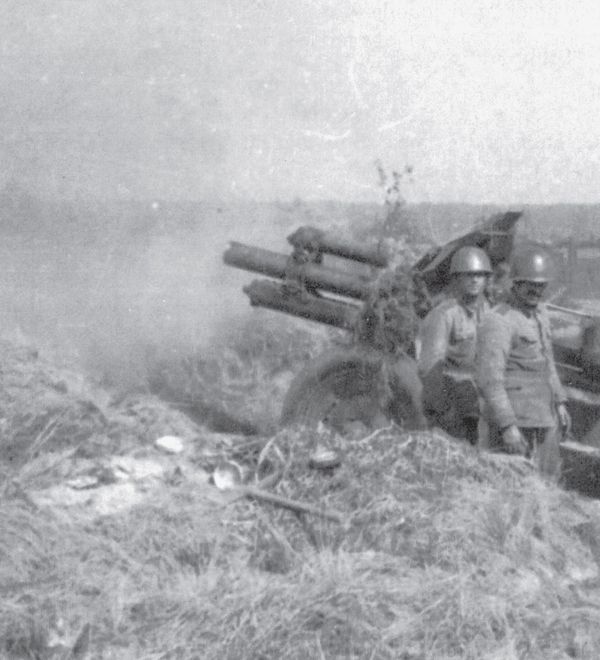
A Polish 12.2 calibre howitzer, model 1938, from the 1st Light Artillery Regiment, 1st Infantry Division, shelling German troop positions in Praga, September 1944. (WAF)
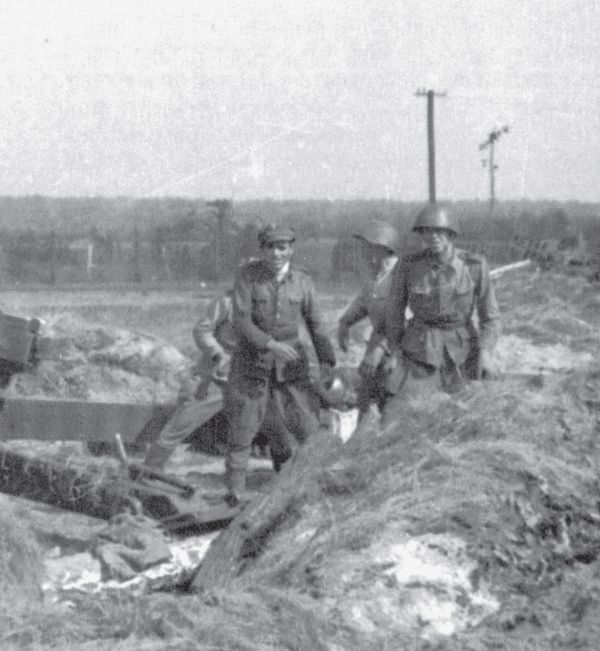
At 0900 hours on October 10, following 100 minutes of artillery fire, a number of rifle divisions from both Soviet armies attacked along the entire IV SS-Panzer-Corps’ front. A relatively small number of tanks provided support, primarily “Shermans” – and from the sky, the air-assault wing. The Soviet infantry pressed against the front with great courage, but the units carrying out the fighting were notably undermanned, which negatively affected their combat capabilities. It was only thanks to the massive artillery bombardment that the infantry was able to make even small inroads during the attack’s first hours. Near Annopol, the 234th Rifle Division (which had replaced the 175th Rifle Division) was provided support by the Polish 6th Infantry Regiment from the 2nd Infantry Division, reinforced with SU-85 assault guns from the 13th Artillery Regiment. Towards evening, the Poles had reached Wiśniewo’s urban area which was defended by grenadiers from Panzergrenadier-Regiment 73 from the 19th Panzer-Division. Meanwhile, units of the 47th Army attacked at Tarchomin and Henryków, while the 70th Army succeeded in taking Rembelszczyzna, after having earlier halted troops from the 5th SS-Panzer-Division “Wiking” outside Aleksandrów and Nieporęt.
Although the Germans numbered far fewer than the attacking forces, it became apparent that the troop strength thought sufficient to carryout he assault was far too weak to achieve the mission they had been given. Gille’s entirely motorised forces attacked with armoured weaponry. Rapid-fire 20 mm guns were also used in fighting for terrain, spreading panic through the enemy infantry. The fighting ground to a halt on October 11. The response of the Soviet Generals Popov and Gusiev was to set all their divisions into battle on October 12: The entire 70th Army attacked Nieporęt, while the 47th Army attacked on a broader front, supported by the 8th Guards Tank Corps. After an entire day of hard fighting General Popov’s troops forced back the 5th SS-Panzer-Division “Wiking” from Nieporęt and advanced to the road and rail intersection south of Zagrobow; that is to say, today’s Zegrze Południowe. There, they were checked for the present by fire from anti-tank artillery and 20mm guns. Significantly less successful was the 47th Army’s storming of Różopole. The heavy shelling by tanks from Panzer-Regiment 27, hidden in the woods, kept the attackers from advancing from their start-out position.
A PzKpfw V Ausf. A “Panther” from SS-Panzer-Regiment 5 and grenadiers from the 5th SS-Panzer-Division “Wiking” in the Nieporęt area, October 1944. (CAW)
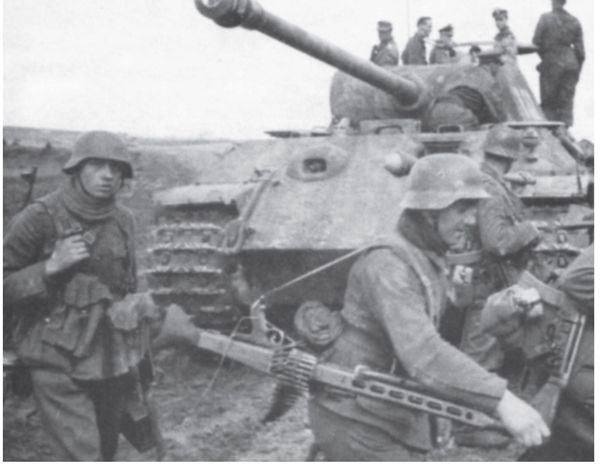
On October 13, some ten tanks from SS-Panzer-Regiment 5 “Wiking,” together with grenadiers from SS-Panzergrenadier-Regiment 10 “Westland,” carried out eighteen counterattacks at the intersection outside Zegrze. All were thrown back. On October 14, the 70th Army’s infantry and several tens of “Shermans” entered Nieporęt-Forest which lay between Nieporęt and the Michałow estate. After they had taken the forest, the Soviet tanks rolled onto the main Legionowo-to-Zegrze road by the estate and partially closed in the SS-Panzergrenadier-Regiment 10 “Westland” in the forested area near Wieliszew. In the middle of the road, the “Shermans” surprised and destroyed a medical unit from the SS-division. The regiment stubbornly defended their positions for two days until a counterattack, with tracked guns and infantry from Legionowo, returned the situation to its pre-battle status. Ullrich threw clerical staff, cooks and mechanics into the fighting. This was necessary because in one of the battalions belonging to SS-Panzergrenadier Regiment 10 “Westland” there were only 40 soldiers left: Specifically, SS-Panzergrenadier-Regiment 9 “Germania” had lost 40% of its complement.
On October 16, the exhausted 47th and 70th Armies halted their attacks on the Waffen-SS divisions, which had been fighting with the very last remnants of their combat strength. To replace their heavy losses, the Germans sent “part-time” soldiers from the Wehrmacht’s reserves, including soldiers from the Luftwaffe. Only the 19th Panzer-Division had managed to retain the majority of its forces and had effectively paralysed the 47th Army’s operations north of Praga. To Gille’s misfortune, on October 17 Lüttwitz ordered that Panzer-Regiment 27 was to return to Magnuszew. The reason for this decision was the 8th Guards Army’s misleading “information.” On orders from the commander of the 1st Belorussian Front, these activities were intended to dupe the enemy into withdrawing its troops from the Narew-mouth area. As discussed here, General Tjujkov carried out this mission particular well.
Marshal Rokossovskij also weakened the Soviet troops outside Praga by sending the 8th Guards Tank Corps, provisions, and a couple of infantry divisions to the 65th Army outside of Pułtusk. A direct result of this decision was that General Batov’s army, reinforced by two tank corps, took the initiative on October 19, and advanced towards Serock. The 47th Army also went on the offensive – but, due to its weakness, the opening battles against the IV SS-Panzer-Corps did not result in notable success. On the other hand, on October 21, after successfully throwing back a counterattack mounted by the 25th Panzer-Division – a unit from the Soviet 65th Army’s XX Army Corps seized Serock and, at the same time, made contact with the 70th Army outside Zegrze. The Germans made the decision to retake the lost terrain which led to the remainder of the 19th Panzer-Division, with the exception of the panzer-grenadier regiment, being incorporated into the XX Army-Corps commanded by Colonel Zugehör. This meant that IV SS-Panzer-Corps was reduced to the equivalent of a strong tank division.
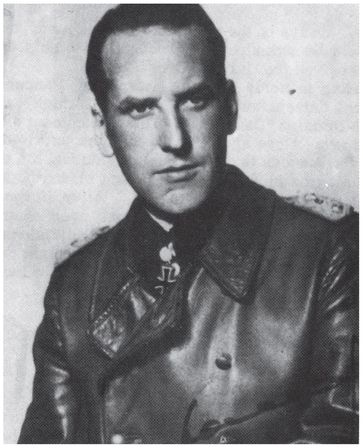
Commander of SS-Panzer-Division “Wiking”, SS-Standartenführer J. R. Mühlenkamp, 1944.
The commander of the 9th Army, aware of the weakened state of Gille’s troop force, approved shortening the frontline in the event the attacks mounted by the two enemy armies let up. They continued without respite until October 19, but – due to the weakness of the combat forces on both sides – the fighting in this area was sluggish. On October 22, Rokossovskij narrowed the offensive front for the 47th Army by sending the Polish 1st Infantry Division towards the Wisła. But despite the persistent attacks, barricades of shell-fire and air bombardment, it was not until October 27 that the 3rd SS-Panzer-Regiment “Totenkopf,” respective the 5th SS- - Panzer-Division “Wiking” left their up-until-then established positions and under the protection of their rearguard withdrew to the other side of the Bródnowski Canal (at its outflow in Narew, north of Łajsk). The Germans relinquished Wieliszew and Łajsk and took up new positions along the Dębe – Skrzeszew – Kałuszyn – Szybalin-farm line, east of Stara Olszewnica-Chotomów. Meanwhile, Colonel Zugehörs panzer-grenadier regiment (Polish reports show that this included the entire Panzer-grenadier-Regiment 73, along with parts of the 19th Panzer Division’s Panzergrenadier-Regiment 74) was marching away from Praga’s outskirts via the main road towards Nowy Dwór Mazowiecki. Not long behind them came the 1st Infantry Division, after having thrown back a series of counterattacks, and on October 28, it captured Legionowo. Further Soviet and Polish troop movements were halted at the above mentioned defence line.
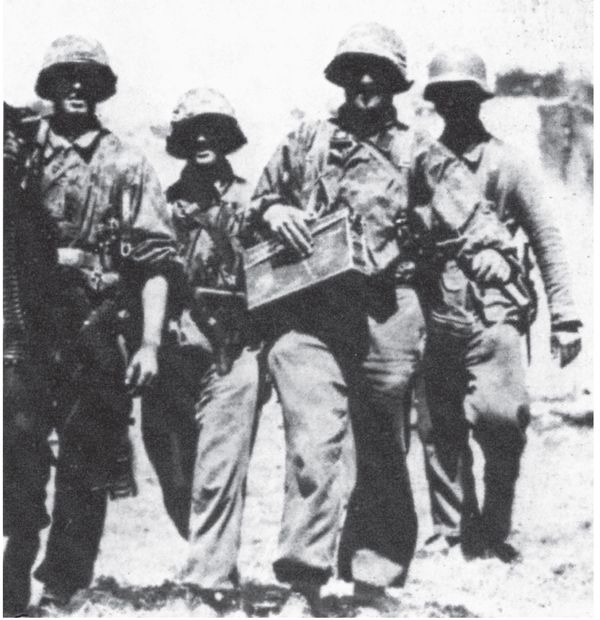
Grenadiers from the SS-Panzergrenadier-Regiment 10 “Westland” on the move in the summer of 1944 in Poland
On October 31, the 47th Army’s infantry, supported by tanks, renewed its attack against the enemy. According to the order issued by the commander of the front, the infantry was to advance to Nowy Dwór, with the final goal of forcing the IV SS-Panzer-Corps to cross over to the other side of the Wisła. The hardest fighting flared up in the vicinity of the Szybalin-farm and in the nearby village of Derlacz. The Soviet tanks were greeted with well-aimed fire from anti-tank guns, and the infantry was halted by mortar and artillery shelling. In the evening, a counterattack was launched with tracked assault guns throwing the Soviet attackers back to their original positions. The next day, the Germans learned that this failed attack was the last strained gasp of the Soviet’s depleted combat strength. After November 1, the exhausted 47th Army shifted to a defensive stance. Now, after almost three months of continuous fighting outside Warsaw, a relative calm reigned, disturbed only by isolated shelling by both sides. The front along the Wisła would remain dormant for over two months.
This marked the conclusion of one of the Second World War’s operationally most complicated battles. Warsaw had been transformed into a mass grave. According to official estimates, the 1st Belorussian Front between the days of August 1 and August15 alone, suffered casualties of 166,808 dead and wounded. The 1st Polish Volunteer Army counted a further 13.272 dead, wounded, and missing. At the same time, troop losses in the 2nd and 9th Armies mounted to 91,595 killed, injured and captured. Of these, the 9th Army lost 36,373 soldiers: 27,422 in combat at the front, plus an additional 8,951 in Warsaw. One must keep in mind that these figures do not include combat losses incurred during the month of July, the second half of September, or in the battles fought during October in Praga’s northern suburbs.
Equally serious for both sides were their equipment losses. At the very least, a 9th Army report covering a period of only 5 days (August 18 – 22 ), claiming the destruction of 249 Soviet tanks between Wołomin and Wyszków, should be cited here to further illustrate the incredible extent of these losses. Even if they are exaggerated such reports nonetheless provide a picture of how bitter the fighting was in this theatre of the war. The report was sent two weeks after the conclusion of the large armoured battle carried out by the 2nd Panzer-Army “Gruppe von Saucken” wherein the Germans had destroyed more than 200 tanks. Similar information can be found in a report from the 5th SS-Panzer-Division “Wiking”. In this report SS-Panzer-Regiment 5, alone, claims that between the 4th and 5th of September 1944, they had destroyed or captured 151 tanks, 32 tracked assault guns, 176 guns, 94 machineguns and 5 aircraft!
The battle for Warsaw was an extremely lengthy one. That it turned out to be so was not solely the fault of Stalin holding back the assault on Praga while awaiting the crushing of the Uprising. This order was only applicable to the 47th Army’s left flank – the rest of the Soviet troops were to continue their attacks. Despite this, it took over a month for three infantry armies to advance the 45 kilometers from Mińsk Mazowieacki to Serock with the added support of tank corps and an air fleet. The most significant factor was the persistant resistance offered by the German troops, who succeeded in concentrating relatively small but highly motorised elite troops along the stretch facing Warsaw. The commander of Heeresgruppe “Mitte” skilfully manoeuvred his combat resources, constantly redeploying individual divisions from one zone of the front to another. However there can be no doubt that east Warsaw – had Stalin issued the order to storm the Praga district – would have been freed sometime between August 10 and 14, 1944; which is not to say, this would have meant the end of fighting for the city. The battle for Poland’s capital would have continued but the chances of saving the city would have been enormously increased. The storming wasn’t to take place until a month later, under completely different operational circumstances. The September attack on Praga was merely a support-attack which was primarily conducted to straighten-out the frontline. And even in this objective, due to the resistance mounted by the German troops, was not wholly achieved.