
PART III
Overview
The US government had not developed a clear and coherent strategy for the war in Afghanistan and was having difficulty understanding and adapting to a deteriorating situation. The Taliban’s insurgency, with a sanctuary in Pakistan and growing Afghan support, expanded.1 As we saw in Part I, the civilian harm caused by pro-government predatory militias and coalition forces contributed significantly to the growth and sustainability of the Taliban. High-profile civilian casualty incidents were driving deep wedges between the US and Afghan governments, undermining the legitimacy of both, and alienating the Afghan population.2 The Afghan government, meanwhile, had become a predatory kleptocracy, which was driving more people into the arms of the Taliban.3 America’s bureaucratic way of war unwittingly reinforced rather than diminished these problems. American military and civilian officials, however, continued citing myriad examples of progress even as the security situation deteriorated.4
The ineffective strategy remained in place until 2008 when Barack Obama was elected president of the United States. He campaigned that America needed to withdraw from Iraq and focus instead on Afghanistan and made good on this pledge. He directed a thorough review of the Afghan conflict and boosted military, civilian, and diplomatic efforts to reverse a deteriorating situation. To encourage Afghan government reform, Obama put a timeline on American presence. The design was to build Afghan government and security force capacity, gain Pakistani support in closing insurgent sanctuaries, and degrade the Taliban into a residual insurgency. Despite impressive examples of progress, however, the Afghan government and security forces remained corrupt and unable to win the battle of legitimacy in contested and insurgent-controlled areas, Pakistan proved unwilling to close insurgent sanctuaries, and the Taliban sustained high levels of violence. Obama clung stubbornly to the withdrawal timeline as the situation deteriorated. By 2015, he felt compelled to slow and eventually stop the drawdown.
Why did both administrations persist in strategies that were not succeeding? This question has received little attention. Confirmation bias, political and bureaucratic frictions, and patron-client difficulties offer insights on the persistence of ineffective strategies in both wars for both administrations. These problems impeded their ability to recognize that critical strategic factors, such as insurgent sustainability and the host nation government’s inability to win the battle of legitimacy, undermined the prospects of success. Although both administrations would make changes on the margins, they never determined if transition was a realistic outcome.
7
As the situation in Afghanistan deteriorated, why did the United States cling stubbornly to bad strategies? Confirmation bias is a part of the answer. Political scientists Elizabeth Stanley and John P. Sawyer argue that losing or ineffective strategies can become “sticky” when decision-makers have insufficient or faulty information, or when bureaucratic or organizational filters and biases prevent leaders from accessing or using available data.1 Information overload can magnify the problem.2 Policymakers can get bombarded with information of varying reliability and contradictory assessments and forecasts. Making sense of it can be overwhelming. Confirmation bias can result.
Confirmation bias is the tendency to seek data and to interpret information in ways that conform to currently held beliefs.3 Decision-makers can place higher credibility on confirmatory information or assessments while discounting the reliability or value of different ones. More facts or better information might not correct the error. Decision-makers often dig in their heels when challenged. “Arguing the facts doesn’t help [when confronting confirmation bias],” cautions behavioral scientist Christopher Graves, “in fact, it makes the situation worse.”4 Confirmation bias may thus entrench the status quo.5 Confirmation bias, if present, results in officials giving confirmatory information excessive weight while discounting the value of contradictory information or interpreting such data to support pre-existing beliefs. The effect is a tendency to resist changes to the status quo.
America’s bureaucratic way of war reinforced the status quo. Seams and fault lines between silos can exacerbate confirmation bias, and, with it, strategic damage. Seams denote gaps between silos that can be exploited by host nation actors or adversaries; fault lines describe problems in which efforts in one silo undermine efforts in others. Actions by one agency may damage the efforts of others and undermine overall national objectives. These problems are often missed in the assessments because each agency measures progress within their respective silos. The tendency to aggregate in-silo metrics and milestones to assess overall progress can create a misleading strategic picture. The result of these challenges is that the whole can be less than the sum of its parts.6 Senior officials, many conditioned by decades of working in bureaucracies, could not see this problem.
After more than a year of bureaucratic infighting over the scale and scope of US assistance to Afghanistan, Rumsfeld finally relented in mid-2003 to a plan drafted by Zalmay Khalilzad called “Accelerating Success.” Khalilzad was soon chosen to be the US ambassador to Afghanistan and would have the opportunity to implement his ideas. Overall, the so-called Marshall Plan for Afghanistan amounted to $1.2 billion in aid (Congress would eventually approve $1.6 billion).
Although agreeing to higher development expenditures, Rumsfeld continued to resist further troop increases. He reportedly accepted “Accelerating Success” and a larger NATO-run ISAF to extricate the United States from Afghanistan more quickly.7 To enact Khalilzad’s plan, the United States and NATO began fielding Provincial Reconstruction Teams (PRTs) across Afghanistan to implement local assistance projects. USAID was to manage infrastructure development.8
“Accelerating Success” gave a much-needed boost in resources but did not sufficiently address the factors that posed the highest risks to success: an insurgency with durable internal and external support and a host nation government unable to win the battle of legitimacy in contested areas. The plan focused on key milestones and developmental efforts. A National Security Council memorandum to principals (cabinet secretaries) on January 18, 2005, assessed the progress of Accelerating Success. “The President’s 2004 ‘Accelerating Success in Afghanistan’ initiative,” the note explained, “led to transformative changes in governance, security, and reconstruction in Afghanistan.” The memo lauded the president’s leadership, highlighted the activity metrics, and explained that a new working group on Afghanistan had improved interagency coordination. It cited as examples of progress the 2004 election, the creation of 19 PRTs, the fielding of a 16,000-strong Afghan Army and a police force of 25,000, efforts to check warlords, over 25,000 militia troops demobilized, and completion of the Kabul to Kandahar highway. It noted challenges with counternarcotics, police training, and donors making good on pledges. All metrics were “Yellow,” which indicated reasons for caution, but there were no red flags.9
The NSC was grading its homework based on inputs from agency silos. They measured government legitimacy positively because of the voter turnout in the 2004 election and the self-assessment that warlord influence was “progressively undercut.” The latter, the memo remarked, were now turning to peaceful politics. Although noting the violence, the NSC memo did not measure the state of the insurgency. Curiously, it claimed that the UN reported improved countrywide access in September 2004 compared to the previous year. A US Government Accountability Office report, however, cites UN maps that show a significant deterioration in security for the period covered by the memo.10 The NSC document did not assess regional malign activity, despite the existence of insurgent sanctuaries in Pakistan. In essence, the White House measured specific agency-centric inputs (e.g., 19 PRTs created) and outputs (e.g., 16,000 Afghan Army fielded) but not outcomes, such as insurgent strength and government legitimacy.
Sufficiently confident were they that the Pentagon suggested at the Berlin Conference in September 2005 to withdraw up to 4,000 US forces and replace them with NATO troops.11 “It makes sense that as NATO forces go in,” General John P. Abizaid, the head the US Central Command, reportedly told the New York Times, “that we could drop some of the U.S. requirements.”12 The Pentagon eventually scrubbed the withdrawal plan due to NATO objections.
The tendency to measure progress within each silo reinforced confirmation bias that the war was on track and masked the emerging strategic risks. The achievements to date were impressive, given the catastrophe in Afghanistan after over 20 years of war. Other indicators, however, were present that should have led the Bush administration to question its optimistic assessments.
Chapter 5 noted the widespread violence on the part of various warlords who aimed to consolidate and expand their control, including their use of predatory militias and manipulation of international forces and officials.13 Karzai was in an extraordinarily difficult position. Nearly every Afghan leader over the past century had been overthrown or murdered, and Karzai’s political rivals controlled the security forces. International military forces, in a bit of mirror imaging, mostly found themselves incapable of conceiving a civil-military relationship other than objective control, in which militaries are professional and apolitical. Some Afghan military leaders undermined Karzai’s political authority.14 Warlords could also mobilize well-armed militias rapidly and organize street protests. Both the Pentagon and the State Department continued to underestimate the importance of these patron-client issues.15 Karzai often felt, even in the last years of his presidency, that the Afghan National Security Forces (ANSF) were not under his control.
International officials continued to press Karzai to make reforms and keep the warlords in check but provided no clear backing or muscle to help him manage the fallout. Nonetheless, Karzai took the bold step of selecting Ahmad Zia Massoud rather than Fahim as his first vice presidential running mate for the 2004 elections, which caused significant tensions.16 After winning the election in 2004, Karzai removed several warlords and their lieutenants from ministerial positions, including replacing Fahim at the Ministry of Defense with his deputy, Rahim Wardak.17
The 2005 parliamentary elections, however, would offer the warlords new opportunities for political influence. In May 2005, protests erupted across Afghanistan, instigated by a Newsweek article that alleged interrogators at the US military prison at Guantanamo had desecrated the Koran.18 Due in part to this instability, the September 2005 parliamentary elections were a significant victory for warlords and local strongmen.19 They could block legislative efforts that might undermine their influence.
Rather than turning their attention to peaceful politics, the warlords used the elections to expand their means of control.20 The United States had made it clear that Karzai could not count on the international military to help him impose his will on the warlords. Karzai had to undertake efforts that kept the international community happy while balancing the interests of dangerous elites. His efforts to co-opt them, to gain subjective control (i.e., to co-opt the military into armed political supporters), were partially successful but also heightened internal frictions and corruption.
These factors, Sarah Chayes argues, began to provide the incentives that would turn the Afghan government into a predatory kleptocracy.21 A kleptocracy is a government by people who seek primarily to use their position for personal gain at the expense of the governed. In a kleptocracy, the elites exploit the country and people to gain power and influence.
Government officials, in this case, often purchase their positions for significant sums. These payments are not patriotic contributions to the national treasure. Officials purchase license to use their position for private gain. They use time-tested techniques such as extortion of customs and business revenues, kidnapping for ransom, land theft, misappropriation of international aid and investment, robbery, and participation in illicit economic activity to recoup the sale price and turn a profit.
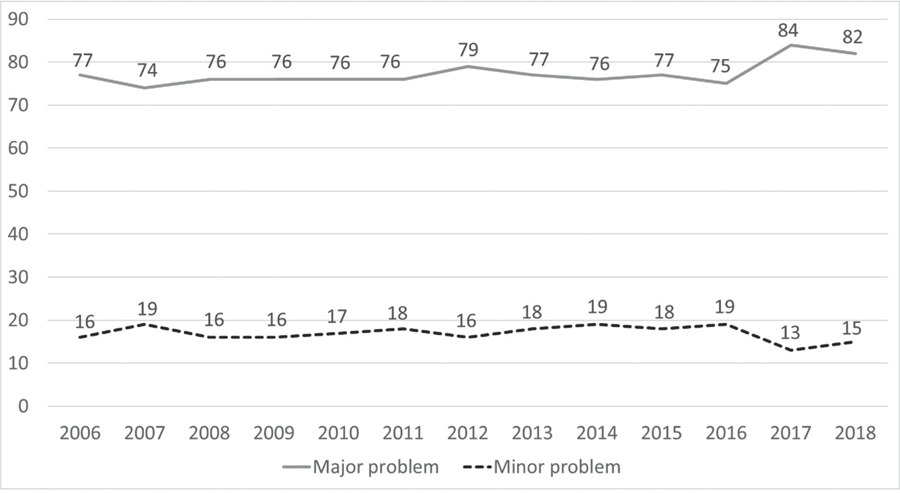
Figure 2. Perception of Corruption as a Problem in Afghanistan
Question: “Please tell me whether you think corruption is a major problem, a minor problem, or no problem at all in the following areas. (a) In your daily life. (b) In Afghanistan as a whole.” Graphs show percentages of people who say “major problem” or “minor problem” regarding (b).
Source: Afghanistan in 2018: A Survey of the Afghan People, The Asia Foundation, 2018, 117, reprinted with permission.
To be sure, some kleptocrats are more predatory than others. Some might even aim to support the people while helping themselves. Over time, the competition to participate in the system raises prices and thus requires more predatory actions to turn a profit. This cycle drives out the well-intended and attracts unsavory characters.
Western officials assume a government is of the people, by the people, and for the people. Mirror imaging helps to explain why western officials had difficultly recognizing the Afghan government’s legitimacy problems. Large-scale military support, massive amounts of aid, and seemingly uncritical support to Afghan officials unwittingly enabled the kleptocracy.
Corruption was one of the main issues voiced by the Afghan people, and the United States never managed to hear it properly. The Asia Foundation surveys of the Afghan people show a constant dissatisfaction with the level of corruption in Afghanistan in general, and the number of those indicating that corruption was a problem in their daily life increased between 2006 and 2018.22
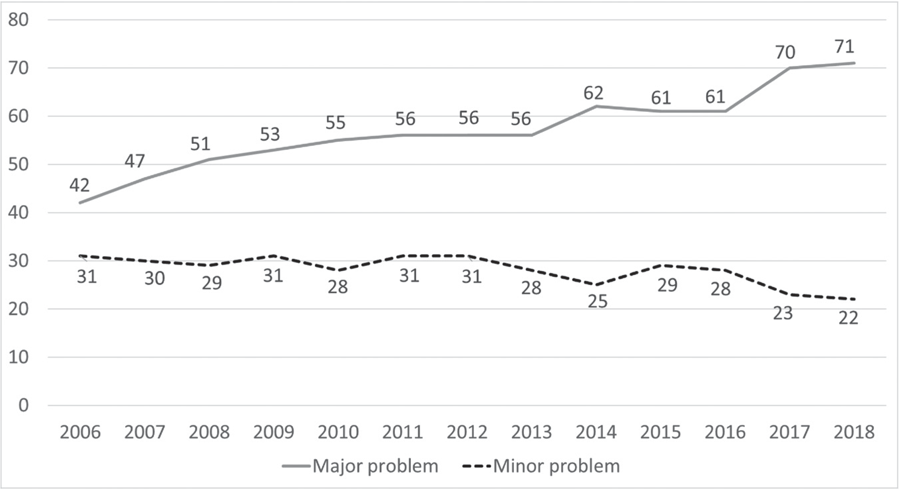
Figure 3. Perception of Corruption as a Problem in Daily Life
Question: “Please tell me whether you think corruption is a major problem, a minor problem, or no problem at all in the following areas. (a) In your daily life. (b) In Afghanistan as a whole.” Graphs show percentages of people who say “major problem” or “minor problem” regarding (a).
Source: Afghanistan in 2018: A Survey of the Afghan People, The Asia Foundation, 2018, 118; reprinted with permission.
The milestone-centric approach to political and economic development was easily captured by Afghan elites, who quickly froze out their rivals while the international community lauded the progress. Elites super-empowered by their proximity to the United States gained significant political and economic power, backed up by the military muscle of local militias, police, or unwitting coalition forces. Government, police, and military positions were increasingly for sale at exorbitant prices. Many officials purchased their jobs from elites in Kabul in return for license to turn a profit. International aid and development dollars, customs revenues, and black market racketeering were all eligible for extortion. American and NATO officials lacked the strategic empathy to understand these problems and their implications.
A 2008 report by Oxfam found that barely 15 percent of international aid dollars made it to the local levels.23 More problematic, some officials would engage in land theft, kidnapping for ransom, and other forms of extortion, seemingly backed by coalition military might. “You Americans are either too stupid to realize you are being used in this way,” an Afghan elder explained to me in 2009, “or you are complicit.”24 Well-meaning efforts by agencies or nations self-synchronized in damaging ways. The whole was perpetually less than the sum of its parts.
It is no wonder, then, that the political instability and Taliban offensives in 2006 came as such a shock to the Bush administration. Karzai’s tone, as seen in reporting cables from the American diplomats, grew deeply suspicious and pessimistic that year. He suspected some of the warlords were fomenting violence to destabilize his government.
Angry anti-US demonstrations in Kabul erupted on May 29, 2006, after a traffic accident in which an American military vehicle plowed into a dozen civilian ones. Fourteen civilians were reportedly killed and 90 injured during the riots.25 The demonstrations came on the heels of an incident in Kandahar in which 35 civilians perished.26 “If it [the perpetrators] had been Taliban or al-Qaeda,” Karzai explained darkly, “the bombs [in Kabul] would have been more effective.”27
Other anti-American protests erupted in February and September 2006 over cartoons in a Danish newspaper and an American film, respectively, that mocked the Prophet, Mohammad.28 Corruption and predatory behavior by Afghan officials continued.29 Karzai worried that his government and the coalition were losing the support of the people.30 To reduce the internal tensions, he began to slow down disarming some militias and to bring more warlords into the cabinet.31
Meanwhile, the Taliban initiated large-scale military offensives, particularly in southern Afghanistan.32 Retired US general Barry R. McCaffrey, in a June 2006 assessment for Rumsfeld, was alarmed by the deteriorating security situation.33 An August 2006 security assessment on southern Afghanistan noted, “The Taliban are becoming increasingly willing to defend key terrain with large, sophisticated, well-armed groups of fighters.”34 Afghan and Indian officials had been warning American officials since 2005 that Pakistan was actively supporting the insurgency.35
The reporting cables did not detail the scale and scope of Pakistani complicity. Still, the existence of a sanctuary in Pakistan from which the Taliban were able to plan, coordinate logistics, train, and recruit was evident.36 By 2006, Karzai’s tone on Pakistan had moved from conciliation to hostility.37 The Afghan government grew closer to India, reinforcing Pakistan’s fear of a hostile Afghanistan.38 In November 2006, the Defense Intelligence Agency’s director, Lieutenant General Michael D. Maples, forecasted that insurgent attacks in 2006 were likely to be twice as high as in 2005. He also revised an earlier optimistic assessment of Afghan governance. “Nearly five years after the Taliban’s fall,” Maples testified, “many Afghans expected the situation to be better by now and are beginning to blame President Karzai. These unrealized expectations are likely contributing to an erosion of support for his administration.”39
Such problems should have led Bush administration officials to question the assumptions underpinning their strategy. In response to the growing challenges, however, the US and Afghan governments and international community sought to improve coordination and levels of support. The London Compact of February 2006 called for an expansion of the Afghan Army from 34,000 to 70,000 by the end of 2010.40 By that time, the army and police were to be able to secure the country and allow international forces to withdraw. Governance, anticorruption, the rule of law, and other reforms were to be achieved by then as well, but no conditions were attached to the benchmarks.41
The commitments for reform were aspirational. To improve coordination on the ground, Karzai agreed in August 2006 to the “Afghan Development Zone” (ADZ) concept, developed by the ISAF commander, British general David Richards. The ADZ, the American ambassador noted, “attempts to unify security and development efforts from the GOA and IC . . . and should expand to encompass ever-widening territories.”42 The underlying assumption was that projects and “service-delivery” rather than good governance would restore public confidence in the government.
In the absence of clear guidance from Washington, the US embassy and military command in Afghanistan published a “Strategic Directive for Afghanistan” on September 11, 2006, signed by Ambassador Ronald Neumann and Lieutenant General Karl Eikenberry. The intention was to integrate American civilian and military efforts in Afghanistan. The country team outlined its strategic goal as “[c]reate a self-reliant Afghanistan that provides effective governance, is self-securing, committed to representative government, economically viable, and rejects narco-production.” The military identified its primary task as “defeat insurgent and terrorist threats and establish effective, adequate security.” They defined success as: “insurgents are defeated and no longer threaten internal development nor the safety and security of Afghanistan,” and “the ANSF are capable of effectively securing their territory against insurgent and criminal threats with only limited coalition support.”43 The document specified agency-centric lines of effort related to security, governance, development, and strategic communications and portrayed how they all point to a self-reliant Afghanistan.
The directive noted that the 34,000-strong Afghan National Army (ANA) would double in size to 70,000 and be capable of operating independently by fiscal year 2011. With more resources, they argued, the ANA could achieve that milestone by 2009. A police force of roughly 80,000 would be merely one year behind.44 The military command made these aggressive forecasts even though the international training mission for the Afghan Army and police were, as McCaffrey described in a June 2006 assessment read by Rumsfeld, chronically and “miserably” under-resourced.45 The commonly used rule of thumb for the size of security forces needed to combat an insurgency was 20 military or police for every 1,000 people.46 With a population of roughly 30 million, Afghanistan would require a security force 600,000 strong. Barely one-third of that number of Afghan and international forces was forecasted to be available by 2009.
The small army and police were justified by US military officials based on comparisons with the security forces of neighboring states, none of which were in the grip of an insurgency.47 Despite General McCaffrey’s alarming report, Rumsfeld only asked Chairman of the Joint Chiefs of Staff General Peter Pace to look into the reported lack of small arms for the ANA and the size of the ANSF.48 The Pentagon reportedly forecasted in 2006 that the Afghan government would not be able to fund even an army of 50,000 until 2063.49