
10
Audience costs is a political science term that refers to the public support penalties a leader suffers for backing down after escalating a foreign policy crisis.1 Leaders could be reluctant to change a strategy over fears about constituent reactions. Michael Tomz conducted a wide range of experiments to determine whether and to what extent audience costs are real and affect national security choices. He found that constituents tend to disapprove of leaders who make threats and then back down and that leaders regard disapproval as a liability.2 To be sure, situations exist in which people might approve of backing down after making threats, as Stephen Walt suggests the French and British public did during the 1936 Rhineland crisis and the Munich agreement in 1938.3 With the end of the Great War scarcely 20 years before, public sentiment remained rooted in keeping the peace. Tomz’s experiments also suggest that the actual use of force increases the intensity of audience costs.4 These rose even further when US casualties were involved.5 Political leaders are sensitive to audience costs because high approval ratings are considered an essential source of presidential power.6 Thus, leaders may avoid changes that have high potential audience costs—such as seeking negotiations rather than decisive victory if the leader has painted the adversary in good versus evil terms.7
President Obama’s updated approach showed the administration’s limited understanding of the strategic challenges and his waning patience with the war. The new plan increased the scale of the effort but failed to examine some problematic assumptions about the insurgency and the Afghan government. Bureaucratic frictions and problems with the Karzai government continued to impede progress. Periodic assessments by each agency within its respective silo reinforced views that the war was on track, even as the situation kept deteriorating.
Obama announced his decision in a speech at the US Military Academy on December 1, 2009. Outlining the importance of success in the war, Obama reiterated the March 2009 aims of disrupting, dismantling, and defeating al Qaeda and preventing its reemergence in either Afghanistan or Pakistan. The US government aimed to achieve a secure, stable, sovereign Afghanistan that could defend itself and prevent the reemergence of terrorist safe havens.8 He approved a three-fold military, political, and diplomatic surge. He would commit an additional 30,000 US forces, bringing the American total to nearly 100,000 troops. He requested an additional 7,000 from coalition partners. The surge forces would begin to withdraw by July 2011, and the transition to handing over security to the Afghans would begin. Not stated in the speech, the administration had set December 2014 as the end of the combat mission and transition to full Afghan security responsibility.9 The larger ANSF was to be able to handle a residual insurgency that had been substantially degraded by the military.10 The president also approved a significant civilian increase to build Afghan government capacity.11 He directed diplomatic efforts to improve support from Pakistan and to promote Taliban reconciliation.
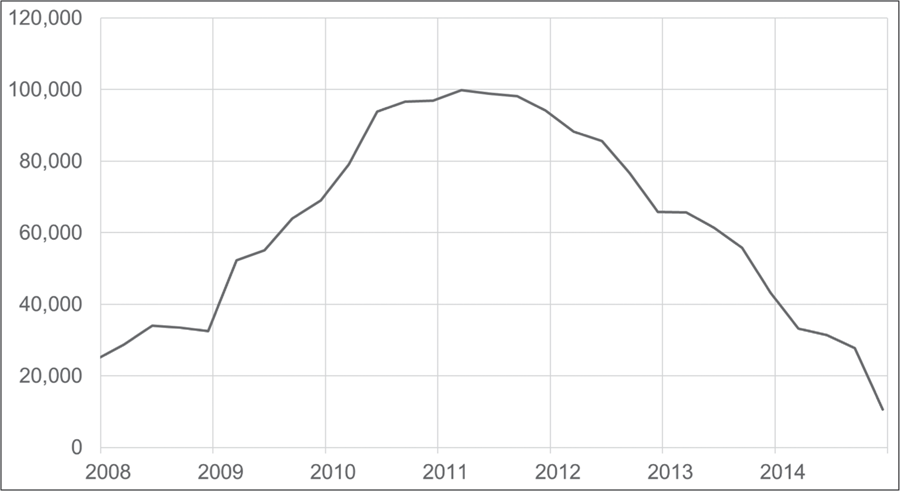
Figure 4. US Troop Numbers in Afghanistan
Source: Based on data in Heidi M. Peters, Moshe Schwartz, and Lawrence Kapp, “Department of Defense Contractor and Troop Levels in Iraq and Afghanistan: 2007–2014,” Congressional Research Service, July 22, 2015, 2.
The Obama administration did not deliver a clear and coherent strategy. It was, instead, a highly detailed policy from which the departments and agencies wrote individual plans and then executed them within bureaucratic silos. There was no effort to develop with Afghan partners a coordinated strategy for the war or to address the misaligned aims and incentives.12 Despite Obama’s concerns about reform, there was no conditionality tied to US support and resources. The military campaign plan was supposed to be a joint endeavor with the Afghan Army and police but was written by ISAF and translated into Dari.13 The capacity-building programs often followed the same pattern. The State Department did not develop a governance strategy and had no requirement to explain how they would tackle corruption problems.14 Capacity-building—training civil servants and providing resources to government officials—was assumed to lead to good governance. Despite approving a much-needed uplift in civilian support, the Obama administration had enormous difficulty finding qualified people with the right expertise. Of those, most went to the US embassy in Kabul rather than into the provinces and districts.15
State did not develop a strategy for changing Pakistan’s strategic calculus or for reconciliation.16 Holbrooke arranged US-Pakistan strategic dialogue, which was a series of meetings and an ambitious list of working groups, but it was all carrot and no stick. There was little connective tissue between these carrots and changes to Pakistan’s national security assumptions and approaches.
Holbrooke’s staff also wrote concept papers on reconciliation, but they did not show how to integrate these ideas into the Obama strategy.17 This omission was unfortunate because a negotiated outcome had the potential to achieve US war aims. Holbrooke’s SRAP office saw reconciliation as an alternative to the military campaign, not a complementary effort. Like their Defense Department counterparts, they could not envision how coordinated politico-military actions could boost the prospects of negotiations toward a successful outcome. The soldiers and diplomats stayed in their silos, and no one in the NSC thought to examine the merits of alternative war termination approaches.
Finally, the Obama administration did not fix civil-military integration. The starkly different views presented by McChrystal and Eikenberry, for instance, should have raised serious questions as to whether unity of effort was possible unless one of them was in charge of coordinating the American efforts in Afghanistan. No US official in Kabul was responsible for achieving US aims, so Obama had no one to hold accountable for success. Political, diplomatic, military, and intelligence efforts continued operating in bureaucratic silos directed from Washington. ISAF commanders and ambassadors worked to improve on-the-ground coordination, but these could neither override demands from the top nor manage in-theater priorities and trade-offs.18 The Obama administration said that civilian and military efforts would be mutually reinforcing, but, as we will also see in the Iraq case study, declaring something to be so is not enough. Siloed actions continued to damage the prospects for success, and Afghans exploited the seams between the silos. The whole was less than the sum of its parts.
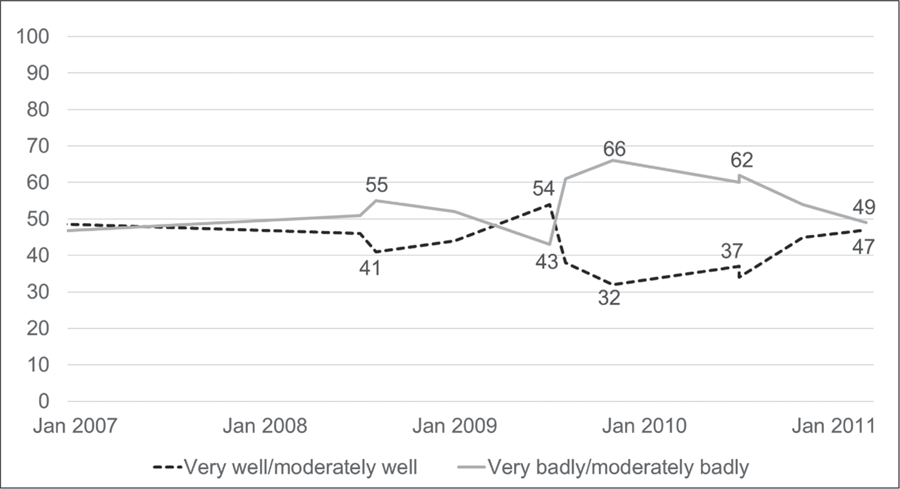
Figure 5. US Public Optimism on the Afghanistan War
The chart shows the results of a Gallup poll, asking: “In general, how would you say things are going for the U.S. in Afghanistan?”
Source: Based on data from Jeff Jones and Lydia Saad, “Gallup News Service, March Wave 1, March 25–27, 2011,” https://www.gallup.com/file/poll/147002/Afghanistan_110408.pdf (accessed July 9, 2020).
Obama’s speech sent mixed messages on war termination, which reflected conflicting views within the administration. The announcement of both a surge and a withdrawal timeline heightened the risk that the Taliban could simply play for time—a problem that could undercut US leverage if talks with the Taliban came about. Vali Nasr, one of Holbrooke’s chief advisors, believes that the White House was engaged in a concerted effort to block the issue and to prevent Holbrooke from having any role in policymaking.19 Holbrooke, however, had yet to coalesce his views into a coherent form, so the NSC could not consider the merits of an approach that emphasized a negotiated outcome.20 Had they done so, the implications of announcing a withdrawal timeline would have come into question. Participants in the discussions recalled neither Holbrooke nor Clinton raising the concern.21
Why did the Obama administration select an approach riven with such obvious problems? Limiting audience costs is part of the explanation.
Obama had to satisfy multiple audiences. He wanted to make good on his pledge to improve the situation in Afghanistan and to refocus on his domestic agenda. Gates assessed that Obama was growing ambivalent and wanted to wind down the war as quickly as possible without creating a rift in the administration.22 Besides, the president needed to show he was listening to the advice of his military commanders while not giving them everything they wanted. He wanted to send a signal to the Afghan government and to his base of support in the Democratic Party that US commitment was not open-ended.23 Finally, according to a Gallup poll, US public optimism on the war effort had just taken a sudden dip (see figure 5)—a trend that might have further encouraged Obama to bring the war to a quicker end.24
Obama wanted Karzai to take ownership of the war and reform his corrupt government. McChrystal and Eikenberry received more resources. Obama’s ambivalence, however, did not result in demands for more details about reconciliation or Pakistan. In short, a new president, who campaigned on Afghanistan as the real central front in the war on terror, felt compelled to give the military, the diplomats, his vice president, and his political base enough of what they wanted to keep them on board. What suffered was strategic coherence.25