
Chapter 10
Ancient society had a high demand not only for wood, but also for rock and clay for construction, and for metals, which were used for all sorts of purposes in the trades and in artistic work. Clay and rock were quarried at the surface; the quarries were as a rule in the near vicinity of the cities. The best known marble quarries were in the Pentelikon Mountains near Athens, on the Cycladic islands of Paros and Naxos, and in the Peloponnese. Moreover, gold, silver, tin, copper, lead and iron were mined in various places, often in subterranean mines. Owing to the scarcity of resources and the high procurement costs, quite a number of materials and products were repeatedly reused throughout antiquity (Hdt. 3.6).
Metals had been mined in Greece, Asia Minor, Dacia and Spain since the Neolithic era, with copper and tin, for which Britain was famous, the most important products (Strab. 4.5.2; Diod. 5.22.1ff., 38.4–5; Tac. Agr. 12.6).1 Since the third millennium BC, bronze had been produced as an alloy of copper and tin, and Cyprus early developed into a leading centre for copper mining. Silver was mined in large quantities on the Aegean island of Siphnos (Hdt. 3.57–8; Paus. 10.11.2), as was gold on the island of Thasos, where the entire Mount Scapte Hyle was supposedly deforested and dug up (Hdt. 6.46–7).
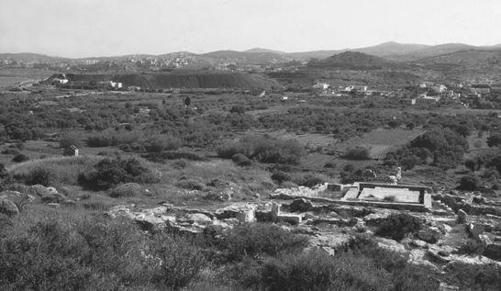
Lead and silver had been mined in Laureion, the mining area in southern Attica, since the Mycenaean period (Fig. 8). At the beginning of the fifth century BC, subterranean mining was initiated, with over 2,000 shafts up to 50 m deep or more, and with lateral galleries up to 40 m long.2 Washeries (Figs. 9 and 10) and smelting furnaces, too, were built, which polluted the air and water considerably. The air was contaminated by sulphur dioxide and lead vapours, which led to extensive physical health impairments, such as infertility and genetic damage, nerve diseases and anaemia.3 The workers, for the most part slaves, could number between 10,000 and 30,000, and were always exposed to the danger of being buried in a cave-in. Moreover, large numbers of trees had to be felled in the immediate and even the more remote surrounding forests, which led to soil erosion and a drop in the groundwater level. These drawbacks were accepted, however. In the first century BC the geographer Strabo still considered mines a generally beneficial measure against dense, uncultivated forests (Strab. 14.6.5).
Fig. 8 Ancient mining area in the Souriza Valley, Laureion, Attica.
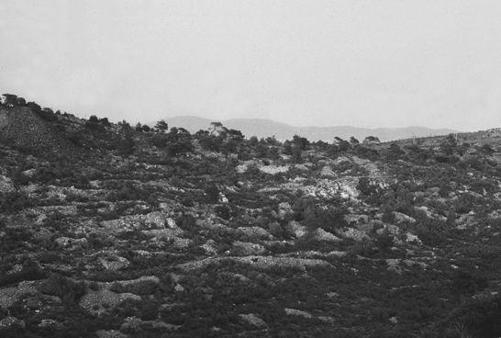
Fig. 9 Ancient cistern and washery in the Souriza Valley, Laureion, Attica.
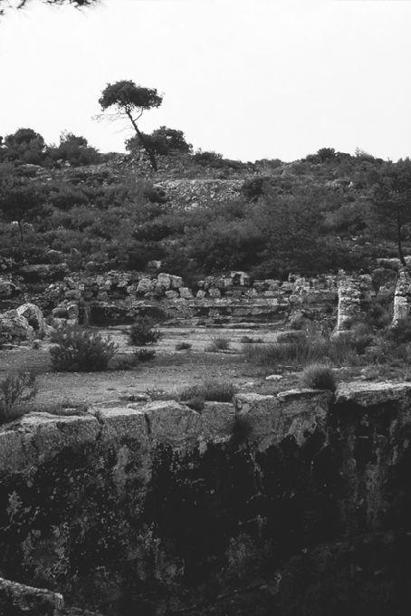
Fig. 10 Ancient washery in Thorikos, Attica.
All in all, mining, with its associated polluting activities, caused one of the most serious impacts on the landscape, even if its extent may seem limited in comparison with the total area involved. It left huge heaps of slag and overburden, and damage to the stripped surfaces and the effects of subsidence are visible to this day. The Romans continued this activity in various areas on a large scale (Diod. 5.35–6), and thus once again added greatly to the level of environmental damage.
1 Penhallurick 1986, 115ff.
2 Schneider 1992, 76.
3 Healy 1978, 133ff.; Domergue 2008, 45ff.