
For Ellen Cohen, who never could stand Larry
When I die, your mother will meet a man who will buy her gifts and flowers, who will do all the little things I was never good at, and who will ask your mother to marry. I tell you now so you know: this man is a schmuck.
—HERB COHEN IN CONVERSATION
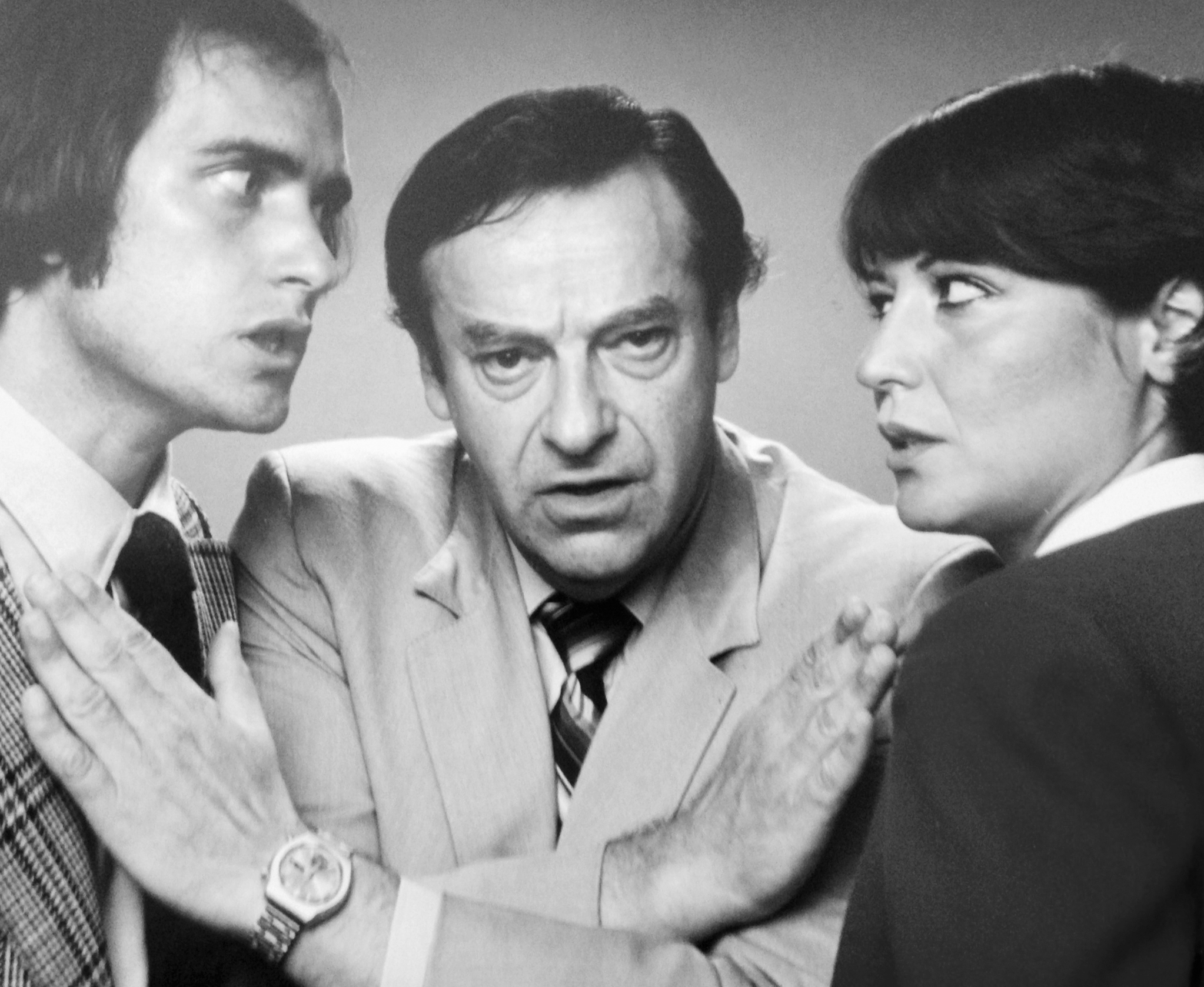
My father did a lot of instructing, but we did not always take away the lesson he intended. He taught us in both ways: by example and by counterexample. The most helpful instruction might come via a side remark or gesture, the slouch of his shoulders or a smile that started in his eyes and spread across his face. If a certain song, Frank Sinatra’s “There Used to Be a Ballpark,” say, struck him as profound, he’d say, “Listen to the words! It’s not about a ballpark! It’s about life!” If a movie made him cry, Frank Capra’s Mr. Deeds Goes to Town, for example, he’d say, “It’s not about a hayseed from Mandrake Falls. It’s about everyone.”
Or maybe he did know; maybe he meant for us to learn less from the words than from the music. Maybe it was all misdirection. He could be tricky that way. It’s what he meant by the difference between the what and the how.
“What you say is often less important than how you say it,” he’d explain. “It’s like the difference between the head and the heart, between the knowing and the believing.”
Consider the way he taught my sister, my brother, and me how to drive. After drilling us on every road sign, traffic custom, and law, and coaching us through every sort of K-turn, lane change, and merge, he’d announce the lesson over, pick a seemingly random destination—Michael’s, in Highland Park, for hot dogs, say, or Walker Bros. The Original Pancake House in Wilmette—and tell us to “take it easy and drive me there.” Then, as you made the turn in to traffic, he’d slug you hard in the ribs, steady the wheel if you swerved, and say, “You just failed the test: what to do if stung by a bee.”
At the end of our last lesson, he told me to drive him to Wrigley Field, where the Chicago Cubs were playing the New York Mets at 3:05 p.m. There was a long line for the left-turn lane that led to the expressway. When we got near the front, my father, who’d been smoking a cigar and tuning the radio, said, “The car in front of you is going to jump the green light and take the left before the oncoming traffic. I want you to get close on his bumper and follow him through.”
Explaining himself, he added, “We don’t want to miss the first inning.”
I started well, and kept close to the lead car, but then made the mistake of looking into the faces of the oncoming drivers. Their eyes were full of hate, their mouths twisted in fury. I froze in the middle of the intersection, snarling traffic and setting off a cacophony of honks and insults. When the cars were finally sorted, we drove on in silence. It was my father who spoke first, saying, “It was my fault. I overestimated you.”
When I turned twenty-one, Herbie—of course, to me he’s Dad—took me to buy a car. It was to be my first negotiation, an experience akin in his mind to losing one’s virginity. He made a long list in preparation for this transaction, a catalog of features my first car had to have. Each characteristic of each candidate was given a number value between one and twenty-two. According to this list, the perfect vehicle for me was a used Honda Civic with less than seventy thousand miles.
We looked and looked; then, amazingly, he balked when we actually found it.
“I don’t get you,” I said hotly. “It checks every one of your boxes.”
“You haven’t learned a thing,” he said sadly. “This car has all the what, but it’s seriously deficient in the how.”
“What are you talking about?”
“Did you see all that writing?”
The car was covered with names. Red letters on the driver’s door said “Bobby.” Blue letters on the passenger’s door said “Bari.” Yellow letters on the hood said “Billy,” this presumably being the name of the car itself.
“So what?” I said. “We can have it repainted.”
“You’re missing the point,” he told me. “A schmuck owned this car.”
No. 2
My father is named Herbert Cohen, but most people call him Herbie. To Grandma Esther he was Herbela. To childhood friends, he is, at his own insistence, Handsomo, Mr. Stunning, or the Elder Statesman. In professional circles, he is Herb Cohen, an expert in the art of the deal and the author of You Can Negotiate Anything, a publishing phenomenon that came out of nowhere in 1980 to sell more than a million copies. He’s a speaker, a guru of the corporate retreat, a consultant to governments and companies, the gun hired to work out the terms and close the deal, the wise man helicoptered in to settle the strike. He helped resolve the Major League Baseball umpires’ strike in 1979, as well as the New Orleans Police strike the same year. He advised Jimmy Carter during the Iran hostage crisis in 1980 and 1981. He advised Ronald Reagan during the summits with Mikhail Gorbachev in 1985 and 1986. He was part of the American team at Geneva during the Strategic Arms Reduction Talks in the 1980s, where he went “eyeball to eyeball with the Russkies” and learned what he calls “the Soviet style.” He helped settle the NFL players’ strike in 1987.
He trained G-men and spooks. He was a pioneer in the field of game theory and helped set up the FBI’s Behavioral Science Unit. The famous term he might well have coined—“win-win”—comes from game theory, which, according to Herbie, focused on potential outcomes, including “win-lose,” “lose-win,” “lose-lose,” and “win-win,” which he merely repurposed from academic study to human relations. And yet, though he’s lectured at Harvard and Yale and worked for many Fortune 500 companies, including IBM, Apple, Google, General Motors, Sony, and Samsung, he says he learned everything he needed to know about negotiation in Brooklyn as a kid, citing a specific incident. “A tenth grader snatched a dog off the street and took it into a basement. He said he’d kill the dog if its owner, a girl who went to Erasmus—she was my friend Inky’s cousin—did not go to a dance with him. A classic kidnapping. I was the only one on the scene who could figure out how to talk to the kid, understand and reason with him. As for learning the trade, it had everything: a victim, a hysterical family, an unreasonable demand, a crowd of onlookers, and a ticking clock. We all had to be home in time for dinner.”
By 5:30 p.m., Herbie having persuaded the kidnapper to settle for a free lunch at a diner of his choice instead of a date, the dog was safely back home and the street returned to its former placidity.
Over time, Herbie turned the tricks he learned in coastal Brooklyn—he’s from Bensonhurst, looks like it, and talks like it—into a philosophy, a kind of Jewish Buddhism. He preaches engaged detachment, characterized as “caring, but not that much.” More than a business strategy, he considers this a way of life. “Don’t get fixated on a particular outcome,” he says. “Always be willing to walk away—from the car, from the house, from the property. Once you see your life as a game, and the things you strive for as no more than pieces in that game, you’ll become a much more effective player.”
Most of his parental advice is about maintaining perspective, which he does by dismissing whatever is currently bothering you as “a walnut in the batter of life, a blip on the radar screen of eternity.” The man is besotted with aphorisms. If you look and look at something, but still can’t see what he wants you to see, he’ll say, “We’re all captives of the pictures in our heads.” Or: “We see things not as they are but as we are.” Or: “Believing is seeing.” If you present him with a clever plan to right a previous wrong, he’ll say, “The meek shall inherit the earth, but not its mineral rights.” If you are mesmerized by a charismatic leader, he’ll say, “The key to walking on water is knowing where the stones are.” Or: “Don’t put your trust in princes.”
“Time heals all wounds,” he’d once told me, “right up to the moment it kills you.”
No. 3
Herbie grew up in the redbrick apartment house at 2109 Eighty-Fifth Street in Bensonhurst, Brooklyn, near the intersection with Twenty-First Avenue. If you go today, you’ll find Ichi Sushi, Amazing Aquarium, BeBe Day Spa, Lily Bloom Bakery, Gap, and Effie’s Boutique.
Bensonhurst is grittier than the more famous neighborhoods to the north—Park Slope, Carroll Gardens, Red Hook, Cobble Hill, Dumbo. Untouched by gentrification, it’s Brooklyn as it used to be, fog shrouded, provincial, and cozy, and the traffic sounds like surf, and the church bells sound like buoys. It’s still mostly mom-and-pop stores in Bensonhurst, pizzerias and taverns, a neon martini glass in the window, auto-body repair, smoke shops, kids at work on their bodies and machines. The record man Seymour Stein once told me that “only two notable people ever came out of Bensonhurst: Vic Damone and Seymour Stein.” Herbie keeps a longer list. “How about Sandy Koufax?” he says. “How about Elliott Gould, John Franco, Carl Sagan? How about Sammy ‘the Bull’ Gravano?”
To Herbie, Bensonhurst was home, and Manhattan was the city. Distant, romantic, unattainable. Talking about a neighborhood character who never got out, one of my father’s old friends will say, “He hasn’t even been to the city in forty years!” Herbie sometimes describes the Bensonhurst of his youth as “a shtetl on Gravesend Bay.” Asked to account for the large Italian population, he adds, “It was Calabria, too.” Here’s how he breaks down the overall demographics: “48 percent Jewish, 50 percent Italian, 2 percent Other.”
Herbie’s childhood apartment was ideally situated—a block and a half from the center of the known world, the busy intersection where the fathers ascended the stairs of the elevated in the morning and descended them in the evening, where candy shops, cigar stores, and newsstands crowded into an urban quintessence and the streetlamps burned all night. A Brooklyn kid in that era was less affiliated with a family or a school than with a corner, a headquarters where he could bullshit for hours. Herbie and his friends were based out of Eighty-Fifth and Bay Parkway the way the 101st Airborne is based out of Fort Campbell, Kentucky. It’s where they planned and prepared, and where they always returned. They were at home at Eighty-Fifth and Bay Parkway the way Thomas Jefferson was at home in Monticello, Hugh Hefner was at home in the Playboy Mansion, John Gotti was at home at the Ravenite Social Club on Mulberry Street in Little Italy. It’s where they tested the identities they’d assume in the world; it’s where they became themselves.
Brooklyn was nothing but corners in the 1950s and 1960s—some friendly, some neutral, some to be avoided. A kid dumped into an unfamiliar neighborhood by a broken subway made his way back to Eighty-Fifth Street and Bay Parkway in the manner of Odysseus island-hopping to Ithaca, progressing from adventure to misadventure until he spotted the familiar light of Lenny’s Pizza.
I don’t know what Herbie’s apartment looked like inside. All the pictures are close-ups. You might see a vase or a couch in the background, but no more. Which doesn’t bother Herbie. You’ll never meet a less nostalgic person. When he talks about the past, it’s not rooms or cities or songs he describes; it’s nicknames, jokes, faces. Once, when I returned from a vacation with pictures of beautiful landscapes, he scolded me, saying, “Where are the people? The faces? In ten years, it’s not that geyser you’ll want to see. It’s the faces of your friends.”
Herbie was eight when the Japanese attacked Pearl Harbor. He followed the war in the newspapers and newsreels, but got a better sense of the stakes by eavesdropping on his father’s brothers, who gathered once a week to discuss business—the business of their business and the business of the war. These men, who worked together in the garment trade—Grandpa Morris and his siblings owned a small factory that made hat bindings—had emigrated from Poland in the first years of the twentieth century. Tough, humorous men, they spoke a thickly accented mid-century patois of English, Polish, and Yiddish. They’d sit in the living room talking about flanking maneuvers and sea battles. Each uncle had a favorite general—Eisenhower, MacArthur, or Bradley. They might consider a general personally distasteful—“Patton’s a real anti-Semite”—yet still appreciate his skill: “But what do I care if he gets the job done?”
Herbie could track the progress of the war in the way his uncles talked about England’s commanding general. In the early going, they spoke of him formally as “Field Marshal Bernard Montgomery,” saying, “I hope this field marshal Bernard Montgomery knows what he’s doing.” They dropped the honorific when the tide turned, saying, “Montgomery is a hell of a general!” By the time the Allies were shaking hands with the Soviets on the Elbe River, he was simply “Monty,” as in “God Bless Monty!”
Herbie was fighting his own war in the movie theaters of Brooklyn, grand show palaces where gangs of kids staked out territory, erected battlements, and unleashed fusillades of candy. Sneak attacks, suicide missions, glorious last stands—battles waged in the flickering light of the silver screen, where John Wayne and Gregory Peck and Robert Taylor and Jimmy Stewart were going over the top, opening the bomb bay doors, or getting misty-eyed at the thought of democracy. Sergeant York was Herbie’s favorite. In it, a young pacifist played by Gary Cooper searches for a balance between the holy documents of his life: the Bible, in which God commands, “Thou shalt not kill,” and the U.S. Constitution, which must occasionally be defended with force. Asked why he loved that movie, Herbie looks at you as if you were a fool, then says, “Why? Because in it one doughboy captures like five hundred Krauts.”
No. 4
The world was different after the war, but no one was sure why. There was the breaking news of atrocities, the concentration camps and the ruined cities of Europe, the terror of the bomb, but there was something else, too. As the only Western nation to come through the 1940s intact, America had become a great power by default, and thanks to this emergence the horizon of every American expanded. It was like being a Roman after the Pyrrhic War, or a Brit after the sinking of the Spanish Armada. The change could be felt even if it could not quite be explained. The years that followed were the paradise you recognize only when it’s lost. The Depression had ended; the war had been won. American jets patrolled the skies of the world. American soldiers were handsome, wisecracking, clever, and kind. American cities were vibrant and safe. The apartments affordable, the public schools excellent. The kids of that time were living at the top of an arc. It had never been like that before and would never be like that again. It was a bubble that in a moment would pop, but meanwhile the moment expanded into an eternity.
Each afternoon, the students of Bensonhurst P.S. 128 were released like birds from an aviary. Squawking through the streets, they coalesced on the corners to devise another plan and assault another night. Bensonhurst was an ethnic enclave, where a kid believed every adult was a parent who would save him if necessary. Its confines were marked by its architecture of redbrick buildings, concrete storefronts, and that vast outer-borough sky. When you crossed into a new neighborhood, the change was gradual—like moving from hot water to warm water—which warned you and gave you time to chicken out. If you ventured into the unknown, it was only because you really wanted to know. Every kid was Captain Cook in the summer, surveying strange coasts, exploring mysterious islands, trading, or fighting, then sailing home.
The elevated train floated like a ribbon above New Utrecht Avenue, the windows of the cars reflecting traffic lights, telephone poles, clouds. The tracks went belowground in Flatbush, the train becoming a subway as it approached the harbor and metropolis. The IRT was cheap and safe. In Bensonhurst, parents let twelve- and thirteen-year-olds ride with friends to Madison Square Garden or Times Square. A stray dog that lived in a box on Eighty-Sixth Street used to ride the train alone. “He’d get on when we got on, but get off before, usually at Chambers,” Herbie told me. “One day, we decided to follow him. We watched him go to the back door of five or six big lunch places and dig scraps out of the trash. Then he went down the stairs and caught the downtown train back to Brooklyn.”
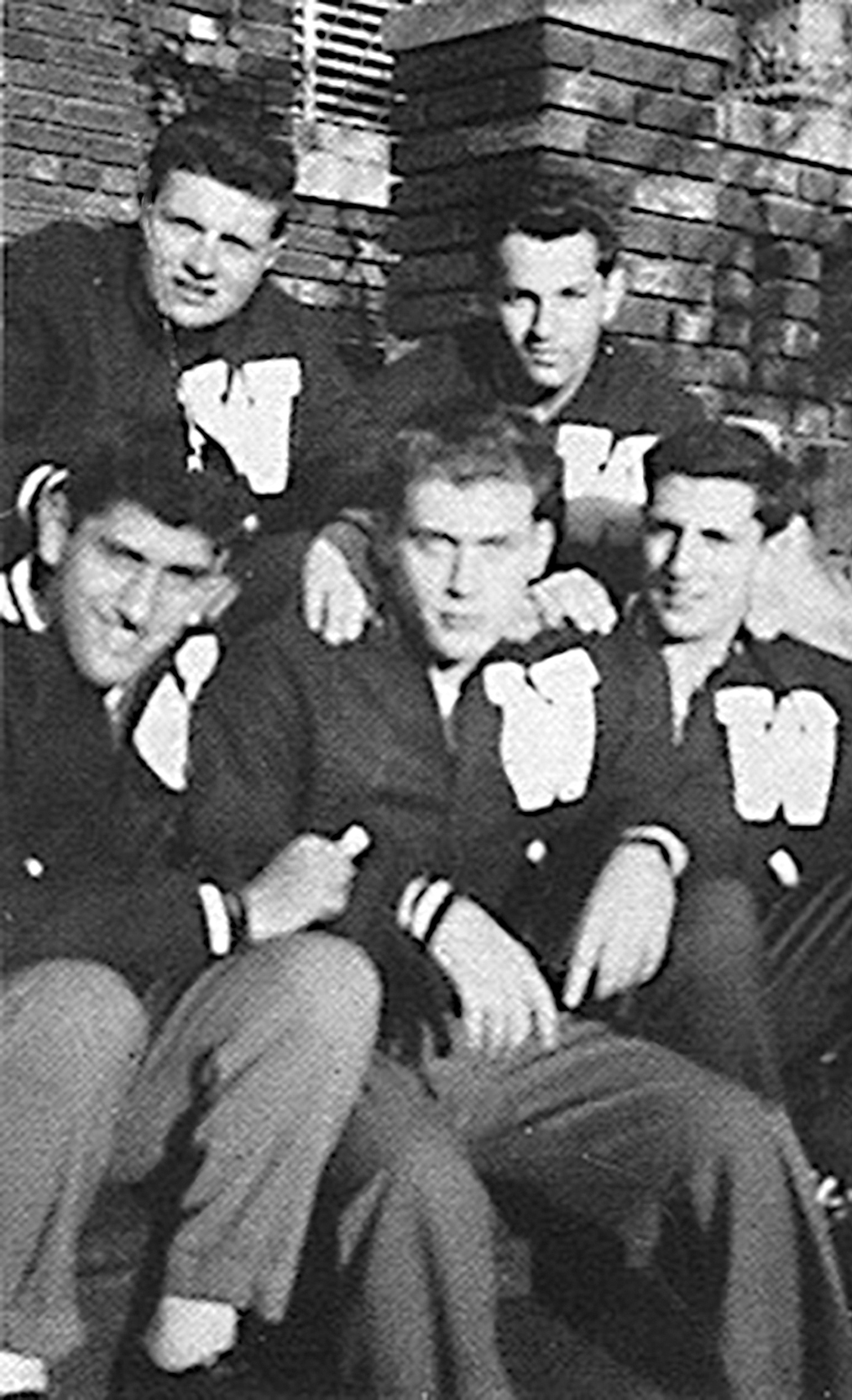
Many kids formed into self-governing units, platoons as hierarchical and tradition-bound as those in the military. This was your family outside your family, your corner brothers, your tribe. Though they were known as gangs, their jackets identified them as SACs, social athletic clubs. Mostly they hung around, talking about school and girls, or played sports. Some clubs fielded a basketball, baseball, roller hockey, and football team. SACs tended to cohere by ethnicity. There were Black gangs, Asian gangs, Irish gangs, Italian gangs, and Jewish gangs, each associated with a particular corner. My father was a member of the Warriors, a gang that rendezvoused at Eighty-Sixth Street and Bay Parkway.
The name was opportunistic as well as fierce. There was a Pontiac dealer in Bensonhurst, and as anyone could tell you, Pontiac’s logo was an Indian head. By swiping signs from the lot, the boys furnished their bedrooms and interior spaces with professional-grade insignia. To the members of other local gangs—the Screaming Wizards, the Coney Island Canaries—the name seemed either aspirational or ironic. Though most of the Warriors would defend themselves in a pinch, few of them were battlers. My father, as a leader of the gang, can stand for the typical Warrior: even then, he was less Achilles than Odysseus, a wily man, a clever navigator who’d rather think than slug his way across the archipelago.
I was raised on stories about the Warriors. The names of the members are a lyric in my imagination, summoning stoops and basement rooms, meetings in lamplight and confessions in candlelight, air shafts and alleys, clotheslines hung with Hawaiian shirts, polyester slacks, and candy-colored socks, images from a childhood more varied and interesting than my own.
Inky, Sheppo, Bucko, Who Ha, Ben the Worrier, Iron Lung, Gutter Rat, who was called that even by his own mother—“Hey, Gutter Rat, time for dinner!”—Zeke the Creek the Mouthpiece. Inky because he drank a bottle of ink on a dare. Sheppo because he looked like a lost Marx brother. Bucko because his real name was Buckholtz. Who Ha because, one night, when asked a question, he said, “Who?” then, when that question was repeated, he said, “Huh?” His real name was Bernie Horowitz. Ben the Worrier because of his crippling neurosis. Iron Lung because he could swim five lengths at the community pool on a single breath. Gutter Rat because he looked like a gutter rat. Zeke the Creek the Mouthpiece because Zeke was short for Zeiger, because Creek rhymed with Zeke, because he announced events on the corner like a paid radio mouthpiece.
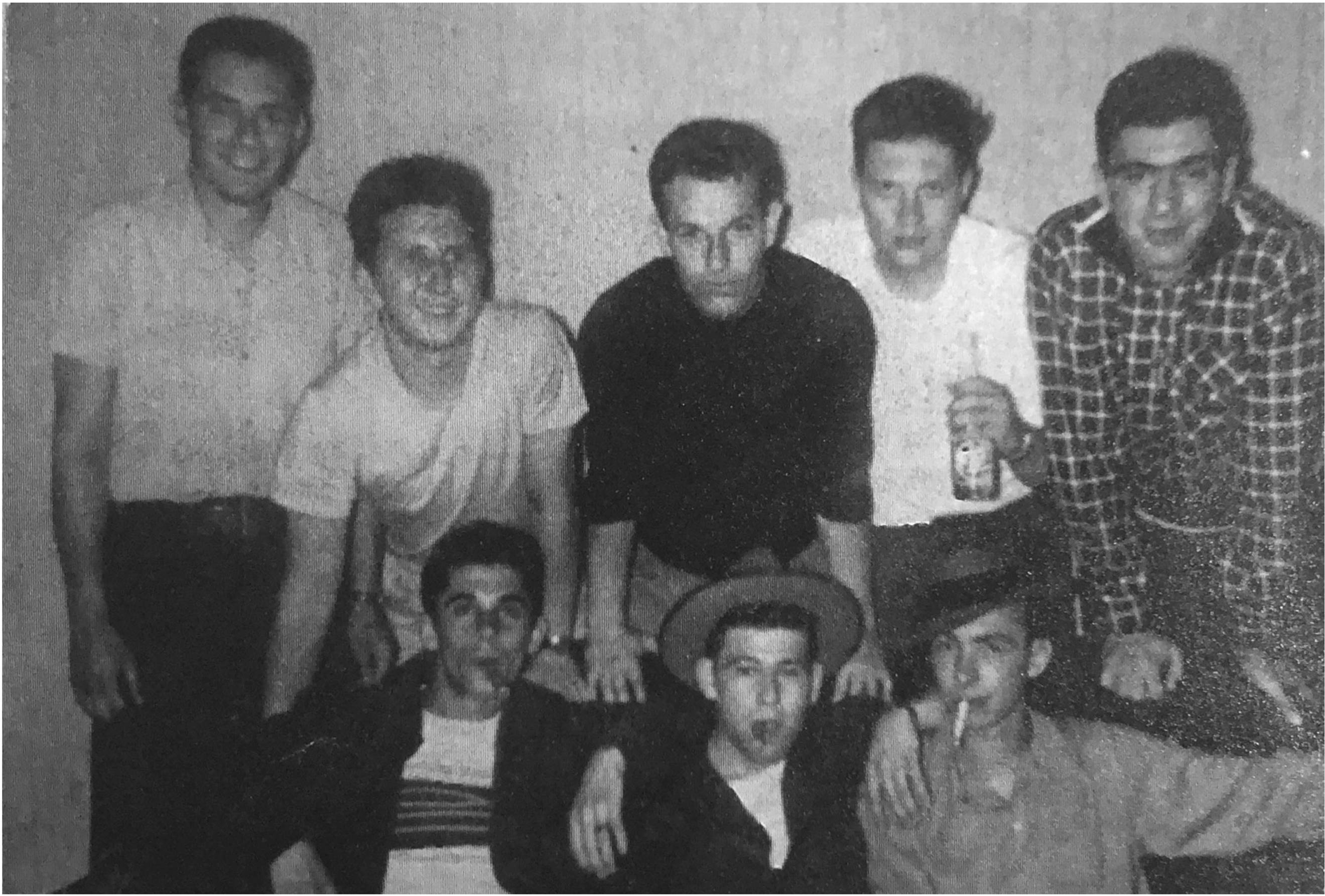
Herbie first met Larry Zeiger at school when they were no more than nine years old. As potential incorrigibles, the boys had been deputized by the administration—this is called co-opting—fitted with orange sashes, and sent to work as crossing guards on the corner of Seventy-Sixth Street and Nineteenth Avenue, near the side entrance of school. Larry, whose father had recently died of a heart attack—he’d owned a bar in Bay Ridge—searched for a replacement in everyone he loved, starting with fourth-grade Herbie, who was more than happy to advise, guide, and lead Larry into and out of trouble. They started debating in the street, arguing. Larry said that crossing kids on their way to school was busywork, a joke.
Herbie disagreed.
“It’s a position with real power,” he said.
After a few nickels were wagered, Herbie walked to the middle of Nineteenth Avenue and held up his hand, bringing traffic to a stop.
“It’s as simple as this,” Herbie said over his shoulder.
He was proving what would become a lifelong principle: most people are schmucks and will obey any type of authority, even if it’s just a nine-year-old in an orange sash. (As he’d say later in lectures, “Power is based on perception; if you think you got it, you got it, even if you don’t got it.”) Cars and trucks were soon backed up for blocks. There was honking and cursing. Several people got out of their vehicles. A teacher came to investigate. Larry and Herbie were sent to the principal, who tore off their sashes with ceremony. A lifelong friendship had been born.
No. 5
Taking a nickname was an act of ritual importance in the neighborhood, akin to a bar mitzvah or christening. It was a step away from home, a step into your life in the pack. As I said, my father was called Handsomo. He stares with confusion when asked how he got that name, then says, “I’m a good-looking man.”
“He was good-looking compared to the other Warriors,” Larry (a.k.a. Zeke) told me. “He had black hair and green eyes, a very unusual combination on Eighty-Sixth Street and Bay Parkway. And look at some of the old clubhouse pictures. We were a homely group.”
When I asked my grandma Esther—my father’s mother—the same question, she said, “Handsomo? I know that’s what he asked the boys to call him.”
The Warriors wore maroon jackets with white letters. The jackets were reversible, worn inside out—white with maroon letters—to dances, weddings, going-away parties, and graduations. These jackets hung from hooks by the door of the clubroom on Seventy-Ninth Street in Bensonhurst, the basement of Bernie Horowitz’s house. Who Ha lived upstairs with his mother, father, sister, and grandmother, known to everyone as Bubba. A glow-in-the-dark Indian was painted on the wall of the clubroom. The light was dim, the radio tuned to Sinatra, but what the old Warriors really remember is the sound of Bubba, who, per doctor’s orders, was rolled across the floor upstairs twice a day to improve her circulation.
The clubhouse had been furnished slowly, piece by piece, via thievery.
Larry: “Bucko’s father was a mechanic.”
Herbie: “He had extra coveralls.”
Larry: “We’d each put on a pair, then go from apartment house to apartment house.”
Herbie: “When the doorman came out, we’d tell him…”
Larry: “Or super. Sometimes, it was a super.”
Herbie: “… that we’d been hired to take the couch for reup- holstering.”
Larry: “Sometimes the super would hold the door for us.”
Herbie: “I’d slip the guy a dollar on the way out and say, ‘Thank you.’”
No. 6
The glory of Carthage survives in a single story. That’s how history works. It’s not what happened, but what remains when everything else has been forgotten. The Warriors survive in two stories, which Zeke the Creek, who later changed his name to Larry King, told, elaborated, and retold on the radio until they’d become legends. In 1994, one of these stories was written up by Alec Wilkinson and published in The New Yorker as “The Mouthpiece and Handsomo.” But to us, it’s always been “The Moppo Story.”
It starts with Herbie, Larry, and their friend Brazie Abbate, who later became a brain surgeon, picking up Gil Mermelstein—Moppo, because of his unruly hair—for the first day of eighth grade. Moppo’s house was dark; a cousin was waiting on the stoop. He said Moppo, who’d always been sickly, had been diagnosed with tuberculosis and had gone with his parents to Arizona for the treatment. “As soon as I’m finished closing the house,” the cousin said, “I’m going in to tell the school.”
This is where the story forks, where, though it could have gone this way, it went that way instead.
“Let us help,” Herbie told Moppo’s cousin.
“How?”
“We’ll tell the school what happened. We’re going there, anyway.”
“Really? That’d be great. Thank you.”
Herbie, Larry, and Brazie walked on in silence.
In Larry’s version, Herbie then says, “I’ve got a good idea for how to make a little money.”
Larry: “Yeah? What?”
Herbie: “We go to the front office; then, instead of telling them Moppo went to Arizona, we tell them Moppo died. Then we go around and raise money for a funeral wreath.”
Larry: “That’s crazy.”
Brazie: “What happens when Moppo comes back?”
Herbie: “When will that be? Next fall? We’ll be in high school. Dr. Armor”—Dr. Gene Armor was the principal of P.S. 128—“won’t be able to do anything.”
And so they went to the front office and told the staff that Gil Mermelstein was dead, then told their teachers and classmates, then went from room to room raising money, then went to Coney Island and spent the money on hot dogs and rides.
From the top of the Wonder Wheel, you can see every roof in Brooklyn.
Herbie’s version is more innocent. He says that it all started when a kid asked him why Moppo wasn’t at school. Herbie told him about the tuberculosis, but the kid didn’t believe him, told him to stop joking, and asked again, “Where’s Moppo?” Herbie told him a second time—tuberculosis, Arizona. Anyone who knows Herbie also knows he has a rule. If you ask him a question, he will tell you the truth. If you ask again, you will again get the truth. But if you ask a third time, he will tell you whatever he thinks you want to hear. So, when the kid asked what happened to Moppo a third time, Herbie said, “Moppo is dead.”
“A few hours later, the story was everywhere,” Herbie says. “That’s really how it began. I didn’t have some big plan. I just played the hand I’d been dealt. And yes, we went to the office, and yes, we told them Moppo died. The money, the funeral wreath … all that’s true.”
Days turned into weeks. Autumn became winter. By the spring, they’d forgotten all about Moppo in Arizona.
Then came the call from Dr. Armor, the official summons from class.
Herbie, Larry, and Brazie whispered as they waited outside the office.
Brazie: “You said we’d be in high school before anyone found out.”
Herbie: “Let’s see what he says.”
Larry: “He’s going to expel us.”
Herbie: “No one’s getting expelled.”
Herbie was right. Dr. Armor did not scold or punish the boys, but praised them—for the kindness they had shown their dead friend, how they’d spoken up for him, raised money for a wreath, and laid that wreath on his grave.
“You’re the sort of young men we want in this school,” he said, “which is why we’ve decided to create a new honor, the Gil Mermelstein Memorial Award, which will be given each spring to a student or group of students who have earned the honor through an act of service. You three will be the first winners of the Gil Mermelstein Memorial Award. Tell your parents. There will be an assembly in the auditorium with members of the press invited. The high schools get attention for sports. Here’s our chance to shine.”
Larry sat on the front steps after school, face in hands, weeping. Brazie had gone from fear to anger. He was furious with Herbie. Who remained calm. “What’s changed?” he asked. “Moppo is still in Arizona, and we’re still in Bensonhurst, three weeks from graduation. They’re giving us an award? Great!”
Larry: “What do we do?”
Herbie: “Nothing. As far as the school’s concerned, Moppo is still dead.”
The entire student body—more than a thousand kids—gathered in the auditorium for the ceremony. Dr. Armor, in a brown tweed suit with Brylcreemed hair, spoke from the podium. Herbie, Larry, and Brazie sat onstage beneath a banner: “The First Annual Gil Mermelstein Memorial Award.” A reporter from The New York Times had turned up with a photographer. Meanwhile, having made what Larry calls “the most remarkable recovery in the annals of tubercular medicine,” Moppo was walking the halls of P.S. 128, wondering where all the people had gone. A lady in the office sent him to the auditorium.
Larry: “There were two ways into that auditorium, through a side door inside the school or through the big front doors that led from Eighty-Fourth Street, meaning you had to go outside, walk around, then come back in. That day, for whatever reason, Moppo took the outside doors, which clanged as they slammed shut.”
Herbie: “The kids in back turned around to see who’d come late. Most of them recognized Moppo right away and immediately knew what we’d done, and started laughing.”
Larry: “The laughter spread through the auditorium, making its way toward the stage. Dr. Armor looks up. But he has no idea who Moppo is and doesn’t know what’s going on.”
Herbie: “Moppo wasn’t the smartest person in the world, but he knew what ‘memorial’ means.”
Larry: “It means you’re dead.”
Herbie: “And he knew you did not want your name next to it.”
Larry: “Moppo froze.”
Herbie: “No one knew what to do.”
Larry: “Herbie jumps to his feet, cups his hands around his mouth, and shouts, ‘Go home, Moppo. You’re dead!’”
Dr. Armor sent everyone back to class, tore down the banner, smashed the award plaque, then told Herbie, Larry, and Brazie to wait in his office. The Times reporter was there, too, asking questions. Dr. Armor sat them in the chairs across from his desk, stared at them for a long, uncomprehending moment, then blew his stack. His voice could be heard all over the building: You’ll never go to class again! You’ll never play sports again! You’ll never graduate from a school again! You’ll never get this, you’ll never earn that! You’ll be expelled, incarcerated, blah, blah, blah.
Herbie raises his hand and says, “Wait a minute, Dr. Armor. You’re making a terrible mistake.”
“What did you say?” asks Dr. Armor.
Larry told the rest of the story in books, on the radio, on television, and at every variety of Warrior reunion and family function.
“Herbie looks across the desk, calm as can be, and says, ‘Slow down, Dr. Armor. Let’s talk this through. Yes, we did a very bad thing. We admit it. But if you expel us, there will be a hearing before the Board of Education. That’s automatic. At that hearing they’ll want to know why you took the word of three idiot kids that another kid was dead, and why, to confirm it, all you did was call the house, get a disconnect message, and mark the kid’s card deceased. Yes, we’ll be expelled, but you’ll be fired. You’ll never get another teaching job in New York.”
Dr. Armor sat back and groaned. Larry described his demeanor as “totally whipped.”
Larry always spoke of this as “Herbie’s first negotiation.”
“[He] agreed not to suspend us, and we talked to the reporter and said that what we had done was stupid and we were returning the money, and he agreed it was really more of a Daily News kind of story,” Herbie told The New Yorker, “and we went to Moppo’s house that afternoon to try to explain what had happened, but to this day I don’t think he really understands how we could have said that he was dead.”
This experience let Herbie test a theory he’d been working on since his crossing guard days: life is a game, and to win, you must consider other people as players with as much at stake as yourself, if not more. If you understand their motivations, you can control the action and free yourself from every variety of jam. Focus less on yourself and more on others. Everyone has something at stake. If you address that predicament, you can move anyone, even a junior high principal, from no to yes.
Decades later, while Herbie was telling the Moppo story on the radio with Larry, Gil Mermelstein called the station, and a producer put him on the air. Larry welcomed him and had enough time to ask just a few questions before Herbie interrupted, saying, “Go home, Moppo, you’re dead,” then pressed the disconnect button. That was the last time Herbie and Larry ever spoke to Gil Mermelstein.
No. 7
The Second Story:
November 1951. Herbie was a seventeen-year-old high school senior with his own car, a Ford Fairlane. He and Larry were arguing on the corner of Eighty-Sixth and Bay Parkway with a kid named Sandy. This was Sandy Koufax, already a neighborhood athletic legend, known not for his pitching but for his passing, rebounding, and shooting; he was the youngest starter on the Jewish Community House’s all-star basketball team. People still talk about the night the JCH all-stars hosted the New York Knicks for charity. Koufax did not merely dominate Harry “the Horse” Gallatin, the Knicks’ six-foot-six center, but humiliated him.
Sandy was telling Herbie and Larry about a trip his family had taken to New Haven, Connecticut, where they’d been served “three scoops of ice cream for 15 cents” at a Carvel.
“This immediately started a violent argument,” Larry wrote in his book Larry King, “with Sandy insisting he did get three scoops for 15 cents and Herbie and me arguing that that was impossible.”
Within moments, money was in the offing. Herbie bet $5 and Larry bet $3 that a person could purchase three scoops of ice cream for 15 cents in New Haven or anywhere else. Of course, the only way to settle the bet was to drive to New Haven.
They retrieved Herbie’s car, then went to Seventy-Ninth Street to pick up Who Ha, because, Larry told us, “you just couldn’t make that kind of trip without Bernie.”
“Bernie was at dinner with his parents, Dora and Nathan, when we got there,” Herbie said. “We asked him to go to Carvel, but did not tell him that the Carvel we had in mind was in New Haven, Connecticut. There must’ve been fifty Carvels in Brooklyn alone. There was one a block from Bernie’s house. Bernie had this weirdly formal way of talking. And he says, ‘Mother and Father, here is what I am going to do. I am going to go with Sandy, Larry, and Herbie to Carvel, and since we have eaten dairy, it will be kosher. I will just have some ice cream, then I will come right home.’”
They got in the car and headed north, driving in silence across the borough—all those windows, all those lives. The white tiles of the Brooklyn–Battery Tunnel flashed across the windshield as they crossed into Manhattan. They merged onto the West Side Highway, then followed it past the city, across the Harlem River, and into the Bronx. It was not until Herbie turned onto the Merritt Parkway, where signs pointed to New England, that Who Ha sat up in the backseat and said, “Hey! Where the hell are we going? I told my parents I’d be right home.”
He was angry, but forgot his anger when Larry told him about the three scoops.
“Impossible,” said Who Ha, who put four of his own dollars into the pot.
New Haven was closing down when they arrived. The streets were empty, the stores dark. It started to snow, at first a few flurries, then flakes, a freak November storm. The lights were still on in the Carvel. A man stood behind the counter, looking out at the snow.
Herbie parked across the street, then sat arguing with his friends.
Larry: “If we just go in there and ask how much for three scoops, he’ll know something’s doing.”
Who Ha: “Yeah. Maybe Sandy set it all up in advance. Maybe this ice cream guy has a piece of the action.”
It was decided that Herbie should go in alone, put fifteen cents on the counter, and say, “Give me that much.”
Five minutes later, Zeke, Who Ha, and Sandy were sitting in the car, watching Herbie eat three scoops—strawberry, chocolate, vanilla—as he talked with the ice cream man on the other side of the big window.
Herbie raised his cone when his friends came in, saying, “Sandy wins.”
After several rounds of ice cream, the counterman asked what it was all about.
“We don’t usually get a group of kids having a feast at closing time in the middle of a snowstorm,” he explained.
“The guy found it hard to believe that we drove all the way from Brooklyn just to settle a bet,” Larry explained later, “but what he found even more incredible, and the reason, he now realized, that he was going out of business, was that he’d been giving away an extra scoop with each order.”
Two inches of snow had fallen by the time the boys were back in the car.
“Let’s drive around,” said Larry. “I’ve always wanted to see New Haven.”
They went past the Gothic spires of the Yale campus in the snow, past the parks and the monuments, past the football stadium, past the plows lined up on Chapel Street. As they turned onto Butler Street, which would take them back to the Merritt Parkway, they suddenly found themselves in a strange middle-of-the-night traffic jam, cars in front and cars behind, people honking, hanging out windows, waving signs. “I’m following ’em,” said Herbie, swinging around to join the parade, which wound through the city and ended at the community center, where everyone parked and went inside.
It was 1:00 a.m. on a Tuesday in November. Election Day. Herbie, Larry, Who Ha, and Sandy had stumbled on a party for volunteers who’d campaigned for Richard Lee, who would serve eight terms as mayor of New Haven before moving to the U.S. Congress.
Sandy stood against a wall in the back as Herbie and Larry worked the crowd. Who Ha was at the buffet table, filling his pockets with donuts.
Pulling Larry aside, Sandy said, “Do you know what Herbie’s doing? He’s going around, telling all these people that you’ve been the number one campaigner, that no one’s worked as hard as you.”
Larry, trying to even the score, then went around, talking up Herbie.
The campaign manager stood up and thanked the workers, then shaded his eyes, looked across the crowd, and asked, “Is Zeke out there? All night I’ve been hearing about the great work this young man Zeke has done for us. Stand up and introduce yourself, Zeke.”
Larry stood, waved, then introduced Herbie, saying, “He’s the real hero.”
“Herbie gets up and starts talking,” Larry said later. “He talks for maybe fifteen minutes. He does the history of America, Paul Revere’s Night Ride, the Declaration of Independence, and the U.S. Constitution. He whipped the crowd into a frenzy. Then said, ‘I give you not just the next Mayor of New Haven, but the next President of the United States: Richard Lee.’”
They got back to Brooklyn at 4:00 a.m., the Ford Fairlane fishtailing through the snowy intersections. There was a foot of snow on the ground. The houses and buildings were dark. In the entire borough, a single light glowed: Who Ha’s living room, where Dora and Nathan were peering through the curtains into the street.
Nathan, in robe and slippers, met Herbie’s car at the curb. He was red with anger. He lined the boys up on the sidewalk, then, walking before them, poked them one after another in the chest, saying, “Bum. Bum. Bum. You’re a bum. You’re a bum. You’re a bum. Ten years!” He shouted, “Ten years! That’s how much of my life you’ve taken tonight.” But when he finally let Who Ha explain where they’d gone and why, he said, “Three scoops for fifteen cents? That’s impossible.”
Here’s what Herbie learned in New Haven: if you say something long enough and loud enough and with enough confidence—“No one has worked harder for this campaign than Zeke”—people will believe you, and once they believe you, you can take as many donuts as you want.
No. 8
Herbie started college as a commuter student at NYU. He did not do well. In fact, he bombed. He wanted a campus like those he’d seen in the Andy Hardy movies, or read about in the Booth Tarkington novels, or glimpsed in New Haven in the snow that night, but his days still started and ended in Bensonhurst. It was the same friends on the corner of Eighty-Sixth Street and Bay Parkway, the same Warriors in the same jackets on the same basketball courts and at the same parties. He tried to give the scene a skip, but the boys would turn up at his apartment, ring the buzzer, then stand on the curb shouting his name. “Yo, Herbie! We’re short a player. Do you want us to forfeit?”
Caught in the tide of old friends and habits, he began to skip homework, ditch class, blow off exams. Halfway through freshman year, his report card was a bloodbath of red ink. Meanwhile, he was consumed by fear. Forty thousand Americans were killed in Korea in 1951. Another hundred thousand were wounded, many grievously. It was the worst year of the Korean War. College alone stood between Herbie and the draft. He’d be called up if he failed out, possibly sent to Korea, possibly killed. He could not stop imagining it—his body in every state of defilement and decay, smoke on the fields, the thump of artillery shells, a wave of Chinese soldiers, a mushroom cloud in the distance. In the end, he realized the only way to stop worrying was to get it over with. He quit school and enlisted in the army. He was given two weeks to report. Those last few days were a blur of goodbyes, but he spent his final night alone in his bedroom. The windows were open, a warm breeze blowing. He could see the lights on the avenues, storefronts, cars on the parkway; he could hear ships in the Narrows. This was Brooklyn as it would never be for him again. The past is not what happened but how it felt. He owned a single LP, Frank Sinatra’s Dedicated to You, which he played again and again as he waited for morning. The songs on that album—“The Moon Was Yellow,” “None but the Lonely Heart,” “Why Was I Born?”—put him into a blue mood, a melancholy funk. “I listened until dawn,” he told me, “then said goodbye to my parents, went to Whitehall Street, and boarded a bus for New Jersey.”
No. 9
Fort Dix is about twenty miles south of Trenton. Named after an old general, the grounds cover 42,000 acres of pine scrub. To Herbie’s eyes, it was exactly like an army base in a movie: perimeter fence, checkpoints, mess hall, barracks, obstacle course, shooting range. First came the physical and mental exams, the haircut, the issuing of uniforms, the induction with right hand raised: “I, Herbert Allan Cohen, do solemnly swear that I will support and defend the Constitution of the United States against all enemies, foreign and domestic; that I will bear true faith and allegiance to the same; and that I will obey the orders of the President of the United States and the orders of the officers appointed over me, according to regulations and the Uniform Code of Military Justice. So help me God.”
Families were allowed to visit on weekends. Herbie’s parents, uneducated Polish émigrés, took the bus down from Borough Hall. Herbie’s division consisted mostly of New Yorkers, many of them Jewish. There was a rabbi at Fort Dix, an old man with a long gray beard who wandered among the relatives, answering questions. Shortly after Herbie’s induction, the rabbi addressed the fears of some of the families at a Friday night service. Speaking with a thick Yiddish accent, he said, “I have talked to your commanding officer. A good man, a mensch. I asked where you will complete your training, and he told me and promised me that you boys will be staying right here at Fort Dix. So, tell your mommies and your poppies not to worry, because you will be right here in New Jersey.”
The sergeants came through the barracks at three the next morning, banging garbage cans to wake the grunts, who were marched to an airfield, loaded on transport planes, and flown to Camp Chaffee, Arkansas, where their real work began.
Herbie was assigned to a southern division at Camp Chaffee. From then on, he’d be a Yankee among rebels, a Jew among Gentiles, a Brooklyn wiseass among rednecks. “It was only then that I began to understand this country,” he told me later.
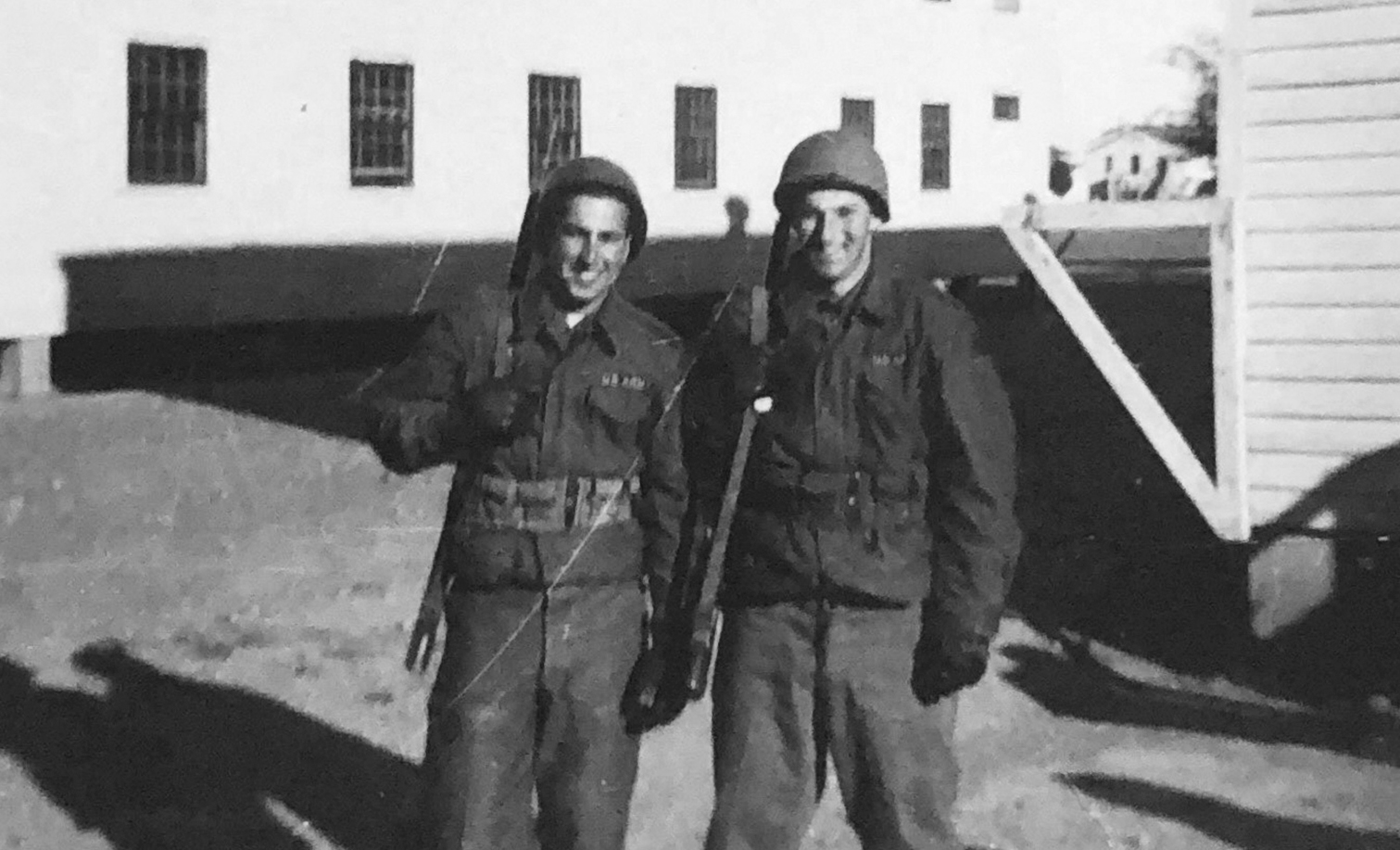
Camp Chaffee is in the low hills west of Hot Springs. The first weeks there were tougher than anything Herbie had ever experienced. He realized he had hidden reserves in those weeks, a strength that even he, or especially he, had been unaware of. He realized he was better than nobody, but also that nobody was better than him. He learned how to pack a bag, make a bed, march in line, sprint in formation. He learned how to hike, reconnoiter, build a fire, fight with his hands. He learned how to live out of a sack and keep his gun clean. Now and then, a sergeant dumped the contents of his foot locker on the floor, clicked a stopwatch, and timed how long it took him to get it all repacked. He learned how to shoot a revolver and assemble a rifle in the dark. He learned how to hit both kinds of targets—moving and still. He learned how to be a soldier.
There were classes and tests like at school, but it was okay to be a little dumb in the army. Maybe it was even preferable. Very dumb was a problem, but very smart was worse. Maybe that’s where Magna Para went wrong: he was too smart for his own good. Herbie hated Magna Para at first because Magna Para made everyone’s life difficult, but he’d come to admire him by the end of basic. Herbie enlisted, but Magna Para had been drafted against his will and refused to accept the dominion of officers. He was the man who cannot be broken.
Judging by accent, Magna Para came from the Ozarks, a hollow so deep in the hills the sun could hardly penetrate, the kind of place where an extravagant feast is rabbit and moonshine. The origin or meaning of that name—Magna Para—remained a mystery, another strange aspect of what Herbie considered the inscrutable South.
Magna Para finished every drill last, lost every race. Even when running, he seemed to be standing still. Standing at attention, he seemed to slouch. A short man with ears like pitcher handles, Magna Para radiated ease. He was lectured and threatened, made to stand in the rain, made to do push-ups and sit-ups, run and clean, but nothing seemed to bother Magna Para, ruin his mood, scare him. Always that dopey calm: he was a holy fool, either enlightened or demented, or possibly both.
In the second month of basic training, the sergeant began waking the men in the middle of the night several times a week. Curses, whistles, baseball bats on bed frames. They were told to get up, get dressed, and assemble in formation in the courtyard in less than three minutes. If they failed, they were sent back to do it again. It was the same every time: the men were in line in the yard being inspected when Magna Para appeared at the top of the stairs, shirt untucked, boots untied, rifle wrong. The sergeant spotted him with surprise at first, then chased him across the pavement, yelling, “Magna Para? Is that you, Magna Para? Am I dreaming, Magna Para? What is wrong with you, Magna Para? Everyone runs, you walk! Everyone lives, you gonna die! Do you understand me, Magna Para?”
Magna Para did this every time the whistle blew—same cards, same bluff. It nearly drove the sergeant insane. He’d push Magna Para, throw him to the ground, kick him in the ribs, but he always got up smiling. One night, because of Magna Para, the platoon had to get dressed and down the stairs fifteen times. Magna Para was given a spoon and told to crawl beneath the barracks and dig his own grave. They could hear him whistling to himself as he worked down there. One morning they woke up and Magna Para was gone—gear cleared out, locker empty. No explanation. It was as if Magna Para had never existed.
Herbie did see Magna Para once more. It was in the woods a few weeks after basic, miles from the barracks. Members of the platoon were taking part in an elaborate war game. “I heard someone calling me,” Herbie said, “and I’m thinking, who the hell knows me way the hell out here, and I look over, and there, in a cage in a clearing, in a weird kind of prison cell, is Magna Para, only he doesn’t seem to know he’s in a cage. He’s just happy to see us. He says, ‘Hey, guys! How ya doing?’”
Magna Para was the first holy fool Herbie ever met, but would not be the last. He turned over his example and his reaction to power for the rest of his army days and for the rest of his life. Magna Para unintentionally taught Herbie that weakness can be strength, and ignorance, feigned or real, can be the best response to authority. Magna Para lived in our lives as a legend, something to think of at bedtime, but, as with most of Herbie’s stories, we were meant to take away a serious lesson: the fool knows something hidden from the wise man.
No. 10
“We waited anxiously for our deployment orders,” Herbie told me. “It was like the lottery, only in this lottery you could also lose. Being sent to Korea—that was losing. Or some flyspeck Arctic atoll. Japan was a mixed bag, a good hitch but a little too close to the fighting. If Korea blew up into World War III, the guys in Japan would be the first to go.”
Herbie drew a ticket to the European theater—a winner. He’d be part of the U.S. occupation forces that have been in Europe since the Nazi surrender in 1945. Of course, there was danger there, too. If the Russians invaded the West, as many expected, America’s European soldiers would be in the thick of the fighting.
Herbie was flown to New York, then loaded on a troop carrier anchored in the Hudson. When the carrier passed through the Narrows, he could smell Brooklyn, hot dogs, baked goods, and grease. It was ten days across, a week and a half of swaying in his bunk, lining up for meals, staring at the sea. There was a mid-ocean squall, the ship tossed like a cork. He felt weak when he disembarked in Bremerhaven, a German port on the North Sea. He lived in a base in town while awaiting his next set of orders. He hoped to be stationed in France. He imagined walking the streets of Paris, a desk job, wine in a café at night. He’d taken classes in business administration at Camp Chaffee and had been accordingly classified “Clerk/Typist.”
When a sergeant asked if any of the men spoke a foreign language, Herbie raised his hand. He’d passed high school French and claimed he was fluent. It’s not lying if you believe it. He spent a day taking language exams, which turned out to be the same day that service postings were selected and issued. Returning to the barracks, he learned that everyone had gotten an assignment but him. The ideal was to be posted in a big city, and, barring that, a small city, and, barring that, a large town. After learning he’d failed his French test, Herbie received his posting: a small town in central Germany called Bad Kissingen.
No one had heard of it.
He boarded a train with thousands of other soldiers. Most exited at the first few stops. Hannover, Göttingen, Northeim. Only a few dozen remained when the train reached Kassel, Germany. The sun was setting on the fields. The car was filled with pink light. Herbie stared out the window, thinking of his mother’s family. They died in Poland. He drifted into a dreamless sleep. He woke with a start, jumped up in a panic, and went to find a conductor. They’d been traveling east for hours. How much farther could they go before crossing into the Soviet Union?
Several soldiers got off in Fulda, the last big town. The station had been destroyed in World War II. The ticket takers and bag handlers worked out of a temporary shelter while a new station was being built.
Herbie had to change trains in Würzburg. He waited in the dark with another soldier, a black private from Carthage, Mississippi, then boarded a smaller train—a funicular—that took him farther east. The soldier from Mississippi got off in Schweinfurt, and Herbie continued alone to the last stop, the ancient resort town of Bad Kissingen. There were jeeps in the street, and a single artillery piece pointed at the sky.
For centuries, Bad Kissingen—“Bad K” to Americans—had been a summer retreat for German royals and aristocrats, a spa in a southern spur of the Rhön mountains. Bad K assumed military importance during the Cold War. Fulda was the best mountain pass from East Germany to West Germany. In the event of a war, the Russians would drive their tanks through the valley, which on military maps, circled in red and marked off with arrows, was identified as the Fulda Gap. In short, Herbie, who dreamed of a posting in the 13th arrondissement, found himself at ground zero of the coming apocalypse.
The border ran through the fields east of town. You couldn’t miss it for the barbed wire, pillboxes, and gun towers. A patrol road was trafficked by every sort of armored vehicle. The Soviets had the Americans tremendously outgunned at Bad K, with thousands of Russian tanks stationed across the line. The GIs in these forward units—the front line of America’s European army—served as a kind of human trip wire. They were not expected to stop the Soviets but to merely slow them down, giving the Allies time to mobilize. Most training at the Fulda Gap was in guerrilla tactics, because, in the event of war, the men stationed there would soon be dead or behind enemy lines.
Herbie was confused by the posting. Did someone have it in for him? Had he pissed off the wrong lieutenant? There were no more than two hundred Americans at Bad Kissingen, all of them, except Herbie, from the Deep South. They were tankers, sharpshooters, demolition men. He spoke with a higher-up the next morning, explaining himself by showing his papers and saying, “There’s been a mistake. I don’t belong here. I’m a clerk/typist.”
This man stapled a new page on top and said, “Your classification has been changed.”
“To what?”
“Weasel Driver.”
He’d been assigned to operate the rear gun of a half-track—a Weasel—that patrolled the border. He sat behind the big cannon, finger on the trigger guard, barrel pointed at the sky, a new member of Alabama’s Twenty-Third Infantry. He was the only soldier from New York in Alabama’s Twenty-Third, the only Sinatra lover, the only sophisticate. “No, no anti-Semitism,” he said later. “They didn’t even know what a Jew was.”
In the barracks, he slept between a guitar-playing yokel—sixty years later, he still catches himself singing “I Dreamed of a Hillbilly Heaven”—and a bed wetter who cried after Taps. Everyone ignored the kid, but Herbie sat with him, talked to him, and asked him what was wrong. The kid confided to Herbie: he’d lied about his age to the enlistment officer. “I’m only fourteen years old,” he whimpered. “I want to go home.”
Herbie brought the kid to the Commanding Officer, a man Herbie refers to only as the Colonel, and explained the situation. Two days later, the kid was gone. That’s how Herbie met the man—the Colonel—who’d raise him to a position of importance. It was the Colonel who later put Herbie in charge of “Courts and Boards,” the unit that oversaw trial and punishment on the base. It was often Herbie alone who’d decide who was arrested and who was freed at Bad K, who was sent to Leavenworth and who went home, all because he’d been the only grunt decent enough to sit with the bed wetter and ask, “What’s wrong?”
It was not the East Germans who worried Herbie on the border, but some of his fellow Americans, crazy rednecks who’d declare their intention to “kill a Commie,” then shoot up the border fence or stitch an enemy tower with rifle shells. Several soldiers kicked five bucks a week into a pool to be awarded to the first man to “kill a Commie.” Now and then, East Germans returned fire, turning what began as a boast into a gunfight. Herbie would crawl under the Weasel on such occasions, cursing as bullets punctured his tires. An exchange of messages would follow, the situation de-escalate, the incident appear in the local papers as a “minor clash,” the sort not uncommon on hostile frontiers.
The army brass was at first amused, then annoyed, then concerned. Esprit de corps is one thing, but the hotheads of Alabama’s Twenty-Third seemed intent on starting World War III. What do you do when the drink is too strong? Add ice or a mixer, which, for Bad Kissingen, was a brigade of soldiers from New York’s Eighth Infantry. These men arrived ten months after Herbie, hundreds of grunts from Brooklyn, Long Island, Westchester, and Putnam County. The barracks filled with the sound of Johnny Mathis and the aroma of drugstore cologne. Herbie was greatly relieved by this development. It meant he wasn’t going to die in Germany.
Herbie’s best friend in those years, an army buddy right out of an old episode of I Love Lucy, arrived with the Eighth Infantry. His name was Tommy DeLuca, and he was a tough little pug from Gun Hill Road in the Bronx. We heard about Tommy DeLuca throughout our childhood—another Tommy DeLuca story!—but did not meet him until thirty years after my father was discharged. Tommy DeLuca had been searching for Herbie for decades, calling every Herbert, Herbie, Herb, and H. Cohen in every big-city phone book in America. In 1996, he finally dialed the right number. When he introduced himself, my mother, who had met DeLuca a few times in New York in the early 1960s, screamed, “Tommy!”
He was carrying an old photo when he came to visit. It showed Herbie and a bunch of other soldiers at a German night club at closing time. My father reclines in a black-and-white-checked short-sleeve shirt, a cigarette glued to his lip in the manner of Robert Mitchum. Tommy is at his side, coat and tie, chin down, eyes focused on the camera. The table is covered with bottles and cocktail glasses. You can almost hear the laughter. You can almost smell the cigarette smoke. “That’s me and your pop,” DeLuca said, as if he could hardly believe it himself. “That’s how we used to be.”
That was the best time of Tommy DeLuca’s life. There was neither muddle, gray area, nor confusion. He knew exactly when to get up and when to go to sleep, how to dress and what to do. He formed a club in Bad K, an invitation-only organization he called the Waste. As president of the Waste, DeLuca scouted and recruited members and appointed chairmen and officers. He devised rituals, too, secret handshakes and secret knocks, secret symbols and insignia and an esoteric initiation ceremony—here is the candle, here is the feather, here is the skull; do you agree to place this brotherhood before all others?
DeLuca made and enforced club rules—the Waste Man’s Code—which were written in a book and hidden in his locker. In the back of the book, he’d written the name and rank of each member of the club. There were soon more than a hundred.
The Waste had no agenda and no purpose—not at first, anyway. It was just about having fun and wasting time, hence the name. There were parties, basketball games, drunken sprees. It was only when DeLuca began initiating army officers and MPs that membership came to have privileges. If a Waste Man was working at the base’s gate, the secret handshake could get you in or out of town without a pass. If a Waste Man was in charge of leave, the secret code could get you a few extra days of R&R. It was a wheel within a wheel, a hub with a command structure that mirrored and seemed to mock that of the army. Private First Class Tommy DeLuca, powerless by day, controlled sergeants and lieutenants by night. It was Mardi Gras, where the servants are the masters from dusk until dawn and the peasants eat from silver trays.
When asked to join the Waste, Herbie politely turned DeLuca down. Herbie has had a lifelong aversion to private clubs and secret organizations. In this, he says, he has followed a precedent established by the founder of his family, Aaron, the brother of Moses and the first Hebrew priest. He told me that Aaron, having been approached by a group in the Sinai and asked to join a fraternal brotherhood much like the Elks—“only instead of an elk,” says Herbie, “it was a golden calf”—refused the invitation, “establishing the tradition we’ve followed ever since.”
“And what is the golden calf?” Herbie continues. “It’s everything that’s not God. It’s everything that takes you away from what matters. Money, cars, houses at the beach—it’s all the golden calf. And the Waste was the golden calf, too.”
Herbie wouldn’t have had time for the Waste anyway. He’d been transferred from the border patrol to Courts and Boards, where he’d head the unit that investigated criminal activity on the base, file reports and suggest which cases to try and which to dismiss. It was work that gave him a rare insight into people—what made them tick, how they functioned under pressure, how some remained stoic and strong while others wept and told on their friends. It taught him how to spot mannerisms, tics that indicate a lie or bluff. “Those who can live with ambiguity and still function do the best,” he told me. “Those who can’t stand uncertainty get their certainty, but pay for it.”
He still talks about some of the cases. The soldier who’d been refused service at the local tavern because he was slurring and belligerent. He stormed out, then returned in a Sherman tank, pushed the 120-millimeter cannon through the window, trained the barrel on the bartender, popped out of the hatch, and asked, “May I please have a beer?” Or the soldier—Balzano—who, in the middle of lunch in the mess hall, looked at his friends in confusion, and then started shouting, “Who are you? Where’s my money? Where’s my mama’s milk?” Balzano said he didn’t know where he was or how he got there. “Germany? Yeah, right. Go to hell.” As he explained it to Herbie in the investigation, the last thing he remembered before waking in the strange mess hall was his mother giving him a nickel and sending him out for milk. Next he knows he’s in this itchy green uniform, surrounded by soldiers who have apparently taken his nickel or his milk or both. Everyone assumed Balzano was bullshitting, playing the head case so he’d be sent home, but the doctors weren’t sure and the soldiers couldn’t break him. Balzano stayed in character even after his discharge papers had been signed. He was still at it on the way to the station, glaring at his friends and the MPs, saying, “Where’s my money? Where’s my mama’s milk?” Then, after he was seated in the carriage with his duffel in his lap and the train had started to move, he turned, looked out the window, and smiled.