
Ellen typed Herbie’s handwritten manuscript, made copies, then helped Herbie assemble a list of publishers, ordered by perceived prestige, first to last. He started with Simon & Schuster, then, when rejected, made his way through the list. As another writer once said of his early submissions, “They came back faster than Ping-Pong balls.” Some with a handwritten note—“Thank you, not for us”; “Interesting in places but too special”—most with a form letter. If the stress of the experience—send, wait, wait, wait, rejected—weighed on Herbie, and it must have, he didn’t show it. The man has a genius for sheltering his family and himself from every kind of bad weather—inner and outer. When Ellen asked how he could sleep so soundly in the midst of bad times, he said, “I put each one of my troubles in a cubbyhole; then, when I’m done for the day, I close the door to each of those cubbyholes.”
He never stopped believing he would find a publisher. “It only takes one,” he’d say. “Then, when the book hits, all those rejections will just make for a better story.”
It took eighteen noes to get to yes, which came from a strange one-of-a-kinder named Lyle Stuart, a burly, bearded independent with an office in Secaucus, New Jersey. Stuart had edited and published every kind of author and every kind of book, had gone, as Sinatra sang, “from neighborhood saloons to Carnegie Hall.” He was a controversial figure, a muscle car running on fumes, by the time Herbie found him. He had both a taste for gossip and an instinct for the mainstream. He knew what people actually wanted as opposed to what they said or thought they wanted. He’d started in newspaper tabloids, first as a reporter, then as a publisher. He was a founder of the showbiz rag Private Eye. After winning eight thousand dollars in a libel suit against the columnist Walter Winchell, he used the money to open a publishing company, where he promised to take on whatever interested him without fear. He described himself as the “last publisher in America with any guts” and scored hits with titles other companies would never touch: The Sensuous Woman, Inside the F.B.I., The Anarchist Cookbook, which included directions (recipes) for how to make guns and bombs.
While most publishers operated within a closed professional circle, Lyle Stuart kept his eye on the mail. He was interested in what came in from the outside, the vast accumulation of unsolicited manuscripts known in the industry as the slush pile. You never know what the postman might bring. Stuart recognized a kindred spirit first in Herbie’s book, then in Herbie himself. Here was another New York kid raised far from the establishment, another intruder, another immigrant’s son at once inside and outside, with the distance to diagnose the ills and meet the needs of a greater public.
Lyle Stuart read the book, then talked to Herbie on the phone, then flew to Chicago with a contract. He sat at our kitchen table watching my father sign. In his excitement and relief, Herbie violated one of his own rules: “Never negotiate for yourself.” It’s ironic that in agreeing to terms for the publication of You Can Negotiate Anything, Herb Cohen, whom Playboy had dubbed “the world’s best negotiator,” sort of got taken. There was a small advance and a less than generous royalty split. But at that moment, Herbie would have done almost anything to see his book in print.
Why?
Because he cared too much!
The book did not have a name. I remember Herbie experimenting with various titles—Win-Win; Power Negotiation; If You Don’t Know Where You’re Going, Any Road Will Get You There—before coming up with one he really liked. It’s said that a good book title should make a promise. Well, if that’s true, I’d argue that Herbie had concocted the greatest book title of all time. Including subtitle, it makes not one but two hugely outlandish promises: You Can Negotiate Anything: How to Get What You Want.
Lyle Stuart hired a photographer to take Herbie’s picture for the back cover. The familiarity of this picture, the fact that I know it the way I know the Nike swoop, obscures just how in-your-face it is. Herb Cohen, slim and handsome at forty-seven, Seiko watch and three-piece suit, fists on hips, a personification of power not because he is big and strong, nor because he knows more than you do, but because “power is based on perception.” Here is a salesman, not of cars, houses, or life insurance, but of the secret to mastering your fate.
The front cover was so simple—red and orange letters on a white background—it seemed either half-baked or brilliant. We received our first copy a few weeks before publication. It came like a baby to parents who’ve been told they cannot conceive—that kind of miracle, that kind of joy. We held it up to the light, smelled the binding, flipped through the pages, looked for our names, read them out loud, looked at the author photo, then placed it on a shelf between the Bible and The Big Book of Jewish Humor.
The acknowledgments stirred up trouble in the extended family. It wasn’t that Herbie thanked neither my sister, my brother, nor myself, though he’d made liberal use of our lives, that rankled, but the fact that he didn’t mention the Eisenstadts. This small thing came up again and again over the years. For Gladys and Betty, it was like a bone in the throat. (I never knew what Ben really thought about anything.) Especially galling to Betty was the fact that in addition to Saul Alinsky, Viktor Frankl, and George F. Kennan, Herbie thanked Francis Albert Sinatra. I could hear it from across the room as she scolded my mother on the phone, saying, “We’ve done more for your husband than Frank Sinatra.”
Presented with this j’accuse, Herbie thought a moment, then asked, “But have they?”
You Can Negotiate Anything was published in early September. Lyle Stuart manufactured and distributed the books, but sales and marketing were left largely to Herbie, who considered himself a master at moving product. “Life is ninety- seven percent marketing,” he’d say. “You’re better off with a mediocre product and a great salesman than with a masterpiece and an idiot to sell it.”
Herbie broke the book the way Sammy the Bull broke arms—by hand. “Send two hundred and fifty copies,” he told Lyle Stuart, “and leave the rest to me.” He loaded the boxes into the station wagon on a Sunday night and set off by himself at dawn. Every American city had its own media in the 1980s, its own television morning shows, its own evening news, its own newspapers and magazines. Herbie set up at a hotel in each new city—Cincinnati, Omaha, Des Moines, Buffalo—got on the phone, and started making calls to producers, editors, writers. In this way, he got himself interviewed on radio and TV, written up in newspapers, featured in magazines. His aphorisms had been polished to a high shine. “A man with a big canoe has big problems, a man with a small canoe has small problems.” “To get to the promised land, you have to negotiate your way through the wilderness.”
He had become a Jewish Buddha, preaching detachment.
He went into every bookstore he could find, moved his book to the front, the top of the display, then signed every copy—he did this without being asked—beginning each inscription, “Congratulations. Merely by picking up this book, you have demonstrated your intelligence.”
The book was selling long before he realized it, driven by word of mouth, dog-eared and marked up, borrowed, left on a train, purchased again. First mention of sales came in articles in local papers, often accompanied by a photo of Herbie. Thousands of copies had sold, then tens of thousands, then tens of tens of thousands. It went into a second, third, fourth, fifth, sixth … nineteenth printing. In a movie, you’d see copies pouring off factory belts. It was a local bestseller, then a regional bestseller, then a national bestseller.
Herbie, keen on intelligence collection (he advises anyone desiring success to seek time, information, and power, or TIP) sent me into dozens of Chicago-area stores to ask about You Can Negotiate Anything—Where is it in the store? How many copies do you have in stock? How is it selling? Do you have more on order?—without revealing my connection to the author.
“What if they ask why I want it?” (I was in eighth grade.)
“Tell them it’s a gift, or that you’re interested in negotiation.”
I felt a rush of pride at our local mall, Northbrook Court, when the woman at the counter smiled and said, “It was written by Glencoe’s own Herb Cohen.”
It was number two on the Chicago Sun-Times bestseller list. It was number one in the Tribune. It was at the top of every list in the country with the maddening exception of The New York Times, a fact that nearly eclipsed all the success in Herbie’s mind. He’s a New Yorker, and to him nothing’s been achieved until it’s been achieved in New York.
He pestered Lyle Stuart. How can a book be on every other bestseller list in the country and not be in the Times? It makes no sense! As it happened, the Times Book Review editors, not expecting anything from Lyle Stuart or Herb Cohen, had not been tracking You Can Negotiate Anything. To them, it was as if it did not exist. And what doesn’t exist can’t be counted. As soon as they did begin to track it—Stuart raised a stink—it appeared near the top, then began climbing. Number six. Number four. Number three. Like every writer in America, Herbie dreamed of being number one in the Times. He reached number two, then stayed there for weeks, stalled an inch from the finish line. As Herbie says, you might be the jack of hearts, but the ace of spades is somewhere in the deck, which, in this case, was Cosmos by Carl Sagan, which spent more than a year at the top, blocking all access to number one.
The success of the book affected my life in many ways. Now, whenever I disagreed with a teacher at school, she’d cut me off, saying, “You can’t negotiate everything in this class, Mr. Cohen.” When I picked up Becky Goodman on my bike for an eighth-grade dance, her father sat me down, asked what I planned to do with my life, then made a big joke about how he hoped I wasn’t planning to use any of my father’s “slick techniques” on his daughter that night. He reprised this joke years later at Becky’s wedding, where, in the big toast, he said, “She once dated the kid of that guy who wrote You Can Negotiate Anything…”
How else did the book affect me?
When I was in eighth grade, a lump appeared just below my stomach, near my waistband. It didn’t hurt, but seemed ominous. When I showed it to my mother, she dismissed it as psychosomatic.
“In other words,” I said, “you believe I have created this lump with my mind.”
“Yes.”
Herbie called this diagnosis nuts, then got out a big old medical encyclopedia. He checked the index for my symptoms, flipped through the pages, read a passage, then, putting the book back, said, “You have a hernia.” When I went to the doctor, he noticed an infected wound on my leg, which I’d burned while riding on the back of a motorcycle. He said the infection had caused an inflammation in a gland, and that was the lump. He prescribed antibiotics. Once the infection clears, he said, the lump will go away. The doctor laughed when I told him my father thought I had a hernia, then said, “Why don’t we leave the negotiating to the negotiators and the doctoring to the doctors.” The antibiotics cleared up the infection, but the lump remained. When I went back to Dr. Lippman, he examined me a second time, then said, “Well, I’ll be damned. The negotiator was right. You do have a hernia.”
No. 32
Herbie lost touch with most of the Warriors over the years. We knew their names from the stories—Bucko, Who Ha, Inky—but they were no more than legends, punch lines, characters in a book. He followed Larry’s career in the press, though, because Larry became famous almost as soon as he left Bensonhurst.
He’d taken a train to Miami Beach one afternoon at the end of the 1950s. He’d dreamed of working in radio and heard the industry was wide open in Florida. He got a job at a midsize station that catered to a young audience. Talk shows in the morning, music at night. He handed out newspapers, went for coffee, cleaned up the studio. He stood on a balcony between errands, smoking a cigarette as he looked down at the palm trees and motels, neon light in the morning, Cadillacs on Ocean Drive. Miami Beach was the winter capital of New York café society in the 1960s. The schvitzes were filled with grandparents; the nightclubs were filled with pop idols, Frank Sinatra and Buddy Hackett, Johnny Stompanato with Lana Turner on his arm, Jerry and Dino bickering at the back bar.
Larry made a study of the talent at the station, the talk show hosts and record spinners. Everyone knew he wanted to be on air. It’s all he talked about. He worked on his delivery as he wandered the office, calming himself with the mantra “And here we go, folks, from the top of the charts!” He was bucktoothed at twenty-five, eyes shrunken to pinpricks behind the thick lenses of his horn-rimmed frames. Sometimes a cliché can be useful: Larry did indeed have a perfect face for radio. But his voice was top-notch, an authoritative baritone that put listeners into a trance. A voice like that is akin to a hundred-mile-an-hour fastball. You can show a kid how to throw a curve, but you can’t teach speed.
The program director called Larry into his office one afternoon.
“The night guy took a powder,” he said. “You’re going on. What’s your name?”
“Larry.”
“Your full name.”
“Larry Zeiger.”
“Nah. Too Brooklyn. Too Jewish.”
He looked at his desk, where a copy of the Racing Form was open to the winners at the local track. Tapping an ad at the bottom of the page—a surfer with a cigarette over the words “Tastes Great, Smokes Mild—Chesterfield KING!”—he said, “From now on you’re Larry King.”
Larry’s debut was rocky in the classic way; that’s how myths begin, David fumbling with the pebble, Lou Gehrig tripping over the bats. A record was playing when Larry took over in the studio, where it was dim and cool, always night. He lifted the needle on Dean Martin’s “That’s Amore” and turned to the microphone to introduce Jo Stafford’s “You Belong to Me,” but nothing came out. He was dumbstruck, frozen. He dropped the needle back on Dino, let the song play for a few seconds, then tried again, failed, then tried again. It took five attempts to find his voice, by which time the program director was glaring in the doorway.
Larry Zeiger was a clod, but Larry King was a natural. Despite the rough start, he was good early and got better fast. He’d soon replaced the all-night deejay, then moved to mornings, then landed his own talk show, where his arcane knowledge and gift for street corner gab made him a Miami Beach star. He moved his show to Pumpernik’s delicatessen on Collins Avenue, where, five days a week, he interviewed whatever performer or celebrity happened to be in town. If he did not have a guest, he’d talk to people hanging around in the deli, or he’d just talk. Unlike other interviewers, he did not care how he came across. He was willing to look silly, even ridiculous, in an attempt to get answers to the sorts of questions a regular person would ask. Were you scared? What’s she like in the sack? How much money do you make for a thing like that? He was shameless but without guile. Honest. He really did want to know what it was like to sleep with Elizabeth Taylor. He really did believe Frank Sinatra could tell him who’d killed John Kennedy. Jackie Gleason appeared on his show, as did Judy Garland, Danny Kaye, Danny Thomas, Lucille Ball, Robert Mitchum, J. Edgar Hoover, Richard Nixon, and Bebe Rebozo. Lenny Bruce walked by the front window of Pumpernik’s in a striped prison outfit, as if he’d just busted out of the joint. Larry broadcast the scene as Bruce stopped a cop and asked for “the quickest way out of town.”
Larry lived on a houseboat in the Intracoastal Waterway, dated bunnies from the Playboy Club, and bet horses. He’d always had a gambling problem but hadn’t had the money to get into real trouble. Now that he did, he spent most of his free time at Hialeah, the big track in Miami-Dade County. The names of the horses, the odds, the action around the pari-mutuel window, the low-level mobsters and the wads they carried, the way they talked—he couldn’t get enough of it. He sat with the big shots and the touts in the grandstand, forever in search of tips, the inside skinny on the next race.
One Friday afternoon, the owner of the radio station asked Larry to drop off that week’s revenue at the bank. Larry looked in the envelope when he was alone; there was a stack of hundred-dollar bills in there, maybe fifty grand in C-notes. Larry sat in his car for twenty minutes, looking at the money, thinking. Then he drove to the track. He’d gotten a tip on a horse, a sure thing. And he bet it all. He would’ve pocketed close to a million dollars if he’d won, but he didn’t win. The horse stumbled coming out of the third turn—there was mud in the air, its eyes were wild. The way he felt when he lost that money was the worst and also the best part of gambling for Larry, the terror, the adrenaline. You never feel more alive than when you are truly screwed. Larry was left a single option—run like hell! He stopped by his houseboat, packed a bag, got in his car, and went north. Miami Beach was soon behind him, Jews and bookies and a perfectly good career fading in the rearview mirror.
The bank manager called the station owner—we’re still waiting for the deposit. The station owner tried to find Larry, then called the Miami Beach police, who called the state police, who put out an arrest warrant. Larry was pulled over on Highway 1, ninety-five miles north of Miami. He’d been heading for Brooklyn, returning, in the way of an exotic animal, to his nesting ground to hide. His mug shot is an artifact of twentieth-century showbiz lore. You see desperation in those black eyes. His pockets are empty, and his thoughts have been pared to just one: survive. The sound in his head was the roar of the sea. You can learn more from a mug shot than from a hundred photos taken on the red-carpet. Frank Sinatra looks young in his mug shot, floppy-haired, defiant. Though jonesing for amphetamines, Johnny Cash still looks tough in his. John Belushi is doing that eyebrow thing. Elvis Presley might have been snared, but he’s still the King. Kurt Cobain looks like the kid caught pulling a high school fire alarm. Larry looks empty. You see it and think, “Oh, so that’s what they mean by rock bottom.”
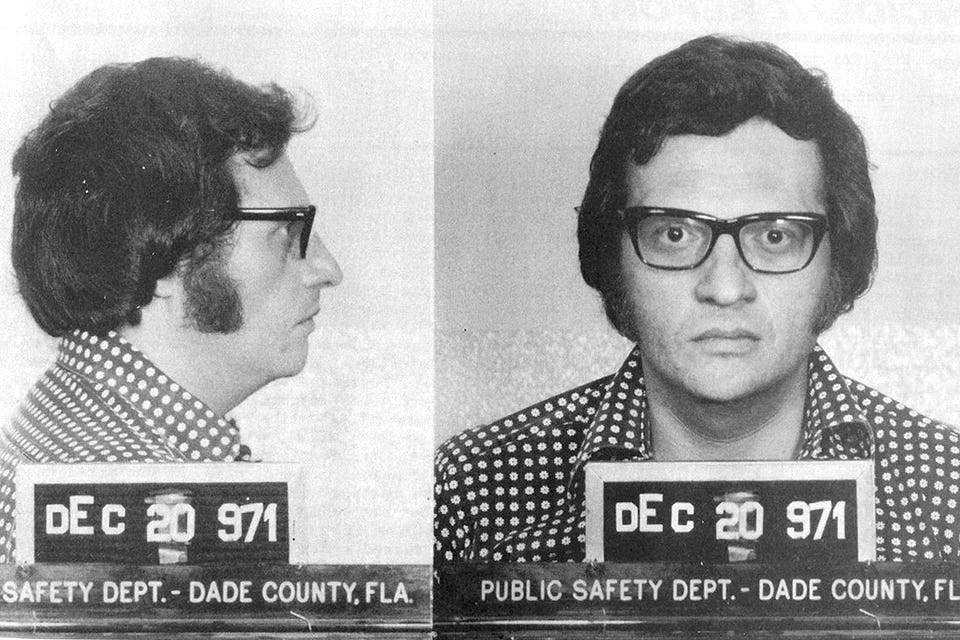
The station owner, understanding that Larry was a weak, temptation-driven character—not a criminal, just a schmuck—dropped the charges. Larry, who agreed to return the money as soon as he had it, was free, but free to do what? He was out of a houseboat, out of a career. He did not visit Miami Beach again for years. Nor did he go to Brooklyn. The story of his arrest had made national news, and he was too ashamed to show his face.
If Herbie had been in Larry’s life, it never would’ve happened; he would’ve gotten Larry out of it just as he’d gotten him out of the Moppo thing, just as he’d gotten Tommy DeLuca out of the trouble with army intelligence. He tried, calling every person and number he could think of in an effort to contact Larry, but Larry did not want to be contacted. He’d made himself vanish. He was like a jumbo jet that one minute is blazing across a clear sky and is gone the next. As if he’d never existed. As if he’d never been born. As if he’d been sent to purgatory, where he’d pay for his sins with a fate he feared more than death—obscurity.
And so I sing the song of Zeke the Creek’s Missing Years.
He retrieved his car and headed west. He slept in motor courts and ate in diners, swam in hotel pools surrounded by chain-link fence, lingered in faded beach towns with arcades. Pensacola. Destin. Fort Walton. The Florida Panhandle is like the bottom of the sea. When he looked back at Miami, he saw an angel with a flaming sword barring his return. He spent his last dollar on a pack of cigarettes in Biloxi, Mississippi, then noticed a 50-watt radio station that broadcast local news and high school sports. He went inside and got a job.
Because he was so good on the air, he was noticed and promoted. He moved to a bigger station in Mobile, Alabama. He also worked at trade shows, called college baseball games, and hung out in local nightspots. He continued on to Louisiana, first Shreveport, then Lafayette, then Alexandria, a small city in the middle of the state. He worked on a station in the afternoon and called the greyhound races at the dog track at night. He met a woman. They lived together in a ranch house on the nicest street in town. He could smell magnolia flowers as he stood over the Weber grill. He’d formed new habits, wore strange clothes, made new friends. He joined a country club and became a college football aficionado. It was almost like amnesia, the emptiness that allowed him to operate without thought of the past.
He was approached at the dog track by a station manager from New Orleans who’d heard Larry while sitting in the grandstand. He still had that voice. To find him announcing greyhound races in Alexandria was like finding Nolan Ryan pitching on a sandlot. He offered Larry a job. A month later, Larry was once again working at a major station. Once again, he was given a talk show. Once again, celebrities and writers and politicians found their way to him. Once again, he was famous.
In 1977, he signed a deal with Mutual Broadcasting, a radio network carried by over five hundred affiliates. He moved to suburban D.C., leaving everything behind, even the woman in his life. (He’d be married nine times before it was all over, a fact that embarrassed Larry but that Herbie explained by saying, “Larry doesn’t believe in premarital sex.”) The road Larry had followed from the time he’d made bail in Florida led back to his original road, making the years between seem like nothing more than an unreal detour, a fantastic dream. Sometimes, when he tried to think back on his life in Louisiana—the woman, the friends, the Weber grill—he could hardly believe it had happened.
The Larry King Show on Mutual Broadcasting became a cult sensation. Millions tuned in each night from 11:05 p.m. to 4:00 a.m. For the nocturnal, the law students and truckers, the gas station attendants and short-order cooks, the firemen and cops who inhabited the nighttime world, Larry was a godsend, a voice to talk you through the wee hours. His show was a solace to insomniacs. Just knowing you were not alone, that Larry was also awake, made it easier.
There was a guest for the first few hours of the show, then Larry told stories or took calls, a segment known as “Open Phone America.” He interviewed every sort of expert and celebrity on his show, politicians and athletes, mentalists and UFO abductees. Comedians would call in at two or three in the morning to try new material. And Larry told stories … about the Warriors, about Moppo, about Carvel and three scoops for fifteen cents. Most of these stories featured Herbie. He talked about the time Herbie confessed to a crime he did not commit—“because if you ask me a question, I tell you the truth twice, but if you don’t believe me and ask a third time, I tell you whatever you want to hear”—and about the time Herbie, on the mound before a game at Yankee Stadium with Larry and other kids from the Police Athletic League, told the great pitcher Billy Pierce that he was using the wrong grip on his curveball. “Actually, the kid is right,” said Pierce.
When Herbie and Larry reconnected, it was as if no time had passed. Larry was living in Alexandria, Virginia, with his new wife, number three. Herbie was restless. Having finished his book, he was eagerly awaiting publication. Larry’s stories had already made Herbie famous to a population of late-night radio fanatics. Larry called and asked Herbie to come on the air and tell those stories from his point of view. Herbie and Larry had so much fun on the show, and it was such a hit with listeners, they decided to do it again a few weeks later. Then did it again. Herbie made more appearances when his book was published. Having told all the old stories, Herbie and Larry began inventing characters, routines—street corner shtick. One night, after talking for a few hours about negotiation, Herbie said goodnight, then returned as an extraterrestrial named Gork from the planet Fringus, his voice scrambled by a synthesizer.
The ET had a thick Brooklyn accent.
Fringus was located in a galactic system ninety days ahead of earth, meaning that Gork, with his magnificent eyesight, could look across the void and see what was happening on our planet three months hence. These were not predictions; they were facts. Callers asked about the future, and Gork told them. Herbie and Larry gave up the routine when they realized people were actually making life and death decisions—cancer surgery, yes or no?—based on Gork. One night, hours after I was supposed to be asleep, I called the show and asked Gork where I’d be in three months. “I see you in a dark place,” said Gork. “Very dark. It’s a box. You’re in a box being sent to Lima, Peru.”
No. 33
Larry became a regular presence in our lives. We were sent to his house on school vacations. He visited Glencoe, making camp in the back bedroom, staying weeks at a time. I could hear him laughing in the kitchen as I fell asleep and talking in the kitchen when I opened my eyes in the morning.
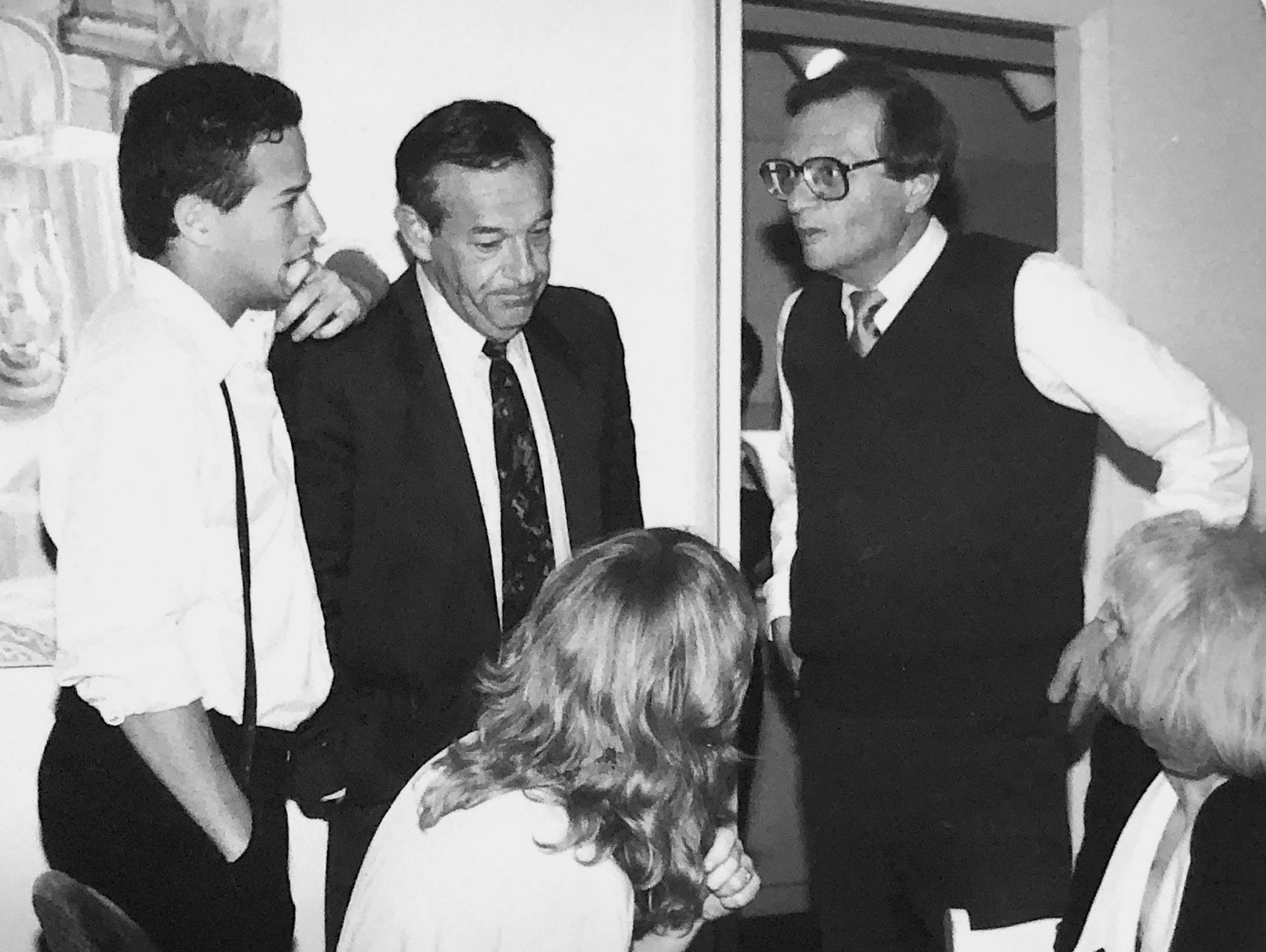
Ellen had not liked Larry Zeiger and did not like Larry King. As far as she was concerned, a schmuck by any other name is still a schmuck.
Herbie used to say this thing when he didn’t like one of my friends: “You sustain a loss of brain tissue just by being around that person.” That’s how Ellen felt about Larry. She felt shunted aside when he was around, like a third wheel, on the outside looking in and not liking what she saw. To her Larry was a cad who did not regard women as full members of the human race.
There were times she worried that she was losing my father. Not just to Larry, but to success, fame, opportunity, a wider world. She had my sister to confide in; then my sister left for college. She had my brother; then he went to NYU. After that, with Herbie on the road most of the time, it was just me and my mom at 1062 Bluff Road. We watched a lot of old movies together. I drank Coke. She took Valium. Only later did I realize that she was not always happy. A New Yorker to the core, she did not like Chicago, and liked its suburbs even less. She was scared to drive in the snow, which kept her inside from November until April. She hated to drive in the dark in any season, claiming she suffered from a condition called night blindness. Unsettled by non-domesticated wildlife, she was home alone when a raccoon gave birth in the attic, when a crow dropped through the chimney into the living room, when a squirrel hopped past her and into the house while she was signing for a package.
She spent years in analysis trying to determine the source of her unease, though I could have explained it in a minute. It was her parents, who, in attempting to appease mad Gladys, had neglected their younger daughter.
By the time I was in high school, Gladys was less person than caricature, a stand-in for the general nastiness of the world. She’d taken to her bed before I started grade school, and it was in that bed that she fell apart, that her hands knotted, her face puckered, her joints failed. She was like Rapunzel if Rapunzel never escaped the tower. She had turned herself into a cripple by force of will, forfeited her life, then blamed it on Ellen. She convinced herself that Ellen had taken her place, that it was not the Fall of man but the birth of Ellen that brought misery into the world. Whatever had gone right for Ellen had been taken from Gladys, and whatever had gone wrong for Gladys properly belonged to Ellen. She tormented her parents with this delusion. She wanted to turn them against Ellen the way a prosecutor flips a witness, which she was able to do because, while Ellen was far away, Gladys was always close and never stropped bitching.
Ellen was constantly worried about being denounced by Gladys and betrayed by Betty and Ben. Herbie reassured her every time she got off the phone with her parents, which of course caused Herbie to resent his in-laws, which is probably what Gladys wanted. She created a crack, then hammered at it. She told Ellen to stop calling because Betty did not want to hear from her, then told Betty that Ellen didn’t call because Ellen didn’t love her. “She quit you, Ma. And you should quit her, too.”
Though confined to bed, Gladys could be dangerous. She had a violent temper. She threw dishes, punched walls, smashed remote controls. She’d hit her grandmother when she was young and hit Betty when she was old. If contradicted, she’d scream, “You should rot in hell for what you said to me!”
For years, I thought my mother had been exaggerating. I did not blame her. She’d been hurt, treated unfairly, and, in her anger, had lost perspective. Nobody has the critical distance to judge their own family; that truth is the bedrock beneath Herbie’s rule against negotiating for yourself. When it came to Gladys, Ellen cared too much to be objective. I mean, come on, how could anyone be that bad?
One example: My mother told me that, though she’d tried to repair her relationship with Gladys, “having our telephone bugged was the last straw.”
Me: “Wait. Stop. What do you mean, ‘having our telephone bugged’?”
Ellen: “Your aunt Gladys had a bug put on our phone. I kept hearing clicking on the line, static or interference. The calls sounded funny. Your father said I was crazy. Then he heard it, too. He asked an FBI friend to look into it. He told us we had a bug, that it had been put there by a private security company and paid for by Cumberland”—the Eisenstadt family business.
Though I nodded as my mother told this story, I figured she’d either misunderstood or conflated two people—Nixon and Gladys—and was in possession of what psychiatrists call a false memory. Then, in 2006, while working on my book Sweet and Low, I interviewed Gladys in her room in Midwood. When trying to explain the family rift as it appeared from Glencoe, I said, “Distance can create misunderstanding, and my mom could be a little paranoid. For example, she actually believed you had our telephone tapped.”
“Well, I had to!” Gladys shot back. “I knew Ellen was talking about me, and I had to hear what she was saying. Pop said she’d never find out, but of course she did, and she’d never let it go.”
Hence the paranoia that occasionally overwhelmed my mother. To quote Henry Kissinger, “Even paranoiacs have real enemies.” When it came on, it came on like a flu, this fever, this dread sense that someone was out to get her. She treated these episodes with various tonics over the years, with each treatment defining a period of my adolescence: the yellow period (Valium), the clear period (vodka), the loquacious period (psychotherapy).
Psychotherapy gave her a new language, fresh words to describe her predicament. It gave her a story to tell about herself, a story that let her view her life from a distance, as if it were that of a stranger, which was a relief. She called these sessions, which took place in an office downtown, “the work.”
“‘The work’ is exhilarating,” she’d say, “but exhausting.”
When “the work” had gone well, she’d come home with tears in her eyes, smile, and say, “It’s not my fault. It was never my fault.” There were bad days, too, when she returned to the house as limp as a rag. “Just when you think you’ve reached the end of ‘the work,’” she’d say, taking the Stoli out of the freezer, “it starts again.”
Ellen wore oversize prescription sunglasses throughout the 1970s and 1980s. These gave her the appearance of a comely cartoon bug. She wore pantsuits and frilly blouses. She’d been coloring her hair—it had turned gray in college—since she’d been in her twenties. It was styled twice a month by a beautician named Dennis, who liked to experiment, who liked to “play.” She usually wore it short and brown with frosted tips, but now and then she’d return from an appointment with Dennis as a redhead or blonde, and when this happened, I experienced a kind of vertigo. Not recognizing her at first, I’d ask myself, “Who am I? Where is this?”
She tended to experience “breakthroughs” in the first few months with a new therapist; she’d tell us what she’d learned in excited tones. The pace of the revelations would slow, then stop. If she changed hair color, it meant she’d hit a therapeutic wall. She wanted to be understood and loved, and tended to co-opt her therapists in this effort, turn them from doctors into friends. I can date weddings by the presence of a particular analyst in the photo album. If Dr. Marks is in the conga line, it’s Sharon’s wedding. If Dr. Solomon is by the cake, it’s Steven’s.
She quit psychiatry in favor of self-treatment via the bookstore self-help section. That’s what the Reagan years, a boom time for recovered memories, life-changing diets, and energy-infusing aerobic regimens, were all about: bootstrapping body and soul into a better you. The covers of these books linger in the mind like the faces of old friends who did not keep their promises: The Power of Now; The Road Less Traveled; What Color Is Your Parachute?; If You Meet the Buddha on the Road, Kill Him; I’m OK, You’re OK. Ellen was especially enamored of a book on self-hypnosis. She’d read a paragraph, set down the book, close her eyes, breathe deep—in through the nose, out through the mouth—then start to count.
During this phase, Herbie and Ellen took a flight from Denver to Sun Valley, Idaho, a short hop over the mountains on the sort of small fixed-wing aircraft in which the passengers can see the pilots at work. The plane—there were no more than a dozen passengers—ran into serious turbulence. Herbie watched the pilot talk to the co-pilot as Ellen read her book on self-hypnosis. The plane began a steep ascent. “It felt like we were going straight up,” Herbie said later. “Then, all of a sudden, I started getting really drowsy.”
He looked around. Every other passenger on the plane was asleep, including Ellen, the book in her lap. The pilot and co-pilot had put on oxygen masks. Herbie tried to stay awake, but couldn’t. The wheels hitting the runway—BAM!—is what woke him up. His mouth was dry. He had a bad headache. But Ellen was grinning. She said, “This self-hypnosis really works!”
Herbie dealt with Ellen’s depression in creative ways, the most productive being travel. “If you’re unhappy here,” he’d say, “go somewhere else.” He believed two days in a hotel with room service can fix almost anything. Whenever he heard about a high-profile suicide, he’d say, “Why didn’t he just get in a car and drive?”

“You might be socked in by fog in Chicago,” he’d explain, “but, believe me, the sun is still up there.” He told us about a flight he took out of O’Hare during a nasty cold front in February: when the 727 got into the blue sky above the clouds, the passengers cheered.
Whenever Ellen went into a spiral, he’d send us to a friend’s house, take his wife to the airport, and buy two tickets to just about anywhere—Santa Fe, New Mexico; Quito, Ecuador—as long as it was different. He took pictures on these trips, then, in the weeks after their return, framed one of these pictures and added it to the gallery he’d assembled on the front table. Most of them showed Ellen in a big hat, a tropical wind blowing, bug-eyed glasses reflecting palm fronds and boulevards. He’d lead her into that hall when she got down, gesture to the menagerie, and say, “How can you be upset? Look at all the amazing places you’ve been! You’re really having a very wonderful life.”
There were trips to Israel, where we had relatives. Though these trips were supposed to be about family and faith, they were really about fights—me against my brother and sister, my sister and me against my brother, my brother and me against my sister, everyone against everyone. It was like a Rubik’s Cube with all the possible combinations. Ellen would scream at us to stop. When I decided to punish my parents by keeping my eyes closed in the cable car on the way up Masada, Herbie sat next to me and said, “You know where we’re going next year? We’re going to pack the bags and go to the basement—you’ll see all the same stuff.”
Herbie, finally thinking like the author of You Can Negotiate Anything, diverted our endless feuding into a more productive channel, setting up a family court that was in session every night after dinner. Herbie was the judge; Ellen was the jury. Witnesses could be questioned under oath, with Herbie reminding each witness of their proximity to the Western Wall. I still have copies of the court dockets, indictments, and subpoenas. In one, “Richard Cohen” charges “Steven Cohen” with “Abuse of a Brother” and “Assault in a Moving Vehicle.” In response, “Steven Cohen” charges “Richard Cohen” with “Attempted Murder,” then, in his defense, calls a friend from Glencoe, Skip Adamson, to testify, requesting Mr. Adamson be flown to Jerusalem or the charges be dropped.
And of course there were trips to New York to see family and visit the neighborhoods where our parents grew up. These trips were essential for my mother’s mental health. At sea in the Midwest, she craved the city as a whaler craves citrus. New York was the only place that seemed entirely real to her. We Cohens of Glencoe lived in a kind of double exile. Like all Jews, we’d been exiled from Jerusalem in the second century. But in 1963, we’d been exiled again, this time from the capital of the diaspora. In Illinois, Herbie and Ellen were like strangers in a strange land, filled with longing. Everything in my childhood was presented as second tier, not quite right. When I ordered a corned beef sandwich at Harrie’s Delicatessen in Glencoe, Herbie waited until I’d swallowed a bite, then said, “That sandwich is better in New York.” When Tevye came onstage in Fiddler on the Roof at the Goodman Theatre in Chicago, he whispered, “This is not the real Tevye. The real Tevye is in New York.”
In other words, the New York trips were not vacation but indoctrination. We stayed in a hotel in Manhattan, parents in one room, kids in another—two beds plus a rollaway. We’d walk for hours in the city, which was not the same city I came to know as an adult. It was hotter, more chaotic. There was always a vent blowing in your face. There were always bums on the street. The newsstands were filled with dirty magazines. Times Square was crammed with electronics shops and arcades that went back on forever. Stepping into one of those arcades was like stepping into the wardrobe in the C. S. Lewis book. You never knew where or when you were going to emerge.
Herbie took us to a Chinese restaurant where we were served an exact replica of the meal Nixon and Mao shared during their historic 1972 summit in the Great Hall of the People in Beijing. It consisted of thirty-two distinct courses, including dumplings, Peking duck, fried rice, shark fin soup, and pork garnished with slices of pineapple. Then we went to see A Chorus Line. Or West Side Story. Or They’re Playing Our Song. Or Deathtrap. We saw several plays during every visit. Herbie had attended dozens of shows—cheap tickets were part of the GI Bill—in his twenties. He considered the theater a key part of a complete education, a part of life’s curriculum in which his children, having been raised in the sticks, were dangerously deficient.
In my first year after college, when I was living on Sixtieth Street in Manhattan, he offered to pay for a ticket to any show I wanted to see for a period of ten months. He called this the Herb Cohen Scholarship. Lettice and Lovage. Cat on a Hot Tin Roof with Kathleen Turner. Steppenwolf’s production of The Grapes of Wrath. Aspects of Love. You’ll have a hard time finding a person more versed in the theatrical offerings of New York City, 1990–1991.
Best of all was just wandering around the city with my father, watching him get into discussions with every kind of character on the street. He was like a bear in its natural habitat, a fish returned to its native river. One morning, on the way to breakfast, he was approached by a Hare Krishna who tried to sell him a book called Forbidden Archeology: The Hidden History of the Human Race. Herbie was fascinated by the Krishnas, especially their negotiating technique, which he characterized as “the hard sell.” In an attempt to gather information, he’d already read the book, which he’d purchased from a Hare Krishna at O’Hare airport. He pulled it from his briefcase as the cultist made his pitch and said, “How about I sell it back?” This offended the Hare Krishna and led to a verbal squabble, though, as mystics, the Krishnas are not supposed to get angry. He waved a finger in Herbie’s face; the flower in his hair quivered. He stormed off and found another potential buyer. Herbie appeared at his side as he held up the book and said, “What’s he asking? I’ll do better.” The infuriated Hare Krishna then dropped his price to meet Herbie’s, proving, as Herbie claimed he’d meant to from the beginning, that everyone negotiates.
We made regular forays to Brooklyn. Herbie would rent a car or flag down an armada of gypsy cabs, directing the fleet like a harbormaster. He made a big deal of it when we exited the Brooklyn–Battery Tunnel or descended the ramp of the Manhattan Bridge into Fort Greene. “Two miles but a light-year away.”
Manhattan was glitter and gold, Tiffany and FAO Schwarz, the Plaza, the Pierre, bankers in suits, models in heels. Brooklyn was the old country, the land of our fathers, gangsters, con artists, family men, and balabustas. Visiting Betty and Ben meant visiting the house where my mom grew up. Despite all their money, they still lived in middle-class Midwood. The parlor with its flowery wallpaper and cabinet TV, the couches covered in plastic, the china-filled hutch in the dining room.
Ellen tensed up when she stepped through the door. There’s no place like your childhood home. She brought presents for her mother and sister, peace offerings—in olden times, she would have sacrificed a goat on the Temple Mount—then went in back to talk. Grandpa Ben would meanwhile load the kids into his car and take us to Cumberland Packing for a tour. Ben referred to the factory, which occupied an entire block at the top of Flushing Avenue, as “the store.” The ingenuity of the place, the chutes that delivered the pink packets to the boxes, the belts that carried those boxes to the loading bays, mirrored Ben’s mind. It was brilliant, masterful, and cold, saccharine sweet with a bitter aftertaste.
Ellen was always in the front hall when we got back, coat on, waiting to leave. Something had happened. Something had always happened. It could take her a month to recover from one of those visits. She’d go over each detail again and again, trying to remember the exact wording, the exact moment. If she could just figure it out, she’d understand everything. “Sometimes there is nothing to figure out,” said Herbie.
Bensonhurst was a relief after Midwood. Herbie’s parents were long gone by then, having migrated to Miami Beach with the rest of the Jews, but the streets were the same. The corners and candy stores, the newsstands, bakeries, and pizza parlors, the stairs to the IRT, the shadows beneath the elevated, sparks raining down, kids in club jackets, cigar stores, and delicatessens—just like in the stories. Herbie was a different person in Bensonhurst, profane and free. He rolled down his window as soon as we crossed Sixtieth Street. If he was driving, he’d push back the seat and steer with one hand. He nodded at people as we went by. Now and then, someone shouted his name. He’d shout back. In Bensonhurst, we were seeing my father as he’d been before he was our father, as he still was deep down, when we weren’t looking.
He slowed down beside a tough-looking man in a long black coat on one of these trips. Hunched over and walking fast, the man looked as if he didn’t want to be seen. He turned and glared, looked in the car, grinned, and said, “Yo, Herbie! When’d you get back?”
No. 34
Then came the bad time.
Herbie and Ellen must have known for weeks but had not told me and never would have told me if they could’ve kept it secret. Same as woodworking and sex, I learned about it at school. I was a freshman at New Trier in Winnetka, Illinois. My brother was at NYU. My sister was in law school in California. I was one of three on paper. In practice, I was an only child.
I was in study hall, talking to a girl named Lucy who said she liked me but not “in that way.” She told me two other things that morning. First, that Darth Vader was Luke Skywalker’s father. (I was going to see The Empire Strikes Back that night.) And second, that my father had been sued for millions of dollars by a writer or writers who claimed that parts of You Can Negotiate Anything had been plagiarized. She’d learned this from her mother, who, she said, had heard about it on Good Morning America.
When I asked my mother about it after school, she burst into tears.
Though Herbie Cohen is a singular character, built in imitation of no man, these two other writers, authors of less successful books, claimed he had used their stories and ideas. They were asking for a silly amount of money. It was the sort of number you rarely hear outside astronomy class. The fact that two authors had joined to accuse a third of stealing intellectual property seemed self-defeating. If, as they claimed, they’d both had the same material stolen, wouldn’t that mean they’d stolen it from each other, too? Herbie was even more confused when he finally got to read the complaint. It was the first time he’d seen such a liberal use of ellipses, with the three little dots connecting clauses that in the text were separated by hundreds of pages, creating new sentences that could possibly be said to read something like their own.
I don’t remember the names of the antagonists, or maybe I do, but I’d rather not include them. I will say this: they came from academia, authors, between them, of a basketful of books that had hit without impact, business tomes meant for one section of the store only. Herbie had done something different, new. He’d written a business book that was nominally about business but really about life. It could easily be shelved in Self-Help, Philosophy, or Humor. Which is why it was such a big hit in the business world—because it was not a business book, but a real book, a funny book, a book book, the boardroom seen through the eyes of Brooklyn and described in the language of Bensonhurst, less Alfred P. Sloan than Damon Runyon, a street corner kid arguing over the price of an ice cream cone.
It was not just a lawsuit but a culture clash. It was Eighty-Sixth Street and Bay Parkway versus the lecture hall. Whereas the plaintiffs credited themselves with the invention of modern negotiation, Herbie cited the oldest influences known to mankind, Genesis and Exodus, Abraham haggling with Jehovah, Odysseus outsmarting Cyclops, Jesus preaching at Capernaum, the art of give-and-take as depicted by Shakespeare, Dickens, Mel Brooks, Casey Stengel, Mayor Daley, Nikita Khrushchev, Morris Cohen. Many lessons were gleaned from his experience as a claims adjuster, in arms control and hostage negotiation, as a Cohen family court judge, and parent. Because, as he writes, “your real world is a giant negotiating table.” He did not claim any ideas as purely his own, or insist they were unique to his book, only that they were true and as truths would have to be included, in some form, in any book about negotiation.
Lyle Stuart urged Herbie to settle the lawsuit. “This happens when you have a hit,” he said. “They come out of the woodwork. They know it’s cheaper for you to settle than fight. Even if you win, you’ll lose. The money. The time. Just pay the bastards.”
But Herbie decided to fight. He believed that settling would be like admitting he’d stolen from these people.
“You don’t understand publishing,” said Stuart.
“I do understand bullies,” said Herbie.
Herbie believed appeasing aggression only incites more aggression; the way to deal with a bully, he said, is to hit back quickly and so hard they curse the day they started up with you. “If you hit me, you better kill me,” he’d say, “because if you don’t kill me, I’m coming back tonight and I’m going to kill you.”
According to the plaintiffs, any ideas in common among the three books must have come from them because their books had been published first. But Herbie had been telling his stories to groups and writing them in workbooks since he was a claims adjuster in the early 1960s, meaning, by their own reasoning, any common ideas must have come from Herbie, who accordingly countersued, seeking the same amount they were seeking plus more to compensate for reputational damage and time wasted by frivolous lawsuit.
“With whatever measure you measure, it will be measured to you,” said Herbie, quoting the Gospel.
Lyle Stuart scolded Herbie when he found out.
“You’re being stupid,” he said. “Just pay the ticket and get back in your car.”
“You don’t understand,” said Herbie.
“You’re the one who doesn’t understand,” said Stuart.
“Yeah, well, I guess we understand different,” said Herbie.
Grandpa Ben urged Herbie to settle, too. It was a conversation my father would hold against his father-in-law. “Of course, the one time he calls, it’s to tell me to quit.”
But I’m not sure Ben was wrong. Herbie was confusing his ego with the price of doing business, mistaking a walnut in the batter of life for life itself; he cared too much. If he’d settled, the whole thing would have been forgotten by the end of the year and he would have written a follow-up and the rest of us would have gone on with our lives. But there was no second book, not for decades, nor was there a return to normal life, because the lawsuit became an obsession that seemed to go on forever.
The case progressed slowly; you’ve never seen anything creep like that. There were depositions in three cities, because one case had been filed in New York, the other in L.A., and the countersuits had been filed in Chicago. Herbie had to pay three sets of attorneys as a result and, in addition to his normal business travel, had to fly from coast to coast to meet with his lawyers, their lawyers, and judges. Legal fees mounted. All the money he’d made on the book had soon been spent defending it. He went into debt. The words he began to use—“Sisyphean,” “Kafkaesque,” “quixotic”—signaled his desperation.
Ellen, who handled the finances, also told him to settle, but he said, “Never.”
“Would you rather go broke?” she asked.
“I’d rather put a gun in my mouth,” he answered.
This period felt as if it constituted an age—the Lawsuit age, like the Permian age or the Pleistocene age. Ellen sank first into a mild depression, then into a deep depression. She spent days in her bedroom, not bothering to change out of the blue terry-cloth nightgown she called her shmatta robe. She read drugstore science fiction and watched TV. Herbie did what he’d always done when stressed, the only thing a person in such a situation could do—buried himself in work. Speech after speech. We hardly saw him. If not sitting in New York or L.A. with attorneys, he was at an airport, in a rental car, at a motel, or lecturing a group in a hotel meeting room. If you work yourself to exhaustion, you won’t have the strength to worry, he explained.
It took something like five years to resolve the lawsuits, though it felt longer; it felt like my entire childhood. It was the worst time for Herbie, but also the best. He hadn’t run when attacked, nor settled. He’d turned and counterattacked. He’d run toward the source of fire. He’d hit back as hard as he could, defying his publisher, father-in-law, and wife. He fought and, in fighting, passed his own test.
When the end finally came, it happened dramatically, in the form of a breakthrough, a surprising turn. The plaintiffs’ attorneys hired a private detective to investigate Herbie. He says he’s been telling these stories since he worked at Allstate in the 1960s? Well, let’s find someone who worked with him back then. If they don’t remember him telling those stories, the case falls apart and he’ll be forced to settle. The detective did eventually track down one of Herbie’s old colleagues, but this man turned out to be the grenade that blows up in the grenade thrower’s own hand. Not only did he remember Herbie telling those stories, but he had saved a workbook, written by Herbie in the 1960s, in which many of those stories were included, a primitive version of You Can Negotiate Anything. Asked why he’d saved the workbook, the man said, “Because that stuff really works.”
The plaintiffs’ lawyers tried to bury this man and his testimony, but it all came out in discovery. The witness was deposed by Herbie’s lawyers, then questioned by a judge, who flipped through the workbook while looking at You Can Negotiate Anything. When the judge accepted the workbook as evidence, the plaintiffs dropped their suit and asked to settle the countersuit. Herbie did not want to settle, but the judge insisted. One defendant paid many thousands of dollars. Ellen had a copy of the check blown up into a poster and hung it on a wall. The other, at Herbie’s request, paid into a fund that financed the construction of a bocce court in Brooklyn.
Herbie was still not ready to quit. Outraged by a bill from his L.A. lawyer—“He billed me for the hour he spent eating breakfast!”—he sued his own counsel, which meant another year in court that ended with a refund and a ruling that established case law.
Herbie won in every way a person can win in the system, but at what cost? It consumed years of his life, tortured my mother, and cost him more money than the book itself ever made. When people ask if he won or lost, I say “both.” He prevailed, but the process itself became the punishment.
No. 35
The experience changed my father in a profound way; he became addicted to the rush of battle, the feeling that he was the little guy taking on an evil system. He watched all his favorite Frank Capra movies—Mr. Smith Goes to Washington, Mr. Deeds Goes to Town—with new eyes. He saw himself as the man from the sticks, forced by fate to stand in the path of the machine.
When he ran out of battles of his own, he began looking for those of other people. He became a freelance injustice fighter. You had to be careful when you told him about your problems. He might ignore you. Or he might dismiss them as “nothing,” “bullshit,” “a walnut in the batter of life.” Or he might become incensed and enraged and involved. In the end, his involvement might prove a bigger headache than your original problem. Once Herbie engaged, he was impossible to disengage. The man simply would not quit. You went to him for sympathy and advice, but wound up in the crew of crazy captain Ahab.
When a college tried to fire one of my uncles without cause, my uncle, who’d been a professor at the school for decades, called Herbie, who at first did not care, then, when he focused on the details, became engaged. What makes them think they can treat a person like that? I don’t know all the details, but, suffice it to say, my uncle attended one meeting wearing a “wire,” then a phone call was surreptitiously recorded, then Herbie turned up at a meeting of the administration unexpectedly and with great flair, in the way of Wyatt Earp or Batman. My uncle was reinstated with full pay, though he did agree to take a cut in the dental portion of his health-care plan.
When a local TV executive attempted to fire Herbie’s friend Joan without cause—Joan drew the balls for the daily lotto—the headman, who’d wanted to replace Joan with a relative, found himself across a desk from crazy captain Ahab. Herbie, having dissected Joan’s contract like a Talmudist, got her back on the air by “hanging the bastards with their own words.”
He hated when one of his kids got in trouble at school, but loved it, too, because it gave him a chance to battle injustice. That is, if he felt we were in the right. If we were in the wrong, we deserved what we got, but if we were getting screwed, then here comes Captain Ahab with a harpoon in his hand.
I was getting a D in sophomore English. Herbie, who had not been paying attention, noticed one of my marked-up assignments while eating ice cream late at night. He became infuriated as he read through it. “Of course he’s getting a D,” he told my mother. “The question makes no sense. This person, who cannot write, is grading our son’s writing.”
He believed the questions were riddled with prejudice. In one, which was about “conventional wisdom,” she gave, as an example of “conventional wisdom,” the belief that “Jews are stingy” or “Mexicans are lazy.”
“That’s not conventional wisdom,” said Herbie. “It’s slander.”
He made an appointment with the teacher, then sat across the desk in her office at New Trier. My mother was at the meeting, and so was I. The teacher, who was curt and officious, showed my father one of my papers—D—then began going through it line by line, explaining every deficiency in my work. Herbie asked if he could see the assignment sheet she’d handed out for the exam. He read it as she talked, took a red pencil out of his pocket, and began marking it up. He handed it back with a grade: D. Before he could finish explaining why she had done so poorly, and why a poorly phrased question will result in a confused essay, she started furiously quoting her credentials.
She said, “I have been teaching students for fifteen years.”
He said, “I have been teaching students for thirty years.”
She said, “I attended the University of Illinois.”
He said, “I attended Yale.”
She said, “I have a master’s from the Columbia Teachers College.”
He said, “I have a PhD from Caltech.”
My mother turned to me and said, “Richard, go back to class.”
“But I—”
“Go to class!”
Later, when I told my father I was afraid to go back into that teacher’s classroom—“she’s definitely going to fail me now”—he said, “No, she’s not. She’s going to treat you very well. And you’ll get a B in that class.”
That is what happened.
That was sophomore year. Senior year, I had a dustup with a teacher who’d been driven mad by noise in the hallway. He was a tall, dour, long-faced Latin instructor who insisted that his students call him Professor. One day, I made the mistake of shouting to a friend in the hall outside his classroom. He said something to me through the window of the closed door. I laughed nervously, then said, “I can’t hear you.” He came running out, grabbed me by the shoulders, and shoved me into the lockers. I raised my hands in a gesture of surrender. He said he was taking me to see the adviser chairman, the top cop for each grade. I refused, and said I was taking him to see the principal, who outranked the adviser chairman. He followed me to the office, where I asked the secretary if I could see Mr. McGee. He was out. I left my name and explained the issue. “Okay,” said the Professor. “Now we’re going to see the adviser chairman.”
The school day was over, so I said, “No. Now I’m going home.”
The next morning, when I showed up for my first class, the teacher, said, “I’m not even allowed to let you sit down. You have to go directly to the adviser chairman.”
The adviser chairman wore tight plaid pants and wire-frame glasses. He did not let me explain, but merely told me I’d been suspended for a week and had to leave school grounds immediately. I called the house from the pay phone, expecting my mother to answer. I needed a ride. Herbie picked up instead. When I explained what had happened, he said, “I’m coming down there.”
The adviser chairman would not let him talk either: “The boy is suspended; that’s the end of it.” At some point, after he’d cut Herbie off for the fifth or sixth time, Herbie looked at the ceiling behind the man’s desk. This silenced the adviser chairman, who turned, had a look for himself, then asked, “Where are you looking?”
“Over your head,” said Herbie. “Because that’s where I’m going.”
The day ended in the principal’s office, where Herbie, Ellen, and I sat with the adviser chairman and the Professor, who, in his fantastical version, said I’d been making noise in the hall, then looked through the window into his class, laughed, and said, “I’m laughing at you.”
“That insolence is what made me lose my temper,” he said.
I denied all of this. It was crazy. The conversation went on. Herbie stood up and asked to be directed to the bathroom. He was gone for five minutes, then appeared outside the closed door. He was saying something through the window. Then he came in, sat down, and said, “And if we agree to that, I think we can all go home.”
“Agree to what?” asked the principal.
“To what I just said,” said Herbie.
“I couldn’t hear you,” said the principal.
“Aha!” Herbie shouted, standing and pointing with a Perry Mason flourish. “So if you could not hear me, how could the Professor have possibly heard Richard through the same kind of closed door in a hallway crowded with students?”
There was no suspension. I agreed to steer clear of the Professor’s hallway, he apologized for pushing me into the lockers, and as my father had predicted, we all went home.
No. 36
The biggest of these fights came during my senior year at Tulane University. For me, it’s like a Bible story. I’ve analyzed it again and again over the years, searching for message and meaning. As I’ve said, Herbie occasionally taught by counterexample. By watching him, you could learn what not to do, which is get overly involved, invested, or entangled with the offal of the world.
It’s funny. He built his book around a philosophy, which he boiled down to a gleaming phrase—“the key to life is to care, but not that much”—but even a cursory study of his behavior will show a man in a constant state of over-caring. You Can Negotiate Anything was a self-help book, and as anyone who has spent time around the authors of such books can tell you, those who write self-help are those most in need of self-help. Their work is a literary version of whistling past the graveyard, talking to themselves in the dark. Herbie’s favorite aphorism defines his behavior more accurately than anything he’s ever said about caring: “If you’re walking on thin ice, you might as well dance.”
I was at home on winter break, telling anyone who would listen about my college creative writing class, which had been my first experience with a cult of personality. The professor was a campus god, the closest thing the school had to a resident genius. His name was not Kenneth Schlichter, but that’s what I’ll call him here. His beard grew long beneath his chin, but his cheeks were smooth, an antiquated hairstyle that gave him the aura of an old-time transcendentalist. His eyes were small and hard; his demeanor arrogant and mean. He handled students as if handling creepy crawlies. When I complained to another professor about how the class was run—you’d sit at a table with ten other students, read your story, which first Schlichter, then everyone else, as if on cue, tore to pieces—he defended the professor, saying, “Kenneth Schlichter is an artist with a particular pedagogical style: he says he has not done his job properly if he hasn’t left blood on the floor.”
I had trouble with Schlichter from the start. I had a different taste in writing, for one, a different idea of what makes a good story. Taking this as a sign of disrespect—So I didn’t love Ann Beattie, so what?—he developed a keen dislike for me. I felt it when my turn came to read my work to the class. He ripped into every story but went after mine with a special gusto, an undisguised glee. I sat through the general pummeling that followed without protest or complaint, because that’s what you were supposed to do. I knew using my story as the occasion to make a general complaint about the professor’s method would seem like sour grapes. Nobody likes a whiner. So I waited. I waited in the way of an advocate who waits for the perfect test case to bring to the Supreme Court, the case that will demonstrate the fallacy of the entire system.
In the meantime, I refused to take part in the weekly table read beatdown. I absented myself, which did not go unnoticed. I recited the first graph of a Camus essay we’d been reading in Philosophy to myself as I sat glowering: “What is a rebel? A man who says no, but whose refusal does not imply a renunciation. He is also a man who says yes, from the moment he makes his first gesture of rebellion. A slave who has taken orders all his life suddenly decides that he cannot obey some new command.”
The test case came as a story about the art of pool hustling written by a girl in class. She did not want to be a writer. I knew this because we were friends in what I’d taken to calling every place that was not Kenneth Schlichter’s workshop: “the outside.” She was a business major who’d enrolled in the class in the spirit of self-actualization, growth. She was the carefree amateur who, on a dare, takes the stage during open mic night at Dangerfield’s.
Schlichter lit into the story as soon as she’d read the last sentence—“and the girl slept the righteous sleep of the hustler who knows she will never have to play the game again.” The fact that it had been a good story, better, in my opinion, than many of those New Yorker and Paris Review stories we had to read for class, was just another occasion for Schlichter to pick up his favorite terms, which he wielded like hammers. “Cliché.” “Trite.” “Sophomoric.” The conch shell then went around the table, with each student, the good along with the bad, joining in. It was like something you’d see outside a bar at three in the morning, drunks in a circle, kicking some poor bastard to a pulp.
“What is a rebel?” I asked myself, when the spotlight fell on me. I defended the story briefly, then went after the nature of the class itself. “The professor and his methods are unsound.” It was an uprising and, as such, attracted a handful of followers. You could almost hear the groan of cracking ice. Spring was in the air, regicide.
Schlichter looked at his watch, threw up his hands, and called for a fifteen-minute break. The girl who’d read the story gathered up her business text and copy of Granta and ran out. I hung back to talk to Schlichter. He was furious. “If you don’t like how I teach my class, you are free to drop,” he said.
“What are you even doing in here?” I asked.
“I am teaching my students how to become writers.”
“She left in tears,” I said.
“The truth hurts,” he said.
“She doesn’t even want to be a writer,” I said. “She’s a business major. And now, because of this, she’ll never do another creative thing.”
“If that’s the case, then she shouldn’t be in my class.”
A few weeks later, when my next turn came around, I read a poem I’d written about the professor. It was coded but clear, and I read it only because a friend said I’d never have the guts. It was called “The Unique Cliché” and it ended with the following stanza:
Fuck you
you fuck
Fuck you
Schlichter did not criticize my poem—he said only, “That’s not poetry”—but instead ended class early, then refused to interact with me for the rest of the semester. As if I were invisible. As if I had died. He skipped my turn in the circle, and never let me comment. Whenever I handed in an assignment, it was back in my mailbox moments later, unread and always given the same grade: B. This was smart. How do you complain about a B? But it was not the grade that bothered me; it was the lack of interaction. I wanted to be read. Schlichter knew that, so that’s what he would not give me.
We were required to write a long story for the final, almost a novella. I spent months on it, assuming, because this would mark the end of our relationship, he’d cast aside his feelings and read my work. Wrong. It was in my mailbox ten minutes after I’d turned it in. Grade? B. I went to his office; he refused to see me. I met the chairman of the English Department, who listened with sympathy, then promised to talk to Professor Schlichter. He called the next day and told me to resubmit my story. “He’ll take another look,” he promised.
Once again, it was back in my mailbox ten minutes after I’d turned it in. The original B had been crossed out and replaced by an even bigger B. The department chair got angry when I went to see him again. “What do you want?” he demanded. “This man, this literary man, has given you a better than passing grade. Be happy.”
I told my mother, brother, sister, and friend Jamie the story over winter break, but none of them cared. “My parents are getting divorced and you’re bitching about a B?” Jamie asked. I tried to tell Herbie what had happened, but couldn’t get his attention. He was busy with other things. Finally, near the end of break, he sighed and said, “If I sit down and listen, will you finally shut up about this?”
“Yes.”
As I told the story, I could see by his posture and the look in his eyes that I’d gotten more than his attention. He started out apathetic, then became curious. By the time I’d finished, he was enraged. When he asked, “Did that bastard really say he likes to leave blood on the floor?” I knew I’d inadvertently summoned Captain Ahab.
He fired off the first angry letter before I was even back at school. By the end of the semester, dozens of complaints, explanations, and suggestions of redress had gone back and forth between Herb Cohen, the chairman of the Tulane English Department, the dean of the school of arts and sciences, and finally the university president. I still have the carbon copies. “Kafkaesque,” “quixotic,” “ignoble”—the letters are riddled with the words Herbie used whenever grappling with what he considered the machine. He wanted more than promises. He wanted action. The professor must be removed. The girl who’d been driven from class must be apologized to. The school must examine the method used in its workshops. When these demands were denied, he added others. The chairman of the department must be replaced. Every student in the class, with the exception of his own son, must have his or her grade retroactively changed to an A. Conference calls followed, proposals and counterproposals, all of which, because Herbie kept me out of the loop, I was oblivious to. I assumed he’d dropped the matter when I started the second semester of my senior year. I’d stopped caring about Kenneth Schlichter. If I didn’t care, why should he?
I was shocked when I spotted Herbie standing under the big moss-covered oak tree outside the administration building that spring, a thousand miles from where he was supposed to be.
“What are you doing here?” I asked.
“I have a meeting with the president, the dean, and that professor.”
I got confused, then irritated, then angry.
“It’s over,” I said.
“Not for me.”
“What do you even want?”
“It’s all in the memo.”
“This is crazy.”
“I’m not doing it for you,” he said. “I’m doing for the next kid.”
Years later, long after I’d graduated and joined the workforce, I called Glencoe looking for my father.
“He’s not here,” said my mother.
“Where is he?”
“New Orleans.”
“Why?”
“He’s meeting with the president of Tulane.”
“About what?”
“What do you think?”
“No!”
It made no sense to me. I begged him to stop. He said he would not stop until he had achieved his goals. In the end, the department chairman was removed or maybe just stepped down—five years had gone by—and a letter had been placed in Kenneth Schlichter’s file. In other words, he’d achieved nothing.
But that’s not how he saw it.
“You are forgetting about the difference between the what and the how,” he told me. “The what might seem like nothing, but this case was all about the how—that being me getting on them, and staying on them, and acting like a lunatic.”
“The next time that professor is about to destroy some poor kid,” he explained, “he’ll stop himself because he’ll be thinking, ‘Maybe this one has a crazy father, too.’”
No. 37
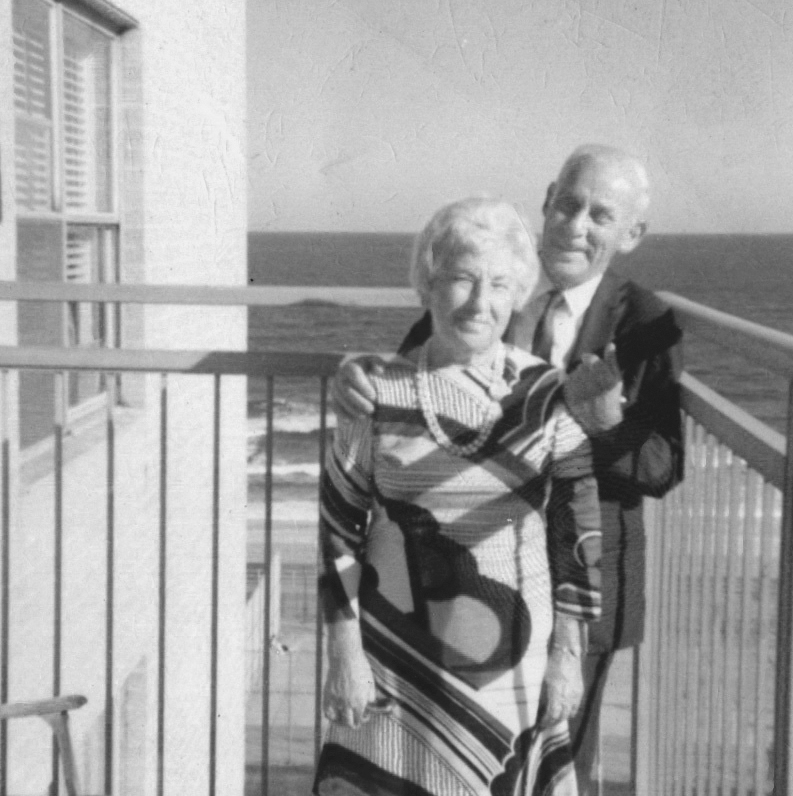
Herbie’s parents had followed the siren song to Miami Beach, which Grandpa Morris called “the true promised land of the Jews.” Morris and Esther lived in a one-bedroom condo in North Miami Beach, where the streets are numbered in triple digits and the condo complexes have elaborate names. Theirs was called the Three Seasons, because there is no winter in Florida. It had a kidney-shaped pool, a canasta room, and a superannuated exercise center where a big canvas strap shook you up like prunes in a blender set to chop. There was a half dome of wooden rollers with a function I was never able to ascertain, as well as medicine balls, dumbbells, and the kind of exercise bike that, when you ride it, pushes your knees up above your ears.
The Three Seasons was populated by Polish- and Russian-born Jews who’d reached Miami Beach after long lives in New York. To us, they seemed ancient, but in the 1950s and 1960s, when most of them made the move, they were middle-aged. The stent, the bypass, the pacemaker, and statin have emptied out the acacia-shaded halls of the subtropical South. Morris, who’d spent his early years across the sea, never stopped marveling at Florida’s abundance. For him, the most beautiful phrase in English was “Fresh squeezed.”
Political arguments and feuds that had seemingly been left behind in Brooklyn were picked back up in the condo complexes along Collins Avenue. These people had seen a lot and known a lot and done a lot and loved a lot and, though still vibrant, had been forced into indolence in this Candy Land with nothing but sunshine, palm trees, and swimming pools.
What else were they going to do but bicker and talk about their grandchildren?
Esther was a poolside big shot. From a certain point of view, she could have been called a bully. Even if you’d known her all your life, it was impossible to tell if she was trying to be mean. It just happened, in the way of a natural phenomenon. She said whatever came into her mind without consideration, and as a result people’s feelings got hurt. Once, confronting a neighbor whose standoffishness confused her, Esther asked, “Why do you hate me, Fatso?”
No. 38
Morris had suffered various ailments over the years. In October 1972, when some of his symptoms became acute, he checked himself into a hospital. Doctors found a mass in his stomach. The word “cancer” exploded in the room. Surgery was scheduled.
Herbie sat alone with his father the night before the operation.
Morris put a hand—he had warm fleshy hands—on top of Herbie’s and asked his son to judge his life. “Have I been a good father? Have I been a good man?”
“Yes, Pop. You’ve done great.”
Morris died in his sleep early the next morning, before the doctors could operate. Herbie believes Morris died because he wanted to die. “He knew what the next few years would be like, and didn’t want it,” Herbie told me.
As I’ve said, Morris served as a circuit breaker for Esther. He stopped the current when she crossed the line, went too far, said what might be thought but should not be voiced. Laying his fingers on her wrist, he’d whisper, “Enough, Esther. Enough.” She had no breaker after Morris was gone. She’d just go on and on, ripping and roaring, offending, infuriating, and scandalizing. She did it in person and did it on the phone. Picking up the receiver between 7:00 and 9:00 p.m.—Grandma Esther’s witching hours—was like playing Russian roulette. You’d probably be okay. When my sister’s live-in boyfriend answered, Esther told him that he was living in sin and should expect a visit from “the Malamoufitz,” the angel of death. Once, when Herbie picked up, Esther said, “What happened? You used to be good-looking.”
She did not wait for a person on the other end to answer, but spoke before you had time to say hello, demanding, “Who’s dat?” Even if she dialed your number by accident, she was ready to pivot and blast. Once, after I’d answered her first question, “Who’s dat?” she said, “I meant to call your cousin Robbie, but, since I have you, what’s this your parents tell me about you dating a girl with the sugar diabetes? If a thing like that gets into the gene pool, it stays there a thousand years.”
Many nights ended with the sound of Herbie talking to his mother, a kind of 1062 Bluff Road theme song that ran beneath the action like sitcom music: “Ma! Ma! Ma! No, Ma! Why, Ma! Yes, Ma! Oh, Ma! Ma! Ma! Ma!”
Esther got worse with age. She said hurtful things to people who simply wanted to sit by the kidney-shaped pool and read. That’s why Herbie was not unhappy when she took up with Izzy Greenspun, another Polish-born Jew circumnavigating his golden years. Herbie hoped Izzy would do the job of circuit breaker, calm Esther, dull the sharp edge. But that’s not what happened.
Izzy lived most of the year in Skokie, Illinois, then home to the world’s largest concentration of Holocaust survivors. Once, when I was searching for his number, my brother said, “Look in the white pages. How many Izzy Greenspuns can there be in Skokie?”
The answer was a lot.
Izzy met Esther while visiting a friend with a condo in the Three Seasons. Esther was eighty-two. Izzy said he was eighty-five. He began making trips to see her in Florida. She stayed at his house in Skokie. That’s where I first met him. I was twelve. A kid usually can’t tell what an old person had been like when that old person had been young. Age obscures. That was not the case with Izzy. As soon as I’d spent five minutes with this white-haired little dandy, I knew that he was and always had been a nebbish.
He wore powder-blue pants hitched to his chest, white shoes, a white belt with a silver buckle, a short-sleeved button-down shirt, the breast pocket weighted with pencils, reading glasses, and a calculator for determining tips. He did not enunciate. If he’d been a gangster, they would have called him Mumbles. You could never tell if he was speaking English or Yiddish. Once upon a time, he sold shoes at Carson Pirie Scott, a Chicago department store. He was a retired shoe salesman, a widower with two grown daughters. There was Dolores, whom my brother Steven called Dolo. She was a Chicago public school teacher in polyester pants and heavy makeup, hair worn in a towering beehive, lips puckered for the sort of kiss that leaves a lavender stamp. And there was Helen, whom my brother called Lady Death because she claimed she’d seen Death walking across our yard. Steven spoke of the family as if it were an accounting firm, saying, “Izzy, Dolo & Lady Death.”
Izzy was considered a catch in Miami Beach. He was unattached, was fully ambulatory, and could drive at night. When Herbie looked at Izzy, he saw everything his father Morris was not—cloying, obtuse, and clueless, a man who, rather than moderate Esther’s excesses, fed them like accelerant. Whatever she said, Izzy repeated in a stammering Yiddish accent—a grim echo. If she said, “President Carter is a bum,” he said, “Listen to Grandmommy. Grandmommy knows. Grandmommy says President Carter is a bum.” If she said, “Anwar Sadat is a gonif. I wouldn’t trust him any farther than I could throw him,” he said, “Listen to Grandmommy. Grandmommy knows. Grandmommy says Anwar Sadat is a gonif. She wouldn’t throw him.”
The relationship developed quickly; that’s what happens when a couple’s combined age is 167. Izzy began spending winters at the condo in Miami Beach. Esther began spending summers in Izzy’s bungalow in Skokie. You could safely drink red wine in any room of that house, because everything was covered in plastic. A plastic trail that started at the front door, crossed the shag-carpeted living room, skirted the plastic-sheathed couch and plastic-coated La-Z-Boy, before ending at the kitchen, where Izzy was amplifying Esther on the subject of Middle East peace. “Listen to Grandmommy. Grandmommy knows. Grandmommy says the man is a shtarker.”
Izzy and Esther were married one June morning in the mid-1980s. There was a ceremony at a synagogue in Skokie followed by a catered lunch. The limo that carried my family to the event stopped on the way to drop me off at the bus that would take me to camp. Herbie put his arm around me as we crossed the parking lot, saying, “So what? You’ll miss the wedding. I’m sure you’ll be back for the funeral.”
It was not a great day for Herbie. In the early afternoon, Esther said, “If I’d met Izzy before I met Morris, I wouldn’t have given Morris a second look.” In the late afternoon, it rained.
During Christmas break, my mother put me on a plane to Miami to visit “Grandma and her husband.” Esther and Izzy shared a “Hollywood double,” twin beds pushed together and made up with a single sheet. Do they have sex? was the big question. When I asked my mother, she changed the subject. When I asked my sister, she said, “Yes they do.”
We spent the afternoons on the pool deck, sailing through the hours with a gaggle of other ancient Jews. Esther was deeply involved in condo politics, a master of the canasta room filibuster. A picture of her group—they’re awaiting the results of a vote they know they have in the bag—shows Esther as she was in the decades after Morris, less yenta than mob boss, ward heeler, stone-cold political killer, and bagman, the big stick and driving wheel. She was Sam Giancana sharing a laugh with Bugsy Siegel. She was Hyman Roth sitting with Michael Corleone in Havana, saying, “Michael, we’re bigger than U.S. Steel.”
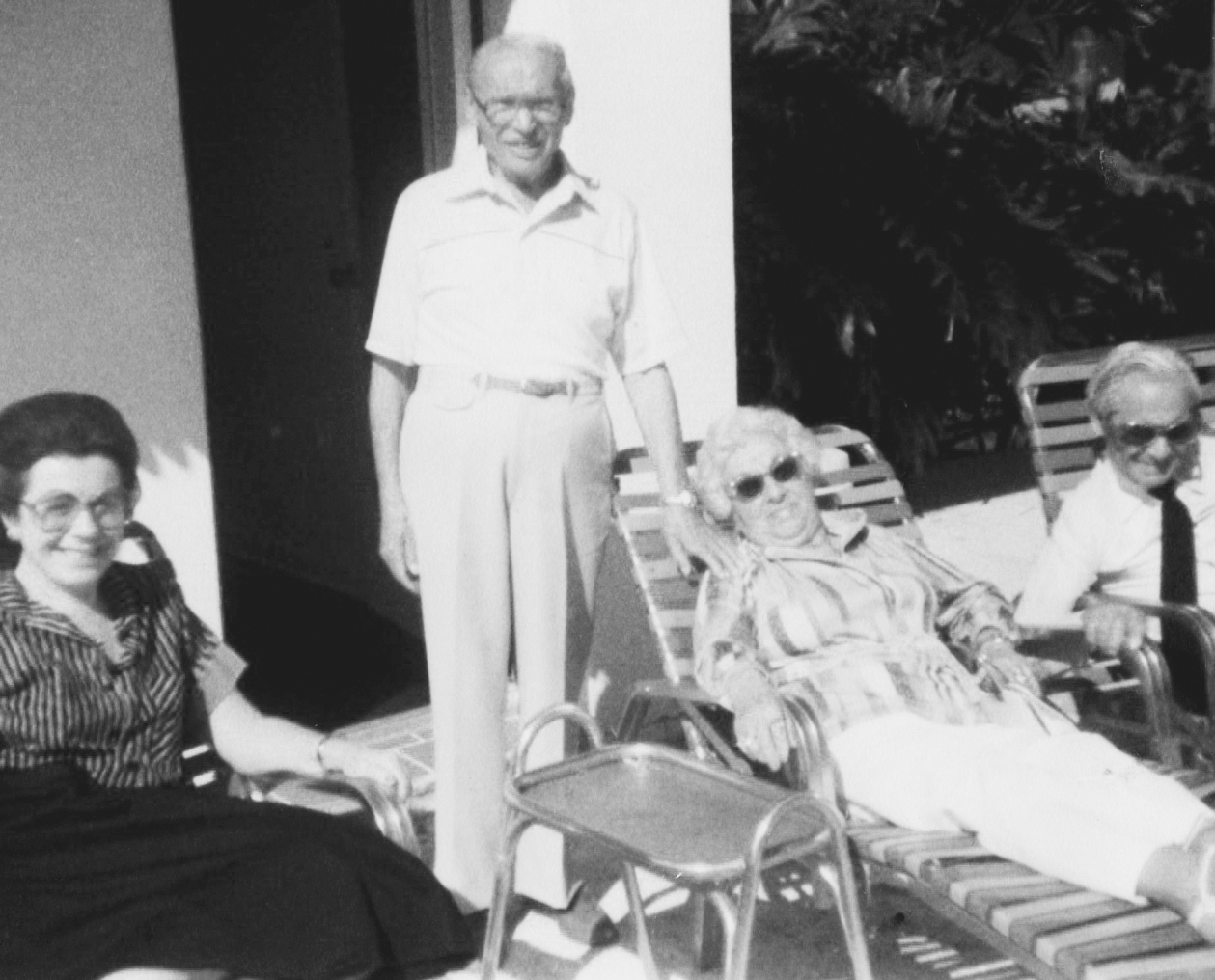
Izzy said he was eighty-five when he met Esther, which was a lie. He was closer to a hundred. She did not find out until she looked at his death certificate: Isidore Greenspun, born Motal, Poland, 1885; died Miami Beach, Florida 1983. That line is the story of the American Jews in microcosm.
Izzy went unexpectedly. The way Esther told the story, it was impossible to know if she was joking. “Izzy was doing the dishes,” she said. “I was in the bathroom. I heard a crash. I thought Izzy dropped a dish. It turned out what Izzy dropped was dead.”
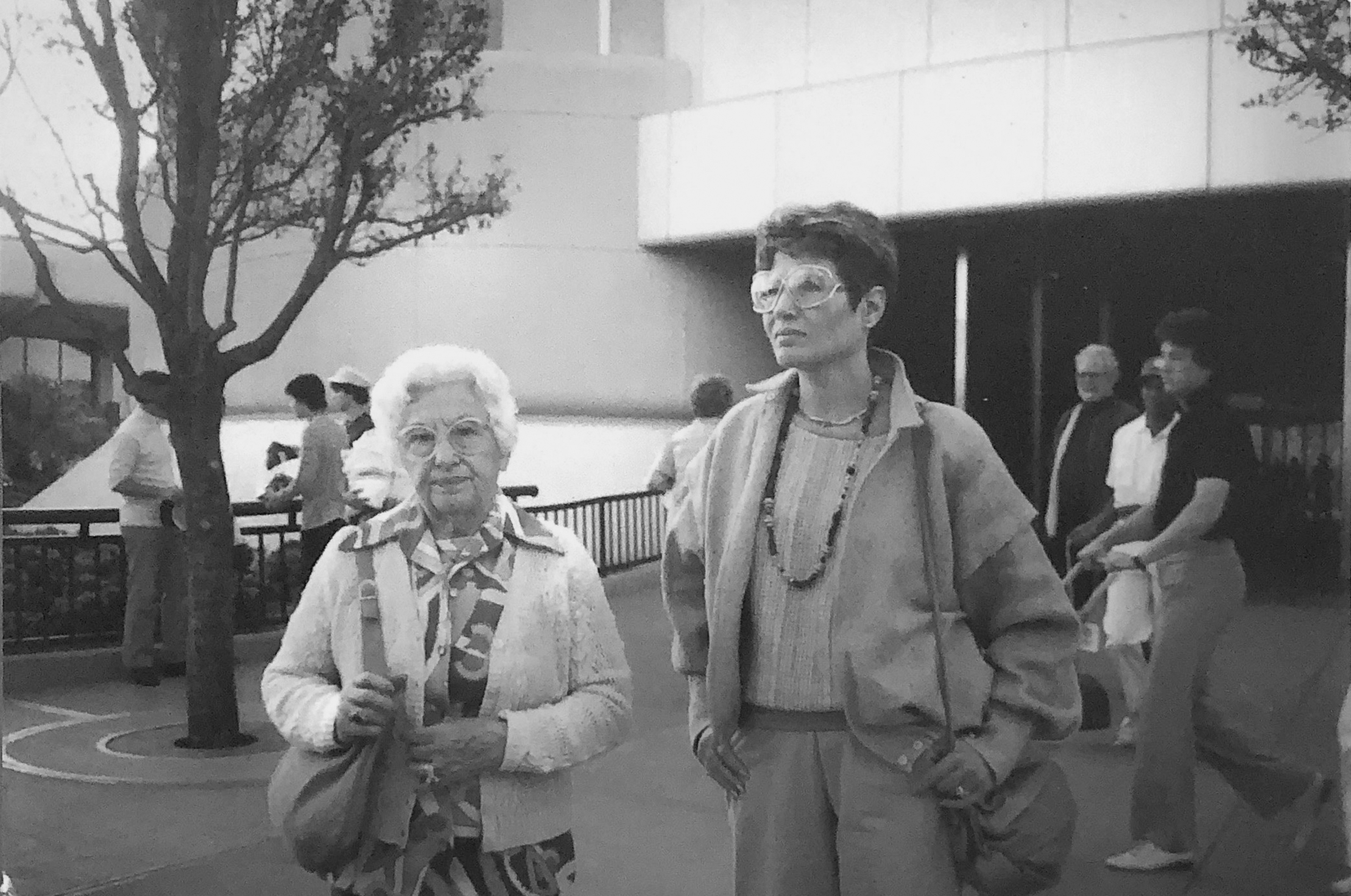
Izzy’s body was flown to Chicago for burial. It was my first funeral. Esther did not seem terribly upset. She cared, but not that much. She began to forget Izzy as soon as he was in the ground. In the last years of her life, she did not even remember Izzy. If asked about him, she’d look at you quizzically. On the buzzer of her condo, she was identified as “Mrs. Morris Cohen.” It was my brother who found the perfect words for the relationship: “Izzy come. Izzy go.”
When Esther turned ninety, Herbie and his sister, Renee, hired a nurse to help out around the condo. Esther’s body was strong—she was built like Mary Lou Retton—but her mind had started to slip. And she was lonely. Herbie enrolled her in a summer camp for seniors, where campers stayed in a grand old boardwalk hotel in Long Beach, Long Island. Every public space of the hotel had been painted a single color. There was a red room, a blue room, a yellow room. Steven still speaks of the “tragic beauty of the green room.”
Check-in was filled with Esther’s contemporaries, nonagenarians who’d been born in Europe before the Flood. Herbie bumped into a long-lost relative in the lobby, Aunt Helen, the “war bride” who met and married his uncle Nathan in Paris after the armistice. Herbie had not seen Helen since Nathan’s funeral, decades before. Escorting her carefully across the floor, Herbie said, “Hey, Ma! Look who I found.”
Esther gave Helen, whom she had not seen in thirty years, the once-over, then said, “That slut?” and turned away.
Esther did not make it to a hundred, but got close. For a time, she was one of the only living Americans born in the first decade of the twentieth century. With her generation, an entire sensibility—tough-minded, sarcastic, strong—exited the world. She suffered dementia at the end. She deteriorated in phases. At first, she’d get trapped in a detailed memory. For a time, she believed every day was January 3, 1974. She had just taken me to see a Jerry Lewis double feature. I was five. She bought me a sandwich. I dropped it. She bought me another sandwich, and I dropped that one, too! Cousins whom I had not heard from in years would call and say, “I’ve just been to see Grandma. Wow, is she mad at you!”
Then she spoke only of death, of being ready to die, of impatiently waiting to die. She said the Malamoufitz had lost her address. “He must have stopped at a party, had a few drinks, put it down on a counter, and lost it.” Then she could not remember what day or time or year it was, or even what country she was in. At the end, her mind settled on a single phrase, which she repeated: “I’m scared. I’m scared. I’m scared.” It was awful, and you wanted to help, but how? Everyone said this did not mean she really was scared, only that her mind had become stuck on these words, that it was like a mantra and might have been anything, but I’m not so sure. She really did seem scared. At one point, while she was sitting with my father—she’d been asking for Herbie; he’d been saying, “I’m here, Ma”—her mind seemed to clear. She stared at him for a moment, then said, “Do you mean to tell me that you are the original Herbie?”
It almost came as a relief when the Malamoufitz finally found her condo. Endings are sad because most lives seem only partially lived. You always have a feeling there was still more flavor in that gum. That was not the case with Esther. She got every bit of taste out of her piece.
My brother spoke at the funeral, as did my cousin David, Esther’s oldest grandchild. David is a well-known cardiologist. His words were beautiful, but I kept thinking of something Esther once asked him: “If you’re such a brilliant doctor, why are you bald?”
Esther was buried in a family plot on Staten Island. The gate was locked when we arrived. We had to call the caretaker. He apologized as he ran up, saying, “There’s been vandalism, swastikas and broken headstones.”
We drove in a caravan down narrow, weed-choked cemetery lanes. The plots had all been filled, the grounds allowed to dilapidate. Esther would be the last person buried there.
Morris’s father, Noah, the patriarch, was in the center of the plot, his stone higher than the others. A fresh hole was waiting for Esther, dirt piled beside it. She’d spend eternity beside Morris, who’d already been here for more than twenty years. As the coffin was lowered, my sister poked me and whispered, “My God, they’re burying her next to Helen the Slut.”
We stood in line by the grave, each waiting to throw in a spade of dirt. Before he tossed in the first shovelful, Herbie looked down at the coffin and said, “Here you go, Ma.”
We stopped at a diner on the way back to the city. Herbie was quiet. We talked as if he were not there.
“I’m an orphan,” he finally said.
“No you’re not,” said my brother. “David Copperfield was an orphan. Arnold from Diff’rent Strokes was an orphan. You’re sixty-five years old. How can you be a sixty-five-year-old orphan?”
“It doesn’t matter how old you are,” said Herbie. “When your parents die, you’re an orphan.”
“Then everyone becomes an orphan,” said my brother.
“That’s right,” said Herbie. “Everyone does become an orphan.”
No. 39
The deaths of his parents did not change Herbie’s personality, but they did change his sense of time. He seemed to know his days were numbered and intended to use them to prepare his children. His words became portentous and profound as his mother aged toward senescence. Every phrase seemed to take on a second, deeper meaning. He took renewed interest in the various projects of my life, from the serious to the inane.
As for the inane, take the example of the North Shore Screen Doors, the twelve-inch softball team I captained in the Glencoe Summer League during my college years. We played on a dirt field under stadium lights on Wednesdays and Saturdays. We won the championship that first season. The next season, some of our best players, having gained weight and lost motivation while away at school, seemingly forgot how to play. It was demoralizing. We couldn’t win a game.
Several teammates came to me in the way of an intervention. They wanted me to ask Herbie to take over as coach, because they loved being around him, because they thought he looked like Walter Matthau in The Bad News Bears, because they believed he could help.
I asked my father, assuming he’d say no. He’d taken a big advance from a publisher and was working like mad to finish his second book. Ellen had moved him to my old bedroom, which had been turned into an office. She connected the lights to timers. They went on automatically when he was supposed to start working and went off automatically when he was supposed to stop. From down the hall, I could hear the click, followed by Herbie, who, having been plunged into darkness, shouted, “Goddamnit! I’m a grown man!” But he was having trouble with the second book, so was looking for any sort of diversion. I’d approached him at a time of restlessness, boredom, and anxiety, always a dangerous moment to be in his vicinity, because that’s when Herbie sets off on quests.
When he said yes, I expected him to be a big-picture manager, interested less in batting orders and lineups than in atmosphere and wisdom. I was wrong. He spent a week watching us play, then scouted every other team in the league. Ellen was furious. The lights switched on and off, but the office was empty. When she confronted him—“When are you going to finish your book?”—he said, “Ninety-nine percent of deals close within an hour of the deadline.” When she protested—“You’ve already missed the deadline”—he said, “Then it wasn’t really the deadline, was it?”
Herbie asserted control in the second week, shuffling the batting order, moving the players to new positions, and recruiting ringers. Most astonishingly, he devised eccentric defensive shifts, a unique arrangement for each hitter in the league. On some plays, he deployed a single infielder and put the rest of us in the outfield. If a ground ball hitter was at the plate, he did the opposite, leaving the center fielder in place but moving everyone else into the infield. As in Germany, he was trying to beat the superior with the inferior. Game theory.
It worked, and we began winning, but I hated it. This was decades before such shifts became common MLB practice, and to my eye it looked silly and made us into a laughingstock. When I complained, he said, “They can laugh and we can win. To me, that’s a good trade.”
During what turned out to be our last game of the season—he’d gotten us into the playoffs—our argument went public. We stood on the pitcher’s mound during a time-out yelling at each other as what felt like the entire town watched. The bases were loaded. We were up by one. He wanted to intentionally walk the hitter—no one gets intentionally walked in softball—giving up the tying run but avoiding a batter he was convinced—based on scouting—would kill us.
When I refused, he ordered me off the field—I was playing catcher—and called for my friend Dennis, who’d never been in a single game, to replace me. I refused. Herbie cursed. I cursed back. He shouted at me. Then I said, “That’s it! You’re fired.”
He stopped, stared at me, looked at the team, looked at the people in the bleachers, shook his head sadly, then walked away. The crowd booed. I told our pitcher to go ahead and “pitch the goddamn ball,” resulting in the longest twelve-inch home run I’ve ever seen. The ball climbed above the lights and vanished into the dark.
No. 40
As for the important, take my grad school applications.
I was a senior in college. When Herbie asked what I planned to do after graduation, I told him I hoped to get a job at a newspaper or magazine. I wanted to be a writer.
“If you really want to be a writer,” he said, “you should go to law school. That way, if it doesn’t work out, you’ll have something to fall back on.”
I told him I did not want something to fall back on because people who have something to fall back on usually end up “falling back on it.”
We fought about this for months. He’d get mad, throw up his hands, and say, “If you know so much, do it your way. Don’t listen to me. What do I know? I’m only twice your age. Just don’t come back to me when you need help.”
Over time, the law school debate took on symbolic importance in my mind. I was fighting to make my own decisions and live my own life. I felt a tremendous sense of accomplishment when he finally backed off. It was not the bar mitzvah that made me a man, but this: I had battled the old man and won. The future stood before me like a great empty road.
Several weeks later, I began receiving skinny envelopes in the mail, rejection letters from law and graduate schools I’d never applied to. Herbie had filled out the paper work, written the essays, and applied in my name. Some of his choices struck me as ridiculous. Caltech? MIT? I’d only taken a single math class in college, and it was called the Fundamentals of Arithmetic.
“How did you ever think I could get into Caltech or MIT?” I asked him.
“The kids at these schools are the smartest math and science kids in the world,” he said. “Not just in the country, but the world. Everywhere they’ve been, they’ve been the smartest in these subjects. Now, for the first time, they’re going to be around kids who are just as smart or smarter, and it’s going to make them uncomfortable. They’re going to need different kinds of people around, people with a different kind of intelligence—creative people. I thought maybe that could be you. At Caltech,” he explained, “you’d be like the nose that can hear.”
I received twenty-five rejections that spring, and one acceptance. When I complained about the humiliation, Herbie said, “I’ve done you a favor, kid. You want to be a writer? Well, the toughest thing a writer has to deal with is rejection. Learning to ignore it and move on. I’ve prepared you for the future.”