
In 1940, Columbia Concerts, Inc., of New York took over the job of managing our singing tours. Freddy Schang became our personal manager; he guided and shepherded us for the next sixteen years. After our audition, Freddy had numerous suggestions. First, he said we needed to change our name from Trapp Choir to Trapp Family Singers. He thought that the new name would have more audience appeal and would better characterize us as a family, not just a group of singers. We agreed enthusiastically to the change.Choirwas too limited and sounded too serious.
His next suggestion did not fare so well. Freddy had the audacity to suggest that we, the ladies in the family, wear high-heeled shoes on stage! We all protested, and Mother was emphatic on the matter. “Our children were not brought up to wear high heels, and they cannot walk in them. What we wear is part of our native dress. Also, high heels are bad for the feet!” were her arguments. Freddy gave in. We were allowed to wear our own shoes on stage.
Freddy’s next request concerned our appearance on stage. Our dresses were fine, but our faces were too pale. Freddy convinced us that we needed to put on makeup, so we used a minimal amount before we went on stage. He had no complaints about the attire of the men in our group.
In our minds, his last request was the strangest of all. He wanted us to smile on stage! How absurd, we thought. We had given concerts all over Western Europe without cracking a smile on stage—concerts in prestigious concert halls that lasted two hours. We had received standing ovations in France, Belgium, Italy, and the Scandinavian countries without smiling.
Freddy had even more to say. He thought our concerts were too long and too serious, and they lacked contact with the audience. He told us that American audiences want “light, happy music.”
It was up to us to adjust to Freddy’s requests. Father Wasner went to the Music Library in New York to find “lighter, happier music” for our concerts. I am glad that Freddy did not find out that we knew many Austrian folk dances. He might have asked us to dance on stage too.
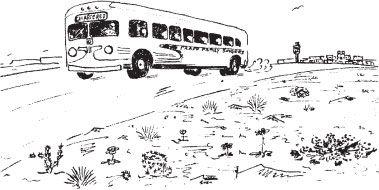
After all these changes had been made to Freddy’s satisfaction, and we promised to try to smile, he booked us as the Trapp Family Singers for a tour of 107 concerts over an eight-month period. Again we got into the blue bus with our new name written on it. Under our new management, Rudi was our driver.
The concert season ran from October to Christmas and from January until after Easter. Freddy Schang booked us from coast to coast with local groups, known as Community Concerts Associations, and we gave concerts all across the United States and Canada. We performed in the grandest concert halls of large cities: Jordan Hall, Boston; Orchestra Hall, Chicago; Masonic Auditorium, Detroit; and Town Hall, New York City, to name a few. We also sang in smaller cities where the people were hungry for music. For those concerts, we performed in high school auditoriums, movie theaters, churches, and colleges. In Washington, D.C., we sang in an outdoor amphitheater to thousands of people.
From the beginning, American audiences were appreciative of our concerts, congratulating us in letters or after the performances. In towns and cities, small and large, the critics gave us the most generous reviews. The following excerpts were taken from a mid-1940s souvenir booklet that did not give dates or names of publications:
One can scarcely imagine singing more touching than that of the Trapps. They are harmonious, very quiet, straightforward, and wholly united. They don’t go in for theatrical pathos or vocal effect. They sing the music and the words as sincerely as they might recite the Lord’s Prayer.
New York City, New York
A performance by the Trapps is a unique experience. It is an adventure in music mingled with an adventure in personalities. It begins with music and musicianship of the first order of integrity. Then there is the great appeal of the musicians themselves.
Toledo, Ohio
The beauty of the music recreated by the pure flute-like voices carried one far from the passions and sorrows of the world. It seemed that Fra Angelico angels had come to life.
Louisville, Kentucky
When the Family had completed singing, so taken aback was the audience that a full 30 seconds elapsed before it broke into applause…. Then the hall was filled with thunderous acclaim.
Houston, Texas
They possess a feeling for material, a craftsman’s pride in their skill to do it, and a profound musicianship: in the artist’s sense; a feeling for music akin to that of the peasant weaver or embroiderer—a desire to create with the materials in which they work the most exquisite fabric possible. And that is precisely what they do.
St. Louis, Missouri
A typical day on tour started with a 9:00 a.m. departure from the hotel. We often had hundreds of miles to travel in one day on the bus. En route, we noticed that Rudi didn’t stop immediately when we needed a rest break. He just kept driving, sometimes for a whole hour, much to our distress! Otherwise he was most helpful to a group of greenhorns from Austria. Rudi was not as well educated and polished as Mr. Tallerie, but by that time we knew a lot more about the United States of America.
Rudi was a good-natured man and an experienced driver. His driving skills were sorely tried on several occasions, however. On our way to Mt. Rushmore, Rudi was not sure he would be able to take the bus up the narrow, winding mountain road, but he was willing to try. Up and up he drove until we came to a tunnel. The bus was too high to fit through, so he could not continue. Papá told us to leave the bus, and Rudi backed down the narrow road to a place where he could turn around. After we reboarded the bus, he then drove us back to the little town where we found taxis to drive us back up the road right to the famous site. After all that effort, the sculptures of the four presidents were shrouded in thick fog. We could not see even the smallest detail of the giant portraits in stone. We stood in silence, disappointed that after all we did to get to this national monument, the presidents were hiding their faces. We said a short prayer.
Then to our amazement, the fog suddenly parted, and all the presidents were clearly visible. We could hardly believe our eyes. It was as if a curtain had been drawn back. The sun came out, highlighting the sculptures. It was like being in a show in an outdoor theater with a magnificent setting of rocks and pine forests. For a moment, we stood there, taking it all in. Then slowly the curtain closed, and the four presidents disappeared behind their shroud. All the effort to get there was worthwhile. In the meantime, Rudi had a little snooze in the bus at the foot of the mountain and vowed never again to try something of which he was not quite sure.
Another adventure was in Missouri where the roads are long and straight and the terrain is flat. There were few gas stations along the highway, so Rudi was driving as fast as possible. The roads were paved, but woe if anyone hit a soft shoulder. One day it happened to us! The bus suddenly went off the road and landed in the thick, sticky Missouri mud. Our bus was stuck deep in a muddy field beside the road. Rudi was frantic. He stepped on the gas, and the whole bus shook from right to left, like a ship on the high seas. We sat there with pale faces. No one said a word, but we wondered if Rudi would be able to pull the bus out of this mess. After a few anxious moments, which seemed like an eternity, the bus was back on the road, thanks to our excellent driver. Everyone sighed with relief.
Shortly after our first plunge into the Missouri mud, it happened again. This time, however, Rudi could not move the bus even one inch. It had sunk too deeply into the mud. A kind farmer came to our rescue with a team of sturdy farm horses. He had most likely rescued other cars before us. I thought, Perhaps this is just part of life in Missouri.
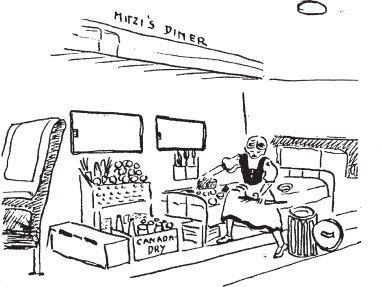
On the earlier tours, we had other challenges. We had to be extremely economical, so when we stopped at diners or cheap eating places, each of us could spend only twenty-five cents for lunch and thirty-five cents for dinner. If we had a long drive to the next concert town, we could not afford time for a lunch break and would have to eat at “Mitzi’s Diner” on our bus. That was lunch bought, prepared, and served by our sister Maria, whose nickname was Mitzi. The family is eternally grateful to her for this sacrificial service!
Usually around 5:00 p.m., we arrived at the hotel. We checked in and went to our rooms. Everything was well organized, including the designation of each one’s roommate. Then we ate at the hotel dining room or at a more economical cafeteria nearby. After dinner our driver took the concert luggage and two members of the family to the concert hall. There the instruments were unpacked: the spinet, the recorders, and Werner’s viola da gamba. They needed to be at room temperature before being played. Two sets of concert costumes were unpacked and ironed. The rest of the family followed. We dressed, made up, and prepared to go on stage.
Backstage we could hear the murmur of the audience, which sounded like an ocean. The lights dimmed, the curtains parted, Father Wasner gave us the key, and—there was silence. One could hear that famous pin drop.
During the first portion of the concert, which included sacred music, madrigals and recorder selections, we wore long white dresses with black vests, while the men wore black suits. Then at intermission we changed to costumes of the type worn on Sundays and feast days in the Austrian countryside. This part of the concert always included songs and yodels from Austria and folk songs of many lands. We included favorites of the area in which we sang. So in America, we learned songs like “Home on the Range” and “My Old Kentucky Home.” Often local managers brought us folk songs the night before a concert and asked us to perform them. In different countries these pieces were in foreign languages and had only one melody line. Father Wasner had to set the songs into more parts for us to sing, and we had to learn the language, text, and music by heart in one day’s time. In this way, our program was greatly enriched.
An unexpected addition to our program occurred in one of our Christmas concerts in Town Hall, New York City. Johannes, almost four years old, was with us on stage as Mother introduced the family. When Mother said, “And this is Johannes,” he turned to her and said, “Mother, I want to sing too.” A bit embarrassed and certainly surprised, Mother said, “But, Johannes, do you know a song that you could sing?” “Oh, yes,” he said loud and clear—“Old MacDonald Had a Farm.” Mother replied, “Well, then, go ahead and sing.” Town Hall reverberated with his “chick chick here and chick chick there.” He knew every animal on the farm, and to the delight of the audience, he sang all the verses. At his last “oink, oink, oink,” thunderous applause exploded from the audience.
Not understanding this sign of appreciation, Johannes was frightened and left the stage in a hurry. Backstage he announced to Rosmarie that if Mother asked him to sing again, he wouldn’t do it. Rosmarie did not take him seriously, so she failed to inform Mother of his strong feelings on the matter.
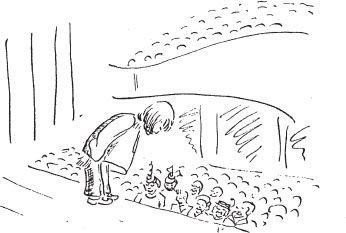
Our next concert was scheduled in Boston’s Jordan Hall. Again, Mother introduced the family members one by one. She had been pleased that Johannes’s solo was such a success in New York City, so after she introduced him, she added, “And now Johannes is going to sing for you.” “No, Mother, I am not going to sing,” he stated. “But, Johannes, I have told the audience that you will sing.” Again he announced that he would not sing. Mother shrugged her shoulders and made a helpless gesture toward the audience. Then turning to Johannes, she said, “All right. Then you can go offstage.” There was thunderous applause as the audience watched in rapt attention the struggle between Mother and her victorious young son.
After a typical concert, people from the audience would come backstage to compliment us on our performance. In some cities, there were receptions. As well meaning as these events were, we were sometimes so tired that we would have preferred to return to the hotel. Because we had to stand in a reception line and shake hands with so many people, we did not even get to eat. But it was touching to meet friendly and enthusiastic people throughout the country.
Papá was quite bored with shaking so many hands. Therefore, to amuse himself, he would count the people, in German, under his breath as they came through the line, making a gracious bow to each one. The audience members were thrilled when they met him because they thought he greeted them personally. Only Mother, to her amusement, actually heard Papá counting and understood what he was saying.
Then it was back to the hotel, and the next morning we left for the next city. Concerts were usually sung on consecutive days, except when the distances were so great that there was a day of travel between. Occasionally there was a day off when we could do laundry, mend stockings, shine shoes, and rehearse our music. Wherever we went we included sightseeing. Mother made sure of that, and in her conferences with Freddy Schang, she found out which important sights had to be seen on the next trip. We saw art museums, famous churches, extraordinary natural sites, and historic places. Had it not been for our extensive tours, we would never have seen these wonders.
On tour we children had our own fun occasionally. We composed a newspaper for our three authority figures: Papá, Mother, and Father Wasner. Johanna was the editor. We all got together in a hotel room to compose articles, poems, pictures, and cartoons of all kinds. In our newspaper, we tried to convey the thoughts and topics we felt needed to be communicated to our elders but could not be said directly. They were hand-drawn on plain light-brown wrapping paper, larger than any magazine. Since we needed a free day to create these important pieces of literature, we did them only occasionally; no regular editions were possible.
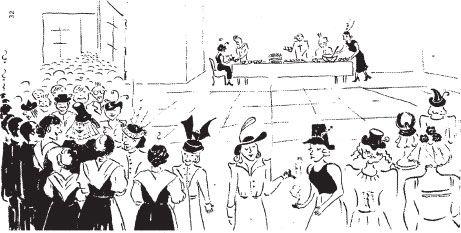
Much laughter accompanied the creation of these newspapers, so much so that Mother once said she wished she could be part of the fun. “You’ll have the fun when you read what we wrote,” we told her. Mother had a good sense of humor, and she enjoyed our creations. One of the issues was in honor of Papá’s sixtieth birthday in 1940.
We kept the newspapers for many years. To our dismay, they went up in smoke with many other keepsakes when our original home in Vermont burned in 1980. I still enjoy the memory of those rare days when we “children” got together for fun and laughter to create our family newspaper while on tour.
After our long tours, there were records to be made in New York City. Soon after we arrived in America, we recorded many of our songs for RCA Victor on 78-rpm records. Later we made records for the Concert Hall Society. We also recorded five albums for Decca Records. It was an exciting experience to work in recording studios of such high quality. Thank God for these records! By recording them, most of our repertoire—Christmas music, folk songs, recorder pieces, and sacred music—has been preserved and is readily available today. The recordings have moved along with modern technology and now appear as cassette tapes and compact discs for anyone who wants to know what kind of music the Trapp Family Singers really sang. Since the movie The Sound of Musicgained such popularity, it could be easily assumed that the movie music was the type sung by the Trapps. Far from it!
During the early years of concertizing, we returned to our “borrowed” home in Merion, Pennsylvania, to spend our vacations. In the summer of 1940, the whole Trapp Family sat in the garden in Merion, having after-dinner coffee while we enjoyed the cool evening. As we looked up into the starlit sky, we saw a dome of light form above us with occasional flashes of green and red lights on the outer edges of the dome. The dome itself was white—as northern lights usually are. For about forty-five minutes we watched this awesome sight and followed every movement.
Northern lights are not common as far south as Philadelphia. Little did we know that very soon, we would be directed north to a permanent home for the Trapp Family in America.
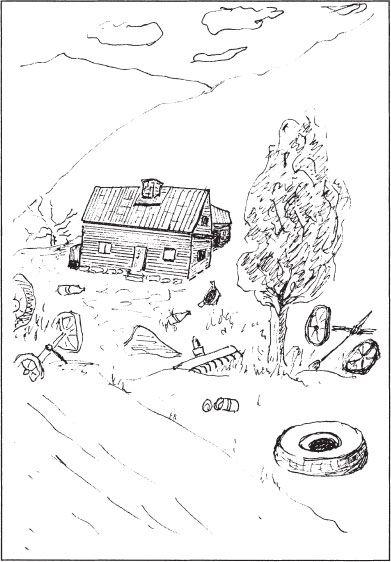
Our New Home in Vermont