
Threepenny Review
Winter 2008
In 1964, a man named Sam McGee cut a new version of a tune he’d first recorded in 1934: “Railroad Blues.”
In the way that McGee’s guitar seemed to have twenty strings and McGee himself four hands, he was a whole orchestra. In the way he shouted as his notes rushed past—shouting “Wah-HOO!” like Harmonica Frank Floyd recording “Rocking Chair Daddy” for Sam Phillips in Memphis in 1951, like Elvis Presley recording “Mystery Train” for Phillips four years later, an entire era later—in the way McGee aimed his voice at the sky, he was standing by himself on top of a mountain, alone in the world, not another sign of human presence as far as his eyes could see.
But whatever image came to mind as McGee’s “Railroad Blues” played, you couldn’t imagine the man who was spinning the song standing still. As the tune played, the player went from one place to another. And he was no longer merely Sam McGee. From the first move into the tune—an almost unbearably delicious downward swoop on a fat bass note, making you feel as if you were being lifted off your feet—from that first gesture, the player was something bigger, more various. He was Daniel Boone with faster feet; Johnny Appleseed with songs for pips; Cooper’s Leather-stocking with a sense of humor; Huck Finn as an old man, having long since discovered, in words Edmund Wilson wrote in 1922, “for what drama” his “setting was the setting.”
The drama was to make a sound that would prove to all the world that the world remained to be made, or even found. “Went to the depot, looked up on the board,” McGee sang for a first verse, taking a commonplace line and throwing it away, out of the way of the story he was telling with his guitar. “Went to the depot, looked up on the board / It read, ‘Good times here, but better down the road.’”
Whoever it is who’s playing, in an instant you can see him standing on a table in a bar full of drunks, and then in a concert hall, dashing back and forth from one side of the stage to the other as an audience of respectful folk revivalists sits thrilled and confused. You can glimpse a man walking into a barbershop looking for change, filling his hat, then tossing the coins back at the rounders like Levon Helm in the Band’s “Up on Cripple Creek,” telling the tale of what his Bessie did with her half of their racetrack winnings: “Tore it up and threw it in my face, just for a laugh.”
Who is this man—not Sam McGee, but the figure who comes to life as Sam McGee plays?
He is one of many figures who appear in American vernacular music as it was recorded in the 1920s and ’30s—who appear with such force, and such charm, such a broad smile or such an implacable scowl as to claim the whole of the country’s story as if it were his or hers alone.
It is incontestable, for example, that there is no room for the creature running through “Railroad Blues” in the nation established by Bela Lam and his Greene County Singers, as they recorded in Richmond, Virginia, when OKeh Records held a joint recording session there in 1929—which featured as well the Monarch Jubilee Quartet, the Roanoke Jug Band, the Tubsize Hawaiian Orchestra, the Bubbling Over Five, and eight other acts.
Born around 1870, dead in 1944, Zandervon Orbeliah Lamb was a big man with a big white handlebar moustache. The Greene County Singers were Lam (as OKeh spelled out his name), his wife Rose, their son Alva, and Rose’s brother Paul. In 1927, in New York City, they recorded a profoundly peaceful version of “See That My Grave Is Kept Green,” an old song about the countless unmarked graves from the Civil War that found its way into Blind Lemon Jefferson’s “See That My Grave Is Kept Clean.” In 1929 in Richmond, though, the sylvan glade was nowhere in evidence.
Bizarrely atonal banjo and guitar clang unpleasantly into even uglier singing, into nothing that can be called a rhythm or a melody, but rather a translation into music of a conviction so murderously complete, so uninterested in what you think you believe, that suddenly you feel very small—on the outside of a story that is yours whether you like it or not. The story of Jesus Christ, your Savior, come to take you, in the person of the Greene County Singers.
“Tell It Again”—the refrain sounds like “Kill it again”—is people rooted to their ground, certain no merely human force can move them an inch. “If Tonight Should End the World” is a procession of singers stumbling down the street—stumbling because they can’t keep time, because their harmonies are as arthritic as their hands must be, if their cracked and quivering voices are any clue to their age. But the music builds on itself, until you, too, are waiting for the end of the world. If tonight should end the world, then—what? They know; you don’t.
It isn’t that the faithful in “If Tonight Should End the World” would turn away from the man in “Railroad Blues” as a sinner, or that they would turn him away from their church. They don’t recognize him. He doesn’t exist. They are people who move into the settlement the railroad bluesman has just left, working hard, looking straight ahead, raising the church, building the town, so that when the man blows back into the place in a year or so, he won’t even know where he is.
To the Greene County Singers, free in their knowledge that history has already come to an end, free in the embrace of the Lord, the rounder is no more than a prisoner, a prisoner of his own animal appetites, and against people like him, their town has no need for a jail. Bela Lam’s banjo picks out “Crown Him” (“Lord above”), and you can feel that they are already in another world, even as they claim this one.
In the same way, it’s hard to imagine the free American in “Railroad Blues” countenancing the destroyed individual in Emry Arthur’s 1928 “I’m a Man of Constant Sorrow.”
It’s not, today, an obscure song. Bob Dylan recorded a version of it early in his career. As “The Maid of Constant Sorrow,” Judy Collins sang it with pseudo-Elizabethan preciousness at the height of the folk revival. The Stanley Brothers recorded it, and many more. In 2001, in the Coen Brothers’s film O Brother, Where Art Thou? George Clooney, John Turturro, Tim Blake Nelson, and Chris Thomas King—for the moment the Soggy Bottom Boys, with Dan Tyminski of Alison Krauss’s band the voice behind Clooney’s dashing mike work—swept the movie’s south with it, and you didn’t doubt for a minute that everyone there wanted to hear it more than they wanted to hear anything else.
But Emry Arthur, who in 1929 accompanied the banjoist Dock Boggs on guitar, who, Boggs recalled, “had been shot through the hands—he couldn’t reach the chords—bullets went through his hands,” was the first to record “Man of Constant Sorrow.”
Say the first lines: “I am a man of constant sorrow / I’ve seen trouble all my days.” They are instantly, overwhelmingly sentimental—and unless you completely ignore the lines as you sing, as the Soggy Bottom Boys do, going for speed and flash, they are impossible not to dramatize. As Dylan and Collins found, the more quietly you sing the lines, the louder they become—and the more of a poseur they reveal you to be.
Arthur bangs on his guitar as if he’s been shot through the hands. You can almost see the bones sticking out. Plink, plink, he says, no more musically than Bela Lam. “I am a man of constant sorrow,” he says plainly, as if he were saying “I am hungry,” or “I am cold,” as if he’s learned to say such things with dignity. “I have seen trouble all my days.” It’s that “have,” instead of the usual contraction of “I’ve,” that says what the singer is saying is not obvious, not common, not something you really want to hear about.
You can imagine the Greene County Singers trying to pull Emry Arthur into their fold. They would recognize him, if only because they speak the same blank language, the Greene County Singers singing as if they don’t care if you hear them, Emry Arthur as if he can’t believe anyone would listen. But why would the man in “Railroad Blues” even pause? In his thin voice, which imperceptibly moves from bitterness to acceptance, from anger to peace, the figure in “Man of Constant Sorrow” offers a kind of challenge, a rebuke to God’s gifts, and it’s this that will keep him out of Bela Lam’s church.
After a verse or two, the tunelessness of Arthur’s performance settles into a hurdy-gurdy beat, and you are no longer afraid of the singer. He has put you at ease, so he can put you on the spot, so he can show you how absolutely you will never know him:
Oh you can bury me in some deep valley
For many years there I will lay
And when you’re dreaming, while you’re sleeping
While I am sleeping in the clay
It’s the irreducible individualism of the details—details that rarely if ever moved into later versions of the already traditional song, perhaps because they communicate as so specific to a specific person that to appropriate them would be a theft no notion of the folk process could excuse—that seals its bottomless well: the unusual reference to dreaming, the use of clay, not mere ground. The singer goes on, after this verse, not in death but relating more of his travails, but he doesn’t need to.
Like the Greene County Singers, he has told a finished story: having done so, he has delivered a finished verdict on, in his words, “the land that I have loved so well.” If that nation, as it has composed itself into a republic, of which the singer is a citizen, has cast him out, then the country is a fiction, and there is no home for anyone—or ought not to be.
Born in 1900 in Wayne County, Kentucky, Emry Arthur died in 1966 in Indianapolis. He likely would not have recognized—or, maybe, would not have deigned to recognize—the Bob Dylan who recorded “Man of Constant Sorrow” in the early sixties, but he would have recognized the very old song “When First Unto This Country,” as Dylan sang it in 1997. Whether he would have recognized, or accepted, the majesty Dylan brought to a song as bereft as his own I have no idea.
Starting in the mid-1980s, Dylan, playing by himself, with acoustic guitar and harmonica, then later with a band, began working more and more traditional material into his concerts, old songs about knights and damsels, sailors and buffalo skinners, all sung without a trace of irony or doubt, just an awareness of one’s own smallness in the face of their enormity. Many were collected on the insanely rigorous nine-CD bootleg The Genuine Never Ending Tour: Covers Collection 1988-2000, which presented Dylan’s concert performances of songs by others organized into different discs for country, soul, R&B, folk songs, traditional blues, pop, and on, and on, right down to “Alternates and Retakes,” more versions of songs already appearing on the other discs—one last, obviously redundant piece of plastic, meant to squeeze another thirty dollars out of whoever was foolish enough to even think about buying the set. And this is where the action was. The first eight CDs make an enormous, colorless lump; in the last one, every genre mixed up, everything is alive. And here you find the version of “When First Unto This Country” that cuts.
“When first unto this country / A stranger I came.” You cannot say more; you cannot overdramatize. That is the whole story of the country, as surely as a TV Guide summary for the move version of Moby-Dick I once saw was the whole story: “A mad captain enlists others in his quest to kill a white whale.”
Dylan takes all the drama the song has. An electric guitar finds the hesitation in the melody, in the bass notes, and plays an actual overture. A wash of cymbal noise is like a wave lapping at the side of a ship; a muffled thump from the bass drum lets you feel the singer step ashore. And then everything slows down, as if, before the story has even begun, you must hear the ending—and you do. The theme has been stated, and it is elegant and fine, but beautiful in the way that you can imagine that the ruins of a Greek temple are more beautiful than the untouched temple could ever have been. A second electric guitar turns the melody into a count, and as the singer walks into America, his steps are measured.
He courts Nancy: “Her love I didn’t obtain.” For reasons he never gives—out of rage, a will to self-destruction, a sense of irredeemable estrangement from the land and the people who already claim to belong—he steals a horse. He is captured, his head shaved, he is beaten, thrown into prison, and forgotten. “I wished I’d never been a thief,” he says, tearing the words out, like Stevie Wonder at the end of “Living for the City” in 1973—not like Dylan himself in his sardonic rewrite of the song he’d learned years before he turned it into “Bob Dylan’s 115th Dream” in 1965. You can imagine the man finally free, moving from town to town, bar to bar, trying to find someone to listen to him. He repeats the first lines of the song, now with the finished story weighing down on every word: the first lines of the country.
All of these people—the happy man in “Railroad Blues,” the saved in “If Tonight Should End the World,” the dead man in “Man of Constant Sorrow,” the walking dead man in “When First Unto This Country”—are separate from each other, isolatoes, in Melville’s word from Moby-Dick, miles and miles between the church and this congregation of Ishmaels. “Good times here, but better down the road,” the man in “Railroad Blues” says with every note; neither the Emry Arthur in “Man of Constant Sorrow” nor the Bob Dylan in “When First Unto This Country” would hear that man any more than Bela Lam would suffer to listen to him. What these songs, these performances say, is plain: if this is a republic, it is fated to scatter. It was made to guarantee its citizens the freedom that was theirs by right, not to limit it; so everyone understands, and that’s the rub. Within the boundaries of that freedom, anything can happen, and everything will. If this is one republic, no one can see it whole; only the bravest can even think about it.
Now, when Sam McGee first recorded “Railroad Blues,” in 1934, he was just then stepping out of a hole that had opened up in the story of vernacular American music. Hundreds of people had come forth to begin to tell that story in the 1920s, when early in the decade it became clear to northern record companies that there were paying audiences for the kind of music they already knew, the stuff they could hear on a neighbor’s front porch or in the local barrelhouse, for blues, for ballads, for the folk-lyric hybrids of the two, for sounds that carried novelty, for sounds that were already called “old-time music.”
From all over the South, from Texas, New Orleans, the Carolinas, Tennessee, Kentucky, the Virginias, from Arkansas and Alabama and Mississippi, an America that had hidden in folktales and the unwritten journals of the wanderings of the first generation of African-Americans to be born out of slavery emerged from the shadows of family memory and solitary meditation. That America took the form of many bodies—prophet, trickster, laborer, gambler, whore, preacher, thief, penitent, killer, dead woman, dead man—but the queer thing was that this country was seen and heard almost exclusively by those who already lived in it. People bought records that reminded them of themselves, that gave them proof of their existence, that raised their existence from the dirt level of subsistence into a heaven of representation.
Then came the Depression, and the music market collapsed; communities that had harbored the stories the nation at large still had no time for collapsed in its wake. Subsistence was no longer the boredom of one indistinguishable day following another, but a real drama, and in this squalid tragedy a father spending the family’s only dollar on a phonograph record would have been a horror story. Record companies recalled their scouts, cleared their catalogues, closed their recording facilities.
By 1934 businesses had begun to reorganize, not because the economy had come back to life, but because people looked out at the ruins of their society and realized with a shock that they were not dead. When the recording of black and white folk music—much of it traditional, authorless and commonplace, much of it composed, little of it copyrighted, most of it entering the public domain as if it had been there forever, as if a blues as distinctive as Robert Johnson’s “Stones in My Passway” had been passed from hand to hand long before he was born—began again, it was on a much more rational basis than had obtained in the 1920s. Instead of the open auditions where local oddballs and families appeared in their strange clothes with Sears catalogue instruments and their neighbors’ or grandparents’ songs, professionals were favored; instead of music everybody knew and almost anybody could play, record companies looked for virtuosity, for the music only a few could make.
That is where the first “Railroad Blues” came from. Born in 1894, Sam McGee lived until 1975, when he was killed in a tractor accident. He played and recorded for years with Uncle Dave Macon. He could play anything, and when he recorded “Railroad Blues” in 1934 he sounded as if he were in a cutting contest with himself. It’s brilliant, the way an instrumental phrase goes down like a yo-yo and then slips right back up, now you see it now you don’t. But there is something missing, something only the version McGee made precisely thirty years later reveals.
The 1934 “Railroad Blues” puts the spotlight on the performer himself, the guy who can kick it like nobody else, the fastest gun-slinger in town. But in 1964, something closer to what happened when vernacular music was recorded in the 1920s was taking place. Many of the people who made that music were different from those around them: they had more nerve, were less afraid of the shame of failure, had a deeper belief in themselves, took greater risks—the risk of appearing before a businessman in a suit who more than likely would send you away as no better than anybody else. Robert Christgau writes tellingly of Dock Boggs, Boggs passing an audition in his hometown of Norton, Virginia, in 1927, then traveling to New York to record his scary, damned tunes about death, but “so full of beans” at the chance he’s gotten he can barely contain not his rage, his resentment, his sense of exclusion, his fear of embarrassing himself in front of New York sharpies—not that, but “so full of beans” he can barely contain his joy.
You can hear the like of this all through the generic but also unique discs Harry Smith compiled for the anthology he at first flatly called American Folk Music. That thrill at the chance to speak, even only as a faraway premise, to speak one’s piece to the country, even the world at large (the Sears catalogue not only sold banjos to people like Dock Boggs or Uncle Dave Macon, it made their 78s available in Japan, Turkey, and Tierra del Fuego), had to be at the root of the peculiar spell so many of the folk recordings cast on the present when Smith rereleased them in 1952, and the spell they cast today. When, in the 1960s, folk revivalists sat before such 1920s and ’30s heroes as Mississippi John Hurt, Clarence Ashley, Boggs, Buell Kazee, Skip James, or Son House, they might have celebrated them as representatives of a people, of the People, as the folk musicians of the Folk—but as they listened, as they watched, as they were thrilled, they may have been responding less to what made these musicians part of a folk than to what set them apart from their folk: their ambition, their inner drive, their inability to tolerate their fellow human beings.
But the music was nothing if not a mystery, the mystery that occurs when a version of a nation’s story has been excluded from the story as it is officially told is suddenly offered to the public. That is what happened in the 1920s, when southern musicians produced their version of America: taken together, they argued for a more contingent life, a less absolute death, an America where nothing was impossible and no settlement was ever final. In this mystery, the radical individualism one can hear in ’20s folk music is always questioned, and by the same voice.
One of the most shadowy features of the music, one of the most queer, is an element of anonymity, the way the performer seems to step back from himself or herself, back into the community of which the performer was a part—or, if the performer was not part of a community, or sounded as if he or she could not be, the anonymity of the way the performer seemed to slip back into the oblivion where he or she lived alone, like Paul Muni stepping back from the camera and into darkness at the end of I Was a Fugitive from a Chain Gang. “How do you live?” the fugitive is asked. “I steal,” he says.
When the tension between the self-presentation of the artist and the anonymous, even seemingly bodiless being behind the artist comes to a verge, the result is something no less exciting, no less unsettling, than the appearance of the radical individual—and this is what I think is happening in Sam McGee’s “Railroad Blues” as he recorded it in 1964.
This is no longer the experienced sideman stepping out to claim his own career, to record under his own name, to show off all the tricks in his bag. Something bigger is happening—and a country with more room in it than the country present in the 1934 version comes into view. You are hearing someone who has seen all around the country, its past and its future, and he has made a remarkable discovery: America has never changed and it never will.
In the version of the republic that is enacted in “Railroad Blues” in 1964, nothing matters but movement: how you move. How you carry yourself. The promises you make in your very demeanor, the way you walk, the way your clothes fit, the way your expression fits your face, the way your face somehow changes everything you see. The specter in the music emerges immediately: the pioneer, the wanderer. In his freedom, he threatens those who stay home, working, saving, hoping, frightened—but he also leaves a blessing. Without living his life, you are allowed to know how it feels.
So it is no longer Sam McGee but a kind of abstraction who offers “Railroad Blues” in 1964—or in 2002, twenty-seven years after his death, on a Smithsonian Folkways collection called Classic Mountain Songs, which is where I first heard “Railroad Blues.”
When McGee recorded in 1934, that signpost was crucial, the kickoff to the record. “Went the depot, looked up on the board / Went to the depot, looked up on the board / It read, ‘Good times here, but better down the road.’” In 1934 that was a direct and specific political statement. It had to be said; in 1934, in the ditch of the Depression, it was the last thing anyone could take for granted, if they could believe it at all. The same words are said in 1964, tossed off, but as an event in the music, they have already happened.
That swoop, that astonishing lift, that fat note breaking into a thousand glittering fragments as the strings shake, has already called the train before a word gets out of the performer’s mouth. The high notes are no longer a virtuoso’s calling card—they have a life of their own. Thinner with every measure, so they can reach farther, their pace quickening, even as a bass note says “not so fast,” the notes shoot out into the air and hang there fading, until you’re sure they’re gone—but the way the next movement picks up off the note you’re still trying to hold in your memory tells you that the note was never gone at all.
That’s what’s uncanny—the sense that the truest tales the country can tell about itself must be incomplete, unfinished, left hanging in the air, so that whoever finds them can take up the story in the middle. And that, finally, is what took place near the beginning of this story, if this story is about a certain historical emergence of certain versions of the American story.
The one piece of music I know that sees every Gothic, pious, drunken, murdering, thieving, loving figure moving through the old American music for who he or she is, and embraces them all, is Richard “Rabbit” Brown’s “James Alley Blues,” recorded one day in New Orleans in 1927—the only day Brown ever recorded.
Brown lived and died. That he recorded only once is like Melville neglecting to keep Hawthorne’s letter about Moby-Dick, the letter of which Melville could say “a sense of unspeakable security is in me” because Hawthorne had, in Melville’s unbearably direct words, “understood the book.”
The smallest, most modest notes creep out of Brown’s guitar like tadpoles, swimming in search of their melody, their rhythm. A bass note gongs, shaking the air. Nothing is pressed. An old, ragged voice, now sour, now laughing at its own sourness, begins to tell a story about a marriage. He snaps at his strings to drive a point home, but every time he does, that weird gonging is there, pulling the real story away from the story being told.
When Jerry Leiber and Mike Stoller produced the Drifters’ “There Goes My Baby” in 1959, for the first time layering the equivalent of a complete symphony orchestra over a piece of rock ’n’ roll, the effect, they said, was like a radio dial stuck between two different stations. You can imagine that Rabbit Brown’s “James Alley Blues” could have had a similar effect for those few who heard it—except that it would have been as if the performance existed between different eras, different lives, different ways of understanding the world and, like “There Goes My Baby,” made you understand that those differences are meaningless. That was the meaning of that mystical gonging behind the prosaic facts the singer was relating; that was the meaning of the small searching notes that shot out ahead of every theme, blindly seeking a destination that could never be named.
It was those tiny, seeking notes that Sam McGee would seek himself in 1934, but not truly capture until three decades after that. He would from the start cast off the fatalism those notes carried. The thick, fat notes McGee would use to symbolize escape and liberation—that swoop, down and up, up and out, that “If you don’t believe I’m leaving you can count the days I’m gone”—the notes that in “James Alley Blues” are filled up by Brown’s echoing, flapping gongings, not warnings of what might happen but portents of what will—in McGee’s hands, those notes will no longer speak of death.
In “If Tonight Should End the World,” “Man of Constant Sorrow,” and “When First Unto This Country,” the singers value nothing so much as death—and “James Alley Blues” has room for them too. The small notes in “James Alley Blues” move like mice scurrying from one room to the other, never stopping, and the house only gets bigger. The man singing “James Alley Blues”—and you have to imagine him small, wiry, wary, moving carefully, smiling, looking over his shoulder—welcomes them all, and they enter his house, because they sense that he knows more about death than they do.
But that is not all Rabbit Brown knows. “Railroad Blues” is frank about the fact that it is made for pleasure; it is an argument that freedom is more pleasurable than death. “If Tonight Should End the World,” “Man of Constant Sorrow,” and “When First Unto This Country” are arguments that death is more meaningful than pleasure—arguments that hide their power in passion or the perfection of form, elements of performance that give pleasure because their beauty makes it seem as if their arguments are true.
But Rabbit Brown knows something about pleasure that, it seems, no one else does; he knows how to give pleasure as if it were the gift of a guardian angel. What he leaves behind—the sense of a place that is so big there is room for anyone, a place that is too big for anyone to escape—is exactly a story that can only start in the middle, with whoever might be telling it unsure if he or she should go forward, or go back.
Sam McGee, “Railroad Blues” (Champion, 1934), collected on Sam McGee: Complete Recorded Works in Chronological Order, 1926-1934 (Document, 1999) and on the anthology Times Ain’t Like They Used to Be, Vol. 5 (Yazoo, 2002).
———. “Railroad Blues” (1964), collected on the anthology Classic Mountain Songs (Smithsonian Folkways, 2002). Originally released on McGee Brothers and Arthur Smith, Old Timers of the Grand Old Opry (Folkways, 1964).
Bela Lam and His Greene County Singers, “Tell It Again,” “If Tonight Should End the World,” “Glory Bye and Bye,” and “Crown Him” (OKeh, 1929), collected on the anthology Virginia Roots: The 1929 Richmond Sessions (Outhouse 2002).
———. “See That My Grave Is Kept Green” (OKeh, 1927), collected on the anthology Rural String Bands of Virginia (County, 1993). See also Bela Lam with Rose Lam and a little boy filmed in front of a sharecropper shack performing “Poor Little Benny,” on the video anthology Times Ain’t Like They Used to Be: Early Rural & Popular American Music, 1928- 1935 (Yazoo DVD, 2000), a performance that can also be found on YouTube.
Emry Arthur, “I’m a Man of Constant Sorrow” (Vocalion, 1928). Collected with “Reuben Oh Reuben,” “She Lied to Me” (both 1929) and “Short Life of Trouble” (1931) on the anthology The Music of Kentucky, Vol. 2 (Yazoo, 1995). See also “I Am a Poor Pilgrim of Sorrow” by the Indian Bottom Association of Defeated Creek Church, Linefork, Kentucky, an Old Regular Baptist version recorded in 1997 by Jeff Todd Titon and collected on Classic Mountain Songs.
Bob Dylan, “Man of Constant Sorrow,” Bob Dylan (Columbia, 1962).
———. “When First Unto This Country,” from “Alternates & Retakes,” The Genuine Never Ending Tour Covers Collection 1988-2000 (Ashes & Sand bootleg). See also the uncanny performance of the related “Sometimes in This Country” by Lee Monroe Presnell of North Carolina, recorded by Ann and Frank Warner in 1951, collected on the anthology Her Bright Smile Haunts Me Still (Appleseed, 2000). “We are accustomed to looking at photographs of people born before Washington died,” Jeff Davis writes in his notes, “but we are not used to hearing their voices.” Presnell was born in 1876; unaccompanied, he sang as if it were 1776. Live versions of “Man of Constant Sorrow” and “When First Unto This Country” from between 1988 and 1992 can be found on the remarkable Dylan bootleg Golden Vanity (Wanted Man).
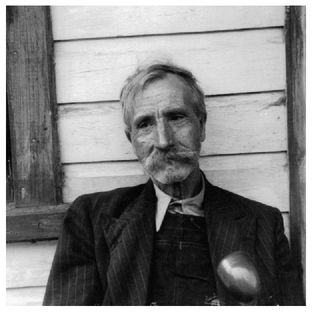
Soggy Bottom Boys, “Man of Constant Sorrow,” ghost vocal by Dan Tyminski as George Clooney, John Turturro, Tim Blake Nelson, and Chris Thomas King tear it up on screen, from Oh Brother, Where Art Thou? Soundtrack (Mercury, 2000).
Richard “Rabbit” Brown, “James Alley Blues” (Victor, 1927). Collected on Anthology of American Folk Music (1952; Smithsonian Folkways, 1997), and on The Greatest Songsters: Complete Works (1927-1929) (Document), which also includes Brown’s other four recordings: “Never Let the Same Bee Sting You Twice,” “I’m Not Jealous,” “Mystery of the Dunbar Child” (for the mystery behind that, see Tal McThenia’s report “The Ghost of Bobby Dunbar,” This American Life (14 March 2008, http://www.thisamericanlife.org/Radio_Episode.aspx?episode=352), and the unforgettably gleeful “Sinking of the Titanic.”