
ACT III
Robert Altman abandons—and is abandoned by—Hollywood, sells his studio, sells his Malibu movie-star house, films plays, films operas, moves to Paris, becomes a “Player” again, gets a new heart, loses a kidney, collects his Oscar, embraces his family, and goes out with his boots on.
*
CHAPTER 23
*
ROBERT ALTMAN: It’s hard to take the idea that maybe you’re not that different from everyone else when you’ve spent all your life trying to convince other people that you are different. And consequently, you’re trying to convince yourself that you are different. You’re trying to live up to the myth, and before that, you’re creating a myth. I created this myth and now I have to live up to this myth.
* * *
STEPHEN ALTMAN: After Popeye, it got very rough. He was right at the top. Popeye spiraled him down to nothing. Nobody wanted to deal with him. I don’t know if I would have been able to deal with that.
JERRY WALSH (friend/lawyer/executor): He went through a period where he had a hard time raising money to do anything. He didn’t wear his heart on his sleeve, really, but I just knew there were times when he wasn’t working on something, he wanted to work on something. He couldn’t because there was no money, and people would not answer his phone calls. That’s the thing he complained about the most. He always wanted to be in touch. He always answered his phone calls. You called Bob Altman in the middle of a film or when he was juggling fifteen balls at once, and by the end of the day you had a return call—and I wasn’t alone in that. He just never ended a day without responding to everybody trying to reach him unless he just didn’t want to speak to the person, but it wasn’t because he was too busy. He would always make time. And it drove him crazy that Sam Cohn wouldn’t answer his phone calls. He forgave Sam for it, but he used to say, “It’s just a sickness. I don’t understand it.”
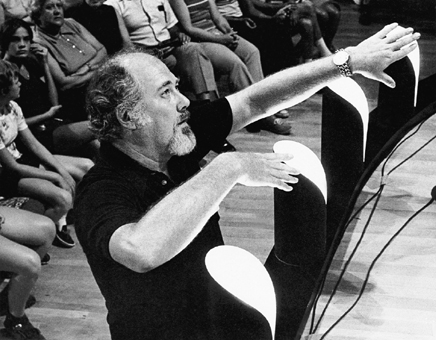
Directing one of his Stage Productions in the 1980S
As he said: “I’m a very extreme personality. I always have been. It’s just the way I am.” Think about the difficulties he had in the forties and fifties getting started, followed by the tremendous success of M*A*S*H and the big contract that let him do four or five big movies. The relief from the frustration and failures of the sixties, released by M*A*S*H and those other things, into the seventies where he was the king of the world—buying the studio and going to get into the music business, and the big house in Malibu—the ego was probably just over the top. Then to get into the late seventies and hit the wall, which he did, was probably very hard for him, I think.
SAM COHN (agent): I saw Bob really angry lots of times. It didn’t last long, and never on the set. It was primarily at the suits.
One of his precepts was that he was going to create this group of people who would be together—and the demands on him financially were substantial. He thought that was the way movies were supposed to be made—the same guys doing it over and over again. In some instances he had to use his own money to pay them. Bob and his actors always remained good friends—even if the movie was a dog.
He was very important in my life—because of his guts and heart.
MARK RYDELL (actor and director): He wasn’t the flavor of the month at that time. But Bob had a remarkable elasticity; his ability to come back was brilliant, it was incomparable. Very few people could survive a series of bad pictures, you know? You make two bad pictures in a row and you’re out of the business. It’s not so much bad pictures—they may be wonderful. Pictures that don’t work commercially and financially. But Bob never let the industry beat him. He created his own initiative. He went out and got the money to make his pictures. He rejected the status quo and wouldn’t be deterred. If he wanted to make a picture he would see that it got made. He would fucking get the money somewhere. I admired that immensely.
When jobs were tough to come by, he’d say, “There’s no need to worry. I know there’ll always be someone to come along and hire me, just to add a little class to their life.” You’ve got to laugh, you’ve got to love him.
DAVID LEVY (producer): Right when Popeye was released we were preparing a film called Lone Star based on the stage play by Jim McClure. And that project was put in turnaround, which meant death. Literally the week of the Popeye release, or within a week. It didn’t live up to the expectations of certain people. Expectations count for a lot, and Bob didn’t help his own cause. You know, I remember him around this time, I don’t know if you can find this stuff, but he gave an interview or two and referred to Diller and Eisner in uncomplimentary terms. That couldn’t have helped matters at all. I think certain powers that be in this town just decided it wasn’t worth it to them. It’s like, “Fine, I’ll take a risk, but I don’t need to be called names in the press on top of it.” So we had a project put in turnaround right away at that time. And it was very much a time in the wilderness.
After Popeye there was that eight-year period where he was grabbing a lot of different kinds of work ranging from operas to television plays to what have you. He would do what he could do, basically. Eighty-one, eighty-two were very painful times. He sold the facility, Lion’s Gate. Basically he felt he had to—I still maintain there was a way that maybe it didn’t have to happen. I wished that weren’t necessary, but he felt it was.
Physically, at Lion’s Gate you had three levels going on. In the basement—this seems so funny now—you had wardrobe and a prop shop which was basically chock-full of stuff from movies past that could maybe work again in the future or who knows, be rented or sold or what have you. In the final days of Lion’s Gate we literally were taking it out to swap meets in Pasadena. The last months in that building, I turned from his executive assistant to a moving man along with a couple other guys. We put stuff in Scotty’s house until the other shoe dropped and he figured out where he was going to be. On the lower level, it was a combination of editorial suites and the dubbing stage. A good one. A place where you could do all the final work on any kind of picture. We certainly did on Popeye and others of his, but it was also used by other movies. I know Alan Pakula did Starting Over there. So that was the street level, the ground-floor level. And then upstairs was primarily what might be called executive offices, ranging from Bob’s and mine, Scotty’s, that sort of thing. Bob had his own publicity operation there. He had, in a way, his own distribution entity, although that was starting to go away by early ‘79, when I got on board. Again, it was supposed to be a studio. A development team, an art department for titles and graphics, accounting department, all this was on the second floor. So the idea being you could walk an idea into the building and it could come out the other side a finished film.
LEONARD COHEN (singer and songwriter): He either told me this or I saw this: While he was sitting with some of his scriptwriters and production people working on one of the next films—this would have been a few years after we met—the creditors were coming and removing furniture. I think that actually happened and he had this wonderful kind of gleeful sense of abandon that things couldn’t get much worse.
DAVID LEVY: I think things had gotten to a point where to maintain the status quo was just too hard. At its peak, that place had over fifty employees. The idea was to pay them a salary fifty-two weeks a year. So it wasn’t just about, “Oh, you get a check on a project or checks on a project and then you go fallow for six months.” So, a lot of overhead. He was a bit of a micromanager. He got too involved in the business aspect of things. He was too—I won’t exactly say hands-on—but too interested. Instead of getting experts and letting them do their thing and letting them try and market the thing, it was too much about it being his toy or serving his individual needs. And his career was at a point where that wasn’t enough to sustain a facility and a payroll like that. It just wasn’t. So it got too hard. It was too grand. When he was going in that building and building that company to another level, he was producing a Robert Benton movie, he had a Bob Young movie, he had an Alan Rudolph picture. It wasn’t just about him, but then when those movies don’t perform and the thing couldn’t grow, it really only had one direction to go because he wasn’t interested in just having a building and machines that other people would use. It was never just about, “We’ll serve the film community.” It was never just about, “Let’s turn a profit with this thing.” It was about serving him and the artists and the projects that he wanted to do, and they just weren’t sustainable from an economic standpoint.
That’s sobering, to know that you’re turning stuff out and the marketplace is not receiving it, and your reps are not able to make deals on your behalf that are going to enable you to continue bankrolling a business of that magnitude. It was supposed to be a mini-studio where he and the anointed could thrive, do their thing, and create. And he had to turn his back on that notion.
I still remember the day he made the decision. He got on the phone with Kathryn—this would have been, I guess, in ‘81. He said, “The way I see it, we’ve got twenty good years left.” Well, I’m pleased he was wrong about that—he at least had twenty-five and she’s still with us. “And this is what we’re going to do. We’ll base out of New York and sell the place in Malibu Cove.” God, I loved that place. He just had to regroup.
KATHRYN REED ALTMAN: We didn’t sell Malibu for money. We were leasing it to Diana Ross while we were in Paris. While she was there, Dyan Cannon married this wealthy guy, and she wanted to know if there was any way she could buy it. They came up with a big offer. We never put it on the market. We just sold it.
DAVID LEVY: I think he was under a lot of pressure and I think he wanted to wipe the slate clean and start fresh. He always had a tremendous belief in himself. Other people might disagree, but he was terribly shrewd about money. I remember he used to say to me, “You never want to be more than this much above water”—holding his hand up to his nose. In other words, he felt the money was there to be used, whether it was in life or in the work or what have you. He wasn’t interested very much in this idea of security or nest eggs or anything like that. But I daresay that at the time he sold, the water wasn’t up to his nose, it was well over his head.
FRANK SOUTH (playwright): It wasn’t an easy time. He and Kathryn and I were in his apartment in New York and he had just gotten off the phone. And he said, “I’ve got to sell everything.” There was a hardback chair right up against the wall, and he just sat down in it. He was going over things in his head and he had hit a point of having to make a decision. He said, “I just can’t believe it.” He looked at me and said, “I’ve even got to sell my car.” I said, “That was a great car.” It was a brand-new brown BMW, and he had loaned it to me when we were in Malibu to drive to visit my great-aunt. He said, “Yeah, it was.” Then he said, “I’ve got to sell the house. I’ll get a couple million for that.”
Watching the two of them deal with this without any embarrassment was really something. Kathryn didn’t say, “Bob, not in front of guests,” or “Let’s not talk about that now.” I can’t remember exactly what she said at the time, but it was along the lines of, “It doesn’t matter. Just things. Doesn’t matter.” She was so real. When Bob was at his lowest, she was there. Just a positive force. Just wouldn’t ever let him be down on himself or blame himself. He would get kind of lost in the “Oh God, oh God.” She was always ready to say, “So what? We’ll do something else. We’ll be fine.” Bob didn’t like to be vulnerable very long. He was down and then he said, “Okay, we’ll do something else.”
KATHRYN REED ALTMAN: There were a lot of those periods and they always scared the hell out of me. But he always bounced back. I don’t remember dwelling on that particular one that Frank mentioned, but I’m sure it happened. And then Bob made things happen. But I have no memory of things staying down. I’m sure they did. And I’m sure I said, “Well, where should I cut back or what should I do?” And he never dwelled on it and he never talked about it that much. And it never stayed down. I never had to skimp and say, “We’ve only got this much money to do this or that.” We always seemed to keep on trucking and flying and, you know, doing all the stuff.
FRANK SOUTH: During that time he was really pasting it together and risking a lot. But he walked away from L.A. during this time and I remember him sitting in that chair and realizing that he was going to sell it all. He had managed to beat the odds and thumb his nose at pretension and money-centered nonartist ways of thinking in Hollywood for a good long period of time. But he had to walk away from there.
Aljean Harmetz, story headlined “Robert Altman Sells Studio for $2.3 Million,” The New York Times, July 11, 1981: Robert Altman’s Lion’s Gate Films has been sold for $2.3 million to a group headed by Jonathan Taplin, producer of “Mean Streets” and “The Last Waltz.” Mr. Altman—the prolific and controversial director whose movies include “M*A*S*H,” “Popeye” and “Nashville”—has recently retreated from film making in the wake of a number of commercially unsuccessful movies, including “Quintet,” “A Perfect Couple” and “HealtH.”
“Suddenly, no one answered my phone calls,” Mr. Altman said in a telephone interview from Montreal. “I had no place to turn.” The maverick director whose greatest commercial success was “M*A*S*H,” 11 years ago, put his company on the block last winter in the wake of financial claims and counterclaims with Paramount Pictures over the budget of “Popeye” and the collapse of his next project, “Lone Star,” at United Artists.
“I feel my time has run out,” he said today. “Every studio wants ‘Raiders of the Lost Ark.’ The movies I want to make are movies the studios don’t want. What they want to make, I don’t.”
STEPHEN ALTMAN: He got offered to do M*A*S*H II for five million dollars. That was more than anything he’d ever made. He was like, “No fucking way. I’m not doing that. M*A*S*H is not my movie anymore. There’s a TV series. Everybody took it away from me.” He wouldn’t do anything like that. He would never get involved in those paydays. He said, “They won’t hire me for anything else except stuff they have control of.” He needed final cut. He needed it to be his picture. He needed it to be his way, so you know, you only get so much money for working off of your name.
Was he different? No, he was the same all the time. When he was down and out he was still the king and when he was the king he was the king. It was just, he could afford better offices. He lived the same. Everything was always the same for him. That was one of the things about “the genius” and “the failure.” I don’t think he ever believed any of that. “The award, yes, I want the award. But it doesn’t mean anything.” He did really believe that. “I don’t care what you think about my movie, I’m doing this for me. You know, it would be nice to make some money, but first I’m making the film.” I mean, he could always have made the payday. And kept working and segue into a TV series and been fat and rich. But the importance to him was doing what he wanted to do as he wanted to do it, and being in charge.
MICHAEL MURPHY: He’s never defeated. Nobody could defeat this guy. He suffered a lot of slings and arrows, but he was never defeated.
Robert Altman, unused footage from Fox Movie Channel Documentary Robert Altman: On His Own Terms: In the eighties people would say, “Oh, gee, it’s a shame that you’re, you know, you haven’t done anything for so long.” I’d say, “I do two pictures a year.” I have constantly got a project.
* * *
2 by South—Rattlesnake in a Cooler and Precious Blood (1982; First presented at Los Angeles Actors’ Theatre and St. Clement’s Theatre, New York)
David Sterritt, story headlined “Robert Altman’s Sudden—and Auspicious—Stage Venture,” The Christian Science Monitor, October 27, 1981: A few months ago Robert Altman sold his production company—Lion’s Gate Films—and hightailed it out of the movie business. This distressed the fans who have cheered such pictures as “M*A*S*H,” “Three Women,” “Nashville,” and “A Wedding,” and who regarded Altman as one of the few independent voices in Hollywood.
But it turns out Altman hasn’t retired, just altered his course. Hoping to continue his career in the cable-TV and home-video markets, he has meanwhile set his sights on the stage. “2 by South,” presented recently at the Los Angeles Actors’ Theater, has now arrived Off Broadway, marking Altman’s New York stage-directing debut. It is an auspicious occasion.
The evening consists of two one-act dramas by a new playwright named Frank South. Both are cautionary tales, tracing the path of seemingly reasonable men to eruptions of violence. Perhaps more to the point, both provide ideal working material for Altman, who thrives less on plot than on dense characterization and unconventional structure. In this regard, he and author South are kindred spirits.
FRANK SOUTH: I was a writer-slash-waiter-slash-performance artist in New York and we had a space on lower Broadway and we would do our own pieces down there. I was working at Windows on the World as a waiter. One show I did was a one-man show called Rattlesnake in a Cooler. Some divine luck stepped in and a woman came in—she saw a review in the SoHo News—and she told some friends at an agency. So a bunch of agents came to this little tiny space. They had a client, Leo Burmester, and he was working on Lone Star with Bob. The agents showed the script to Leo and said, “This is perfect for you.” Leo optioned it, gave me something like five hundred dollars. Lone Star fell through and he took it to Bob and they started messing around.
Bob didn’t know what he was going to do, but he enjoyed the piece. Leo was rehearsing it at Bob’s office. Leo said he put holes in the walls—tore the place up—Bob didn’t care. He said, “That’s great, that’s great.” At one point after they were messing with it for a while. Bob said, “I’ve got to meet this guy, I guess.”
I got a call from my agent and he said Bob Altman wanted to talk with me. I said, “Bob Altman, who?” I couldn’t believe it was Robert Altman. It was a shock to me because back in my Missouri days where I went to high school and did my knock-around times, I saw all of his stuff, especially McCabe & Mrs. Miller, which I had gone to see like five times.
My agent said, “This is a very important meeting.” He was really worried. He was an uptown guy and I wasn’t at all. He said, “For God’s sake, Frank, whatever you do, Frank, don’t drink. This is a rare, rare meeting. Keep your head about you.”
So I went to Delmonico’s, where Bob had an office-slash-apartment, and I knocked on the door—straightening my shirt—and he’s in his robe, his hair all over the place. He’s on the phone and he’s going, “Fuck, fuck. Well, I don’t know, I don’t know. It was a cabdriver. I don’t know how I gave him two hundred bucks!”
He says, “You the writer? Come in, come in.” He closes the door. This is around one o’clock in the afternoon.
He says, “I was at Elaine’s. Can you believe this guy? This cab-driver? I thought I gave him two tens. And it was two hundreds!” He’s mumbling around and he goes over to the bar—”Want a drink? I don’t trust anybody who doesn’t drink.”
We started talking and drinking and he told me he’d been rehearsing the play with Leo and he liked it very much and he asked me if I had any more. It turned out that I had written another play called Precious Blood. He says, “So let me read it. Anything else?” I had a short story. He says, “Let me see that, too.”
It was not like any kind of job interview. It was more someone sitting down and wanting to know who you were. And not by asking directly. After a while we got into this thing where we were quizzing each other back and forth. There were times he would say, “I don’t want to talk about that.” We talked about everything that afternoon and we kept having drinks. And there was a pasta maker that came out somewhere mid-afternoon. And he wanted to know where I came from—family, all that stuff. About writing, about performing.
He asked if I had read Barry Hannah. I said yeah, and he said, “You remind me of him.” I spent twenty-something years in Hollywood after that, and people rarely read. Scotty one time said he didn’t like to read that much, but I didn’t find that to be true. He knew what he was talking about, about writers. He knew viscerally on a real deep level what Rattlesnake was about. He wanted to know if this was an accident or there was a genuine human being-slash-writer he could get along with.
He told me about his kids. We talked about football, just all kinds of things, just one of those rambling kinds of conversations. I figured this is going to be a half hour or so. Now it’s like four o’clock and I’m through messing with the pasta machine. Then he pulled out a joint or two and we talked some more, and I am completely loaded. Then he started talking about music and what kind of music would go with this. Then he would ask me—he wanted to know more and more about Precious Blood.
He asked me what movies of his I had seen and he wanted to know what I thought. I said they were wonderful. And he said, “That’s bullshit. What did you think!” And I would say what I thought and there were some that I loved and some I really didn’t understand. We talked about Hitchcock and he told me about working on Combat!, and now it’s around five or so, and some guys show up and they play some music and we eat something else. And Bob says, “Let’s go back to the scene of the crime. Let’s go to Elaine’s.”
I’m a waiter, playwright, performance artist, and now it’s seven or eight o’clock at night and we’re traipsing off to Elaine’s and I’m completely sick. I don’t know if it’s the nerves or the pot or the drink or the bad pasta, and I’m throwing up in the bathroom. This is the worst thing. He’s banging on the door—”You alive in there? Come on. We’ve got to go!”
He starts laughing and I say, “That’s about the worst thing I could ever do.”
He says, “Ah, I’ve done worse.”
He’s telling the other guys, “Do you believe this kid? He comes to meet a big shot and he throws up in the bathroom!”
And then he mumbles to me, “Oh, you’ve got some on your shirt.”
We go to Elaine’s, and those guys peel off and then it’s just him and me at Elaine’s. We’re sitting there and we’re talking and he starts playing backgammon with some other guys. I’m looking up at the waiter at Elaine’s and saying, “I’m a waiter, too,” in this drunk voice.
He’s putting down the veal in front of me and saying, “Uh-huh.” Bob’s looking at me and he says, “He doesn’t care.”
He liked to make observations about people and he was always honest to a fault. And he says, “You’re one of those people, right? You want to please people. You want to make them like you.” He was basically saying, “You should stop that.” It was funny because my whole persona at that time was the leather jacket and the jeans, and when I wasn’t a waiter I was a downtown rebel artist.
The night goes on and at this point I’m just watching and he’s getting involved in the backgammon game. It’s like one in the morning, and I said, “I gotta go.”
He says, “Okay, get me the stuff. Send it over, and we’ll talk.”
I stumbled out of Elaine’s, got to the nearest pay phone, and called my friends and woke them up. And I didn’t know what to say. “He wants to do this, but I’m not sure what he wants to do.”
That’s how it started.
* * *
So I’m still a service captain up at Windows on the World—the businessmen’s club at the World Trade Center. I get a call from him and he says, “We’re in rehearsals and I’d really love for you to be out here. We’re going to be opening soon.” I had what, a hundred and fifty dollars, and I put it in my pocket and they sent me a ticket and I took off for Los Angeles.
I’m broke but I’m not saying anything. I don’t know what I’m going to do about a bed, even, that evening. I went out and got myself a couple of cheeseburgers at McDonald’s and a Budweiser from a store and sat in the back of the theater and watched rehearsals. Afterward, he said, “So, where are you staying?”
“Um, I haven’t really figured…”
“Why don’t you come home with me?”
We drove out to Malibu Cove Colony—he hadn’t sold it yet—and I spent the next two weeks living there, in a room that faced the ocean. He and Kathryn were so loving and so generous to me. It was a stunning experience. You don’t see much of that in life. And it was just who they were.
This was not a time when he was doing well in Hollywood. One time we were driving past Paramount on the way to rehearsal and he makes like he’s throwing a hand grenade as we’re driving by. And he says, “I hope that Katzenberg is dead. Little prick.” [South makes sound effects of a bomb exploding.]
Throughout all this, there was a guy who didn’t have a phony bone in his body. He was so hard honest in my relationship with him, and that’s what he demanded of me. That’s the only thing he really asked.
* * *
Come Back to the Five and Dime, Jimmy Dean, Jimmy Dean (1982)
Sheila Benson, review in the Los Angeles Times, November 12, 1982: No wonder “Come Back to the Five and Dime, Jimmy Dean, Jimmy Dean” didn’t work on the New York stage. It was a film all the time, a rich, funny, touching, insightful film. It needed to blend and move, to fade forward and back, to hold one character in the foreground, then shift our focus to another…. Robert Altman has fused his extraordinary cast—Cher, Karen Black, Sandy Dennis, Sudie Bond, Kathy Bates, Marta Helfin and Mark Patton—into one of the finest ensembles I can recall in an American film. But then the high-water marks before this were also Altman films.
* * *
PETER NEWMAN (producer): In the early 1980s I didn’t know what my career was, but I had managed to get some financial backing—relatively minimal—from Mark Goodson, the game-show guy. Cable television was just in its infancy, especially pay television. Goodson said he would stake me to a little bit of money to create some programming for cable. I got an office in Times Square and I had no idea what I was talking about. I had no background in film and so I would go home at night and watch what the pay channels were showing.

On the set of Come Back to the Five and Dime, Jimmy Dean, Jimmy Dean, when Robert Altman’s mutual estrangement from Hollywood led him to create “filmed plays”
Showtime had a “Showtime on Broadway” series. Come Back to the Five and Dime was in previews on Broadway. It was especially a big deal because it was going to have Cher in it. I talked my way backstage and I walked up to Bob, and I said, “You don’t know me …” I pitched him on the idea of filming it for Showtime.
He looked at me and said, “You’ve got to be kidding me. This show is going to open on Broadway in three weeks.” He didn’t say, “Get lost,” but he kind of turned and walked away. I think Bob always believed that the next thing was going to be a smash.
CHER (actress and singer): My mom was friends with Kathryn a million years ago; they were like crazy girls together when they were young. My mom knew I was doing an audition for Joe Papp and so she called—she thought she was calling me to ask how it went. But somehow she called Kathryn and Bob. Bob was asleep, taking a nap. Bob being Bob, he was all pissed off.
Bob said, “Hello?”
My mother said, “Is Cher there?”
Bob said, “Why the fuck would Cher be here? … Georgia, is that you?”
“Yeah. Who’s that?”
“It’s Bob. You have Kathryn and my number in the wrong place.”
My mom told him I was in New York doing an audition for Joe Papp. I come out of the audition and there’s one of those memo things—I wish I saved it—”Call Bob Altman.”
I called and said, “What are you doing?”
He said, “I’m doing this play. How would you like to read the script?” “Sure.”
The day he was sending it over was the Puerto Rican Day Parade. They couldn’t get it over—it arrived late that night. I thought he was just blowing me off.
I read it and I said to myself, “I don’t want to do the part he’s going to offer me.” I knew he wanted me to be Joanne [who’d had a sex-change operation].
He said, “I want you to come over. We’re going to have a group of women over to do a reading.”
I said, “I am dyslexic. I can act or read but I can’t do both.” I don’t know where I got these balls because no one was offering me anything.
So I go over to Bob’s, and I had on a hat and scarf and a leather motorcycle jacket and boots, and I’m on the elevator with Sudie Bond. She doesn’t know who I am. She thinks I’m going to mug her in the elevator. She gets out on Bob’s floor and I get out and I’m following her up the hall. Now she’s sure I’m going to mug her. We get to Bob’s door and I take off my scarf and she realizes it’s me, and I’m probably not going to mug her.
Sandy Dennis is there, and I think Karen Black is there, too. So first I read Joanne, and I really wanted to read Sissy. Sandy told me later it was the worst reading she had ever heard. She was fascinated it was so bad. We got to be so close—we were just such good friends.
Everyone left and he kept me behind. He said, “Okay, right, Jo is not for you. I think you might be right about Sissy. I think you are right about Sissy.”
Then he said, “Tell me about some of my films.”
I think I told him that I enjoyed M*A *S*H—and that I thought he ruined Popeye. I remember that as I did, Scotty Bushnell and a boy that were there just kind of turned around and disappeared. Bob said, “I just can’t believe you.”
I said okay, and then I left.
I had no idea what was going to happen. Later he called me and said, “All right. You got it.”
I went to call my agent because I knew I didn’t have the union card to do plays. I was going to ask what kind of card I needed. So I called my agent and said, “I need to know something about the Robert Altman play. I need to get the card, whatever you need to work on Broadway.”
He said, “You know, that’s really difficult. He’s only looking at serious actresses and we can’t even get you an audition.”
I said, “Go fuck yourself,” and I left that agent immediately after.
That Bob gave me the job is insane. I wouldn’t have given me the job. It didn’t make any sense. I didn’t know what “downstage” was. I had no idea what anything was. I hadn’t even been in a play in school.
* * *
We started rehearsing and I realized the first day he was a genius because he had all these personalities and he could talk to each one in the way they needed to be spoken to.
He made the stage feel like a really fun place. He set a tone for everyone. He wouldn’t get cross—though he could get crabby. We all would know that it was just momentary. That’s something I learned from him—the feeling on the set or on the stage has to be safe. He created a safe environment. You can’t really be great unless you’re prepared to be stupid. He would make it safe for you to fall on your ass and then say, “Okay, that didn’t work. Let’s go on.”
Oh, and he saved my life. I’m a complete pussy when it comes to swallowing big pills. We were standing on our feet the whole day, and I had this pack of vitamin pills. I told myself, “I have just got to swallow these pills.” There was one gigantic one. Looked like Alka-Seltzer. I swallowed and it wouldn’t go down. I literally could not breathe—it went down sideways. I went from person to person for help, and I fell into Bob. He was the last one I went to. He turned me around and did the Heimlich. That popped it sideways so I could breathe. I went to a little emergency place in Hell’s Kitchen—they were no help at all. “You can breathe, so go to the ear, nose, and throat hospital.” It took forever. I was just getting small little breaths, and it took like half an hour to get there. I started getting out of the car and all of a sudden I swallowed it. But it was him—Robert Altman saved my life.
* * *
Then we’re rehearsing and rehearsing and it’s coming together and then he has people come to watch it. Then he said, “We’re going to start doing it without the book. So memorize it.”
Every night I was going out and dancing at Studio 54 all night long. Then one night he came to me and he was pissed. I was kind of like his pet. He was always sweet to me. I was crazy about him. I just liked to sit in his lap because he was this big bear and he was so fabulous. And then when Kathryn would come, it was wonderful, like, “Oh, now we can stop and gossip.”
But then one day I didn’t know my lines. He said, “By the end of this night you better know your fucking lines, and I’m not kidding.”
I didn’t know anything about anything. So, on Broadway you don’t get to do ad-libs. But I started and they were funny and people were laughing. He comes to me another night—apparently Ed Graczyk, who wrote it, was getting mad. Bob came to me and said, “You have to say the fucking script verbatim, understand me?”
I did it verbatim and he says the same thing again.
“I did every line exactly!” I told him.
He says, “Well. Oh. I never read the script all the way through.”
“Well, I did it.”
We both started laughing.
He said, “I don’t know. Do it how you like it.”
* * *
We went to Broadway. Sandy and I were really close friends by then. Sudie, Kathy Bates, Sandy, and I were pretty close. Karen and I never got along.
It was really fun. It was packed like crazy in previews.
One Wednesday afternoon—blue-hair day—I was really great. Matinées were my favorite—balls to the wall and try something I never tried before. Mike Nichols came. I had gone on an audition for him but he said I couldn’t play this part. What he said was mean, so I can’t say it. I said, “I’m really talented, so one day you’ll be sorry.” So now he comes backstage and says, “I was wrong. You’re right. And how would you like to do a movie with me?”
“Sure.”
“How about me and Meryl Streep?”
“Sure.”
“Want to know what it is?”
“Nope.”
They sent me the script and said, “She’s a lesbian but she’s a lovely lesbian.”
I said, “Fine.”
That’s how I got Silkwood.
Without Bob I would have never had a film career. Everyone told him not to cast me. Everyone. They said, “This is your first time on Broadway. You’re going to put her in your play? This is important to your career.” He didn’t care.
One time in Vegas, before this, Francis [Ford Coppola] came to see me backstage. “Why aren’t you doing movies?” I started sobbing. I had tried and tried and tried but nobody would give me a break. I am convinced Bob was the only one who was brave enough to do it.
Then it opened and the reviews came out, and it just was a nightmare. He was so excited and we were so excited and the audiences were unbelievable. I had no idea that in one night everything would change.
Frank Rich, review headlined “Stage: Robert Altman Directs Cher,” The New York Times, February 19, 1982: Neither the gimmicky plot nor its clichéd participants are credible. … It’s hard to fathom that this is the same director who made such a promising theatrical debut with “Two by South” off Broadway last fall.
PETER NEWMAN: I went the day after it opened and Bob said, “What are you doing here? Didn’t you read the reviews? Everyone hates it.”
I said, “The offer [of filming the play for Showtime] stands.” I said I thought it was pretty good, and you could see the wheels start spinning.
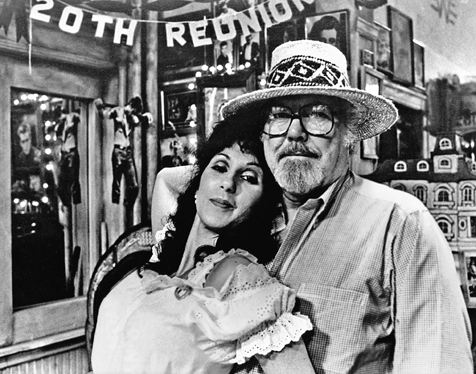
With Cher in the role that launched her film career, as the sassy waitress Sissy in Come Back to the Five and Dime, Jimmy Dean, Jimmy Dean
He was not in great shape financially or professionally. The thing about Bob was he was such a fighter. Even when the reviews were bad he was trying to keep the play running, even running a deficit. He would never cut and run. He would support the failures. He would never acknowledge they were artistic failures. He would fight just as hard for the movies that didn’t have a chance.
CHER: He was so proud and so convinced and so committed that he started putting his own money back into it, so it kept running. The people who came really loved it.
PETER NEWMAN: Within three or four weeks the show had closed and we had moved the set to somewhere in the mid-forties and we were shooting it as a film. Showtime thought they were getting a videotaped version of the show. Little did they know.
Bob was driving the momentum and we were going out drinking every night. He went in and said, “I’ve got this great idea. We’re going to shoot it on Super 16 film.” He didn’t want this to be for cable television. If he could shoot this on film and if it turned out the way he thought it would, he could get it released theatrically. Showtime agreed to let him shoot it on Super 16, but they made it clear—it’s for cable. He said he wanted to release it theatrically and they went crazy.
Bob got Showtime to agree to let him take it to some film festivals. He did everything himself. So we went from Montreal to Venice to Deauville to Toronto, with one unbelievable stop in between. He realized there was a two-day gap between Montreal and Venice. There was a film festival somewhere in Belgium—Knokke-Heist. He just wanted to keep showing his movie. So we showed it in Montreal and the picture played really beautifully. Then we got on a plane for sixteen hours to Knokke-Heist, Belgium, and did a lot of drinking on the plane. I was sort of carrying him off the plane. The organizer of the film festival was seventeen years old and he was wearing a cape. Bob was barely awake and I was holding him up. The kid comes up and says, “Mr. Altman, I must ask you a question.” Bob thought it would be something like, “How did you get that shot in McCabe & Mrs. Miller?”
Instead, he asks, “Why would you come to my festival?”
Bob was totally comfortable. He said, “You’re showing my movie.”
* * *
MARTIN SCORSESE: I remember meeting him in New York one night in 1983 and his last picture was Popeye, I think, and prior to that was HealtH with Fox, and mine was with Fox too, it was King of Comedy. And when it opened in 1983, King of Comedy was considered a terrible flop. HealtH was hardly opened. I happened to mention to him that King of Comedy was pretty much dropped from distribution by Fox, and I mentioned the name of the man who did it. And he said, “That’s exactly the same person who dropped HealtH.” In a way, he was sent to the diaspora for ten years, and so was I.
* * *
Streamers (1983)
Vincent Canby, review in The New York Times, October 9, 1983: “Streamers,” Robert Altman’s screen adaptation of David Rabe’s tough, bloody, sorrowful stage play, is a maddening movie. It goes partway toward realizing the full effect of a stage play as a film, then botches the job by the overabundant use of film techniques, which dismember what should be an ensemble performance. … Mr. Rabe’s play, one of the major hits of the 1976–77 New York theater season, is confined to a single set, a bleak room in an Army barracks where five soldiers, under the bleary eyes of two boozy old sergeants, are awaiting assignment to Vietnam.
* * *
MATTHEW MODINE: Streamers was my baptism. I had a big monologue—my character, Billy, is talking about going to gay bars with his friends and having guys there buy them drinks, then running off. One day, one of the guys Billy was with, one of his friends from high school, says he’s going to stay at the bar and go with this guy. I wanted to talk to Bob about what it meant, how to interpret what Billy was saying. So I went to Bob and said, “Could I talk to you about that monologue?”
He said, “Oh shit, are we shooting that today?”
“No, not today. Friday.”
“Shit, you scared the hell of out me. Don’t do that, man. We’ll talk tomorrow.”
I went home that night and pored over the monologue. I went to him again and he said, “We’ll talk about it tomorrow.”
Then the next day and the next day, “We’ll talk about it tomorrow.”
Thursday night I’m scared shitless. Bob hasn’t talked to me about this monologue. I’m trying to prepare, trying to prepare. We come in Friday and I say, “Can I talk to you?”
Bob says, “Let’s block this. Where would you be when we shoot this scene?”
“Uh, I’ll be in my bunk and at the end I’ll lift myself up and get out of the bed.”
He says, “Great, great.”
He asks Pierre Mignot, the cinematographer, “How do you want to shoot this?”
Pierre tells him, and again it’s “Great, great.”
“Uh, Mr. Altman, can I talk…”
He says, “I got to make a phone call.”
He left, came back, and I am fucking shit scared about this situation I’m in. He comes back and right away we start shooting. I think we maybe did three takes, and one was because the camera wasn’t focused. When it’s over, he sits down on the bunk with me and gave me maybe the most important lesson for a young actor.
He says, “You see, kid, I didn’t want to have that conversation with you. That’s not my job. I hired you to be an actor. There were things about this role that you could interpret, that you could bring to life. If I was interested in my interpretation I would have played the part.” Then he gave me an encouraging pat on the back and left.
Secret Honor: The Last Testament of Richard M. Nixon (1984)
Michael Wilmington, from DVD liner notes: Secret Honor is not just a record. It’s an exploration of the play, of [Philip Baker] Hall’s acting virtuosity, and of Altman’s most diabolical bête noire. In portraying Nixon as a tragicomic puppet, Altman is ultimately commenting on the American political system—seemingly democratic and egalitarian on the surface, mercenary and elitist below, and completely tangled up in show business and TV strategies and imagery.
But Altman isn’t just diving into an imaginary Nixon. He’s exploring himself as well. More than a few critics have pointed up similarities between this Nixon—isolated, cut off, ruminating on past glories, playing with video cameras, manipulating his image—and the “exiled” Altman of 1983, at the recognized low point of his career. Perhaps that’s the film’s darkest, most ruthless irony of all.
ROBERT HARDERS (theater director): I came across a script called Circe and Bravo, written by Donald Freed. In the course of putting on a reading for Circe and Bravo, I naturally had to meet the writer. We spent some time together and we had begun some kind of working relationship. Sometime after that he called me up and he told me he was very close to finishing another script. He did, and I read it. Not immediately, because it had the name Richard Nixon in the title. I think like everyone I was pretty well saturated with the concept of Richard Nixon at that point in American history. When I did read it, I remember reading it like it was a detective story. The pages whizzing by. I remember being very affected by it. I also remembered an actor that I had worked with on another reading who I thought would probably be really good in the part if he were interested in it—that was Philip Baker Hall. I got the piece to Hall, who had to go through his own thing regarding Richard Nixon in order to be interested in it. We worked on it in Phil’s living room and spent so many hours together just really getting to know one another and talking about everything under the sun and occasionally talking about the script.
We had a really great time doing it, and the idea was that we were going to do a reading in Donald Freed’s living room and he was going to invite whomever. Phil was, as always, amazing, and I distinctly recall that before the applause had even died down, Bill Bushnell, from the L.A. Actors’ Theater, along with Adam Leipzig, they were up and talking to Donald about obtaining the rights. Then it was a matter of putting it on for real as a play. Phil and I had already established a very good working relationship. It was a matter of transition to the half stage at the Los Angeles Theatre Center. This was a dream come true. This was what I always wanted to do.
Bushnell is a bit of a schemer, and he had a plan.
BILL BUSHNELL (theater impresario): The day that Dan Sullivan’s L.A. Times review came out I called Bob and said, “I have a piece of goods here you ought to take a look at.”
ROBERT HARDERS: Bushnell told us that Bob Altman was coming. My reaction was, “You’re kidding.” He came backstage, said he had seen the piece and really liked it. Bob knew right away what he wanted to do with it.
PHILIP BAKER HALL (actor): He said right on the spot, “I want to take this to New York, off-Broadway, and I want to make a movie about it. I am already visualizing how to film it. I want to see a little man surrounded by the immensity of the office, the desk and the office stuff and the intensity of public opinion that was marshaled against him.”
ROBERT HARDERS: When we first went to New York to stage Secret Honor, Bob invited me and Phil to his office in the Delmonico building. Kathryn was there, and Bob says, “Let’s break out the good stuff.” He comes out with this case of wine, two hundred dollars a bottle, and we’re drinking this wine. As the evening goes on, he is reaching in—one bottle after another. We’re looking at each other out of the corner of our eyes, like, “Wow, do you believe this?” Years later, I reminded Kathryn of this, and she said, “You fell for that?”
Yes, we did! From Bob’s end, he knew we were rubes and we were as green as you could get. And he knew we might actually believe that it was two-hundred-dollar bottles of wine and it would be good for him and it would be good for us too, and it wouldn’t cost him two hundred a bottle. He was making us feel special. He was making us feel he was special. And that’s so much of the key of getting the best work out of people. Oh God, did we laugh when she said that.
BILL BUSHNELL: From the stage, Bob took it to the University of Michigan and shot a film. And that in and of itself is a unique piece of goods.
Letter from Frank E. Beaver, chairman, graduate program Telecommunication Arts and Film, University of Michigan, June 1, 1982: Dear Mr. Altman: I was glad to be able to reach you today and to learn that you are willing to accept a Marsh Professorship in the Communication Department. … The prospect of having you discuss representative films of yours in an “Altman Festival-Seminar” is, quite honestly, thrilling. Already students have begun to flock by to ask how they can be a part of this unusual educational experience.
PHILIP BAKER HALL: He was a visiting professor of film at the University of Michigan, and he knew that if we shot the film there, he could get certain special conditions from the Screen Actors Guild and the crafts guild because he could shoot it as part of his class work, and he could also use the kids. Still, he knew it would cost him a half million dollars.
He was waiting for a check of something like a million dollars from the sale of Lion’s Gate. Somebody owed him this money and he needed the money to finance the film. He called me one morning—we were in New York, still performing it there—and we had a date to start filming. He said, “I was going to finance the film out of the check. It’s held up. I might not get that check right away. I don’t really at the moment have the money to do this movie. Were you counting on that?”
I’m thinking, “Nah, I wasn’t counting on being the star of the first one-man movie directed by one of the great directors of the twentieth century.” Yeah, right.
He said, “Have you turned down anything?”
“Yeah, I did.”
“I guess I could mortgage my house.”
A few days later, he said, “I didn’t get the check but I’m going to make it work anyway.”
When it came down to it he was a man of his word. He knew obviously it would be a big disappointment to me not to do that. From what I heard from others he was in some financial difficulty at the time. I think he was having some second thoughts because I think he expected it to be a big hit in New York, and it wasn’t. It didn’t do well in New York. The first two weeks it rained every night. Sleet and soaked. People coming to the theater saying, “Why did we come out on a night like this?”
It was a huge departure. If he couldn’t get a studio film or raise money to do a film conventionally financed, he had to find a film he could finance himself. A one-man film, filmed on a college campus, using college kids in many important technical jobs, he could do this and still maintain his dignity. He could still be Robert Altman.
ROBERT HARDERS: My point of view was probably very limited, especially in this early period. When I thought of Bob or was in the room with Bob, I was acutely aware of his accomplishments and honestly completely unaware of any career difficulties or unhappiness that he may have been experiencing. Bob gave us that first-meeting persona of his. It works. Let the myth do the talking. Just stand there. We’re going to fill it in. Why say anything? We’ve got a monologue running in our heads, so why should he risk mucking that up? I think he understood that very well. He knew how to use that kind of thing.
PHILIP BAKER HALL: When it was announced in Variety that Bob was going to make a film of this play Secret Honor, he did receive a letter from the Nixon office. I’ve seen it, and to paraphrase it: “Dear Mr. Altman, I’m a great fan of your films and I have always been. I particularly like M*A*S*H. Sincerely, Richard Nixon.” Robert Altman was very proud of that letter—he took it to mean Nixon had seen the Variety announcement and he believed something damaging could happen to his reputation. And Nixon, in his way, would write a letter—like, “Don’t hurt me, I’m just a nice guy who likes you.” That’s what we take to be the subtext. It’s a good demonstration of the kind of odd cleverness of Nixon’s life and career. He’s saying one thing and trying to get a different result.
Bob had a complicated perspective on Nixon. In certain ways I think he admired Nixon. I think he admired Nixon’s cleverness, his ingenuity, his ability to dance around the truth and to play with the facts. In other ways he thought he was a menace, a dangerous person to the Republic. A person who needed to artistically be whipped into shape.
We filmed it at one of the women’s dormitories. They had a room for us off the set. It had two single beds, side by side. They would send us off there when they were relighting. Bob and I spent a lot of time there in the semidarkness, talking about the next scene or talking about life in general. It was very helpful to that part of the Secret Honor history. I remember the intimacy of it and the importance of it. One time, one of us was depressed about what had just been shot. There was maybe twenty-four inches between us. One of us reached out to console the other. We held hands. That was pretty unusual.
BILL BUSHNELL: That picture gave Bob’s career a tremendous bounce. It didn’t pay off right away, but it did pay off down the road. First he went to Europe. And ironically, Philip never worked with him again.
PHILIP BAKER HALL: He put me on the map in big-time features with Secret Honor. I was a working actor before that, but after that I became a special actor. I just regret that I couldn’t have done another film or two with him. He’s a great director. I have done like sixty features now, but I have always felt that my résumé is not complete because I didn’t get to do another feature with Altman. There you have it.