
THEY mounted the boy on the wide back of the high-strung stallion. Whirling and bucking, the horse galloped away with the little rider gripping the reins and his child-size javelin. The prince was only ten, but husky and tall for his age. He’d been riding horses since age five. But this steed, fresh from the high pastures of Cappadocia, was not yet broken. As the horse raced across the field, Mithradates seemed in peril of being thrown—but somehow he hung on. He managed to control the horse and hurl his spear with force and skill surprising in someone so young.
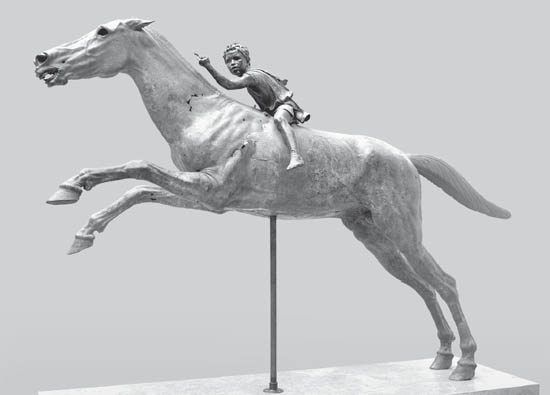
FIG. 3.1. Small boy on a high-spirited horse, life-size Hellenistic bronze sculpture from time of Mithradates, ca. 150–125 BC. National Archaeological Museum, Athens, Greece. Vanni/Art Resource, NY.
Some in the palace suspected that the young prince had survived a plot to arrange a fatal riding accident. Perhaps they thanked Pegasus, the boy’s protector. Others may have recalled that the god Mithra always showed favor to a new ruler by sending a horse omen. Some Greek grooms might have whispered that malevolent ghosts, taraxippoi (“horse-frighteners,” the spirits of dead charioteers), spooked the animal. Everyone was reminded of the young Alexander the Great, who had impressed his elders by taming a wild horse.1
Aside from Justin’s vignette of the close call with the bucking horse, most of Mithradates’ childhood is a blank. Ancient writers described the adult Mithradates’ extraordinary size, strength, and stamina; his gargantuan appetites, earthy humor, and sexual preferences. All agree that he was a brilliant military strategist, fluent in many languages, a courageous fighter, and a gifted toxicologist. A cultured patron of music and the arts, the king loved spectacle and grandiose gestures. There is ample evidence of Mithradates’ implacable hatred of Rome, pride in his Persian-Greek ancestry, and his imitation of Alexander the Great. His noble ideals and charismatic—and often paranoid—personality are well attested, as are the striking contradictions in his character. As king, Mithradates could be merciful or ruthless, chivalrous yet cruel. By filling in the gaps and fleshing out scenes in the incomplete ancient accounts with known facts and evidence about Mithradates’ time and place, and by working back from what what we know about the man, we can imagine the boy.2
This approach raises new questions about Mithradates. What shaped his character and public persona? Who—besides Alexander and Cyrus the Great—were his models? Which mythic, historic, and current events made strong impressions? Why such deep animosity toward Rome? What were his ultimate goals? What inspired his scientific pursuits? What was the origin of his search for the perfect antidote? First, let’s set the scene in Sinope, where young Mithradates received his education, then consider some likely influences during his formative years.
PONTUS, CULTURAL CROSSROADS
Mithradates’ father, Mithradates V Euergetes (“Benefactor”), inherited the wealthy Kingdom of Pontus in about 150 BC. Euergetes expanded Pontus’s influence, annexing land and making advantageous marriage alliances. He and Queen Laodice had seven children. Continuing the tradition that frustrates historians, the royal pair named both sons Mithradates and called their first two daughters Laodice. The boys had nicknames: our Mithradates was dubbed Dionysus as a boy and later added Eupator (“Good Father”). His younger brother was Mithradates Chrestus (“the Good”). Their three younger sisters were Nyssa, Roxana, and Statira.
To gain control of Cappadocia, the kingdom south of Pontus, Euergetes married his eldest daughter Laodice (Mithradates’ older sister) to the boy-king Ariathes VI, whose mother had placed him on the throne after poisoning his five brothers. Poisoning was a typical form of royal succession in this era. Not long after the self-assured Laodice—a few years older than her husband—arrived in Cappadocia, her wicked mother-in-law was conveniently murdered.3
Mithradates Eupator’s best friend was Dorylaus, raised in the palace as a brother. Dorylaus was the orphaned nephew of General Dorylaus, best friend and military adviser of Mithradates’ father. Dorylaus’s family was related to the historian Strabo, who was born in Amasia, Pontus, in 63 BC (the year of Mithradates’ death). Strabo wrote extensively and nostalgically about his homeland and the surrounding countries. He described Sinope’s impressive fortifications, beautiful gardens, old peach and olive orchards, handsome marble buildings, fine temples, lively market, and new gymnasium. Strabo’s narrative also tells us about the kind of education an aristocratic boy received in Pontus.
Strabo recounted how his own family had been sundered by the Mithradatic Wars. His mother was a great-granddaughter of General Dorylaus, and his mother’s uncle, Moaphernes (a Persian name), was a friend of Mithradates. Strabo’s great-uncles served Mithradates, and his paternal grandfather was one of his commanders, overseeing fortresses in Pontus. Near the end of the Mithradatic Wars, Strabo’s grandfather turned the forts over to the Romans but never received the promised reward, something that still rankled Strabo.4
Other information links Strabo and Mithradates. Strabo’s mother sent him to school in Nysa near Tralles, towns that had massacred Romans in 88 BC. Later Strabo studied with Tyrannio, a learned friend of Mithradates. Strabo mentions a relative named Theophilus. This name, in view of Strabo’s pro-Mithradatic ties, led Strabo’s modern biographer to wonder whether Strabo was related to Theophilus of Paphlagonia, hired by the people of Tralles to slaughter the Romans in 88 BC. That remains an intriguing guess, but Strabo, a native Pontian who has much to tell us about Mithradates’ world, was typical of the multiethnic heritage and complicated politics of Anatolia in the first century BC.5
Native Anatolians, Greek colonists, Persians, and Alexander’s Macedonians were powerful influences in Mithradates’ homeland. Greek culture was strong in the large cities on the Aegean coast, but much less marked in the ports rimming the Black Sea. The great Russian historian M. Rostovtzeff characterized the Hellenic influence around the Black Sea as “a thin Greek shell around a hard native kernel.” In the Anatolian heartland and Pontus, Persian-influenced and indigenous culture predominated.6
At the same time, Mithradates’ father was a philhellene and Greek was the official language of his court. Ambassadors and eunuchs, peripatetic Greek philosophers and Black Sea pirates, polyglot traders and tattooed Thracians, snake charmers and grim Magi, learned doctors and shamans, soldiers and storytellers from many different lands rubbed shoulders in the palace of Sinope. Surrounded by so many diverse ethnicities, dialects, and backgrounds, Mithradates could practice his gift for languages at an early age. In this dynamic, cosmopolitan milieu, exciting tales of the Persian heroes Cyrus and Darius mingled naturally with the exploits of Alexander of Macedon and Hannibal of Carthage.7
In such a melting pot, religious beliefs and practices were eclectic and overlapping. Young Mithradates performed Greek rituals for the Olympian gods, but he also worshipped ancient Anatolian and Iranian deities. Mithradates’ father was devoted to Apollo and Zeus, but as king he was also the high priest, or Magus, in the Zoroastrian worship of the Iranian Sun divinities Ahuramazda and Mithra. As a boy Mithradates observed his father saluting the rising sun and consulting the Magi about omens and dreams. When his father made fire offerings on mountaintop altars, young Mithradates learned the ritual duties he would inherit.
Much about ancient Persian religion remains a mystery, but historians agree that Truth was the highest ideal. Free will was a key moral concept. Sun and Light were revered. Fire was sacred. The respect and awe accorded to fire was a natural impulse in the petroleum-rich deserts of Mesopotamia and the oil deposits of the Crimea, and in Baku by the Caspian Sea. These were places where fountains of volatile naphtha and lakes of asphalt combusted spontaneously and burned eternally with super-hot, blue-orange flames unquenched by water. Such sacred fiery substances—common in Mithradates’ lands but unfamiliar to the Romans—would prove valuable in battle.
Herodotus, Xenophon, Strabo, and other Greek historians described the Persians’ dualistic worldview, in which Light and Truth (Arta in Old Iranian) eternally battle the evil forces of Darkness and Lies (Druj). Dishonesty was reprehensible. Debt was a morally deplorable condition, because indebted people were susceptible to deceit and enslavement. Debtors and slaves were unable to exercise free will, unable to chose to struggle against Darkness. These beliefs help explain why the hatred of Romans was so profound in the Persian-influenced Province of Asia. Under Rome’s rapacious and corrupt taxation policies, moneylenders charged exorbitant interest rates and confiscated all of an indebted man’s possessions when he defaulted; then he was enslaved and sold to Roman masters. Roman taxes plunged entire cities into overwhelming debt, forcing them to sell artworks and other treasures, their land, and their own people. Even the wealthiest kings succumbed to bankruptcy and blackmail. To oppose the Romans was to fight on the side of Truth and Light.8
SCHOOL DAYS
Like Cyrus and Alexander, Mithradates was nurtured by a large circle of guardians, tutors, and trainers. His playmates were Dorylaus, Gaius (son of Hermaeus, also considered a stepbrother), and other boys from aristocratic Greek, Persian, Cappadocian, and indigenous Anatolian families. The boys’ education was a blend of Greek and Persian culture and athletic training. Many of the teachers were Greeks versed in paideia, traditional Hellenic literature, classical art and music, mythology and history, with readings from Aristotle, Plato, Thucydides, Xenophon, and Herodotus. The boys memorized Homer’s Iliad and Greek poetry and plays. Alexander had loved to quote from the plays of Euripides. Mithradates’ favorite drama might have been The Persians, written by Aeschylus after the Greeks defeated Xerxes at Salamis in 480 BC. Aeschylus painted the Persian soldiers and their weapons in luminous colors, and treated the Persian king sympathetically, as a valiant, noble despot who tragically underestimated the Greek love of liberty—a mistake King Mithradates would avoid.9
Mithradates’ education included botanical medicine with Persian rhizotomists and Greek “root-cutters.” The Magi were adepts in plant poisons and antidotes. Mithradates’ own grandfather, King Pharnaces I, had discovered a plant, called pharnaceon, reputed to be a cure-all. Aristotle, Alexander’s tutor, had inspired a love of natural history and medicine in his student. Mithradates, too, was fascinated by natural sciences and medicine—but with a twist. Mithradates’ passion was poisons. He understood the duality ofpharmaka, drugs derived from powerful plant, mineral, and animal substances. Paradoxically, these substances could be fatally toxic or they could serve as a health-giving tonic. Everything depended on the dosage. And for every poison, Nature provided an antidote—indeed, some poisons could be counteracted by other poisons.10
One ancient historian, Memnon, declared that Mithradates was a serial poisoner from childhood on.11 This seems unlikely, although during his long reign Mithradates certainly did wield poison as a weapon. Memnon’s rumor probably originated because of young Mithradates’ experiments with poisons, based on the principles that toxins could be used for good or ill. It’s likely that he began investigating easily available poisons as a boy. Pontus was blessed with an abundance of deadly natural resources. Children learned to identify common toxic plants, such as aconite (monkshood), hellebore, nightshade, yew, henbane, hemlock. A budding toxicologist could capture venomous spiders, wasps, and snakes, and carry out poison experiments on small animals.
The prince pursued harmless hobbies too, collecting beautiful agates, crystals, and minerals. As king, Mithradates wrote treatises on gemology and amber, and his famous collection of exquisitely carved agate goblets and cameo rings ended up in the hands of various extravagant Romans after his death, later finding their way into royal museums in Europe.
A Persian prince’s upbringing was described in exciting detail by the Greek historians Herodotus and Xenophon, whose books Mithradates read. Both writers had traveled extensively in the old Persian Empire, and, like Aeschylus, they admired certain Persian customs and values taught at an early age, such as justice, gratitude, responsibility, and self-control. We can be sure that young Mithradates heard plenty of family lore from his relatives about the origins of his kingdom and his glorious forebears. But Mithradates could also pore over the lively accounts of his ancestors by Herodotus and Xenophon, to learn how to become a proper Greco-Persian monarch.
Xenophon’s own story was thrilling: he had commanded ten thousand Greek mercenaries fighting for the Persian usurper Cyrus the Younger’s lost cause in Mesopotamia, in about 400 BC. Xenophon’s memoir, The March of the Ten Thousand, told of the long, arduous trek home by way of Pontus. Xenophon’s vast army had camped right outside the stone walls of Sinope—Mithradates’ own hometown had provided Xenophon’s soldiers with food and supplies.12
Xenophon’s historical romance, The Education of Cyrus, brims with stirring tales about the boyhood, military career, and chivalry of the elder Cyrus, founder of the Persian Empire in about 550 BC. Xenophon recounts how Cyrus the Great became a good and enlightened king, commited to Truth and Light, ruling myriad independent tribes from Parthia to the Black Sea with their consent. Cyrus’s respect for Truth also encompassed justice, mercy, and generosity. Xenophon reveals the secret of the great ruler’s power, a question of interest to Mithradates. It was Cyrus’s ability to inspire awe and fear while winning the loyalty and affection of his followers. Persians believed that the best king was a strong-willed, benevolent father to his people. Notably, Mithradates later chose the nickname Eupator (“Good Father”).13
Xenophon tells how Cyrus, an expert charioteer, redesigned the archaic chariot for war. He gave it stronger, longer axles and a high, bronze-armored turret to protect the driver, and armored the driver and four horses in chain mail. Then Cyrus added a fiendish flourish: sharp curved blades extending about three feet out from the wheels. Cyrus’s retooling transformed the chariot from a fancy, flimsy taxicab into a monstrous threshing machine that could churn through enemy lines. Some of Xenophon’s most riveting passages describe the horrible effects of Cyrus’s three hundred scythed chariots.14
Mithradates himself became a champion at racing chariots, a dangerous contest inaugurated by Cyrus. The little prince probably began driving chariots at eight or nine. Controlling a team of two or four horses for up to twelve laps around a crowded race course with hairpin curves—and no rules—demands extraordinary skill and strength. As an adult, Mithradates won chariot races in games around the Aegean and Anatolia. His size, strength—and daring—allowed him to take this high-risk sport to unheard-of extremes. Cyrus had driven eight horses abreast. Mithradates topped him, winning fame for driving chariots with ten racing steeds! The more horses, of course, the greater the thrills and spills. This exploit later inspired the young Roman emperor Nero to pen a poem criticizing Mithradates’ hubris (by Nero’s day, the number of Mithradates’ chariot horses had been exaggerated to sixteen). Later, competing at the Olympic Games in Greece, Nero attempted to match Mithradates’ amazing feat. The emperor crashed and nearly died.15
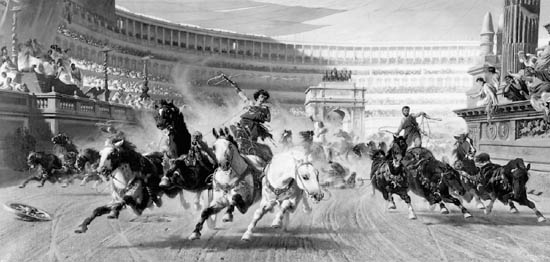
FIG. 3.2. A Chariot Race, Alexander Wagner, 1898. Manchester Art Gallery.
Since the time of Cyrus, aristocratic Persian boys were taught the three pillars of a noble education: Ride, Shoot, and Tell the Truth.16 Boys began riding soon after learning to walk. As we saw, conspirators inside the court tried to arrange riding accidents to do away with the rightful heir of Pontus. There were also attempts to poison him. Many—including Mithradates—believed that his mother, Queen Laodice, was involved. There is no reason to doubt these ancient suspicions. Such schemes were common in the treacherous world Mithradates inhabited.
Perhaps because of the dangerous steeds he was given to ride, Mithradates became an expert horseman of legendary endurance. Learning to shoot meant expertise with the bow and arrow and hurling javelins from a galloping horse, crucial skills in hunting and warfare. Mithradates and his friends lived like boot camp recruits, taking turns guarding the citadel of Sinope, practicing hand-to-hand combat with the Persian harpe, saber, and spear. They ate spartan meals of bread, watercress, and water. They were taken on short excursions into the countryside to hunt rabbits and other small game. Within his father’s game park, they practiced stalking stags and old lions, perhaps boars and bears. Mithradates loved the hunt—the boys were impatient for the time when, like Cyrus, Xerxes, Darius, and Alexander, they would venture into the mountains after real wild animals. Vigorous athletic and military training was part of Greek education, too, and historians tell us that Mithradates, an unusually tall and robust youth, excelled in wrestling, boxing, foot racing, swimming, wielding the dagger and sword, and traditional face-to-face hoplite combat with spear and shield.17
As future commander of Pontus’s army, Mithradates needed to learn how to rule and protect his kingdom’s wealth and independence. His father expected his son to know the history, geography, economy, natural resources, towns, roads, fortresses, and trade relations of Pontus and the neighboring lands.18 Mithradates would inherit his father’s foreign policy concerns, too, which included clashes with the powerful Scythian nomads of the northern Black Sea area and steppes. Intricate diplomacy maintained balance among the democratic Greek cities and indigenous monarchies of the East. The complex negotiations and shifting alliances of this period are extremely difficult to follow in the fragmentary ancient accounts and are much debated by modern historians. But the key issue for an Anatolian monarch was how to handle Rome’s burgeoning power and imperial designs in the lands east of the Mediterranean.
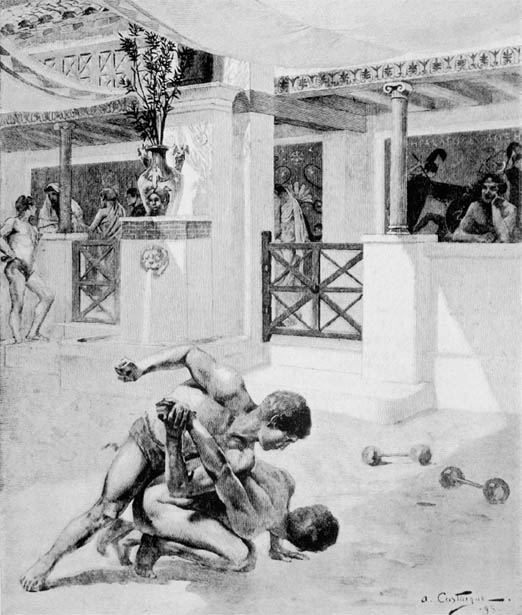
FIG. 3.3. Boys’ wrestling lesson. Andre Castaigne, 1895.
During the final Punic War, Mithradates’ father had aided Rome, sending troops to help defeat Carthage in 146 BC. When Mithradates was a boy, his father sided with Rome again, helping to suppress a popular uprising in Anatolia. The Roman Senate recognized the Kingdom of Pontus as an official “Friend of Rome”—in other words, a client state they expected to control.19
In the lands influenced by the venerable civilizations of Greece and Persia, the ambitious, raw power of upstart Rome inspired contempt mixed with fear. Rome had a history of suddenly turning on its allies. As a child, Mithradates learned the names of the important clans in Rome: the Julii, Cornelii, Lucinii, Aquillii, and others. He was conversant in Roman history and myth. In later speeches he mocked Rome’s legend of the wild wolf that had nursed the founder twins Romulus and Remus, and revealed his deep knowledge of Roman conquests and conflicts. Mithradates grew up very aware of Rome’s great power. Negotiating with Romans was like walking a tightrope over a deep gorge, easy to fall off, impossible to sidestep. There were only two options, both risky: become Rome’s “friend” or confront Rome head-on. For a savior-prince predestined for mythic glory, there was only one honorable path.
But perils lurked close to home too. Struggles over power, territories, and independence constantly arose among and within the Hellenistic monarchies, states with fluid borders and unstable ruling families left over from the old Persian and Macedonian empires. The courts seethed with conspiracies, intrigues, factions, betrayals, poisonings, and murders. At a tender age in Sinope, Mithradates understood that his most treacherous enemies might be his friends and family; even his own mother was suspect.
Pontus was rich. Its navy controlled the Black Sea trade. For as long as anyone could remember, swift pirate ships had plied the same waters. Large pirate fleets amassed wealth by supplying the sprawling Roman slave market on the island of Delos, unloading thousands of fresh captives every day. During Mithradates’ childhood, he heard a lot of talk of piracy and certainly met pirate captains in his father’s banquet halls. Pirates were raiding ship and shore with increasing boldness, even kidnapping Roman nobles for ransom. More than a thousand pirate vessels cruised the Black Sea and the Aegean during the first century BC. They considered themselves a sovereign nation of the high seas. Pontus had long benefited from lucrative arrangements with the pirates, ensuring safe harbors and markets where they could sell booty. His father’s military adviser, the elder Dorylaus, recruited mercenaries and pirates in the Aegean and the Black Sea for Pontus. During his own wars on Rome, Mithradates would count the great pirate navies among his strongest allies. Mithradates’ access to money throughout his life has posed a perennial puzzle for historians: pirate plunder was surely one source.20
Another source of Pontus’s wealth was the Black Sea’s abundant tuna and mackerel. Tons of salted fish were exported each year to the Mediterranean. Peaches, apricots, figs, nuts, olives, and grain grew along Pontus’s mild coast, watered by rivers from great mountain ranges. A system of roads linked the trading ports of Sinope and Amisus to Amasia and other inland towns. Thick forests provided pine for shipbuilding, walnut and maple for furniture, and game for meat, hides, and even pharmaka. Beavers, for example, were a prized Pontic product. Beaver testicles were valued for treating fever and boosting immunity and sexual vigor (castoreum, from the musk glands, contains salicylic acid, the active ingredient in aspirin, from willow bark, the beavers’ chief food). Pontus also possessed plentiful gold, silver, copper, iron, rock salt, mercury, sulphur, and many other rare minerals used for pigments and medicine—or for poison.21
Pontus had long-standing ties with Pantikapaion (Kerch, Ukraine), a city and fortress on the Chersonese (Crimea) guarding the Cimmerian Bosporus (Kerch Straits) connecting the turbulent, deep Black Sea to the shallow Sea of Asov. Across the strait on the Taman Peninsula was the citadel of Phanagoria. These two wealthy ports controlled the crucial salt-fish trade and grain from the Scythian steppes, bound for Mediterranean markets. In this region today, archaeologists (and tomb robbers) excavate many kurgans, grave mounds from Mithradates’ time. The magnificent gold jewelry, realistic golden death masks, weapons, fine pottery, exquisitely carved gems, and other grave goods give us a glimpse of the riches of these lands, which would later become part of Mithradates’ expanded kingdom.22
Roiling pools of black oil, belching tar volcanoes, and fountains of ever-burning naphtha on both sides of the Cimmerian Bosporus had long inspired awe. Earthquakes periodically ravage this region. As a boy, Mithradates may have listened to the historian Theopompus of Sinope explain how the earth suddenly split open on the Taman Peninsula, spilling out the stupendous skeletons of monsters and giants (actually mastodon fossils). Instead of taking these sacred relics to be displayed in the temple, as cultured Greeks did, Theopompus said that the nomads simply heaved the fearsome bones into the Sea of Azov. A young prince in Sinope would be eager to see for himself the marvelous sights and curious peoples, the landscapes of legendary grandeur and exciting possibilities of the northern Black Sea.23
Any child growing up in Sinope heard anecdotes about the city’s most famous citizen, Diogenes the Cynic (b. 403 BC). The eccentric philosopher, who called a capacious wine jug home and performed all bodily functions in public, was exiled from Sinope, but his unconventional ideas were very influential. Mithradates knew the famous story of Diogenes’ meeting with Alexander, who admired the philosopher’s way of life. Diogenes taught that wisdom flowed from decisive physical action. He advocated wandering the countryside with few possessions, living austerely off the land, and following a rigorous regimen of endurance training.
Was young Mithradates influenced by Diogenes? He grew up with Persian-Macedonian luxuries, elaborate carved couches and thrones under golden canopies, lavish banquets and expensive tapestries and artworks, servants to read aloud to him and to think up diversions, silver nails in his boots, myrrh-scented baths, and perhaps even golden sand imported from Egypt for his playground. As king, he accumulated and enjoyed untold riches. But he knew that the greatest military leaders, Cyrus, Alexander, and Hannibal, were tough warriors who scorned the soft court life. Like them, young Mithradates looked after his own armor, weapons, and horses, and reveled in the outdoor life and hardship that were part of his own education. And as we shall see, young Mithradates would eschew luxury and live for several years much like Diogenes, sleeping under the stars, rambling in the mountains, and devising his own bodybuilding program.24
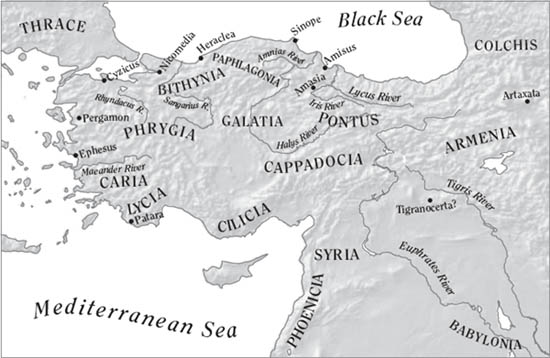
MAP 3.1. Anatolia, Armenia, Mesopotamia, and the Near East. Map by Michele Angel.
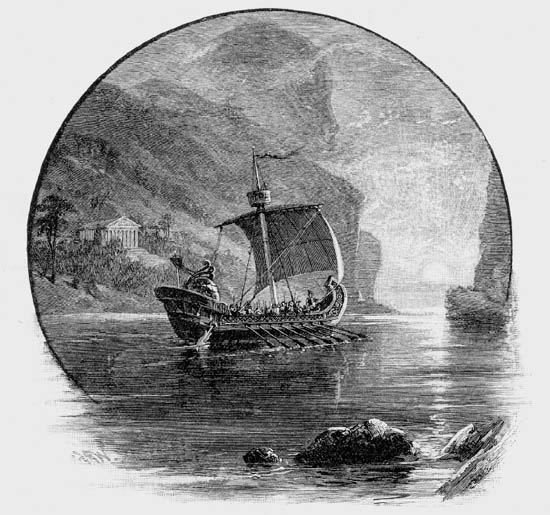
FIG. 3.4. The Argo sailing toward the rising sun and Colchis, on the Black Sea. German artist unknown.
But before he set out on that adventure, Mithradates was schooled in history and geography. Sinope traded with Greek and barbarian outposts all around the Black Sea. Beyond the mouth of the Danube ranged seminomadic warrior tribes of Moesia and Thrace. Neighboring Bithynia was the traditional gateway between Asia and Europe, and inland lay Galatia (settled by Gauls in the third century BC) and rough Paphlagonia. Far south rose the snow-capped Taurus Range of Cappadocia (Persian Katpatuka, “land of fine horses”). To the east lay the rich mountain kingdom of Armenia, named after one of Jason’s Argonauts. Hannibal had designed Armenia’s heavily fortified royal capital, Artaxata (Artashat, “Joy of Truth”), after he lost the Second Punic War to the Romans (at Zama, 202 BC). Even Hannibal had spent time in Mithradates’ homeland.25
HANNIBAL IN ANATOLIA
Young Mithradates probably memorized Hannibal’s adventures down to the last detail, taking in every success and setback in the Carthaginian’s relentless wars against Rome. Mithradates knew that, as a little boy, Hannibal had taken a sacred oath to never cease fighting the detested Romans. Hannibal kept his vow until his death at age seventy, in 182 BC, about fifty years before Mithradates’ birth.
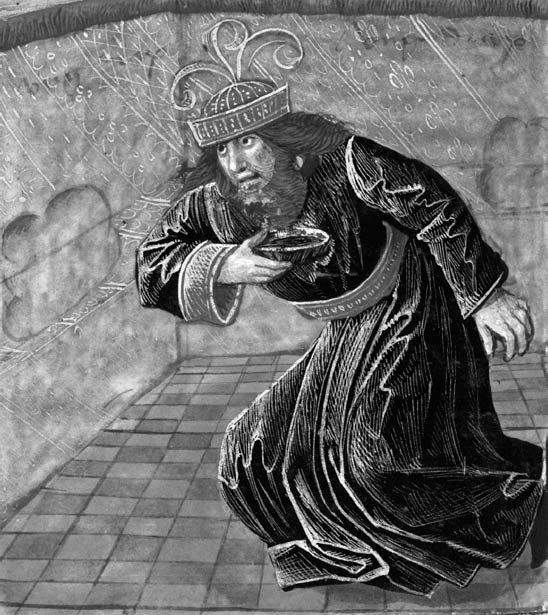
FIG. 3.5. Hannibal drinking poison to avoid capture by the Romans. Boccaccio, Des cas des nobles homes et femmes maleureux, ca. 1470–83, British Library. HIP/Art Resource, NY.
After Rome had devastated the Carthaginian army, Hannibal was forced to flee North Africa (195 BC). He spent the rest of his life in Anatolia, advising other enemies of Rome. He convinced King Antiochus III of Syria to make war on Rome by invading Greece. But Hannibal and Antiochus suffered a disastrous defeat at Thermopylae (191 BC). That battle held special meaning for Mithradates, because of the notorious prophecies of the Syrian ghost who rose from the dead and the raving Roman general, predicting that a savior-king would rise in the East to punish Rome.
After another decisive defeat of Antiochus by the Romans at Magnesia (south of Pergamon) in 189 BC, Hannibal was welcomed to Bithynia by King Prusias. With his new ally, Hannibal continued to wage war on Rome and its client kings. In a naval battle, Hannibal was outnumbered by Rome’s client, King Eumenes II of Pergamon. Young Mithradates, with his interest in poison snakes and cunning tactics, would have appreciated Hannibal’s ploy. He sent his sailors ashore to collect venomous vipers, which they stuffed into clay jars. Hannibal won the day by catapulting the writhing snakes onto the decks of Eumenes’ ships.
The old general’s last hours were dramatic and uncompromising. In the end, King Prusias betrayed Hannibal to the Romans. As the Romans closed in, Hannibal—one-eyed since crossing the frozen Alps—holed up in his castle in Bithynia, fitted with secret doors on every side. But escape was impossible now. An ugly death at Roman hands loomed. Hannibal took control of his fate. He slipped off the golden ring he always wore, pried open the hidden compartment, and swallowed the dram of deadly poison. With that last defiant act, Rome’s first great enemy entered the realm of legend.26
THE POISON GARDENS OF MAD KING ATTALUS
More recent resistance to Rome also fired young Mithradates’ imagination. The revolt of several Anatolian cities against Roman rule, while Mithradates was a boy, was a raw memory of imperial might. The insurrection was led by an idealistic young rebel named Aristonicus, a son of King Eumenes II of Pergamon and a harpist’s daughter from Ephesus. Aristonicus was the younger stepbrother of Attalus III, who succeeded Eumenes. King Attalus was peculiar, paranoid, reclusive. He was called crazy for preferring science to governing, and he had no heirs. As a boy, Mithradates heard rumors accusing Attalus of poisoning enemies and relatives. Withdrawing from court life, letting his hair and beard grow long and scraggly, Attalus set aside his crown and took to wearing simple garments. He spent his days tending his gardens, studying botany, pharmacology, and metallurgy. He died suddenly of sunstroke in 133 BC.
But was Attalus really insane, as portrayed by Justin and other historians? A revised view was proposed in 1988 by Kent Rigsby. Rigsby reasoned that the king’s reputation for murder and madness was distorted by those who wanted to make Attalus seem unfit to name his successor. Pointing out that scientific and philosophical pursuits were typical of sophisticated Hellenistic monarchs, Rigsby suggested that “in reality, Attalus was a scientist and scholar.” The king may have been eccentric, but his activities represent serious scientific research. Pergamon, with its great library, active scientific community, and the healing temple of Asclepius, was the center of medical learning.
But the remarkable significance of Attalus’s research has been overlooked by Rigsby and other historians. Justin’s most damning example of Attalus’s madness was his obsession with “digging and sowing in his garden” and his bizarre practice of concocting “mixtures of healthful and beneficial plants, drenched with the juices of poisonous ones,” which he presented as “special gifts to his friends.” The historian Plutarch tells us that Attalus cultivated toxic plants such as “henbane, hellebore, hemlock, aconite [monkshood], and belladonna in his royal gardens and became an expert in their juices and fruits.” Galen, the celebrated physician from Pergamon (b. AD 129), added that Attalus also experimented with antidotes against the venoms of spiders, scorpions, toxic sea slugs, and snakes. Galen praised the king for testing his mixtures only on condemned criminals.27
Can it be a coincidence that the youthful Mithradates engaged in the very same sort of activities and experiments as had mad King Attalus? We know that Mithradates created his renowned “universal antidote,” the Mithridatium, by mixing tiny doses of deadly poisons with antidotes. Mithradates—who would achieve lasting fame as the world’s first experimental toxicologist—may well have been inspired at a young age by his grandfather Pharnaces’ discovery of a panacea and by the unusual research first begun by the last king of Pergamon, “mad” Attalus.
Attalus’s sudden death in 133 BC, about a year after Mithradates’ birth, set in motion the chain of events that would eventually lead to Mithradates’ wars on Rome. Attalus’s will shocked everyone: he bequeathed his kingdom to Rome. This unexpected inheritance became the basis for Rome’s vast and lucrative “Province of Asia.”
Was Attalus’s will a Roman forgery, as Mithradates would later claim? What ruler in his right mind would will his kingdom to Rome? Attalus’s stepbrother Aristonicus immediately organized a popular rebellion, to claim the throne and keep the Romans from annexing the kingdom.
ARISTONICUS AND THE CITIZENS OF THE SUN
Aristonicus established rebel headquarters at Leucae, founded by a Persian rebel leader in the fourth century BC. Attalus’s navy quickly joined Aristonicus. Pro-Roman officials in Pergamon attempted to appease the population by granting citizenship to foreigners, mercenaries, and freedmen, but numerous cities joined Aristonicus, including Colophon, Myndos, Tralles, Nysa, Phocaea, Thyateira, Stratonicea in Mysia, Apollonia, and the island of Samos. The Stoic philosopher Blossius, a supporter of democratic principles and an exile from Rome, also supported Aristonicus’s cause.28
The city of Ephesus, allied with Rome at the time, sent a fleet against Aristonicus at Cyme. He lost the battle and fled far inland. All seemed lost. But now the story of Aristonicus’s revolt gains real momentum, with much to enthrall young Mithradates. The rebel leader eluded capture, traveling to his base of support in the Persian-influenced central Anatolian highlands. Here Aristonicus established a utopian city-state, called Heliopolis, “City of the Sun.” The citizens were free and equal, and Aristonicus promised to liberate all slaves and cancel debts, eradicating evils that were particularly identified with Rome. He assembled a great army of Heliopolitae, “Citizens of the Sun,” indigenous Anatolians and descendants of Alexander’s Macedonians, poor and middle classes, debtors and slaves. From his new stronghold, Aristonicus issued coins asserting his royal claim. All these developments greatly alarmed the Romans, already beset by slave revolts and indigenous uprisings in Italy.
Most modern pro-Roman historians downplay the revolutionary nature of Aristonicus’s insurrection, suggesting that his motive for mobilizing “resourceless people” and slaves was nothing but “desperation” after the naval defeat. They point out that Aristonicus defended monarchy. But in Anatolia, independent “democratic monarchy” was a traditional, popular, anti-Roman concept. Aristonicus’s ideology and his campaign—the first popular Anatolian uprising against Roman domination—might well have been a model for Mithradates’ own war on Rome, his appeal to followers, and his policies of erasing debts and freeing slaves. The tale of the young rebel from Anatolia (“land of the rising sun”) battling overwhelming odds and Roman treachery would have appealed to Mithradates, who was a boy when the uprising was quelled. Later, Mithradates’ own campaigns against Rome could be seen as keeping the faith of Aristonicus’s insurgency, as well as Hannibal’s boyhood vow. As we shall see, Mithradates frequently alluded to Aristonicus’s revolt in his speeches.29
The names chosen by Aristonicus for Heliopolis and its “Citizens of the Sun” receive scant comment from Roman historians, and contemporary Romans apparently missed the significance too. But these names radiated mystical and political symbolism in Greco-Persian lands. Notably, a Zoroastrian tribe of Armenia called themselves by a similar name, Arevordik (“Children of the Sun”), and prided themselves on never submitting to tyrants. For Mithradates, and for Aristonicus’s followers, “citizens” and “polis” reflected Greek democratic traditions. “Of the Sun” evoked the ancient Persian god Mithra, Mithradates’ namesake. The name “Citizens of the Sun” announced that Aristonicus and his army were fighting on the side of Light and Truth against the forces of Darkness.
Mithradates’ father, and the rulers of Bithynia, Cappadocia, Ephesus, and Paphlagonia, were nervous about Rome’s reaction. They agreed to send troops against Aristonicus. But the Citizens of the Sun persevered. It appeared that Aristonicus would be acclaimed king of Pergamon and Greater Phrygia. The Roman Senate dispatched its own legions in 131 BC, commanded by P. Licinius Crassus. But Crassus was bent on plundering Attalus’s palace instead of leading a campaign. His disorganized army was routed in a battle near Leucae. Crassus, surrounded by a hostile mob, poked a Thracian in the eye with his whip. The enraged barbarian stabbed Crassus to death. The Roman’s head was presented to Aristonicus.
The Citizens of the Sun won more victories. Rome sent M. Perperna to put down the spreading insurgency. Perperna, fresh from suppressing a slave revolt in Sicily, captured Aristonicus alive. Although Perperna suddenly died (reportedly of disease), Aristonicus was sent in chains to Rome, along with Attalus’s fabulous treasures from Pergamon. The rebel leader was cast into the Tullianum, a stone dungeon twelve feet deep, described by the historian Sallust as “repugnant and fearsome from neglect, darkness, and stench.” The state executioner strangled Aristonicus in his cell in 129 BC.
In Cyme, where Aristonicus’s navy had been defeated, it was said that the statue of Apollo wept. Inspired by their leader’s martyrdom and Rome’s ineffective campaign—and perhaps seeing Perperna’s sudden death as a good omen—the Citizens of the Sun continued to resist. The Senate dispatched the ambitious consul Manius Aquillius to crush the insurrection and establish Roman provincial government in Pergamon. It must have impressed Mithradates that the cities loyal to Aristonicus still held fast, protecting the Sun Citizens inside their fortified walls.
Aquillius faced a series of long-drawn-out sieges before he could occupy the land and set up the new government. To bring the war to a quick end, Aquillius resorted to a ruthless solution. He ordered his men to pour poison into the water supplies of the besieged cities. This biological weapon killed soldiers and noncombatants alike, and Aquillius’s army easily overran the cities. Even in Rome, however, some critics deplored such a barbarous tactic, declaring that Aquillius’s expedient victory dishonored old Roman military values.30
Aquillius took over Pergamon and levied heavy taxes for personal profit. Aristonicus’s rebellion was over, and Rome’s allies were rewarded. Mithradates’ father received Greater Phrygia in thanks. But popular outrage was visceral in the territories coveted by Rome. Aquillius’s vicious victory through poison and his suffocating taxation intensified the loathing for Rome. Cities that had supported Aristonicus’s revolt were severely punished. Yet even the official “friends” of Rome experienced anxiety rather than security. Everyone was beginning to realize that Rome had a nasty habit of attacking former clients.
During his childhood, Mithradates would have heard many details of Aristonicus’s Anatolian uprising that are lost to us. He may have known, for example, whether Aristonicus, grandson of a harpist, had been named after Alexander’s brave harpist friend Aristonicus who died gloriously in battle. Mithradates also would have learned which poison Aquillius had used to taint the wells. Hellebore, a common plant with a notorious military history, was probably the agent of death. Mithradates, who studied toxic plants and warfare, could recall the infamous story of a similar siege situation, some five hundred years earlier in Greece. The victorious generals—aided by a corrupt doctor—had annihilated the townspeople by poisoning the water supply with crushed hellebore.31
MEDEA’S MAGIC POTIONS
Wedged between Armenia and the sheer cliffs where the Caucasus Mountains plunged into the eastern Black Sea lay fabled Colchis (Georgia), a harsh land rich in gold and exotic minerals and plants. In Greek myth, Zeus had chained Prometheus, the rebel Titan who brought fire to mortals, on the highest peak in the Caucasus, sending an eagle to tear out his liver for eternity. Mithradates and his friends heard exciting myths set in their own native lands. In the epic poem about Jason and the Argonauts and their quest for the Golden Fleece, the Argo sailed east toward the “Sun’s golden treasure house,” along the southern shore of the Black Sea, stopping for adventures and founding towns.32 In Sinope, Mithradates might have played near the marble statue of his city’s founder, the Argonaut Autolycus.
The Argonauts had marveled at Pontus’s iron mines and its weird towers of salt on the Halys River. Pressing on to Themiscrya, the great Amazon stronghold on the Thermodon River, the Argonauts sailed to far Colchis under the forbidding Caucasus Mountains. There Jason fell in love with Medea, the beautiful barbarian sorceress.
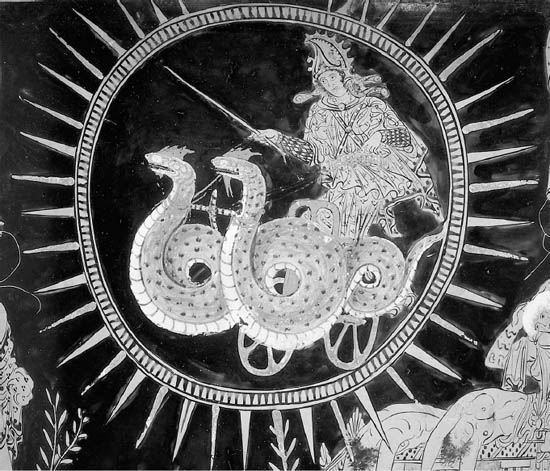
FIG. 3.6. Medea in her Chariot of the Sun. The sorceress of Colchis wears a mantle and a Persian-Phrygian cap, like those worn by Zoroastrian Magi and Amazons. Detail, Lucanian calyx-crater ca. 400 BC. Cleveland Museum of Art, Leonard C. Hanna Jr. Fund 1991.1.
Mistress of poisons and magic, granddaughter of the Sun god, Medea could tame mysterious fire from the black oil pools of Baku on the Caspian Sea, to create unquenchable flames. Her potions bestowed superhuman strength or deathlike sleep and made one invulnerable to fire or sword. Medea knew the secrets of deadly dragon’s blood and all the antidotes for serpent venom. It is easy to picture young Mithradates, future toxicologist, enthralled by the description of Medea alighting from her Sun-chariot to gatherpharmaka.
In the gloom of night, clothed in black, murmuring eerie incantations, Medea climbed higher and higher into the Caucasus Mountains. There, springing from the ichor that had flowed out of Prometheus’s side, a flower the color of saffron bloomed on tall twin stalks. From the fleshy root, blood-red sap oozed. This crimson liquid Medea captured in a pure white shell from the Caspian Sea.33
THE MIGHTY HERCULES
In young Mithradates’ eclectic pantheon of mythic role models, the Persian sorceress Medea was joined by Hercules, the Greek superhero who rescued Prometheus from his torture. In the course of his adventures, Hercules had traveled across the towering Caucasus Mountains into Scythia, where he won a duel with Hippolyte, queen of the Amazons. The natives of the city of Pergamon believed they were the descendants of Hercules’ son Telephus. Like Alexander, Mithradates also claimed descent from Hercules. Three remarkable marble statues show how deeply Mithradates identified with Hercules. The first, a sculpture in Pergamon—probably created in 88–85 BC when Mithradates established royal headquarters there—depicts a fatherly Hercules wearing his signature lionskin cape, holding his infant son Telephus. Recent analysis of portraiture in contemporary coins and sculpure suggests that the model for the little boy was none other than Mithradates!
The child’s profile and hairstyle strongly resemble portraits of the adult Mithradates on his early silver coins. The pudgy face was not meant to be a good likeness of Mithradates as a toddler. But the similarity to Mithradates’ coin portraits—and the message—would have been immediately recognized by everyone. The likeness was so obvious that, after his defeat of Mithradates in 63 BC, the Roman general Pompey seized this statue of Baby Mithradates to show off in Rome.34
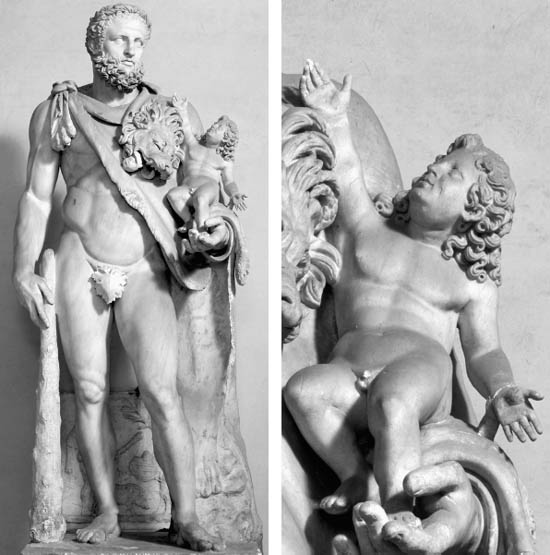
FIG. 3.7. Hercules and his son Telephus, Pergamon. The boy was intended to resemble Mithradates, who claimed Hercules as a forefather. Chiaramonti Museum, Vatican. Scala/Art Resource, NY.
Another statue group, discovered in 1925 at the Great Altar of Pergamon, shows a youthful Hercules freeing Prometheus. The young man in the lionskin is a lifelike portrait of Mithradates on the verge of manhood. It is similar to another well-known portrait statue in the Louvre that is securely identified as the adult Mithradates, also wearing Hercules’ lionskin (fig 6.1). The image of Mithradates as Hercules liberating the chained Titan had great symbolic value for Greeks and the people of the East, because it depicted the king as a savior-liberator.
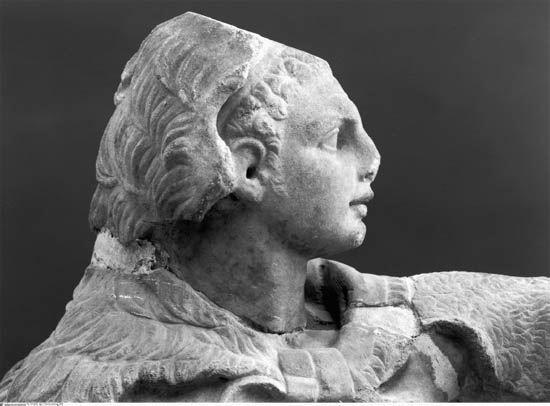
FIG. 3.8. Young Mithradates as Hercules freeing Prometheus, marble sculpture group, Pergamon. Berlin, Bildarchiv Preussischer Kulturbesitz/Art Resource, NY.
ALEXANDER AND DARIUS
Portraits on coins show that Mithradates copied Alexander’s flamboyant shoulder-length hairstyle. Alexander’s charisma, military genius, grand dreams—and tragic death just before his thirty-third birthday—had made him a cult figure, not just for Greco-Persians like Mithradates, but for many Romans too. Even as a child, Mithradates discovered much in Alexander’s life story that matched his own, and much to emulate. To portray Mithradates as the new Alexander, the antithesis of uncivilized Rome, Mithradates and his circle loved to draw comparisons between the two. Incidents like Mithradates’ taming of the wild stallion, described above, fostered popular associations between the beloved Alexander and the prince of Pontus.35
Like Alexander, Mithradates had a magnetic personality. Did young Mithradates consciously mirror his hero’s well-known mannerisms? Alexander had a habit of tilting his head to the left; some sculpted portraits of the youthful Mithradates not only resemble Alexander but also show his head inclined leftward. Alexander was also said to have a “certain melting look in his eyes.” We can imagine young Mithradates perfecting his version of Alexander’s “melting gaze” on his friends Dorylaus and Gaius, his little sisters, and other children in Sinope. Alexander’s companions had even claimed that his body and clothing exuded a pleasant, sweet fragrance. That, too, was something Mithradates could achieve, with myrrh and other perfumes used by men and women in Persian-influenced courts.36
Mithradates could probably recite the life story of Alexander (b. 356 BC), who set out at about age twenty-two to conquer the most powerful empire in the world. The Persian Empire under Darius III ranged over three continents and ruled about 25 million diverse people. But by the time Alexander died (in 323 BC, almost two hundred years before Mithradates’ birth), Darius’s empire had been incorporated into the new Macedonian Empire, stretching from Greece and Anatolia to Egypt and all the way to the Himalayas.
The mesmerizing story of Alexander and Darius III held many lessons for Mithradates. The Macedonians were outnumbered two to one, yet Alexander overwhelmed Darius’s army at Issus (333 BC). Darius made a daring escape in his chariot and recruited 200,000 more warriors from the fringes of his empire, backed by armored cavalry, ranks of dread scythed chariots, and war elephants. The two armies met again at Gaugamela (331 BC). But Alexander’s brilliant maneuvers again decimated the Persians. This time, Darius was able to slip away on horseback. At his defeat, Darius had expressed admiration for Alexander, even approving him as his successor to rule the Persian Empire. Fleeing to the far eastern reaches of his empire, Darius was murdered by his closest generals. Mithradates knew that Alexander famously wept over Darius’s corpse and buried him with great honors at Persepolis. Rejecting the traditional Greek hatred of barbarians (non-Greeks), Alexander welcomed his new subjects into his inner circle. Their mutual esteem and courtly gestures made Darius and Alexander into perfectly matched noble adversaries, like brave knights in a medieval tale of chivalry. Mithradates took great pride in his connections to both commanders and embraced a visionary dream of fusing Persia and Greece to overcome Rome, the barbarous empire of the West.
After his conquest of the Persian Empire, Alexander had adopted Persian customs and Persian dress. The ancient historians tell us that Mithradates wore old-fashioned Persian costumes. This seemingly eccentric habit was a way of honoring—and calling attention to—his Persian heritage and another way to imitate Alexander too. We know that Mithradates inherited antique furniture and other treasures from Darius I. On rainy days in the palace at Sinope, the boy could visit the storerooms and open cedar treasure chests filled with Persian tiaras, golden earrings, bracelets, and necklaces, rings and carved gems; jars redolent of exotic perfumes, and vintage finery, long white robes edged with purple and embroidered with gilded hawks and lions.
Mithradates knew that Alexander had taken care not to dress in the extravagant fashion (ridiculed by the plainly dressed Greeks) of the Medes, the ancient kinsmen of Persian kings. Nor did Alexander chose to wear the full royal Persian costume, a fancy long robe over trousers and turned-up slippers, topped with a tiara. Instead, Alexander combined Greek and Persian styles into a modest but elegant fashion statement: a simple, short, pure white tunic belted with a Persian sash that held his dagger, and sandals, no trousers or crown (the Macedonians considered the Persian tiara and trousers outlandish). Some of Alexander’s armor included antique pieces.
Young Mithradates also designed his own dashing, hybrid ensemble, probably after experimenting as a boy. Like Alexander, he wore a simple diadem (a purple and white ribbon tied around his head) and a brilliant white tunic, modestly embroidered with purple hems. The tunic was belted with a Persian-style, jewel-encrusted sash to hold the golden scabbard of his dagger against his thigh. Old-fashioned Persian trousers and leather boots with turned-up toes completed the king’s outfit.37
THE KING IS DEAD, LONG LIVE THE KING
During his boyhood in Sinope, mythic deeds, historical models both good and bad, and his scientific poison projects occupied Mithradates’ thoughts. He spent his days collecting rocks and reptiles, riding and hunting with his friends, reading and daydreaming. It must have seemed a happy and idyllic time, with only fleeting clouds.
Mithradates’ father held many feasts for courtiers and honored guests, with enthusiastic drinking, slabs of venison and lamb and Black Sea tuna, bread and olives, cherries and peaches. In 120 or 119 BC, Mithradates celebrated his birthday, his fourteenth or fifteenth. According to Persian custom, a birthday called for a banquet of special magnificence. A whole ox, camel, or donkey was roasted inside a giant brick oven. Each course was served separately, along with a great deal of wine. A flight of many different honeyed sweets followed, while conjurers from Parthia, Indian snake charmers, Syrian tumblers and dancers entertained, and harpists and drummers filled the great hall with music.38
At one of his lavish banquets, Mithradates’ father suddenly clutched his throat. Lurching out of his chair, he fell dead, his heavy silver cup rolling silently across the thick carpet. In that one moment, Mithradates’ whole world was thrown into tumult.
Mithradates V Euergetes was assassinated in about 120 BC in Sinope, poisoned by persons unknown. The deed was done while the king’s friend, General Dorylaus, was away in Crete, recruiting for Pontus’s army. When he received the news of the murder, it was too dangerous to return. He remained in Crete.39
Paranoia suddenly replaced Mithradates’ vague mistrust of his mother. Was he next? Who could be trusted? He turned to his closest companions and best friend, young Dorylaus. Perhaps he also found support among some teachers and courtiers. Comparisons to the assassination of Alexander’s father, Philip of Macedon, were inevitable, and the parallels must have been chilling for Mithradates. Philip was murdered at a wedding banquet. Alexander had blamed his father’s great enemies, the Persians, but many suspected his mother Olympias. Characterized by ancient historians as a jealous, murderous witch, Olympias terrified men with the huge, tame snakes she bred for Dionysian orgies. Mithradates had heard the ghastly stories about what happened after Philip’s violent death. Olympias had burned Alexander’s infant half brother to death and poisoned Alexander’s other half brother with drugs that destroyed his mind.40
In Sinope, some worried that Romans might have been behind the assassination of Mithradates’ father, but the ancient evidence points to a palace coup. Was Mithradates’ own mother, Queen Laodice, really a wicked witch, as Olympias was reputed to have been? To modern readers, the idea of murderous mothers seems like a Grimms’ fairy tale, but Mithradates knew of many ambitious queens in neighboring kingdoms who seized power through intrigue, murder, and poison. The mother of Prince Ariathes of Cappadocia, for example, had poisoned Ariathes’ five younger brothers one by one. Mithradates noticed that his mother doted on his little brother Mithradates the Good. The murder of Mithradates’ father supports Justin’s statement that there were plots to do away with Mithradates himself. As modern historians point out, Mithradates’ life really was in danger: the unknown murderers of his father were embedded in the palace among his guardians and tutors. It is easy to believe that Queen Laodice was complicit.41
After his father was buried in the royal mausoleum at Amasia (the old Pontic capital), young Mithradates was crowned king of Pontus, in 120 or 119 BC. His father’s will apparently left the kingdom to the joint rule of Queen Laodice, Mithradates, and his brother Mithradates the Good. Since both princes were underage, Laodice retained all power as regent, and she favored her younger, more malleable son. Laodice’s love of luxury made her a compliant client of Rome. Over the next few years, she accepted their bribes, and her extravagance pushed Pontus into debt.
In 119 BC, a marvelous omen suddenly appeared in the sky. The spectacular comet with the long scimitar tail, observed before Mithradates’ birth, returned, just as he was crowned king. The Magi and people in Persian-influenced lands rejoiced: this heavenly sign affirmed that Mithradates was indeed the savior-king sent by Mithra, the great leader who would rescue the East from Rome, as promised by the comet of 135 BC and widely known prophecies. The rare coins depicting a comet may have been minted just after his coronation (see fig. 2.1).
But Mithradates knew he had to devise a survival plan, or he would never live to fulfill his destiny. He began carrying his dagger with him at all times. At night he kept the blade under his pillow, just as Alexander had done.42
THE POISON PRINCE
What was the poison that killed his father? This compelling question recalled other unsolved royal deaths, like that of Alexander. Alexander’s companions believed that he had been murdered with a nameless poison, a mysterious substance of curious lore, an ice-cold “dew” collected from the mossy rocks where the River Styx cascaded over a high cliff in Greece. The “dew” was so corrosive that it dissolved metal and could be stored only in the hoof of a mule. Modern toxicologists have been unable to identify this poison. The ancient descriptions point to an acidic substance: a likely culprit may be a recently discovered, naturally occurring, extremely toxic acidic bacteria found in calcium carbonate crusts that leach out from limestone bedrock.43
But Mithradates had to consider more easily available possibilities closer to home. Was his father the victim of some noxious plant? They were myriad: henbane, yew, deadly nightshade, hemlock, mandrake, monkshood, hellebore, poppies, mushrooms, oleander. . . .
Mithradates had dabbled in toxic experiments as a boy, goaded by fears of poisoning. But now it was a matter of life and death. According to Justin, when his enemies’ attempts on his life “failed because of the boy’s superior strength and skill, they tried to kill him with poison.” He began urgent investigations of pharmaka, secretly testing them on others and himself. For models young Mithradates could look to the mythical sorceress Medea, but also to his grandfather’s panacea, to Attalus’s misunderstood toxicological research in Pergamon, and to Alexander’s bold—nearly fatal—scientific experiments in Babylonia and India with naphtha and powerful potions. Alexander had prescribed drugs and antidotes for his companions and himself. In India, for example, Alexander’s men were dying gruesome deaths after being attacked with swords dipped in snake venom. Alexander dreamed of the plant that could save them, and consulted with Hindu doctors about antidotes for snakebite. Another time, Alexander was courageous enough to drink down a beaker of medicine that knocked him unconscious, almost killing him. Now Mithradates, too, would dare to search for the perfect formula to neutralize all poisons.44
Toxic natural resources abounded in the Black Sea region. The nomads of Scythia dipped their arrows in a sophisticated concoction of viper venom and other pathogens; their shamans were experts in antidotes based on venom. In Armenia’s remote lakes lurked venomous fish, and Pontus boasted its own poisons. Wild honey, distilled by bees from the nectar of poisonous rhododendrons and oleander so profuse on the coast, could kill a man. Even the flesh of Pontic ducks was poisonous. The ducks thrived on hellebore and other baneful plants, and the bees enjoyed a strange immunity to poison. Did these mysterious facts inspire Mithradates to search for ways to inure himself to poisons?45
Nefarious, rare minerals were mined in Pontus. Sinope was the center for processing and exporting Sinopic red earth, realgar, orpiment, and other glittering dark red and yellow crystals surrounded by magical and ominous folklore. Known by many different names, these minerals occurred in association with quicksilver (mercury), lead, sulphur, iron ore, cobalt, nickel, and gold. The mines exhaled vapors so noxious that they were said to be worked only by slaves who had been sentenced to death for terrible crimes. One of the most infamous of the mines was Sandarakurgion Dag (Mount Realgar), described by the geographer Strabo. On the Halys River near Pimolisa, gangs of two hundred slaves labored to hollow out the entire mountain. Strabo notes that Mount Realgar Mine was finally abandoned as unprofitable, because it was too expensive to continually replace the slaves as they dropped dead from the toxic fumes.46
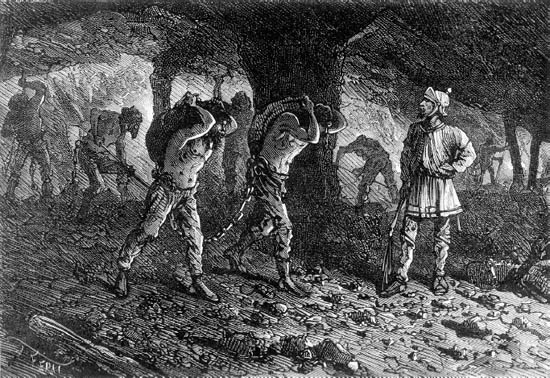
FIG. 3.9. Mine slaves, like those who worked in toxic Mount Realgar.
The various ancient words for groups of related compounds make them difficult to sort out and identify today. Cinnabar, zinjifrah, vermilion, Sinopic red earth, ruby sulphur, miltos sinopike, sinople, orpiment, oker, sandaracha, sandyx, lithargyron, zamikh, arsenicum, arhenicum, zirnikhi, sindura, minium, Armenian calche, realgar, dragon’s blood: all were ancient names for the many forms of toxic ores containing mercury, sulphur, and/or arsenic. Sinopic red earth was used to waterproof ships; many of these costly substances were prized as brilliant pigments, varnishes, and textile dyes; they were also important in alchemy and medicine.47
But Mithradates investigated their more sinister qualities. Arsenic—from the Persian word zamikh (“yellow orpiment,” Arabic, al-zarnikhi)—was a deadly, odorless, tasteless poison undetectable in food or drink—the ideal toxin for murder. The poison that someone slipped into his father’s meat or wine was most likely pure arsenic, produced by heating realgar (Arabic, rhaj al ghar, “powder of the mine”), red arsenic sulfate.
Mithradates discovered a curious phenomenon. By ingesting minuscule amounts of arsenic each day, he learned that one could build up an immunity to larger doses that would otherwise be fatal. Perhaps he achieved tolerance to arsenic at an early age, since, as Justin states, the conspirators in the palace failed in their attempts to poison him while he was a boy. He took other precautions, too, like those suggested by the Roman satirist Juvenal: “Trust none of the dishes at dinner, those sweets are black with the poison your mother put in them, whatever she offers you, make sure another samples it first. Let your tutor test each cup you are poured!”48
Mithradates supplemented his clandestine study of toxicology by stepping up his physical training. Hunting was a perfect excuse for spending time away from the castle. Meanwhile he planned his next move. From his reading of Xenophon’s books, his grounding in myth and history, Mithradates would have known exactly what was required of a young hero whose life was in danger. One day, armed with his bow, dagger, and javelin, the intrepid prince rode out of Sinope’s gates with his most loyal companions. They did not return.