
The list which follows sets out some of the principal dates which have been adopted in this book. Where no precise date has been suggested in the text, this has been indicated by a question mark. No finality is claimed for this list, since the chronology of the age of William the Conqueror is beset with difficulties, and, even in respect of some of the most important events, the evidence is less conclusive than might be desired. Many of the questions here involved have been considered above in the appendices.
|
1028? |
(autumn)1 Birth of William the Conqueror. |
|
1031 |
Duke Robert I of Normandy supports King Henry I of France in the latter's war to obtain his kingdom. |
|
1035 |
(July) Death of Duke Robert I in Bithynia: accession of William as duke of Normandy. |
|
(12 November) Death of Cnut the Great. |
|
|
1036 |
Murder of the atheling Alfred (brother of Edward the Confessor). |
|
1037 |
(16 March) Death of Archbishop Robert I of Rouen: his successor was Mauger, William's uncle. |
|
1040 |
(23 February) Consecration of the abbey-church at Le Bec. Geoffrey II (Martel) becomes count of Anjou. |
|
1040? |
Count Alan III of Brittany, Count Gilbert of Brionne, and Osbern the steward (William's guardians) die at various dates by violence. |
|
1041 |
(or 1042) Unsuccessful attempt to introduce the Truce of God into Normandy. |
|
1042 |
(after June) Accession of Edward the Confessor as king of England. |
|
1043 |
Coronation of Edward the Confessor. |
|
1044 |
Lanfranc becomes prior of Le Bec. |
|
1045 |
(January) Marriage of Edward the Confessor to Edith, daughter of Earl Godwine of Wessex. |
|
Threatened invasion of England by Magnus, king of Norway. |
|
|
1046? |
Ecclesiastical council at Rouen. |
|
1046 |
(late) Revolt of the western vicomtes and Guy of Burgundy in Normandy. King Henry intervenes on behalf of William. |
|
1047 |
(January) Battle of Val-és-Dunes. |
|
(October) Ecclesiastical council near Caen (William present). Proclamation of the Truce of God in Normandy. |
|
|
(25 October) Death of Magnus, king of Norway. |
|
|
1048 |
(late) Leo IX becomes pope. |
|
1049 |
(October) Opening of the council of Rheims. |
|
(late – early 1050) William recaptures Brionne. |
|
|
1050 |
(early) William re-enters Rouen. |
|
1051 |
(?January) Robert, formerly abbot of Jumiéges, now bishop of London, becomes archbishop of Canterbury. |
|
(26 March) Death of Hugh IV, count of Maine, |
|
|
(shortly after 26 March) Le Mans surrendered to Geoffrey, count of Anjou. |
|
|
Unsuccessful rebellion by Earl Godwine of Wessex and his sons against Edward the Confessor; they are sent from England into exile. About this time William is promised the succession to the kingdom of England. |
|
|
(summer -? February 1052)2 Warfare between William and Geoffrey, count of Anjou, round Domfront and Alençon. |
|
|
1051 |
or 1052?3 Marriage of William to Matilda, daughter of Baldwin V, count of Flanders. |
|
1052 |
(summer) Outbreak of the rebellion of William, count of Arques. |
|
(15 August) Count Geoffrey of Anjou and King Henry of France, having been reconciled, are together at Orléans. |
|
|
(before September) Return by force to England of Earl Godwine and his sons Harold and Leofwine. They are re-established in their earldoms. Expulsion of many Normans from England, including Robert, archbishop of Canterbury. Stigand is given the archbishopric of Canterbury. |
|
|
1053 |
(13 April) Death of Earl Godwine of Wessex. |
|
(June) Battle of Civitate. |
|
|
(November or December) Capture of Arques by William. |
|
|
(December-January 1054) King Henry summons levies from France. |
|
|
There follows his invasion of the Évreçin, while Odo, his brother, with his associates invades eastern Normandy. |
|
|
1054 |
(1–20 February) Battle of Mortemer. |
|
(later) Ecclesiastical council at Lisieux (William present). Deposition of Mauger, archbishop of Rouen: he is succeeded by Maurilius. |
|
|
1055 |
Death of Siward, earl of Northumbria. |
|
1056? |
Robert, William's half-brother, becomes count of Mortain. |
|
1057 |
(January-March) King Henry and Count Geoffrey of Anjou in association. |
|
(August) King Henry invades Normandy. Battle of Varaville. |
|
|
Return to England from Hungary of the atheling Edward (son of Edmund Ironsides), together with his children, Margaret, Edgar, and Christina. He dies shortly after his arrival. |
|
|
1057 |
(30 September) Death of Leofric, earl of Mercia. |
|
(22 December) Death of Ralph the Timid, earl of Hereford. |
|
|
1058 |
(17 March) Malcolm III (Canmore) becomes king of Scotland. |
|
Capture of Thimert by William. Beginning of the siege of Thimert by King Henry. |
|
|
Attack on England by Magnus, son of Harold Hardraada, king of Norway. |
|
|
1059 |
Synod of Melfi. |
|
1060 |
(4 August) Death of King Henry I of France; he is succeeded by Philip I, then a minor. |
|
(14 November) Death of Count Geoffrey of Anjou. |
|
|
1061 |
(October) Alexander II becomes pope. |
|
1062 |
(9 March) Death of Herbert, count of Maine. |
|
1063 |
Invasion and conquest of Maine by William. Death of Walter, count of Maine, and his wife Biota. |
|
1064 |
Visit of Harold Godwineson to Normandy. |
|
William invades Brittany. |
|
|
Ecclesiastical council at Lisieux (William present). |
|
|
‘Crusade’ of Barbastro. |
|
|
1065 |
(autumn) Revolt in Northumbria. Exile of Earl Tosti Godwineson. |
|
10664 |
(5 January) Death of Edward the Confessor. |
|
(6 January) Coronation as king of Harold Godwineson. |
|
|
(spring) Norman mission to Rome under Gilbert, bishop of Lisieux, seeking papal support. |
|
|
(May) Tosti attacks Isle of Wight. |
|
|
(July) Ecclesiastical council at Caen (William present). |
|
|
(September) William's fleet assembles in the Dives. |
|
|
(8 September) Harold Godwineson in southern England disbands his army. |
|
|
(September) William's fleet at Saint-Valéry-sur-Somme. |
|
|
(September) Invasion of northern England by Harold Hardraada, king of Norway, supported by Tosti Godwineson. |
|
|
(20 September) Battle of Fulford. |
|
|
(25 September) Battle of Stamford Bridge. |
|
|
(28 September) William lands at Pevensey. |
|
|
(29 September) William occupies Hastings. |
|
|
(6 October) Harold Godwineson in London. |
|
|
(14 October) Battle of Hastings. |
|
|
(21 October) Submission of Dover. |
|
|
(29 October) Submission of Canterbury. |
|
|
(Most of November) William in neighbourhood of Canterbury. |
|
|
(first half of December) William's march round London. |
|
|
(25 December) Coronation of William as king of the English in London. |
|
|
1067 |
(circa 1 March–6 December) William in Normandy. |
|
(1 July) Death of Maurilius, archbishop of Rouen; he is succeeded by John, bishop of Avranches. |
|
|
(autumn) Raid on Kent by Eustace, count of Boulogne. |
|
|
Odo, bishop of Bayeux, becomes earl of Kent. |
|
|
William fitz Osbern becomes earl of Hereford. |
|
|
1068 |
(early) Subjection of Exeter. |
|
(summer) William's first entrance into York. |
|
|
Occupation of Warwick, Lincoln, Huntington, Chester, etc. |
|
|
1069 |
(February–April) York rebels, and is retaken by William. |
|
Revolt in Maine: loss of Le Mans. |
|
|
(summer) Invasion of Yorkshire by Sweyn Estrithson, king of Denmark; general rising of the north supported by Malcolm III, king of Scotland. |
|
|
(20 September) Occupation of York by the rebels. |
|
|
(before Christmas) William retakes York. |
|
|
1069? |
Marriage of King Malcolm to Margaret, sister of Edgar the atheling. |
|
1069 or 1070 |
Ecclesiastical council at Rouen. |
|
1070 |
(January–March) ‘Harrying of the North’; William's campaign in Teesdale; his march over the Pennines; occupation of Chester and Stafford. |
|
(4 April) William at Winchester. |
|
|
(April) Ecclesiastical council at Winchester (William present); deposition of Stigand. |
|
|
(15 August) Lanfranc becomes archbishop of Canterbury. |
|
|
(summer) King Malcolm ravages northern England. |
|
|
1071 |
(22 February) Battle of Cassel; death of William fitz Osbern. |
|
(16 April) Capture of Bari by the Normans. |
|
|
(19 August) Battle of Manzikiert. |
|
|
(summer) Departure of the Danish fleet from the English coast. |
|
|
(October) End of Hereward's resistance in the Fens. |
|
|
1072 |
(January) Capture of Palermo by the Normans. |
|
(April) Ecclesiastical council at Winchester (William present). |
|
|
(autumn) William's invasion of Scotland; pact of Abernethy. |
|
|
(1 November) William at Durham. |
|
|
1072 |
Ecclesiastical council at Rouen. |
|
1073 |
(perhaps before 30 March) William invades and reconquers Maine. |
|
(30 March) William at Bonneville-sur-Touques. |
|
|
(21 April) Death of Pope Alexander II: he is succeeded by Gregory VII. |
|
|
1074 |
Edgar the atheling is offered Montreuil-sur-Mer by King Philip I. |
|
Ecclesiastical council at Rouen (William present). |
|
|
1075 |
Revolt of the earls in England. |
|
(August–October) Ecclesiastical council at London (William present). |
|
|
1076 |
(April) Ecclesiastical council at Winchester (William present). |
|
(31 May) Execution of Waltheof. |
|
|
(September–early November) Campaign in Brittany. William defeated at Dol. |
|
|
1077 |
(early) First attack (unsuccessful) on La Flèche by Fulk le Rechin, count of Anjou. |
|
Pact between William and King Philip. |
|
|
(December) Roger II of Montgomery becomes earl of Shrewsbury. |
|
|
1078 |
(early or perhaps late – 1077) First pact (? at Castellum Vallium) between Fulk le Rechin and William. |
|
First revolt of Robert, William's eldest son, against his father. |
|
|
1079 |
(January) William defeated at Gerberoi. |
|
(15 August–8 September) Devastation of northern England by Malcolm, king of Scotland. |
|
|
(9 September) Death of John, archbishop of Rouen: he is succeeded in the next year by William Bonne-Ame. |
|
|
1080 |
(early – or perhaps late, 1079) Robert is reconciled to his father. |
|
(Pentecost) Ecclesiastical council at Lillebonne (William present). |
|
|
(late summer or autumn) Robert invades Scotland: foundation of ‘New Castle’. |
|
|
(Christmas) Ecclesiastical council at Gloucester (William present). |
|
|
1080? |
Gregory VII makes (or repeats) a demand to William for fealty in respect of the English kingdom. This is refused. |
|
1081 |
Second (and successful) attack on La Flèche by Fulk le Rechin. |
|
Second pact between William and Fulk (possibly at Blancalanda). |
|
|
1082 |
Imprisonment of Odo, bishop of Bayeux, and earl of Kent. |
|
1083 |
(after 18 July) New revolt of Robert against his father. |
|
(2 November) Death of Matilda, wife of William the Conqueror. |
|
|
1084 |
(?Pentecost) William at Westminster. |
|
(19 June) William at Rouen. |
|
|
1085 |
(25 May) Death of Pope Gregory VII. |
|
Cnut IV, king of Denmark, prepares to invade England with the support of Robert, count of Flanders, and others. |
|
|
(December) William holds his Christmas court at Gloucester, whereat the Domesday survey is planned. |
|
|
1086 |
(July) Murder of Cnut IV, king of Denmark. |
|
(August) Assembly at Salisbury; ‘The Salisbury Oath’. |
|
|
(later) William crosses to Normandy. |
|
|
1087 |
(summer) King Philip raids the Évreçin. William invades the Vexin and sacks Mantes. |
|
(9 September – very early in the morning) William the Conqueror dies at Saint-Gervais outside Rouen. |
1 See Appendix A.
2 I do not absolutely exclude the possibility that (as frequently asserted) these campaigns took place in 1048–1049, but I consider this to be highly improbable. See Appendix B.
3 See Appendix C.
4 See Appendix D.
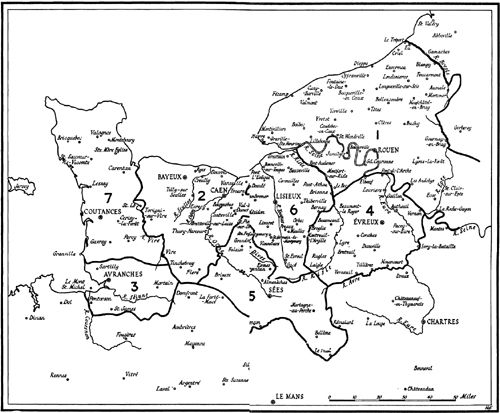
I. Normandy in the time The Norman bishoprics: 1. Rouen. 2. Bayeux. 3. Avranches Évreux. 5. Sées. 6. Lisieux. 7. Coutances.
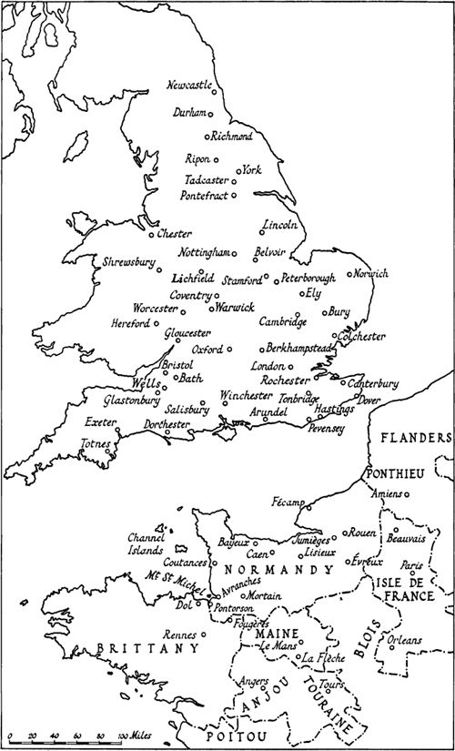
II. England and Normandy in the time of William the Conqueror.