
The extended cartography of the human psyche provides the basis for a deeper understanding of many psychopathological conditions encountered in everyday psychiatric practice. Where biographically oriented theories offer dynamic explanations for various clinical phenomena, the new model provides an interpretation that is more accurate and encompassing and, in many instances, simpler. It describes far more adequately the complicated mutual interrelations and interactions between the individual symptoms and syndromes and reflects more precisely everyday clinical observations. However, it also integrates in a comprehensive way certain syndromes or their aspects that the old theories could not account for, or, were able to explain only through elaborate, contrived, and ultimately unconvincing speculations. This is particularly true in the case of malignant aggression, sadomasochism, serious sexual perversions, various forms of suicide, most psychotic manifestations, and instances of spiritual pathology.
At the same time, the conceptual framework presented here is described and used with the explicit knowledge that it is a model and not an accurate description of reality. As such, it is at best a useful organization of the presently available observations and data and will have to be revised, extended, or replaced when new data emerge or new explanatory principles are discovered. The most important criteria of its validity are the power to reflect correctly and to synthetize observations from many different fields, the use of new therapeutic mechanisms and approaches that far surpass those existing at present, and the capacity to provide exciting ideas for future research and exploration of new areas. Although the descriptions of the biographical level of the unconscious found in mainstream psychoanalysis require only minor adjustments for incorporation into the presented model, the role of perinatal and transpersonal dynamics in the understanding of psychopathology must be discussed in considerable detail, because of its novelty, as well as its critical importance.

Fig. 34. Vision from a perinatal session dominated by BPM III. The bird-like monster represents vital threat and aggression; concomitant feelings of revulsion are attached to the mangy rat-tail at the bottom of the picture.
The dynamics of the perinatal matrices is of particular theoretical and practical relevance. The perinatal phenomena are easily available; they are manifested regularly in dreams and even under the circumstances of everyday life. For many people, it is generally more difficult to keep these forces under control than to gain conscious access to them. When new understanding, reassurance, and a supportive framework are provided, intensive breathing and music are usually sufficient to facilitate experiential access to the perinatal material. The inclusion of the concept of perinatal matrices and of the birth trauma in psychiatric theory opens up new and exciting perspectives. It makes possible natural and logical explanations for most major psychopathological disorders, based on the connections between this level of the psyche and the anatomy, physiology, and biochemistry of the biological birth process.
Transcending the narrow biographical orientation of contemporary psychiatry also has far-reaching implications for therapy. In the new context, based on the understanding of perinatal dynamics, most of the standard psychopathological categories suddenly appear as relatively stabilized, difficult stages of a transformational and evolutionary process. When the therapeutic strategy involves activation and acceptance, rather than suppression, mechanisms of healing and personality transformation become available that surpass anything known to traditional psychotherapy and psychiatry.
Manifestations related to the dynamics of perinatal matrices are usually seen by psychiatrists as indications of serious mental disease that should be supressed by all possible means. The routine application of this therapeutic strategy, which is a direct outgrowth of the medical model, makes much of psychiatry an essentially antitherapeutic force, because it specializes in interfering with a process that has intrinsic healing potential. In many instances, providing a new understanding of the process, and encouraging and facilitating it by psychological or pharmacological means should be considered a method of choice, or at least acknowledged as an important alternative.
It is appropriate at this point to focus more specifically on the new understanding of psychopathology based on the concept of perinatal matrices. It is generally accepted that thinking in terms of clearly defined disease entities of agreed-upon etiology and pathogenesis is not applicable to psychiatry. The few exceptions, such as mental dysfunctions associated with general paresis, circulatory and degenerative diseases of the central nervous system, meningitis and encephalitis, or different forms of brain tumors, are actually problems that are diagnosed and treated by techniques developed by neurology. Patients with these disorders will be referred to psychatric facilities if they present serious management problems.
For the majority of disorders in the psychiatrist’s daily practice, it is more appropriate to think in terms of symptoms and syndromes. Symptoms are emotional and psychosomatic manifestations that represent basic units, constituents, or building blocks of psychopath-ology. Syndromes are typical clusters or constellations of symptoms encountered in clinical practice.
A careful analysis of observations from deep experiential psychotherapy reveals that a conceptual model that includes perinatal dynamics can derive logically most psychiatric symptoms from the specific characteristics of the biological birth process. It can also explain quite naturally why individual psychiatric symptoms, such as anxiety, aggression, depression, guilt, inferiority feelings, or obsessions and compulsions tend to cluster into typical syndromes.
Anxiety, generally considered to be the single most important psychiatric symptom, is a logical and natural concomitant of the birth process in view of the fact that delivery is a situation of vital emergency involving extreme physical and emotional stress. The possibility that all anxiety could have its origin in the trauma that the child experienced in the birth canal was first mentioned by Sigmund Freud. However, Freud himself did not pursue this idea, and the theory of the birth trauma as the source of all future anxieties was later elaborated by his renegade disciple, Otto Rank. These theoretical speculations of the pioneers of psychoanalysis preceded by three decades their confirmation by psychedelic research.
Aggression of extreme proportions is equally comprehensible in relation to the birth process as a reaction to excessive physical and emotional pain, suffocation, and threat to survival. A comparable abuse imposed on an unconstrained animal would result in outbursts of rage and a motor storm. However, the child trapped in the narrow confines of the birth canal has no outlet for the flood of emotional and motor impulses, since he or she cannot move, fight back, leave the situation, or scream. It is therefore conceivable that an enormous amount of aggressive impulses and general tension would be, under these circumstances, fed back into the organism and stored for belated discharge. This enormous reservoir of pent-up energies can later become the basis not only for aggression and violent impulses, but also for various motor phenomena that typically accompany many psychiatric disorders, such as generalized muscular tension, tremors, twitches, tics, and seizurelike activity.
The fact that the closed system of the birth canal prevents any external expression of the biological fury involved seems to provide a natural model for Freud’s concept of depression as aggression turned inward, using the individual as a target. This connection is clearly illustrated by the fact that the extreme outcome of both depression and aggression is murder. Homicide and suicide differ only in the direction the destructive impulse takes. Thus also, the symptom of depression has its perinatal prototype; for inhibited depression, it is the no-exit situation of the second perinatal matrix that effectively prevents any energetic discharge or flow, and, for agitated depression, it is the third perinatal matrix that allows some limited expression of aggression.
The psychological, emotional, and physical manifestations of depressed patients represent a combination of elements, some of which reflect the role of the suffering victim and others powerful restrictive, repressive and self-punishing forces. In regressive experiential work, the victim aspects of depression can be traced back to the experience of the child during delivery, while the hostile, coercive, and self-destructive elements are identified as introjection of the uterine contractions and the pressures of the constricting birth canal. The perinatal roots of the major types of depression can explain many emotional, physiological, and even biochemical characteristics of these disorders. These connections are described in greater detail below.
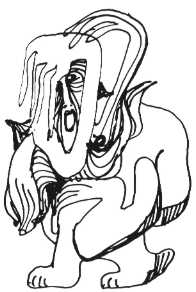
Fig. 35. An experience of deep depression and despair in a psychedelic session dominated by BPM II.
It is somewhat more difficult to account for the fact that guilt, another basic psychiatric symptom, can typically be traced back to birth. Working with patients who suffer from overwhelming irrational feelings of guilt, one usually detects relevant biographical factors that seemingly explain them, such as constant reproaches from parents, explicit guilt-producing comments, and even the common use of references to labor pains (“If you knew how much I suffered giving birth to you, you would not behave this way”). However, such biographical factors represent only an overlay; their deeper source is a pool of primordial guilt of metaphysical dimensions that is closely associated with the perinatal matrices. This connection can be also illustrated by mythological and archetypal examples. Thus, the “primal sin” of the Bible links guilt to the expulsion from the paradisean situation of the Garden of Eden. More specifically, God’s punishment of Eve involves an explicit reference to female reproductive functions: “In pain and sorrow shalt thou bring forth children.”
On occasion, subjects in LSD therapy and other forms of deep experiential work offer interpretations of the connection between guilt and birth as they saw it in their sessions. Some attribute guilt to the reversal of the causal nexus between the loss of the intrauterine state and the intense negative emotions during delivery. According to this view, the aggressive and other instinctual forces unleashed during biological birth are interpreted as indicative of inherent evil, and the loss of the womb and the agony in the birth canal are seen as punishment for it. Others feel that guilt reflects a sense of reponsibility for suffering of the mother during delivery. However, the most common and most plausible explanation relates guilt to the recognition or awareness of how much suffering is recorded in the human organism or how much pain has been inflicted on it. Since a great portion of the emotional and physical pain that the individual has experienced during his or her lifetime was associated with the birth trauma, it seems quite logical that the sense of guilt reaches enormous proportions when the process of self-exploration or awareness reaches the perinatal level.
The individual who gets in touch experientially with the amount of suffering associated with the memory of birth has two possible interpretations. The first is to accept the fact that we live in an entirely capricious universe, where the most horrible things can happen to us without any good reason, quite unpredictably, and without our having the slightest degree of control. The alternative interpretation involving the sense of guilt emerges when the individual is unable or reluctant to accept this image of the universe and has a deep need to see the cosmos as a system governed by fundamental moral law and order. It is interesting in this connection that persons who discover that they have cancer or some other incurable and painful disease tend to respond to it with feelings of guilt: “Where did I go wrong? What did I do to deserve this? Why are ‘they’ doing this to me?” The logic behind this response can be explicated as: “Something this horrible would not have been done to me (or would not be happening to me), unless I had done something comparably bad to deserve it.”
The degree of unconscious guilt thus seems to be commensurate with, and directly proportionate to, the amount of unconscious pain. Although the individuals involved frequently tend to project guilt onto specific situations that they consciously remember, such as forbidden sexual activities or various other forms of unacceptable behavior, its deepest nature is very vague, abstract, and unconscious. It consists in the conviction of having committed some horrible deed and not having the slightest idea what it was. It therefore makes good sense to see guilt as the result of a desperate effort to rationalize the absurdity of suffering that was imposed on the individual without any intelligible reason.6
The above explanation, however plausible on this level of consciousness, is not final and absolute. When the process of self-exploration reaches the transpersonal level, new possibilities occur that the individual could not have conceived of while totally immersed in biographical issues or in the perinatal process. The traumatic aspects of birth can suddenly be identified as the workings of condensed bad karma. The suffering involved is then seen not as absurd and capricious, but as reflecting the individual’s karmic responsibility for actions in previous incarnations. The deepest transpersonal roots of guilt seem to reflect the recognition of one’s identity with the creative principle responsible for all the suffering built into the divine play of existence. This would represent an error in logical typing, since the ethical standards that are part of creation backfire and are applied against the creator.
We have already described in detail how the excessive sexual arousal that is an intrinsic part of the third perinatal matrix forms a natural basis for a variety of sexual dysfunctions and deviations. We have also discussed at lenth how unusual attitudes toward biological material and excretory functions can be explained quite logically from the events accompanying biological birth. The fact that spiritual opening and intrinsic mystical feelings form integral aspects of perinatal dynamics provides fascinating new insights into the psychopathology of religion, as well as various clinical conditions that have a strong spiritual component, such as obsessive compulsive neurosis and certain types of psychosis. These issues are dealt with later in connection with specific psychopathological disorders, the new understanding of psychoses, and the role of spirituality in human life (obsessive-compulsive neuroses, psychoses and spiritual energencies are discussed later this chapter; spirituality in human life is discussed in Chapter 5 and 6).
Emotional disorders are almost invariably accompanied by specific psychosomatic manifestations. This is true for various forms of depressions, psychoneuroses, alcoholism and drug addiction, borderline psychotic states, psychoses, and particularly for psychosomatic diseases. The nature and certain specific features of the typical physical concomitants of emotional disorders can also be understood quite logically from their connection with the birth experience. In the past, there have been endless arguments between the organic and psychological schools of psychiatry as to whether biological or psychological factors play a primary role in emotional disorders. Introducing the perinatal level of the unconscious into psychiatric theory bridges to a great extent the gap between these two extreme orientations and offers a surprising alternative: since the birth experience is simultaneously an emotional, physiological, and biochemical process, the question as to what is primary and what is derived is irrelevant on this level of the psyche. The emotional and biological phenomena represent two sides of the same coin, and both can be reduced to the same common denominator—the birth process.
The typical physical concomitants of various emotional disorders make much sense if considered in this light. They involve belt headaches or migraine headaches; palpitation and other cardiac complaints; a subjective sense of a lack of oxygen and breathing difficulties under emotional stress; muscular pains, tensions, tremors, cramps, and seizurelike activities; nausea and vomiting; painful uterine contractions; activation of the gastrointestinal tract, resulting in spastic constipation or diarrhea; profuse sweating; hot flashes alternating with chills; and changes of skin circulation and various dermatological manifestations. The same is true for some extreme psychiatric complaints that have both emotional and physical aspects, such as the sense of being overwhelmed by powerful erratic energies and losing control, fear of death and the experience of dying, and fear of an impending loss of sanity. Similarly, the frequent catastrophic expectations of psychiatric patients are not difficult to understand in the context of the emerging memory of the birth trauma.
The perinatal level of the unconscious thus represents a multifaceted and rich repository of emotional qualities, physical sensations, and powerful energies. It seems to function as a universal and relatively undifferentiated potential matrix for the development of most forms of psychopathology. To the extent to which the perinatal matrices reflect the actual trauma of birth, one would expect substantial variations in the overall extent of negative elements from individual to individual. It certainly should make a difference whether an individual was born within one hour, in an elevator or a taxi on the way to the hospital, or whether the delivery lasted fifty hours and involved forceps and other extreme measures.
However, with respect to the model presented here, the actual nature and duration of childbirth is not the only factor in the development of psychopathology. It is obvious that among individuals whose birth was comparable, some may be relatively normal, while others could show various types and degrees of psychopathology. The question is how to reconcile this variation with the obvious significance of the perinatal level of the unconscious. The pool of difficult emotions and physical sensations derived from the birth trauma represents only a potential source of mental disorders; whether psychopathology develops, what specific form it takes, and how serious it will be are critically codetermined by the individual’s postnatal history and, thus, by the nature and dynamics of the COEX systems.
Sensitive handling of the newborn, reinstitution of the symbiotic interaction with the mother, and sufficient time allowed for bonding seem to be factors of critical importance that can counteract much of the deleterious impact of the birth trauma. In view of the observations from modern consciousness research, a basic revision of present medical approaches, which emphasize impeccable body mechanics but violate fundamental biological and emotional bonds beween mother and child, is of critical importance for the mental health of humanity. The significance of alternative techniques of childbirth that attempt to rectify the present frightening situation, such as Frederick Leboyer’s birth without violence (1975) and other new approaches respecting the needs of mother, father, and child, cannot be overestimated.
Individuals who relive their birth in psychedelic sessions or some nondrug experiential work repeatedly report that they have discovered a deep connection between the pattern and circumstances of their delivery and the overall quality of their life. It seems as if the experience of birth determines one’s basic feelings about existence, image of the world, attitudes toward other people, the ratio of optimism to pessimism, the entire strategy of life, and even such specific elements as self-confidence and the capacity to handle problems and projects.
From the point of view of the medical model and pedestrian common sense, the delivery appears to be an essentially passive act for the child; the work is all done by the mother and her uterine contractions, while the child is delivered more or less as an inanimate object. The dominant medical belief is that the child is not conscious of the environment and does not experience pain. Neurophysiology even denies the possibility of birth memory, because the cerebral cortex of the newborn is not mature and lacks the myelin sheaths on neurons. In light of all the clinical evidence from modern consciousness research, this position is the result of psychological repression and wishful thinking and should not be considered a scientific fact. Even on a rather superficial level, this approach significantly contradicts other experiments and observations that have demonstrated a remarkable sensitivity of the fetus during prenatal existence and others that suggest the presence of primitive forms of memory in unicellular organisms.
In any case, the reliving of birth in experiential clinical work clearly indicates that from the introspective point of view this process is perceived and interpreted as an ordeal that requires extreme active struggle and effort, a true hero’s journey. Thus, the moment of birth is experienced under normal circumstances as a personal triumph. This can be illustrated by its characteristic association with images of victory in revolutions, wars, or the killing of wild and dangerous animals. It is not infrequent in the context of the birth memory that the individual experiences a condensed review of all his or her later successes in life. The experience of birth thus functions psychologically as the prototype of all future situations that represent a serious challenge for the individual.
When exposure to the birth situation has been reasonable and not excessive or debilitating and the postnatal situation sensitively handled, the individual is left with an almost cellular feeling of self-confidence in confronting difficulties and overcoming them. Individuals born under the influence of heavy general anesthesia repeatedly connect this with their later difficulties in completing projects. They indicate that they are capable of mobilizing enough energy and enthusiasm in the early stages of any major endeavor, but later lose the sense of focus and feel that their energies become diffused and diluted. As a result, they never experience the feeling of clean completion of a project and the satisfaction derived from it. When manual help or forceps were used to terminate the delivery, the ensuing pattern is somewhat similar. The individual involved is capable of working with adequate energy and enthusiasm in the initial phases of a project, but loses confidence just before its termination and has to rely on external help for the “final push.” Persons whose birth was induced report that they dislike being pushed into projects before they feel ready, or may sense that they are being pushed into projects even if objectively this is not so.
From the point of view of the presented model, it is of course of utmost theoretical and practical importance to study individuals who were born by Caesarean section. For this purpose it is essential to differentiate between elective or nonlabor Caesarean section and emergency Caesarean section. The former is planned ahead of time for various reasons: the pelvis may be too narrow, the baby too large, the uterus scarred by a previous Caesarean section, or the vogue allows the mother to choose a Caesarean operation for cosmetic purposes. The child born in this way entirely bypasses the situation characteristic of BPM II and III. It must still face the crisis of separation from the mother, the cutting of the umbilical cord, and possibly the effects of anesthesia. The emergency Caesarean is usually performed after many hours of traumatic delivery, when it becomes obvious that to continue would be dangerous for the mother or child. In this case, the overall trauma is regularly far greater than that associated with normal delivery.
Since I have worked with only a few elective Caesareans, the following observations represent first clinical impressions that require further validation. Unless programmed negatively by the circumstances of their life, they seem to be quite open to the spiritual dimension and have easy experiential access to the tran-spersonal realm. They accept quite naturally many phenomena that give an average person great conceptual difficulty; such as the possibility of extrasensory perception, reincarnation, or the archetypal world. In psychedelic sessions they can reach the traspersonal level in a short-cut fashion and characteristically they need not confront elements of BPM II and III. Instead, their reliving of biological birth includes experiences characteristic of Caesarean birth, such as surgical cuts, manual extraction from the womb, emerging into light through a bloody opening, and the effects of anesthesia.
When they reach the level of birth experientially, elective Caesareans report a sense of fundamental wrongness, as if they were comparing the way they came into this world with some phylogenetic or archetypal matrix indicating what birth should be like. Surprisingly, they miss the experience of normal birth—the challenge and stimulation it provides, the confrontation with obstacles, and the triumphant emerging from confinement. They sometimes ask the sitters to simulate the constricting situation of birth to allow them to struggle for their liberation. It seems that, as a result of the short-cut solution, they are not prepared for the future vicissitudes of life and lack the stamina for struggle or even the ability to see life in terms of projects and to get excited about them.
In addition, the exposure to the constraints of the birth canal seems to lay the foundations for one’s sense of boundaries in the world. The elective Caesareans may lack the sense of what their place is in the world and how much they can reasonably expect from others. It is as if they feel that the entire world should be the nourishing womb, providing unconditionaly all they need. They tend to reach out and, if they get what they want, they ask for more. Since the world is substantially different from the womb, it strikes back sooner or later and the hurt individual withdraws into psychological isolation. The life pattern of a Caesarean may in extreme cases oscillate between indiscriminate and excessive demands and painful withdrawal.7
It is important to realize what a great difference there is between a normal birth and a Caesarean birth. During normal birth the intrauterine condition deteriorates and becomes unbearable, so that the moment of birth is experienced as a liberation and a fundamental improvement over the preceding one. In elective Caesarean birth the child moves from the symbiotic relationship in the womb directly into the external world, where it must face separation, hunger, cold, the need to breathe, and other difficulties. This situation is clearly worse than the intrauterine state that preceded it, although the womb in late pregnancy does not satisfy the needs of the child to the same degree that it does in early embryonic development.
If, following birth, the infant is handled with love and sensitivity, much of the immediate traumatic impact of this life-threatening situation can be compensated for or counterbalanced. This is particularly true if the pregnancy was satisfactory and the newborn has good psychological foundations. Such a child would spend nine months of life in a good womb and then be catapulted in the birth process. It is my belief that the event of birth will always be traumatic to some degree, even if its duration is short and the mother is psychologically stable, loving and well prepared. However, immediately after birth, this child would be put back on the mother’s belly or breast, reestablishing a symbiotic relationship with her. The comforting impact of physical contact has been demonstrated experimentally, and it is well known that the heart beat can have a profound nourishing impact on the newborn.
The symbiotic situation on the good breast is quite close to the one experienced in the good womb. Under these circumstances, bonding can occur that, according to some recent studies (Klaus 1976; Quinn 1982), seems to have a decisive influence on the entire future relationship between mother and child. If the child is then put into lukewarm water, simulating the intrauterine conditions, as is done in the Leboyer approach, this is another powerful soothing and healing element.8 It is as if the child is being told in a language that he or she understands: “Nothing horrible and irreversible happened; things were difficult for awhile, but now, by and large, you are where you were before. And this is the way life is; it can get rough, but if one persists it will be good again.” This approach seems to imprint in the child, almost on a cellular level, a general optimism or realism toward life, a healthy self-confidence, and an ability to face future challenge. It answers positively for all of the individual’s life the question that Einstein considered the crucial problem of existence: “Is the universe friendly?”
Conversely, if the child immediately after birth faces the contemporary “perfect medical treatment,” the psychological situation is entirely different. The umbilical cord is usually cut almost instantly, the respiratory pathways are cleaned, and the child might be slapped on the buttocks to stimulate respiration. Then a drop of silver nitrate is administered to the baby’s eyes to prevent possible infection by gonorrhea from the mother, and the child is hastily washed and examined. This is just about all the human interaction that the child receives to counteract the most serious trauma of human life—the depth of which is matched only by other life-threatening situations and, eventually, by biological death. After being shown to the mother, the child is taken to the nursery, being returned to her in the following days according to a scientifically prescribed schedule designed by obstetricians. A child treated in this way emerges with a deeply ingrained message that the intrauterine paradise was lost once and forever, and things will never be good again. A sense of psychological defeat and a lack of confidence in confronting difficulties are engraved on the very core of his or her being.
It is difficult to believe that science, known for its meticulous exploration of all possible variables, could have developed such a one-sided and distorted approach to this fundamental event in human life. However, this situation is not isolated; similar conditions exist for the dying: a mechanical concern to prolong life has all but replaced the human dimensions of the experience of death. Intellectual knowledge and training of any depth and scope gives no protection against emotional bias and, in regard to such shattering events as birth and death, this bias is paramount. For this reason, with respect to being born and dying, scientific opinions and theories frequently do not reflect objective facts, but are sophisticated rationalizations of irrational emotions and attitudes.
Both the drastic and the tender aspects of the birth situation represent powerful emotional stimuli, particularly for those who have not confronted these areas in themselves in deep experiential work. Even the reliving of birth in a group situation is an overwhelming emotional event that can trigger on the part of assisting and observing persons a deep psychological process. Much of the detached and overly technological approach to birth practiced by contemporary medicine may not arise from factors of time and money alone, but may also reflect the rigid training in detachment from, and armoring against, emotions that are seen as professionally disqualifying.
The pathogenic impact of birth is, therefore, not just a simple function of the extent and the nature of the birth trauma itself; it is also a function of the way the child was treated immediately following the moment of birth. But even that is not the whole story; emotionally important events from later life, both nourishing and traumatic, are also significant factors determining the extent to which the dynamics of perinatal matrices will be translated into manifest psychopathology. In this sense, the psychoanalytic doctrine about the relevance of childhood traumas remains valid in the new model in spite of the fact that the latter emphasizes the birth trauma and the transpersonal realms. However, the specific biographical events described by Freud and his followers are seen not as the primary causes of emotional disorders, but as conditions for the manifestation of deeper levels of the unconscious.
The new conceptual framework suggests that good mothering, satisfaction, security, and a general predominance of positive experiences in childhood would create a dynamic buffering zone protecting the individual from the direct and disturbing impact of perinatal emotions, sensations, and energies. Conversely, continuing traumatization in childhood would not only fail to create this protective screen, it would further contribute to the pool of negative emotions and sensations stored on the perinatal level. As a result of this defect in the defense system, the perinatal elements could at a later date emerge into consciousness in the form of psychopathological symptoms and syndromes. The specific content of the traumatic experiences in childhood and their timing would then selectively emphasize certain aspects or facets of the birth experience or of the perinatal dynamics, thereby determining the final form of symptomatology that will become manifest in the individual’s life.
Thus, traumatic situations in which the subject plays the role of a helpless victim selectively reinforce the dynamic relevance of BPM II. They can cover a wide range, from painful and threatening events that occurred in the life of a helpless infant to such adult situations as being trapped under the debris of a collapsed house during an air raid, near suffocation under an avalanche, or being imprisoned and tortured by the Nazis or Communists. In a more subtle way, the second perinatal matrix can be cultivated by daily situations in a family that victimizes the child and leaves no possible outlet.
Similarly, situations that include violence but allow some degree of active involvement on the part of the subject would reinforce BPM III. An experience of being raped would characteristically selectively reinforce the sexual aspect of the third perinatal matrix, since it involves a combination of fear, aggression, struggle, and sexuality. A childhood experience in which a child was confronted with feces or some other biological material in a painful, punishing manner would selectively emphasize the scatological facet of BPM III. There are many other similar examples, however, these should suffice to convey the general principles of the mechanisms involved.
Having established the relationship between perinatal matrices, the birth trauma, and psychopathology, I will now apply the concept of dynamic interplay between perinatal matrices and the COEX systems to the most important categories of emotional disorders and their specific forms. Emotional, psychosomatic, and interpersonal problems frequently have a multilevel dynamic structure that includes not only the biographical and perinatal elements, but also important roots in the transpersonal realm. I will therefore make occasional references to such deeper connections. The following discussion should not be seen as a speculative application of the new model to various forms of psychopathology. It is basically a collection of insights gathered from people who have explored and deciphered in deep experiential work the dynamic structure of the various problems that plagued their lives.
Severe inhibited depressions of endogenous and reactive nature have typically important roots in the second perinatal matrix. The phenomenology of the sessions governed by BPM II, as well as the postsession intervals dominated by this matrix, show all the essential features of deep depression. Under the influence of BPM II an individual experiences agonizing mental pain, despair, overwhelming feelings of guilt and inadequacy, deep anxiety, lack of initiative, loss of interest in anything, and an inability to enjoy existence. In this state, life appears to be utterly meaningless, emotionally empty, and absurd. In spite of the extreme suffering involved, this condition is not associated with crying or any other dramatic external manifestations; it is characterized by a general motor inhibition. The world and one’s own life are seen as if through a negative stencil, with selective awareness of the painful, bad, and tragic aspects of life and blindness for anything positive. This situation appears to be, and indeed feels, utterly unbearable, inescapable, and hopeless. Sometimes this is accompanied by loss of the ability to see colors; when that happens, the entire world is perceived as a black-and-white film. Existential philosophy and the theater of the absurd seem to be the most accurate descriptions of this experience of life.
Inhibited depressions are characterized not only by a total obstruction of emotional flow, but also a total energetic blockage and severe inhibition of the major physiological functions of the body, such as digestion, elimination of waste products, sexual activity, the menstrual cycle, and the sleep rhythm. This is quite consistent with an understanding of this type of depression as a manifestation of BPM II. Its typical physical concomitants involve feelings of oppression, constriction, and confinement, a sense of suffocation, tension and pressure, headaches, retention of water and urine, constipation, cardiac distress, loss of interest in food and sex, and a tendency to hypochondriacal interpretation of various physical symptoms. The paradoxical biochemical findings, suggesting that people suffering from inhibited depression can show a high level of stress as indicated by the level of catecholamines and steroid hormones fit well the image of BPM II, which reflects a highly stressful situation with no external action or manifestation.
The theory of psychoanalysis links depression to early oral problems and emotional deprivation. Although this connection is obviously correct, it does not account for important aspects of depression—a sense of being stuck, of hopelessness with no exit, of energy blockage, and most of the physical symptoms, including biochemical findings. The present model shows the Freudian explanation as correct, but partial. While the deepest nature of inhibited depression can only be understood from the dynamics of BPM II, the COEX systems associated with it and instrumental in its development include biographical elements emphasized by psychoanalysis.
The connection of this biographical material with BPM II reflects deep experiential logic. This stage of biological delivery involves interruption of the symbiotic connection with the maternal organism through uterine contractions, isolation from any meaningful contact, termination of the supply of nourishment and warmth, and exposure to danger without protection.9 It stands to reason, then, that the typical constituents of COEX systems dynamically related to depression involve rejection, separation from and absence of the mother, and feelings of loneliness, cold, hunger, and thirst, during infancy and early childhood. Other important biographical determinants include family situations that are oppressive and punishing for the child and permit no rebellion or escape. They thus reinforce and perpetuate the role of the victim in a no-exit situation, a characteristic of BPM II.
An important category of COEX systems instrumental in the dynamics of depression involves memories of events that constituted a threat to survival or body integrity, in which the individual played the role of a helpless victim. This is an entirely new observation, since psychoanalysis and psychotherapeutically oriented academic psychiatry emphasize the role of psychological factors in the pathogenesis of depression. The psychotraumatic effects of serious diseases, injuries, operations, and episodes of near drowning have been overlooked and grossly underestimated. These new observations suggesting the paramount significance of physical traumas in the individual’s life for the development of depression would be difficult to integrate into psychoanalytic theory, which stresses the oral origins of depression. However, they are perfectly logical in the context of the presented model, where the emphasis is on the combined emotional-physical trauma of birth.
In contrast, the phenomenology of agitated depression is dynamically associated with BPM III; its basic elements can be seen in experiential sessions and postsession intervals governed by this matrix. Characteristic features of this type of depression are a high level of tension and anxiety, an excessive amount of psychomotor excitement and agitation, and aggressive impulses oriented both inward and outward. Patients with agitated depression cry and scream, roll on the floor, flail around, beat their heads against the wall, scratch their faces, and tear their hair and clothes. The typical physical symptoms associated with this condition are muscular tensions, tremors, and painful cramps, belt (or migraine) headaches, uterine and intestinal spasms, nausea, and breathing problems.
The COEX systems associated with this matrix deal with aggression and violence, cruelties of various kinds, sexual abuse and assaults, painful medical interventions, and diseases involving choking and a struggle for breath. Unlike the COEX systems related to BPM II, the subject involved in these situations is not a passive victim; he or she is actively engaged in attempts to fight back, defend oneself, remove the obstacles, or escape. Memories of violent encounters with parental figures or siblings, fist fights with peers, scenes of sexual abuse and rape, and episodes from military battles are typical examples of this kind.
There has been a strong feeling among psychoanalysts that the psychodynamic interpretation of mania is generally far less satisfactory and convincing than that of depression. However, most authors seem to agree that mania represents a means of avoiding an awareness of depression, and that it includes a denial of painful inner reality and a flight into the external world. It reflects the victory of ego over superego, a drastic decrease of inhibitions, an increase of self-esteem, and an abundance of sensual and aggressive impulses. In spite of all this, mania does not give the impression of genuine freedom. Psychological theories of manic-depressive disorders emphasize the intensive ambivalence of manic patients and the fact that simultaneous feelings of love and hate interfere with their ability to relate to others. The typical manic hunger for objects is usually seen as a manifestation of strong oral emphasis; and the periodicity of mania and depression as an indication of its relation to the cycle of satiety and hunger.
Many of the otherwise puzzling features of manic episodes become easily comprehensible when seen in their relation to the dynamics of the perinatal matrices. Mania is psychogenetically linked to the experiential transition from BPM III to BPM IV; it can be seen as a clear indication that the individual is partially under the influence of the fourth perinatal matrix, but nevertheless still in touch with the third. Here, the oral impulses reflect the state the manic patient is aiming for and has not yet achieved, rather than a “fixation” on the oral level. Relaxation and oral satisfaction are characteristic of a state following biological birth. To be peaceful, to sleep and to eat—the typical wishes found in mania—are the natural goals of an organism flooded by the impulses associated with the final stage of birth.
In experiential psychotherapy one can occasionally observe transient manic episodes in statue nascendi as phenomena suggesting incomplete rebirth. This usually happens when the subjects involved have already moved beyond the difficult experience of the death-rebirth struggle and gotten a taste and sense of release and escape from the birth agony. However, at the same time, they are unwilling and unable to face the remaining unresolved material related to the third matrix. As a result of anxious clinging to this uncertain and tenuous victory, the new positive feelings become accentuated to the point of a caricature. The image of whistling in the dark seems to fit this condition particularly well. The exaggerated and forceful nature of manic emotions and behavior clearly betrays that they are not expressions of genuine joy and freedom, but reaction formations to fear and aggression.
LSD subjects whose sessions terminate in a state of incomplete rebirth show all the typical signs of mania. They are hyperactive, move around at a hectic pace, try to socialize and fraternize with everybody in their environment, and talk incessantly about their sense of triumph and well-being, wonderful feelings, and the great experience they have just had. They extol the wonders of LSD treatment and spin messianic and grandiose plans to transform the world by making it possible for every human being to have the same experience. Extreme hunger for stimuli and social contact is associated with inflated zest, self-love, and self-esteem, as well as indulgence in various aspects of life. The breakdown of superego restraints results in seductiveness, promiscuous tendencies, and obscene talk.
The fact emphasized by Otto Fenichel (1945) that these aspects of mania link it to the psychology of carnivals—socially sanctioned unleashing of otherwise forbidden impulses—further confirms its deep connection with the dynamic shift from BPM III to BPM IV. In this connection, the hunger for stimuli and the search for drama and action serve the dual purpose of consuming the released impulses and engaging in an external situation with a turbulence that matches the intensity and quality of the inner turmoil.
When subjects experiencing this state can be convinced to turn inward, face the difficult emotions that remain unresolved, and complete the (re)birth process, the manic quality disappears from their mood and behavior. The experiences of BPM IV in their pure form are characterized by radiant joy, increased zest, deep relaxation, tranquility and serenity, peace, and total inner satisfaction; they lack the driven quality, grotesque exaggeration, and ostentatiousness characteristic of manic states.
The COEX systems superimposed on the perinatal mechanism for mania seem to involve episodes in which satisfaction has occurred under circumstances of insecurity and uncertainty about the genuineness and continuation of the gratification. Also an expectation or demand of overtly happy behavior in situations that do not quite justify it seems to feed into the manic pattern. In addition, one frequently finds in the history of manic patients contrary influences on their self-esteem, hypercritical and undermining attitudes of parental figures alternating with overestimation, psychological inflation, and a building up of unrealistic expectations. Also, the alternating experience of constraint and freedom that characterizes the custom of swaddling infants seems to be psychoge-netically related to mania.
All the observations from experiential work seem to suggest that the memory of the final stage of birth, with its sudden shift from agony to a sense of dramatic relief, represents the natural basis for the alternating patterns of manic-depressive disorders. This, of course, does not exclude the participation of biochemical factors as important triggers for the shifts of these psychological matrices. However, even findings of consistent and relevant biochemical changes do not in themselves explain the specific nature and psychological features of this disorder. Even in a situation as clearly chemically defined as an LSD session, the administration of the drug does not explain the psychological content, and the occurrence of a depressive or manic state requires further clarification. In addition, there is always the question whether biological factors play a causal role in the disorder or are its symptomatic concomitants. It is conceivable that the physiological and biochemical changes in manic-depressive disorders represent an organismic replay of the conditions in the organism of a child who is being born.
The concept of basic perinatal matrices offers fascinating new insights into the phenomenon of suicide, which in the past has represented a serious theoretical challenge to psychoanalytically oriented theories. Two important questions related to suicide must be answered by any theory that tries to explain this phenomenon. The first is why a particular individual wants to commit suicide, an act that obviously violates the otherwise mandatory dictate of the self-preservation drive. The second, equally puzzling question is the specificity in the choice of the means of suicide. There seems to be a close connection between the state of mind the depressed person is in and the type of suicide he or she contemplates or attempts. The drive thus is not simply to terminate one’s life but to do it in a particular way. It might seem natural that a person who takes an overdose of tranquilizers or barbiturates would not jump off the cliff or under a train. However, the selectivity of choice also works the other way around: a person who chooses bloody suicide would not use drugs, even if they were easily available.10
The material from psychedelic research and other forms of deep experiential work throws new light on both the deep motives for suicide and the intriguing question of the choice of methods. Suicidal ideation and tendencies can be occasionally observed in any stage of LSD psychotherapy; however, they are particularly frequent and urgent at the time when subjects are confronting the unconscious material related to the negative perinatal matrices. Observations from psychedelic sessions reveal that suicidal tendencies fall into two distinct categories that have very specific relations to the perinatal process. If we agree that the experience of inhibited depression is a manifestation of BPM II and that agitated depression is a derivative of BPM III, then various forms of suicidal fantasies, tendencies, and actions can be understood as unconsciously motivated attempts to escape these unbearable psychological states, using two routes reflecting the individual’s biological history.
Suicide of the first type, or nonviolent suicide, is based on the unconscious memory that the no-exit situation of BPM II was preceded by the experience of intrauterine existence. An individual trying to escape the elements of the second perinatal matrix would thus choose a way that is most easily available in this state—that of regression into the original undifferentiated unity of the prenatal condition (BPM I). Since the level of the unconscious on which this decision is made is not usually experientially accessible, the subject is attracted to situations and means in everyday life that seem to involve similar elements. The basic underlying purpose is to reduce the intensity of painful stimuli and eventually eliminate them. The final goal is to lose the painful awareness of one’s separateness and individuality and to reach the undifferentiated state of “oceanic consciousness” that characterizes embryonic existence. Mild forms of suicidal ideas of this type are manifested as a wish not to exist, or to fall into a deep sleep, forget everything and not to awaken ever again. Actual suicidal plans and attempts in this group involve the use of large doses of hypnotics or tranquilizers, inhalation of carbon monoxide or domestic gas, drowning, bloodletting in warm water, and freezing in snow.11
Suicide of the second type, or violent suicide, follows unconsciously the pattern once experienced during biological birth. It is closely associated with the agitated form of depression and thus related to BPM III. For a person under the influence of the third matrix, regression into the oceanic state of the womb is unavailable because it would lead through the hellish no-exit stage of BPM II, which is psychologically worse than BPM III. However, what is available as a psychological escape route is the memory that once a similar state was terminated by the explosive release and liberation at the moment of biological birth. As with nonviolent suicide, the individuals involved have no experiential access to the perinatal level and to the insight that the psychological solution would be to relive one’s birth, complete the death-rebirth process internally, and connect experientially with the postnatal situation. Instead, they exteriorize the process and tend to enact a situation in the external world that involves the same elements and has similar experiential components.
The basic pattern here is to intensify the tension and suffering, bring them to a culmination point, and then reach liberation in the context of an explosive discharge of destructive impulses and amidst various forms of biological material. This applies equally to biological birth and violent suicide; both involve an abrupt termination of excessive emotional and physical tension, instant discharge of enormous energies, extensive tissue damage, and the presence of organic material, such as blood, feces, and entrails.
The juxtaposition of photographs showing biological birth and those depicting victims of violent suicide clearly demonstrate the deep formal parallels of the two situations. The similarity between them has been repeatedly reported by psychedelic subjects who experienced identification with individuals who have committed suicide; experiences of this kind occur frequently in perinatal sessions.
The suicidal fantasies and acts that belong to this category involve death under the wheels of a train, in the turbine of a hydroelectric plant, or in suicidal car accidents; cutting one’s throat, blowing one’s brains out, and stabbing oneself with a knife; throwing oneself from a window, tower, or cliff; and some exotic forms of suicide such as harakiri, kamikaze, and running amok. Suicide by hanging seems to belong to an earlier phase of BPM III, characterized by feelings of strangulation, suffocation, and strong sexual arousal.
The LSD work has also provided fascinating insights into the intriguing problem of the choice of a particular type and specific form of suicide that has been poorly understood in the past. Nonviolent suicide reflects a general tendency to reduce the intensity of painful emotional and physical stimuli. The specific choice of means seems to be determined by biographical elements of a relatively superficial nature. However, violent suicide involves a mechanism of an entirely different kind. Here I have repeatedly observed that the individuals who were contemplating a particular form of suicide were already experiencing the physical sensations and emotions that would be involved in its actual enactment.
Thus, those persons who are attracted to trains or hydroelectric turbines already suffer from intense feelings of being crushed and torn to pieces; it is easy to trace these feelings back to perinatal experiences. Those who have a tendency to cut or stab themselves complain about unbearable pains in the parts of their bodies that they intend to injure. Similarly, the tendencies to hang oneself are based on strong and deep preexisting feelings of strangulation and choking. Again, both the pains and choking sensations are easily recognizable as elements of the third perinatal matrix. The specific choice of violent suicide thus seems to be a special example of fundamental intolerance for cognitive-emotional dissonance; this important mechanism underlying much of psychopathology is discussed further on (p. 424-5). When an individual is overwhelmed by irrational emotions and incomprehensible physical sensations of enormous intensity, then even acts that involve severe self-mutilation or self-destruction seem acceptable as ways to achieve congruence between the inner experience and external reality.
There are important exceptions to these general rules. The mechanism of violent suicide requires a relatively clear memory of the sudden transition from the struggle in the birth canal to the external world and of the explosive liberation. If this transition was blurred by heavy anaesthesia, the individual would be programmed for the future almost on a cellular level to escape from severe stress into a drugged state. Under these circumstances, a state characteristic of BPM III could result in a nonviolent suicide. A physiological exposure to birth without or with minimum anesthesia would thus prepare the individual for future serious challenges and create a deep sense of confidence in one’s ability to cope with them. Under pathological circumstances, a birth not seriously complicated pharmacologically would set a pattern for violent suicide. Heavy anesthesia would then program the individual to seek relief from severe stress in a drugged state and, under extreme circumstances, in a drug death. However, in the study of individual cases of suicide, detailed examination of the birth process must be complemented by biographical analysis, since postnatal events can significantly codetermine and color the pattern of suicide.
When suicidal individuals undergo psychedelic therapy and complete the death-rebirth process, they see suicide retrospectively as a tragic mistake based on lack of self-understanding. A person who does not know that one can experience liberation from unbearable emotional and physical tension through a symbolic death and rebirth and/or through reconnecting to the state of prenatal existence without suffering any physical damage, might be driven by the catastrophic dimensions of his or her agony to enact an irreversible situation in the material world that involves similar elements. Since the experiences of the first and fourth perinatal matrices not only represent symbiotic biological states but also have very distinct spiritual dimensions, suicidal tendencies of both types appear, in light of the above observations, to be distorted and unrecognized craving for transcendence. The best remedy for self-destructive tendencies and the suicidal urge is, then, the experience of ego death and rebirth and of cosmic unity. Not only are the destructive energies and impulses consumed in the process, but the individual connects with the transpersonal context in which suicide no longer seems to be a solution. This sense of the futility of suicide is connected with the insight that the transformations of consciousness and the cycles of death and rebirth will continue after one’s biological demise or, more specifically, with the recognition of the impossibility of escaping one’s karmic patterns.
In general agreement with the psychoanalytical theory, alcoholism and narcotic drug addiction appear to be closely related to depressions and suicide. The most basic characteristic of alcoholics and addicts, and their deepest motive for taking intoxicant drugs, seems to be an overwhelming craving for experiences of blissful undifferentiated unity. Feelings of this kind are associated with periods of undisturbed intrauterine life and good nursing; it was emphasized above that both of these states have intrinsic numinous dimensions. Alcoholics and addicts experience a great amount of emotional pain derived from COEX systems and in the last analysis from negative perinatal matrices; these involve depression, general tension, anxiety, guilt, low self-esteem, and others. The excessive consumption of alcohol or narcotic drugs seems to be a mitigated analogue of suicidal tendencies. Alcoholism and addiction have frequently been described as prolonged and slow forms of suicide.
The mechanism characteristic of these groups is the same as for nonviolent suicide; it reflects an unconscious need to undo the birth process and return to the womb. Alcohol and narcotics tend to inhibit various painful emotions and sensations and produce a state of diffused consciousness and indifference toward one’s past and future problems. Patients addicted to alcohol and drugs who had experienced in their psychedelic sessions states of cosmic unity, reported insights very similar to those of suicidal patients. They realized that they had been craving for transcendence, not for drug intoxication; this mistake was based on a certain superficial similarity between the effects of alcohol or narcotics and the experience of cosmic unity. However, resemblance is not identity and there are some fundamental differences between transcendental states and these intoxications. Whereas alcohol and narcotics dull the senses, obnubilate consciousness, interfere with intellectual functions, and produce emotional anesthesia, transcendental states are characterized by a great enhancement of sensory perception, serenity, clarity of thinking, abundance of philosophical and spiritual insights, and unusual richness of emotions.
Thus, instead of producing the state of cosmic consciousness in its entirety and with all its essential characteristics, these drugs create its pitiful caricature. However, for a hurting individual who is desperately looking for help and is incapable of accurate discrimination, the resemblance seems close enough to seduce him or her into systematic abuse. Repeated administration then leads to physiological addiction and damages the user physically, psychologically, and socially.
As mentioned in connection with suicide, there seems to be another mechanism underlying alcoholism and addiction, which reflects not the natural dynamics of the birth process, but artificial intervention. There are patients who clearly show signs of the psychological influence of BPM III and yet turn to alcohol and narcotics. It is common to find that at the time of their birth their mothers were under severe general anesthesia. As a result, their memory of birth is not that of an explosive liberation but of a slow awakening from drug intoxication. They thus tend to escape from the painful grip of BPM III, and intense stress in general, into chemically induced anesthesia, following the route shown to them by the obstetrician attending their birth.
The experience of cosmic unity characteristically results in negative attitudes toward the states of consciousness produced by intoxication with alcohol and narcotics. In our work with alcoholics and serious narcotic drug addicts, a dramatic reduction of the use of alcohol and narcotics was frequently observed even after a single high-dose psychedelic session. After the experiences of ego death and cosmic unity, abuse of alcohol and narcotics are seen as tragic mistakes produced by an unrecognized and misunderstood craving for transcendence; the parallel with the insights of depressed patients concerning suicide is quite obvious and striking.
A consuming need for transcendence seems to be the core problem of alcoholism and narcotic drug addiction, as improbable as this might appear to those familiar with the personality, behavior patterns, and life style of patients who belong to these categories. This can be clearly illustrated by statistics from psychedelic therapy programs conducted in the Maryland Psychiatric Research Center, in Baltimore. These two categories of patients had in their psychedelic sessions the highest incidence of mystical experiences among all the studied groups, including neurotics, mental health professionals, and individuals dying of cancer (Grof 1980).
It is important to emphasize that the perinatal dynamics, although crucial, does not in itself explain the personality structure of the alcoholic and the addict or the phenomenon of drug abuse. Additional factors of psychological relevance can be found in the biographies of the patients; these are basically congruent with the psychodynamic literature. Thus, the COEX systems associated with alcoholism and addiction involve early oral frustration, emotional deprivation, and craving for anaclitic satisfaction. In some instances, significant roots of alcoholism and drug addiction can reach into the transpersonal domain.
Although my clinical experiences with the treatment of the relatively rare impulse neuroses, such as running away from home and wandering (poriomania), gambling, quaternary drinking (dipsomania), stealing (kleptomania), and setting fires (pyromania) have been rather limited, it seems safe to hypothesize that they are psychogenetically related to manic-depressive disorders and thus to the transition from BPM III to BPM IV. In cases of impulsive running away, the hectic traveling activity represents an exteriorization of the driving energies characteristic of the third perinatal matrix. Here, running means running away from danger, restrictions, and punishment and toward security, freedom, and gratification. The typical fantasized goal of this erratic search is the image of an ideal home with a good mother who will satisfy all the individual’s needs. It is easy to recognize this craving as the psychological search for the elements of BPM IV and, ultimately, BPM I. In impulsive gambling, the feverish atmosphere of the casino, the anxiety-laden excitement, and the extreme alternatives of a total annihilation or a magical transformation of one’s life are characteristic features of the dynamics of the third perinatal matrix and of the approaching ego death and rebirth. The fantasized cornucopia associated with the positive outcome belongs to characteristic images associated with BPM IV. A strong emphasis on the sexual aspect of BPM III can give a distinct erotic coloring to gambling, connecting it to masturbatory activities. Dipsomania, the excessive use of alcohol that comes in periodic bouts, is closely related to poriomania; it represents a combination of impulse neurosis and alcoholism. The fundamental mechanism is an inability to tolerate extreme organismic tension and a need for instant discharge; one would expect the element of alcohol consumption or use of other drugs to be based on the administration of anesthetics or sedatives during the final stage of the individual’s birth. The deep root of kleptomania seems to be a need to achieve satisfaction in the context of danger, tension, excitement and anxiety.
Pyromania is clearly psychogenetically related to the pyroca-thartic aspect of BPM III. Archetypally, the final stages of the death-rebirth process are associated with the element of fire; LSD subjects would at this point experience visions of gigantic conflagrations, volcanic or atomic explosions, and thermonuclear reactions. This experience of fire is associated with intense sexual arousal and seems to have purifying properties. It is perceived as a cathartic destruction of the old structures, the elimination of biological impurities, and a preparation for spiritual rebirth. Obstetricians and midwives frequently observe the experiential counterpart of this phenomenon in delivering women who complain in the final stages of childbirth about burning sensations in their genitals, as if their vaginas were on fire.
A pyromaniac has the correct insight that he must go through the experience of fire to free himself from unpleasant tension and achieve satisfaction. However, he fails to recognize that this can be effective only if it is experienced internally as a symbolic transformative process. Instead of experiencing pyrocatharsis and spiritual rebirth, he projects the process outward, exteriorizes it and becomes an arsonist. Although watching the fire generates a state of excitement and sexual arousal, it fails to bring the anticipated satisfaction, since the expectations reflect the outcome of a process of inner transformation and cannot be met by witnessing an external event. Because the subject has an unconsciously true, and therefore convincing, insight that the experience of fire is essential for reaching liberation and full satisfaction, he or she keeps repeating the act in spite of all the failures.
The fundamental mistake behind all impulse activities is the exteriorization of the inner process, acting it out in a concrete way. The only solution is to approach these problems as internal processes and complete them on a symbolic level. The striving for the discharge of intolerable tension, the craving for sexual release, and the need for inner security—so characteristic for impulse neuroses—find simultaneous gratification in the context of ecstatic feelings associated with BPM IV and BPM I.
The complex and intricate dynamic structure of BPM III also contributes an important component to obsessive-compulsive neuroses; however, the emphasis is on different aspects or facets of this matrix. Patients suffering from this disorder are tormented by ego-alien thoughts or feel compelled to perform repeatedly certain irrational and incomprehensible rituals. If they refuse to comply with these strange urges, they are overwhelmed by free-floating anxiety. There is a general agreement in psychoanalytical literature that conflicts related to homosexuality, aggression, and biological material form the psychodynamic basis of this disorder, together with an inhibition of genitality and a strong emphasis on pregenital drives.
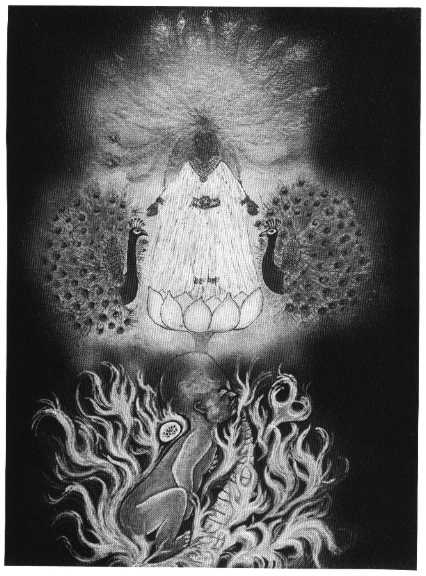
Fig. 36. Painting depicting a sequence of death and rebirth experienced in an LSD session. It involved identification with the fetus passing through purifying fire into the celestial realm of the Great Mother Goddess.

Fig. 37. Immolation Sacrifice by a Wrathful Deity. Painting of a vision from a perinatal LSD session representing “Moloch”—a gigantic destructive deity appearing in fire and demanding sacrifice of the newborn. Such sacrifices to Moloch were allegedly practiced in Carthage and ancient Israel; during these awesome rituals mothers were throwing neonates into the fire burning inside metal statues of the deity. The combination of the newborn status, fire, sacrificial death, and epiphany of the divine is characteristic for the transition from BPM III to BPM IV.
It has already been pointed out that the unconscious fear of female genitals and the homosexual tendencies associated with it are related to birth anxiety. The inhibition of genitality is, in the last analysis, the result of the similarity between the pattern of sexual orgasm and the orgastic aspects of birth. In the context of BPM III, sexual arousal is intimately combined with anxiety and aggression in an inextricable experiential complex. If the elements of this matrix are close to the surface, sexual excitement will tend to activate this particular aspect of the birth memory. Any attempts to control and suppress the anxiety and aggression involved will then automatically result in the inhibition of genital sexuality. The typical ambivalence about such biological material as feces, urine, mucus, and blood, has its natural roots in the final stages of biological birth, where the contact with this material can occur in either a negative or a positive context, as already discussed. Further, the attitude of obsessive-compulsive patients toward biological substances as potentially extremely dangerous and capable of killing makes sense in light of this association with the memory of an event that was life-threatening.

Fig. 38. A scatological experience in the context of BPM III— wallowing in feces and drowning in a gigantic cesspool. Drawing by a subject who confronted this stage of the death-rebirth process in a psychedelic session with LSD.
Another characteristic feature of obsessive-compulsive neurosis betrays its psychogenetic relation to BPM III, namely, the strong ambivalence of patients suffering from this disorder in regard to spirituality and religion. Many of them live in a constant conflict about God and religious faith, alternating between rebellion or blasphemy and desperate tendencies to repent, expiate, and undo their transgressions and sins. This kind of problem is altogether characteristic of the final stages of the death-rebirth process, in which determined resistance and revolt against an overwhelming higher force alternates with a wish to surrender and comply. This is usually associated with the awareness of the cosmic relevance of this situation and its spiritual significance.
LSD subjects who experience this higher force in a more figurative, archetypal form describe it as a strict, punishing, and cruel deity comparable with Jehovah of the Old Testament, or even the pre-Columbian gods demanding blood sacrifice. The biological correlate of this punishing deity is the restricting influence of the birth canal that prevents any external expression of the activated instinctual energies of sexual and aggressive nature and in turn inflicts extreme, life-threatening suffering on the individual. Postnatally, this coercion takes far more subtle forms, being executed by parental authorities, penal institutions, and religious precepts and commandments.
The restricting force of the birth canal thus represents a natural basis for the deep instinctual part of the superego that Freud saw as a derivative of the id; he considered it to be the savage and cruel element of the psyche that can drive an individual to self-mutilation and suicide. In this context, obsessive-compulsive patients face a painful, paradoxical situation that involves a strange double bind. In view of the patterns of archetypal unfolding, one must experience elemental aggression and distorted sexual feelings of various kinds that are intrinsic to BPM III in order to connect experientially with the pure spiritual energy associated with BPM IV. However, the experience of these intense instinctual tendencies is seen as incompatible with the divine and is therefore suppressed.

Fig. 39abcd. A series of drawings reflecting monstrous, blasphemous distortion of the most sacred religious themes and their contamination by “obscene biology”; this combination is quite characteristic for BPM III and the final stages of the death-rebirth process. The patient was flooded by similar images in an LSD session in which she was working through specific traumatic childhood experiences and elements of the birth trauma. Experiences of this kind are closely related to the theme of the Sabbath of the Witches and other satanic rituals.

Fig. 39e. The last picture of the series shows the resolution of the problems illustrated by the preceding drawings; this resolution occurred at the time when the patient connected experientially with the moment of biological birth. The image of “Purified Christ” is rising above the realm of “obscene biology” (stomach, intestines, bladder, and human embryo) and separating from it. The patient’s hands are reaching for the “Black Sun”, symbolizing the Divine Within-inner reality without any form that is even beyond Christ.
The COEX systems that are psychogenetically associated with obsessive-compulsive neurosis involve traumatic experiences related to the anal zone and to biological material, such as a history of strict toilet training, painful enemas, and gastrointestinal diseases. Another important category of related biographical material includes memories of various situations representing a threat to genital organization. These observations are in basic agreement with the psychoanalytic understanding of the psychogenetic factors instrumental in the development of obsessive-compulsive neurosis.
According to psychoanalytic literature, the pregenital conversions, such as psychogenic asthma, various tics, and stammering, represent a combination of obsessive-compulsive disorders and conversion hysteria. The basic underlying personality structure of these patients clearly has obsessive-compulsive features, yet the principal mechanism of symptom formation is conversion. Deep experiential work reveals that pregenital conversions are derivatives of the third perinatal matrix. In psychogenic asthma, the breathing difficulties can be traced directly to the element of agony and suffocation experienced during biological birth and can be therapeutically influenced by confronting the death-rebirth process. Careful analysis of the physiological process involved in asthma suggests that many of its important aspects can be traced back to the biological dynamics of childbirth. Similarly, as in obsessive-compulsive neuroses, the anal emphasis reflects the general energy blockage and involvement of the anal zone at birth. The specific accentuation of the elements of suffocation and anal retention is due to biographical factors. In addition to the traumas described by psychoanalysis, one frequently finds a history of diseases, incidents, or accidents that involve interference with breathing.
We have discussed earlier how the agony, anguish, and suffocation that the child experiences in the birth canal seem to generate an enormous amount of neuronal stimulation that remains stored in the system and seeks belated discharge through different channels. Psychogenic tics represent, in the last analysis, such an attempt to release in a biographically codetermined fashion some of these pent-up energies accumulated during the hydraulic situation of birth. Psychogenic stammering has its deep dynamic roots in the conflicts around oral as well as anal aggression. The oral component reflects the distress the child experiences when his or her head is stuck in the birth canal with jaws forcefully locked. The anal element can be traced back to the increased intra-abdominal pressure and constriction of the sphincter accompanying the delivery. As in other emotional disorders, the specific selection of certain facets of the complex dynamics of BPM III in psychogenic stammering is determined by later biographical events. An important factor in this disorder seems to be repression of verbal aggression of a distinctly obscene quality.
The deep dynamic basis of conversion hysteria is quite similar to that of agitated depression; this is also reflected in a phenomenological resemblance of these two conditions. The relation between them can be used as an illustration of the intricate geometry of psychopathological syndromes. In general, agitated depression is a deep disorder and it manifests, in a far purer form the content and dynamics of BPM III. Observation of the facial expression and behavior of a patient with agitated depression leaves no doubt that it is a very serious condition. The high incidence of suicide and even suicide combined with murder found in these patients supports this impression.
A major hysterical seizure shows a superficial resemblance to agitated depression. However, the overall picture is far less serious; it lacks the depth of despair, appears stylized and contrived, and has definite theatrical features with sexual overtones. In general, a hysterical seizure has many basic characteristics of BPM III— excessive tension, psychomotor excitement and agitation, a mixture of depression and aggression, loud screaming, disturbances of breathing, and dramatic arching (arc de cercle). However, the experiential template appears here in a considerably more mitigated form than in agitated depression and is substantially modified and colored by later traumatic events. The nature and timing of these biographical components are in basic agreement with the Freudian theory. They are typically sexual traumas from the time when the patient reached the phallic stage of development and was solving the Oedipus or Electra complex. The movements of the hysterical seizure can be deciphered as symbolic allusions to certain specific aspects of the underlying childhood trauma.
The deep connection between agitated depression and conversion hysteria is clearly manifested in the course of LSD therapy. At first, the hysterical symptoms become amplified and the client has to relive and work through the specific sexual traumas from childhood. When this biographical work is completed, subsequent psychedelic sessions produce elements resembling agitated depression that the patient finally deciphers as derivatives of the birth struggle of BPM III. The resolution comes when an experiential connection is made to the elements of BPM IV.
Hysterical paralysis of the hands and arms, inability to stand (abasia), loss of speech (aphonia) and other conversion symptoms seem to be based on conflicting innervations reflecting the excessive and chaotic generation of neuronal impulses in the demanding situation of birth. The paralysis is not caused by lack of motor impulses, but by a dynamic conflict of powerful antagonistic innervations that counteract, canceling each other. This interpretation of hysterical conversion symptoms was first suggested by Otto Rank, in his pioneering book, The Trauma of Birth (1929). While Freud saw conversions as expressions of a psychological conflict expressed in the language of somatization, Rank believed that their real basis was physiological, reflecting the original situation that existed during birth. The problem for Freud was how a primarily psychological problem could be translated into a physical symptom, whereas Rank had to explain how an essentially somatic phenomenon could later acquire, through a secondary elaboration, psychological content and symbolic meaning.
Some serious manifestations of hysteria that border on psychosis, such as psychogenic stupor, uncontrolled daydreaming, and mistaking fantasy for reality, seem to be dynamically related to BPM I. They reflect a deep need to reinstitute the blissful emotional condition characteristic of undisturbed intrauterine existence and the symbiotic union with the mother. While the emotional component and the state of physical satisfaction involved can easily be detected as related to experiences of the desired good womb and good breast, the concrete content of daydreaming and fantasies uses themes and elements related to the individual’s childhood, adolescence, and adult life.
In anxiety hysteria the role of perinatal dynamics is unusually obvious; it is only logical that anxiety can be traced back to an experience that involved a serious vital threat. I have already mentioned that Freud (1964) expressed early in his work the opinion that the situation of birth might be a major source and prototype of all later anxieties. However, he did not elaborate this idea any further, and when it was later articulated by his disciple Rank into a comprehensive theory (1929), he brought about Rank’s excommunication from the psychoanalytic movement.
In general, free-floating anxiety can be traced back, more or less directly, to the vital anxiety of birth. In the various phobias that involve anxiety, crystallized as specific fears attached to persons, animals, or situations, the original birth anxiety is modified and mitigated by later biographical events. While the intensity of the affect reveals the deep perinatal source, the general type of the phobia reflects a particular stage or facet of birth, and the specific choice of persons, objects, and situations is determined by later biographical events.
The relation of phobias to the birth trauma is most evident in the fear of closed and narrow places (claustrophobia). It occurs in confined situations, such as elevators, small rooms without windows, or in subways, and the emotional distress is strictly limited to the duration of the stay in these places. It seems to be related more specifically to the initial phase of BPM II wherein the child experiences the sense of the entire world’s closing in, crushing, and choking. The experience of this aspect of BPM II in a pure and unmitigated form involves feelings of overwhelming, undifferentiated and undefined vital anxiety and generalized paranoia. The observations from deep experiential work thus unexpectedly put into deep dynamic relationship claustrophobia and paranoia, or at least one major form of paranoia that has perinatal roots. Claustrophobia is a more superficial disorder and its symptoms are bound to specific situational factors, while paranoia is deep and generalized and relatively independent of circumstances. On the biographical level, the COEX systems related to paranoia include situations of generalized threat in the very early stages of infancy, whereas claustrophobia is related to traumas that occurred later, at a time when the personality was already to some extent organized. Situations that combine physical confinement and suffocation are particularly relevant here.
Pathological fear of death (thanatophobia) has its roots in the vital anxiety and sense of impending biological catastrophe associated with birth. In this neurosis, the original feelings of perinatal emergency are only minimally modified by later biographical events, since the COEX systems involved are typically related to situations that represented a threat to survival or body integrity, such as operations, injuries, and particularly diseases that interfered with breathing. Patients suffering from thanatophobia experience episodes of vital anxiety, which they interpret as the onset of a heart attack, cerebral apoplexy, or inner choking.
The repeated medical examinations these individuals tend to seek fail to detect any organic disorder that would explain the subjective complaints, because the patients involved are not experiencing sensations and emotions related to a present physiological process, but reliving memories of past physical traumas, including that of birth. This, of course, does not make their experience less real. The only solution is to encourage an experiential confrontation of the emerging gestalts through various activating techniques; thus, thanatophobia would be resolved through the experience of death and re-birth.
A woman whose memory of perinatal events is close to the surface can suffer from a phobia of pregnancy, delivery, and mothering. This problem reflects the fact that the passive and active aspect of these functions are intimately connected in the dynamics of the unconscious. Women reliving their birth tend to experience themselves simultaneously, or alternately, as delivering. Similarly, memories of being a fetus in the womb are characteristically associated with an experience of being pregnant, and situations of being nursed, with those of nursing. The states that biologically involve symbiotic union between the mother and the child also represent states of experiential unity.
Clinical observations suggest that, when a woman becomes pregnant, this tends to activate in her unconscious the memory of her conception. As the child develops in her womb, the unconscious seems to replay the history of her own embryonic development. The process of delivery then reactivates the memory of ther own birth and, at the moment of giving birth to her child, she connects with her unconscious record of the time when she was born. Mothering her baby, she then replays on some level her own early infantile history.
Being close to the memory of the birth agony makes it difficult for a woman to assume her reproductive function and accept her femininity, because she associates it with inflicting pain and agony. When this occurs, it is essential to relive and work through the perinatal pain in order to embrace with enthusiasm the role of mother. An actual phobia of mothering after a child is born usually combines a variety of violent compulsions to hurt the child, panic fear of hurting it, and unreasonable concerns that something might happen to it. Whatever the biographical determinants of this problem may be, it can be traced, in the last analysis, to the delivery of that child. Its deep roots lie in the situation where the mother and child were in a state of biological antagonism, inflicting pain on each other and exchanging enormous amounts of destructive energy. This situation tends to activate the mother’s own memory of birth and unleash the aggressive potential related to her perinatal matrices.
The deep connections between the experience of delivering a child and experiential access to perinatal dynamics represent an important opportunity for the woman who has just delivered to do some unusually deep psychological work. On the negative side, they seem to be responsible for postpartum depressions, neuroses, or even psychoses, if this situation is not approached with deep dynamic understanding.
Nosophobia, the pathological fear of developing or contracting a disease, is closely related to hypochondriasis, an unsubstantiated delusional conviction of already having a serious illness. There are smooth transitions and overlaps between nosophobia, hypochon-driasis, and thanatophobia. Patients preoccupied with the issue of physical disease have a variety of strange body sensations that they cannot account for and tend to interpret them in terms of actual somatic pathology. These involve pains, pressures and cramps in different parts of the body, strange energy flows, paraesthesias and other forms of unusual phenomena. They can also show signs of dysfunction of various organs, such as breathing difficulties, dyspepsia, nausea and vomiting, constipation and diarrhea, muscular tremors, general malaise, weakness, and fatigue. Repeated medical examinations fail to detect any objective indications of actual physical disease in nosophobia or hypochondriasis. Patients with these problems often demand various clinical and laboratory tests and sooner or later become a real menace in doctors’ offices and hospitals. Many end up in the care of a psychiatrist, who frequently treats them as somewhere on the continuum between malingerers and hysterics. In many instances, they continue to be seen by internists, neurologists, and specialists from other disciplines. According to some statistics and estimates, patients of this sort could represent as many as 30 percent of the clientele treated by internists.
According to my conceptual framework, the complaints of these patients should be considered very seriously despite the negative medical findings. Their physical complaints are very real; however, they do not reflect a current medical problem, but a surfacing organismic memory of serious physiological difficulties from the past, such as diseases, operations, or injuries—and particularly the trauma of birth.
Three specific forms of nosophobia deserve special attention: pathological fear of developing or having cancer (cancerophobia), fear of microorganisms and infection (bacillophobia), and fear of dirt (mysophobia). The deep roots of all these problems are perinatal, although their specific form is biographically determined. In cancerophobia, the important element is the similarity between cancer and pregnancy; it is well known from the psychonalytical literature that the malignant growth of tumors is unconsciously identified with embryonic development. This similarity is not just imaginary; it can be supported by anatomical, physiological, and biochemical studies. Another deep connection between cancer, pregnancy, and birth is the association of all these processes with death. In bacillophobia and mysophobia, the pathological fear focuses on biological material, body odors, and uncleanliness. The biographical determinants usually involve memories from the time of toilet training, but the deepest roots reach to the scatological aspect of the perinatal process. The organic link in BPM III between death, aggression, sexual excitement, and biological material is the key to understanding these phobias.
Patients suffering from these disorders are not only afraid of biological contamination for themselves, they are also frequently preoccupied by the possibility of infecting others. Their fear of biological materials is thus closely associated with aggression, oriented both inward and outward, which is precisely the situation characteristic of the final stages of birth. Deep entanglement and identification with biological contaminants are also at the basis of a particular kind of low self-esteem that involves self-degradation and a sense of disgust with oneself, referred to colloquially as “shitty self-esteem.” It is frequently associated with certain behaviors that connect this problem with obsessive-compulsive neuroses. These involve rituals that represent an effort to remove or counteract the experience of biological contamination.
The most obvious of these rituals is the compulsive washing of hands or other parts of the body, although they can take many other more complex and elaborate forms. The repetitive character of these maneuvers reflects the fact that they are essentially ineffective in warding off unconscious anxiety, since they do not address it on the level on which it actually originates, that is, on the level of perinatal matrices. Instead of realizing that he or she is dealing with the memory of biological contamination, the individual believes himself or herself to be fighting actual hygienic problems in the present situation.
Similarly, the fear of death that represents a memory of actual biological emergency is misperceived as a present danger associated with an alleged infection. Thus, the failure of all the symbolic maneuvers involved is ultimately based on the individual’s being trapped in a network of self-deceptions and suffering from a lack of genuine self-understanding. It should be added that, on a more superficial level, the fear of infection and bacterial growth is also unconsciously related to sperm and conception and thereby, again, to pregnancy and birth. The most important COEX systems related to the above phobias involve relevant memories from the anal-sadistic stage of libidinal development and conflicts around toilet training and cleanliness. Additional biographical material is represented by memories that depict sex and pregnancy as dirty and dangerous.
Fear of traveling by train and subway (siderodromophobia) seems to be based on certain formal and experiential similarities between the elements of the perinatal process and travel in enclosed conveyances. The most important common denominators of the two situations are the sense of enclosure or entrapment, enormous forces and energies in motion, a rapid sequence of experiences, a lack of control over the process, and the potential danger of destruction. Additional elements are fear of passing through tunnels and underground passages and the encounter with darkness. In the time of the old-fashioned steam engine, the elements of fire, the pressure of the steam, and the noisy siren seemed to be contributing factors. The lack of control is an element of particular importance; patients who suffer from the phobia of trains frequently have no problems in driving a car, where they can deliberately change or stop the motion.
Closely related phobias seem to be fear of traveling by airplanes and using an elevator. It is interesting in this connection that in some instances seasickness and airsickness are related to perinatal dynamics; they tend to disappear after the individual has completed the death-rebirth process. The essential element here seems to be the ability to give up the need to be in control and to surrender to the flow of events, no matter what they bring. Difficulties arise when the individual tries to maintain or impose his or her order on processes that are beyond human control.
The fear of heights and bridges (acrophobia) does not occur in a pure form; it is always associated with the compulsion to jump down or throw oneself from a tower, window, cliff, or bridge. The sense of falling with a simultaneous fear of destruction is a typical manifestation of the final stages of the third perinatal matrix.12 Subjects experiencing the elements of this matrix frequently report a sense of falling, acrobatic diving, or parachuting. A compulsive interest in sports that involve falling is closely related to suicide of the second type; it reflects a need to exteriorize the feelings of impending disaster in falling, a reaction formation against the fear involved, and also the need for control that can avert the disaster (pulling on the string of the parachute) or certainty that annihilation will not occur (termination of the fall in water). The COEX systems responsible for the manifestation of this particular facet of the birth trauma involve childhood memories of being playfully tossed in the air by adults, inadvertant falls in childhood, and various forms of gymnastics and acrobatics.
In the phobia of streets and open spaces (agoraphobia)—the counterpart to claustrophobia—the connection with biological birth is based on the contrast between the subjective sensation of enclosure and constriction and the ensuing enormous extension of space and experiential expansion. Agoraphobia is thus related to the very end of the birth process and emerging into the world. LSD subjects reliving this moment in their psychedelic sessions characteristically describe a deep fear of impending catastrophe and annihilation associated with this final transition. The experience of ego death, one of the most demanding and difficult experiences of the transformative process, belongs psychogenetically to this category. The street phobias also typically involve an element of libidinal tension, sexual temptation, ambivalent feelings about the opportunity for promiscuous contacts, and concerns about impulsive exhibitionistic exposure in public. Most of these characteristics reflect specific biographical constituents that are connected with certain facets and aspects of the birth trauma through experiential logic. The sexual component of birth has already been discussed in detail, and the element of being seen naked by the world makes emminent sense as an anachronistic reminder of the first exposure of one’s naked body to the world. If a fear of crossing the street is foremost, the powerful and dangerous forces involved in the traffic are unconsciously identified with those of delivery. On a more superficial level, this situation replays the elements of childhood dependency, when crossing streets was not allowed without the help of the adults.
The relationship between the fear of various animals (zoophobia) and the birth trauma was discussed in detail and clearly demonstrated by Otto Rank in The Trauma of Birth (1929). If the object of the phobia is a large animal, the most important elements seem to be the theme of being swallowed and incorporated (wolf) or the relation to pregnancy (cow). It was mentioned earlier that the archetypal experience of the onset of the death-rebirth process is that of being swallowed and incorporated. When small animals are involved, the important factor seems to be their capacity to enter narrow holes in the earth and to leave them again (mice, snakes).
In addition, certain animals have a special symbolic significance for the birth process. Thus images of gigantic tarantulas frequently appear in the initial phase of BPM II as symbols of the devouring female element. This seems to reflect the fact that spiders catch free-flying victims in their webs, immobilize them, enwrap and constrain them, and suck the life from them. It is not difficult to see a deep similarity between this sequence of events and the experiences of the child during biological delivery. This connection seems to be essential for the development of the fear of spiders (arachnophobia).
Images of snakes that, on a more superficial level, have a clearly phallic connotation are, on the perinatal level of the unconscious, common symbols of the birth agony and thus of the destructive and devouring female element. Poisonous vipers usually represent the vital danger and fear of death, while large boa constrictors symbolize the crushing and strangulation involved in birth. The fact that, after having smothered the victim and swallowed it whole, a boa constrictor’s body bulges strikingly, makes it also a symbol of pregnancy. However, no matter how important the perinatal component is in the development of the phobia of snakes, the serpentine symbolism extends deep into the transpersonal realms where these animals play a fundamental role in many archetypal forms, mythical themes, and cosmologies.
Phobias of small insects can frequently be traced to the dynamics of perinatal matrices. Thus, for example, bees seem to be related to reproduction and pregnancy because of their ability to transfer pollen and fertilize plants, as well as to penetrate the skin by stinging, causing swelling. Flies, as a result of their affinity for excrement and their propensity to spread infection, are associated with the scatological aspect of birth. As has already been pointed out, this has a close relation to phobias of dirt and microorganisms and the compulsive washing of hands.
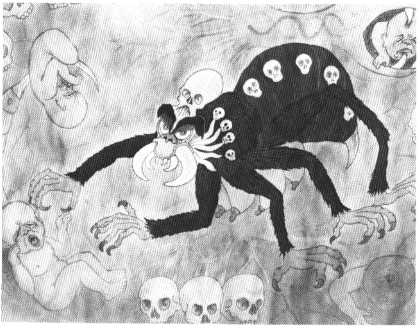
Fig. 40. A vision from a psychedelic session dominated by the initial phase of BPM II, reflecting the onset of biological delivery. A figure of the Devouring Mother Goddess in the form of a gigantic tarantula exposing fetuses to diabolic tortures.
Since birth as a basic biological process involves a rich spectrum of physiological phenomena, it is hardly surprising that the roots of many emotional disorders with distinct somatic manifestations and psychosomatic diseases can be traced to perinatal matrices. Thus, the most common and characteristic organ-neurotic symptoms appear to be derivatives of the physiological processes and reactions that form a natural and understandable part of birth. This connection is quite obvious and requires no further explanation in the case of various forms of headaches, particularly the “belt headache,” which the neurotic patient frequently describes as a tight steel band around the forehead. A subjective feeling of a lack of oxygen and of suffocation—commonly experienced by psychiatric patients under stress—is also easily accounted for. Similarly, palpitations, pain in the chest, blushing, peripheral ischemia, and other forms of cardiovascular distress, as well as muscular tensions, tremors, and twitches present no difficulty for interpretation.

Fig. 41. These two paintings of LSD subjects show the importance of snake symbolism in perinatal sessions. The first picture portrays a cluster of poisonous vipers experienced in the context of BPM (“snake pit”); they symbolize the imminent danger of sudden death. The second picture depicts another type of snake experience which occurs in the context of the death-rebirth process—crushing and strangulation by a gigantic boa constrictor-type serpent.
Some other symptoms, for which a connection with the birth process is not immediately evident, seem to reflect the complex patterns of activation of both the sympathetic and the parasym-pathetic nervous systems that occur simultaneously or in an alternating fashion in various stages of delivery. Constipation or spastic diarrhea, nausea and vomiting, general irritability of the gastrointestinal system, excessive sweating, hypersalivation or dryness of the mouth, and chills alternating with flashes are examples.
A different cluster of vegetative phenomena appears in the sessions and postsession intervals of persons who have already passed the point of the death-rebirth process and are confronting various prenatal experiences. Some of these symptoms are similar to those accompanying a viral disease such as flu; they involve general weakness and malaise, feelings of inner cold, extreme nervousness, and subtle tremors of isolated muscles or muscular groups. Others are reminiscent of a hangover or food poisoning—feeling of nausea and disgust, dyspepsia, excessive intestinal gas, and general vegetative dystonia. The subjects who exhibit these symptoms during their sessions characteristically experience bad tastes in their mouths, which they describe as a mixture of a metallic or iodine taste and something organic, such as decomposed bouillon. The entire syndrome has a strange, insidious, diffuse and scarcely definable quality in contrast to the far more distinct physical phenomena of perinatal origin. Many subjects said independently that they felt this condition had a chemical basis. They related it to disturbances of intrauterine existence mediated to the fetus through changes in the chemistry of the placental blood. These physical symptoms seem to underlie some neurotic and borderline psychotic complaints of a strange and ill-defined nature. In their most extreme form they constitute a certain type of hypochondriasis with psychotic interpretation.
There is strong clinical evidence in the LSD literature suggesting that perinatal matrices are also involved in the pathogenesis of serious psychosomatic diseases, such as bronchial asthma, migraine headaches, psoriasis, peptic ulcer, ulcerous colitis, and hypertension. The material from my own psychedelic research, as well as observations from nondrug experiential work, point in the same direction. The paramount importance of emotional factors in these diseases has been generally acknowledged by traditional medicine. However, in light of deep experiential work, any of the psychoanalytically oriented theories of psychosomatic diseases that entirely explain them from biographical factors are clearly inadequate and superficial. Any therapist using experiential work is bound to develop profound respect for the elemental energies of perinatal origin underlying psychosomatic disorders.
While there can be justifiable doubts that relatively subtle biographical traumas would upset the homeostatic mechanisms of the body and cause deep functional disturbances, or even gross anatomical damage to the organs, it is obvious that this is more than a reasonable possibility in the case of the primordial and truly elemental destructive energies derived from the birth experience. It is actually not uncommon to see transient occurrence of asthmatic attacks, migraine headaches, various eczemas, and even psoriatic skin eruptions in the course of the death-rebirth process in psychedelic therapy and other types of experiential work. On the positive side, dramatic and lasting improvements have been reported in most psychosomatic diseases by therapists using psychedelic therapy and other deep experiential techniques. Wherever the reports describe the actual course of therapy, they mention reliving of the birth trauma as the most significant event of therapeutic relevance.
The connection between psychogenic asthma and the birth experience, which is quite obvious, has already been detailed. Migraine headaches are characteristically traceable to the facet of birth that involves agonizing pain and pressure on the head, together with nausea and other gastrointestinal discomfort. The frequent tendency of migraine patients to seek the womblike environment of dark places, quietude, and soft blankets and pillows can be seen as an effort to undo the birth process and return to the prenatal condition. However, it is the opposite strategy that brings resolution to migraine headaches, as indicated by many successful results of experiential therapy. Ultimately, the headache must be intensified to the extreme, even unbearable, dimensions that match the actual pains experienced at birth. This then brings a sudden explosive liberation from the migraine; characteristically, it is followed by an ecstatic state of a transcendental nature.
In psoriasis, the important psychogenetic element seems to be a channeling of destructive perinatal energies into the areas of skin that during birth are in immediate contact with the uterine walls or birth passageways, and thus represent the interface of the painful confrontation between the two organisms. This is borne out by the predilection sites for psoriasis, namely, the head and forehead, back, knees, and elbows. As with migraine headaches, far-reaching improvements of severe psoriasis have been reported after the reliving of biological birth.
An important component of the forces underlying peptic ulcers and ulcerative colitis is the destructive perinatal energies that have a very definite axial focus; they are typically experienced with a maximum along the longitudinal axis of the body. Conflicting innervations of both the upper part of the gastrointestinal system (oral aggression, stomach pain, nausea, and vomiting) and its lower part (intestinal pains and spasms, diarrhea, spastic constipation) are frequent concomitants of the birth process. The questions whether this aspect of the birth experience will result in manifest pathology in the future, and whether the stomach or the colon will be involved, seem to depend less on the specific mechanics of delivery than on a chain of later biographical events. The COEX systems of patients with these diseases would characteristically involve memories of events linking digestion with anxiety, aggression, or sexuality; the nature of these traumas and their timing is in general agreement with psychoanalytic theory.
Arterial hypertension is clearly related to a history of extreme emotional stress. The deep basis of this disorder is the organismic record of the prolonged emotional and physical stress of biological birth. Various later stresses in life add to this primal pool, facilitate access of perinatal elements into consciousness, connect them to specific biographical events, and provide their final elaboration and articulation. The resulting arterial hypertension is then a psycho-somatic reaction to all the unfinished gestalts of stressful situations in the life of the individual, including his or her perinatal history, rather than a reflection of only the more recent circumstances.
Neurasthenia and emotional traumatic neuroses occupy a special position among psychopathological syndromes. In a sense, they can be considered the most “normal” reactions of human beings to difficult circumstances. Symptoms of neurasthenia tend to develop in an individual who has been exposed for a long period of time to demanding and objectively stressful conditions, such as excess of work under conflicting pressures; lack of rest, sleep, and recreation; complex tasks to tackle; and a hectic pace of life. Neurasthenia is characterized by muscular tension, tremors, excessive sweating, cardiac distress and palpitations, free-floating anxiety, a sense of oppression, intense headaches, and faiblesse irritable —a feeling of general weakness and lack of energy, combined with easy irritability. It is characteristically accompanied by sexual disturbances, particularly impotence, frigidity, changes of the menstrual cycle, and precocious ejaculation.
Emotional traumatic neuroses occur in individuals who have been involved in natural catastrophies of extreme proportions, mass accidents, or war situations, or who have experienced other events that represent a potential threat to survival or to body integrity. It is important to emphasize that these conditions do not involve any physical damage to the organism, but only the psychological trauma associated with the possibility of it. And yet, the ensuing traumatic neurosis typically involves not only intense emotional symptoms but certain physical manifestations, such as pains, cramps, violent shaking, or paralysis.
Neurasthenia and emotional traumatic neuroses are closely psychogenetically related. Both represent derivatives of BPM III in relatively pure form, neither modified nor colored by later traumatic biographical events. Neurasthenia, which is a relatively normal reaction to prolonged stress of a reasonable degree, manifests the essential features of the third perinatal matrix in a somewhat mitigated form. In comparison, the acute emergency that precipitates emotional traumatic neuroses is such a close approximation to the situation encountered at birth that it overrides the defense system and connects experientially with the very core of BPM III. Thus, even after the immediate danger has passed, the individual continues to be flooded by the perinatal energies against which he or she has now lost all effective psychological protection.
This situation presents a problem, but it can also be a great opportunity for experiential confrontation of perinatal energies.
The final outcome will depend on how this condition is approached therapeutically. Efforts at psychological or pharmacological suppression of the perinatal energies unleashed in the process will be entirely futile or could result in a general impoverishment of personality.
A therapeutic strategy that frees the perinatal energies may not only resolve the symptoms of traumatic neurosis, but also mediate a process of deep healing and transformation. The best conventional approach to these conditions is hypnoanalysis or nar-coanalysis which puts patients in touch with the original life-threatening situation and allows them to relive it. However, an ideal therapeutic approach should go further, to the underlying perinatal matrices that have been exposed by the emergency situation. This observations is of particular relevance in view of the fact that tens of thousands of Vietnam veterans suffering from long-term war-related emotional disorders represent a serious mental health problem for the United States.
It is not uncommon that, in situations of vital emergency, the individuals involved lose control over their bladders and bowels. This is a characteristic of the final stage of birth, or the transition between BPM III and BPM IV. It can be illustrated by the clinical observation that, in old-fashioned deliveries where no enemas or catheterization were used, the mother frequently defecated and urinated at the moment of childbirth, and so did the infant. The neurotic loss of control over the bladder (enuresis) and the less frequent failure to control the bowels (encopressis) can be, in the last analysis, traced back to the reflex urination and defecation at birth. In subjects experiencing elements of BPM III and BPM IV in their psychedelic sessions, concern about sphincters and their control frequently occurs. Urination is fairly common when a subject in experiential psychotherapy approaches the moment of total surrender and letting go. Involuntary defecation is less common, probably because of the far stronger cultural taboos, but it has occurred on several occasions. As with other disorders, later biographical events of a specific nature are necessary to change this potential, existing on the perinatal level, into an actual clinical problem. The material of the related COEX systems is in basic agreement with psychoanalytic theory. However, this is only part of the story and, ultimately, the deep roots of these disorders can be seen in the reflex release of the sphincters during the termination of the pain, fear, and suffocation at birth and psychological re-connection with the postnatal and prenatal condition in which there are no impositions on unconditional biological freedom.