


Author’s Note
This book is about groups of people and the words used to describe them. Such words are always controversial. My intention is to dispel the concept of a single Celtic people, language or nation. There are Ireland, Scotland and Wales, as well as Cornwall, Brittany and the Isle of Man. They have never in any respect cohered as one entity and I regard lumping them together as Celts or ‘the fringe’ as distorting and dismissive.
However, since these peoples do share a language root and given that much of the book is about their joint relationship with England, I do refer to them as a group in the pre-historical period, using the term ‘Celtic-speaking’. Otherwise their languages are classified as Brythonic or Gaelic, and then Welsh, Irish, Gaelic or Breton. In other words, I try to call people and their language whatever they call themselves.
The words Britain and Britons are more confusing. They used to refer to all the British Isles, then to ‘Celtic-speaking’ regions as distinct from the Germanic-speaking ‘Anglo-Saxons’, and then again to the island of Britain not Ireland. However, the word Britain is so often used as a convenience to refer to the whole of the British Isles, at least in early history, that this usage is hard to avoid. With the word ‘Great’ it nowadays formally refers to England, Scotland and Wales but not Ireland. Only since 1801 has there been a so-called United Kingdom, first of ‘Great Britain and Ireland’ and then, since 1922, of ‘Great Britain and Northern Ireland’. In the possible event of Ireland reuniting, we must assume the UK will revert to GB.
This book is not an academic work but a history of an ongoing debate among scholars about the origins of the peoples of the British Isles and about their past, present and perhaps future relations. It does not carry notes, but works consulted and quoted are listed in the bibliography.
I have shown the text in whole or part to some of those closely involved in these debates, with whom I have conversed in the course of its preparation. They include Colin Renfrew, Barry Cunliffe, John Koch and Roy Foster. I thank them profusely, but they carry no responsibility for any mistakes I may have made, or for my conclusions. I have discussed devolution and independence over the years with too many to mention but have been helped in particular by Philip Stevens, Tom Jenkins, Tony Travers, my wife Hannah Kaye, and my assiduous editor Trevor Horwood. I would also thank my publisher Andrew Franklin and all at Profile Books.
The most vivid account of the geography of the British Isles appears in the first volume of the Oxford History of England, published in 1936. It refers to the islands as created ‘in two parts’. The western part is ‘ancient, mountainous, rugged, broken, irregular, scrubby, sour-soiled and incommunicable’ – in short, not a pretty place. The eastern part is a contrast, ‘newer, softer, warmer, alluvial and fertile, attractive to invaders’. The authors of the History assured readers that, despite this distinction, the series would be ‘all-encompassing’. It would narrate the story of the islands of Britain as a whole.
That promise was not kept, and is rarely kept in histories of the British Isles. Historians invariably direct their readers to the eastern half of the archipelago, the ‘fertile, attractive’ side called England. This bias is reflected in the attention given to the peoples occupying the two sides, notably to the conflicts between them leading to the supremacy of the peoples of the east. Britons are taught from birth the story of England, just England. They are taught little or nothing of the ‘others’ – notably the Irish, Scottish and Welsh commonly referred to collectively as the Celts.
The first part of this book explains why the word Celt is a misnomer. As we shall see, scholarship since the 1960s has struggled to dismantle long-held theories of how the British people came into existence. This dismantling is important because, to a remarkable extent, theories of Celticism continue to fuel many of the prejudices and misconceptions that divide the peoples of the British Isles to this day. They both distort history and demean the distinctive characteristics of the Irish, Scottish and Welsh nations.
First among those misconceptions is that a people called the Celts invaded Britain from continental Europe sometime in the second or first millennium bc. There has never been found a distinct people, race or tribe claiming the name or language of Celtic. The word keltoi first appears in Greek as applied generally to aliens or ‘barbarians’, assumed to be inhabitants of western Europe before the rise of the classical world. In Latin, the term used is Galli or Gauls. Nowhere in this period was any such term applied to the people of the British Isles. Excavations in the nineteenth century of Iron Age sites at Hallstatt in Austria and La Tène in Switzerland were declared evidence of a ‘Celtic’ civilisation, possibly even stretching from Asia Minor in the east to Portugal in the west. Its artefacts too were granted the designation ‘Celtic’, the style in use to this day.
As we shall see, early analysis of ancient DNA generally accepted that the peoples who occupied the British Isles dated back to a climatic migration northwards after the end of the last Ice Age. This migration occurred with global warming, primarily up the Atlantic coast of Europe from Iberia. On the eastern side of the islands, perhaps more recent DNA showed an occupation from continental northern Europe. There is little consensus on the balance between these two incursions, or when they occurred. Neither merits the title ‘Celtic invasion’.
Probably in the late Bronze Age (c.2100–800 bc) these inhabitants of Britain came into contact with a variety of languages spreading across Europe that accompanied the growth of trade in metals. These tongues, loosely related to each other within the proto-Celtic Indo-European group, were assumed to have permeated every corner of the British Isles at least down to the period of the Roman occupation. That permeation is now doubted, with the eastern side of Britain thought possibly to have been speaking some version of the Germanic of northern Europe.
Certainly, two completely different language groups were in use in the British Isles by the second century after the withdrawal of the Roman empire. This was attributed to another misconception: a further mass incursion – this time of Saxons – in the fifth and sixth centuries, supposedly either wiping out the eastern Celtic speakers or driving them westwards across Britain. Like the Celtic invasion before it, this second one is also now discredited. While there are genetic signs of people migrating round the North Sea at the end of the Roman empire, there is nothing to indicate a wipe-out of its inhabitants and their total replacement throughout the length of eastern Britain. It is now thought possible that the many different peoples of the British Isles, east and west, evolved their own languages independent of any population movement. The east looked east and the west looked west.
This theory of a long-standing division, genetic and linguistic, between the peoples of the east and west of the British Isles remains controversial. What does appear to be the case is that the ancient geographical divide described in the 1930s by those Oxford historians became deeply embedded in the history of the peoples of Britain. It attended the cohesion of the easterners eventually into one nation, and the fragmentation of the westerners. It was reflected in the boundaries of the Roman province of Britannia and in the emergent identities of the Irish, Welsh and Scottish peoples. It was reflected in the supremacy of what became the first ‘empire’ of the English-speaking easterners.
A uniting kingdom
The second part of the book narrates the course of that supremacy. Most European countries, however diverse their origins, tell their story as that of a nation state being fashioned from various tribal agglomerations and unions. If one dominant group emerges, it must hold the others in thrall through military might and/or cultural assimilation. In her book Acts of Union and Disunion the historian Linda Colley describes the leaders of these agglomerations as having to operate on two levels. They had to ‘nurture a sense of belonging and allegiance’ to secure the subservience of lesser groups. But to retain that allegiance they had also to ‘acknowledge and protect [their] partial autonomy and separate rights and cultures’. They could never take those rights for granted.
It was on this basis that European states were formed. Prussians, Hanoverians and Bavarians became one nation as Germany. Burgundians, Gascons and Savoyards became French. Romans, Venetians and Sicilians become Italians. In turn, Alpine French, Germans and Italians became Swiss. They fashioned constitutions that would hold together their disparate components. Only a very few failed, most recently Yugoslavia and Czechoslovakia.
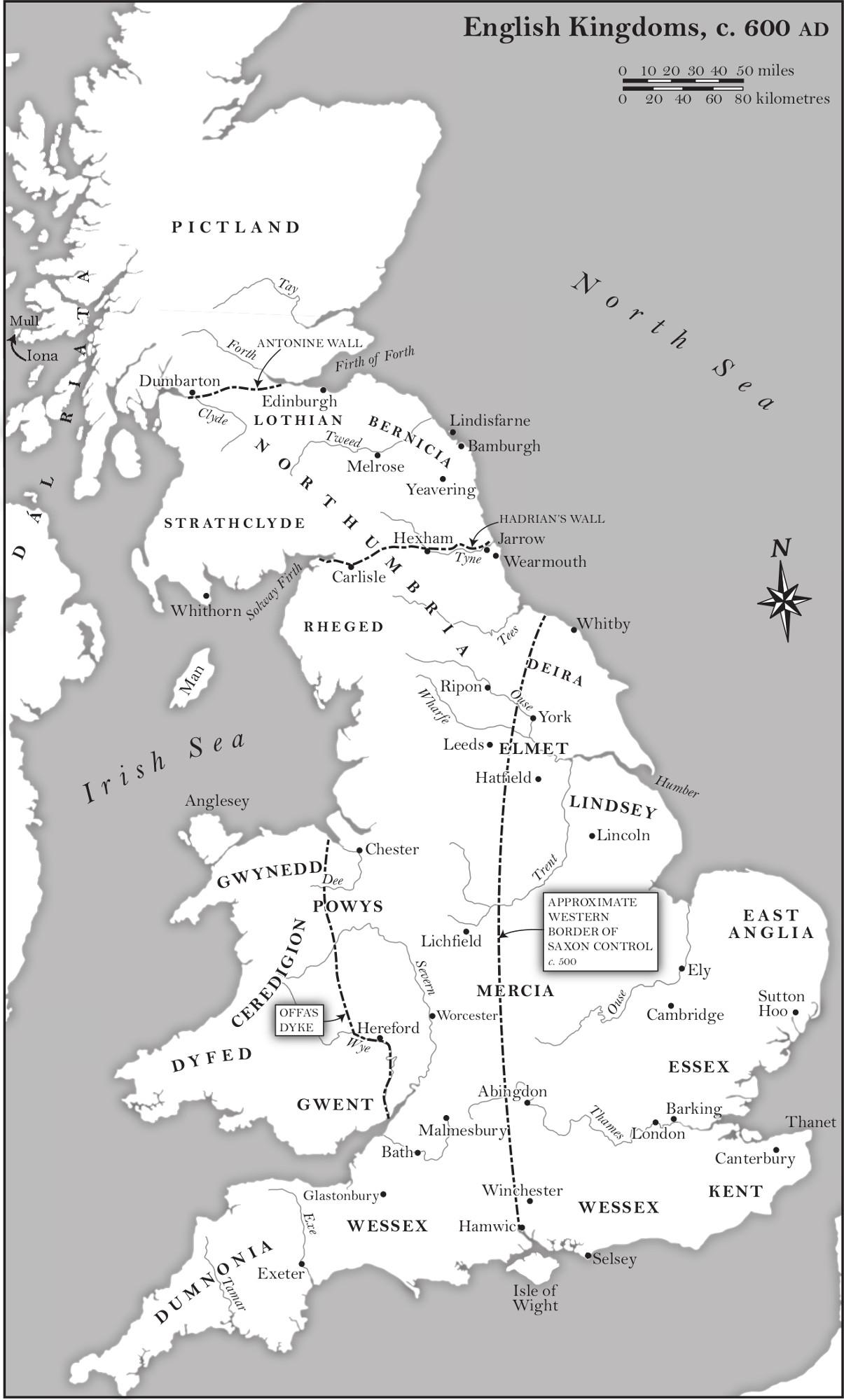
From the very start of their supremacy, the English failed to instil Colley’s sense of ‘belonging and allegiance’ among the Celtic-speaking tribes of the west. Nor did they respond to the westerners’ distinctive identities by granting them a degree of ‘autonomy and separate rights’. The tribes occupying eastern Britain in the fifth century ad formed themselves first into seven kingdoms, then into three and then into one, England. By the eleventh century, under Anglo-Saxons, Danes and then Normans, England was among the earliest ‘nationalised’ states in Europe. It was an early ‘union’.
Not only did the westerners never join hands and hearts with these easterners, they found little coherence either within themselves or between each other. Unlike those of England, few of the clans or ‘kingdoms’ of Wales, Scotland and Ireland behaved as if they were members of a collective whole. Their efforts at self-government came constantly to grief, with rulers no sooner succeeding in briefly uniting their peoples than they died in feuds and civil wars.
Over time, these westerners did combine sufficiently to be recognisably Irish, Scottish and Welsh, with distinctive languages and dialects. What they never did was unite against England. They did not speak a common language or acknowledge one leader. At the time of the Battle of Brunanburh in 937 against Athelstan’s English, a Welsh bard did call for such an alliance, embracing even Cornwall, but it was never achieved. He did not use the word Celtic.
Despite frequent revolts and conflicts, England was never to have serious trouble holding its neighbours in thrall. The borderlands roughly of Offa’s Dyke, Hadrian’s Wall and the Irish Sea were to remain England’s boundaries throughout history. Over time, the nations beyond them passed under English sovereignty, first by conquest and colonisation and then through annexation: Wales in 1536, Scotland in 1707 and Ireland in 1801. An ‘English empire’ was formed on the British Isles. But it was an empire of the most tenuous union, many of its members continuing to refuse to acknowledge themselves as ‘British’.
Only in the seventeenth century did scholars begin to see the isles as possessing a collective ‘Celtic’ past, largely through the identification of a common linguistic root. In the eighteenth century England’s domestic empire did form a sort of communality with the growth of an overseas British empire in which Scots, Irish and Welsh were prominent as soldiers, governors and migrants. By the nineteenth century a ‘united kingdom’ so-called was messily in place, at least under one monarch, one parliament and one flag. It was a union of convenience rather than of hearts.
A disuniting kingdom
The third part of the book asks how and why that union began to dissolve. The answer lay primarily in Ireland, where for three centuries London governments had dismissed with contempt the Irish yearning for at least a degree of self-government. This was in large part through English antipathy to the island’s dominant Roman Catholicism. The resulting rebellions and repressions led finally to Irish secession in 1922. While treated by most English with a careless shrug, it was described in the 1930s by the historian G. M. Young as ‘the great failure … the one irreparable disaster of our history’. I find it hard to quarrel with that judgement.
Freed of Ireland, British politicians who were then starting to dismantle their overseas empire behaved as if the earlier domestic one could now be taken for granted. The outcome was as Colley predicted. The Scots and Welsh took a lead from the Irish and a new spirit of nationalism emerged. At the end of the twentieth century, the same pressures that had lost Ireland were gaining traction in Scotland and even in Wales.
At no point in debates about home rule, whether in Ireland or Scotland, was there any suggestion of a Celtic nation. The Irish, Scots and Welsh remained passionate in their separateness. No attempt was made to form a ‘Celtic’ party or grouping of MPs in the House of Commons. Only in Celtic studies departments of universities was a sort of union recognised. Language remained the principal cohering characteristic of Celtic-speaking regions, except that there was no one Celtic language. Indeed language, while a token to nationalist politicians, was a side issue. To speak English does not make someone any less Irish, Scottish or Welsh.
In the final part of the book I consider the argument for small-state independence. It is impossible to deny that Ireland has done well on its own and impossible to deny that this has come about largely through its liberation from British rule and in stark contrast to the experience of Northern Ireland as well as Wales and Scotland. Whether the same factors would play in the latter provinces of Britain is a matter of now-heated debate, but Ireland’s experience should make every unionist pause.
I am half-Welsh and half-English and have tried to rid my analysis from either loyalty. But I do believe that any well-constituted state should be able to accommodate diversity and prosper from it. A country’s politics, culture, society and outlook on the world should all benefit from such diversity. A Britain composed of England, Scotland, Wales and (once upon a time) all of Ireland must surely be stronger than one comprising England alone, particularly an England fast becoming a vast and dependent suburb of the London metropolis.
Yet to realise the benefits of such a union, England must change its political relations with the non-English peoples of Great Britain, if not of the British Isles as a whole. It must find stability and cohesion by devolving to them ever greater autonomy through new federal institutions. It has to change its outlook as well as its constitution. To this challenge, I return below.