
CHAPTER 2
Our story lasts about 130 years or so, beginning during the last (but most significant) years of the Enlightenment through the first third of the twentieth century, roughly the 1790s through the 1920s, covering a “long view” of the nineteenth century. The proximity and rate of recurrence of so many historical milestones in this time period has led some historians to figuratively modify the century’s dates, saying it really commenced in 1815 with the Congress of Vienna (ending the drawn-out French Revolution and the era of Napoleon) and was not entirely complete until the outbreak of WWI in 1914. This is the so-called long century. The dates are approximate, since foregoing events are causal to those I describe, and, of course, societal changes leading to a transformed worldview are not cleanly bounded.
In this short chapter, we look briefly at the world during this time to understand the social, cultural, and political milieu in which our central characters were working. With a few notable exceptions, our principals are the persons who invented probability theory and developed the methods of probability estimation. They were individually brilliant and extraordinary in temperament—but, for us who are unraveling the story of quantification, we realize, too, that they lived and worked in exceptional times. We meet the first of these individuals in Chapter 3; however, in this chapter, we look at their historical context.
In every sense, the historical context gives meaning to their accomplishments. Only by knowing the contemporaneous history—and especially by realizing what these historical events connote and imply for the people living then—can we truly understand the importance of what our principals accomplished. I emphasize this point specifically because, throughout the story of quantification, we will place the work of the individuals we examine in the context of a relevant history.
Geography, too, plays a role in our understanding of how quantification came about, because the influences we discuss are primarily located in Western Europe, the Nordic countries, the Americas (mostly North America), and, to a lesser degree, Eurasia. This is not to ignore or dismiss important discoveries and advancements in the Far East, the Middle East, or Africa. Those may tell a different tale, which is left now for another time.
* * * * * *
The era of our story was scarcely ordinary by any measure. More change occurred during the years of the long century than in virtually any of the prior centuries, possibly since 9400–9300 bce, when humans living in Mesopotamia developed agriculture by planting seeds, thereby enabling them to stay in one place for a long time and cease being simple peripatetic hunter–gatherers. This signature event is cited by many historians as possibly the single most momentous action in all history. After that, set aside any debate of which century saw humans change their behaviors the most, there is general consensus that the long century of our story was truly an exceptional period.
Further, it is these extraordinary historical events taking place during our period—that is, the vast societal and cultural changes—that made possible the remarkable developments in mathematics we shall discuss, the pace and scope of which are unprecedented in history. Because of them, it can be said that history gave tacit assent to quantification. To buttress this point, a notable historian of mathematics, who spent more than twenty years researching its history and eventually compiling his effort into a four-volume masterpiece, said of statistics: “Statistics shot up like Jack’s beanstalk in the present century. And as fast as the theory [of probability] has developed … the anthropologist must survey a literature so new and so vast that even the expert can scarcely comprehend it” (Newman 1956).
Echoing Newman’s comment on the rapid growth of inventions and development in just the quantitative sciences, one may conclude that, from the beginning to today, there has never been such a cascade of numerical achievements, both in the speed with which each invention came upon the scene and in their scope, bringing numeracy to fields never before involved. Initially, the math was strictly formulaic (albeit sophisticated, with developments in calculus and trigonometry) and primarily tied to advances in astronomy and geodesy; but, soon, they broadened in scope to give a much better understanding of how numbers operate generally. It is during this period that many numerical ideas were codified into theorems (principles of mathematics that underlay a range of applications in various formulas) that are universal across all the disciplines of mathematics.
Chief among this work was the invention of probability theory, and its theorems. At first, the theory was just an application of statistical arrangements, most notably as the normal, bell-shaped curve. But soon further inventions came along, like the method of least squares, as well as density functions, regressions, and correlations. These developments grew in sophistication and were soon applied more broadly. Some examples are the formulation of conditional probabilities and widely applicable notion of “Bayesian thinking” (a systematic way of using observable evidence to modify prior beliefs). Statistical testing by inference was invented at this time, too. (Along the way, we will explore each of these interesting developments.)
Through all this, we were learning how to measure uncertainty, and, as a consequence, “quantification” was forming—we were evolving with respect to our perspective on the world. This evolution in our worldview is this history’s lasting effect. Literally, it has come to help shape who we are today.
The roots of the unprecedented technical growth in mathematics during this time are usually traced back to 1680s’ England, where, in the span of three years, Isaac Newton published his stunningly brilliant work Philosophiæ Naturalis Principia Mathematica (or the Principia, for short; Newton, Motte, and Chittenden 1846). This monumental three-volume work describes the theory of universal gravitation and Newton’s proof for it by formulating modern calculus—two amazing accomplishments in a single work. One cannot overstate the importance of this masterpiece of scholarship. Even beyond its twin noteworthy contributions to astronomy and mathematics, it defined science generally and thereby has given direction to nearly all quantitatively oriented scholarship ever after.
While the Principia was never widely read (owing to its technical heft and, of course, the fact that it was originally written in Latin, which few persons could read). According to Einstein, it was the most important book ever written. In Chapter 3, we will explore this work to see more of its contents and importance, and we will see its influence pop up again and again on the work of others.
Also, throughout this book, I will emphasize the point mentioned earlier—that these achievements in mathematics leading to our quantified worldview happened because they could happen. They did not come about apart from their historical setting. The times were ripe for discovery and invention because of an emphasis upon reason and a questioning of the previous epistemologies. The period of our story is highlighted by the fact that it takes place during three important periods in history: (1) the last years of the Enlightenment, (2) the French Revolution and the post-Napoleonic era, and (3) the British/European/American Industrial Revolution.
Even nature itself seems to have coordinated with history to enable the developments in our story. It is only a slight oversimplification, but not at all inaccurate, to suggest that the Great Lisbon Earthquake (along with such human achievement as Newton’s Principia) set the people of the time on a path to reason with deliberate cognitive intent and to learn as much as possible about the world around them.
Our story opens with the late Enlightenment itself, a period wherein reason and science grew in importance as sources of truth. The German philosopher Immanuel Kant summed up the era’s sentiment in his powerful 1784 essay What Is Enlightenment? by saying, “Dare to know! Have courage to use your own reason!” (Kant and Beck 1995). The Enlightenment’s important seventeenth-century precursors include Francis Bacon, Voltaire, and René Descartes, as well as the key natural philosophers of the Scientific Revolution: Galileo, Kepler, and Leibniz. Most intellectuals of the day were deeply influenced by John Locke’s Essay Concerning Human Understanding (Locke and Nidditch 1987). Often, this period is called the Age of Reason.
The Age of Reason is characterized in a famous painting titled The Weimar Court of the Muses by Theobald von Oer (shown in Figure 2.1). In it, Oer incorporates several Enlightenment motifs, such as using bold colors in painting and depicting groups of people—men, women, and children, and nobles and ordinary folks alike—gathering in a new-found zest for learning. Purposefully, Oer includes the likeness of several important figures of the day, particularly Goethe, the German writer and statesman who promoted the belief that individuals should engage in their own learning. An oft-cited quote of Goethe is “Knowing is not enough; we must apply. Willing is not enough; we must do.”
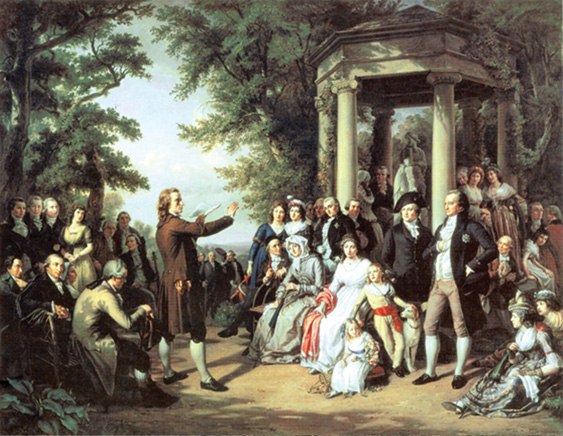
Figure 2.1 The Weimar Court of the Muses by Theobald von Oer
(Source: http://commons.wikimedia.org/wiki/Category:Public_domain)
In the remainder of this chapter, I highlight a few of the most important historical, political, and social happenings of the long century in which the people who invented the mathematics that changed us so profoundly lived and worked. Obviously, the events mentioned here are noted only briefly, since extended description could (in fact, has) fill thousands of books.
* * * * * *
During the nineteenth century, there were an astonishing number of inventions and innovations in nearly every field of human endeavor. We look at some of them here momentarily; however, for context, I will first mention some activities of governments of the day, since they had a lot to do with how individual citizens came to their inventions and innovations.
Near the close of the eighteenth century, it seems that tensions and conflicts between countries were everywhere. To start, the British state rose to prominence, with its global expansion (some call it “domination”) during this time. The British Empire carried its version of modernity into far-off corners of the globe, but at a cost of subjugating native people who lost their own sovereignty. More positively, this was also the time during which the British brought more education and some improved healthcare conditions to the countries under her empire. And she brought an end to the tyranny of the Barbary pirates and thereby opened the seas worldwide to safe travel and universal trade.
In Eurasia, the Ottoman Empire and the Holy Roman Empire came to their respective ends, although fighting continued ceaselessly in the Middle East and Islamic countries—not only between ill-defined frontiers but especially among tribes and other cultural and ethnic factions. In China, the Qing dynasty obliviously exposed its corruption to the masses; as a result, unrest grew, leading eventually to the end of all Chinese emperors. (Deplorably, the Chinese communist revolutionary Mao Tse-tung [Zedong] followed, and his savagery was even worse.)
In Russia and other Slavic regions, the Romanov dynasty continued its autocratic rule and retarded its own country’s development for several generations. America had its wars of independence and then its Civil War, which was followed by a westward expansion that took lands away from many Native American peoples. There was a bitter civil war in Spain, too.
Two particular inventions during this century changed the face of war across the globe. These were dynamite (by Alfred Nobel) and barbed wire (by Joseph Glidden). As soon as they were known, governments put these creations to use in their military campaigns, making their warring more intense than ever. Because these inventions brought a qualitatively different kind of fighting to wars, relationships between many countries were altered, sometimes for a common good but more often to their mutual peril and devastation. A parallel change in warfare (with a similar effect of changed relations between countries) occurred in the twentieth century, with the invention, and almost immediate use thereafter, of the atomic bomb.
During this century, the slave trade—the most horrific human injustice in all history—finally wound down to a trickle in Western societies. In 1807, Britain passed the “Abolition of the Slave Trade Act,” and the other European countries soon followed. In the United States, after the US Civil War, it was absolutely abolished when the Thirteenth Amendment was formally adopted into the US Constitution, guaranteeing that “neither slavery nor involuntary servitude … shall exist within the United States, or any place subject to their jurisdiction.” And, citing its impetus from the United States, Russia, too, officially abolished slavery, although slavery continued to exist underground there on a large scale well into the next century. But not all governments and countries were so quick to act, for slavery continued almost unabated in the Arab countries, across most of Africa (where the slave trade actually expanded at this time), and, to some degree, in China.
Unfortunately, there is a certain timelessness to this disgrace, because slavery and other forms of human trafficking continue today in possibly as many as 155 countries, with mostly young persons (particularly young women) being kidnapped, primarily from the Arab countries, southern parts of Africa, and southern Asia, as reported by the United Nations in a 2014 report (UNODC 2014).
But, when these wars and political rivalries subsided during the long century, much good came forth. Specifically, the living standards for most people materially improved: they lived with more conveniences, better healthcare, improved education, and more personal safety. In the sciences, it was a time of great advances, with an almost uncountable number of discoveries and inventions. As mentioned in Chapter 1, Louis Pasteur discovered that most infectious diseases are caused by germs, an idea he called the “germ theory of disease,” and he invented pasteurization. John Tyndall first demonstrated the principles of fiber optics, thereby laying the ground work for all kinds of advances in electronic communication. And Alexander Parkes first made plastic, which revolutionized the scope and breadth of products that could be made economically.
In other areas, too, significant innovations materialized. Soft drinks were invented and immediately became popular worldwide. In particular, John Pemberton devised a special drink by mixing dark cola with a small amount of cocaine (derived from mashing coca leaves), marketing it as a tonic, and calling it Coca-Cola. (In 1904, the United States banned plain cocaine from all drinks. In response, the Coca-Cola company reduced the amount of cocaine it used in its drink, although Coca-Cola didn’t become completely cocaine-free until 1929. Today, the recipe for Coca-Cola remains one of manufacturing’s best kept trade secrets.)
As a complement, a machine was invented that would twist paper into a small tube, making the first drinking straw. While this was a minor invention, its success spurred many others to develop machines for making all kinds of ordinary things, from paintbrushes to folding cardboard boxes. Since then, simple machinery has become ubiquitous.
The century also saw for the first time a motion picture (popularly accepted almost immediately, but available then only in big cities) and a high-wheeled bicycle frame (a contraption thought by many first-time observers to be singularly weird looking. It was famously dangerous to ride: modern, low-wheeled bicycles were first called “safety cycles”). Samuel Morse devised his code for electric signals by tapping out long and short sounds, enabling long-distance communication via the telegraph. The telephone was patented soon thereafter. Electricity became widely available in cities, both across the Continent and in the United States (although its spread to rural areas was slow), spurring the growth of the steel industry, which led to the spread of the Industrial Revolution from England, where it originally started, to the United States.
In the social sciences, Sigmund Freud, working in Austria most of his life, postulated theories of personality and invented psychoanalysis. Accomplishments in literature, painting, and the performing arts at the time were just as profuse and important as those in the sciences, although these efforts were overshadowed by the powerful intellectual and artistic spurt of Europe’s Renaissance.
Perhaps most important to the majority of people is the fact that with all these new developments, the physical chores of daily existence, such as when getting enough to eat, securing a safe, clean place to sleep, and caring for children, became a lot easier.
With all this, the nineteenth century was obviously one of the most productive times in human history.
The inventions, discoveries, and advancements of the twentieth century matched those of the nineteenth. For our focus on the notion of quantitative thinking, consider just the beginning third or so of the twentieth century (leaving out the computer and the Internet, because, by then, quantification as a viewpoint was already firmly set). Understandably, any list of accomplishments, discoveries, and inventions in the century would be miles long, including television, the airplane, the automobile, rocketry, nuclear power, the submarine, and antibiotics as just a few. There are hundreds, even thousands, more.
Of course, wars and conflicts raged in this century, too, most glaringly WWI and its reemergence into World War II (WWII). Perhaps more than any other twentieth-century development, this single event affected the lives of people worldwide. Incredibly, more than 3 percent of the world’s population (about two billion people at the time) were killed at this time: ten to twelve million persons during WWI, and at least sixty million during WWII. Doubtless, more souls were killed during these world wars than in any other conflict in human history—a statistic so horrifying that it is difficult to grasp.
This is the milieu in which the amazing individuals who developed the procedures for measuring uncertainty lived. Their work led people everywhere to adopt a new worldview. In this context unfolds the astonishing and unexpected tale of how quantitative thinking was invented and rose to primacy in our lives.
Now, the journey of our story begins.