
APPENDIX II
NOTES ON PLATES AND ACKNOWLEDGEMENTS
1. EUROPA’S RIDE. Il ratio dell’Europa. Hellenistic fresco from ‘the House of Jason’, Pompeii. First quarter of the 1st century AD. Both Greeks and Romans treasured the legend of Europa. Museo Nazionale, Naples
Photo: Anderson/Alinari 23469.
2. GATHERERS AND HUNTERS. A composite drawing based on palaeolithic cave art from Teruel and Cogul (Lerida), Spain. Male and female figures combine to present an evocative reconstruction of a sophisticated social order frequently dismissed as that of‘cavemen’.
Drawing by Danyon Rey 1993.
3. MINOAN FISHERMAN. 2nd millennium BC, National Archaeological Museum, Athens.
Photo: National Archaeological Museum, Athens.
4. PRINCE OF KNOSSOS. Late Minoan. Minoan Crete was unfortified, and pos sessed no warrior caste. Heraklion Museum.
Photo: Ancient Art & Architecture Collection.
5. SYMPOSION—A BANQUET. Greek vase-painting by the Brygos painter (490–480 BC). The ‘symposium’ provided the setting both for eating, drinking, and love-making and for serious conversation. The men reclined on couches in the oriental fashion. Women and boys did not attend except for the purposes of enter tainment.
Photo: British Museum BM E 60.
6. ETRUSCHERIA. Mural from the Tomb of the Banquet, Tarquinia (c.470 BC). See [ETRUSCHERIA].
Photo: Hirmer Fotoarchiv BM E 60.
7. ARCADIAN IDYLL. Et in Arcadia ego (1639–43), Nicholas Poussin, bought by Louis XIV in 1683. In the Classical Tradition, Arcadia was the land of pastoral bliss. In Poussin’s famous development of an idea by Guercino, a group of pensive shepherds and nymphs examine the tomb of Daphnis, who died of love, thereby discovering that ‘Even in Arcadia, I (Death) am to be found’. Louvre.
Photo: © RMN.
8. SABINE RAPE. Les Sabines (1796–9) by Jean-Louis David. As recounted by Livy and Ovid, one of the favourite tales of early Rome tells how King Romulus organized a festival at the Circus Maximus in order to ensnare the women of the neighbouring Sabine tribe. David’s heroic rendering shows Roman matrons intervening to stop the bloodshed on a background reminiscent of the Bastille. It earned him the label of‘the Raphael of the Sansculottes’. Louvre.
Photo: © RMN.
9. DEATH OF SIEGFRIED. An episode from the 5th-century Legend of the Nibelungen: Julius Schnorr von Carolsfeld (1794–1872): Hagen ermordet Siegfried (Hagen killing Siegfried) (1845). Hagen surprised Siegfried drinking at the spring, and pierced his magical protection. Munich was the capital of King Ludwig II of Bavaria, patron of Richard Wagner, who popularized the nationalistic revival of pagan Germanic folklore. Koenigsbau, Munich. See [NIBELUNG].
Photo: AKG, London.
10. ATTILA INVADES ROME, AD 452. Ulpiano Checa y Sauz (1860–1916), The Fall of Rome (1891). Many pictures of this genre, which lionize the barbarian heroes, say as much about the nineteenth-century revolt against classical taste as about ancient history.
Photo: © Hulton Deutsch Collection.
11. EASTERN ORTHODOXY. Christ Pantakrator flanked by the Emperor Constan tine IX Monomachos (r. 1042–55) and the Empress Zoe at the time of the Church Schism (1054): 11th-century mosaic. The Byzantine tradition stressed the union of spiritual and temporal authority. Hagia Sophia, Istanbul.
Photo: Foto Fabbri.
12. WESTERN MONASTICISM. St Benedict and the Abbey of Monte Cassino, founded c.529.11th-century miniature. The first great Western monastery, founded by Europe’s Patron Saint, survived intact until 1944.
Vatican Photographic Archive. Vat. Lat. 1702 Ilr.
13. CONSTANTINE’S DONATION. The medieval legend that the Pope’s temporal powers were donated by the Emperor Constantine I, illustrated in a fresco (AD 1246). The legend was unmasked as a papal forgery during the Renaissance. San Silvestre Rome.
Photo: Foto Fabbri.
14. THE SLAVONIC LITURGY. Alphonse Mucha, Zavedenislovanska liturgie(1910). A late Romantic view of an event in the 9th-century mission of SS Cyril and Methodius to Moravia: the first of Mucha’s series illustrating scenes from Czech history. City Gallery, Prague.
Photo: State Gallery, Prague.
15. CATHOLIC PIETISM. Enguerrand Quarton, La Pietá de Villeneuve-les-Avignon (1444–66). An expressive representation of the Virgin Mary’s ‘Lamentation of Christ’ from 15th-century Provence. Louvre.
Photo: © RMN.
16. ST AUGUSTINE. StAugustin etles patrons de Marchiennes (iith-cent.) miniature. Bibliothèque Municipale, Douai.
Photo: Photo Giraudon.
17. ST CHARLEMAGNE. A. Dürer, Karl der Grosse (1512).
Germanisches Nationalmuseum, Nuremberg.
18. ST MATTHEW. A full-page illumination on folio 25h of the Lindisfarne Gospels (late 7th century, Northumbria).
British Library, BL Cott. Nero Div. 25V.
19. SS JOHN THE BAPTIST AND JEROME. By Masolino, c.1383. National Gallery, London.
Photo: Bridgeman Art Library.
20. MATKA BOSKA ‘The Mother of God’. (14th-century.) The Black Madonna of Czçstochowa, Poland, an icon of Byzantine origin or possibly a copy ordered by King Wladyslaw Jagietto. See [MADONNA].
Photo: Polish Cultural Institute, London.
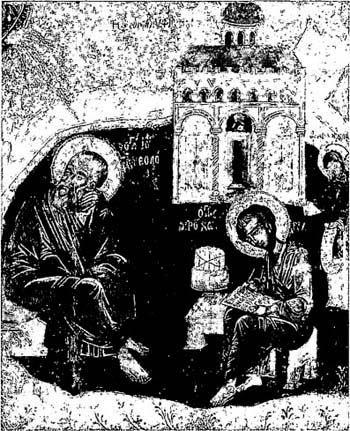
21. ST JOHN THE THEOLOGIAN. The dictation of the Gospel to Prokhor (Italo-Cretan School, early 17th century). Crete, which was ruled by Venice until 1669, saw an inimitable blending of Orthodox and Catholic styles. See [GRECO].
Photo: Sotheby’s, London.
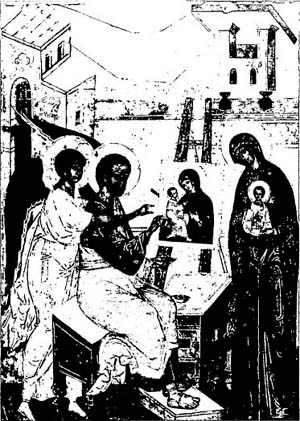
22. ST. LUKE—ICON PAINTER. According to Orthodox tradition, the first icon was painted by St Luke, when he drew the Virgin Mary from life. (17th-century icon from the Church of St Luke, Opachka, Pskov, Russia: restored.)
Photo: Church of St Luke, Pskov, Russia.
23. BOGORODICA. The Virgin of Pelagonitissa: a Serbian icon of the Holy Mother and Child (14th-century) from Skopje, Macedonia.
Photo: AKG, London.
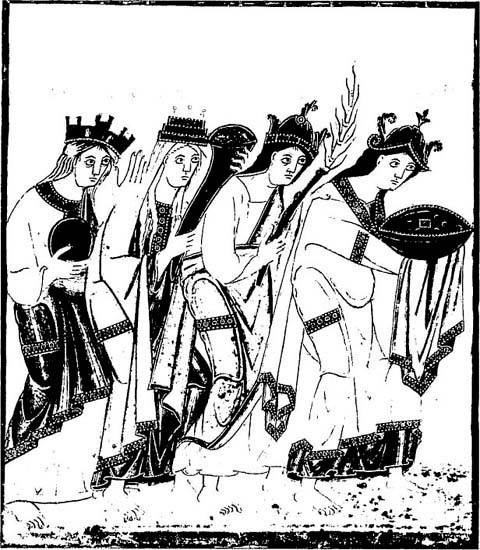
24. HOMAGE TO OTTO III. The four lands of Europe—Slavonia, Germany, Gaul, and Italy—offering homage to an Emperor who sought to re-unite East and West. Otto III’s Gospels, Bamberg (c AD 1000).
Photo: Staatsbibliothek, Marburg.
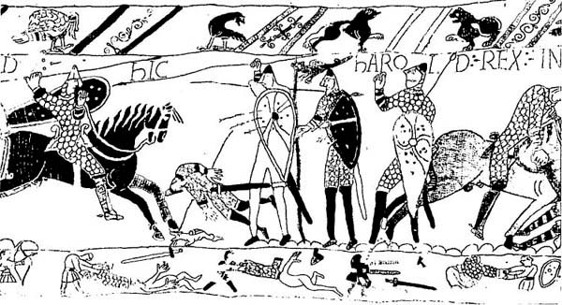
25. ENGLAND CONQUERED. The Death of King Harold at Hastings, AD 1066. Detail from the late 11th-century Tapisserie de la Reine Mathilde, known in English as the Bayeux Tapestry. The 58 panels of this early example of strip cartoon art relates the Norman version of events, including King Harold’s alleged treachery and Duke William’s consequent claim to the English throne.
Photo: Michael Holford.
26. WENDISH CRUSADE. L. Tuxen, The Fall ofSvantevit (1894). The destruction of the pagan idols of the Slavs during the Wendish Crusade (12th century). Such scenes attended the ‘advance of civilization’ in Europe from Caesar’s felling of the druidical grove at Marseilles to the final baptism of the Lithuanians in 1386. Fredericksborg, Copenhagen.
Photo: Fredericksborg, Copenhagen.
27. TRUCE IN THE RECONQUISTA. 12th-century miniature from El libro de Juegos de Ajedrez. A Christian and a Moslem warrior play chess. Escorial, Spain.
Photo: Arxui Mas.
28. TRISTAN’S LAST SONG. Miniature (c.1410) from the Roman de Tristan. From its origins in 6th-century Cornwall to Wagner’s opera of 1859, the tragic love story of Tristan and Isolde was recounted in numberless versions. See [TRISTAN].
Photo: Austrian Nat. Library, Vienna, MS 2537.
29. IRON PLOUGH. ‘March’ from Les Tres Riches Heures du Due de Berry (early 15th-century). The heavy horse-drawn plough was the principal instrument of the medieval ‘Agricultural Revolution’. Musée Condé, Paris. See [PLOVUM].
Photo: Photo Giraudon.
30. SCENT OF THE STAG. ‘Tracking’ from Gaston de Foix, LeLivre de la Chasse (late 14th-century). Until recent times, the art of hunting was a mainstay of Europe’s diet and nourishment. Bibliothèque Nationale, Paris. MS Francais, 616 fol. 57V. See [CHASSE].
Photo: Bibliothèque Nationale, Paris.
31. DANTE IN LOVE. H. Holiday, Dante andBeatrice (1883). A popular representation of the moment on the banks of the Arno in Florence which was to inspire Europe’s greatest poem. Beatrice Portinari, who died in 1290, was adopted by Dante as his spir itual guide through Paradise.
Photo: Walker Art Gallery, Liverpool, no. 3125.
32. BARTOLOMEA IN A DILEMMA. ‘Dioneo’s Tale’ from Boccaccio’s Decameron: 15th-century miniature. The neglected wife of a Pisan judge, Bartolomea, goes off on pilgrimage, where she is seduced by the pirate, Paganino da Nare (left). On reflection, however, she chooses to live with the pirate (right).
Photo: Bibliothèque de l’Arsenal, Paris. Arsenal 5070 fol. 91V.
33. ST FRANCIS BLESSES THE BIRDS. Fresco (1295–1300) by Giotto. The patron saint of animal lovers, St Francis was also a social radical whose devotion to poverty and non-violence challenged many of the reigning assumptions of the medieval world. Church of San Francesco, Assisi.
Photo: AKG, London.
34. KING CASIMIR GREETS THE JEWS. Wojciech Gerson (1831–1901), Kazimierz Wielki i zydzi (c.1890). This late Romantic painting celebrates the expansion of Europe’s largest Jewish community at the time of the Black Death, when large num bers of Jews took refuge in Poland from persecution in Germany. Museum Narodowe, Warsaw.
Photo: H. Romanowski, Museum Narodowe, Warsaw.
35. PICARO. Hieronymus Bosch, The Vagrant. Rural poverty, vagrancy, and fugitive serfs constituted one of the perennial social ills of late medieval and early modern Europe. See [PICARO].
Photo: Museum Boymans van Beuningen, Rotterdam.
36. MARCO POLO. Marco Polo the Venetian sets sail for China from the Grand Canal, AD 1270. Miniature, c.1400. Europe’s voyages of discovery began long before the age of Columbus.
Photo: Bodleian Library, Oxford. MS Bod. 264 f. 218.
37. WESTERNER AS EASTERNER. Jean-Etienne Liotard, Portrait de Richard Pococke (c.1738–9). The British Ambassador to the Sublime Porte painted in Ottoman dress, overlooking the Bosporus.
Photo: © Musée de l’Art et d’Histoire, Geneva.
38. VENUS. Lucas Cranach, Venus restraining Cupid (1509). Cranach’s full frontal female nude crowned the long process of artistic defiance, initiated by Donatello’s bronze David (c.1434), which broke the medieval taboo against nudity, thereby reviv ing interest in the human body. Hermitage Museum, St Petersburg.
Photo: Bridgeman Art Library.
39. PERSPECTIVE. Piero della Francesca, The Flagellation or The Dream of St Jerome (c.1460). A profoundly enigmatic work by an artist experimenting both with technical innovations and visual symbolism. Gallería Nazionale, Urbino. See [FLAGELLATIO].
Photo: Bridgeman Art Library.
40. ALLEGORY. Antoine Caron (1521–99), L’Empéreur Auguste et la Sibylle de Tibur (c.1575). In an attempt to reconcile the paganism of the Ancient World with Christianity, Caron portrays the Roman Sibyl prophesying to the Emperor Augustus about the Immaculate Conception and the Birth of Christ. Louvre. From the court of Henri III.
Photo: Photo Giraudon.
41. COLUMBUS LANDS AT SAN DOMINGO, 1493. F. Kemmelmeyer, The First Landing of Christopher Columbus (1800–5). An evocation of a moment now described not as a ‘discovery’ but as an ‘encounter’.
Photo: National Gallery of Art, Washington.
42. LUTHER ENTERS WORMS, 1521. R. Siegard, Die Rede Martin Luthers von dem Reichstag in Worms. A reconstruction of the scene on the day which was to split Catholic Europe, and launch the Reformation.
Photo: Stadtarchiv, Worms.
43. DREAM OF EMPIRE. El Greco, The Adoration of the Name of Jesus (c.1578): an autographed version of a larger picture in the Escorial, Spain, known as The Dream of Philip II. The kneeling figures of the King of Spain, the Pope, and the Doge of Venice embody the ultra-Catholic mission of the Holy League whose forces defeated the Turks at Lepanto in 1571, thereby saving Europe from the jaws of Hell.
Photo: National Gallery, London.
44. VISION OF PAST GLORY. J. Matejko (1838–93), Bathory at Pskov (1872). A nos talgic Romantic painting recalling the occasion in 1582, when the King of Poland received the submission of the Russian boyars.
Photo: Royal Castle, Warsaw.
45. THE BOARD OF GOVERNORS. Frans Hals, Regentessen Dude Mannenhuis (The Regentesses of the Old Men’s Almshouse) (1664). A portrait of corporate pride showing the lady governors of a Dutch charitable organization. A parallel portrait of The Regents bears the same date.
Photo: © Frans Halsmuseum, Haarlem.
46. MOSCOW HOLIDAY. A. P. Riabushkin (1861–1904), A Seventeenth Century Moscow Street on a Holiday (1895). This lively scene from old Moscow shows a cross-section of Muscovite society, from the haughty black-bearded boyar to the blind beg gar, wending their way home from church through the muddy streets.
Photo: SCR Photo Library.
47. SUN KING AS PATERFAMILIAS. J. Nocret (1615–82), Louis XIV en familie (c.1680). Louis XIV participated in all the masques and galas of the Court, in this scene putting his entire family into classical dress. Musée de Versailles.
Photo: © RMN.
48. TROUSERLESS PHILOSOPHER. Jean Huber (1721–86), Le Lever de Voltaire (c.1770). Voltaire changing from his nightclothes whilst dictating to a secretary: one of a series of intimate scenes from Ferney, painted by Voltaire’s Swiss friend and savant. Musée Carnavalet.
Photo: Giraudon.
49. MASTER OF THE CONTINENT. A. J. Gros, Napotám à Eytou (1808). One of the less sycophantic portrayals of a Napoleonic battle scene, this one at Eylau (Itawa) in East Prussia, 8 February 1807. Louvre.
Photo: © RMN.
50. LORDS OF THE SEA. C. van Wiermigen, Het ontploffen van het Spaanse admiraalschip (The explosion of the Spanish Admiral’s Flagship, 25 April 1607). Dutch naval supremacy, which underpinned the successful Revolt of the Netherlands against Spain, was not seriously challenged until the rise of England’s Royal Navy in the later 17th-century.
Photo: © Rijksmuseum, Amsterdam.
51. INFANTA IN PINK. Diego Velazquez, also attributed to Mazo, Infanta Margarita (1664). A child portrayed as a miniature adult. Other versions of the same portrait can be found in Vienna and in Kiev. Prado, Madrid.
Photo: Bridgeman Art Library.
52. READER AND LISTENER. Hubert Gravelot, Le Lecteur (c.1740). Marble Hill House.
Photo: English Heritage.
53. MOTHER. J. Rembrandt, The Artist’s Mother (1639). Neeltje Willemsdochter van Zuydhoeck painted by her son in the last year of her life.
Photo: Kunsthistorisches Museum, Vienna.
54. SUMMER. G. Arcimboldo, Estate (1573). One of four such pictures ordered by the Emperor Maximilian II as a gift for the Elector of Saxony. In a later series of‘composed heads’ Arcimboldo used the Emperor Rudolph as model. Louvre, Paris.
Photo: © RMN.
55. ROYALIST. P. N. Guerin, Henri de La Rochejacquelein (1817). A heroic portrait of the Vendéan leader painted after the Restoration.
Photo: Musée de Cholet
56. REPUBLICAN. A. Cambrón, La Republique (1798). A personification of republican France painted one year before Napoleon’s coup d’état and a whole generation before similar images attracted the name of‘Marianne’.
Photo: Musée de Montaubon.
57. THE CHILDREN’S FRIEND. This picture of Stalin embracing a young admirer at the Communist Party Congress of 1938 at the height of the purges was widely repro duced by Soviet propaganda agencies. It even inspired a public statue erected in Moscow. The girl, Gelya Sergeyevna, learned much later that her father had been shot on Stalin’s orders, and that her mother had been cast into the Gulag for enquiring about his fate.
Photo: David King.
58. KNIGHT IN SHINING ARMOUR. H. Lanzinger, Adolf Hitler als Ritter (c.1939). The Nazis’ search for Lebensraum in the East was often seen as a continuation of the medieval Drang nach Osten and the campaigns of the Teutonic Knights.
Photo: AKG, London.
59. ETERNAL WANDERER. C. D. Friedrich, Wanderer above the clouds (1818). The supreme image of the Romantic spirit.
Photo: © Elke Walford, Hamburger Kunsthalle.
60. DYNAMO. J. M. W. Turner, Rain, Steam and Speed (1844). A pioneering example of Impressionism, and the supreme image of the nineteenth century’s obsessions both with Nature and with Mechanical Power.
Photo: National Gallery, London.
61. NO SURRENDER, 1831. W. Kossak (1856–1942), Sowiñski on the Ramparts of Wok (1922). Facing the Russian assault on Warsaw, the Napoleonic veteran, General Jozef Sowiñski, ordered his men to fix his wooden leg in the ground, resolving never to bow down to tyrants.
Photo: Museum Wojska Polskiego, Warsaw.
62. FREE HELLAS. Ch. Perlberg, Popular festivities at the Olympeion in Athens, 1838. This scene from the newly independent Kingdom underlines both Greece’s Classical heritage and her legacy of four centuries of Ottoman rule.
Photo: National Historical Museum, Athens.
63. MUSICAL EVENING. J. Danhauser, Liszt am Flugel (1840). From the left: Alfred de Musset (or Alexandre Dumas), Victor Hugo, Georges Sand, N. Paganini, Gioacchino Rossini, Marie d’Agoult. Nationalgalerie, Berlin.
Photo: Bildarchiv Preussischer Kulturbesitz.
64. CONCERT OF EUROPE. A. von Werner, The Congress of Berlin (1881). From the left: Count Karolyi (Austria), Prince Gorchakov (Russia), Benjamin Disraeli (Britain), Count Andrassy (Hungary), Chancellor von Bismarck (Germany), Count Shuvalov (Russia), Mehmet Ali (Ottoman Empire). Staatlichen Museum, Berlin.
Photo: AKG, London/Berlin.
65. RURAL POVERTY. J.-F. Millet, Les Glaneuses (The Gleaners) (1857). The summer countryside of Normandy seen by a master of French realism.
Photo: Bridgeman Art Library.
66. INDUSTRIAL GRIME. L. S. Lowry (1887–1976). Though painting in the mid-20th-century, the Lancashire artist evoked a quaint and anachronistic vision of the early industrial landscape, which had all but disappeared.
Photo: Bridgeman Art Library.
67. IMPRESSIONIST. Claude Monet (1840–1926), The Seine at Bougival (1869). An experimental study of suburban Paris painted by a young Monet taking his first cau tious steps into Impressionism. See [IMPRESSION].
Photo: The Currier Gallery of Art, Manchester, New Hampshire.
68. PRIMITIVE. Henri Rousseau (1844–1910), War (1894). One of the vivid, dream-like images of‘Le Douanier’ Rousseau, instinctively produced by a naive artist in the era of Freud’s discovery of the subconscious and in the middle of the great European peace. Musée d’Orsay, Paris.
Photo: Bridgeman Art Library.
69. SURREAL. P. Blume, The Eternal City (1937). A dislocated vision of Rome from the years when Mussolini sought to build a new Roman Empire and when Eliot’s Waste Land suggested that European civilization had been shattered. See [WASTE LAND].
Museum of Modern Art, Guggenheim Fund, New York.
© Estate of Peter Blume/DACS, London/VAGA, New York 1997
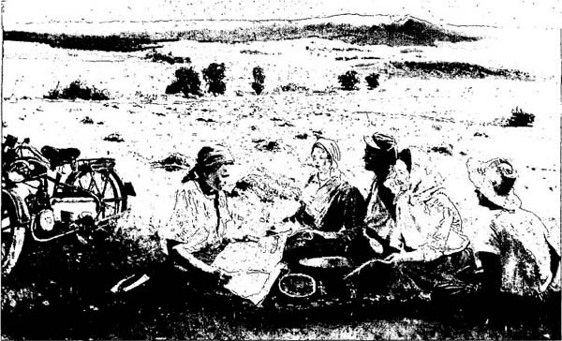
70. EUROPE DECEIVED. A. Vasilev, They are Writing About Us in Pravda (1951). A practitioner of Stalinist ‘Socialist Realism’ presents an idyllic imaginary scene from a collective farm in Moldavia. In reality, Moldavia’s population had been purged and repressed after the Soviet invasion of 1940, and the peasantry collectivized by force. Private Collection. See [MOLDOVA].
Photo: Museum of Modern Art, Oxford.
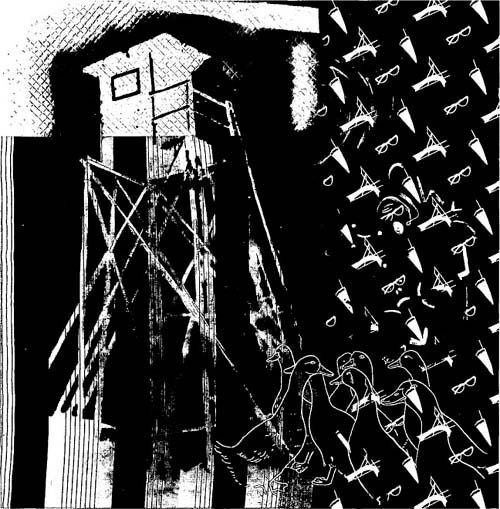
71. EUROPE DIVIDED. Sigmar Polke, Watch Tower with Geese (1987–8). An image of the Iron Curtain painted two years before its collapse by a German who had himself escaped across ‘the Wall’ in 1953. On the left, in the East, a concentration camp: in the West, floating consumerkitsch.
Photo: © 1994 The Art Institute of Chicago. All Rights Reserved.
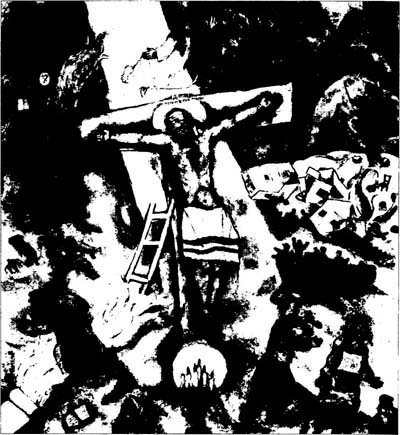
72. EUROPE IN TORMENT. Marc Chagall (1889–1985), White Crucifixion (1938). The central symbol of Christian Europe is overlain with Jewish imagery: painted by a Russian Jewish exile to Western Europe on the eve of the Second World War.
© 1993 The Art Institute of Chicago. All Rights Reserved; © 1994 DACS, London.
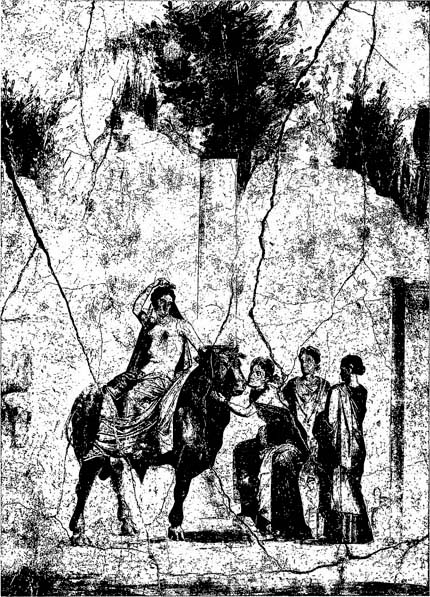
1. Europa’s Ride
For Notes on Illustrations
see begin of the page)
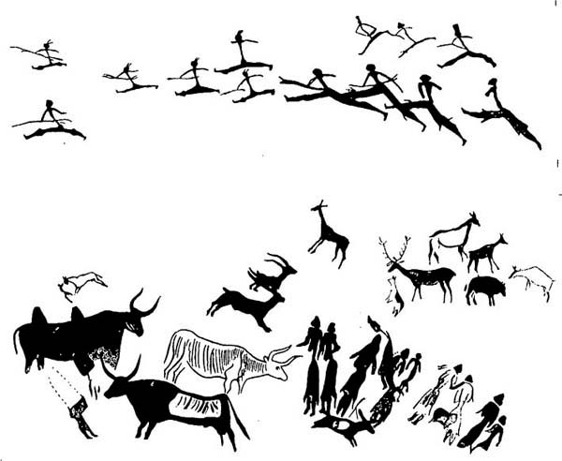
2. Gatherers and Hunters
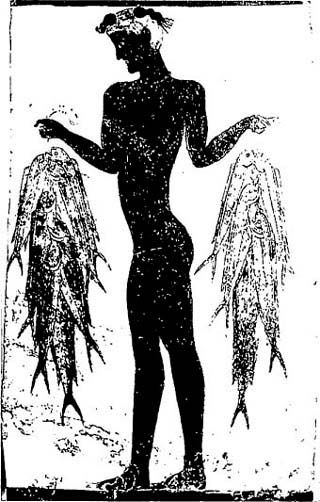
3. Minoan Fisherman
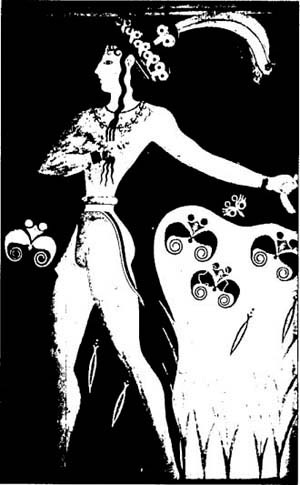
4. Prince of Knossos
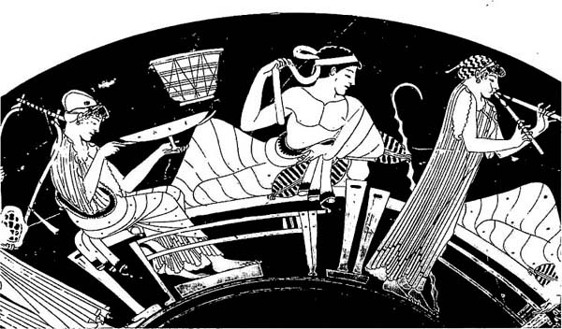
5. Symposion—A Banquet

6. Etruscheria

7. Arcadian Idyll
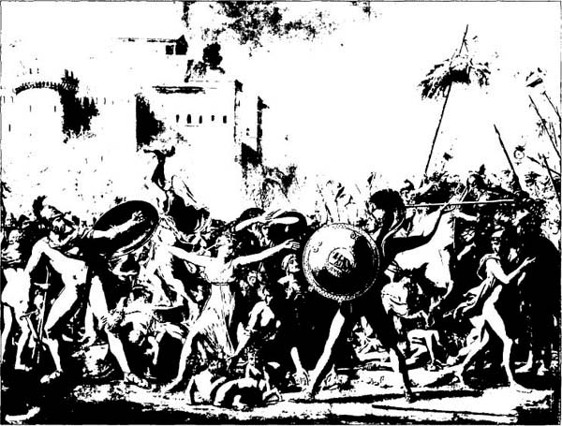
8. SabineRape
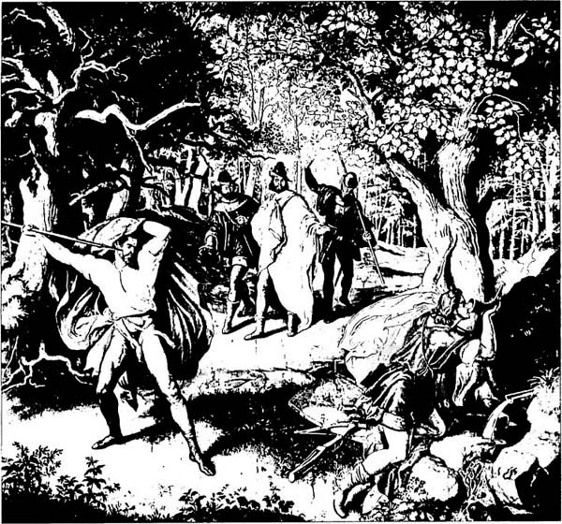
9. Death of Siegfried
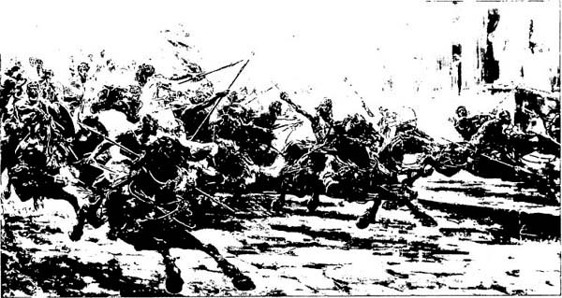
10. Attila invades Rome, AD 452
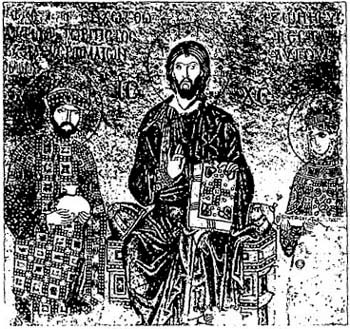
11. Eastern Orthodoxy

12. Western Monasticism
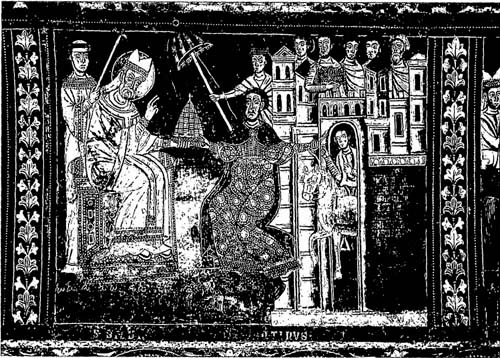
13. Constantine’s Donation
14. The Slavonic Liturgy
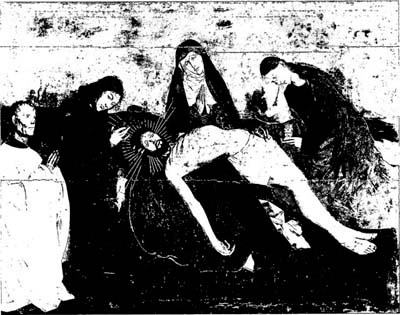
15. Catholic Pietism
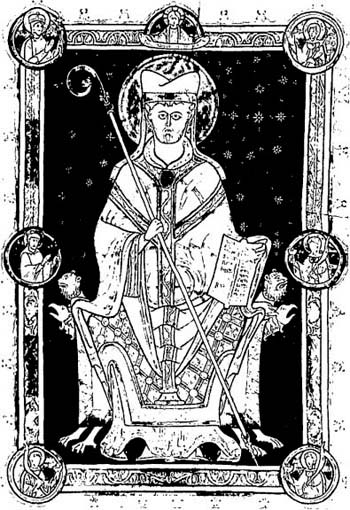
16. St Augustine

17. St Charlemagne
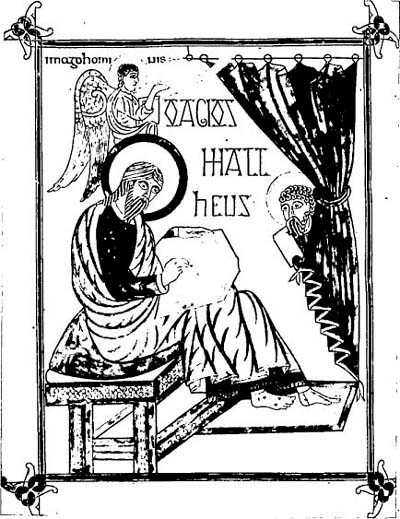
18. St Matthew
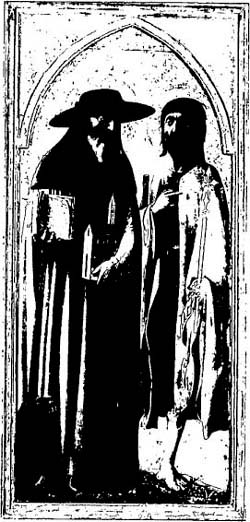
19. St John the Baptist and Jerome
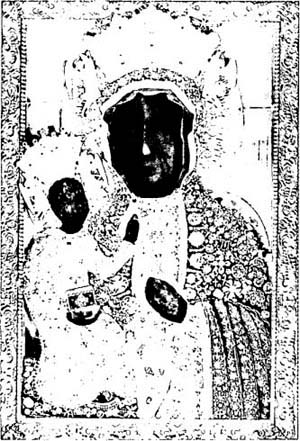
20. MatkaBoska
21. St John the Theologian
22. St Luke—Icon Painter

23. Bogorodica
24. Homage to Otto III
25. England Conquered
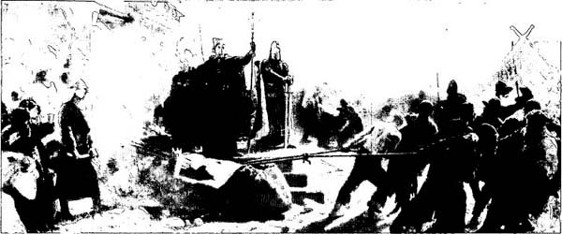
26. Wendish Crusade

27. Truce in the Reconquista
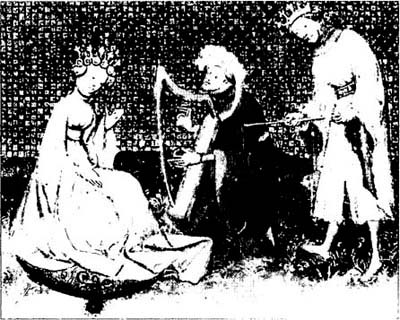
28. Tristan’s Last Song
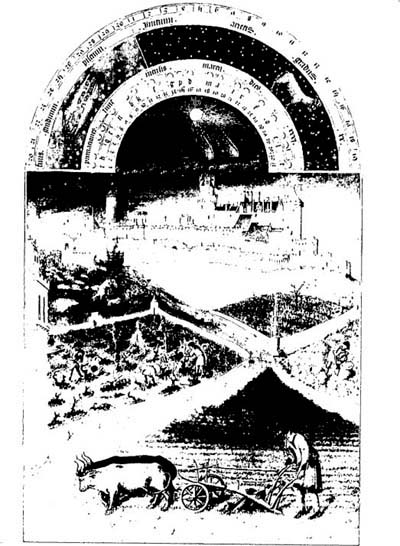
29. Iron Plough

30. Scent of the Stag

31. Dante in Love
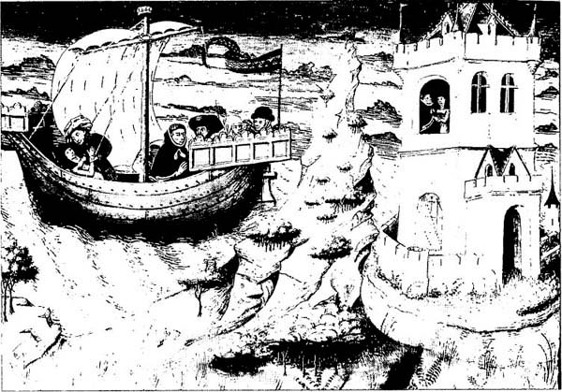
32. Bartolomea in a Dilemma
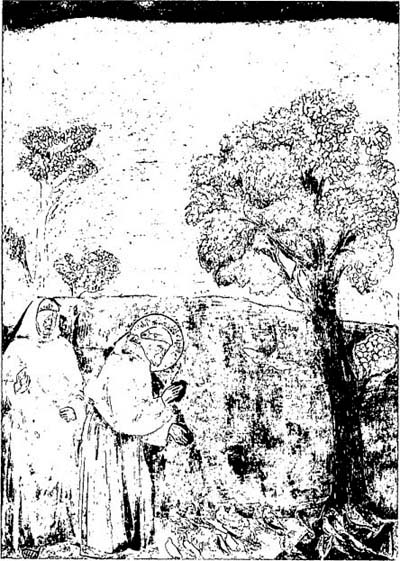
33. St Francis blesses the Birds

34. King Casimir greets the Jews
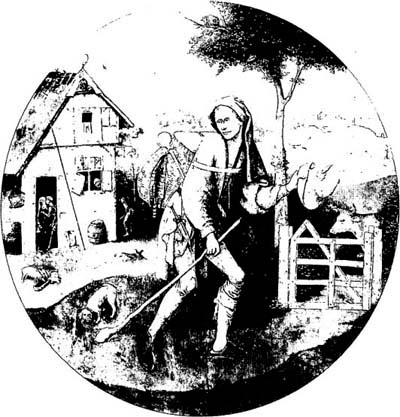
35. Picaro
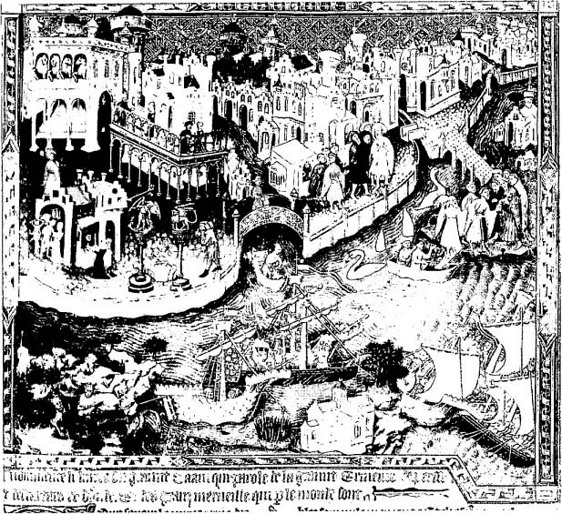
36. Marco Polo
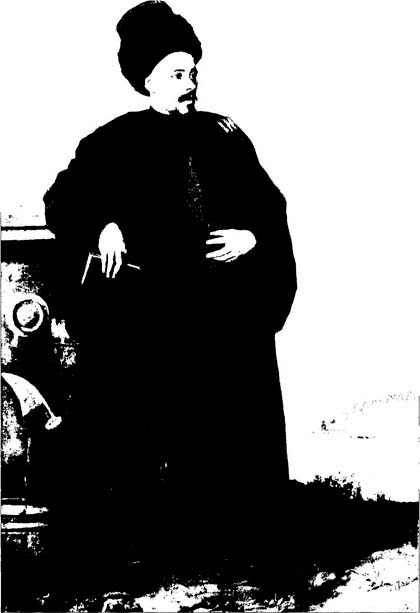
37. Westerner as Easterner
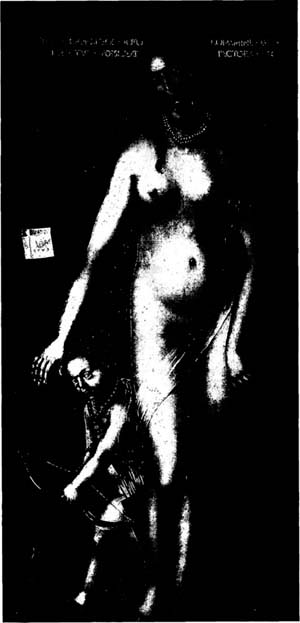
38. Venus
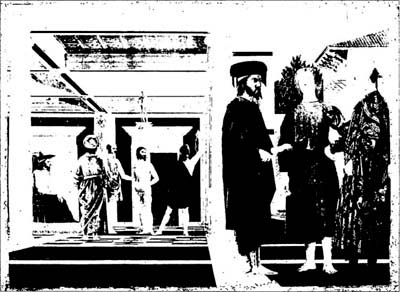
39. Perspective
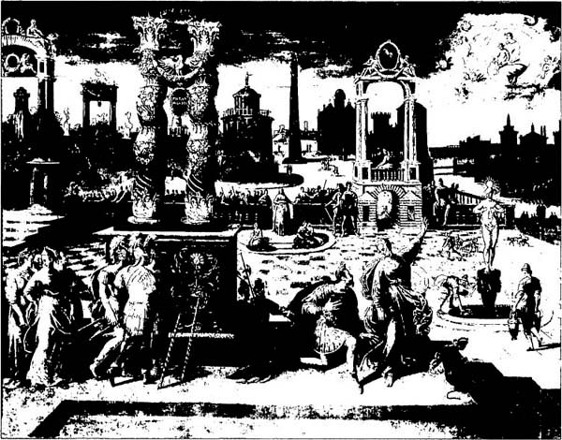
40. Allegory
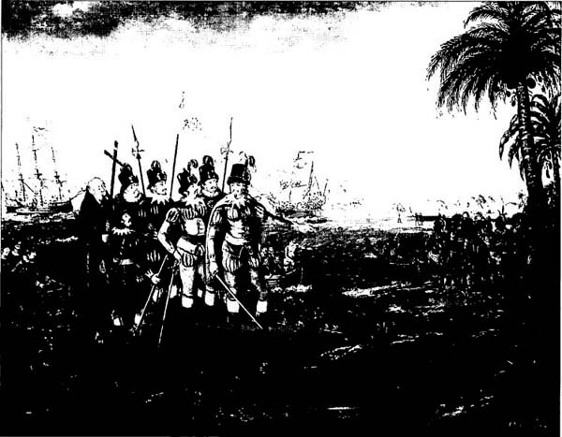
41. Columbus lands at San Domingo, 1493
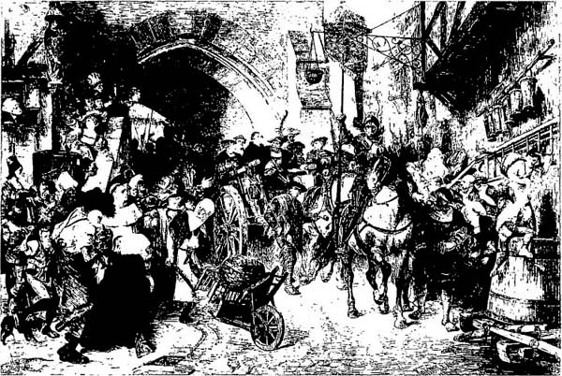
42. Luther enters Worms, 1521
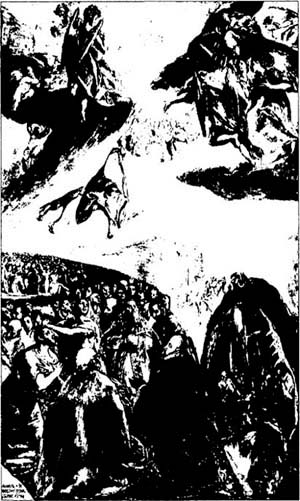
43. Dream of Empire

44. Vision of Past Glory
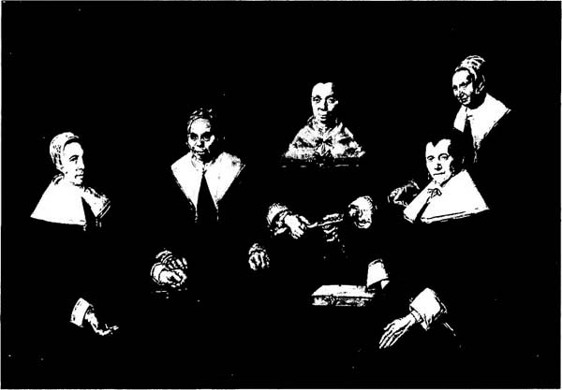
45. The Board of Governors

46. Moscow Holiday

47. Sun King as Paterfamilias

48. Trouserless Philosopher
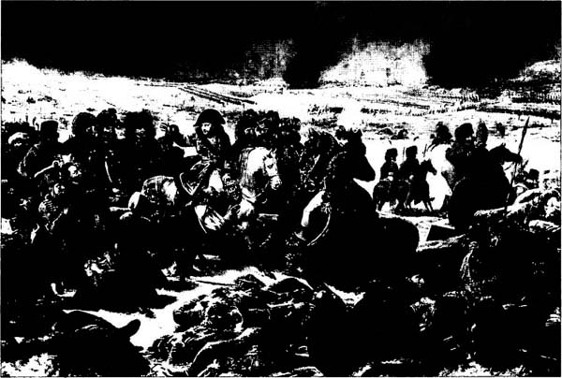
49. Master of the Continent

50. Lords of the Sea

51. Infanta in Pink

52. Reader and Listener

53. Mother
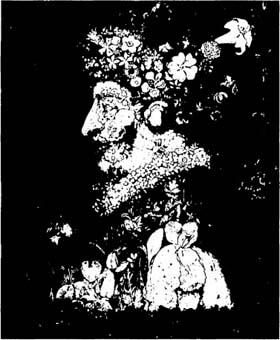
54. Summer
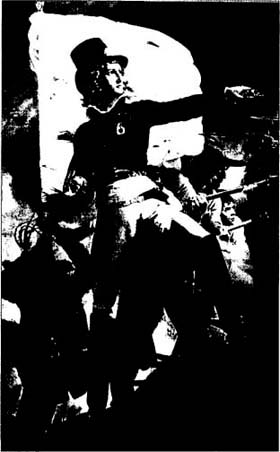
55. Royalist

56. Republican

57. The Children’s Friend
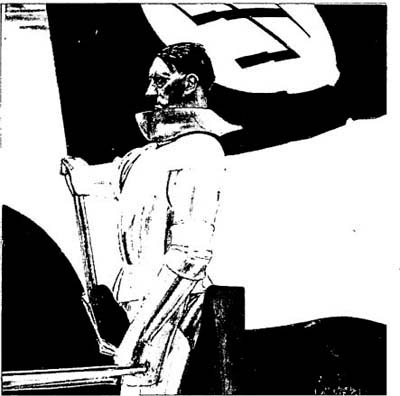
58. Knight in Shining Armour
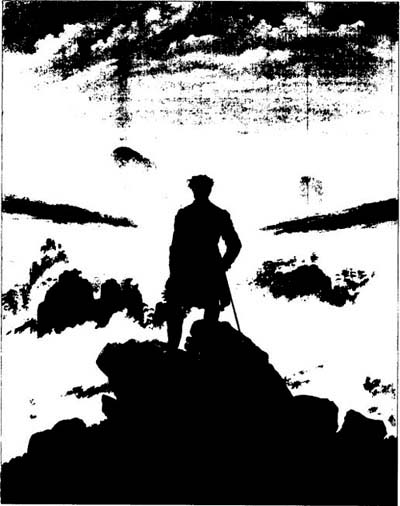
59. Eternal Wanderer
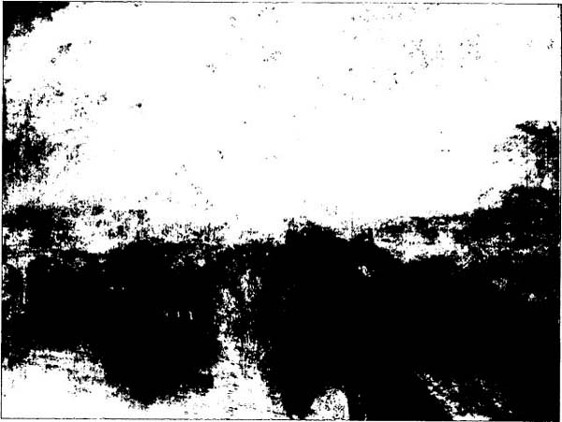
60. Dynamo
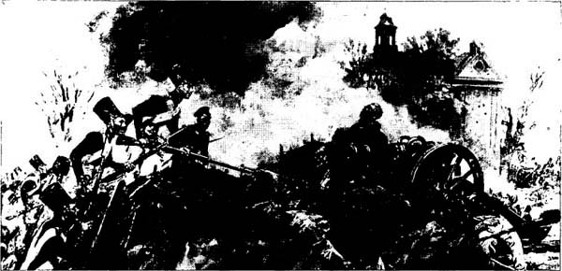
61. No Surrender
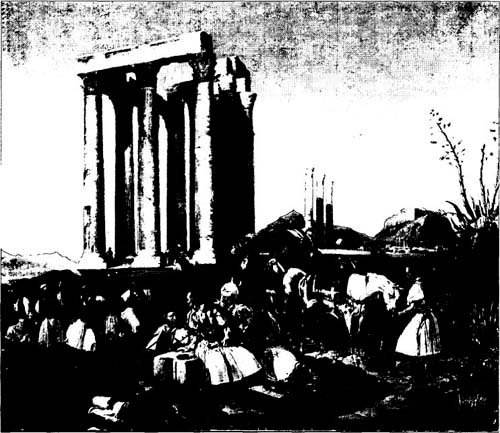
62. Free Hellas
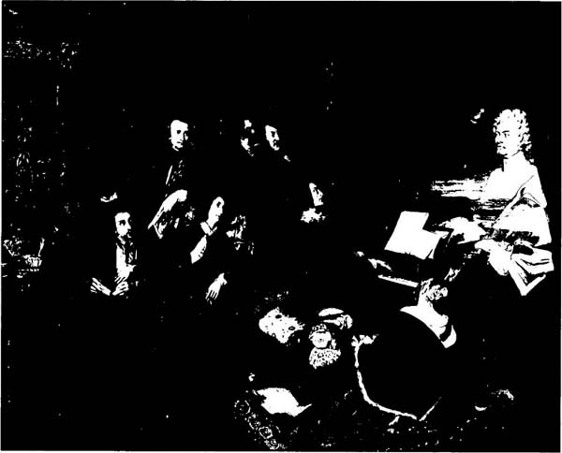
63. Musical Evening

64. Concert of Europe

65. Rural Poverty

66. Industrial Grime

67. Impressionist

68. Primitive

69. Surreal
70. Europe Deceived
71. Europe Divided
72. Europe in Torment