
Science, culture and society
By the first decades of the twentieth century, the dominant cultural forces in Europe were largely generated by an urban, industrial culture, in which the machine or rather technology had become an all-pervading presence, despite large regions remaining rural in their economic and cultural life. The new world was visualized in Walter Ruttmann’s memorable movie Berlin, Symphonic der Großstadt (Berlin, the symphony of a metropolis) (1927). In the same years the concomitant features of this culture were voiced by the German film actress Marlene Dietrich (1901–92), who sang:
Es liegt in der Luft eine Sachlichkeit, es liegt in der Luft eine Stachlichkeit … Durch die Lüfte sausen schon Bilder, Radio, Telefon, durch die Luft geht alles drahtlos und die Luft wird schon ganz ratios, Flugzeug, Luftschiff.
There’s business-like rationality in the air, there’s stimulation in the air … already, the air is filled with images, radio, telephone, all is going wireless and the air doesn’t know how to handle it all: airplane, airship.
The song presents an image of a bewildering and bewildered world that finds itself completely dominated by the products of science and technology. Indeed, many wondered whether there were any limits to what science might produce. But equally many were afraid that, in the end, man might be the victim of the realization of his own dreams.
In 1929, the German composer Paul Hindemith (1895–1963) and his compatriot, the playwright Bertholt Brecht (1898–1956) collaborated in the creation of a fascinating theatre piece, combining an orchestra, a chorus, solo singers, a group of clowns and cinematic projection, to which they gave the title Lehrstück (Instruction piece), for in accordance with Brecht’s idealist-socialist attitudes not only should it be staged and performed by and for the people,1 it should also instruct them through its message. It tells of man’s aspirations to dominate the world, nature, through technology, which has produced many marvellous machines and yet has not realized a society that prevents people from dying of starvation. In realizing his desire to fly like a bird, man has finally reached the limits of his ability. However, in the Lehrstück, a pilot, proud of his achievement, crashes. Asking for mercy as he lies dying, the multitude assembled around him yet denies him any help. On the contrary, they impress upon him the need for humility. Only when the pilot assents to his essential nothingness is he forgiven, and he can die in peace.
Seen against the background of the grave economic and social crises of the 1920s, Brecht’s message projected a very negative vision of contemporary culture. One might ask whether it was not born from an increasing ignorance of modern science, from fear, even. I think it was, but the fear was understandable. In less than 20 years since the beginning of the century, science had come a long way since the British physicist Ernest Rutherford (1871–1937) had said that physics could be good, if only one could explain it to a barmaid. As one who had conducted basic research into the structure of the atom and received the 1908 Nobel Prize for chemistry, he may have slightly exaggerated.
For while the age-long gap between two of Europe’s worlds, the rural and the urban, was being closed, a new one, in the making since Copernicus published his book on the cosmos in the fifteenth century, now opened up. For the time being, it was to create two worlds, one that could be understood, interpreted by all who had received a decent education, and another whose comprehension required a complex, non-verbal language understood by only a minority. Because the natural sciences speak a single, universal language, that of mathematics and, by and large, use a single methodology, since the early twentieth century the world of science has become, indeed, the World.
At the beginning of the twentieth century, the central field in the natural sciences was physics, and one of the central questions in it the nature of the atom. Further investigating its structure, so long seen as the stable building block of the physical universe, between 1911 and 1913 men like Rutherford and Bohr discovered its nucleus and the electrons circling around it. They also argued that a theory of causality relying either on waves or on particles would not suffice to explain its reality. Moreover, in 1927 Werner Heisenberg (1901–76) stated there is always uncertainty in the simultaneous measurements of the position of a particle, which would imply that the knowledge claimed of such an object is fundamentally limited as well – the idea has become known as Heisenberg’s ‘uncertainty principle’. He therefore claimed that we are unable to know the position and speed of the individual electrons. Hence, it is impossible to predict their behaviour. All these developments led to the further elaboration of Planckian quantum mechanics. It was now argued that a pattern of frequencies in the atom produced by successive quantum states manifest, putting matters simply, the complementarity of both waves and particles. To accept this, man, even scientific man, had to discard most theories held sacred in science for a long time, specifically determinist causality.
As in other fields of culture, the Second World War proved a catalyst in science, too. Concentrating on the powers of the atom, all contestants in the war had devoted enormous amounts of time and money to research in order to produce the technology to win the war. Indeed, ‘pure’ or theoretical science and ‘applied’ science, i.e. practical technology, though their union had first occurred in the nineteenth century, now effectively joined on a grand scale, never to separate again. Thus, the allied battle against Germany and Japan resulted, first, in the discovery of nuclear fission – the achievement of Otto Hahn (1879–1968), in 1939 – and, after the scientists told the politicians and the military of the possibilities, in nuclear warfare, when, in 1945, a team led by Robert Oppenheimer (1904–67) at Los Alamos, in the desert of New Mexico, managed to successfully test an atomic explosion. Tragically, the hydrogen bomb had to be actually used before many of the scientists involved started to have second thoughts, realizing its full and dreadful potential as well as the political use to which it had been put by the United States, ostensibly to end the war against Japanese, ‘yellow imperialism’ but, as some historians have argued, actually to deter Soviet Russia from advancing too far either into Asia or Europe.2
At the same time, the possibilities of the Englishman Alan Turing’s (1912–54) speculations in mathematical logic, dating from the mid-1930s, had also become apparent. Soon, the machines that were constructed to help to decode enemy (i.e. German) messages evolved into the computers that now regulate many western people’s most routine actions, from reading the bar codes on every piece of supermarket produce to giving access to worldwide telephone services or the information superhighway. Indeed, the moment these computerized systems fail, western society is increasingly faced with its daily and dangerous dependence on them.
By the end of the twentieth century, science had become the basis of society, of an economy and a culture that cannot exist without the technology it continues to produce, at ever greater speed, with such exciting developments as the reintegration of physics and chemistry.3 Soon after research in solid-state physics showed the electromagnetic properties of crystals, the transistor revolutionized communication systems. However, a far more significant discovery followed a few years later. For only a short time after F. Crick and J.D. Watson discovered the structure of DNA in 1953 – the ‘deoxyribo-nucleic acid’ that was known to play a role in heredity but whose capacity for gene-copying and, thus, whose central function in the actual operating of heredity was as yet unclear – the so-called recombinant DNA techniques started to revolutionize biology and the life sciences in general.4 By the 1980s, through combining the genes of one species with those of another, biotechnology altered such diverse fields as agriculture and medicine.
These developments, while obviously beneficial in a great number of ways, also have negative effects. In agriculture, the concomitant pollution of the environment, and the many problems caused by foodstuffs containing heavy doses of growth-inducing chemicals and pesticides have become the objects of political and, indeed, cultural debate, questioning the dependence of society on what many consider to be the unnecessary overproduction of irresponsibly doctored food that becomes a burden on the environment as well. In medical biology, the possibility of uncontrolled or uncontrollable genetic manipulation continues to pose worries, against a background of the increasingly consumerist attitude of many people, who may all too easily think that shopping for an altered or even a new body is as much everyone’s individual right as is the acquisition of a newly enhanced personal computer.
Indeed, by the second half of the twentieth century Europe, and the wider world as well, was not yet completely at ease with the fundamental role of science. On the contrary, with its ascendancy, the cultural criticism of its power increased. There was widespread fear, mainly, one must conclude, because to most people science had become incomprehensible and, moreover, its practical and moral consequences unpredictable.
It is hardly accidental that, after the Second World War which had caused so many deaths through the means of ‘improved’ technology, which had created nuclear power, and which seemed to inaugurate an endless period of ‘cold war’ between the western and the communist world, two men engaged in a debate that raised the fundamental question of the role of science in a humane society.
C.P. Snow (1905–80) and F.R. Leavis (1895–1978) together created the famous image of a world of two cultures, defining the course of western civilization as running, continuously, through a field of tension between the ‘natural sciences’ and ‘the humanities’. These two English intellectuals first crossed swords in 1959–61. Snow, a nuclear physicist and a senior science administrator, the embodiment of the fusion between the powerful exact sciences and the State that had gained much of its power controlling this field of knowledge, was yet a man from the humanities, the author of a series of novels called Strangers and Brothers which tried to depict the changes in English society between the 1930s and the 1960s. His opponent, Leavis, a famous as well as influential literary critic, taught at the old, traditional university at Cambridge, to many the embodiment of the ‘ivory tower’,5 even though, of course, it was Cambridge itself that was increasingly known for its contributions to modern scientific research.
Snow publicly voiced his concern about the gap he saw growing between the two cultures. While acknowledging the traditional rivalry between the humanities and the natural sciences, his main concern was the increasing inability of the students and practitioners of the former to understand the basic assumptions and values governing the research and the motives of the latter. This, he argued, would be fatal to Europe, indeed to culture in general.
As Leavis did, many have accused Snow of surreptitiously playing on prevalent public fears, arguing that he was trying to establish the primacy of the sciences for economic development and, consequently, for prosperity, by implying that only a technologically educated and powerful and, hence, economically strong society would be able to compete with other ideologies, more specifically the communist one which was at that very moment felt to be threatening ‘the west’. They also argued that Snow, in doing so, was willing to almost deny the contribution made by the humanities to the values many considered central to European civilization. Therefore, Leavis came to the defence of the humanities, of the arts, as an element in education, in society equally deserving of (economic) support.
Yet while Snow, as many politicians and cultural critics after him, certainly had his science-based agenda, his analysis did address a core issue of twentieth-century culture and society. Therefore, the Snow–Leavis debate has lost little of its actuality even now. Almost everything people have come to take for granted in the way of physical and material comfort has been the undeniable product of an increasingly complex and powerful science and technology, up to the medical and biological research that has not only prolonged the life of our bodies but now promises the perfection of our minds as well through genetic manipulation. Yet, while in Europe, nowadays, some one million people are actively engaged in scientific research and experimental development,6 of a total population of some 700 million, few outside their circle understand even the most basic choices that govern this research. Averagely educated individuals, who are morally or otherwise concerned about the development of society, seem to have lost their grip on one of society’s most creative cultural fields, as well as one of its most powerful tools. Partly, the lack of basic science education is to blame. Mostly, however, people consciously refuse to interest themselves, because science is perceived as difficult, impenetrable, even. Obviously, a large part of it is, but the basic principles determining its direction can be understood after all. In refusing to engage with the world of science, a responsible citizen can hardly expect to be able to confront the practitioners of the sciences with the validity of the values that the tradition of the humanities should continue to instill in that same society. Because western society at large seems unwilling and unable to discuss the responsibilities implied in the choices it makes, and the consequences of these choices, it seems content to leave things as they are, thus leaving science and technology, and the economic system on which they thrive, very much to make their own decisions, which means decisions that now implicate all of humankind and the entire planet. For example, the release of fluorocarbons – a substantial element in such comfort contrivances as refrigerators and aerosols – has greatly damaged the ozone layer that ensures our survival on this planet. And while the advances in molecular biology and the cracking of the genetic code will probably contribute to the elimination of much human suffering, they may also cause damage by allowing humans to go further along the path to, first, ‘perfecting’ themselves, at least physically, and then endlessly replicating these perfect beings, a possibility clearly proven by the animal cloning experiments of the 1990s. In both cases, only well-informed persons with at least some understanding of the issues involved may expect to participate in and exert some influence on the public debate which sustains a responsible society: a debate over the future of human culture and what we have come to see as its essential humanity, and a debate, moreover, not only with the scientists themselves but, equally important, with those who finance and hence at least partly control their work. For it is bureaucrats and politicians who, often equally ignorant of the basic issues, continue to fund and allocate the gigantic amounts of public money that keep science going.
In short, people should engage in a debate over the desired course of a civilization dominated by science instead of increasingly turning their back on its fundamental principles and only enjoying its fruits. They should accept science as an essential part of their cultural heritage but, with it, the responsibility to become acquainted with at least the fundamentals of its thinking. They should not become like the sorcerer’s apprentice in the eponymous musical composition by Paul Dukas (1897), based on Goethe’s Der Zauberlehrling (1797), who could not control the forces he unleashed because he refused to learn from his master and, hence, was confronted with chaos.
Admittedly, for the layman it is far from easy to enter the world of science as the questions that occupy scientists nowadays are extremely complicated. Take, for example, the continuing quest for the ‘ultimate particle’. In the 1960s it resulted in a proliferation of ‘quarks’, and later of neutrinos – particles not yet ‘seen’, but proven, at least to many physicists, by their effects. Their very intangibility is, perhaps, reflected in the fact that the name for the ‘quark’ is taken from one of James Joyce’s most enigmatic novels,Finnegans Wake (1939). Not surprisingly, twentieth-century scientists, themselves confronted with confusions and contradictions, have continuously tried to find new ways to describe the unity of nature in a single model that would reconcile or even efface all contradictions. Einstein worked on his ‘unified field theory’ to connect electromagnetism and gravitation. Bohr tried to do so with his idea of complementarity, arguing that the various modes of perceiving and understanding need not be mutually exclusive, indeed, will somehow probably contribute to a final comprehension, to a new unity of the sciences. It is a fascinating view, even more so if one realizes that he reached this conclusion partly on the basis of reading the American philosopher William James’s The Principles of Psychology (1890), a work decidedly not part of the canon of the physical sciences. But then, Bohr was already trying to bridge the gap between the humanities and the sciences.7
Efforts by men like Bohr and Einstein, though not always understood, nor, for that matter, accepted by subsequent generations of scientists, seem to represent a basic yearning in western culture when faced with a nature that, however well explored, still remains a mystery. Indeed, they somehow mirror the emotional needs that had driven the physicists of the German Naturphilosophie of the early nineteenth century to try to reconcile the material and the spiritual universe and discover basic structures in each and every manifestation of life. This quest has continued, producing a series of ‘solutions’ that are still being debated. Meanwhile, discussions in the two scientific fields that cover the seeming opposites of the physical spectrum show how far removed man still is from final answers.
Brain research, though greatly advanced since the end of the twentieth century, still lacks consensus on what a human brain actually is, specifically in the dispute over the question of what, exactly, constitutes man as a free, creative agent.8 Some have argued that the brain, being capable of non-computational intuition, can be understood only if a special type of physics, as yet unknown, is developed. Others have explained its functioning merely from the oscillation of our nerve cells. Yet others stress the necessity to understand the brain as an immensely complex (neuro-)chemical factory. Still, there have been many physicists, like the Nobel Prize winner John Eccles, who have said that understanding the brain will not make us comprehend man any better, because its study leaves out a spiritual soul – a point of view that certainly echoes the mind–body discussions of the ancient Greeks, of Descartes, of La Mettrie and so many others throughout the history of Europe.
Moving from the brain’s tiny neurons to the origins of the universe, the most accepted cosmological solution, the so-called ‘big bang’ theory, which first emerged in the 1950s, maintains that it all began with a point, a mathematical singularity, some 15 billion years ago – a concept surprisingly made into something of a scientific hit by the British astrophysicist Stephen Hawking (b. 1942) in the 1980s. But for all its exciting vistas through space and time, these theories have not even started to answer the simple question that has perplexed man since he first formulated thoughts about the cosmos: what, then, is the origin of the cosmic seed from which the galaxies and, ultimately, life and mankind are said to stem?9 Indeed, most modern cosmologists argue that the question of what came before the big bang is invalid, since besides matter and radiation, time and space also appeared – rather mysteriously – from the void at the moment of creation. Yet, that too leaves unanswered the questions that man has asked himself since time immemorial.10
Meanwhile, if anything, developments in the world of science and technology have shown that Europe is no longer the world’s sole leader nor, one should admit, is it among the world’s most creative and productive regions. True, some of the most influential and unsettling discoveries of the first half of the twentieth century were made in Europe, but since the Second World War the centre of ‘big industry’, the phenomenon of combining scientific research and technological developments, has moved to the United States. This happened partly because in the 1930s so many of Germany’s most creative and productive minds were forced to move to the other side of the Atlantic – though others, after having worked for the Nazi regime, went on to do so for the victorious states of Europe. By the 1980s, however, another change became apparent. Both in Europe and in the USA, the creative input in, especially, the sciences came increasingly from students who had left their own, mainly east Asian countries to work in the West. Now, at the beginning of the twenty-first century, that situation has altered again, since many of those students now feel they would rather work in their own countries – where social, economic and political conditions have much improved. For the first time in the last 200 years of world history, this situation may well leave ‘the west’, i.e. both the USA and Europe, having to fight for its accustomed lead in scientific development.
Yet precisely because science and technology increasingly determine the course of mankind and the world, a Europe that tries to uphold certain values in the interplay between the sciences and that world, and to translate them into livable realities, can still be a force to the good. Conversely, without continued investment in research itself, Europe will not remain one of the world’s ‘big players’. This will both undermine the basis of its own prosperity and also weaken its credibility as a power that can actually presume to speak authoritatively on such issues.
Nowhere is the complexity of the issues involved demonstrated better than in the field of climate change. Some 40 years ago, British scientists first discovered the growth of holes in the earth’s ozone layer. Yet, for decades, most European societies have turned their back on the problems that this development is going to cause. Nevertheless, they were responsible for it in the first place, as, basically, the thinning and eventual disappearance of the ozone protection is caused by CFCs – the result of Europe’s industrial, commercial, consumerist revolution of the past 200 years. The ways in which the world’s climate is now ineluctably altering may, for one thing, cause many of Europe’s low-lying regions to become inundated by the sea in the not-too-distant future. Now, many Europeans – including, admittedly, their politicians and governments, have simply denied the scientific evidence that should have alarmed them. Of course, they also fail to face the fact that the only way to counter the danger is by radically altering their consumer behaviour. While the USA clearly bears a large part of the responsibility, as do, by now, Russia, China and India, yet it may well be Europe that has to take the lead, politically and culturally-morally, in bringing about a long overdue change of mentality.
After the Second World War: deconstruction and reconstruction
Both the winners and the losers of the Second World War faced a number of grave problems. After mass destruction, economic reconstruction was, of course, imperative. But moral reconstruction was equally important. Germany had to come to terms with both losing another war and with the traumatizing stigma of having produced Nazism and the Holocaust. The allied states not only had to avoid a situation like Versailles and its aftermath recurring again, and therefore allow, even help Germany to recover its erstwhile position among Europe’s civilized nations, they also had to ask themselves why a Europe of civilized nations had not prevented the war in the first place. A witch hunt for those who had collaborated with the German occupiers was the easiest way out – and besides punishing at least some of the worst war criminals, the Nuremberg Trials did in fact fulfil this function – but people soon realized that pointing an accusing finger at the guilt of others was too facile. It was certainly not going to answer the question of what structural conflicts within European culture and society, indeed within the people of Europe had resulted in the loss of precisely those values which many had thought to be fundamentally ‘European’.
Another effect of the Second World War was the seemingly final division between east and west within geographical Europe. The power of Soviet Russia, which had been growing stronger since the Bolshevik Revolution of 1917, had brought about the downfall of the tsarist empire. It had been consolidated in the interwar period and had reached its apex in the Second World War. For during the war, the Soviet armies had spread over large parts of eastern and central Europe, overthrowing the existing regimes, some of which had collaborated with or had simply sold out to the Third Reich. By 1945, the Soviets were firmly entrenched there, establishing a series of satellite states to serve as a buffer zone between the Russian heartland and western Europe.
Last but not least, the Second World War accelerated the process of decolonization, forcing the leading nations of western Europe which had possessed colonial empires – some of them for more than 300 years – to face the fact that they no longer ruled the world. The process was enhanced by the obvious change in world politics brought about by the rise to global power status of the United States, which was accompanied by a growing American dominance in the economic, cultural and, specifically, scientific fields: Fröbel’s predictions had come true after all.
Consequently, the traumas produced by the war and the grave prospect of a continuing conflict with the communist world, which might even result in the world’s end now that nuclear arms had given man the power of total destruction, induced many western Europeans once again to examine fundamentally their hopes and policies for the future. Should the peoples of Europe accept that each nation continue to fight for its own ends, as had been the case for far too many years and with such obviously tragic results? Or was cooperation now called for, at least in the fields of economic and military policies? Would not this be a better answer to the challenges that a post-war world presented to a Europe that wanted to survive?
To avoid the ever-present danger of recurring chauvinism and nationalism and to foster a sense of European unity, as well as to create a bulwark against Bolshevism, a policy of formal economic and political-military cooperation between the states of non-communist Europe did indeed seem the best solution. Thus, western Europe went on its slow way to form a community,11 slowly reformulating the ideas presented by so many Europeans during the previous centuries, to suit a now changed set of circumstances.
It was not, however, easy to eradicate the old, national ways of thinking which, after having gained their strongest expression in the nation-states of the nineteenth and early twentieth centuries, had become an almost innate set of oversimplified values inculcated in the minds of each citizen through education and constant propaganda. As the result of much soul-searching by intellectuals and politicians during the Second World War, in the years following it various bold and wide-ranging forms of economic cooperation were slowly realized – beginning, in 1952, with the ‘Schuman Plan’ that resulted in the European Coal and Steel Community, and ending with the 1957 ‘Treaty of Rome’ which formed the European Economic Community. However, most politicians were aware that new, supranational institutions would not be enough. A new ideology was called for as well.
However prophetic their vision, in trying to present a concept of European culture, the ‘European saints’, the post-war founders of the European idea, those who ‘rebuilt’ the dream, were understandably still bound to their past, perhaps rather too much so. In this time of crisis, Konrad Adenauer, Alcide de Gasperi, Jean Monnet, Robert Schuman and Paul-Henri Spaak – intellectuals or, at least, erudite politicians all of them – attempted, like so many of their predecessors, to formulate an ideal that could at least function as a political-rhetorical instrument. Perhaps not incidentally, most of them belonged to the Roman Catholic Church and pointed to (western) Europe as the geographical-cultural framework in which the classical tradition and Christian thought had provided the normative framework of European civilization. Indeed, Adenauer, Schuman and Spaak often conversed in German. Perhaps the spirit of Novalis was still present in them. However, even in their time the values and institutions that had once formed the core and expression of this European dream had already become less self-evident. The Churches especially have been losing influence since the 1950s.
Yet in the years since 1945 politicians and also historians have done their best to describe Europe’s achievements as the result of a process that had evolved for more than 2,000 years; in doing so, they were certain to use a rhetoric that made people believe that their expectations for the present and the future were the logical outcome of this process. Admittedly, this was not an easy task. First of all because, as this book hopes to have shown, there is no such linear process linking our present to an inevitable evolution, to a European idea that has slowly grown and gained force over the ages. The task was difficult also because many, perhaps even the majority of Europeans, soon felt that the disadvantages of centralization under the aegis of ‘Brussels’, where for a number of reasons the new Europe had its administrative capital, seemed to outweigh the advantages which were all too quickly taken for granted. Indeed, even despite the as yet virtual absence of a clear-cut concept of European identity, over the past three decades a growing number of people have felt forced to take action against what they experience as ‘the dangers of the European ideal’. To them, that ideal threatens to demolish the nation-state and, worse, its cultural identity. Obviously, we should ask whether that fear and the implied accusations are legitimate?
Analysing the actions of the founders of the ‘European dream’ after the Second World War, one cannot avoid feeling that their first intention was rebuilding their own states on the ruins of post-war Europe: cooperation, starting in the economically and strategically central sectors of coal and steel, was mainly deemed necessary to create the economic conditions for their own recovery.12 This recovery had to prevent another devastating war which, like previous wars, would be waged for economic reasons, whatever the ideologies it might represent as well. While, admittedly, the power of ‘the Community’ has been growing, the Euro-pessimists who continue to defend the nationstate have been very successful in doing so, up to the point that, certainly at the moment, a ‘United States of Europe’ seems farther away than ever.
Meanwhile, one may well ask what, exactly, is this ‘Community’, this ‘Union’? Is it, after decades of almost unchecked growth, any more than a hugely expensive, to some Kafkaesque, and ultimately self-serving bureaucracy with overpaid officials, a machine that regulates economic, social and political life for the sake of old and new capitalists – the image often presented in the media and adopted by many Europeans? Or should we accept this ‘united Europe’ and its admittedly sometimes absurd and often costly consequences as the price we should not be afraid to pay if only to prevent the inhumanity that characterized the two materially and morally devastating European wars of the twentieth century occurring again, at least not on the ‘Union’s’ territory? Should we, also, acknowledge that precisely because of the economic policies pursued by ‘Brussels’, such European countries as Spain and Portugal, which had been virtual dictatorships for several decades during the mid-twentieth century, could become more democratic, opensocieties in the 1960s and 1970s? For one thing, the post-war, free-trade spirit that followed the protectionist policies of the 1930s did at least help to demolish the tariff walls that shielded these countries economically as well as culturally from the rest of Europe. With greater economic freedom, and, of course, with the massive influx of northern European tourists, came, slowly, an exchange of views, a greater spiritual freedom which woke up the Iberian peoples and considerably contributed to the final demise of these authoritarian regimes. Moreover, there are those who argue that it is precisely the success of western Europe which, in many ways, has been the success of Brussels, of Community politics, which has created a world that became both an economic and political power and, perhaps even more important, a persuasive role-model. As such, it could not but influence the millions who were ruled by the Soviet regime, contributing to its slow erosion. The very symbolic demolition of the wall that between 1961 and 1989 separated east and west Germany, and the far more important – and sometimes painful – demolition of the divisions between the two cultures that had been created in Europe from the 1940s onwards, would, I feel, not have happened if Europe’s western half had not taken the path it actually did.
Since the early 1970s, another important question has been asked over and over again. Will the states and the peoples of Europe be willing to pay the costs of communal solidarity only if and as long as things are going relatively well, or will they retract the moment their own economy, as a result of this very solidarity, suffers from the lesser performance of other countries within – or aspiring to membership of – that ‘Union’? This question obviously relates to another one, since most observers argue that for the time being the efforts at communality have resulted in a Europe of bureaucratic elites rather than a Europe of citizens who feel they are actually part of the project. Indeed, bureaucracy and democracy have not gone hand in hand in the development of European institutions, as shown by the even now restricted role of the (incidentally equally costly) European Parliament at Strasbourg. To counter, if only through a change of practice, the negative feelings this situation causes among many ‘Europeans’ – resulting in a continued lack of enthusiasm for the European elections – is still one of the challenges of the future. All the time, almost inexorably, ‘Europe’ seems to be going its own way, economically, socially, politically and, in all this, culturally. In the long run, those who show their scepticism of more in-depth integration by defending the sovereignty of states may well be fighting a rearguard action.
Obviously, assuming that no one would argue that a state is an aim in itself, one must ask why people have created states in the first place. Well, during the past centuries its essential raison d’être seems to have been to serve the res publica, and promote the welfare of the state’s subjects. Arguably, to a considerable extent as well as with considerable success, this task has been entrusted to ‘the European Union’, even if results do not always yet reflect its intentions and promises; and consequences are still difficult to gauge. Moreover, there are those who feel that, precisely by giving up some of their sovereign rights, the states of Europe over the past decades have been able to maintain a far greater measure of actual independence than otherwise would have been possible.13
Indeed, we should not construe the nation-state – which, after all, is not a centuries-old but on the contrary a fairly recent construction, a ‘created tradition’14 – as an untouchable ideal, under no condition to be destroyed by ‘Brussels’. It is quite interesting to note that in many cases the nation-states of Europe are far less strong than people think; indeed, often a much older notion of a mainly regional cultural identity still seems to hide behind it. Here, too, one might argue that precisely the security the new Europe offers enables states to accept a growing measure of regional independence of a variety of cultures within their national structures. In Germany, the construction of the post-war state has from the beginning acknowledged the importance of regions in the field of culture. In Spain, Catalonia among others offers a fine case of the continuous strength of regional culture, as does Scotland in the UK. Indeed, the results of the 1997 vote demonstrated the latter region’s wish to be formally identified as an independent culture and polity, to demolish, at least in part, a state structure erected nearly – or perhaps better: only – 200 years earlier. Often, a notion of a shared past, however revitalized beyond its erstwhile reality or, even, completely invented, appears to be the powerful basis for regional identity; often, too, it is associated with language and, sometimes, religion.15 Perhaps these older roots have to be cherished, if only because nothing but healthy ‘provincialism’ can lead to any fruitful ‘universalism’, at least in a cultural sense.
Undeniably, the actions of those who press the ideal of European unity to its furthest limits appear to be stopped in many states by the as-yet solid walls of these more concrete structures which have, apparently, influenced and even formed man for longer and more radically than any concept of Europe which, despite all its undeniable practical and ideological purposes, is to many no lived reality as yet. Some would say this is so because a politically and culturally convincing definition of the essentials and characteristics of European culture has not been presented, even though the second millennium of what is, by the way, still called the ‘Christian era’ has now turned into the third.
Others would prefer it if a simple concept of European culture were never introduced at all. After all, such concepts can all too easily be manipulated by politicians who set out to rouse the masses, as, in the past, has been shown by the more extreme efforts to defend national or religious identity based on cultural criteria and characteristics.
From the 1950s onwards, within the context of Europe’s search for its own identity, its relationship with America – or rather the United States – became an issue once more. However powerful the voice of the many critics cited above, these had reached intellectual circles only. However, certainly from the 1920s onwards, the popular press had continued to publicize the success story of the new world. The new medium of film, which, in its American form, dominated the European market in the years following the First World War because indigenous production had all but collapsed, only seemed to prove the truth of what the papers proclaimed: in images that ‘could not lie’, the Hollywood dream factory triumphantly showed a world of desires come true in every field from consumer culture to sex.
Subsequently, the undeniably crucial role of the United States in the liberation of the greater part of western Europe from fascist dictatorships had greatly strengthened its popularity with the peoples of Europe. But the ambivalence of the relationship remained.16A small group who felt and did not hesitate to proclaim themselves to be a cultural elite continued to warn the public against the danger of moral, cultural decadence in the old world precisely because of the soulless materialism that reached it from the new world, both in the form of consumer goods and in the messages contained in films and, later, television. Yet, for all the patronizing words of their self-appointed cultural leaders, the public at large continued to enjoy what the new world had to offer. Indeed, during the first post-war decade, their very power to consume at all had been made possible by the USA’s 1947 ‘Marshall Plan’, a gigantic financial injection with which the US government had helped to restore the European economy, out of a mixture of altruism and of understandable economic and political self-interest, for only a strong western Europe could be both a market for American consumer goods and a bulwark against communism.
In the 1960s and 1970s, as American culture in its commercial manifestations of film, fashion and music definitively conquered the European market, agitation ran high and many people asked for a concise, rhetorically effective concept of Europe to counter the assault of American mass culture and its values, or rather lack thereof. France, in particular, openly fought against these influences. Inevitably, the French, for all their pride in their own national culture, fought this battle under the banner of European values and traditions, claiming they needed everyone’s support to uphold European civilization.17 Yet the campaign was rather surprising. The market that these Euro-defenders wanted to protect, had to a large extent been revived and expanded by the Marshall Plan.
Whatever one’s opinions on the merits or demerits of this mostly cultural anti-Americanism, the American influence, economically and, therefore, culturally, seems here to stay. Just as Columbus had portrayed the Indians as the ideal people and in doing so had given his European readers a vision of a physical perfection that resembled God’s image of man, so American movies since the 1920s, American cars since the 1930s, American soldiers in the 1940s – captivating European women with their cigarettes and nylons – American advertising since the 1950s, American Barbie dolls since the 1960s, American music since the 1970s, American videos since the 1980s and, of course, American personal computers since the 1990s have shown many Europeans a vision of man that is far more forceful than Columbus’s description of a physically and morally ideal man and society: ‘America’ has become a compelling influence on the perception Europeans have both of themselves, i.e. of their needs and of the things they feel they deserve, and of their society. It has resulted in an all-pervading obsession with the human physique which, in the 1980s and 1990s, led to, among other things, an increase in the incidence of anorexia. Since then, it has led to a massive interest in plastic surgery, in a ‘total make-over’. Indeed, following the American example, many European TV shows dangerously suggest that such physical changes are not only easy but will totally improve one’s life as well as one’s position in society.
Beyond the culture of the body, Europe has adopted, and still adopts – though it often also creatively adapts – American food culture and other fashions, indeed everything money can buy. However, it also adopts and adapts American ideas through the visual arts, literature, music, the cinema and television. Thus, it seems that 500 years of communal history have only intensified the Euro-American relationship. Since Columbus, basic elements of culture such as the European diet as well as the rather more complex ways of looking at man and the world have altered. Europe has gone from the potato and cocoa to the hamburger and Coca-Cola; and it may have to rethink itself from being a free agent to, perhaps, one that has to work long hours during the better part of the year to pay for them. In short, ever since the discovery of America, the culture of Europe has shown its presence there. But conversely, what Europe is now, what Europeans are now can only be understood if one takes into account the economic, political and cultural influence of America, a process of interaction and integration that began in 1492.
A culture of time versus money
Nowadays, an analysis of the manifestations of European culture and its underlying structures and assumptions no longer has to rely – at least not solely – on the often one-sided individual testimonies that have helped us to reconstruct the more remote past. Though historians will have to continue to painstakingly collect the data about pre-statistical times, advances in the social sciences and their research methods, combined with improved communications and data-collecting and processing systems, has created the possibility of large-scale investigation, producing extensive surveys that cover the practices and ideas of peoples across national or even continental borders. A decided but unavoidable disadvantage is that in the telling of the story that is history, the individual experience now tends to disappear behind anonymous categories, and is often even reduced to sheer numbers.
One of these surveys, the so-called ‘European Values Research’, carried out in the decade between 1980 and 1990 in Europe and North America, has parted from the assumption that this Atlantic region does indeed form a cultural continuum. It has contributed fascinating data for the analysis of late twentieth-century culture, even though one must be careful when dealing with the results and interpretations of such very global overviews based on random samples.18 Some of the material has contributed to the following analysis.
With the advance of the mass market and the ensuing democratization of goods at the end of the nineteenth century, scepticism about the cultural consequences became more marked. Intellectuals noticed that capitalism and democracy together, resulted in both endemic overproduction and the multiplication of occasions for imitation, rather than creating a rational, cultured society based on clear and limited means. They saw the dangers of competition and conformism in the pursuit of luxury by a crowd whose taste was untrained and who would, in the end, swamp ‘high’ culture.
Yet the solutions that were proposed remained, by and large, the same as those formulated a century earlier, although they were worded differently.19 In the 1880s, Paul Lafargue denounced the right to work as a false fixation causing a growing dependence on and increasing waste of material things. One of the founding fathers of sociology, Emile Durkheim, asked for some sort of social control of luxury, hoping to find exemplary asceticism in the individual and the genesis of ‘social’ religion among the population at large.20
Yet, by the beginning of the twentieth century, mass-production technology continued to promise and deliver an endless quantity of goods. Average purchasing power rose steeply, first in the United States and then in Europe as well. It was now assumed that economic growth and increased production would result in free time and in a ‘mass leisure society’. Debates about the question of how to democratize leisure soon followed, but it was rather the liberal-leftist intellectual elite who worried over the issue than the majority of people themselves.21 Many well-meant experiments were undertaken, especially in the 1920s and 1930s, by intellectuals, cultural educators and social workers to reintegrate those who were considered socially and culturally lost in urban, anonymous mass-production society; they mostly favoured the ordered free time of cultural and sports clubs. However, most capitalists argued strongly against increased leisure as it limited their access to flexible production, while many workers were more concerned about job and wage security.22
By and large, the optimists had the day, those economic and social theorists who peppered their works, however empirically based, with highly moralistic ideas. The French sociologist Eugène Tarde, who published his The Laws of Imitation in Paris in 1890, while admitting that mass-goods society arose from the imitation by the urbanized masses of the models of a creative class, yet voiced the hope that, in the end, the trend would reverse itself and a cultured democracy would emerge in which the masses – educated by now under the system of compulsory primary education which had been introduced by most European states – would operate discriminatingly between the poles of consumer goods and spiritual goods. Some decades later, the English economist John Maynard Keynes touchingly assumed that after the satisfaction of absolute needs people would devote their further energies to non-economic purposes and fill their leisure with the ‘art of life itself’.23
However, the Depression of the 1930s and the Second World War only left most Americans and Europeans with an increased craving for material gratification.24 When the war had ended, women returned to their homes from the factories and offices, by and large resuming their by now dual traditional role, of home-maker and of decision-maker in the spending of the family income. Ideas about the reduction of work time and leisure planning that were voiced in the immediate post-war period were soon deemed obsolete. Full employment and a vision of unlimited consumption were what most people, both politicians and workers, wished to realize. There was wide-ranging acceptance of the ideals of mass production and high wages.
A manipulated need creation on an unprecedented scale soon followed. Thus, after 1945, a ‘consumerist consensus’ seemed to be the prevalent attitude.25 Indeed, consumerism was hailed everywhere. With a rise in the standard of living in accordance with – and matching, market-wise – an increase in production, everyone would be able to aspire to and eventually acquire the lifestyle of the well-to-do middle-income groups. Social classes would disappear as the United States and Europe reached the ‘last stage of economic growth’ prophesied by the popular economist W.W. Rostow.26 In Europe, the adoption of what was called ‘the American model’ did not encounter great opposition. The French politician Jean-Jacques Servan-Schreiber, in his Le Défi Americain equated liberty with consumer choice and democracy with mass access to consumer goods.27
Intellectuals did ponder over the desirability of this situation, but, mostly, they failed to influence decision making.28 An economist like J.K. Galbraith might point out the cultural, ecological and social consequences of unrestrained growth, in his famous book The Affluent Society,29 and Raymond Aron voiced his fears in an equally famous study of Les Desillusions du Progrès but most westerners – both Americans and Europeans – were more optimistic.
Admittedly, by the late 1950s, first in the USA and later in Europe, people began to express some concern as television began to show its influence. The new medium was soon thoroughly commercialized when advertising began to direct programming. Ever more, leisure became consumption as many people began to spend their free time and their hard-won money in increasingly long hours of shopping, induced therein by merchandisers via television.30 The half-joking, half-critical expression ‘shop ’til you drop’ became an adage. Even when not directly sending advertising messages, the home screen still projected lifestyles leading to consumerism through films and the family dramas sponsored by the household detergent industry, the so-called ‘soap operas’, a genre that continues the highly popular melodramatic theatre so beloved by both the lower-middle classes and the working population during the nineteenth century. In Britain, the percentage of homes provided with a television set rose from zero to 66 per cent between 1955 and 1959, and to 90 per cent by 1969. By that time, people spent about half of their leisure time in front of the screen and have continued to do so ever since.31
Though they professed to enable people to pursue their individual lifestyle, the merchandisers’ efforts to manipulate the culture industry resulted in a conformist mass culture, mostly led by the needs they discerned among the middle classes, the ‘status seekers’ so aptly analysed in Vance Packard’s eponymous sociological study of 1959.32
Tourism and its cultural connotations provide a fascinating case in point. Travel for pleasure, indicating almost unbounded leisure – albeit legitimized by the consumption of high culture – had been an elite phenomenon until the end of the eighteenth century, culminating in the southbound Grand Tour. In the nineteenth century, increased wealth and new modes of transport made such travel available to the well-to-do bourgeoisie. They were no longer satisfied with a week in the mountains or at the seaside, if only because by then the better-off members of the ‘working classes’ were going there too. Of course, the middle classes were also eager to ape an aristocratic culture that enhanced status as well as affording an escape from an industrialized, increasingly stress-ridden world. So, they now took a southerly trip as well. Innovative entrepreneurs like the firm of Thomas Cook and Sons or the Belgian Compagnie Internationale des Wagons Lits soon realized that there was a new market to open up and manipulate.
However, most people from north-western Europe continued to avoid the summer heat of the Mediterranean, travelling in the relatively mild autumn, winter and early spring periods. Once in southern France or in Italy, they used huge parasols to protect their faces from the sun. Not only did they originate in agricultural societies in which a fair complexion traditionally distinguished the rich landlords from the poor peasants and, consequently, had become a sign of beauty both in women and men, they also wanted to stress their difference from the darker-skinned ‘locals’ of southern Europe, whose ancient culture they admired but whose contemporary lifestyle they considered much less civilized and progressive than their own democratized, industrial society. However, in the course of the twentieth century, as transport – especially with the coming of the motor car and the aeroplane, as well as increased income – made long-distance travel available to the masses, a tanned face came to denote a holiday in the sun and, hence, became a status indicator. Soon, of course, marketing strategists were exploiting the argument that a suntan equated to health. Such is the strength of cultural stereotypes that even though in the 1980s medical research pointed to the increased danger of skin cancer, even nowadays the majority of European holidaymakers still flock to the world’s sunny beaches.
As early as the 1950s, critics began to doubt the potential of such leisure as there was to be a really liberating force in society, fulfilling the individual. It seemed rather to be a simple release from the permanent tensions induced by long hours of wage-earning.
By the late 1960s and the early 1970s, a more decided reversal seemed to set in. Largely, the generation that had experienced the Depression of the 1930s and had lived to work for new prosperity was dead. By now, the greater part of the European population hadbeen reared from childhood in a world of consumerism. Among them, a ‘post-materialist’ movement was born. Not only did merchandisers realize that not everybody might be willing to share their rose-coloured vision of unlimited consumer demands but the sacred tenet of the full-employment economy also came under attack, implying, at least in (western) Europe, a re-evaluation of the work ethic towards a more flexible use of work and leisure time.
This situation has had various, sometimes contradictory, cultural consequences.33 The ‘children of affluence’ began to voice consumer demands, asking for participation. The market quickly realized the potential of the increasing number of young consumers who, structurally, rebelled against the more traditional values of their elders. Moreover, many of the current cultural educators were no longer classically trained humanists with ideas about a ‘Hellenist’, ‘high’ culture à la Matthew Arnold or Wilhelm von Humboldt. Rather, they were attuned to all kind of forms of popular, ‘low’ culture. The very fact that traditional culture had been unable to prevent the horrors of the 1940s had somewhat discredited it. Also, the increased post-war access to education and, consequently, to positions of relative power for large parts of the former ‘lower middle’ or even ‘working’ classes – groups not traditionally reared in this culture – altered society’s perspective on what culture should prevail.
Meanwhile, intellectuals continued to voice hopes for a society with more free time that would liberate workers from routine and stress, as they had been doing ever since the early 1920s. But their analyses of the present and of the future were – and often are – contradictory and, anyhow, met with great opposition from the circles of economists and political decision-makers who, mostly, continued to advocate the ideal of growth.
Also, with real wages rising, the ‘cost’ of leisure time rose as well. Workers tended to intensify their consumption of leisure and aided it by time-saving pastimes like camping or gardening, which, however, involve consumer goods which have to be earned: paradoxically, people do long for community and self-expression but goods tend to get in the way of their enjoyment of time and of each other. When questioned, most workers, from the 1960s onwards, have preferred a 40-hour week and early retirement rather than shorter working days,34 although among the economically more privileged groups the demand for free time is much higher.35
In the 1950s and 1960s, with more women entering the workforce, a more equal division of the public and the domestic work sphere between men and women and a redefinition of gender roles seemed possible. Job sharing was advocated as well. Still, it seems illusory to expect radical changes from the realignment of gender. Some theorists and sociopolitical activists have expressed hopes that women, choosing part-time jobs, may effectuate a new balance between work and leisure. However, with the increasing cost of housing, transport and recreation, in dual income families most women follow a largely male career-centred model. Deftly or desperately adjusting their wage and domestic work time, they try to minimize disruptions in the traditional family sphere. On another level, non-commercial leisure seemed to survive – in 1980, some 40 per cent of the British population joined in participatory sports. There was a sharp increase in do-it-yourself activities, while some 80 per cent of the men and 60 per cent of the women belonged to an endless variety of clubs.36 In France, the same picture emerged, with a sharp increase in cultural activities more narrowly defined like visiting museums and art exhibitions.37 In the Netherlands, the numbers attending the theatre, concerts of classical music and the opera were increasing as well.38
This trend seemed to hold even though economic growth slackened in the 1980s. As had happened in the 1920s and 1930s, the social consequences have been considerable. Once more, there was a confrontation between pressure for further reduction of the working week – which in most European countries had reached 40 hours by 1970 – to c.35 hours and prophecies of economic doom as a consequence of it. Indeed, by the 1990s, many employers were still fearing stagnation and increasing competition while a considerable group of economists favoured even raising the 40-hour standard and campaigned for an end to the policies aimed at lowering the compulsory retirement age. This trend seems to continue even today.
Meanwhile, the real danger may well lie elsewhere. From the 1950s onwards, something of a ‘welfare state’ was realized in many countries of western Europe. With its health benefit schemes and old age pensions, its paid holidays and its largely free education it was and is a monument both to economic prosperity and to the democratically expressed will of civic society not only to root out as much human suffering as possible but also to realize as much equality, at least of chances, as possible.
Yet even before it was fully realized in all the countries of western Europe, by the end of the 1980s this ‘welfare state’ seemed unable to sustain its high level of publicly fuelled social services. An increasingly consumerist society that sees its material prosperity threatened tries to reduce or even withdraw its support for the governments who have embraced this ideal. With growing unemployment, a possibly fatal gap opens between those who have a job and an income, as well as the position in society that both provide, and those who, though reasonably or even well educated, remain jobless, and whose children may well remain so, too. Research shows that precisely in these groups, where prospects for the future are bleak, educational performance decreases and criminality rises – in a sphere of forced, largely unstructured ‘leisure’. This is certainly a major concern for the future, as is a continued, slavish adherence to a work-and-spend ethic which will certainly create even more tensions between the fully employed and the jobless.
So, on the whole, affluence, while greatly increasing the material well-being of the majority of Europeans, does not so far seem to have produced the structural social harmony envisaged by many idealists.
Perhaps the most profound cause of the many predicaments of present-day culture is the continued existence of hierarchy and emulation that makes people seek for ‘signs’ – whether in the time-leisure or in the money-consumption spheres – to bolster their individual or group confidence, the more so as the security offered by such traditional, primary groups as family and neighbourhood, is fast disappearing. As these signs tend to be the very consumer goods that can be bought only through the triumph of mass production, we now see that time does indeed collapse into money.39Economic growth does not liberate free time but rather creates affluence and the incentive to work more and harder. Insofar as it does produce leisure, it results more in private pleasure than in public commitment, especially among the young.
For the majority, free time and spending are happily reconciled both within domestic consumption, largely concentrated in the weekend, and in tourist consumption – the dream of the (summer) holiday. Liberty of choice and democracy of leisure seem intellectual, elitist concepts, only, which definitely do not figure on the agenda of the population at large. Also, non-profit cultural groups have little influence on the use of public space and time. Business and politics mostly control the finance of leisure services, and they tend to be somewhat conservative, channelling ‘pleasure’ into safe arenas, commodifying free time in such ways that, for many, it has become equivalent to passivity and emptiness.
Utopian schemes to stop what many critics consider cultural and social decline in individuals, groups or society have been presented, mostly calling for a break from unlimited, emulative and manipulated consumption and for the formation of non-political, non-market oriented values. However, even if they are humanist populists, these critical intellectuals have but little power to structurally redirect economic, social and cultural needs and to realize alternative forms of individuality and community both in work and in leisure. The dilemma of time versus money will be with Europe and the entire western world for some time to come.
From ‘familyman’ to ‘salaryman’ – from group identity to individual identity?
In Europe, the twentieth century has witnessed the completion of a socio-economic and sociocultural revolution that, especially since the 1950s, has changed its outlook fundamentally.
The first fascinating aspect in which change after the Second World War became manifest was that women ‘became visible’.40 The emancipation movement of the last decades of the nineteenth century, the first so-called ‘feminist wave’, had brought women the right to enter higher education and, after the First World War, the even more coveted right to vote, which finally made them into citizens. Yet their economic dependency remained appalling. Admittedly, some job sectors had become feminized from the beginning of the century onwards – for instance, secretarial and shop work, and soon such indispensable services as the manually operated telephone exchanges. However, most women who were forced to engage in paid work to enable their families to survive, taking the most menial of jobs, were in grossly underpaid positions. On the other hand, those women who wanted to work were often not allowed to, their sociocultural, bourgeois context practically forbidding them to enter the job market.
After 1945, not only did women from the working classes go out to work in far greater numbers than before, if only to enable their children to have a better education, but educated women from the middle class now entered the labour market too, often not because they wished to add to an already comfortable family budget, but from an urge for freedom and autonomy as well as, of course, equality. Such material changes as the introduction of all kinds of domestic appliances gave them the practical means to do so. Yet far more important was the control that women were gaining over their own lives, starting with the growing use of contraceptives, specifically the ‘birth control pill’, introduced in the 1960s, though they had to face enormous opposition from such traditional, family-centred cultural institutions as the Churches.
Slowly, women began to present themselves as a culturally and politically conscious group, in a striking revival of feminism. One of the most farreaching consequences can be seen in the field of family law which, since time immemorial had been very paternalistic, in many European countries was now fundamentally changed for the first time to accommodate such notions as divorce and abortion. Though all over western Europe the Churches fought bitterly to counter this movement, women managed not only to claim but also to win the right to decide over their own lives, even in Italy, in the famous referendums of 1974 and 1981. Admittedly, the rates of divorce and subsequent remarriage are still definitely lower in those European countries that have a Roman Catholic background, and the more compelling moralities that still tend to go with it, than in the non-Catholic ones. Thus, whereas in Britain, almost one in three marriages ends in divorce, the percentage is lower in Belgium, France and the Netherlands, and even more so in Italy and Spain, but even there the rate is growing quickly, shifting towards a Europe-wide pattern. Incidentally, in large parts of the Soviet Union, the participation of women in the labour process since the Second World War had greatly exceeded the rate in the countries of western Europe; also, their independence in family matters had been far greater, with divorce rates consequently much higher.
Inevitably, as the public roles of women unalterably changed all over Europe, so did the ‘western family’. Despite regional and temporal variations, over the ages the European family had retained its traditional characteristics of a formal, legal marriage, a distinct patriarchal mentality and a nuclear structure, i.e. that its core was a couple of parents and their children, even though there might be in-living relatives and even though it might function within a larger kin group.
But whereas, from a traditional point of view, the nuclear family may be said to have undergone a severe crisis since the 1950s, new forms of relationships have come to exist alongside it. With the relaxation of sexual rules in the sphere of the traditional,heterosexual family has come an acceptance of various other forms of sexuality hitherto considered deviant. Since the 1960s, both lesbianism and homosexuality have slowly been decriminalized. Since the 1990s, same-sex unions have been legalized in a number of European countries, adding as yet non-traditional forms of family living to the spectrum of European society. As child adoption by same-sex couples is slowly becoming an option in some countries as well, this will only further alter the aspect of ‘the European family’. Culturally, this seems, by and large, a middle-class phenomenon, as well as an urban one. Apparently, the process of ‘coming out’, much discussed in the 1970s and 1980s – and, not incidentally, resulting in a massive, sometimes very creative, artistic output in film, theatre and literature – was easier in the milieu of the relatively free-thinking, higher educated groups who dominate the cities, and in the socially less restrictive atmosphere that characterizes city life. As always in European history, in this as in many other fields, urban milieus have remained the centres of cultural growth.41
Quite another development has surfaced in the post-war years as well, becoming more apparent by the 1980s and 1990s. By that time, in many west European countries the number of single-person households had risen to an average of some 20 per cent – with rates peaking in the urban centres. To many, the fact that the overwhelming proportion of these households are formed by single mothers in the lower income bracket is distressing indeed, if only because of the obvious emotional and socio-economic disadvantages this situation creates for future generations.
As many traditional forms of emotional and social allegiance have disappeared, so have, at least superficially, class structures and their distinctions, not only at the bottom of the so-called social pyramid but also at the top. Indeed, the three main, well-defined social classes which had emerged in the nineteenth century – working class, middle class and elite – have been eroded. The admittedly slow improvement in social mobility through improved education as well as the slow rise in average income and the advent of consumer culture with its egalitarian tendencies – the democratization of luxury – have largely demolished sociocultural barriers and with them the traditional division between ‘popular culture’ and ‘high culture’.42
The first major change saw the peasantry as a distinct socio-economic group all but disappear, at least in western Europe, and with it the way of life of the agricultural countryside. Whereas in the 1920s and 1930s farming and fishery still involved 25 per cent of the population in countries such as Britain and Belgium, rising to 50 per cent in, for example, Portugal and Spain, by the 1960s the percentage had fallen below 15 per cent in the latter, and even below 10 per cent in the former countries.43 Consequently, most people born after the Second World War hardly know what a farm looks like. And yet these countries, which all belong to the group of developed industrial nations, are among the major producers of agricultural goods for the world market, both through an enormous increase in capital-intensive productivity per agriculturist and, in recent years, through the successes of agricultural chemistry, selective breeding and biotechnology, which shows the fundamental influence of science on even the most basic aspects of daily life.
A second major change was the disappearance, since the 1950s, of a distinct, single working class with an equally distinct consciousness and culture, which had been growing since the end of the nineteenth century.44 Its way of life – the lack of mobility, the segregation in working-class neighbourhoods with little private space, resulting in a mainly public-centred, group-experienced culture of pubs and clubs and in strong organizations with a socialist or otherwise radical political orientation – has been utterly transformed by the social and economic developments that have taken place since the Second World War, specifically by two decades of almost full employment, the coming-of-age of consumer society and the democratization of education.
Yet it is precisely this group, not yet entirely liberated from its erstwhile restrictions, that has been hit hardest by the unemployment which, since the late 1970s, has been almost endemic in Europe, partly in consequence of the high cost of labour in the industrialized countries, and compounded by the exodus of many industries to low-wage countries in Asia and Africa. Indeed, this situation has resulted in a veritable erosion of the industrial workforce, both numerically and culturally.45 Inevitably, among this group, the problems caused by the new phenomenon of mass immigration – unknown to western Europe for almost 1,500 years – became most painfully manifest. From the 1960s onwards, many indigenous Europeans felt threatened by the workers imported from Turkey and Maghrebine North Africa to enable the European economy to realize its dreams of consumption and social welfare. Soon, there was competion within the same labour market, especially since the immigrant workers started bringing their families, and inevitably there was a clash of cultures as well.
Whereas a small portion of the working class, the skilled, professional part, has entered the middle class, quite often altering its political allegiance accordingly and even assuming many of the bourgeoisie’s largely conservative cultural and political values, the far larger part is increasingly condemned to a life on public welfare which many of their fellows, including those who used to belong to the same group, tend to think of as expensive and, perhaps, over-generous since the economy that once sustained it seems to be doing decidedly less well.
While the role of the peasantry and an unskilled urban working class has declined drastically, both the number and the importance of jobs demanding secondary or even higher education has increased, both in industry and in the tertiary sector. Especially after the Second World War, industrial and government planners realized that economic reconstruction and the creation of a modern society required a great number of skilled workers and administrators. Since then, helped by a state providing modest student aid, manyfamilies – of public officials, who had a long tradition in trying to take care of their offspring’s future through good education, but now also of white-collar employees, small business people and even skilled workers – decided it was worth spending part of the slowly increasing family budget on a longer educational career and, hence, better job prospects for their children.
Consequently, in most European countries university students amount to between 1.5 and 2.5 per cent of the entire population. Secondary and even tertiary education is now deemed an inalienable right of youth. However, with on the one hand expenditure in this field growing, and on the other hand unemployment seemingly inescapable for a structural percentage of the population,46 even among the better-educated groups, it is uncertain whether this right can be upheld to the level of the 1970s and 1980s. Perhaps the transformation of a ‘providential state’ to an ‘insurance society’ will increase the gap between rich and poor, and the increasing cost of education will only intensify the process.47
Some would say that all these developments and changes affect the visible, the external appearances of culture more than the remaining traces of, especially, elite power structures and the accompanying mentality, although this varies from country to country. Whereas, for example, Britain is still a distinctly class-structured society, where both differences in income and status are extremely visible, the Scandinavian countries and the Netherlands, to name but a few, are far less so. However, all over Europe, incomes still vary considerably and the various professions, obviously, carry quite different status connotations, partly depending on the amount of education needed to enter them. Also, the codes of behaviour associated with cultural sub-groups continue to create dividing lines and distinctions. If only because patterns of spending are anything but uniform and, hence, material consumption both in terms of quantity and quality is still driven by emulation, difference is still used to shape identity, the meaning or symbolic value of things and action is still used to establish or underline power.48
Nevertheless, one may argue that, to a large extent, European society has become one big middle class, not only in its material manifestations but also in sharing the same values and expectations, which can be realized by all those who belong to the species of the ‘salaryman’.49
Dimensions of identity – culture as communication: towards an ‘anonymous mass culture’?
In 1951, the German-Italian scholar Romano Guardini published his Das Ende der Neuzeit (The End of the Modern Era), in which he tried to analyse Europe’s history in order, also, to offer a prognosis of its future.50
One of his most interesting observations concerned the growing discrepancy between the cultural ideal of the free, autonomous person – an ideal dear to European intellectuals through the ages, but especially cherished since men like Von Humboldt and Arnold had incorporated it into their educational philosophies and systems – and a culture of the masses which, according to Guardini, now was both imminent and inevitable.
In a society characterized by organizational planning in the service of industry and technology, man is ‘massified’, not least because, through the mass media and mass consumption, norms and values are becoming massified as well. And yet this does not necessarily imply that man should become degraded to a mere ‘homo sociologicus’, a bearer of functions. The very possibilities of mass culture could and should be used to make man more free, to save the essence of European civilization. Yet, to judge the culture that has emerged since the 1950s dispassionately, one will have to accept that conformity is one of its main characteristics. Moreover, schools and the media are its centralizing agencies.51 Even while admitting that, however, superficially, many group cultures and subcultures have displayed their ‘individualistic’ manifestations, while many cultural critics feel that anonymity and mass culture are the two basic characteristics of the present. Many, also, interpret these characteristics as negative and, hence, feel the present is a period of decline. Obviously, such a view will always prevail among those who fail to see that culture is, intrinsically, a system that changes, not only in its outward appearances but also, though more slowly, in the pattern of its norms and values. The sociological survey cited above outlines some of these changes.
In the second half of the twentieth century, individualization, in the sense of both enlarged ‘freedom’ of choice in all areas of life and of an appreciation which highlights the individual as the norm for all action, appears to be a characteristic of culture in all European countries.
Religiosity, certainly in the sense of Church-bound orthodoxy, is declining everywhere and secularization is advancing. With the loosening of group allegiances and the increased belief in the power of the sciences, both the intrinsic and the social construction of formal religiosity have been undermined. In the past, belonging to a church and adhering to religious traditions were often imposed within and through social groups and the pressure they exerted upon the individual. With the decline of these structures,institutionalized religion is no longer a central force in any of the countries researched, and is certainly no longer a national characteristic. Indeed, in the everyday life of many Europeans the moral guidance offered – imposed – by the Churches is only minimally accepted. Yet it has also been established that many Europeans, though they may not turn to any transcendental power in those situations in which the sciences provide many, if certainly not all, the solutions, still say they rely on ‘God’ or on a somewhat less defined ‘higher power’ to give them spiritual guidance.52
To cite but a few of the interesting phenomena of the past decades, one might refer to the growing number of people who once more travel along the pilgrim road to Santiago. They may not go as penitents, or to acquire as many indulgences as possible to secure a better place in heaven, but they still seem to be doing it both from a wish to communicate with Europe’s past and its cultural remains as from the need to find themselves in the process. Also, the increasing interaction between the various world religions, more specifically between Christianity and Buddhism, is a very interesting development. Though one might point out that most of the insights people try to find in Vedic texts or in Zen could as easily be culled from the Christian mystical tradition – most texts written by such authors as Master Eckhart, St Teresa of Avila and St John of the Cross, to name but a few, offering insights specifically stressing the individual’s relationship to the divine or the cosmos – the contacts between Europe and Asia cannot but help to create greater mutual understanding. Yet, to avoid presenting a distorted image, one must also admit that such phenomena are confined to the well educated. Moreover, this interest in non-European cultures is often highly superficial and self-indulgent: only seldom does the desire for ‘enlightenment’ from non-European sources go hand in hand with respect for the different dynamics of these cultures and their necessarily different sociopolitical value systems.
Whether or not one defines tolerance as an aspect of morality, one cannot argue that in this field Europe is showing a decline in its erstwhile pretensions and practice. Despite the problems surrounding the economic and cultural acceptance of post-war immigrants, in many respects greater tolerance, though interpreted by pessimists as mere social and moral indifference, is still growing. Indeed, widespread acceptance of the singularities of one’s fellow countrymen is unmistakable, although it varies as to the issues at hand and in relation to the ethno-cultural background of those concerned and the socio-economic position of those whose tolerance is tested.
If, however, traditional religious and moral norms are no longer central to European identity,53 have other forms assumed that function? When asked about their sense of national pride, more than three-quarters of the respondents declared they did indeed feel such a sentiment, although not a single European country equalled the high percentage of national pride found in the United States. The ‘fear’ of an increasingly united Europe varied from nation to nation, although the number rarely exceeded 30 per cent. However, it is perhaps more significant that the most important dimension of identity that was named was neither Europe nor the nation but rather a person’s own city or region. Maybe the English writer G.K. Chesterton was right when he wrote: ‘For anything to be real it must be local’?
Hence, one would assume that the prevailing outlook of most Europeans would be anything but global. Apparently, however, the two can exist together. Indeed, most manifestations of European culture in the twenty-first century are closely, if not intrinsically related to the growth and the growing power of the mass communications media that operate worldwide. These are definitely forces of cultural globalization, not perhaps idealistically so but certainly because their economic basis demands it.54
During the last decades of the twentieth century, there was a tendency to describe and interpret European culture from the 1970s onwards as ‘post-modern’. Now, there is a definite lack of conceptual resources behind the term, which makes it unfit to serve as an instrument for historical analysis. However, one may define the prevailing outlook on the world as ‘post-modern’ if it means characterizing contemporary culture as essentially eclectic, in the sense that it does not seem to be ruled by one given set of values, by one tradition, whether it be that of Christianity, of secularized Humanism, of the Enlightenment or even of ‘modernity’. It seems that the change in communications and information culture – the two, while not the same, do overlap to a considerable extent – may be at the root of this situation. Within the ever more complex communications landscape, several trends can be discerned, which are shaping culture in ways unknown in previous centuries.
With the coming, first, of cinema, then of television and video, and also of computerized services, more specifically the personal computer and the Internet, with their ‘virtual spaces, real histories and living bodies’,55 everyone who has access to these media can delve into the gigantic store of information and pleasure they provide. But control over this store reposes less and less with those groups in society who used to be the – partly self-appointed – guardians and distributors of culture: the State, the Church, the university, etc, and the elites who were the often self-serving inhabitants of these cultural strongholds until the end of the nineteenth century. More and more, control over information, knowledge, culture and the communications media which are instrumental in spreading it is a commercial affair, value-neutral in the sense that it is mainly or even only ruled by the laws of profit and loss, although these, of course, represent a system of values in themselves, reflecting a capitalist, consumerist society.
It is too early, yet, to predict whether a situation wherein these media are increasingly available to most Europeans, regardless of their economic and educational background, will result in a democratization of information in the same way that the Industrial Revolution resulted in a democratization of luxury. The same holds for the question of whether the quality, the content of communication itself is really being improved by this situation.
Thus, the linking of the Internet to television will undoubtedly greatly alter, and perhaps even further democratize information.56 However, some critics say that this will not only spell the end of the ‘book’ as we have known it since the beginning of scripture on clay tablets or palm leaves, but will also fragmentize knowledge. In fact, by the second decade of the twenty-first century we still do not know which direction developments will take. As to the culture of the book, new formats such as Kindle allow business concerns like Amazon to reach a readership that might not automatically buy the traditional printed version; they also enable would-be or potential authors to test the market for their creations before they are printed - if ever. And Google’s great campaign of restoring and then putting on the Internet thousands of old, often valuable books of which, sometimes, only a few or even one copy exist, can be seen as a giant step forward in the aforementioned democratization of knowledge; others, however, interpret it as the company’s clever move to get a firmer hold over the commercial exploitation of information and culture. Meanwhile, people argue that the seemingly free, global exchange of information will only hide a continuing, age-old localism or regionalism. Yet others, while admitting that such a phenomenon as e-mail has greatly facilitated all worldwide contact – not only in commerce but also in entertainment and ‘infotainment’, by creating groups of people sharing the same interests – have noted that it reduces face-to-face communication. For example, even in the work-place, its too immediate and imperative modus operandi tends to increase unwanted individuality while decreasing much-needed cooperation. More recent developments such as communication via Facebook, and through texting, are being judged positively and negatively as well: as allowing people to reach out to each other whenever necessary, or as creating a constant exchange of meaningless, empty words that hide an inability to actually do so on a more personal, intimate level.
Both in the communications media and increasingly in the information media as well, there are a number of big, semi-industrial, often multinational companies providing most of the popular fare, a development that really started in cinema after the Second World War. However, more than the cinema, television and, linked to it, the video screen, has come to dominate European daily life. Judging by the amount of hours a day people in all sociocultural classes and age groups spend watching television and the screen of their ‘personal computer’ – another indication of increasing individuality – it is now the major cultural factor. Also, television and, indeed, cinema in general show a clear shift from the written word to the visual image and this in turn tends to rely more and more on the message of sound, which sets the mood and marks emotions.
This development may well be one of the causes negatively affecting the literacy rate in Europe. Once the world’s foremost literate culture, many European countries now face the fact that the amount of people who are functionally illiterate – as well as, often, innumerate – is increasing; they may well have been taught the three Rs at school, but their mostly ‘visual’ daily life does not force them to actually practise what they learned. While this is a culturally dramatic change for the worse, it also has consequences for the proper functioning of society and, specifically, the economy. For there, almost paradoxically, the importance of the written word is growing: even those with little formal schooling now need to be able to read and, even more important, to write correctly, precisely because our (economic) life increasingly demands the ability to concisely and unambiguously communicate through e-mail. Also, of course, more than ever before people’s lives are being dictated by the paperwork produced and demanded by state and private bureaucracy. Already, all over the western world there are signs that this is going to be one of the future’s graver problems.57
Since the Second World War, a kind of television largely if not only like that produced in the United States has come to dominate visual culture in Europe and, increasingly, in Africa and Asia as well. Both for financial reasons and because of the west’s leadership in consumer and, hence, behavioural fashion, this will greatly reinforce a tendency towards global uniformity.
However, the multiplication of TV channels and the widespread use of home videos from the early 1980s onwards may have opened up the possibility for greater public choice, and for independent, small companies to survive on productions not aiming at the whole market, but at segments of it. The proliferation of visual media in the first and second decades of the twenty-first century is even more astonishing, and its cultural consequences are even more difficult to gauge. Downloading films from TV or the Internet, or even onto one’s smart phone, while once frowned-upon because it reduced the profits of the producers, has now been made part of many a network’s commercial organization. And while made-for-dvd productions may add to cultural variety, they, too, may end up basically extending the reach of commercial culture. On the other hand, the new social media - not only Facebook but also LinkedIn - allow young, creative minds to gather the money they need for setting up small, experimental productions through crowd-funding. All these new developments are of potentially great value to any society that wants to retain some pluriformity and, equally important, wants to nourish its multiculturalism. Most societies in western Europe will need to do this somehow.58 Many cultural critics have feared that all programmes, whether in the audio-visual media or in the computer landscape, will increasingly tend towards a dulling sameness, robbing Europeans of their freedom to choose, of the possibility of retaining their own, regional culture. This does not seem to have happened yet, though, admittedly, mainstream visual culture does indeed tend towards the uniform, unavoidably so in view of the market position of television. This was accentuated as the home screen, even more than the cinema, entered the economically fruitful but for a diversified culture a less interesting relationship between the various agencies that determine the world distribution of images, such as the fashion industry and the pop music business. The latter, with the rise of the music video, once more stresses the centrality of the eye in western culture.59
Connected with it, at least in mainstream television, is the importance of the instant recognizability factor. In a complex interplay between the desires of the audiences and the wishes of producers and their financial backers, many programmes have come to depend on the routines of meaning they conform to in the appreciation of the viewers. The latter want to be able to recognize types of programmes within seconds of selecting them, as they have developed a need to link broadcast TV to their fragmented daily routines. This has resulted in the phenomenon known as ‘zapping’ or ‘channel hopping’, practised by the majority of the audience, which is increasingly made up of young children and adolescents. Moreover, even though cinematographic or even television melodrama still tends to conform to older forms of representation, these genres, too, are being influenced by the fragmentized and stereotyped structure of most television.60
By reason of its near-universal availability, television has become a stubborn sociocultural medium. It mostly takes ideas that already have current value and thus more easily regulates the discourse of large groups or even of an entire national society. The imagesprojected by one of the new media’s most maligned but also most powerful expressions, i.e. the soap opera, provide the attentive observer with an interesting mirror of the values it presupposes in and projects on its public. Relationships are, indeed, central to the genre, but they are constantly changing relationships, reflecting the tension between the almost unlimited autonomy of individual desire and the need for some kind of emotional stability. On yet closer inspection, the genre shows itself to be morally ambiguous, with a subversive potential within the overall framework of middle-class cultural ideals that television in general mediates.61 In representing general human problems as domestic, personal crises and, moreover, in showing the enigmas of life without offering permanentsolutions, the soap has a certain ideological neutrality which allows a broad audience to participate and, consequently, view their own lives in such terms. Indeed, the very structure of the soap allows for an adaptability by which new ideologies and moral positions can constantly be woven into new episodes or characters. Far from being restricted to only an adult, female, home-bound, marginally educated audience – which has long been its negative image in intellectual circles – the genre’s influence is increasing for it now attracts adolescents and adults of both sexes, across a broad socio-economic and cultural spectrum.
Though the visual mass media have become essential institutions in European culture, the question of whether their introduction can be regarded as another cultural revolution in the positive sense is hotly debated. Undeniably, however, they have contributed greatly to some of the major changes in twentieth-century European culture. Among the most important surely is the way they have accelerated and intensified the change from a culture dominated for thousands of years by the wishes of the adult, middle-aged group to a culture dominated by youth.62
In the twentieth century, in the countries of the West the average maximum human height, as well as the onset of puberty, was reached at an earlier age than ever before.63 The most obvious cause is, of course, increased prosperity and, with it – at least for some social groups – better diet. However, it has even been suggested that structural exposure to television radiation may also be responsible for a change in western hormones. At the same time, prolonged education has kept the young from an adult existence, resulting in a distinct new age-band which, with the baby boom of the post-war period, has become very large indeed. As adolescents have been inclined to do for as long as we know, so the post-war youth, too, defined themselves in opposition to their elders. With the increasing prosperity realized by their parents, as well as by those who entered the job market immediately after the age of compulsory education, ‘the youth market’ became an economic factor to be reckoned with, representing massive purchasing power. For example, in 1990, western Europe, with less than 5 per cent of the world population, accounted for c.35 per cent of the world market of personal products such as cosmetics.64 Much of it was bought by young people.
As youth became such an important, even dominant, economic force, the images used to seduce it to buy and consume have become younger as well. Meanwhile, over the past three decades, the age of first sexual intercourse has dropped considerably. Obviously, this does not automatically result in marriage at a rather earlier age than was customary. Yet, it has contributed to a general tendency to view youth not as a transitional stage towards a much desired, independent adulthood, but rather as the most interesting phase of life par excellence. The adolescents of the 1960s, who have become the still youngish parents and, sometimes, even grandparents of the 1990s or the early twenty-first century, are caught up in this trend, feeling they should live and look young as well.
As a result of these two trends, youth culture now tends to include both a group which, in former times, would have considered itself middle-aged, accepting the cultural expressions that went with it, and a group that, a generation ago, would have been defined as old. Now, many who are in their forties or even early fifties still call themselves young, and try to act accordingly, thus intensifying the hold of youth culture and the youth economy over culture in general while at the same time imbuing it with undeniable middle-class elements.
The most obvious characteristic of the youth culture that emerged in the second half of the twentieth century is its internationalism – at least in the field of material culture. It began with the enormous influence of the American film industry on European culture from the early decades of the century onwards. It was an influence that extended to such material aspects as hairstyles, clothes and interior decoration, but also, along with the growing force of advertising in the consumer society, to the physical appearance of men and, even more visibly, of women. The broad-shouldered, slim-hipped male and the round-hipped, full-bosomed or, in a later period, almost anorexic female became standard models both for American and European adolescents.
The record industry has become another vector of the cultural hegemony of the United States or, to be more precise, of the Anglo-Saxon world, for we should, of course, recall the great importance of The Beatles and other British rock bands or pop groups both in the development of new forms of music and for the music industry. Since the 1960s, its reliance on the purchasing power of youth has been almost all-inclusive – some 75 per cent of its output was and still is sold to adolescents.65
Obviously, such new means as (illegally) copying music from cds, or downloading from the Internet have, in the past few years, greatly harmed the financial position of many musicians, since they are now faced with a crisis both in the music production industry and in the sales sector. In 2008, the Swedish initiative Spotify was launched, as a commercial music streaming service. It announced it would try to get people start paying again for their music - whether it be classical or popular. Soon, it was hailed as a ‘true technology pioneer’, the more so since it also integrated its services in social media culture. But then again, it has been accused of not using its revenue (partly garnered through advertising) to pay out (enough) royalties to the musicians it contracts. Nevertheless, by 2014 some 10 million paid subscribers served an audience of some 40 million users.
The world of popular music provides one more clue to contemporary youth culture. The disco dancing of the 1960s and 1970s, and the ‘house music’ of the 1980s and 1990s are the heirs of a long and exciting tradition of popular music, on which especially the Afro-American element introduced into Europe from the United States from the 1930s onwards has had an enormous impact. Indeed, both in the USA and in Europe, jazz and blues have very much become part of establishment popular music – to create what may sound like a contradiction.
The hours per week spent clubbing by adolescents and adults up to the age of 40 represent various aspects of contemporary culture. Of course, certainly since the Renaissance, dancing had come to signify social order and patterned, ritualistic existence. But nowadays, increased leisure time among a variety of social and age groups is at the basis of the contemporary nightclub existence. Watching and being watched, moving in – from the crowd onto the floor, individually, as a couple or in a small group – and moving out again, the dancers represent a microcosm of their society. There is participation and sharing, there is peer group cohesion, but there is also a strong sense of individual creativity. There is no greater contrast than with the ball scenes that so tellingly symbolized the social structure of the bourgeois world of the nineteenth and early twentieth century, where the elderly, sitting sedately along the walls, watched their offspring amuse themselves, meanwhile closely controlling the proper behaviour of the couples or prospective couples who whirled around the room. Such a scene was nowhere better depicted than in the evocative pages devoted to an aristocratic ball in early nineteenth-century Palermo, in Giuseppe Tomasi di Lampedusa’s Il Gattopardo (The Leopard) (1958), one of the most brilliant novels ever written in Italy, and filmed in 1963 by one of Italy’s foremost cinematographers, Luchino Visconti (1906–76); he rightly extended the ball scene far beyond the scope of the book, to make it the symbol of a vanishing society.
The new fashion for dancing, which was visualized in such 1970s’ films as Saturday Night Fever, also provides western youth with a culturally acceptable form of more openly exhibiting erotic and sexual feelings, based on a strong rhythm that pervades body and mind. Indeed, it reminds one of Igor Stravinsky’s (1882–1971) famous ballet of the early twentieth century, Le Sacre du Printemps (The Rite of Spring) (1913), in which he broke the code of polite culture with its harmless drawing room music by evoking an image of a primitive Asian tribe sexually celebrating the rebirth of nature.66 The ballet, choreographed by the famous dancer Vaslav Nijinsky (1890–1950), sent shock-waves throughout Europe, creating an uproar among an audience who were not yet accustomed to seeking this part of human culture openly exposed. The parents of the children of the post-war period were equally shocked when their offspring first started to exhibit themselves and their feelings this way.
From a wider perspective, the so-called popular music enjoyed, in all its variety, by millions all over Europe and, indeed, the world, presents an illuminating view of contemporary culture as well. Apart from its musically creative aspect, fed by an eclecticism that is both engaging and commercially profitable, the texts of pop songs show the great variety of feelings of adolescents and adults alike. They voice both the more negative, sometimes self-destructive emotions that people have – whether as a result of the problems peculiar to their age group or, more often, as an expression of the lack of ideals that structure their lives – and the more positive, that give a clue to the yearning for emotionally satisfactory relationships and for some spiritual values to give guidance in everyday life.

EUROPE SINCE THE 1960S: POPULAR MUSIC – HIGH CULTURE?
Seen in retrospect, the adverse reaction of many adults of the 1950s and 1960s to the popular music of such groups as The Beatles seems surprising. Judging by the texts of many of their songs, their message was anything but negative or even critical. They mainly mused on the age-old theme that has characterized European popular and, indeed, classical songs for centuries: love, mostly unrequited love. Therefore, it must have been the changed context that brought about the often condemnatory response: the growing self-awareness of the young, lounging on street corners, riding their motor bikes, dressing in a defiantly different way – though still adhering strongly to new group codes – and dancing, obscenely, as their elders lamented, to the aggressive rhythm of rock ’n’ roll.
At the end of the 1960s, and in the course of the following decade, a rather more markedly critical attitude transpires in the lyrics of many popular songs, a certain disenchantment with the political tensions that threatened to disrupt the western world, as well as with the emptiness of consumer society. Punk music, developing in the 1970s, was clearly politically engaged, and critical of social and economic conditions as, for example, shown in the lyrics of the Sex Pistols.
For a group like Fischer-Z, the world they explored in songs like Multinationals Bite and Wristcutter’s Lullaby was grim indeed. They specifically targeted the inhumanity of the division between eastern and western Europe, and the threat it posed. On a record they made in 1980, they included the song Cruise Missiles:
We share a common destination,
Each person has their time to die.
But men are speeding up our journey,
By seeing what they can destroy with their
Cruise missiles (We’re near those)
Cruise missiles (We’re looking for those)
Cruise missiles (They’re not five years away)
and in Berlin they told their audience:
Those sore red eyes explore the room again.
The signed pictures of film stars who stayed here in eras that knew of no wall.
Berlin … Berlin … Berlin … Berlin
Part of the old world lives on this island in Germany
And still out there through the window at six in the morning. The essence survives.
Berlin … Berlin … Berlin … Berlin
Incidentally, Berlin was, indeed, something of an icon in 1970s and 1980s European popular culture – as shown in the work of song writers and singers like Lou Reed and David Bowie67 – if only because people romanticized the undeniable musical and sexualfreedom of the Berlin of the 1920s and 1930s, which had become a cultural magnet to the young and daring – or desperate – from all over Europe.
In the 1980s, the musical landscape showed an ever greater variety, with ‘punk’ giving way to ‘funk’, ‘new wave’ and ‘heavy metal’, representing not only the eclecticism of the ‘post-modern’ day but also a growing wariness in matters political and social, as well as a growing explicitness in matters erotic and sexual, as represented in the high-selling hits of such megastars as Prince and Madonna, who reinforced their songs with elaborate videos feeding on a wide variety of images, some of them overtly harking back to the Christian tradition.
The group Iron Maiden sang a song called Public Enema Number One that told its audience about the normlessness of the streets, the corruption of politicians served by a press that looks only for the sensational, and all the while the earth is dying:
When it all comes down the line / And the lines they turn to greed
And you race off with you tyres screaming / Rolling Thunder
And the people choke with poison / Children cry in fear
But you’ve got your fast bullet / One way ticket outta here.
[Chorus: Fall on your knees today / And pray the world will mend its ways get to your feet again / refugees from the heartbreak and the pain]
In the cities in the streets / there’s a tension you can feel / Breaking strain is fast approaching / Guns and Riots / Politicians gamble and lie to save their skins And the Press get fed the scapegoats / Public Enema number one.
[Chorus]
A million network slaves / in an advertising new age
I don’t need a crystal ball to sell ya / Your children have more brains
Than your drug infested remains / California dreaming as the Earth dies screaming.
Yet in the later 1980s, the singer Sting voiced both a complete distrust in the ‘lessons of the past’ and a hope for the ultimate victory of humane reason in a song titled History Will Teach Us Nothing:
If we seek solace in the prisons of the distant past
Security in human systems we’re told will always last
Emotions are the sail and blind faith is the mast.
Without the breath of real freedom we’re getting nowhere fast.
If God is death and the actor plans his part
His words of fear will find their way to a place in your heart.
Without the voice of reason every faith is its own curse. Without freedom from the past things will only get worse.
Sooner or later, just like the world’s first day
Sooner or later, we learn to throw the past away
History will teach us nothing. Our written history is a catalogue of crime.
The sordid and the powerful, the architects of time,
The mother of invention, oppression of the mild,
The constant fear of scarcity, aggression as its child.
Sooner or later convince an enemy, convince him that he’s wrong.
To win a bloodless battle where victory is long.
A simple act of faith in reason over might.
To blow up his children will only prove him right.
History will teach us nothing.
Sooner or later, just like the world’s first day
Sooner or later, we learn to throw the past away
History will teach us nothing,
Know your human rights,
Be what you come here for.
In recent years, serious popular music – which, it should be stressed here, is not at all the same as run-of-the-mill commercial music – seems to have experienced so much fragmentation that it no longer presented the unified voice of European, or western youth. There were no dominant themes though, perhaps, some would argue that the disillusionment that, in the 1980s, was often mitigated by a romantic vision of the world as it yet could be, now stood out somewhat more starkly.
It has been argued that the cinema, television and popular music all highlight another aspect of contemporary culture, its ‘plebeian’ characteristic, a not altogether felicitous term. Admittedly, instead of projecting bourgeois or even elitist, aristocratic lifestyles, norms and values, as had been the case in many forms of popular culture during the preceding centuries, since the turn of the nineteenth to the twentieth century, these forms of communication began to show a tendency in which influences generated by and reflecting the lifestyles of the former working class or even the proletariat moved systematically up the social ladder, while, at the same time, many of the outward manifestations formerly associated with upper-class lifestyles were accepted by ever greater groups. It is this material eclecticism, in the body cult, dress habits, dietary habits, interior decoration, music and entertainment, but also in other such areas as sexual mores and language codes, and so on, that increasingly creates a mass culture which is, perhaps, better termed a new ‘middle-class’ culture that actually combines ‘high’ and ‘low’ in a way that Europe never has experienced before. At the same time, acknowledging that there is no such thing as absolutely individual choice, one may argue that all the ensuing manifestations of at least apparent ‘individual choice’ are, of course, made possible by a spectacular rise in the average levels of prosperity experienced in most European countries from the 1960s onwards.
Despite the strict codes imposed upon it by a prudish, self-censuring and censured Hollywood from the 1930s to the 1960s and by only slightly less restrictive European censorship bureaus, the cinema and, to a lesser extent, television began to openly show various aspects of sexuality which, in earlier times, could only be seen on the stage in vaudeville theatres and cabarets – that is to say in the milieus shunned by the bourgeoisie as decadent or immoral, though, of course, the young, the consciously deviant and the outcasts always sought out this culture, helping to perpetuate it and introducing it, piecemeal, into the very society that rejected it.
One might even suggest that the visual media, precisely in exploring the limits of acceptability and showing the results of new customs and mores in the field of sexuality, have contributed to behavioural changes all over the world – as shown, for example, in the popularity of the so-called French kiss which, while still repellent to some other cultures of this world, has captivated the West.
Meanwhile, music not only introduced many elements from minority cultural traditions and from the social ghettos, it also used a verbal language that to older generations, with a background in bourgeois culture, was shocking if not obscene. Indeed, pessimists claim that the influence of the media both on language and, worse, on the behaviour and mentality especially of children, is pernicious, pleading for (self-)censorship, both of the unexpunged showing of increased violence and the commodification of sexuality, as well as what many parents still think of as ‘strong’ language. Yet, the resulting fierce debates have not noticeably altered the products of this commercial communication culture.
In the field of fashion, one example exemplifies the ‘plebeian’ development in its entirety. It is, of course, the introduction of blue denim jeans in Europe and, indeed, all over the world, where they are now worn by the ‘young’, as well as, indicating the growing equality between the sexes, by girls and women. Moreover, despite the distinctly working-class origin of denim jeans, they have been adopted by the middle and what remains of the upper classes as well. Another development, perhaps even more interesting, has occurred in home furnishing. There, the IKEA brand, devised by the Swede Ingvar Kamprad in the 1950s to sell his flat-packed furniture through his mail-order firm, has conquered both Europe and the other worlds. His vision was to combine the minimalist aesthetic of modernist furniture – a 1930s concept of, mainly, intellectual designers who wanted to un-clutter the homes both of the middle and the working classes – with affordable prices. He turned his ideal into a philosophy which, he claims, will alter the life ‘of The Many’, as his slogan goes, since buying IKEA will positively affect people’s well-being, create harmony in their house and in their soul. Yet, however laudable his ideas, one consequence is that, with the enormous success of the brand in the 1980s and 1990s and into the current century, all over Europe millions of interiors have become far more uniform than they ever were. A third, potentially far more dangerous, development is occurring in Europe’s food culture. With, among other things, more women working and with television taking up an increasing amount of people’s non-working time, the traditional family meal is slowly disappearing. In its place has come the culture of fast food – whether it is the hamburger-and-pizza variety introduced from the USA or the fish-and-chips tradition of Britain, both, incidentally, very much part of a ‘plebeian’ culture. In consequence, all over Europe, meals tend to be less healthy – among other things fast food can be cheaper as well as taking less time to prepare than a properly cooked dish. Since supermarket concerns all over Europe – as well as elsewhere – tend to offer mostly pre-produced meals at huge discounts as compared to the fresh food they also sell, and since regulations about the nutritional content, and value, of foodstuffs as set out by the European authorities are, often, neglected or presented in such a way that no simple consumer can understand them, the basic food culture of many Europeans is under threat. It now appears that this has enormous consequences for public health. Indeed, obesity is becoming one of the major health risks in European society in the twenty-first century. Inevitably, it also burdens the already overstretched budgets that most European countries have to set aside for medical care.
Another form of twenty-first-century culture that reveals many aspects of contemporary society is the role of sports and, more specifically, the function of football. Football, too, is an example of the demotic character of modern culture, having evolved from a decidedly lower-class status at the beginning of the century to the position of the number one popular sport which has also become a huge industry. For though it is not, perhaps, among the most popular active pastimes, television has brought it to every livingroom.68 Part of this popularity can be explained from the fact that in most European countries it has become a symbol first of lower class, and also local group identity and then, through the internationalization of sports, of national identity. The victory of one national team over another is celebrated with an intensity generated by few other national events, what with the anonymity of elected heads of state and the increasingly limited emotional appeal of the hereditary dynasts. Indeed, both the former and the latter, like their predecessors in earlier times, realize the importance of being seen when their subjects, now no longer knights jousting, participate in what is still a mock battle, like the tournaments of old. Unhappily, football matches have tended to end in destruction andphysical violence as well, even among those for whom the outcome is victorious. They seem to provide an outlet for emotions that state and society have suppressed for the sake of social order. It reminds us of the fact that celebrations and violence have always gone together, and that, according to some cultural theorists, this is the price we pay for no longer having blood feuds and wars.69 However, the very case of football excesses confronts European society with an expression of individuality that it will probably not permit itself to tolerate.
The moral individualism that, within an at least materially uniform culture, permeates contemporary Europe and, indeed, the western and westernized world, can be interpreted either as the triumph of the individual over society’s strictures or the uprooting of human beings from the cohesion provided by social structures. If one assumes that the seemingly unlimited right to choose is a basic constituent of human freedom as it has come to be understood in the west during the nineteenth and twentieth centuries, one cannot in earnest judge the ‘new’ culture as intrinsically reprehensible. One can only hope that each individual will make good use of this freedom. Europeans, who pride themselves on some of the most daring experiments in freedom, and have found mythical expressions for them in the figures of Prometheus, Icarus and Faust, should realize that real freedom will exist only in the acceptance of a system that will limit the individual’s wish to express himself in order to guarantee the essence of that individualism.
Specifically, democracy should ultimately not be defined as the exercise of unlimited individual rights, but rather of reflexive rights, incorporating an element of responsibility. Indeed, the prevalent liberalism combined with socialism that seems to characterize most western societies is plagued by contradiction and paradox. For the liberal quest is an essentially unsolvable but entirely necessary and therefore continuous struggle to construct a rational political order under the rule of law, while respecting the ideal prospect of man’s ‘natural’ individuality and equality, in face of the fact that nature continues to produce inequalities.70 The major question that now has to be answered is, of course, what will be the results of man’s efforts to reduce or even end these inequalities, in providing prosperity – a consumerist life? – for each individual through the continued exploitation of the earth and in making all individuals equal to the extent that even genetic differences are eliminated. Obviously, it is a question that cannot be answered in and by Europe alone.
Dossier: Europe and Europeanness in the twenty-first century
There is nothing picturesque about Clichy-sous-Bois, formerly a village in the woods whose inhabitants, for many centuries, felt themselves to be a long way from Paris: no fewer than 15 kilometres, which in pre-modern times was almost a day’s travel by foot over unpaved roads. Perhaps one of the many reasons it became the site of tragic civic unrest in 2005 is that, though nowadays a ‘banlieu’, a suburb of modern Paris, it is still not truly connected to that vast metropolis. There is no train or metro linking the mainly poor people who inhabit the huge high-rise apartment buildings – concrete, graffiti-covered, partly neglected, partly dilapidated – to the variegated life of the French capital, the much-vaunted, world-famous ‘City of Light’.
Till the late 1950s, most people living in Clichy felt themselves to be French, which, to most, also meant Christian – whether or not they practised their beliefs. Few ever thought about their larger world as a culture named Europe. All over Europe, in other suburbs, in other places, people felt the same: they belonged to a ‘nation’, and, on another level, to a faith, Christianity. Even those who did not ‘formally’ believe would connect the two phenomena, ex- or implicitly. Only a few possessed a historical awareness that told them that the past had not created Europeanness and Christianity as a logical, inevitable, unalterable unity.71
From the second century of the era later called Christian, ‘Europe’ or, rather, the world of the Roman empire and the territories bordering it, had been entered, sometimes forcefully invaded, by war bands from the steppes of southern Russia or central Asia, bringing their own religions and cultures. It took at least three or four generations of living together – peacefully sometimes, uneasily more often – and, moreover, of intermarriage, for a new civilization to emerge out of the fusion of immigrants and indigenous people. Only by the tenth century AD had this new culture in Europe become essentially Christian, however locally diverse its manifestations still might be. All over Europe, community feeling was local, too. Only by the seventeenth and eighteenth centuries had these localities coalesced into states. Only by the nineteenth century did these states constitute themselves as nations, pretending to a common, traditional identity.
Though what happened in Europe after the Second World War shows some similarities with this earlier, massive wave of immigration, the differences are manifest and profound. Admittedly, in the 1950s and 1960s, the people who, from Africa and Asia, migrated to the ‘mother countries’ of the former colonial empires – Great Britain, France and the Netherlands but also Portugal and, to a lesser extent, Italy – had often been ‘civilized’ in the nineteenth century according to the cultural rules of the metropolis. Moreover, they often were Christian, too, albeit retaining under that varnish all kinds of older, indigenous (religious) traditions.
Processes of adaptation and acculturation became rather more problematic when, from the late 1960s onwards, ever larger groups came to Europe from, mostly, Islamic cultures – Turkey, the states of Africa. They often came from poor, rural backgrounds to do the jobs people in a now prosperous, urban Europe no longer wanted to fill. Mostly, they decided to keep to themselves rather than adequately adapting themselves to the norms and values held dear by Europe. That, at least, was increasingly the opinion held by the majority of people in the host countries. The new Europeans certainly did not convert to Christianity.
It is these immigrants who were the grandfathers and fathers of the current inhabitants of Clichy-sous-Bois, and so many suburbs and poor inner-city neighbourhoods of the towns of western and central Europe. They were among the first to feel that, in the 1970s and 1980s, Europe’s short-lived prosperity had started dwindling again. Jobs became scarcer, and government funding for all kinds of social and cultural policies had to be cut.
Education in particular which – at least in some countries – had been developed to help the newcomers retain their own languages and cultures, was not only judged to have been totally ineffective but, rather contradictorily, was now also blamed for not really having urged the second and third generation of these new citizens to integrate into their adoptive societies. Few, if any, policy makers asked historians what had happened in earlier periods of mass immigration and what, if any, lessons might have been learned from past experience. Nor, of course, did anyone appreciate that, perhaps, intercultural marriages might have changed the situation – if, that is, they had occurred on a massive scale.
In the late 1980s, those European countries which had prospered felt the first intimations of economic change: ‘Black Monday’, i.e. Monday, 19 October 1987, when all over the world stock markets crashed, was a clear sign of altering times. Soon, the sociopolitical climate hardened, too, and a sometimes appallingly racist rhetoric developed obviously geared to isolate the new Europeans. Values, often spuriously argued to be specifically European and, even, Christian, were said to have been violated by them. Murder, rape and other forms of misdemeanour were, often exclusively, blamed on these scapegoats. Having ignored the problems caused by the uneasy co-existence of the old, European, culturally Christian indigenous groups and the by and large non-European, non-Christian newcomers, many politicians now were confronted with grave social and economic issues, and all too easily started confusing the complex issues involved. Increasingly, they tended to listen to those in their constituencies who, dissatisfied with life in general, pointed the finger or, worse, allowed it to be pointed, at ‘foreigners’. These ‘foreigners’ were now branded as money-grabbing, lazy, criminal even. Often indiscriminately, all this opprobrium was lumped together under labels such as non-European, non-Christian, Islamic. In an intricate, dangerous way, this ‘populist’ discourse got mixed up with the debate about the process of European unification.
From the 1960s till the 1980s, Europe – by which many Europeans intend the organizations of the European Union in Brussels – had seemed to contribute to the greater welfare of its member states, and had facilitated all kinds of useful interaction between them. Resentment against the powers national governments had handed over to Brussels had by and large been marginal – depending, of course, on the degree to which states had been asked to contribute to Europe’s common needs and the gains or losses this brought them, as well as on the prevailing domestic situation. Now, during the 1990s, the European Leviathan continued to grow, propelled forward partly by an internal dynamic characteristic of most grand institutions. Also, ever more legislative power devolved on its central organizations, though most people who complained simply forgot these would still be councils of national ministers convening in Brussels to collectively deliberate on the issues at hand. With economic problems increasing during the 1990s, these issues tended to become more complicated, and anti-European feelings grew stronger.
In January 1999, a plan to introduce a common monetary system first proposed in the 1960s was finally realized, although the ‘Euro’ was not adopted by all member states of the Union. Whereas proponents of the system argued that it was the only means of guaranteeing economic stability and long-term growth, others felt that it united economies which were too different to be lumped together, and that problems would arise, soon. Problems did, indeed, arise during the first decade of the twenty-first century, but whether they resulted from the introduction of the Euro remains highly debated. Certainly, they were partly due to many years of government overspending, partly to the uncontrolled profit-seeking of Europe’s mostly private banks, and partly, undoubtedly, to the effects of (economic) globalization. European financial measures – rescue systems for the weaker economies – were taken to prevent the Euro-zone from collapsing and, indeed, to preserve the Union at large. However, many felt this to be a form of solidarity not deserved by the peoples of those states which mainly benefited from it: Greece, Italy, Spain and Portugal first and foremost. Both politicians and the media started using qualifications such as corrupt societies, lazy people, weak governments. For political and cultural reasons, few dared mention that the French economy, too, had been consuming huge European subsidies while still remaining in a dangerously tottering state.
In short, prejudices surfaced or, rather, resurfaced, reflecting, according to some observers, the hidden or, at least by most European politicians unacknowledged, deeply cultural rift that had existed at least since the early nineteenth century between those European countries that had industrialized and had developed reasonably strong and prosperous states, and those that had not. However, the rift was not only a North–South one but, also, a West–East one. After the dismantling of the Soviet Union in the 1990s, a number of newly independent states in central and eastern Europe had asked for admission to the Union – all of them with, at least, a Christian heritage. The European Commission had set rather strict criteria for acceptance, which may seem only political, but obviously are cultural in a deeper sense – a democratic government, an independent judiciary, anti-corruption laws, etc. Though many critics felt that some of the societies admitted failed to meet the conditions, thus actually weakening the Union, the European leaders nevertheless accepted them – one of the reasons certainly being strategic, viz. the Union’s wish, or need, to expand itself; also vis-à-vis a still powerful Russia. On the other hand, the 2005 proposal to start negotiations for the inclusion of Turkey – advocated by William Penn in his visionary 1693 essay ‘Towards the present and future peace of Europe by the establishment of a European diet …’ – led to highly emotional debates, despite the fact that the country, though most Turks favour some kind of Islam, adopted the separation of Church and State almost a century ago. A close analysis of the reasons behind the negative opinions expressed in the 2006 Eurobarometer might reveal both recent and ancient cultural prejudgements, including religious ones.
Soon, the consequences of the inclusion of new member states, resulting in the free movement of people, were widely felt, specifically on the European labour market. Often, the negative feelings this internal migration aroused mingled indiscriminately with prejudices against those Europeans who had come from non-European cultures. All kinds of bias surfaced, as shown by what happened in Clichy-sous-Bois on 27 October 2005 and subsequently spread over many towns of France, but also by what occurred in London and other parts of England in 2011, and in Stockholm in 2013.
In the Parisian suburb, an incident between a group of youngsters – part of the community’s mostly immigrant, North African population – and the local police triggered a riotous violence that soon repeated itself in a number of comparable communities all over the country. The French government declared a state of emergency, which lasted for three months. While much of the blame was attached to the Islamic identity of the immigrants, it is clear that a far wider variety of differences caused the unrest: long-term unemployment, lack of educational and job opportunities, the ghetto-like structure of many of these suburbs, the xenophobia and classism of the larger society, etc. In England, too, where the worst riots in decades broke out in August 2011, social injustice, both real and perceived, economic deprivation and the ensuing frustration were named by protesters and analysts alike. Obviously, cuts to government services and state education had not helped. A religious or, more specifically, Islamic background does not seem to have been one of the main causes. Research now has shown that all over Europe there is a general, demographic element to the recurrence of these forms of unrest. The higher the percentage of dissatisfied, poor and jobless 15- to 24-year-olds in a given community, the more likely the risk of frequent and violent instability.
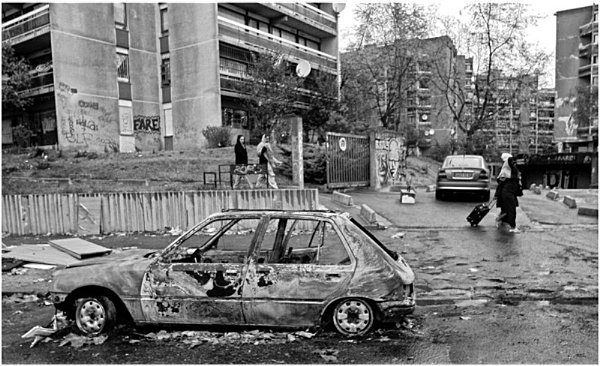
Plate 17.1 Scene of destruction after the riots in Clichy-sous-Bois, 2005.
Source: Associated Press
Over the past decade, all over Europe, some of the groups who feel themselves particularly hard hit by the consequences of economic decline – measured against the prosperity of the 1960s and 1970s – and the resulting changes in government (social) policies, seem to have become easy prey to a growing anti-unification as well as anti-foreign rhetoric. It often is combined with ever more nationalist or even nationalistic sentiments directed against those who, people argue, are still costing the domestic economy an inordinate amount of money and are undermining the very values on which ‘the nation’ allegedly was founded. The resulting cultural-political climate is all the more dangerous since all over Europe functional illiteracy amongst the adult population – that is: amongst those who are allowed to vote – is disconcertingly high. While it averages around 20 per cent, it tends to be less in the societies of north-western Europe, and higher in the eastern and southern states.
It remains to be seen to what extent this situation will impede the further integration of Europe – both of the Euro-zone and the Union. Moreover, if and when Europeans accept the need to define a European culture, it can only exist when a culture’s essential characteristic – an identity of shared interests – is actually lived by the majority of those who somehow belong to it. In that sense, continuing to equate Europeanness with Christianity – and, moreover, to define Christian solely by being non-Islamic – will continue to create problems which will endanger the common future of Europe as a combined effort rather than as a world of separate, competing states.